
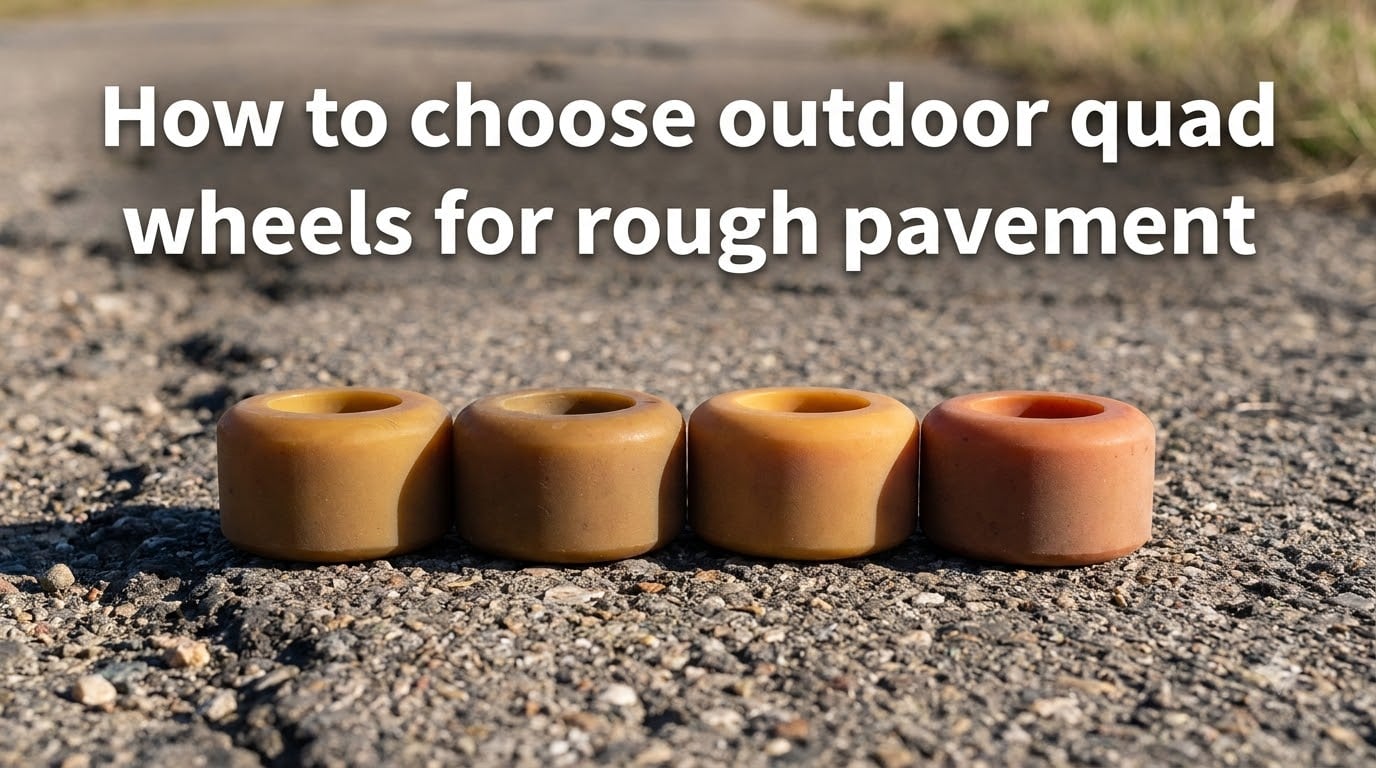
Choosing the right outdoor quad wheels for rough pavement comes down to two numbers: a softer durometer between 78A and 85A, and a larger diameter of at least 65mm. Softer urethane absorbs vibration from cracks and pebbles, while a bigger wheel rolls over obstacles instead of catching in them. I’ve spent the last few years swapping wheels between rink and street setups, and this guide walks you through every factor that actually matters when pavement gets ugly.
By the end of this article, you’ll know exactly how to pick quad skate wheels that turn rough sidewalks, asphalt streets, and uneven trails into a comfortable ride, instead of a full-body vibration session.
Table of Contents
Why Wheel Choice Matters for Rough Pavement?
The wrong wheels can ruin an outdoor skate before you leave your driveway. Hard indoor wheels on rough pavement transmit every crack straight into your ankles. You’ll feel fatigue set in within 20 minutes, and a single pebble can stop you dead.
I’ve been there. My first outdoor session on 101A wheels left me sore for two days. The vibration traveled through the trucks, up my legs, and into my lower back. A softer outdoor wheel would have absorbed most of that impact.
Beyond comfort, your wheel choice affects safety. Wheels that are too small or too hard catch on cracks and expansion joints. That sudden stop sends you forward. Softer, larger wheels glide over the same obstacles because they compress and have more rolling momentum.
Rough pavement also wears wheels down faster than smooth surfaces. Choosing the right compound from the start means you’ll replace wheels less often and get a more consistent ride throughout each wheel’s life.
What Is Durometer and Why It Matters for Rough Pavement?
Durometer is the standardized measurement of how hard or soft a urethane wheel is. The A-scale is what you’ll see on virtually every quad skate wheel, ranging from about 78A (very soft) to 101A (very hard). Lower numbers mean softer wheels.
On rough pavement, softer durometer wheels compress slightly when they hit uneven surfaces. That compression absorbs vibration before it reaches your feet. Hard wheels don’t compress, so they transfer every bump straight up through the trucks.
For rough pavement, target a durometer between 78A and 85A. This range gives you the shock absorption you need without feeling mushy or unstable. Wheels softer than 78A exist, but they’re usually marketed for vert skating or specific trail use and can feel sluggish on hardpack.
The relationship is simple: the rougher the surface, the softer the wheel. Smooth asphalt can handle 85A wheels comfortably. Cracked sidewalks and uneven trails call for 78A to 82A.
Wheel Hardness Guide: Soft vs Hard for Outdoor Skating
Soft wheels (78A to 82A) are the go-to for rough pavement. They grip well, absorb almost all vibration, and roll smoothly over small debris. The trade-off is speed: they’re slower and wear down faster than harder wheels.
Medium-soft wheels (83A to 87A) work well on moderately rough pavement, like well-maintained asphalt or smooth concrete. You get better speed than 78A wheels while keeping most of the shock absorption. Many skaters consider this the sweet spot for daily outdoor use.
Hard wheels (88A and above) are designed for skateparks, smooth rinks, and street tricks. They feel fast and slide easily, but on rough pavement they turn every crack into a jolt. They’re also more prone to chipping when they hit rocks.
One experienced skater on Reddit summed it up perfectly: “Harder wheels will not make for a faster outdoor skate on quads. The harder the wheel, the more you will feel every crack, bump, and pebble.” That matches my own experience after testing dozens of wheel setups.
Wheel Size Guide: Finding the Right Diameter
Wheel diameter is measured in millimeters and directly affects how your skates handle obstacles. Bigger wheels roll over cracks, expansion joints, and pebbles that would stop smaller wheels cold. They also maintain speed better over long distances.
For rough pavement, look for wheels that are at least 65mm in diameter. This is the threshold where outdoor performance improves noticeably. Many skaters prefer 65mm to 70mm for daily outdoor skating because the wheels still feel responsive.
If you’re mostly skating trails, boardwalks, or rougher paths, consider 70mm to 75mm wheels. The extra diameter helps you roll over roots, gravel patches, and uneven pavement seams. You’ll need to check that your plates and trucks can fit larger wheels without wheel bite.
Wheel size also affects acceleration. Smaller wheels (58mm to 62mm) accelerate faster and feel more agile, but they struggle on rough terrain. The trade-off is real: every millimeter of diameter costs a little acceleration but gives you more stability and obstacle clearance.
For most skaters skating rough pavement, 65mm to 70mm hits the right balance between speed, agility, and roll-over ability.
Key Features to Look For in Rough Pavement Wheels
Beyond durometer and size, a few other features make a real difference when skating rough outdoor surfaces.
Urethane quality: Higher-grade urethane resists chunking and wear better. Cheap wheels with low-quality urethane develop flat spots fast on rough pavement, which ruins the ride and shortens wheel life.
Rebound: Rebound is how much energy a wheel returns when compressed. High-rebound wheels feel livelier and roll faster, while low-rebound wheels feel cushioned but sluggish. For rough pavement, a medium rebound gives you comfort without sacrificing too much speed.
Wheel width: Wider wheels (around 38mm to 44mm) offer more stability and a larger contact patch for grip. Narrower wheels accelerate faster and feel lighter. For rough pavement, medium width (around 38mm to 42mm) works well because it balances grip with rollability.
Contact patch: The contact patch is the part of the wheel that touches the ground. A wider contact patch grips better and handles debris more predictably. Softer durometers also create a slightly wider effective contact patch because the urethane deforms under weight.
Hub design: Most outdoor wheels use a standard plastic or nylon hub. Some premium wheels have smaller hubs, which puts more urethane at the edges for better grip and cushion. Smaller hubs also tend to be lighter.
Terrain-Specific Recommendations
Different outdoor surfaces call for slightly different wheel setups. Here’s how I match wheels to the terrain I skate.
Cracked sidewalks and urban streets: Go with 78A to 82A wheels in 65mm to 70mm. The softness handles sidewalk cracks and expansion joints, while the larger diameter keeps you rolling over debris.
Smooth asphalt paths: Step up to 83A to 85A in 65mm to 70mm. The pavement is even enough that you don’t need the softest wheel, so you’ll get more speed and longer wheel life.
Trail skating: Reach for 78A to 82A wheels in 70mm to 75mm or larger. Trails have roots, gravel, and uneven surfaces that demand maximum roll-over and shock absorption. The Atom Pulse is a popular choice here, with users reporting they could “roll over many sidewalk panels instead of picking up my foot at every other uneven spot.”
Boardwalk and smooth concrete: Use 85A to 88A wheels in 62mm to 65mm. These surfaces are smooth, so you can prioritize speed and agility without sacrificing comfort.
Wet pavement: Softer wheels (78A to 82A) grip better in damp conditions. Hard wheels become slippery when wet, so save them for dry days.
Common Mistakes to Avoid When Choosing Outdoor Quad Wheels
The biggest mistake is using indoor wheels outside. Indoor wheels are typically 88A to 101A, designed for smooth rinks. On rough pavement, they vibrate badly, catch on cracks, and wear unevenly.
Going too soft is also a problem. Wheels softer than 78A can feel unstable at speed and wear down extremely fast on asphalt. Stick with 78A to 85A unless you’re doing very specific trail skating.
Ignoring wheel size is another common error. Even a soft 78A wheel will struggle on rough pavement if it’s only 58mm. Always check both the durometer AND the diameter.
Mixing wheel brands in the same setup can cause uneven wear and inconsistent ride feel. Stick with four wheels from the same model for predictable performance.
Finally, don’t forget to check truck clearance before buying larger wheels. Bigger diameters can cause wheel bite where the wheel contacts the truck during turns, which is dangerous at speed.
Maintenance Tips to Extend Wheel Life Outdoors
Rotate your wheels every few weeks. Outdoor wheels wear unevenly depending on your stance and turning style. Swapping front-to-back and left-to-right spreads the wear evenly.
Clean your bearings regularly. Outdoor grit works its way into bearings faster than indoor dust. Wipe them down and add a drop of bearing oil every month or so.
Inspect your wheels for flat spots, chunks, and cracks. Damaged wheels are unpredictable on rough surfaces and can cause sudden falls. Replace them before they fail.
Store your skates in a cool, dry place. Heat and direct sunlight degrade urethane over time, making it harder and less grippy.
If you skate both indoors and outdoors, consider two sets of wheels. Swapping wheels takes a few minutes and protects your indoor wheels from outdoor wear.
Frequently Asked Questions
What roller skate wheels are best for rough pavement?
The best roller skate wheels for rough pavement are soft wheels in the 78A to 85A durometer range with a diameter of 65mm or larger. Softer urethane absorbs vibration from cracks and pebbles, while larger wheels roll over obstacles instead of catching in them. Popular choices include the Atom Pulse and similar trail-rated wheels.
Is 99A too hard for street skating?
Yes, 99A is generally too hard for street skating on rough pavement. At that durometer, you will feel every crack, bump, and pebble. The wheels will also be more likely to chip when they hit rocks or debris. For outdoor street skating, drop down to 78A to 85A for a much smoother ride.
What durometer is best for outdoor roller skating?
For outdoor roller skating, target a durometer between 78A and 85A. This range absorbs vibration from rough surfaces without feeling unstable. Skaters who prefer a balance of speed and comfort usually pick 83A to 85A, while those who prioritize smoothness on very rough terrain go with 78A to 82A.
How to choose outdoor roller skate wheels for beginners?
Beginners should choose outdoor roller skate wheels with a durometer between 78A and 85A and a diameter of at least 65mm. Softer wheels forgive mistakes on rough pavement, and larger wheels roll over obstacles the beginner skater is still learning to navigate. Avoid hard indoor wheels because they make outdoor learning much harder.
Can I use indoor wheels outside on rough surfaces?
You can use indoor wheels outside, but you will have a rough, uncomfortable ride and risk falls. Indoor wheels are typically 88A to 101A, which transmit every crack and pebble straight into your ankles. They also wear out faster and chip more easily on rough outdoor surfaces. Outdoor-specific wheels are a much better choice.
Final Thoughts on Choosing Outdoor Quad Wheels for Rough Pavement
Choosing the right outdoor quad wheels for rough pavement comes down to two key specs: a softer durometer between 78A and 85A, and a larger diameter of at least 65mm. Pair these with quality urethane and a regular rotation schedule, and you’ll turn rough outdoor terrain into a comfortable, confident ride.
Start with a versatile setup in the 82A to 85A range at 65mm to 70mm. If you find yourself skating very rough trails or cracked sidewalks often, drop down to 78A for extra cushion. The right wheels transform outdoor skating from a chore into one of the best parts of your week.