
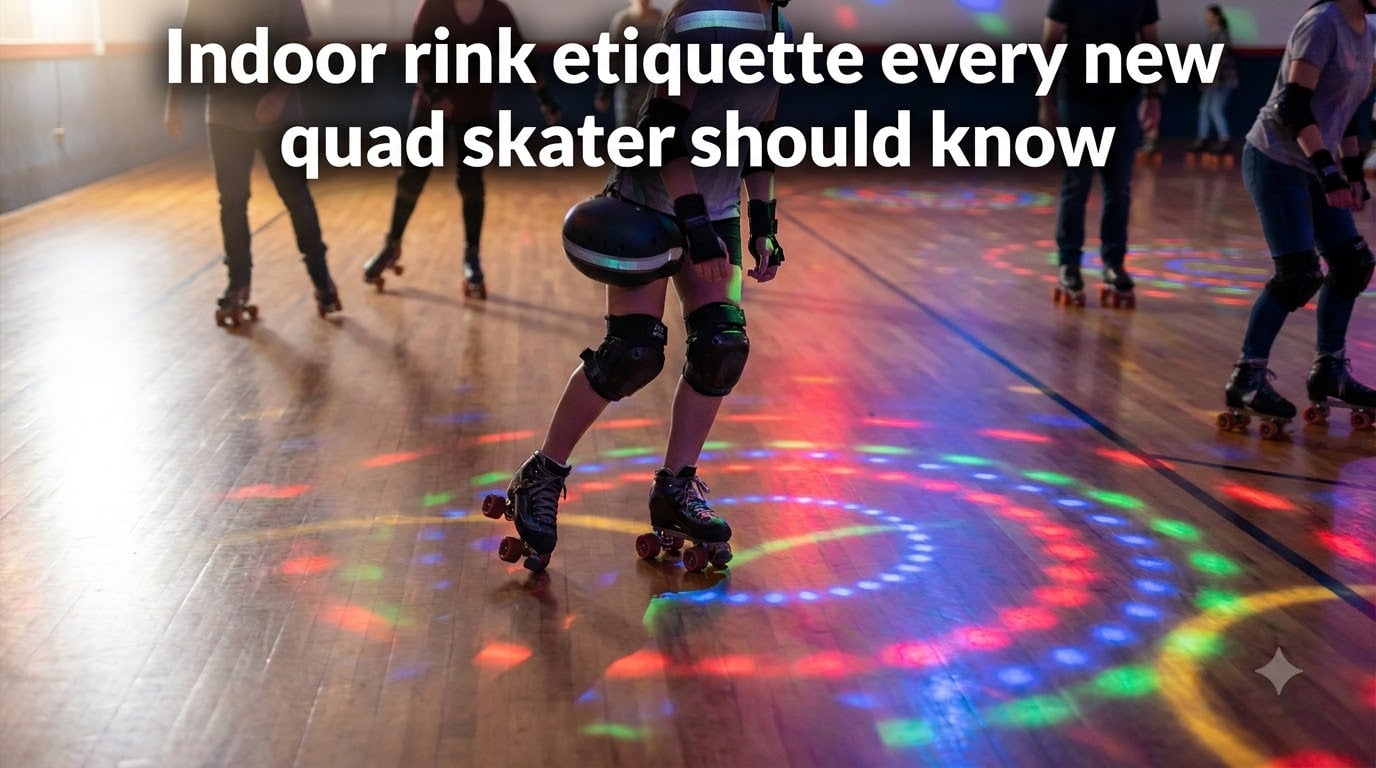
I remember my first time stepping onto a roller rink floor as an adult. I laced up quad skates in a tiny rental booth, wobbled through the entrance, and immediately froze when I saw twenty people whizzing past in a counter-clockwise blur.
Nobody told me about lane positioning, traffic flow, or hand signals. I figured it out the hard way by nearly colliding with a teenager doing crossovers. If you are a new quad skater about to visit an indoor rink for the first time, this guide will save you from the same awkward learning curve.
Welcome to indoor rink etiquette every new quad skater should know. In this guide, I will walk you through the unwritten rules that keep every session safe and fun. You will learn how to read traffic flow, position yourself correctly, communicate with other skaters, and fall without panicking. By the end, you will feel confident strapping on your quad skates and rolling into your local rink.
Table of Contents
Why Indoor Rink Etiquette Matters for New Quad Skaters?
Indoor rink etiquette is the set of unwritten rules that help skaters of all skill levels share the floor safely. These customs exist because roller rinks pack many people into a relatively small space moving at varying speeds. Without shared expectations, the floor turns into chaos fast.
When I asked our team of regular skaters what scared them most as beginners, almost everyone said the same thing: other skaters. Fast skaters flying past your elbow at close range feels terrifying. A group of beginners clustering in the middle creates instant traffic jams. Children weaving unpredictably can turn a calm session into a near-miss reel.
Learning the etiquette solves these problems. When you understand the flow of the floor, where to position yourself, and how to communicate, the rink transforms from a stressful obstacle course into a welcoming community space. Most skaters are happy to help beginners, especially when those beginners make an effort to learn the rules.
Etiquette also protects you physically. Falling the wrong way can cause serious wrist and tailbone injuries. Knowing how to fall safely, when to wear protective gear, and how to stay aware of your surroundings reduces your risk dramatically. Treat these rules as the foundation for years of enjoyable skating.
The Golden Rule: Traffic Flow on the Skate Floor
The single most important rule of indoor rink etiquette is to follow the traffic flow. Almost every roller rink in 2026 runs counter-clockwise traffic during public sessions. That means you skate with your left side facing the center of the rink, moving in the same direction as everyone else.
Going with the flow keeps everyone safe. When you skate against traffic, you force faster skaters to dodge you, which often ends in collisions. Picture driving on a highway. Weaving into oncoming traffic is dangerous for the same reason. The same physics apply on eight wheels.
How do you know which direction your rink uses? Look at the floor markings before you skate. Many rinks paint arrows or have painted lane lines. If the floor has no markings, simply watch the majority of skaters. Join the direction they are moving and stay consistent.
Some rinks reverse direction during certain songs or events. A floor marshal or DJ will usually announce these changes. If you are unsure, ask a staff member or another skater. Nobody will judge you for asking. Asking is far safer than guessing wrong and creating a near-miss situation.
Lane Positioning for Every Skill Level
Lane positioning is the second pillar of skate floor rules. Think of the rink as having invisible lanes. The outermost lane belongs to the fastest, most experienced skaters. The inner lanes belong to beginners, families, and anyone moving at a slower pace.
Here is how to position yourself on a typical rink floor:
Outer lane: Reserved for fast skaters, jam skaters, and anyone doing laps at speed.
Middle lane: The general flow area for intermediate skaters moving at a comfortable pace.
Inner lane: Where beginners, kids, and people practicing new skills should stay.
Center circle: Often reserved for freestyle sessions, dance practice, or skill drills.
Stay in your lane based on your current speed, not the speed you wish you had. As a new quad skater, the inner lane is your home base. This positioning keeps you away from faster traffic and gives you room to work on your balance, stops, and basic strides without pressure.
Leave breathing space between yourself and the skater ahead of you. Aim for at least three to four feet of clearance. This gives you reaction time if they fall or change direction unexpectedly. Crowding creates traffic jams, and traffic jams create collisions.
Never stop abruptly in the middle of a lane. If you need to take a break, skate toward the side wall or the center circle. Stopping in the flow lane is one of the most common roller skating mistakes beginners make, and it almost always causes problems.
Essential Hand Signals and Communication
Communication keeps the floor running smoothly. Skaters use a small set of hand signals to warn each other, request space, and acknowledge passing maneuvers. Learning these signals makes you a safer, more confident skater from your very first session.
The most common hand signal is the heads-up wave. If you see a fallen skater, an obstacle, or a danger ahead, extend your arm and wave it side to side. This tells other skaters to be alert. It is the roller skating equivalent of a car hazard light and prevents chain-reaction pileups.
Yielding signals matter when you want to pass or be passed. When someone faster approaches from behind, they may tap your shoulder or call out a brief verbal cue like “passing on your left.” Stay steady, give a small acknowledgment, and let them move around you. Do not swerve into their path.
Touching other skaters as you pass is considered rude and potentially dangerous. A light brush is an accident. A deliberate tap or push crosses a line. If someone brushes past you, a calm “no worries” or simply continuing on keeps the vibe friendly. If someone touches you aggressively, report them to the floor marshal.
Verbal cues help when hand signals are not visible. Short phrases like “behind you,” “on your left,” or “heads up” travel well across a rink. Keep your voice friendly and clear. Skaters who communicate openly reduce risk for everyone, especially in crowded sessions.
How to Fall Safely on Quad Skates
Falling is part of learning to skate. Even professionals take the occasional tumble. Knowing how to fall safely protects your wrists, knees, and most importantly, your tailbone. Protecting your bum while roller skating starts long before you hit the floor.
Wear protective gear every session, especially as a beginner. A helmet protects your head during unexpected falls. Wrist guards prevent the most common skating injury: broken wrists from bracing a fall. Knee pads cushion your kneecaps and make kneeling slides easier. Some skaters also wear padded shorts for extra tailbone protection.
When you feel yourself losing balance, bend your knees deeply and squat low. This lowers your center of gravity and often prevents the fall entirely. If a fall is unavoidable, try to land on padded areas like your knees, forearms, or thighs rather than outstretched hands.
The cannonball position is the safest fall for new skaters. Crouch into a tight squat, tuck your chin to your chest, wrap your arms around your knees, and roll onto your side. This position distributes impact across the padded parts of your body and protects your head, wrists, and tailbone.
After a fall, stay calm and check yourself for injuries. When you are ready to get up, kneel on one knee, place your hands on the floor for stability, and push up with your legs. Move out of the flow lane quickly so other skaters can pass safely. Other skaters will almost always check on you. Accept help when offered.
What to Wear to the Indoor Rink?
What you wear to a roller rink affects both your comfort and safety. Comfortable clothing lets you move freely. Proper gear prevents injuries. Skating in restrictive or inappropriate clothing is one of the fastest ways to ruin a session.
Athletic wear works best for quad skating. Moisture-wicking shirts keep you cool during active sessions. Stretchy leggings, athletic shorts, or joggers give your legs full range of motion. Avoid long, flowing skirts or wide-legged pants that can catch on your wheels. Loose socks can also create problems, so wear socks that fit snugly.
Protective gear is non-negotiable for new skaters. At a minimum, wear a helmet and wrist guards. Knee pads add valuable protection and help beginners feel confident during falls. Elbow pads round out the safety kit. Many rinks offer rental gear if you do not own your own yet.
Footwear depends on whether you bring your own skates or rent. If renting, the rink provides everything. If skating in your own quad skates, make sure they fit snugly but comfortably. Tighten your laces firmly around the ankle for stability. Loose boots cause ankle rolls and blisters.
Leave jewelry, scarves, and dangling accessories at home or in your locker. Long necklaces can catch on your clothing or another skater. Loose scarves are surprisingly dangerous near spinning wheels. Hair ties are essential for long hair. The goal is to eliminate anything that can snag, drag, or distract.
Public Sessions vs Freestyle Sessions
Most rinks offer different session types, and knowing the difference helps you choose the right environment for your skill level. Public sessions are the most beginner-friendly format. They feature open skating, often with a DJ playing music, lighting effects, and a mix of ages and abilities.
During public sessions, the rink follows standard traffic flow rules. The floor is shared between beginners, intermediate skaters, families, and sometimes a few advanced skaters doing laps. The vibe is social and welcoming. This is where most new quad skaters should start.
Freestyle sessions focus on skill work. Skaters practice dance routines, jumps, spins, and technical footwork. These sessions have a different rhythm. The center circle often becomes the primary workspace, while the outer lanes handle continuous traffic. Music is typically upbeat but lower-key than public sessions.
Freestyle etiquette is more nuanced. Skaters take turns using the center circle. When you finish a run, exit the circle quickly to let the next skater start. Avoid cutting through the circle during someone else’s routine. If you are a beginner, observe a freestyle session before joining one. The energy and conventions take time to absorb.
Some rinks also host beginner sessions, adult-only nights, family sessions, and themed skate nights. Each has its own atmosphere and rules. Check your rink’s website or call ahead to find the best fit for your first visits. Starting with a beginner or family session removes much of the social pressure.
Quad Skater-Specific Tips for Your First Visits
Quad skating has unique considerations compared to inline skating. Quad skates have a wider wheel base and a different turning dynamic. New quad skaters sometimes struggle with toe stops, stopping technique, and tight turns. Plan extra practice time on these fundamentals.
Master your toe stops before you worry about anything else. The toe stop is the small rubber stopper at the front of each quad skate. It is your primary braking tool. Practice gently pressing the toe stop into the floor while moving slowly until the motion feels natural. Most rink falls happen when beginners either forget their toe stops or stomp on them too hard.
Build up speed gradually. Quad skaters often feel stable at slow speeds and wobbly at moderate speeds. That middle range is where most falls happen. Resist the urge to keep up with faster skaters. Move at a pace where you can stop, turn, and react comfortably.
Dealing with social anxiety as an adult beginner is real and worth acknowledging. Many adults feel intimidated skating alongside kids who learned at age five. The good news is that the skating community is overwhelmingly supportive. People notice when you are trying, and they appreciate newcomers who respect the etiquette.
If you feel overwhelmed, take breaks on the side wall. Sit down, drink water, and watch the floor for a few songs. There is no rule against resting. Coming back refreshed is better than skating when you are exhausted and stressed. As you attend more sessions, the rink will start to feel like a second home.
Finally, do not be afraid to ask for help. Floor marshals exist specifically to keep the session safe and welcoming. If you have a question about the rules, ask. If you need a hand getting up, ask. If you want tips on stopping or turning, the people around you are usually happy to share what they know.
Frequently Asked Questions
What are the rules and etiquette for roller skating rinks?
The main rules include skating in the counter-clockwise traffic flow, staying in your lane based on speed, using hand signals to warn other skaters, and never stopping in the middle of a lane. Follow the floor marshal’s instructions, wear protective gear, and respect more experienced skaters.
What should I wear to an indoor skating rink?
Wear athletic clothing that allows full movement, such as moisture-wicking shirts and stretchy pants or shorts. Always bring a helmet, wrist guards, and knee pads. Avoid loose scarves, long necklaces, or wide-legged pants that can catch on your wheels.
How do I fall safely on roller skates?
Bend your knees deeply and try to land on padded areas like your forearms or thighs. The cannonball position, tucking into a squat with arms wrapped around your knees and rolling onto your side, is the safest fall technique for new quad skaters.
What are the common roller skating mistakes beginners make?
The biggest mistakes include skating against traffic, stopping in the middle of a flow lane, crowding the outer lane as a beginner, failing to use hand signals, and forgetting to wear protective gear. Working on toe stop technique also prevents many beginner falls.
How do I communicate with other skaters on the rink floor?
Use a side-to-side hand wave to warn others about hazards ahead. When passing, say phrases like ‘on your left’ or ‘behind you.’ Yield space by holding your position steady while faster skaters pass on the outside. Brief verbal acknowledgments keep the floor friendly.
What does yielding mean in roller skating?
Yielding means letting a faster skater pass without changing your line in a way that interferes with them. If someone approaches from behind, stay steady and let them move around you. Slower skaters always yield to faster traffic, similar to driving rules.
Is it rude for experienced skaters to skate close to beginners?
It is considered poor etiquette for advanced skaters to brush past or weave dangerously close to beginners. Most experienced skaters give wide berth and use clear signals. If someone passes too closely, a calm verbal cue usually corrects the behavior.
Final Thoughts on Indoor Rink Etiquette
Walking into an indoor rink for the first time as a new quad skater can feel overwhelming, but the etiquette boils down to a few simple principles. Go with the flow, stay in your lane, leave breathing space, communicate clearly, and fall safely. These rules protect you and everyone else on the floor.
Mastering indoor rink etiquette takes a session or two, not a season. By your third visit, you will feel the rhythm of the floor, recognize the hand signals instinctively, and know exactly where to position yourself. Every experienced skater you see was once a nervous beginner figuring it out.
Lace up your quad skates, strap on your protective gear, and head to your local rink with confidence. The skating community is ready to welcome you, and now you know exactly how to roll with respect and style.