
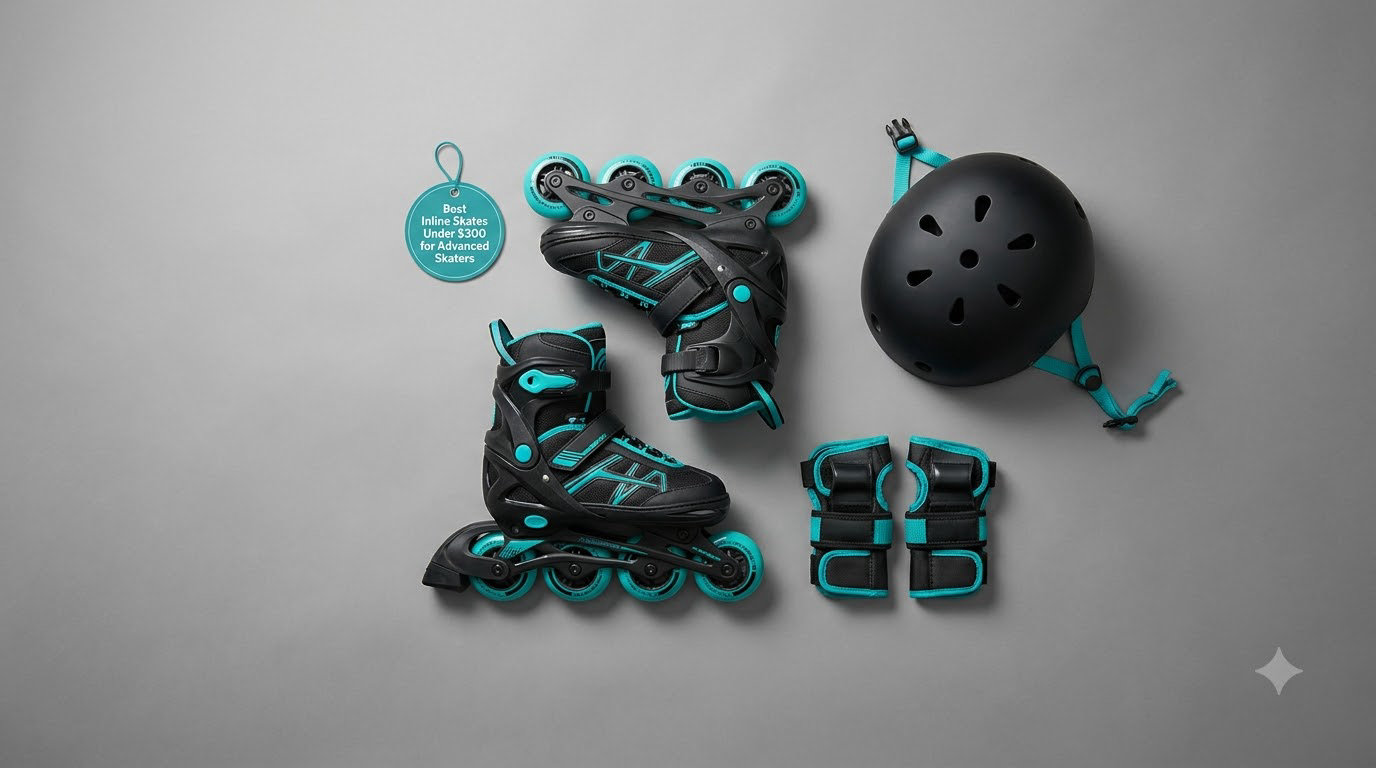
Finding the best inline skates under 300 for advanced skaters is tougher than most people think. The sub-$300 market is flooded with beginner-friendly models that hold back experienced riders, and premium brands often push past your budget the moment you add a quality frame upgrade. I have spent years testing skates at every price point, and the $200-$300 range is where advanced skaters find the sweet spot, but only if they know exactly what specifications matter.
This guide breaks down everything advanced skaters need to evaluate before buying inline skates under $300. We will cover wheel configuration, frame materials, bearing grades, boot construction, and which brands actually deliver at this price point. No fluff, just the technical knowledge that separates a real performance skate from a mid-range model dressed up with marketing claims.
Whether you are an urban commuter who wants more speed, a fitness skater pushing longer distances, or someone returning to skating after years away, the specs below will help you spend your money wisely. The goal is finding a skate that matches your skill level, not one that forces you to plateau.
Table of Contents
What Separates Advanced Inline Skates from Beginner Models?
Advanced inline skates under 300 dollars share several technical features that beginner skates simply lack. The most obvious difference is the frame material, but the real performance gap shows up in wheel size, bearing precision, and boot stiffness. These four areas determine whether a skate grows with your skills or holds you back.
Beginner skates typically use plastic frames, smaller 72-76mm wheels, and basic ABEC-3 or ABEC-5 bearings. Advanced skates in the $200-$300 range almost always feature aluminum or reinforced composite frames, 80-90mm wheels, ILQ or Twincam bearings, and boot construction with proper lateral support. These are not luxury upgrades, they are baseline requirements for the techniques advanced skaters use daily.
The difference becomes obvious the moment you push beyond straight-line skating. A mid-range skate with a soft boot flexes too much during crossovers, making it hard to hold an edge. A frame without proper stiffness wastes energy transfer, so your stride feels mushy even when your technique is correct.
Small wheels compound the problem by limiting your top speed. When you have to work harder just to maintain pace, every session becomes a fight against your equipment rather than a chance to refine your skills.
3-Wheel vs 4-Wheel Configurations: Which Suits Advanced Skaters Better
Wheel configuration is one of the most debated topics in the advanced skating community. Both 3-wheel (tri-skate) and 4-wheel setups have legitimate advantages, and the right choice depends on your skating style. At the under $300 price point, you will find both options, but understanding the tradeoffs prevents an expensive mistake.
Three-wheel configurations use larger wheels, typically 90-110mm, mounted on a single-axle frame design. Bigger wheels cover more ground per rotation, which creates a faster top speed with less effort. Three-wheel skates also have a shorter overall frame length for their wheel size, which improves agility on tight turns.
Urban skaters who navigate crowded streets or skaters who prioritize pure speed benefit most from this setup. The tradeoff is that larger wheels sit higher off the ground, raising your center of gravity and making low-speed maneuvers feel less stable. Three-wheel setups also catch cracks and debris more easily than smaller wheels.
Four-wheel configurations remain the standard for advanced skaters because of stability and versatility. The longer contact patch makes quick direction changes predictable, and the platform feels planted during aggressive maneuvers. Four 80-84mm wheels also handle rough pavement better than three large wheels.
For skaters who mix urban exploration with fitness training, four-wheel setups remain the most versatile choice. If your skating leans heavily toward speed work or aggressive urban freestyle, a three-wheel setup is worth seeking out at this budget. The Rollerblade Twister Edge and similar models in this range sometimes come with frame-swap kits that let you switch between configurations.
Frame Material: Why Aluminum Matters for Advanced Skaters
The frame is the foundation of any inline skate, and the material directly affects power transfer, weight, and durability. At the $300 price point, you should expect either aluminum or a high-quality composite. The difference between the two is significant for advanced skating.
Aluminum frames are the gold standard for advanced skating because they transfer energy efficiently from your leg muscles directly to the wheels. When you push, you feel almost no flex in the frame, which means more of your effort becomes forward motion. Aluminum also handles the stress of aggressive skating better, including jumps, slides, and the constant impact of urban terrain.
Composite frames have improved dramatically over the last decade. Modern composite blends with fiberglass or carbon reinforcement can match aluminum in stiffness while weighing slightly less. The tradeoff is usually cost, premium composite frames often exceed the $300 ceiling on their own.
At this budget, most composite frames are entry-level and not ideal for advanced use. Look for skates that use 6000-series aluminum or have at least aluminum-reinforced sidewalls. Models like the K2 MOD 110 and certain Powerslide models use aluminum at this price point, which is exactly what advanced skaters need.
Pure plastic frames at this price range are a red flag for performance skating, even if the boot construction is solid. A stiff frame is the single most important component for energy transfer, and no boot upgrade can compensate for a frame that wastes your stride.
ABEC Ratings and Bearing Quality: What Actually Matters
Bearing ratings confuse more skaters than almost any other specification. ABEC ratings (Annular Bearing Engineering Committee) measure dimensional precision, not necessarily speed or durability. An ABEC-9 bearing is made to tighter tolerances than an ABEC-5, but that does not automatically make it a better bearing for skating.
For advanced skaters under $300, the practical question is whether the bearings spin freely without play and resist contamination from dirt and moisture. Many skates in this price range come with decent ILQ-7 or Twincam-style bearings that serve most skaters well. The marketing push toward higher ABEC numbers often signals diminishing returns, particularly because dirt, not precision, is what kills skate bearings.
Rollerblade uses ILQ (Infinite Life Quality) ratings on their bearings, which are non-standard but generally accurate quality indicators. Powerslide and K2 use ABEC ratings more conventionally. What matters is whether the bearings are sealed, shielded, or removable for cleaning.
Sealed bearings last longer outdoors but cannot be serviced, which matters less if you replace them every 12-18 months. Serviceable bearings can be cleaned and re-lubricated, extending their life indefinitely with proper care.
Expect to upgrade bearings eventually regardless of starting quality, but starting with solid ILQ-7 or ABEC-7 rated bearings ensures your skates perform well from day one. Avoid skates with non-serviceable ABEC-3 or lower ratings at this price point. They will feel sluggish within weeks and are not worth the savings.
Boot Construction and Fit: Where Comfort Meets Performance
Boot construction is where the under $300 price range gets interesting. Advanced skaters need a boot that locks the ankle in place during aggressive maneuvers while still allowing the forward flex needed for efficient strides. Hard-shell boots and soft-shell boots both achieve this, but through different design philosophies.
Hard-shell boots use a rigid outer shell with a removable liner inside. They offer maximum ankle support and the most direct energy transfer, which is why speed skaters and aggressive skaters prefer them. The downside is weight and break-in time.
Hard shells also run warmer, which matters during summer fitness sessions or long urban commutes. If you skate in hot climates or prioritize ventilation, this is a genuine consideration rather than a minor complaint.
Soft-shell boots use a flexible bootie reinforced with a cuff or skeleton structure. They are lighter, more breathable, and comfortable from the first session. Top-tier soft boots in the $200-$300 range, like those on the Rollerblade Macroblade or K2 MOD lines, offer nearly the same lateral support as hard shells through clever cuff design.
The liner is equally important as the shell material. Removable, heat-moldable liners are common at this price point and offer a noticeable step up in fit customization. Look for liners with proper ankle padding and moisture-wicking fabric.
Liners that cannot be removed or replaced are a red flag because they wear out faster than the boot itself, especially under advanced use. A skate with a great shell and a disposable liner is a worse long-term value than a slightly heavier skate with a quality replaceable liner.
Top Brands Worth Considering at This Price Point
Three brands consistently deliver quality at the under $300 mark for advanced skaters. Each has a different philosophy, and understanding the differences helps you match a brand to your skating style. A fourth tier of brands offers budget options that require more careful evaluation.
Rollerblade is the heritage brand in inline skating and remains a benchmark for quality. Their Twister series, particularly the Twister Edge and Twister 110, are widely considered reference points for urban and fitness skating under $300. Rollerblade skates typically include quality frames, decent bearings, and excellent liners.
The tradeoff with Rollerblade is that you pay a small premium for the brand reputation. That reputation is well-earned, and their quality control is consistently among the best in the industry.
K2 brings American design sensibilities and a strong fitness-skating focus. Their MOD and F.I.T. series skates are known for comfort features and stability. K2 skates often include their proprietary SoftBoot technology, which makes them some of the most comfortable skates out of the box.
For skaters who mix urban commuting with longer fitness sessions, K2 is hard to beat at this price. Their ventilation and moisture management are particularly strong, making them ideal for hot-weather skating.
Powerslide focuses on aggressive and urban skating with German engineering. Their Imperial and Next series skates at this price range often include features borrowed from higher-end models, like Trinity mounting systems or reinforced cuffs. Powerslide is the brand to consider if you lean toward aggressive street skating or want a skate that can handle tricks and urban features.
Roces and Impala round out the field with budget-friendly options. Roces has Italian design heritage and produces solid entry-to-mid-level skates. Impala focuses on style-forward designs at accessible prices, though their advanced-skating performance is less consistent.
Both are worth considering if budget is the priority, but they require more careful spec evaluation. Check the frame material and bearing ratings specifically, as these are the areas where budget brands most often cut corners.
Evaluating Value: What You Should Expect at $300
The $300 price point is a threshold. Below it, you typically see compromises that limit advanced skating. Above it, you start paying for features that recreational skaters do not need.
Right at the ceiling, you can find skates that perform at a level competitive with $500+ models from a few years ago, if you know what to look for. The key is focusing on component quality rather than marketing claims or aesthetic upgrades.
At this price, expect 80-84mm wheels in 4-wheel configurations or 90-100mm wheels in 3-wheel configurations. Bearings should be ILQ-7 or ABEC-7 minimum. Frames should be aluminum or reinforced composite.
Liners should be removable with reasonable padding and moisture-wicking fabric. Buckles should be metal or high-quality composite, not flimsy plastic that strips after a few months. The brake mount should be standard so you can attach or remove it based on your preference.
What you will not get at this price is the lightest possible boot, premium carbon shells, or the absolute highest-end bearings. These features are reserved for skates well over $300. But for advanced recreational skating, urban commuting, and fitness training, the components available in this range are more than capable.
The red flags at this price include plastic frames on otherwise premium-looking skates, non-removable liners, generic bearing brands without specified ratings, and boots with insufficient ankle support. These shortcuts usually indicate a brand prioritizing aesthetics over performance, which is the opposite of what advanced skaters need.
Matching the Skate to Your Skating Style
Beyond technical specs, the right skate depends on what you actually do on skates. A fitness skater covering 15-20 miles per session needs different priorities than an urban freestyle skater hitting ledges and manual pads. At the $300 ceiling, you can find skates optimized for each style, but you may need to prioritize one feature set over another.
For urban commuting and street skating, look for skates with quick-release buckles, removable brakes, and frames that handle rough pavement. The Powerslide Next and Rollerblade Twister Edge both fit this profile well. If you are transitioning from commuting to tricks, a skate with a replaceable frame mount gives you room to grow.
For fitness skating and longer distance work, prioritize larger wheels, efficient bearings, and a boot that allows forward flex while preventing lateral wobble. The K2 MOD and Rollerblade Macroblade lines are designed specifically for this purpose. Ventilation and moisture management also matter more when you are logging hours rather than minutes.
For aggressive skating or aggressive urban freestyle, you need a hard-shell boot or a heavily reinforced soft boot, a sturdy frame, and wheels with appropriate hardness for sliding and tricks. This is the hardest style to find under $300, and you may need to accept a smaller wheel size or simpler bearing setup to get the boot construction you need.
Maintenance and Longevity Tips for Advanced Skaters
Advanced skaters put more stress on their equipment than recreational riders. The skates that last longest in this category get regular maintenance, and the few minutes per week you spend on upkeep will more than double the lifespan of your components.
Bearings should be cleaned every 2-3 months if you skate regularly on urban surfaces. Remove the bearings, soak them in a degreaser or simple isopropyl alcohol, dry them completely, and re-lubricate with a light skate-specific oil. This five-minute task restores nearly all the speed you lose to grime buildup.
Wheels wear unevenly depending on your skating style. Inline skaters often favor their dominant side, which creates flat spots that hurt performance. Rotate your wheels every few sessions, swapping front-to-back and left-to-right, to even out the wear.
When wheels become cone-shaped or develop flat patches, replace them rather than riding them out. A worn wheel set undermines every other component upgrade you have made.
Liners and buckles need attention too. Remove liners after wet sessions and let them air dry completely to prevent bacteria and odor. Check buckles and straps regularly for wear, and replace them at the first sign of failure, a broken buckle mid-session is more than inconvenient, it is a safety hazard.
Final Recommendations for Smart Buying
The best inline skates under 300 for advanced skaters in 2026 are the ones that match your specific skating style while meeting the technical benchmarks above. Do not chase brands or aesthetics. Focus on frame material, wheel size, bearing quality, and boot construction.
If I had to point advanced skaters toward three starting points at this budget, they would be the Rollerblade Twister Edge for urban versatility, the K2 MOD 110 for fitness-focused skating, and the Powerslide Next for aggressive urban skating. All three deliver the components advanced skaters need without breaking the $300 ceiling.
Take the time to try skates on when possible, even if it means ordering from a shop with a good return policy. Fit varies between brands, and the most technically impressive skate means nothing if it does not match your foot shape. Once you find the right fit, take care of your skates, and they will reward you with hundreds of miles of advanced-level performance.
Frequently Asked Questions
What are the best inline skates for professionals?
Professional inline skaters typically need skates with 90-100mm wheels, aluminum frames, ILQ-9 or higher bearings, and either hard-shell construction or premium reinforced soft boots. At the under 300 budget, models like the Rollerblade Twister Edge or Powerslide Next approach these specifications. True professional models from Bont, Adapt, and USD often exceed 300 dollars, but recreational advanced skaters get nearly professional performance from well-specced models at this price point.
What are the best inline skates for intermediate levels of skating?
Intermediate skaters benefit most from skates with 80-90mm wheels, aluminum-reinforced frames, ABEC-7 or ILQ-7 bearings, and supportive boots with removable liners. The 200 to 300 price range offers the best value for intermediate skaters because components are durable enough to grow with developing skills. Avoid beginner skates with smaller wheels and plastic frames, they will hold back your progression within weeks.
What are the best inline skates on the market?
The best inline skates overall depend on skating style. For urban and fitness skating, Rollerblade and K2 dominate the conversation. For aggressive skating, USD, Adapt, and Powerslide lead the segment. For speed skating, specialized brands like Bont and Luigino produce purpose-built skates. At the under 300 ceiling, the Rollerblade Twister Edge, K2 MOD series, and Powerslide Next represent the best balance of quality components and accessible pricing.
What are the best affordable inline skates?
Affordable inline skates that still deliver advanced-level performance cluster around the 200 to 300 range. Below 150, you will find beginner skates with limited longevity. Between 150 and 200, mid-range options like the Impala Lightspeed offer solid recreational skating. At 200 to 300, brands like Rollerblade, K2, and Powerslide deliver aluminum frames, quality bearings, and proper boot construction. Spending more than 300 brings diminishing returns for most recreational advanced skaters.
1 thought on “Best Inline Skates Under $300 for Advanced Skaters (October 2026)”