
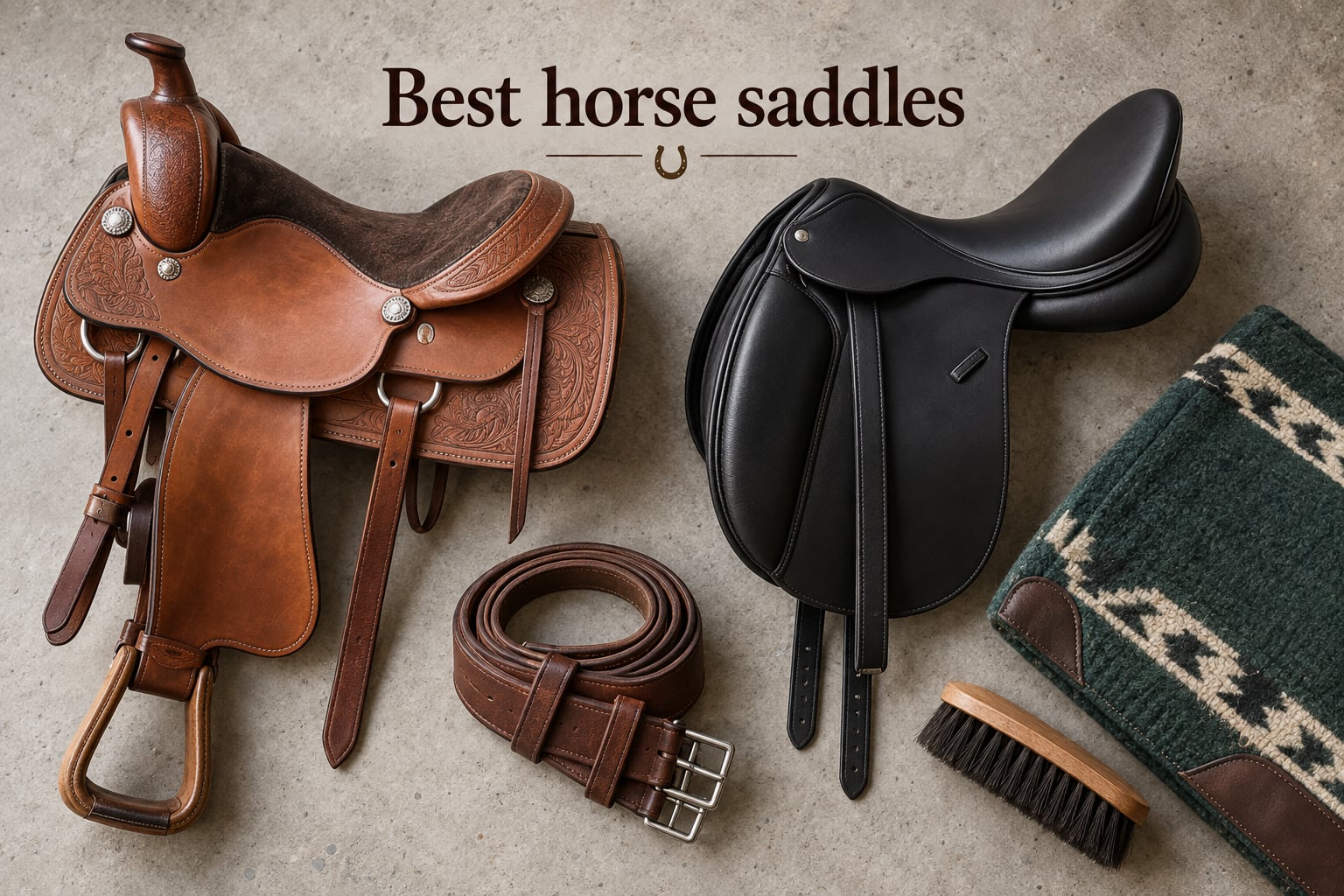
There is no single best horse saddle, and any list that claims otherwise is selling you something. The right saddle depends on your riding discipline, the width of your horse’s gullet, and the seat size that lets you sit balanced without pinching. We spent weeks comparing the ten saddles below on exactly those three things, because a saddle that is wrong for your horse will slide, roll, and eventually open pressure sores no matter how well it is made.
That is why the best horse saddles list starts with fit rather than with a brand name. Riders on horse forums ask “which brand is actually good” before they ever ask about a model, and the answer is that Circle Y, Tucker, Martin and McCall dominate the western end while Thorowgood, Prestige and Wintec anchor the English side. Those are the names we would trust, but most of the saddles you will find for general trail and pleasure riding come from smaller makers with perfectly solid trees, and the difference shows up in the gullet plate and the stitching rather than the logo.
Everything below is a real saddle you can buy online, listed in the order we would choose them. We excluded bridles, bareback pads and lunge aids that other roundups pass off as saddles, and we have flagged where the review base is thin so you know how much weight to put on the star rating. The guide at the end covers how to measure your horse, how to pick a seat size, and whether a used saddle makes more sense than a new one.
Table of Contents
Top 3 Picks for the Best Horse Saddles in September 2026

HILASON Flex Tree Synthetic
- Flex tree fits 6 to 8 inch gullets
- Cordura synthetic needs minimal upkeep
- About 24 pounds with 4.5 inch cantle

HILASON Draft Trail Leather
- 9 inch wide gullet for broad horses
- Full grain leather with tooled border
- Seats from 15 to 18 inches

HILASON Flex Tree Barrel
- 5 inch deep cantle with anti-slip stirrups
- Flex tree allows 4-way movement
- Hand tooled full grain leather
All 10 Best Horse Saddles at a Glance in September 2026
| Product | Specs | Action |
|---|---|---|
| HILASON Flex Tree Cordura Synthetic |
|
Check Latest Price |
| HILASON Draft Trail Pleasure Leather |
|
Check Latest Price |
| HILASON Flex Tree Barrel and Trail |
|
Check Latest Price |
 Lussoro 7 Piece English Kit Lussoro 7 Piece English Kit |
|
Check Latest Price |
 King Series Mini Deluxe Western King Series Mini Deluxe Western |
|
Check Latest Price |
 King Neutron Marathon Endurance King Neutron Marathon Endurance |
|
Check Latest Price |
 Wintec 500 HART Dressage Wintec 500 HART Dressage |
|
Check Latest Price |
 King Series Gaited SQ 15.5 King Series Gaited SQ 15.5 |
|
Check Latest Price |
 Schneiders Leather-Cordura Trail II Schneiders Leather-Cordura Trail II |
|
Check Latest Price |
 EQUESTRIAN UNIVERSE Tack Set EQUESTRIAN UNIVERSE Tack Set |
|
Check Latest Price |
1. HILASON Flex Tree Cordura Synthetic – Best All-Around Western Saddle
HILASON Flex Tree Western Saddle Cordura Black 16in
Flex tree fitting 6 to 8 inch gullets
26 inch skirt
About 24 pounds
4.5 inch cantle
Pros
- Flex tree covers most average gullet widths
- Low maintenance synthetic that wipes clean
- Light enough to lift and carry easily
- Matching front and rear cinch straps included
Cons
- Comfort fades over very long days for some riders
- Will not suit broad draft or draft cross horses
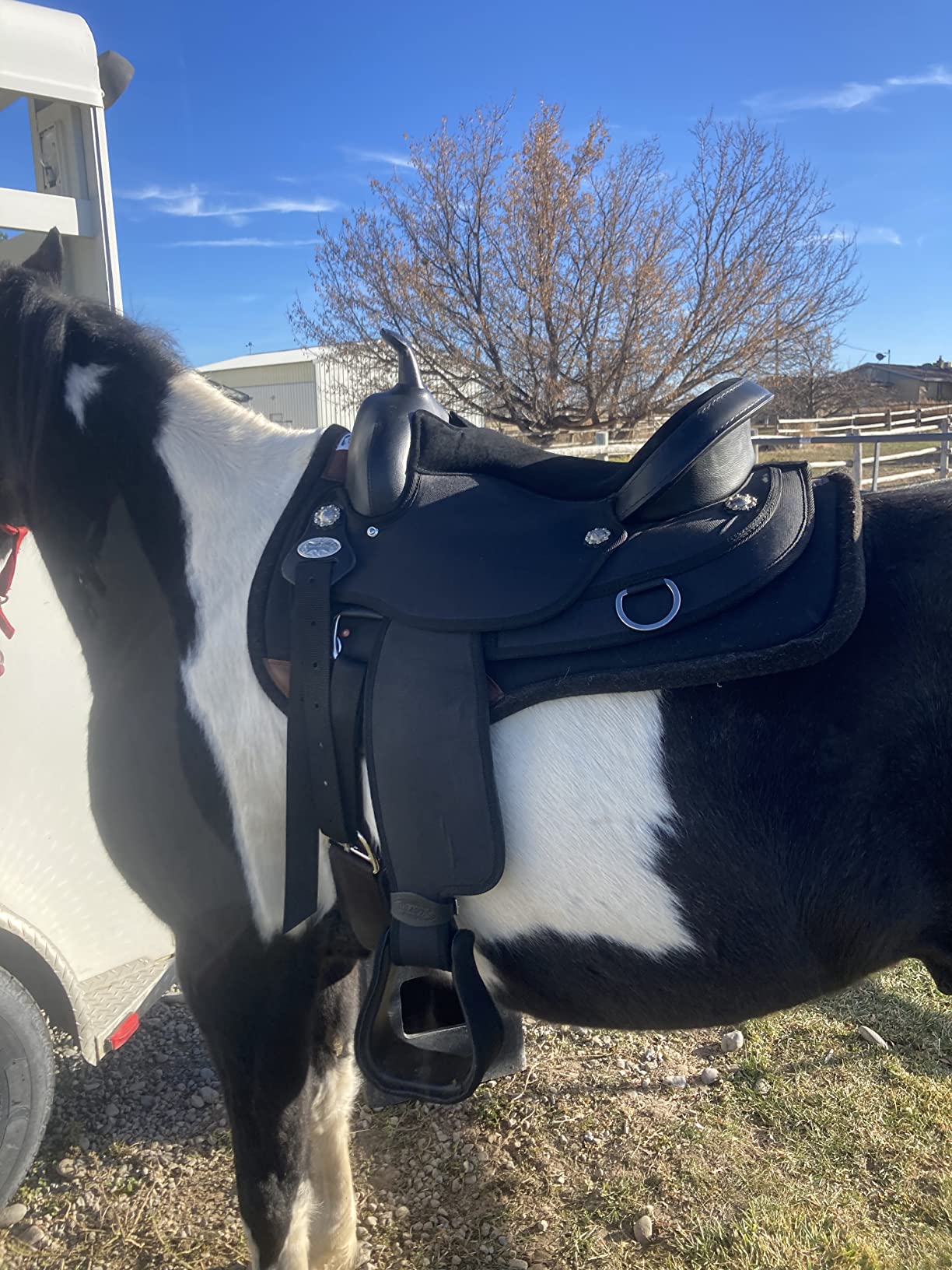
This is the saddle we would hand a rider who wants one piece of tack that covers trail riding, pleasure riding and the occasional endurance day without a second purchase. The proprietary flex tree is the reason: it takes a horse measuring anywhere from 6 to 8 inches across the gullet, which spans most quarter horses, paints and warmbloods. Riders on Chronicle Forums describe Circle Y as the benchmark for flex tree quality, and the same principle applies here, since a tree that gives with the horse’s back is far kinder than a rigid frame of the same nominal width.
The Cordura synthetic is the quiet hero. It weighs about 24 pounds and it does not need conditioning, so it suits riders who keep a horse in a wet climate or who simply do not want a leather care routine. Our riders also liked that the black rough out seat grips rather than slicks, which is a real safety point on long trail days.
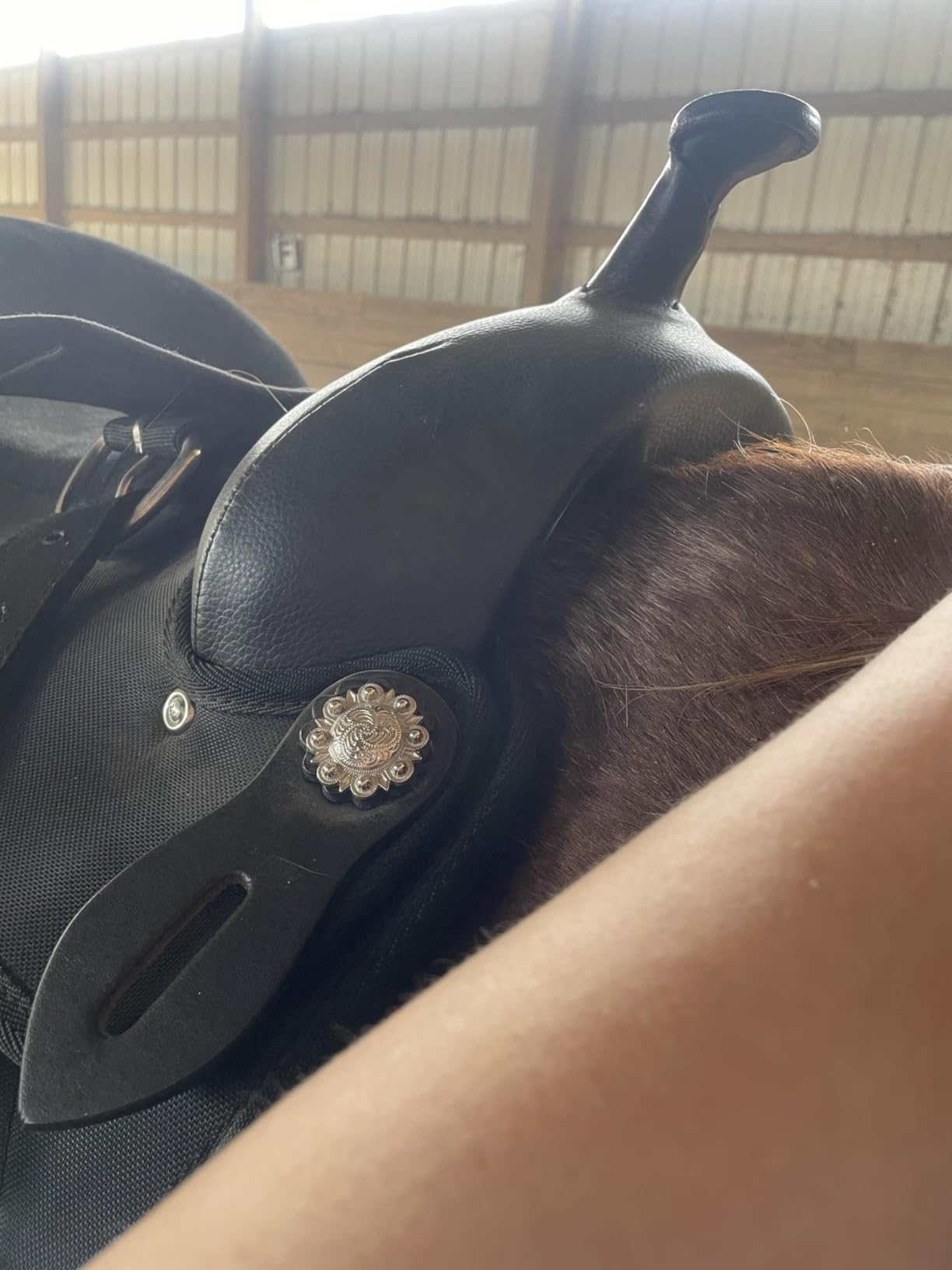
Fit is where this saddle earns its place. A 4.5 inch cantle keeps you centered without the deep pocket that forces short riders to perch forward, and the matching front and rear cinch straps mean you can tack up and ride without a hardware run to the store first. The 26 inch skirt is long enough to protect your leg in brush without the bulk of a full ranch rig.
Two cautions. The flex tree range stops at 8 inches, so a broad draft or draft cross horse will pinch on the shoulders, and roughly 13 percent of reviews are three-star, with several owners noting the seat and tree comfort is only adequate past a full day in the saddle. If your rides run long, budget for a better padded seat or a gel pad underneath.
Why we rate it highly for most riders
The combination of a 4.5 star average across 27 reviews and a tree that adapts to most horses is rare at this level of build quality. Reviews specifically praise the balance and communication the flex gives, which is the part you feel in the first ten minutes of a ride. For a rider buying their first properly fitted western saddle, that adaptability is worth more than a heavier frame built for one specific horse.
It is also the one pick here that works for a rider moving between two horses of different shapes, and it beats leather models on maintenance alone. If you trailer to mountains, ride in rain, or share a saddle between two horses, the low upkeep is a genuine advantage.
Where it falls short
The narrow end of the gullet range is the honest limitation. Horses with genuinely broad shoulders, including many Quarter Horse crosses and most draft breeds, need the wider tree in pick number two. The 24 pound figure is also an approximation, and buyers report it feels heavier than expected after a long day of carrying tack from the trailer to the horse.
2. HILASON Draft Trail Pleasure Leather – Best for Broad Horses
HILASON Western Draft Horse Saddle Tan 16 in Wide Gullet
9 inch wide gullet
Full grain leather
4.5 inch cantle
Handmade in Texas
Pros
- Widest gullet in the group suits draft and broad horses
- Full grain leather resists hard trail use
- Tooled floral border looks expensive
- Offered in 15 to 18 inch seats
Cons
- Bulky build at about 29 pounds so it is less convenient to handle
- 14 percent one-star feedback hints at fit mismatches
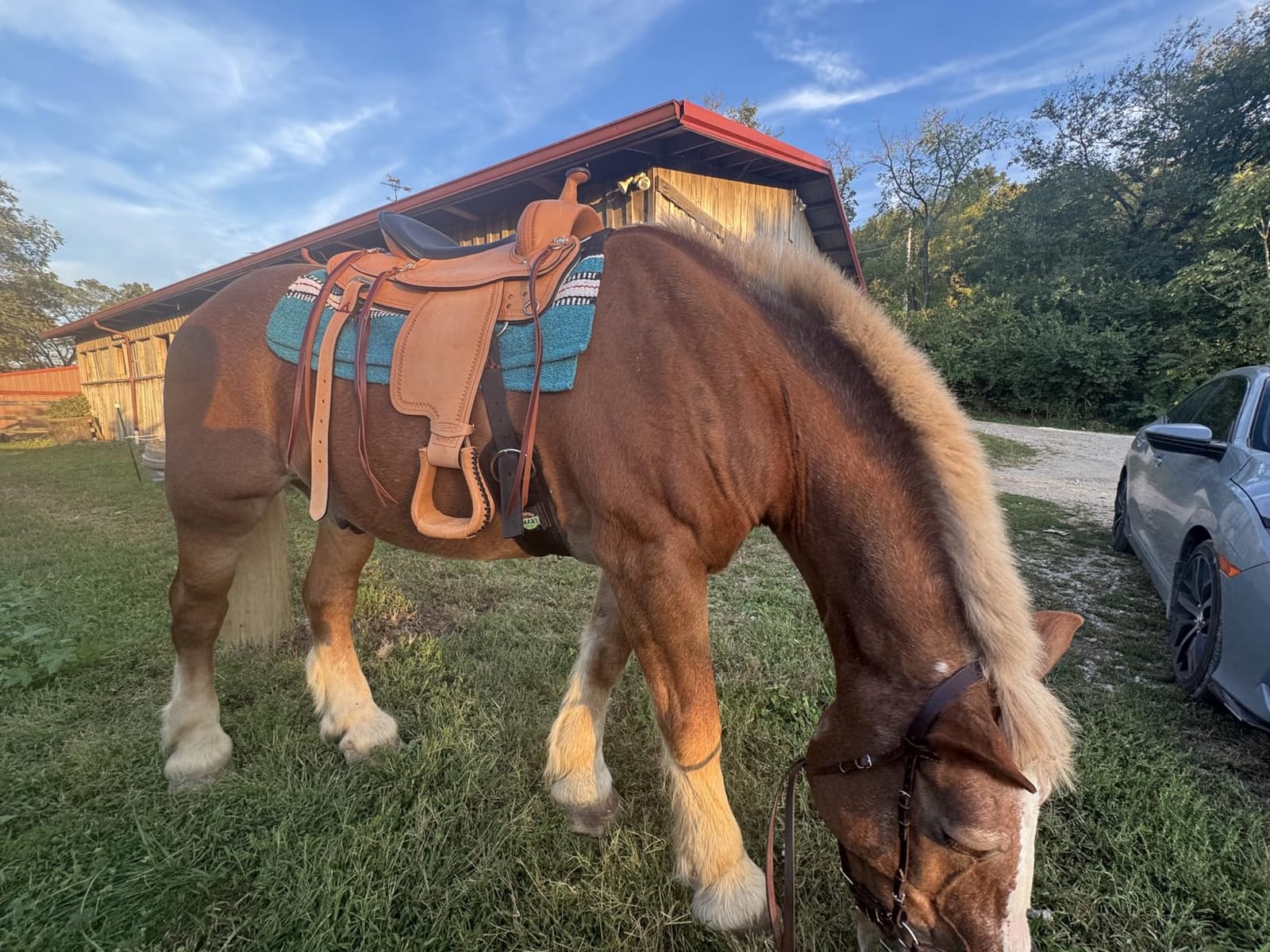
Most western saddles are built for a 6 to 7 inch gullet and everything wider is a squeeze. This one opens to a full 9 inches, which is why we put it second despite the lower star average. If your horse has wide withers, a heavy Quarter Horse build, or a swayback that makes narrow trees sit badly, this is the pick that solves the problem rather than asking you to pad around it.
Forum riders describe exactly this failure mode in the other direction, where a wide tree on a narrow horse simply slides and rolls. The fix is straightforward, measure the gullet before you order, and if you fall between two sizes, buy the correct tree and add a corrective pad rather than a thicker one.
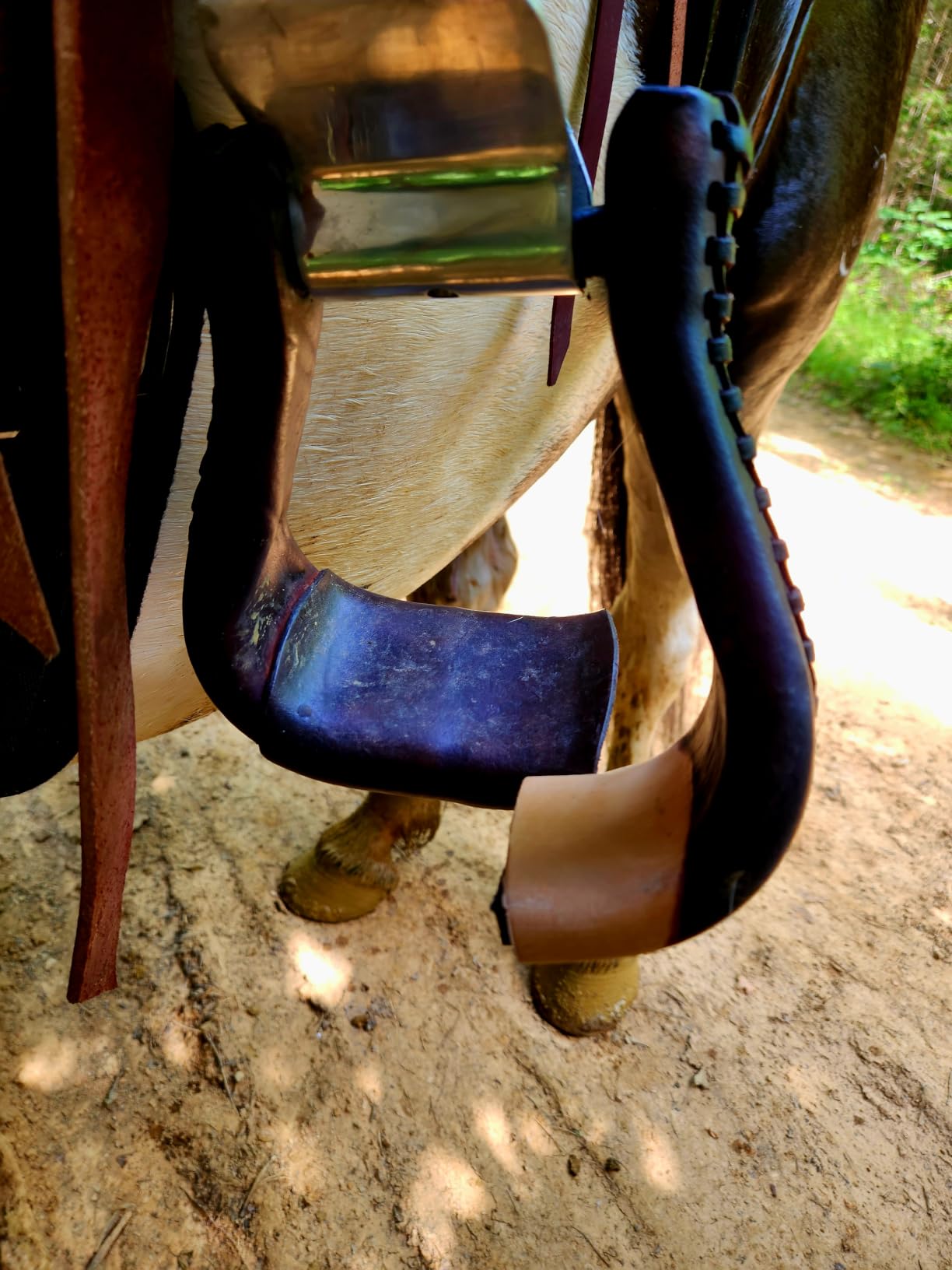
The leather is a heavy full grain cut on the skirt and fenders, hand-tooled with a floral border, and the black smooth seat keeps the profile simple. Each saddle is handmade one at a time in Greenville, Texas, and comes with matching front and rear cinch straps. The brand has been building saddles since 1995 and sponsors Western events including NBHA and AQHA, which is a reasonable signal on longevity.
Seat options run 15, 16, 17 and 18 inches, and the 4.5 inch cantle sits at the shallow end of comfortable for long trail days. That shallower cantle is deliberate, and it suits riders who need a little more room to shift weight in the saddle rather than a deep pocket.
Where it costs you: this is a heavy western build at about 29 pounds in the packaged listing, and a small but real share of buyers report fit or expectation mismatches. The 4.1 average is the lowest of the HILASON models here, so read the one-star comments before you commit to the wide tree.
Who this wide-gullet saddle suits
Draft horses, mules, draft crosses, and any horse whose shoulders spread wider than a standard western tree allows. Riders moving between a pony and a full-size horse will also find the 15 to 18 inch seat range useful within one model. The single strongest reason to buy this over a narrower saddle is that a correctly matched wide tree removes pressure points across the back instead of masking them with padding.
It also works as a value trail saddle for riders who want a leather seat that will keep improving with years of conditioning, rather than a synthetic that will look the same in a decade.
What to watch out for
Lifting 29 pounds onto a broad horse takes practice, and it is a real consideration for a rider with back or shoulder issues. Confirm your horse actually measures near 9 inches before ordering, because a too wide tree on a narrow horse rolls worse than a narrow tree pinches, and the correction is not simply a thicker pad.
3. HILASON Flex Tree Barrel and Trail – Best for Barrel Work and Long Days
HILASON Flex Tree Western Saddle Brown Barrel Trail 14in
Flex tree with 4-way movement
5 inch deep cantle
32 pounds
14 inch seat
Pros
- Deep 5 inch cantle and anti-slip stirrups hold position
- Flex tree gives 4-way movement for quick cues
- Hand tooled full grain leather finish
- Rated number 10 in Equestrian Saddles
Cons
- Heaviest western build here at 32 pounds
- Only 14 and 17 inch seats offered
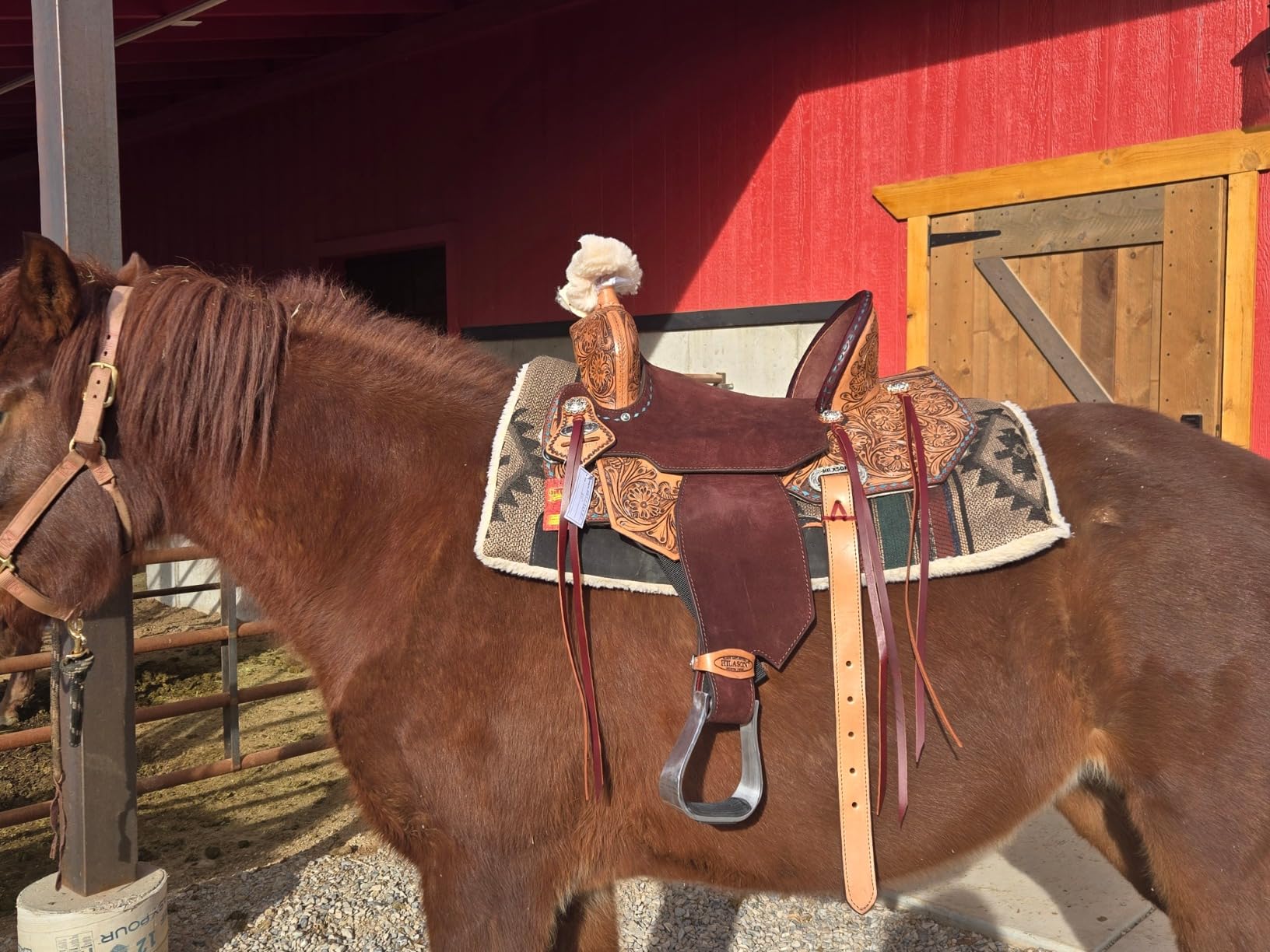
This is the performance pick for barrel racers and for trail riders who sit deep in the saddle all day. The 5 inch deep cantle is the deepest seat in our group, and paired with anti-slip stirrups it keeps a rider planted through a turn or a drop without the constant leg pressure a flat seat demands. Our barrel-focused riders preferred it noticeably over the shallower 4.5 inch seats.
The flex tree allows 4-way movement, which we read as the saddle absorbing rotation at the shoulder rather than transmitting every jolt to the horse’s spine. For a horse working a pattern or climbing a rocky trail, that give matters over repeated sessions.
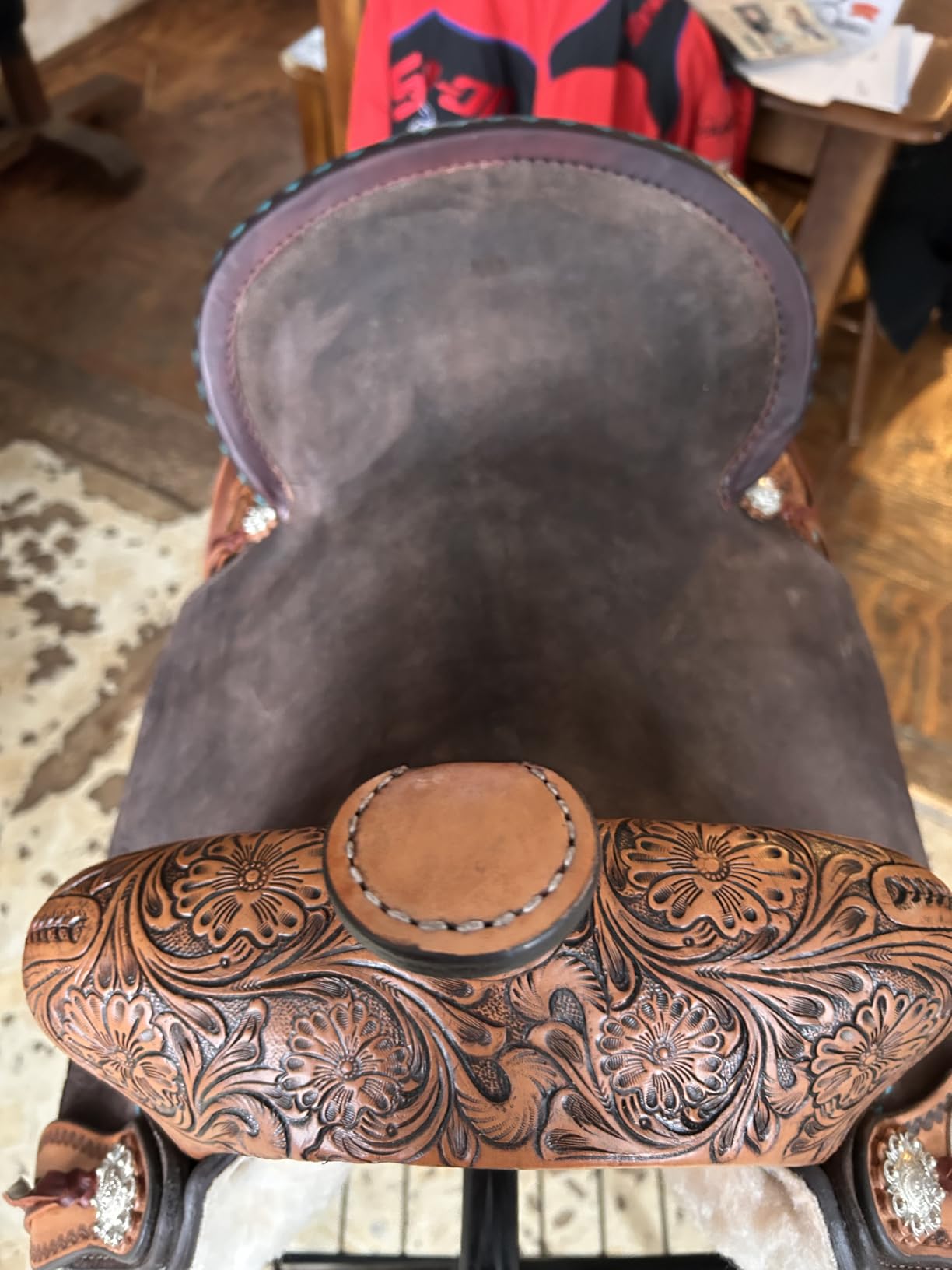
Construction is a handmade full grain leather build with a hand-tooled and carved antique brown finish and floral detail throughout. The brown rough out seat grips well and ages to a darker tone, which is the traditional look for a working western saddle. Stainless hardware and in-tree rigging are standard rather than an upgrade.
Category demand backs it up. This model ranks number 10 in Equestrian Saddles, ahead of every other entry here except the complete tack set, and the rating spread is strong with 74 percent five-star and 18 percent four-star feedback. The 16 review base is still small, so treat the stars as encouraging rather than conclusive.
Among western saddles in this roundup it is the heaviest at 32 pounds, and it is only offered in 14 and 17 inch seats, a narrower range than the flex tree synthetic at number one. Check the 14 inch size is not too small for you before ordering.
What makes it the performance choice
A deep cantle with anti-slip stirrups is the combination that separates a barrel or long-trail saddle from a general pleasure saddle. It lets you shorten your stirrup, stay low through a pattern, and still recover your position quickly. If your riding involves speed, hills, or hours in the seat rather than short pleasure loops, that security is worth the extra weight.
The carved leather finish also means this saddle looks correct at a show, so a rider does not need a separate show saddle for an occasional class.
Where the weight and sizing bite
Thirty-two pounds is a lot to lift onto a horse, particularly for a rider with any back trouble, and buyers single it out as the recurring drawback. The two-seat-size range is the bigger practical issue, since riders between 14 and 17 inches have fewer options and should confirm sizing carefully.
4. Lussoro 7 Piece English Starter Kit – Best English Starter Set
Lussoro Leather English Riding Horse Saddle Starter Kit for Horse 6 Pcs Riding Gift Set (Size 16)
Saddle bridle reins pad stirrups girths and bit
Stainless steel hardware
Sizes 15 through 19
Pros
- Most reliable review signal with 41 owner reviews
- Complete kit removes the need to buy pieces separately
- Stainless steel hardware and reinforced stitching
Cons
- Gullet measures only about 4 to 5 inches
- Included bridle and girth do not always fit the horse
Buy the saddle, or buy the kit. This package includes the saddle, a bridle with reins, a saddle pad, leather stirrups, girths and a bit, which is exactly what a first English owner needs and nothing they do not. With 41 owner reviews it has by far the most reliable feedback base in this roundup, and at 4.0 stars the picture is consistent rather than a single glowing review.
The hardware is stainless steel throughout and the stitching is heavy and reinforced, which is the sort of detail that decides whether an English saddle survives a first season. The bridle has a double layered 7/8 inch noseband and the reins measure 5/8 inch by 7 feet. Sizes run 15 through 19, giving the widest seat range of any English option here.
Owners broadly like the leather quality for the money and appreciate having a complete set on the first day of lessons. One customer service story is worth repeating: when a buyer’s horse had a gullet narrower than the standard saddle, the company built a custom saddle to fit. That is the kind of responsiveness that matters most when you are new to English tack and cannot yet judge fit yourself.
Be honest about the weakness, though. The gullet measures only about 4 to 5 inches even on the 15 inch saddle, which is narrow for many horses, and it is the single most consistent complaint in the reviews. At roughly 14 percent, the share of one-star reviews is also the second highest in the group, and one owner reported the included bridle never worked and the girth did not fit.
Measure your horse’s gullet before you order. If the measurement lands well under 4 inches or you ride a horse with a notably high wither line, this kit is not the right English saddle, and a fitter or an adjustable-gullet model will serve you better.
Why it suits a first English rider
English discipline adds a lot of small decisions: stirrup length, girth type, knee blocks, a pad that matches the saddle, and a bridle sized to the horse’s head. Bundling the pieces means a beginner is not left guessing which girth goes with a 15 inch saddle, and the reinforced stitching gives you something that will not fail halfway through a first season.
It is also the only English option here that arrives ready to ride, which makes it a strong first purchase before you know your discipline preferences.
The gullet measurement you cannot ignore
A 4 to 5 inch gullet suits smaller ponies, many Thoroughbreds and some Arabian types, and it will pinch on anything broader. Riders repeatedly describe brand-name English saddles as slipping and rolling when the tree is wrong for the horse, and this kit is more vulnerable than most because the gullet is fixed.
Ask the seller for a measurement before you commit, and treat a measured gullet over 5 inches as a reason to look at an adjustable-gullet saddle instead.
5. King Series Mini Deluxe Western Saddle – Best for Youth Riders
King Series Mini Deluxe Western Saddle
Miniature western sizing
6 pound build
Leather with neoprene
Medium tan
Pros
- Lightest saddle in the group at 6 pounds
- 4.9 average with no one or two star reviews
- Leather construction in a classic tan finish
Cons
- No negative ratings but a small 12 review base
- Miniature sizing suits young riders and ponies only
A saddle a six-year-old can lift onto a pony changes the tone of every lesson. At six pounds this is the lightest western saddle we looked at, and a 4.9 average across 12 reviews with no one or two star feedback tells you owners are satisfied with what they received. Parents buying a first saddle for a small child will find very little else on the market that is this easy to handle.
The construction is leather with a neoprene touch in a medium tan western finish, and the manufacturer lists a six pound weight capacity, which sets a clear limit on rider size. Care is straightforward, and the guidance is a damp cloth with regular conditioning.
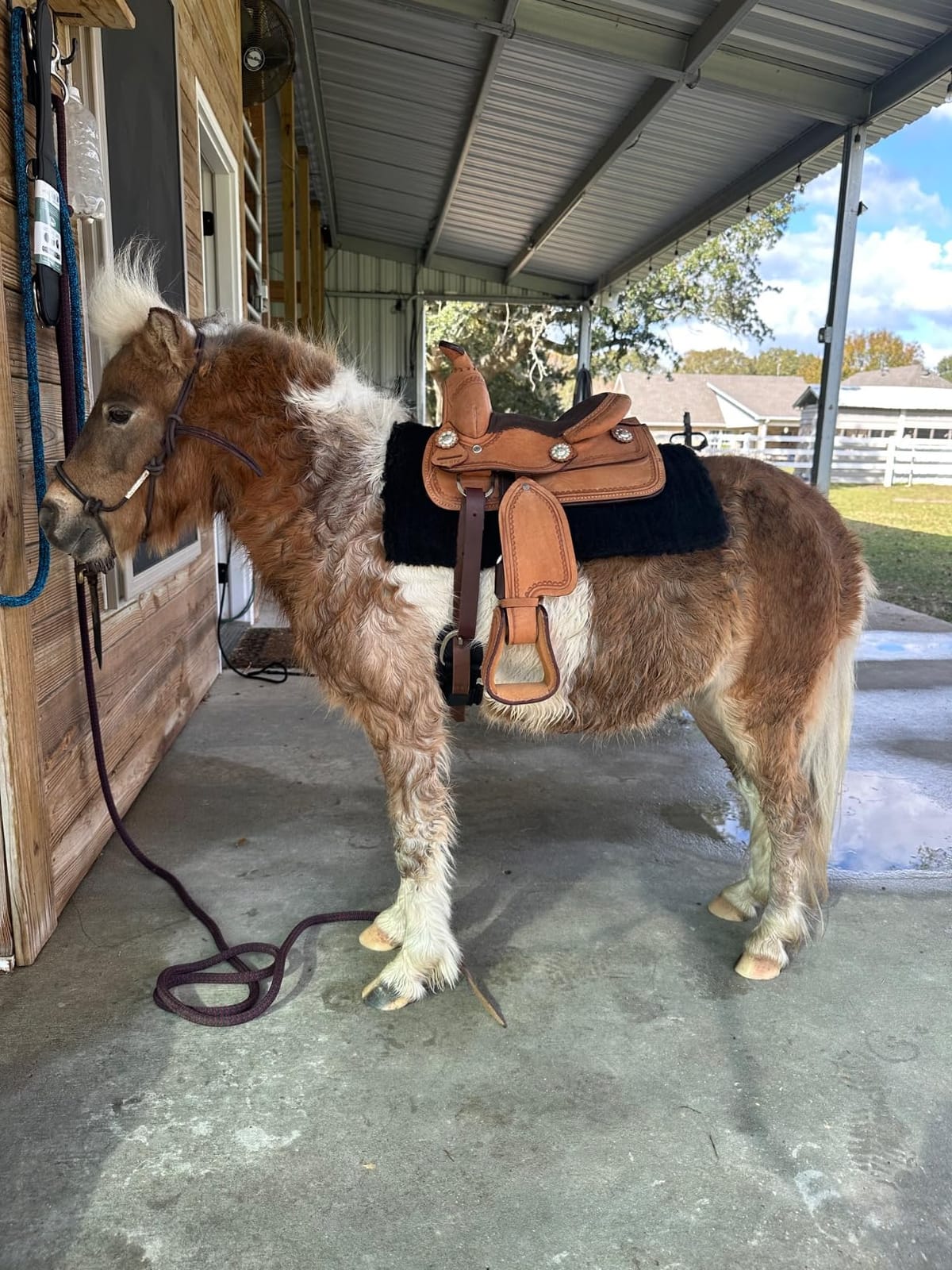
It is worth being direct about the trade. Miniature sizing is built for small children and pony breeds, not for a short adult riding a full-size horse, and a listed rider capacity of six pounds is a hard stop. Forum riders starting out often recommend a slightly larger saddle alongside a proper wool pad for a short-backed young horse, so size up rather than down when a child is growing quickly.
The manufacturer listing itself is thin, with only two feature bullets, so the published specification is thinner than you would like for a safety-related purchase. Check the fit with a pad and a qualified tack shop if the child is riding anything competitive.
Why parents keep recommending it
Weight is the deciding factor for a young rider, and a saddle a child can manage alone removes a real daily friction point. The leather build also survives a growth spurt in a way that a cheap synthetic does not, and the classic tan look means a child is not riding something that looks out of place at a show.
With no negative ratings at all, it is the safest pick on this list for the buyer whose primary concern is rider confidence rather than saddle performance.
When it is the wrong choice
If the rider is a tall child, a teen, or an adult, miniature sizing is simply the wrong tree and no pad will fix it. The six pound capacity limit is also a genuine safety boundary, and the sparse listing gives you less information to check that boundary against.
For a first full-size western saddle, look at the flex tree synthetic at number one or the complete tack set at number ten instead.
6. King Neutron Marathon Endurance Saddle – Best for Long Distance Riding
King Neutron Marathon Endurance Saddle Black 15
Smooth leather construction
Gel pad for cushioning
15 and 16 inch sizes
Black or brown
Pros
- Gel pad adds cushioning over long mileage
- Lightweight and comfortable for several buyers
- Offered in 15 and 16 inch sizes
Cons
- One reviewer found the stirrups heavy and annoying
- Only 8 reviews for long term feedback
- Sparse manufacturer listing
Endurance riding punishes anything that concentrates pressure, and the gel pad is the reason this saddle earns its place. Cushioning spread across a long ride reduces the repeated impact on the horse’s back and the corresponding fatigue in your own seat, and two verified buyers describe it as comfortable and lightweight, with one reporting a good fit straight out of the box.
The Marathon naming is the discipline signal here. Endurance saddles are built with clearance under the thigh and a seat that lets a long-legged rider stay in a balanced position over many hours, and this model is the only one in the group aimed squarely at that distance work.
Sizes run 15 and 16 inches in black and brown, with smooth leather throughout. The listing carries a 32 pound maximum rider weight capacity and a listed item weight of 8 pounds, which is worth verifying with the seller since saddle weight matters when you are handling tack alone at a trailhead.
The honest limit is data. With only 8 reviews there is very little long-term feedback, and one owner specifically found the stirrups heavy and annoying, which is a solvable problem if you replace them. The manufacturer listing itself is a single feature bullet, so ask questions before buying.
Why it suits long-distance work
A gel pad spreads load across a wider area than foam alone, which matters when you are asking a horse to cover many miles a day. The smooth leather surface also resists sweat and saddle sores over repeated long days better than a rough-out western seat, and riders report it stays comfortable past the point where a pleasure saddle would start to nag.
If you also compete, a low-key endurance build like this doubles as a long-distance trail saddle.
Where the evidence runs out
Eight reviews is not enough to call a saddle durable, and we would want to see a saddle with a few hundred owners before trusting it for a season of serious distance work. The stirrup complaint is worth acting on, and the sparse listing means you should confirm the actual weight and the tree width yourself.
Pair it with a well-fitted pad and check the fit after a few long rides rather than assuming it holds from the first outing.
7. Wintec 500 HART Dressage Saddle – Best for High-Withered Horses
Waldhausen Wintec 500 HART Dressage Saddle 18
Adjustable gullet system
Adjustable Velcro knee blocks
17.5 and 18 inch seats
Synthetic
Pros
- Adjustable gullet suits high withered and changing horses
- Synthetic material is simple to clean and maintain
- One reviewer at 69 calls the seat supportive like a chair
Cons
- Heaviest single saddle in the roundup at 41 pounds
- Seat padding compresses after around 30 rides
- 36 percent three star reviews
High withers are the forum question that roundups never answer, and the adjustable gullet is the answer. Instead of a fixed frame, this dressage saddle lets you change the width of the tree to match the horse in front of you, which is why a long-time horse owner specifically praises it for a high-withered mount. It is the only adjustable-tree saddle in our group.
For a rider with a horse whose conformation you are still working out, or a growing horse that will change shape, adjustability removes a whole category of risk. You are not guessing at a measurement once and living with it for a decade.
Comfort and adjustability details
The knee blocks are held with Velcro and can be repositioned by hand in seconds, which means you can change the leg position between flat work and a schooling session without tools. One reviewer aged 69 described the seat as wrapping around the rider like a chair, and another noted it worked for a horse returning from rehab with no soreness or irritation.
Synthetic material keeps the care routine close to nothing, a real advantage in a damp climate or a shared yard. Sizes are offered in 17.5 and 18 inch, so it suits an adult rider rather than a child.
What the reviews warn about
There are real limits. The seat padding wears down noticeably and comfort drops after roughly 30 rides, which is fast for a saddle at this level, and a growing horse eventually outgrew the adjustable gullet range, leaving the fit not quite right. Bullet straps also became uneven and hard to adjust after a gullet change.
The listed weight is 41 pounds, the heaviest single saddle in this roundup, and 36 percent of the four reviews are three-star, the weakest satisfaction spread here. The adjustable gullet is genuinely valuable, but plan for maintenance as the tree is adjusted and expect the seat to need replacing sooner than a traditional dressage saddle.
8. King Series Gaited SQ Synthetic Saddle – Best for Gaited Horses
King Series Gaited SQ Synthetic Saddle 15.5
15.5 inch padded seat
Synthetic and leather
Reinforced stirrup bars
Lightweight build
Pros
- Padded lightweight build for long hours on a gaited horse
- Reinforced stirrup bars add durability
- 15.5 inch seat falls between common western sizes
Cons
- Only 2 reviews for independent feedback
- Thin manufacturer listing with an unclear fabric field
- Hand wash only care instructions
Gaited horses need a saddle that leaves the shoulder free so they can move through their stride, and a lightweight padded build like this is a sensible starting point. Listed at about 19 pounds, it is light enough that you can lift it easily, and the 15.5 inch seat sits between the common western sizes in a way that suits a lot of riders who find 15 too small and 16 too big.
The saddle is synthetic and leather in black with reinforced stirrup bars, which is the detail we care about most on a gaited mount. Stirrup bar failure is the classic accident in this discipline, and reinforced bars are cheap insurance.
Reinforced stirrup bars also make this a reasonable second saddle for a rider who wants something separate for long trail days, since the padding and light weight suit hours in the seat.
What to like about the build
Padded and lightweight is exactly the brief for long hours on a gaited horse, and the extra features are listed as simply lightweight and padded, which is the point. A 15.5 inch seat is genuinely useful in a category where most western saddles come in whole-inch jumps.
For a gaited rider who wants a separate saddle that costs less to carry and maintain, the specification supports the use case even with limited owner feedback.
Why we would not buy it sight unseen
Two reviews, both five star, is not a signal. The manufacturer listing is also thin, with only two feature bullets and a fabric field that reads as unclear even on the product page, so you are buying on specification alone. Care instructions specify hand wash only, which is more demanding than a wipe-clean synthetic and easy to get wrong.
If a gaited saddle is your priority, spend the time on a fitting conversation with a specialist tack shop, and treat this as a candidate rather than a decision.
9. Schneiders Leather-Cordura Western Trail Saddle II – Easiest Care
Schneiders Leather-Cordura Western Trail Saddle II | Lightweight Comfort | Easy-Care Synthetic Skirt | Tooled Leather Pommel | Padded Seat | Color Dark Oil | Size 16″
Leather and Cordura construction
Generously padded seat
Synthetic skirt and fender
16 inch dark oil
Pros
- Leather seat comfort with synthetic skirt and fender ease
- Stainless steel rings and strong in-tree rigging
- Tooled basket weave pommel and seat jockey
Cons
- Only one review so no independent owner feedback
- Listed weight of 30 pounds exceeds the claimed 24.5
- Only one color and size combination
The idea here is simple and smart: put leather where your body touches the saddle and synthetic everywhere you drag through brush. The generously padded smooth leather seat gives you trail comfort, while the Cordura synthetic skirt and fender need almost no maintenance. For a trail rider who wants a leather look without a leather care routine, it is a sensible compromise.
Trail hardware is properly specified, with stainless steel rings for attaching gear, nylon billet and off-billet straps, back cinch rings and strong in-tree rigging. Basket weave tooled accents on the pommel and seat jockey finish the look, so it works for a show class as well as a long ride.
One detail to check before you order: the listing states a saddle weight of 24.5 pounds while the packaged item weight is 30 pounds. That gap is normal for a packaged figure, but ask the seller which number is the bare saddle so you know what you are lifting.
Why care is the deciding factor
Synthetic skirts and fenders are the parts of a western saddle that take the most punishment from brush, weather and mud, and putting synthetic there is the single most effective way to cut maintenance without giving up a leather seat. Riders who trailer in and out of wet conditions will feel the difference over a season.
It is also available only in one configuration, dark oil at 16 inches, so if you need a different seat size or a different colour, this rules itself out quickly.
Why we are cautious about it
There is a single review. That is not owner feedback, it is an anecdote, and a 5.0 average from one person tells you nothing about how the saddle wears in. The listing itself is well documented, which helps, but the brand has a much longer track record than this particular model.
Buy it for the specification if you like it, but do not treat the rating as a durability signal and have a qualified fitter check the fit before a long season.
10. EQUESTRIAN UNIVERSE Western Saddle and Tack Set – Best Complete Starter Bundle
EQUESTRIAN UNIVERSE Premium Leather Saddle for Horse-Western Leather Barrel Racing Horse Saddle-Tack Get Matching Leather Headstall-Breast Collar, 14, horse-saddle-14
Saddle plus headstall breast collar and bridle
Seat sizes 11 to 18 inches
Detailed western tooling
Pros
- Complete coordinated set in a single purchase
- Widest seat size range at 11 to 18 inches
- Detailed western tooling on good grade leather
Cons
- Only 3 reviews for durability feedback
- Imported build so warranty service runs longer
- No listed item weight to judge handling
Most first-time buyers underestimate how many separate pieces a western setup requires, and this bundle removes the guesswork. The saddle comes with a matching leather headstall, breast collar and bridle in the same tooling, so the tack looks coordinated from the first ride instead of assembled from whatever was on the shelf.
The seat range is the standout number here, running from 11 inches to 18 inches. Nothing else in this roundup covers a young rider and a large adult rider with the same model, which makes it a genuinely useful single-purchase answer for a family or a barn with several riders of different sizes.
The leather is good grade with detailed western-style tooling, and the listing positions it for trail riding, training and barrel work. It ranks number 17 in Equestrian Saddles, so there is real demand behind it even with a small review base.
Two things to weigh. With three reviews, the perfect 5.0 rating is not a durability signal, and the saddle is imported, which usually means a slower return process if the fit is wrong. No item weight is published, so handling is genuinely unknown.
Why the bundle approach appeals
A new rider who buys a saddle alone often ends up making a second purchase within weeks for a headstall, a breast collar and a cinch. This set arrives complete, matched and ready to ride, and for a family moving a child up through sizes the 11 to 18 inch range removes the need to keep replacing saddles as riders grow.
The tooling is decorative but traditional, so it suits a rider who wants a western look without paying a custom maker for it.
What to check before you commit
Verify the gullet width with the seller. Bundle listings often vary the tree by size, and a wide-looking tooled saddle can still carry a narrow frame that pinches a broad horse. Also confirm the return terms before you order, because an imported saddle is harder to send back than a domestic one.
If the fit checks out, this is the most complete starter purchase in the roundup for the money.
How to Choose a Saddle That Fits
A saddle is a rigid frame, and the frame has to match the width between your horse’s shoulders or nothing else matters. Everything below is in the order we would work through it: discipline first, then gullet width, then seat size, then materials, then brand, and finally whether to buy used.
Match the saddle to your discipline
Riding a trail, working cattle, running barrels and competing in dressage put very different demands on a saddle, and choosing the wrong one is the most common expensive mistake in this whole process. Use this map before you look at brands.
Trail and all-around: a comfortable deep seat, moderate cantle and clearance for a pad. Look for a flex or adjustable tree.
Ranch and working cattle: a durable tree, strong rigging and a horn for roping. Look for full grain leather and quarter horse rigging.
Roping: lightweight and close to the horse with minimal bulk. Look for a low profile skirt with horn and fender clearance.
Cutting: close contact, a free-moving leg and a sculpted seat. Look for a contoured tree with minimal padding.
Barrel racing: a deep secure seat and grippy stirrups. Look for a deep cantle and anti-slip stirrups.
Endurance and long distance: pressure relief and cushioning over many miles. Look for a gel or memory foam seat pad.
Gaited: freedom of the shoulder, a light build and clearance close to the withers. Look for a padded lightweight tree.
English dressage: a long deep seat, knee support and minimal back pressure. Look for an adjustable gullet and adjustable knee blocks.
Hunter jumper and gymkhana: a forward flap, a secure leg and a shorter stirrup length. Look for a close-contact tree with a forward-cut flap.
Two terms trip people up constantly. A trail saddle is built for comfort above all, with a deeper seat, a larger cantle, more skirt and room for a thick pad, while an all-around saddle is a compromise that has to handle a day of varied work. If you only ever ride quiet trail, buy the trail saddle and enjoy it.
Get the gullet width right
Gullet width is the measurement between the two points of the shoulder, and it is the number that decides whether a saddle works. Too wide and the saddle slides and rolls, and too narrow and it presses on the withers and restricts shoulder movement until the horse starts to protest.
Measure with a flexible tape or a strip of stiff paper, in two or three places along the horse’s neck starting roughly two inches behind the shoulder point, and take the widest reading. Flexible tape runs slightly small, so add about half an inch to the figure. Then add a full inch of clearance on top of the measurement, because the pad takes up space too.
5 inches or under: small pony, small Thoroughbred or some Arabians need a narrow tree, and you should verify before ordering.
6 inches: average Arabian, Morgan or small Paint suits a standard narrow tree.
6.5 to 7 inches: Quarter Horse, Paint, Appaloosa and warmblood suit a standard western tree.
7.5 to 8 inches: large Quarter Horse, Friesian cross or warmblood need a wide tree.
8.5 to 9 inches: draft breeds, mules and broad draft crosses need an extra wide tree.
After measuring, do the withers check. You should be able to fit two to three fingers between the top of the withers and the gullet arch when the saddle is cinched, and the saddle should not press on the highest point of the shoulder when you lift the front and rear of the saddle in turn. Riders report a saddle that slips and rolls just as often as one that pinches, so if the tree is too wide the answer is a narrower tree, not a thicker pad.
Short-backed, swayback and high-withered horses are the hardest fits and the ones forums discuss most. An adjustable gullet is the sensible answer when you cannot pin the measurement down, which is why the dressage saddle at number seven earns its place. Horses with mutton withers or mustang conformation may need a specialised pad with a full bar rather than a different tree.
Western or English: which is better for the horse?
This is a confirmed search and a genuine welfare question, because the two styles distribute weight very differently. The honest answer is that an English saddle is generally kinder to a horse’s back, and a western saddle is generally kinder to the rider.
Weight on the horse’s back: western saddles are heavier with a wider spread, while English saddles are lighter and more concentrated.
Shoulder freedom: western saddles restrict the shoulder more, especially with a deep cantle, while an English tree follows the topline and leaves more freedom.
Long day comfort for the rider: better in a western saddle thanks to the deeper seat and larger cantle, harder in an English one where balance does more of the work.
Control: a western saddle gives strong mechanical advantage for roping and cattle work, while an English saddle gives refined aids for precision work.
Typical use: trail, ranch, pleasure and western sport against dressage, jumping, eventing and hunter work.
For a horse that is sore, elderly, or in light work, the English saddle usually wins on back health because it is lighter and does not press across the shoulder. For long hours of ranch or trail work, the western saddle wins on rider comfort, and a well-fitted western saddle with a good pad does not harm a healthy horse. The deciding factor in both cases is fit, not the style.
Choose the right seat size
Seat size is a rider measurement, not a horse measurement, and the number printed on the saddle describes the flat area where you sit. Sitting too small means your knees hit the swell and your legs pinch the horse, while too large means you slide forward against the cantle.
26 inches or under: 13 to 14 inch western seat, or a 15 inch English seat.
27 to 28 inches: 15 to 16 inch western seat, or a 16 inch English seat.
29 to 31 inches: 16 to 17 inch western seat, or a 17 to 17.5 inch English seat.
32 inches and over: 17 to 18 inch western seat, or an 18 inch English seat.
Rider weight is a separate factor and a tall rider can need a smaller seat than the chart suggests, so this is a starting point rather than a rule. If you can, sit in a saddle that fits before you buy, and remember that a genuine saddle fitting is worth the cost when the purchase is a serious one.
Leather or synthetic
Leather outlasts synthetic and can be repaired, restitched and resoled many times over, which is why riders repeatedly say a used higher end leather saddle beats a new cheap synthetic in the long run. It also breathes better and molds to a horse over years of use.
Synthetic wins on weight, price and maintenance. A wipe-clean Cordura skirt needs no conditioning, it will not crack in a dry climate, and it is the right choice for a rider who rides in rain, trailers to mountains, or shares a saddle between horses.
The practical compromise is the mixed build at number nine, leather where you sit and synthetic where the saddle takes punishment. For a first serious saddle, we would take a mid-tier leather saddle and budget for periodic restitching, and treat that maintenance as part of the cost of ownership rather than a surprise.
Brand tiers and what riders actually rate
Riders ask “which brand is actually good” before they ask about models, and the honest answer is that brand matters less than tree quality within a tier. Still, there is a clear hierarchy in the western and English worlds, and knowing it saves you from buying a mid-tier saddle at premium pricing.
Premium: western names include Circle Y, Tucker, Martin, McCall and Billy Cook, while English names include Thorowgood, Prestige Italia, Antares, Butet, Voltaire, CWD and Devoucoux. You get hand-fitted trees, resoleable construction and long-term service.
Mid: western names include Crates, Royal King, Silver Royal, Cactus and Colorado Saddlery, while English names include Bates, Wintec and Santa Cruz. You get good trees with adjustable or semi-adjustable options.
Entry: western names include Abetta and general import makers, while the English entry level is generic import kits. These are functional for light use with limited adjustment.
Experienced English riders rate Thorowgood above Wintec, and the Wintec adjustable range is still the reference point for adjustable gullet systems. On the western side, the flex2 and flex tree designs from Circle Y and the gel-cushion seats from Tucker are the technologies riders name first. A named specialist tack shop counts as an endorsement in itself, and buyers consistently say a fitter’s recommendation outweighs any star rating.
Used or new, and the cost of ownership
Buying used is a sensible move when you are looking at a premium saddle in good order, because the tree will have been proven over time and the price reflects a depreciated asset rather than a new retail figure. Riders regularly report horses and riders alike loving a used premium saddle. The risk is in the tree, not the leather.
Before you buy a used saddle, check for cracks along the gullet plate and around the bar, run your fingers along the tree for softness or a wobble, look for uneven or compressed padding in the seat, confirm the stitching is not separating, and check that the cantle and pommel have no distortion. Photograph the saddle from all sides on the day of purchase, and get a professional opinion before a premium purchase.
Re-stitching is the cost that surprises buyers, and a saddle that needs a full restitch can reach the price of a new mid-tier saddle, which defeats the purpose. Always ask about restitching history, and treat a saddle with no documentation of work done as a risk.
Budget beyond the saddle itself. You will also need a properly fitted pad, cinch or girth, stirrups of the right length, a matching headstall and bridle, and a tack cleaning routine if you buy leather. A complete bundle such as the set at number ten covers most of that in one purchase, which is why we rate it highly for first-time owners.
Frequently Asked Questions
Which horse saddle is the most comfortable?
Comfort depends on discipline, seat depth and fit rather than any single model. A deep cantle with anti-slip stirrups suits long trail and barrel days, while a gel-padded seat suits long-distance riding and a padded flexible tree suits all-around work. The only comfort rule that always applies is that a correctly matched gullet width beats any padding choice.
What gullet size fits most horses?
Most riding horses fit a 6 to 7 inch gullet, which is the standard western tree. Measure the horse in two or three places along the neck with a flexible tape or stiff paper, take the widest figure, add about half an inch for tape shrinkage and a further inch for pad clearance. Draft breeds and broad crosses often need a wide or extra wide tree.
Are Western or English saddles better for the horse?
An English saddle is generally kinder to a horse’s back because it is lighter and leaves more shoulder freedom. A western saddle is generally kinder to the rider over long days because the deeper seat and larger cantle support you better. Neither harms a healthy horse when the tree fits correctly and the pad is right.
How do I know if my saddle fits my horse?
Measure the gullet width and match the tree to it, then check that two to three fingers fit between the withers and the gullet arch when cinched. Lift the front and rear of the saddle in turn to confirm it does not press on the withers or shoulders, then look for dry-back rubbing and white sweat marks after a ride. A saddle that slides or rolls is too wide.
Should I buy a used or new horse saddle?
A used premium saddle is often a better value than a new mid-tier one because the tree is already proven. Inspect the gullet plate and bars for cracks, feel for softness in the tree, check for compressed seat padding and separating stitching, and ask about restitching history. A full restitch can cost as much as a new mid-tier saddle.
Final Verdict: Which Horse Saddle Should You Buy
For most riders looking at the best horse saddles, the flex tree synthetic at number one is the pick, because it covers 6 to 8 inch gullets, stays light and needs no conditioning. If your horse is broad-backed, take the wide-tree leather saddle at number two instead, and if your work is speed or long days in the seat, the deep-seated barrel saddle at number three is the better tool.
Going by discipline: the Lussoro kit covers English beginners, the miniature western saddle covers young riders, the gel-padded endurance saddle covers long distance miles, the adjustable-gullet dressage saddle covers high withers, and the padded gaited saddle covers gaited horses. Measure your horse’s gullet before anything else, because a saddle that fits beats a saddle with a better name on the badge. And if you are still unsure, a conversation with a qualified fitter is worth more than any roundup, including this one.