
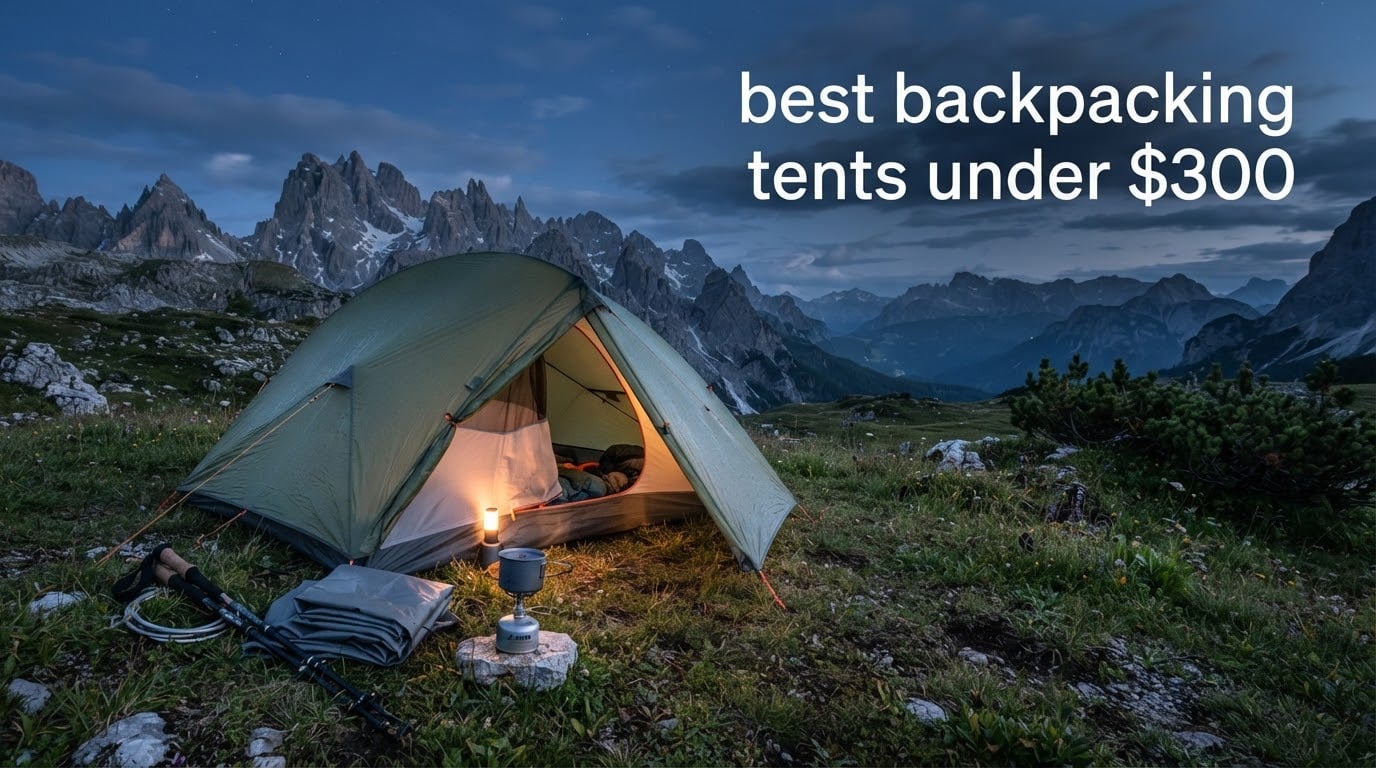
The best backpacking tents under 300 dollars are not ultralight, and pretending otherwise would waste your weekend. Every tent in this guide is a three-season shelter built from 68D to 210T polyester, aluminum or fiberglass poles, and a floor rated somewhere between 2000mm and 5000mm of water resistance. What you give up is weight and packed bulk. What you keep is a tent that survives real weather and real handling.
Our single best overall pick is the Forceatt 2-Person tent, which pairs two D-shaped doors and two vestibules with a 3000mm welded floor and a three-minute pitch. It is also the rare budget shelter that does not feel like an apology, and at 4.6 stars across nearly 2000 reviews it is one of the most heavily reviewed designs in this group. If your priority is value rather than features, the Naturehike Cloud-Up 2 ships with a footprint already in the box, which normally costs extra everywhere else.
We spent the last few weeks going through eight tents that fall under the 300 dollar ceiling, weighing the published specifications against what owners report after a season or two outside. Nothing here is a catalog copy. Every weight, denier rating, floor area and pitch time comes from the manufacturer listing, and the failure modes come from the reviews. Where owners disagree with the spec sheet, we say so.
Two things worth knowing before you read further. First, every tent on this list is at or under the ceiling right now, but prices in this category move constantly, so treat the ordering as a quality ranking rather than a value ranking. Second, none of these eight is a trekking-pole shelter, and that is a deliberate choice, because the sub-300 dollar trekking-pole options ask more of a beginner than most people expect.
Table of Contents
Top 3 Picks for the Best Backpacking Tents Under 300 Dollars for October 2026

Forceatt 2-Person Tent
- Two D-doors and two vestibules
- 3000mm welded floor
- 3-minute pitch with 7001 aluminum poles

Naturehike Cloud-Up 2 Person
- Footprint included in the box
- 3000mm+ coated 210T polyester
- Packs to 15.7 x 5.1 x 5.1 in
BISINNA 2-Person Tent
- Two D-doors with dual zippers
- 190T polyester with PU 2000mm fly
- Roomy for two with gear
If you want the short answer rather than the long one, these three cover the realistic use cases. The Forceatt is the strongest all-round design here, the Naturehike is the one to buy if you want the most complete package, and the BISINNA is one of the least expensive ways into a roomy two-person shelter that does not feel flimsy.
Quick Comparison of All Eight Tents for October 2026
| Product | Specs | Action |
|---|---|---|
| Forceatt 2-Person Tent |
|
Check Latest Price |
| BISINNA 2-Person Tent |
|
Check Latest Price |
| Naturehike Cloud-Up 2 Person |
|
Check Latest Price |
 Marmot Crane Creek 2P Marmot Crane Creek 2P |
|
Check Latest Price |
 Kelty Grand Mesa 2P Kelty Grand Mesa 2P |
|
Check Latest Price |
 TETON Mountain Ultra TETON Mountain Ultra |
|
Check Latest Price |
 Clostnature 2-Person Tent Clostnature 2-Person Tent |
|
Check Latest Price |
 Night Cat 1-Person Tent Night Cat 1-Person Tent |
|
Check Latest Price |
Read the weight column before anything else. Every one of these eight weighs about 4 pounds or more packed, which is a very different carrying experience from a 2-pound ultralight shelter. What that weight buys is fabric thick enough to survive being dragged over rock, and poles that do not snap when a gust hits them.
1. Forceatt 2-Person Tent – Two Doors, Two Vestibules and a Welded Floor
Forceatt Tent for 2 Person is Waterproof and Windproof, Camping Tent for 3 to 4 Seasons,Lightweight Aluminum Pole Backpacking Tent Can be Set Up Quickly,Great for Hiking…
2.5 kg
2 D-doors + 2 vestibules
PU 3000mm welded floor
32.67 sq ft
Pitches in 3 minutes
Pros
- Two D-shaped doors and two vestibules in a 2-person shelter
- 3000mm waterproof index with welded floor
- Three-minute pitch with 7001 series aluminum poles
- Large mesh window plus two ceiling vents for airflow
Cons
- Micro-mesh fabric wears faster than heavier fabric
- Zipper and fabric finish feel utilitarian
- Heavier than dedicated ultralight shelters
This is the tent we would hand a friend who asked for one recommendation. The spec sheet reads like a much more expensive product: two D-shaped doors, two vestibules, a 3000mm waterproof index, a welded floor and 7001-series aluminum poles. Most of the design decisions here favor two people sharing a shelter, which is exactly what most buyers of a two-person tent are doing.
The pitch is genuinely quick. Owners consistently report a three-minute setup with the two aluminum poles, and the included guylines, stakes, rainfly and storage sack mean you are not hunting for accessories on the first night. The interior measures 88.6 by 53.1 inches at the floor with 43.3 inches of peak height, which is 32.67 square feet, roomy enough for two standard sleeping pads with gear between them.
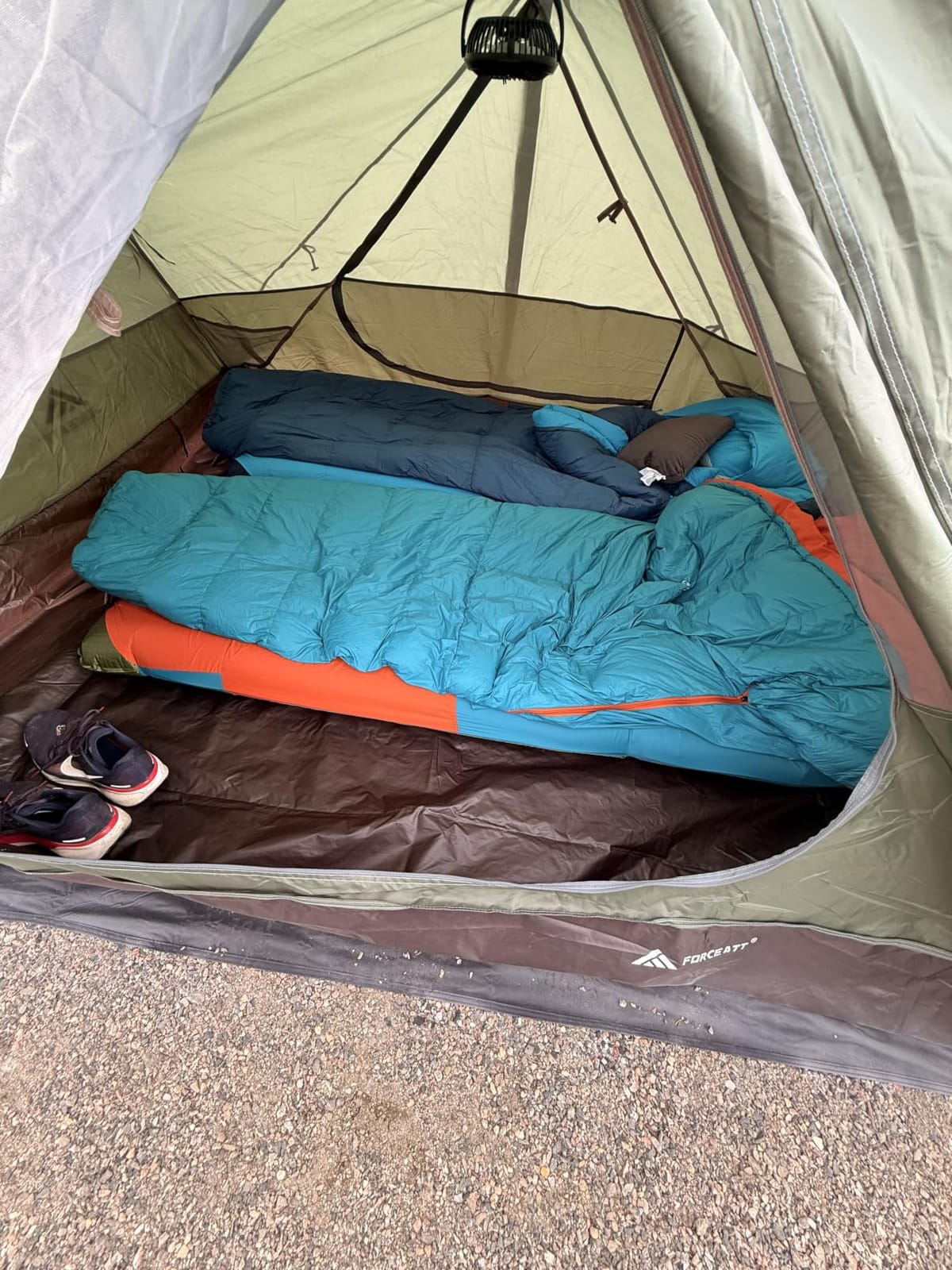
Ventilation is where budget tents usually compromise, and this one does not. A large mesh window plus two ceiling vents give you the airflow needed to reduce condensation, and the full-coverage rainfly keeps that airflow available in a downpour. The listed waterproof index of 3000mm and the welded floor are the two details that separate it from cheaper imports on the same shelf.
Owners rate it 4.6 out of 5 across nearly 2000 reviews, with a 76 percent five-star share. The recurring note in those reviews is that buyers end up using it as a roomy two-person shelter and then realize it is far heavier than a true ultralight alternative, at 2.5 kg. That is the honest trade: a tough, wet-proof, well-ventilated tent that adds real weight to your pack.
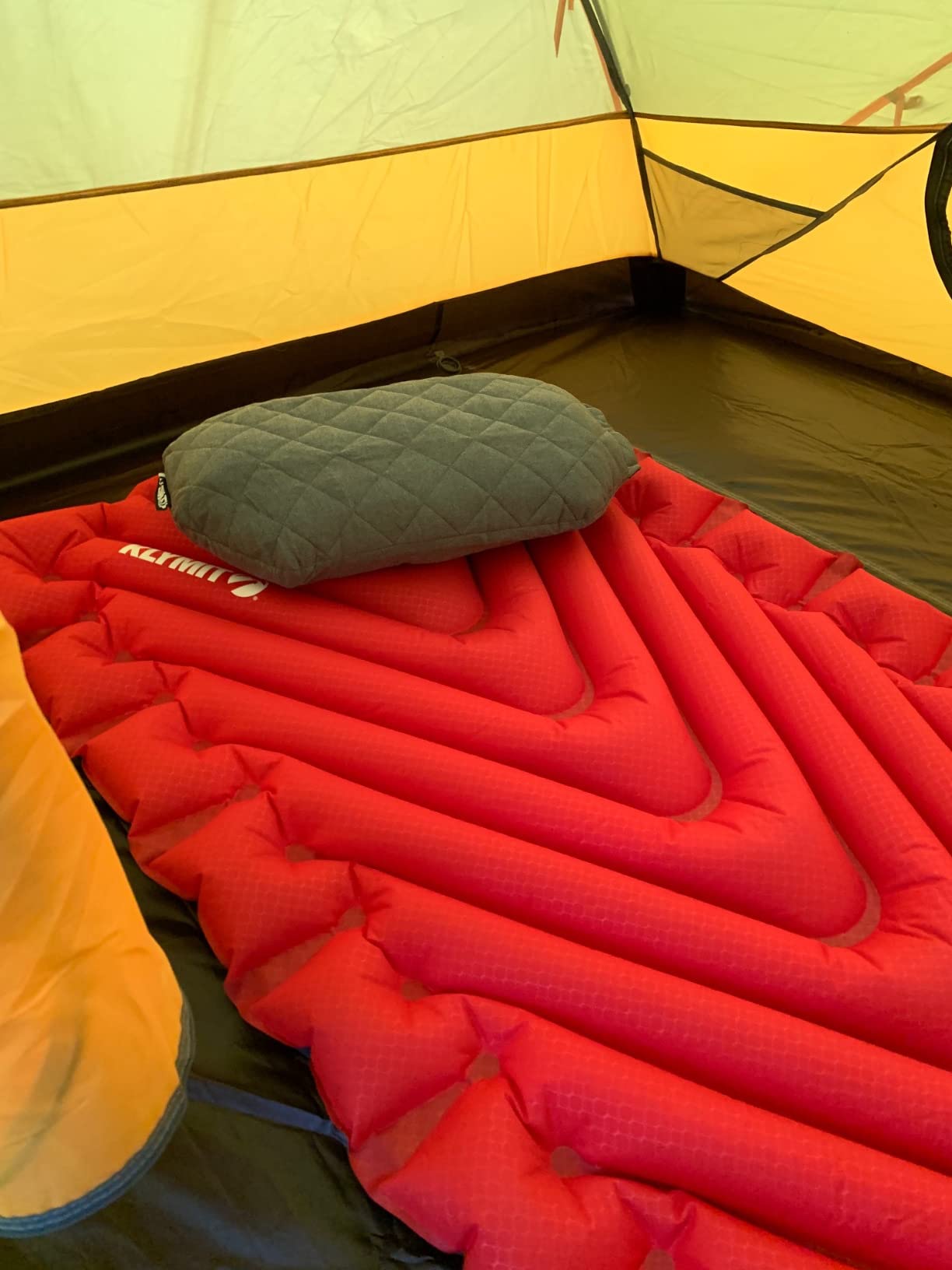
Is the Forceatt pitch a real two-person tent?
It is one of the more honest two-person ratings in this group. The 32.67 square foot floor is larger than most, and the two doors mean neither person has to climb over the other to leave at 5am. Two adults plus a night of gear is realistic.
The catch is weight, not space. At 2.5 kg you will feel that number, but splitting it across two packs puts roughly 1.25 kg of tent on each person, which is a fair trade for a full-featured shelter.
Where the Forceatt falls short
The micro-mesh fabric and the zipper finish are the two things owners mention as feeling utilitarian. If you are rough on gear or expect to drag the fly across rock, a heavier fabric would serve you better.
There is also no included footprint in the component list, so if you camp on wet or abrasive ground you will want to add a ground cloth and budget for the extra ounces. Owners on the product report no condensation complaints once the vents are used, which is rarer than it should be at this level.
2. BISINNA 2-Person Tent – Roomy Two-Door Shelter for First Trips
BISINNA 2/4 Person Camping Tent Lightweight Waterproof Backpacking Tent
4.7 lb
190T polyester
PU 2000mm rainfly
31.64 sq ft
Two D-doors
Pros
- Two D-doors with dual zippers for shared shelter
- Clear 190T polyester with PU 2000mm fly
- Roomy enough for two with gear
- Large mesh panels for airflow
- Packs to 16.9 x 5.9 x 5.9 in
Cons
- Roughly 4.7 lb is not ultralight
- Condensation on the outer shell in humid conditions
- Bulky when packed
The BISINNA is the entry point we recommend to someone on their first few overnight trips, and it is the tent most often described in owner reviews as strong value in the budget backpacking category. It is a straightforward two-pole freestanding dome with 7001-series aluminum poles and a 190T polyester inner and fly.
The rainfly carries a PU 2000mm rating, which is lower than the Forceatt or the Clostnature, and it shows up in a specific way: some reviewers report condensation on the outer shell in humid conditions. That is a moisture management issue more than a leak issue, and it responds to the large mesh panels by keeping air moving.
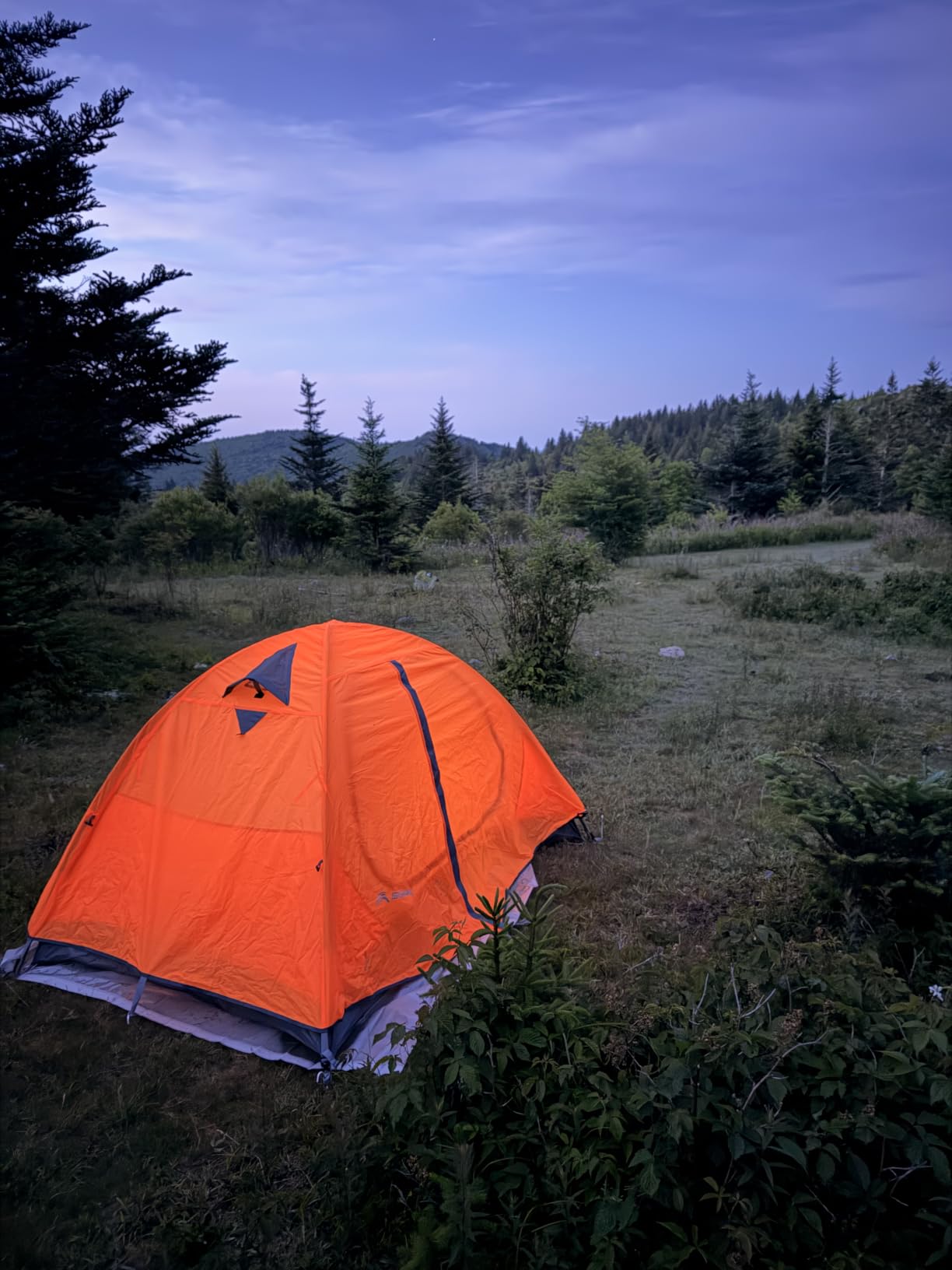
Setup takes under ten minutes by the manufacturer’s estimate, and the two D-shaped doors with dual zippers are the feature owners mention most. The floor area is 31.64 square feet, which gives a usable two-person interior with room for gear, and the pack size of 16.9 by 5.9 by 5.9 inches is compact for a tent of this size.
At 4.7 pounds, this is not a light tent, and owners are candid about that. The bulky packed size also gets called out by people who carry smaller packs, since it may need to sit outside the main body of the bag. Buyers also note a need for a footprint in wet ground, and occasional loose threads at seams.
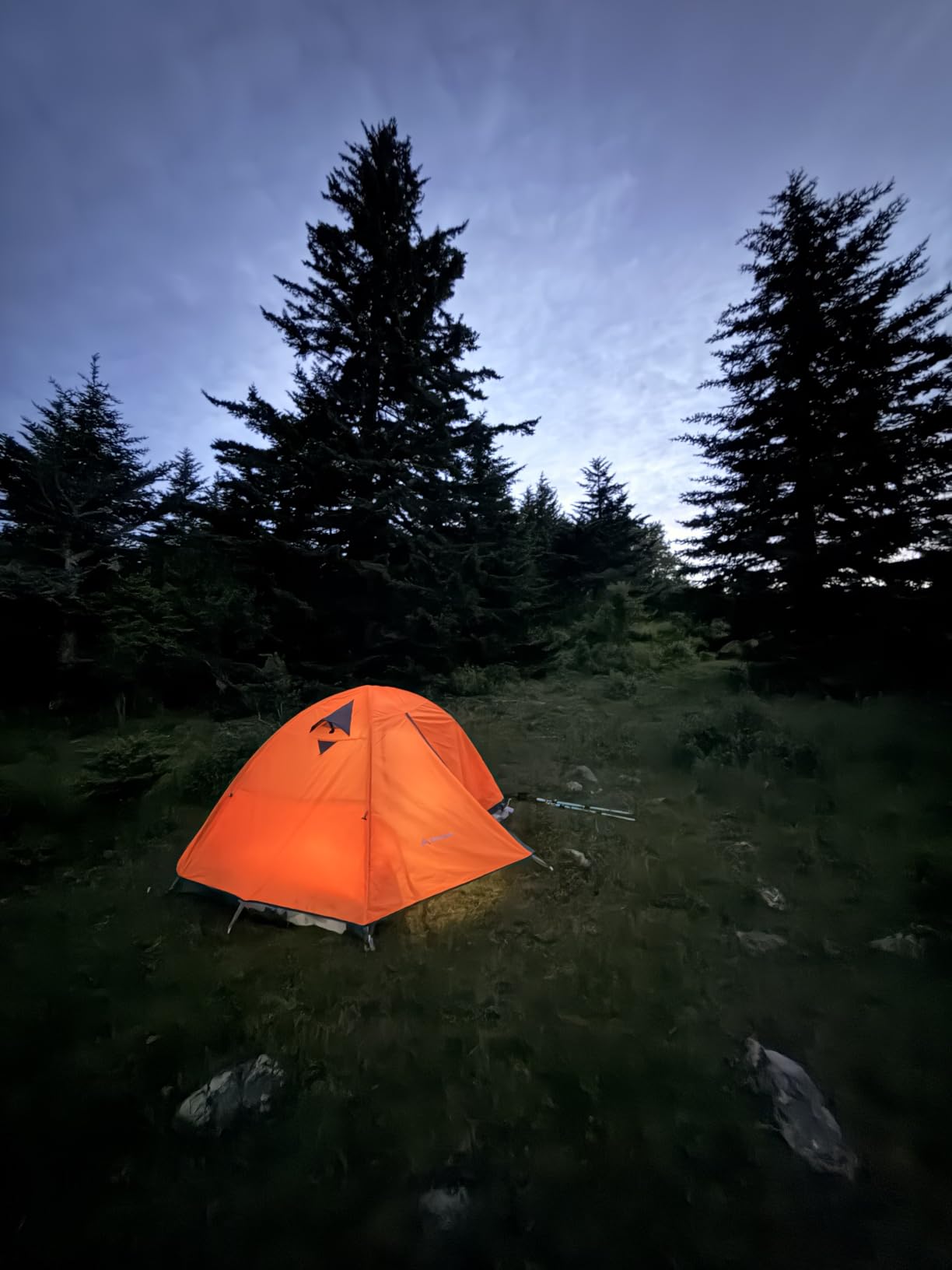
Does the BISINNA handle two adults and a night of gear?
Yes, comfortably enough for weekend trips. The two-door layout removes the main friction of sharing a two-person shelter, and 31.64 square feet is a workable floor for two pads plus a pack each. First-time buyers rarely find it cramped.
Expect condensation rather than leaks in humid forest camping, which is why the mesh areas matter. Dry desert or alpine air suits it better than deep-fog coastal nights.
When to skip the BISINNA
If your walking weight target is strict, 4.7 pounds is the number that will decide it. Pair it with a partner and it becomes 2.35 pounds each, which is the common way this tent gets carried.
It also carries only a two-year manufacturer warranty, and the included stakes and ropes are functional rather than premium. If you expect to send it into sustained wind or snow, a seam-taped model like the Marmot Crane Creek is the safer bet.
3. Naturehike Cloud-Up 2 Person – The Footprint Is Already in the Box
Naturehike Cloud up Base Backpacking Tent, Waterproof Lightweight 2 Person Tent for Camping, Double Layer Two Person Tent with Footprint
4.3 lb
Footprint included
210T polyester 3000mm+
82.7 x 49.2 x 41.3 in
2-minute pitch
Pros
- Footprint included
- rare at this price
- Two-minute pitch and compact 15.7 x 5.1 x 5.1 in pack
- Holds up in heavy rain and snow per owners
- Mesh inner plus a vent window above the door
Cons
- Only one door for a two-person tent
- Two-person rating is optimistic
- 4.25 lb is heavy for a solo hiker
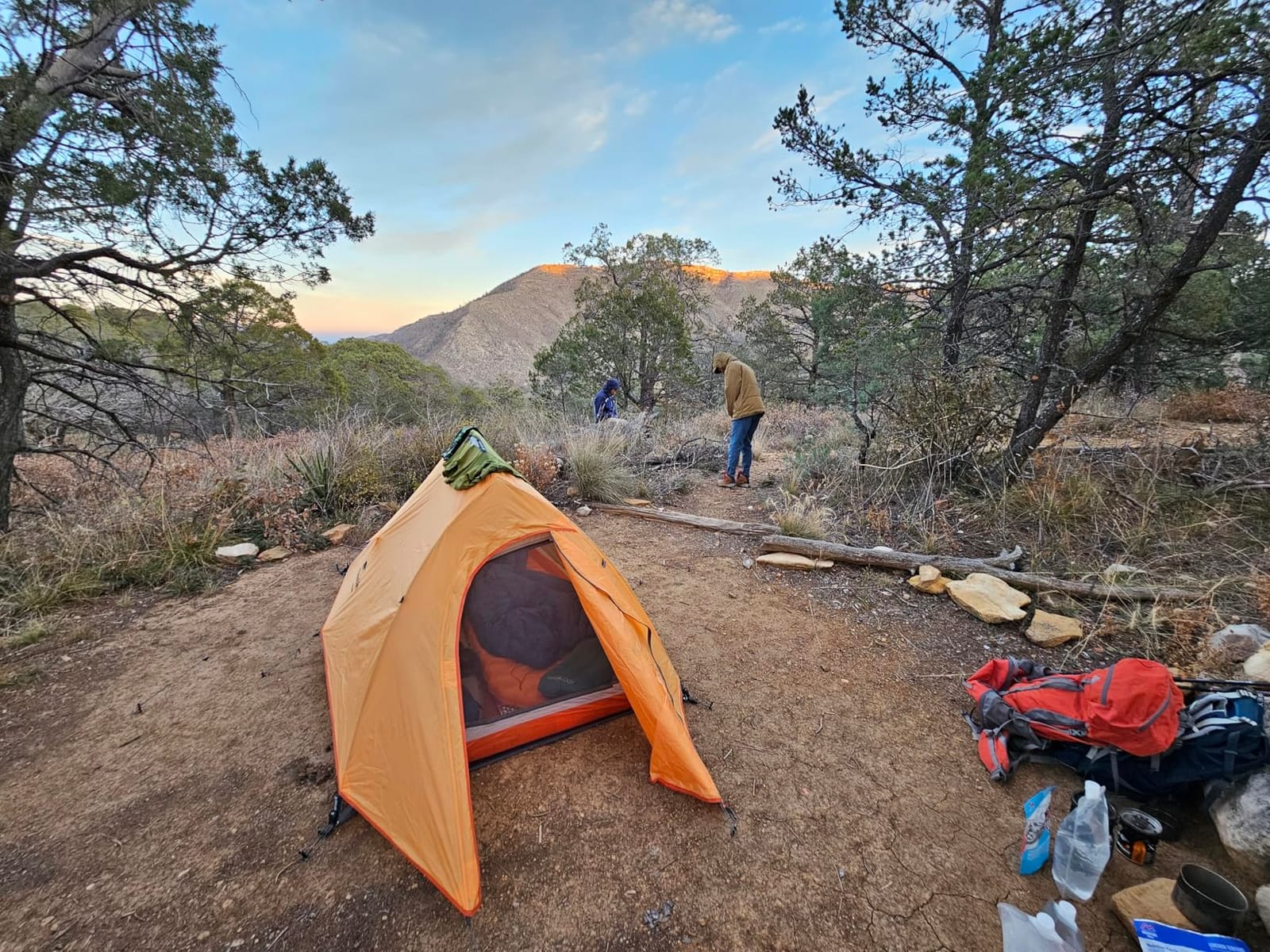
This is the most self-contained package in the group, and the reason is simple: a matching footprint is included in the box, along with 14 stakes, five wind ropes and a carry bag. Owners repeatedly single that out, because a footprint sold separately adds both cost and pack weight for anyone camping on wet or rocky ground.
The upgraded Cloud-Up base uses 210T polyester with a 3000mm+ waterproof coating, taped corners and taped seams, and 7001 aluminum alloy poles. The tent measures 82.7 inches long by 49.2 wide by 41.3 high, and the listed weight is 4.25 pounds excluding the footprint, or 4.3 pounds as packed.
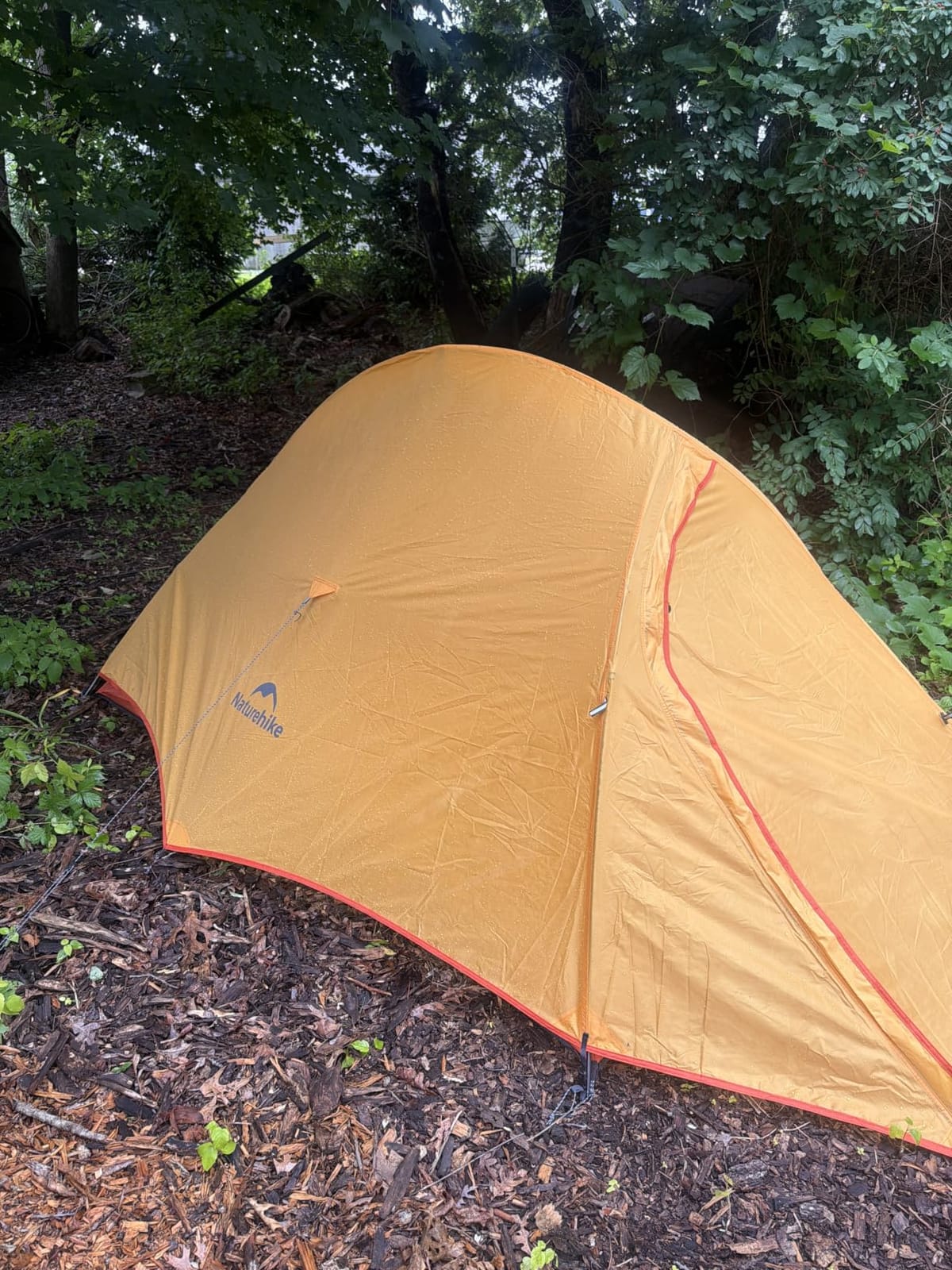
It pitches in about two minutes and packs to 15.7 by 5.1 by 5.1 inches, which is among the most compact results here. The double-layer design means the rainfly can double as a sun shelter or a kitchen canopy, and the vent window added above the door is a genuine improvement over the earlier version of this tent.
Reviewers report it holding up in heavy rain, wind and even snow. The recurring criticism is the single front door, which becomes genuinely awkward when two people need to get out during a rainstorm, and the two-person rating, which several owners describe as optimistic. It works better as a very roomy solo tent.
Is the included footprint worth using?
It is worth using on wet or abrasive ground, and it costs you nothing because it is already in the box. One caution from experienced users: tuck the footprint fully under the tent so the edges cannot catch rain and pool it, which defeats the entire purpose.
It also means your backpacking footprint is not an optional purchase, so the effective total weight is the full 4.3 pounds plus stakes rather than the bare shell weight.
Where the Cloud-Up disappoints
One door is the big one. Owners who camp with a partner describe squeezing past each other in a downpour, and for a two-person shelter that is a real livability cost. The 4.25 lb weight is also heavy if you are carrying it alone.
The warranty is two years, which is thinner than the Marmot’s coverage, and the two-person capacity is more of a solo-plus-gear rating in practice. Choose it if you hike solo, bikepack, or want the most self-contained package.
4. Marmot Crane Creek 2P – Seam-Taped Construction and a Lifetime Warranty
Marmot Crane Creek 2P Tent | Marmot Tent, Two-Person, Lightweight and Durable for Backpacking, Camping, Mountaineering in Fall
2400 g
32 sq ft
Seam-taped floor and fly
2 D-doors + 2 vestibules
PFAS-free
Pros
- Two doors and two vestibules in a two-person freestanding tent
- Seam-taped floor and fly held dry in sideways rain
- wind
- snow and hail
- Pitches and breaks down in about 2 minutes
- Permanent non-transparent fabric holds warmth
- Manufacturer limited lifetime warranty
Cons
- 2400 g is heavy for long-distance backpacking
- Thin floor fabric that most owners pair with a footprint
- Only 4 guylines and 6 stakes included
- Snug for two - better for one person plus gear
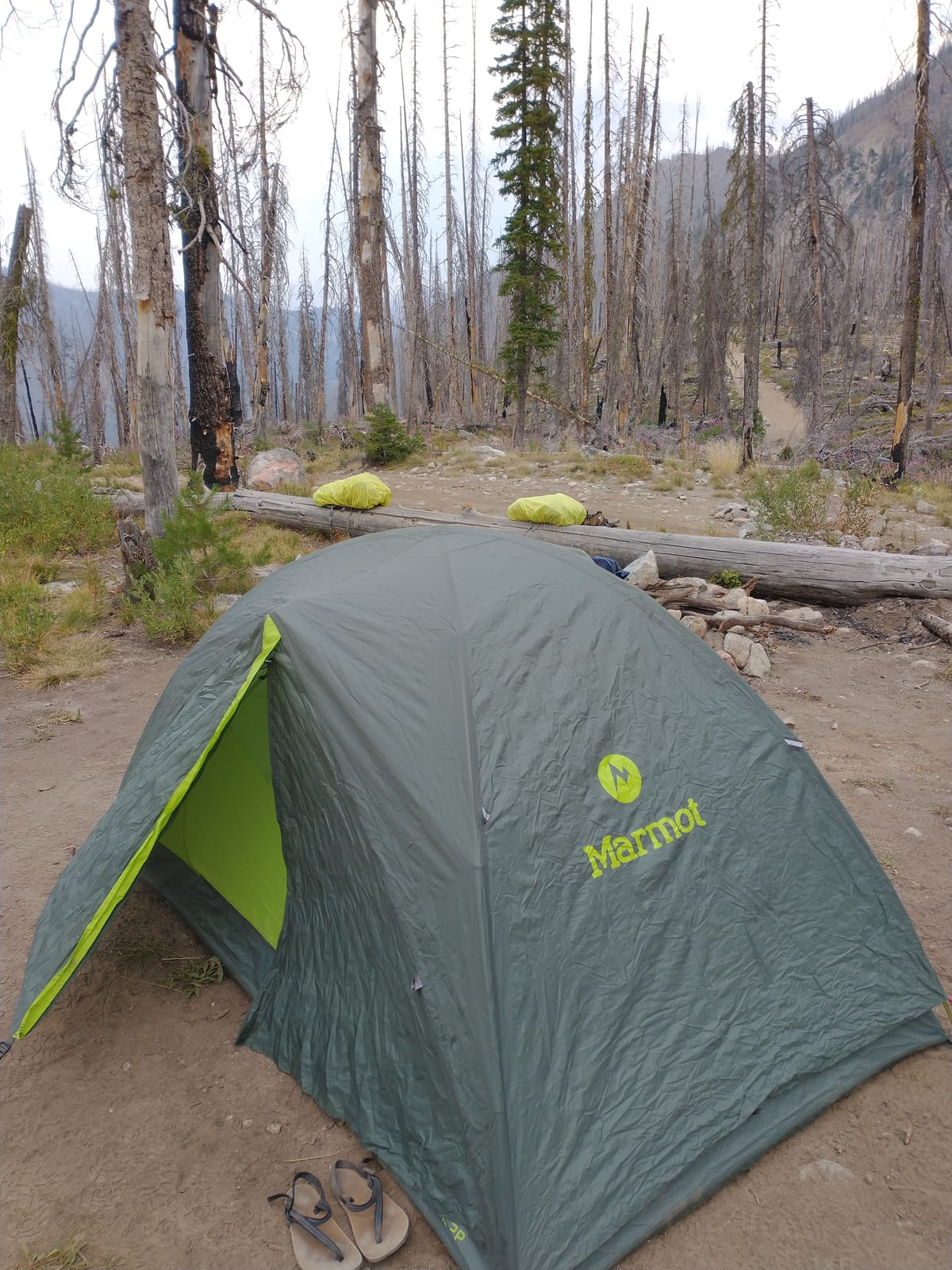
The Marmot Crane Creek is the most weather-serious shelter on this list by construction rather than by coating, and the specification that earns it that title is seam taping. Both the floor and the polyester fly are fully seam taped, which is the single most effective thing a manufacturer can do to stop rain entering the walls. Owners report staying dry through sideways rain, wind, snow and hail.
It is also one of only two tents here with a lifetime warranty, which changes the math if you keep gear for a decade. The construction is 7000-series aluminum poles, a private non-transparent fabric that holds warmth in colder weather, and PFAS-free materials throughout.
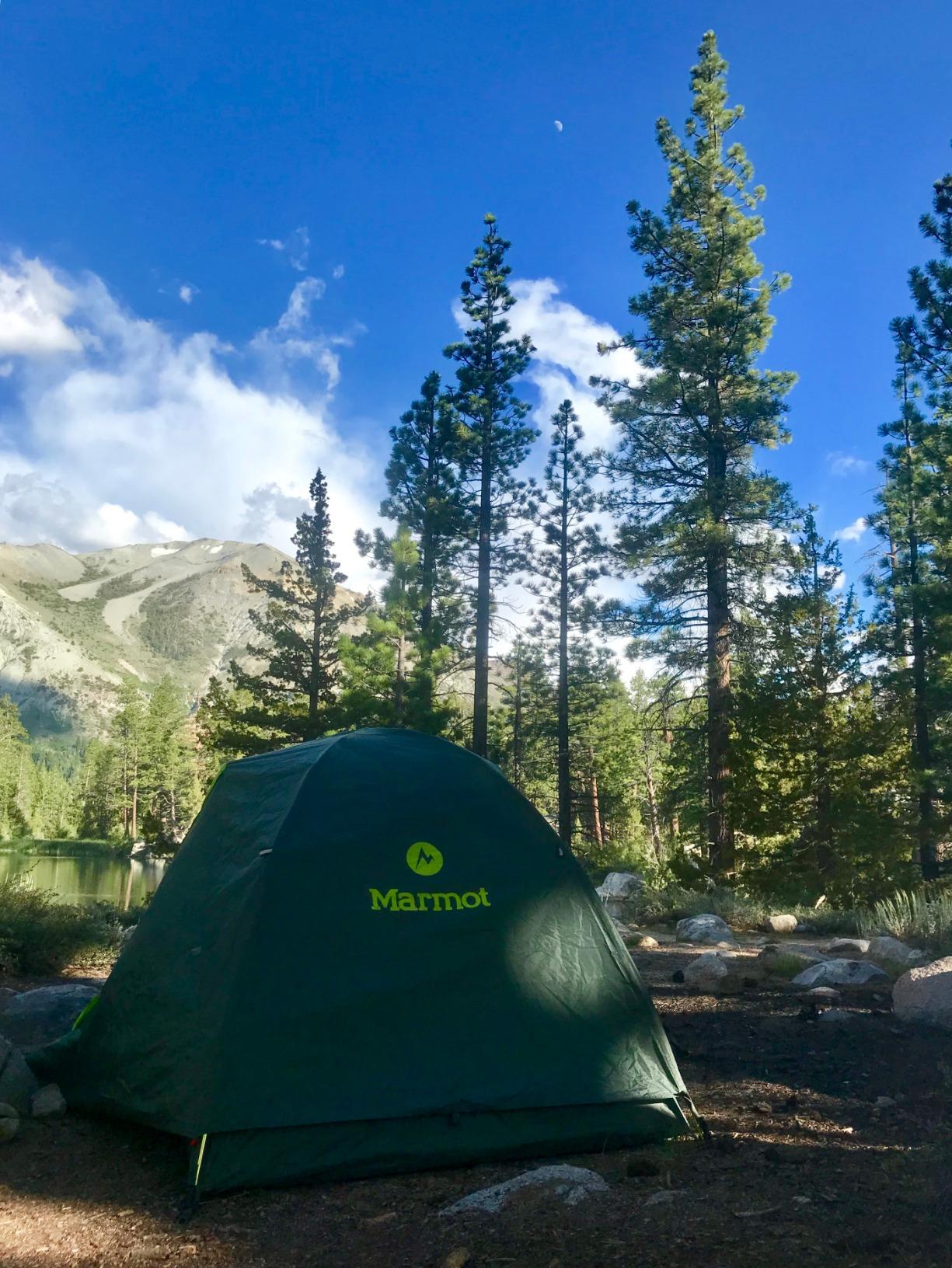
The interior is 32 square feet, or 3 square meters, in a footprint of 86 by 50 inches with 43 inches of height. Two large D-shaped doors and two overhead vestibules mean two people can leave and stow gear without fighting each other, and dropping the fly on warm nights turns it into a screened porch.
At 2400 grams, this is one of the heavier two-person shelters here, and owners do not pretend otherwise. The recurring advice from those who use it is to pair it with a footprint, because the floor fabric is thin. Only four guylines and six stakes are included, and the aluminum stakes bend on rocky ground.
Is the Crane Creek weatherproof enough for shoulder-season storms?
Yes. The seam-taped floor and fly, a 32 square foot interior and two vestibules make it the pick here for exposed campsites and shoulder-season trips. Owners report dry nights in conditions that send cheaper tents home wet.
The trade is real though: 2400 grams means roughly 1.2 kg per person split two ways, and the thin floor is the one place the spec sheet gives ground. Add a footprint and you are still the best-protected tent in this roundup.
Who should not buy the Crane Creek
Anyone chasing a low baseweight. This is a durable, livable shelter rather than a fast and light one, and reviewers consistently describe it as better suited to one person plus gear than to two adults sharing.
The footprint is sold separately, so budget for that extra weight and cost. If you are one hiker with a lot of gear, this is a very strong shelter, and the lifetime warranty removes most of the risk of buying it.
5. Kelty Grand Mesa 2P – Quick Three-Season Setup With a 3300HH Floor
Kelty Grand Mesa Backpacking Tent, 2 or 4 Person, Aluminum Poles (2P)
4 lb 1 oz
68D polyester
3300HH coating
Taped seams
30 sq ft
Pros
- Sets up in 3-5 minutes with Quick Corners and buckle fly attachment
- Stayed dry in multi-day rain and cold high elevations
- Solid aluminum poles and metal stakes
- Single vestibule keeps boots and gear dry
Cons
- Too small for two non-couples
- Heavy and bulky when packed
- Footprint sold separately
- Vestibule does not reach the ground
The Grand Mesa solves a specific problem: getting a tent up in bad light, in wind, in the dark, with cold hands. The Quick Corners system holds the poles in place during setup, and the buckle fly attachment means you are not zipping fabric over poles in a rising wind. Owners put the total time at three to five minutes, which is fast without being a one-minute pitch.
Weather protection is the surprise. The 68D polyester floor and rainfly carry a 3300HH waterproof coating and fully taped seams, and reviewers report staying bone dry through multi-day rain and cold nights at elevation. The 85 by 57 inch floor gives 30 square feet of interior with a 44 inch peak height.
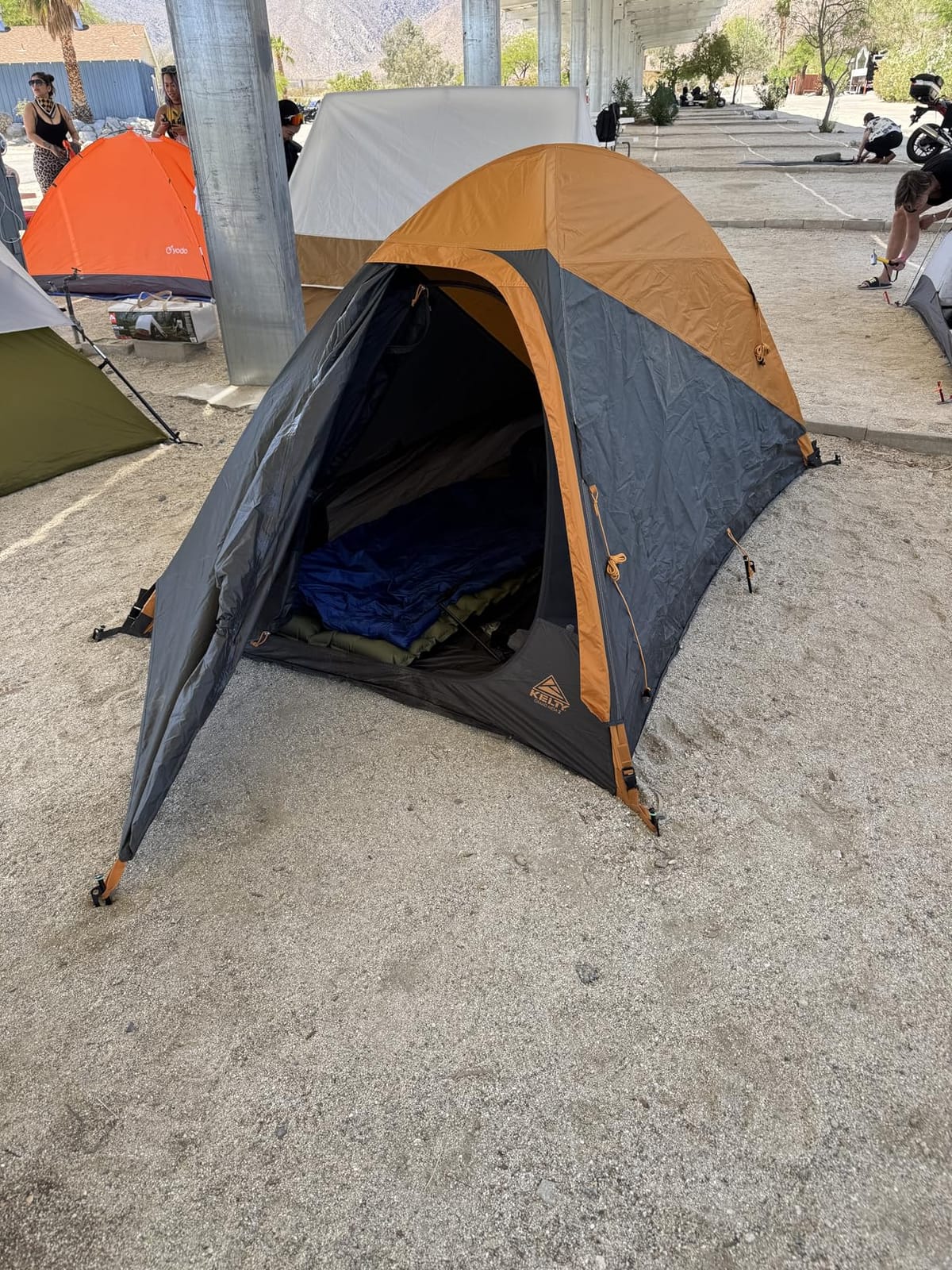
It packs to 16 by 7 by 7 inches at about 4 pounds 7 ounces, with the 2-person model listed at 4 pounds 1 ounces, and the Shark Mouth carry bag is genuinely good. The included aluminum stakes and metal hardware feel durable, and two interior pockets plus ceiling loops create a useful storage shelf.
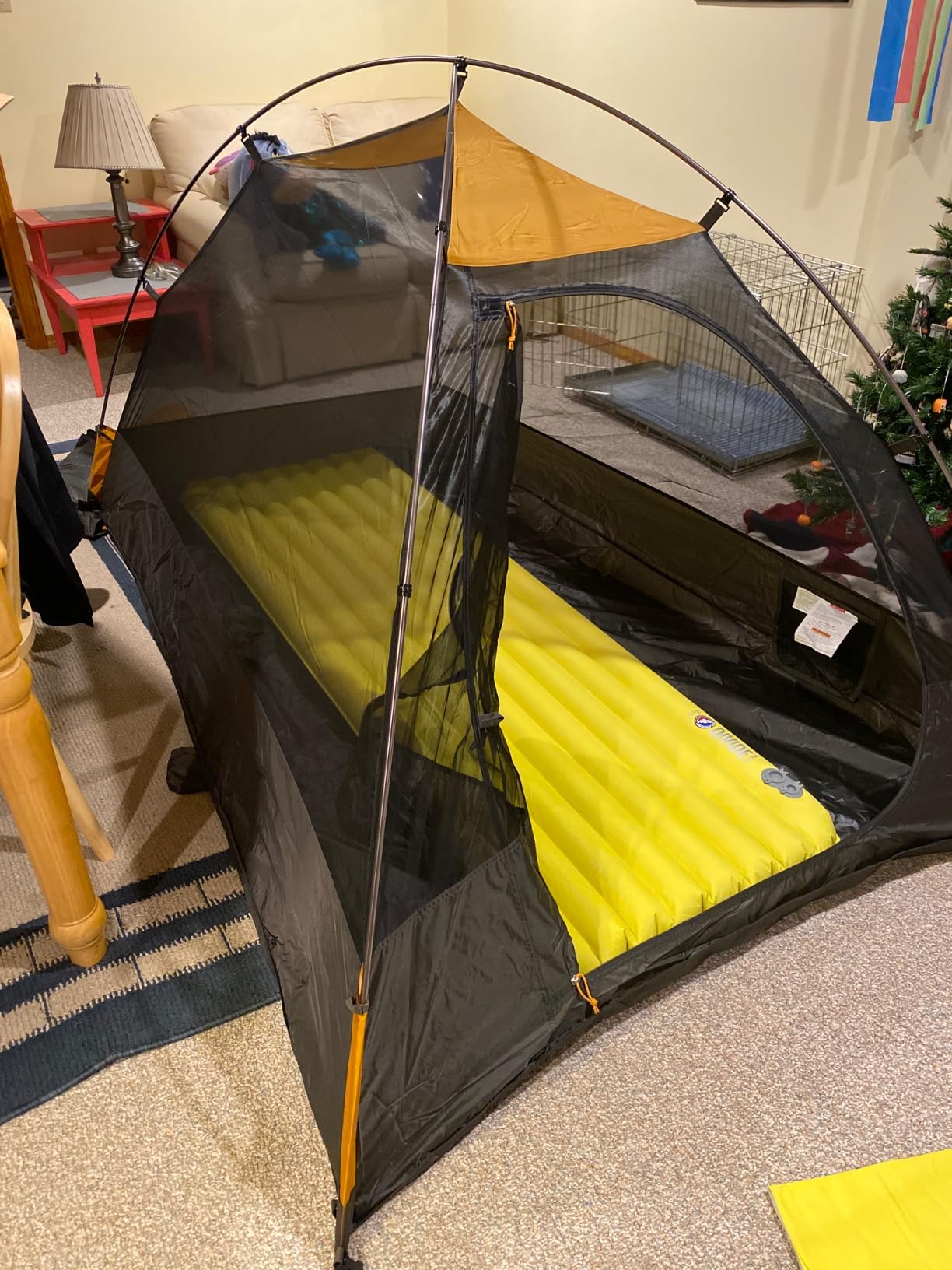
The honest catch is capacity. Nearly every owner note describes the two-person rating as realistically a roomy single-person tent, which is a warning if you plan to share with a partner. The footprint is a separate purchase, the vestibule does not extend fully to the ground, and the zippers pull hard at first.
Is the Grand Mesa big enough for two adults?
For two people who know each other well and pack light, yes. For two adults plus packs and gear, most owners say it is tight. If you are sharing with a partner who values space, look at a two-door model instead.
As a solo tent with a pack inside, 30 square feet and 44 inches of peak height is genuinely comfortable, and the easy pitch means you can put it up in the dark without fighting fabric.
What to watch for with the Grand Mesa
The vestibule that stops short of the ground is the detail owners mention most, because it is where wet boots end up. Plan a small mat or a gear liner for anything you do not want damp.
At roughly 4 pounds with a bulky 16 by 7 by 7 inch pack, it is not a light carry, and you will need to buy a footprint separately. For heavy rain and easy setup though, the 3300HH coated, taped construction is a strong combination.
6. TETON Sports Mountain Ultra – A Solid Shelter That Is Not a Long-Haul Tent
Teton Mountain Ultra Tent; 1 Person Backpacking Dome Tent for Camping
8.7 lb
66D ripstop fly
150D Oxford floor
Full mesh top
Single person
Pros
- Stitching
- poles and fabric hold up through snow
- storms and heat
- Full dome mesh top gives excellent airflow with no condensation reported
- Stayed dry in moderate to heavy rain
- About 10 minutes solo to pitch
Cons
- Included stakes are weak and worth replacing
- Not a lightweight backpacking tent at 8.7 lb
- Footprint sold separately
- Rainfly door zipper can snag
This tent is a good build attached to a heavy frame, and the split between the two is the whole story. The fabric and stitching are good, with a 66D 3mm ripstop rainfly, a 150D polyester Oxford floor and a full dome mesh top. The 8.7 pound listed weight is not a typo, and it is the reason this is not a thru-hiking choice.
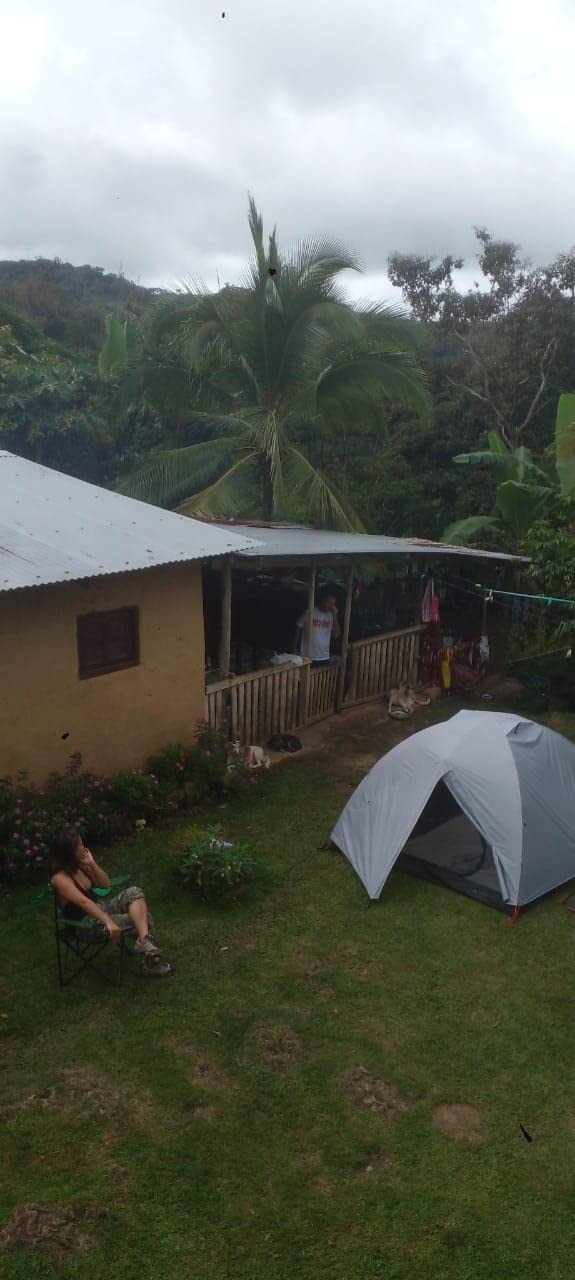
Ventilation is the standout feature. The full dome mesh top, combined with a 360-degree ventilation system and side vents, produces the airflow that keeps condensation away, and multiple reviewers report no condensation at all. The 80 by 30 by 41 inch dimensions are a narrow single-person footprint with room for a pack.
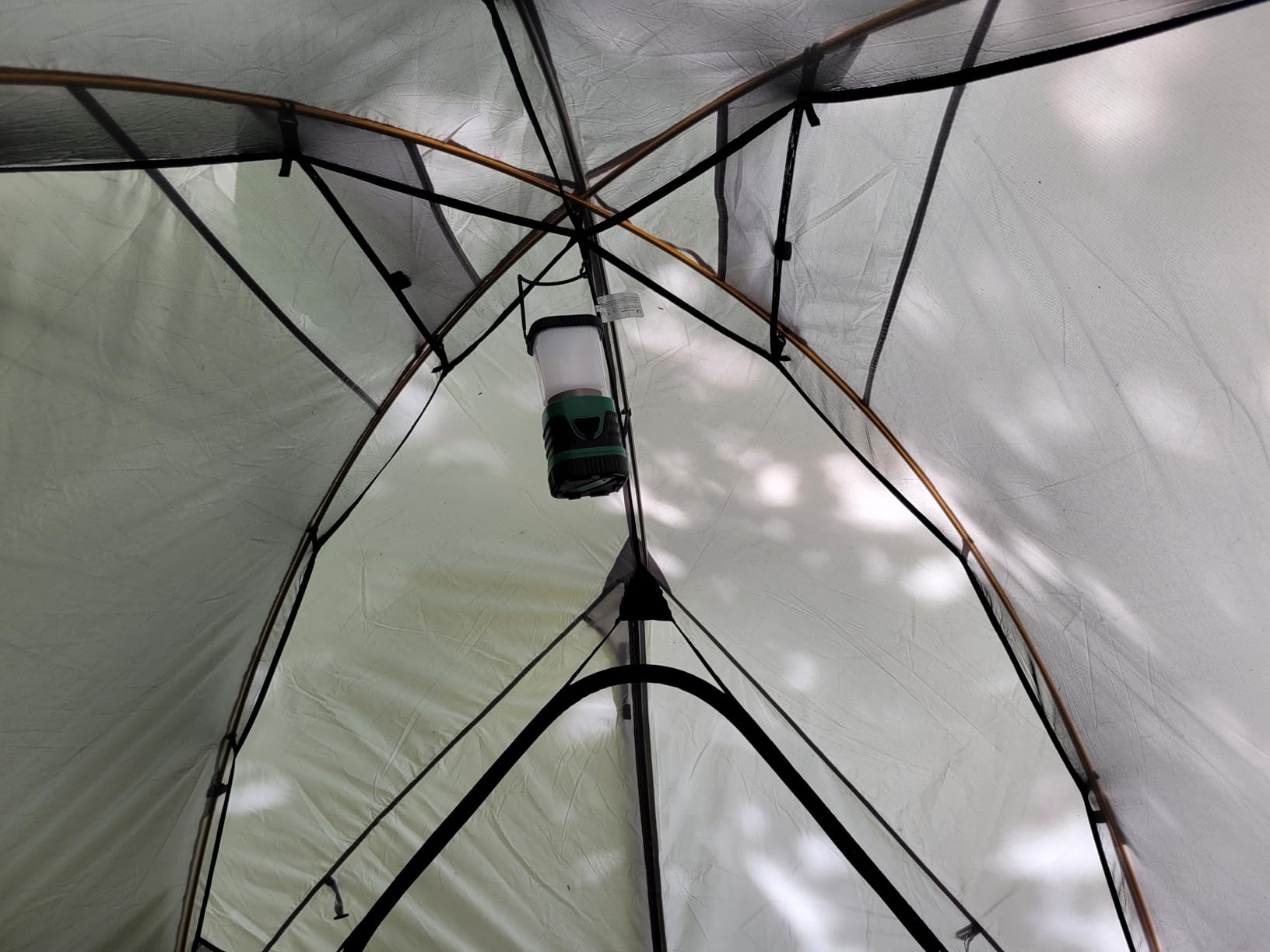
Owners also report the tent staying dry in moderate to heavy rain, and holding up through snow, storms and heat without complaint. Setup takes about ten minutes solo including guylines, and there are multiple storage pockets, a ceiling hammock net and a lantern hook, which is a lot of interior organization for a single-person shelter.
The two downsides buyers mention most are the bundled stakes, which are consistently described as weak, and the missing footprint, which is an add-on purchase. The rainfly door zipper can also snag on the fabric when you are tired, which matters more than it sounds at the end of a long day.
Who is the Mountain Ultra right for?
It is right for a solo hiker on a basecamp-style trip, a car camping crossover, or anyone who values ventilation and a solid build more than pack weight. The mesh top makes it genuinely pleasant in warm, still conditions where other tents turn into sweatboxes.
It is also one of only two tents here with a lifetime warranty against defects in materials and workmanship, which is a meaningful long-term advantage for a fixed setup.
Why we would not take it on a long trail
At 8.7 pounds, this is the heaviest shelter in the guide, and no amount of good design changes what that does to a loaded pack. Add a footprint and better stakes and the number gets worse, not better.
If your trips involve carrying the tent more than a few hundred meters, the Forceatt or the Naturehike is a far better use of your budget. Buy this one for the campsite it lives at, not the trail it travels on.
7. Clostnature 2-Person Tent – PU 5000mm and Two Doors
Clostnature 2 Person Lightweight Backpacking Tent, Camping Tent
5.29 lb total
4.52 lb trail weight
PU 5000mm
2 D-doors + 2 vestibules
Sealed seams
Pros
- Very easy two-pole freestanding setup for a first-time user
- Two D-shaped doors and two vestibules
- Held dry through pouring rain
- hail and thunderstorms
- 14 sturdy stakes plus a pole repair kit included
- All-mesh interior walls for airflow
Cons
- Fabric feels thin compared with premium tents
- Packed length is long for smaller packs
- Poles do not clip tightly to the fabric loops
- Condensation unless the top vents are used
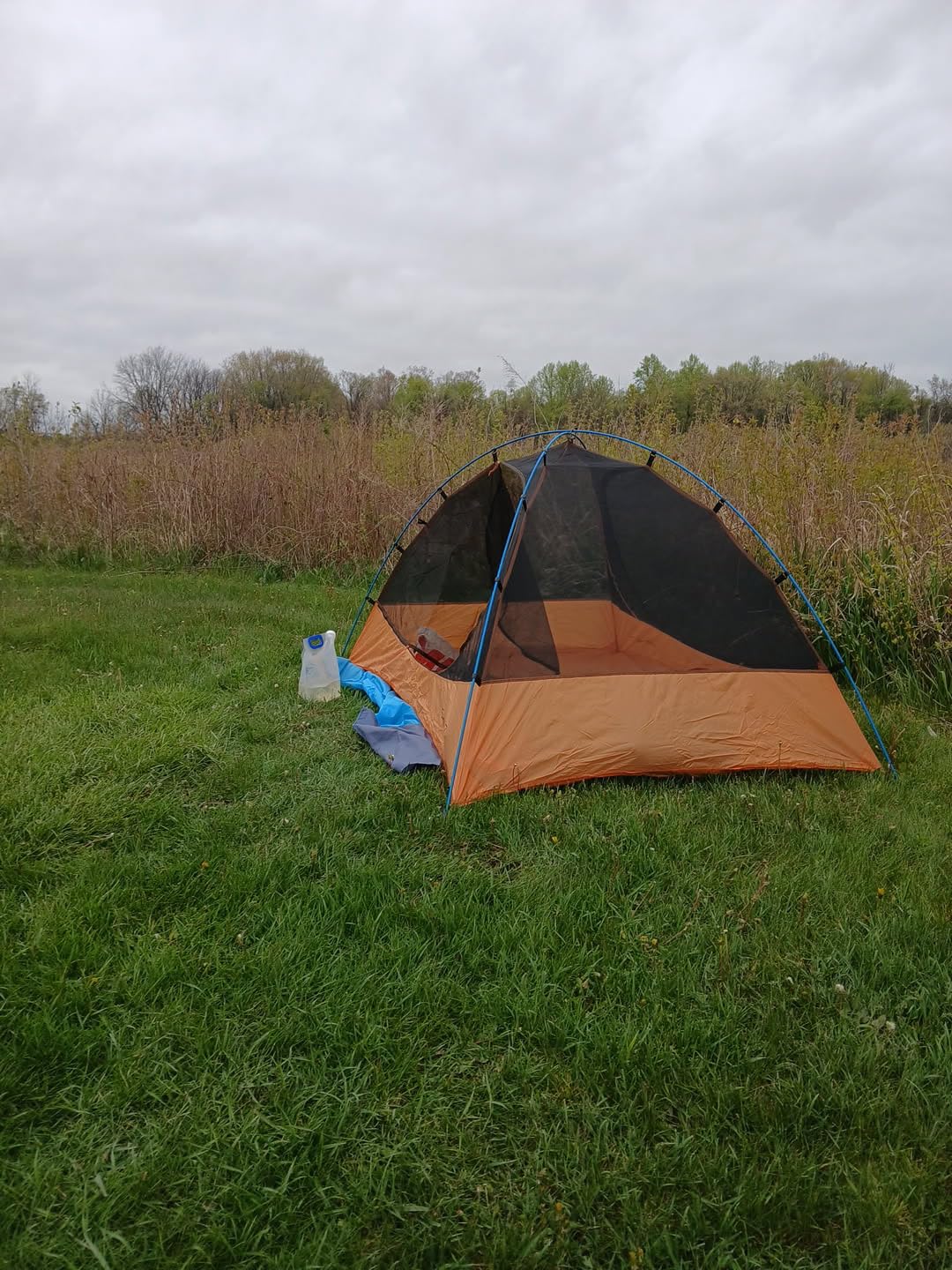
The Clostnature has the highest waterproof coating rating in this guide. The rainfly, groundsheet and bathtub floor all carry a PU 5000 coating, the seams are factory sealed, and the fabric has a UV 30+ rating. Multiple owners report keeping dry through pouring rain, hail and thunderstorms.
It is also one of only two tents here that publish a minimum trail weight as well as a total weight, which is a sign of a more honest spec sheet. The 2-person size weighs 5.29 pounds fully loaded, or 4.52 pounds as minimum trail weight without stakes and guylines.
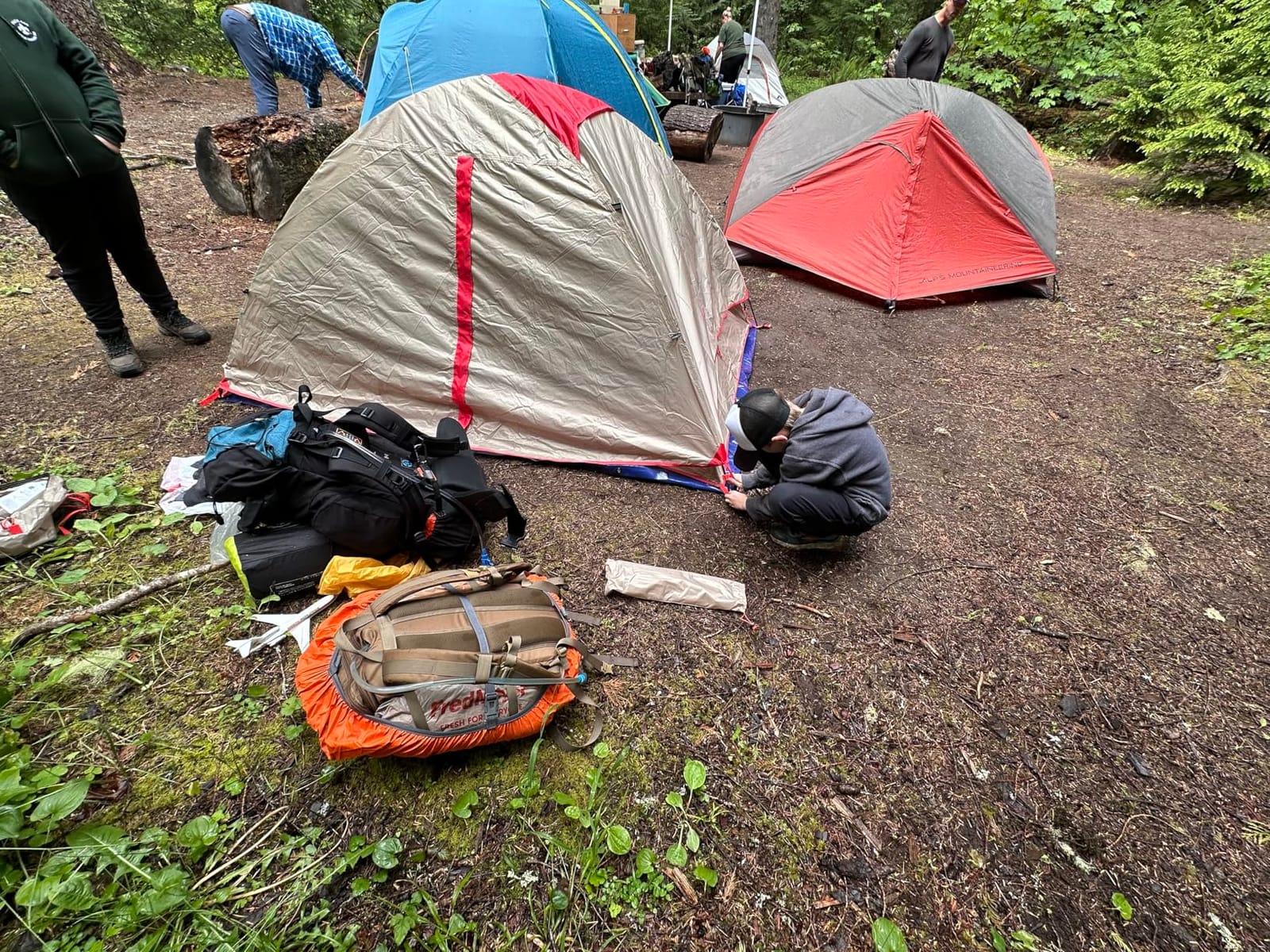
The layout is generous: two D-shaped doors, two side vestibules, two windows and two interior pockets, with all-mesh interior walls for airflow. The two-pole freestanding design pitches in about three minutes, which owners describe as easy enough for a child or a first-time user to manage.
At 4.5 stars across more than 3000 reviews, this is one of the most heavily reviewed tents in the group, and the feedback is consistent. Buyers like the value, the dual doors and the all-weather performance. They warn that the fabric is thin and light-duty next to a premium tent, that the 16.5 by 5.9 by 5.9 inch pack is long inside a smaller hiking pack, and that the poles do not clip tightly to the fabric loops.
Is the highest waterproof rating the best protection?
Not automatically, but it does a lot of work here. A 5000mm bathtub floor stops water coming up through the ground, which is where most tent leaks actually start, and factory-sealed seams remove the other common failure point. Owners report the tent holding dry in storms that beat bigger-name shelters.
The catch is that the top ventilation flaps need to be used. Owners note the tent can pick up condensation otherwise, because the all-mesh interior moves a lot of air and the fly does the trapping.
What to weigh before buying the Clostnature
At 5.29 pounds total, this is a heavy tent, and the minimum trail weight of 4.52 pounds is the fairer number for a strict weight budget. Split between two people, 4.52 pounds is about 2.26 pounds each, which is workable.
There is no footprint included, and with a thin floor you may want one. The one-year guarantee is the shortest warranty here, so inspect the seams and poles on arrival. It is also available in 1, 1.5, 3, 4 and 6 person sizes, so check the size you actually order.
8. Night Cat 1-Person Tent – The Smallest Pack in the Group
Night Cat Backpacking Tent for One 1 to 2 Persons Lightweight Waterproof Camping Hiking Tent for Adults Kids Scouts Easy Setup Single Layer 2.2×1.2m
4.4 lb
PU 3000mm taped seams
190T nylon
1-2 minute pitch
16.5 x 4.7 x 4.7 in
Pros
- One to two minute setup with a single pole
- Packs to roughly loaf-of-bread size at 16.5 x 4.7 x 4.7 in
- Kept reviewers dry in medium-heavy and heavy rain
- Roomy enough for one person plus a full pack
- Protective pole casing avoids fiberglass splinters
Cons
- Fiberglass pole joints are the most common failure point
- Single-layer design leaves the lower body exposed
- Door gap when staked lets wind and moisture in
- Guy lines lack hooks and must be tied by hand
The Night Cat is the simplest legitimate backpacking tent in this guide, and it is the one to buy as an emergency shelter, a first tent, or a bike-touring shelter that lives in a top-tube bag. It is a single-layer dome in 190T nylon with a PU 3000mm coating, taped seams, one door and a single fiberglass pole.
Setup takes one to two minutes, among the fastest here, and the packed size of 16.5 by 4.7 by 4.7 inches is the narrowest result across all eight tents. The interior measures 7.0 by 3.8 by 3.6 feet, which is enough for one person plus a full backpack.
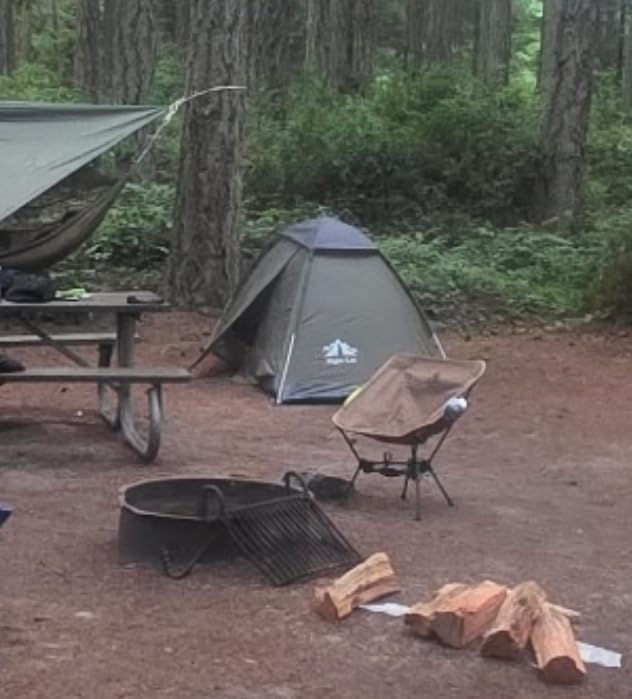
Owners report it keeping them dry in medium-heavy and heavy rain, and the mesh door with a roof mesh window provides more airflow than a typical single-wall shelter. The fiberglass poles sit inside a protective outer casing, which stops the splinters that usually make fiberglass tents unpleasant to pitch.
It also carries the lowest rating in this group at 4.3 out of 5, with a 67 percent five-star share, and the reasons are consistent. The fiberglass pole joints are the most common failure point, some reviewers report snapped poles, and the single-layer design with a limited rainfly leaves the lower body exposed to weather. The door gap when staked can admit wind and moisture, and the guy lines have no hooks, so you tie them by hand.
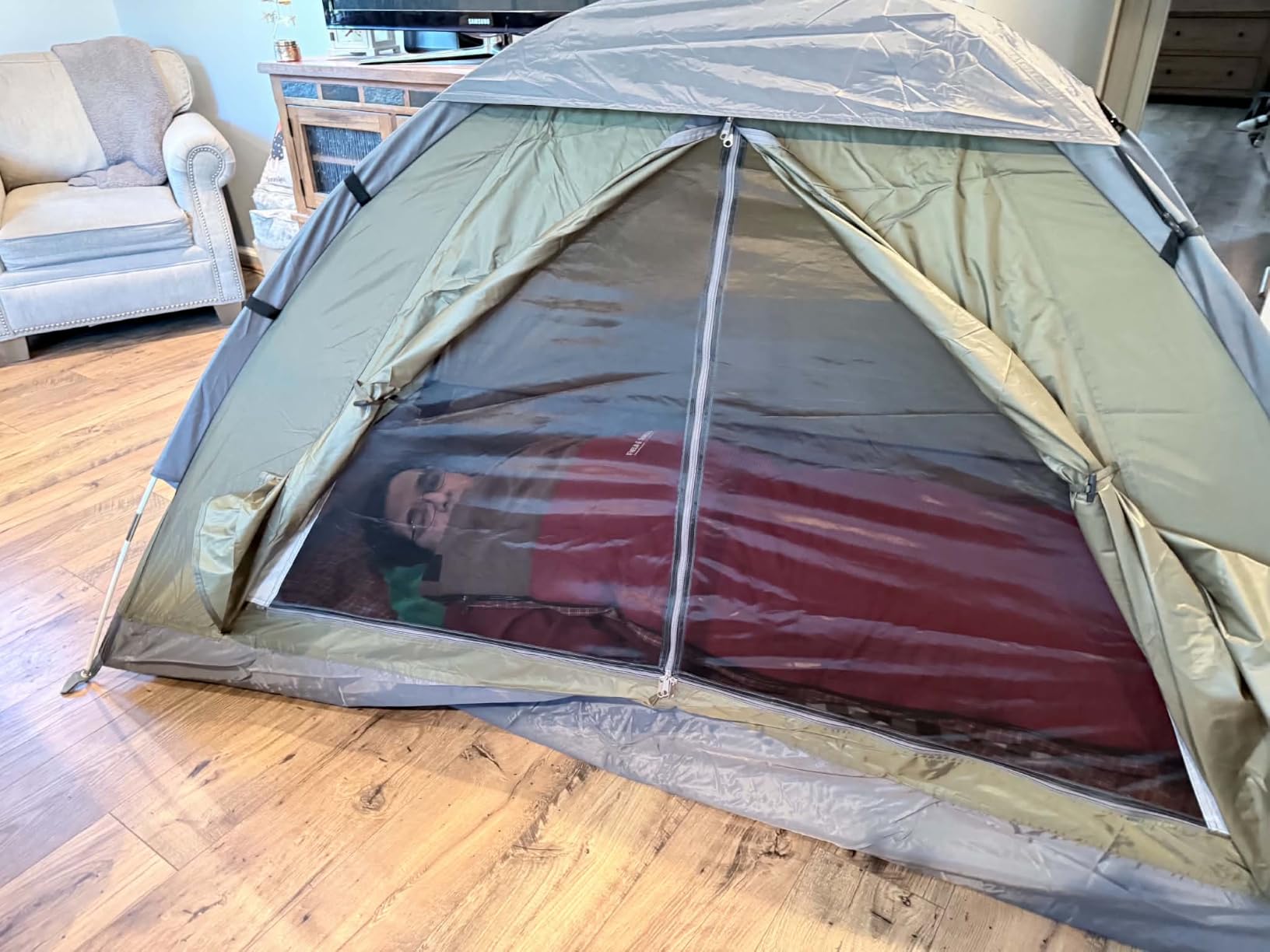
Is a single-layer tent actually waterproof?
The fabric is, at PU 3000mm with taped seams, and owners report dry nights in heavy rain. The weakness is coverage, not the material, because the limited fly leaves the lower body of the shelter open to ground splash and wind-driven rain.
Owners also recommend a ground cloth because the floor material is thin. Treat it as a fair-weather-to-moderate shelter rather than a storm shelter.
Who should buy the Night Cat?
Buy it if you need a solo shelter that takes up almost no pack space and can be pitched in a parking lot or an emergency in the dark. It is a solid backup tent to keep in a car or a bikepacking kit.
Skip it as your primary shelter if you hike in exposed or wet conditions regularly. Carry a repair sleeve or a spare pole section, because fiberglass joints fail at exactly the wrong moment, and note that the warranty is two years.
How to Choose a Backpacking Tent Under 300 Dollars?
The best budget backpacking tent for your trip is the one that fits your weather and your pack, not the one with the longest feature list. All eight tents here are three-season shelters with freestanding pole designs, so the decisions that actually separate them are pitch style, weight, floor durability, ventilation and how you plan to divide the load.
Freestanding, semi-freestanding or trekking-pole?
Every tent in this guide is freestanding, which means it stands up on its own and you move it after pitching without re-staking it. That convenience is exactly why freestanding tents are heavier: the pole structure has to be rigid enough to hold the shape unsupported. It is also why they are the right first purchase for anyone new to backpacking.
Semi-freestanding tents use a partial pole hoop and require guying out to reach full tension. Trekking-pole tents suspend the shelter between two poles and no pole sets are included, which is why they are far lighter, and why owners on backpacking forums repeatedly describe the learning curve for getting a taut pitch as the single biggest reason new hikers return a pole tent. None of those shapes appears in this roundup, because the sub-300 dollar trekking-pole options ask more than they give a first-time buyer.
Is a 5 lb tent too heavy for backpacking?
No, not for two people. A 5 lb two-person tent split between two packs is roughly 2.5 lb per person, which is inside normal split-carry tolerance and often disappears into a 45 to 50 liter pack. This is the arithmetic that reframes weight guilt for most hikers, and it is why so many people carry a 5 lb tent without noticing.
Solo carry is different. If one person is carrying the tent alone, 4.4 to 5.3 pounds is a significant fraction of a comfortable solo pack weight, and that is the threshold where people start abandoning trips. The same logic is why the 2-person tents here are honest buys for couples and poor buys for a single hiker with a small pack, and it is worth doing the split math before you order rather than after.
Fabric denier and floor protection
Denier measures thread thickness, and it is the fastest way to understand why budget tents feel tougher. Floors in this group range from 68D polyester on the Kelty Grand Mesa to 210T polyester on the Naturehike Cloud-Up, with 150D Oxford on the TETON Mountain Ultra and 190T on the Night Cat and BISINNA. Thicker floors resist abrasion and puncture on rocky campsites, which is a very real failure mode in the Sierra, the Rockies and the desert Southwest.
Ultra-thin 15D to 20D floors stretch and abrade quickly, and they are also the main reason ultralight shelters cost what they do. A mid-weight floor in the 68D to 150D range is the single most useful thing to insist on in a budget tent, and it is where owners of the Marmot Crane Creek and the Kelty Grand Mesa report using a footprint anyway.
Weather protection and where leaks actually start
Do budget backpacking tents leak in the rain? Sometimes, and the pattern is consistent across owner reports. The fabric rarely fails. Water arrives through unsealed seams, through the bathtub floor where the floor is thin, or through a gap at the door when the tent is staked. That is why seam-taped models like the Marmot Crane Creek and 3300HH or 5000mm models like the Kelty and Clostnature hold up better in sustained rain.
Water resistance numbers are useful but imperfect. The 2000mm rating on the BISINNA is adequate for most three-season rain, while 3000mm and above adds margin for sustained storms and for camping on wet ground. Shape matters too: a tapered or sloped fly sheds water and sheds wind better than a boxy upright profile, and the freestanding dome shapes used here are decent without being exceptional in a gale.
Ventilation and condensation
Condensation is a ventilation problem far more often than a waterproofing problem, and it is the top complaint in this category. The fix is predictable: a mesh inner, a fly vent above the door, and the discipline to use them. The TETON Mountain Ultra with its full dome mesh top reports the least condensation, the Clostnature owners specifically mention using the top ventilation flaps, and the Forceatt pairs a large mesh window with two ceiling vents.
Ventilation matters most in humid coastal forest and in still summer nights, and least in dry cold air where a solid fabric holds warmth. If your trips are mostly in the southeast or the pacific northwest in summer, prioritize mesh over sealed panels.
Doors, vestibules and interior space
Are 2 person backpacking tents too small for two adults? Frequently, yes, and this is the most common disappointment in the whole category. A 30 square foot interior sounds generous until two 25-inch pads, two packs and two pairs of boots are in it. Look at floor dimensions rather than the capacity label, and treat anything under 31 square feet as a solo-plus-gear tent.
Door count is the underrated feature. Two D-shaped doors mean neither person has to unzip past the other, which matters enormously in rain and at 3am. The Forceatt, BISINNA and Clostnature have two doors; the Naturehike Cloud-Up, Kelty Grand Mesa, TETON and Night Cat have one. Vestibules are the covered space outside the sleeping area where you put wet boots and packs, and two vestibules are much better than one, so this is another point in favor of the dual-door models.
Do you need a footprint, and what does it really cost?
A footprint is a groundsheet that protects the tent floor from abrasion, punctures and damp ground, and for a budget tent it is the highest-value add-on available. It costs a few ounces of pack weight and a modest amount of money, and owners of the Marmot, Kelty and Clostnature all recommend one. The Naturehike Cloud-Up is the exception here because it already includes one.
One mistake appears constantly in forum advice: if you use a footprint, tuck it fully under the tent so the edges cannot catch rain. A loose edge collects and pools water directly against the floor, which is worse than no footprint at all. Budget also for better stakes, because the bundled aluminum stakes in several of these tents bend in rocky ground, and for a repair sleeve if you are far from a trailhead.
What Changes at Each Price Step?
Nobody in this category maps the price ladder to a real trade-off, so here is what actually changes as you move up through this band. The pattern is consistent: you pay first for fabric quality and seam sealing, then for weight savings and pack volume, and last for brand service and warranty. We use the same tiered breakdown in our inline skate guide under 300 dollars, where the sub-300 tier is the sweet spot for most buyers.
At the entry level, in the cheapest tier of this guide, you get single-layer or basic double-layer designs, 3000mm or lower coatings, fiberglass or thin aluminum poles, one door, and a compact single-person footprint. The BISINNA, Forceatt, Clostnature and Night Cat all live here, and all of them are legitimate backpacking shelters rather than department-store imitations.
In the middle of the band, you start seeing 3300HH coatings, taped seams, better pole alloys and included footprints, and you can find two doors at 31 square feet of interior. The Naturehike Cloud-Up and the Kelty Grand Mesa sit here, and they deliver the most capability per dollar in the group for most buyers.
At the upper end of the budget range, you get fully seam-taped construction, 7000-series poles, PFAS-free fabrics and real warranty coverage, which is where the Marmot Crane Creek sits. Past the ceiling you move into the wider premium category, and the trade shifts toward sub-3-pound weights and lighter pack volumes rather than toward tougher tents.
Tents We Skipped and Why
Two widely recommended tents fall outside this price ceiling and we excluded both. The MSR Elixir 2 and the REI Co-op Half Dome 2 both appear in guides titled under 300 dollars, and both currently sit above that line. We would rather enforce the ceiling cleanly than quietly break it, and if you are shopping the premium category we would rather you do it deliberately.
Several other frequently cited budget tents were skipped for different reasons. The REI Co-op Trail Hut 2, which used to be the default budget recommendation, is discontinued, so recommending it now would waste your time. Department-store single-person dome tents show up in shopping results for this search but are not built for backpackers, and the Ozark Trail 1P is the clearest example.
Finally, trekking-pole shelters were excluded as a category. They are the lightest and cheapest per ounce, and for experienced hikers who already know how to pitch them they are a fine choice, but for a reader buying a first tent at this budget the freestanding designs here are the lower-risk purchase. If you want our other gear picks, our grow tent guide covers a very different kind of shelter, and our urban inline skate guide covers another gear category where the sub-300 tier is the sweet spot.
Frequently Asked Questions
What is the best budget backpacking tent?
The best budget backpacking tent is usually a freestanding two-person dome with a taped or welded floor, two doors and a 3000mm or better waterproof coating. Our pick from this guide is the Forceatt 2-Person, which adds two vestibules and a three-minute pitch, and the Naturehike Cloud-Up is the best value because a footprint is included.
Is a 5 lb tent too heavy for backpacking?
Not for two people carrying it together. A 5 lb two-person tent splits to roughly 2.5 lb per person, which fits comfortably in a 45 to 50 liter pack. Solo hiker is where the weight bites, and under 3 lb for the tent is the practical threshold for a comfortable all-day carry.
Are 2 person backpacking tents too small for two adults?
Often, yes. Most two-person tents are really one-person-plus-gear shelters, and anything under about 31 square feet is tight for two adults with packs. Check the floor dimensions rather than the label, and prefer tents with two D-shaped doors so neither person has to climb over the other.
Do budget backpacking tents leak in the rain?
The fabric rarely fails, but unsealed seams, thin floors and gaps at the door let water in. Models with welded or seam-taped floors and 3300mm or higher coatings hold up best, and a footprint prevents ground water wicking through the floor.
Do I need a footprint for a backpacking tent?
For a budget tent on rocky or wet ground, yes, because a thin floor punctures and wicks easily. A footprint costs a few ounces of pack weight. If you use one, tuck the edges fully under the tent so it cannot catch and pool rainwater against the floor.
What denier is a durable backpacking tent floor?
For a budget tent, 68D to 210T polyester is the useful range. Anything at or above 68D resists the abrasion and punctures that ruin thinner floors, and a welded or bathtub floor matters more than the denier number once you are past that point.
Best Backpacking Tents Under 300 Dollars: Final Word
After working through all eight, the Forceatt 2-Person is the best backpacking tent under 300 dollars overall, because it is the design in the group that pairs two doors and two vestibules with a welded 3000mm floor, a three-minute pitch and more than 1900 owner reviews behind it. The Naturehike Cloud-Up 2 is the value pick when you want the most complete package, and the Marmot Crane Creek 2P is the one to buy if your trips run into serious weather and you want seam taping and a lifetime warranty behind it.
Whatever you choose, do the split-carry math before you order, add a footprint if the floor is thin, and replace the bundled stakes with something that will not bend. The best backpacking tents under 300 dollars are heavier than ultralight ones, and that is the deal, but for most weekend and three-season trips they are tough, roomy and completely reliable.