
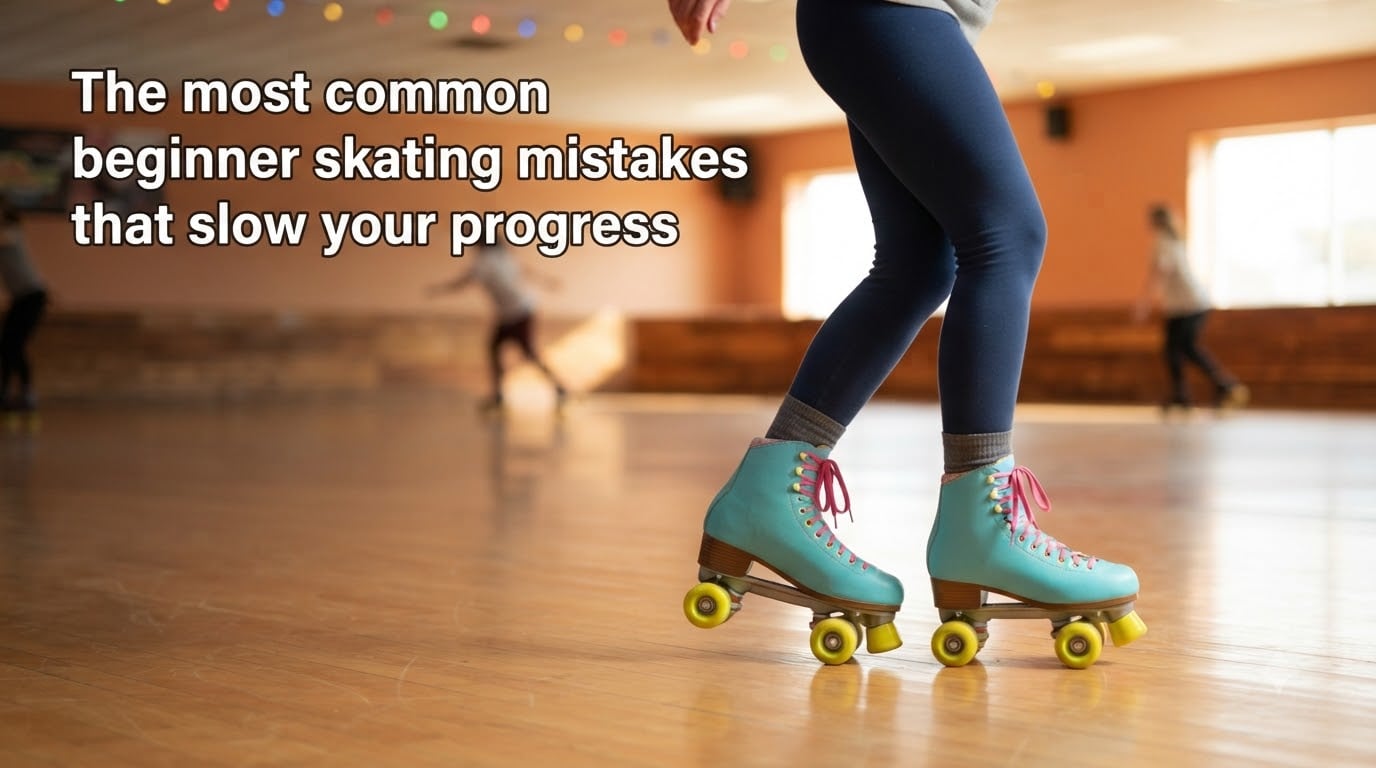
The most common beginner skating mistakes that slow your progress are looking down at your feet, locking your knees, leaning too far back, riding flat edges, and skipping warm-ups. Each of these errors quietly steals your balance, blocks your glide, and builds bad muscle memory that takes longer to undo than learning the right technique from the start.
I have been skating for over a decade now, and I still remember the first six months I spent shuffling around my local rink looking at my toes. The progress felt painfully slow. Once I learned what I was doing wrong and corrected those habits, my confidence and speed jumped in weeks. Our team put this guide together so you do not have to repeat my early mistakes.
Whether you are lacing up ice skates for the first time or rolling into a park on quads, the same foundational errors show up again and again. Here is what they are, why they happen, and exactly how to fix each one.
Table of Contents
Looking Down Instead of Ahead
Looking at your blades is the single most common beginner skating mistake. It feels natural to glance down to check your feet, but doing so shifts your center of gravity forward and breaks the alignment of your spine. Your balance drops the second your chin tilts toward your toes.
When you stare at the ice, your shoulders round forward, your hips shift, and your weight lands on your heels. That is why you feel wobbly. The fix is simpler than most people think: pick a focal point across the rink and keep your eyes there.
How to fix it
Stand at the boards with your skates on and pick a sticker, sign, or chair about 20 feet away. Glide forward for 30 seconds while staring at that target. If your eyes drift down, reset and start again. Most beginners need about 10 repetitions before this starts to feel automatic.
Stiff or Locked Knees
Locking your knees is the body’s natural response to feeling unsteady. It feels safer to keep legs straight and rigid, but it kills your ability to absorb bumps, hold edges, or push properly. Stiff knees are the root cause of choppy stroking and wobbly turns.
Bent knees act as your suspension system. They absorb uneven ice and let you push off with power. Without a slight bend, every push becomes a shuffle and every edge becomes a fight.
How to fix it
Practice the “soft knee” position while standing still: feet shoulder-width apart, knees slightly bent over your toes, weight centered. Now march in place for one minute, keeping that bend. You should feel your quads engage. That engaged feeling is what you want every time you skate.
Leaning Too Far Back (Chicken Foot Syndrome)
Leaning backward is what skaters call “chicken foot.” Your rear foot sticks out behind you because your weight sits over your heels instead of your toes. It looks like a nervous stance, and it usually comes from a fear of falling forward.
This mistake is sneaky because it actually feels safer to beginners. In reality, leaning back prevents you from pushing, stops your edges from engaging, and makes any forward fall much more dangerous.
How to fix it
Stand sideways next to a wall or railing and place both hands on it for balance. Push off gently onto one foot and let your free leg swing forward into a stroke position. Notice how your weight sits over the ball of your skating foot. That forward pressure is what you want to carry into every glide.
Flat Edges and Choppy Stroking
Riding flat blades is one of the most common beginner skating mistakes because edges feel mysterious to new skaters. Instead of leaning slightly inward or outward to engage an edge, beginners keep both skates flat. The result is a grinding, choppy stroke with no real glide.
Your blades are shaped with a subtle curve. When you stand flat, you use the dull middle of that curve. When you lean, you unlock the inside or outside edge and roll smoothly. That roll is what creates flow.
How to fix it
Try the two-foot glide drill. Push off from a standstill and let yourself coast for as long as possible. Count the seconds. Once you hit five seconds, try the same drill on one foot. Each second you add means your edges are doing more work and your skates are doing less grinding.
Skipping Warm-Ups and Off-Ice Prep
Many beginners skip warm-ups because they think skating is light exercise. Cold muscles, tight ankles, and stiff hips lead to sloppy form once you start moving. Worse, cold muscles are far more prone to sprains and strains.
A solid five-minute warm-up wakes up the exact muscles you need: ankles, glutes, core, and hip flexors. Without that activation, your body defaults to its worst habits because it cannot access its full range of motion.
How to fix it
Before every session, do ankle circles, bodyweight squats, glute bridges, and 30 seconds of marching in place. This quick routine raises your body temperature and reminds your muscles what good posture feels like. You will notice better knee bend and smoother strokes from your first lap.
Fear of Falling and the Tension Trap
Fear of falling is the silent cause behind most beginner skating mistakes. When you are tense, your muscles clamp down. That tension pulls your shoulders up, locks your knees, and shortens your stride. You skate like a statue, and falls actually become more likely.
I struggled with this for years. Adult beginners in particular compare themselves to younger skaters and feel embarrassed about wobbling. That shame feeds the tension, which feeds the wobble. It becomes a loop.
How to fix it
Breathe. Before each push, take one deep breath and consciously relax your shoulders. Falling on padded ice is genuinely safe. Once your nervous system accepts that, your body stops bracing and starts moving fluidly.
Another powerful drill is the “fall on purpose” exercise. From a standstill, drop your knees gently to the ice and stand back up. Doing it three or four times teaches your brain that falling is not a catastrophe. Most skaters feel noticeably looser after this drill.
Shuffling Instead of Lifting and Gliding
Shuffling is what most beginners do without realizing it. Instead of pushing into a real glide, you pick your feet up just enough to move them and set them down again. You travel, but you never flow.
This habit wastes enormous energy and makes skating feel exhausting. It also prevents you from ever balancing on one foot, which is the foundation for crossovers, turns, and stopping.
How to fix it
Practice the one-foot balance drill near the boards. Push off onto your dominant foot and hold the glide for three seconds. Switch feet. Your goal is to feel the skate actually roll rather than scrape. Once you trust the glide, your stroking automatically becomes longer and smoother.
Wearing the Wrong Gear or Loose Skates
Skates that are too loose, too tight, or not broken in can sabotage your technique without you noticing. Beginners often lace skates too loosely at the ankle, which removes the support your leg needs to stay aligned.
If your heel slides inside the boot, you cannot hold an edge. If your toes pinch, you will subconsciously curl them and shift your weight backward. Either problem creates the same tension and wobble.
How to fix it
Use the finger test: with your skates laced and standing up, you should be able to slide one finger down the back of the boot above your heel. More than that means your laces are too loose. Lace the bottom hooks loosely for circulation, then crank the top two hooks firmly for ankle support.
If you are renting skates, ask for a half size down from your street shoe. Rental boots stretch out faster than new boots, so a snugger fit will outlast your session.
Not Learning How to Stop Properly
Many beginners avoid learning to stop because it feels scarier than skating itself. That is a mistake. Without a reliable stop, every glide feels unsafe, and your body stays tense the entire time you are moving.
The two beginner-friendly stops are the snowplow and the T-stop. The snowplow uses both feet turned inward like a pizza slice. The T-stop drags one skate sideways behind the other to scrub off speed. Learning both gives you options based on how fast you are going.
How to fix it
Spend five minutes of every practice session on stopping drills. Roll forward slowly, snowplow to a stop, then reset. Repeat with the T-stop. Stopping is a skill, and like any skill, it only becomes automatic with repetition.
Best Off-Ice Exercises to Fix Beginner Mistakes
Off-ice training is the secret weapon most beginners skip. Strengthening the muscles that hold good posture transfers directly to better skating. The four exercises below fix the most common beginner skating mistakes that slow your progress.
Single-leg balance holds: Stand on one foot near a wall for 30 seconds, then switch. This trains the ankle stability you need for edges and glides. Progress by closing your eyes for the final 10 seconds.
Wall sits with knee bend: Hold a 45-second wall sit with your knees directly over your toes. This builds the quad endurance needed for sustained knee bend during long skating sessions.
Glute bridges: Three sets of 15 glute bridges activates the posterior chain that keeps your hips aligned. Strong glutes prevent the leaning-back habit that causes chicken foot.
Calf raises: Two sets of 20 calf raises strengthen the ankle and lower leg. This protects you from the rolled ankles that scare beginners out of trying new moves.
Quick Reference: Beginner Skating Mistakes and Fixes
| Mistake | Why It Happens | Drill to Fix It |
|---|---|---|
| Looking down | Wanting to check foot position | Pick a focal point 20 feet away |
| Locked knees | Tension from fear | March in place with soft knees |
| Leaning back | Fear of falling forward | Wall-supported forward lean |
| Flat edges | Not knowing how to lean | Two-foot glide, count seconds |
| Skipping warm-up | Feeling rushed | 5-minute ankle and squat routine |
| Tension and fear | Worry about falling | Practice falling on purpose |
| Shuffling | Lack of balance | One-foot glide near the boards |
| Loose skates | Skipping proper lacing | Finger test on the heel |
| No stopping | It feels scary | Snowplow and T-stop drills |
How to Track Your Progress and Break Bad Habits
Bad habits form fast because your body latches onto whatever feels stable in the moment. The good news is that progress feels invisible until you measure it. Here is how to actually see your improvement over the weeks and months ahead.
Set process goals, not outcome goals. Instead of “I want to do a crossover,” set a goal like “I will hold a one-foot glide for five seconds on each foot.” Process goals are within your control and produce visible wins. Outcome goals depend on variables like ice conditions, fatigue, and practice time.
Record yourself once a month. Have a friend film you skating for 60 seconds, or set your phone against a bench. Watching your own footage is uncomfortable but incredibly useful. You will spot mistakes within seconds that you never noticed while skating.
Find a coach or a community. Self-teaching works for a while, but a single 30-minute lesson can correct mistakes that take months to fix on your own. Many rinks offer adult beginner sessions that are friendly and low-pressure. Online forums and local skate groups are also great for feedback and motivation.
Celebrate the small wins. The first time you glide backward without grabbing the boards. The first clean snowplow stop. The first time you notice yourself relaxing your shoulders mid-skate. These moments stack up faster than you think.
Frequently Asked Questions
What are the most common beginner skating mistakes?
The most common beginner skating mistakes are looking down at your feet, locking your knees, leaning too far back, riding flat edges, shuffling instead of gliding, skipping warm-ups, and avoiding practice on stopping. Each of these breaks balance, blocks flow, and reinforces habits that take longer to undo later.
Why is ice skating so hard for beginners?
Ice skating is hard for beginners because the surface is slippery, the blades demand precise balance, and most new skaters tense up out of fear. That tension locks the knees, shifts weight backward, and stops you from learning to glide. Once you relax and bend your knees, the learning curve flattens quickly.
How do I stop feeling stiff when skating?
You stop feeling stiff by breathing deeply before each push, dropping your shoulders, and keeping a soft bend in your knees. Practicing falling on purpose also helps because it teaches your nervous system that falling is safe, which removes the tension that creates stiffness.
How long does it take to unlearn bad skating habits?
It typically takes four to eight weeks of consistent practice to replace a bad habit with a better one. The key is repetition in short, focused sessions rather than long, infrequent ones. Practicing the correct movement two to three times per week accelerates the retraining.
Should beginners take lessons or self-teach?
Beginners benefit hugely from at least a few lessons. A qualified coach can spot mistakes like flat edges or chicken foot in seconds and correct them with simple drills. Self-teaching is fine for casual skaters, but lessons save time and prevent injury if you want to progress faster.
Final Thoughts on Fixing Beginner Skating Mistakes
The most common beginner skating mistakes that slow your progress all share one thing in common: they are your body’s attempt to feel safe on an unfamiliar surface. Looking down, locking knees, leaning back, and avoiding stops all feel protective in the moment, but each one blocks the natural movement that makes skating fun and fast.
The fastest progress I have ever made came when I stopped fighting the ice and started working with it. Bend your knees, look ahead, glide on your edges, and breathe. Skating stops being hard the moment your body stops bracing. Give yourself a few months of focused practice, and you will be amazed at how far you have come.
For more skating tips, technique breakdowns, and gear guides, explore the rest of our resource library at Patin Carr Era.