
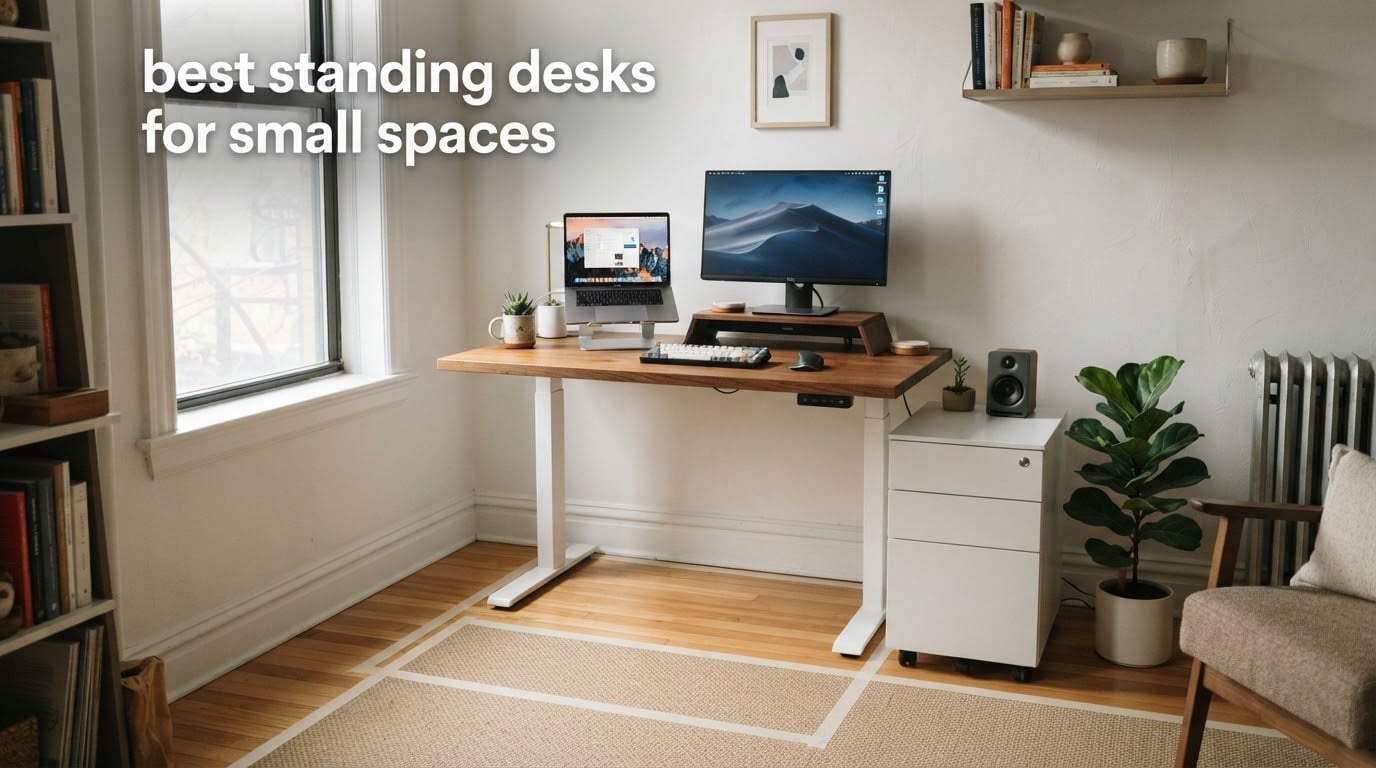
Most people get the size math wrong when they start shopping for the best standing desks for small spaces. They tape the wall, measure the width they think they need, and order something that looks fine on the listing and then dominates the room. The binding measurement in a small room is not width. It is depth. A 24-inch-deep desktop slides into a corner or against a short wall where a 30-inch-deep one simply cannot, and depth is also what decides whether your chair can pull out far enough for you to actually sit down at the low setting.
That is the whole reason this list is built around a 32-inch footprint. Below roughly 30 inches wide you are working on a lap desk, not a desk. Between 30 and 40 inches you have a genuine laptop or single-monitor station. At 48 inches you can fit two screens, and you are back to competing with the standard 55-inch desk you were trying to escape. We pulled ten options in and under that class, eight electric frames plus two rolling formats that trade lift range for mobility.
Last updated in October 2026. Everything below comes from manufacturer specifications and from the review record on each listing. If you want the wider picture on full-size sit-stand desks first, our general standing desk roundup covers the 48-inch-and-up end of the market, and the budget guide covers cheaper full-width frames.
Table of Contents
Top 3 Best Small Standing Desks Shortlisted for 2026
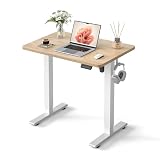
Cubiker 32 Inch Compact Electric Desk
- 28.3 to 46.5 inch range
- Motor under 45 dB
- 3 memory presets
- 50000 cycle tested frame

HUANUO 32 x 19 Inch Electric Standing Desk
- 24.5 lb frame
- 176 lbs load
- 4 memory presets
- Wheel-ready M8 feet

HUANUO 32 x 21 Inch Desk With Drawers
- 2 drawers plus cubicle
- 2.6 inch C-clamp rear edge
- 176 lbs capacity
- 4 presets
The Cubiker is the pick we keep coming back to. It has the widest owner record in this group by a wide margin, a full 28.3 to 46.5 inch travel, and a motor that owners consistently describe as the quietest thing they own. The HUANUO 32 x 19 is the lighter, cheaper-feeling option at 24.5 pounds, which matters if you are moving it between rooms. The 32 x 21 HUANUO is the only one here with both real drawers and a C-clamp rear edge, which is the combination most small-space setups actually need once a monitor goes up.
Small Standing Desks in October
| Product | Specs | Action |
|---|---|---|
| Cubiker 32 Inch Compact Electric Desk |
|
Check Latest Price |
| HUANUO 32 x 19 Inch Electric Standing Desk |
|
Check Latest Price |
| HUANUO 32 x 21 Inch Electric Desk With Drawers |
|
Check Latest Price |
 QZMDSM 32 Inch Rolling Desk on Wheels QZMDSM 32 Inch Rolling Desk on Wheels |
|
Check Latest Price |
 Armocity 32 Inch Rolling Standing Desk Armocity 32 Inch Rolling Standing Desk |
|
Check Latest Price |
 Xyndyx 32 Inch Rolling Electric Standing Desk Xyndyx 32 Inch Rolling Electric Standing Desk |
|
Check Latest Price |
 FEZIBO 32 Inch Small Electric Standing Desk FEZIBO 32 Inch Small Electric Standing Desk |
|
Check Latest Price |
 KLUVIS 31.5 Inch Electric Standing Desk With Drawers KLUVIS 31.5 Inch Electric Standing Desk With Drawers |
|
Check Latest Price |
 HUANUO 32 x 20 Inch Electric Standing Desk With 4 Drawers HUANUO 32 x 20 Inch Electric Standing Desk With 4 Drawers |
|
Check Latest Price |
 YDN 32 x 19 Inch Electric Standing Desk YDN 32 x 19 Inch Electric Standing Desk |
|
Check Latest Price |
Two things stand out in that table. The electric models cluster hard at a 28.3-inch minimum and a 46.5-inch maximum, a narrower band than most people expect, and only one entry reaches a true standing height of 48 inches.
How We Picked and What We Excluded
Four things drove the ranking. Footprint came first, measured as width by depth against the room. Motor and load rating came second, because a desk that cannot hold a monitor arm without creeping sideways is not usable. Height travel came third, mapped to your own body. Storage and real-owner feedback on wobble, assembly and delivery completeness came fourth and broke most of the ties.
We excluded anything wider than 48 inches, along with hand-crank frames under a 100-pound load rating and fixed-height risers with no memory presets. We also dropped listings whose real depth was more than two inches shallower than the published number once the control console was counted.
1. Cubiker 32 Inch Compact Electric Desk – Quiet Motor and Full Height Range
Cubiker Standing Desk, 32″ Small Sit Stand Home Office Desk, Electric Stand up Desk, Adjustable Desk with Splice Board, White Frame/Maple Top
32 x 19 in footprint
28.3-46.5 in range
Motor under 45 dB
31 lb
Pros
- Quietest motor in this group at under 45 dB
- Full 28.3 to 46.5 in travel on a 4.6 rating across 4398 reviews
- Alloy steel frame tested to 50000 lift cycles at full capacity
- Rounded desktop corners and low-VOC materials
Cons
- Two-piece spliced desktop leaves a visible seam
- Thin engineered-wood top may need reinforcement for a monitor arm
This is the one we would put in a tight apartment without hesitating. The owner record is the deepest in the compact category at more than four thousand reviews, and the pattern in that record is unusually consistent: the motor first, the height travel second, the frame third. The 28.3 to 46.5 inch range covers seated work through a comfortable standing position for anyone up to roughly six feet tall.
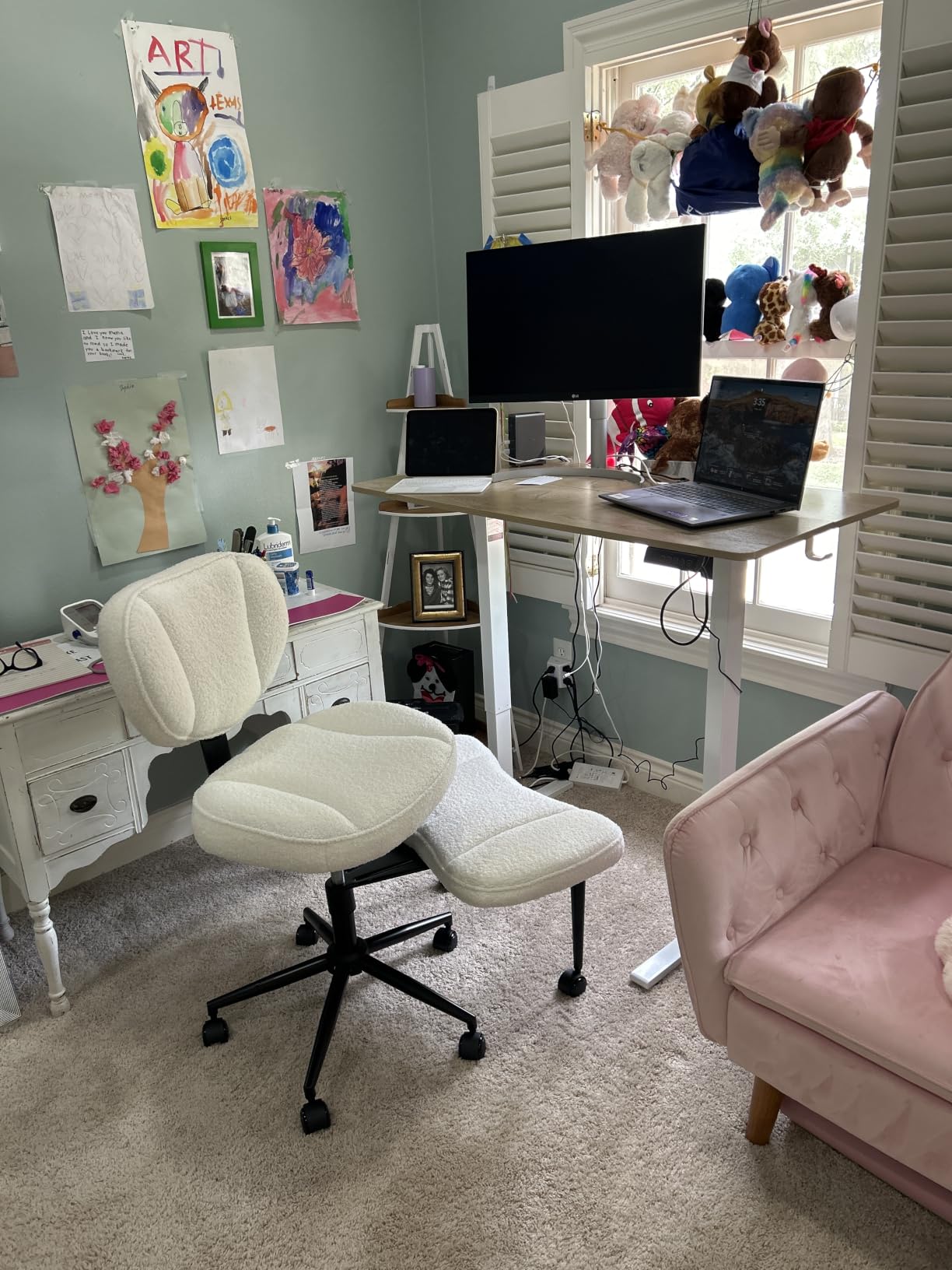
The under-45 dB motor specification matters more than it sounds. In a studio apartment or a multi-function room where the desk shares space with a bed, a motor you can hear across the room is a motor you will stop using. Owners put the Cubiker at the quiet end of everything they own. Assembly is straightforward with the included tools and instructions, and the low-VOC materials are a genuine plus in a bedroom.
The two compromises are structural. The desktop is two spliced pieces, so there is a seam line running across your work area that most owners cover with a desk mat. And the engineered-wood top is thin enough that heavy monitor arms, particularly clamped ones that hang off the back, may want a reinforcement plate underneath before you hang anything.
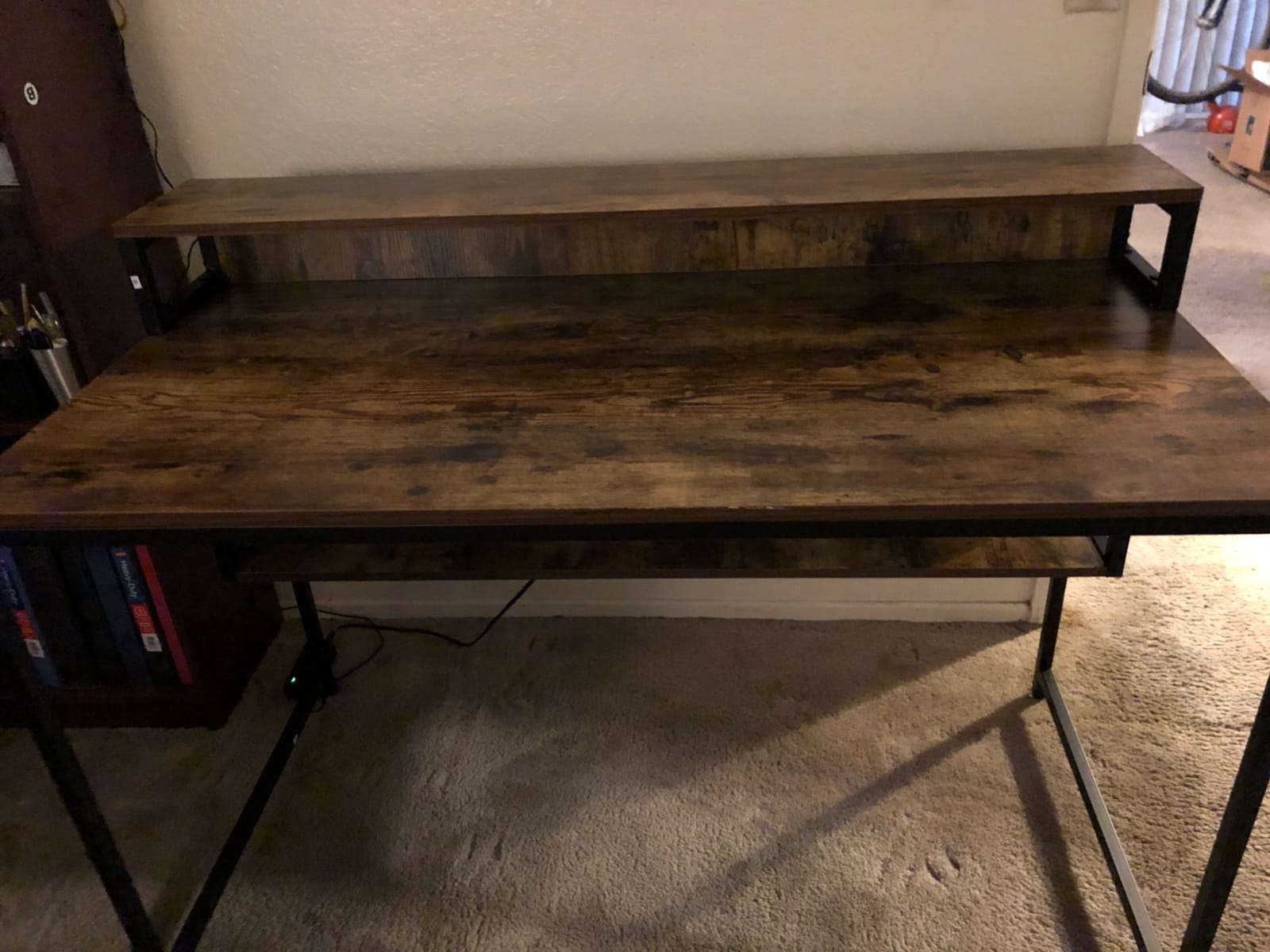
What the seam and thin top actually affect
Neither issue shows up in the first week. The seam matters if you work with a mouse on a bare surface, since the ridge can catch a wrist or interrupt a scroll. The thin top matters the moment you clamp a monitor arm to it, which is when many small-space setups stop being temporary.
If your workflow is a laptop plus one monitor on a stand, both limitations stay theoretical. If you plan to clamp an arm, budget a reinforcement plate, or look at the two HUANUO models with an extended rear edge below.
Who should skip it
Skip it if you need built-in storage. This desktop is completely bare, with no drawer, no cubicle and no cable tray, so every accessory has to live somewhere else in an already tight room. It is also the wrong shape of answer for anyone under about five foot three, since a 46.5-inch maximum leaves the tallest users in this group slightly short.
For everyone else in a corner nook, it is the safest single purchase on this list.
2. HUANUO 32 x 19 Inch Electric Standing Desk – Lightest Frame With Wheel-Ready Feet
HUANUO 32×19 Inch Small Electric Standing Desk, Adjustable, Light Walnut
32 x 19 in footprint
24.5 lb
176 lbs capacity
28.3-46.5 in range
Pros
- Lightest electric frame here at 24.5 lb so it moves between rooms easily
- 176 lbs load capacity on heavy-duty steel rails
- Four programmable memory presets
- Universal M8 holes on the feet accept DIY casters
Cons
- Two-piece particle board top can sit slightly misaligned after assembly
- Listed depth includes the console so usable depth is a little less
- Very light shake at full height on soft carpet
At 24.5 pounds this is the frame you can carry between the bedroom and the living room by yourself, which matters in a place where the desk doubles as a dining table four nights a week. Four memory presets is more than most compact models give you, and the 176-pound rating is generous for the size. It also carries a lifetime warranty, which matters if you are renting and cannot easily return a heavy unit.
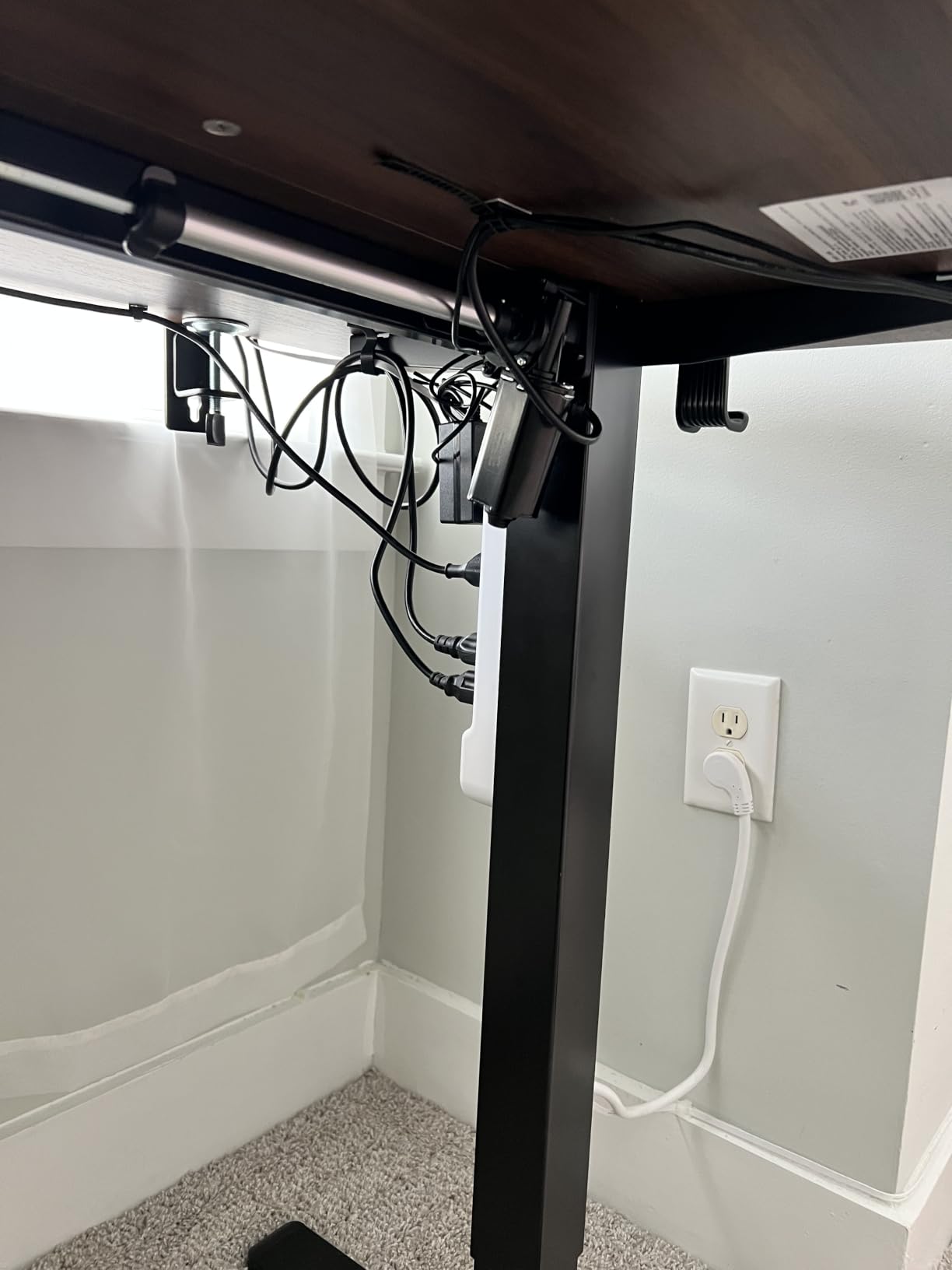
The M8 screw holes on the feet are a quietly excellent feature. Add your own casters and a rolling frame, and you get the mobility of the carts further down this list with none of the manual-height compromise. Owners do exactly that. Reviewers also report using this desk with an under-desk treadmill, which may or may not clear your specific walking pad, so check before you commit.
Two honest caveats. The published 19-inch depth includes the height control console, so your usable surface is shallower than the listing suggests. And on soft carpet there is a light shake at full standing height that owners with hard floors rarely mention.
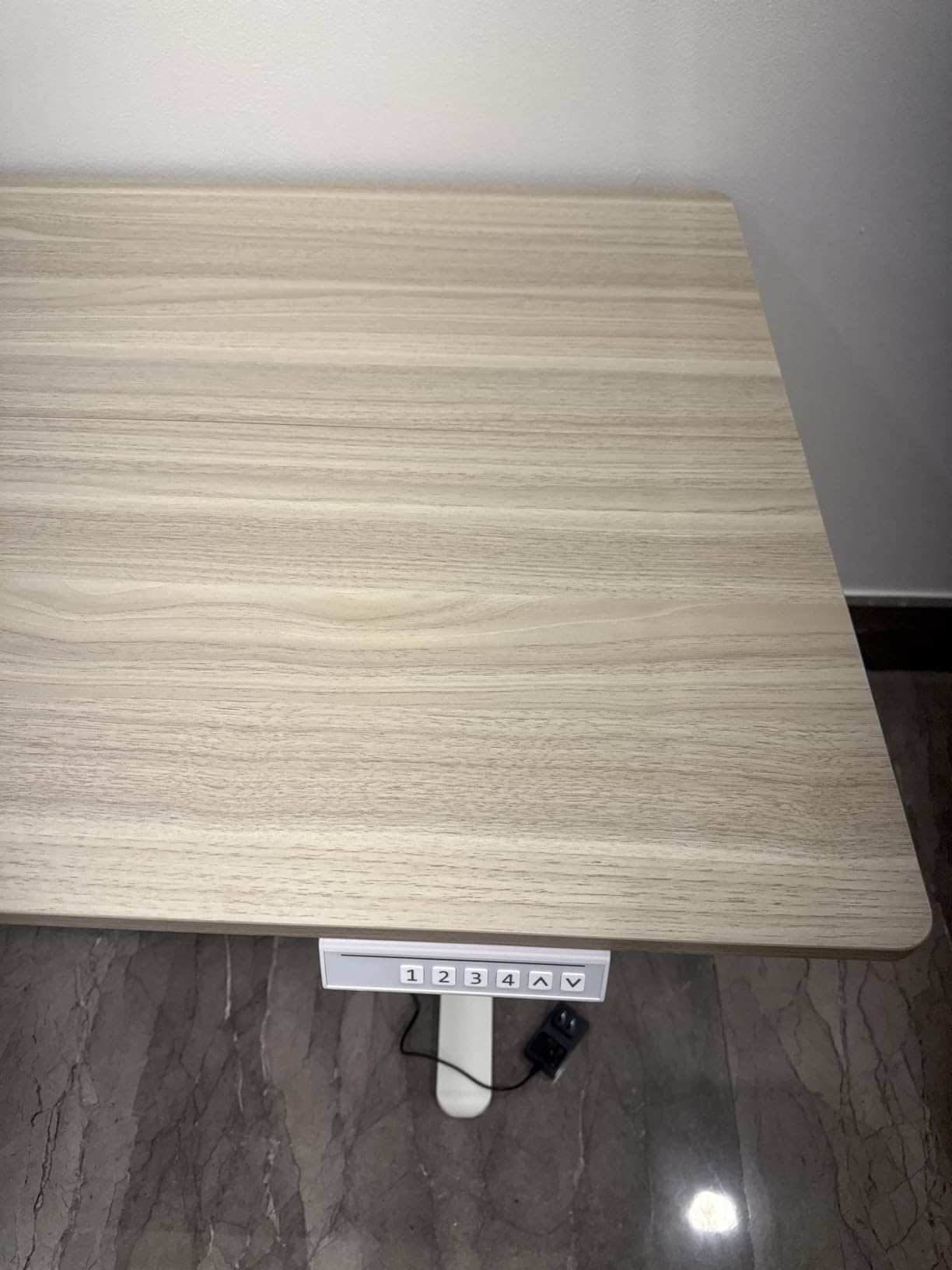
Whether the listed depth will fit your corner
Measure the wall you intend to use, then add two inches for the console overhang before you assume 19 inches is your real number. In a corner that means you should be looking at a pocket closer to 21 inches of wall than 19. If you have that much, this is one of the easiest compact frames to live with.
On carpet, tighten all the leg bolts after a week of use and check the leveling feet. Most of the shake people report on this model traces back to hardware loosening during the first few height changes, not to the frame itself.
Who should skip it
Skip it if your floor is wall-to-wall carpet and you type hard at full standing height, since the shake is consistent in owner reports rather than occasional. Skip it if you want storage or a monitor arm clamp, because the desktop edge is standard with no rear platform to hang from. It is a strong pick for a dorm room, a studio or a hard-floor apartment on a budget.
3. HUANUO 32 x 21 Inch Electric Desk With Drawers and a C-Clamp Rear Edge
HUANUO 32″ X 21″ Electric Standing Desk with 2 Drawers, C-Clamp Mount Compatible, Height Adjustable Computer Desk, Home Office Stand Up Desk with 4 Preset Heights & 2 Hooks, Light Walnut
32 x 21 in footprint
2 drawers plus cubicle
2.6 in C-clamp rear edge
34.1 lb
Pros
- Two drawers and an open cubicle remove accessories from the desktop
- Extended 2.6 in rear platform accepts C-clamp monitor mounts
- 0.6 in thick top on a T-shaped carbon steel frame
- 28.3-46.5 in travel with 4 one-touch presets
Cons
- Drawers and cubicle reduce clear work surface
- Heavier at 34.1 lb than similar compact models
- Assembly is easier with two people
This is the pick for anyone whose small space has already forced them to give up monitor-arm compatibility. The extended 2.6-inch rear platform is the difference between clamping a monitor where you want it and discovering your clamp does not fit on a standard edge. The 0.6-inch top is also the thickest in this group, which is why the frame feels planted when you type.
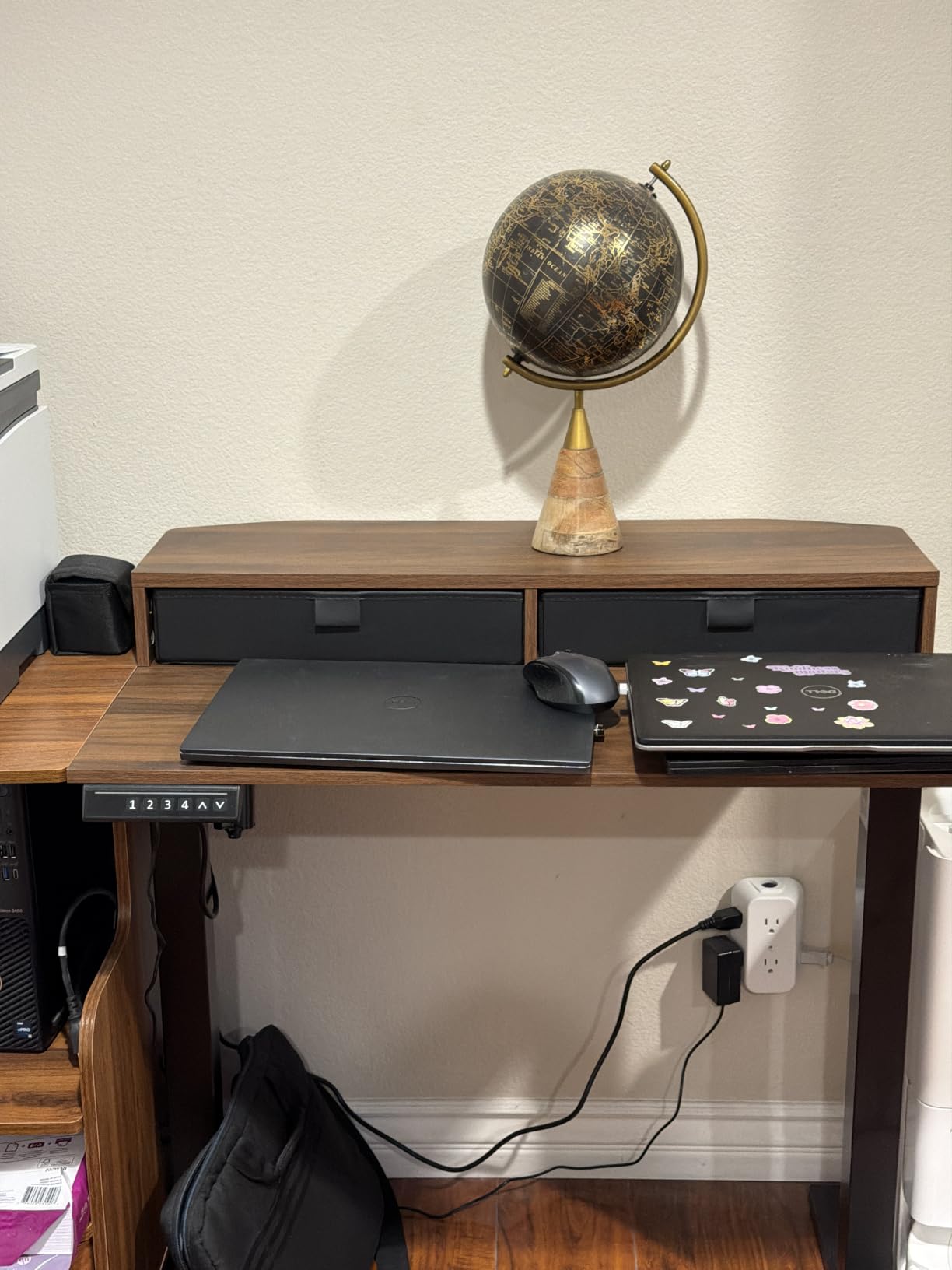
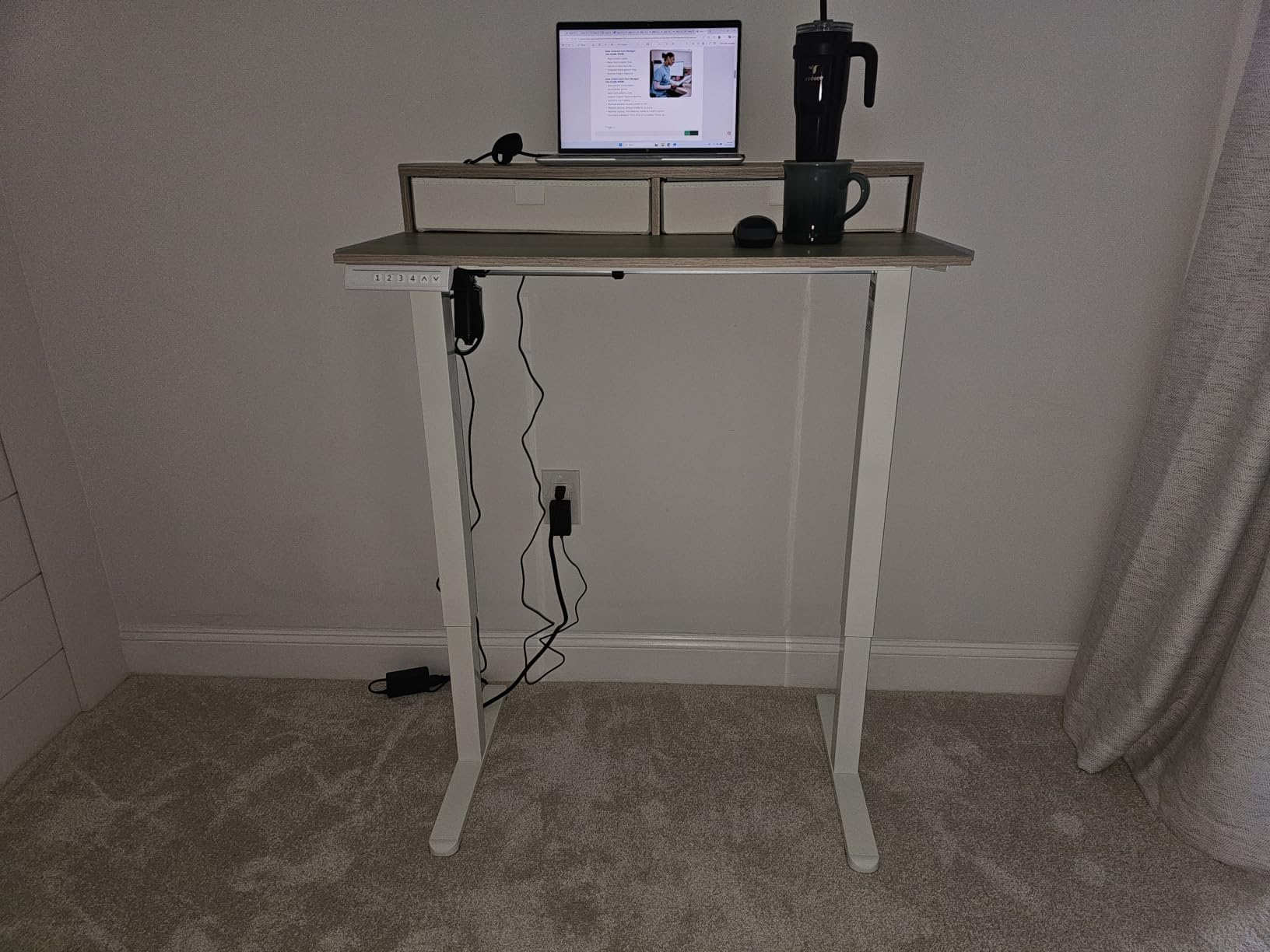
The storage is the other half of the appeal. Two drawers and an open keyboard cubicle take the mouse, the notebook and the charging cables off a surface that is only 32 inches wide. Curved edges round out the package, which matters when your knees are in a tight corner all day.
The trade is surface area. Drawers and a cubicle inside a 32-inch frame eat into the clear work area, so what you gain in organization you partly give back in elbow room. At 34.1 pounds this is the heaviest unit on the list short of the KLUVIS, and owners report the assembly goes faster with a second person.
When the extra depth is worth it
The extra two inches of depth over the 19-inch models is the difference between a desk that holds a keyboard, mouse and notebook at the same time and one where the notebook lives on the floor. If you have 21 inches of wall, take the depth. Corner users should note the depth number includes the drawers, so check your pocket against the full 21.
If you only need one screen on a stand, this is over-specified and the Cubiker is the lighter, simpler buy. If you plan a clamped arm, this is the only 32-inch option here that supports it out of the box.
Who should skip it
Skip it if you work with two monitors. Thirty-two inches is not enough width for a dual setup regardless of what else you add, and the drawers make that tighter. It is also the wrong pick for anyone who needs to carry the desk up stairs regularly at 34 pounds with a top that has to stay level.
4. QZMDSM 32 Inch Rolling Desk on Wheels – No Plug and Three Shelves
QZMDSM Portable Rolling Desk on Wheels Adjustable Height Desks for Small Spaces, 32″ Computer Desk Drafting Tables with Storage Shelves for Home Office Rustic
32 in wide
15.7 in deep
28-36.4 in manual range
15 lb
Pros
- Rolls anywhere on four casters so one desk serves the sofa
- bed and dining table
- Three shelves store books and supplies in a tiny footprint
- Adjusts 28 to 36.4 in with no electricity at all
- Five-minute assembly with the included tool kit
Cons
- Maximum load is limited to about 15 lbs
- 15.7 in depth leaves no room for larger monitors or paperwork
- 28 to 36.4 in travel is a perch height rather than a full standing height
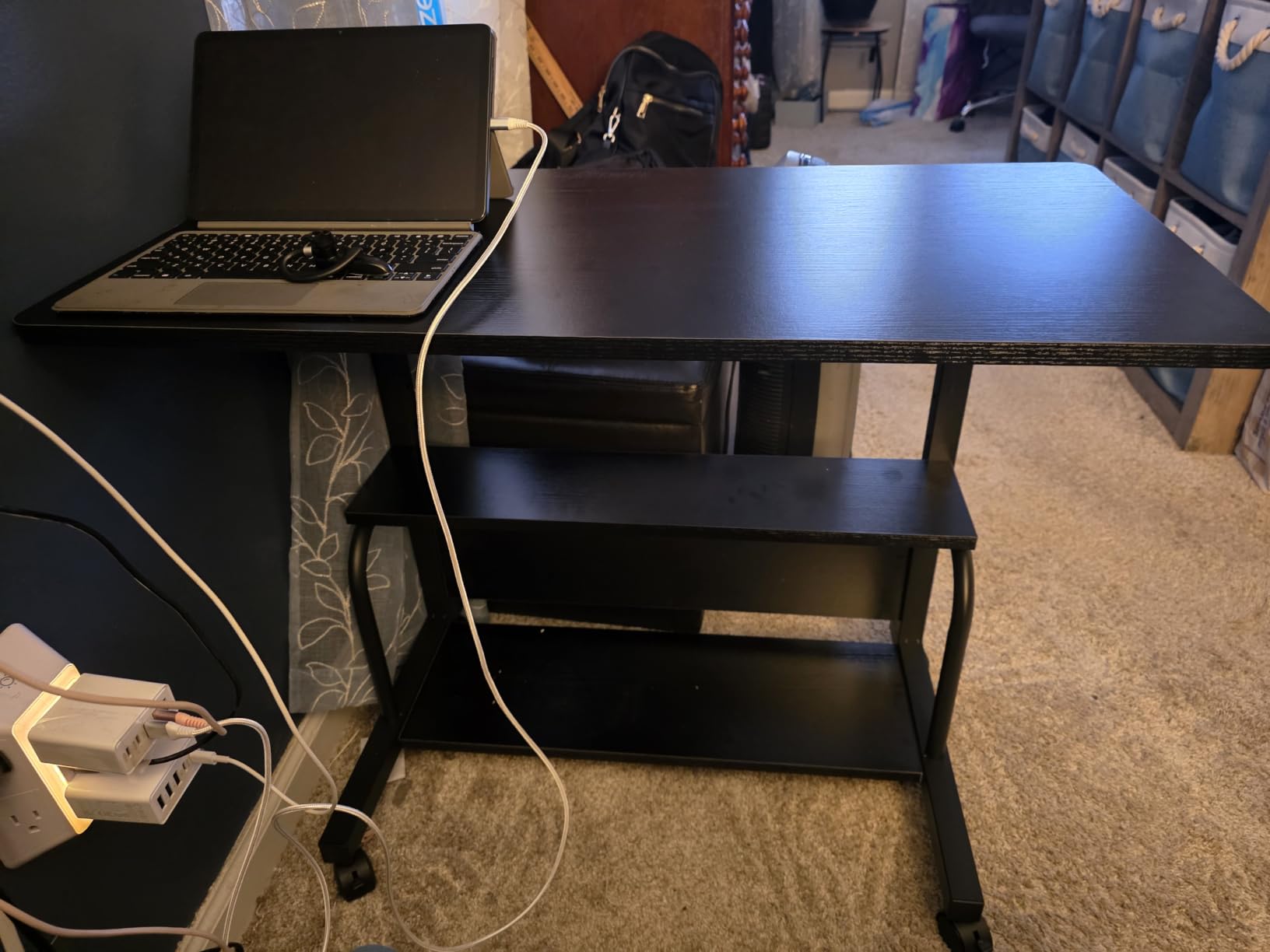
This is the format answer for a room that does not have a dedicated office corner. At 15 pounds with casters, it goes from desk to couch to bed and back in about ten seconds, which solves the problem no fixed desk in this list can. It also needs no outlet, so a corner with no wall socket is not a dealbreaker. The waterproof top wipes clean, which matters when the surface doubles as a side table.
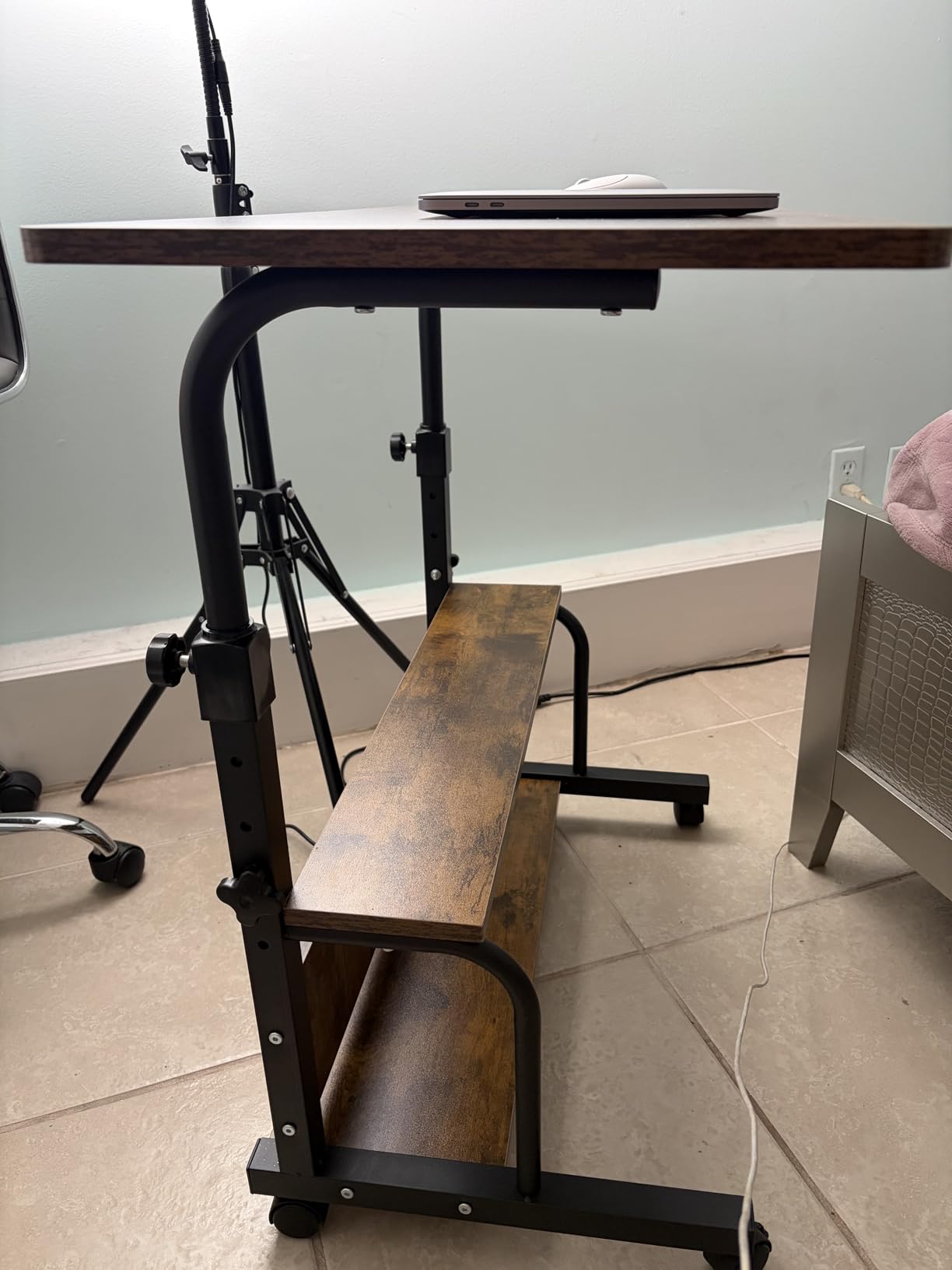
Be clear-eyed about what this is. The 28 to 36.4 inch range is a manual lift between seated and perching height, not a true sit-stand range. The 15-pound load limit also rules out a monitor arm, a heavy multi-monitor setup, or anything clamped. A single lightweight screen and a laptop is the realistic load.
Against that, owners consistently praise the mobility, the three shelves and the five-minute assembly as exactly what they needed in a studio. The 15.7-inch depth is the real constraint, narrower than the electrical models, so paperwork and a keyboard do not fit at the same time.
When a rolling cart beats an electric desk
A rolling desk wins when floor space changes hour to hour. If you share one room with a sofa, a dining table and a bed, a desk that stores away in thirty seconds will get used far more than a fixed 32-inch frame that dominates the corner permanently.
An electric desk wins when you need the screen at eye level for two hours straight, or when you want a real standing height.
Who should skip it
Skip it for any desk work involving a monitor arm, more than one screen, or sustained typing at a standing height. The 15-pound ceiling and 36.4-inch maximum rule both of those out. It is also a poor fit for anyone who needs a firm keyboard typing surface, since a rolling frame on small casters moves under load.
5. Armocity 32 Inch Rolling Standing Desk With Built-in Charging Station
Armocity 32″ Rolling Standing Desk with Charging Station for Couch Bed
32 in wide
27.5-41 in manual range
2 AC outlets and 3 USB ports
Slides under couches
Pros
- Integrated power strip removes the cable clutter entirely from a small surface
- 15 mm thickened frame stays steady while typing at higher positions
- Slides under a couch with only 3.5 in of floor clearance needed
- Two tier shelves plus two hooks add storage in a compact footprint
Cons
- Dual-knob manual height means eyeballing both sides to keep it level
- Small casters can snag on carpet
- Some reviews report missing shelves or outlets versus the listing
The charging station is the whole pitch, and it is better than it sounds. Two AC outlets and three USB ports built into the frame mean the laptop, the phone and the monitor all charge from one place with one cable to your wall. The 15-millimeter frame is also notably thick, which is why it holds steady at the top of its range.
At 27.5 to 41 inches this is another perch-height unit rather than a full sit-stand desk. It will not reach a true standing height. What it does is sit beside a couch, slide under it on four PU wheels with two lockable brakes, and give you a surface at lap height with the laptop plugged in.
Checking it fits beside your couch
Measure the gap under the furniture before you order. The desk needs 3.5 inches of floor clearance to slide under a couch, and that is the number to measure. On hard floors it rolls smoothly; on carpet the small casters can snag, which is a recurring complaint in the review record. Four lockable brakes then hold it in place while you type.
The dual-knob height system is manual, and keeping both sides level takes a little eye. Owners who set it once and leave it there are happy. Owners who adjust it daily find it awkward. Assembly takes roughly 25 minutes with pre-drilled holes and labeled parts.
Who should skip it
Skip it if you need a genuine standing height for extended work, since 41 inches is the ceiling. Skip it if you cannot inspect the box on arrival, because a minority of reviews report boxes arriving without the shelves or outlet components. It is built for a couch or bedside workflow, not for a home office corner.
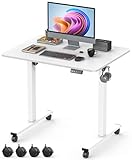
6. Xyndyx 32 Inch Rolling Electric Standing Desk – Tallest Lift at 48.4 Inches
32″ Small Rolling Electric Standing Desk Adjustable Height for Home Office
32 x 23.6 in footprint
29.9-48.4 in range
4 lockable casters
176 lbs capacity
Pros
- Tallest maximum height here at 48.4 in
- giving taller users a genuine standing position
- Four lockable caster wheels make it a mobile workstation
- Two-stage legs lift at 25 mm per second
- Steel frame rated to 176 lbs and reported stable at full extension
Cons
- Only 2 memory presets
- fewer than every other electric model here
- Spliced desktop seam runs across the work surface
- 23.6 in depth takes more floor space than the 19 in models
Almost every compact electric desk in this category stops at 46.5 inches, which leaves users around six foot two working with a raised elbow and a shrug. This one goes to 48.4. Reviewers also note a stable, wobble-free frame at full extension, which is not the default experience at this width.
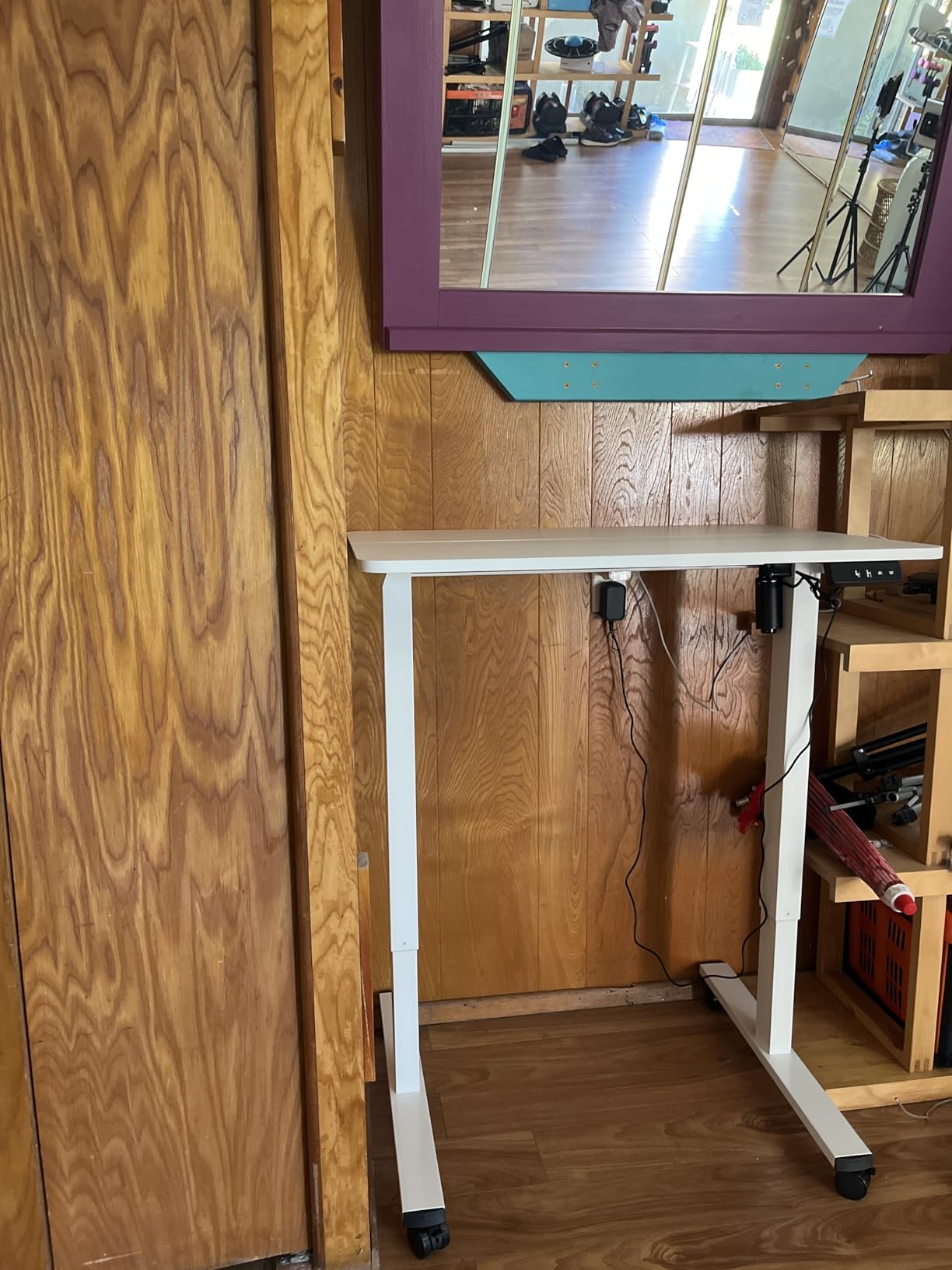
The four lockable casters make this the most genuinely mobile electric desk here. Roll it to the window for daylight, lock it, work. Roll it back when dinner happens. Two-stage legs at 25 mm per second move smoothly, and the frame carries 176 pounds.
Two memory presets is the weak point. Everyone else here gives you three or four, and two means one preset for sitting and one for standing with no room for a third position. The spliced desktop seam is standard for compact models. The 23.6-inch depth is also the deepest in this group and needs real measuring before you commit.
Whether 48.4 inches is enough for you
Full standing height for a six-foot-two user is usually quoted around 44 to 48 inches of desktop height. If the 46.5-inch maximum on the other models leaves you typing with raised shoulders, this is the fix, and reviewers confirm it works. If you are near six foot or shorter, you are paying for travel you will not use and giving up six inches of depth you probably need.
The lockable casters are the quieter win. Set the brakes and the movement that comes with rolling frames disappears, because the desk stops rolling.
Who should skip it
Skip it if your wall pocket is under 24 inches deep, because 23.6 inches leaves no margin. Skip it if you switch between three or more fixed heights daily, since two presets will frustrate you. And skip it if you want drawers, because the desktop is completely bare.
7. FEZIBO 32 Inch Small Electric Standing Desk in Rustic Brown
FEZIBO 32″ Small Electric Standing Desk Height Adjustable Desk Rustic Brown
32 x 19 in footprint
28.3-46.5 in range
Motor under 45 dB
FSC-certified top
Pros
- FSC-certified 32 x 19 in desktop
- quieter than most at under 45 dB
- 176 lbs capacity on a steel frame
- 50000 cycle tested lifting system
- Pre-assembled components give a roughly 30-minute setup
Cons
- 19 in depth is tight for large monitors
- paperwork or dual screens
- Only 3 memory presets
- No cable management or storage of any kind
This is the Cubiker formula with a certified top and a quicker assembly process. The FSC-certified 32 by 19-inch desktop matters if wood sourcing is a concern for you, the 176-pound frame rating is higher than some competitors here, and the motor again sits under 45 dB.
The assembly story is the practical draw. Most components arrive pre-assembled, so setup is roughly 30 minutes with no fiddly sub-frame build. That matters in a rental where you may be assembling it in a doorway at the end of a long day. The 50,000-cycle tested lifting system is also a reassuring number for a frame this compact.
What the shallow depth rules out
Nineteen inches of depth is the limit everyone hits at this width. A 24-inch monitor plus a keyboard plus a notebook will not fit at the same time, and any paper-based work is a stacking problem. If your day is screens and email, 19 inches is fine. If you handle documents, wait for a 21-inch model.
There is also no cable tray, no hooks and no storage, so accessories need somewhere else to live. At 32 inches wide there is no room to improvise that.
Who should skip it
Skip it if you work with two screens, handle physical paperwork, or need a monitor arm clamp. Skip it if you are a tall user, since 46.5 inches is the same ceiling as the rest of the compact group. For a single-screen user in a dorm or studio who wants certified materials and a quick setup, it fits the brief.
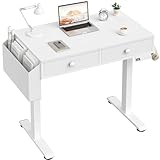
8. KLUVIS 31.5 Inch Electric Standing Desk With Two Fabric Drawers
KLUVIS Small Electric Standing Desk with Drawers, 32 Inch, White
31.5 x 19.7 in footprint
28.3-45.7 in range
Two fabric drawers
35.6 lb
Pros
- Two fabric drawers plus a side pocket and two hooks organize a genuinely small surface
- Compact 31.5 x 19.7 in footprint fits bedrooms
- dorms and apartment corners
- Motor runs quietly at under 50 dB
- Curved desktop edges reduce bumps in tight spaces
Cons
- Fabric drawers sag under heavy items
- 19.7 in depth limits monitor and paperwork placement
- 45.7 in maximum height is low for taller users
- Heaviest unit here at 35.6 lb with two-person assembly recommended
This is the one to look at if you are around five foot three and worried about a desk that rises past you. The 28.3 to 45.7 inch range has the shortest top end in the group, and the curved edges make tight corners less punishing. The storage is unusually complete for 31.5 inches: two fabric drawers, a side pocket and two hooks.
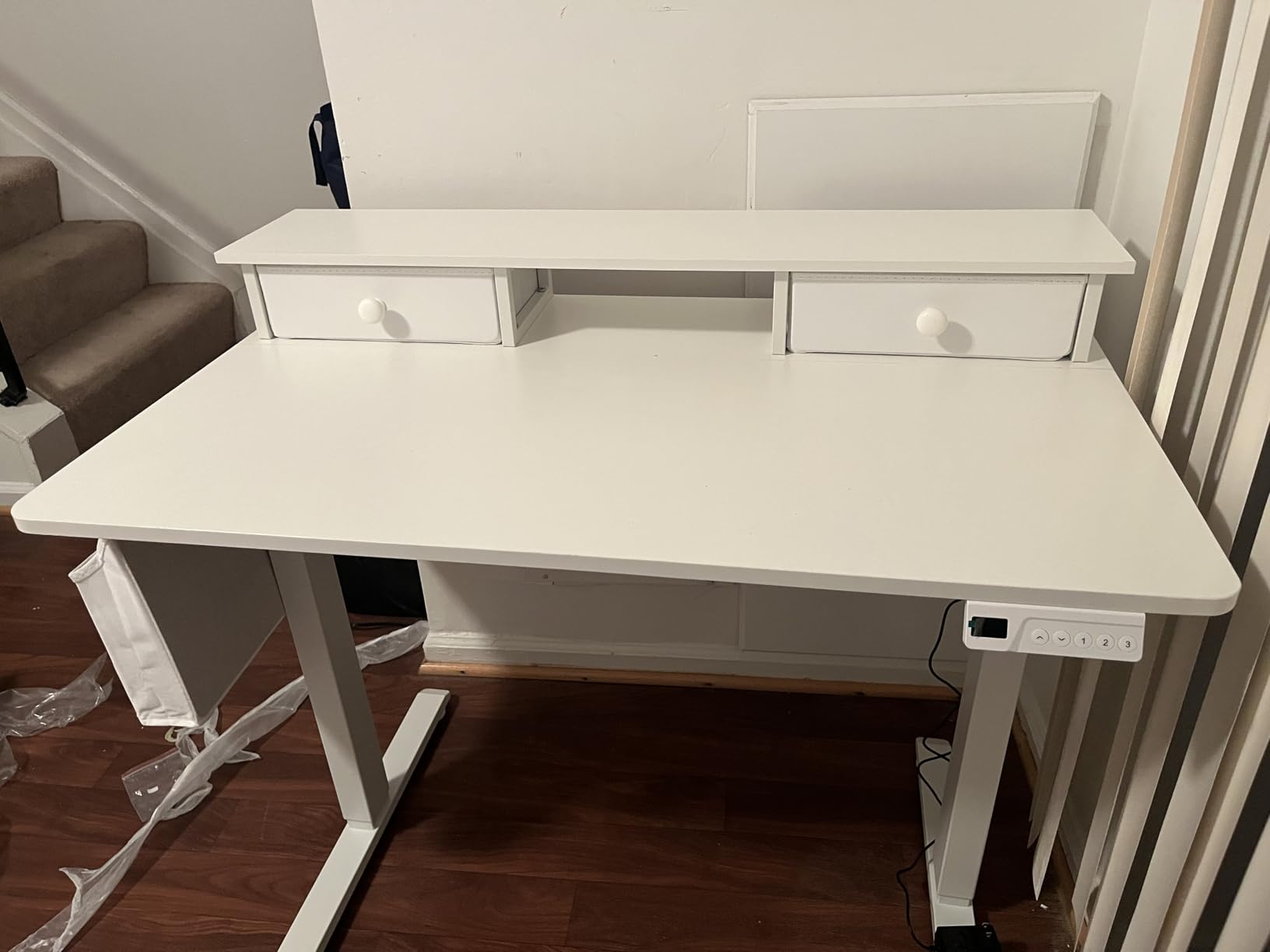
Reviewers highlight the combination of compact size and integrated storage, along with smooth quiet adjustment and the all-white styling. The fabric drawers are good for stationery and cables. They are not for anything heavy, and owners are clear that they soften over time.
The two real constraints are weight and height. At 35.6 pounds this is the heaviest unit here and it carries a two-person assembly recommendation, which is a genuine drawback in a studio where you may be doing everything alone. And the 45.7-inch ceiling is 0.8 inches below most of the electric group, which only matters if you are tall.
Getting the fit right for a shorter user
Shorter users get a worse experience from desks that go too high, because the top of the travel becomes unusable and the presets stop helping. A 45.7-inch maximum keeps the top of the range within reach. Check the 28.3-inch minimum too, since that is the lowest seated position and it needs to clear your thighs with a standard chair.
The fabric drawers deserve a reality check. They hold stationery and cables well and will sag if you load them with books or a laptop. Treat them as a place for small items, not equipment.
Who should skip it
Skip it if you are over six feet, since 45.7 inches will leave you reaching. Skip it if you live alone in a space where two-person assembly is not an option. It is also a poor match for anyone who needs a monitor arm, since there is no extended rear edge on this frame.
9. HUANUO 32 x 20 Inch Electric Standing Desk With Four Drawers
HUANUO 32 x 20 Inch Electric Standing Desk with 4 Drawers, Natural
32 x 20 in footprint
Four drawers, 40 L
2.6 in C-clamp rear edge
4 presets
Pros
- Four integrated drawers give the most storage of any 32 in sit-stand desk
- 2.6 in extended rear edge accepts C-clamp monitor mounts
- Built-in monitor riser for eye-level screens
- 28.3-46.5 in travel with 4 memory presets
- Well-labeled hardware and clear instructions for solo assembly
Cons
- Drawers are small and light-duty for their size
- Removing the upper drawers frees desktop space but cuts storage
- Thin tabletop board could be thicker for rigidity
Four drawers in a 32-inch frame is a genuinely rare combination, and it solves a problem the shallow compact desks all share: nowhere to put anything.
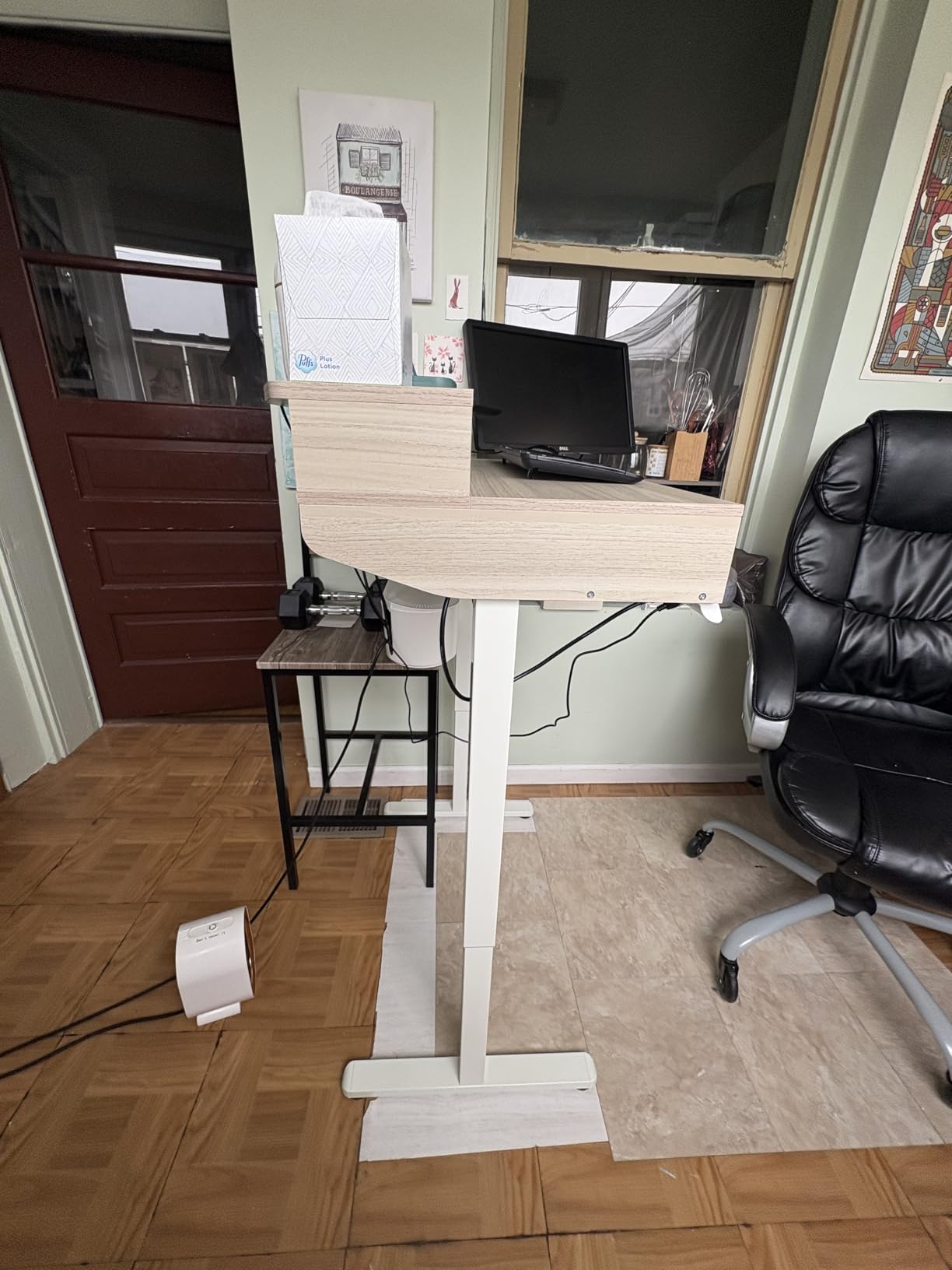
Storage volume is listed at 40 liters, enough for stationery, cables and a charger. The built-in monitor riser plus the 2.6-inch extended rear edge means this desk supports a monitor arm out of the box, which puts it alongside the 32 x 21 HUANUO as one of only two options here that do.
Owners also single out the assembly instructions as unusually clear, and note that the streamlined build requires minimal lifting. The 176-pound frame is tested to 50,000 lift cycles, and the full 28.3 to 46.5 inch travel comes with four programmable presets.
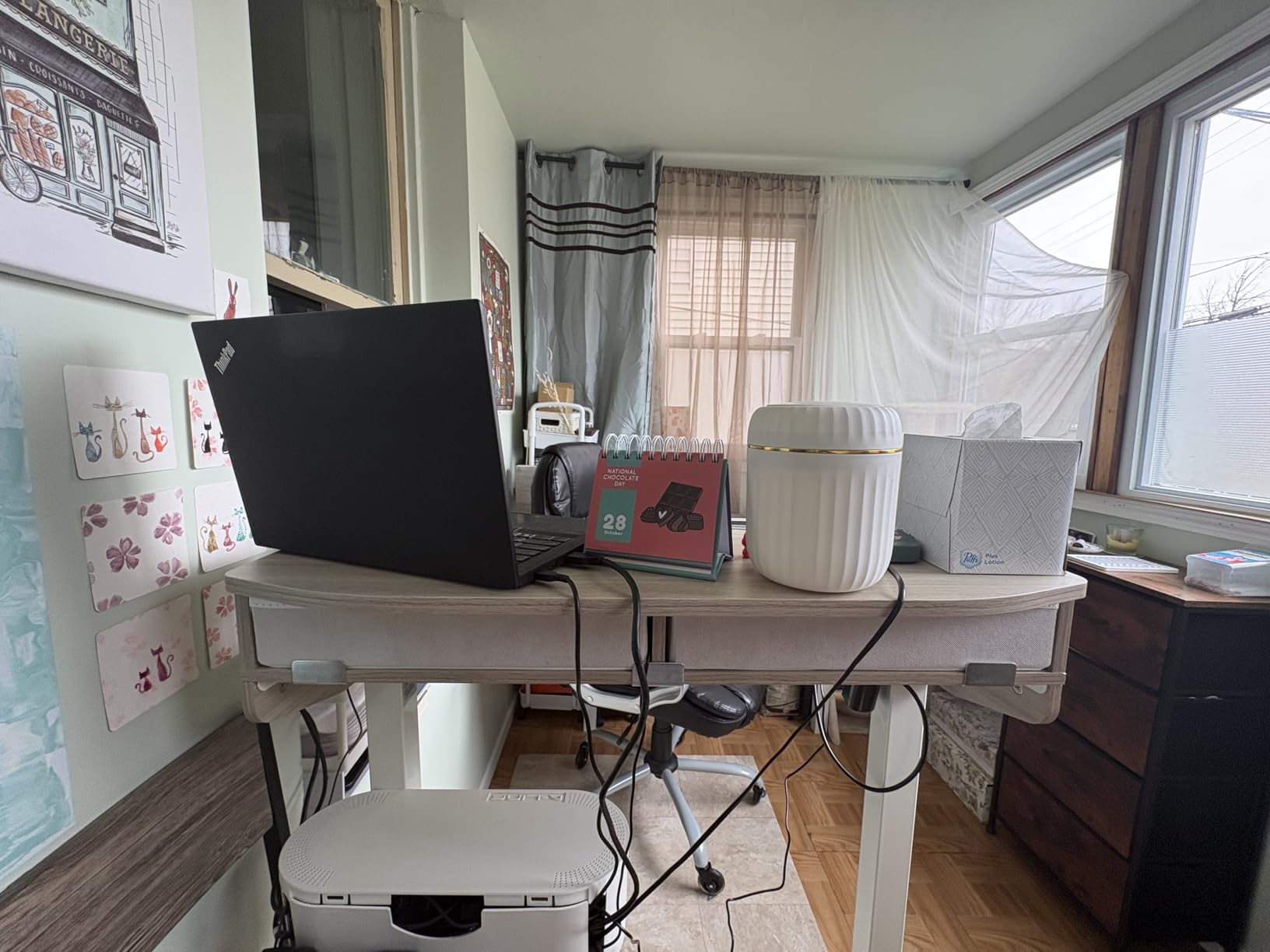
What four small drawers actually hold
They hold the small things well. Cables, stationery, a phone charger, earbuds, a notebook. They are not deep or rigid enough for books, a laptop, or hardware, and owners consistently describe them as better suited to stationery than to equipment. If you need to store a laptop, this is not the drawer unit for you.
There is a useful trade here. Owners note that pulling out the upper drawers frees up desktop space, but it does so by cutting your storage in half. If you are still deciding what lives where, start with the drawers full and take them out as you need elbow room.
Who should skip it
Skip it if you need to store anything heavy, because the thin, small drawers will disappoint you within weeks. The thin tabletop board also deserves caution if you plan a heavy monitor arm, even though the rear edge supports one. For a renter who wants storage without buying separate organizers, it is the most complete package here.
10. YDN 32 x 19 Inch Electric Standing Desk – Cable Tray on a T-Shaped Base
YDN Electric Standing Desk, 32×19 Inch, Black
32 x 19 in footprint
28.3-46.5 in range
156 lbs capacity
Cable tray and hooks
Pros
- Reinforced T-shaped base holds steady with no wobble at max height
- Cable management tray and dual side hooks included as standard
- Near-silent motor at 45 dB or less
- Pre-drilled top assembles with just an Allen wrench
- Adjustable feet add extra stability on uneven floors
Cons
- 156 lbs capacity is the lowest of the electric models here
- 19 in depth is tight for larger monitors or paperwork
- Only 3 memory presets
The cable tray is the surprise here. A built-in management tray plus dual side hooks at the entry point of this list solves the loose-cord problem in a small room where there is nowhere to run a cable raceway. The reinforced T-shaped base is the other quiet win, with reviewers describing a stable, no-wobble lift at maximum height.
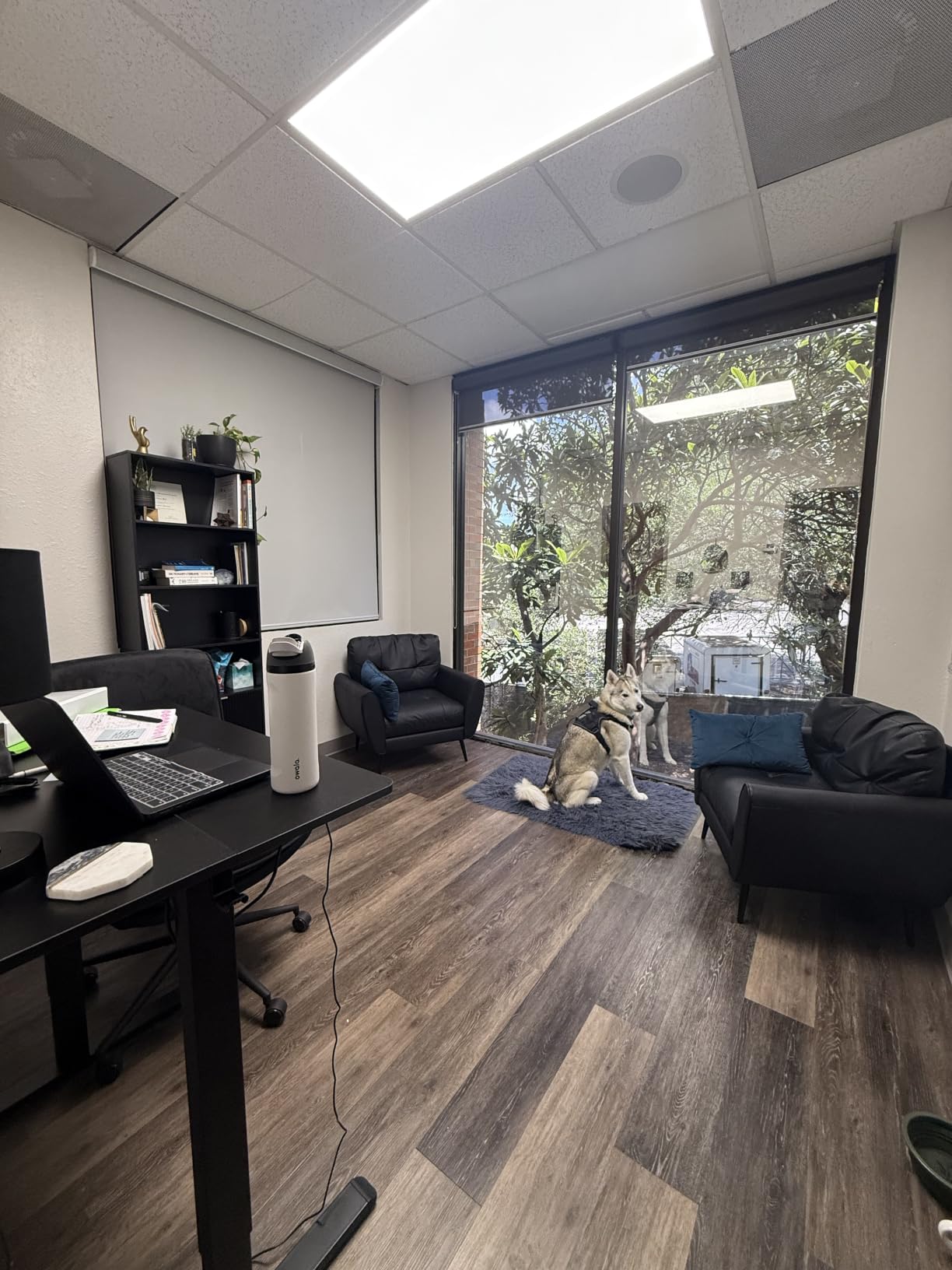
Assembly needs no power drill. For a renter assembling in a studio that is a real advantage. The motor runs at 45 dB or less and is tested past 50,000 cycles.
The 156-pound capacity is the lowest of the electric models here, which is still enough for a laptop and one monitor but leaves less headroom for a heavy multi-screen rig. The 19-inch depth and three memory presets match the entry-level pattern of the other compact models.
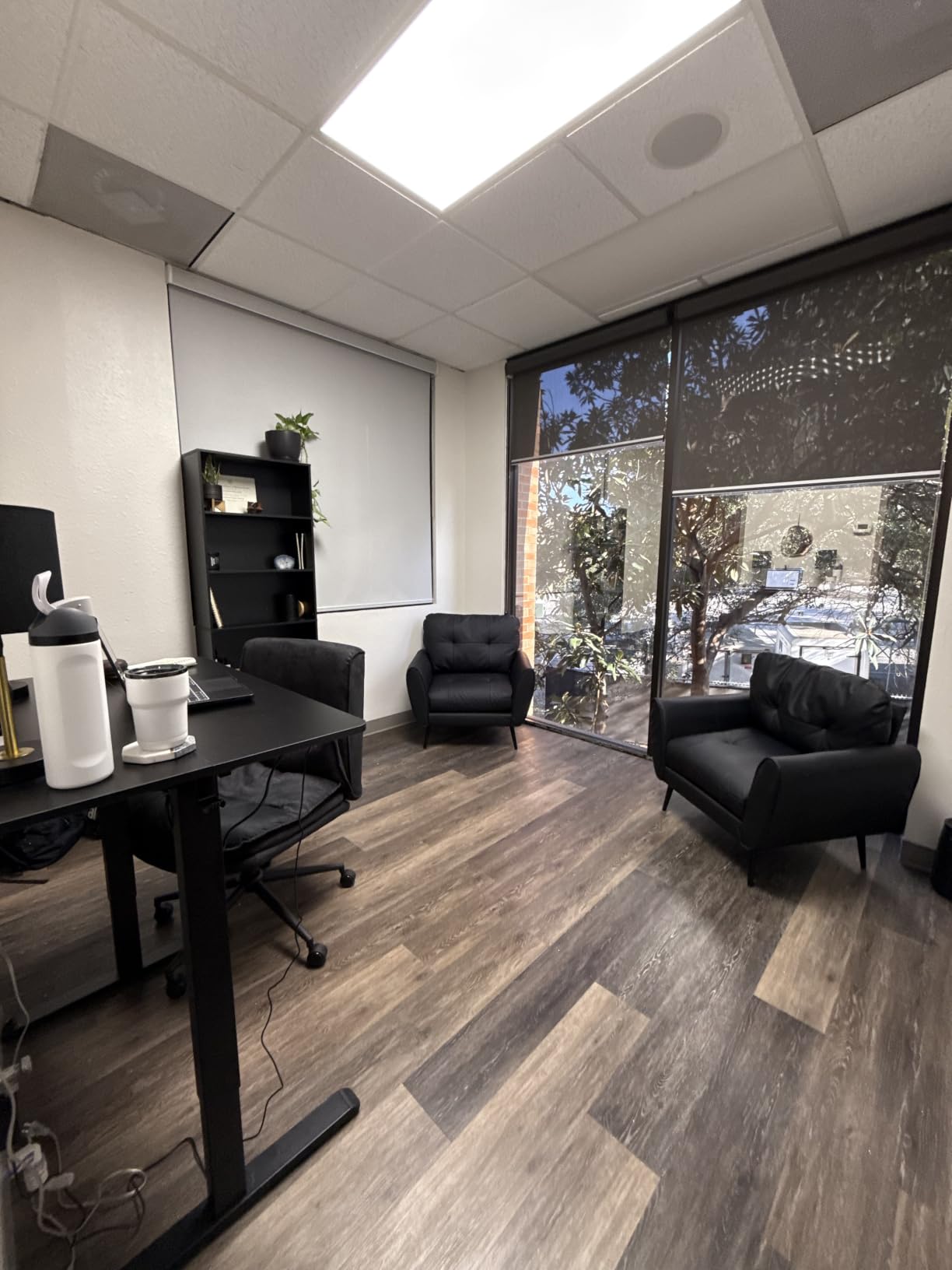
Why adjustable feet matter in an older building
Older apartments and dorm rooms rarely have level floors. The adjustable feet on this frame let you take up the play at each leg so the desk sits flat, which is one of the cheapest wobble fixes available and one that costs nothing if your floor is fine. Tighten the leg bolts again after a week, because frame hardware settles with use.
For a room where cords are the problem, the tray and hooks do more for daily comfort than another memory preset would. If cable routing is your main frustration, this is the pick.
Who should skip it
Skip it if you plan to run a monitor arm with a heavy screen, since 156 pounds is the tightest rating in the group and there is no extended rear edge for a clamp. Skip it if you need storage, because there are no drawers and no cubicle. It suits a single-screen, single-user setup where cable routing matters most.
Why Small Standing Desks Wobble and How to Fix It
Wobble is the most common complaint about every compact desk here, and it is almost never a manufacturing defect. Six causes account for nearly all of it.
First, loose frame bolts. Every height change works a joint slightly looser, and new hardware needs a re-tighten after the first week. Second, a missing cross support. On a 32-inch frame the feet need a lateral brace, and without one the whole top pivots. Third, single-stage legs, which telescope less and flex more under a top-heavy load. Fourth, an uneven floor, which the adjustable feet on several models here address directly. Fifth, overloading the load rating, usually by clamping a monitor arm the frame was not sized for. Sixth, carpet, which compresses unevenly under the feet and leaves a frame resting on two points instead of four.
The fixes follow the causes: re-tighten every leg bolt and crossbar bolt with a hex key after one week of use, and again at month three. Add a lateral cross brace if the frame does not have one. Stay under the stated load capacity and count the monitor arm and clamp in that number. Level the feet before you level anything else. On carpet, either use a hard-floor mat under the feet or fit furniture glides rated for carpet. And if your desk still moves at full height with two monitors on it, that is a frame-width problem rather than a fix problem, which is when moving to 40 inches or more becomes the real answer.
One more practice matters more than any hardware fix. Sit-height stability is consistently good on every model here. Wobble shows up when the desk is raised and loaded, so test it in the position you actually work in, with your actual screens on.
How Small Can a Standing Desk Actually Be
The honest minimum for real work is 30 inches wide, and that is a laptop-only surface. Below 30 you are working from a lap desk. For a single monitor, 40 inches is the practical floor, because a screen plus a keyboard needs elbow room on both sides. For two monitors you want 48 inches, and at that width you are competing with a standard desk again, so the compact category genuinely stops working.
Depth runs the other way. Aim for at least 19 inches, which holds a laptop and a mouse, and 24 inches if you handle any paperwork. In a corner, subtract the control console from the listed depth, since several models here count it inside the number. Anything under about 16 inches deep is a tray rather than a desk.
On height, treat 40 inches as the minimum standing height for a tall user and 46.5 inches as the standard compact ceiling. If you are around five foot three, a lower ceiling such as the KLUVIS is a better fit than a taller frame you can never fully use. If you are over six feet, look for the 48-inch class. The 20-8-2 rule is the other number worth knowing: twenty minutes standing, eight seated, two moving.
How to Measure Your Space Before You Buy
Start with tape on the floor. Mark the full footprint including the control console, then add two inches of clearance behind for your chair to pull out at sitting height. If your chair cannot fully extend, your desk is too close to the wall.
Next, check the walking path. In a room where the desk shares space with a bed or sofa, you need enough room to move past it without moving furniture. This is where the rolling formats earn their place.
Then measure vertical clearance. Every desk here tops out between 45.7 and 48.4 inches, so stand up in the spot and confirm the raised desktop clears your ceiling, any pendant light and any overhead shelf. A desk that cannot fully extend because of a light fixture loses its main advantage.
Finally, check the doorway and the assembly. Measure the narrowest point between the door and the room, and compare it to the widest rigid dimension of the desk. If you are alone, prioritize models with pre-assembled components or a single-person assembly recommendation.
Formats That Free Up Floor Space
If the corner simply does not exist, no amount of dimension tuning will fix it. Three alternative formats do.
A desk converter sits on top of an existing table and gives you sit-stand height without a new floor footprint at all. It is the zero-floor-space answer, and it is the format most often left out of compact desk roundups. The trade is depth: a converter needs a table deep enough to hold it, and it moves the monitor and keyboard up and down with the surface rather than adjusting them independently.
A wall-mounted fold-down desk takes the footprint entirely out of the equation. It folds flat against the wall when the room is being used for something else, which makes it the correct answer for a room that is a bedroom four nights a week. The constraints are wall strength and the wall itself being free, and most sit-stand versions of this format are manual rather than electric.
A mobile cart or laptop cart is the budget version of the same idea. It rolls, it stores, and it costs very little, but its top surface is small and its load rating is low. The QZMDSM rolling desk earlier in this list is the fuller-sized version of that concept.
One compatibility note before you pair any of these with an under-desk treadmill or walking pad. Check the desk minimum height first. Most compact electric desks sit at a 28.3-inch minimum, which clears many walking pads but not all, and a converter that starts higher will not clear one at all.
Frequently Asked Questions
Is a 40 inch desk too small?
No. A 40-inch-wide desk is the practical minimum for a single-monitor setup, because a screen plus a keyboard needs elbow room on both sides. For two monitors you want 48 inches. Below 30 inches you are working on a laptop-only surface rather than a desk.
Do any standing desks come in 40 inches wide?
Very few compact electric models reach 40 inches. Most of the small standing desks made for tight rooms cluster at 32 inches wide and 19 to 21 inches deep. If you need 40 inches, you are moving out of the ultra-compact category and into the standard small-desk range.
How small can a standing desk be?
Around 30 inches wide is the honest floor for real desk work, and that is a laptop-only surface with a mouse. For a single monitor you want 40 inches, and for two monitors 48 inches. Depth should be at least 19 inches, and 24 inches if you handle paperwork.
What depth should a small standing desk be?
At least 19 inches deep for a laptop and mouse, and 24 inches if you work with paperwork. In a corner, subtract the height control console from the listed depth, because several compact models count it inside the published number.
Why is my standing desk so wobbly?
Six causes account for nearly all wobble: loose frame bolts, a missing cross support brace, single-stage legs that flex, an uneven floor, exceeding the load capacity, and carpet compressing under the feet. Test stability raised and loaded with your actual screens, because sitting-height stability is usually fine.
How can I stabilize my wobbly standing desk?
Re-tighten every leg and crossbar bolt with a hex key after the first week and again at month three. Add a lateral cross brace if the frame lacks one. Level the adjustable feet before anything else, keep the total load including any monitor arm under the stated capacity, and use a hard mat or carpet-rated glides under the feet on carpet.
What is the 20-8-2 rule for standing desks?
The 20-8-2 rule means twenty minutes standing, eight minutes seated, and two minutes moving, repeated through a working day. The two minutes of movement matter most, because the change of posture is what reduces stiffness rather than the standing alone.
If you are still weighing options, our home office standing desk guide covers setups with more room.
The Verdict on the Best Standing Desks for Small Spaces
The Cubiker 32-inch compact electric desk is the winner, because it pairs the largest owner record in this category with the quietest motor, a full 28.3 to 46.5 inch travel and a frame tested to 50,000 lift cycles. Buy the 32 x 21 HUANUO if you need drawers and a monitor arm clamp, the Xyndyx if you are tall and want a full 48.4 inch lift on wheels, and the QZMDSM or Armocity rolling desks if the floor space changes by the hour rather than the day.
Whatever you choose, measure depth before width, check the full standing height against your ceiling, and re-tighten the frame bolts after the first week.