
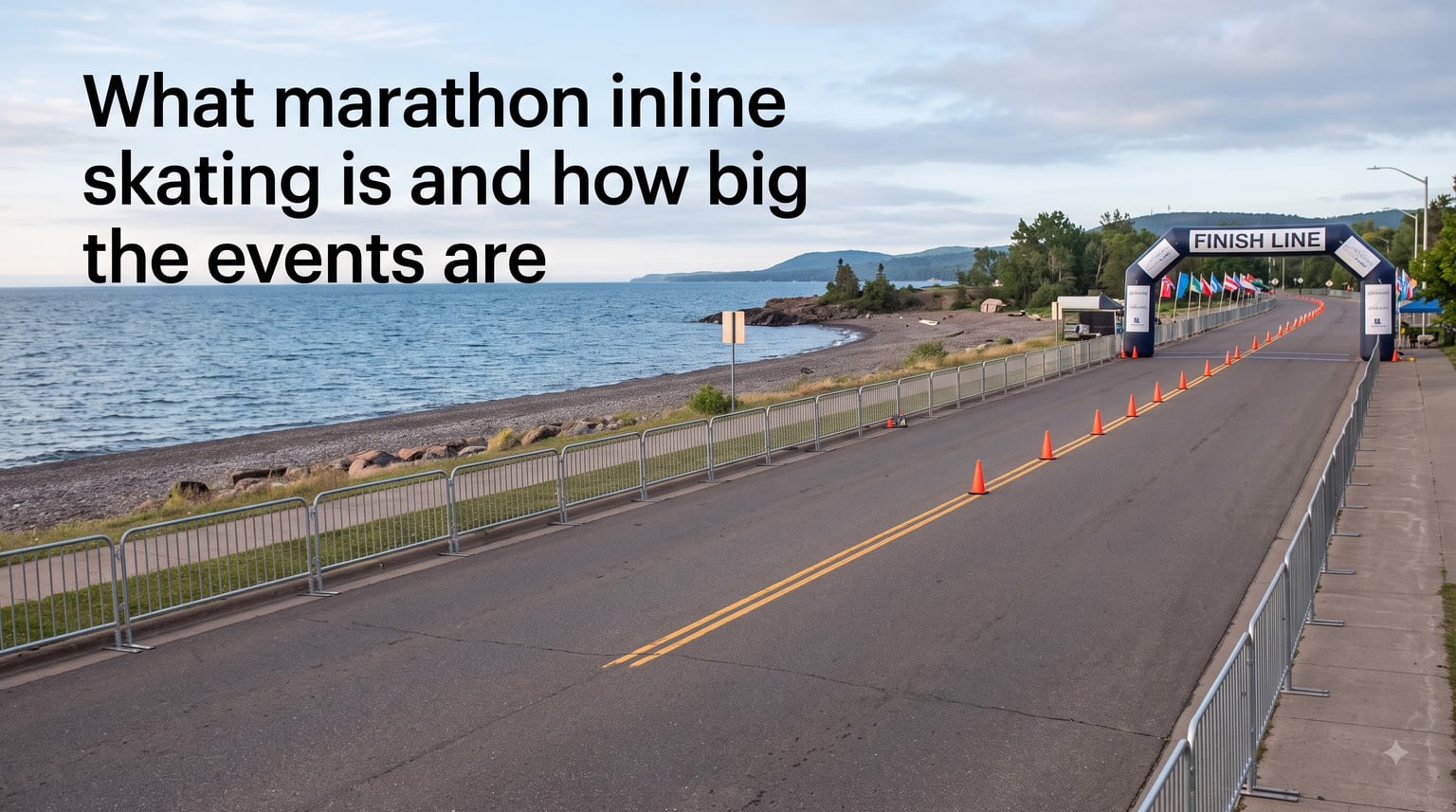
Marathon inline skating is a long-distance race on inline skates that covers the standard marathon distance of 26.2 miles (42.195 km). Our team has followed this sport for years, and the events keep growing – the Berlin Inline Marathon now attracts over 5,000 skaters each year, while the NorthShore Inline Marathon in Minnesota pulls in more than 2,500 participants from nearly every US state and a dozen countries.
If you’ve ever wondered what makes these events so special or how they compare to running marathons, this guide will walk you through the definition, the scale, the famous races, and what to expect if you decide to try one.
Table of Contents
What Is Marathon Inline Skating?
Marathon inline skating is an endurance race where athletes compete on inline skates (also called rollerblades) over the classic marathon distance of 26.2 miles or 42.195 km. The sport grew out of the same fitness movement that made rollerblading huge in the 1990s, but it has evolved into a distinct competitive discipline with its own international calendar.
Most events follow the running marathon’s traditional distance because it gives skaters a familiar benchmark. Elite racers often finish a full inline marathon in 1 hour 15 minutes to 1 hour 45 minutes. Recreational skaters typically cross the finish line between 2 and 3 hours.
The format works much like a running marathon. Skaters line up in waves, wear timing chips on their ankles, and follow a closed road course with aid stations. The big difference is speed: inline skates roughly double your pace compared to running, so a 4-hour running marathon can turn into a 2-hour skate marathon for athletes of similar fitness.
Anyone who can skate confidently and build basic endurance can enter. Events welcome elite competitors chasing prize money, age-groupers chasing personal records, and first-timers just looking to finish.
How Big Are Marathon Inline Skating Events?
Marathon inline skating events range from small local races with a few hundred skaters to massive international competitions with thousands of participants. The scale depends on the city, the course, and whether the event is part of a larger festival like the Berlin Marathon weekend.
At the top end, the BMW Berlin Marathon Inline Skating race draws more than 5,000 professional and recreational skaters. It is widely considered the world’s largest inline skating marathon. The NorthShore Inline Marathon, held each September along Lake Superior in Duluth, Minnesota, regularly welcomes 2,200 to 2,500 participants from around 48 US states and 10 or more countries.
Mid-sized events like the Apostle Islands Inline Marathon in Wisconsin and several European circuits typically host between 500 and 1,500 skaters. Smaller community races and club-organized events run anywhere from 100 to 500 participants.
The participant numbers have grown steadily since the early 2000s, after a dip in the late 1990s when the inline skating boom faded. Modern events now combine competitive racing with festival-style expos, family activities, and tech expos to bring in larger crowds.
The Biggest Marathon Inline Skating Events in the World
Here are the most established inline skating marathons, ranked by typical participation numbers and global reach:
1. BMW Berlin Marathon Inlineskating (Germany)
The Berlin event is the gold standard for size and prestige. More than 5,000 skaters take over the same closed Berlin streets used by the running marathon one day later. The course is mostly flat and fast, which is why world record times are regularly set here. Both elite athletes chasing prize money and recreational skaters share the road in separate waves.
2. NorthShore Inline Marathon (USA)
Held in Duluth, Minnesota, the NorthShore is North America’s only World Inline Cup event. It regularly draws 2,200 to 2,500 skaters from 48 US states and 10+ countries. The point-to-point course runs along Lake Superior and includes a memorable stretch through the I-35 tunnel. Prize money of around $15,000 attracts elite racers, while the four-distance format (full marathon, half marathon, 10K, and combined events) keeps beginners engaged.
3. Apostle Islands Inline Marathon (USA)
This Wisconsin race brings together roughly 500 to 800 skaters for a scenic Lake Superior course. It is known for its friendly, community-driven atmosphere and serves as a popular step-up race for skaters preparing for NorthShore.
4. World Inline Cup Series
The World Inline Cup is the elite international circuit that connects top European and North American races. Each season includes five to seven stops, with the NorthShore event serving as the only North American round. Total cumulative participants across all WIC events reach tens of thousands of skaters each year.
5. European City Marathons
Cities like Paris, Lyon, and several German towns host annual inline skating marathons with 1,000 to 3,000 skaters each. These races often sit alongside running and cycling events and act as stepping stones for athletes aiming at Berlin.
Marathon Inline Skating vs Running Marathons
The biggest difference is pace. A recreational inline skater who finishes a marathon in 2 hours might take 4 hours to run the same distance. Elite inline racers often complete the course in under 1 hour 30 minutes, while elite runners need closer to 2 hours.
The muscle groups also differ. Running marathons pound the joints and rely heavily on hamstrings and calves. Inline skating is lower impact and depends more on quads, glutes, and core stability. Many athletes find that skating gives them a cardio workout without the same joint wear, which is part of why older athletes can stay competitive in their 50s and 60s.
The community feel is different too. Inline skating marathons tend to feel like rolling festivals. Skaters chat in the pack, draft each other to save energy, and cross finish lines grinning because the whole day feels social. Running marathons are usually more focused and quiet once the gun goes off.
One common rule skaters share on forums: inline skating feels about twice as fast as running. You finish sooner and the journey feels easier on the body, even though the distance is identical.
What to Expect at an Inline Skating Marathon
Most inline skating marathons offer multiple distances. You will usually see a full marathon, a half marathon, and a 10K. Some events add combined events where teams of two or four skaters race the full marathon as a relay.
Expect wave starts. Skaters are grouped by declared pace or category, then released in waves spaced a minute or two apart. This keeps the course safer and prevents bottlenecks at the first aid station.
Courses fall into two main types. Point-to-point courses, like NorthShore, run from a start line to a finish line in another location, with shuttle buses taking skaters back. Closed circuit courses, like Berlin, loop through city streets that are fully closed to traffic for the day.
Aid stations appear every 5 to 10 kilometers with water, sports drinks, and snacks. Most events provide a finisher medal, a tech shirt, and post-race food. Prize purses at the bigger races can reach $15,000 or more for the elite divisions.
Training for an Inline Skating Marathon
If you can already skate 10 km without trouble, you can train for a marathon in 12 to 16 weeks. The training is mostly about endurance, not raw speed. Long skates on weekends, mid-week interval sessions, and core strength work are the foundation.
Start with a base of 30 to 40 km per week, then build your long Saturday skate by 5 km every other week. Most coaches recommend at least one or two skates over 30 km before race day, so your legs know what the distance feels like.
Don’t skip the off-skate work. Squats, lunges, planks, and hip stability drills help you hold proper form for hours. Many beginners try to skate a marathon with running-only fitness and find their lower back gives out in the second hour.
The Growth and Community of Inline Marathon Events
Inline skating had a popularity dip after the 1990s boom, but marathon events have quietly grown for two straight decades. The combination of closed roads, family-friendly distances, and a welcoming community has turned races like Berlin and NorthShore into bucket-list events for skaters worldwide.
Most event organizers report year-over-year registration growth, with new races launching in cities that previously had none. Our team expects this trend to continue as more running clubs add inline divisions to their weekend festivals.
Frequently Asked Questions
How long does it take to inline skate a marathon?
Most recreational skaters finish a marathon inline skating race in 2 to 3 hours. Elite racers often complete the 26.2 mile course in 1 hour 15 minutes to 1 hour 45 minutes, roughly twice as fast as elite runners.
Can you rollerblade in a marathon?
Yes, you can rollerblade (inline skate) in a marathon. Many major running marathons host a separate inline skating division with its own course, timing, and prize money, including the BMW Berlin Marathon which draws over 5,000 skaters each year.
How many miles is an inline skating marathon?
An inline skating marathon covers the standard marathon distance of 26.2 miles or 42.195 kilometers. Most inline events also offer shorter distances like a half marathon and a 10K for skaters building up to the full distance.
How can I train effectively for an inline skate marathon?
Build a 12 to 16 week training plan that includes one long skate per weekend, mid-week interval sessions, and core strength work like squats and planks. Most coaches recommend completing at least one or two skates over 30 km before race day.
Is inline skating harder than running a marathon?
Inline skating and running marathons challenge the body in different ways. Inline skating is lower impact on the joints but requires stronger quads and core stability to maintain form for hours. Many skaters find the experience easier on the body and finish in about half the time.
Final Thoughts on Marathon Inline Skating
Marathon inline skating is a 26.2 mile endurance race on inline skates that ranges from small community events with a few hundred skaters to global competitions like Berlin’s 5,000+ participant showcase. The sport is growing, the community is welcoming, and the events are bigger than most people realize.
If you’re curious, pick a local 10K or half marathon first. Our team believes you’ll be surprised how much fun it is to chase a marathon distance on wheels.