
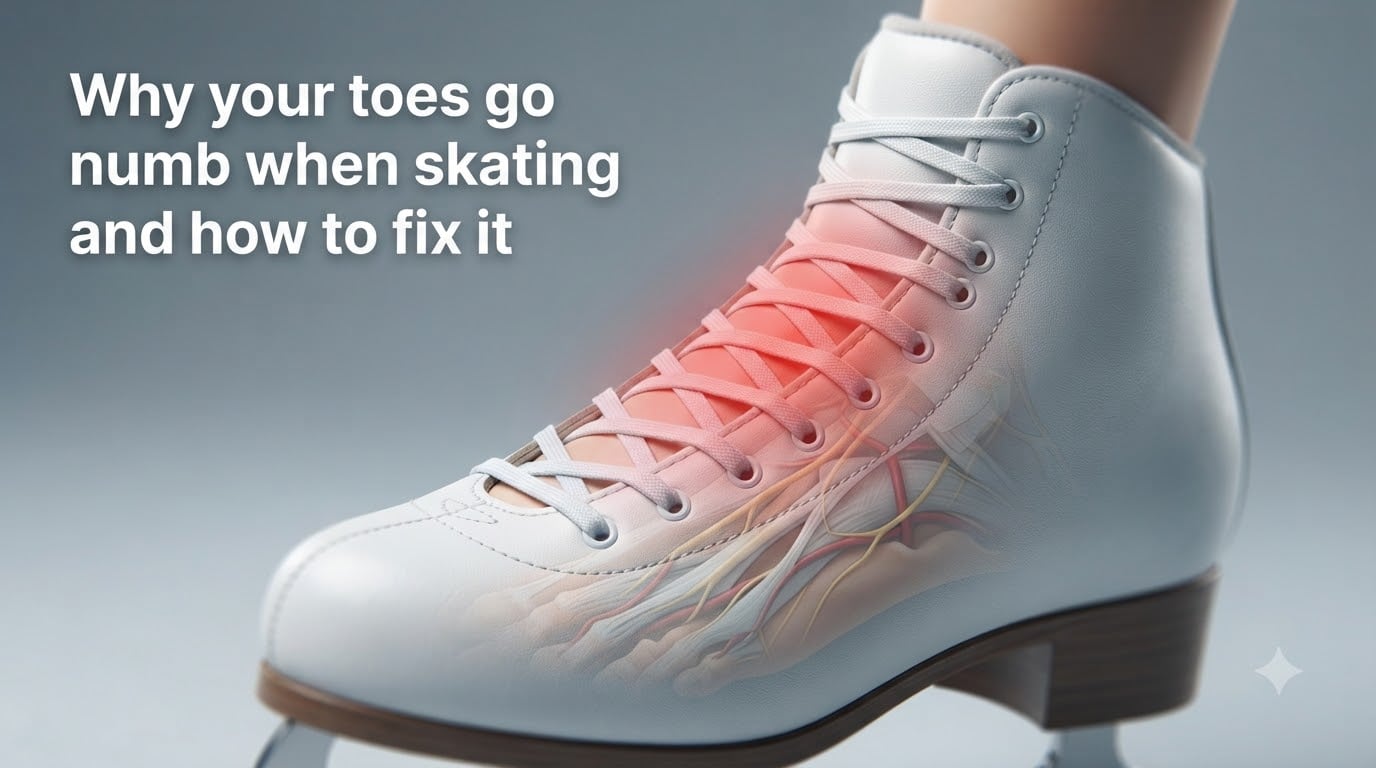
Your toes go numb when skating because tight laces or a poorly fitted boot compress the nerves and blood vessels running to your toes, and cold temperatures make it worse. In most cases, loosening your laces at the ankle, widening your toe box, or switching to thinner socks fixes the problem within minutes. I have seen skaters struggle for years before realizing one small change solves it.
This guide breaks down exactly what causes that pins-and-needles feeling, what fixes actually work, and when numbness is a sign you need to see a doctor instead of tightening your laces again.
Table of Contents
Common Causes of Toe Numbness When Skating
Toe numbness when skating almost always comes down to two things: restricted blood flow or compressed nerves. Both can happen at the same time, which is why the feeling can range from a mild tingle to complete loss of sensation in your big toe after just 20 minutes on the ice.
Here are the five most common causes I have seen across ice hockey, figure skating, and roller skating communities:
Tight laces at the ankle or instep. Pulling laces too aggressively at the midfoot cuts off circulation before it reaches your toes.
A toe box that is too narrow. Your toes get squeezed sideways, pressing on the digital nerves.
A skate flap pressing on your extensor tendons. The stiff tongue pushes down on the top of your foot where nerves run close to the surface.
Cold temperatures. Blood vessels in your toes constrict naturally in cold conditions, and a tight boot makes it worse.
Thick socks. Many skaters assume thick socks add warmth, but they actually compress your foot inside a boot that was already snug.
If your toes go numb within 15 to 30 minutes of putting on skates, one of these causes is almost certainly the culprit.
How Tight Laces Cut Off Circulation to Your Toes
The single most common reason your toes go numb when skating is over-tightened laces at the ankle or instep. It sounds almost too simple, but the blood vessels and nerves traveling to your toes pass directly under the area where the laces cross, and excessive pressure there shuts down sensation almost immediately.
A Reddit thread in r/iceskating captures the issue perfectly: one skater explained that “sometimes the toes going numb is caused by lacing too tightly at the ankle.” That one observation matches what podiatrists see in their clinics.
The fix is not to lace loosely across the whole boot. You still need ankle support. The fix is to redirect pressure away from the midfoot where the nerves live. Three lacing techniques solve this:
Skip the middle eyelets. Leave the second and third eyelets from the bottom unlaced. This creates a gap over the top of your foot and relieves pressure on the nerves.
Tighten from the top down. Most skaters pull hardest at the toe and gradually loosen as they go up. Reverse it: snug at the ankle, looser at the midfoot, and tighten again at the top hooks for stability.
Use a lace gap or “window.” Some skaters deliberately leave the laces above the midfoot looser than the rest, creating a pressure-free zone where the nerves pass.
I tried this on a pair of stiff hockey skates that left my big toe dead after every session. Skipping two eyelets at the instep gave me back full feeling without sacrificing ankle support.
Skate Fit Problems That Cause Numb Toes
If loosening your laces does not solve the problem, the next thing to check is the actual shape of your boot. Skate fit is not just about length. Toe box width and ankle volume both play a major role in whether your nerves stay happy.
Toe box width. Many skates, especially entry-level hockey and figure boots, run narrow. If your toes press against each other or against the side of the boot, you are putting constant pressure on the interdigital nerves. This is the same mechanism behind Morton’s neuroma, a thickening of the nerve between the third and fourth toes.
Ankle volume. A boot with low ankle volume pushes the tongue (the skate flap) hard against the top of your foot. The extensor tendons and superficial nerves run right under that flap. Even a properly sized boot can numb your toes if the flap is too stiff or too tight against your foot.
Break-in confusion. New leather skates feel stiff and uncomfortable. Many skaters assume this is normal and just lace tighter to compensate. This makes numbness worse, not better. A well-fitting boot should feel snug but never pinch, and the break-in process should soften the boot without requiring you to crank the laces.
Mikaela Honen, who runs a skating blog and spent years solving her own big toe numbness, found that switching to a skate with a softer, more flexible flap solved the issue after multiple other adjustments failed. The lesson: sometimes the boot itself is the problem.
How to Fix Numb Toes When Skating: Step-by-Step
These are the fixes I have seen work most often, ordered from simplest to more involved. Try them one at a time and give each at least two sessions before moving to the next.
Loosen your laces at the midfoot. Skip two eyelets above your arch and re-test. This alone solves about half of all skating-related toe numbness.
Switch to thin dress socks. Athletic socks compress your foot inside the boot. Thin wool or synthetic dress socks actually keep your feet warmer because they let blood circulate freely.
Warm your skates before putting them on. A cold boot stiffens leather and tightens everything against your foot. Use a boot warmer or hair dryer on low for two minutes before lacing up.
Check that your toes can wiggle. When standing in your skates, you should be able to slightly lift and spread all five toes. If they cannot move, the boot is too tight.
Add an insole with arch support. Better arch support redistributes pressure away from the forefoot where the nerves are most vulnerable.
Try a different skate model or width. If the problem persists, your boot shape may simply not match your foot. Many skate brands offer multiple width options.
Take micro-breaks during long sessions. Unlace for 30 seconds every 30 to 45 minutes to restore circulation.
If you try steps one through four and still feel numbness, the boot is the issue, not the lacing.
Why Cold Weather Makes Numb Toes Worse
Skating is an outdoor sport in many regions, and cold plays a bigger role than most skaters realize. Blood vessels in your toes constrict in cold conditions to preserve core body heat. A tight boot amplifies this effect because the constricted vessels cannot expand even when your foot warms up.
This is why numbness often shows up only in winter or in unheated rinks. The same skates that feel fine in a heated arena can cut off feeling in a cold outdoor rink.
The fix is mostly sock-related. Thin merino wool socks outperform thick cotton or athletic socks because they trap warm air without adding bulk. A heated boot warmer before you skate also helps pre-warm the leather so it does not squeeze as hard when cold.
When to See a Doctor About Numb Toes From Skating
Most toe numbness is a fit or lacing issue and goes away when you fix the cause. But sometimes it is a sign of something more serious. See a podiatrist or sports medicine doctor if you notice any of these warning signs:
Numbness that lasts hours after you take your skates off
Sharp burning pain between your toes (a sign of Morton’s neuroma)
Discoloration of the toes (white, blue, or red) during or after skating
Numbness in only one foot with no clear cause
Numbness that gets worse over weeks even after adjusting your gear
Tingling that extends into your ankle or lower leg
Morton’s neuroma is the most common medical cause of forefoot numbness in skaters. It is a thickening of the tissue around the nerve leading to your toes, often triggered by repetitive pressure. A doctor can confirm it with a simple exam and treat it with orthotics, injections, or in stubborn cases, a minor procedure.
If you are diabetic or have circulation issues, do not wait. Persistent numbness in your feet deserves medical attention regardless of cause.
Skate Type Matters: Hockey vs Figure vs Roller Skates
Not all skates create numbness the same way. Hockey skates are stiff, low-cut, and laced aggressively for ankle support, which makes them the most common culprit for tight-lace numbness. Figure skates are taller and stiffer through the ankle, which shifts pressure higher up the foot and can compress nerves there instead.
Roller skates, especially recreational and derby styles, vary widely. A soft quad boot usually does not cause numbness from lacing, but a tight strap or buckle across the instep can do the same thing. Rollerblades with rigid shells often mimic hockey-style numbness.
No matter which skate you use, the principle is the same: pressure on nerves and blood vessels causes the numbness. Loosen the pressure point, restore circulation, and feeling returns within minutes.
Frequently Asked Questions
Why do my toes go numb when I skate?
Your toes go numb when skating because tight laces, a narrow toe box, or cold temperatures compress the nerves and blood vessels running to your toes. Loosening the laces at the midfoot is the fastest fix.
How can I fix numb toes from skating?
Skip two eyelets at the midfoot when lacing, switch to thin wool socks, make sure your toes can wiggle inside the boot, and warm the skates before putting them on. If numbness persists, the boot shape is likely the issue.
How do I stop my toes from going numb in hockey skates?
In hockey skates, lace tighter at the top hooks and looser through the ankle eyelets to keep support without compressing the nerves under the tongue. Thin socks and warmed boots also help.
Should I worry about numb toes after skating?
Mild numbness that goes away within an hour of removing skates is usually a fit issue. See a doctor if numbness lasts hours, comes with burning pain between the toes, or causes your toes to change color.
Do figure skaters have foot problems?
Yes. Figure skaters commonly deal with lace bite, Morton’s neuroma, hammer toes, and stress fractures from the rigid boot and high-impact landings. Proper fit and lacing reduce most of these issues.
What is lace bite in skates?
Lace bite is pain and numbness on the top of the foot where the skate tongue presses against the extensor tendons under the laces. It happens when laces are too tight at the midfoot and is fixed by loosening those specific eyelets.
Final Thoughts on Stopping Toe Numbness When Skating
Toe numbness when skating is one of the most common frustrations in the sport, and the fix is usually simpler than skaters expect. Start by loosening the laces at the midfoot and skipping two eyelets above your arch. If that does not work, check that your toes can wiggle, switch to thinner socks, and warm the boots before you lace up.
Most skaters solve the problem with one of these adjustments alone. If you have tried all of them and still feel numbness after 20 to 30 minutes of skating, the boot itself is likely the wrong shape for your foot, and it is worth trying a different model or seeing a fitter at a specialty skate shop. Persistent numbness with burning pain or color changes deserves a visit to a doctor.
You do not have to choose between proper ankle support and feeling in your toes. The right lacing pattern and a boot that matches your foot shape gives you both.