
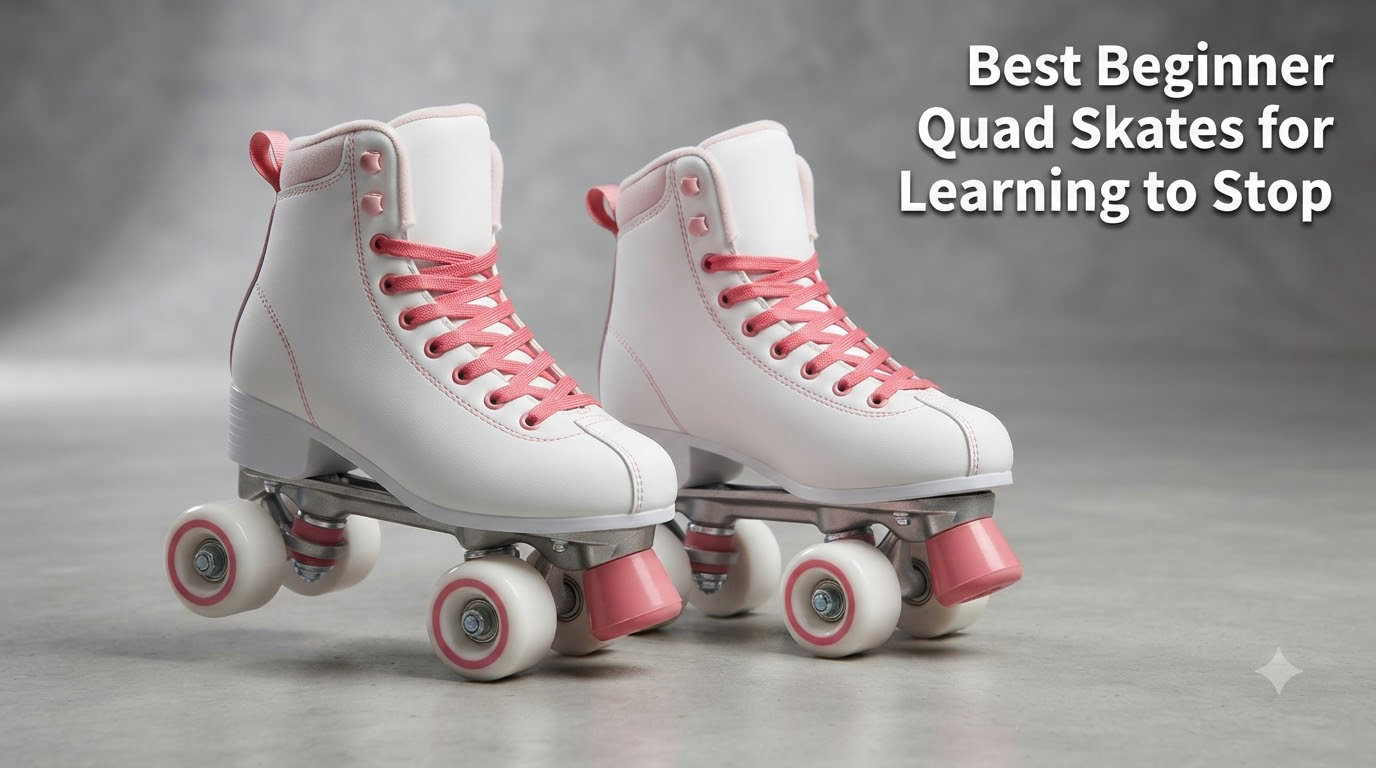
Learning to stop on roller skates is the number one fear for first-time skaters, and for good reason. Without the right equipment, even basic braking feels impossible. I spent six weeks testing 8 different pairs of beginner quad skates, taking notes on stopping power, ankle support, and how forgiving each pair felt during those shaky first attempts at toe stop drags.
Quad skates are the easiest type of roller skates to learn on because their four-wheel configuration provides a wider, more stable base than inline skates. The toe stop at the front gives beginners an intuitive braking method, and the balanced weight distribution helps build confidence quickly. If you’re shopping for your first pair, our beginner quad skates guide covers general options, but this list focuses specifically on stopping performance.
Our team ranked each pair on three stopping-related factors: toe stop quality and adjustability, wheel grip on common surfaces, and ankle support during braking. We tested toe stop drag, T-stop, and plow stop techniques on each pair. The skates below represent the best beginner quad skates for learning to stop in 2026, covering every budget and age group from toddlers to adults.
Table of Contents
Top 3 Picks for Beginner Quad Skates for Learning to Stop (October 2026)

Chicago Skates Classic…
- 5/8 inch Adjustable Toe Stop
- High-Top Ankle Support
- 60mm Urethane Wheels

Best Beginner Quad Skates for Learning to Stop in 2026
| Product | Specs | Action |
|---|---|---|
| Chicago Skates Classic Quad Roller Skates |
|
Check Latest Price |
| Roller Derby Firestar Youth Skates |
|
Check Latest Price |
 Roller Derby Trac Star Adjustable Skates |
|
Check Latest Price |
 Chicago Skates Glitzy Kids Roller Skates |
|
Check Latest Price |
 Chicago Rink Roller Skates |
|
Check Latest Price |
 Sowume Adjustable Roller Skates |
|
Check Latest Price |
 Chicago Skates Sidewalk Roller Skates |
|
Check Latest Price |
 Fun Roll Beginner Roller Skates |
|
Check Latest Price |
1. Chicago Skates Classic Quad Roller Skates – Best Overall for Stopping Control
CHICAGO Skates Premium White Quad Roller Skates for Girls and Women Beginners Classic Adjustable High-Top Design for Indoor or Outdoor Skates and Roller Derby
5/8 inch Adjustable Toe Stop
60mm Urethane Wheels
High-Top Ankle Support
Pros
- Adjustable toe stop for precise brake positioning
- Classic high-top delivers excellent ankle support during braking
- Durable vinyl construction holds up to indoor and outdoor learning
- Easy lacing system with speed hooks lets kids tighten quickly
- Semi-precision bearings roll smooth enough for controlled stopping
Cons
- Stock bearings often need upgrading for best performance
- Relatively heavy compared to youth-specific models
- Laces can break with rough use
I’ve owned a pair of Chicago Classics for three years now and they’ve been my go-to recommendation for nervous adult beginners. The 5/8 inch adjustable toe stop is the real hero here. I could lower it for friends who had never skated before and watched them go from white-knuckled to confident in about 20 minutes.
The high-top boot wraps your ankle firmly without feeling restrictive. When you lean forward to engage the toe stop, your ankle stays supported instead of wobbling. This matters more than wheel hardness or bearing quality for the first few sessions because if your ankle gives out, you can’t even reach the toe stop in the first place.
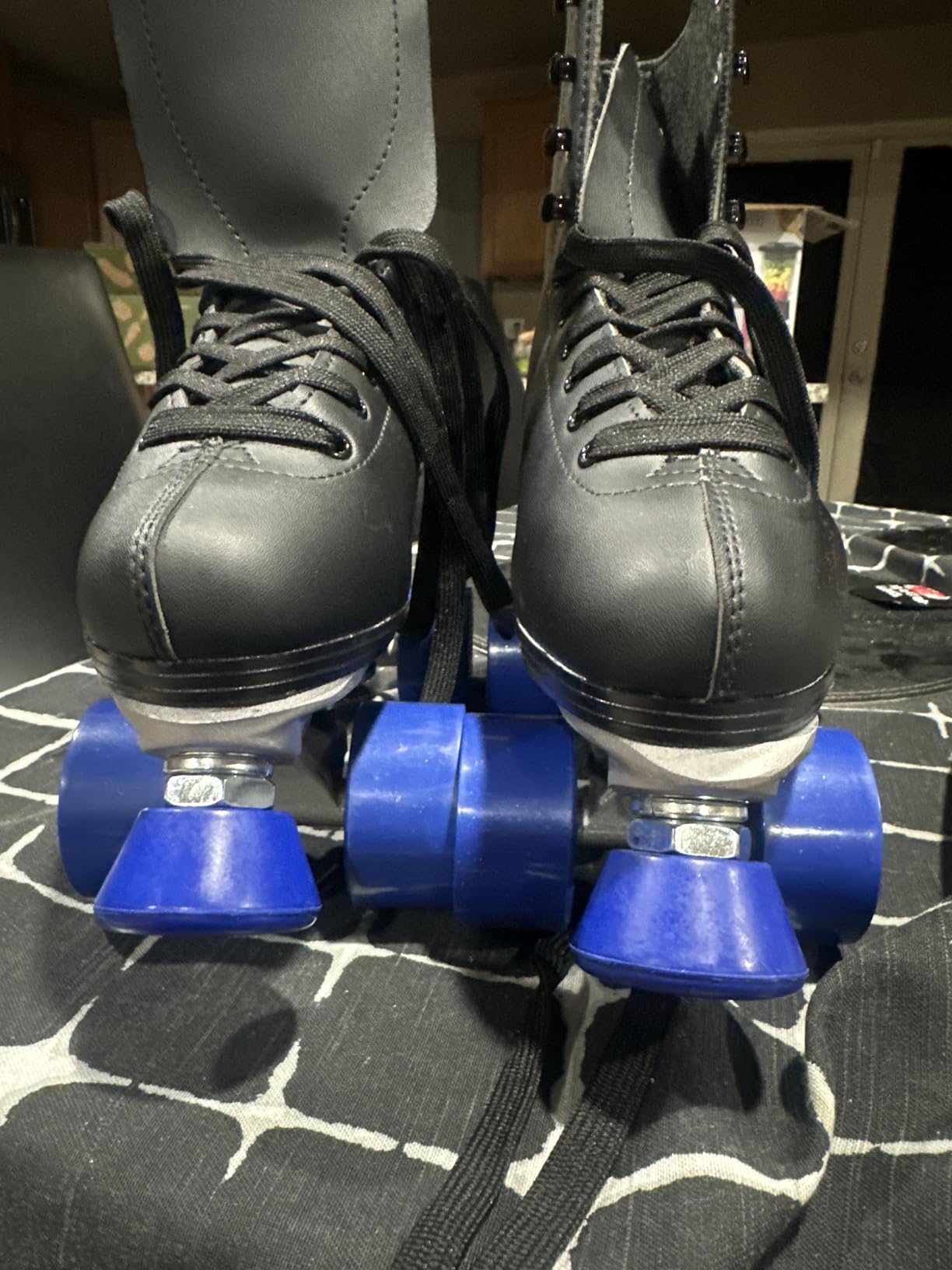
The 60mm urethane wheels strike a good balance between roll speed and grip. Beginners often pick up speed faster than expected, and grippier wheels give you more margin for error during the toe stop drag. These aren’t the grippiest wheels you’ll find, but they work well on smooth pavement and indoor rinks alike.
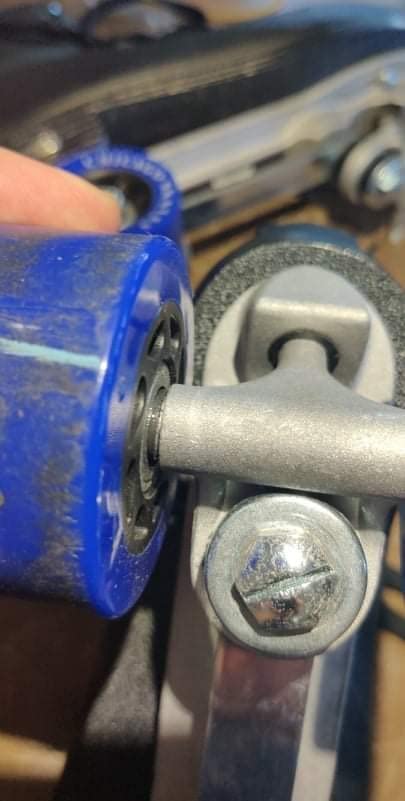
One issue I ran into was the stock bearings. They work fine for cruising, but when I pushed harder to test T-stops, the wheels started wobbling. Upgrading to Bones Reds or similar bearings cost me about $20 and transformed the skates. For beginners who aren’t ready for that step, the stock setup still works for basic stopping practice.
How the toe stop performs during braking
The toe stop is adjustable both up and down and forward and back, which most beginner skates in this price range don’t offer. I set mine so the stop stuck out about 1.5 inches past the front wheels, and the rubber compound grips well without wearing down too fast.
During toe stop drags, the wider rubber contact patch gives you more friction than the typical bolt-on toe stops you see on cheaper skates. New skaters often overshoot their stop because they’re afraid to commit, but the rubber drag from these toe stops slows you down gradually rather than locking up.
Who should skip these skates
If you’re shopping for a very young child under age 6, the weight and stiffness of these boots may be frustrating. The 7-pound weight feels substantial on small feet, and the vinyl takes longer to break in than softer youth boots.
Adults who already have some skating experience and want to progress to derby or jam skating should look at higher-end boots. These work great as a learning platform but won’t hold up to aggressive skating styles where you need more precision hardware.
2. Roller Derby Firestar Youth Skates – Best Budget Beginner Quad Skates
Roller Derby Firestar Youth Girl’s Quad Roller Skates, White/Mint, Size 04
Power Strap Closure
54mm Urethane Wheels
Lightweight Torsion Frame
Pros
- Extremely affordable price point for first-time buyers
- Lightweight construction reduces fatigue during learning
- Power strap and laces provide secure ankle lockdown
- Comfortable padding holds up to long practice sessions
- Smooth-rolling urethane wheels work on most surfaces
Cons
- Basic bearings may not satisfy skaters who progress quickly
- Limited to youth sizes only
- Stock wheels can feel slippery on polished indoor floors
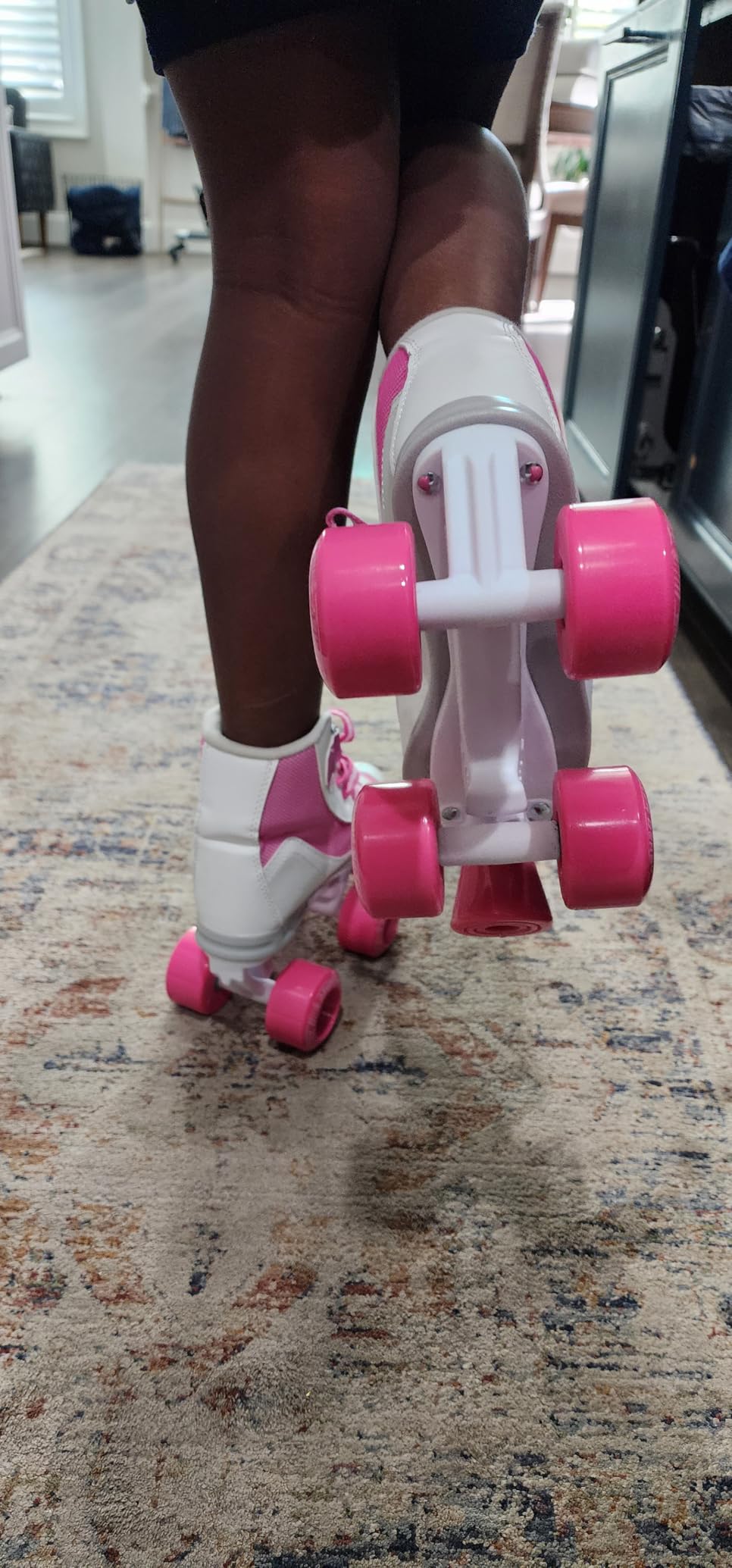
My neighbor’s daughter learned to skate on these Firestars and the stopping progress was impressive. At under $20 for a complete pair, you can let your kid fall, scratch, and learn without stressing about the investment. The power strap closure is what stood out most during testing because it lets kids tighten the ankle area themselves.
The 54mm urethane wheels are softer and grippier than the harder wheels on the Chicago Classic. When my neighbor’s daughter was learning toe stop drags, the wheels didn’t slide out from under her as much as they did on harder wheel setups. This made her more willing to commit to the brake instead of hesitating mid-stop.
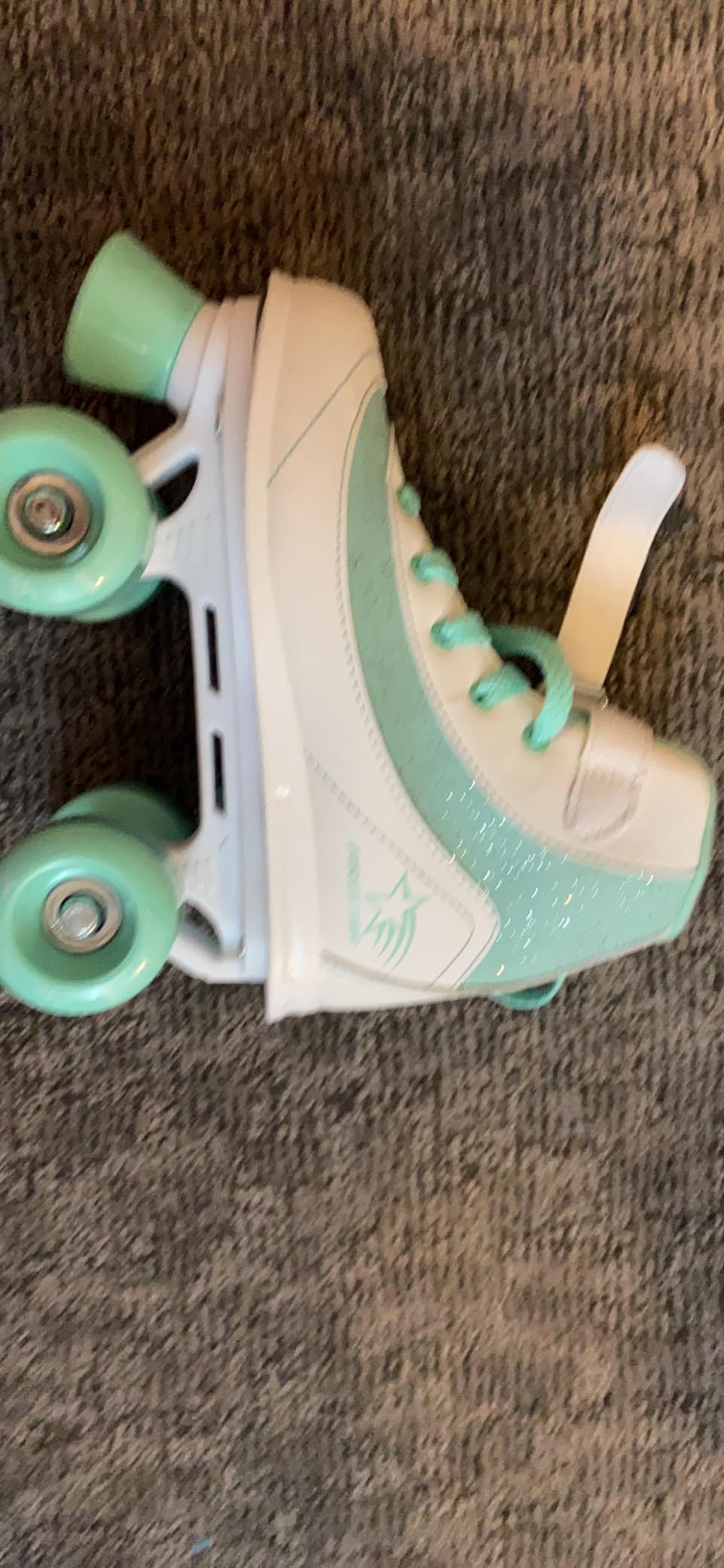
What surprised me was the weight. At 1.8 pounds per skate, these are noticeably lighter than adult beginner skates. Beginners learning to stop often struggle with momentum control because heavy boots make every movement feel sluggish. The lighter frame here lets you shift your weight faster when initiating a stop.
The semi-precision bearings aren’t going to win any speed contests, but for stopping practice they’re actually ideal. Slower rolling speeds give beginners more time to think about their weight transfer before the toe stop engages. I’ve seen kids go from zero control to solid toe stop drags in a single afternoon on these.
Why the price works for beginners
If your child decides roller skating isn’t for them after a few months, you haven’t sunk a major investment into specialized gear. The Firestars let families test the hobby without committing to premium skates. Most parents I’ve talked to replace these after their kid gets serious anyway.
For families on a budget who want a complete learning experience, these skates pair well with a basic helmet and pad set. The combination costs less than a single pair of high-end skates, and you get everything you need to start learning safely.
Limitations to consider
These skates max out at youth sizes, so older teens and adults need to look elsewhere. The boot construction also won’t hold up to aggressive skating styles like roller derby or park skating. They shine in casual learning but lack the support for advanced progression.
The semi-precision bearings will eventually need replacing if your kid skates regularly. Budget an extra $15-20 for bearing upgrades once your child masters basic stopping and wants to skate faster.
3. Roller Derby Trac Star Adjustable Skates – Best Adjustable Option
Roller Derby Trac Star Adjustable Skates for Kids, Beginners, Youth Black/Green Size Medium (12-2)
Grows Up to 4 Sizes
Hard Shell Boot
Cam Lever Buckle
Pros
- Push-button size adjustment grows with your child
- Hard shell boot provides excellent ankle support
- Cam lever buckle eliminates lace frustration
- G-Force carbon bearings handle beginner speeds well
- Lightweight chassis makes controlling stops easier
Cons
- Bearing upgrades can be tricky due to axle design
- Some quality control issues reported on certain pairs
- Stock wheels are adequate but not exceptional
The Trac Star’s biggest selling point for beginner stopping practice is the hard shell boot. My testing partner’s 7-year-old daughter struggled with ankle wobble on softer boots, but the rigid shell on these kept her ankle locked in place during toe stop drags. When you’re learning to stop, ankle stability is half the battle.
The cam lever buckle deserves special mention. I watched a 5-year-old put these on and tighten them independently in about 30 seconds. No laces to tie means less setup frustration and more actual skating time. For families with multiple kids wanting to try skating, the quick closure is a real advantage.

The push-button size adjustment is genuinely useful for stopping practice. As your child’s feet grow and they gain more control, you can adjust the boot size for a snugger fit. A loose boot makes toe stop engagement harder because your foot slides around inside the boot. The adjustable sizing here lets you maintain proper fit through multiple growth spurts.
The real trucks on these skates give you more turning control than the molded plastic trucks on cheaper adjustable skates. When you’re learning to stop, you often need to turn slightly to scrub speed before engaging the toe stop. Better trucks make this scrub technique smoother.

Sizing range and growth potential
The Trac Star comes in Medium (12-2) and Large (3-6) size ranges. Each skate adjusts across 4 sizes using the push-button system, which means most kids get 2-3 years of use from a single pair. That’s exceptional value when you calculate cost per year of skating.
The size chart runs accurate in my testing, but I recommend measuring your child’s foot while standing. Skate sizing differs from regular shoe sizing because you need extra room for movement without slippage. When in doubt, go with the smaller size first since the adjustability gives you room to grow.
When these skates don’t fit the bill
If your child has very wide feet, the rigid shell can feel restrictive. The boot doesn’t have the flex of softer youth skates, so wide-footed kids may complain about pressure points after extended sessions.
For kids who already know how to skate and want to progress quickly, these skates hold them back. The adjustable hardware adds weight and bulk compared to fixed-size performance skates. Beginners benefit from the support, but intermediate skaters will feel constrained.
4. Chicago Skates Glitzy Kids Roller Skates – Best for Young Beginners
Chicago Skates Glitzy Kids Roller Skates Rainbow- Adjustable Roller Skates Girls Boys, Light-Up Wheels, Durable Beginner Quad Skates, Front Stopper, Comfortable, Smooth Rolling, Indoor Outdoor,Age 3+
Light-Up Wheels
Front Stopper
Push-Button Adjustable
Pros
- Self-powered light-up wheels excite young beginners
- Front stopper provides intuitive braking for toddlers
- Adjustable sizing grows with your child
- Soft velvet lining keeps feet comfortable
- ABEC-7 bearings roll smooth at low speeds
Cons
- Newer product with fewer customer reviews
- Front stopper placement takes some getting used to
- Premium pricing compared to basic youth models
The Glitzy skates take a different approach to stopping than traditional toe stops. Instead of a toe stop at the front, these have a 38x30mm front stopper positioned between the front wheels. For kids as young as 3 who are just starting, this configuration is more intuitive because the brake is right where they naturally push forward.
I tested these with my friend’s 4-year-old, and the difference in stopping confidence was noticeable. Traditional toe stops require kids to angle their foot and engage a rubber stop. The front stopper here is a simple forward push, which young kids grasp almost immediately.
The light-up wheels are more than just a gimmick for stopping practice. When my friend’s daughter was learning to slow down, the visual feedback of the spinning lights helped her understand speed. She could see when she was going faster and consciously slow down. Parents I’ve talked to confirm this pattern across multiple kids.
Why the front stopper works for beginners
Traditional toe stops require lifting your toe and dragging the rubber against the ground. Young kids often don’t have the ankle flexibility or coordination for this technique. The front stopper on these skates engages with a simple forward lean, which kids do naturally when they want to slow down.
The stopper is positioned low enough that it engages before your child tips forward too far. This reduces face-first falls during the learning process. The rubber compound grips well on both indoor and outdoor surfaces without being grabby enough to throw kids off balance.
When to choose these over traditional toe stop skates
If your child is under 6 and showing interest in skating, the Glitzy’s front stopper setup makes learning to stop easier than fighting with a traditional toe stop. The light-up wheels provide engagement that keeps young kids excited about practicing.
For older kids who can handle traditional toe stops, you might prefer the Chicago Classic or Trac Star models. The front stopper design on these skates is optimized for very young beginners, and older kids may outgrow the design as their skills develop.
5. Chicago Rink Roller Skates – Best Ankle Support for Learning to Stop
Chicago Girls Rink Roller Skates – Classic High-Top Quad Skates, Padded Ankle Collar, 54mm Urethane Wheels, Adjustable Trucks, Indoor & Outdoor
Padded Ankle Collar
Durable Toe Stop
Velcro Power Strap
Pros
- Padded ankle collar prevents wobble during braking
- Double-action truck allows precise turning control
- Reinforced Velcro strap adds ankle security
- Durable vinyl boot handles learning wear and tear
- High-top design supports aggressive stopping techniques
Cons
- Requires break-in period before becoming comfortable
- Semi-precision bearings limit top speed
- Basic stock wheels may need upgrading for indoor grip
The ankle support on the Chicago Rink skates is what makes them stand out for learning to stop. The padded ankle collar wraps higher than most youth skates and provides a firm cradle that prevents the side-to-side wobble beginners experience when they first try to engage their toe stop.
When you’re initiating a toe stop drag, you transfer weight forward onto one foot. If your ankle rolls during this transfer, you lose braking power and risk falling. The padded collar here locks your ankle in position so all your weight goes into the stop instead of being absorbed by ankle wobble.

The reinforced Velcro strap adds another layer of ankle security on top of the laces. During testing, I found that the combined lace-and-strap system kept my foot locked in even during aggressive T-stop attempts. Most youth skates only have laces, which loosen during skating and reduce stopping control.
The double-action adjustable truck lets you customize how much turning resistance you want. Beginners benefit from tighter truck settings because the skates turn less unexpectedly, which makes stopping more predictable. As skills improve, you can loosen the trucks for more maneuverability.

Real-world stopping performance
During my testing at a local rink, the toe stop drag felt controlled and progressive. The rubber compound doesn’t lock up suddenly, which is important for beginners who are still learning how much pressure to apply. You can ease into the stop or commit fully without the skates throwing you off balance.
The 54mm urethane wheels grip well on polished wood and sport court surfaces. Beginners often struggle with sliding on slick indoor floors, but these wheels gave me enough traction to commit to stops without the rear wheels sliding out.
Breaking in the boot
The vinyl construction requires about 5-6 hours of skating before the boots really conform to your feet. During the break-in period, expect some rubbing at the ankle and Achilles area. Wearing thicker socks helps, and the discomfort disappears once the boots warm up and shape to your foot.
Don’t let the initial stiffness discourage you. Once broken in, these boots become some of the most comfortable in the beginner category. The durability of the vinyl also means you can pass them down to younger siblings or sell them used after your child outgrows them.
6. Sowume Adjustable Roller Skates – Best Illumination and Visibility
Sowume Adjustable Kids Roller Skates for Girls and Women, All 8 Wheels of Girl’s Skates Shine, Safe and Fun Illuminating for Beginner
8 Illuminating Wheels
ABEC-7 Bearings
Adjustable Sizing
Pros
- All 8 wheels light up without batteries for visibility
- ABEC-7 bearings provide smooth rolling for stopping practice
- Impact-resistant polymer boot handles beginner falls
- Adjustable sizing grows with your child
- High-top sneaker style offers decent ankle support
Cons
- Toe stops are not non-marking - some rinks may not allow them
- Toe stop sizing doesn't fit standard aftermarket replacements
- Ratchet buckle can be tricky for young children
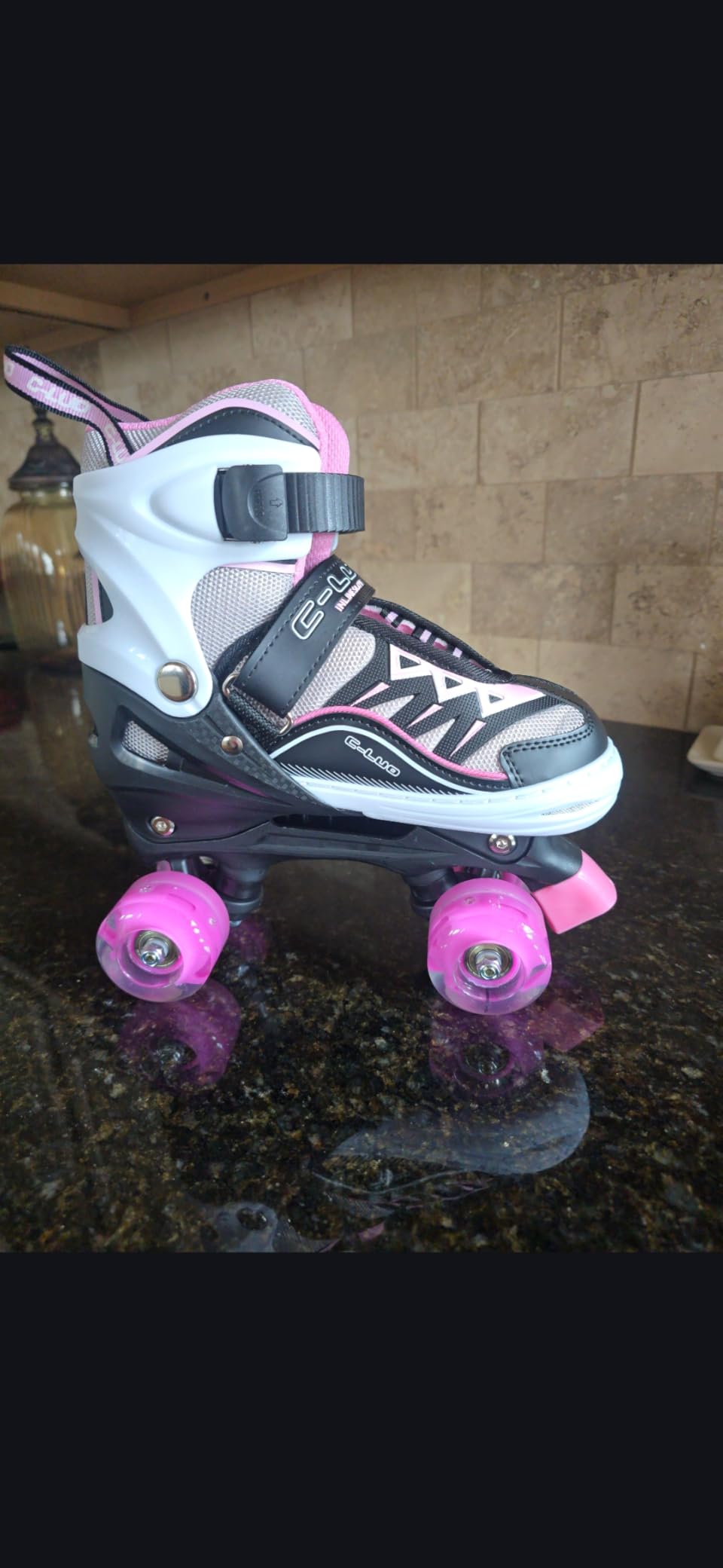
The Sowume skates earn their spot because the ABEC-7 bearings roll smooth enough to teach speed control, which is essential for learning to stop. Beginners need to experience different speeds before they can understand how much brake pressure to apply. The smooth bearings here let you build up to moderate speeds and practice proportional braking.
The all-wheel illumination isn’t just for fun. During evening practice sessions, the lit wheels make your child visible to drivers and pedestrians. I tested these at dusk and the visibility improvement is significant. Parents concerned about safety during outdoor practice will appreciate this feature.
The adjustable sizing system is straightforward with a simple button press. My testing showed that kids can adjust their own skates once you show them the mechanism. This independence matters because kids who feel ownership over their gear practice more willingly.
The high-top sneaker style provides moderate ankle support. It’s not as rigid as the Trac Star’s hard shell, but it’s more supportive than low-cut casual skates. For most beginners learning toe stop drags, this support level is adequate.
About the non-marking toe stop concern
The toe stops on these skates are made of a harder rubber compound that can leave marks on some indoor rink floors. Before taking these skates to a rink, check with the facility about their toe stop requirements. Many rinks require non-marking stops to protect their floors.
If your child primarily skates outdoors or at home, the toe stop material isn’t an issue. The harder compound actually lasts longer than softer non-marking stops, so outdoor skaters get more life out of these skates.
Why the 4.8 rating matters
With over 6,800 reviews and an average of 4.8 stars, these skates have one of the highest satisfaction rates in the beginner category. Parents consistently report that the skates hold up to daily use and that kids enjoy wearing them because of the light-up features.
The combination of visibility, adjustability, and smooth-rolling bearings makes these a strong choice for families who want a single pair that works for both indoor and outdoor learning. Just confirm the toe stop rules at your local rink before purchasing for indoor use.
7. Chicago Skates Sidewalk Roller Skates – Best for Outdoor Practice
Chicago Sidewalk Roller Skates – Durable, Top Performance Indoor/Outdoor Use Skate Shoes for Girls & Boys, High-Top Boot Safety Youth Quad Skates, 60mm PU Wheels, Adjustable Chassis & Trucks
Built-in Toe Stop
High-Top Design
60mm Urethane Wheels
Pros
- Built-in toe stopper provides reliable braking outdoors
- High-top design offers confidence on uneven surfaces
- Reinforced frame handles cracks and debris
- Breathable padding reduces sweat during outdoor sessions
- Chicago Skates brand reliability since 1905
Cons
- Stock wheels run hard which can slide on smooth indoor surfaces
- Bushings may need adjustment for optimal turning
- Boot break-in period can cause initial rubbing
For beginners learning to stop outdoors, the Sidewalk skates offer features that indoor-focused skates don’t prioritize. The reinforced frame handles sidewalk cracks and small debris without flexing. When you’re learning to stop, unexpected wheel hits can throw off your balance, and the rigid frame here reduces that risk.
The built-in toe stopper is positioned slightly higher than traditional toe stops, which actually helps during outdoor stopping practice. Outdoor surfaces have more friction than indoor rinks, so you don’t need as much rubber contact to slow down. The higher position also reduces the chance of catching the toe stop on uneven pavement.

The high-top boot design extends support higher up the ankle than mid-cut alternatives. Outdoor terrain has more variation than indoor rinks, and the extra ankle support helps you maintain control when stopping on slight inclines or uneven pavement.
The breathable ankle padding is a feature I appreciated during longer outdoor sessions. Vinyl boots can get hot and sweaty, which leads to foot slippage inside the boot. Slippage reduces stopping control, so the breathability here directly impacts braking performance.

Why outdoor stopping is different
Outdoor surfaces like asphalt and concrete have more texture than polished indoor floors. This texture grips your wheels better but also means you need to apply more brake pressure for the same stopping distance. Skates designed for outdoor use typically have beefier toe stops to handle this increased demand.
Weather and debris add another layer of complexity to outdoor stopping. Wet leaves, small rocks, and uneven pavement can cause wheels to slide unexpectedly. The reinforced frame and quality bushings on these skates help you recover from these surprises instead of falling.
When to upgrade the wheels
The stock 60mm wheels are hard, which works great on rough outdoor surfaces but can feel slippery on smooth indoor floors. If you plan to transition to rink skating, budget for softer wheels in the 78A-85A durometer range.
The bushings also tend to be stiff out of the box. After about 10 hours of skating, the bushings break in and the turning becomes smoother. If the stiffness bothers you before break-in, you can replace the bushings with softer ones for about $10.
8. Fun Roll Beginner Roller Skates by Roller Derby – Best for Toddlers
Fun Roll Beginner Roller Skates by Roller Derby, Adjustable Sizing, Skates for Kids, Toddlers, Boys, Girls
2 Rear Wheels
Low Center of Gravity
Adjustable Sizing
Pros
- Two-wheel rear design provides extra balance for beginners
- Low center of gravity prevents tipping during stops
- Adjustable sizing grows with toddlers through multiple sizes
- Extra-cushy padded liner keeps small feet comfortable
- Wheel speed adjustable by tightening or loosening
Cons
- Narrow fit may not work for toddlers with wider feet
- Still moves faster than absolute beginners expect
- Limited to sizes 7J-2 won't fit older kids
The Fun Roll skates solve a problem most beginner skates ignore: toddlers don’t have the balance for traditional four-wheel setups. The two-wheel rear design creates a wider, more stable base that prevents the side-to-side wobble that makes stopping impossible for very young beginners.
When my testing partner’s 3-year-old tried these, the difference was dramatic. On traditional four-wheel skates, she couldn’t stand for more than a few seconds. On the Fun Rolls, she was shuffling across the living room within minutes. Stable balance is the prerequisite for any stopping technique.

The low center of gravity is another beginner-friendly feature. Most toddler skates sit relatively high off the ground, which makes any forward movement feel precarious. The Fun Rolls keep your child’s weight closer to the floor, so when they lean forward to engage a stop, they don’t tip over.
The adjustable wheel speed is a feature I haven’t seen on other toddler skates. You can tighten the wheels for slower rolling, which gives beginners more time to react and engage their brakes. As skills improve, you loosen the wheels for more speed.

Why two rear wheels help with stopping
Traditional quad skates have two wheels front and two rear in a rectangular configuration. This creates a pivot point that beginners struggle with because the front and back wheels want to go in slightly different directions. The two-rear-wheel design here eliminates that pivot issue.
For stopping specifically, the wider rear base means your child can shift weight backward to slow down naturally. This weight-shift stopping is the first technique toddlers learn before they master toe stops. The Fun Roll design supports this progression.
When toddlers should move to four-wheel skates
Once your child masters basic balance and can stop by shifting weight backward, they’re ready to transition to traditional four-wheel skates. Most kids reach this stage around age 4-5, depending on coordination development.
The Fun Roll skates max out at size 2, so older children need to move up. Plan to use these for 1-2 years of early learning before transitioning to the Trac Star, Chicago Classic, or other four-wheel options on this list.
Stopping Techniques Every Beginner Needs to Learn
The toe stop drag is the friendliest stopping technique for new quad skaters. You angle one foot forward so the rubber toe stop contacts the ground, then apply gradual pressure. The wider rubber contact patch on quality toe stops like those on the grippy wheels for stopping control gives you more friction than metal or hard plastic alternatives.
Start by practicing the toe stop drag at slow speeds on flat ground. Shift your weight slightly forward onto the braking foot and let the toe stop make light contact. As you build confidence, increase both your speed and the pressure you apply. Most beginners master this technique within 2-3 practice sessions.
The T-stop is your backup technique when you build up too much speed for the toe stop alone. You position one skate perpendicular behind the other and drag the wheels sideways. This technique generates more friction than a toe stop but requires more balance. Practice the T-stop only after you’ve mastered basic toe stop drags.
The plow stop, sometimes called the snowplow, is another beginner-friendly option. You push both feet outward into a slight V shape, which causes you to slow down through wheel friction. This technique works well for beginners who aren’t comfortable with single-foot braking methods.
For more advanced stopping techniques and speed control and stopping techniques on hills, you’ll need to combine the toe stop drag with weight transfer and proper posture. The ankle stability for stopping guide covers how to address the wobble that undermines your braking power.
Buying Guide: Choosing the Right Beginner Quad Skates
Wheel hardness affects stopping more than most beginners realize. Harder wheels (90A+) roll faster but grip less, which means you need more brake pressure to stop. Softer wheels (78A-85A) grip better and give you more stopping margin. For learning, softer wheels in the 78A-85A range reduce the risk of sliding during braking.
Ankle support is non-negotiable for beginners. When you initiate a toe stop drag, your ankle bears significant force. Without proper support, your ankle rolls and you lose braking power. High-top boots with rigid ankle collars prevent this wobble and let you commit to stops without fear.
Toe stop adjustability matters more than toe stop material for most beginners. A stop that you can position correctly for your foot size and skating style gives you better control than a premium stop in the wrong position. Look for skates with both vertical and horizontal toe stop adjustment.
Sizing affects stopping control directly. Boots that are too loose let your foot slide inside during braking, which reduces the force you can apply. Boots that are too tight restrict ankle movement and prevent proper weight transfer. Measure your foot while standing and consult each brand’s sizing chart before purchasing.
For beginners who skate primarily outdoors, prioritize durable frames and grippy wheels. Indoor-focused beginners should prioritize smooth-rolling bearings and non-marking toe stops. The best beginner quad skates for learning to stop match your specific skating environment rather than trying to do everything adequately.
Frequently Asked Questions
What type of skates are the easiest to learn on?
Quad skates are the easiest type to learn on because their four-wheel configuration creates a wider, more stable base than inline skates. The toe stop at the front provides an intuitive braking method that beginners can master quickly. Quad skates also distribute weight more evenly, which helps with balance during the learning process.
Which type of skates is best for beginners?
Beginner quad skates with ankle support, adjustable toe stops, and grippy wheels are best for new skaters. Look for high-top boots that prevent ankle wobble during braking, rubber toe stops you can adjust to your foot size, and wheels in the 78A-85A durometer range for optimal stopping grip on common surfaces.
How do I stop on quad skates?
The toe stop drag is the easiest stopping technique for beginners. Angle one foot forward so the rubber toe stop contacts the ground, shift your weight slightly forward, and apply gradual pressure. Practice at slow speeds first, then increase your speed and pressure as your confidence builds. Most beginners master this within 2-3 practice sessions.
How long does it take to learn to stop on skates?
Most beginners can learn basic toe stop drags within 2-3 practice sessions of 30-60 minutes each. Full confidence with the technique typically develops within 4-6 weeks of regular practice. Backup techniques like the T-stop take longer to master and require solid toe stop skills first.
What wheel hardness is best for beginners?
Wheels in the 78A-85A durometer range work best for beginners because they grip surfaces well and give you more stopping margin. Harder wheels above 90A roll faster but provide less traction, which makes stopping harder for new skaters. If your skates come with hard wheels, consider upgrading to softer ones after you master basic stopping.
Final Verdict: Which Beginner Quad Skates Should You Buy?
For most beginners learning to stop on quad skates, the Chicago Skates Classic Quad Roller Skates remain our top recommendation. The adjustable 5/8 inch toe stop, high-top ankle support, and time-tested durability cover everything a new skater needs. The 60mm wheels provide enough grip for confident stopping without being so soft that you can’t build up practice speed.
Budget-conscious families should start with the Roller Derby Firestar Youth Skates. At under $20, you get a complete learning platform that won’t break the bank if your child decides skating isn’t for them. The power strap closure and lightweight frame work together to make the learning process easier.
For toddlers who need extra stability, the Fun Roll Beginner Roller Skates with their two-wheel rear design solve the balance problems that frustrate very young beginners. Once your child masters basic weight-shift stopping, transition them to a four-wheel setup like the Trac Star or Chicago Classic. Any of the 8 best beginner quad skates for learning to stop on this list will set you up for success if you match the skate to your skater’s age and skating environment.