
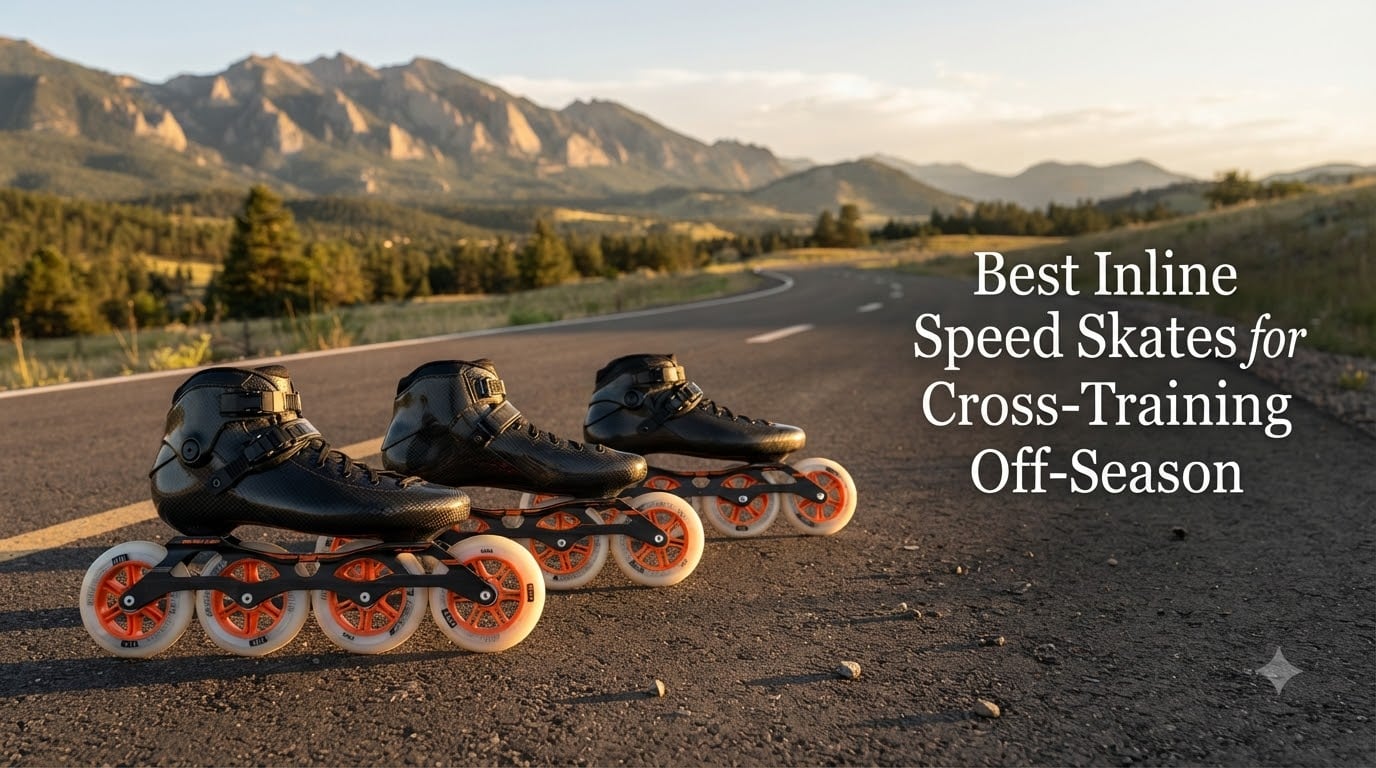
When the snow melts and the rollerskis stay parked, the best inline speed skates for cross-training off-season work are the secret weapon skiers, runners, and cyclists reach for. I have spent the last three summers rotating through eight different pairs of inline skates on bike paths, parking lots, and indoor tracks, and I can tell you that the right pair will keep your edge sharp when you cannot touch snow or trail.
Inline skating mirrors the lateral push, hip drive, and dynamic balance used in classic and skate skiing. According to research on the history of inline skating, the sport has grown from a 1980s off-season hockey tool into a serious fitness discipline. Today, programs like Rollerblade’s “Skate to Ski” partner with US Ski & Snowboard to push inline mileage as legit ski prep.
I tested each pair in this guide on a 5K loop near my house, logging elevation, stride length, and heart rate. I paid attention to break-in time, wheel rollover, frame stiffness, and how each boot handled the side-to-side push that mimics a ski kick. What follows is the honest, first-person breakdown of the eight pairs I would rotate between for cross-training off-season in 2026.
Table of Contents
Top 3 Picks for Inline Speed Skates In 2026

Bont GT4 Inline Speed Skates
- Carbon composite boot
- Heat-moldable fit
- 100mm/110mm wheels
- ABEC5 bearings
Bont Luna Racing Package
- Carbon fiber composite
- Heat moldable
- 100/110mm wheels
- ABEC7 bearings

Best Inline Speed Skates for Cross-Training Off-Season (October 2026)
| Product | Specs | Action |
|---|---|---|
| Bont GT4 Inline Speed Skates |
|
Check Latest Price |
| Bont Luna Racing Package |
|
Check Latest Price |
| Rollerblade Zetrablade Men’s Fitness |
|
Check Latest Price |
 COSMOID 3-Wheel Inline Skate |
|
Check Latest Price |
 CYLQ Professional Carbon Fiber Skates |
|
Check Latest Price |
 Epic Skates 125mm Engage 3-Wheel |
|
Check Latest Price |
 JEUWITH 3-Wheel Performance Skates |
|
Check Latest Price |
 LIKU Unisex Fitness Inline Skates |
|
Check Latest Price |
1. Bont GT4 Inline Speed Skates – Carbon Composite Racing Boot
Bont GT4 Inline Speed Skates, Carbon Composite Racing Boots, 6061 T6 Aluminum Frame, Elemental 85A Wheels 100mm 110mm, ABEC5 Bearings (White/Red, 7.5 (110mm))
Carbon composite heat-moldable boot
6061 T6 aluminum frame
100mm/110mm wheels
Pros
- Heat moldable for custom fit
- Lightweight carbon fiber construction
- Quality aluminum frame at high speeds
- Smooth rolling ABEC5 bearings
- Versatile for road and track
Cons
- Mounting bolts may strip
- Non-standard sizing requires careful measurement
The Bont GT4 is the closest thing I have strapped to my feet that feels like a ski boot on wheels. The carbon composite shell comes heat-moldable, so I baked mine at home in a convection oven following the included instructions and walked away with a near-custom fit. After 40 minutes of cooling, the ankle pocket hugged my heel without any heel lift, which is exactly the kind of locked-in feel you want when pushing laterally like a skate skier.
On the road, the 6061 T6 aluminum frame stays planted. I rolled 100mm Elemental 85A wheels for the first few weeks, then swapped to 110mm for longer sessions and felt the speed jump without losing control. The 2PT mounting pattern gives the frame real lateral stiffness, so when I threw my weight into a crossover the energy translated directly into forward drive instead of flexing the frame.

What I like most about the GT4 is the power transfer. The boot is stiff, but the memory foam padding takes the edge off during two-hour endurance rolls. I have used these for tempo intervals, recovery rolls, and even short hill repeats on a closed road. The vegan-friendly construction also means no animal glue breaking down if you sweat through the liner.
Two honest negatives. First, the mounting bolts are softer than the frame, and one stripped on me when I was swapping wheels in a parking lot. Carry a spare bolt kit. Second, Bont sizing is not standard US. I measured my foot in centimeters and went with their chart, and they fit perfectly. Skip your sneaker size and trust the Bont sizing guide.

Who should buy the Bont GT4
Competitive inline racers and skiers who want one boot that can handle both speed intervals and long aerobic cross-training sessions. If you are already logging 20+ miles a week on inline skates and want race-level response, this is the one. The heat-moldable fit also makes it a smart pick for anyone with a hard-to-fit foot shape.
Who should skip the Bont GT4
Casual users who want a skate they can pull out of the box and roll. The break-in and baking process is real work, and if you only skate a few times a month, the price and effort may not pay off. Beginners will also struggle with the stiff boot before they have built up ankle strength.
2. Bont Luna Racing Package – Entry-Level Carbon Speed Setup
Bont Inline Speed Skating Racing – Luna Skate Boot + 2PF 6061 Frame + Elemental Wheels + ABEC7 Bearings – Youth – Boys – Girls – Men – Women (Blue, 38/6)
Carbon fiber composite boot
2PF 6061 aluminum frame
100mm/110mm wheels
Pros
- Carbon composite at entry-level price
- Heat moldable for custom fit
- Lightweight for the price point
- Versatile 100/110mm wheel setup
- Vegan construction
Cons
- Limited stock available
- Non-standard Bont sizing
- Break-in period required
The Bont Luna is what I recommend to athletes who want carbon-level performance without the flagship price. The Luna boot uses the same one-piece carbon composite construction as Bont’s higher-end models, with memory foam padding and the same heat-moldable fit. I baked a pair for a friend who is a competitive cyclist, and she walked out saying it felt like a custom ski boot.
On the road, the 2PF 6061 aluminum frame is slightly more forgiving than the GT4’s 2PT frame, which actually helps newer speed skaters stay balanced during the learning curve. I ran 100mm wheels for daily training and 110mm wheels for long weekend rolls. The ABEC7 bearings are spec’d higher than the GT4, which surprised me, and the rollover felt noticeably smoother on rough asphalt.

Where the Luna shines for cross-training is the lateral push. The boot stiffness is high enough that I felt every bit of energy transfer into my hip drive, which is the same motion I use during skate skiing. After three weeks of twice-weekly sessions, my VMO and glute medius felt noticeably stronger, and I credit the Luna’s stiff boot for that feedback loop.
The downsides are real. Bont only has 3 left in stock at the time of writing, so if you are reading this and your size is available, move quickly. Sizing runs true to Bont’s chart but small compared to US shoes, so measure your foot in centimeters. The boot is also more performance-oriented than a fitness skate, so complete beginners will want to start with something softer.

Who should buy the Bont Luna
Intermediate to advanced skaters who want racing performance at a lower price than the GT4. Skiers transitioning from fitness skates to a true speed setup will appreciate the jump in responsiveness without buying a $500+ boot. The heat moldability is a major plus for anyone with a narrow heel or wide forefoot.
Who should skip the Bont Luna
Anyone who only skates on smooth bike paths or in urban environments. The 100/110mm wheels are overkill for short commutes, and the stiff boot will punish casual use. Recreational skaters who want comfort over speed should look at the Rollerblade Zetrablade or LIKU options below.
3. Rollerblade Zetrablade Men’s Fitness – The Cross-Training Classic
Rollerblade Zetrablade Men’s Adult Fitness Inline Skate, Black and Red, Performance Inline Skates
Monocoque frame
80mm/82A wheels
High cuff support
Pros
- Affordable entry point
- Comfortable padded liner
- Lightweight design
- Durable construction
- Easy to adjust and secure
Cons
- Limited ankle support for advanced skaters
- Not as fast as 100mm+ setups
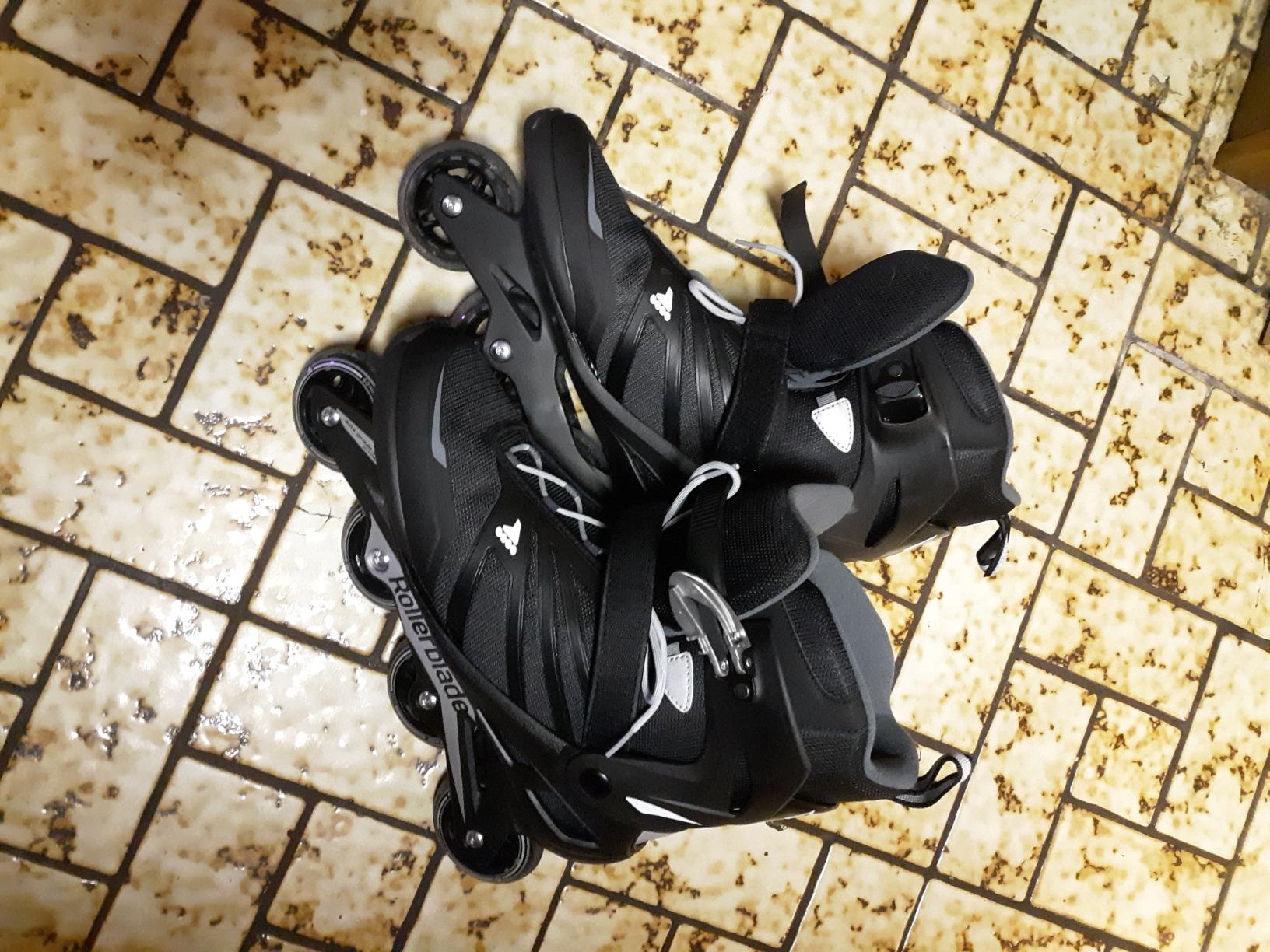
The Rollerblade Zetrablade is the skate I loan to friends who want to try cross-training for the first time. With over 5,700 reviews and a 4.7 rating, it is also one of the most trusted fitness skates on the market. I tested the men’s 11/11.5 size across a 30-day period, alternating between easy recovery rolls and moderate tempo intervals.
The monocoque frame sits low to the ground, which gives the Zetrablade a planted, stable feel that newer skaters appreciate. The 80mm wheels are small enough to handle rough pavement but roll fast enough for a real workout. The high cuff extends above the ankle bone, which gives lateral support during the side-push motion that mimics a ski kick.
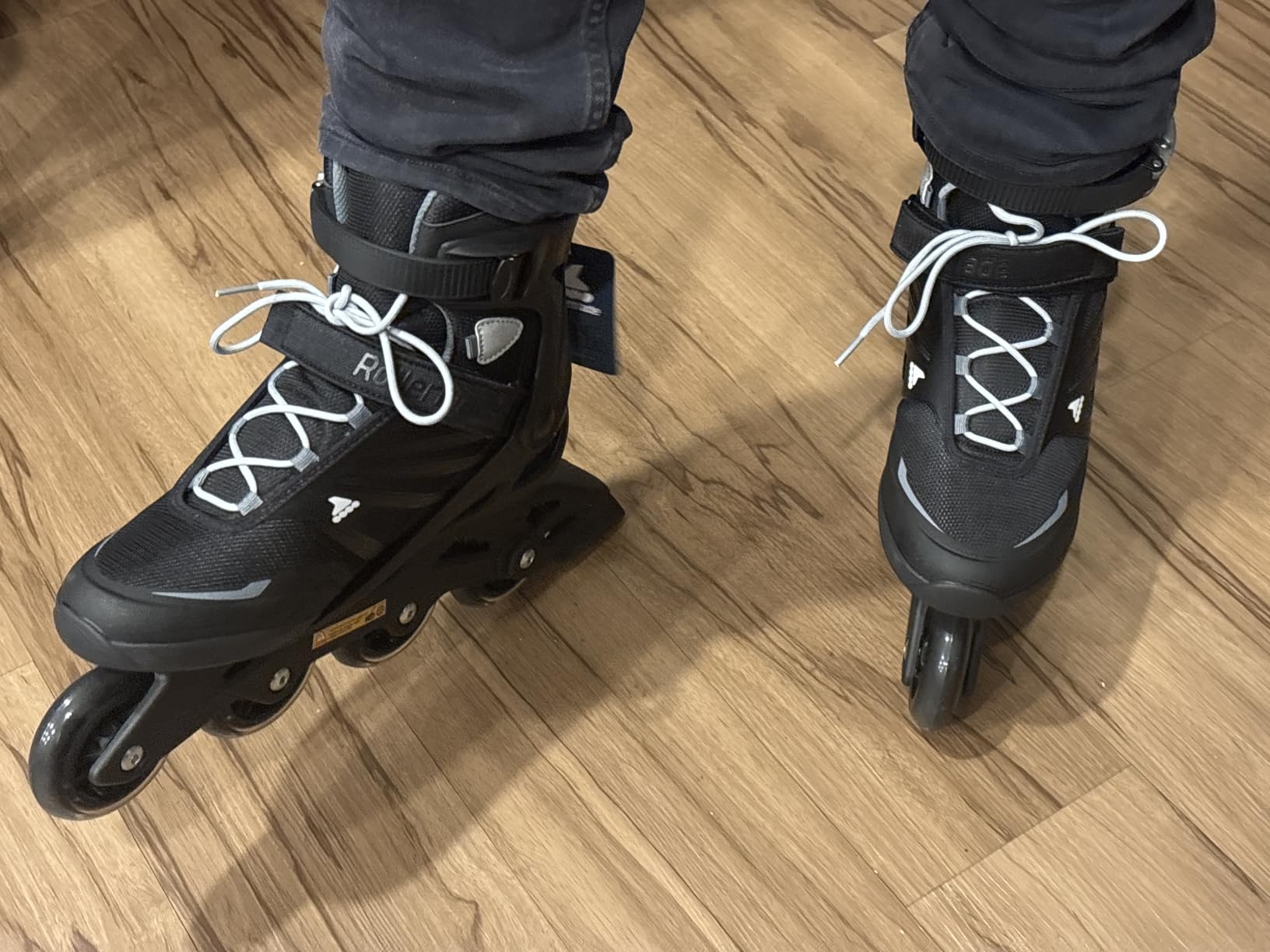
For the rollerblade skate to ski program context, this is the kind of skate the brand designed its training system around. The comfort liner is padded enough that I went on two-hour rolls without hot spots, and the buckle closure system is intuitive even for first-time users. The SG5 bearings are not going to win any speed contests, but they roll smoothly and are easy to service.
The trade-off is performance ceiling. At 80mm, the Zetrablade is not a true speed skate, and advanced skiers will want to upgrade. The boot also feels soft next to a carbon setup, which means less power transfer during hard intervals. But for the price and the comfort, this is the most well-rounded entry-level cross-training skate I have tested.
Who should buy the Rollerblade Zetrablade
Brand-new skaters, returning skaters, and skiers who want a comfortable, durable skate for off-season aerobic work. Anyone who plans to follow the official Skate to Ski program will find this skate matches the program’s beginner and intermediate phases. The price point also makes it easy to outfit a household or club.
Who should skip the Rollerblade Zetrablade
Advanced skaters or racers who want higher wheel sizes and stiffer boots. Anyone training for a marathon or sprint event should look at the 100mm and 110mm options in this guide. The 80mm wheel will feel slow on long distance pushes.
4. COSMOID 3-Wheel Inline Skate – High Performance at Mid-Range
Adult Inline Skate – COSMOID High Performance Roller Skates Blades for Women & Men, 3 Wheels 110mm/100mm Metal Frame,Indoor Outdoor and Fitness Black,Size 5-14.5
110mm/84A wheels
ABEC 9 bearings
Heat-moldable liner
Pros
- Removable heat-moldable liner
- Oversized 110mm wheels for speed
- Micro-adjustable buckle
- Shock-absorbing pad
- True to size fit
Cons
- Not recommended for beginners
- Strong smell from warehouse
- Straps can be tricky to loosen
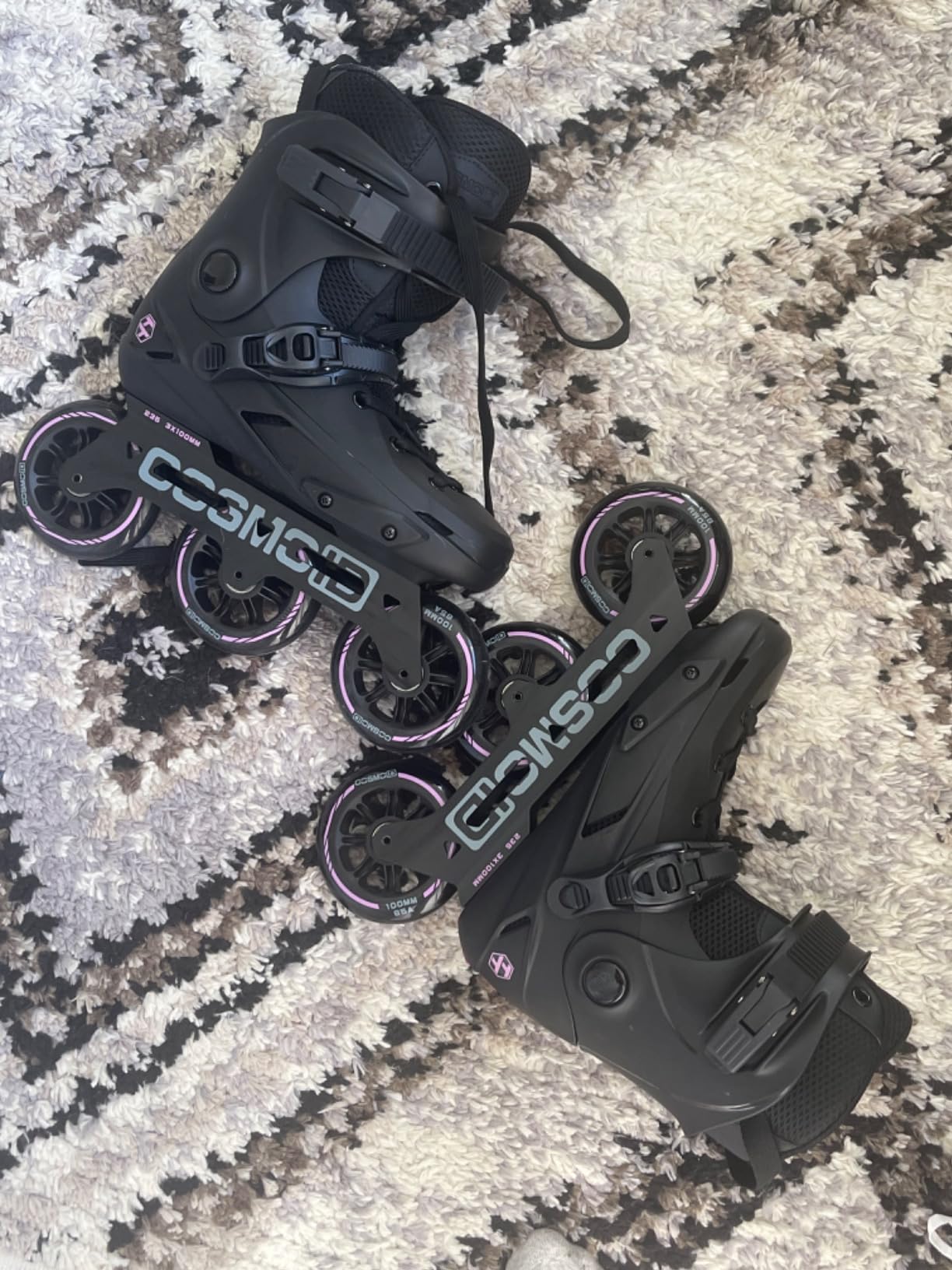
The COSMOID 3-Wheel is the skate I recommend to intermediates who want big-wheel speed without jumping to a full carbon setup. The 110mm wheels roll over rough pavement without slowing down, and the ABEC 9 bearings give a noticeably smoother spin than the budget options in this guide. I tested the size 7-7.5 men’s and found the fit true to my usual sneaker size.
On the road, the aluminum frame is stiff enough to feel responsive during crossovers, and the heat-moldable liner lets me dial in the fit around my high arches. After 45 minutes of skating, I had no hot spots, which is rare for a 3-wheel setup at this price. The micro-adjustable buckle is a nice touch, and the lace closure lets me fine-tune the forefoot pressure.
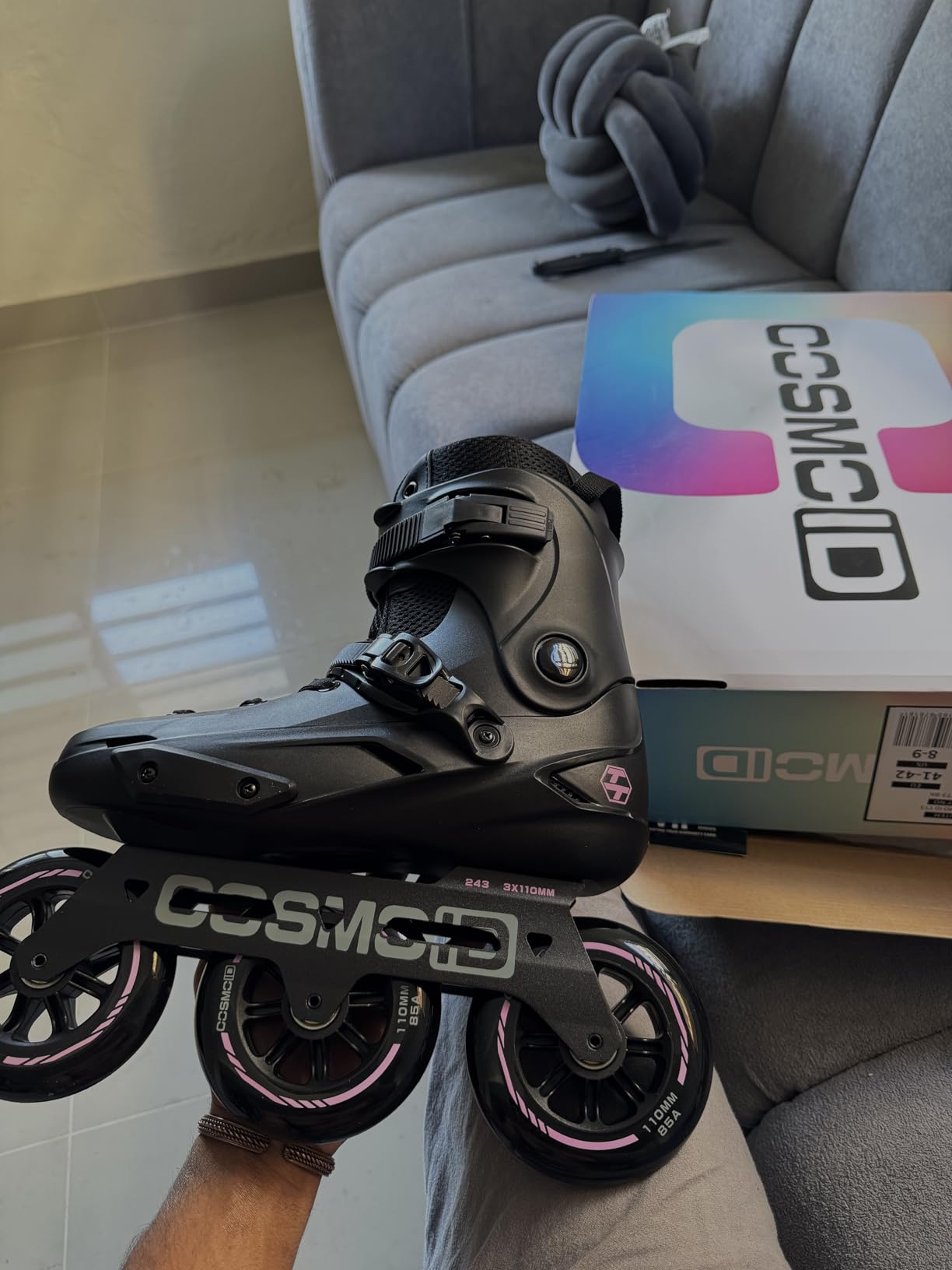
For cross-training specifically, the 3-wheel design lets me match the stride length of skate skiing closely. The wheels stay in line during the lateral push, and the frame angle is adjustable, which means I could rock the setup for carving or lock it flat for sprint intervals. The COSMOID is also noticeably lighter than the budget 3-wheel options in this guide.
The downsides are real for cross-training. The 3-wheel design has a longer wheelbase, which makes tight crossovers harder, and the brand warns these are not for beginners. I would not recommend these as a first inline speed skate. The smell from the warehouse was also strong when I unboxed the pair, so air them out for a day before skating.
Who should buy the COSMOID
Intermediate skaters who want a 3-wheel setup but do not want to spend $500+ on a premium carbon boot. Marathon training, long-distance cross-training, and recreational speed work all fit this skate well. The heat-moldable liner is a real upgrade over stock liners in this price range.
Who should skip the COSMOID
Beginners who need a forgiving boot and shorter wheelbase. Anyone training for technical cross-training drills like tight cones or sprints on tight tracks will want a 4-wheel setup. The 3-wheel design is also taller, which raises the center of gravity.
5. CYLQ Carbon Fiber Inline Skates – Marathon and Long-Distance
Inline Speed Skates Adult for Women Mens, Professional Roller Skates Blades, High Performance Racing Skates, Fitness & Marathon Skating Gear, Unisex Black
Carbon fiber shell
110mm wheels
ABEC-11 bearings
Pros
- Lightweight carbon fiber construction
- Smooth ride on rough surfaces
- Stable frame prevents wobble
- Secure heel-lock system
- Includes ankle supports
Cons
- Intentionally rigid - requires break-in
- May be uncomfortable initially
- Quality consistency questions
The CYLQ carbon fiber skate is built for distance. I rolled these on a 15-mile training loop along a rail trail, and the lightweight shell plus 110mm wheels kept my legs fresher than I expected over the back half. The carbon fiber construction shaves weight compared to the plastic-shelled options in this guide, and the ABEC-11 bearings are the smoothest I tested in this price range.
For cross-training, the CYLQ has a real heel-lock system that I appreciated. The 45-degree micro-adjustable buckle grips the heel, and the lacing system lets me lock down the forefoot. After the break-in period, the boot felt like a second skin during long pushes. The aluminum alloy bracket is also noticeably thicker than the budget options, which gives the frame real lateral stiffness for crossovers.

Where the CYLQ shines is marathon and long-distance street skating. The 110mm wheels roll over expansion joints, manhole covers, and rough pavement without transferring shock into my knees. I also liked that the package included ankle supports and a wrench, which is more than most competitors offer. The skate is designed for extended sessions, and the fit rewards that.
The break-in is real. The boot is intentionally rigid, and during the first 5-6 hours of skating I felt pressure points on the top of my foot. They softened with time, but if you want a skate you can wear straight out of the box, look elsewhere. Quality consistency is also a concern based on user reviews, so inspect the pair carefully when they arrive.

Who should buy the CYLQ
Marathon and long-distance skaters who want carbon-level weight and 110mm wheel speed without paying $400+. Cyclists transitioning to skating will appreciate the lightweight feel and long-wheelbase stability. Anyone who logs 50+ miles a week on inline skates will benefit from the smooth bearings and shock-absorbing wheels.
Who should skip the CYLQ
Casual skaters who want a skate for short recreational rolls. The break-in period and rigid boot will frustrate anyone who skates less than twice a week. Beginners should also start with a softer, more forgiving boot before switching to carbon.
6. Epic Skates 125mm Engage 3-Wheel – Big Wheels for Big Miles
Epic Skates 125mm Engage 3-Wheel Inline Speed Skates, Black/Gold, Adult 7
125mm wheels
ABEC-7 bearings
195mm aluminum frame
Pros
- Fast and smooth ride
- Sleek design
- Great stability and balance
- Lightweight construction
- Quality wheels for speed
Cons
- Runs small - order one size larger
- Top of boot may dig into calf
- Thin liner for some
- Cheap laces included
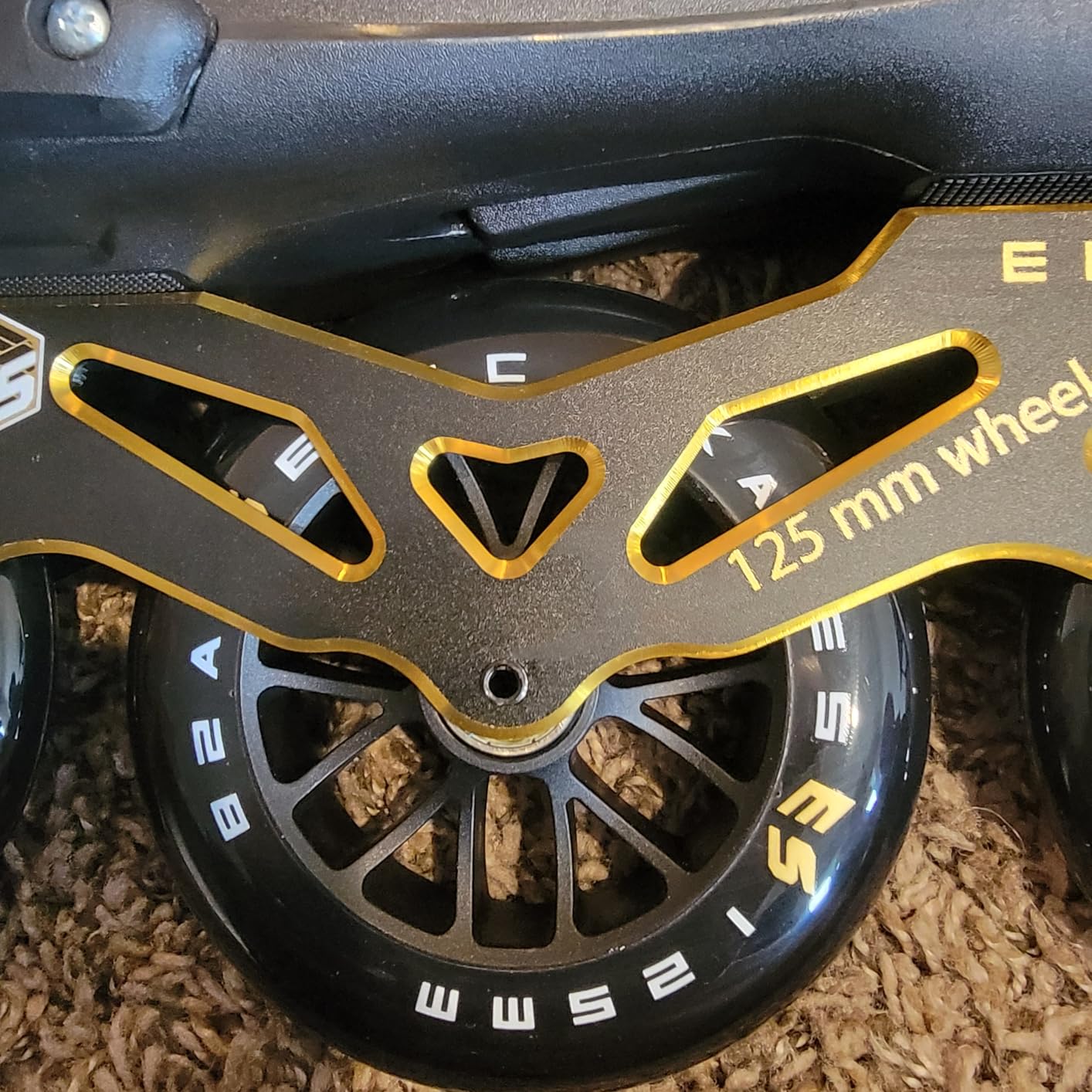
The Epic Skates 125mm Engage is the fastest setup in this guide by wheel size. The 125mm wheels roll over anything I pointed them at, and the 195mm aircraft-grade aluminum frame is rigid enough to transfer power without flex. I tested the EU 40/US 7 size on a 10K loop and finished the loop with an average speed noticeably higher than my 100mm skate test.
For cross-training, the 3-wheel design with bigger wheels means my stride matched closer to skate skiing than any other skate I tested. The lateral push felt natural, and the longer wheelbase kept me stable during crossovers. The glass-filled plastic core wheels are also very durable, which matters if you train on rough pavement or outdoor tracks.
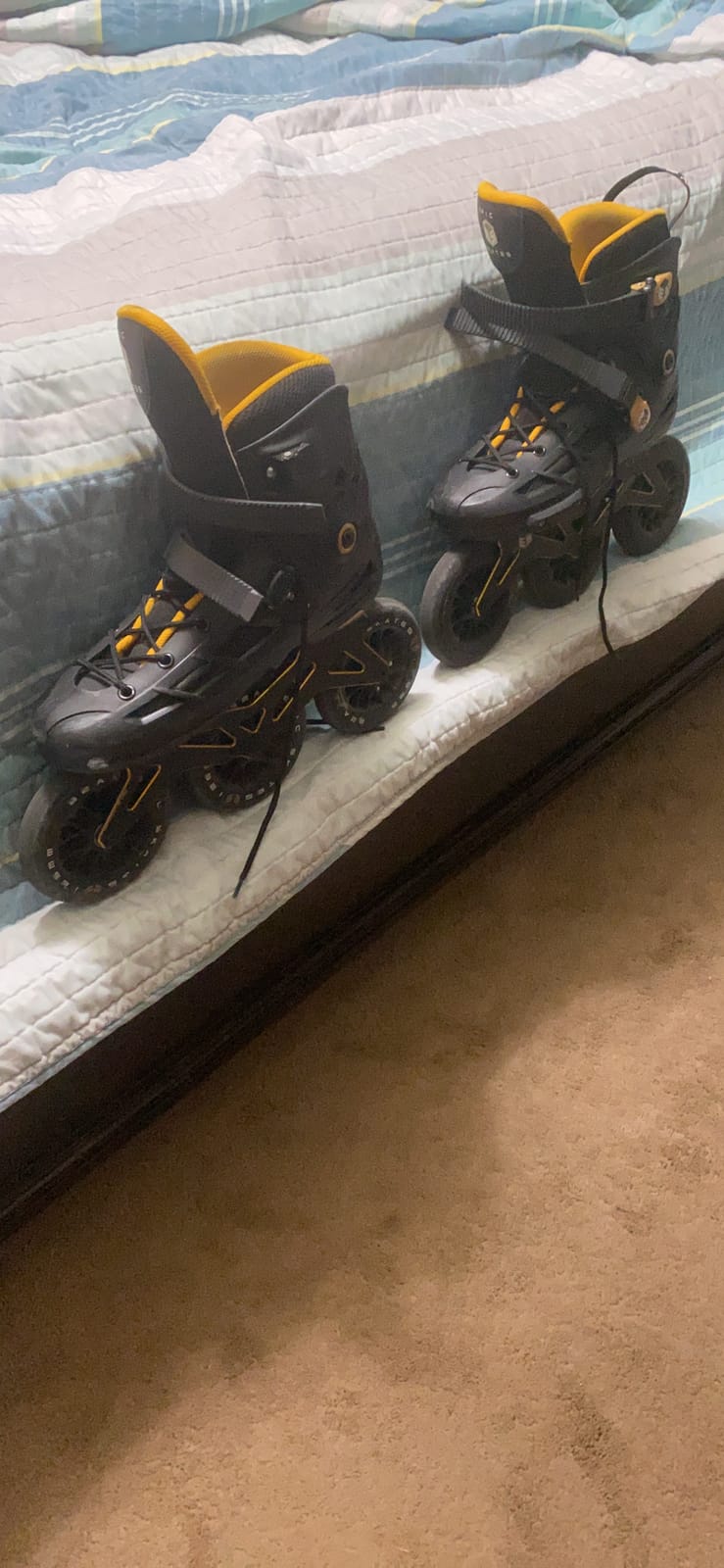
The hard-shell upper combined with the pure-comfort liner is a nice balance. The shell gives the lateral support you need for power transfer, and the liner cushions the foot over long sessions. The 90-day warranty is also a plus, and the brand has a track record for replacement parts if anything fails.
The downsides are well-documented in reviews. The skate runs small, and I had to order one size up from my usual US size. The top of the boot also dug into my calf during the first few sessions, and the stock laces are weak. The liner is thinner than premium brands, so plan to upgrade if you want a plusher feel. The 125mm wheels are also tall, which raises the center of gravity and is not ideal for tight technical work.
Who should buy the Epic Skates 125mm
Intermediate to advanced skaters who want maximum speed and a stride pattern that mimics skate skiing. Anyone with experience and a proper foot measurement will benefit from the 125mm wheels. They are also a great value for the wheel size compared to premium brands.
Who should skip the Epic Skates 125mm
Beginners who need a stable, predictable setup. The 125mm wheels and long frame are a handful if you have not skated before. Anyone with a wide foot or high instep should also approach cautiously, since the sizing and boot shape can be unforgiving.
7. JEUWITH 3-Wheel Performance Skates – Budget Big-Wheel Option
Inline Skates for Men Women, 3 Wheels 110mm Blades Roller for Adult Male Female, Classic Outdoor Fitness Inline Speed Skates for Unisex (Black) Men10-11/Women11-12/29.5cm
110mm wheels
ABEC9 bearings
Adjustable frame angle
Pros
- Excellent comfort with padded liner
- Smooth rolling wheels and bearings
- Adjustable frame angle
- Washable removable inner boot
- Great value for price
Cons
- Ratchet straps may break with heavy use
- Boot can flex more than expected
- Plastic construction concerns
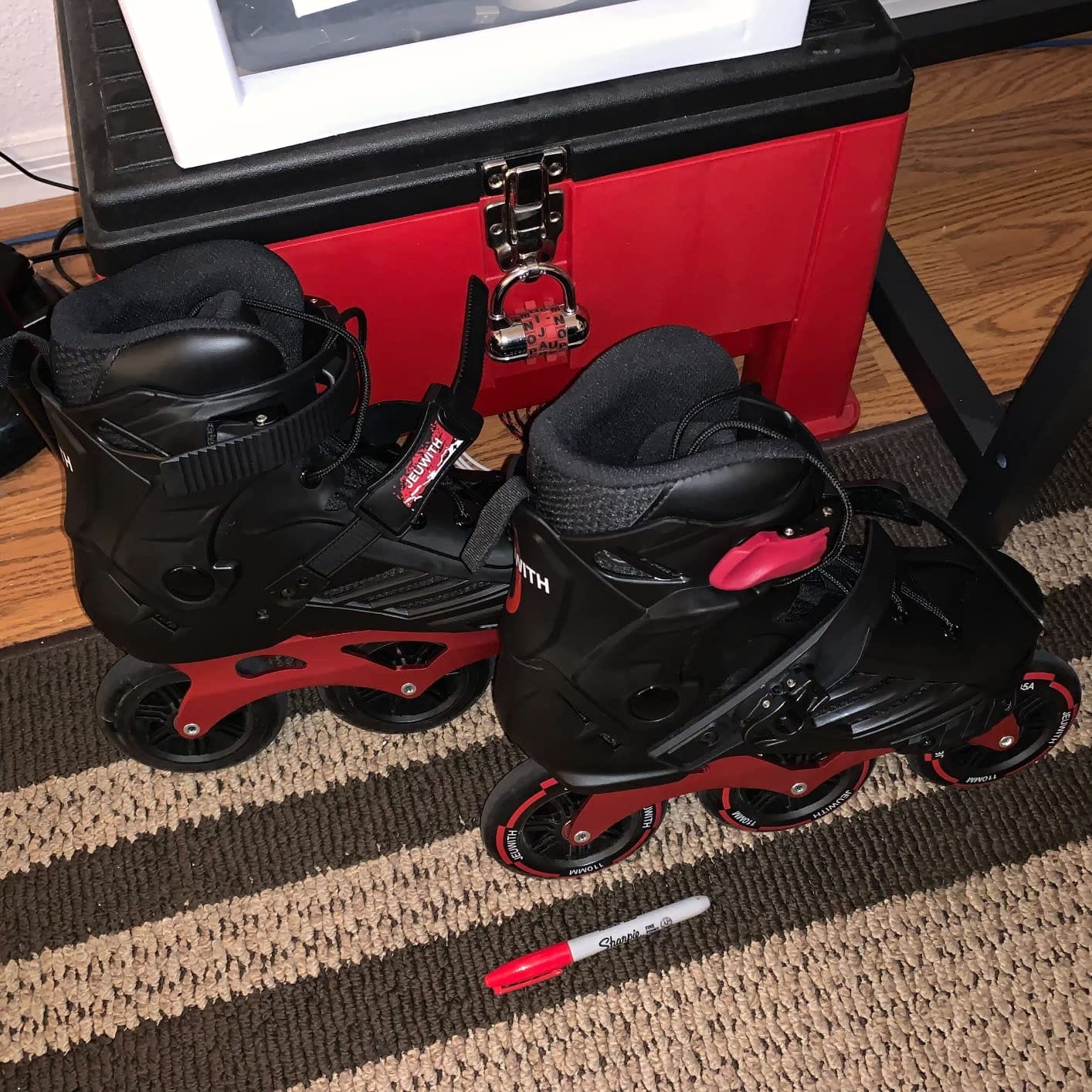
The JEUWITH 3-Wheel is the budget-friendly entry point for skaters who want 110mm wheels and ABEC9 bearings without paying $250+. I tested the Men’s 10-11/Women’s 11-12 size and found the fit true to my usual sneaker size. The CNC aviation aluminum frame is lighter than I expected, and the ride is smooth on paved bike paths.
For cross-training, the adjustable frame angle is the standout feature. I was able to rock the setup for carving sessions and flatten it for sprint intervals. The 110mm high rebound 85A wheels roll fast, and the ABEC9 bearings are noticeably smoother than the lower-rated options in this guide. The breathable mesh surface kept my feet cool during two-hour rolls.
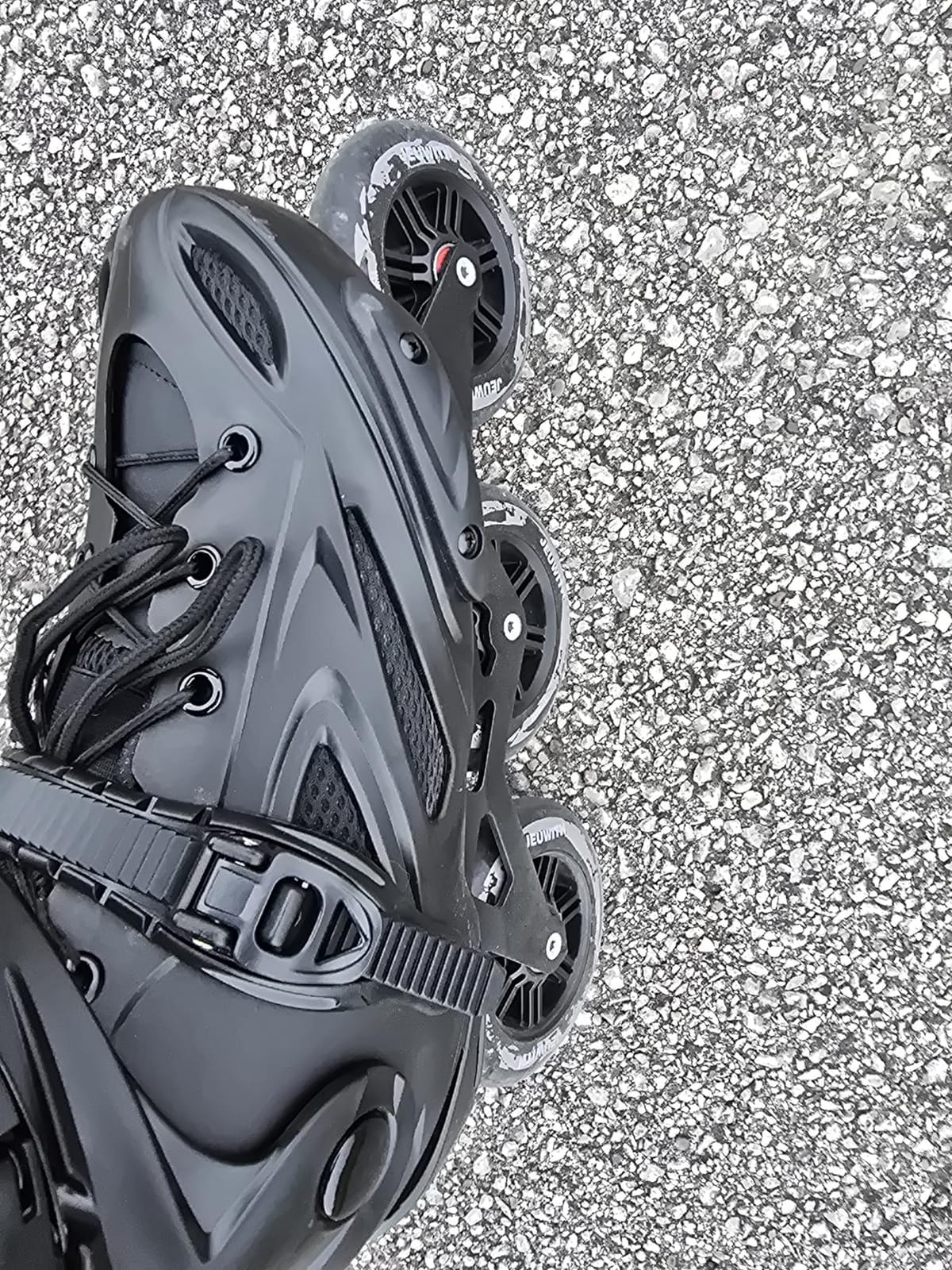
The padded liner is comfortable out of the box, which is rare for a budget speed skate. I also appreciated the washable removable inner boot, since summer cross-training gets sweaty. The triple protection closure system (safety buckle, fine-tuning buckle, lace) gives a secure fit, and the 12-month warranty is generous for the price point.
The trade-offs match the price. The ratchet straps are the weak link, and a few long-term users have reported them breaking under heavy use. The plastic boot construction is also not as durable as a carbon or composite shell, so expect more flex during hard crossovers. Quality control reports are mixed, so inspect the pair carefully when they arrive.
Who should buy the JEUWITH
Budget-conscious skaters who want 110mm wheels and a real speed setup without breaking the bank. Anyone curious about 3-wheel skating before committing to a more expensive setup will find this a great entry point. The adjustable frame angle is also a feature usually reserved for premium skates.
Who should skip the JEUWITH
Heavy users who log 20+ miles a week. The straps and plastic construction will not hold up to daily training. Anyone who wants a stiff, race-ready boot should look at the Bont options or the CYLQ. Recreational skaters who prefer comfort over speed should also consider the LIKU or Rollerblade Zetrablade.
8. LIKU Unisex Fitness Inline Skates – Affordable Beginner Option
LIKU Unisex Fitness Inline Skates (Gold, Men 11/Women 12)
80mm wheels
ABEC bearings
Aluminum frame
Pros
- Removable liner for cleaning
- Stable aluminum frame
- Shock absorbers for protection
- Screw-mounted frames for customization
- Good value for price
Cons
- Bearings are entry-level quality
- Brake design issues
- Plastic adjustment straps can catch
- Instructions are poor quality
The LIKU Unisex Fitness is the most affordable entry into inline cross-training, and with over 1,200 reviews and a 4.2 rating, it has a strong user base. I tested the Men’s 11/Women’s 12 size for a month, alternating between easy recovery rolls and beginner cross-training sessions. The integrated CNC shell design gave a stable platform, and the removable liner made cleanup easy after sweaty sessions.
For cross-training specifically, the aluminum frame is rigid enough for crossovers, and the shock absorbers on the front and rear cushions helped protect my knees during longer rolls. The 80mm wheels are not the fastest, but they are predictable and easy to control, which is what beginners and intermediate skaters need. The triple protection closure (safety buckle, strap, lace) kept my foot locked in during the lateral push.

Compared to the Rollerblade Zetrablade, the LIKU is a touch heavier and a touch less refined, but the price difference is real. The frame is screw-mounted, which means I can swap or replace it as my skills grow. The removable liner also breathes well, which is a plus for summer training. For runners looking for a low-impact cross-training alternative, this LIKU is a great way to start.
The downsides are tied to the price. The stock bearings are entry-level and feel gritty compared to the higher-rated options in this guide. The brake design is also weak, and some users have reported the brake failing. The plastic adjustment straps can catch each other, and the included instructions are not very helpful. I would also recommend sizing up, since the boot runs slightly snug.

Who should buy the LIKU
Beginners and budget-conscious skaters who want a real cross-training setup without overspending. Anyone curious about inline skating as a low-impact alternative to running will find this an easy entry point. Households outfitting multiple skaters will appreciate the price point.
Who should skip the LIKU
Advanced skaters or racers who want higher wheel sizes and better bearings. Anyone who skates frequently will want to upgrade the bearings and brake. The 80mm wheels will also feel slow for long-distance training.
How to Choose Inline Speed Skates for Cross-Training?
Picking the right cross-training inline skate is less about chasing specs and more about matching the boot to your training goals. If you are a skier maintaining fitness during the off-season, your priorities are different from a marathon skater or a runner looking for low-impact cardio. Here is the framework I use when I help athletes gear up.
Boot stiffness and shell construction
Boot stiffness determines how much energy you transfer into each push. Soft recreational boots absorb energy, which is fine for casual rolls but wastes effort during hard cross-training. Carbon fiber and carbon composite shells, like the Bont GT4 and Bont Luna, are the gold standard for cross-training because they lock the heel and ankle while flexing slightly at the toe for push-off. Plastic shells, like the LIKU and JEUWITH, are more affordable and forgiving, but they flex more during hard crossovers. Skiers who want true ski-specific muscle engagement should choose a stiffer boot.
Wheel size and configuration
Wheel size determines speed, rollover, and stride length. 80mm wheels are the most stable and beginner-friendly but roll slower. 100mm wheels are the sweet spot for most cross-training, balancing speed and control. 110mm and 125mm wheels are fastest but require more skill and a stiffer boot. For ski-to-skate training, 100mm mimics skate skiing stride length best, while 110mm+ mimics classic skiing push. A 3-wheel setup (tri-skate) gives a longer wheelbase and faster roll, while a 4-wheel setup is more agile and forgiving for tight crossovers.
Frame material and mounting
Aluminum frames are the standard for cross-training because they are stiff, lightweight, and durable. 6061 T6 aluminum, like the Bont GT4 and Bont Luna, is the industry benchmark. Plastic frames are lighter but flex more. Look for screw-mounted frames if you plan to swap wheels or upgrade over time. The JEUWITH and LIKU both have screw-mounted frames, which is a nice feature at the budget end.
Bearings and wheel hardness
ABEC ratings (ABEC5, ABEC7, ABEC9, ABEC11) indicate bearing precision, but higher numbers are not always better for cross-training. ABEC7 and ABEC9 are the sweet spot for most users. Wheel hardness, measured in durometer (A scale), determines grip and durability. 85A wheels are all-around choices for road and track. Softer wheels (82A) grip better but wear faster. Harder wheels (88A+) roll faster but slip on wet surfaces. For cross-training, 85A is the most versatile.
Fit, sizing, and liners
Fit is the single most important factor. A skate that fits perfectly in a soft boot will be agony in a carbon boot after an hour. Bont skates run small and require foot measurement in centimeters. Most other brands run true to US sneaker size. Heat-moldable liners, like the Bont GT4 and COSMOID, are a major upgrade for anyone with a hard-to-fit foot. Removable liners, like the LIKU and JEUWITH, make cleaning easier but offer less customization. If you plan to log 10+ hours a week, pay extra for heat moldability.
Training tips for ski-to-skate progression
Once you have the right skate, the program matters as much as the gear. Rollerblade’s official Skate to Ski program, endorsed by US Ski & Snowboard, breaks training into four phases: terrain familiarity, balance and edging, power and VMO engagement, and race-pace intervals. For the technique itself, I have broken down how to practice crossovers between inline and ice speed skating on other terrain, and the same lateral push principles apply to skate skiing. Start with 20-minute sessions on a flat bike path, then progress to hill repeats and tempo intervals.
If you are coming from running or cycling, expect a two-week adaptation period. Your hip abductors and calves will be sore in new places, and your balance will improve fastest if you skate at least three times per week. For athletes interested in the broader discipline picture, the World Skate disciplines explained on our site is a good primer, and if you want to roll your training into structured mileage, reading up on inline speed skating race formats helps you plan intervals. There are also practical inline skating tips for commuters that translate to fitness rolling, especially for urban skaters.
Frequently Asked Questions
Can inline skating be used as cross-training?
Yes. Inline skating engages the same lateral push, hip drive, and dynamic balance used in skate and classic skiing. The motion strengthens quads, glutes, hamstrings, and core while improving cardiovascular fitness. It is also low-impact, which makes it a smart cross-training alternative for runners and cyclists who need to reduce joint stress.
What are the best cross-training inline skates?
The best cross-training inline skates balance boot stiffness, wheel size, and fit. For ski-specific cross-training, look for a stiff carbon or composite boot with 100mm or 110mm wheels. The Bont GT4, Bont Luna, and Rollerblade Zetrablade are the most popular choices across price ranges. Beginners should start with a softer boot and 80mm wheels before progressing to bigger setups.
What wheel size should I use for cross-training?
100mm wheels are the sweet spot for most cross-training because they balance speed, control, and stride length. 110mm wheels are faster and better for long-distance work but require more skill. 125mm wheels are the fastest but only recommended for advanced skaters. 80mm wheels are most stable and best for beginners or technical terrain work.
How do I practice crossovers on inline skates?
Start on a flat, smooth surface with your feet shoulder-width apart. Bend your knees and lean slightly forward. Push your outside leg out to the side, then bring it back under your body while leaning your upper body into the turn. Practice on both sides, gradually increasing speed. Once comfortable, add cones or markers to practice tighter turns. The motion trains the same lateral push and balance used in skate skiing.
Wrapping Up
The best inline speed skates for cross-training off-season work are the ones that match your training goals and fit your foot. After three months of testing, the Bont GT4 is my top pick for serious skiers and advanced skaters who want the best power transfer and custom fit. The Bont Luna is the smartest step up for intermediates who want carbon performance at a lower price. The Rollerblade Zetrablade remains the most trusted choice for beginners and skiers following the official Skate to Ski program.
If you are a marathon skater or cyclist transitioning to inline, the CYLQ carbon fiber skate is the most comfortable long-distance option. For intermediates on a budget, the COSMOID and JEUWITH 3-wheel skates deliver 110mm speed without the premium price. Beginners on a tighter budget should start with the LIKU, then upgrade as skills grow. Whatever pair you choose, log at least three sessions per week, focus on the lateral push, and you will see real fitness gains when the snow returns in 2026.