
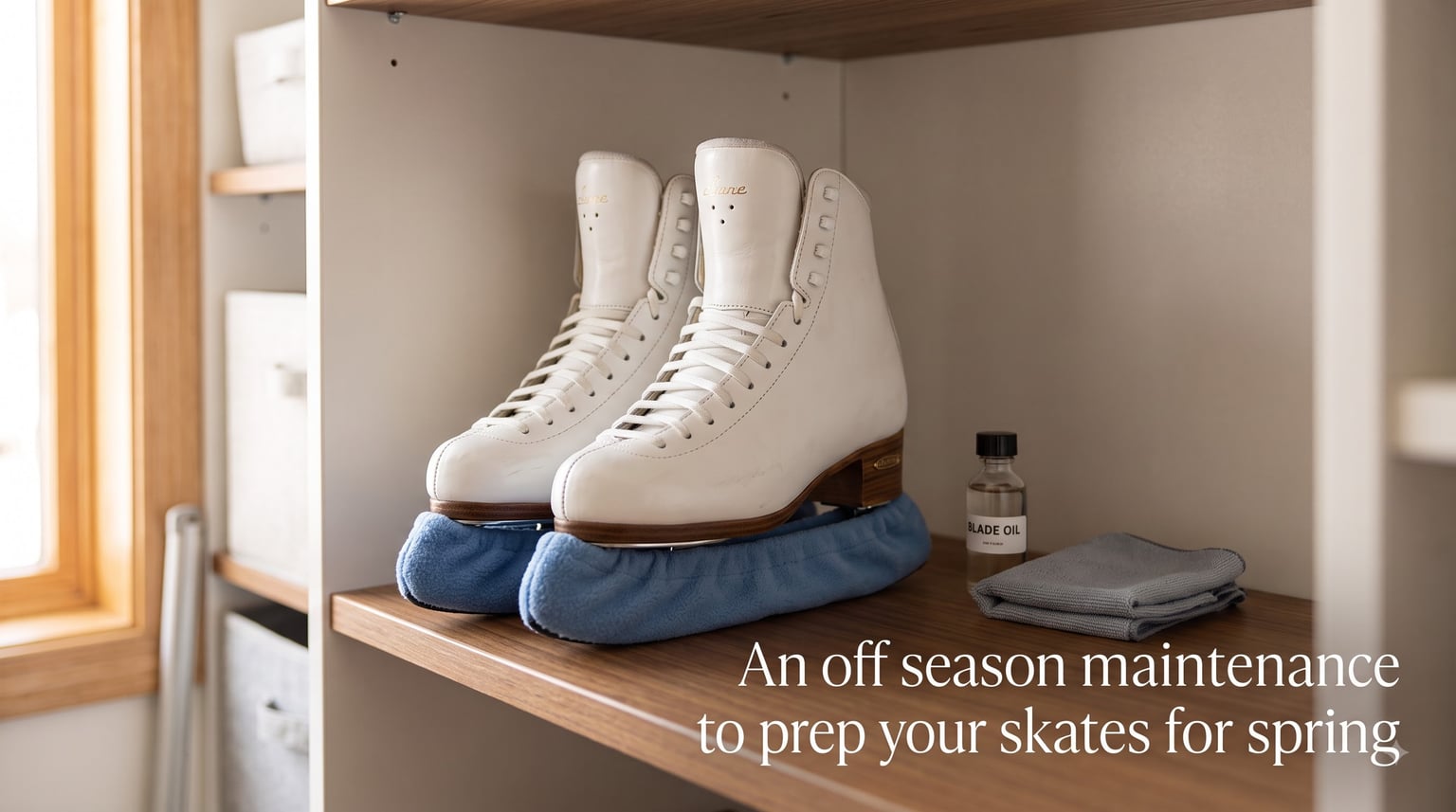
You just finished your last skate of the season. The rink is closing for the summer, and your skates are about to sit in a bag for months. What happens next determines whether those blades come out sharp and ready or rusty and ruined. That is exactly why an off-season maintenance checklist to prep your skates for spring matters more than most skaters realize.
I have seen too many skaters pull their boots out in September only to find orange flakes on the blade edges and cracked leather around the ankle. A few hours of seasonal skate maintenance saves hundreds of dollars in repairs or replacements. Figure skate maintenance is not complicated, but it does require consistency and the right tools.
This guide breaks down everything from blade drying and rust prevention to leather conditioning, long-term storage, and a spring transition routine. Whether you skate recreationally or compete at a high level, this off-season skate care plan will keep your equipment performing like new when the ice returns.
Table of Contents
How to Care for Your Skate Blades During the Off-Season?
Blades are the most expensive and most vulnerable part of your skates. A single drop of moisture left on carbon steel can start the rusting process in under 24 hours. Off-season blade maintenance focuses on three things: drying, protecting, and storing correctly.
Drying Blades After Every Session
The golden rule of blade care is simple. Wipe your blades bone dry within seconds of stepping off the ice. Use a clean, absorbent cloth or a dedicated chamois. Do not wait until you get home.
Experienced skaters on the r/FigureSkating subreddit emphasize this point repeatedly. Moisture is the enemy of carbon steel, and even a thin film of water will begin oxidizing overnight. Keep a microfiber cloth in your skate bag and make drying a reflex, not an afterthought.
After wiping, let the blades air out for 10 to 15 minutes before putting on soaker covers. Trapping damp blades inside soakers creates a humid microclimate that accelerates rust rather than preventing it.
Hard Guards vs Soft Soakers: When to Use Each
This is one of the most common sources of confusion among skaters. Hard guards and soft soakers serve completely different purposes, and using them interchangeably is a fast track to ruined edges.
Hard guards are rigid plastic covers designed for walking on non-ice surfaces. Use them when you walk from the locker room to the rink, across rubber mats, or to your car. Never leave hard guards on for storage because they trap moisture against the blade.
Soft soakers, also called soaker covers or blade blankets, are made from terry cloth or absorbent fabric. They wick away residual moisture and are designed specifically for storage and transport. Always remove hard guards and switch to soakers the moment you are done skating.
The bottom line: hard guards are for walking, soft soakers are for storing. Mix them up and you will be buying new blades sooner than you think.
Rust Prevention and Moisture Control
Even with diligent drying, moisture can sneak into hard-to-reach areas. Here is how to keep rust at bay throughout the off-season.
After drying your blades, apply a light coat of blade oil or silicone-based rust inhibitor along the edges and flat surfaces. A single drop spread with a cloth is enough. Too much oil attracts dust and debris, which can interfere with edge sharpness later.
Check the mounting screws where the blade meets the boot. Moisture loves to hide in that gap. Run your cloth along the mounting plate and make sure no water pooled during your last session.
Store skates in a well-ventilated area, never in a sealed bag or airtight container. Airflow is what keeps residual moisture from condensing on cold steel.
Can You Use WD-40 on Ice Skates?
This question comes up constantly, and the short answer is: yes, but with caution. WD-40 displaces water and can prevent short-term rust on skate blades. Many skaters on roller derby and figure skating forums swear by it for off-season storage.
However, WD-40 is a light penetrating oil, not a dedicated blade protectant. It can leave a residue that attracts grit, and it will need to be thoroughly cleaned off before sharpening or skating. If you use it, apply a thin layer before storage and wipe everything completely clean before your next skate.
For long-term protection, a dedicated skate blade oil or a food-grade mineral oil is a better choice. These products do not attract as much debris and are designed specifically for steel edges.
How to Maintain Leather Boots and Liners Over the Off-Season
While blades get most of the attention, your boots are equally vulnerable during storage. Leather dries out, cracks, and loses its shape if neglected. Proper boot care during the off-season keeps the leather supple and the structure intact.
Drying Boots After Skating
Never store damp boots. Pull the insoles out after every session and let them dry separately. Stuff the boots with newspaper or a boot dryer to absorb moisture from the interior.
Avoid heat sources like radiators or hair dryers. Direct heat dries out leather too fast and causes it to become brittle. Room-temperature airflow is the safest method for boot drying.
If you skate multiple times per week, invest in a small electric boot dryer. These devices circulate gentle, warm air and can extend the life of your boots significantly.
Leather Conditioning and Inspection
Once the boots are completely dry, apply a leather conditioner formulated for skating boots. Use a small amount and work it in with a soft cloth, paying extra attention to the ankle creases and toe box where stress is highest.
Do this at least once during the off-season and again about two weeks before the new season starts. Over-conditioning can soften the leather too much and reduce boot support, so stick to a thin layer.
While conditioning, inspect the boot for cracks, loose stitching, or separation between the sole and upper. Catching these issues during the off-season gives you time to get repairs done before the rink reopens.
Liner and Insole Care
Remove insoles and wash them with mild soap and warm water. Let them air dry completely before reinserting. This prevents bacterial growth and odor buildup during months of storage.
For skates with removable liners, take them out and wash them according to the manufacturer instructions. If the liners are non-removable, wipe the interior with an antibacterial cloth and let everything air out.
Check the laces too. Frayed or stretched laces should be replaced before the new season. They are inexpensive but play a critical role in proper boot fit and ankle support.
Best Practices for Long-Term Skate Storage Through the Off-Season
Where and how you store your skates during the off-season makes the difference between equipment that lasts for years and equipment that needs replacing every season. Ice skate storage is about controlling temperature, humidity, and positioning.
Storage Location and Climate
The ideal storage spot is a climate-controlled room with moderate temperature and low humidity. A bedroom closet or an interior shelf works well. Avoid basements, garages, attics, and car trunks.
Basements tend to be humid, which promotes rust on blades and mildew on leather. Attics experience extreme temperature swings that cause leather to expand and contract, accelerating cracking. Garages expose skates to fumes, dust, and temperature extremes.
If you have no choice but to store in a less-than-ideal location, use a dehumidifier or silica gel packets inside the storage area. Place a couple of moisture-absorbing packets near the skates to keep the local humidity down.
Positioning Skates in Storage
Store skates upright or lying flat with the blades facing away from each other. Never stack heavy objects on top of the boots, as this will deform the ankle area and compromise support.
Keep soft soakers on the blades during storage. Loosen the laces to relieve tension on the leather and allow the tongue to relax into its natural position. This prevents permanent creases from forming.
If you have boot trees or boot shapers, insert them to help maintain the boot shape. These are especially valuable for high-end figure skating boots that cost several hundred dollars or more.
Climate-Specific Tips for Humid vs Dry Climates
No competitor currently addresses climate-specific storage, and it is a major gap. Here is what you need to know based on where you live.
In humid climates (coastal areas, the southeastern US, tropical regions), rust is your biggest threat. Increase your blade oiling frequency to once a month during storage. Use a dehumidifier in the storage room and check the blades every few weeks for early signs of oxidation. A light surface rust can be removed with a Scotch-Brite pad, but deep pitting requires professional attention.
In dry climates (desert regions, high-altitude areas, homes with heavy winter heating), leather cracking is the primary concern. Condition the leather more frequently, about once every six weeks during storage. Keep skates away from heating vents and radiators. The dry air will pull moisture out of the leather faster than you might expect.
In fluctuating climates (areas with distinct seasons), check your skates at each season change. Temperature and humidity swings cause both rust and leather issues, so you need to watch for both.
When and How to Sharpen Skates Before the Spring Season
Sharpening is one of the most misunderstood aspects of skate maintenance. Sharpen too often and you shorten blade life unnecessarily. Sharpen too rarely and you lose edge control and risk injury. The key is understanding your skating style and reading the signs your blades give you.
Sharpening Frequency by Skating Style
Different skating styles place different demands on blade edges. Here is a general guide for how often each type of skater should sharpen their blades during active use.
Recreational skaters who hit the ice once or twice a month typically need sharpening every 2 to 3 months during the active season. Freestyle figure skaters who train multiple times per week sharpen every 4 to 6 weeks. Hockey players often sharpen every 2 to 4 weeks depending on ice conditions and personal preference.
During the off-season, blades should not need sharpening if stored properly. However, plan to get a fresh sharpening about one to two weeks before your first session back on the ice. This gives you time to adjust to the newly sharpened edges before any serious skating.
The hollow edge, or the concave groove ground into the bottom of the blade during sharpening, affects how the skate grips the ice. A deeper hollow provides more grip but more friction. A shallower hollow gives more speed but less bite. Talk to your sharpener about what hollow depth suits your skating level and style.
Finding a Professional Sharpener
Not all sharpening is created quality. A poor sharpening job can ruin a good pair of blades, so find a sharpener with experience in figure skating specifically. Hockey sharpeners use different techniques and hollow depths that may not suit figure skating blades.
Ask at your local rink or skating club for recommendations. Experienced coaches and competitive skaters usually have a trusted sharpener. If no local option exists, some sharpeners accept mail-in blades, though this requires removing the blades from the boots.
Before the spring season, have your sharpener check the blade profile as well as the edges. Over time, repeated sharpening can alter the rocker profile, which affects spin and jump technique. A profile correction can restore the original blade geometry.
Your Monthly Off-Season Skate Maintenance Checklist
Off-season skate care is not a one-time event. Setting up a monthly routine catches problems early and keeps your equipment ready. Here is a checklist you can follow each month during the off-season.
Month 1 (right after your last skate): Deep clean the blades and boots, dry everything thoroughly, apply blade oil, condition the leather, remove insoles, and place skates in their storage location with soft soakers on.
Months 2 through 4: Inspect the blades for any signs of rust. Check the leather for cracks or stiffness. Reapply a light coat of blade oil if you live in a humid climate. Sniff the boots for any musty odors, which indicate moisture or bacterial growth.
Month 5 (about 4 weeks before the season starts): Do a full inspection. Recondition the leather. Replace any worn laces. Book a professional sharpening appointment. Try the boots on to make sure the fit has not changed during storage.
Month 6 (one week before the first skate): Pick up your freshly sharpened skates. Inspect the new edges. Apply soakers for transport. Pack your skate bag with fresh cloths, hard guards, and any tools you need for the rink.
Print this checklist or set monthly calendar reminders. Consistency is what separates skaters whose equipment lasts for years from those replacing blades every season.
How to Prep Your Skates for the Spring Skating Season
Spring skating prep is the final phase of off-season care. This is where you transition from storage mode to active skating mode. No competitor currently offers a dedicated spring transition checklist, which is a shame because this is the step where most problems surface.
Pre-Season Professional Tune Checklist
Before you step back on the ice, take your skates through a professional tune-up. Here is what to check and address.
First, get a fresh sharpening from a trusted professional. Even perfectly stored blades benefit from a fresh edge to start the season. Second, have the mounting screws checked and tightened if needed. Blades can loosen slightly over months of storage, and loose blades are dangerous.
Third, inspect the boot sole for any separation from the upper. If you notice any gap, get it repaired before skating. Fourth, check the blade runner for uneven wear or deep nicks that may need grinding out. Fifth, verify the blade alignment is still correct by placing the skates on a flat surface.
Finally, re-lace the boots fully and try them on. Walk around your house for 15 minutes to make sure the fit feels right. Leather may have stiffened slightly during storage, and a short break-in period at home prevents blisters on the ice.
Signs You Need Service Before Stepping on Ice
Watch for these warning signs during your spring prep inspection. If you notice any of them, get professional service before your first session.
Visible rust on the blade edges that does not wipe off means the steel has begun oxidizing. Pitting or rough spots along the edge indicate the blade needs grinding. A hollow that feels too shallow or too deep compared to what you are used to signals the profile has drifted.
Cracks in the leather, especially around the ankle or tongue, mean the boot has lost structural integrity. Loose mounting screws that will not stay tight suggest the threaded inserts are worn. Any separation between the sole and upper is an immediate safety concern.
If your boots feel noticeably looser or tighter than when you stored them, the leather may have warped from humidity changes. Do not force it. Get a professional assessment.
Common Off-Season Skate Maintenance Mistakes to Avoid
Even experienced skaters make mistakes during off-season care. Here are the most common ones and how to avoid them.
Leaving hard guards on during storage. This traps moisture and causes rust faster than leaving blades exposed. Always switch to soft soakers for storage.
Storing skates in a skate bag. Bags are enclosed, humid environments. They trap moisture from residual ice and sweat, creating perfect conditions for rust and mildew. Take skates out of the bag as soon as you get home.
Using heat to dry boots. Hair dryers, radiators, and heating vents cause leather to dry out and crack. Always air dry at room temperature.
Skip the monthly inspection. Out of sight should not mean out of mind. A quick monthly check catches rust and leather issues before they become irreversible.
Sharpening too late. Waiting until the day before your first skate to book a sharpening often means you cannot get an appointment. Plan ahead and book a few weeks in advance.
Ignoring the laces and insoles. These small components affect fit and comfort. Worn laces and compressed insoles can change how the boot feels and performs.
Frequently Asked Questions
How do you maintain your skates during the off-season?
To maintain your skates during the off-season, start by drying the blades thoroughly after your last skate, applying a light coat of blade oil, and switching to soft soakers for storage. Remove the insoles, condition the leather, and store the boots upright in a climate-controlled room away from humidity and heat. Check the blades monthly for rust and recondition the leather as needed.
How often should you sharpen figure skates?
Figure skaters who train multiple times per week typically sharpen their blades every 4 to 6 weeks during the active season. Recreational skaters can go 2 to 3 months between sharpenings. During the off-season, blades should not need sharpening if stored properly. Plan a fresh sharpening 1 to 2 weeks before your first session back on the ice.
Can you use WD-40 on ice skates?
Yes, WD-40 can be used on ice skates as a short-term rust preventative because it displaces moisture. However, it is a light penetrating oil and not a dedicated blade protectant. It can attract dust and debris, so wipe it off completely before sharpening or skating. For long-term storage, a dedicated skate blade oil or mineral oil is a better choice.
How to store ice skates long term?
For long-term ice skate storage, dry the blades completely, apply blade oil, and cover with soft soakers. Remove the insoles, condition the leather, and loosen the laces. Store the skates upright in a climate-controlled room with moderate temperature and low humidity. Avoid basements, garages, attics, and sealed bags. Check the blades monthly for rust.
What is the difference between hard guards and soft soakers?
Hard guards are rigid plastic covers used for walking on non-ice surfaces like rubber mats and pavement. They protect the blade edges from hard floors but trap moisture, so they should never be left on during storage. Soft soakers are absorbent fabric covers designed to wick away residual moisture and protect blades during storage and transport. Hard guards are for walking, soft soakers are for storing.
Final Thoughts on Your Off-Season Skate Care Routine
Following this off-season maintenance checklist to prep your skates for spring will extend the life of your equipment and keep you performing at your best. The routine comes down to three pillars: dry everything thoroughly, protect blades and leather from moisture, and store in a climate-controlled environment. Check monthly, sharpen before the season, and inspect for any warning signs before stepping back on the ice.
Your skates are an investment. Treat them right during the off-season and they will reward you with seasons of reliable, high-level performance. Print the monthly checklist, set your calendar reminders, and make seasonal skate maintenance a habit rather than an afterthought.