
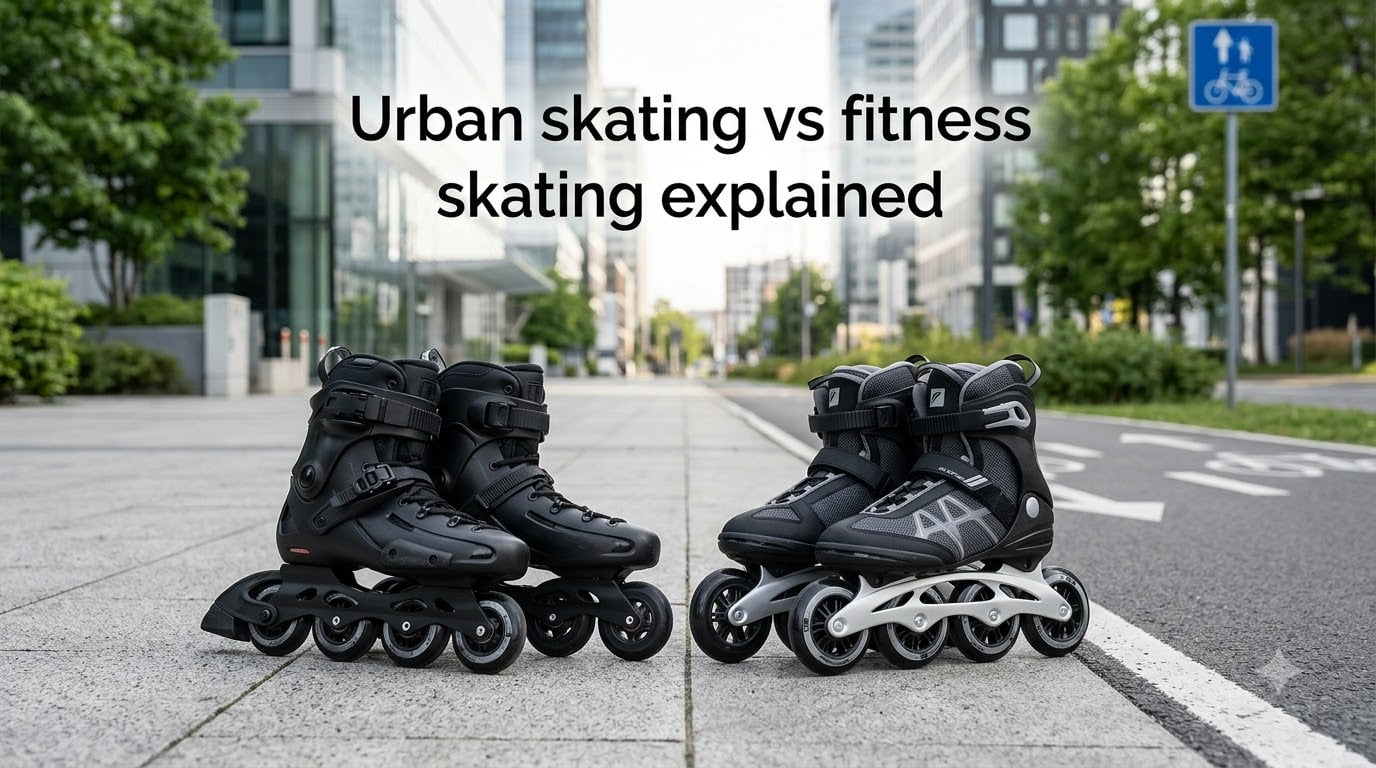
If you have ever stood in a skate shop staring at two seemingly similar pairs of inline skates and wondered which one is right for you, you are not alone. Understanding urban skating vs fitness skating is the single most important step before you spend your money, because these two styles are built for completely different experiences.
The wrong choice can leave you fighting your equipment on every stride or feeling like you traded comfort for capability you will never use. I have spent years skating both styles, and the differences go far deeper than looks. Everything from the boot material to the wheel hardness is engineered for a specific purpose.
In this guide, I will break down exactly what separates urban inline skates from fitness inline skates, covering boot type, wheel size, frame length, terrain suitability, and skill level. By the end, you will know exactly which type of skate fits your goals, your terrain, and your current ability level.
Table of Contents
What Is Urban Skating?
Urban skating is a style of inline skating designed around the realities of navigating city environments. It treats streets, stairs, curbs, and crowded sidewalks as features rather than obstacles. The focus is on agility, quick stops, and the ability to react instantly to whatever the city throws at you.
Urban inline skates use hard boot shells made from rigid plastic or composite materials. This stiffness gives you precise energy transfer when you push off or carve a tight turn. It also protects your feet from impacts when you jump off curbs or clip an unexpected crack in the pavement.
The wheels on urban skates are typically smaller (76 to 84 mm) and harder (82A to 86A durometer). Smaller wheels accelerate quickly, which matters when you are constantly stopping and starting at intersections. Harder wheels slide more predictably, giving you control during quick directional changes.
Frames on urban skates are shorter, often sitting between 231 mm and 243 mm. A shorter wheelbase means the skate turns faster and feels more responsive under your foot. That responsiveness is exactly what you need when a pedestrian steps into your path without warning.
Urban skating overlaps with freestyle slalom, aggressive street skating, and freeride. If you want to learn tricks, weave through cones, or simply own your city streets with confidence, urban skates are the tool for the job.
What Is Fitness Skating?
Fitness skating is all about covering distance efficiently while getting a solid cardiovascular workout. It is the inline skating equivalent of going for a long run or a bike ride on a smooth path. The priority is comfort, speed, and the ability to skate for an hour or more without foot fatigue.
Fitness inline skates use soft boot designs constructed from breathable mesh and synthetic fabrics. These boots feel more like a well-padded running shoe than a rigid shell. They ventilate well in summer and flex naturally with your ankle movement.
The wheels on fitness skates are larger (84 to 100 mm) and softer (78A to 82A durometer). Larger wheels hold momentum better, meaning once you get up to speed you can cruise with less effort. Softer wheels grip smooth surfaces well and absorb vibration from minor surface imperfections.
Frames on fitness skates are longer, typically ranging from 255 mm to over 300 mm on larger setups. A longer wheelbase tracks straighter and feels more stable at speed. That stability is exactly what you want when you are cruising at 15 to 20 mph on a flat park trail.
If your goal is exercise, endurance, or simply enjoying long rides along beach promenades and park connectors, fitness skating is built for you.
Urban Skating vs Fitness Skating: Key Differences Explained
Now that you have a feel for each style, let me put them side by side. The urban skating vs fitness skating comparison comes down to a handful of measurable design differences that completely change how the skate feels under your feet.
Boot construction: Urban skates use hard shells for support, protection, and precise power transfer. Fitness skates use soft boots for comfort, breathability, and a forgiving ride.
Wheel size: Urban skates run 76 to 84 mm for quick acceleration and tight handling. Fitness skates run 84 to 100 mm for speed and momentum conservation.
Wheel hardness: Urban skates use harder wheels (82A to 86A) that slide controllably. Fitness skates use softer wheels (78A to 82A) that grip and absorb vibration.
Frame length: Urban frames are short (231 to 243 mm) for agility. Fitness frames are long (255 to 300+ mm) for stability at speed.
Maneuverability vs stability: This is the core tradeoff. Urban skates trade straight-line stability for the ability to turn on a dime. Fitness skates trade agility for the confidence to glide at high speeds without wobbling.
Weight: Urban hard boots tend to be slightly heavier due to the rigid shell and added reinforcement. Fitness soft boots are lighter, which reduces fatigue over long distances.
Stopping power: Urban skates handle emergency stops and quick decelerations better thanks to the responsive frame and harder wheel compound. Fitness skates often include a heel brake, which is great for beginners but less useful in chaotic city traffic.
Boot Type: Hard Shell vs Soft Boot
The boot is where the urban versus fitness divide is most obvious, and it is the first thing I notice when I pick up a skate. Hard shell boots on urban skates wrap your foot in a rigid exoskeleton, usually with a padded inner liner. This design locks your ankle in place and transfers every ounce of energy from your leg directly into the stride or turn.
That rigidity has a downside. Hard boots can feel stiff and unforgiving during the first few sessions, especially for beginners who have not yet built ankle strength. They also run warmer and breathe less than soft boots.
Soft boots on fitness skates prioritize comfort from the first wear. The flexible upper moves with your foot, and the generous padding feels great even after 90 minutes of skating. The tradeoff is less lateral support, which means your ankle has to work harder during sharp turns or at low speeds.
On Reddit’s rollerblading community, skaters frequently note that soft boots can work for maneuverability but the lack of support becomes noticeable during aggressive moves. For pure fitness cruising, the comfort is hard to beat.
Wheels and Durometer: Size and Hardness
Wheel choice is where you can fine-tune any skate for its environment. Let me break down the two numbers that matter: size (diameter in millimeters) and durometer (hardness on the A scale).
Larger wheels (90 mm and up) roll faster and hold speed longer because they cover more ground per revolution. They also bridge small gaps and cracks more easily. This is why fitness skates use them for long, smooth rides.
Smaller wheels (80 mm and below) spin up to speed quickly and keep the skate’s center of gravity lower. That low profile makes urban skates feel more stable on rough surfaces and easier to control during technical maneuvers.
Harder wheels (84A and above) slide when you push them laterally, which is essential for urban tricks, power stops, and tight carving. They also last longer because the harder compound resists wear.
Softer wheels (80A and below) grip the road tenaciously and absorb micro-vibrations from textured pavement. They wear faster but deliver a smoother, quieter ride that is ideal for fitness sessions on mixed surfaces.
Frame Length: Short Frames for Agility, Long Frames for Speed
Frame length is the hidden variable that many new skaters overlook, yet forum discussions consistently identify it as a key factor in how a skate actually feels. The frame is the metal or composite rail that holds the wheels, and its length directly controls the tradeoff between agility and stability.
A short frame (under 245 mm) puts the wheels closer together under your foot. This shortens the wheelbase, meaning you can pivot and turn with minimal effort. Urban skates use short frames because a city skater needs to change direction in an instant.
A long frame (255 mm and above) spreads the wheels further apart. This creates a longer contact area with the ground, which resists unwanted turning and keeps the skate tracking straight even at high speeds. Fitness skates use long frames so you can cruise comfortably without constantly correcting your line.
Here is a useful mental model: a short frame is like a sports car that darts into corners, while a long frame is like a touring motorcycle that glides straight down the highway. Neither is better in isolation; it depends entirely on where you plan to ride.
Terrain Suitability: Where Each Skate Shines
The terrain you skate on should drive your decision more than any other single factor. Urban skates are built for rough, unpredictable city surfaces. Fitness skates are built for smooth, predictable paths.
Urban skates excel on cracked sidewalks, cobblestones, asphalt with patches, and surfaces littered with debris. The hard boot protects your foot, the small wheels accelerate quickly after you dodge an obstacle, and the short frame lets you weave around hazards.
Fitness skates shine on smooth bike paths, sealed park trails, indoor rink floors, and coastal promenades. The large wheels carry speed effortlessly, the soft boot keeps your feet comfortable for miles, and the long frame gives you confidence at cruising speed.
Can you cross over? Yes, to a point. I have done light fitness rides on urban skates, and the workout is more intense because the skates are heavier and less efficient. I have also skated mildly rough city paths on fitness skates, and the softer wheels absorbed most of the chatter. But pushing either skate too far outside its comfort zone leads to frustration.
Beginner Guidance: Which Skates Should You Start With?
This is the question I see more than any other on skating forums, and the answer depends on a simple honesty check about your goals. There is no universal right answer, but there is a right answer for you.
Choose fitness skates if you are a complete beginner who wants to learn the basics on smooth paths and build confidence gradually. The soft boot is forgiving on your feet, the heel brake gives you a reliable stopping method, and the stability of the longer frame helps you balance while you develop your stride.
Choose urban skates if you are committed to city skating from day one and want gear you will not outgrow. The hard boot support actually helps beginners who lack ankle strength, and the maneuverability is safer in traffic. The catch is a steeper learning curve and less comfort during the first few sessions.
From the Reddit community, a consistent theme emerges: fitness skates are more stable and comfortable for absolute beginners, but many skaters transition to urban skates once they feel confident and want more capability. If you can afford to buy one pair, think about where you will actually skate most often.
If you are not sure, I recommend starting with fitness skates. You can always sell them and upgrade to urban skates once you know the sport is for you and you know what kind of skating you enjoy most.
Protective Gear: Staying Safe No Matter Your Style
Whether you choose urban or fitness skates, protective gear is non-negotiable. At minimum, you need a properly fitted helmet, wrist guards, knee pads, and elbow pads.
Urban skaters should consider additional protection like padded shorts and ankle guards, since the risk of falls at low speed in traffic is higher. Fitness skaters cruising on smooth paths at speed should never skip the helmet, as even a minor fall at 15 mph can cause a serious head injury.
Invest in quality gear before you invest in upgrading your skates. A helmet is cheaper than an emergency room visit.
Maintenance Tips for Urban and Fitness Skates
Both skate types need regular care to perform well and last. Rotate your wheels every 4 to 6 sessions by swapping their positions. This prevents uneven wear that causes the skate to pull to one side.
Clean and lubricate your bearings every few months, or more often if you skate through dust, sand, or water. A bearing cleaning kit costs very little and doubles the life of your bearings.
Inspect your frame bolts before each session. Vibrations from rough terrain can loosen bolts over time, and a loose wheel at speed is dangerous. For hard boot urban skates, check the shell and liner for cracks. For soft boot fitness skates, check the stitching and closures for wear.
Frequently Asked Questions
What does urban skating mean?
Urban skating is a style of inline skating focused on navigating city environments. It involves skating through streets, parks, and urban obstacles using skates designed for agility, control, and durability. Urban skates feature hard boots, shorter frames, and smaller harder wheels for quick maneuvering in traffic.
What is fitness skating?
Fitness skating is a style of inline skating focused on exercise, distance, and speed on smooth surfaces. Fitness skates use soft boots for comfort, larger softer wheels for momentum, and longer frames for stability during long rides on paths and trails.
What are the key differences between fitness and urban skating?
The main differences are boot type (hard shell for urban, soft boot for fitness), wheel size (76-84mm urban, 84-100mm fitness), wheel hardness (82A-86A urban, 78A-82A fitness), and frame length (short for agility in urban, long for stability in fitness). Urban skates prioritize maneuverability while fitness skates prioritize comfort and speed.
What are the three types of skates?
The three main types of inline skates are fitness skates (soft boot, large wheels, for distance and comfort), urban or freestyle skates (hard boot, short frame, for city skating and tricks), and aggressive skates (small hard wheels, grind plates, for ramps and rails). Recreational skates sit between fitness and urban as a general-purpose option.
Is 40 too old to rollerblade?
No, 40 is not too old to start rollerblading. Many skaters begin in their 40s, 50s, and beyond. Fitness skating in particular is an excellent low-impact cardiovascular activity for adults. The key is starting with the right equipment, wearing full protective gear, and learning proper technique from a qualified instructor.
Can you lose belly fat by rollerblading?
Yes, rollerblading can contribute to fat loss including belly fat when combined with a calorie-controlled diet. Inline skating burns approximately 300 to 600 calories per hour depending on intensity and body weight. Consistent skating sessions, like any aerobic exercise, help create the calorie deficit needed for overall fat reduction.
Conclusion
Understanding urban skating vs fitness skating explained comes down to one core principle: your skating environment should dictate your gear. Urban skates give you hard boot protection, short frame agility, and small hard wheels for conquering unpredictable city streets. Fitness skates give you soft boot comfort, long frame stability, and large soft wheels for gliding mile after mile on smooth paths.
If you are a beginner drawn to smooth trails and steady workouts, start with fitness skates. If you already know you want to own the city and learn tricks, go straight to urban skates and commit to the learning curve. Either way, invest in quality protective gear, maintain your skates regularly, and get out there. The best skates are the ones that match where you actually ride.