
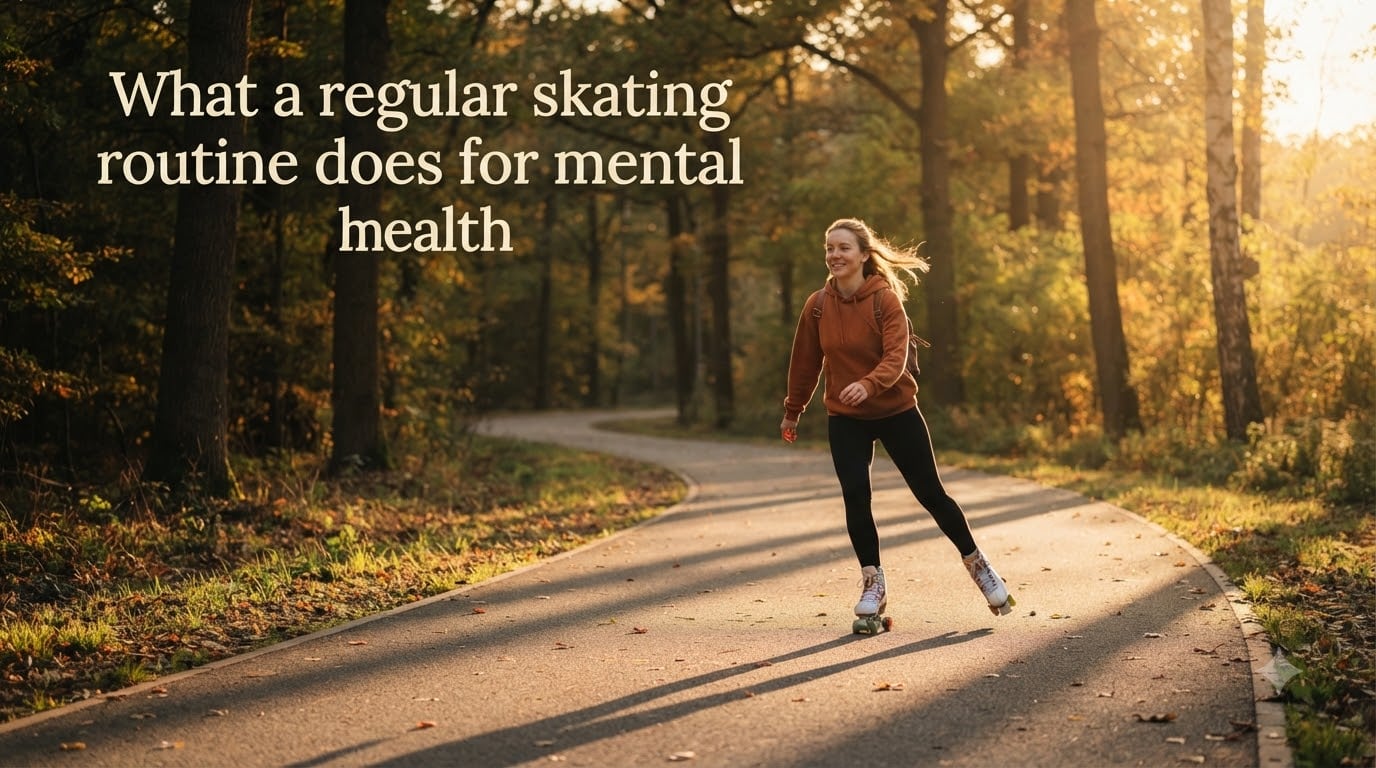
I have watched people walk onto a rink carrying a week of stress on their shoulders and leave two hours later smiling like they just got the news of their life. That transformation is not a fluke. It is the predictable result of what a regular skating routine does for mental health, and it is the reason I keep recommending it to friends dealing with burnout, anxiety, or low moods.
In this guide, I will walk you through the exact mechanisms that make skating such a powerful mental health tool, why routine matters more than occasional sessions, and how to build a sustainable practice that actually changes how you feel. You will learn the science behind the mood boost, the role of flow state, and the social dimension that turns skating into a complete mental wellness practice.
Table of Contents
Why Skating Is Good for Mental Health?
Skating is good for mental health because it combines three evidence-based mood boosters in one activity: cardiovascular exercise, meditative movement, and community connection. A regular skating routine amplifies each of these, which is why skaters consistently report better stress management, lower anxiety, and higher self-esteem than people who rely on a single type of exercise alone.
Most exercise routines hit one or two of these dimensions. Running lifts your endorphins but does not force you to be present. Meditation teaches presence but raises your heart rate only slightly. A solo gym session is good for your body but does not build community. Skating, by contrast, requires enough attention that your mind cannot wander far from the present moment. It raises your heart rate into a cardio zone. And rinks and skate parks are inherently social places.
The routine piece matters because the brain adapts. One great skating session gives you a temporary mood lift. Three sessions a week for eight weeks creates measurable shifts in baseline anxiety, sleep quality, and perceived stress. That is the difference between a one-time experience and a mental health tool.
How Skating Triggers Endorphin Release and Mood Boost?
Skating triggers the release of endorphins, dopamine, and serotonin, three neurotransmitters directly tied to mood, motivation, and emotional stability. Sustained cardio on wheels or blades hits the same neurochemical pathways that researchers link to reduced depression symptoms, which is why many skaters describe a “skater’s high” similar to a runner’s high but easier to access.
Endorphins are your body’s natural opioids. They flood the bloodstream during sustained aerobic activity and produce the warm, euphoric feeling people describe after a good session. Dopamine follows close behind, giving you the focused motivation that makes you want to come back. Serotonin stabilizes over the long term with consistent activity, which is the neurotransmitter most targeted by antidepressant medications.
The cardio threshold for mood benefits is lower than most people think. Research on aerobic exercise and depression consistently points to about 30 minutes of moderate-intensity activity as enough to trigger the mood-lifting cascade. A single skating session easily clears that bar, and three sessions a week builds the neurochemical foundation for better baseline mood.
Skating for Stress Relief and Anxiety Reduction
Skating reduces stress and anxiety by lowering cortisol, the body’s primary stress hormone, and by shifting the autonomic nervous system out of fight-or-flight mode. The combination of rhythmic movement, focused attention, and cardiovascular output makes skating one of the fastest natural anxiety relief tools available.
Cortisol spikes when you feel threatened, overwhelmed, or stuck. Chronic elevation of cortisol is linked to anxiety, poor sleep, weight gain, and impaired immune function. Aerobic exercise like skating is one of the most reliable ways to bring cortisol back down. Within 20 to 30 minutes of skating, most people feel their shoulders drop, their breathing deepen, and their mental chatter quiet.
One skater on r/Rollerskating put it this way: roller skating has helped with my anxiety in ways I did not expect, the wheels bring comfort. That sentiment shows up again and again in skating communities. People who struggled with traditional relaxation techniques often find that the physical engagement of skating gives their anxious mind something concrete to focus on, which interrupts the rumination cycle at the root of generalized anxiety.
The Flow State and Mindfulness You Get From Skating
Skating induces flow state, the psychology concept developed by Mihaly Csikszentmihalyi, in which you become fully absorbed in an activity that challenges you just enough to keep you engaged. Flow state is closely related to mindfulness and produces many of the same mental health benefits, including reduced rumination, lower anxiety, and improved emotional regulation.
Flow state happens when three conditions align: the activity has clear goals, you receive immediate feedback, and the challenge slightly exceeds your current skill level. Skating checks all three boxes every time you lace up. The goal might be a clean crossover or landing a new trick. The feedback is instant, either you stayed upright or you did not. And the challenge scales with you as you improve.
Many skaters describe the experience as forced presence. You cannot think about your inbox while learning to skate backward. Your brain simply does not have the bandwidth. That is why seasoned skaters call the rink their safe space and healing place. The activity delivers the mental reset that meditation promises, without requiring you to sit still and fight your own thoughts.
How Skating Builds Confidence and Self-Esteem
Skating builds confidence and self-esteem through a clear progression of skill mastery, visible improvement, and the psychological resilience that comes from falling and getting back up. Unlike many forms of exercise where progress is invisible or slow, skating produces small wins you can feel within minutes and major milestones within months.
The first time you skate a full lap without holding the wall, you know you did something. The first time you stop without grabbing the railing, your brain registers that win. Each small victory adds to a feedback loop that psychologists call mastery motivation, the same mechanism that makes learning new skills protective against depression.
Falling is the other half of the equation. Skating teaches you, in a physical way, that failure is temporary and recoverable. You fall. You get up. You try again. Over time, that pattern generalizes off the rink. Skaters often report that skating has reframed their approach to setbacks in work and relationships. The resilience built on wheels transfers to the rest of life.
Community Benefits: Why Skating With Others Helps
Skating with others provides social connection, a sense of belonging, and shared vulnerability, all of which are strong protective factors against depression and loneliness. Regular skating routines naturally incorporate community, which sets skating apart from solo exercise like running or home workouts.
Rinks, skate parks, and roller derby leagues function as what sociologist Ray Oldenburg calls a third place, a social environment outside home and work where people gather regularly. Third places are consistently linked to better mental health outcomes, especially for people at risk of isolation. Skating communities tend to be welcoming to beginners, which lowers the barrier to entry that stops many people from joining fitness groups.
There is also something powerful about shared vulnerability. Everyone falls. Everyone has been the new person wobbling at the edge of the rink. That shared awkwardness creates a kind of instant camaraderie you do not get at the gym. Skating communities often rally around newcomers, which is the kind of social support that mental health professionals consistently identify as one of the strongest predictors of recovery from depression.
Building a Regular Skating Routine for Mental Health
A mental health focused skating routine works best with 2 to 3 sessions per week, 30 to 60 minutes each, scheduled consistently enough that your brain starts to anticipate them. Consistency matters more than intensity, because the neurochemical and psychological benefits accumulate over weeks, not minutes.
Here is the framework I recommend based on what works for skaters I have followed over months and years.
Frequency: Two sessions per week is the minimum for measurable mental health benefits. Three sessions per week is the sweet spot for most adults balancing work and family. More than four sessions a week adds injury risk without proportional mental health gains.
Session length: 30 minutes clears the cardio threshold for endorphin release. 45 to 60 minutes gives you enough time to warm up, push into flow state, and cool down. Anything beyond 90 minutes tends to tip from mood boost into physical fatigue.
The 3-3-3 rule for beginners: Spend 3 minutes warming up at an easy pace, 3 minutes practicing one specific skill (crossovers, stopping, a new trick), and 3 minutes skating freely at a comfortable pace. Repeat that cycle three times across a 30-minute session. This structure keeps beginners challenged without overwhelming them.
First 30 days: Expect your body to be sore and your brain to feel sharper after each session. Sleep often improves within the first two weeks. Mood lift after sessions is immediate, but baseline mood typically takes 4 to 6 weeks to shift noticeably.
Months 2 to 3: Anxiety symptoms often start to decrease in intensity. Confidence grows as new skills land. Social connections within the skating community begin to form if you are skating at a rink or with a group.
Months 4 to 6: This is where many skaters report the biggest mental health shift. The routine becomes identity. Skating is no longer something you do for mental health, it is part of who you are. That identity shift is protective against future stress and depression.
Choosing your format: Roller skating, ice skating, inline skating, and skateboarding all deliver the same core mental health benefits. Pick the one you find most enjoyable, because adherence matters more than the specific format. Roller rinks tend to be the most social. Skate parks tend to attract more individual practice. Trails and outdoor paths offer a meditative hybrid.
Skating Compared to Other Exercises for Mental Health
Skating outperforms most traditional exercises for mental health because it combines cardio, mindfulness, and community in a single activity. The fun factor also drives higher adherence, which is the single biggest predictor of whether any exercise routine actually improves mental health over time.
Running is great for endorphins but lacks the forced presence and community of skating. Gym workouts build strength but often feel like work. Yoga is meditative but mild on cardio. Meditation teaches presence but does not raise your heart rate. Skating checks all the boxes, which is why mental health advocates have started pointing to it as a model for how exercise should feel.
For people who have tried and abandoned other routines because they were boring, too solitary, or too hard to stick with, skating often works precisely because it feels like play. Play is the format your nervous system is wired to relax into. That is why so many skaters say skating saved their mental health in ways that therapy, medication, or other exercise could not.
Frequently Asked Questions
How often should I skate for mental health?
Aim for 2 to 3 sessions per week, each lasting 30 to 60 minutes. Two sessions per week is the minimum for measurable mental health benefits, while three sessions per week is the sweet spot for most adults. Consistency matters more than session length or intensity, because the neurochemical and psychological benefits of skating accumulate over weeks, not minutes.
Can skating help with depression and anxiety?
Yes. Regular skating helps with depression and anxiety through three main mechanisms: it releases endorphins, dopamine, and serotonin to lift mood naturally; it lowers cortisol and shifts the nervous system out of fight-or-flight mode; and it builds confidence through visible skill progression. Many skaters report that skating has helped them in ways that therapy or medication alone could not, especially when combined with professional support.
Is roller skating or ice skating better for mental health?
Both roller skating and ice skating deliver the same core mental health benefits because they share the cardio, flow state, and community dimensions that drive mood improvement. The best choice is whichever format you enjoy most and will stick with consistently. Roller rinks tend to be more social and beginner-friendly, while ice rinks offer a quieter, more meditative experience.
How long until I notice mental health benefits from skating?
Most skaters notice an immediate mood lift right after each session. Baseline improvements in anxiety, sleep quality, and stress levels typically appear within 2 to 4 weeks of consistent skating. Larger mental health shifts, like reduced depression symptoms or stronger self-esteem, usually take 4 to 12 weeks of regular practice to become clearly noticeable.
Conclusion: Start Your Routine This Week
A regular skating routine is one of the most complete mental health tools available because it delivers endorphin release, stress relief, flow state mindfulness, confidence building, and community connection in a single activity. The science behind these benefits is solid, and the lived experience of thousands of skaters confirms it.
Start small this week. Two sessions, 30 minutes each. Pick the skating format that excites you most. Give your routine at least four weeks before you judge the results. The benefits of regular skating for mental health compound with time, and the skater you become will be someone your current stressed-out self would be proud to meet.