
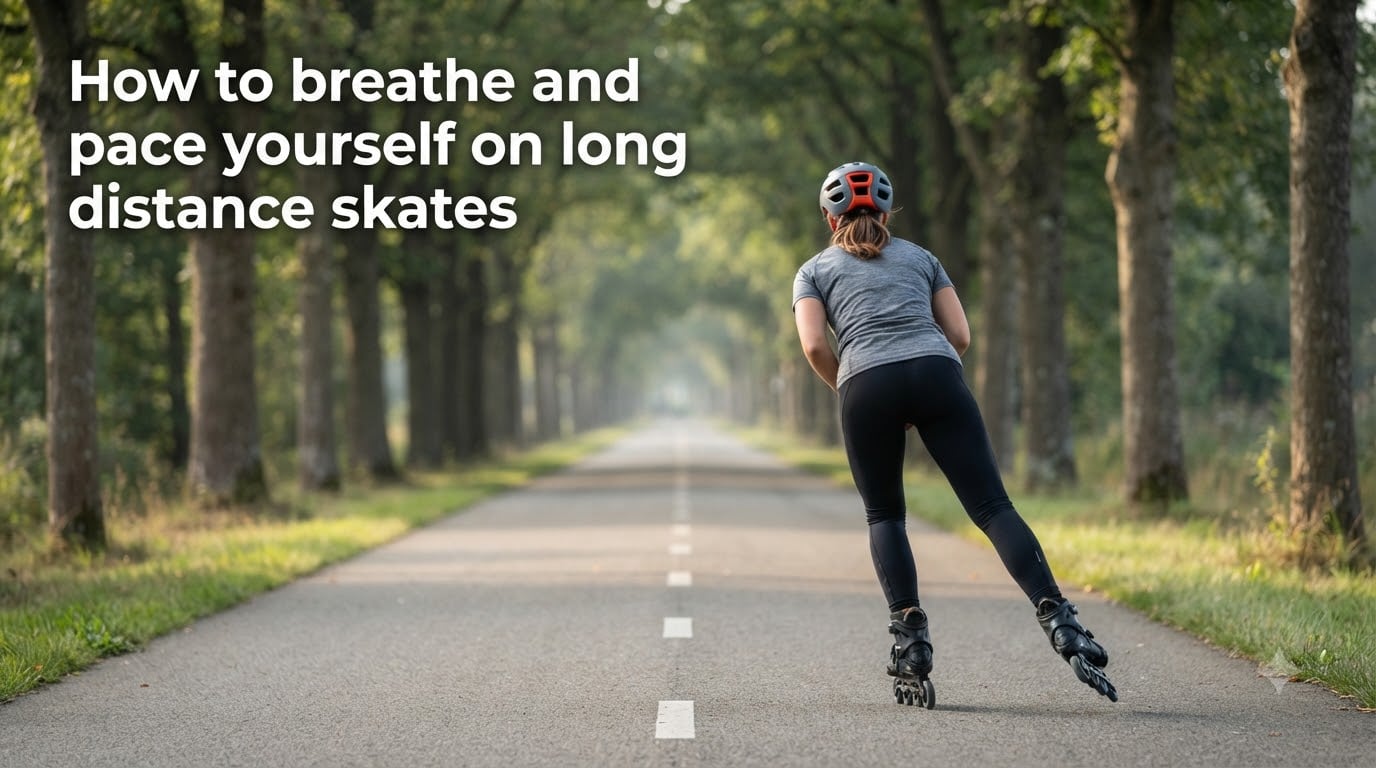
If you have ever felt your legs turn to lead at mile four or watched your back give out while your wheels still felt fresh, you already know that long distance skating is as much about oxygen management as it is about stride technique. Learning how to breathe and pace yourself on long distance skates is the single biggest factor separating skaters who plateau at five miles from those who glide through twenty without stopping.
Our team has spent years talking with distance skaters on Reddit, in Big Wheel Blading groups, and on trails from coast to coast. The same questions come up every time. How do I stop getting tired so quickly? Why does my back wear out before my legs? What breathing pattern actually works?
This guide answers all of that and more. You will learn skate-specific breathing rhythms, three proven pacing strategies, how to prevent the back fatigue that haunts so many skaters, and a week-by-week progression plan to take you from five miles to marathon distance.
Table of Contents
Understanding the Breathing-Pacing Connection
Breathing and pacing are two halves of the same system. Your muscles need a steady supply of oxygen to sustain effort, and the rate at which you deliver that oxygen determines how long you can keep skating before fatigue sets in.
When you skate at a conversational pace, your body stays in the aerobic zone, meaning your heart and lungs can supply enough oxygen to keep your legs firing. Push harder and you cross your anaerobic threshold, the point where your body starts burning energy faster than oxygen can replenish it. That is when lactic acid builds up and your legs start screaming.
Good pacing keeps you just below that threshold. Good breathing makes sure you have the cardiovascular capacity to hold that pace mile after mile. Skip either one and you bonk, overheat, or grind to a halt halfway through your route.
Rhythmic Breathing Techniques for Skaters
The best breathing pattern for long distance skating is one that matches your stride rhythm. When your exhales lock into your push-off timing, your core stabilizes naturally and oxygen flows in a steady, predictable cycle. Here are four patterns worth testing.
1. The 3-3 Rhythm (Best for Steady Cruising)
Inhale over three strides, then exhale over three strides. This pattern keeps your breathing slow and deep, perfect for flat terrain and steady-state efforts. Most skaters find it natural at speeds between 8 and 12 mph.
Use the 3-3 rhythm when you are warming up, recovering between intervals, or simply cruising a long flat bike path. It keeps your heart rate low and your oxygen debt at zero.
2. The 2-1-2 Pattern (Best for Hills and Headwinds)
Inhale for two strides, hold briefly for one stride, then exhale for two strides. That brief hold lets your body extract more oxygen from each breath, which matters when you are climbing or pushing into a headwind.
This pattern comes from competitive swimming, where a 2-2-3 variation is popular. Skaters have adapted it because the mechanics are similar: rhythmic, repeated effort against resistance.
3. The 2-2 Rhythm (Best for Faster Intervals)
Inhale for two strides, exhale for two strides. Shorter cycle, faster turnover. This pattern supports higher-intensity skating like interval sets or the final push of a long session.
Switch to 2-2 when you need to surge past your aerobic comfort zone for a short burst, then drop back to 3-3 once you settle.
4. Diaphragmatic Breathing (The Foundation)
No matter which stride-count pattern you use, breathe from your belly, not your chest. Diaphragmatic breathing pulls more air deeper into your lungs with each breath, which means fewer total breaths and less energy spent on the act of breathing itself.
To practice, lie on your back with one hand on your stomach. Breathe so that your hand rises and falls while your chest stays still. Once that feels natural standing still, try it on skates at low speed.
How to Breathe and Pace Yourself on Long Distance Skates: Pacing Strategies
Pacing is where most distance skaters sabotage themselves. You start fresh, feel fast, push hard, and then crash at mile three. The fix is choosing the right pacing strategy before you lace up.
Steady State Pacing
Pick a speed you can hold a conversation at and stick with it from mile one to mile done. No surges, no slow patches. Steady state is the safest strategy for beginners and the backbone of any long-distance skating plan.
A good test: if you cannot speak a full sentence out loud, you are going too fast. Back off until your breathing feels controlled and rhythm-based.
Negative Split Pacing
Start slower than your target pace for the first third of your route, hold target pace for the middle third, then push harder for the final third. Negative splits teach your body to finish strong instead of fading.
This strategy works because it front-loads patience. You preserve your glycogen stores early, when adrenaline makes everything feel easy, and spend them later when you actually need the boost.
Interval Pacing
Alternate between two minutes of hard effort and two minutes of easy recovery skating. Repeat five to eight times. Interval pacing builds cardiovascular capacity faster than any other method and raises your anaerobic threshold over time.
Use intervals as a training tool rather than a race-day strategy. One or two interval sessions per week, plus your longer steady-state skates, will transform your endurance within a month.
Preventing Back Fatigue on Long Skates
This is the pain point nobody warns you about. Reddit skaters on 4x90mm setups consistently report their back wearing out before their legs, sometimes as early as mile five. The cause is almost always posture and core engagement, not wheel size.
When you skate with a rounded lower back and locked knees, every stride sends shock waves up your spine. Over thousands of repetitions, those micro-impacts fatigue the muscles along your spine long before your legs feel anything.
Fix Your Posture
Bend your knees more than you think you need to. Drop your hips slightly. Lean forward from the ankles, not the waist. This athletic stance lets your leg muscles absorb impact instead of your spine.
Keep your chest up and shoulders relaxed. A tall torso engages your core naturally, which stabilizes your pelvis and takes load off your lower back.
Engage Your Core
Your core is not just your abs. It includes your obliques, lower back, and glutes, and all of them work together to hold your spine stable while your legs push. A weak core means your spine does the stabilizing, and it tires fast.
Add two or three core sessions per week off-skates. Planks, dead bugs, and glute bridges are the minimum. If you want to go further, Pilates builds the kind of sustained core endurance that distance skating demands.
Watch the Pascal Briand Technique
Experienced forum skaters repeatedly recommend Pascal Briand’s technique videos. His instruction on proper back movement and weight transfer addresses exactly the mechanics that cause premature back fatigue. Study his form and mirror it.
Building Endurance: A Progression Plan
Hitting a wall at five miles is incredibly common. The skaters who break through do it by following a structured progression rather than just skating farther each time and hoping for the best.
Weeks 1-2: Build the Base
Skate three times per week for 30 to 40 minutes at a conversational pace using the 3-3 breathing pattern. Focus entirely on form, posture, and breathing rhythm. Distance does not matter yet.
Weeks 3-4: Add Intervals
Keep two steady-state skates and replace the third with an interval session. Six rounds of two minutes hard, two minutes easy. This raises your anaerobic threshold so your steady pace starts feeling easier.
Weeks 5-6: Extend the Long Skate
Turn one of your steady-state sessions into a long skate. Add one mile per week to this session. If you started at five miles, you will hit eight by week six. Use negative split pacing on these longer efforts.
Weeks 7-8: Stack the Volume
You should now be skating four times per week: two steady sessions, one interval session, and one long skate approaching ten to twelve miles. Your breathing should feel automatic by now, a sign your cardiovascular system has adapted.
Beyond Week 8: Toward Marathon Distance
Keep extending your long skate by one to two miles every other week. Add a recovery week every fourth week where you cut volume by 30 percent. Most skaters who follow this structure reach marathon distance within four to six months of consistent training.
Common Breathing and Pacing Mistakes
Even with good technique, a few habits can undo all your progress. Here are the mistakes we see most often and how to fix them.
Chest Breathing
Breathing into your chest delivers less oxygen per breath and tightens your shoulders, which kills your stride efficiency. Switch to diaphragmatic breathing and your endurance will jump almost immediately.
Starting Too Fast
Adrenaline makes the first mile feel effortless, so skaters push hard and accumulate oxygen debt before they realize it. Start slower than feels necessary for the first ten minutes. You will pass the people who passed you.
Ignoring Heat and Hydration
Forum skaters report overheating as a major session-ender. Heat raises your heart rate at any given pace, pushing you into anaerobic territory sooner. Skate early or late in hot weather, drink water every twenty minutes, and adjust your pace down when the temperature climbs.
Forgetting to Breathe on Push-Offs
Some skaters unconsciously hold their breath during the push-off phase, especially when tired. This starves your muscles right when they need oxygen most. Consciously exhale on every push until it becomes automatic.
Frequently Asked Questions
What is the best breathing pattern for long distance skating?
The 3-3 rhythm (inhale for three strides, exhale for three strides) works best for steady cruising on flat terrain. For hills and headwinds, switch to a 2-1-2 pattern with a brief breath hold. For interval surges, use a faster 2-2 rhythm. Always breathe from your diaphragm, not your chest.
How to build stamina for skating?
Skate three to four times per week with a mix of steady-state sessions and interval training. Start with 30-40 minute sessions at a conversational pace, add one interval session per week, and extend your longest skate by one mile every two weeks. Most skaters see significant endurance gains within six to eight weeks of consistent training.
Why does my back hurt when long distance skating?
Back pain during distance skating usually comes from poor posture and weak core muscles. Bending at the waist instead of the ankles, locking your knees, and skating with a rounded lower back all force your spine to absorb stride impact. Fix your stance by bending your knees, leaning from the ankles, and adding core exercises like planks and glute bridges to your routine.
How do I stop getting tired so quickly when inline skating?
Slow down. Most skaters tire quickly because they start too fast and cross their anaerobic threshold within the first mile. Begin at a pace where you can hold a full conversation, use a 3-3 breathing rhythm, and only increase speed after the first ten minutes. Building cardiovascular capacity through weekly interval sessions will also raise the pace you can sustain.
Conclusion
Mastering how to breathe and pace yourself on long distance skates comes down to three things: a breathing rhythm that matches your stride, a pacing strategy that respects your limits, and a body that is strong enough to hold good form for miles.
Start with the 3-3 breathing pattern and steady-state pacing. Fix your posture before you add distance. Follow the progression plan and trust the process. Within two months, the five-mile wall that stopped you will be your warm-up loop.
Lace up, breathe deep, and skate your own pace.