
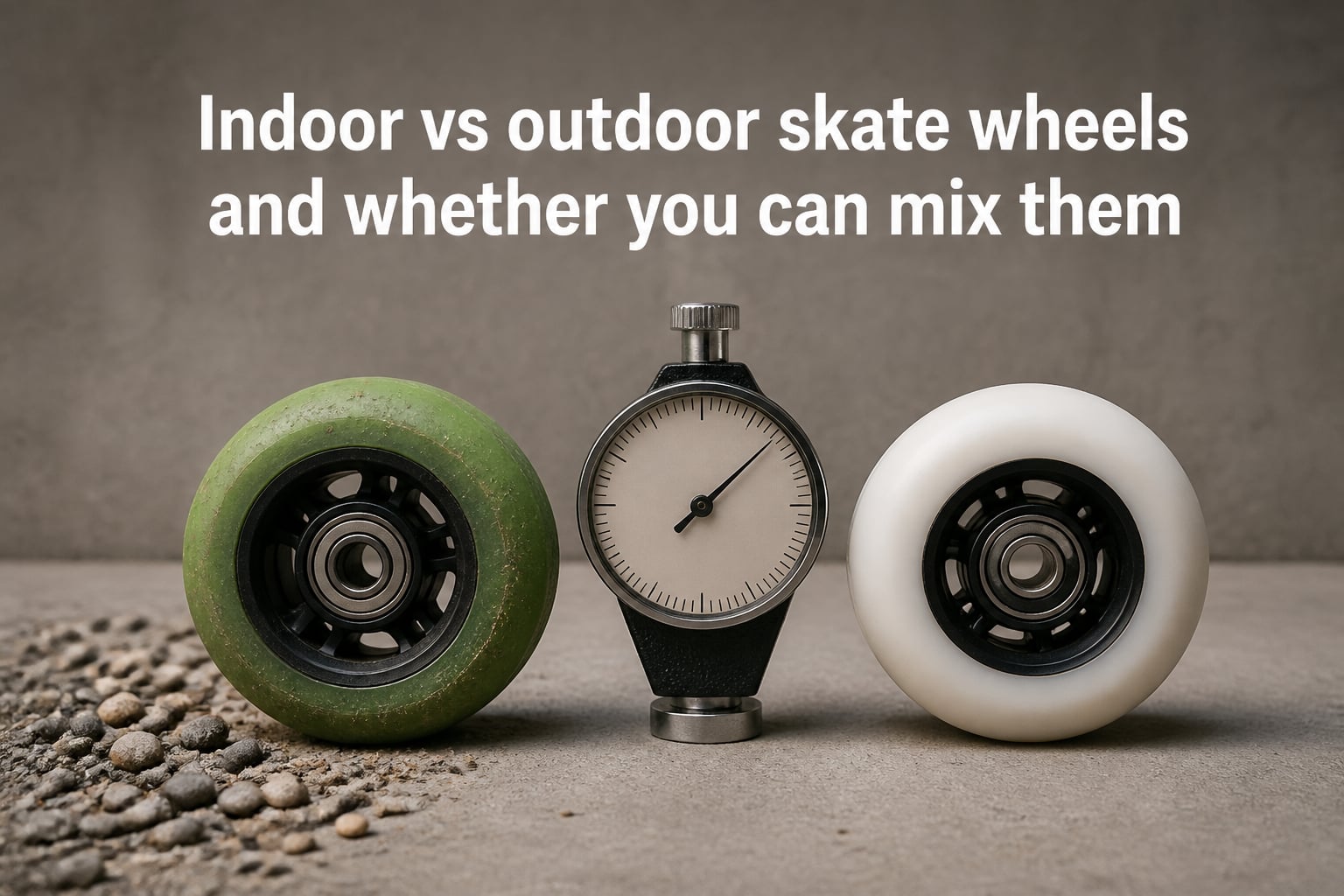
If you have ever felt every pebble and crack while skating outdoors, or felt like your wheels were glued to the rink floor indoors, you already understand why wheel choice matters. The indoor vs outdoor skate wheels debate is one of the first things every skater runs into, and the confusion around durometer numbers, wheel sizes, and swapping can stop beginners in their tracks. In this guide, I will break down exactly what separates these two wheel types, whether you can mix them on the same setup, and how to choose the right wheels for where you actually skate.
Table of Contents
Indoor vs Outdoor Skate Wheels: The Core Differences
The difference between indoor and outdoor skate wheels comes down to one primary factor: hardness. Outdoor wheels are softer (typically 78A to 85A on the durometer scale), which lets them absorb the shocks from rough surfaces like asphalt and sidewalk cracks. Indoor wheels are harder (88A and above), designed to grip smooth rink floors while still allowing the speed and slide that artistic, jam, and derby skating demand.
Softer wheels squish slightly when they roll over debris, absorbing vibration before it reaches your feet. Harder wheels do not compress as much, so they roll faster on smooth surfaces but transmit every bump on rough terrain straight into your ankles. That is why using outdoor wheels indoors feels sluggish and sticky, while indoor wheels outdoors feel harsh and unpredictable.
The second major difference is wheel size. Outdoor wheels tend to be larger (60mm to 70mm) to roll over cracks and small obstacles more easily. Indoor wheels are usually smaller (57mm to 62mm) for better acceleration, maneuverability, and a lower center of gravity during tight turns.
Understanding Wheel Hardness (Durometer)
Durometer is the measurement of a wheel’s hardness, and for skate wheels it uses the A-scale. The number you see stamped on a wheel, like 78A or 95A, tells you how soft or hard the urethane compound is. Lower numbers mean softer wheels; higher numbers mean harder wheels.
Here is a quick reference for what the numbers mean in practice:
78A to 85A: Soft wheels built for outdoor skating, rough terrain, and shock absorption
86A to 87A: A transitional zone, sometimes marketed as hybrid or light outdoor wheels
88A to 95A: Medium-hard wheels for indoor rink skating, suitable for beginners and recreational indoor use
96A to 103A: Very hard wheels for advanced indoor skating, roller derby, jam skating, and artistic performance
The softer the wheel, the more grip and shock absorption you get, but the slower your top speed on smooth floors. The harder the wheel, the faster you roll and the easier it is to break into slides, but you lose traction on dusty or dirty surfaces.
Indoor Skate Wheels Explained
Indoor skate wheels are built for the smooth, coated surfaces found at roller rinks, sports halls, and skate parks with polished concrete. They typically range from 88A to 103A in hardness and 57mm to 62mm in diameter.
Because rink floors are clean and smooth, harder wheels can maintain grip while delivering much higher speeds. The harder compound also allows for controlled slides, which are essential for artistic skating moves, jam skating transitions, and roller derby stops.
For beginners skating indoors, something in the 88A to 92A range offers a good balance of grip and speed. Advanced skaters who want maximum responsiveness and slide often go for 95A and above.
Outdoor Skate Wheels Explained
Outdoor skate wheels are designed for asphalt, concrete, sidewalks, and trails. They measure between 78A and 85A on the durometer scale and tend to be larger, usually 60mm to 70mm in diameter.
The soft compound acts like a shock absorber. When you roll over a crack or small rock, the wheel compresses around it instead of bouncing you off your skates. This is why skaters on Reddit consistently recommend 78A wheels for beginners hitting outdoor terrain, noting that softer wheels take off much of the shakiness that comes from rougher asphalt.
Larger diameters help outdoor wheels maintain momentum over uneven surfaces and roll over obstacles that would stop a smaller indoor wheel dead in its tracks. The trade-off is that outdoor wheels feel slow and sticky on a smooth rink floor.
Wheel Size: Why Millimeters Matter
Wheel diameter affects three things: top speed, acceleration, and how easily you roll over obstacles. Larger wheels (65mm and up) hold speed better and clear cracks more easily, making them ideal for outdoor cruising and trail skating. Smaller wheels (57mm to 60mm) accelerate faster and keep your center of gravity lower, which helps with agility and tight maneuvers indoors.
If you skate both environments, a mid-range size around 62mm is a practical compromise that works reasonably well on both smooth floors and moderately rough outdoor surfaces.
Hybrid Wheels: The Middle Ground
Hybrid wheels occupy the 82A to 88A range and are marketed as a do-it-all option for skaters who want one set of wheels for both environments. They are harder than dedicated outdoor wheels but softer than typical indoor wheels, so they offer decent outdoor shock absorption without being too sluggish at the rink.
The reality, based on what experienced skaters report, is that hybrids are a true compromise. They work fine for casual recreational skating in both settings, but they will not give you the smooth glide of a dedicated outdoor wheel on rough trails, nor the responsive slide of a hard indoor wheel at the rink. If you skate outdoors occasionally and indoors most of the time, a hybrid in the 85A to 88A range can save you from constantly swapping wheels.
Can You Mix Indoor and Outdoor Skate Wheels?
Yes, you can mix indoor and outdoor skate wheels on the same pair of skates, and some skaters do it deliberately. A common setup is putting softer wheels on the front two positions for shock absorption and grip, with harder wheels on the back for speed and slide. This type of mixed setup is popular among dance and jam skaters who want a balance of grip and maneuverability.
However, mixing wheels from completely different categories, like a 78A outdoor wheel next to a 98A indoor wheel, creates an inconsistent feel that most skaters find unpredictable. The grip levels change depending on which wheel is bearing your weight at any given moment, which can affect balance and control.
What most skaters actually mean by mixing is swapping wheel sets between indoor and outdoor use. As one experienced skater on Reddit put it, the difference between indoor and outdoor skates is just the wheels, and you can always change the wheels on any skates. You do not need two separate pairs of skates. One good pair of plates and boots with two sets of wheels covers both environments.
Using outdoor wheels indoors is safe and will not damage anything, but it feels grippy and slow. Using indoor wheels outdoors is also safe but uncomfortable, since the hard compound transmits every vibration and small bump straight into your feet and knees.
How to Swap Your Skate Wheels
Swapping wheels is straightforward and takes about ten minutes once you have done it a few times. No competitor in our research offered a detailed step-by-step walkthrough, so here is exactly how to do it.
What you need: A skate tool or the correct size Allen wrench (usually 1/4 inch or 7/32 inch), a clean towel, and somewhere to set your wheels down without losing the axle nuts.
Step 1: Loosen and remove the axle nuts from all eight wheels using your skate tool. Keep the nuts in a small container so none roll away.
Step 2: Slide each wheel off its axle. If your bearings are staying in the wheels, just set the wheels aside. If you are transferring bearings to a new set, use a bearing tool or the axle itself to pry them out gently.
Step 3: If swapping bearings, press them into your new wheels by hand or with a bearing press tool until they seat flush.
Step 4: Slide the new wheels onto the axles, making sure any spacers or washers go back in the same positions they came from.
Step 5: Thread the axle nuts back on and tighten them until the wheel spins freely without side-to-side wobble. You want the nut snug enough that the wheel stays centered but loose enough that gravity spins the wheel easily when you flick it.
Step 6: Repeat for all four skates (if you skate quads) or all wheels on your inline setup, then test each wheel by spinning it before you skate.
One tip from experienced skaters: mark your indoor and outdoor wheel sets with different colored markers or keep them in labeled bags, so you always grab the right set when heading out.
How to Choose the Right Wheels for Your Skating?
Your wheel choice should match where you spend most of your skating time. If you skate primarily outdoors on streets, sidewalks, and trails, go with a soft 78A to 82A wheel in the 62mm to 65mm range. If you are mostly at the rink doing recreational laps, an 88A to 92A wheel around 57mm to 62mm gives you a forgiving balance of grip and speed.
For beginners, I recommend starting with outdoor wheels even if you plan to skate indoors eventually. Soft wheels are more forgiving, give you more grip while you build balance, and let you skate almost anywhere. You can always pick up a harder indoor set once you are comfortable and want more speed and slide.
Advanced skaters who do derby, speed skating, or artistic work should invest in dedicated indoor wheels in the 95A to 100A range. The performance difference on a rink floor is significant, and a hybrid wheel simply will not deliver the responsiveness these disciplines require.
Frequently Asked Questions
Can I use outdoor skate wheels indoors?
Yes, you can safely use outdoor wheels indoors without damaging the rink floor or your skates. Outdoor wheels (78A-85A) will feel grippier and slower than indoor wheels, so you will not get the same speed or slide. It works fine for casual skating but feels sluggish for dance or speed work.
How to tell the difference between indoor and outdoor roller skate wheels?
Check the durometer number printed on the wheel. Outdoor wheels are soft, typically 78A to 85A, and often larger (60mm to 70mm). Indoor wheels are hard, typically 88A to 103A, and usually smaller (57mm to 62mm). You can also squeeze the wheel; outdoor wheels have noticeable give while indoor wheels feel rigid.
Can you use the same skates for indoor and outdoor?
Yes. The boot, plate, bearings, and trucks are the same for indoor and outdoor skating. The only thing that changes is the wheels. Buy one pair of quality skates and keep two sets of wheels, then swap them using a skate tool when you change environments.
Are 82A wheels good for indoors?
82A wheels fall in the hybrid range and will work for casual indoor skating, but they are softer than most dedicated indoor wheels. Expect more grip and less speed compared to a typical 88A to 95A indoor wheel. For recreational rink laps they are fine, but for dance, derby, or speed skating you will want something harder.
Do I need separate wheels for indoor and outdoor skating?
Not necessarily. If you skate outdoors only occasionally, a hybrid wheel (85A to 88A) can handle both settings. But if you skate regularly in both environments, two dedicated wheel sets give you a much better experience in each. Swapping wheels takes about ten minutes with a skate tool.
Conclusion
Understanding indoor vs outdoor skate wheels comes down to hardness, size, and the terrain you skate on. Soft wheels (78A to 85A) absorb the punishment of outdoor surfaces, while hard wheels (88A and above) deliver speed and slide on smooth rink floors. You do not need two pairs of skates, just two sets of wheels and a skate tool to swap between them.
The question of whether you can mix them has a simple answer: yes, but a deliberate mixed setup works better than a random one. If you want simplicity, hybrid wheels in the 85A to 88A range cover both worlds without swapping. If you want the best experience in each environment, dedicated sets are the way to go.
Start with wheels that match where you skate most, and add a second set when you are ready to branch out. Your feet will thank you.