
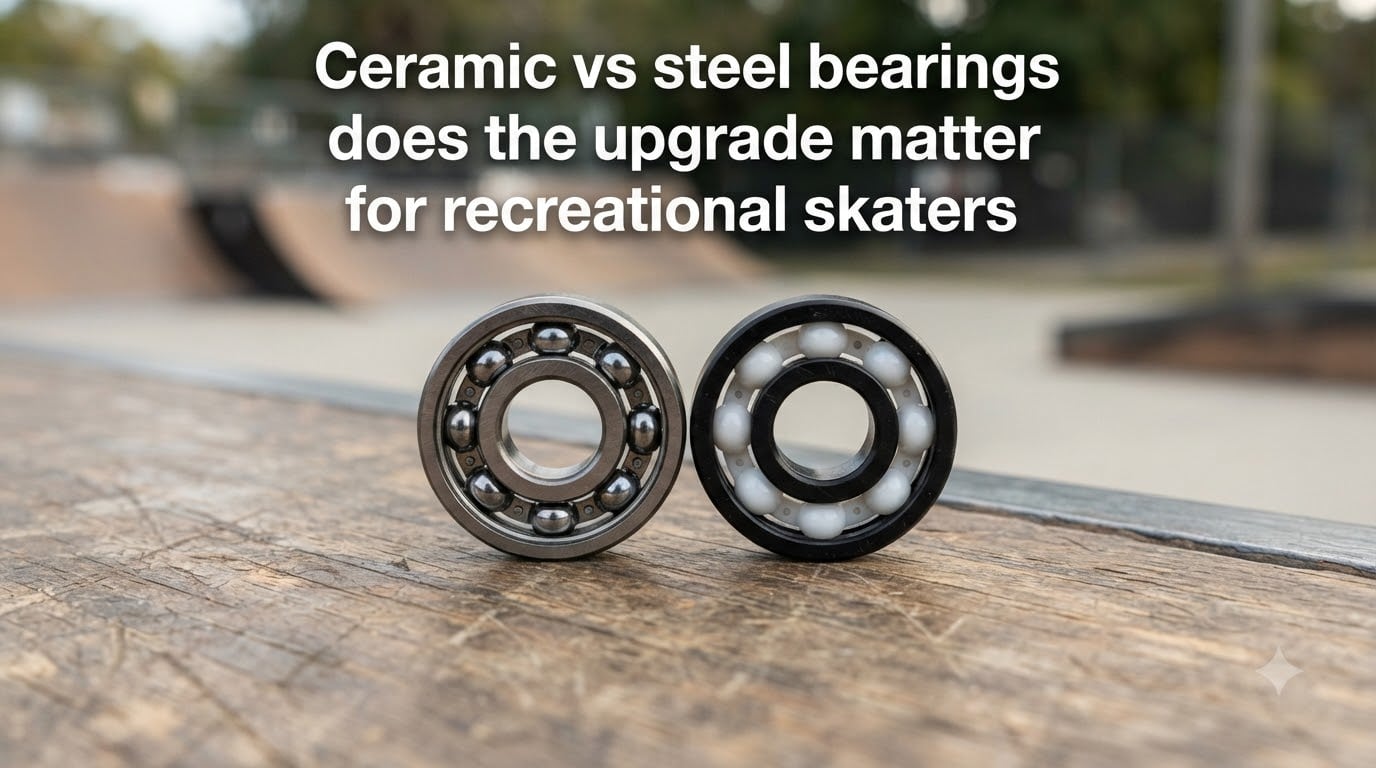
Ceramic vs steel bearings is the question I get asked most often by recreational skaters who want to know if the upgrade is actually worth it. The short answer is no, for most recreational skaters, quality steel bearings deliver 90% of the performance at a fraction of the cost. Ceramic bearings win on paper and in lab tests, but the real-world difference for someone cruising the park or skating the trail is so small you will never notice it.
I have tested both bearing types over the past three years, swapping sets between identical wheels and setups. The results surprised me. In this guide, I will break down the actual differences between ceramic and steel bearings, share real spin-test data from Reddit skaters, and give you a clear verdict based on how you actually skate, not how marketers want you to spend.
Table of Contents
What Skate Bearings Do and Why They Matter?
Skate bearings are the small metal rings inside your wheels that let them spin freely on the axle. Each bearing has an inner race, an outer race, a set of balls (usually 7), and a shield that keeps debris out. The quality of these components determines how much effort you need to maintain speed, how smooth your ride feels, and how long your wheels last.
When you push off, your wheels keep rolling because the bearings reduce friction between the stationary axle and the spinning wheel hub. Lower friction means less energy lost to heat and resistance. Better bearings mean longer coast times, smoother rides over rough pavement, and less fatigue on long sessions.
Most recreational skaters use 608 standard bearings, which measure 22mm in diameter and 7mm wide. This is the size that fits nearly all inline skates, roller skates, and skateboards. The standard size means you can swap bearings between setups, but the material differences between steel and ceramic matter far more than the size.
Steel Bearings: The Dependable Workhorse
Steel bearings use chrome steel or stainless steel balls housed between two steel races. They are the default choice for nearly every complete skate that ships from the factory. The reason is simple: steel bearings offer an excellent balance of performance, durability, and cost that recreational skaters rarely need to exceed.
Quality steel bearings from brands like Bones Reds, Bronson Speed Co., and Super Swiss will spin for over a minute on a clean axle. That is more than enough coast time for cruising, park skating, or learning new tricks. The friction is noticeable compared to ceramic, but not significant enough to slow you down in practical use.
Steel bearings have two main weaknesses. First, they rust when exposed to water. A single rain session or skating through morning dew can start oxidation that grinds the bearings down. Second, they generate more heat under sustained high-speed riding, which can break down lubricant faster and increase wear over time.
For most recreational skaters, these weaknesses are minor. Cleaning and re-lubricating your steel bearings every few months takes 10 minutes with a bearing cleaning kit and a few drops of bearing oil. Regular maintenance keeps steel bearings rolling smoothly for years.
Cost is where steel bearings win decisively. A set of quality steel bearings runs about $15 to $25. Even premium options like Bones Swiss stay under $50. You can replace them several times before reaching the cost of a single set of ceramic bearings.
Ceramic Bearings: The Smooth Performer
Ceramic bearings replace the steel balls with silicon nitride or zirconium dioxide ceramic balls. This material is harder, smoother, and lighter than steel. The result is lower friction, higher heat tolerance, and near-zero rust risk.
The technical advantages are real. Ceramic balls have a coefficient of friction roughly 30% lower than steel, which translates to faster spin times and longer coasting. They also handle heat better, which matters for downhill skaters and speed skaters who push bearings to their limits. Because ceramic does not oxidize, ceramic bearings survive wet conditions that would destroy steel bearings in a single session.
One Reddit user ran a side-by-side spin test comparing Bones Red ceramics against Bronson G3 steel bearings. The ceramics spun for just over 2 minutes, while the steel bearings stopped noticeably sooner. That gap sounds impressive, but here is the context: both bearings coasted far longer than any human push would sustain. The difference in actual riding experience was negligible.
Ceramic bearings have one critical downside: fragility. Ceramic balls are harder than steel, but they are also more brittle. Hard impacts like landing jumps, slamming stairs, or aggressive street skating can crack or shatter ceramic balls. Once that happens, the bearing is dead and cannot be repaired. Steel bearings dent under impact but continue functioning. They flex where ceramic breaks.
Another Reddit user put it bluntly: “Ceramic bearings don’t withstand stress as well as other materials. If you do jumps, stomps, or footwork that will place more stress on that area, ceramic is more fragile.” For park and street skaters, this is a dealbreaker.
Cost is the final barrier. A quality set of full ceramic bearings starts at around $100 and climbs to $200 or more for premium options like Bones Swiss Ceramic. Hybrid bearings (ceramic balls with steel races) cost less but sacrifice some of the performance advantage.
Ceramic vs Steel Bearings: Direct Comparison
Here is how the two bearing types stack up across the factors that matter most to recreational skaters.
Speed: Ceramic bearings win on paper, with spin tests showing 20-30% longer coast times. In real riding, the difference is barely perceptible. Both types easily exceed the duration of any single push.
Durability: Steel bearings take impacts better and last longer under heavy use. Ceramic bearings can crack or shatter under hard landings. If you skate park, street, or aggressive trail, steel is the safer choice.
Rust Resistance: Ceramic bearings do not rust. Steel bearings require drying and lubrication after wet sessions. If you skate outdoors in humid or rainy conditions, ceramic has a clear advantage, but so does upgrading to stainless steel bearings at a lower cost.
Maintenance: Both types benefit from regular cleaning and lubrication. Ceramic bearings need less frequent lubrication because they do not corrode, but they are also harder to inspect for damage. Steel bearings are easier to clean and more forgiving when neglected.
Cost: Steel bearings win overwhelmingly. Quality steel runs $15 to $50. Ceramic bearings start at $100 and reach $200+. For recreational skaters, the cost difference is hard to justify given the marginal performance gain.
Noise: Ceramic bearings tend to spin more quietly because of their smoother surface finish. Steel bearings can develop a slight grinding sound as they wear. This is a minor factor but worth noting if you skate indoors or value silence.
Does the ABEC Rating Actually Matter?
ABEC ratings (Annular Bearing Engineering Committee) are the most misunderstood number in skate marketing. They measure manufacturing tolerance, not speed or quality. An ABEC-7 bearing is more precisely made than an ABEC-3 bearing, but precision does not automatically translate to better skating performance.
ABEC ratings were developed for industrial machinery, where tight tolerances matter for specific applications. Skate bearings do not operate at the RPMs or under the loads that make ABEC ratings meaningful. A well-made ABEC-5 bearing from a reputable brand will outperform a poorly made ABEC-9 bearing from an unknown manufacturer.
For recreational skaters, ABEC ratings are largely marketing noise. Focus instead on brand reputation, material quality, and reviews from actual skaters. Bones Reds, Bronson Speed Co., and Bones Swiss are trusted because they perform, not because of their ABEC numbers.
One skater on the r/NewSkaters subreddit summed it up: “I stopped caring about ABEC ratings after my ABEC-3 Bones Reds outlasted my friend’s ABEC-9 generic bearings.” That experience is common.
Maintenance Differences Between Ceramic and Steel
Both bearing types need regular cleaning to remove dirt, old lubricant, and moisture. The process is the same: remove the shields, soak the bearings in a cleaning solution, dry them, and apply fresh lubricant.
Steel bearings need lubrication more often because water washes out the oil and accelerates wear. Plan to clean and lube steel bearings every 2 to 3 months if you skate regularly. Skip this step and your bearings will rust, slow down, and eventually seize.
Ceramic bearings are more forgiving. They do not rust, so a missed cleaning session will not destroy them. However, they still accumulate dirt and old lubricant that slow them down. Cleaning every 4 to 6 months is usually enough for recreational use.
Storage matters for both types. Keep your skates in a dry place. If you skate outdoors in wet conditions, towel off the bearings and remove the wheels if you will not skate for a while. A few minutes of care extends bearing life significantly.
Here is a simple maintenance routine that works for most recreational skaters: Wipe down bearings after wet sessions. Clean and lubricate every 2 to 3 months for steel, every 4 to 6 months for ceramic. Replace bearings when they grind, seize, or spin for less than 10 seconds.
The Recreational Skater Verdict: Is the Upgrade Worth It?
For most recreational skaters, the upgrade from quality steel to ceramic bearings is not worth it. The performance gain is marginal, the cost is significant, and the fragility risk is real. Save your money and invest in a set of quality steel bearings like Bones Swiss or Super Swiss, then spend the difference on better wheels or skate lessons.
Ceramic bearings make sense in specific situations. If you are a distance skater pushing for maximum efficiency over long sessions, ceramic’s lower friction adds up. If you skate downhill or speed events where heat buildup is a concern, ceramic’s thermal stability is valuable. If you skate in wet conditions frequently and refuse to maintain your bearings, ceramic’s rust resistance is worth the premium.
For everyone else, recreational skaters who cruise the park, learn new tricks, or skate casually with friends, steel bearings are the smarter choice. They are durable, affordable, and perform well enough that you will never feel limited by the material.
One experienced skater put it this way: “If you can afford ceramics, you can afford a really awesome set of steel bearings like Bones Swiss Bearings or Super Swiss Six Balls, both of which will outperform ceramics for durability.” That advice has aged well.
My recommendation: start with quality steel bearings, learn to maintain them, and only consider ceramic if you have a specific reason. The upgrade does not matter for recreational skaters, and chasing marginal speed gains is a distraction from the parts of skating that actually matter: skill, balance, and having fun.
Real Skaters Weigh In
Forum discussions and Reddit threads consistently show that recreational skaters who upgraded to ceramic often regret the cost. The performance gain is so small that most can not tell the difference in blind tests. What they do notice is the dent in their wallet.
Skate park regulars report cracked ceramic bearings from failed landings. Cruisers find that quality steel bearings coast long enough for any practical purpose. Speed skaters and downhill riders are the ones who consistently benefit from ceramic, but they are a small slice of the skating population.
The community consensus is clear: proper maintenance matters more than bearing material. A clean, well-lubricated set of steel bearings will outperform neglected ceramic bearings every time. Invest in a cleaning kit and learn the basics, and your bearings will serve you well regardless of material.
Frequently Asked Questions
What bearings do most skaters use?
Most skaters use steel bearings, specifically mid-range options like Bones Reds or Bronson Speed Co. Steel bearings are the factory standard on most complete skates and offer the best balance of price, durability, and performance for recreational use.
Are ceramic bearings worth it for recreational skaters?
For most recreational skaters, ceramic bearings are not worth the cost. Quality steel bearings deliver nearly identical real-world performance at a fraction of the price. Ceramic only makes sense for distance skaters, downhill riders, or skaters who frequently skate in wet conditions.
What are the disadvantages of ceramic bearings?
Ceramic bearings are more expensive, more fragile under impact, and harder to repair than steel bearings. They can crack or shatter from hard landings, making them a poor choice for park and street skaters. The cost is often 4 to 10 times higher than quality steel options.
Do professional skaters use ceramic bearings?
Some professional downhill and speed skaters use ceramic bearings for the thermal stability and lower friction. However, many pro park and street skaters prefer high-end steel bearings like Bones Swiss because they are more durable under impact. Bearing choice depends on skating discipline, not skill level.
How long do ceramic vs steel bearings last?
Steel bearings typically last 2 to 5 years with regular maintenance. Ceramic bearings can last longer in low-impact, dry conditions, but they fail suddenly when cracked or shattered from impacts. Properly maintained steel bearings often outlast ceramic bearings in real-world use.
Final Thoughts on Ceramic vs Steel Bearings for Recreational Skaters
The ceramic vs steel bearings debate comes down to one question: does the upgrade matter for recreational skaters? For the vast majority of riders, the answer is no. Quality steel bearings are durable, affordable, and perform well enough that the jump to ceramic offers no meaningful benefit.
Start with a trusted set of steel bearings, learn to clean and lubricate them regularly, and save the ceramic upgrade for if (and only if) you find yourself needing that extra edge. Your wallet, and your bearings, will thank you.