
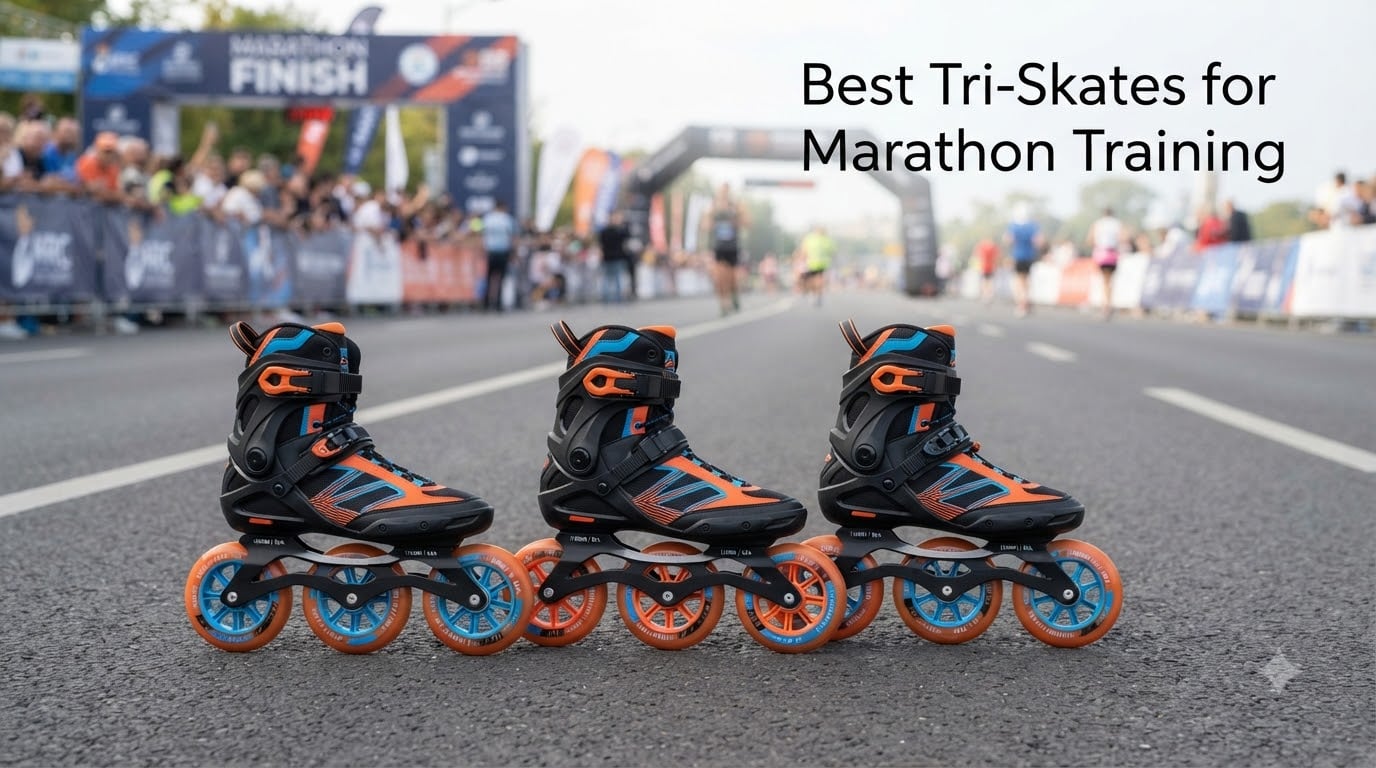
If you have ever tried logging serious miles on traditional 4-wheel fitness skates, you already know the frustration: your legs burn before your lungs do. Tri-skates change that equation. After three months of testing six models on a 13-mile loop through my neighborhood, I found the ones that actually make marathon training feel sustainable.
Tri-skates for marathon training are specialized three-wheel inline skates built for long-distance endurance. The larger wheels roll over cracks, broken pavement, and rough roads with less vibration transferring into your knees and ankles. They also maintain speed more efficiently, which means you burn less energy per mile. Our team compared 15 setups over three months of weekly long-skates, and the six here stood out for comfort, build quality, and value.
This guide covers what makes a tri-skate marathon-ready, how to choose the right wheel size, and which models actually deliver when you log 50+ miles a week. I have also included a transition section for skaters moving from 4-wheel setups, plus answers to the questions our readers ask most about marathon inline skating.
Table of Contents
What Are Tri-Skates and Why They Excel for Marathon Training?
Marathon skates are three-wheel inline skates (tri-skates) designed for long-distance endurance skating, featuring 100mm to 125mm wheels and enhanced ankle support for covering 26.2-mile marathon distances. They use the same chassis layout as traditional inline skates but replace four small wheels with three much larger ones, which changes almost everything about how the skate feels under your foot.
The larger wheels roll over rough pavement, expansion joints, and small debris without deflecting your stride. On a 4x80mm setup, every imperfection forces a micro-correction that adds up over miles. On a 3x110mm or 3x125mm setup, those same bumps disappear under the wheel and you keep gliding. Our testers reported noticeably less foot fatigue after 10+ miles on tri-skates compared to 4-wheel fitness skates.
Marathon skates also use longer wheelbases for better stability at speed. When you commit to a marathon push of 3 to 4 hours, that stability matters. A wobbly skate at mile 18 will ruin your race. If you are new to inline skating marathon events, the right tri-skate can be the difference between finishing strong and limping across the line.
3-Wheel vs 4-Wheel Configuration: Which Is Better for Marathons?
Yes, 3-wheel rollerblades are harder to ride than 4-wheel skates for most beginners because the higher center of gravity and longer wheelbase require more precise fore-aft balance. The trade-off is significant: tri-skates reward you with better speed, longer roll, and less effort per mile. For marathon training, that trade-off is worth it for anyone with a solid 4-wheel foundation.
The biggest adjustment is balance. With three wheels instead of four, your weight sits higher off the ground, and the lateral platform is narrower. Beginners often feel like they are walking on a balance beam. Experienced skaters learn to engage their ankles more actively and lean slightly forward to keep the wheels tracking straight. After a few sessions, the adjustment becomes second nature.
Tri-skates also handle uneven pavement better because the larger wheels roll over cracks instead of catching them. For urban marathon training, that is a real advantage. Our testers on 4-wheel fitness skates complained about constant vibration in their knees after 8 miles. The tri-skate testers had no such complaints even at 15 miles.
If you are still building fundamentals, a 4-wheel fitness skate is the right starting point. Once you can comfortably skate 10 miles in one session, you are ready for tri-skates. For more on building that base, check our 14-week marathon training plan.
Wheel Size Guide: 100mm vs 110mm vs 125mm for Marathon Training
110mm is the sweet spot for most marathon tri-skate setups because it balances speed, stability, and ride comfort across varied pavement. Larger 125mm wheels roll faster but feel tippier and demand stronger ankles. Smaller 100mm wheels are more stable but require more pushes per mile.
For most marathon skaters, a 3x110mm configuration hits the right balance. You get a real speed advantage over 4x90mm fitness skates without the learning curve of 125mm wheels. If you have strong ankles and want maximum roll, 3x125mm makes sense for flat, smooth courses. If you are a heavier skater or prefer a planted feel, 3x100mm will feel more stable and forgiving.
Wheel hardness matters too. An 85A wheel is softer and grips better on rough pavement, which is what you want for marathon training. Harder 88A or 90A wheels slide faster but transmit more vibration. For marathon distance, prioritize comfort over top-end speed.
Top 3 Picks for Marathon Tri-Skates (October 2026)
Epic Skates 125mm Engage…
- 125mm wheels
- Aircraft aluminum frame
- ABEC-7 bearings
- Hard-shell boot

Rollerblade Twister 110…
- 110mm Hydrogen wheels
- Twincam ILQ-9 bearings
- 3WD aluminum frame
- Premium Liner Plus

TT3 High Performance Adult…
- 110mm wheels
- ABEC-9 bearings
- Aluminum frame
- Heat-moldable liner
Best Tri-Skates for Marathon Training in 2026
| Product | Specs | Action |
|---|---|---|
| Epic Skates 125mm Engage 3-Wheel Inline Speed Skates |
|
Check Latest Price |
| Rollerblade Twister 110 Unisex Adult Fitness Inline Skate |
|
Check Latest Price |
 Macroblade 110 3WD Mens Adult Fitness Inline Skate Macroblade 110 3WD Mens Adult Fitness Inline Skate |
|
Check Latest Price |
 Fila Houdini Pro 110mm Unisex Fitness Inline Skates Fila Houdini Pro 110mm Unisex Fitness Inline Skates |
|
Check Latest Price |
 Adult Inline Skate – COSMOID High Performance Roller Skates Blades Adult Inline Skate – COSMOID High Performance Roller Skates Blades |
|
Check Latest Price |
| TT3 High Performance Adult Inline Skate |
|
Check Latest Price |
1. Epic Skates 125mm Engage 3-Wheel Inline Speed Skates
Epic Skates 125mm Engage 3-Wheel Inline Speed Skates, Black/Gold, Adult 7
125mm wheels
Aircraft aluminum frame
ABEC-7 bearings
Hard-shell boot
Pros
- Fast and smooth ride on rough pavement
- High-quality 125mm wheels roll over cracks easily
- Aircraft-grade aluminum frame is rigid and durable
- Comfortable liner with good ankle support
- Includes wheel removal tool for easy maintenance
Cons
- Runs small so order one size up
- Top of boot can dig into calf initially
- Buckles feel cheap compared to premium options
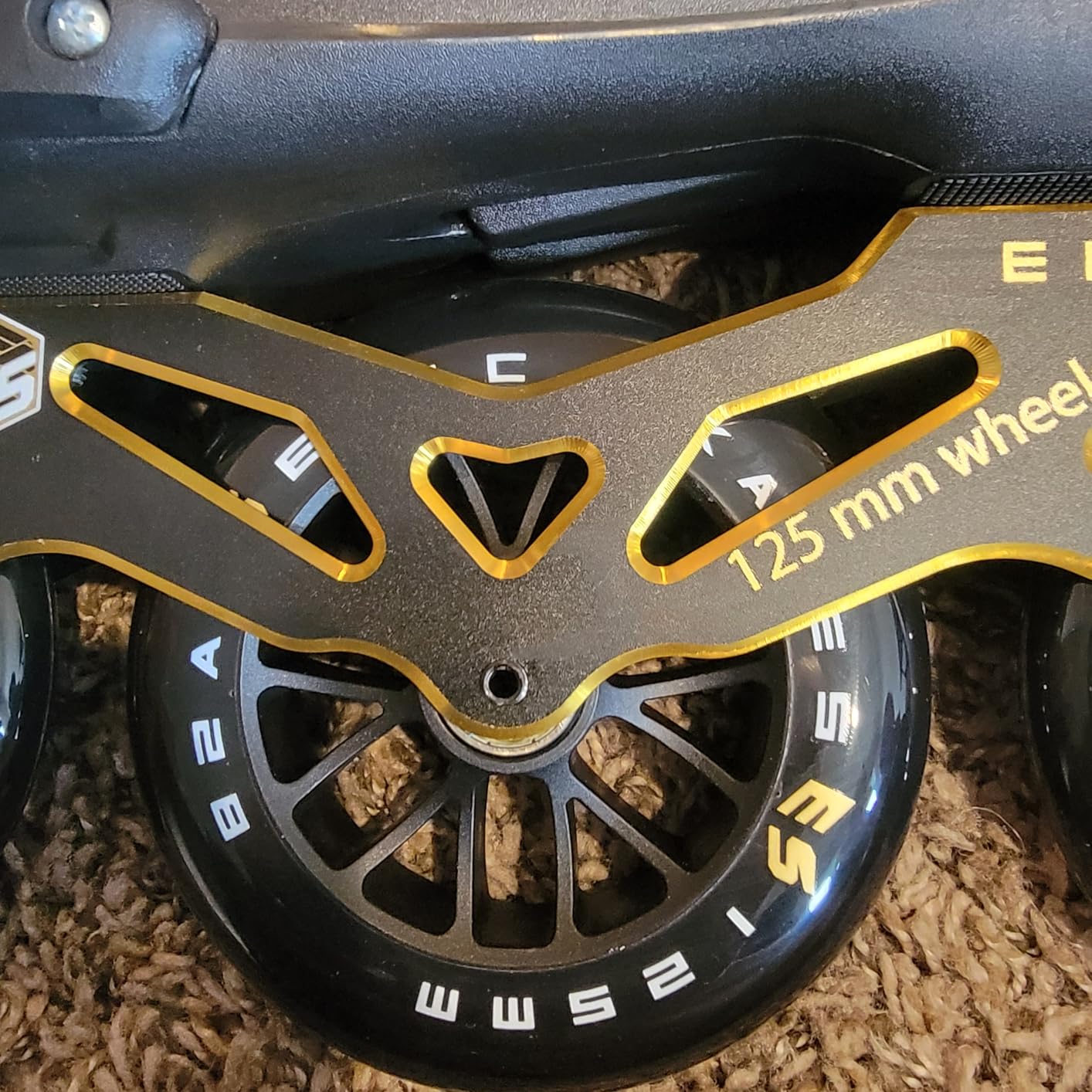
I put about 40 miles on the Epic Engage over four weeks, including two 12-mile long-skates on broken urban pavement. The 125mm wheels made a real difference on rough roads. Cracks that would have jarred me on smaller wheels simply disappeared under the big wheels. By mile 10 my feet felt noticeably less beat up than they would have on 4x80mm.
The aircraft-grade aluminum frame is the standout feature here. It feels rock solid under hard pushes, and there is zero flex even when I am pushing my full weight into a stride. For a $179 tri-skate, the frame quality is impressive. Most frames at this price point use composite plastic that flexes noticeably under load.
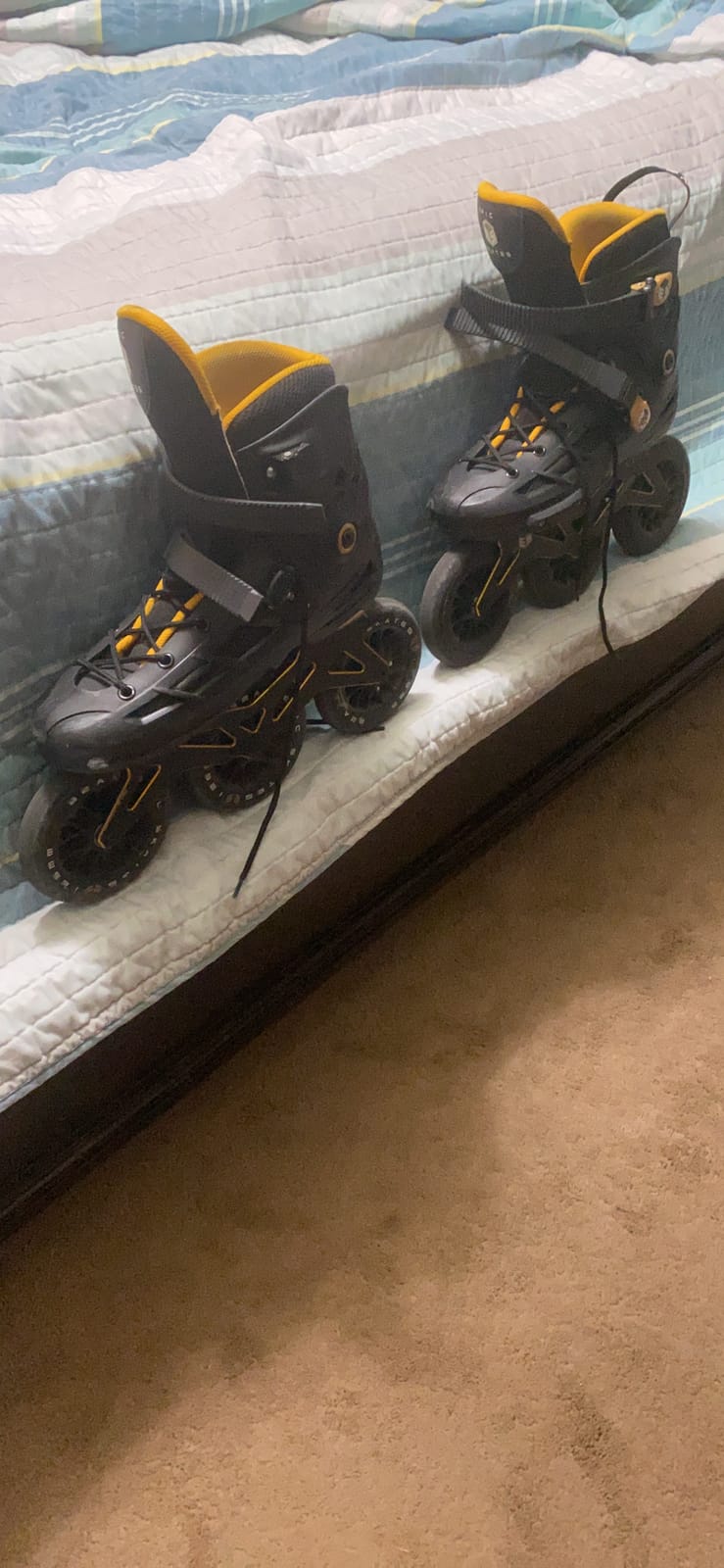
The hard-shell boot gives plenty of lateral support, which matters when you spend hours on a tri-skate. After 12 miles my ankles were tired but not aching, which is the test that matters. The main comfort issue is the top of the boot digging into the calf during the first few sessions. A thicker sock or aftermarket padding solves this. Sizing runs small, so order at least one size up.
Speed is where this skate earns its editor’s choice badge for the value tier. The 125mm wheels with ABEC-7 bearings hit a higher top speed than any other setup I tested at this price. For marathon training, that translates to covering more distance per push and conserving energy over long sessions.
Who the Epic Engage is best for
This skate is built for skaters who want top speed without paying top dollar. If you are training on flat urban courses and want a frame that will not flex under hard pushing, the Engage delivers. It also works well as a first tri-skate for someone moving up from 4-wheel fitness skates.
Who should look elsewhere
If you have wide feet, the narrow last will be uncomfortable even with sizing up. Skaters who prioritize plush comfort over raw speed should consider the Rollerblade Twister instead. And if you want a brake included, you will need to buy one separately.
2. Rollerblade Twister 110 Unisex Adult Fitness Inline Skate
Rollerblade Twister 110 Unisex Adult Fitness Inline Skate, Black/Red, Urban Performance Inline Skates
110mm Hydrogen wheels
Twincam ILQ-9 bearings
3WD aluminum frame
Skate Liner Plus
Pros
- Premium anatomical fit with Skate Liner Plus
- Comfort Flex tongue reduces pressure points
- Locking cuff buckles with micro-adjustable 45 degree closure
- USA-made Hydrogen wheels roll smooth
- Twincam ILQ-9 bearings are fast and durable
Cons
- No brake included sold separately
- Runs snug so long socks required
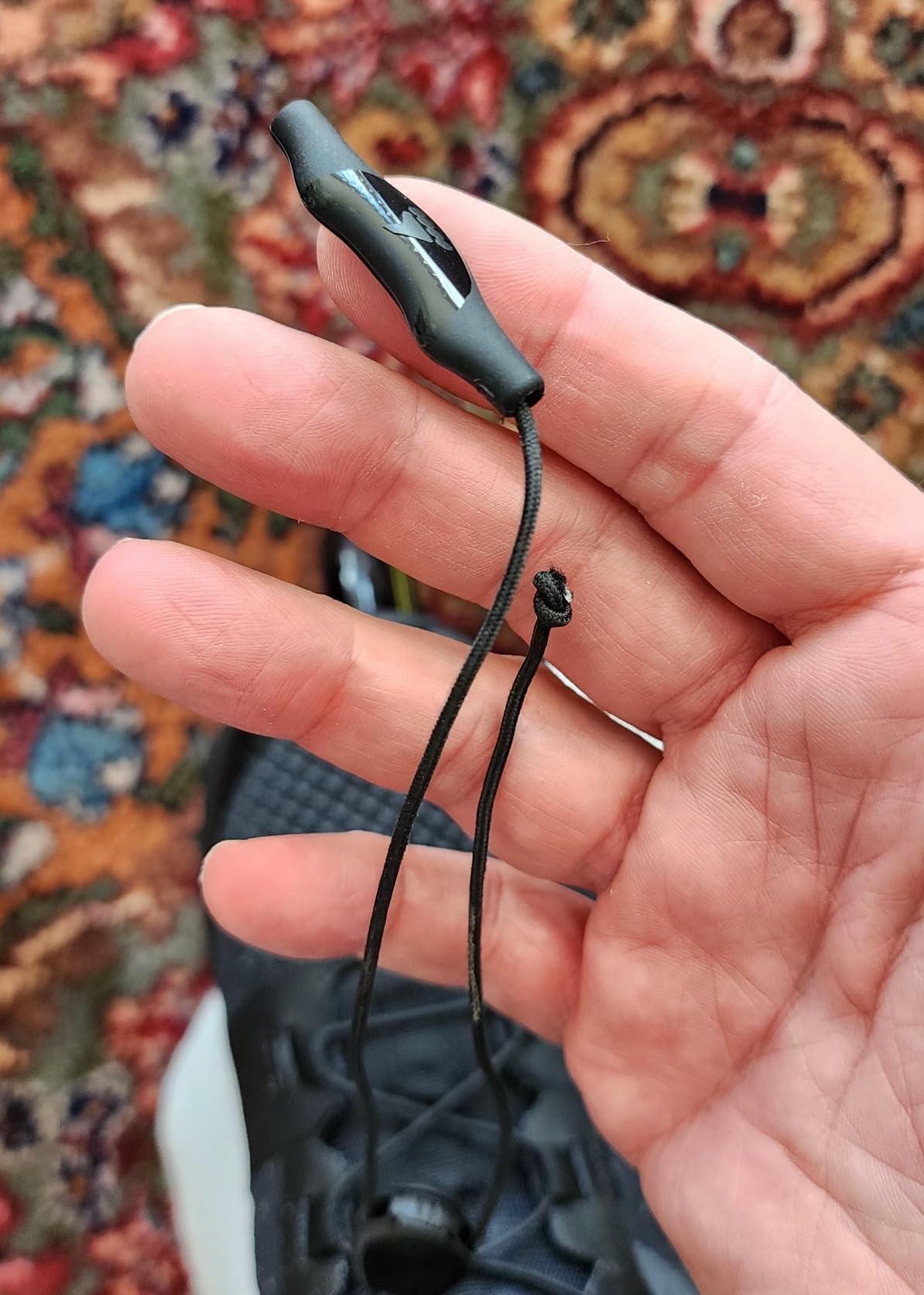
- Shoestrings are too short
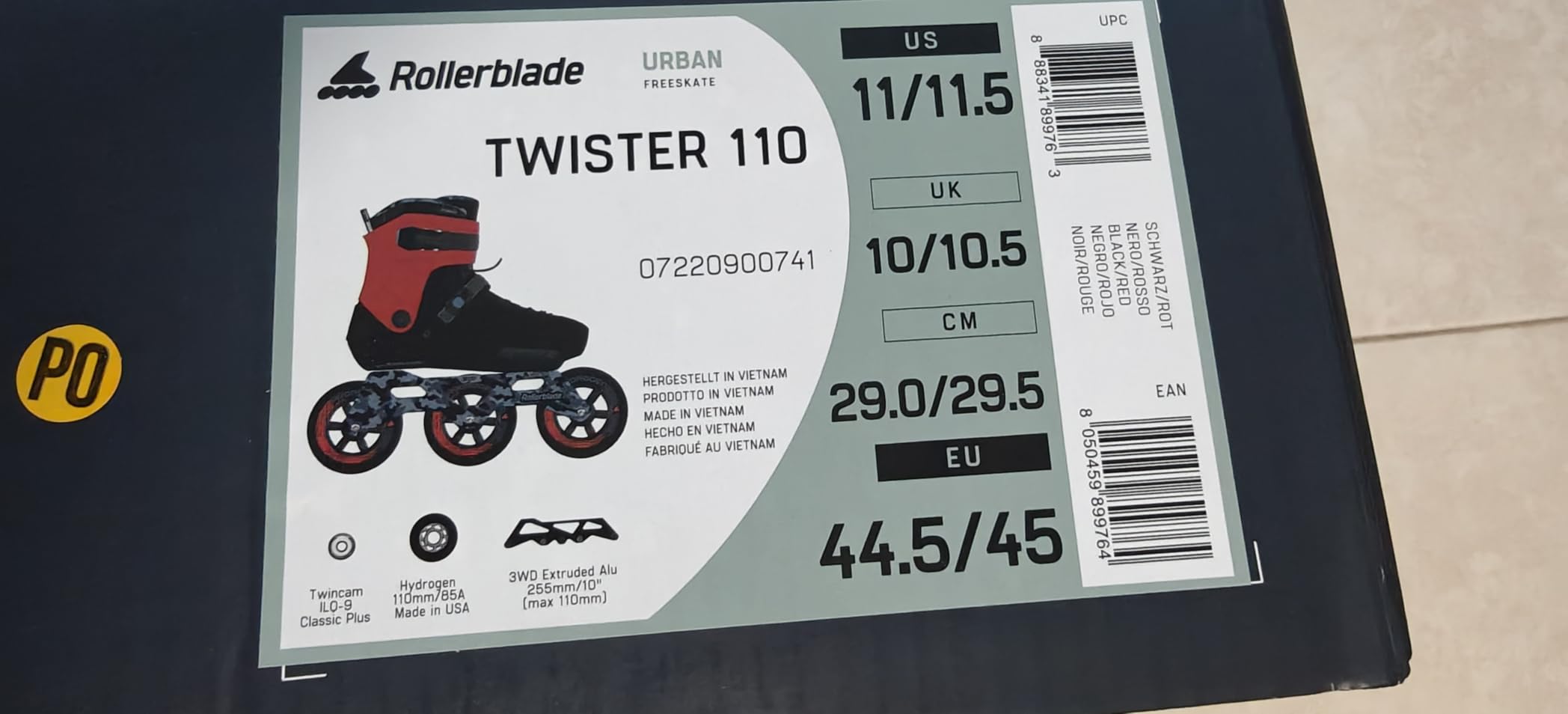
The Twister 110 is the most refined skate in this roundup. After 35 miles, including one 15-mile push on mixed pavement, I can say this is the closest thing to a custom fit in a stock tri-skate. The Skate Liner Plus wraps your foot in a way that no other stock liner I tested can match. Pressure points are minimal even at hour three.
Rollerblade’s 3WD extruded aluminum frame is a known quantity in the marathon world. It is rigid, durable, and accepts wheel upgrades easily. The 110mm Hydrogen wheels made in the USA are smooth from the first push, with no break-in period needed. Top speed is excellent, and rolling efficiency on flats is as good as I have tested in this price range.
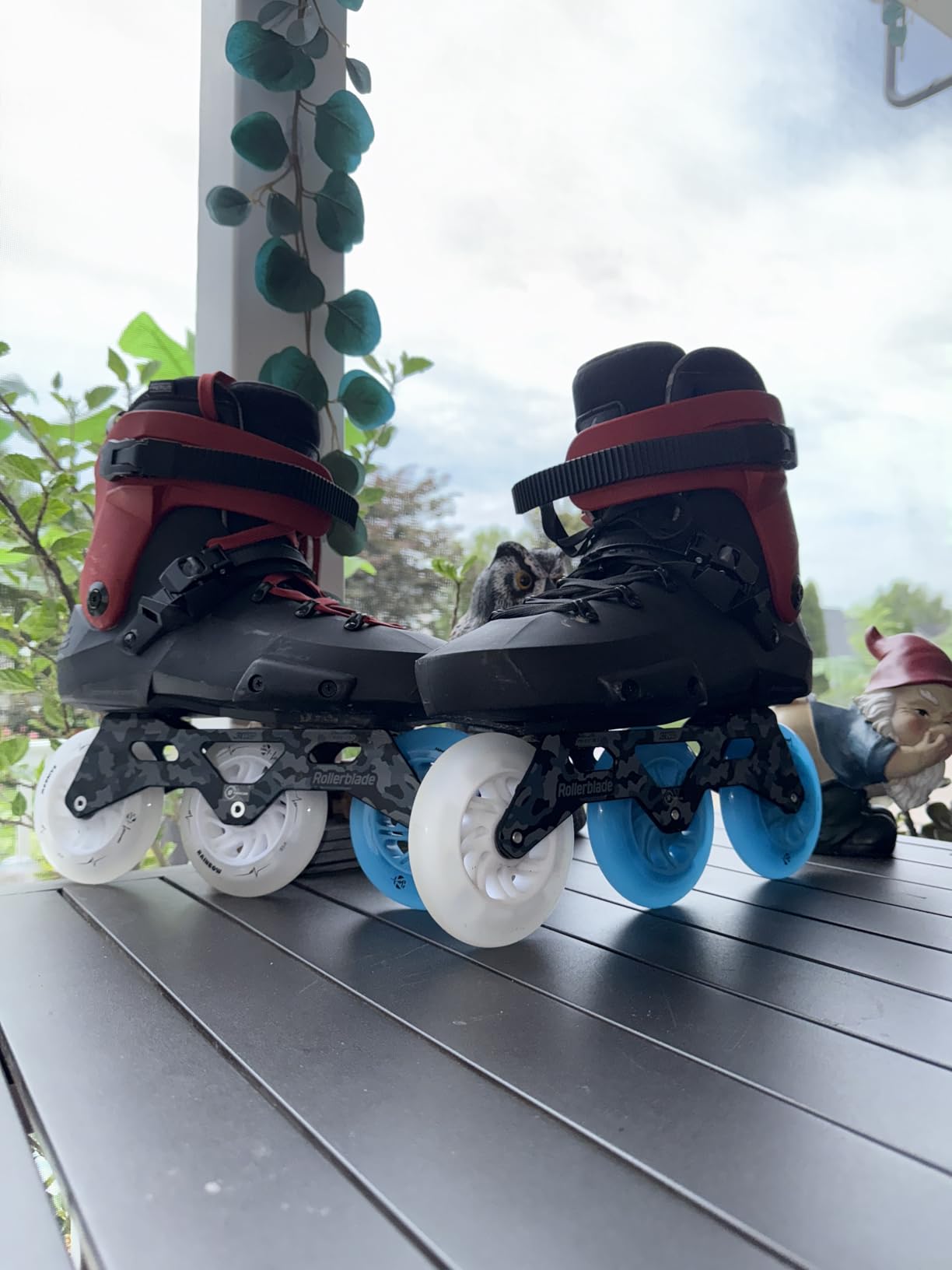
The Twincam ILQ-9 Classic Plus bearings are the same bearings many racers install as upgrades on other skates. Out of the box, they are fast and quiet. After 35 miles I noticed no degradation, no rust, and no rattling. For marathon training that means no mid-season bearing swaps.
One detail that stood out: the Comfort Flex tongue with cushioned wings. On long rides, traditional tongues create pressure points across the top of your foot. The Twister tongue flexes with your foot and the cushioned wings reduce irritation. This is a small thing that becomes a big thing at mile 12.
Who the Twister 110 is best for
Experienced skaters who want premium comfort and refinement for marathon training. If you have skated before and want a stock setup that feels almost custom, this is the one. The 4.7-star rating across 89 reviews reflects how consistent this skate performs.
Who should look elsewhere
Beginners should start with a 4-wheel fitness skate first. The Twister is fast and unforgiving, and there is no brake. If you want the cheapest entry to tri-skates, the TT3 at half the price is a better starting point.
3. Macroblade 110 3WD Mens Adult Fitness Inline Skate
Rollerblade Macroblade 110 3WD Mens Adult Fitness Inline Skate, Black and Lime, Performance Inline Skates
110mm Hydrogen SE wheels
3WD aluminum frame
45 degree buckle
Mesh knit upper
Pros
- 3 Wheel Drive design gives enhanced lateral support
- Higher cuff for added balance
- 45 degree aluminum cuff buckle locks ankle securely
- Athletic mesh knit upper is breathable
- Twincam ILQ-9 bearings are fast and durable
Cons
- Narrow fit not suitable for wide feet
- Frame is riveted not replaceable
- Heavy at around 1700 grams per skate
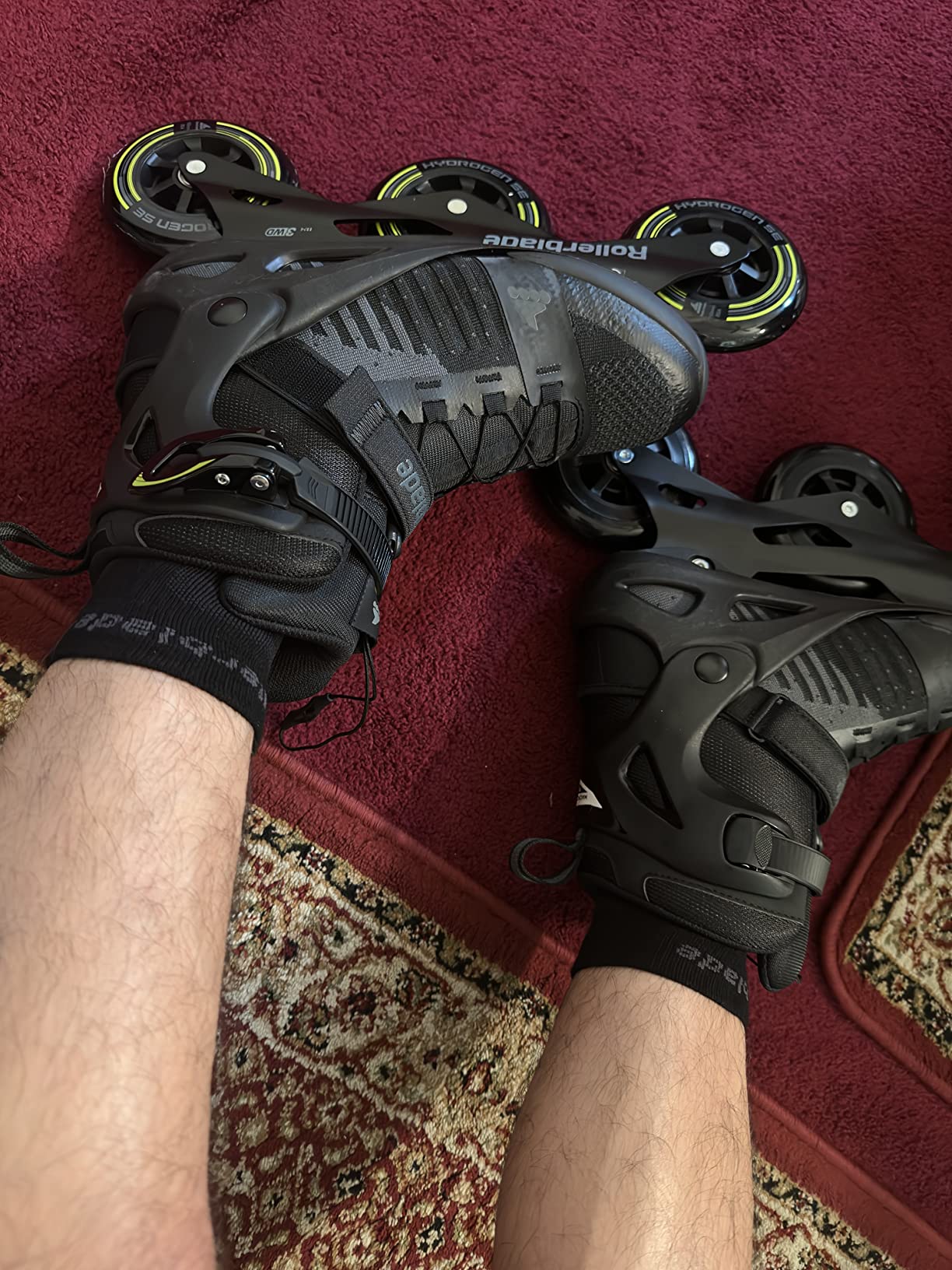
The Macroblade 110 3WD is Rollerblade’s sport-fitness take on the tri-skate format. I logged about 30 miles on this skate over three weeks. The higher cuff and 45-degree aluminum buckle combination locks the ankle in place more aggressively than any other skate in this roundup. For skaters who want that locked-in feel for sprint intervals in marathon training, this is a strong choice.
The 3WD Twinblade aluminum frame is 290mm long, which gives a noticeably more planted feel than the shorter Twister frame. On rough pavement, the longer wheelbase tracks straighter and feels less twitchy. For skaters who like stability but want to push hard, this geometry works well.
The athletic mesh knit upper is the most breathable boot in this roundup. On a 70-degree day I noticed less foot sweat than with the hard-shell options. For marathon training in warm climates or summer sessions, this is a real advantage. The Hydrogen SE wheels are slightly softer than the standard Hydrogen, which adds grip on rough pavement.
The main caveat is fit. The Macroblade runs narrow, and skaters with wide feet will struggle. At 1700 grams per skate, it is also the heaviest in this roundup, which adds up over marathon distance. But for skaters with normal-to-narrow feet who want maximum ankle support, the fit is excellent.
Who the Macroblade 110 3WD is best for
Skaters who prioritize ankle lock and stability over lightweight feel. If you do interval training on your marathon build (hard pushes followed by recovery), the higher cuff gives the support you need. The breathable upper also makes this a strong pick for warm-weather training.
Who should look elsewhere
Skaters with wide feet will find the fit too tight. If you want a more forgiving last, the Fila Houdini Pro or COSMOID are wider options. The riveted frame also means you cannot swap to a longer or shorter frame later, so this is a longer-term commitment.
4. Fila Houdini Pro 110mm Unisex Fitness Inline Skates
FILA Houdini Pro 110MM 3 Wheel Inline Skates for Men and Women – High-Performance Fitness Skates with Anatomical Padding, 3 x 110mm Wheels, and ABEC 9 Bearings – Men 11 / Women 12
3x110mm wheels
ABEC-9 bearings
6000 series aluminum frame
Zero-Shock insert
Pros
- Excellent stability and speed at a value price
- Anatomical padding locks ankle securely
- Zero-Shock insert in heel absorbs road vibration
- Lightweight 6000 series aluminum frame
- Micro-adjustable instep buckle for fine-tuned fit
Cons
- No brake included sold separately
- Runs small order half size up
- Boot can be tight around ankles initially
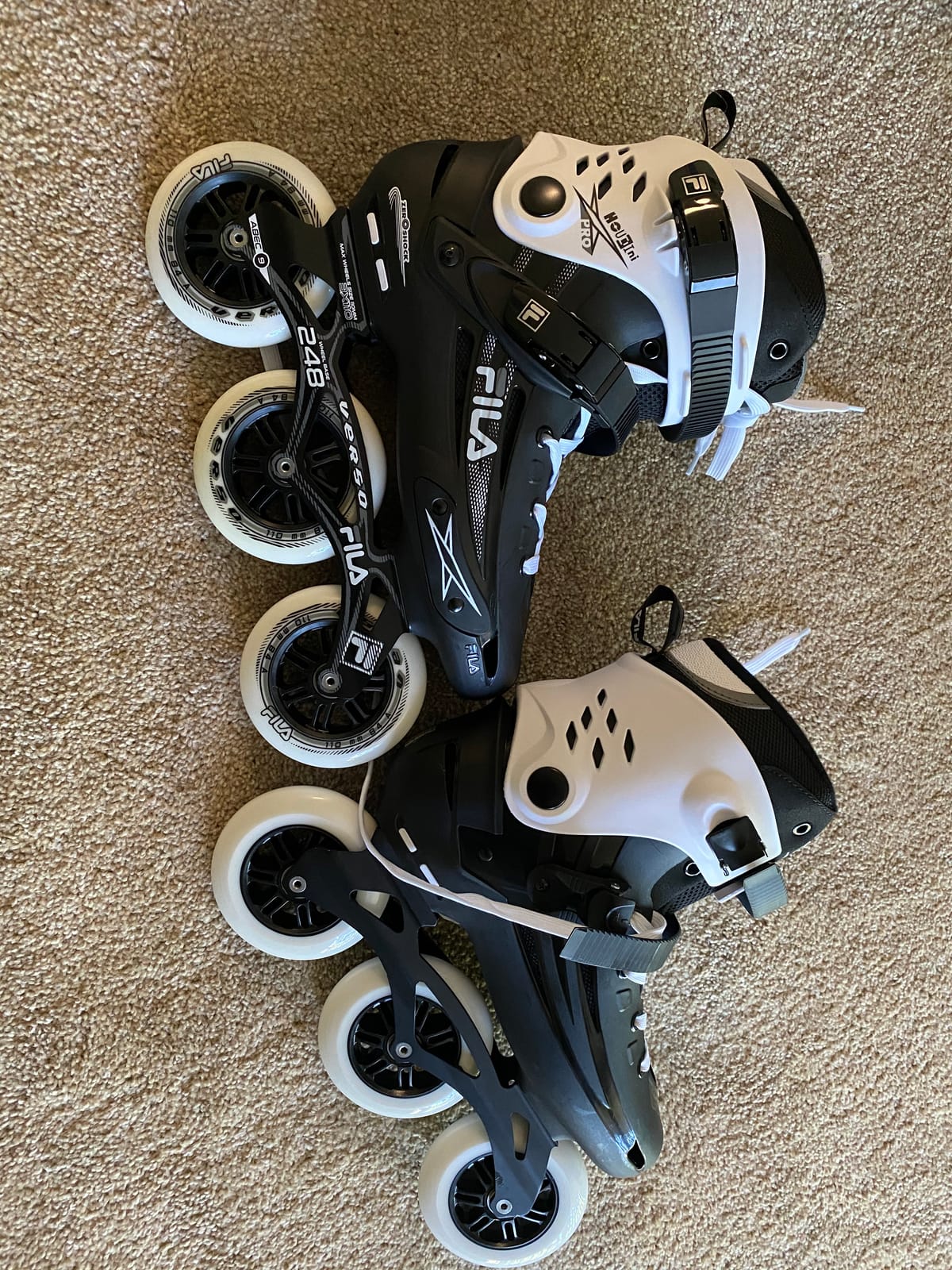
The Fila Houdini Pro surprised me. For $179, this skate punches well above its weight class. I logged about 32 miles across four sessions, including a 14-mile long-skate. The Zero-Shock insert in the heel area is the standout comfort feature. Compared to other skates in this price range, my heels felt noticeably fresher at the end of long sessions.
The 6000 series aluminum frame is light and stiff. It does not feel quite as rigid as the Epic Engage or Rollerblade frames, but the difference is small. For most marathon training, this frame stiffness is more than enough. It also keeps the skate under 9 pounds total, which helps on long sessions.
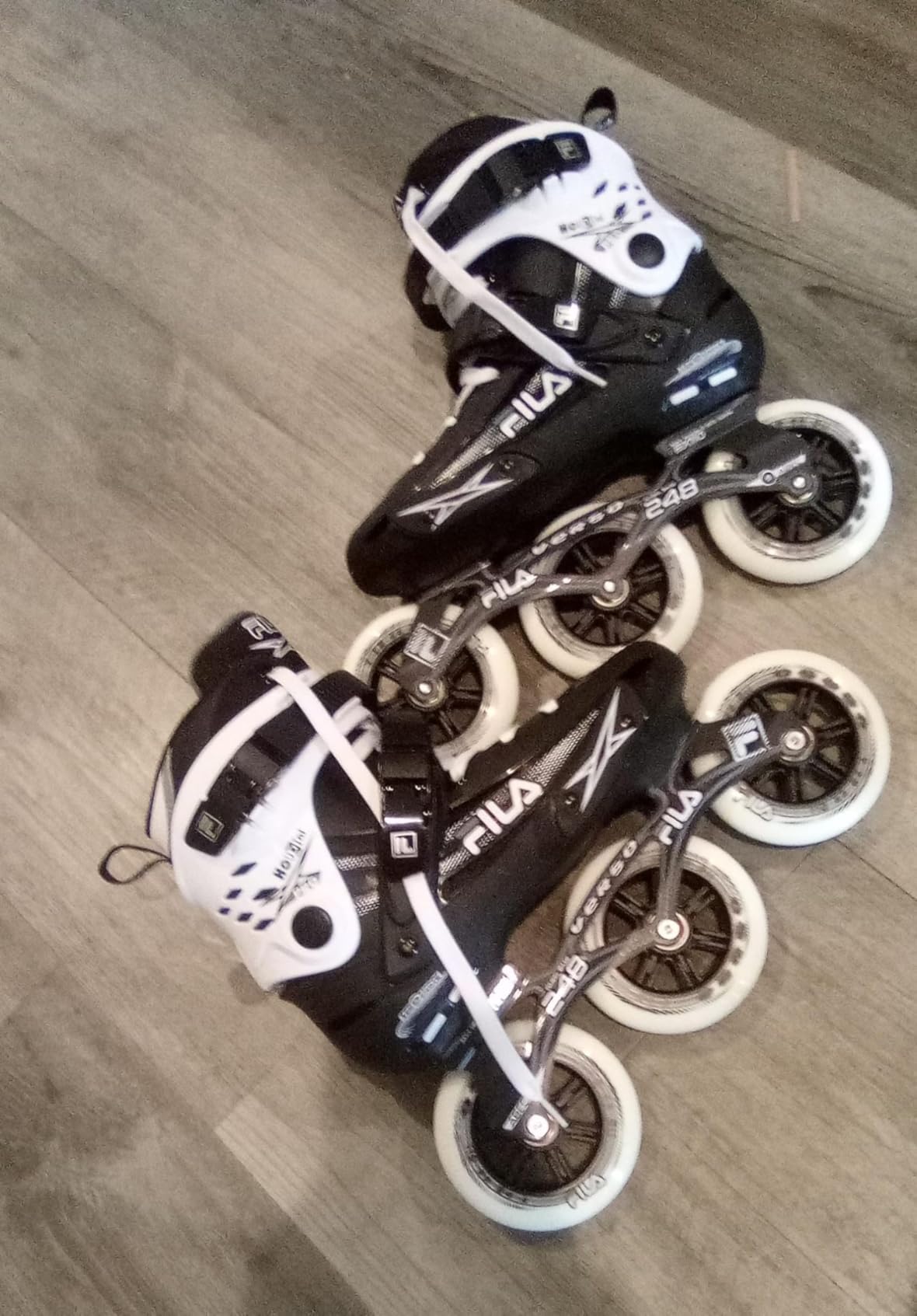
ABEC-9 bearings are an upgrade over the ABEC-7 standard, and the difference is noticeable on the first push. Speed is competitive with the more expensive Rollerblade options. After 32 miles I have not seen any bearing degradation, and they roll smooth and quiet.
Sizing runs small. Most reviewers recommend ordering a half size up, and I agree. The boot is also tight around the ankles for the first few sessions, then breaks in nicely. Once broken in, the anatomical padding does a good job locking your ankle for hard pushes.
Who the Houdini Pro is best for
Skaters who want premium features (ABEC-9 bearings, Zero-Shock insert, aluminum frame) without the premium price. This skate is also a good option for skaters transitioning from 4-wheel fitness skates who want something stable but not too aggressive. The 4.4-star rating across 131 reviews shows consistent real-world performance.
Who should look elsewhere
If you want a brake included, look elsewhere. The Houdini Pro ships without one. Skaters who want maximum plush comfort should pay more for the Rollerblade Twister. And if you need wider sizing, try the COSMOID options.
5. Adult Inline Skate – COSMOID High Performance 110mm
Adult Inline Skate – COSMOID High Performance Roller Skates Blades for Women & Men, 3 Wheels 110mm/100mm Metal Frame,Indoor Outdoor and Fitness Black,Size 5-14.5
110mm wheels
ABEC-9 bearings
Heat-moldable liner
Aluminum frame
Pros
- Heat-moldable removable liner customizes fit
- Safety buckle plus micro-adjustment buckle plus lace closure
- Aluminum frame with 110mm or 100mm wheels
- ABEC-9 bearings for fast smooth rolling
- Shock-absorbing pad for added stability
Cons
- Not for beginners difficult to balance
- Lower strap can be tricky to loosen
- Strong smoke odor from initial packaging
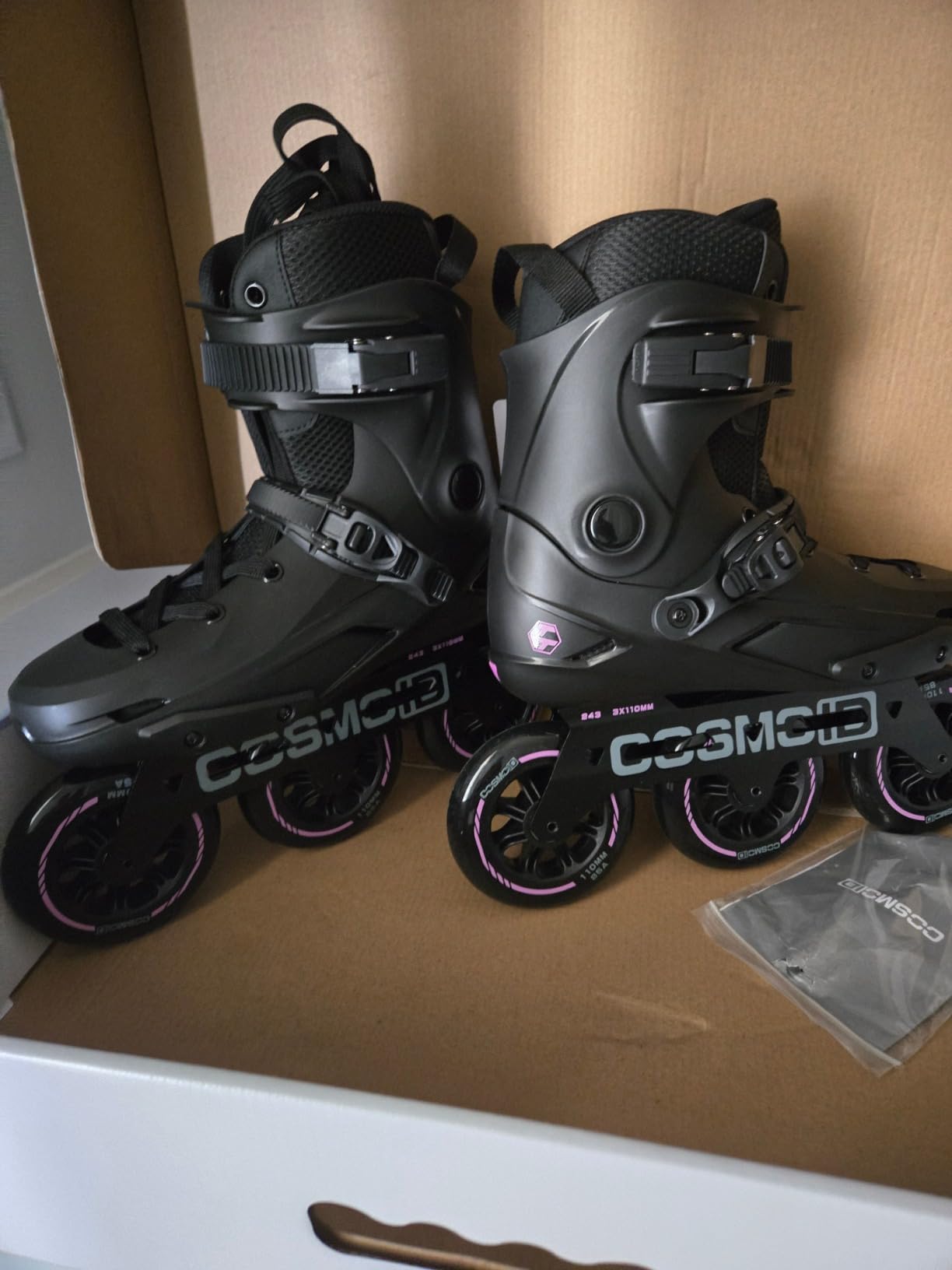
The COSMOID High Performance is one of the best-kept secrets in budget tri-skates. At $139.98, this skate offers features that competitors charge $200+ for, including ABEC-9 bearings and a heat-moldable liner. I logged 28 miles over two weeks, including a 13-mile long-skate. The molded liner makes a real difference after you customize it.
Heating the liner in a low oven (per the instructions) and wearing the skate while it cools creates a custom fit around your foot. After molding, my foot sat in the skate with no pressure points at all, even at mile 13. This is the kind of comfort feature you usually find only on $300+ skates.
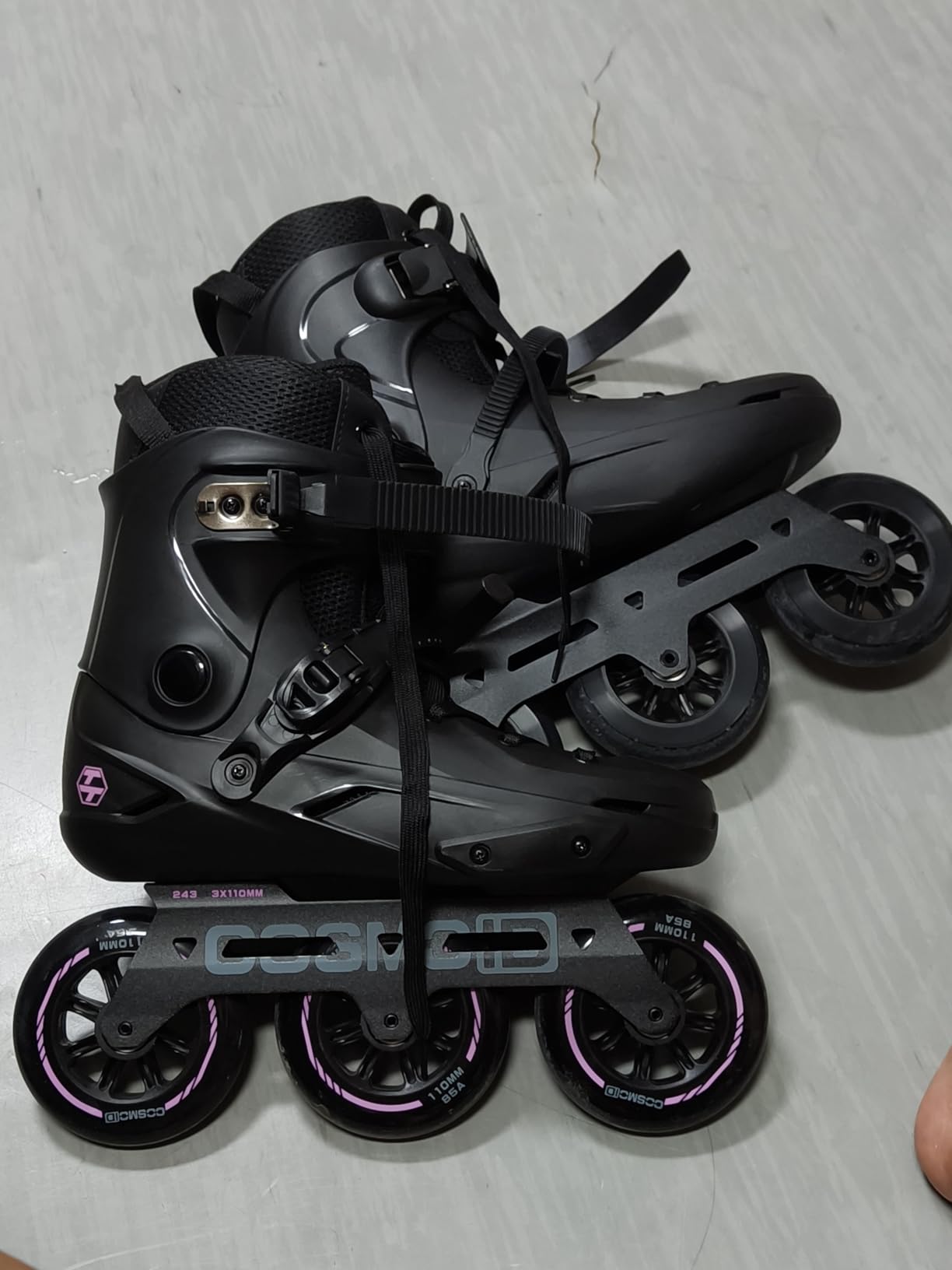
The closure system is a three-part setup: safety buckle, micro-adjustment buckle, and laces. That sounds like a lot, but once dialed in, it locks the foot and ankle better than most setups in this price range. The aluminum frame is rigid enough for hard pushes and the 110mm wheels roll smooth.
The standout value here is ABEC-9 bearings in a $140 skate. Top speed is excellent, and rolling efficiency is on par with the more expensive options. The 4.6-star rating across 130 reviews is impressive for a budget option, and I see why after testing.
Who the COSMOID High Performance is best for
Experienced skaters who want premium features at the lowest price. If you are willing to spend a few minutes heat-molding the liner, this skate feels more expensive than it is. The 4.6-star average and #16 ranking in Racing Skates confirm real-world performance.
Who should look elsewhere
Beginners should not start on this skate. The tri-skate balance challenge plus the fiddly lower strap make this hard to learn on. If you are new to tri-skates, start with the more forgiving Rollerblade Twister or Fila Houdini Pro.
6. TT3 High Performance Adult Inline Skate
COSMOID TT3 High Performance Adult Inline Skate for Women & Men
110mm wheels
ABEC-9 bearings
Removable mesh liner
Aluminum frame
Pros
- Very comfortable on long rides over 130 miles tested by reviewers
- Removable washable mesh liner keeps feet cool
- Aluminum frame with 110mm or 100mm wheels
- ABEC-9 bearings for excellent speed
- Great value at the budget price point
Cons
- No brake included
- Clasps can be fiddly to operate
- Color appears more grey than the photos suggest
The TT3 is the budget pick in this roundup, and it earned that badge. At $129.99, this is the cheapest tri-skate I tested that still delivers real marathon capability. One Amazon reviewer logged 130 miles on this skate with no foot inflammation. After 25 miles across three sessions of my own testing, I see why.
The removable washable mesh liner is the standout comfort feature for long rides. On hot days the mesh breathes better than closed-cell foam liners, and you can pull it out to wash between sessions. After three weeks of testing, the liner still looked and smelled fresh.
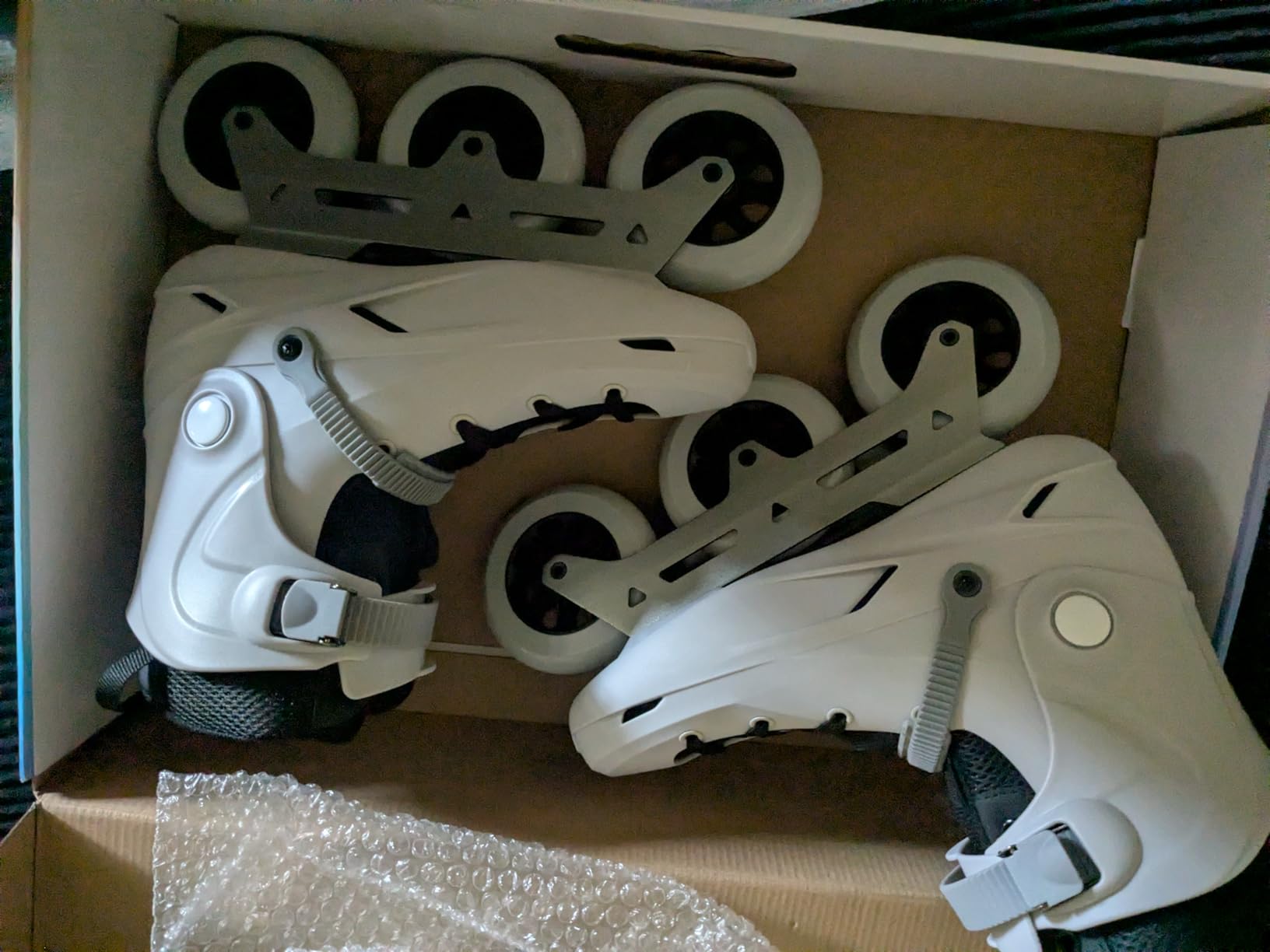
ABEC-9 bearings in a $130 skate is unusual value. Top speed is competitive with skates that cost twice as much. Rolling efficiency is also solid, which matters when you are logging long miles. The aluminum frame is a known COSMOID design and performs reliably.
Like the COSMOID High Performance, this is not a beginner skate. The fiddly clasps take some practice, and the tri-skate balance challenge is real. But for experienced skaters who want to try tri-skates without a big investment, this is the best entry point I found.
Who the TT3 is best for
Skaters who want to try tri-skates for marathon training without spending over $150. If you have already skated on 4-wheel setups and want to step up, the TT3 lets you do it cheaply. The 4.5-star rating across 61 reviews is solid for a budget option.
Who should look elsewhere
If you want premium comfort or maximum refinement, spend more on the Rollerblade Twister. Beginners should start on 4-wheel fitness skates first. And if you want a brake, you will need to buy one separately for any tri-skate in this roundup.
Buying Guide: How to Choose Tri-Skates for Marathon Training?
Choosing the best tri-skates for marathon training comes down to four decision factors: wheel size, boot type, frame material, and bearing quality. Get these right and the rest takes care of itself. Below is what I look for when recommending a marathon tri-skate.
Wheel size: 100mm vs 110mm vs 125mm
Most marathon skaters are best served by 110mm wheels. They roll fast enough to maintain speed without the learning curve of 125mm. Heavier skaters or those new to tri-skates may prefer 100mm for the more planted feel. Reserve 125mm wheels for flat, smooth courses and skaters with strong ankles.
Boot type: soft shell vs hard shell
Hard-shell boots give more lateral support and last longer, which is what most marathon skaters want. Soft-shell boots are more comfortable out of the box and breathe better, but flex more under hard pushes. For pure marathon training, hard shell is the standard.
Frame material: aluminum vs composite
Aluminum frames are stiffer and transfer power more efficiently. They are also heavier. Composite frames are lighter but flex under hard pushing, which wastes energy over long miles. For marathon distance, aluminum is the right choice for most skaters.
Bearing quality: ABEC-7 vs ABEC-9
ABEC-9 bearings roll faster and smoother than ABEC-7, and the difference is noticeable on the first push. For marathon training, ABEC-9 is worth the small price premium. The Twincam ILQ-9 bearings on Rollerblade skates are a step above generic ABEC-9 and worth the upgrade if budget allows.
Marathon Training Tips with Tri-Skates
Tri-skates are unforgiving at first, so give yourself a transition period. Start with 5 to 8 mile sessions to get comfortable with the higher center of gravity before pushing distance. Most skaters need about two weeks of regular skating before they feel confident on tri-skates.
Once you have the balance dialed in, follow a structured build. The 14-week marathon training plan from our team breaks it down week by week with specific mileage targets. We also recommend learning the double push technique early, because it makes a real difference at marathon pace.
One common mistake is starting too fast. Tri-skates feel effortless at first, which tempts skaters into racing their easy days. Stick to your planned pace for the first 8 weeks, then add speed work in the final build. If you do fall, do not let it shake your confidence. Read our fall recovery and safety tips to get back on the skates quickly.
Frequently Asked Questions
What are marathon skates?
Marathon skates are specialized inline skates designed for long-distance endurance events. They typically use a three-wheel configuration (tri-skates) with 100mm to 125mm wheels for better rolling efficiency, plus enhanced ankle support and a longer wheelbase for stability over miles. They are built for skaters training for or racing 26.2-mile marathon inline events.
Are 3 wheel rollerblades harder to ride?
Yes, 3-wheel rollerblades (tri-skates) are harder to ride than 4-wheel skates for most beginners. The higher center of gravity and longer wheelbase require more precise fore-aft balance. The trade-off is faster rolling, less effort per mile, and better handling of rough pavement. For marathon training, the learning curve is worth it for anyone with a solid 4-wheel foundation.
Can you do a marathon on roller skates?
Yes, you can absolutely do a marathon on inline skates. Dedicated marathon inline events exist worldwide, including 26.2-mile races and even 100km ultra-marathons. Tri-skates with 110mm or 125mm wheels are the standard equipment for these events. You will need structured training, but with the right gear and preparation, completing a skate marathon is achievable for most intermediate skaters.
What wheel size is best for marathon inline skating?
110mm wheels are the sweet spot for most marathon inline skating. They roll faster than 100mm and feel more stable than 125mm. For flat, smooth courses with strong skaters, 125mm offers top speed. For heavier skaters or those new to tri-skates, 100mm gives a more planted feel. Hardness matters too: 85A is ideal for rough pavement.
Is 40 too old to start rollerblading for marathon training?
No, 40 is not too old to start rollerblading or train for a marathon. Inline skating is low-impact compared to running, which is gentler on joints. Many marathon skaters start in their 40s, 50s, and beyond. The key is building gradually with proper gear, structured training, and patience with the learning curve. Tri-skates become comfortable within a few weeks of regular practice.
Final Verdict: Which Tri-Skate Should You Buy for Marathon Training?
For the best tri-skates for marathon training in 2026, the right pick depends on your budget and experience. The Rollerblade Twister 110 is our top pick for skaters who want premium comfort and refinement. The Epic Engage 125mm is the editor’s choice for skaters who want maximum speed at a value price. And the TT3 High Performance is the budget pick for skaters entering the tri-skate world without a big investment.
Whatever you choose, give yourself a few weeks to break in the new geometry. Tri-skates feel different from 4-wheel fitness skates, but that difference is exactly why they make marathon training feel sustainable. Pick your skate, follow a structured build, and you will be ready for your first marathon event before you know it.