
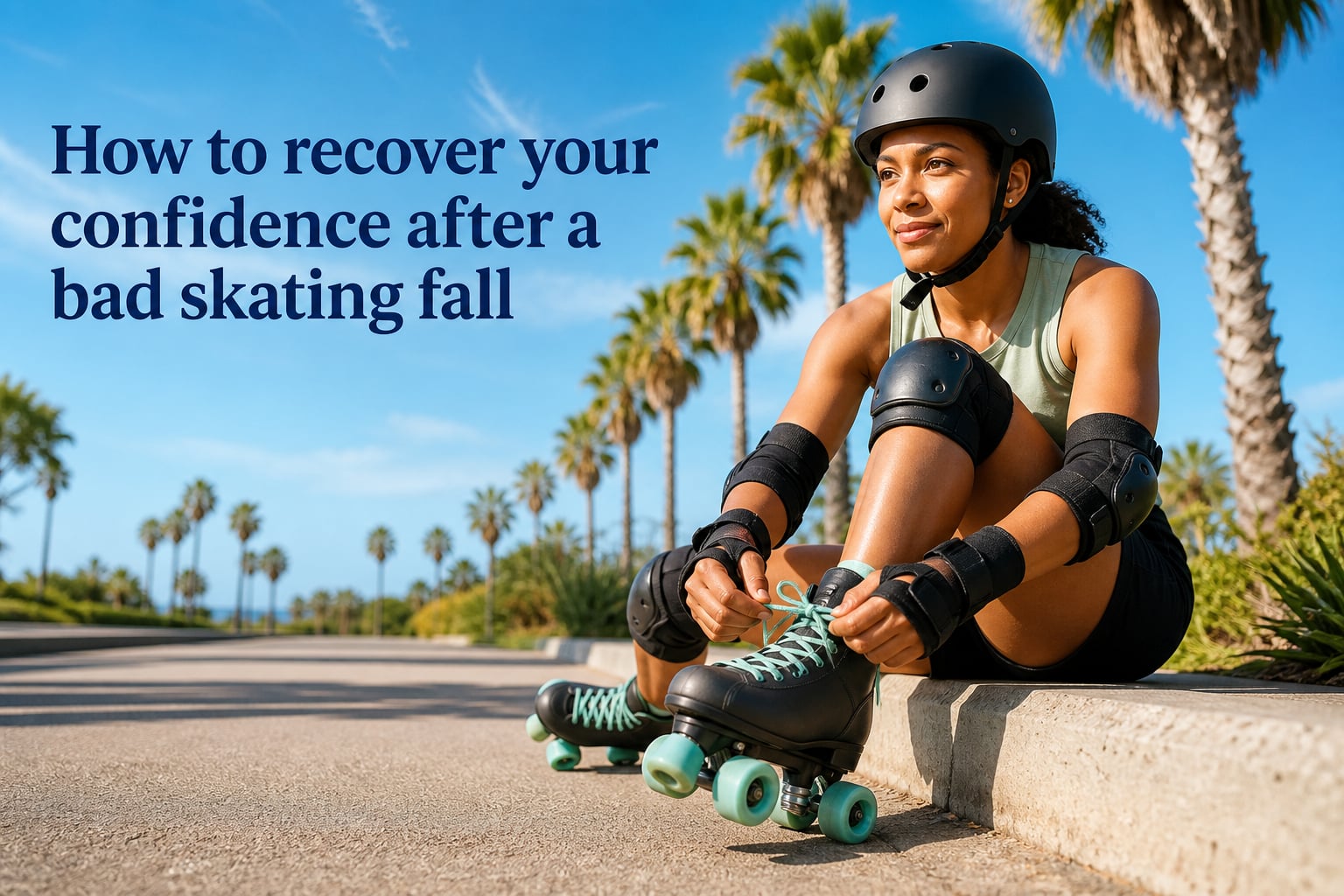
I took a hard fall during a trail skate last spring, slid across the pavement on my hip, and sat on the curb for twenty minutes before I could even stand up properly. That single crash stole weeks of confidence from me.
Whether you skate outdoors, at a rink, or in a park, a bad fall can flip a switch in your head. One moment you’re cruising; the next, your body refuses to roll forward. This guide covers how to recover your confidence after a bad skating fall, with roller-specific techniques, a step-by-step rebuilding plan, and mental tactics that actually work. I’ve used these methods myself, and they help.
Table of Contents
Why a Bad Fall Wrecks Your Confidence on Skates?
A hard fall hits your nervous system like a small car crash. Your amygdala flags wheels as a threat, and suddenly your brain treats every push-off as a potential repeat injury.
This is normal. Your brain’s job is to keep you safe, and a sudden loss of control registers as a real danger. Research in sports psychology shows that a single traumatic moment can override weeks of muscle memory in a single second.
The result is what coaches call “yips” on skates. You know how to move, but your body locks up. I see this all the time in beginner skaters who crash on their first hill and then refuse to go faster than a crawl for months.
The good news: this response is learned, which means it can be unlearned. Confidence isn’t a personality trait; it’s a skill you rebuild through small, repeated wins.
The Mental Cycle of Fear After a Skating Fall
Fear after a fall follows a predictable loop. Once you understand it, you can break it.
The loop works like this: you fall, your brain flags skating as unsafe, you tense up next session, tension causes stiff movement, stiff movement causes another slip or fall, and that reinforces the fear. Sports psychologists call this the fear-avoidance cycle.
Tension is the hidden villain. When you’re scared, your muscles contract. Locked knees, tight ankles, and rigid hips kill the fluid motion that keeps you upright on wheels. I’ve fallen twice as many times when I was nervous as when I was relaxed.
Recognizing the loop matters because you can interrupt it. The moment you notice yourself gripping the floor with your toes or holding your breath, you’ve caught the cycle. Awareness is the first crack in the fear pattern.
Practical Falling Techniques for Roller Skaters
Learning to fall on purpose removes most of the terror. When your body knows how to bail safely, your brain stops bracing for disaster.
The Knee Slide Fall
The knee slide is the bread-and-butter roller skating bail. When you feel yourself going down, drop to one knee and let your pad take the impact.
Bend the lead knee, lower your weight onto it, and let your momentum slide you forward onto the kneepad. Keep your hands up and off the ground until you’ve stopped sliding. This protects your wrists, which is where most skating fractures happen.
The Squat Fall
For slower falls or backwards tips, drop into a deep squat with your weight centered. Keep your chest up and your arms in, then roll to one hip and slide on your hip pad.
Never lock your legs and try to catch yourself standing up. That’s how ankles and knees get hurt. The squat absorbs force through your biggest muscle groups.
The Four-Point Recovery
Practice getting up as much as you practice falling. From a kneeling position, place one foot flat on the ground under your body, push up with your hands, and stand.
Run this on carpet at home first. Get the sequence into your muscle memory so your body doesn’t panic when it’s actually on wheels. I drill this with new skaters for ten minutes before they ever strap on quad skates.
Practice falls on grass or carpet with your full pads on. Once you can fall and get up smoothly without thinking, the fear shrinks.
Step-by-Step Confidence Rebuilding Process
Don’t rush back into a three-hour session. Gradual exposure is the fastest way to recover confidence after a bad skating fall.
Week 1: Off-Skates Foundation
Start on the floor, not the pavement. Sit in your skates at home, buckle up, and watch TV for thirty minutes a day. This sounds silly, but it normalizes the gear on your body.
Add balance drills: stand on one foot in your kitchen for 60 seconds, then the other. Practice the squat fall on carpet. Visualization counts too. Close your eyes and mentally rehearse your smoothest skate ever, in full detail.
Week 2: Micro-Sessions on Wheels
Put on your pads and roll for five minutes. That’s it. Five minutes, two or three times that week, no tricks, no hills, no pressure.
A skater on Reddit put it perfectly: “Just 5 minutes a day, even if it’s going really well, still stick to the 5 minutes. Gradually increase from there.” I followed this exact advice after my trail fall, and it worked better than forcing myself back to long sessions.
End every micro-session on a positive note. Even if you wobble the whole five minutes, you showed up. That’s a win.
Week 3: Add Specific Skills
Once five minutes feels easy, bump to ten or fifteen minutes and reintroduce one skill at a time. Pick something simple like forward glides or bubbles.
Master one movement before adding the next. Stack small wins. Each successful rep tells your brain that wheels are safe again.
Week 4: Normal Sessions Return
By week four, most skaters are back to normal mileage. If something still feels off, repeat a previous week. There’s no deadline here. Trust the process.
Protective Gear That Helps You Skate With Less Fear
Good gear won’t make you fearless, but it lowers the stakes. When your brain knows your wrists and tailbone are shielded, it relaxes.
Helmets protect against the worst-case scenario. A CPSC-certified helmet is non-negotiable for outdoor skating, especially on hills or rough pavement.
Wrist guards are the unsung heroes of skating safety. About 25% of roller skating injuries involve the wrist, and guards cut that risk dramatically. They also make you less likely to flinch, because your hands are armored.
Knee pads let you practice falling without fear. Choose pads with hard caps for sliding, not soft pads that just cushion. The harder surface lets you knee-slide properly.
Hip pads and tailbone protectors round out the kit for trail and park skaters. I won’t skate without my triple-eight set anymore, not because I’m a beginner, but because I want to skate for another twenty years.
Fit matters more than brand. Pads that slide around during a fall don’t protect you. Test them on the floor, simulate a fall, and make sure they stay in place.
Off-Ice Exercises and Mental Techniques That Work
Strength work outside your skates carries directly onto the pavement. Stronger ankles, hips, and core mean more control when you’re nervous.
Try lateral band walks, single-leg squats, and calf raises three times a week. Add balance board work if you have one. Ten minutes a day is enough to see results in a month.
Box breathing calms the fear response fast. Inhale four counts, hold four, exhale four, hold four. Repeat five times before you lace up. It tells your nervous system the threat is over.
Set process goals, not outcome goals. “Glide for ten minutes without flailing” beats “don’t fall today.” Outcome goals keep you focused on fear. Process goals keep you focused on the action.
Bring a friend when you can. Skating with someone supportive cuts recovery time nearly in half, according to skaters I’ve talked to in our local community. You’re less likely to bail early when someone’s cheering you on.
Frequently Asked Questions
How long does it take to recover from a bad skating fall mentally?
Most skaters see noticeable confidence return within two to four weeks of gradual exposure practice. Severe falls or injuries can take longer, especially if the crash involved a head impact or fracture. The key is consistent, short sessions rather than forcing a quick comeback. If anxiety hasn’t improved after six weeks, consider working with a sports psychologist who specializes in injury recovery.
How do I get over my fear of falling on roller skates?
Start by mastering falling techniques on a soft surface like grass or carpet with your pads on. Practice knee slides, squat falls, and getting back up until the motions feel automatic. Then progress to short, low-pressure skate sessions of five to ten minutes. Gradual exposure combined with proper protective gear is the most effective way to retrain your brain that skating is safe again.
How do figure skaters recover performance after a fall?
Figure skaters typically follow a structured return protocol that begins with off-ice visualization, then jumps and spins on the ground, then low-rotation jumps on the ice, before returning to full programs. Sports psychologists help them reframe the fall as data rather than failure. Process goals and consistent small reps rebuild trust between brain and body.
Should I take a break from skating after a bad fall?
A short break of a few days to a week is fine if you’re physically injured, but avoid long breaks if you’re only scared. Extended time off lets fear memories strengthen and makes returning harder. Modified practice with pads, shorter sessions, and easier terrain keeps your skills sharp while your confidence rebuilds.
Final Thoughts on Rebuilding Your Skating Confidence
Recovering confidence after a bad skating fall isn’t about willpower. It’s about giving your brain new evidence that wheels are safe, one short session at a time.
Learn to fall on purpose. Drill your recovery on carpet. Lace up for five minutes tomorrow, then ten next week. Wear your pads every time, not because you’re weak, but because you’re smart.
You weren’t born scared of skating, and you won’t stay scared. Trust the process, and you’ll be rolling with joy again soon.