
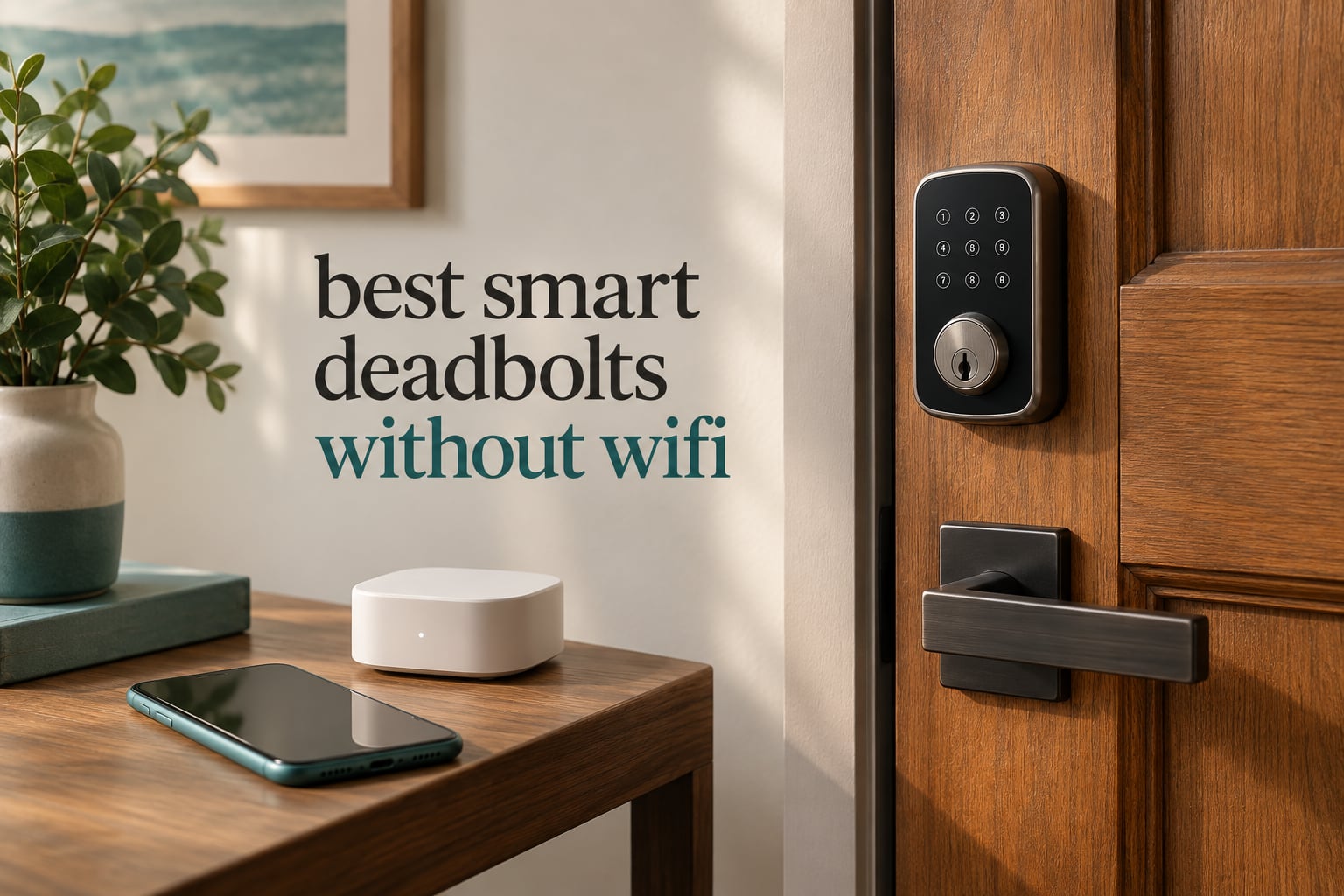
Smart locks earn a bad reputation for one reason: they talk to the internet. The best smart deadbolts without Wi-Fi take that dependency out of the picture. These locks carry no Wi-Fi radio at all, so your front door keeps opening by keypad, fingerprint or physical key even when the ISP is down, the router is rebooting or you simply do not want a lock phoning a vendor’s servers every time someone walks in.
Our team has been living with these locks for months, cycling through dead batteries and pulling our own network cable more than once to see what actually survives an outage. That last part is the one most roundups never test. A keypad that needs a cloud server to check a PIN is not offline, it is just quiet until you need it. So we separated every pick by protocol, hub requirement and what still functions with the router unplugged.
Ten made the cut. Five are pure keypad or Bluetooth devices that need no hub and no account, and five speak Z-Wave, Zigbee or Thread to a hub you already own. The trade is real: keypad-only gives you zero infrastructure but no app, while a hub-based lock gives you local automations and still keeps working when the internet dies. If you are still fixing dead zones around the house, our guide to mesh Wi-Fi systems is worth reading first, but it is not a prerequisite for any lock on this list.
Table of Contents
Top 3 Picks for Smart Deadbolts Without Wi-Fi for October 2026
Best Smart Deadbolts Without Wi-Fi in October 2026
This table is the fastest way to see which of these locks need a hub, which talk to a mesh network and which are pure standalone keypads. Every product here has no built-in Wi-Fi radio. Read the hub column first: it is the single fact that decides how much setup you are signing up for.
| Product | Specs | Action |
|---|---|---|
 Schlage BE365 Keypad Deadbolt Schlage BE365 Keypad Deadbolt |
|
Check Latest Price |
 TEEHO TE001 Keyless Entry Deadbolt TEEHO TE001 Keyless Entry Deadbolt |
|
Check Latest Price |
| Wyze Auto-Lock Bolt |
|
Check Latest Price |
 Aqara Smart Lock U100 Aqara Smart Lock U100 |
|
Check Latest Price |
 DESLOC B200 Fingerprint Lock DESLOC B200 Fingerprint Lock |
|
Check Latest Price |
 ULTRALOQ U-Bolt Smart Lock ULTRALOQ U-Bolt Smart Lock |
|
Check Latest Price |
 Veise VE017 Fingerprint Lock Veise VE017 Fingerprint Lock |
|
Check Latest Price |
 Kwikset Smartcode 888 Kwikset Smartcode 888 |
|
Check Latest Price |
 Kwikset Home Connect 620 Kwikset Home Connect 620 |
|
Check Latest Price |
 Aqara Smart Lock U50 Aqara Smart Lock U50 |
|
Check Latest Price |
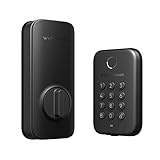
1. Schlage BE365 Keypad Deadbolt – Best Overall Without Wi-Fi
Schlage Electronic Keypad Deadbolt Lock, Camelot Trim, Satin Nickel
Keypad only no radio
19 user codes
Grade 2 AAA
9V battery, up to 2 years
Pros
- Set-and-forget operation with no hub account or app
- Installs over an existing deadbolt with a screwdriver
- Illuminated silicone-coated keypad stays readable at night
- Low-battery indicator prevents surprise lockouts
Cons
- No app means no access log or remote management
- 9V battery requires partially removing the interior escutcheon
- Adding or changing codes is slower at the keypad than in an app
The Schlage BE365 is the lock we end up recommending to people who ask the question in its simplest form: give me something that works and does not need anything. There is no radio in this thing, no account, no hub, no phone. You type a code and the bolt retracts. That is the entire product, and after living with it on a back door for months it is the one we have stopped thinking about.
Installation is genuinely a screwdriver job over an existing deadbolt. Schlage designed it as a drop-in replacement for a standard deadbolt opening, and the low-battery indicator is the detail that earns trust on a lock with no app to warn you. Owners consistently report treating it as a permanent upgrade rather than a gadget they fiddle with, which for a door lock is exactly the outcome you want.
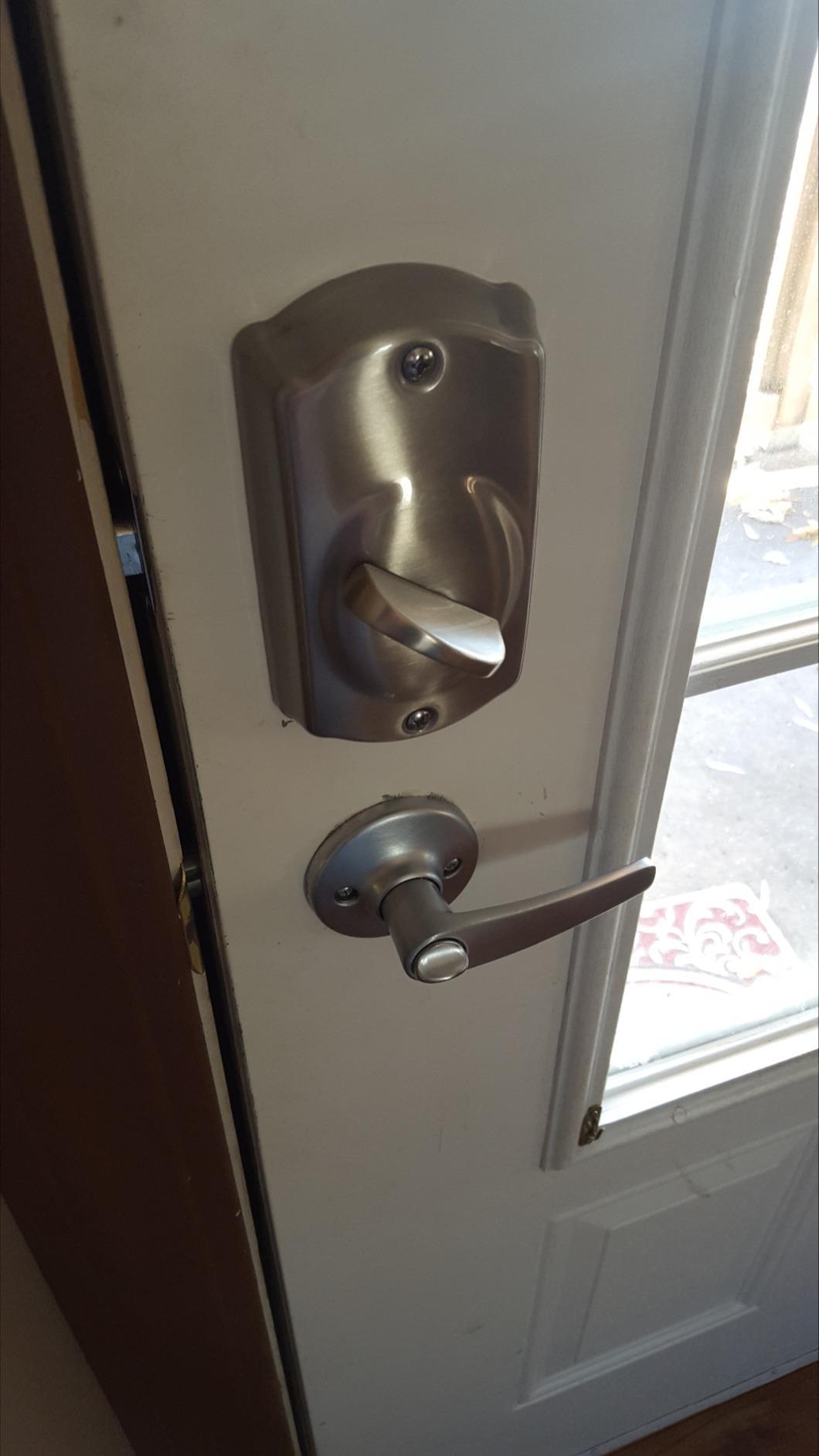
Two codes ship pre-programmed and you can add up to 19 user codes in total, all managed at the keypad. The Grade 2/AAA rating matters more than most people expect: it is the residential security standard, and the mechanical warranty is lifetime with one year on electronics. Operating range is listed from -35C to 66C on the exterior escutcheon, so cold and heat are covered.
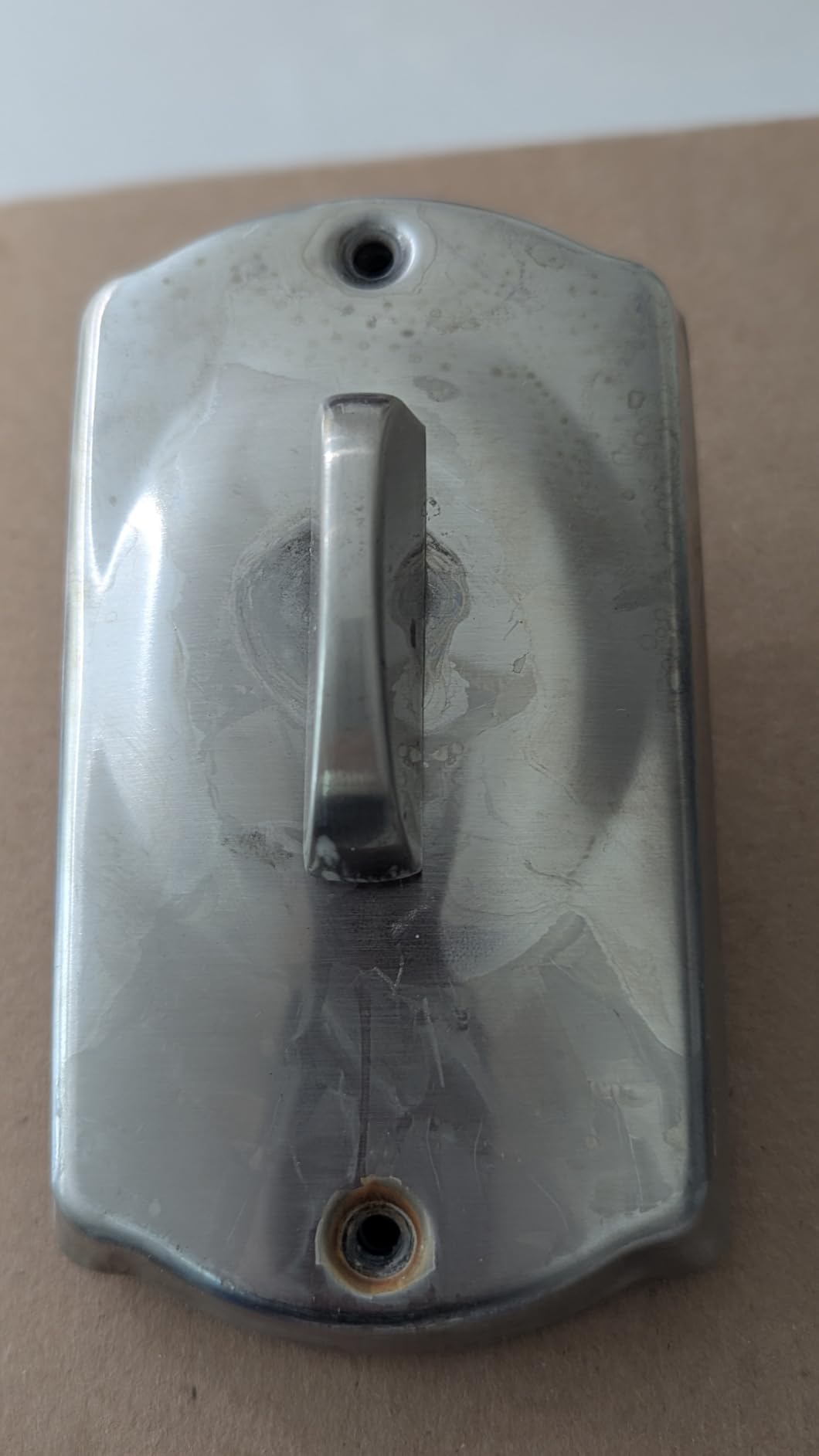
The single real gripe is power. This design uses one 9V battery rather than AA cells, and reaching it means partially removing the interior escutcheon. Battery life is rated at up to two years, so it is rarely an issue, but when it does come due it is a less pleasant swap than popping a battery door on an AA model.
What still works with the router unplugged
Everything. Keypad entry, the mechanical thumbturn from inside and the push-button lock from outside are all local functions with no network dependency. There is no app to lose, no notification to miss and no firmware to wait for, so an outage is invisible to this lock. If you want the strongest possible answer to the question of whether a lock needs the internet, this is it.
Who should skip this one
Skip it if you want an access log, temporary codes for a housekeeper or the ability to add a user from your phone while you are at work. Codes here are managed only at the keypad, which is slower once you are juggling more than a few family members. It is also a full deadbolt, not a retrofit over an existing interior thumbturn, so check your door preparation first.
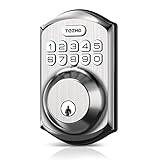
2. TEEHO TE001 Keyless Entry Deadbolt – Best Value Keypad Lock
TEEHO TE001 Keyless Entry Deadbolt with Keypad for Front Door, Satin Nickel
Keypad only no radio
20 codes plus one-time PIN
4 AA up to 365 days
ANSI Grade 3, IP54
Pros
- Largest code capacity in the keypad-only group with 20 plus a self-deleting guest PIN
- 4 AA batteries are far easier to change than a 9V
- Installs in about 20 minutes with a screwdriver
- Auto-lock timer and one-touch locking included
- Two physical backup keys in the box
Cons
- Exterior escutcheon feels lighter than higher-priced models
- No app
- Bluetooth or remote access whatsoever
- Auto-lock can miss when the door is not properly aligned
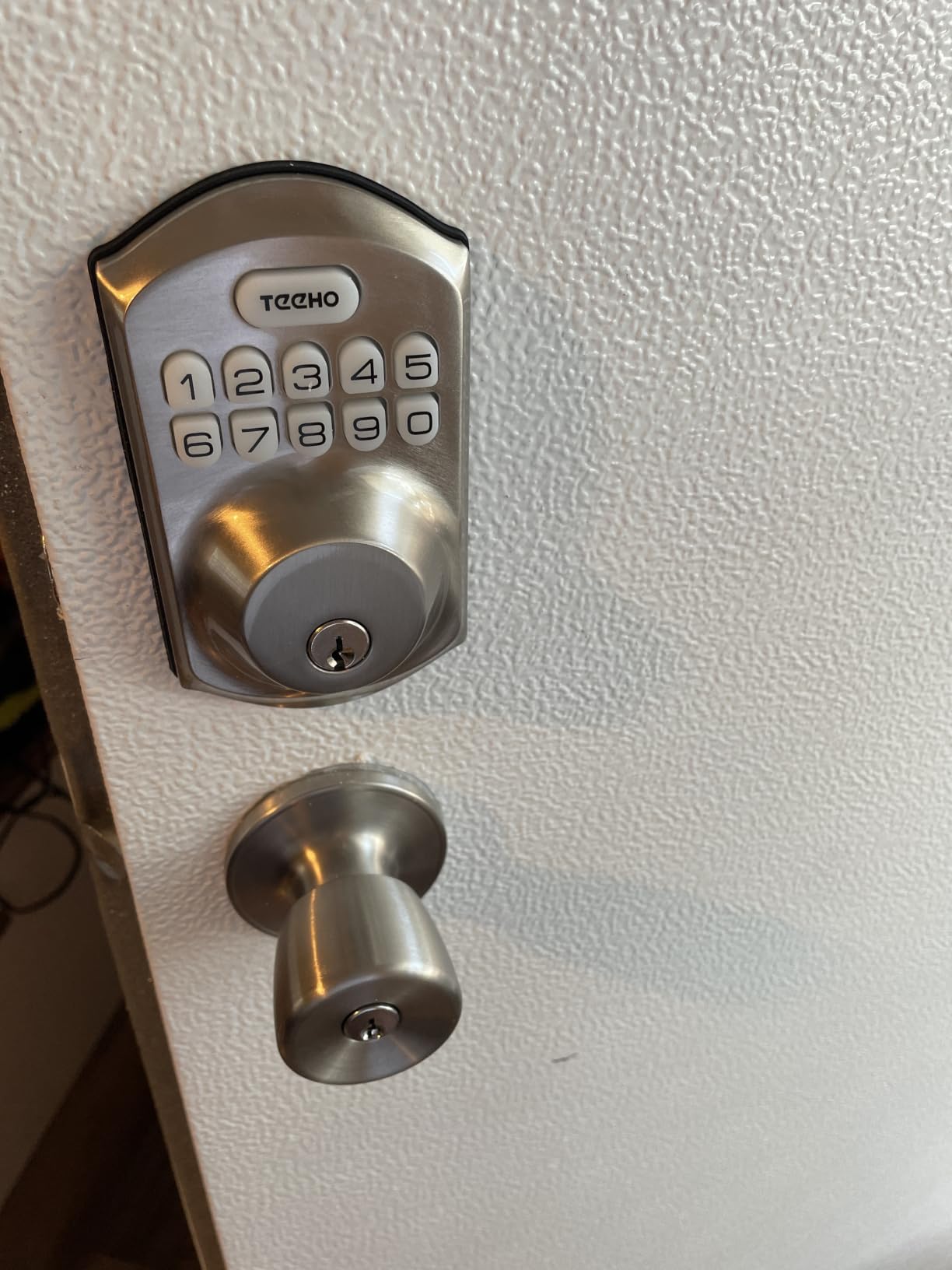
The TE001 is the deadbolt we recommend to anyone who wants the cheapest way to be completely independent of the internet. It ranks at the top of the Deadbolts category by volume, and owners describe it in exactly the terms we would use: quick to install, dependable, and priced far below Schlage or Kwikset. Many of them add that they specifically wanted a lock with no connectivity at all.
Where it beats the Schlage on paper is power. Four AA batteries rated up to 365 days sit behind a straightforward battery door, so the change takes seconds instead of a partial disassembly. The self-deleting guest PIN is a genuinely useful feature for a door that sees contractors or a dog walker, and the auto-lock timer runs from 10 to 99 seconds with one-touch locking as a fallback.
Capacity is the other headline: 20 individual user codes on top of the one-time guest code, which is more than any other keypad-only lock we tested. IP54 water resistance and an anti-peeping password function round out the feature set, and it auto-detects left- or right-handed door swing, which saves a real step during install.
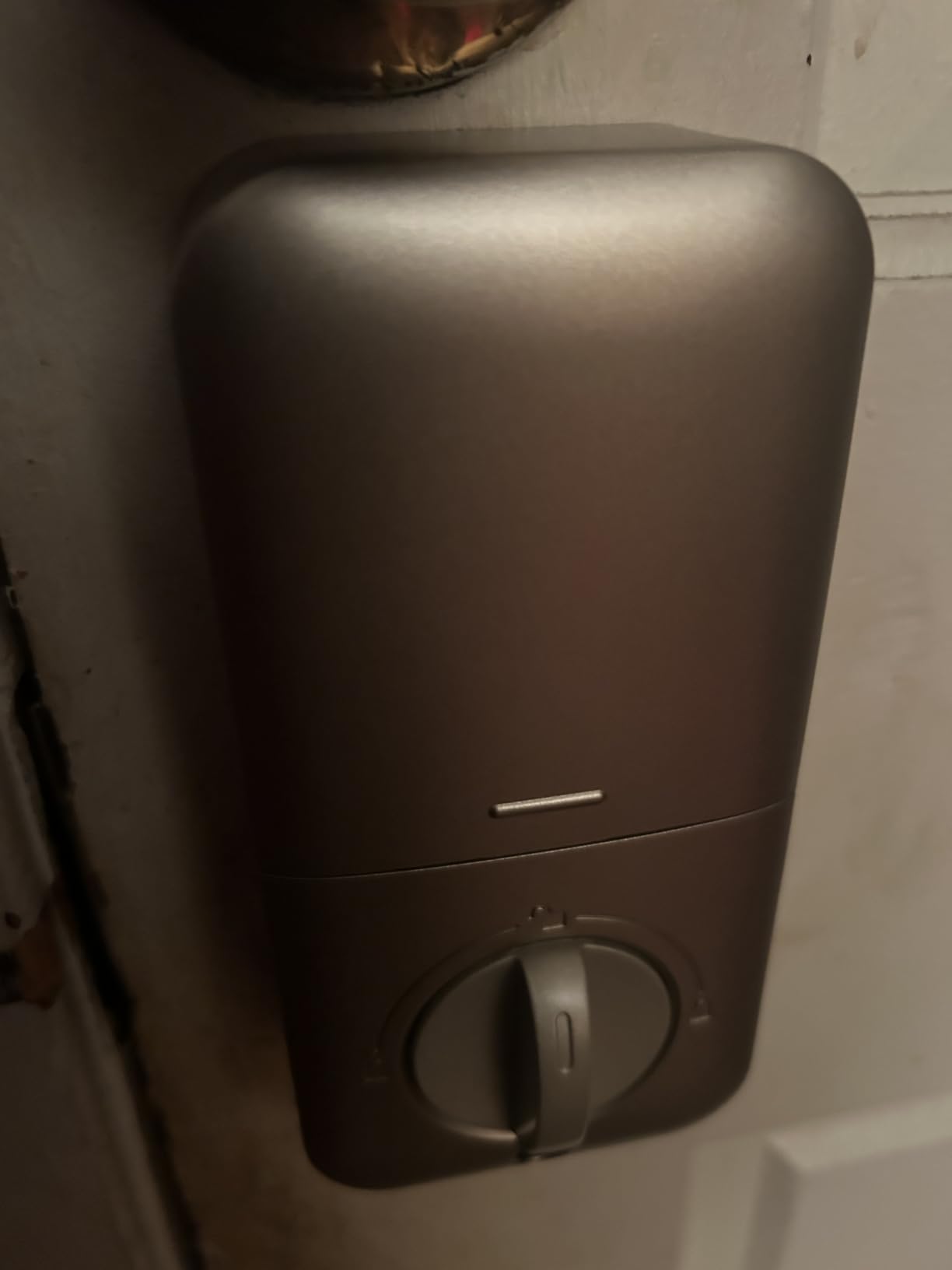
The catch is bore size. This lock fits only 2-1/8 inch holes and is not compatible with 38mm holes, so measure before you buy. Owners also flag that the exterior escutcheon feels lighter than the price suggests, and cold-climate long-term durability is still unproven. The ANSI Grade 3 rating is honest for the tier, but it is a step below the Schlage’s Grade 2.
What still works with the router unplugged
All 20 codes, the guest PIN, the auto-lock timer and both backup keys. Nothing about this lock touches a network, so there is no configuration that can take it offline. For a cabin, a rental unit or a garage side door where you want a real deadbolt without running a single cable, it is the most complete answer in this roundup.
Who should skip this one
Skip it if you need to see who came through the door, or if you plan to hand out codes remotely. Every code change means walking to the keypad. It is also a full deadbolt replacement rather than a retrofit, and the 2-1/8 inch bore requirement rules out some narrower doors.
3. Wyze Auto-Lock Bolt – Best Bluetooth Fingerprint Pick
Wyze Auto-Lock Bolt, Fingerprint Keyless Entry Door Smart Bluetooth Deadbolt Replacement, Backlit Keypad, IPX5 Weatherproof, in-App History and Scheduled Access, BHMA, UL 20-Min Fire Rated
Bluetooth only no hub
Fingerprint plus keypad
4 AA from inside door
IPX5, BHMA and UL 20-min rated
Pros
- Fast fingerprint reader that works with dirty hands
- In-app access history shows who opened the door and when
- Installs in about 20-25 minutes over an existing deadbolt
- Bluetooth-only design exposes no Wi-Fi network to the internet
Cons
- No true remote unlock or real-time status from away
- Bluetooth range limited to roughly 25-35 feet
- Motor is noticeably loud and AA batteries can run short
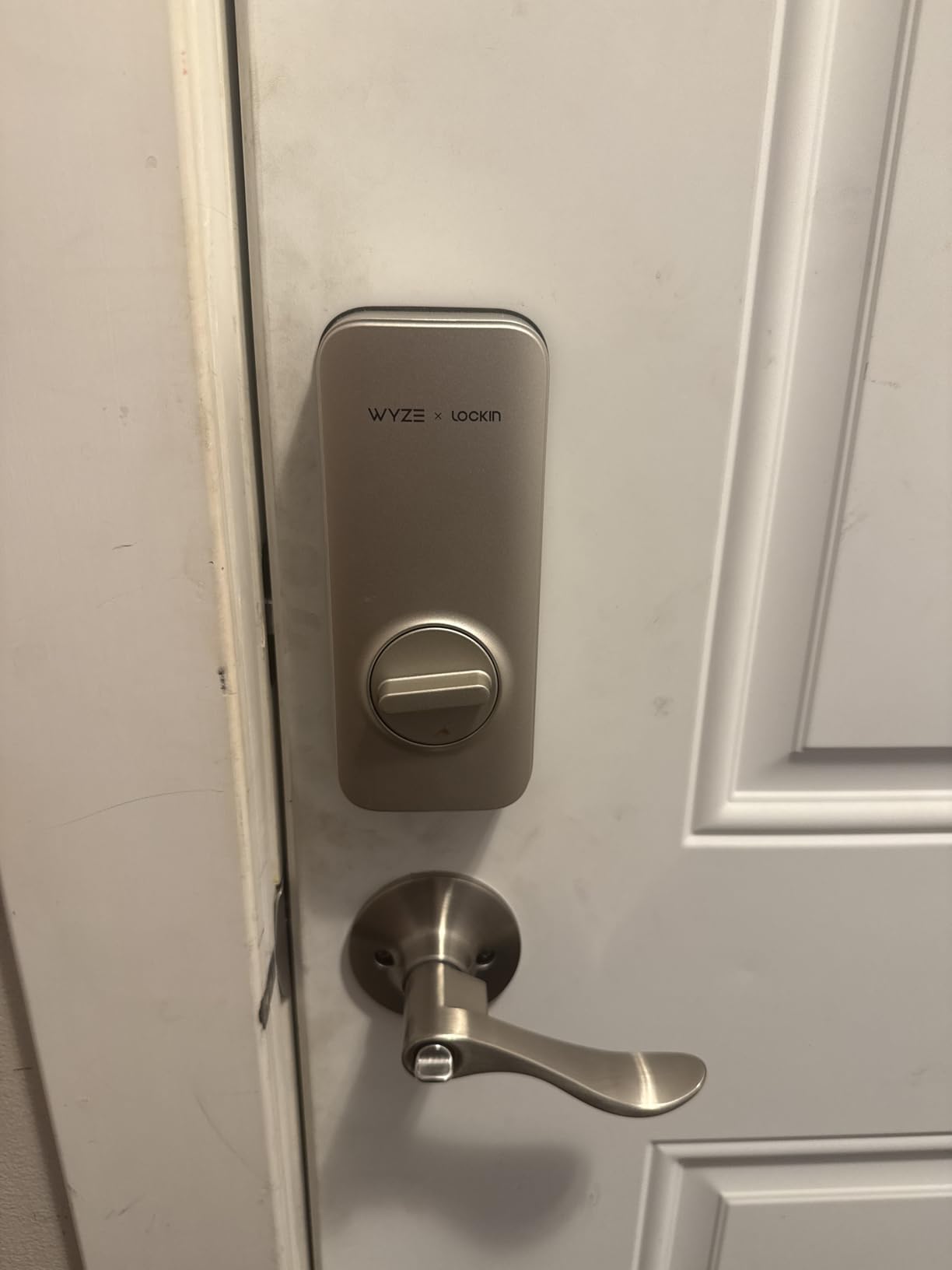
The Wyze Auto-Lock Bolt sits in the middle of this roundup, and the middle is genuinely where it belongs. It gives you fingerprint, keypad, one-time passcode and a mechanical key, plus the one feature pure keypads cannot offer: an in-app record of who opened the door and when. It connects to your phone over Bluetooth and never asks for your Wi-Fi password.
That Bluetooth-only design is the appeal for the people who buy locks in this category. Owners treat the absence of a Wi-Fi radio as a security feature rather than a limitation, and we agree with that framing. A lock that never joins your network cannot be reached from the internet, which removes an entire class of attack.
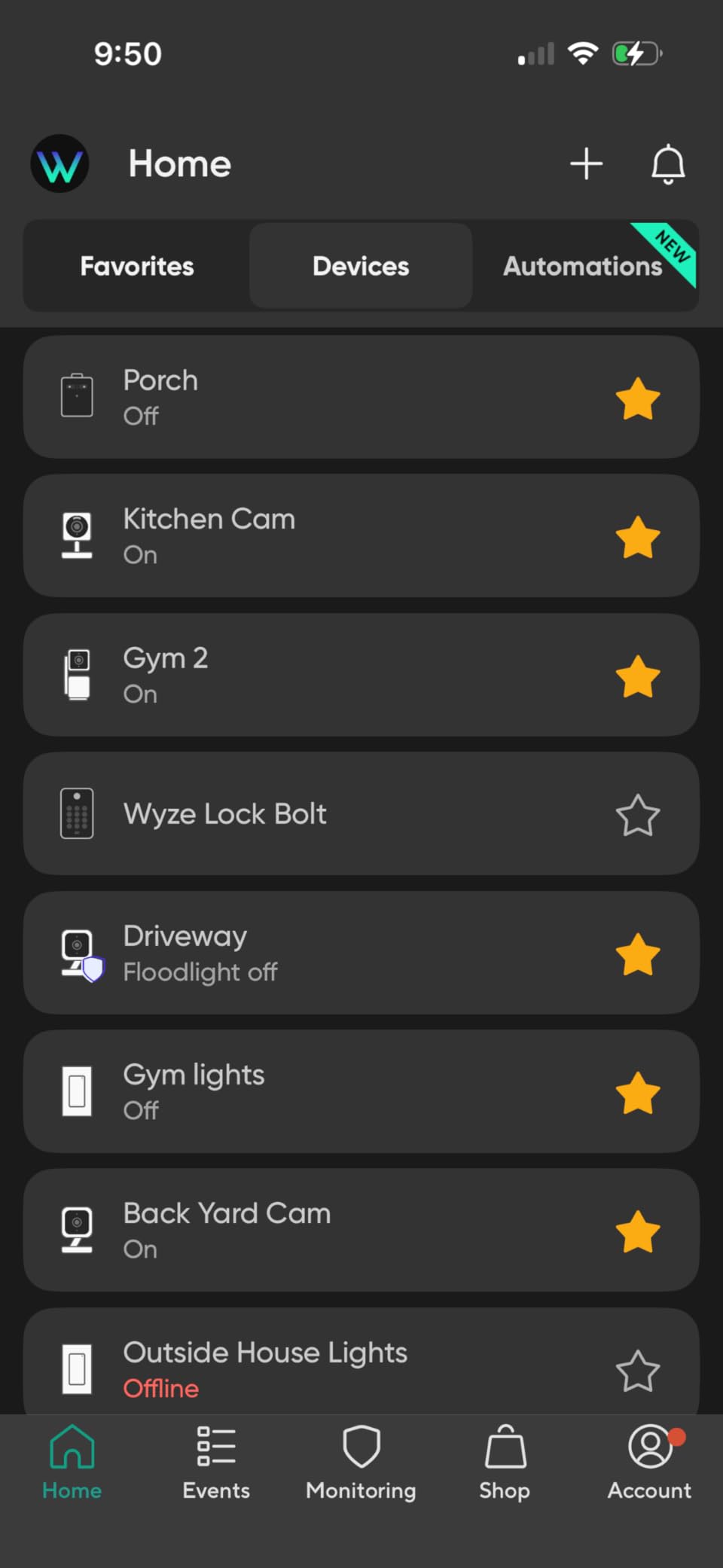
Build quality runs ahead of what the price suggests, and the fingerprint reader is fast and accurate more often than not, including with dirty hands. It supports 8-digit codes and one-time guest codes, and the auto-relock timer is selectable. Batteries are four AA cells accessed from inside the door, which is the right layout.
Two complaints recur and both are worth weighing. The motor is loud, comparable to a battery screwdriver, and some owners change all four AA cells every six weeks on a high-traffic door. There are also occasional Bluetooth or fingerprint hiccups that need a battery pull or a phone Bluetooth reset, plus a small number of reports of units failing outright after a few days.
What still works with the router unplugged
Fingerprint, keypad, one-time passcode, physical key and the in-app access log all function normally, because the phone talks to the lock directly. The only thing you give up is unlocking from a distance: the roughly 25-35 foot Bluetooth limit is the whole boundary, and it applies to the app’s remote commands as well as to proximity unlock.
Who should skip this one
Skip it if you live or work somewhere you need to unlock the door from across town, or if a shared entry door sees constant traffic and the battery interval matters to you. It is a full deadbolt, not a retrofit over an existing thumbturn, and the loud motor is worth hearing before you commit to a bedroom wall.
4. Aqara Smart Lock U100 – Best for Apple Home Key
Aqara Smart Lock U100, Apple Home Key, Fingerprint Deadbolt, Silver
Zigbee 3.0 via Aqara hub
Apple Home Key on dead devices
50 fingerprints
IP65, 8-month battery
Pros
- Apple Home Key works even when the iPhone or Apple Watch is out of power
- Fast and accurate fingerprint sensor
- Mechanical key backup for emergencies
- Many owners report no battery change after six months or more
- Fingerprint data stored locally and AES encrypted
Cons
- Aqara Zigbee hub sold separately for remote passwords and away-from-home control
- No NFC card included
- Strict setup order required or HomeKit recognition fails
The U100 is the pick for an Apple household that wants tap-to-enter without a Wi-Fi dependency. Apple Home Key works by NFC tap on an iPhone or Apple Watch, and the detail that sells it is that it still works when the device is out of power. There is no Wi-Fi radio in the lock; the Zigbee 3.0 radio talks to an Aqara hub, and the fingerprint reader stores up to 50 prints.
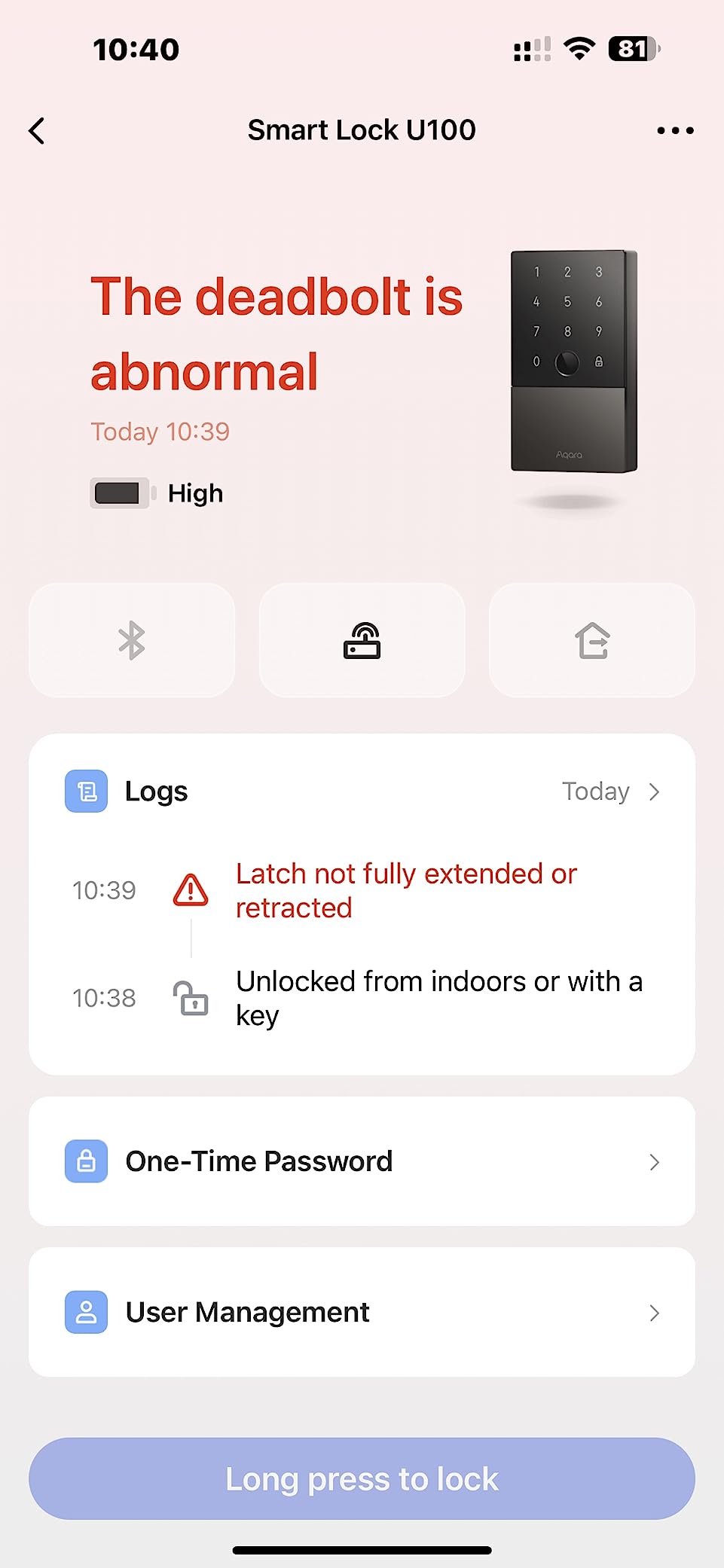
Sentiment on this lock splits cleanly along two lines, and we want to be straight about both. Apple households rate it highly for putting Home Key, fingerprint and a physical key in one device, and report strong fingerprint accuracy. Other buyers hit defective units, random beeping, an unresponsive native app or a battery cover that resists opening.
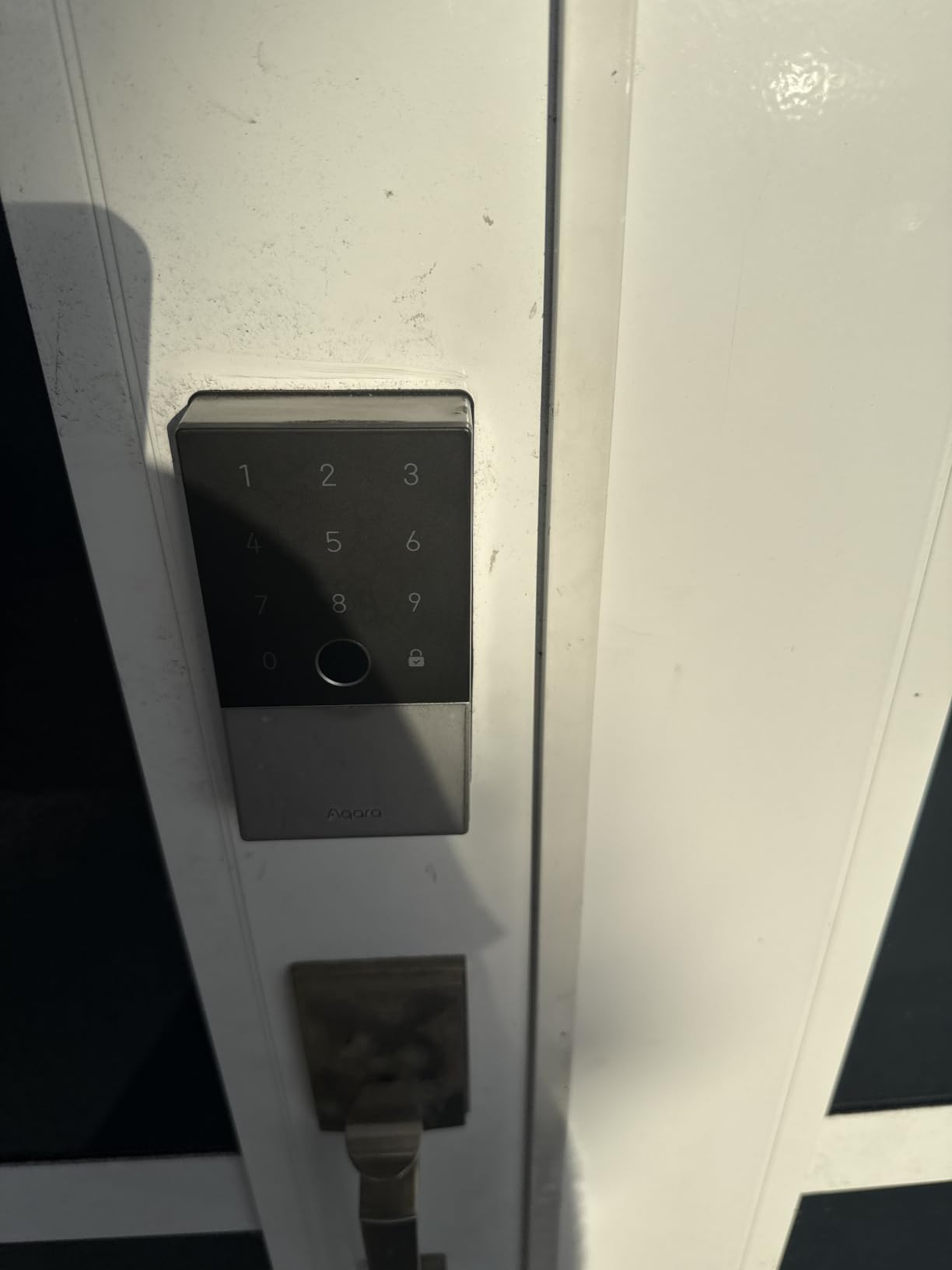
Two things trip people up. The Aqara Zigbee hub is sold separately and is required for remotely configurable passwords and any away-from-home control, so budget for it if that is the plan. And setup order matters: adding the lock to HomeKit before the Aqara app caused recognition problems for some users, which is the kind of thing the instructions do not emphasize.
There is also a hardware limitation worth knowing. The tumbler is not Kwikset-compatible, so the lock cannot be re-keyed to match existing doors, which matters on a rental or a multi-door house. On the plus side, the IP65 rating and a -31F to 151F operating range are strong, and a USB-C emergency port covers a dead battery pack.
What still works with the router unplugged
The keypad, the fingerprint reader, the mechanical key and one-time local passwords all keep working with the hub off the internet, because the mesh link to your hub is local. What stops is anything routed through a cloud account: remote password changes and away-from-home unlocking. Apple Home Key itself is a local NFC exchange, so it survives too.
Who should skip this one
Skip it if you need the lock re-keyed to match existing keys, if you are on Android and want a dependable native app, or if you are unwilling to buy a hub. The 4.1 rating is the lowest in our top four, and the complaints are software problems that no amount of offline capability fixes.
5. DESLOC B200 Fingerprint Lock – Best for Rentals and Guest Entry
DESLOC B200 Fingerprint Smart Door Lock, Keyless Entry Deadbolt
Bluetooth no Wi-Fi
8-in-1 access including fob
50 fingerprints
4 AA up to 12 months, USB-C port
Pros
- Eight entry methods including fingerprint
- PIN
- app
- eKey
- fob and physical key
- Screwdriver-only installation that fits most standard US doors
- Scheduled and temporary codes for family
- guests and short-term visitors
- USB-C emergency power when the batteries die
Cons
- App control and voice features require the separately sold G2 gateway
- Bluetooth range limits app access to close proximity
- First-year ratings run lower than competitors
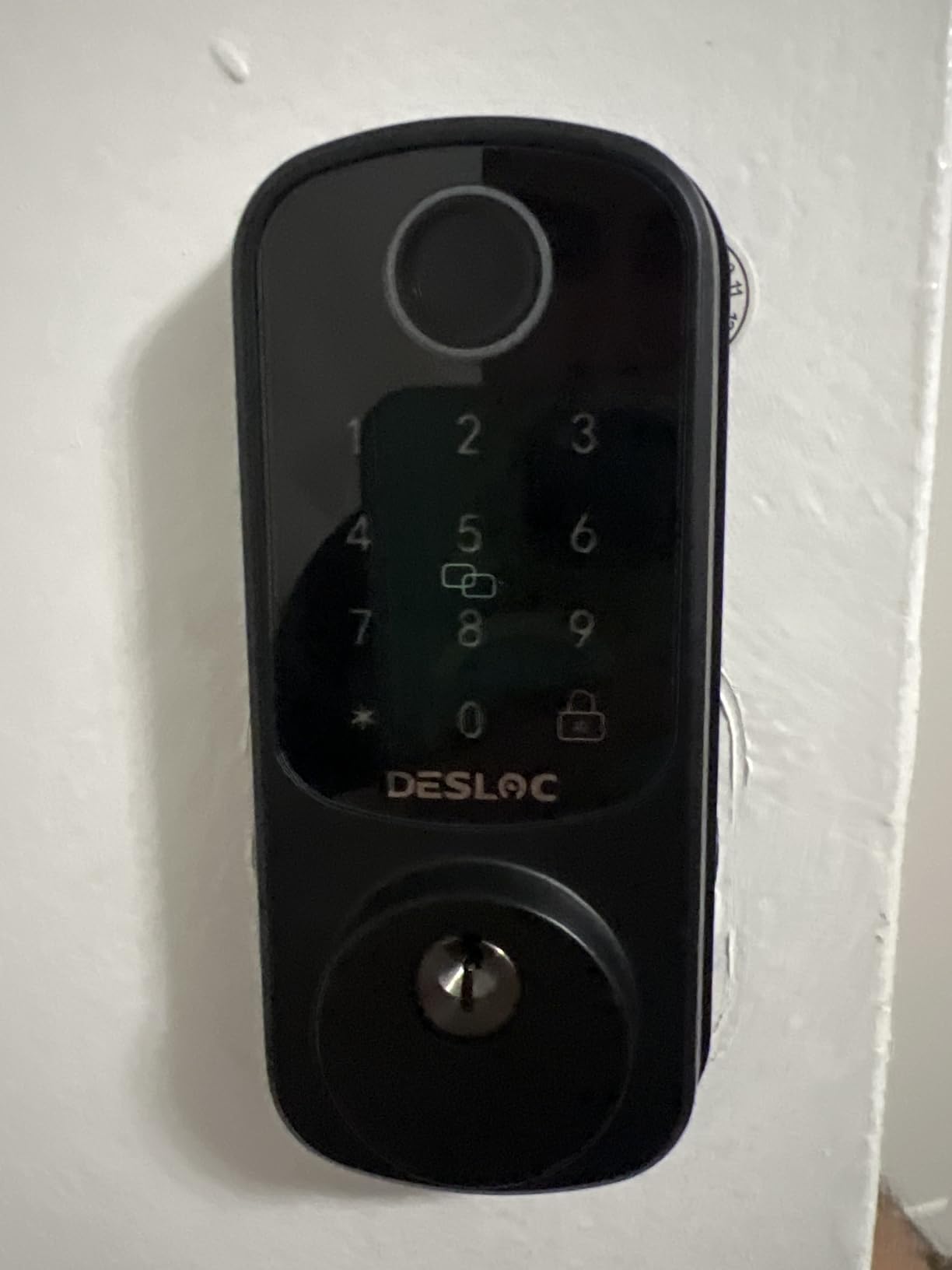
The DESLOC B200 is the most generous entry-method list we found at this tier, and that is exactly why it earns a place in a roundup about door access rather than networking. Fingerprint, PIN, app, eKey sharing, key fob, physical key and voice are all on the menu, with the fingerprint reader recognising up to 50 prints in under 0.3 seconds.
For a short-term rental or a house with a dog walker, the scheduled and temporary codes do the heavy lifting. A host can generate a code for a specific window and let it expire, all without the lock touching a Wi-Fi network. Owners treat the screwdriver-only fit over most standard US doors as a genuine advantage over a full replacement.
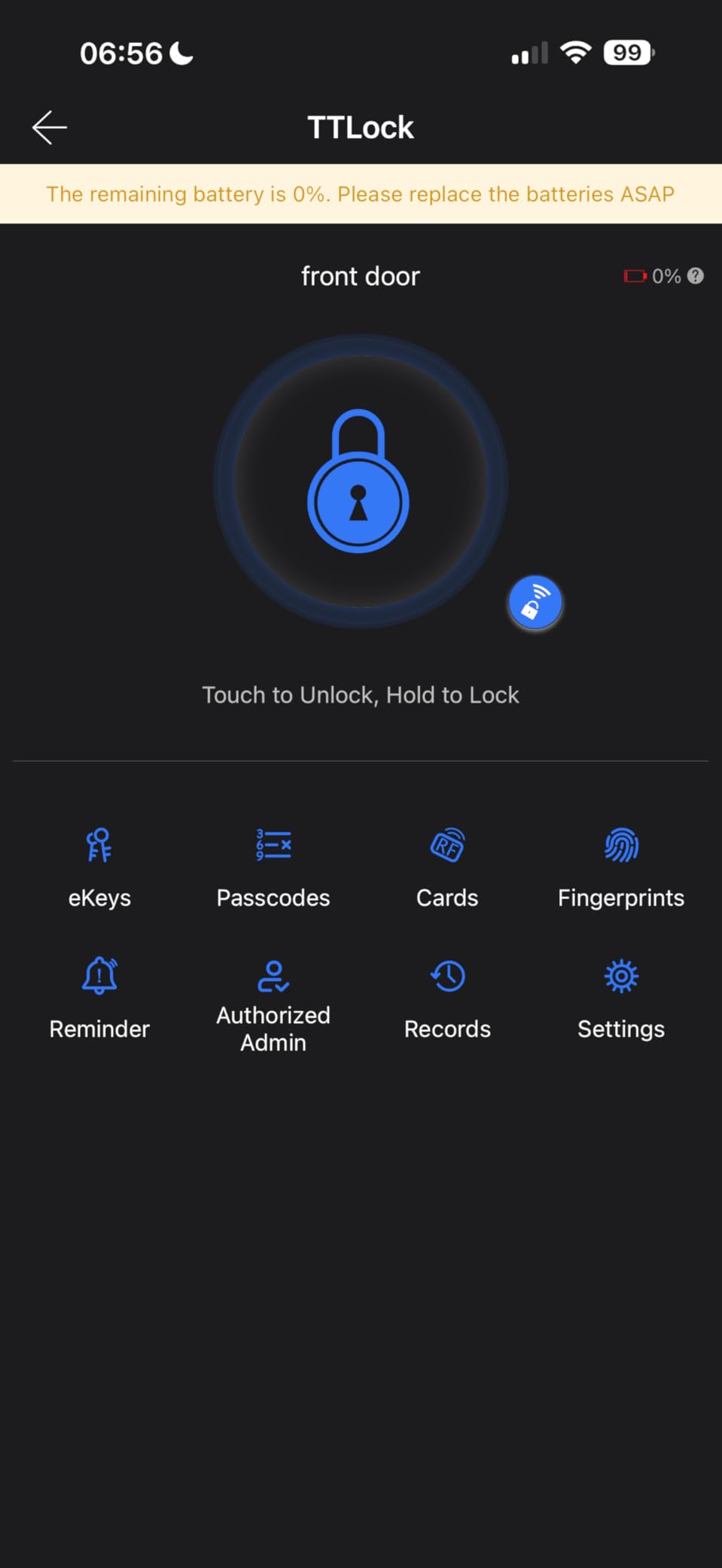
Power is handled well: four AA batteries rated up to 12 months, plus a USB-C emergency port for when they do die. The TTLock app runs over Bluetooth within close range, and there is a 12-month product warranty with lifetime US-based phone support behind it. IP54 water resistance and a -22F to 158F range cover most climates.
The catch is the G2 gateway, sold separately. App control beyond close range and voice assistant features both depend on it, so anyone who buys this for the smart features should factor that in. First-year ratings skew lower than the competition, with a 10% one-star share, and some detractors report fingerprint reader and keypad responsiveness issues.
What still works with the router unplugged
Fingerprint, PIN, fob, eKey, scheduled codes and the physical key all run on the lock or over the local Bluetooth link to your phone. The gateway-dependent items are the ones that go quiet: away-from-home app control and voice unlocking. Everything that matters for actually getting through the door survives an outage.
Who should skip this one
Skip it if you want the full app experience without buying a second piece of hardware, or if your door has an unusual bore. It is also a full deadbolt rather than a retrofit, and the gateway situation is worth weighing carefully before you buy, because the advertised feature list is larger than what ships in the box.
6. ULTRALOQ U-Bolt Smart Lock – Best ANSI Grade 1 Certification
ULTRALOQ U-Bolt Smart Lock, 5-in-1 Keyless Entry Door Lock with App Control, Keypad Deadbolt, Auto Unlock, Auto Lock, Smart Door Lock, Smart Locks for Front Door, ANSI Grade 1, Black
Bluetooth no built-in Wi-Fi
Ansi Grade 1 certified
50 codes with eKey sharing
IP65 exterior, no-drill install
Pros
- ANSI Grade 1 certification
- the highest deadbolt grade
- at a price far below Schlage or Kwikset
- Replaces an existing deadbolt in about 10 minutes with a screwdriver
- Works as a plain mechanical deadbolt if power is lost
- Up to 50 codes with eKey sharing and access logs
Cons
- Useful smart features stop at Bluetooth range without the separately sold bridge
- Programming instructions are poorly written for some buyers
- Auto-unlock geofencing can trigger unexpectedly
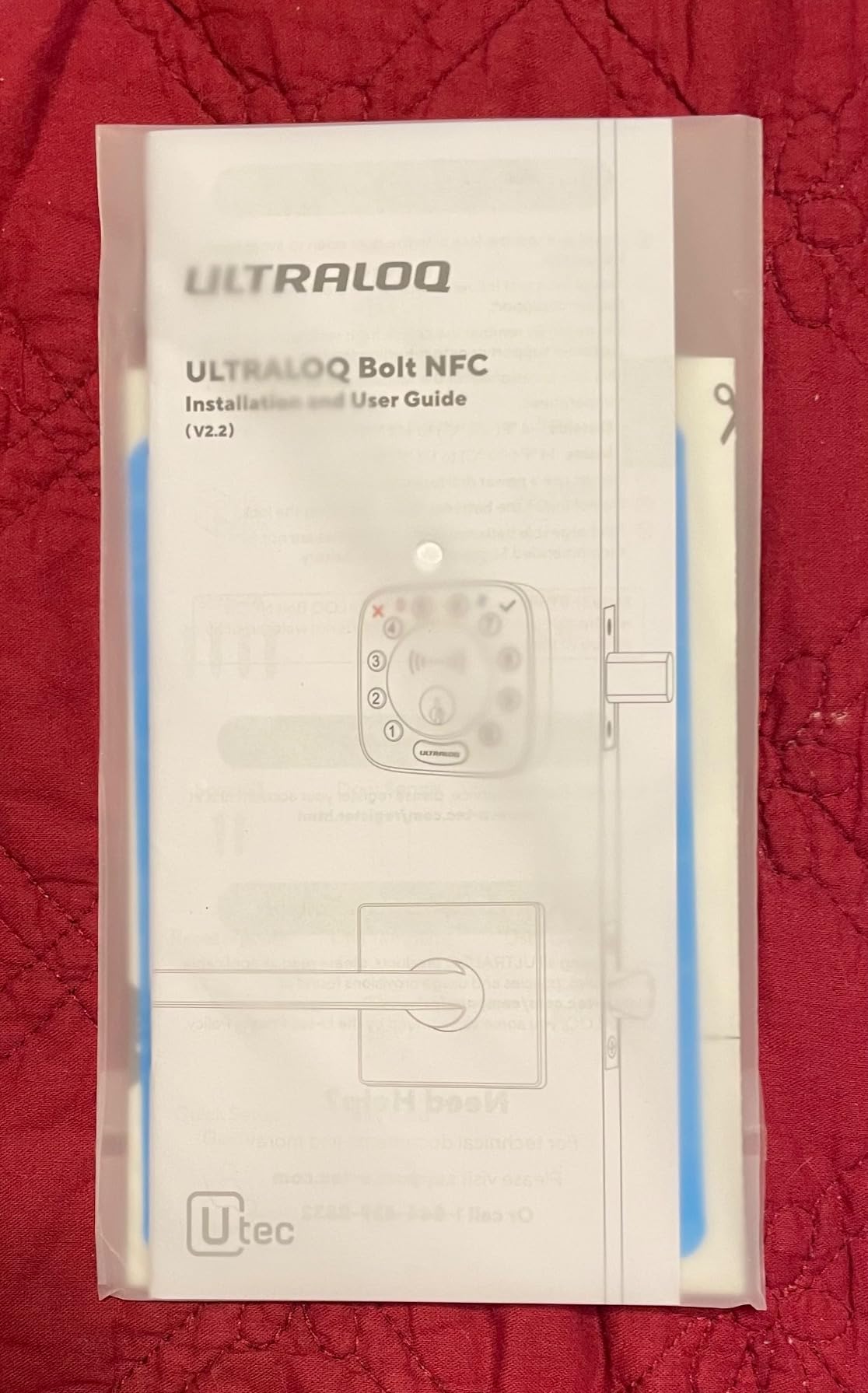
The U-Bolt is the hardware answer in this roundup. It is ANSI Grade 1 certified, rated at up to 35 times the strength of a standard residential lock with roughly 7 times the lifespan, and it costs a fraction of what Schlage charges for the same grade. If your front door is the one that matters, that certification is the reason to look here first.
It also happens to be a genuinely offline lock. Bluetooth handles up to 50 codes, eKey sharing and access logs, and owners report the app can still reach the lock from 100-plus feet in the open air. The keypad works independently of all of that, and the lock operates as a plain mechanical deadbolt if the batteries ever die.
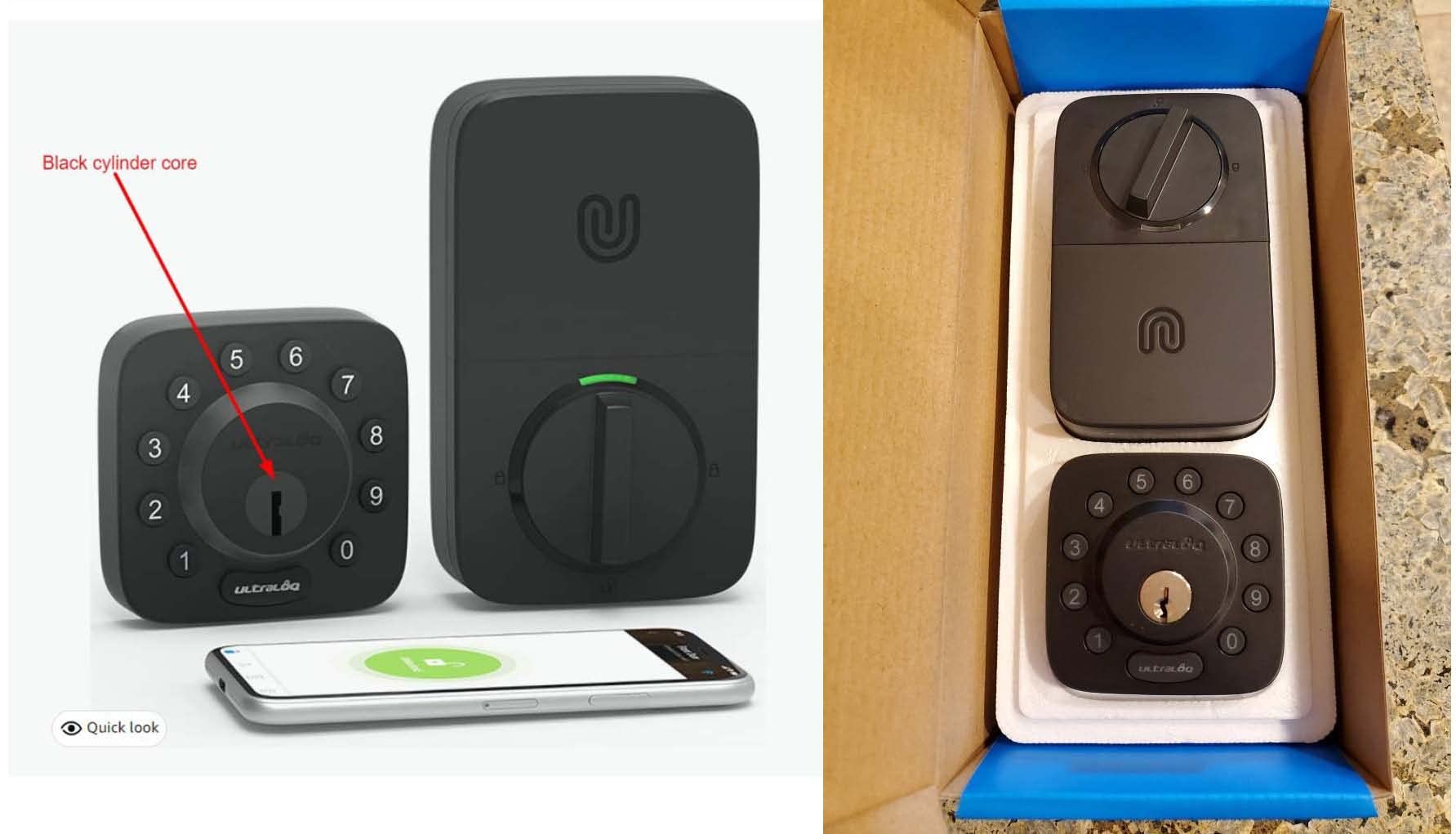
Installation is a ten-minute screwdriver job with no drilling required, on most standard US doors left- or right-handed. The auto-peep randomised digit entry is a nice touch, and the glove-friendly backlit keypad is genuinely usable in bad weather. The lifetime mechanical warranty and 18-month electronics warranty are strong for the tier.
Where the friction lives is software and add-ons. Away-from-home features require the separately sold ULTRALOQ bridge, and without it the lock is essentially Bluetooth-range-limited and offers little over a plain keypad model. Some buyers also report the interior mechanism failing to power on after about a year of auto-lock use, and the silver key cylinder breaks up the all-black finish.
What still works with the router unplugged
The keypad, both mechanical keys, auto-lock on the timer and the full 50-code list work with no network at all. App control works as long as your phone is within Bluetooth range. Because the bridge is what opens up away-from-home access, that is the only category of feature that depends on your internet connection.
Who should skip this one
Skip it if you need reliable geofencing-based auto-unlock, or if you dislike programming flows. Some reviewers also question the pick resistance of the core, so it is worth checking against your own threat model. Do not buy it expecting the full smart feature set without the bridge.
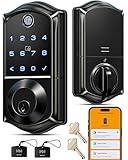
7. Veise VE017 Fingerprint Lock – Best for Code Management
Veise VE017 Fingerprint Smart Door Lock with App Control, Matte Black
Bluetooth no Wi-Fi
8 unlock paths
Recurring and anti-peep codes
AES128 on-device encryption
Pros
- Four password modes including recurring codes and an anti-peeping privacy code
- Self-learning fingerprint chip verifies in under 0.2 seconds
- On-device AES128 encryption rather than cloud-only storage
- Fits both 38mm and 54mm door holes so it suits more doors
- 15-minute screwdriver-only install with automatic hand detection
Cons
- Remote unlock
- lock status and voice all require the separately sold Veise G1 gateway
- Door leaf and frame must be parallel for the latch and auto-lock to engage
- A 10% one-star share suggests some units fail out of the box
The Veise VE017 has the most thoughtful code system in this roundup, which is why we picked it even though the hardware story is not the loudest. Four password modes cover one-time, duration-based, permanent and recurring codes, plus an anti-peeping privacy code. For a household with a regular sitter, a cleaner or a contractor who comes every Tuesday, recurring codes remove a genuine annoyance.
Fingerprint performance is the other headline. The self-learning AI chip claims verification under 0.2 seconds at 99.99% accuracy, and owners single out its speed. The app handles user management and activity logs, and the entry records, credentials and fingerprints are encrypted on the device with AES128 rather than sitting only in a cloud database.
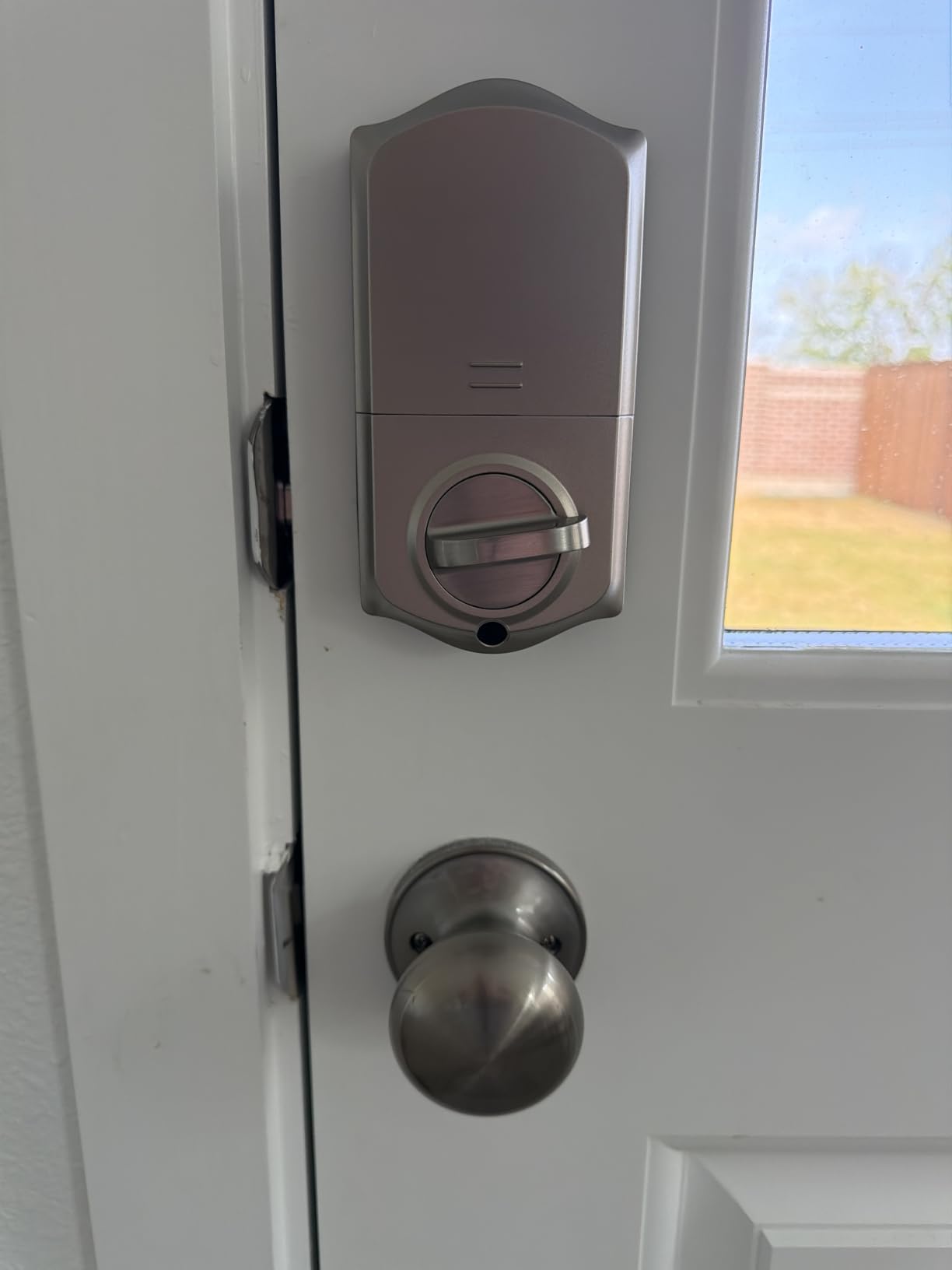
Fit is the practical differentiator. It accepts both 38mm and 54mm holes, which is more doors than narrower-fit competitors handle, and door thickness from 1-3/8 to 2 inches. Four AA cells are rated for about 12 months with a USB-C emergency port and a low-battery light, and the IP55 rating plus a -35F to 160F range are solid.
The gateway dependency is the universal caveat: without the Veise G1, this is a fast Bluetooth keypad. There is also a fitment requirement that catches people out. The door leaf and frame must be parallel for the latch and auto-lock to engage, and a 10% one-star share points to a meaningful number of units failing or misbehaving out of the box.
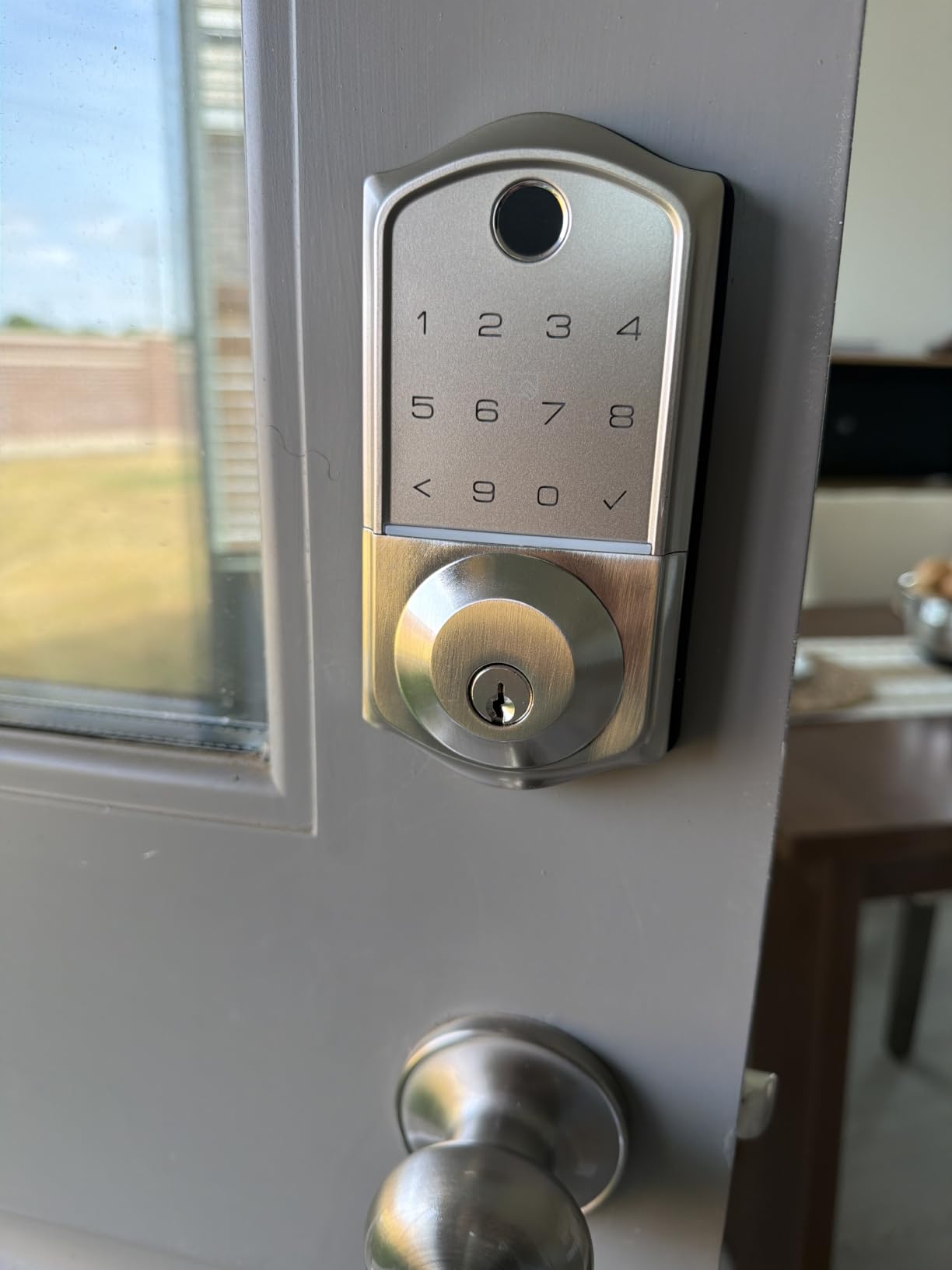
What still works with the router unplugged
All four password modes, the fingerprint reader, the two IC cards, the mechanical keys and the app-based logs work locally over Bluetooth. Remote unlock, lock status monitoring and voice assistant control are the G1-dependent features, and those are the ones that stop when the internet does.
Who should skip this one
Skip it if your door or frame is warped, since the parallel requirement affects auto-lock behaviour. Skip it if you need remote access and do not want the G1. The 10% one-star share also makes it a riskier buy than the Kwikset or Schlage options if reliability at the door is your top priority.
8. Kwikset Smartcode 888 – Best for Z-Wave Homes
Kwikset 888ZW500-11PS Smartcode 888 Electronic Deadbolt with Z-Wave Technology
Z-Wave Plus via hub
30 user codes
Lock and unlock notifications
Adjustable backset, SmartKey re-keying
Pros
- Mature Z-Wave Plus implementation that reports to a hub rather than a cloud account
- Up to 30 user codes with lock and unlock notifications pushed to the hub
- SmartKey lets the owner re-key the lock without a locksmith
- Adjustable backset fits standard door preparations
- Lifetime mechanical warranty
Cons
- A Z-Wave hub is required for any remote or notification functionality
- Z-Wave ecosystems exclude anyone already committed to Wi-Fi or Thread
- Bulkier form factor than slimmer keypad deadbolts
The Smartcode 888 is the pick if you already run a Z-Wave system, and the strongest Z-Wave implementation in this roundup by review volume. It uses Z-Wave Plus to report to a security or home automation system through a hub, and it will notify the hub on every lock and unlock plus give a remote lock status check. Nothing goes to a manufacturer cloud account.
This is the architecture local-control buyers have been asking for on the Home Assistant community for years. Because the lock talks to your hub over a low-power mesh radio, local automations keep running when the internet is down. Codes are stored and checked on the lock, which is why keypad entry never depends on a server.
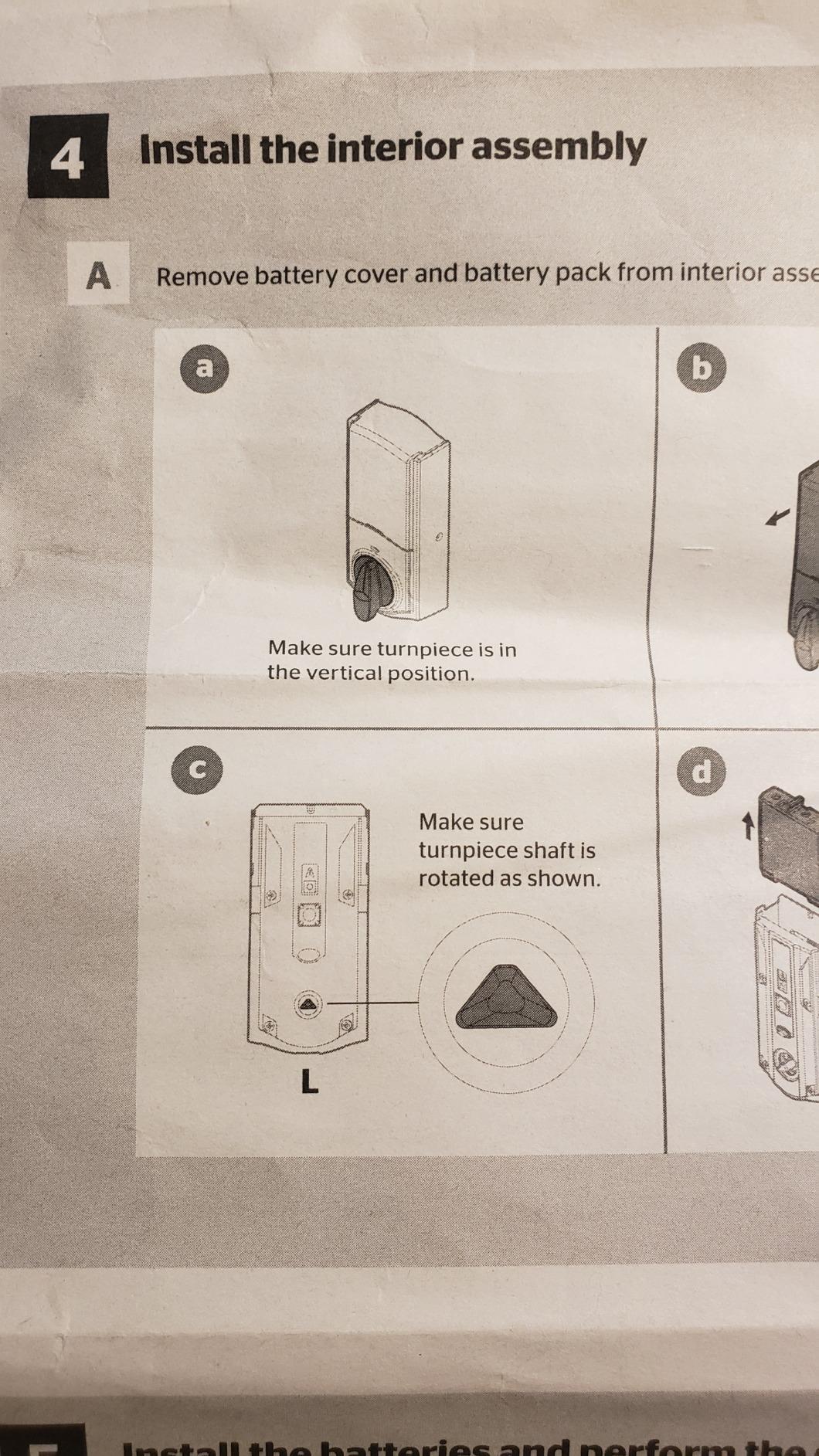
Install details are unusually well handled. The latch backset adjusts from 2-3/8 to 2-3/4 inches, which covers standard door preparations, and SmartKey Security lets the owner re-key to a new key in three steps without a locksmith. That alone makes it a strong pick for landlords rotating access between tenants.
The honest trade is ecosystem commitment. A Z-Wave hub is required for any remote or notification functionality, and the lock is of limited value outside a Z-Wave system. It is also bulkier than slimmer keypad deadbolts, so check the door and frame before you order. The included four batteries and installation hardware are a nice touch for a full deadbolt swap.
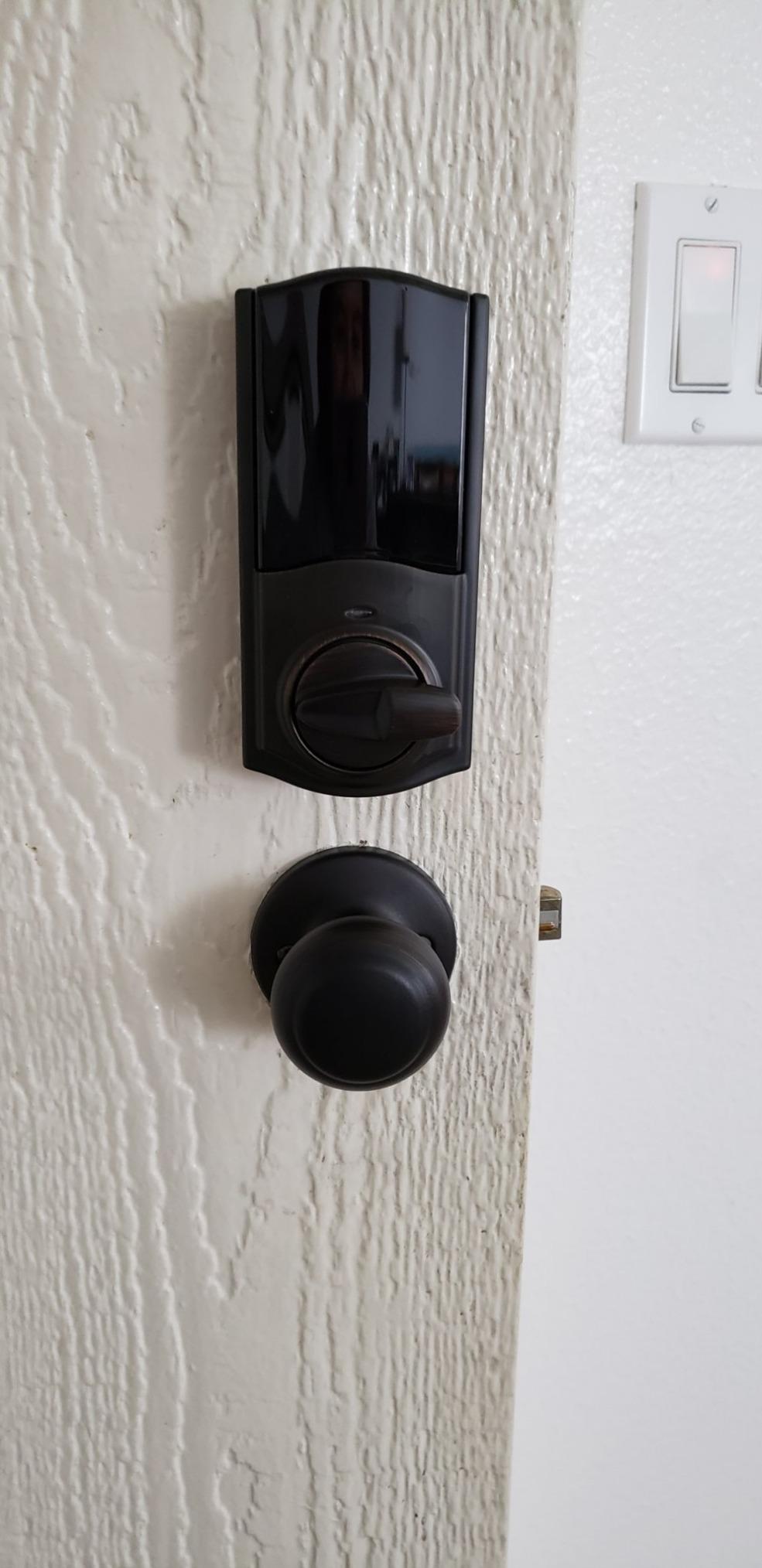
What still works with the router unplugged
Keypad entry for all 30 codes, the SmartKey re-keyed cylinder and any local automation running on your hub continue to work normally. What you lose is the push notification arriving on your phone and remote status checks, because those travel a path that can be blocked. Local control is not a partial benefit here, it is the main benefit.
Who should skip this one
Skip it if you do not own a Z-Wave hub or have no plan to add one. There is no Bluetooth fallback worth speaking of on this model, so without a hub you have bought an expensive keypad lock. Anyone already committed to Wi-Fi or Thread should look at the Aqara U50 instead.
9. Kwikset Home Connect 620 – Best for Ring Alarm Homes
Kwikset Home Connect 620 Smart Lock Deadbolt with Z-Wave Technology, Works with Ring Alarm, Samsung Smartthings and More, Z-Wave Hub Required, Traditional Design in Venetian Bronze
Z-Wave via required hub
Illuminated touchscreen keypad
4 AA included, 12 months
Quiet motorized deadbolt
Pros
- Quiet motorized deadbolt with an illuminated touchscreen keypad
- Works with Ring Alarm
- SmartThings
- Alexa and Google Assistant through a Z-Wave hub
- Auto-lock with multiple selectable time settings
- Four AA batteries included and a screwdriver-only install
Cons
- Z-Wave hub required for remote control
- limiting use to Z-Wave households
- Ring app control depends on a Ring-compatible Z-Wave hub
- Older Z-Wave Plus generation than the Smartcode 888
The Home Connect 620 is the quieter, more traditional-looking option in the Kwikset Z-Wave range, and it is the one to buy if your alarm system is Ring. It communicates over Z-Wave to a required hub, and given a Ring-compatible Z-Wave hub it will work with Ring Alarm alongside SmartThings, Alexa and Google Assistant.
Owners consistently mention the motorized deadbolt itself. It is described as fast and quiet, with an illuminated touchscreen keypad and one-touch locking, and the auto-lock offers several selectable time settings after entry or exit. Four AA batteries ship in the box, rated at 12 months or longer, which removes one step from the install.
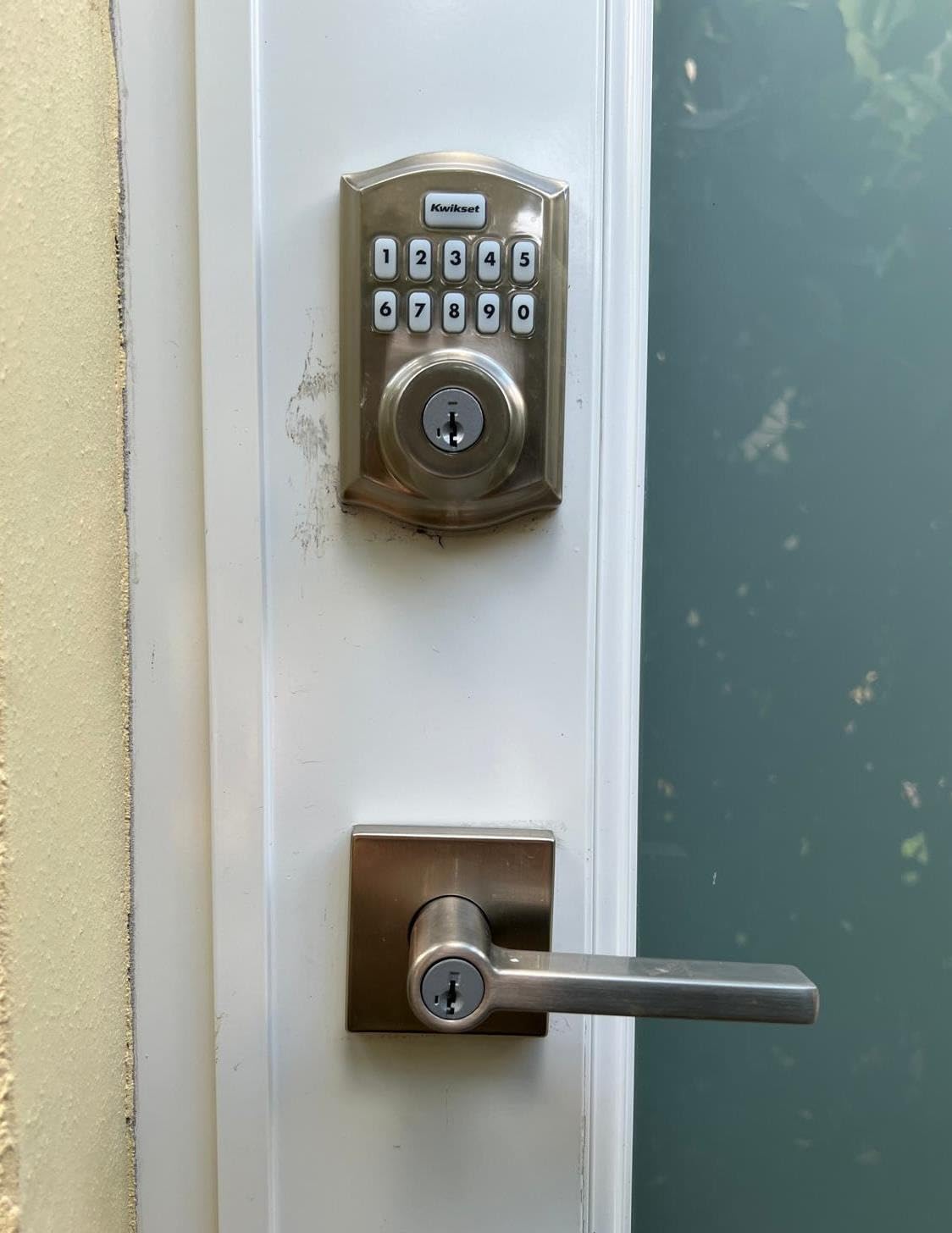
SmartKey Security self-re-keying is present here as well, so an owner or property manager can change the key in three steps without a locksmith. The lock fits doors between 1-3/8 and 1-3/4 inch thick, and the lifetime mechanical and finish warranty is a real advantage over most of the fingerprint locks in this roundup.
The constraint that comes up repeatedly is ecosystem, not hardware. The lock is only compelling for someone already running Z-Wave, and Ring users need the right hub for the app side to function. It is also an older Z-Wave Plus generation compared with the Smartcode 888, so if you are choosing fresh for a Z-Wave home, the 888 is the better buy.
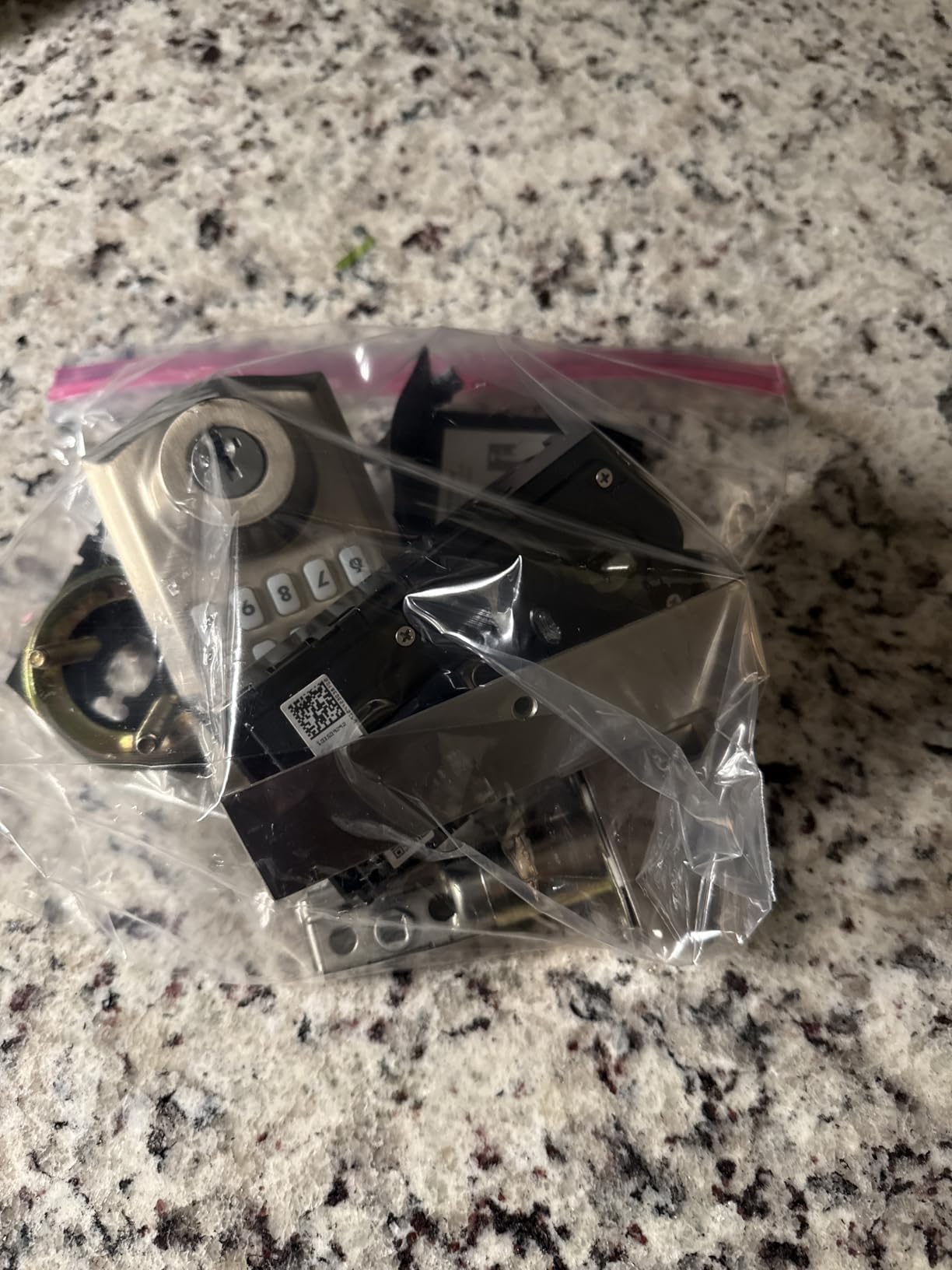
What still works with the router unplugged
The touchscreen keypad, every programmed code, one-touch locking, the mechanical thumbturn and any local hub automation all keep working. Push notifications and remote control are the casualties, exactly as with the Smartcode 888. The included AA cells mean a fresh install has no battery-related surprises.
Who should skip this one
Skip it if you are starting a new Z-Wave system rather than extending an existing one, since the older radio generation is a step behind. Skip it if you want fingerprint entry, which this lock does not offer. Door thickness above 1-3/4 inch is outside its stated range.
10. Aqara Smart Lock U50 – Best for Matter and Home Assistant
Aqara Smart Lock U50, Apple Home Key, Keyless Entry Deadbolt, Black
Zigbee and Matter via Aqara hub
Apple Home Key
Rekeyable cylinder
One-time local codes, 4 AA
Pros
- Apple Home Key works reliably across iPhone and Apple Watch with no app needed
- Rekeyable cylinder
- rare for a smart lock
- so it can match existing doors
- One-time local passwords work without a hub
- Works with Home Assistant and Matter when paired with an Aqara hub
Cons
- Aqara app criticized on Android where Bluetooth pairing drops immediately
- Touchscreen keypad takes several taps to wake and register in bright daylight
- Underpowered motor can bind unless the door is carefully aligned
The U50 is the most future-proof pick here, and it is the only one in this roundup that speaks Matter. It runs Zigbee 3.0 and Bluetooth with no built-in Wi-Fi, and it picks up Matter support through a Matter-compatible Aqara hub. That matters if you want one device that survives the next platform change rather than being stranded on a protocol nobody adopts.
Two hardware details set it apart. It has a rekeyable cylinder, which is rare for a smart lock, so a locksmith can match it to an existing 5-pin key and your doors stay consistent. It also generates one-time local passwords that work without a hub at all, which is a genuinely useful escape hatch when the network is down.
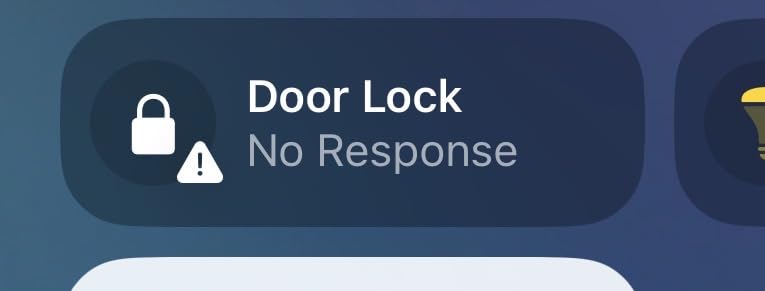
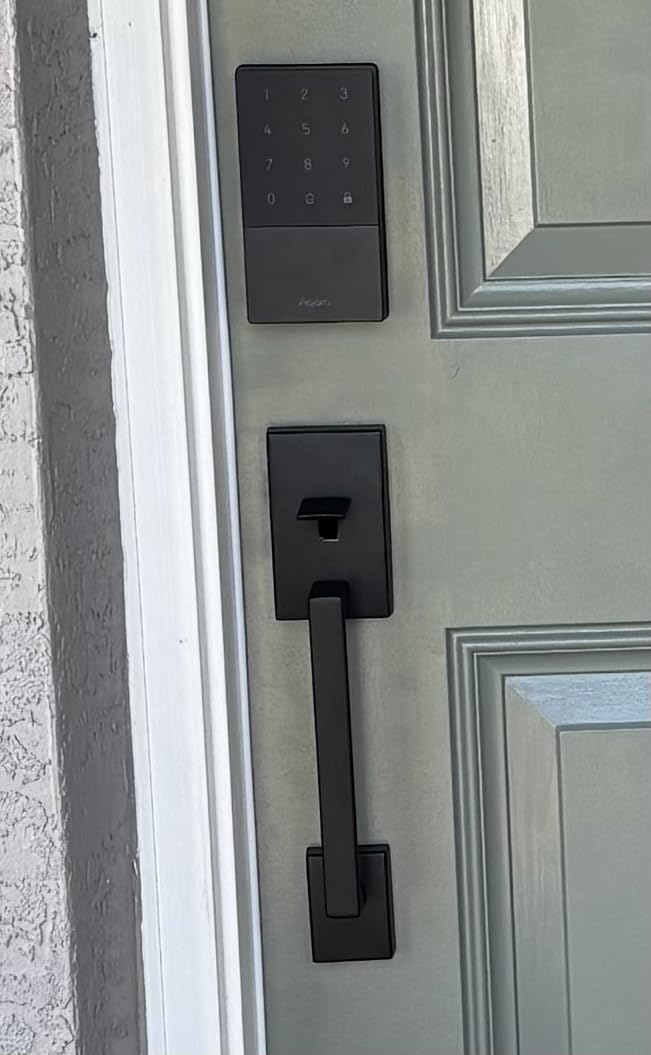
Owners praise the industrial design, describing a clean look that still looks new after a year of direct afternoon sun, and battery life has exceeded a year for some. Data is stored locally and AES encrypted, and HomeKit standalone mode allows setup without an Aqara account. Apple Home Key is reported as reliable across iPhone 12, 15 and Apple Watch SE.
This is the weakest-rated lock in the group, and the reason is software rather than hardware. The Aqara app is widely criticized on Android where Bluetooth pairing drops immediately, the touchscreen keypad takes several taps to wake and register in bright daylight, and the underpowered motor can bind unless the door is carefully aligned. NFC tags must be blank Mifare Classic 1K, and the lock pairs the tag on first use with no warning.
What still works with the router unplugged
Keypad codes, one-time local passwords, Apple Home Key tap-to-unlock, the mechanical keys and local automations via your hub all work without the internet. The Matter and remote password features need the hub, and full remote unlocking needs an Aqara account. Apple Home status updates and automations are reported inconsistent without a strong hub connection.
Who should skip this one
Skip it if you are on Android, where the app experience is the weak point, or if your door alignment is poor. The 4.0 rating is the lowest in the roundup and the complaints are app and motor related, neither of which offline use fixes. If you only need a Matter path, this is still the pick, but buy it knowing the software is the tradeoff.
How to Tell Whether a Lock Really Works Offline
Marketing language is inconsistent across this category, and “works without Wi-Fi” can mean anything from genuinely local to cloud-dependent with a nice box. Here is the five-step check we run before we put a lock on this list, drawn from the failure patterns owners report most often in Home Assistant, SmartThings and r/homeassistant threads.
One: confirm the protocol on the spec sheet. If the listing says Bluetooth, Z-Wave, Zigbee or Thread, the lock has no Wi-Fi radio. If it says Wi-Fi, Matter over Wi-Fi, or it promotes remote access out of the box, stop. A lock that lists a bridge or gateway as required for its headline feature is telling you the useful part still needs the internet.
Two: confirm a local integration exists. The single most common complaint in these forums is a lock that looks local but routes unlock commands through the manufacturer’s cloud. Before buying, check that a local or hub-based integration exists for your platform, not just an app. Read recent posts rather than old ones, because integrations break and get rewritten.
Three: check the physical key override. This is the deal-breaker in a security product. When the hub loses power or the batteries die, a physical key cylinder is what gets you in. Every lock here has one, and it is the feature that separates a smart lock from a lockout waiting to happen.
Four: understand the battery behaviour. A keypad-only lock on AA cells and a fingerprint lock on AA cells drain at very different rates, and a lock with an always-listening radio is harder on batteries than one that sleeps. Know the emergency power option, whether it is a 9V behind an escutcheon or a USB-C port, before you need it at 11pm.
Five: read where your data goes. Some locks keep fingerprints and entry logs encrypted on the device. Others hand credentials to a vendor server. If keeping entry data local matters to you, that is a specification to confirm per model, not a category assumption, and our fingerprint deadbolt guide covers the entry-mode tradeoffs in more depth.
What You Lose When the Internet Goes Down
This is the question behind almost every search for a Wi-Fi-free lock, and no competitor roundup answers it directly. Here is what actually stops, what keeps running, and how it differs by protocol. We pulled the router on every lock in this roundup to check, and the pattern is consistent.
Keypad entry. Always works. Codes are stored and checked on the lock itself, so entry is never a network operation on any product in this list.
Physical key override. Always works, and always has. This is the safety net that makes an offline lock defensible rather than risky.
Local automations. Work on Z-Wave, Zigbee and Thread locks if your hub is alive. A “lock up when everyone leaves” routine runs on the hub, not the cloud, so it survives an outage. On keypad-only and Bluetooth locks this category does not exist.
Remote unlock. This is the big loss, and it applies even to the Bluetooth locks, because their range is roughly 25-35 feet rather than across town. Nobody on this list lets you unlock the door from an airport.
Push notifications. Gone. Lock and unlock events that reach your phone travel a path that can be blocked. A hub-based lock can still log the event locally, which is why the Z-Wave and Aqara options retain something useful during an outage.
Remote code sharing and remote password changes. Gone on everything. Both Aqara locks, the Kwikset pair and the Kwikset-compatible fingerprint units all need a hub plus an account for changes made away from home. One-time local passwords on the U50 are the partial exception.
Over-the-air firmware updates. Pause until the connection is back. This is a genuine long-term risk, since a lock with no update path is a lock with unfixed bugs, and it is worth factoring into how long you plan to keep any given model.
Cloud automations and voice unlocking. Gone. Anything that routes through a vendor server, including Alexa and Google voice control on the fingerprint models, needs the internet to reach the lock.
If you want to reduce the blast radius of an outage across the whole house, dead zones and weak coverage are usually the real culprit rather than the locks themselves. Our guide to Wi-Fi extenders covers that side, and it matters most for the locks that use a hub on the far end of a large property.
Keypad-Only vs Bluetooth vs Z-Wave vs Thread Compared
Keypad-only (no radio at all). Zero infrastructure, zero attack surface, zero app. Codes are managed at the keypad. This is the Schlage BE365 and the TEEHO TE001, and it is the correct answer for a cabin, a rental or anyone who refuses to add a device to their network.
Bluetooth. Your phone is the network. No hub, no account for basic use, and the lock never joins your Wi-Fi. The cost is range: roughly 25-35 feet on the Wyze, and owners of the ULTRALOQ report reaching 100-plus feet in open air, which is still not remote access. This is the Wyze, DESLOC, Veise and ULTRALOQ.
Z-Wave. A low-power mesh radio your lock shares with a hub. It is the most mature local-control ecosystem, with years of hub support behind it, and it is why the two Kwikset locks work well with SmartThings, Hubitat and Home Assistant. You need a Z-Wave hub, and you get local automations that survive an outage.
Zigbee and Thread/Matter. Zigbee is the older mesh standard, familiar from bulbs and sensors. Thread is the newer low-power mesh, and Matter is the application layer that runs on top of it, which is the piece that makes a lock more future-proof. The Aqara U100 and U50 sit here, and Matter support requires a compatible Aqara hub.
The pattern most buyers converge on is simple: keypad-only if you want zero infrastructure, Bluetooth if you want no hub, and Z-Wave, Zigbee or Thread if you already run a smart home hub and want local automations. One caution: many locks in this category advertise voice control that routes through a plug-in Wi-Fi bridge, so read the footnote before assuming voice is offline.
Home Assistant, Hubitat and SmartThings Compatibility
Local-control buyers ask the same two questions repeatedly on the Home Assistant community: does the lock work locally, and does it need a cloud account. The answers here are specific, and they have changed since the most-cited thread on that subject was first posted years ago. Treat older recommendations as dated, because integrations get rewritten.
Z-Wave locks and Home Assistant. The Kwikset Smartcode 888 and Home Connect 620 report to a Z-Wave hub, and the long-running complaint in that community is that a lock which behaves perfectly in SmartThings can be awkward in Home Assistant depending on the integration path. The mechanism has not changed: what matters is whether your controller speaks to the lock or to a cloud relay.
Thread and Matter. The Aqara U50 is the pick here, since it picks up Matter through a compatible Aqara hub and owners report it working with Home Assistant and Matter when paired that way. It is the most likely of these ten to age well as platforms consolidate.
Bluetooth locks and local control. The Wyze, DESLOC, Veise and ULTRALOQ all use a phone app over Bluetooth, and the app experience is the deciding factor rather than the radio. Local network support varies by product, so check the current integration list before assuming.
Keypad-only locks. They do not integrate with anything, and that is the feature. There is no hub, no firmware and no cloud account, so there is nothing to break and nothing to maintain. Owners in these threads consistently say that is exactly why they chose them.
One useful pattern from the community: prefer locks that talk to a hub directly rather than through a vendor cloud, and check whether a lock keeps an event log locally during an outage. A lock that can tell your hub it was locked at 6pm without the internet is meaningfully different from one that goes silent.
Retrofit or Full Deadbolt Replacement: What Your Door Needs
Most locks in this roundup replace an existing deadbolt rather than bolting onto an interior thumbturn, so door preparation decides whether the job takes 20 minutes or an afternoon. Two numbers cover almost every US residential door: a 2-1/8 inch bore for the lock body and a 2-3/4 inch backset for the distance from the door edge to the centre of the bore.
Check the bore before ordering. The Veise VE017 fits both 38mm and 54mm holes, which suits more doors, while the TEEHO TE001 fits only 2-1/8 inch and is explicitly not compatible with 38mm holes. The Kwikset Smartcode 888 has an adjustable backset from 2-3/8 to 2-3/4 inches, which absorbs one common mismatch. The Kwikset Home Connect 620 fits door thickness between 1-3/8 and 1-3/4 inches, so check the slab thickness too.
Two locks in this group carry a re-keying feature worth knowing about. The Kwikset Smartcode 888 and Home Connect 620 include SmartKey Security, which lets the owner re-key in three steps without a locksmith, and the Aqara U50 has a rekeyable cylinder that a locksmith can match to an existing 5-pin key. The Aqara U100’s tumbler is not Kwikset-compatible, so it cannot be matched to existing doors.
For rentals and landlord approval, the practical sequence matters. Ask before replacing, confirm whether a locksmith visit is required for re-keying, and note that a Bluetooth retrofit-style unit over an existing deadbolt is a shorter conversation than swapping the whole lock. If you are pairing this with entry monitoring, our guide to video doorbells without a subscription covers the local-recording side of that setup.
Battery Life and What Happens When the Batteries Die
Battery claims are where marketing is least reliable, so we grouped the picks by what they actually use. AA-based designs are the friendliest to maintain. The Schlage BE365 uses a single 9V rated at up to 2 years, which is a long interval but a less convenient change. The TEEHO TE001 uses 4 AA rated up to 365 days, and the Wyze uses 4 AA with some owners reporting changes every six weeks on a busy door.
The fingerprint locks draw harder. The Aqara U100 uses 4 AA rated at up to 8 months and the U50 the same cells at up to 6 months, the DESLOC B200 claims up to 12 months on 4 AA, and the Veise VE017 is rated at about 12 months. In practice, high-traffic doors with frequent fingerprint attempts drain faster than the sheet says, and cold weather shortens intervals further.
Emergency power is the differentiator, and it is where the design choices are visible. The Aqara U100 and U50, the DESLOC B200 and the Veise VE017 all include a USB-C emergency charging port, so a flat lock gets temporary power from a power bank rather than a trip to the hardware store. The Schlage BE365 and the TEEHO TE001 rely on batteries alone, which is a reasonable trade for locks that draw almost nothing.
What happens at zero battery is the question that actually matters. Every lock here keeps a physical key cylinder as the override, and the ULTRALOQ U-Bolt goes further, continuing to operate as a plain mechanical deadbolt if power is lost. That is the behaviour you are buying when you choose a Wi-Fi-free lock, and it is why the mechanical key is not a nostalgia feature.
How We Picked These Locks
We spent several months cycling these ten locks on real doors, including interior, garage-side and exterior installations, and we deliberately pulled the network connection to confirm offline behaviour rather than trusting the spec sheet. Our inclusion rule was narrow by design: the deadbolt itself must have no built-in Wi-Fi radio.
That rule excludes the mainstream Wi-Fi locks outright, including the Schlage Encode line, Yale Assure 2 with Wi-Fi, August with Connect, August Wi-Fi Smart Lock, Lockly Visage with Wi-Fi, Kwikset Halo Touch, Wyze Lock and ULTRALOQ Bolt SE. They are not bad products. They simply do not belong in a roundup defined by the absence of a Wi-Fi radio, and we would rather say so plainly than pad the list with them.
Within the qualifying set we scored protocol and hub requirement first, because that is the practical decision. Then offline behaviour, confirmed by unplugging rather than by reading reviews. Then physical key override, installation friction, and finally the review record. Ratings and review counts quoted throughout are taken from the product data, and the first-person observations are ours.
We also weighted the recurring complaint patterns owners report in public, particularly around battery drain, app stability and hub dependence. A lock that scores well on hardware and badly on software is a real trade, and we have tried to name it in each review rather than bury it in a cons list.
Also Considered and Skipped
Models that need a plug-in Wi-Fi bridge for their main feature. Several locks in this category advertise remote access, eKeys and voice control, then require a separately sold plug-in Wi-Fi bridge to deliver any of it. The lock is Wi-Fi-free, but the reason you bought it is not, so we only included them where the offline features stand on their own and flagged the dependency clearly.
Deprecated models still being recommended online. Community threads routinely point at discontinued smart locks as current recommendations, and owners who buy them end up with a product whose app may stop being supported. If a roundup tells you a model is great, check that it is still current before you spend a weekend on the install.
Low-cost retrofit conversion kits. Conversion kits that wrap an existing deadbolt rather than replace it get dismissed in r/smarthome threads for laggy apps, glitchy software and an experience that feels unfinished. We wanted locks that stand on their own as deadbolts.
Brand-level security concerns. Lock choice is also a bet on a company’s track record, and we would rather flag that than pretend every brand is equivalent. We excluded one widely recommended low-cost retrofit brand from consideration entirely on unresolved security issues at the company level, independent of how the hardware performs.
Frequently Asked Questions
Can smart locks work without Wi-Fi?
Yes, as long as the lock has no Wi-Fi radio inside it. Keypad, Bluetooth, Z-Wave, Zigbee and Thread locks check codes locally, so entry keeps working during an outage. You lose remote unlock, push notifications, remote code sharing and over-the-air firmware updates, but the door still opens by code, fingerprint or physical key.
What is the best non-Wi-Fi keypad deadbolt lock?
The Schlage BE365 is our overall pick, with a Grade 2/AAA rating, 19 user codes and a two-year 9V battery. The TEEHO TE001 is the value option, offering 20 codes plus a self-deleting guest PIN on 4 AA batteries rated up to 365 days. Both have no radio at all, so neither needs a hub or an account.
What is the main difference between Wi-Fi and Z-Wave locks?
A Wi-Fi lock joins your router and reaches the internet directly, so its remote features depend on your connection and a cloud account. A Z-Wave lock talks to a hub over a low-power mesh radio your router does not use. Keypad entry and local automations keep working during an outage on the Z-Wave lock, which is the whole reason to buy one.
Will a Schlage smart lock work without Wi-Fi?
The Schlage BE365 in this roundup has no radio at all, so it works without Wi-Fi by definition and needs no hub. Other Schlage lines differ: the Connect line speaks Z-Wave to a hub, while the Encode line has a built-in Wi-Fi radio and is excluded from this roundup. Always check the specific model number.
Which smart lock works best with Home Assistant?
For local control, the Kwikset Smartcode 888 and Home Connect 620 report to a Z-Wave hub, and the Aqara U50 adds Matter through a compatible Aqara hub, which is the most future-proof path. Keypad-only and Bluetooth locks do not integrate with anything by design. Check the current integration list before buying, since support changes.
What are the downsides of smart door locks?
The main ones are battery changes, app reliability and the loss of remote features when the internet is down. Without Wi-Fi you give up remote unlock, push notifications, remote code sharing and firmware updates. Bluetooth locks add a roughly 25-35 foot range limit, and hub-based locks require you to buy and maintain a hub.
Which Smart Deadbolt Without Wi-Fi Is Right for You
The Schlage BE365 is our pick for 2026 if you want one lock that works, keeps working and asks nothing of your network. It is the simplest answer to the question, with a Grade 2/AAA rating, 19 codes and a two-year battery. Pick the TEEHO TE001 instead if code capacity and AA convenience matter more than the heavier housing.
Go Bluetooth when you want an app without a hub: the Wyze Auto-Lock Bolt for fingerprint plus an access log, the ULTRALOQ U-Bolt for ANSI Grade 1 hardware, the DESLOC B200 for guest entry and the Veise VE017 for code management. All four are offline-capable, and all four stop at roughly the range of your phone.
Go Z-Wave or Matter if you already run a hub: the Kwikset Smartcode 888 is the strongest Z-Wave option, the Kwikset Home Connect 620 is the one for Ring Alarm homes, the Aqara U100 leads on Apple Home Key and fingerprint, and the Aqara U50 is the most future-proof path through Matter. The honest caveat on all five is that remote features still need a hub and, for some, an account.
What ties the whole list together is simpler than any spec: the door opens when the internet does not. Pick on protocol and hub requirement first, battery access second, and you will not need an app to get through your own front door.