
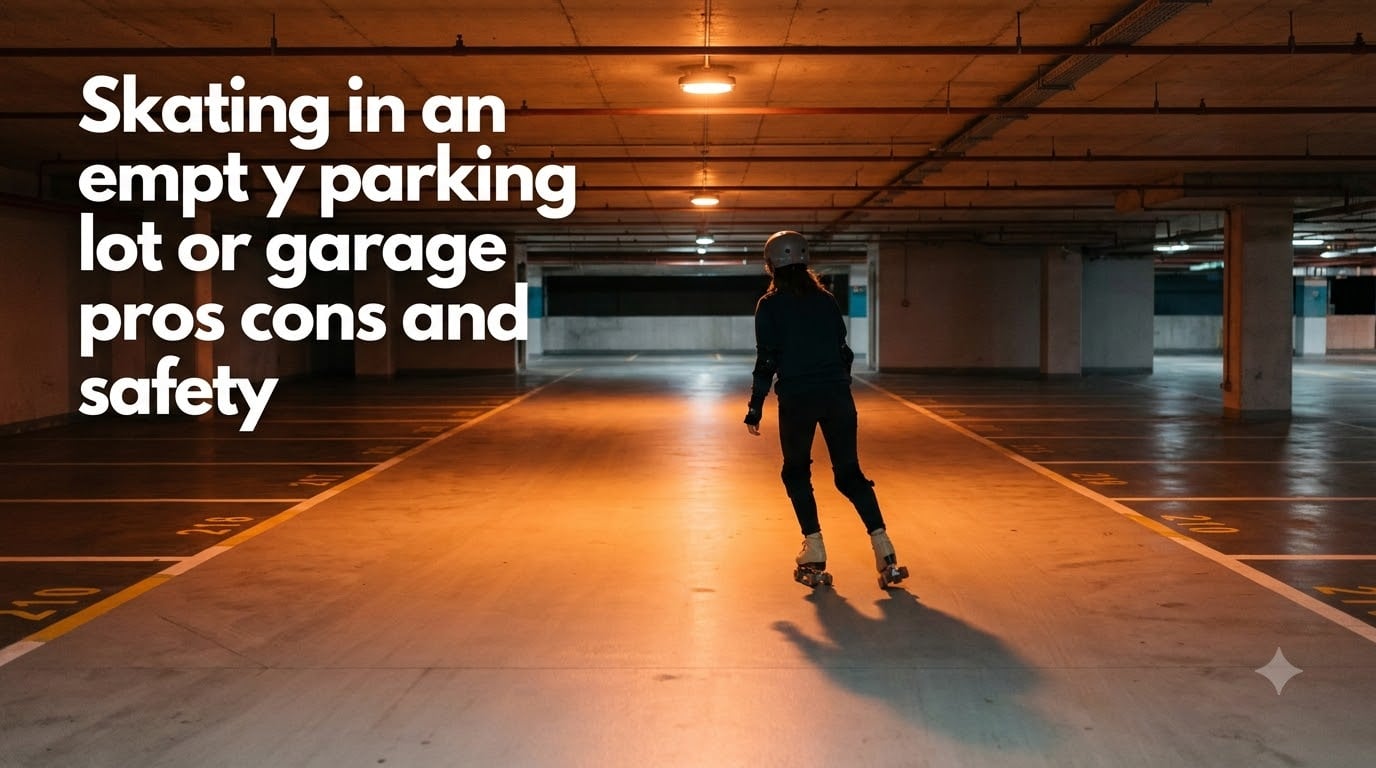
You found the perfect empty parking lot. The concrete is smooth, the space is wide open, and there is not a car in sight. For many skaters, this feels like discovering a hidden skate park without the crowds or the entry fee.
Skating in an empty parking lot or garage is one of the most popular ways for roller skaters, inline skaters, and skateboarders to practice their skills outside of a dedicated rink or skate park. These spaces offer flat, smooth surfaces that are hard to find anywhere else in the average neighborhood.
But is it actually a good idea? In this guide, I break down the pros, cons, and safety considerations of skating in an empty parking lot or garage so you can make an informed decision before lacing up your skates. Whether you are a beginner looking for a practice space or an experienced skater exploring new spots, this article covers everything you need to know.
Table of Contents
What Is Skating in an Empty Parking Lot or Garage?
Skating in an empty parking lot or garage means using a vacant commercial or residential parking structure as an informal practice space. Skaters typically visit these locations during off-peak hours, such as early mornings, late evenings, or weekends, when the lot or garage is largely free of vehicles.
This practice appeals to roller skaters, inline skaters, and skateboarders alike. The smooth concrete or asphalt surfaces found in parking structures provide an ideal training ground for working on balance, turning, stopping, and building general confidence on wheels.
Many skaters turn to parking lots and garages because they lack access to dedicated skate parks or indoor rinks. In smaller towns especially, these spaces may be the only option with surfaces smooth enough for productive practice sessions.
Pros of Skating in an Empty Parking Lot or Garage
Skaters gravitate toward parking lots and garages for good reason. These spaces offer several genuine benefits that make them attractive practice environments, especially for those without access to formal skating facilities.
Smooth, Flat Surfaces for Practice
The biggest draw of parking structures is the surface quality. Most commercial parking lots and garages are paved with smooth concrete or well-maintained asphalt, which is far superior to the cracked sidewalks and rough roads that most skaters have access to.
Smooth surfaces mean better wheel grip, fewer unexpected bumps, and a more predictable skating experience. This is especially important for beginners who are still learning to balance and control their movements. A flat, even surface lets you focus on technique without constantly fighting the terrain.
From my own experience, the difference between practicing on a rough sidewalk versus a smooth parking garage floor is night and day. You can build speed, practice transitions, and work on stops without worrying about catching a crack and going down hard.
Weather Protection in Parking Garages
Multi-level parking garages offer something that almost no other free skating space can match: protection from the elements. The covered structure shields you from rain, intense sun, and even light wind, making it a viable option year-round.
This is huge for skaters who live in areas with unpredictable weather. Instead of canceling a practice session because of a passing shower, you can head to a covered garage and skate without interruption. The concrete also tends to dry faster in a covered structure than open pavement.
One thing to keep in mind is that rooftop parking levels do not offer the same protection. Rooftop carparks can be windy and exposed, so stick to the interior levels if weather protection is your goal.
Open Space for Beginners
Beginners need room to make mistakes. Empty parking lots provide wide-open spaces where new skaters can wobble, fall, and get back up without worrying about colliding with pedestrians, traffic, or obstacles.
An empty parking lot lets you practice falling safely, working on basic strides, and building the muscle memory needed for more advanced skills. The lack of obstacles means you can focus entirely on your form and technique.
For parents teaching kids to skate, these open spaces are particularly valuable. Children have room to move at their own pace without the pressure of navigating around other people or vehicles.
Free and Accessible
Unlike indoor rinks or private skate parks, parking lots and garages are completely free to use. There are no admission fees, no membership requirements, and no reservations needed. You just show up and skate.
This accessibility makes parking lot skating especially appealing for skaters on a budget or those who want to squeeze in a quick practice session without committing to a full outing. For many in the skating community, this is the only realistic option for regular practice.
Privacy to Build Confidence
Not everyone feels comfortable skating in front of crowds. Parking lots and garages, especially during off-hours, offer a semi-private environment where you can practice without feeling watched or judged.
That privacy is invaluable for beginners who may feel self-conscious about their skill level. Being able to work on basic skills without an audience helps many skaters progress faster and with less anxiety.
Cons and Risks of Skating in Parking Lots and Garages
For all the benefits, skating in parking lots and garages comes with real downsides. Understanding these risks before you go is essential for staying safe and avoiding trouble.
Legal and Trespassing Concerns
The single biggest drawback is the legal gray area. Most parking lots and garages are private property, which means the owner or manager has the right to ask you to leave at any time. If you refuse, you could potentially face trespassing charges.
Some lots post explicit “no skating” or “no skateboarding” signs, which makes the rules clear. Others do not, but that does not automatically mean skating is permitted. The absence of a prohibition sign is not the same as permission.
Many skaters on Reddit and in Facebook skating groups report being asked to leave by security or property managers. The experience is usually non-confrontational as long as you comply politely and promptly. Still, the uncertainty can make some skaters uncomfortable.
Surface Hazards
Even smooth-looking parking surfaces can hide dangers. Expansion gaps in parking garage floors are notorious for catching wheels and sending skaters sprawling. These metal seams run across the concrete at regular intervals and can be nearly invisible at a glance.
Parking lots have their own surface issues. Cracks, potholes, oil stains, gravel, and debris can all create hazards. A lot that looks clean from a distance may have loose gravel near the edges, oily patches near parking spaces, or uneven seams where sections of pavement meet.
Always do a walking scan of the surface before you start skating. Look for cracks, seams, wet spots, and debris. If you see anything concerning, find a different section or choose another location entirely.
Security Confrontations
Getting kicked out is a rite of passage for many street skaters, but it is still unpleasant. Security guards are often the first line of enforcement at commercial parking facilities, and their reactions can range from friendly warnings to calls to law enforcement.
The frequency of these confrontations is one reason many experienced skaters recommend going during completely off-hours. If the garage is closed or the lot is genuinely empty, your chances of an encounter drop significantly.
It is worth noting that repeated visits to the same location increase your odds of being remembered and confronted. Rotating between different spots can help you avoid wearing out your welcome.
Liability and Insurance Issues
If you get injured while skating on someone else’s property, you are generally responsible for your own medical costs. Property owners are unlikely to cover injuries sustained by someone engaging in an activity they did not authorize, especially one that many lots explicitly prohibit.
This is an important consideration that most guides overlook. Skating in a parking lot is not the same as skating at a regulated facility with insurance coverage and liability protections. You assume all risk when you skate in an informal setting.
Unpredictable Vehicle Traffic
An empty lot can fill up quickly. A church parking lot that was deserted at 8 AM might have an event starting at 9. A quiet garage level could suddenly see traffic from a shift change or early arrivals.
Cars and skaters are a dangerous combination. Even at low speeds, a vehicle can seriously injure a skater, and drivers are not expecting to encounter people on wheels in a parking structure. Always be aware of your surroundings and have an exit plan.
Parking Garage vs Parking Lot: Which Is Better for Skating?
Both parking garages and open parking lots have their advantages, but they are quite different environments. Understanding the distinction helps you choose the right spot for your needs.
Parking garages win on weather protection and surface consistency. The covered levels stay dry during rain and offer shade on hot days. The concrete floors tend to be smoother and better maintained than open lots because they are protected from weather wear. However, garages have those expansion gap hazards, potentially limited visibility around corners, and tighter spaces on each level.
Open parking lots offer more room to move and better visibility in all directions. You can see approaching vehicles and people from far away, which adds a layer of safety awareness. The trade-off is full exposure to weather, hotter surfaces in summer, and surfaces that may be rougher or more weathered.
For beginners, I generally recommend open parking lots during quiet hours. The extra space and visibility make it easier to stay safe while learning. For skaters focused on all-weather practice or who live in rainy climates, a covered parking garage is hard to beat, provided you scout the surface carefully and watch for expansion seams.
Skating Safety Tips for Parking Lots and Garages
Safety should be your top priority in any informal skating environment. These tips will help you minimize risks and make the most of your practice sessions.
Wear full protective gear every time. A properly fitted helmet is non-negotiable. Add wrist guards, knee pads, and elbow pads to your kit. Wrist fractures are among the most common skating injuries, and wrist guards dramatically reduce that risk. Knee and elbow pads protect against scrapes and more serious joint injuries when you fall.
Inspect the surface before skating. Walk the area first and look for cracks, expansion gaps, oil stains, wet spots, loose gravel, and debris. Mark hazards mentally so you can avoid them while skating. If the surface is too rough or damaged, find another spot.
Choose off-peak hours. Early mornings, late evenings, and weekends are your best bets. Avoid business hours when lots fill up and traffic increases. The fewer cars and people around, the safer your session will be.
Bring a skate buddy when possible. Skating alone in an isolated area carries additional risks, from injuries with no one to help to uncomfortable encounters with strangers. A friend adds safety and makes practice more fun.
Warm up and stretch before skating. Cold muscles are more prone to injury. Spend five to ten minutes doing light stretches, focusing on your ankles, calves, and hips before you start rolling.
Use the right wheels for the surface. Outdoor wheels are softer and grip better on rough or slightly textured surfaces. Harder indoor wheels are faster but can slip on dusty or smooth concrete. Match your wheels to the conditions.
Stay aware of your surroundings at all times. Keep your head up and scan for vehicles, pedestrians, and changing conditions. Never skate with headphones loud enough to block out ambient sound, as you need to hear approaching cars or people.
What to Do If Security Confronts You?
Despite your best efforts, you may still be approached by a security guard or property manager while skating. How you handle the situation matters.
Be polite and cooperative. Arguing or becoming defensive rarely helps and can escalate the situation. Acknowledge what they are saying and comply with the request to leave without protest.
Do not return to the same location immediately after being asked to leave. Doing so can turn a simple warning into a trespassing complaint. If the property has explicitly asked you not to skate there, respect that boundary and find an alternative spot.
If you want to skate at a particular location regularly, consider asking permission from the property owner or management. Some businesses are willing to allow skating during off-hours if you approach them respectfully and explain that you are practicing safely and responsibly.
Legal Considerations: Is It Legal to Skate in Parking Lots?
The short answer is that it depends on the property and local laws. There is no universal rule that covers all parking lots and garages.
Most parking facilities are private property. The property owner or their agent, such as a security guard, has the legal right to ask anyone to leave for any reason. If you refuse to leave after being asked, you could potentially face trespassing charges under local ordinances.
Public parking lots, such as those at municipal buildings or public parks, may have different rules. Some cities allow recreational use of public parking areas when they are not in use, while others prohibit it outright. Check your local regulations before assuming a public lot is fair game.
The safest approach is to always assume you do not have permission unless you have explicitly obtained it. If you are asked to leave, comply immediately and politely. This simple approach keeps you out of legal trouble and preserves skating access for others in the community.
Frequently Asked Questions
Can you skate in empty parking lots?
Yes, you can skate in empty parking lots, but most are private property. You should skate during off-peak hours, wear protective gear, and leave immediately and politely if asked by the property owner or security.
Is it safe to skate in parking garages?
Parking garages can be safe for skating if they are completely empty of vehicles and you wear full protective gear. Watch for expansion gaps in the floor, check for wet spots, and avoid garages with active traffic. Covered garages offer the added benefit of weather protection.
Is it illegal to skate on public property?
Skating on public property is not universally illegal, but many cities have ordinances that restrict or prohibit skating in certain public areas. Public parking lots, plazas, and walkways may have specific rules. Always check your local regulations and obey posted signs.
What safety gear do I need for parking lot skating?
You need a properly fitted helmet, wrist guards, knee pads, and elbow pads at minimum. Wrist guards are especially important since wrist fractures are among the most common skating injuries. Make sure your skates fit properly and are in good condition.
What do I do if security confronts me while skating?
Be polite, cooperative, and leave immediately when asked. Do not argue or become defensive. Thank them for the heads up, pack up your gear, and do not return to that location afterward. Repeated visits after being asked to leave can lead to trespassing charges.
Are parking garages good for beginner skaters?
Yes, parking garages can be excellent for beginners because of their smooth concrete floors, flat surfaces, and weather protection. Choose a completely empty level, check for expansion gaps, and go during off-hours. The smooth surface helps beginners focus on balance and technique without fighting rough terrain.
Conclusion
Skating in an empty parking lot or garage offers an unbeatable combination of smooth surfaces, open space, and accessibility for skaters at every level. The pros are real, from weather-protected practice in garages to wide-open confidence building for beginners.
But the cons deserve equal weight. Legal risks, surface hazards, security confrontations, and liability concerns are all part of the picture. By understanding these challenges and following the safety guidelines in this article, you can enjoy productive practice sessions while minimizing your risk. Gear up, scout your surface, skate during off-hours, and always be ready to leave politely if asked.