
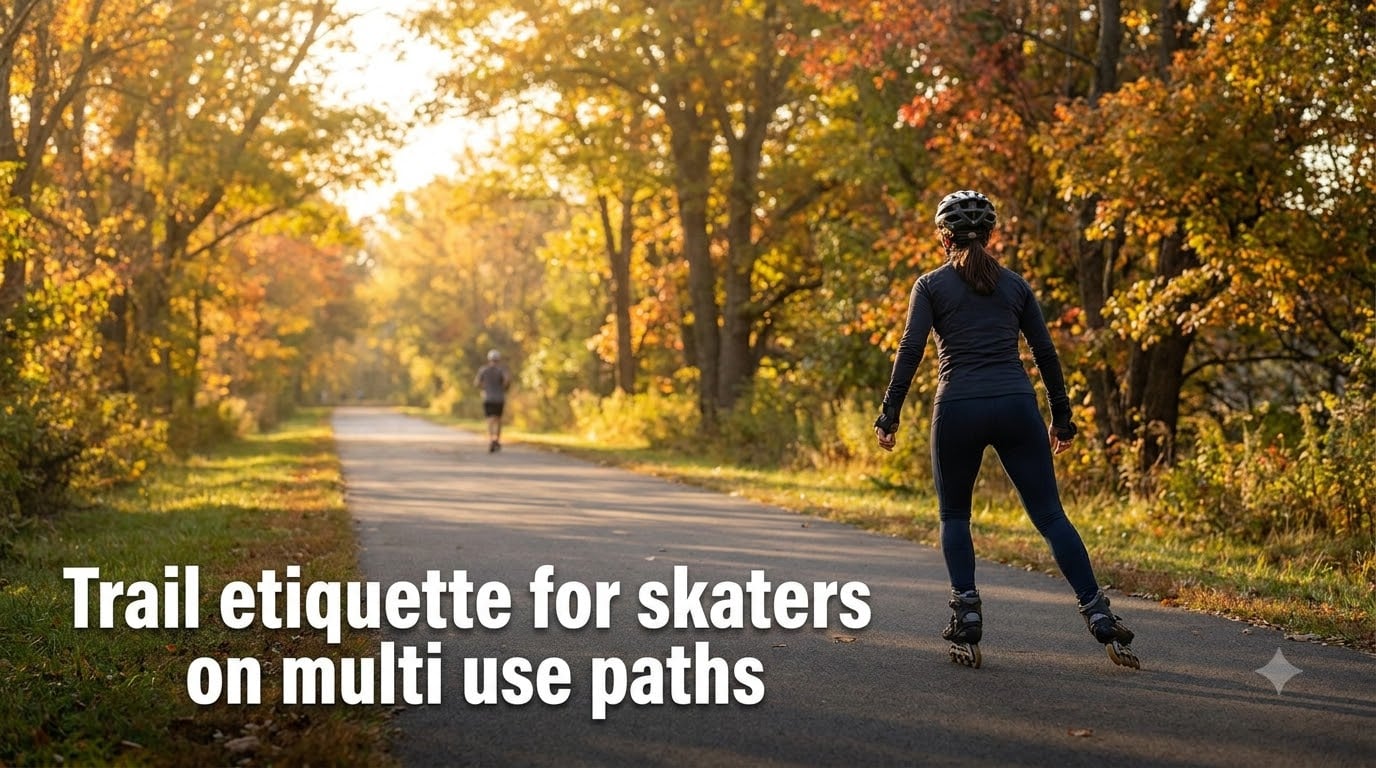
When I first started trail skating, I rolled through a crowded multi-use path with my headphones on, no bell, and almost clipped a dog walker from behind. That single scare pushed our team to dig into trail etiquette for skaters on multi-use paths the hard way. What you’ll get here is the rule set I wish someone handed me on day one.
Every skater, whether you ride quads, inlines, or aggressive setups, shares the path with walkers, runners, cyclists, dog owners, parents with strollers, and increasingly, e-bike riders. Learning the unwritten code keeps everyone safe and keeps trails open to skating for years to come.
Table of Contents
What Is Trail Etiquette for Skaters on Multi-Use Paths?
Trail etiquette for skaters is the set of rules and courtesies inline and roller skaters follow when sharing paved paths with other users. It covers positioning on the trail, how to pass safely, when to yield, how to announce your presence, and how to manage your speed near slower traffic.
A multi-use path is any paved trail officially designated for more than one user group. They are sometimes called shared-use paths or rail-trails. Most rules apply across all of them, though some trails post local speed limits (usually 15 mph) and require bells on faster equipment.
Keep Right, Pass Left: The Foundational Rule
The single most important trail rule is simple: stay on the right side of the path, and pass on the left only. Treat the trail like a road. Stand anywhere on your right half, and when you need to overtake a slower user, swing out to the left lane.
Skate on the right half of the path, keeping close to the edge.
Move to the left only when you are passing.
Return to the right immediately after the pass is complete.
Travel single file when traffic is heavy. Side-by-side skating is fine on wide, empty trails but blocks traffic on narrow or busy ones.
Skaters tend to drift because of wheels and carving. I correct by glancing down at my right foot every few minutes and steering back toward the edge. Predictable lines prevent collisions more than any other trick.
Wheels Yield to Heels: The Skater Priority Principle
Wheels yield to heels is the core principle published by the Rails-to-Trails Conservancy and most trail authorities. Heels (walkers, runners, joggers, dog walkers, people with strollers, equestrians) take priority over wheels (bikes, e-bikes, skaters, scooters).
If you skate up behind a pedestrian and they don’t see you, slow down or stop. Do not expect walkers to leap out of your way. Even if you technically have space to pass, skaters who buzz pedestrians create the bad reputation that gets skating banned from trails.
Right of way on shared paths follows this rough order from lowest to highest priority: cyclists and fast skaters yield to slow skaters, who yield to runners, who yield to walkers, who yield to people with disabilities, mobility devices, and horses. When in doubt, slow down.
How to Announce Your Presence When Passing on Skates?
An audible warning is required every time you overtake someone. Skaters are quiet compared with bikes, so people genuinely cannot hear you coming until you are 10 feet away. That’s why trail etiquette requires you to call out before you pass.
The standard phrase is “Passing on your left” or simply “On your left.” Say it loud enough to be heard over wind and music, ideally when you are still 15 to 20 feet behind the person. If they wear earbuds, say it again closer. If they still don’t react, slow to their pace until they move or signal they know you’re there.
Skating with a small bell helps in low-traffic situations, but voice carries further and is harder to ignore. I keep both options on my helmet strap: bell for group rides, voice for solo days.
Speed Management on Multi-Use Paths
Most multi-use paths cap speeds at 15 mph (often posted). Inline skaters and aggressive quad skaters can reach 20 to 25 mph on flats, which is faster than posted limits allow and definitely too fast for mixed traffic.
Check posted speed limits at trailheads and respect them. The number exists because at 15 mph and above, braking distance and reaction time become unsafe around walkers and kids. Practice the T-stop, power slide, and heel brake so you can scrub speed quickly when a child steps into your line.
I follow what I call the 80/20 rule for skating: spend 80 percent of trail time at a conversational pace, save the top 20 percent for clear, empty stretches. The few times I push for speed, I scan 100 feet ahead for any users, dogs, or hazards first.
Sharing the Trail with Pedestrians, Cyclists, and E-Bikes
Different user groups have different priorities. Walkers come first. Children, people with strollers, mobility aids, runners second. Skaters come third. Cyclists and e-bike riders come last because they have brakes and can stop faster than wheels on wheels.
When you meet a cyclist, both users typically move right to give each other space. Cyclists pass skaters the same way they pass pedestrians, on the left with a “passing on your left” call. If a cyclist approaches from behind at 18 to 22 mph, stay far right, hold your line, and let them clear you before resuming speed.
E-bikes are increasingly common on trails, especially Class 1 and Class 2 models that assist up to 20 mph. They accelerate faster than cyclists, so listen for the motor whine and watch your mirror. Skaters I’ve coached report that e-bike riders surprise them most, so keep your head on a swivel in both directions.
Handling Dogs, Leashes, and Children Safely
Dogs on extendable leashes are a leading cause of trail surprises. From forum reports on r/Rollerskating and r/cycling, dogs lunging or leashes crossing the path cause more near-misses than any other scenario. Here’s how I handle it.
Slow to a walking pace when you see an approaching dog. Call out, “Passing on your left, do you have your dog under control?” If the owner says yes and the leash is short, pass on the left with space. If the dog is on a flexi-leash stretched across the path, stop and ask the owner to reel in before you pass.
Children on bikes, scooters, or running ahead of parents are unpredictable. They may dart sideways without looking. Reduce speed, give a wide berth, and always assume a child could change direction. Parents and older walkers appreciate skaters who visibly slow down.
Skater-Specific Trail Hazards and Technique Tips
Cracks, tree roots, gravel, wet leaves, and painted lines can all stop your wheels in a heartbeat. Asphalt patches from utility cuts are notoriously slick. Sand drifts across trail corners and around benches. None of these are big problems at 4 mph. At 15 mph they’re crashes.
Scan 20 to 30 feet ahead at all times and read the surface like a road. If you see debris, your safest move is usually a controlled carve around it rather than a hard stop. If you must brake hard, keep your knees bent, weight over both feet, and brake in a straight line so a wheel doesn’t catch sideways.
When I coach beginners, I teach them the “stinky foot, splay it out” trick: slightly widen your stance, point your toes outward, and lower your center of gravity. This position lets you absorb small bumps without losing balance, which is the #1 anxiety new trail skaters report.
Safety Gear Every Trail Skater Should Wear
A CPSC-certified helmet is the baseline. Wrist guards protect the most commonly injured joint in skating falls. Knee pads and elbow pads round out the minimum kit. For trail skating specifically, I also recommend gloves with palm sliders so you can put your hands down safely when you fall.
Your safety gear needs to fit snugly and stay on during a fall. Loose helmets shift on impact. Loose wrist guards slide up your forearm. Always test new gear at slow speed in a parking lot before trusting it on a busy trail.
Night and Low-Light Trail Etiquette
Many paved trails close at dusk, but some are open 24 hours. If you skate after dark, you need white front lights and red rear lights visible from at least 500 feet, plus reflective clothing or ankle bands. Skaters are nearly invisible without lights, and that’s a danger to you and to anyone you’re approaching.
Reduce your speed at night. Surfaces hide cracks and debris. Other users can’t read your body language or hear your footfalls as well. Pre-plan your route, tell someone your start time, and avoid isolated trail sections after dark.
Common Mistakes and How to Handle Confrontations
The most common mistakes I see in beginner trail skaters are skating too wide, wearing headphones, forgetting to announce passes, and panicking when a dog lunges. Each of these is fixable with a small habit change.
Occasionally a cyclist or jogger will confront you about being on the path. The best response I’ve seen works every time: stay calm, acknowledge their concern (“I hear you, let me slow down”), give them space, and keep moving. If someone is aggressive, disengage. Trails are for everyone, including you, and no confrontation is worth the risk.
I’ve found that skaters who follow the rules consistently end up welcomed on trails. Cities that banned skating in the past have reopened paths when skaters showed they were respectful, predictable, and courteous.
Frequently Asked Questions
Who has the right of way on a multi-use trail?
Heels have the right of way over wheels. Walkers, runners, people with strollers, mobility devices, and equestrians take priority. Cyclists and skaters yield to all of them, with skaters typically yielding to pedestrians first, then to faster cyclists only when safe.
What is the wheels yield to heels rule?
Wheels yield to heels means any user on wheels (bikes, e-bikes, skates, scooters) must give way to users on foot (walkers, runners, horseback riders). It’s the foundational courtesy rule published by the Rails-to-Trails Conservancy.
How do skaters announce themselves when passing?
Skaters call out Passing on your left or On your left loud enough to be heard over wind and music, ideally 15 to 20 feet before reaching the person they’re overtaking. Voice carries further than a bell, but a bell works well for group rides.
Can roller skaters use bike paths legally?
In most U.S. cities, roller skaters and inline skaters are allowed on paved multi-use and bike paths unless a specific sign says otherwise. Some trails post local rules or speed caps (commonly 15 mph), so always check posted signage at the trailhead.
What speed should skaters ride on multi-use paths?
Most multi-use paths cap speed at 15 mph. Skaters should stay below posted limits, especially around walkers, kids, and dogs. Save higher speeds for clear, empty stretches where you can see well ahead.
Final Thoughts: Be the Skater Who Keeps Trails Open
Trail etiquette for skaters on multi-use paths boils down to three habits. Stay right, pass left with a voice warning, and yield to anyone on foot. Follow those three rules and you’ve already handled most of what trips beginners up.
The skaters who keep multi-use paths open are the ones everyone remembers for being friendly, predictable, and quick to slow down. Wear your gear, scan the surface, call out your passes, and the trail will be just as welcoming on your hundredth visit as your first. Patin Carr Era’s full mission is to help you skate more places, more confidently, and trail etiquette is the fastest way to do that.