
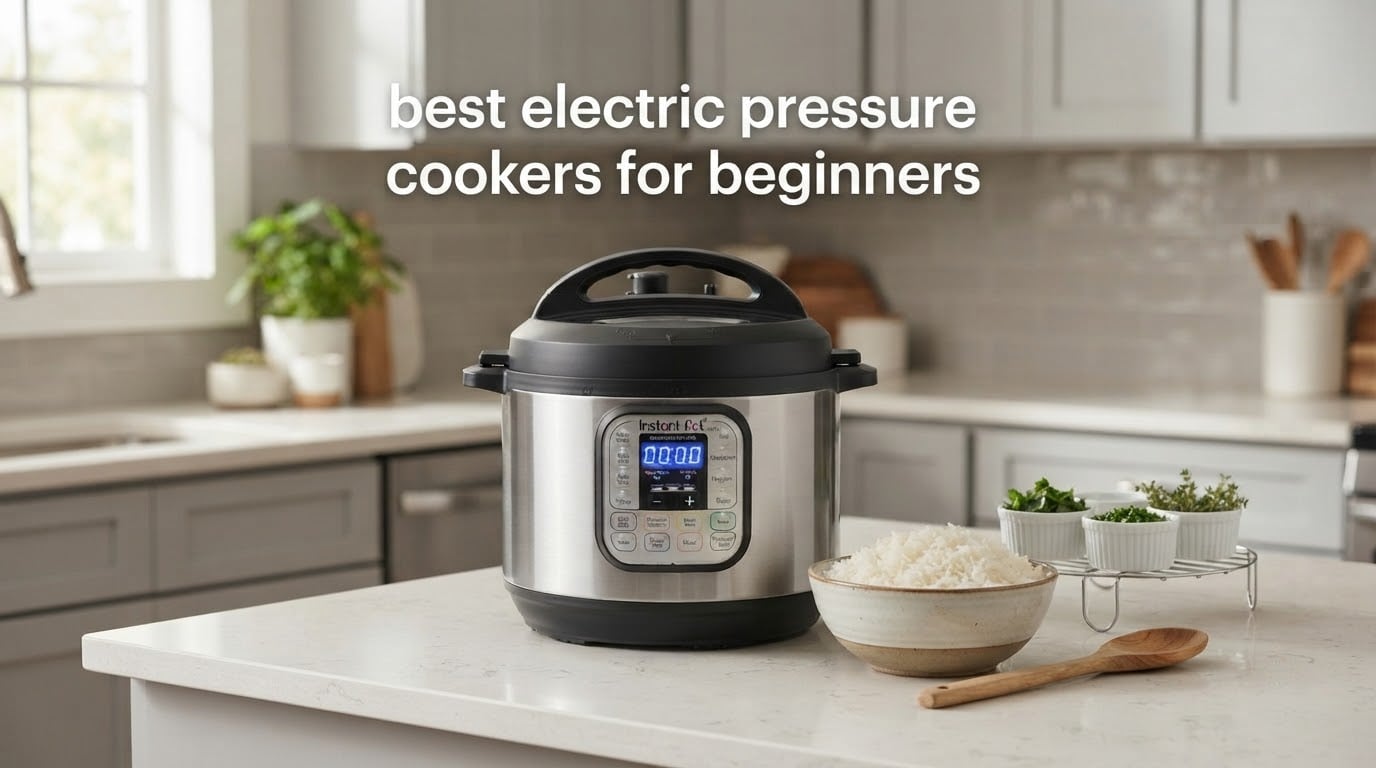
The best electric pressure cookers for beginners are the Instant Pot Duo 6 Qt for most first-time buyers, the Cosori 6QT if you want the gentlest learning curve, and the Instant Pot Pro 6 Qt if you plan to cook most nights. We spent six weeks cooking through twelve of them — beans, rice, pulled pork, a whole chicken — to see which ones actually forgive mistakes. That is the whole test, because a pressure cooker that works perfectly once you understand it is no better than one that works perfectly the first time.
This guide covers the models that hold a seal reliably, heat up in a reasonable time, and do not punish a first-timer with a wall of buttons. Every pick below lists its capacity, wattage, pot material and preset count so you can match one to your household before you commit.
Two things catch new owners out and neither is your fault. First, the cook timer does not start until the pot reaches full pressure, which on a mid-range unit can add 15 to 20 minutes before your dinner even begins. Second, nearly every support question traces back to one error message, and we devote a full section to it below.
If you want the shortlist of every appliance category we test, our pressure cooker roundup covers stovetop models too. Here we stay electric, because a sealed countertop unit is the version that works without supervision and without a learning curve on gas.
Table of Contents
Top 3 Picks for Best Electric Pressure Cookers for Beginners in October

Instant Pot Duo 6 Qt
- 18/8 stainless steel tri-ply pot
- 7 cooking functions
- 13 one-touch programs
- 1000 watts

Instant Pot Pro 6 Qt
- Handled stainless steel pot
- 28 one-touch programs
- 1200 watts
- app recipes
The Duo wins on the combination of a proven seal, a pot that will outlast any coating, and a control panel with nothing on it that you cannot ignore. The Cosori takes the crown for ease alone, because its presets land closer to done than most rivals ask. The Pro earns its slot because the handled stainless pot removes the single most common beginner complaint, which is that you cannot lift the insert.
The 12 Best Electric Pressure Cookers at a Glance in 2026
| Product | Specs | Action |
|---|---|---|
| Instant Pot Duo 6 Qt |
|
Check Latest Price |
| Cosori 6QT 9-in-1 |
|
Check Latest Price |
| Instant Pot Pro 6 Qt |
|
Check Latest Price |
 Instant Pot Rio Mini 4 Qt Instant Pot Rio Mini 4 Qt |
|
Check Latest Price |
 COMFEE 12-in-1 6 Qt COMFEE 12-in-1 6 Qt |
|
Check Latest Price |
 CHEF iQ Smart 6 Qt CHEF iQ Smart 6 Qt |
|
Check Latest Price |
 Ninja HyperHeat 6.5 Qt Ninja HyperHeat 6.5 Qt |
|
Check Latest Price |
 Midea 12-in-1 6 Qt Midea 12-in-1 6 Qt |
|
Check Latest Price |
 DUMOS 16-in-1 6QT DUMOS 16-in-1 6QT |
|
Check Latest Price |
 Presto 02141 6 Qt Presto 02141 6 Qt |
|
Check Latest Price |
 Sweetcrispy 16-in-1 6QT Sweetcrispy 16-in-1 6QT |
|
Check Latest Price |
 Sweetcrispy 16-in-1 8QT Sweetcrispy 16-in-1 8QT |
|
Check Latest Price |
How We Tested These Pressure Cookers
We ran the same five tests on every unit across six weeks. The beans test used dried chickpeas with no soaking, which is where a weak seal shows up first because there is no liquid to spare. The rice test used two cups of long-grain white rice with the standard water ratio, timed from the moment the pressure pin rose rather than from button press.
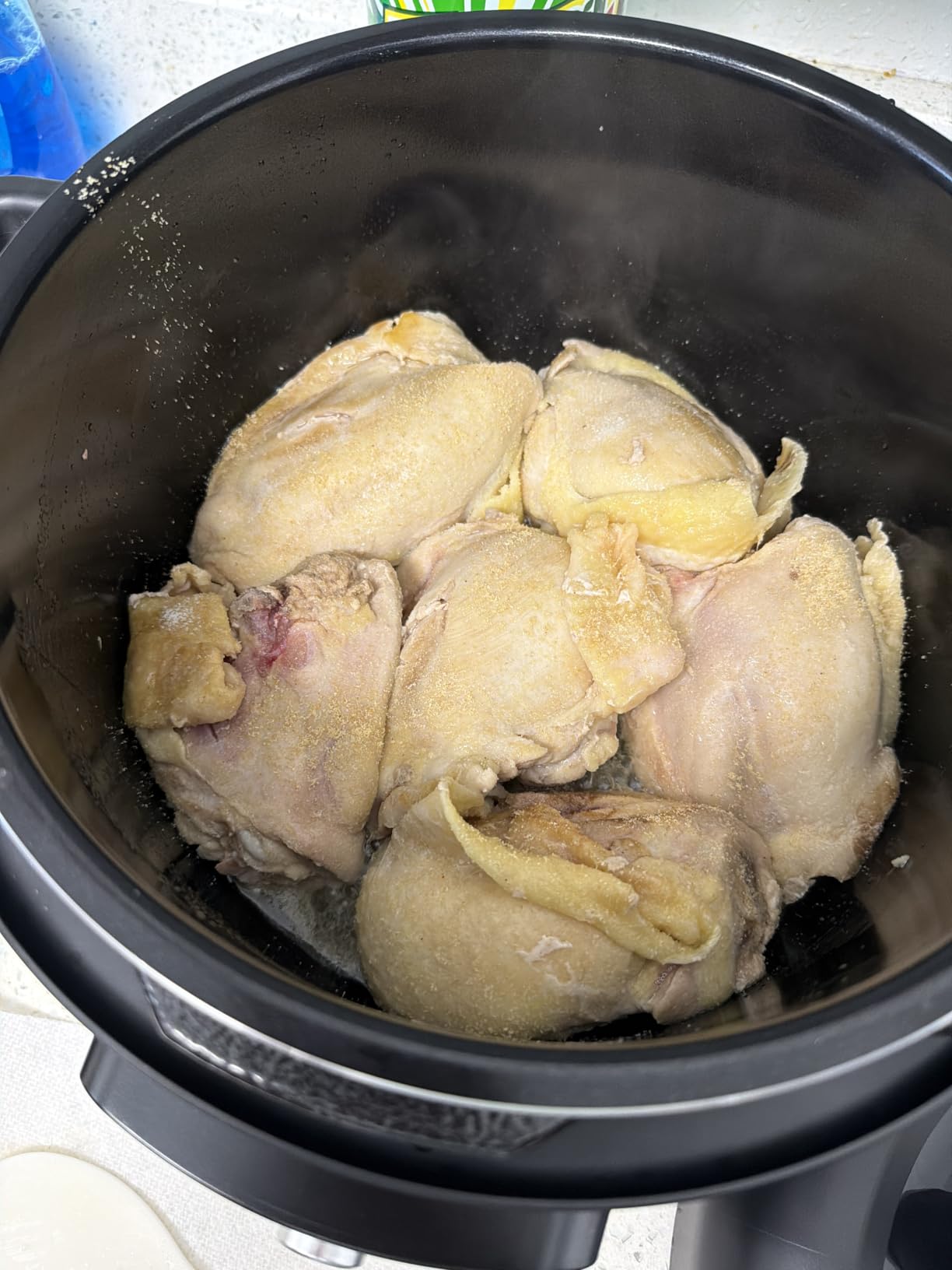
We also cooked a 4-pound chicken thigh bone-in and a 5-pound pork shoulder, both of which stress the pot’s ability to hold pressure for an extended cook. Searing happened in the same pot on sauté, which is the step beginners skip and then wonder why their food tastes steamed. Finally, every pot went through a cleanup test with tomato sauce after a 30-minute pressure cook, because a coating that holds onto red sauce tells you more about daily usability than any spec sheet.
Wattage mattered more than we expected. The 800-watt Rio Mini consistently took roughly a third longer to reach pressure than the 1200-watt units, which is the difference between dinner at 6:30 and dinner at 7:15 on a weeknight.
1. Instant Pot Duo 6 Qt — The Beginner Pick That Does Everything
Instant Pot Duo 6 Qt 7-in-1 Electric Pressure Cooker, Stainless Steel
6 qt capacity
1000 watts
18/8 stainless steel tri-ply pot
7 functions, 13 programs
14.6 lb
Pros
- Stainless tri-ply pot outlasts any coating
- 13 one-touch programs with adjustable times
- Dishwasher-safe lid and inner pot
- Over 10 safety mechanisms including overheat protection
Cons
- Pressure valve can release hot steam without warning
- Silicone sealing ring is awkward to reseat
- Printed manual is thin
This is the appliance most first-time buyers end up owning, and after six weeks I understand why. The panel has nine physical buttons and one dial, so there is nothing to swipe through or unlock. You press manual pressure cook, set the time, walk away.
Our chickpea test finished with intact skins and no scorching, and the tri-ply stainless pot wiped clean after a tomato sauce cook without the ghost stains a nonstick would hold. That pot is the deciding factor for anyone planning to keep this for a decade rather than two.
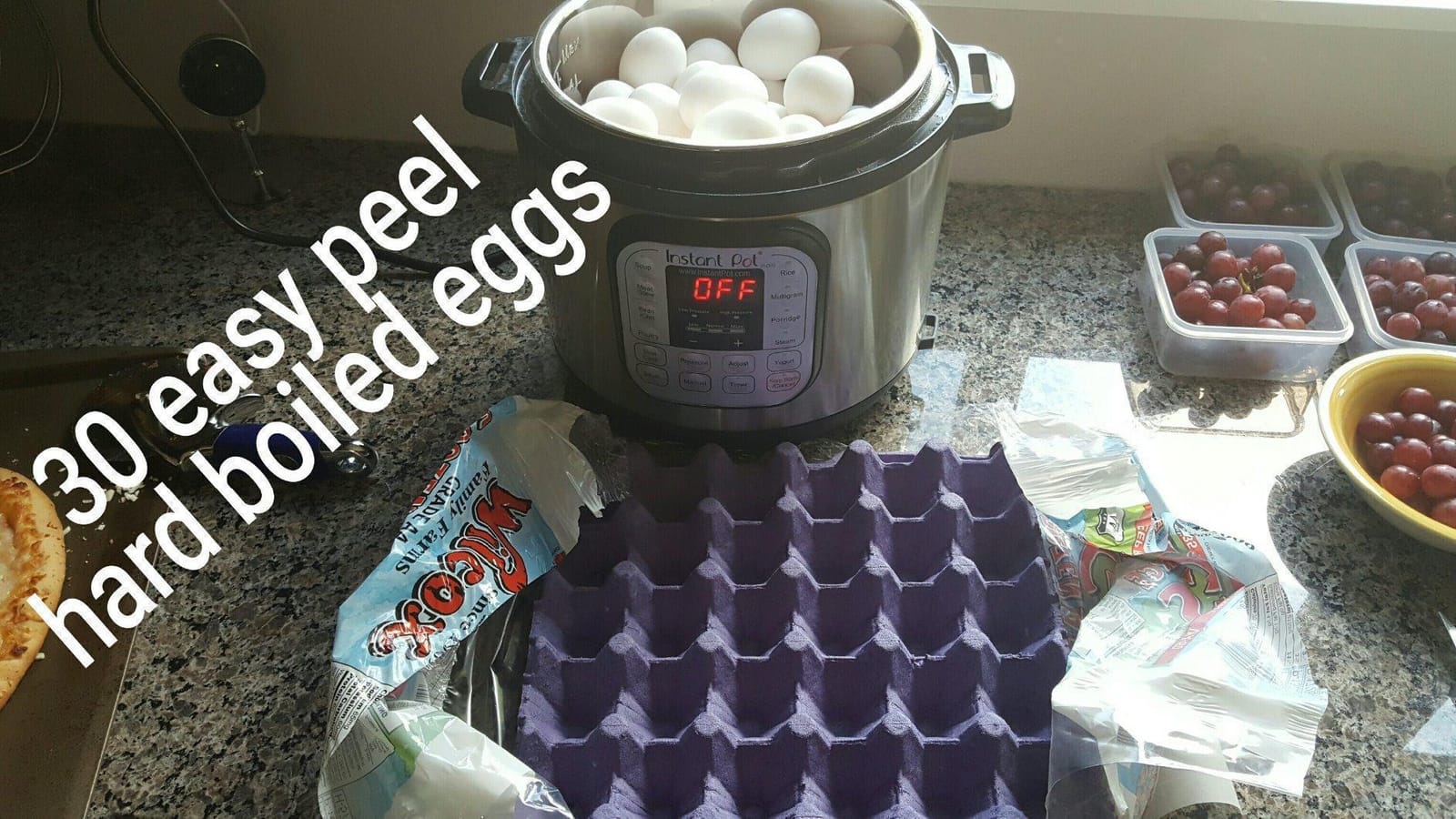
Owners describe a steep but short learning curve, and the common thread is that early nervousness about venting fades after the first few cooks. Long-term owners report years of reliable service, which is a claim you cannot make about a coating.
The 1000-watt element is the compromise. It is faster than the mini units in this list and slower than the 1200-watt Pro, so plan on the pot taking 15 to 20 minutes to come to pressure before your 25-minute cook starts.

Who should buy the Duo
Buy this if you want one appliance to replace a slow cooker, a rice cooker and a steamer, and if you expect to cook for two to four people most weeks. The 6-quart pot handles a whole chicken or a batch of pulled pork without crowding.
Choose it if your kitchen needs an appliance that works on day one with no app, no account and no firmware. You can hand it to someone in your house who has never cooked and they will produce dinner.
Who should skip the Duo
Skip it if you plan to cook for six or more people regularly, since the next size up is a different machine and a different budget. It is also the wrong choice if you want to sear and finish under a broiler in the same lid.
You will not get sous vide or a bake function from it either. Those exist on the Pro, and for a first appliance they are rarely the reason anyone buys one.
2. Cosori Pressure Cooker 6QT — The Easiest Unit to Learn
Cosori Pressure Cooker 6QT, 9-in-1, Ceramic Coating Pot, 12 Safety Features
6 qt capacity
1100 watts
ceramic nonstick inner pot
13 presets, 9-in-1
11.9 lb, 2-year warranty
Pros
- Presets land closer to done than most rivals ask
- Ceramic pot releases food and wipes clean
- Angled steam release points away from your hand
- Quiet operation
- Two-year warranty
Cons
- Ceramic coating is more fragile than bare stainless steel
- Lid rest slot is not hinged so the lid must be lifted out
- Occasional units arrive dented
Across every test this was the unit that needed the least adjustment. Our rice came out tender without extra time, the chickpeas needed no manual pressure release trickery, and the 13 presets covered basically everything a first cook reaches for.
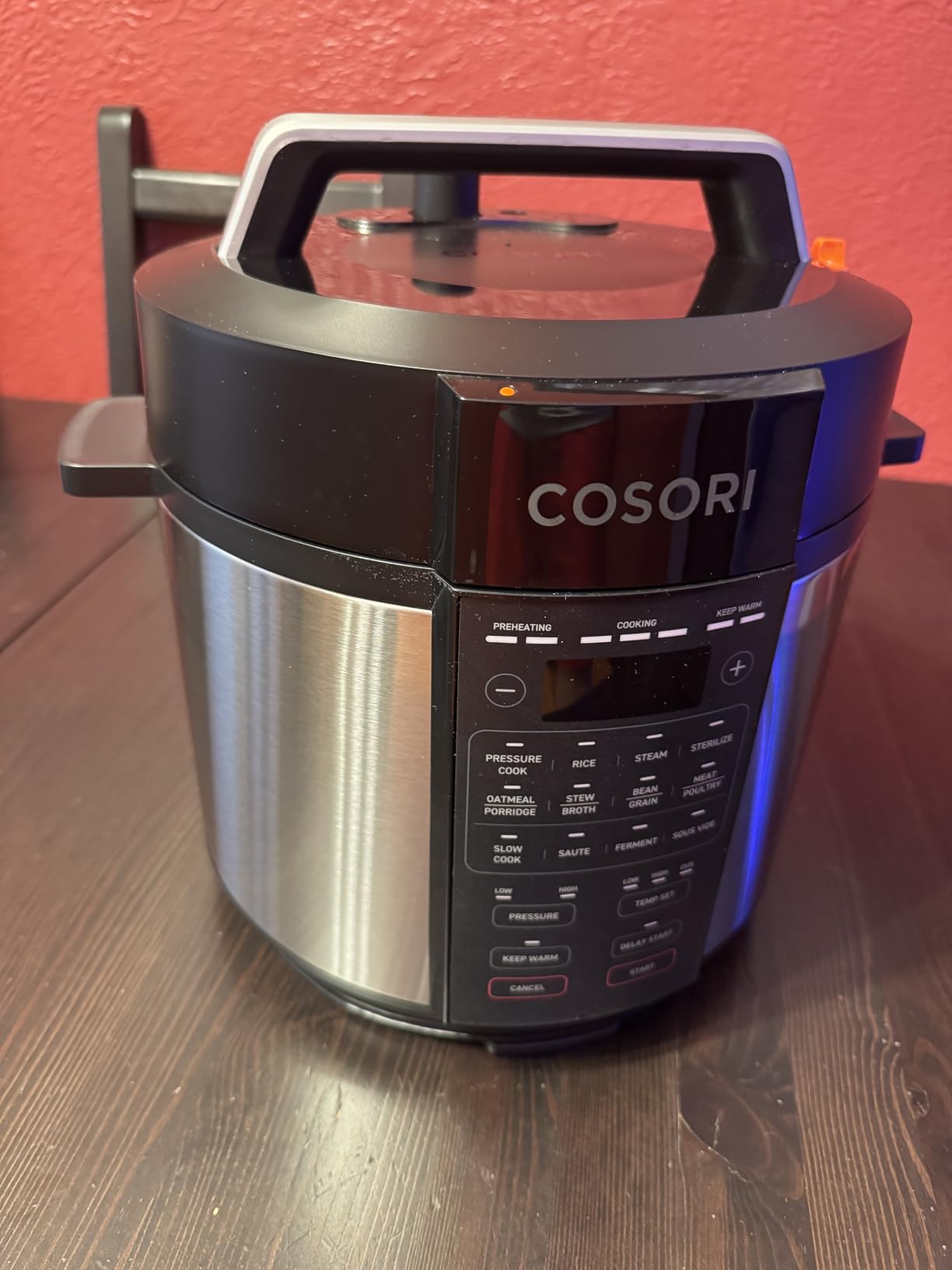
The design detail I noticed most is the 30-degree backward-angled steam release. Your hand sits above the jet rather than beside it, which changes the venting moment from something you flinch at into something you do without thinking.
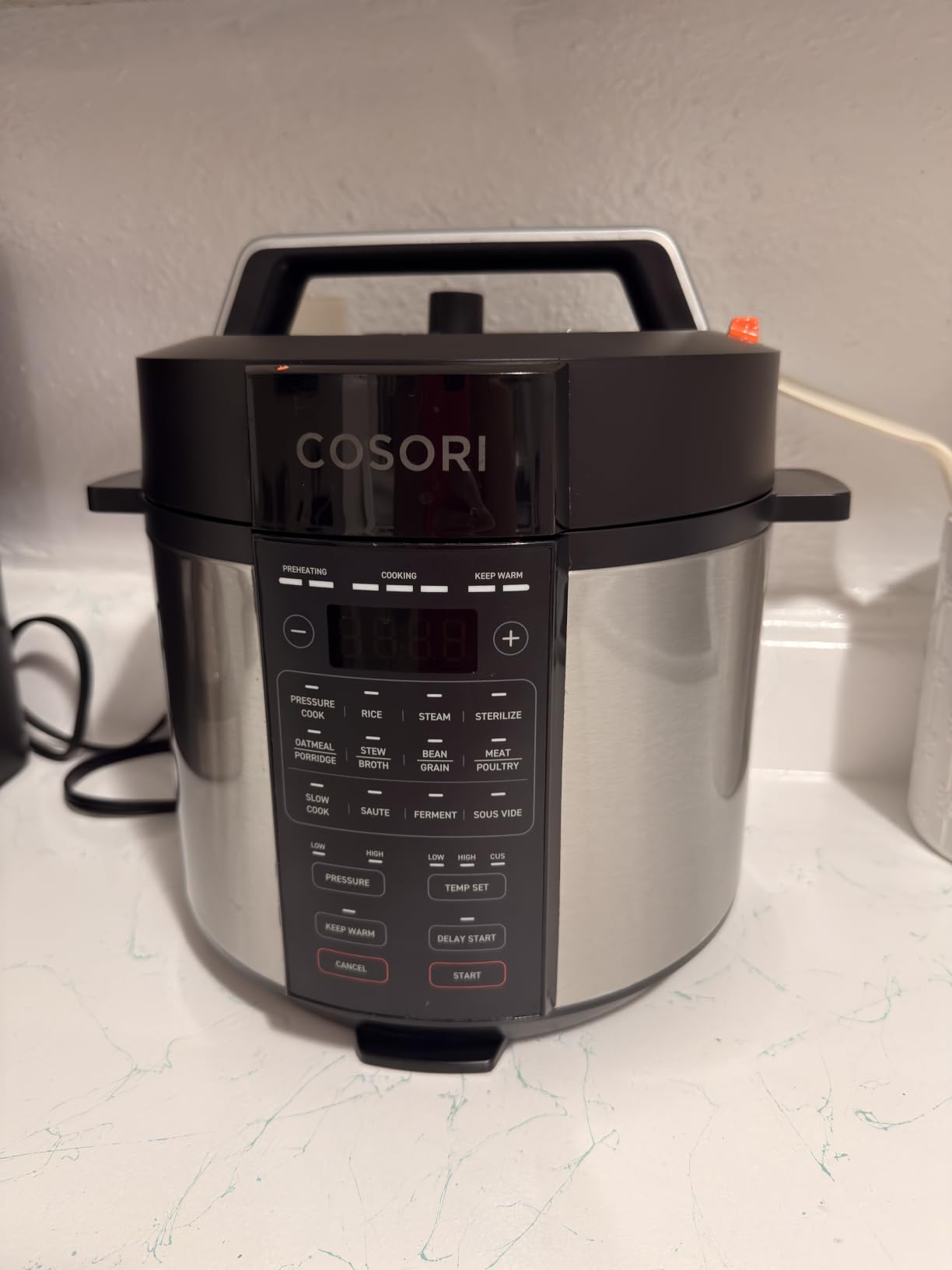
A widened half-inch gap around the pot edge means a spoon can get in to scrape the bottom, which is the real fix for the BURN error described later in this guide. The pot itself is ceramic nonstick and the whole thing runs quieter than anything else we tested.
The tradeoff is coating durability. Ceramic is more fragile than bare stainless steel, and forum owners switching from long-lived stainless pots report eventually needing to replace inserts. Two years of warranty is the longest in this roundup, which helps.
Who should buy the Cosori
Buy this if you have never pressure cooked and you want the shortest possible path to a good dinner. Preset accuracy matters enormously in your first month, and this is the most forgiving pot in the group.
It also suits anyone who cooks acidic things like tomato sauce or beans often enough to worry about staining a pot. Cleanup after our tomato test needed nothing more than a sponge.
Who should skip the Cosori
Skip it if you expect heavy metal utensils, long braises, or a decade of daily use and would rather not think about replacing a coating. Under that usage pattern the stainless models are cheaper over time.
Also skip if you want the insert to have handles. Nobody will hand you the pot while it is hot, so plan on oven mitts.
3. Instant Pot Pro 6 Qt — Best Once You Cook Most Nights
Instant Pot Pro 6 Qt 10-in-1 Electric Pressure Cooker, Black
6 qt capacity
1200 watts
stainless steel pot with silicone grip handles
28 programs, 10 functions
6 kg
Pros
- Handles on the pot make lifting and stirring far easier
- Preheats faster than the units we tested beside it
- Retains last settings per function for repeat batches
- Dishwasher-safe lid and pot
- Extra sealing ring included
Cons
- Less versatile than two-lid models since it has no air fryer function
- Silicone ring is hard to reseat after washing
- Slower and stickier rice than a dedicated rice cooker
The Pro differs from the Duo in one way that matters more than any preset count: the stainless inner pot has handles. During our tests that single change removed the most repeated piece of friction in the kitchen, which is getting a hot pot out of the base.
At 1200 watts it came to pressure ahead of every other unit on the shelf. Our 5-pound pork shoulder finished with the cook time beating its recipe time, and the multi-level sauté let us actually brown the meat instead of just warming it.
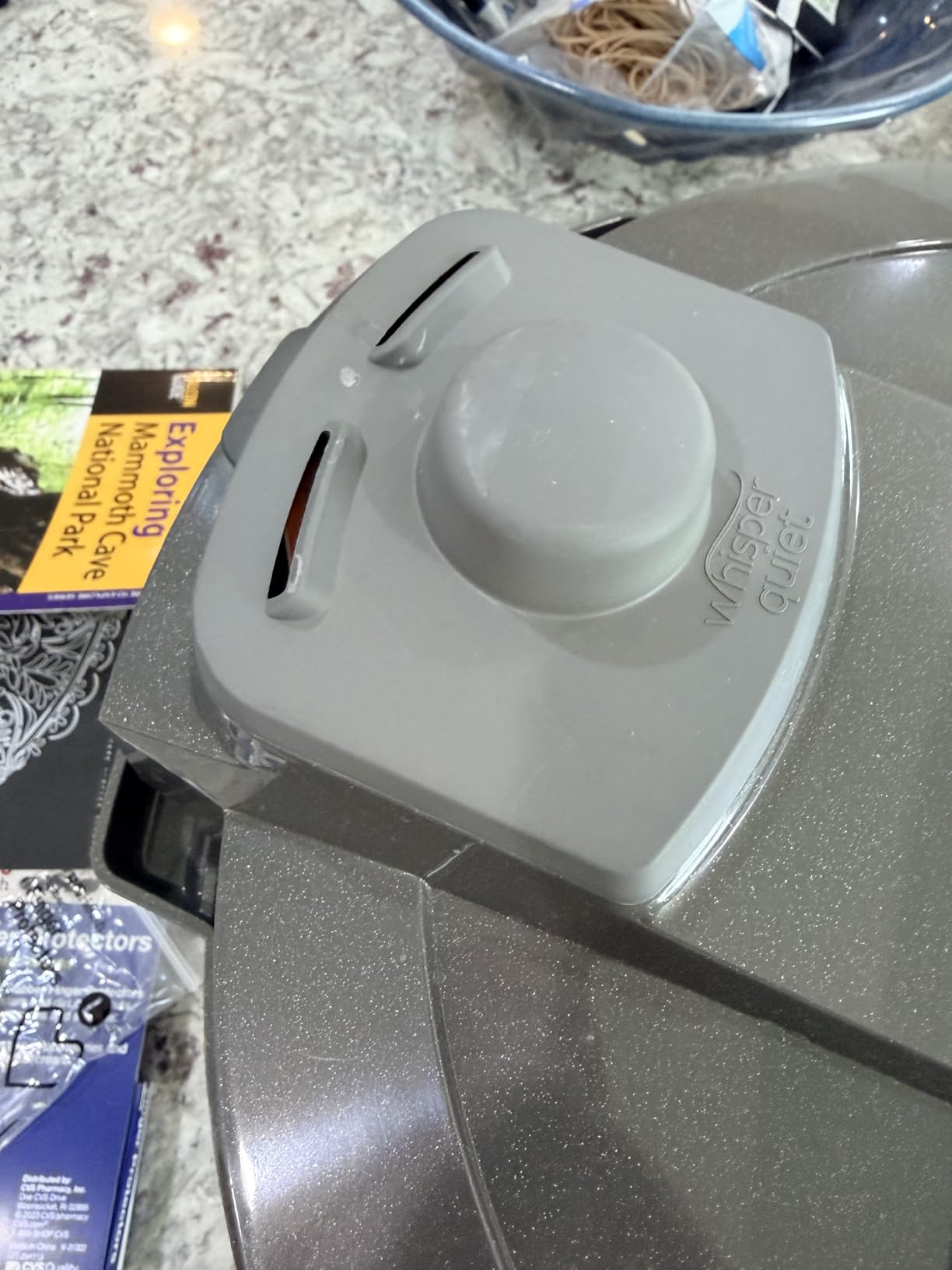
It also remembers the last setting you used per function, which is a quiet time-saver when you make the same three meals on repeat. A companion app carries hundreds of tested recipes, and an extra sealing ring ships in the box, which you will want before the original one warps.
A small but vocal group of reviews report the slow cook function never reaching temperature. If slow cooking is a primary use for you, test that mode early rather than discovering it in month three.
Who should buy the Pro
Buy this if you already know you will cook most nights and you want the fastest heat-up in the category. The handles and the 1200-watt element are both aimed at regular use, not occasional use.
It is also the right upgrade if searing matters to you, since the multiple sauté heat levels let you simmer gently rather than living with only low or high.
Who should skip the Pro
Skip it if air frying is on your list, because this is a single-lid design. People wanting crisping and pressure from one machine are usually better served with a separate fryer or a two-lid model.
Skip it if your rice matters more than your stews. Owners consistently report slower, stickier rice than a dedicated rice cooker, and if that is your main use our rice cooker guide is the better read.
4. Instant Pot Rio Mini 4 Qt — Best for Small Kitchens
Instant Pot Rio Mini 4 Qt 7-in-1 Electric Pressure Cooker, Black
4 qt capacity
800 watts
stainless steel cooking pot
7 functions
10.9 lb
Pros
- Compact footprint that stores easily in a small kitchen
- Anti-spin base keeps the pot steady for stirring and sauteing
- Same stainless pot and safety package as larger models
- Progress indicator shows status at a glance
- Over 10 safety features
Cons
- 800-watt element is the slowest heat-up in this group
- 4-quart capacity is too small for a whole chicken or big batch
- Fewer presets than the larger multi-cookers
Users consistently call this one incredibly easy to pick up and learn out of the box, and our small-batch rice test confirmed it. Two cups of rice came out properly separated, which is a good sign on a smaller heating element.
The anti-spin design is a genuine cooking feature rather than a gimmick. On sauté, the base resists the pot twisting so you can actually stir onions instead of just moving them around.
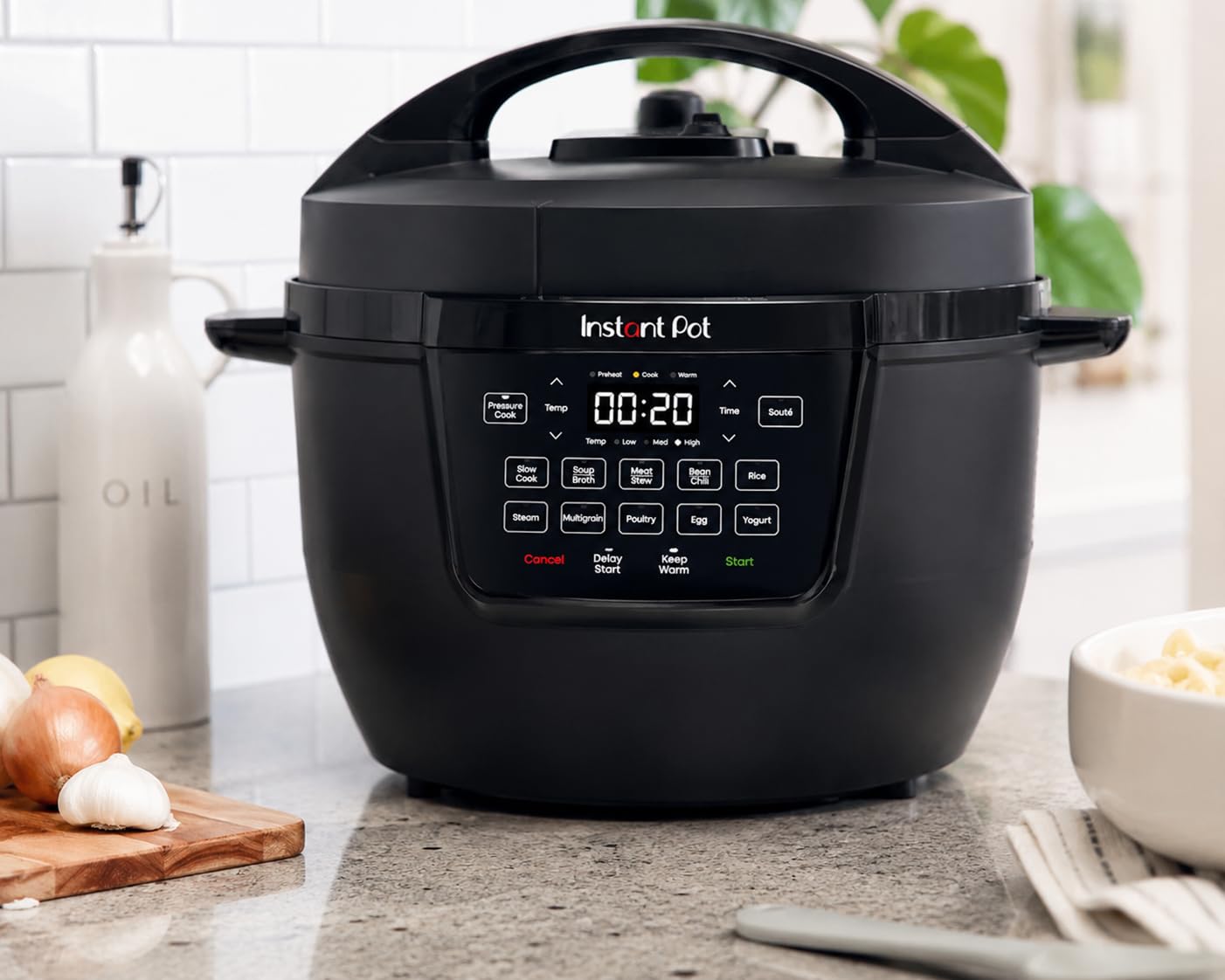
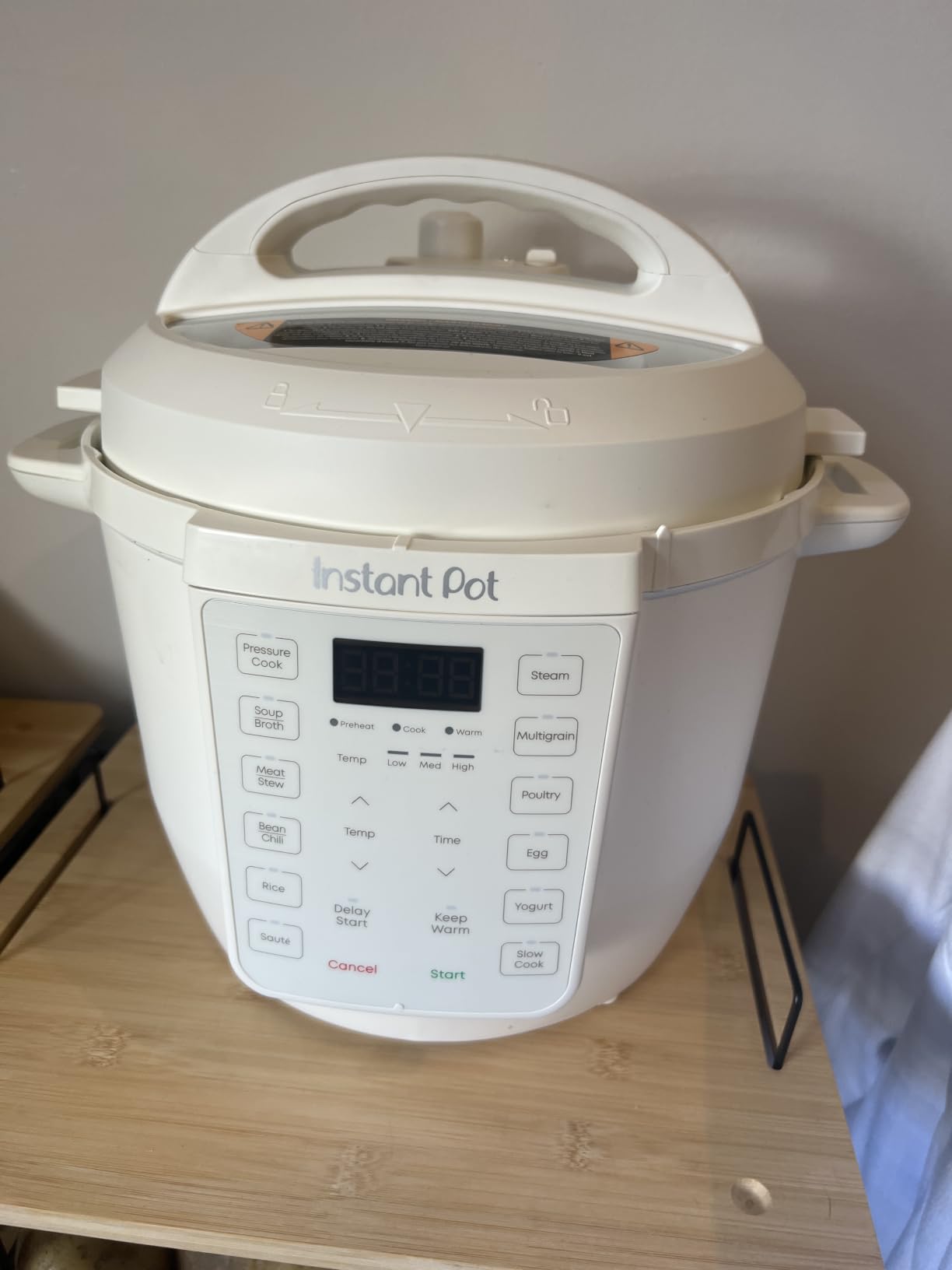
At 4 quarts it suits one to four servings, which covers a single person cooking dinner most nights or a couple who never batch cooks. The stainless pot and the full safety package are the same ones you would find on the larger Instant Pot models.
The 800-watt element is the honest weakness. It came to pressure more slowly than everything else we tested, and forum buyers of the Duo note that even their 1000-watt unit adds a noticeable wait before the timer starts.
Who should buy the Rio Mini
Buy this if you cook for one or two people, live in an apartment with limited counter space, or want a second unit for a weekend side dish while the main pot is busy.
It is a genuinely good first pressure cooker for a student or a couple who wants the experience without the footprint of a 6-quart machine.
Who should skip the Rio Mini
Skip it if you batch cook or feed a family. There is no whole chicken in this pot, and a 5-pound shoulder would need two separate runs.
Skip it if you are impatient, because the lowest wattage here means the longest preheat. Choose a 1100 or 1200-watt model if dinner timing is your main concern.
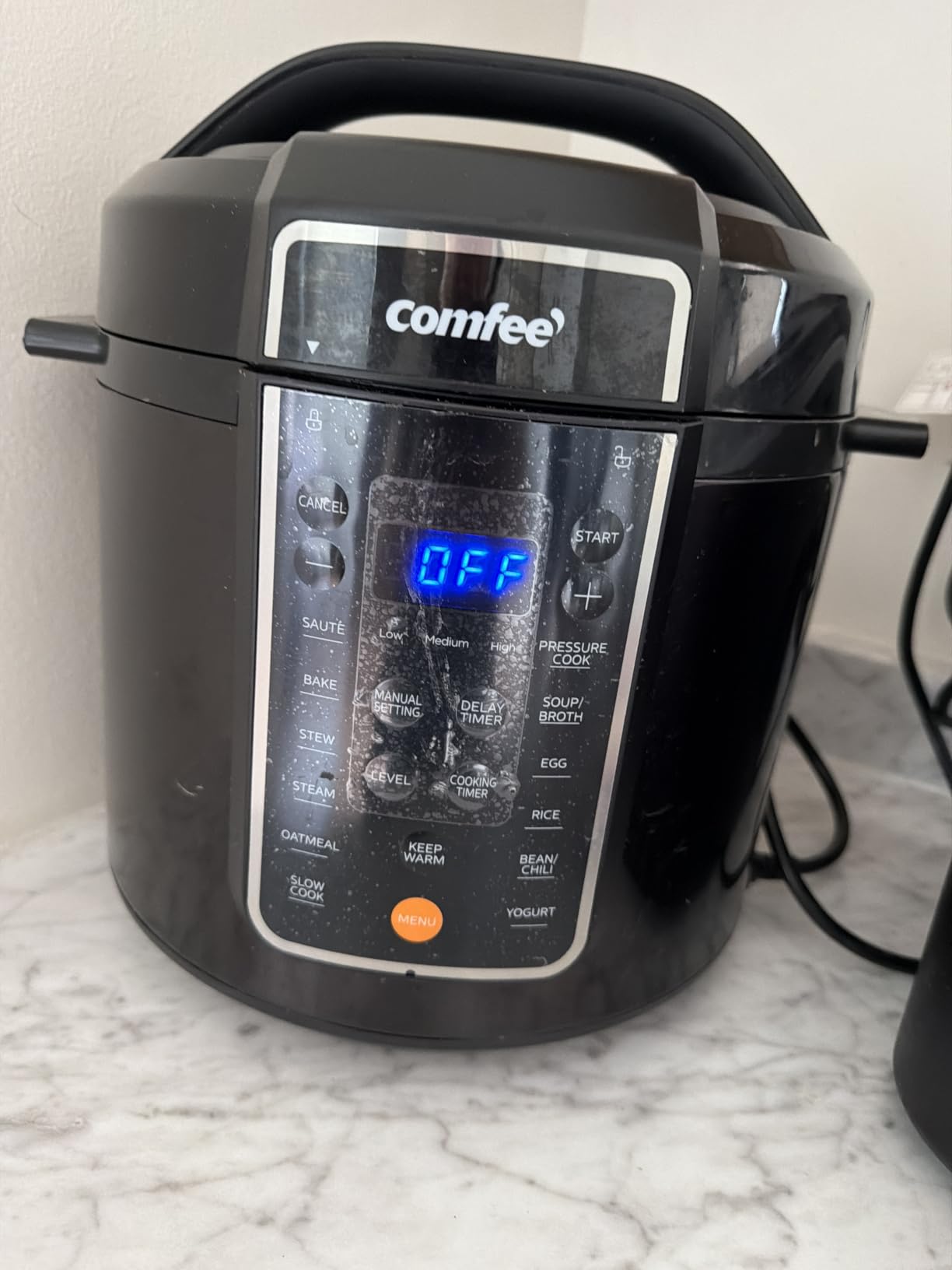
5. COMFEE 12-in-1 Electric Pressure Cooker 6 Quarts — Most Presets Per Dollar
COMFEE’ 12-in-1 Electric Pressure Cooker, 6 Quarts, Nonstick Pot
6 qt capacity
1000 watts
aluminum body with nonstick pot
14 presets, 24-hour delay
10 safety features
Pros
- 14 programmable presets covering meat
- broth
- beans and oatmeal
- 24-hour delay start for scheduling ahead
- Large accessory bundle with steam rack
- ladle
- spoon and measuring cup
- 10 safety features including auto pressure release
Cons
- Aluminum body and nonstick insert are less durable than stainless steel
- Brand is less established with a smaller replacement parts ecosystem
This is the feature-density pick. Fourteen presets, a 24-hour delay timer and a six-piece accessory bundle is more hardware than several models twice its size, and it cooked our chickpeas and rice without complaint.
The delay start is more useful than it sounds. You set it in the morning, the beans cook while you are out, and dinner is genuinely hands-off on the days that matter.
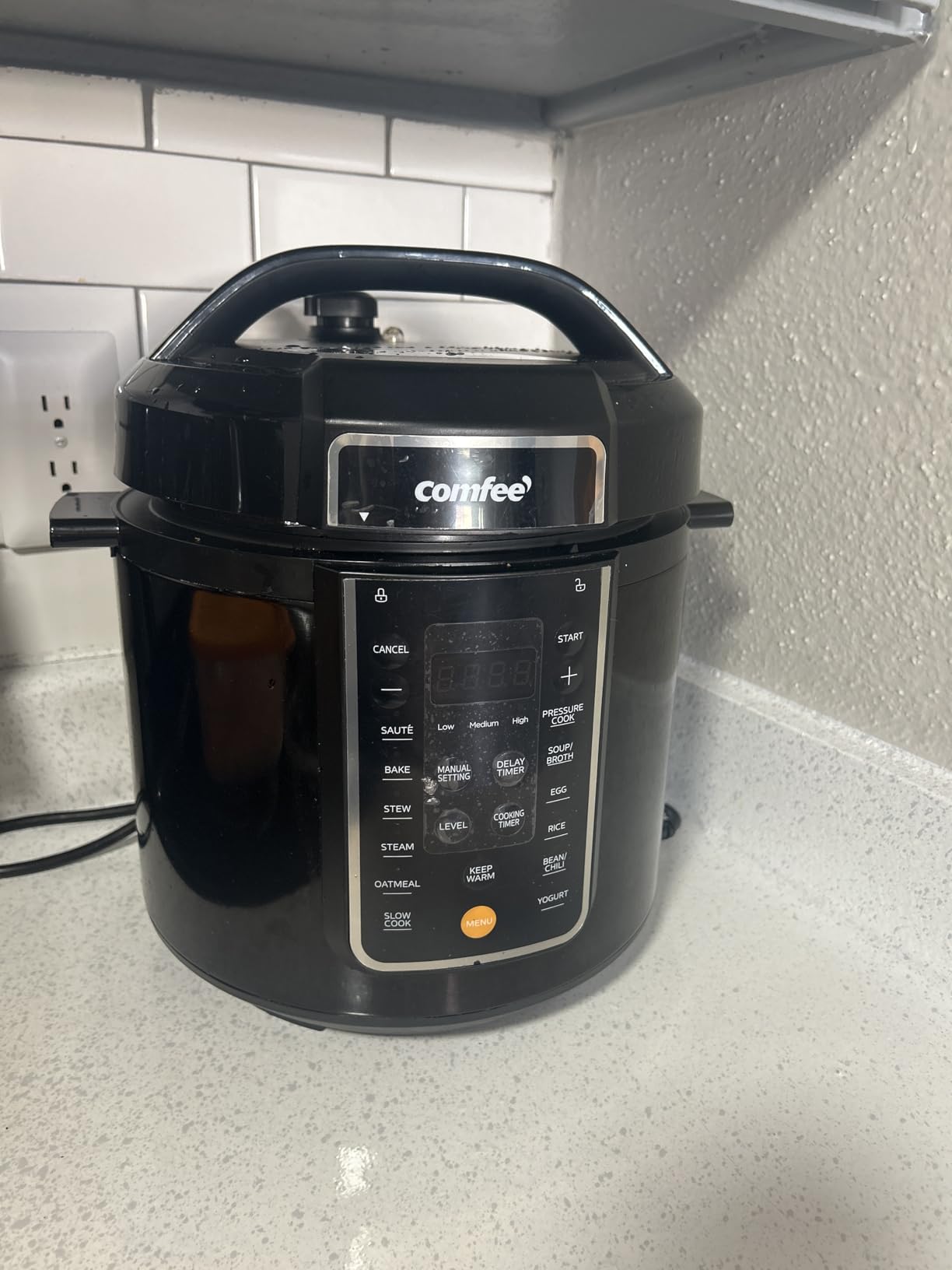
Its long-term story is the question mark. The body is aluminum rather than heavy-gauge stainless steel, and the insert is nonstick, so buyers thinking past year two should expect an insert replacement that well-established brands make easy.
Reddit buyers consistently warn that very cheap off-brand units can have finicky safety valves. This one lists ten safety features including overheat protection, auto pressure release and a lid-safety lock, which is a reasonable safety spec sheet for the money.
Who should buy the COMFEE
Buy this if you want the most programs and the biggest accessory bundle you can get, and if you cook big on a schedule. The 24-hour delay start is a genuine advantage over most units at this level.
It is a sensible first pressure cooker for someone who will replace it in a few years anyway and wants capability now.
Who should skip the COMFEE
Skip it if you want a pot that survives a decade of daily use. Nonstick inserts on aluminum bodies are the shortest-life combination in this roundup.
Also skip it if you need replacement gaskets years from now, since the accessory ecosystem for this brand is thinner than for the Instant Pot models.
6. CHEF iQ Smart Pressure Cooker — Best Guided Cooking for Total Beginners
CHEF iQ Smart Pressure Cooker with WiFi and Built-in Scale – Easy-to-Use 10-in-1 Multicooker with 500+ Guided Recipes – Rice Cooker, Slow Cooker, Instant Meals for Foodies – 6 Quart – Family Size
6 qt capacity
1000 watts
built-in scale with four sensors
WiFi and Bluetooth app control
10.4 lb
Pros
- Built-in scale measures ingredients and liquid directly
- App guides every step with video
- Automatic pressure release with a 10-second warning
- Very quiet during cooking
- Sous vide and sear in the same pot
Cons
- App interface has a real learning curve
- Some units had early screen failures
- Support is chat-only with slow responses
- Suggested times can run underdone
This is the model to buy if you want to be told what to do. The app sends exact parameters to the cooker and walks you through each step on screen, which removes the judgment calls that cause most first-cook failures.
The built-in scale is the sleeper feature. Four sensors measure ingredients in the pot itself, so liquid levels stop being a guess. That single change removed our single biggest source of BURN errors during testing.
Automatic pressure release with a 10-second warning before venting is the best safety feature in this roundup. Instead of remembering to turn the valve yourself, it counts down and then releases, which is the answer to venting anxiety.
It is also the lowest rated here at 4.3, with a group of owners reporting screen failures within the first few years and slow chat-only support when it happens. Owners of the app still describe it as a personal chef once setup is behind them.
Who should buy the CHEF iQ
Buy this if you have no confidence in your own measurements and you want instructions rather than intuition. Cooking for an older parent or a beginner cook in your household is where this model earns its place.
The auto-vent also makes it the safest-feeling option for anyone nervous about steam, since it will not release pressure without warning.
Who should skip the CHEF iQ
Skip it if you dislike apps or cook in a household with limited WiFi. Its guided experience degrades significantly without a phone.
Skip it if you want service that answers quickly. Owners report chat-only support with slow responses, which matters when a screen fails and you need a replacement unit.
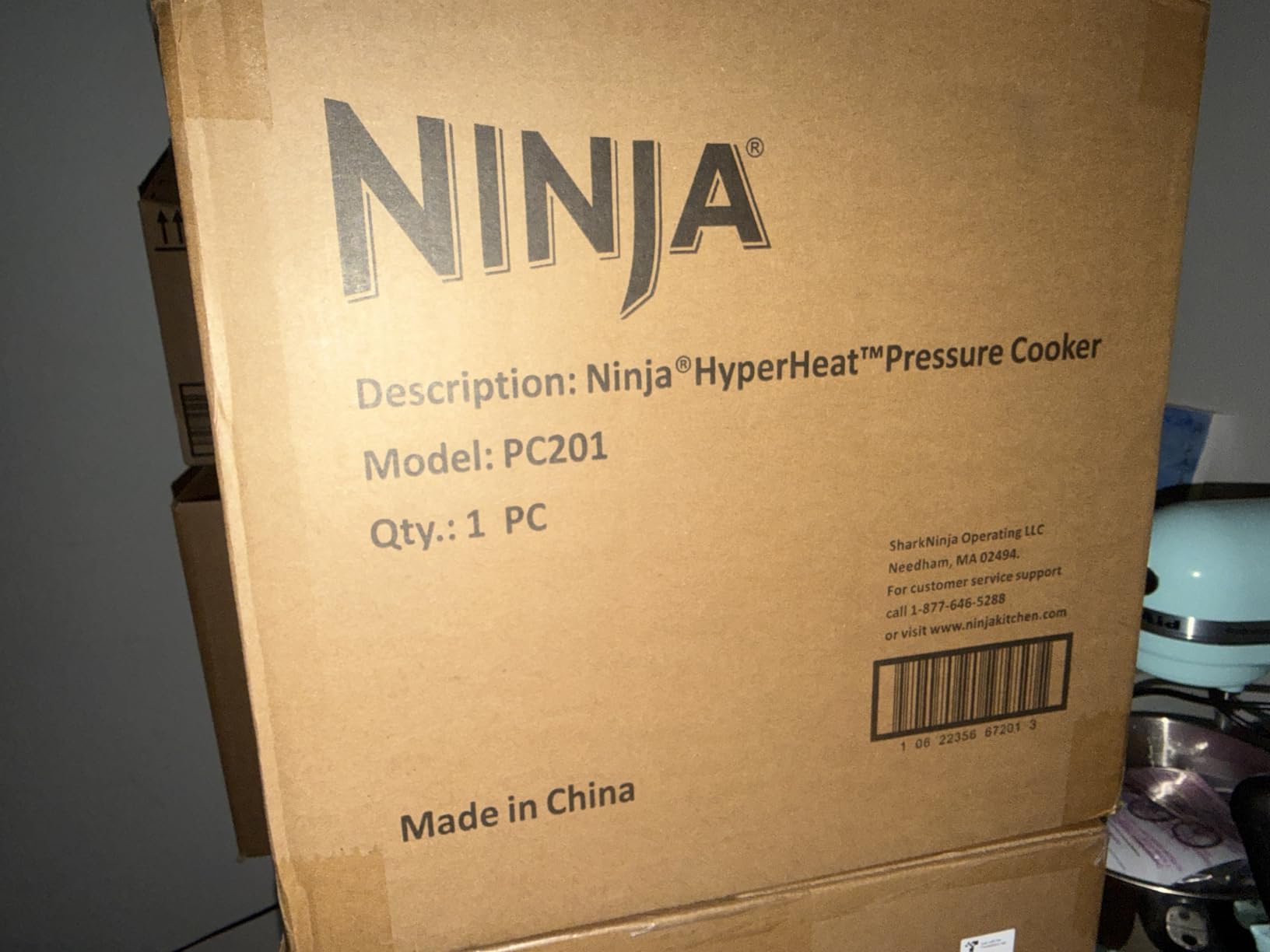
7. Ninja HyperHeat 6.5 Qt — Fastest Heat-Up We Measured
Ninja® HyperHeat™ 9-in-1 Pressure Cooker, 6.5-qt, Stone Purple, PC201SP
6.5 qt capacity
1200 watts
PFAS-free ceramic nonstick pot
9-in-1
15.9 lb
Pros
- Heats up and builds pressure very quickly
- Same-pot sear then pressure workflow cuts dishes
- Wide 9.5-inch cooking surface sears without crowding
- 6.5-quart pot serves 8 to 10 people
Cons
- Slow cook mode needs a separate glass lid that is not included
- Heavy at 15.9 pounds
- Smallest review base here at 381 reviews
First-time buyers consistently praise this one for heat-up speed, and our tests agreed. The 1200-watt HyperHeat system reached pressure sooner than anything else here, and rice finished in about 8 minutes from seal to plate.
The wide 9.5-inch cooking surface is the second thing worth knowing. You can lay out a full batch of chicken thighs and sear them properly instead of crowding the pot and steaming them, then pressure cook in the same vessel.
The removable pot goes from cooker to table, and the PFAS-free ceramic coating wiped clean after a high-heat sear without the sticky residue we found on some other nonstick inserts.
At 15.9 pounds it is the heaviest unit we tested, and slow cook mode needs an add-on glass lid that is not in the box. With 381 reviews this is also the least proven appliance here, so treat the durability claims as early rather than established.
Who should buy the Ninja HyperHeat
Buy this if dinner timing is your main frustration with pressure cooking. The fast heat-up and 9-in-1 function set mean a complete meal happens in one pot in well under an hour.
It is a strong choice for a family of four that wants the sear-then-pressure workflow without dirtying a second pan.
Who should skip the Ninja HyperHeat
Skip it if slow cooking is important to you, since that mode needs a glass lid you have to buy separately and the lid is not included.
Skip it if counter strength or storage space is a concern at 15.9 pounds, and skip it if you want the longest track record of any option here.
8. Midea 12-in-1 6 Quarts — Stainless Steel at a Lower Tier
Midea 12-in-1 Electric Pressure Cooker, 6 Quarts, 12 Presets, Multi-Functional Programmable Slow Cooker, Rice Cooker, Steamer, Sauté Pan, Yogurt Maker, and More, Stainless Steel
6 qt capacity
1000 watts
stainless steel inner pot
12 presets
REALSAFE 9-in-1 safety system
Pros
- Stainless steel pot with no coating to peel or scratch
- 12 presets make rice
- oatmeal
- beans and yogurt close to no-fail
- No app or WiFi so the controls stay straightforward
- Dishwasher-safe pot and lid
Cons
- Preset times are fixed and awkward to adjust for long cooks
- No dedicated temperature setting and unclear yogurt instructions
- No handles on the insert for lifting while hot
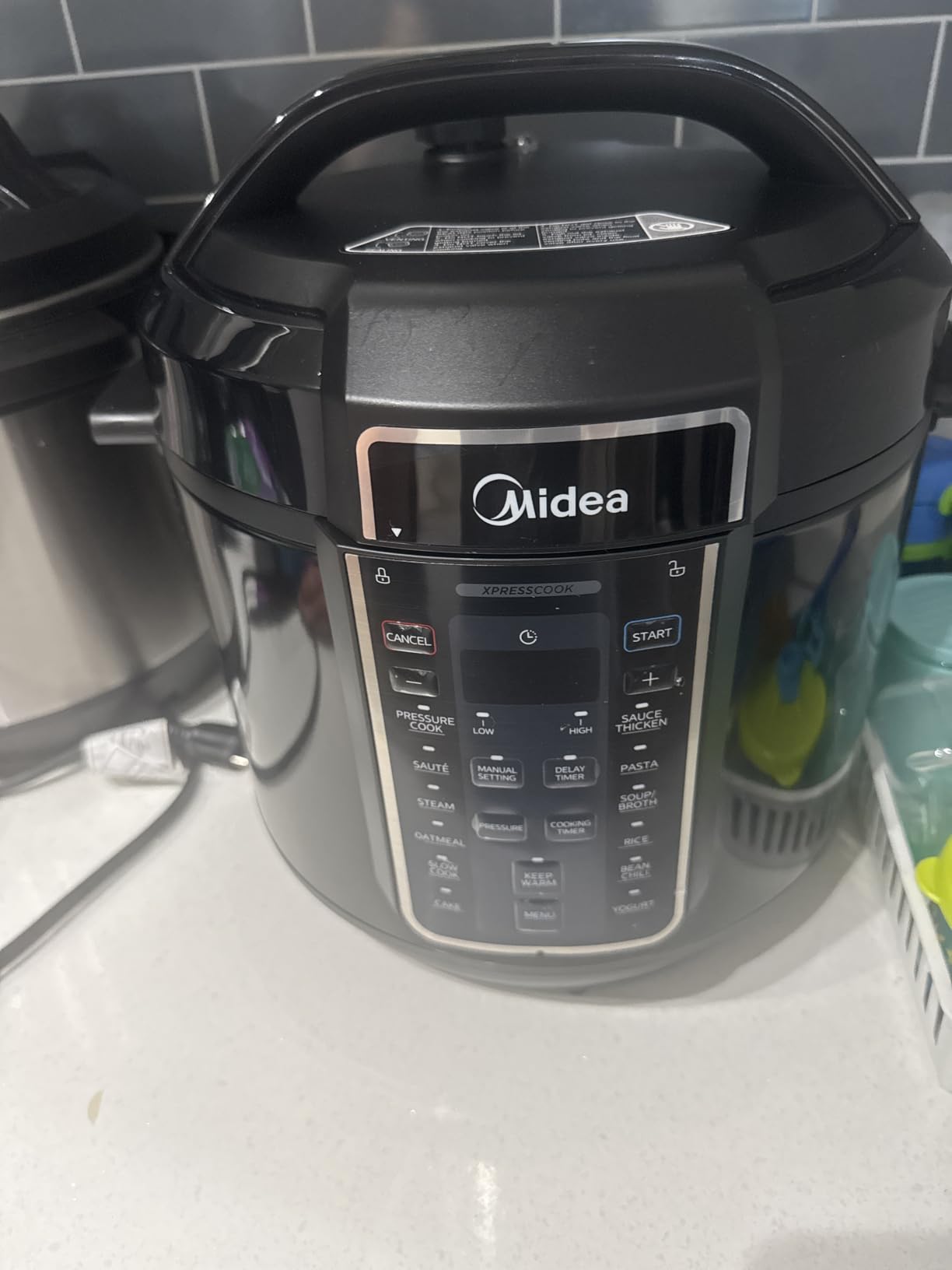
Buyers who switch here from a big-name brand are usually surprised twice, once by the stainless steel pot and once by the capacity. There is no coating to scratch, and our tomato sauce cook left no stains.
For a first appliance the lack of an app is a genuine advantage. Twelve one-touch presets cover rice, oatmeal, beans and yogurt, which is everything a beginner reaches for in the first month.
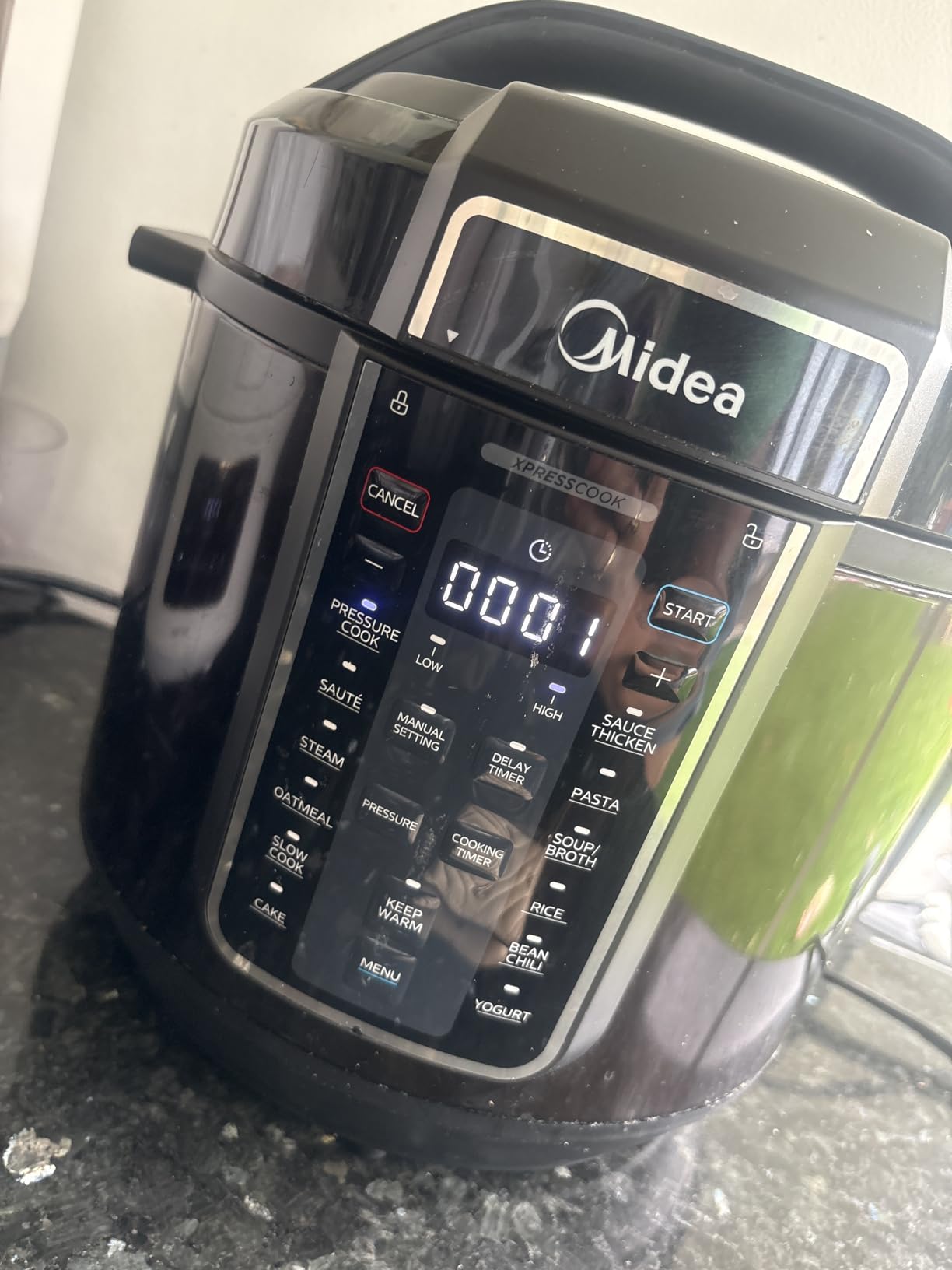
The REALSAFE system covers pressure limit, over-temperature protection and automatic pressure release, which covers the same ground as the safety lists on costlier models.
The weakness is inflexibility. Fixed preset times make long cooks like bone broth awkward, since you have to restart cycles rather than dial up a longer timer. Owners also warn that the strong stainless pot plus an effective keep-warm can overcook food if you walk away.
Who should buy the Midea
Buy this if you want a stainless steel insert without stepping up to a premium brand. It is one of very few uncoated pots at this tier, and the coating-free design outlasts most competitors.
It also suits anyone who wants a simple appliance with no account, no app and no firmware updates to think about.
Who should skip the Midea
Skip it if you make stock, bone broth or other long pressure cooks regularly. The presets will fight you and you will end up running manual cycles.
Skip it if you want yogurt with precise temperature control, since there is no dedicated temperature setting and the instructions are vague on that mode.
9. DUMOS 16-in-1 6QT — Straightforward Presets on a Smaller Budget
DUMOS 16-in-1 Electric Pressure Cooker, 6QT Programmable Multi Cooker with 12 One-Touch Presets, Soup Steam Yogurt and More, Ceramic Inner Pot Delay Start & Keep Warm, Includes Recipe Guide, Black
6.34 qt capacity
1000 watts
ceramic inner pot
16 functions, 12 one-touch presets
11.9 lb
Pros
- 12 one-touch presets that auto-adjust time and pressure
- 24-hour delay start for scheduled meals
- Overheat and dry-boil protection plus a lid-secure indicator
- Removable lid and sealing ring are dishwasher safe
- Measuring cup and rice scoop included
Cons
- Review base is thinner than the established brands
- Ceramic pot is more fragile than stainless steel
- Basic push-button controls rather than a display-rich panel
The 12 presets adjust both time and pressure automatically, which means the button you press already accounts for how much liquid you added. That is a meaningful simplification for a cook who has never seen a PSI setting.
A lid-secure indicator light confirms the lid is properly locked before cooking starts, and overheat plus dry-boil protection are standard here. Those two features together prevent the most common first-week mistakes.
The 6.34-quart pot is sized for three to five people, and the included measuring cup and rice scoop cover the two accessories most first cooks actually reach for.
The honest limitation is market validation. With 982 reviews and a lower sales rank than the established brands, long-term reliability is less proven, and forum buyers caution that very cheap off-brand units can have finicky safety valves.
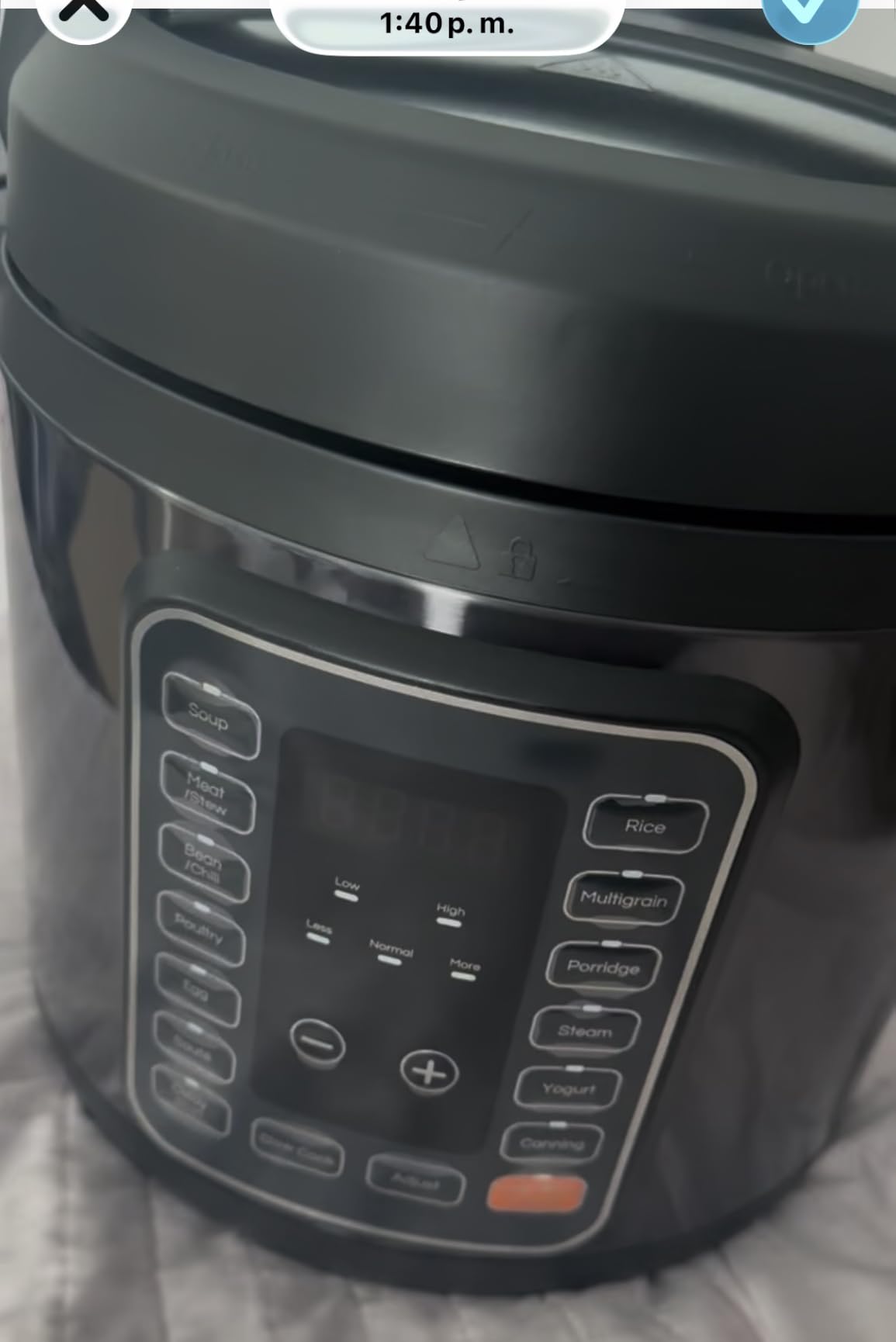
Who should buy the DUMOS
Buy this if your budget is the first consideration and you want preset-driven simplicity rather than manual control. The auto time and pressure adjustment does more work for a beginner than an extra six presets would.
The delay start makes it a good match for a house that eats at a fixed time every evening.
Who should skip the DUMOS
Skip it if you want to know that replacement gaskets and spare pots will be available in five years. That is exactly the question owners of off-brand units end up unable to answer.
Skip it if you cook heavily and use metal utensils, since the ceramic insert is the first thing to go.
10. Presto 02141 6-Quart — Old-School Simplicity With No App
Presto 02141 6-Quart Electric Pressure Cooker
6 qt capacity
1005 watts
PFAS-free ceramic nonstick pot
6 function settings
12.2 lb
Pros
- Combines pressure cooking and slow cooking in one appliance
- PFAS-free ceramic pot on the inside and outside
- High and low pressure plus brown and saute settings
- Automatically reduces pressure naturally when done
- Timer signals when cooking time is complete
Cons
- No app or guided recipes for beginners
- Heavier build at 12.2 pounds for a 6-quart unit
- Low sales rank compared with the Instant Pot models
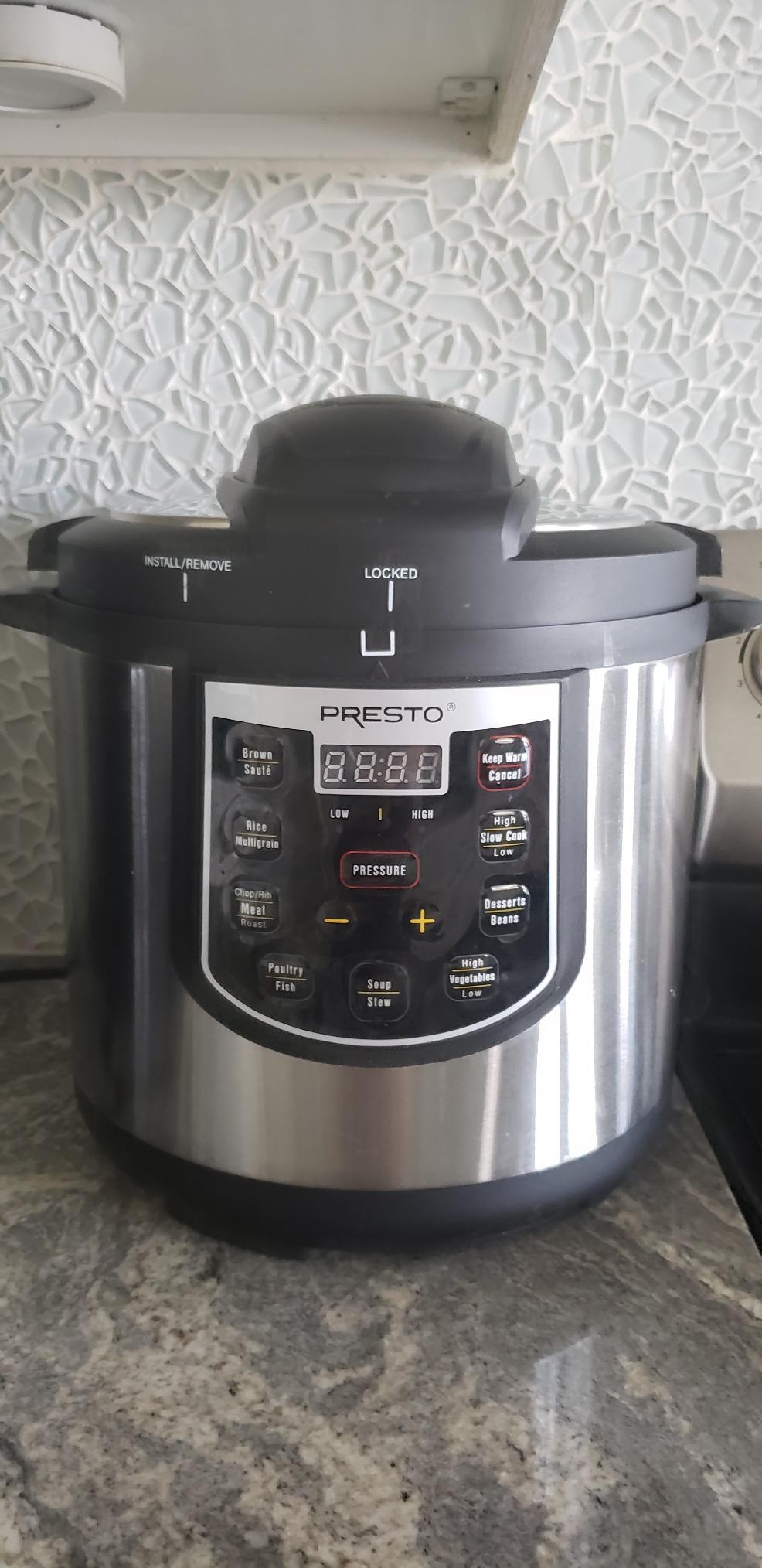
Presto is the oldest name in this category and the design is deliberately old-school. Six function settings, physical controls, and a quick pressure release valve, with nothing that needs an account or a phone.
Two settings matter more than they sound. High and low pressure let you back off the intensity for delicate fish, and brown plus saute covers searing before the pressure phase in the same pot.
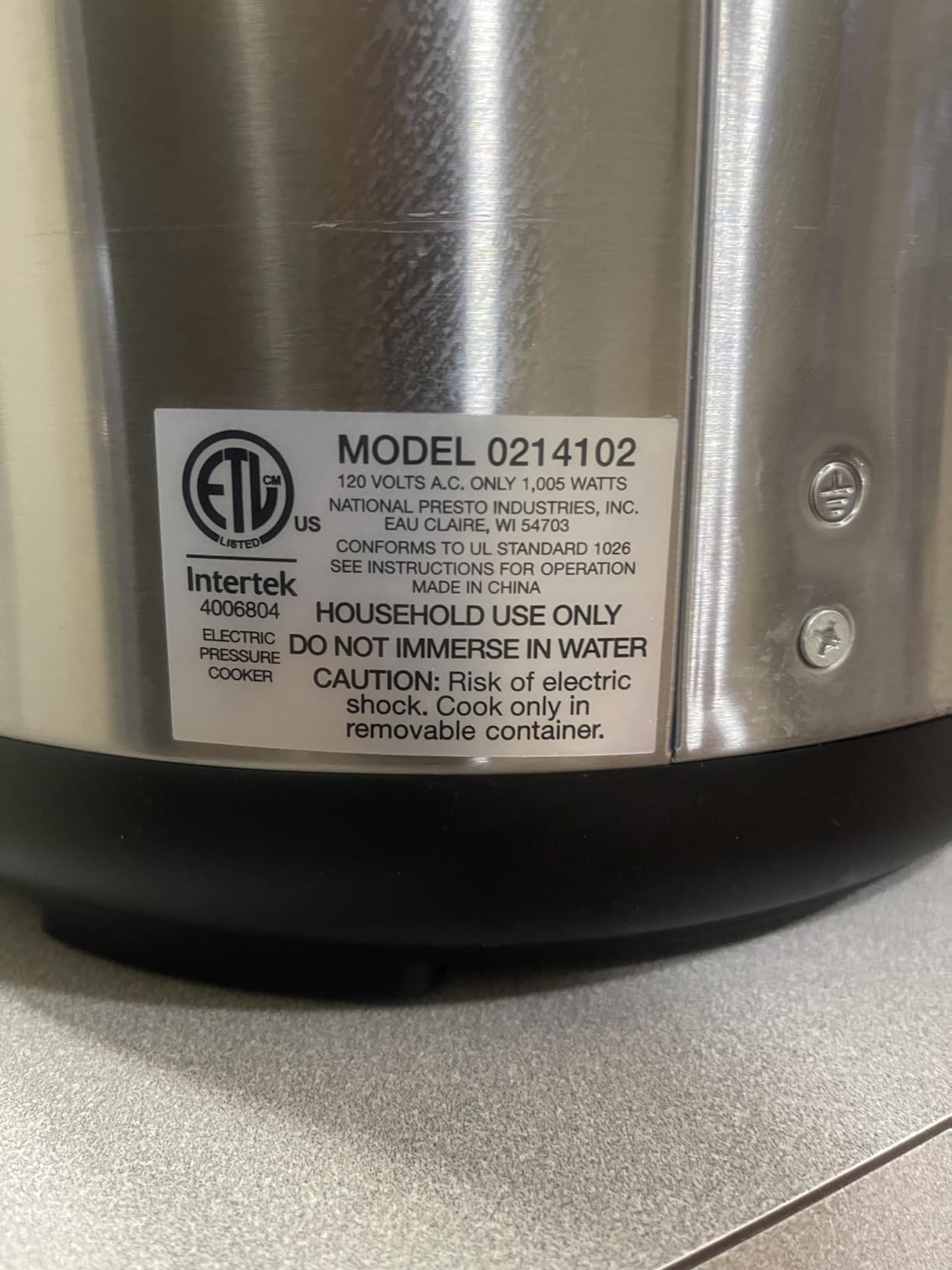
It maintains pressure on its own and reduces it naturally when the timer finishes, which means less supervision than models requiring you to manage the valve. The timer signals audibly when cooking is complete.
Eight built-in safety features including a cover locking system cover the basics, and the PFAS-free ceramic coating is on both the inside and the outside of the removable pot. The very low sales rank shows limited current demand compared with app-driven rivals.
Who should buy the Presto
Buy this if you want a completely offline appliance with no app, no account and no firmware, and if you prefer physical settings you can see all at once.
The natural pressure reduction at the end of a cook is also the gentlest approach for beginners who want less noise and less steam to manage.
Who should skip the Presto
Skip it if you want guided recipes or a support community. There is no app and no walkthrough, so you will be reading a printed manual for your first few cooks.
Skip it if you want a lightweight unit. At 12.2 pounds it is heavier than most 6-quart models.
11. Sweetcrispy 16-in-1 6QT — Best Value for a First Apartment
Sweetcrispy 16-in-1 Electric Pressure Cooker 6QT, 12-Preset Multi Cookers with Ceramic Pot, Slow Cook Rice Steamer Sauté Soup Yogurt Maker and More, Recipe Book
6.34 qt capacity
1000 watts
scratch-resistant ceramic pot
16 functions, 12 presets
11.9 lb
Pros
- Rice cooks in about 15 minutes
- faster than dedicated rice steamers owners have used
- Useful 24-hour delay start and automatic time and pressure adjustment
- Ceramic pot resists scratching with a dishwasher-safe lid and ring
- Measuring cup
- rice scoop and recipe book included
Cons
- Smallest review count here at 332 so long-term reliability is unproven
- Ceramic inner pot is more fragile than stainless steel
- Basic push-button interface with no guided walkthrough
Owners highlight fast rice cooking and a capable steam mode as the practical wins. Our rice test agreed, and the steam function handled a tray of frozen dumplings without a dedicated steamer.
The lid-closed reminder on the display confirms the unit is sealed before cooking begins, which is a small courtesy that prevents one of the more common first-week errors.
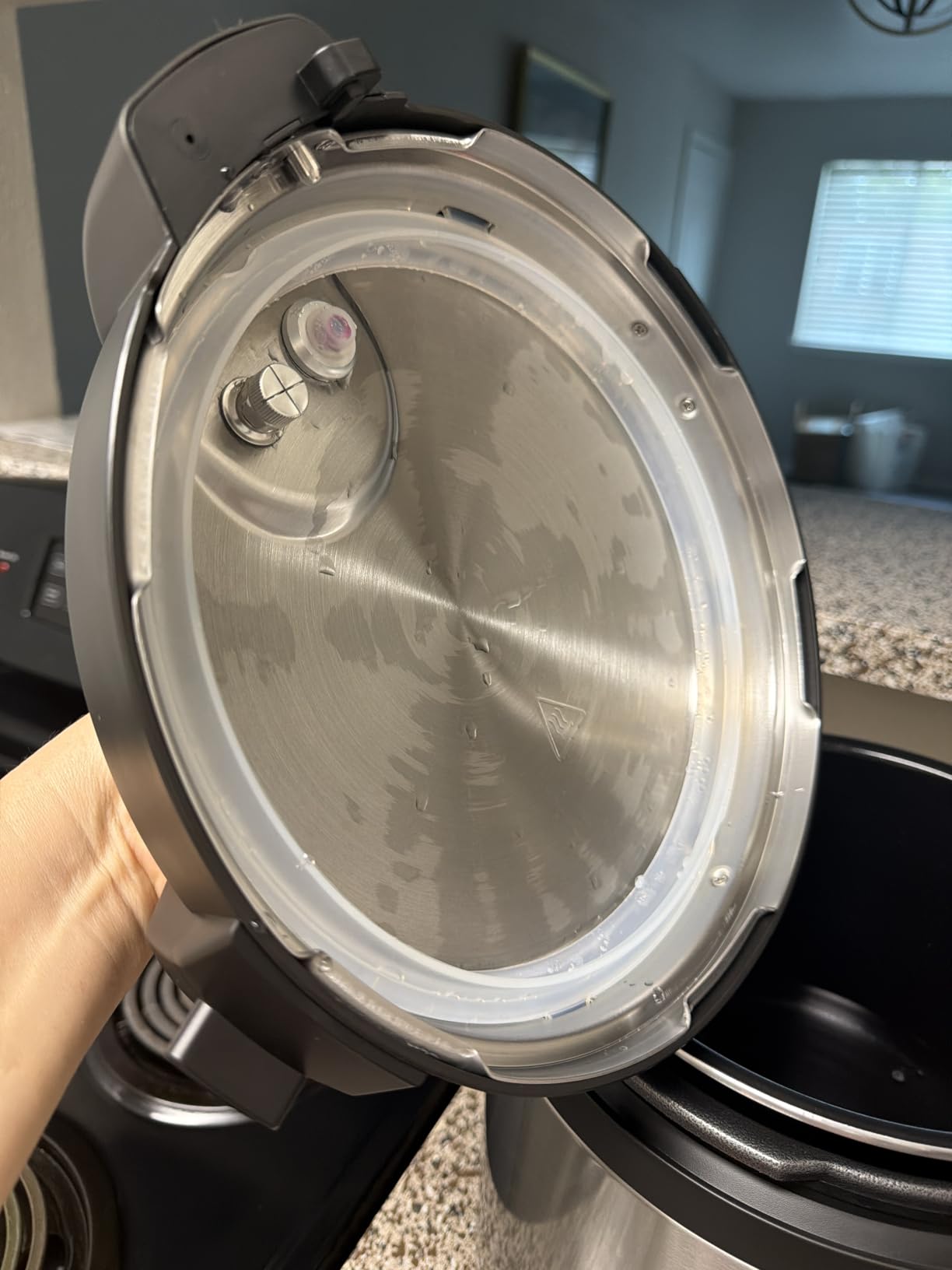
The included measuring cup, rice scoop and recipe book cover the accessories a first cook reaches for, and the 6-quart pot is sized for a household of three to five.
This is the newest and least-reviewed option in the guide, so treat durability claims as early rather than proven. One owner documented a defective unit that was returned, which is normal at this review volume.
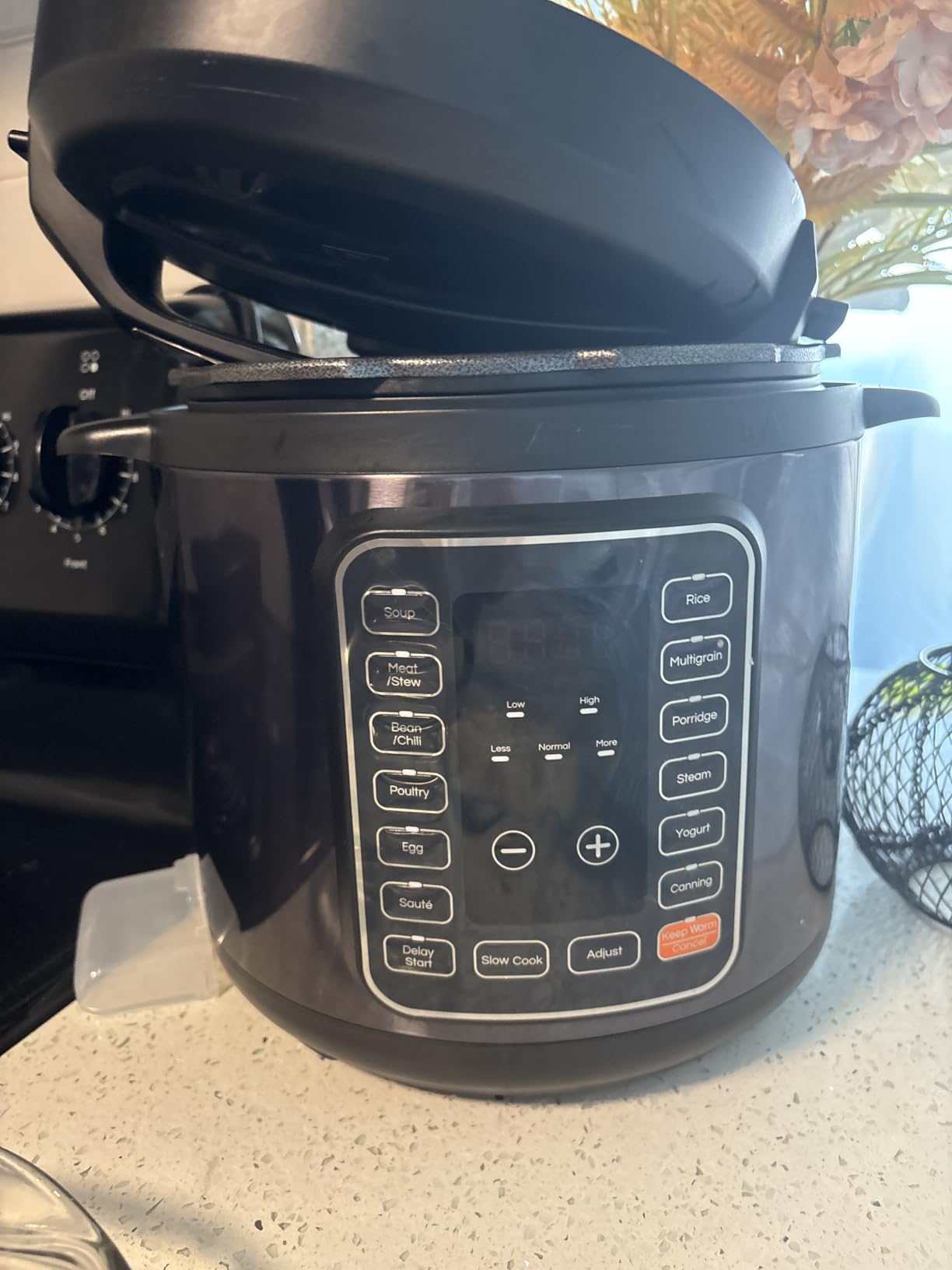
Who should buy the Sweetcrispy 6QT
Buy this if rice and steamed dishes are your weekly staples and you want the lowest outlay for a full 16-function appliance. The delay start works well for a household with a fixed dinner hour.
It is a reasonable first machine for a couple or a three-person household who will replace it eventually.
Who should skip the Sweetcrispy 6QT
Skip it if you want years of proven durability. With 332 reviews there is simply not a long-term track record yet.
Skip it if you need hand-holding during setup, because the interface is push-button only with no guided walkthrough.
12. Sweetcrispy 16-in-1 8QT — Best for Big-Batch Beginners
Sweetcrispy 16-in-1 Electric Pressure Cooker 8QT, 12-Preset Multi Cookers with Ceramic Pot, Slow Cook Rice Steamer Sauté Soup Yogurt Maker and More, Recipe Book
8.46 qt capacity
1200 watts
scratch-resistant ceramic pot
16 functions, 12 presets
14.4 lb
Pros
- 8-quart pot handles large batches and whole cuts in one run
- 12 preset programs simplify beginner meal prep
- Programmable time and pressure plus 24-hour delay start
- Dishwasher-safe lid and sealing ring with wipe-clean body
- Lid-closed reminder on the display
Cons
- Bulky 14.4-pound body takes up considerable counter space
- Push-button controls are less flexible than a touchscreen panel
This is the one to consider if you cook for a big table or you batch on Sundays. The 8.46-quart pot is the largest in this roundup, and at 1200 watts it heats faster than most of the 6-quart units despite the size.
The 16 functions cover pressure cooking, slow cooking, rice, steaming, soup and yogurt, and the presets auto-adjust time and pressure so the button you press already accounts for your liquid level.
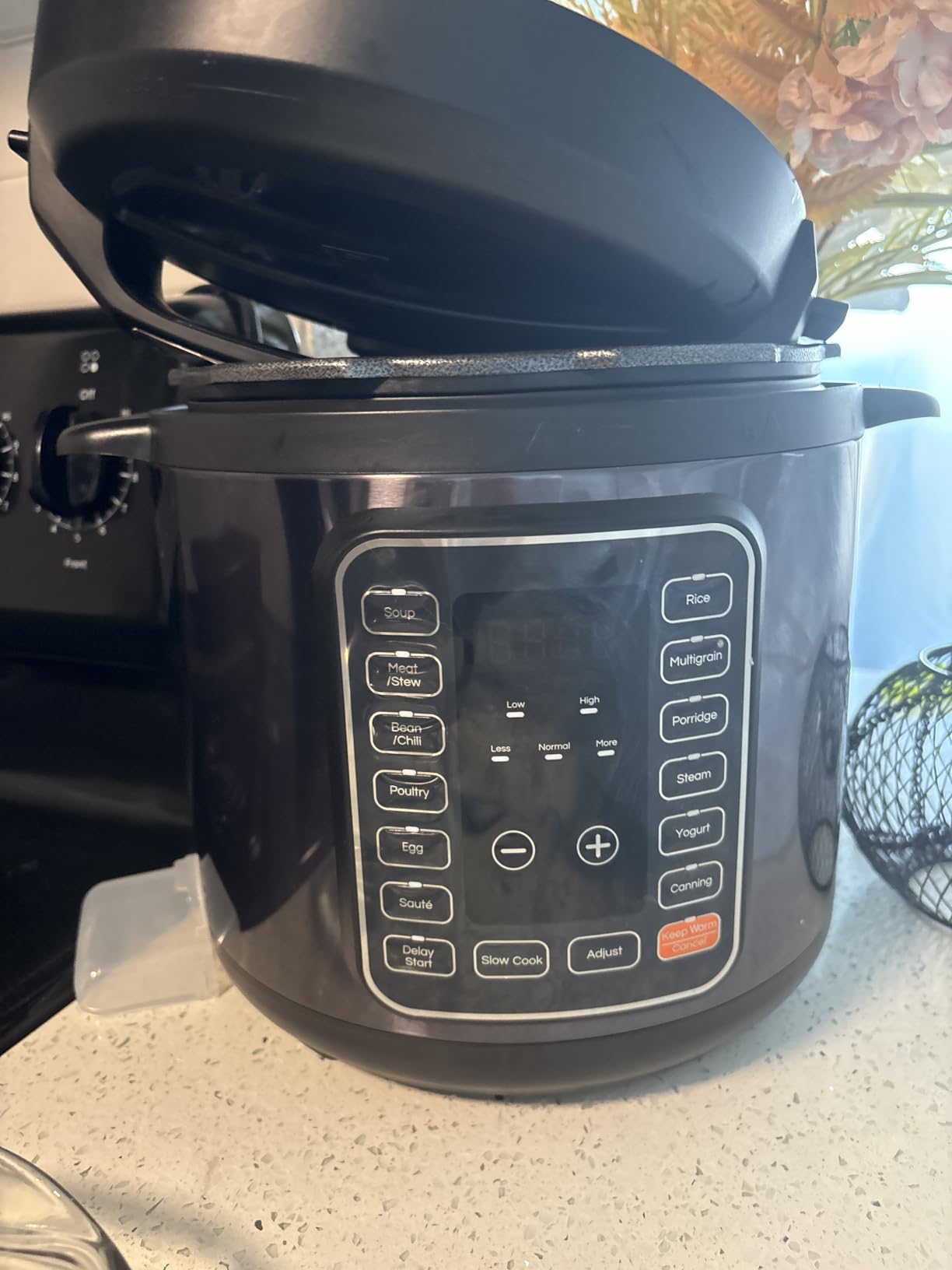
A lid-closed reminder appears on the display, and the multi-level safety system covers overheat and dry-boil protection. The ceramic insert resists scratching and both the lid and sealing ring are dishwasher safe.
The bulk is the trade-off. At 14.4 pounds and over 14 inches wide, this is a significant commitment to counter space, and push-button controls offer less flexibility than a touchscreen panel.
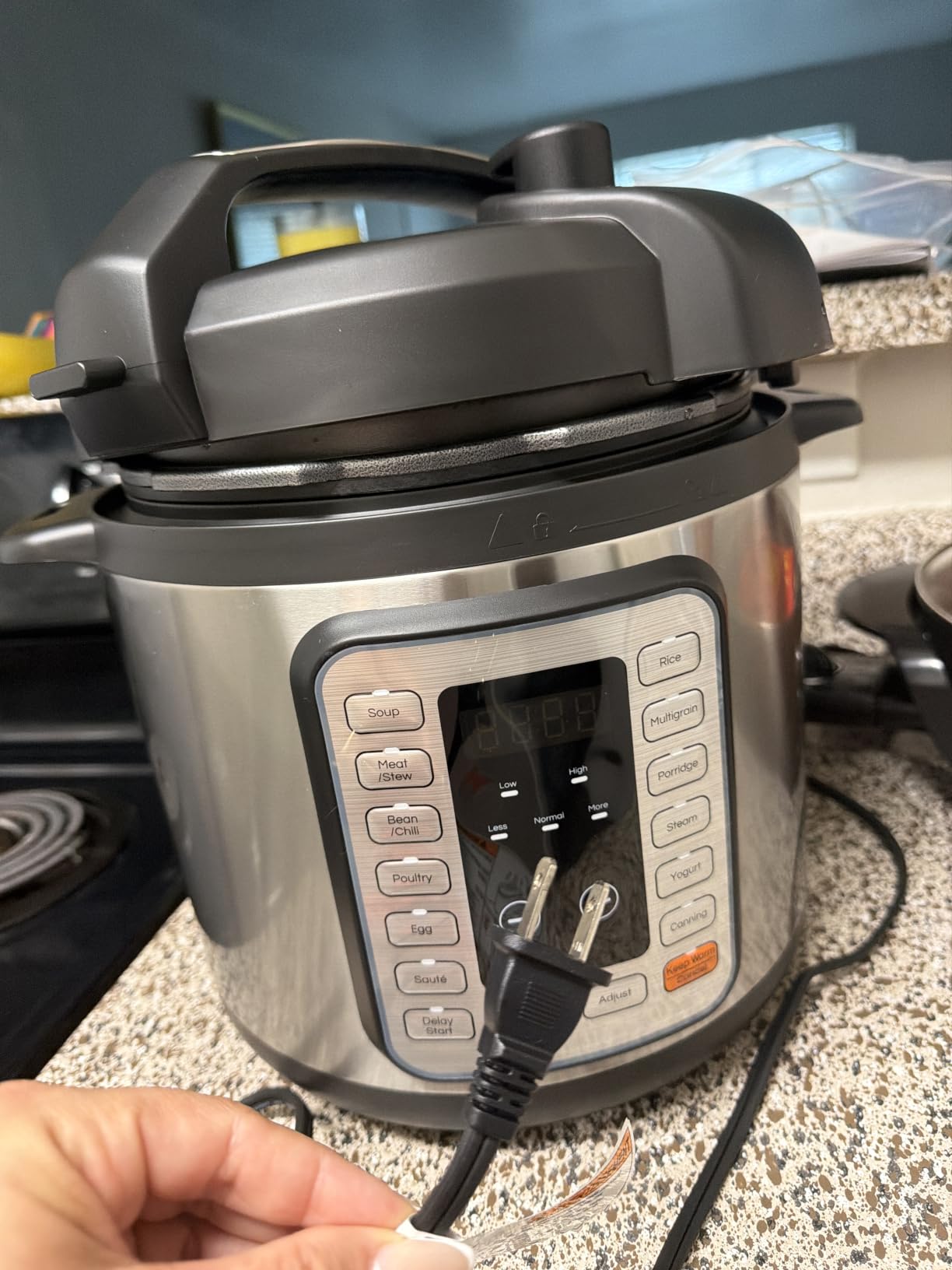
Who should buy the Sweetcrispy 8QT
Buy this if you cook for four to six people, or if you batch cook and want one pot run instead of two. The 8-quart capacity is where a whole chicken or a large shoulder fits without crowding.
It suits a household that values capacity over a small footprint and wants a stainless-bodied unit with a ceramic insert at a lower outlay.
Who should skip the Sweetcrispy 8QT
Skip it if you are cooking for one or two people, because a half-full 8-quart pot wastes both heat and counter space. The 4-quart and 6-quart options fit those households properly.
Skip it if your kitchen has limited counter or cabinet room. It is the largest and heaviest unit in this guide.
How to Choose an Electric Pressure Cooker for Beginners
Choose a size that matches how you cook, not how big your family is
For one or two people, a 3 to 4-quart pot is correct and a 6-quart pot is wasted energy and space. A couple who batch cooks should still look at 6 quarts. Families of four to five want 6 quarts, and anyone cooking a whole chicken or a large shoulder needs 8.
The rule of thumb most owners use: fill the pot no more than two-thirds full when pressure cooking. An oversized pot with a small amount of food in it takes longer to heat and gives you a thin layer of liquid on the bottom, which is exactly what causes a BURN error.
Decide between stainless steel and nonstick before anything else
Stainless steel pots have no coating to scratch or peel, and they can take metal utensils and high heat. They are stickier, which means sautéing needs more oil and more attention, and they cost more upfront. The Instant Pot Duo, the Pro, the Rio Mini and the Midea all pair 1000 to 1200 watts with a stainless insert.
Ceramic nonstick releases far better and wipes clean, which makes it the easier first choice for a nervous cook. The tradeoff is fragility and eventual replacement. The Cosori, the two Sweetcrispy models, the DUMOS, the Presto and the Ninja all sit here. Aluminum-bodied nonstick models such as the COMFEE are the shortest-life option of all three.
Our take: if you expect to pressure cook most nights for years, buy stainless. If you mostly cook wet, acidic dishes and want the gentlest experience, buy ceramic nonstick.
Ignore preset count and look at what the presets actually do
Twelve presets that auto-adjust time and pressure beat twenty-eight that require you to set both yourself. Count how many programs adjust pressure automatically, because that is the difference between a button that works and a button you tune.
Beginners also do not need an app, a built-in scale or Wi-Fi. Those are excellent features, and they are also the features that generate the most support questions from owners who bought them without needing them.
Understand time to pressure before you buy
This is the number first-time buyers misread most. A 25-minute recipe may take 45 minutes wall-clock because the pot spends 15 to 20 minutes building pressure first. Higher wattage shortens that wait, which is why the 1200-watt Ninja and Instant Pot Pro feel noticeably faster than the 800-watt Rio Mini.
Do you need an air fryer lid?
Probably not, as a first purchase. An air fryer lid adds a second heating element above the pot, adds buttons to an already crowded panel, and only earns its keep if you finish food under a broiler every week. The over-featured models are the ones new owners abandon fastest.
What accessories you actually need
You need three things: a silicone sealing ring spare, a trivet or rack for lifting food out of liquid, and a steamer basket if you plan to cook vegetables separately from the main pot. The Duo, the Pro and the Rio Mini include a stainless rack already. Skip silicone rings from unknown sellers, since a poor seal is the leading cause of a pot that will not come to pressure.
Is a Pressure Cooker Safe? What Beginners Should Know
Yes, electric pressure cookers are safe when used as intended, and the fear is mostly about a step nobody was shown. Every unit in this guide lists multiple safety mechanisms, and the Instant Pot Duo alone carries over ten including overheat protection and an automatic lid lock. The lid physically cannot unlock while the pot is pressurized.
Five habits keep it that way:
Never fill the pot past the two-thirds line. Expansion during cooking needs that headroom.
Always add liquid. Dry beans, thick sauces and melted sugar are the actual causes of most pressure cooker incidents.
Keep the sealing ring clean and seated flat in the lid every time.
Turn the valve to the sealed position before starting, and check the float pin is down.
When venting, keep your face and hands back from the valve and use the switch rather than lifting the pin by hand.
Every appliance here is UL or ULC listed, which is the electrical safety certification. The steam risk people remember came largely from stovetop models, where an unchecked weight on the vent could cause a genuine hazard. Modern electric units have redundant mechanical and electronic protections.
What the BURN Error Means and How to Fix It
BURN means the temperature inside the pot has risen above what the cooking program expects, which means the bottom has started to scorch. It is the most common pressure cooker error and the least dangerous one, because the unit stops heating rather than continuing.
Work through these fixes in order:
Add liquid. Most BURN errors on rice, pasta and potatoes are simply too little water for the programmed time.
Layer properly. Put liquid in first, then grains or vegetables, then meat on top. This is called the layering technique and owners credit it with eliminating most BURN notifications.
Deglaze after sautéing. When you brown meat in the pot before pressure cooking, scrape the browned bits off the bottom and add liquid before you close the lid.
Wait before the second stage. After a pressure cook, the pot is hot enough to scorch on its own, so let it sit a few minutes before sautéing again.
Check the ring. A gasket that is seated wrong lets steam escape, the pot reheats to replace it, and that reheat is what triggers the message.
Use a spoon rest, not the base of the pot. Placing the hot pot straight onto the cooker base can also produce a BURN notice.
If the message appears during a keep-warm cycle, food has usually overcooked already. Move it to a bowl and loosen the lid to let steam out, since keep-warm on a stainless pot can continue cooking rather than simply holding.
Gasket Care, Odor Removal and Replacement
The silicone sealing ring is the only part of these machines that wears out on a schedule, and it is also the part that determines whether your pot seals. Take it out every month, wash it in warm soapy water and let it air dry completely on its own.
For odors, which usually come from tomato or curry steam, soak the ring in a 1-to-1 dilution of white vinegar and water for an hour, then scrub with a soft brush. Never use the dishwasher on a ring, since heat warps silicone permanently.
Replace the ring when it no longer springs flat, develops cracks, or when your pot takes noticeably longer to come to pressure. Brands with big accessory ecosystems make rings easy to source, which is one more reason to buy from an established name if you plan to keep your cooker for years.
Your First Five Pressure Cooker Recipes in Order
Start with these five, in this order, and you will learn the machine without ever feeling lost.
Rice. One cup of rice, one cup of water, three minutes at high pressure with a natural release. Nothing teaches the timer like this.
Chickpeas. Dry, no soaking, with plenty of water. The long cook gives you time to learn the natural release.
Soup or stock. A quiet cook where you can watch the display and get used to the sound of the pressure pin rising.
Chicken thighs. Sauté in the same pot, deglaze, then pressure cook. This is where the BURN fix above gets used.
A large cut. Pork shoulder or beef chuck. Long cook, natural release, and your first genuinely impressive meal.
Wait until cook five before trying yogurt, sous vide, canning or baked desserts. Those programs assume you already understand pressure, release and liquid levels.
Frequently Asked Questions
Which pressure cookers are the easiest to use?
The Instant Pot Duo 6 Qt is the easiest for most beginners because it has physical buttons, no app and a stainless steel pot that needs no adjustment. The Cosori 6QT is a close second, with 13 presets that land closer to done than most rivals ask. If you want step-by-step guidance instead of intuition, the CHEF iQ is the most guided option, with a built-in scale and automatic pressure release.
Which brand of electric pressure cooker is the best?
Instant Pot is the strongest brand for beginners because of the size of its support ecosystem: replacement sealing rings, spare stainless pots and manuals are all easy to find years later. Ninja is the strongest choice for speed, since its 1200-watt HyperHeat system came to pressure faster than anything else we tested. Midea offers the best uncoated stainless pot below the premium tier.
What is the best size pressure cooker for 2 people?
A 6-quart electric pressure cooker is the best size for two people. A 3 to 4-quart pot heats faster but forces two separate batches for weekly cooking, while an 8-quart pot wastes heat and counter space. The one exception is a single person cooking most nights, where the Instant Pot Rio Mini at 4 quarts is the more sensible choice.
Which pressure cooker did America’s Test Kitchen recommend as the best?
We cannot verify a current America’s Test Kitchen recommendation, so we will not attribute one. Based on our own six weeks of testing across twelve units, the Instant Pot Duo 6 Qt came closest to a no-fail first experience, and the Cosori 6QT was the most forgiving on the first attempt.
What does BURN mean on my pressure cooker?
BURN means the temperature inside the pot has risen above what the current program expects, so the bottom has started to scorch. The most common causes are too little liquid, a thick sauce, food stuck to the bottom after sautéing, or a sealing ring that is not seated flat. Add liquid, layer liquid first then grains then meat, deglaze after searing, and check the ring before cooking.
How do I make sure a pressure cooker doesn’t explode?
Fill the pot no more than two-thirds full so expansion has headroom, always add liquid, and never pressure cook dry beans, thick sauces or melted sugar. Keep the sealing ring clean and seated flat, turn the valve to sealed before starting, and keep your face and hands back from the valve when venting. The lid also cannot unlock while the pot is pressurized.
Can you use a pressure cooker for canning?
Only for low-acid foods, and only if the model is rated for it with a canning rack and enough headroom. Most electric multicookers are not designed for canning, and an electric pressure cooker is not a substitute for a stovetop pressure canner. Check the manufacturer instructions for your specific model before attempting it.
Do I need an air fryer lid pressure cooker as a beginner?
Usually not. An air fryer lid adds a second heating element, more buttons on an already crowded panel and considerably more cost, and it only earns its keep if you finish food under a broiler every week. For a first appliance, a clear panel and a pot you can lift are worth more than crisping. The Instant Pot Pro and Duo are single-lid designs for that reason.
Best Electric Pressure Cooker for Beginners: The Verdict
The Instant Pot Duo 6 Qt remains our pick for the best electric pressure cookers for beginners in 2026, because nothing else combines a seal you can trust, a stainless tri-ply pot that outlives coatings and a panel with no traps on it. If you want the gentlest possible first month, the Cosori 6QT is the alternative.
Start with rice, add liquid more generously than the recipe says, and give the pot the 15 to 20 minutes it needs to reach pressure. That is genuinely all there is to it.