
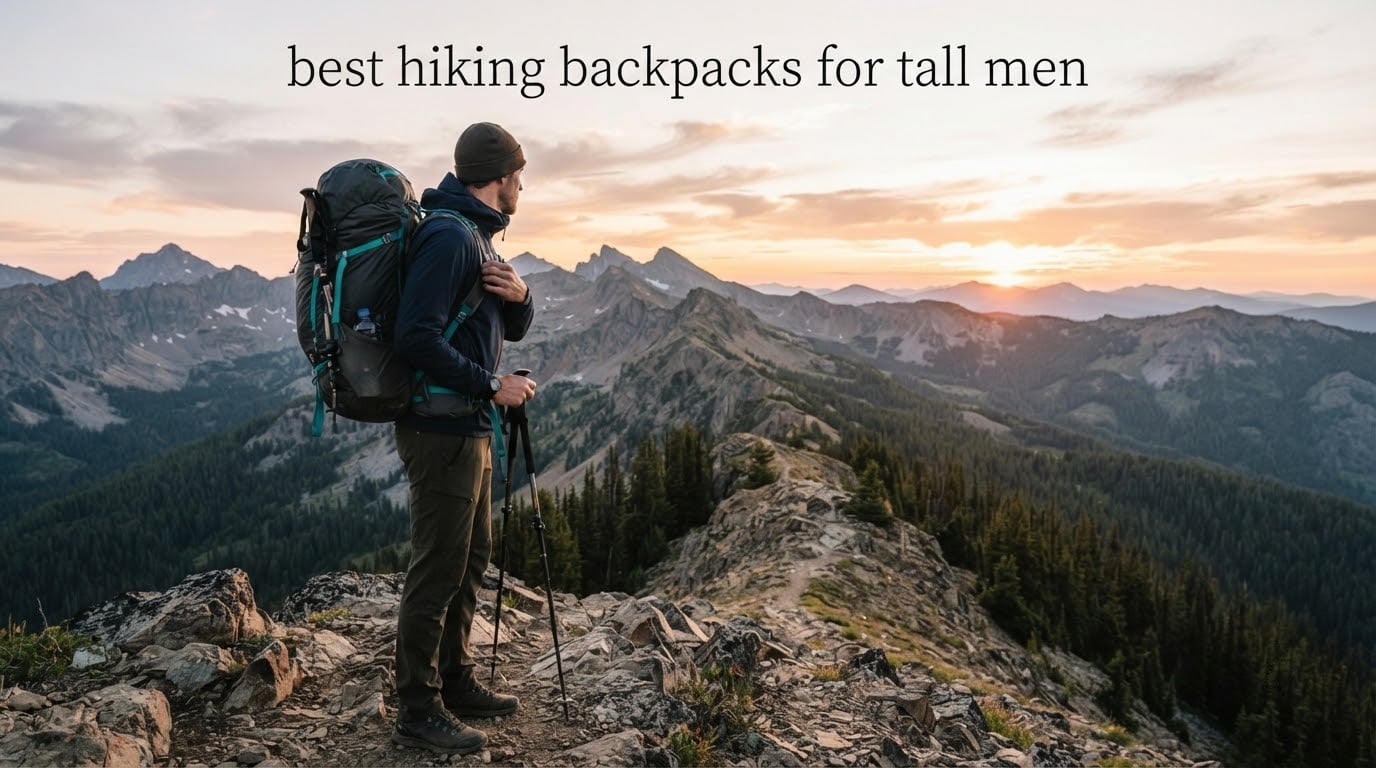
Ask a tall hiker what went wrong with his last pack and he will not talk about the fabric. He will talk about the 3 inches of daylight between the pack body and the back of his neck, the shoulder straps wound as far as they go, and the ache that settled into his lower back by mile four. Every one of those complaints traces back to a single number most shoppers never check: torso length in inches.
That is the gap this roundup closes. The best hiking backpacks for tall men are not simply the biggest packs on the shelf, and the difference matters when your shoulders end up carrying what your hips should be. If you also want fit guidance for a bag that works on travel days rather than trail days, our travel backpack roundup covers the same framing problem in a different category.
I went through 12 packs, sorted by torso range, capacity, empty weight, load rating, and how owners describe the fit on genuinely tall frames, and pulled out the ones that hold up under real load. Everything below reflects what the manufacturers publish and what wearers report in the field.
A note on what follows: I do not test gear in a laboratory, and I will not pretend otherwise. My input is manufacturer specifications, the volume and weight figures listed for each pack, and a large body of owner feedback, including threads on r/backpacks and r/randonneur where wearers report their own torso measurements in inches. Every number quoted in this guide comes from the product data or from those owners. I have also updated everything for 2026, because fit guidance changes as brands revise their size runs.
Table of Contents
Top 3 Hiking Backpacks for Tall Men for October 2026
If you only read one section, read this one. These three scored highest once I factored torso reach, review volume, and owner reports from tall wearers.

Osprey Atmos AG 65L
- Anti-gravity suspension
- Adjustable torso
- PFAS-free rain cover included
All 12 Hiking Backpacks for Tall Men at a Glance (October 2026)
Every pack below made the cut because it offers genuine torso adjustment or a tall-fit size. The capacity and weight columns matter just as much as the fit, because a pack that fits perfectly but cannot carry your gear is no use at all.
| Product | Specs | Action |
|---|---|---|
| Osprey Atmos AG 65L |
|
Check Latest Price |
 Osprey Aether 55L Osprey Aether 55L |
|
Check Latest Price |
 Osprey Kestrel 48L Osprey Kestrel 48L |
|
Check Latest Price |
 Osprey Talon 33L Osprey Talon 33L |
|
Check Latest Price |
 Gregory Zulu 65L Gregory Zulu 65L |
|
Check Latest Price |
 Deuter Aircontact Lite 50+10L Deuter Aircontact Lite 50+10L |
|
Check Latest Price |
 Kelty Coyote 65L Kelty Coyote 65L |
|
Check Latest Price |
 Kelty Asher 65L Kelty Asher 65L |
|
Check Latest Price |
 Teton Explorer 65L Teton Explorer 65L |
|
Check Latest Price |
| Teton Scout 55L |
|
Check Latest Price |
 Kelty Coyote 105L Kelty Coyote 105L |
|
Check Latest Price |
 Osprey Exos 58L Osprey Exos 58L |
|
Check Latest Price |
1. Osprey Atmos AG 65L: Best Overall Pick for Tall Men
Osprey Atmos AG 65L Men’s Backpacking Backpack, Black L-XL
Weight: 4 lb
Capacity: 68 L
Size: Large-XL
Torso: adjustable
Pros
- Anti-gravity suspension moves weight to the hips
- Curved side zip access opens the main compartment
- Integrated PFAS-free rain cover
- Large-XL suits taller torsos
Cons
- No true middle torso setting between sizes
- Hipbelt pocket zippers awkward one-handed
- Pack will not stand upright on a flat base
This is the pack I keep coming back to for tall hikers carrying real weight over multiple days. The anti-gravity suspension is the reason: it wraps the load into the hipbelt rather than letting it hang off your shoulders, which is exactly where tall frames tend to suffer. Owners repeatedly credit the pack for distributing heavy loads across hips and shoulders with no chafing.
The Large-XL configuration is the version to look at. Several owners in the 5 foot 8 inch to 6 foot 2 inch range confirm that this size fits taller torsos correctly, and the one-pull torso adjustment makes dialing it in fast on a trailhead. The listed dimensions run 14.2 by 15.4 by 34.6 inches, and the listed storage volume is 68 liters, which comfortably covers a three or four night trip in summer conditions.
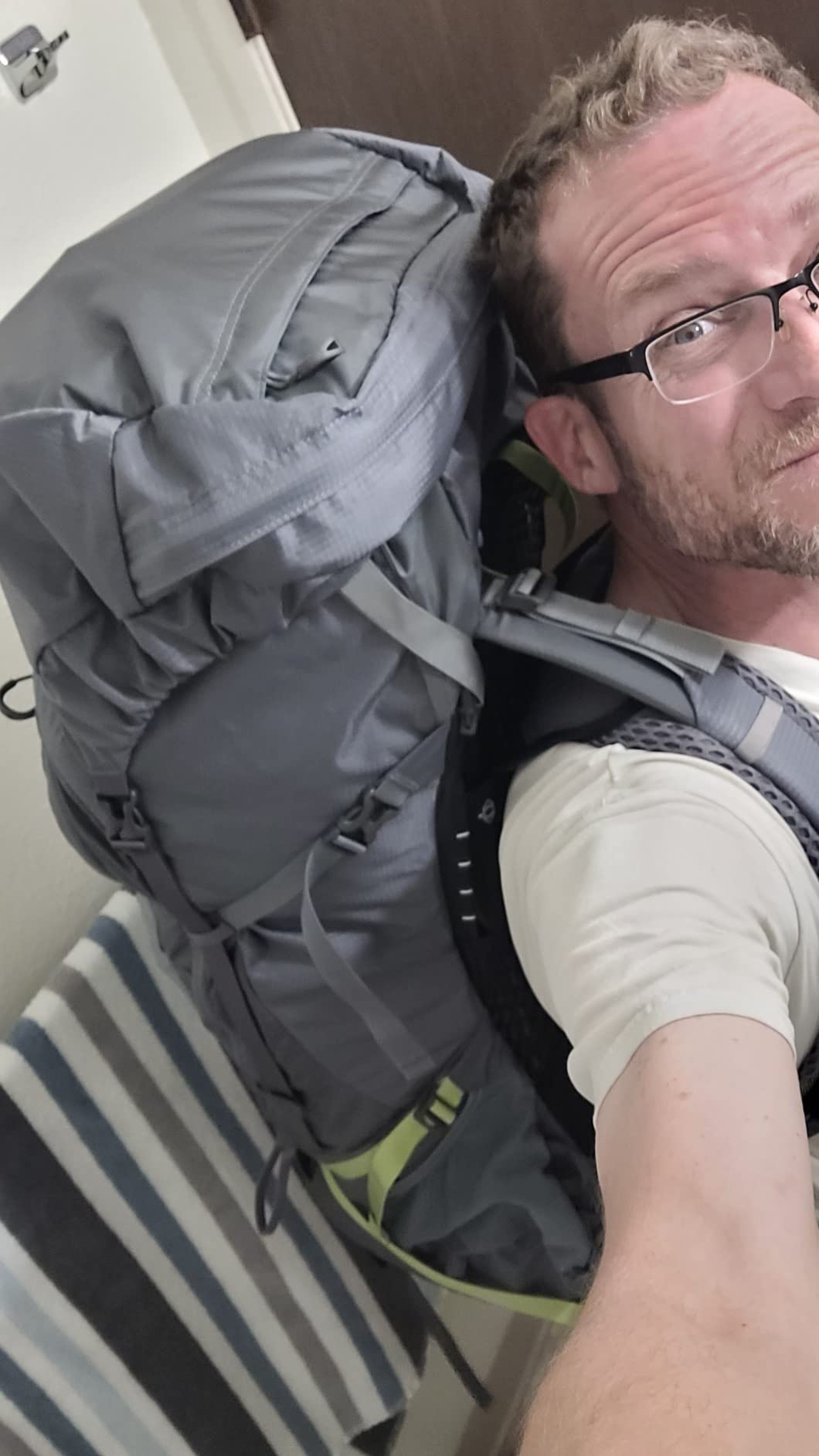
Curved zip access to the main compartment from one side is a small detail that pays off on a tall frame. You are not fighting a zipper over your shoulder, you are reaching behind and to the side, which feels more natural when your arms are longer than the pack is deep. The floating top lid with lash points handles overflow gear like a rope or a wet shell, and the side stretchy pockets keep bottles reachable without unpacking.
Fit-wise, the sleep system is well thought out: a zippered compartment with a removable divider and removable pad straps holds a bag and pad in place instead of letting them slide into the bottom of the pack. The integrated rain cover lives in a dedicated pocket at the base, so it does not cost you anything to carry.
One caution on the fabric: some owners report that the lighter shell showed wear on the hip pockets after heavy granite scraping. If your route is rough rock rather than maintained trail, that is worth factoring in.
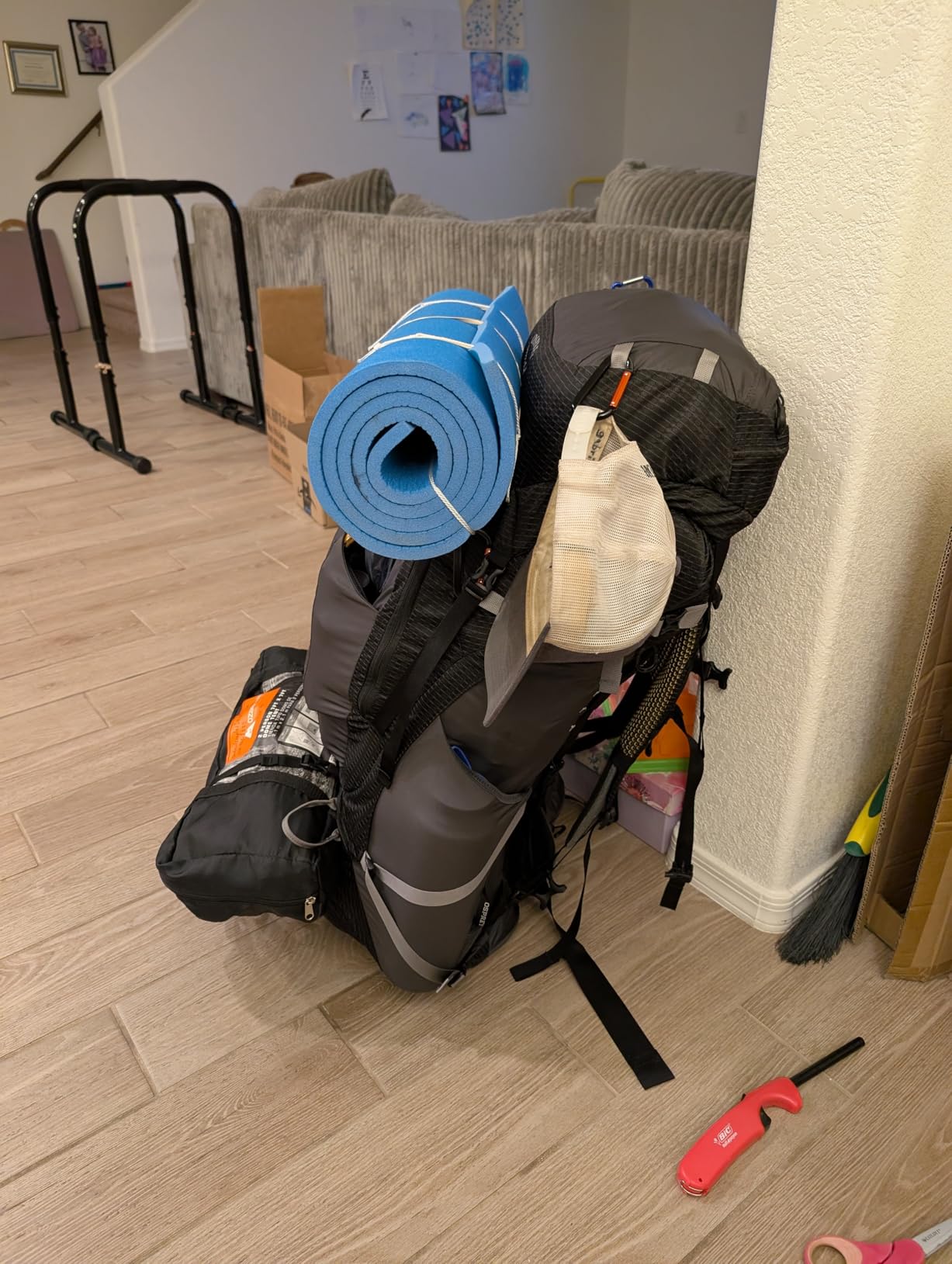
Does the torso adjustment actually reach long enough?
Here is the honest limitation: Osprey sizes this pack in jumps, and between S/M and L/XL there is no useful middle setting. A wearer sitting right on that boundary will be either slightly loose or slightly snug, and the adjustment is what turns it into a non-issue.
Tall wearers at the upper end of the Large-XL range report it working correctly, which is the group this pick targets. Check the hipbelt padding before ordering if you carry a large load, because the anti-gravity system does more work with a well-shaped belt.
How does it behave with a heavy multi-day load?
With 30 to 35 pounds inside, the wraparound suspension keeps the profile close to your back and stops the pack from peeling away when you scramble. That stability matters more for a tall frame, because a taller lever arm amplifies any swing in the load. Reviewers describe the weight distribution as even, without shoulder digging.
The trade is weight. At 4 pounds empty, this is not a lightweight pack, and if your base weight matters more than comfort across long days, look at the Talon 33 below instead.
2. Osprey Aether 55L: Best for Heavy Loads on a Tall Frame
Osprey Aether 55L Men’s Backpacking Backpack, Black L-XL
Weight: 4.9 lb
Capacity: 58 L
Size: Large-XL
Fabric: 420HD nylon
Pros
- Fit-on-the-fly hipbelt and straps
- Large-XL fits broad tall frames
- AirScape back panel
- Included rain cover
Cons
- Heavier than lighter alternatives
- Bottle pocket cross straps are fiddly
- Narrow main compartment feels cramped
The Aether is the pick when weight matters less than carrying it well. Owners consistently describe it as a top-tier heavy-load pack, and the fit-on-the-fly system lets you adjust the hipbelt, shoulder straps, and torso length to fine-tune the fit for your particular shape. For a tall man who has spent years in packs that never quite clicked, that flexibility is worth more than a lighter shell.
Reviewers repeatedly note that the Large/XL size suits tall, broad-shouldered wearers who struggle with one-size-fits-most packs, and the fabric is 420HD nylon with a PFC-free DWR. Listed dimensions are 9.8 by 15 by 32.7 inches, with 58 liters of storage across 9 compartments.
The AirScape back panel uses injection-molded die-cut foam, which gives a breathable, close-to-body carry that stays put on technical ground. On steep or loose terrain, that stability is the feature you notice most, particularly with a pack carrying heavier gear than the summer kit.
Sleep kit stays put in a zippered compartment with a removable divider, and a rain cover is included, so the two accessories most multi-day hikers forget are already handled. It is water resistant rather than waterproof, so in sustained rain you still want a liner or a pack cover if your sleep system cannot tolerate damp.
Two complaints come up often enough to plan around. The cross straps on the side water bottle pockets make bottles awkward to swap quickly, which is annoying on a hot climb. And the long, narrow body can feel cramped when you are reaching deep into the main compartment, so use packing cubes rather than digging.
Worth noting: some owners saw wear on the hip pockets after heavy contact with granite. Standard pack rain covers handle most weather, but the fabric is not rated waterproof for extended exposure.
Should a tall hiker pick this over the Atmos AG?
Choose the Aether if your trips involve heavier gear, colder conditions, or more technical ground, and pick the Atmos AG if weight and comfort are the priorities. Both use adjustable torso systems and both come in a Large-XL, so torso reach is comparable: the Aether is built to stabilize a load, the Atmos AG to wrap it around you.
If you carry a laptop for work travel as well as hiking, note that this model does not list an internal laptop sleeve. The Talon 33 below does.
How much gear can it realistically take?
At 58 liters it is a solid choice for two to four night trips without resupply. The frame and suspension are the reason heavy loads stay manageable, and reviewers describe straps that do not dig into shoulders or hips even when packed near the top of the range. Fit adjustments let you dial in the load lifters so the weight sits higher and closer.
For anyone over 6 foot 4 inch, this is one of the more reliable frames to size up, because the Large-XL designation on Osprey men’s packs is built around a longer torso than the equivalent size in many other brands.
3. Osprey Kestrel 48L: Best All-Weather Pack for Tall Hikers
Osprey Kestrel 48L Men’s Backpacking Backpack, Tan L-XL
Weight: 4.44 lb
Capacity: 48 L
Size: Large-XL
Rain cover integrated
Pros
- Integrated rain cover
- AirScape back panel with adjustable torso
- Trekking pole attachment
- Strong 661-review base
Cons
- Fixed hipbelt limits fit refinement
- Front mesh pockets less structured
The Kestrel 48 is the one I suggest to tall men who hike in variable weather and do not want to think about a pack liner. The rain cover is built into the base pocket, permanently, not sold as an add-on, and reviewers treat that as the main reason to pick it over similar-capacity rivals.
The listed weight is 4.44 pounds, with 48 liters of capacity and dimensions of 29.1 by 13.8 by 11.8 inches. That makes it a genuine multi-day pack rather than an oversized daypack, and the 661 reviews at a 4.7 average give it a solid evidence base for a recommendation.
Organization is better than the category suggests. The top lid carries a large zippered pocket, and underneath there is a zippered mesh pocket with a key clip, plus lash points on the top panel. Trekking pole attachment is standard, so you are not improvising loops when you break camp in the dark.
The AirScape back panel offers adjustable torso lengths and a stable, breathable close-to-body carry, which is the second feature tall hikers care about after hipbelt coverage. It keeps the pack from swinging away from your back when you are walking downhill with weight.
The compromise is the fixed hipbelt. It does not wrap or adjust to the wearer, so if your waist and hips are shaped differently from the standard it was designed around, fine-tuning options are limited. If your hips fall between sizes, the Aether 55 is a better fit.
Is the fixed hipbelt a problem at 6 foot 4 inch and above?
Not usually. The fixed belt is the standard configuration for this pack and the Large-XL covers the taller torso range, so most tall wearers will not need belt adjustment. It becomes an issue if you carry a heavy load and want the belt cinched tighter than the factory shape allows. In that case, an adjustable model is a better tool.
Check your waist against the belt shape when it arrives, before you load it. A belt that sits slightly low on a tall frame is a common and easily fixed adjustment, but a belt that cuts across the top of your hipbones is not.
What kind of trip suits 48 liters?
Two to three nights without resupply, or a longer trip where you resupply often. The pack is not built for a 50 pound base weight, but the back panel handles a moderate load well and the built-in rain cover means you can keep going when the forecast turns. For hut-to-hut trekking it is close to ideal.
If you need more room for winter gear or a family trip where you are carrying your partner’s kit too, move up to the 65L options further down this list.
4. Osprey Talon 33L: Best Daypack for Tall Men
Osprey Talon 33L Men’s Hiking Backpack with Hipbelt, Stealth Black, Large/X-Large
Weight: 2.4 lb
Capacity: 33 L
Size: Large-XL
Daypack with hipbelt
Pros
- Hip belt transfers load off shoulders
- Breathable mesh back panel
- 605 reviews at 4.7
- Light for 33L
Cons
- Top drawstring closure takes practice
- Pole stow loops fiddly
- Hydration sleeve fits Osprey bladders only
A 6 foot 5 inch hiker does not need a different-sized daypack, but he does need one with a real hipbelt. The Talon 33 has it, and at 2.4 pounds it stays out of the way while still handling a substantial day load. Reviewers report it managing roughly 35 pounds of gear.
Owners call it a versatile, durable workhorse used for everything from day hikes to long treks, and one mentions carrying it on a Kilimanjaro and a Mount St Helens ascent. The listed dimensions are 9.84 by 11.02 by 27.56 inches with 33 liters of storage and 5 pockets.
The large, well-positioned hipbelt pockets for small essentials are the feature reviewers mention most, followed by the breathable mesh back panel that keeps your back cool on hot climbs. On a tall frame, that panel geometry also helps stop the pack from sliding.
There is an internal padded laptop sleeve, which makes this a workable single bag for travel days and hiking days. A blinkie light attachment is a small touch that matters for early starts and for descents in low light. Stow-on-the-go trekking pole loops add flexible storage if you need it.
Be honest about the closure. It is not a true open-top design, and the drawstring top loader takes practice to open and close one-handed. Several reviewers flag it as a learning curve rather than a flaw once you get it.
Two more practical notes: the side stow loops are fiddly for removing trekking poles that have metal nubs, and the hydration sleeve is built for Osprey bladders, so third-party reservoirs will not fit without fuss.
Do tall hikers need a bigger daypack volume than average?
Not because your body is bigger, but because longer arms and a longer stride make a taller wearer reach further into pockets. Forum threads about tall daypacks consistently land somewhere between 28 and 35 liters, which is exactly where this pack sits.
A 35 liter pack feels oversized on a tall frame for a short loop, so stay in this range. What matters more than volume is the hipbelt: a 20 liter daypack without one puts the whole load on your shoulders no matter how tall you are.
What should you check before committing?
Try the shoulder strap adjustment fully tightened with the hipbelt on. If both reach comfortably with slack to spare, the Large-XL is right for you. Also check the top closure, because if you plan to open the pack frequently on trail, the drawstring design takes getting used to.
There are occasional reports of chest strap attachment failures, so inspect that connection before a long trip and carry a spare length of webbing if you are the cautious type.
5. Gregory Zulu 65L: Best for Airflow on Long Hot Days
Gregory Zulu 65L Hiking/Backpacking Pack, Medium/Large, Rust Red
Capacity: 65 L
Size: Medium-Large
Torso: 3.5 in adjustment
Pros
- 3.5 inches of torso adjustment
- FreeFloat dynamic hipbelt flexes with the body
- 3D padded hipbelt
- Full-length tensioned mesh panel
Cons
- Lowest review base in this group
- Bulky 13.5 by 13.75 inch footprint
- Fewer size options
The Gregory Zulu 65 stands out for one reason: airflow. The full-length tensioned mesh back panel creates space between your back and the pack, and on a tall frame that spacing does more than cool you down. It also reduces the contact patch that causes sweat buildup between shoulder blades on a long climb.
Torso adjustment here is 3.5 inches, which is a meaningful span for a pack that is not sold with multiple fixed sizes. That range is what makes it worth a look for long-torso wearers who cannot find an extended-torso variant in their preferred capacity.
Be aware of the evidence base. With 43 reviews at a 4.3 average, this is the smallest and lowest-rated sample in the group, and 7 percent of ratings are one star. The suspension design is sound, but read the recent reviews before you order rather than relying on older impressions.
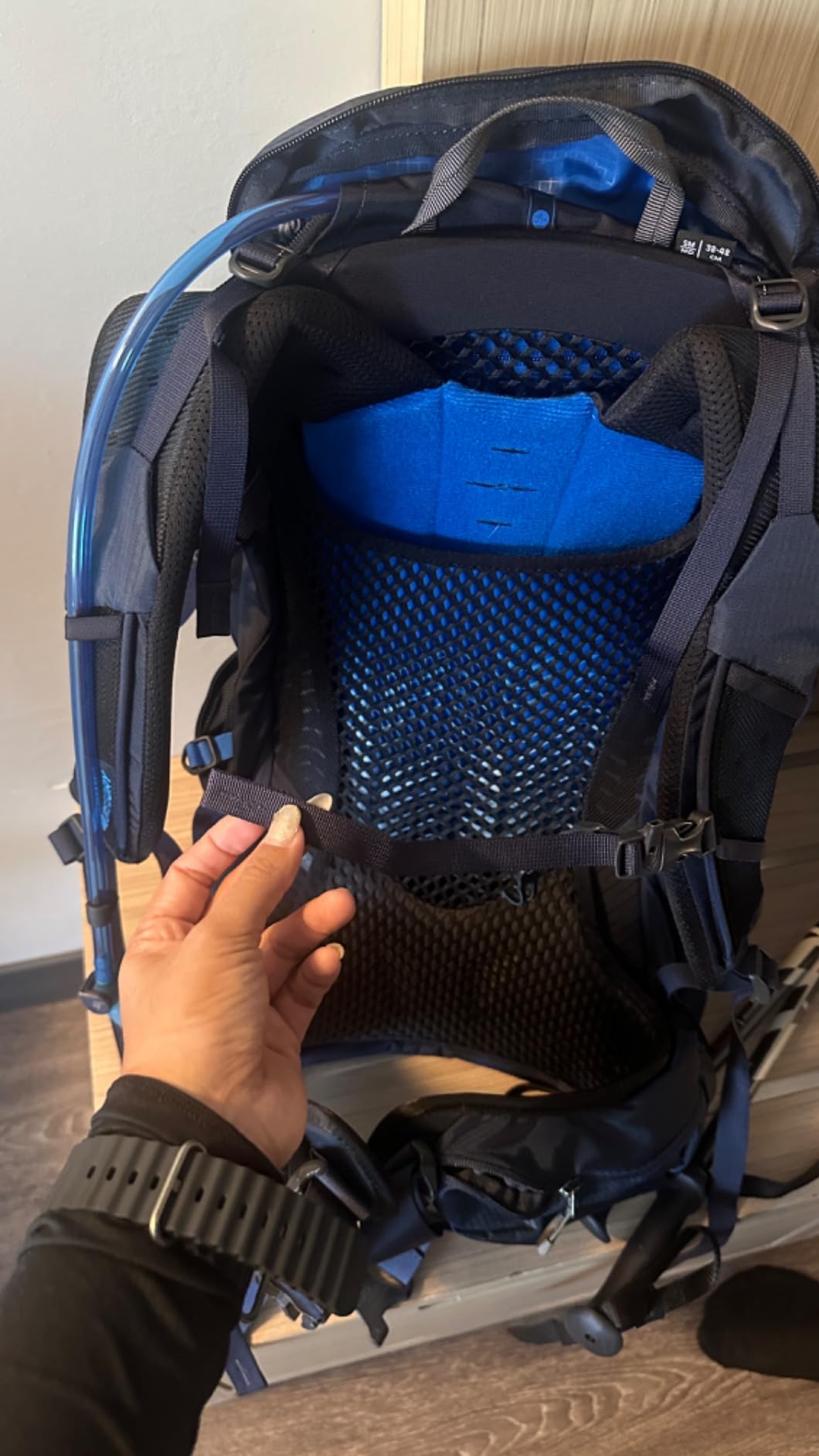
The FreeFloat dynamic hipbelt links the belt to the frame with a panel that moves and flexes as you walk, which is why reviewers describe stable heavy-load carry. The 3D hipbelt conforms to the shape of your body for even padding, and a perimeter frame provides stable yet flexible support.
Here is the catch for a tall man specifically: the size listed for this configuration is Medium-Large, not an extended size. Confirm that the adjustment range at maximum extension still exceeds your measured torso before you commit.
Reviewers describe this pack in terms of its suspension systems, with the hipbelt and the tensioned mesh panel taking nearly all of the praise. A small minority report fit or durability issues, which is what you would expect from a thinner review base.
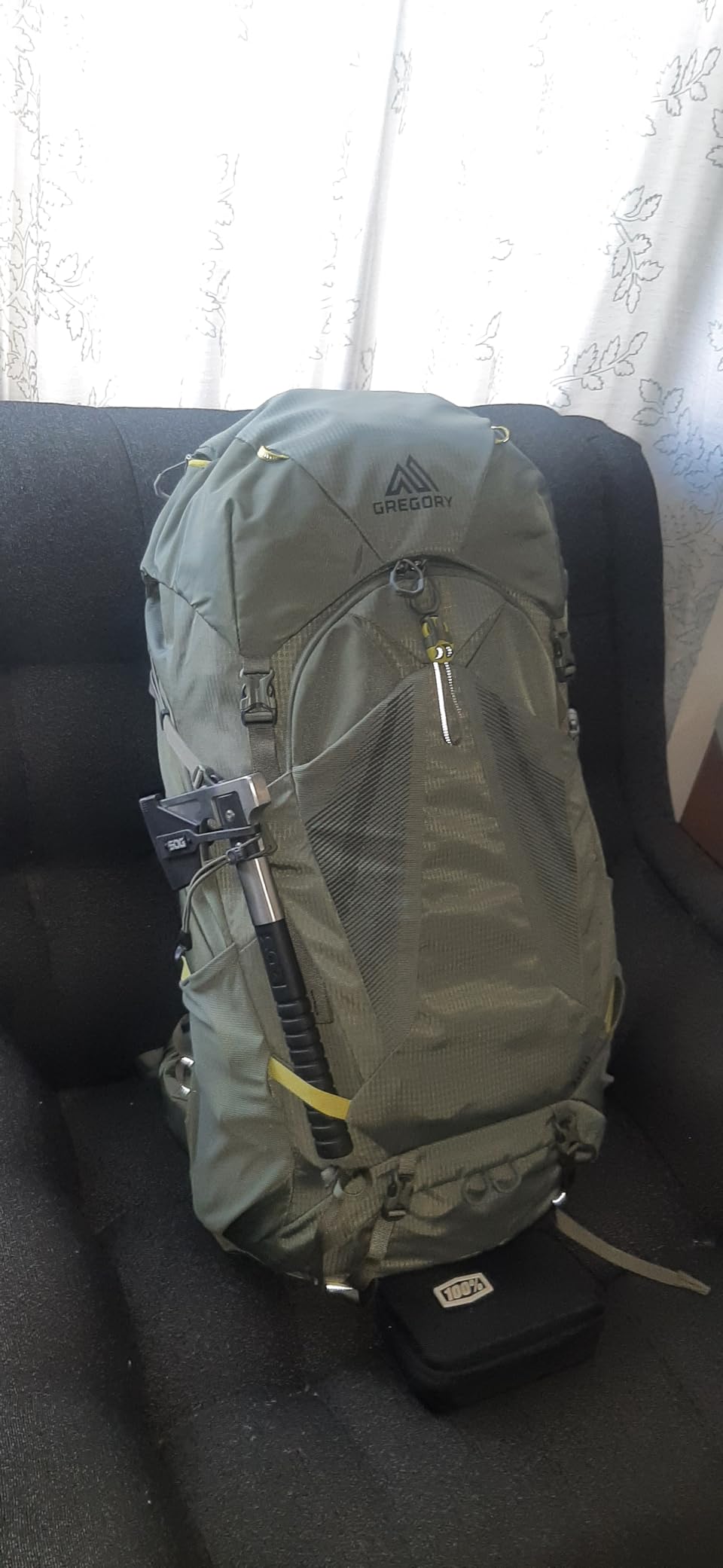
Is a 4.3 average a warning sign?
It is a caution, not a disqualification. Forty-three reviews is a small sample, and a 7 percent one-star share sits above the rest of this group. What raises my confidence is that the complaints described are fit and durability details rather than a broken suspension.
If you are buying this, do it with the mindset that you are the first owner rather than the hundredth, and test the fit fully loaded before a long trip.
Will the bulk be a problem?
Yes, if you travel light. The footprint is 13.5 by 13.75 by 30 inches, which is bulky for carry-on travel and awkward as an airplane personal item. For hiking, packrafting, or anything where the pack rides in a vehicle or a boat, the bulk is a non-issue.
Weight is not listed for this model, so treat it as a mid-weight option rather than planning around a specific figure. If you need a known weight, the Kelty Asher below lists its own at 3 pounds 5 ounces.
6. Deuter Aircontact Lite 50+10L: Best Lightweight Trekking Pack
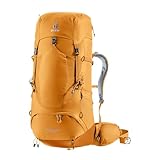
Deuter Unisex Aircontact Lite 50 + 10 L, Lightweight Backpacking & Hiking Backpack for Men & Women, 50 + 10 Liters – Amber-Maple
Weight: 3.6 lb
Capacity: 50+10 L
Adjustable back length
Recycled fabric
Pros
- Vari Quick continuously adjustable back length
- Lightweight at 3.6 lb
- Aircontact back system
- Pull-forward hip fin adjustment
Cons
- No rain cover included
- Lite model trims padding
- Listed as not water resistant
The Aircontact Lite is the pick for a tall hiker who wants continuous rather than stepped adjustment. Vari Quick lets you change the back length as you move, which means a single pack can suit you across layers, a bulky jacket, and a changing load without re-measuring anything.
Reviewers praise the weight-to-capacity ratio and report carrying around 18 kilograms with little perceived weight and no back pain. Listed weight is 1640 grams, or 3.6 pounds, with dimensions of 10.63 by 11.81 by 29.92 inches.
The Aircontact back system uses hollow chamber foam cushions to create ventilation through a pump effect as you walk. Pull-forward hip fin adjustment and side compression straps keep the load close, and the padded hip fins are shaped for long days.
The lid is height-adjustable and detachable, with docking loops for a helmet, ice axe, and trekking poles. Internally there is a valuables pocket, a separate bottom compartment, a stretch inner compartment, a key clip, and an SOS label, plus compatibility with a 3-liter drinking system that is not included.
The fabric is 140D PA ripstop and 600D recycled polyester with over 50 percent recycled content, and it is listed as not water resistant. That is the single most important practical detail on this pick, so plan on a pack cover or liner for sustained rain.
The no-rain-cover complaint is the most repeated one in the reviews, and some owners also note that the Lite version trims padding compared with Deuter’s heavier trekking ranges. If you are sensitive to frame pressure over long days, that trade is worth weighing.
Is the back length really adjustable enough for a long torso?
It offers back-length adjustment you can change continuously rather than in fixed steps, which is exactly what a long-torso wearer needs. The tradeoff is that the Lite model gives up some padding to hit the weight, so the comfort ceiling is lower than on heavier trekking packs. Adjustability and cushioning are trading against each other here, and for a long torso the first one matters more.
Measure before ordering and note the back length at which the hipbelt sits level on your hips. That is the number to check against the manufacturer chart, since a shoulder fit alone can hide a short frame.
How many nights can 50+10 liters handle?
Base capacity is 50 liters with a 10 liter expansion collar, so roughly two to three nights without resupply. The detachable lid gives you a place to stash wet gear outside the main body, which matters more on a pack without a built-in rain cover.
At 3.6 pounds, it is a sensible middle ground between the 2.4 pound daypack and the 4.9 pound heavy hauler above. If your trips are hut-to-hut or you resupply every second day, that is the right tool.
7. Kelty Coyote 65L: Best for Heavy Loads on a Budget
Kelty Coyote 60-105 Liter Internal Frame Backpack – Hiking, Backpacking, Travel, Adjustable Torso (65L / Black)
Capacity: 65 L
Weight: 4 lb 10 oz
Optimal carry 30-55 lb
Polyester
Pros
- Rated for 30 to 55 lb carry weight
- Fit Pro on-the-fly torso fit
- Perimeter frame with aluminum stay
- Wing pockets and sleeping bag compartment
Cons
- Water resistant rather than waterproof
- Wipe-clean-only care limits field maintenance
The Coyote 65 is rated for a 30 to 55 pound carry weight, and that published load range is unusually clear for a pack at this level. It is the choice for tall men who carry heavy, bulky loads: bear canister trips, winter gear, or hauling equipment on a work trail.
Fit Pro technology is the relevant feature for a long frame. It gives quick, customized torso fit that you can adjust on the fly when you shed layers, and reviewers single it out as one of the main reasons the pack performs on multi-day and thru-hike trips.
Dimensions are 12 by 18 by 30 inches, empty weight is 4 pounds 10 ounces, and there are 6 pockets across 10 compartments. Storage includes a sleeping bag compartment, water bottle pockets, daisy chains, and J-zip top loading access.
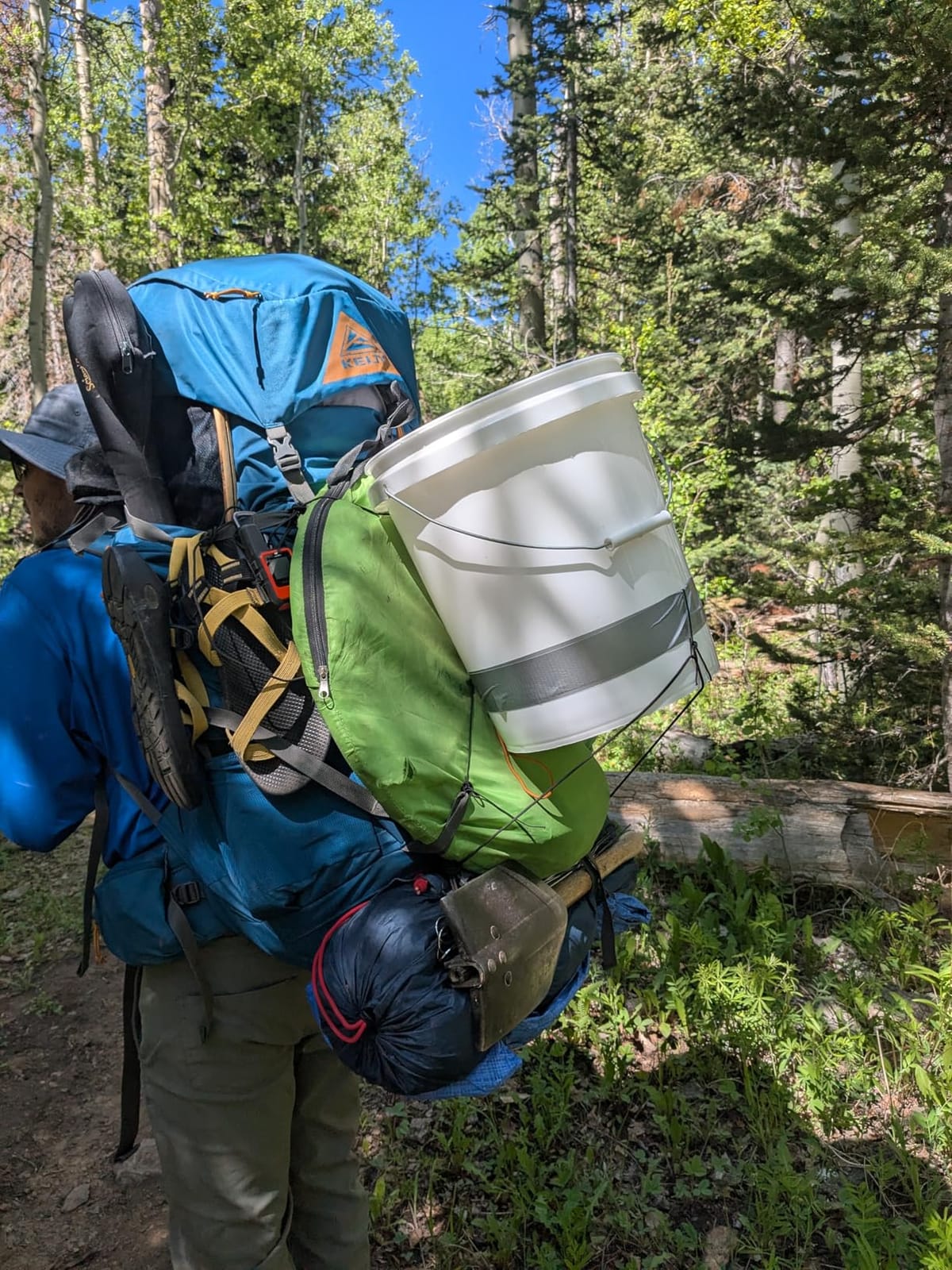
The advanced perimeter frame with an aluminum stay gives the stability that heavy loads need, and the Amp Flow ventilated back panel helps keep your back cooler on long climbs. Kelty signature wing pockets are useful for a wet shell or a water bottle, and two front zippered pockets keep small items accessible.
There is one thing to know before wet-weather trips: the pack is listed as water resistant, not waterproof, so the main shell will eventually wet through in sustained rain. Reviews note this as the main limitation, and it is the same limitation you would expect from any polyester pack of this type.
Care instructions call for wiping with a damp cloth rather than machine washing. That keeps maintenance simple, but it also means you cannot refresh a grubby shell the way you can with a machine-washable pack.
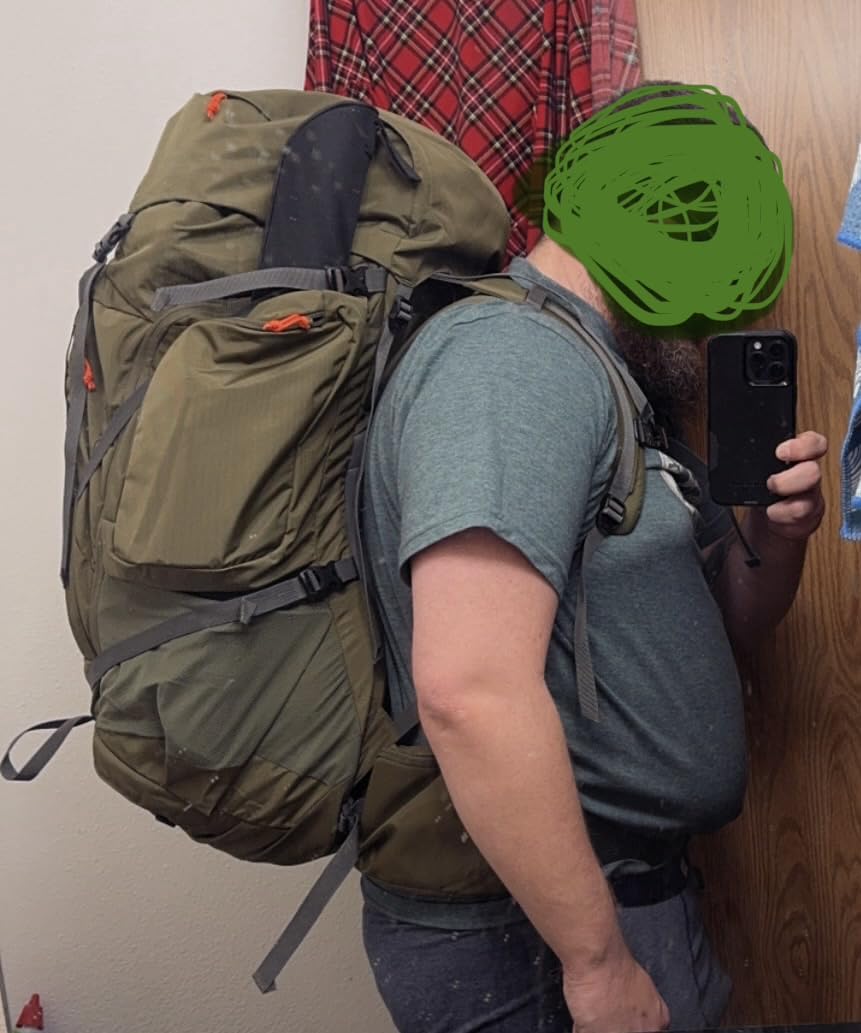
Will the fit survive a 50 pound load on a tall frame?
That is the design brief. The perimeter frame and stay keep the load stable and balanced rather than letting the pack deform and pull sideways, which is the failure mode that shows up on tall frames carrying more than about 40 pounds. Reviewers describe exactly that balance as a strength.
Fit Pro adjustment means you can reset the torso length as your load changes, so a lighter weekend trip and a full resupply load do not need different packs. That flexibility is the reason this is the pick I suggest for gear-heavy tall hikers.
Is 65 liters too much for a two night trip?
It can feel that way if you pack everything you own. Listed at 30 by 18 by 12 inches, the Coyote has a wide footprint that swallows small gear, so use compression straps to pull it in on short trips. For three to five nights, or for a trip where you are carrying shared equipment, the volume is right.
If you want the same frame and fit system in a smaller size for weekend trips, the Asher below shares the same platform with a different capacity and a lighter build.
8. Kelty Asher 65L: Most Versatile, With a Stated Torso Range
Kelty Asher Backpack, Daypack to Multi-Day Backpacking Capacity, Hiking, Lightweight Travel Pack, Internal Frame (65L Winter Moss)
Capacity: 65 L
Weight: 3 lb 5 oz
Torso: 15.5-21 in
Carry 30-50 lb
Pros
- Only pack here with a published torso range
- 3 lb 5 oz empty weight
- PFC-free DWR polyester shell
- Perimeter frame with aluminum stay
Cons
- Only 4 compartments
- Entry-level suspension under very heavy loads
- Mixed durability feedback
The Asher is the only pack in this roundup that publishes its torso length in inches: 15.5 to 21 inches. For a tall buyer, that number is the most useful thing on the spec sheet, and it also tells you plainly where this pack stops. If your measured torso is 22 inches or more, this is not the pack.
That transparency is why it still belongs here. Most manufacturers hide behind S/M/L labels, and comparing a 21 inch ceiling against an adjustable range on a premium pack is impossible without exactly this kind of published figure.
For 19 to 21 inch torsos who want capacity and low weight, the rest of the pack is strong. At 3 pounds 5 ounces it is one of the lighter 65L options here, rated for a 30 to 50 pound carry weight.
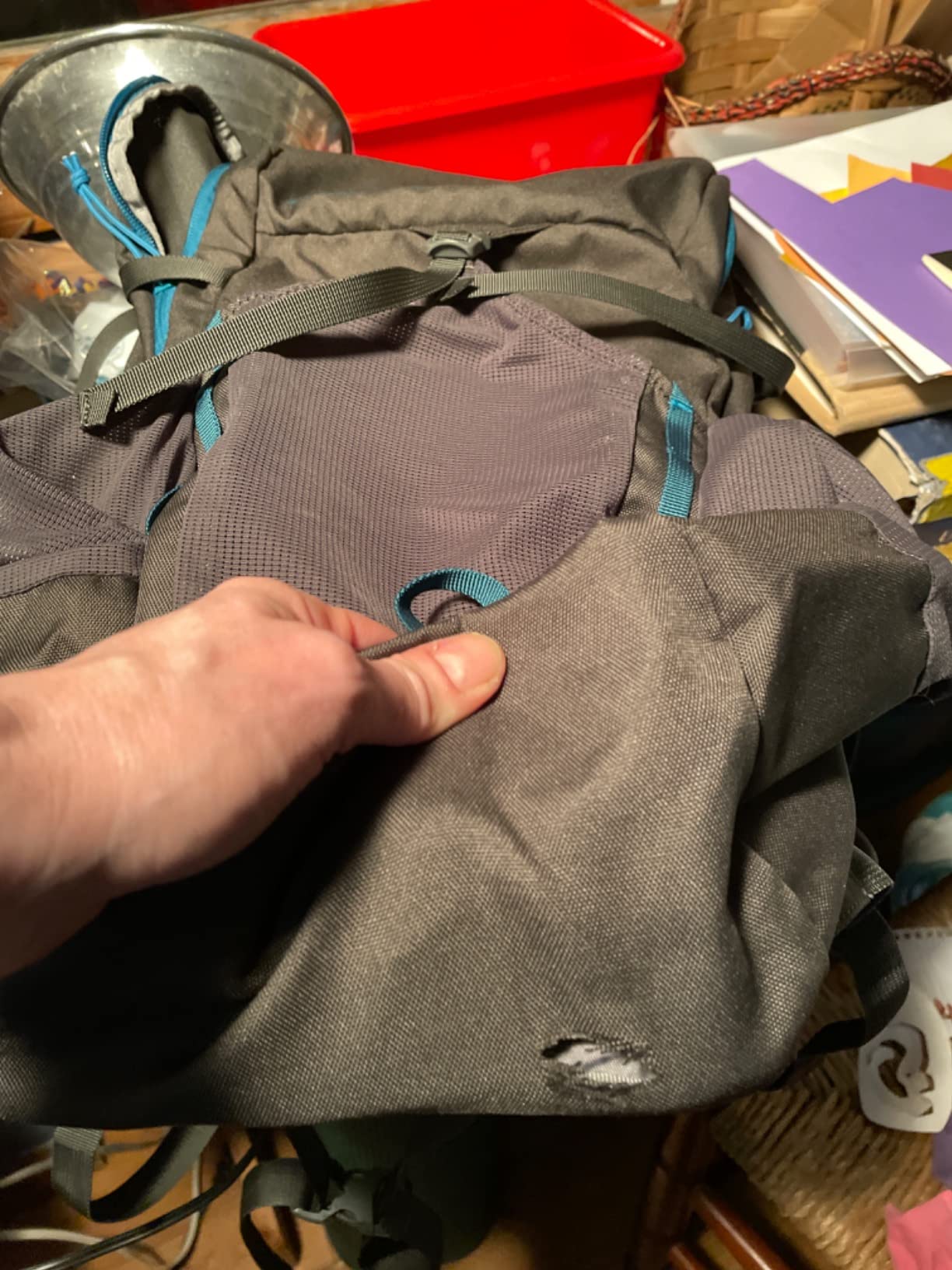
The shell is PFC-free DWR polyester with easy-pull zippers and polyester webbing, and the build uses an advanced perimeter frame with an aluminum stay. Fit Pro technology gives the same on-the-fly torso fit as the Coyote, and the Amp Flow ventilated back panel handles heat on long climbs.
Load lifters, a sleeping bag compartment, hydration compatibility, and multiple accessory loops cover the essentials. The same Kelty line runs from 18 to 85 liters, so if you want the same fit system in a smaller pack for short trips, the family exists.
Four compartments is few for a 65L pack. Owners who like organization tend to add small packing cubes rather than accept loose gear, and a couple of reviewers note that the entry-level suspension feels less refined under very heavy loads than premium alternatives.
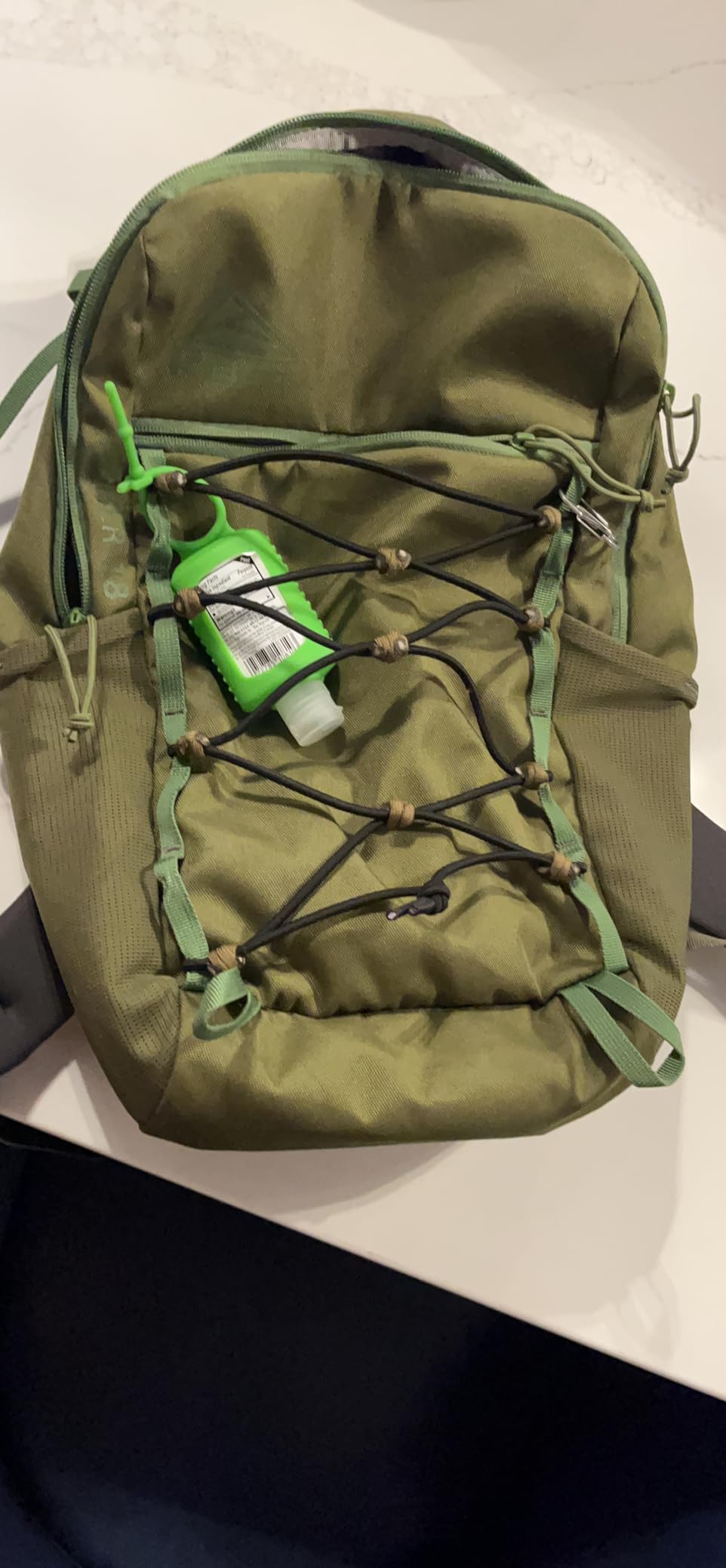
Should a tall man rule this pack out immediately?
If your measured torso is over 21 inches, yes, and the spec sheet tells you so before you order. If your torso falls in the 19 to 21 inch range and you are taller than average, it is worth considering, because a 21 inch torso at a greater height is a legitimately long frame.
Height and torso are related but not identical, which is exactly why the measurement matters. Someone at 6 foot 3 inch can easily have a 20 inch torso and be a perfect fit for this pack.
What do you give up at this weight?
Padding and refinement. The 4.4 average with 160 reviews and a 4 percent one-star share reflects that. Under moderate loads it works well; under sustained heavy loads the suspension feels basic compared with the Coyote or the Osprey frames above.
The upside is a lighter pack with a published fit range, which is a fair trade for most weekend hikers and a poor one for anyone hauling serious weight.
9. Teton Explorer 65L: Best for Durability
Teton 65L Explorer Internal Frame Backpack for Hiking, Camping, Backpacking, Rain Cover Included, Olive
Capacity: 65 L
Weight: 5 lb
Fabric: 600D ripstop
Limited lifetime warranty
Pros
- Multi-position torso adjustment for medium and tall frames
- 600D polyester diamond ripstop
- Open-cell foam lumbar pad
- 8161 reviews
Cons
- Heaviest large pack here at 5 lb
- Some components feel cheaper than premium rivals
- Interior tighter than volume suggests
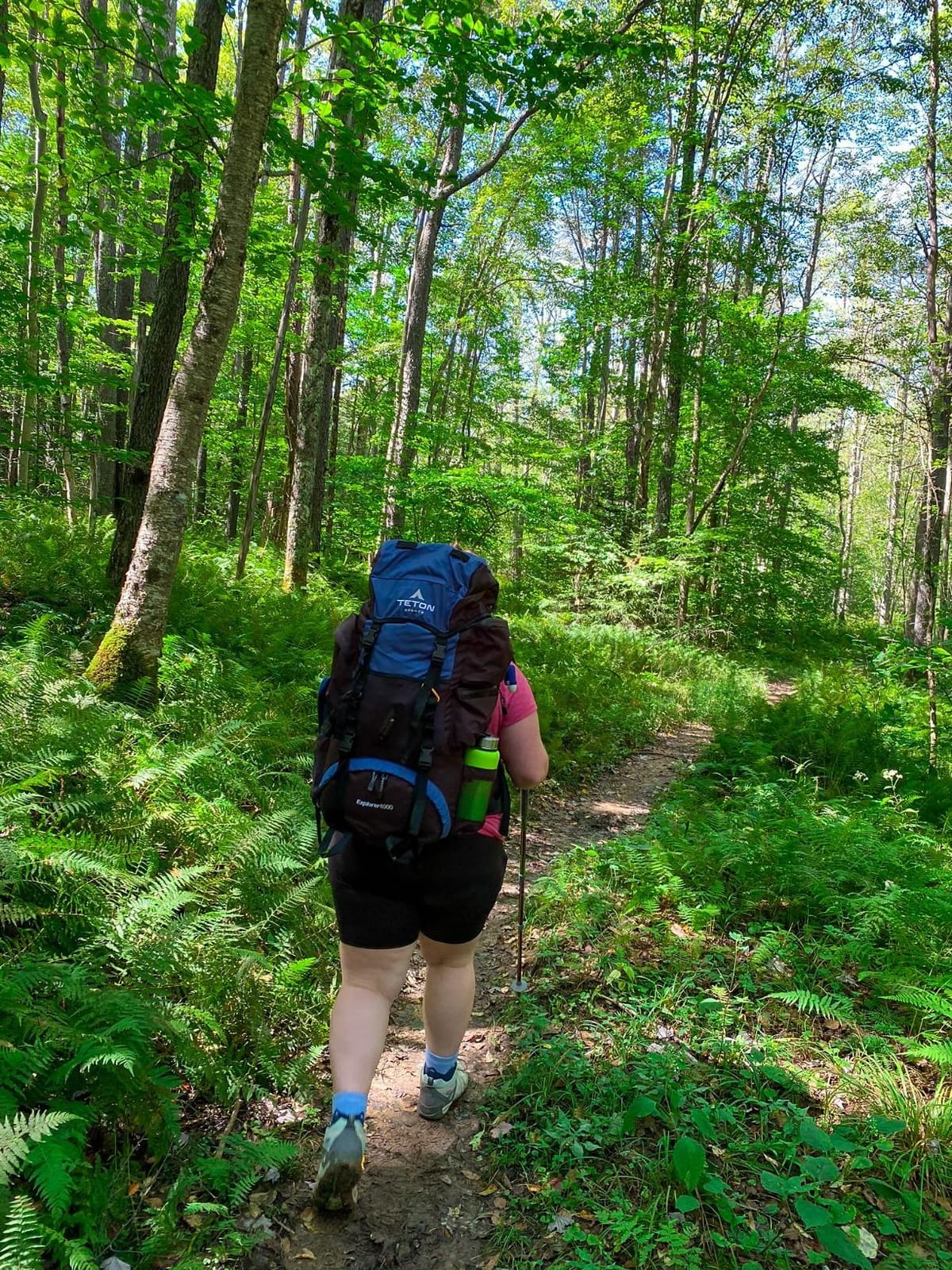
With 8161 reviews, the Explorer 65 has the largest evidence base of any pack in this roundup, which matters when you are advising people to carry 30 pounds on their backs for days. Owners highlight the multi-position torso adjustment that accommodates taller frames, the durable ripstop shell, and the included rain fly.
That torso adjustment is the reason it appears here. The manufacturer describes it as designed to fit medium and tall adventurers, and that is a direct answer to the long-frame problem rather than a generic large size.
The shell is 600D polyester diamond ripstop, which is heavy but genuinely tough. Dimensions are listed at 18 by 32 by 12 inches, and the pack includes a rainfly.
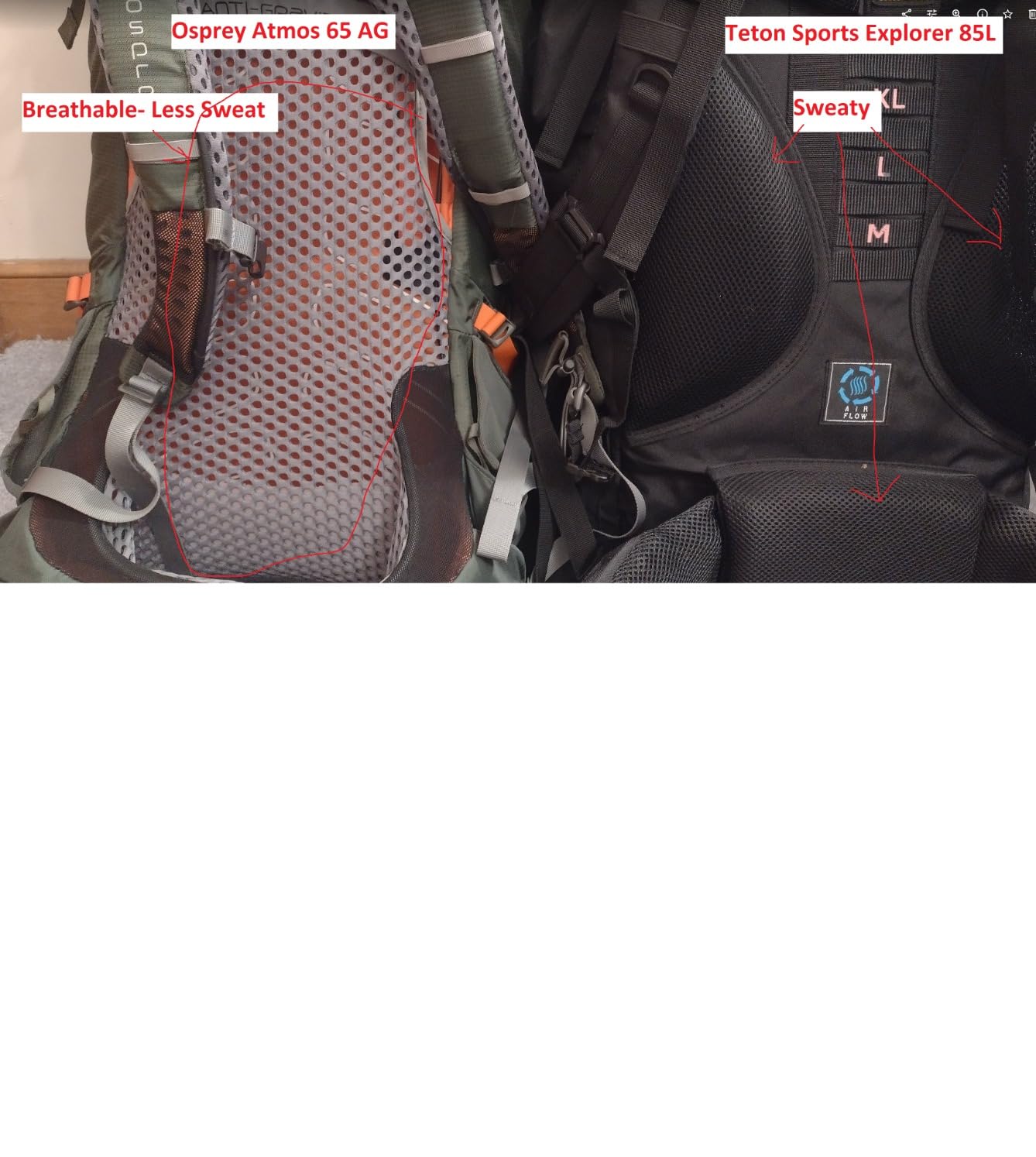
A large sleeping bag compartment sits at the bottom, with multi-directional compression straps and numerous pockets above it. The open-cell foam lumbar pad and molded channels do the work of airflow and support, and the pack is available in 65L, 75L, and 85L sizes with lifetime warranty backing.
Weight is the honest drawback. At 5 pounds empty, it is the heaviest of the large packs here, and that number matters for anyone trying to keep a base weight down while still having a real frame.
Some components feel cheaper than premium rivals, and the rain cover zipper in particular draws criticism. The interior also feels tighter than the external volume suggests, so pack carefully rather than assuming the number is a promise.
Is durability or weight the deciding factor?
Durability, if your routes involve brush, rock, and frequent gear loading rather than fast-and-light objectives. A 600D ripstop shell that has absorbed a season of hard use is still working, while a lighter fabric may not be. If your priority is base weight and you walk on maintained trail, the Talon 33 or the Deuter Lite is a better tool.
The lifetime warranty backing adds real value here for the reason forum readers mention durability above all else: a tall buyer already has fewer options, and a pack that lasts a decade means fewer of those decisions.
How does the torso adjustment hold up under load?
Multi-position adjustment is more robust than a single sliding panel because the pack locks into discrete positions rather than relying on friction. On the Scout model in the same family, some reviewers note the adjustment hardware can wobble under load, so check the settings after a long descent.
Re-adjusting is a quick operation, and you can add a layer or remove one in the field without taking the pack off.
10. Teton Scout 55L: Budget Pick, With Documented Tall-Fit Reports
Teton 55L Scout Internal Frame Backpack for Hiking, Camping, Backpacking, Travel, Rain Cover Included, Black
Capacity: 55 L
Weight: 4.1 lb
600D ripstop
7372 reviews
Pros
- Multi-position torso adjustment fits medium and tall frames
- Removable stays bend to your back
- 7372 reviews at 4.7
- Rain fly doubles as shelter
Cons
- Sleeping bag compartment tight for rectangular bags
- Rain fly attaches with velcro
- No zippered hip belt pocket
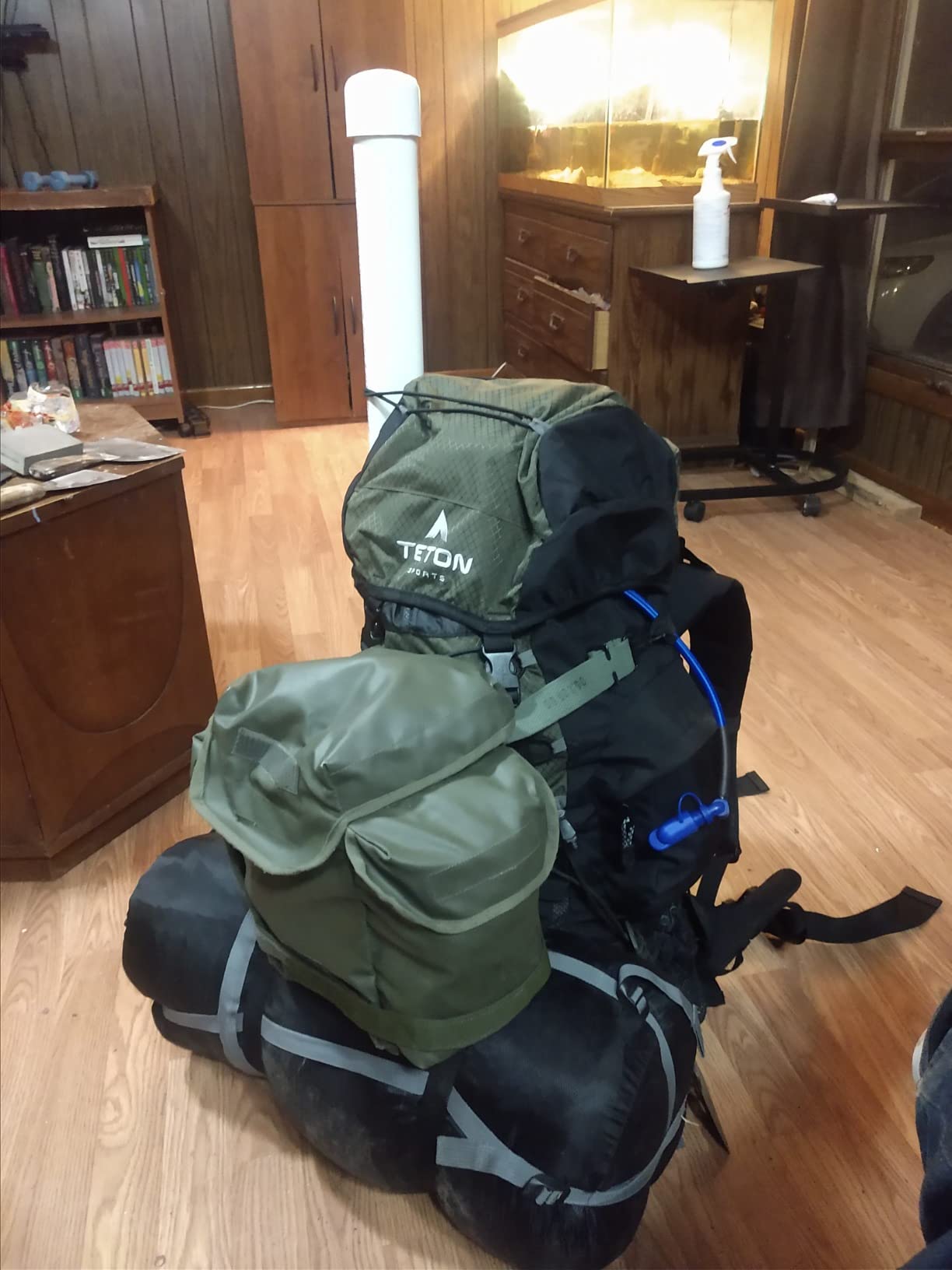
The Scout 55 is the strongest evidence-backed pick here for one specific reason: a 6 foot 4 inch reviewer confirms that the multi-position torso adjustment arrived at maximum extension and fit perfectly. That is exactly the tall-hiker scenario the rest of the market handles badly, and it is documented in the reviews rather than claimed in a spec sheet.
With 7372 reviews averaging 4.7, buyers call it a standout performer in its class. The shell is 600D polyester diamond ripstop and the pack includes a rainfly that doubles as emergency shelter or a signaling panel.
At 55 liters it suits two to four nights, and the listed weight is 4.1 pounds with 11 compartments. There is a top-loading extra-gusseted closure and a large separate sleeping bag compartment.
The removable aluminum stays can be bent to the contour of your back, which is a genuinely useful feature for a long torso because it lets the frame follow a spine that is not a straight line. Reviewers also praise the reinforced buckles and tough fabric for surviving bushwhacking and overpacking without tearing.
Weight distribution is reported as excellent at 30 to 50 pound loads, and the side mesh pockets fit 3.5 inch bottles. The pack is available in 45L, 55L, and 65L sizes, so the same fit system works for shorter trips.
Three real limits. The sleeping bag compartment is tight for rectangular bags and can be hard to extract from, the rain fly attaches with velcro rather than a zipper and is only water resistant, and there is no zippered hip belt pocket for a phone or snacks.
Will maxed-out adjustment be enough for a 25 inch torso?
That is the honest limit of this pick. Multi-position adjustment gets you further than a single panel, and a 6 foot 4 inch wearer reached maximum extension and fit well, so most tall hikers up to about 24 inches will be covered. Beyond that, you want a pack with a longer range or a published inch range, such as the models with explicit torso figures above.
Since the reviewer who fit this pack was 6 foot 4 inch and needed the maximum setting, treat that as the practical ceiling rather than an average.
What about the missing hip belt pockets?
It matters more for day hiking than for multi-day trips, where your phone and snacks usually live in the main compartment while you walk. If you want a pack that works as a daypack and an overnight pack, the Osprey Talon 33 has dual zippered hipbelt pockets instead.
The velcro-secured rain fly is a bigger deal than the pockets. Carry a proper pack liner or a dedicated rain cover if you hike in sustained rain, because velcro will not keep water out in a downpour.
11. Kelty Coyote 105L: Best for Expedition-Length Loads
Kelty Coyote 60-105 Liter Internal Frame Backpack – Hiking, Backpacking, Travel, Hydration Compatible, Fully Adjustable (105L / Dark Olive)
Capacity: 105 L
Weight: 5 lb 8 oz
Optimal carry 50-70 lb
Torso: adjustable
Pros
- 105 L capacity for gear-heavy trips
- Rated 50 to 70 lb carry weight
- Fit Pro torso adjustment
- 85 percent five-star ratings
Cons
- Largest and heaviest pack here
- Not water resistant
- Bulky when underfilled
- Limited warranty
The 105L Coyote exists for a specific situation: carrying a lot of gear for a long time, often as part of a group, and being tall enough that a 65L pack would mean strapping gear to the outside. It is rated for a 50 to 70 pound carry weight, and no other pack in this roundup is built for that range.
Reviewers credit the enormous capacity for long gear-heavy trips, the Fit Pro torso adjustment for tall wearers, and the perimeter frame for keeping heavy loads stable. At 4.7 with 85 percent five-star ratings, it has one of the strongest rating distributions in the group.
It is 5 pounds 8 ounces empty and measures 14 by 22 by 38 inches. That is a genuinely large object to live with, and at that weight it is the heaviest pack in this list.
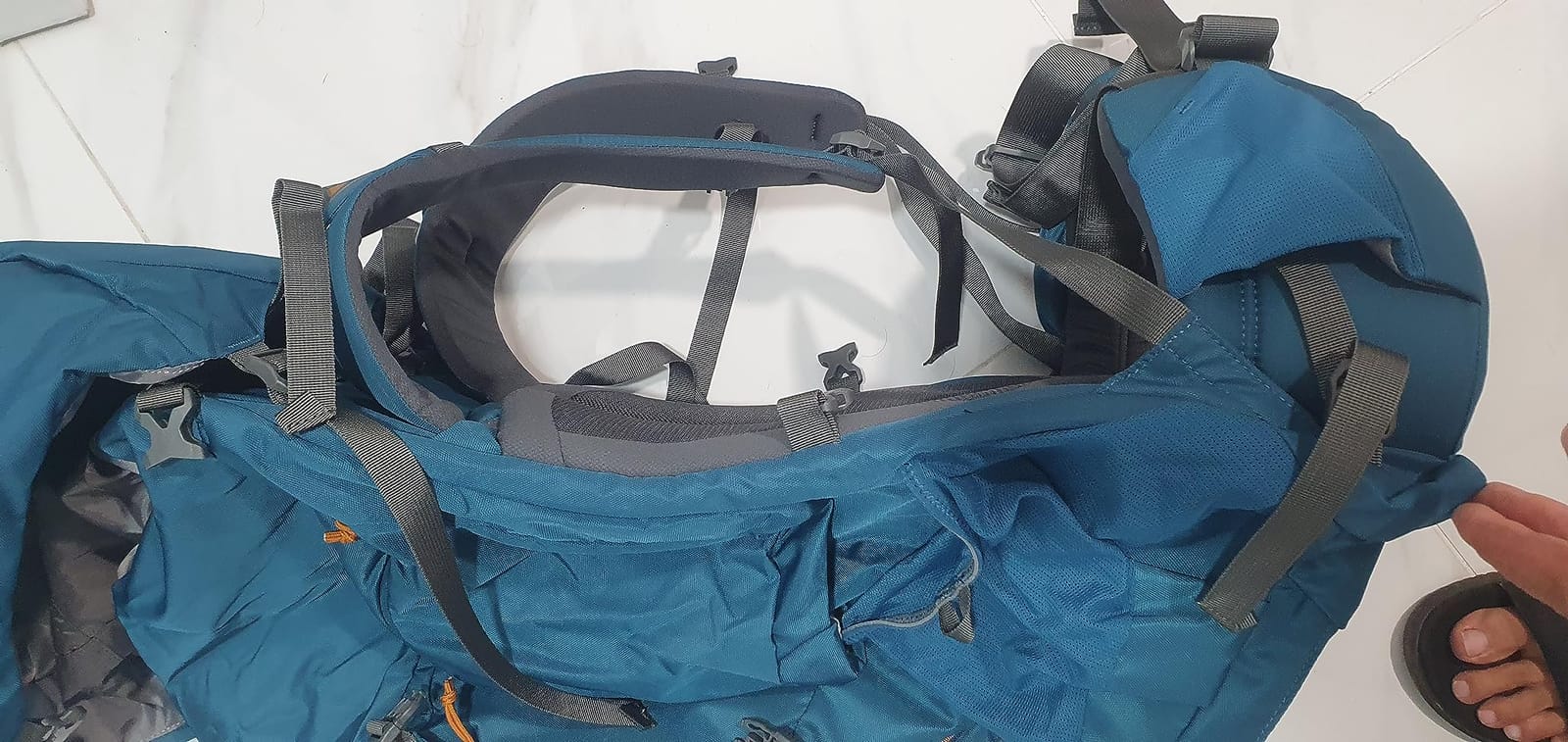
The rest of the layout matches the 65L Coyote and is well suited to long carries: Kelty signature wing pockets, two front zippered pockets, and large J-zip top loading access, plus daisy chains, water bottle pockets, and a sleeping bag compartment.
The Amp Flow ventilated back panel reduces sweating on long hauls, and with 105 liters in a pack that large, ventilation is not a minor feature. The advanced perimeter frame with aluminum stay keeps the load stable and balanced, which is the entire point at 50 pounds and above.
It is listed as not water resistant, so a separate rain cover is required in wet conditions. The warranty is described as limited rather than lifetime, which is worth noting given how much you are asking this pack to carry.
Who genuinely needs 105 liters?
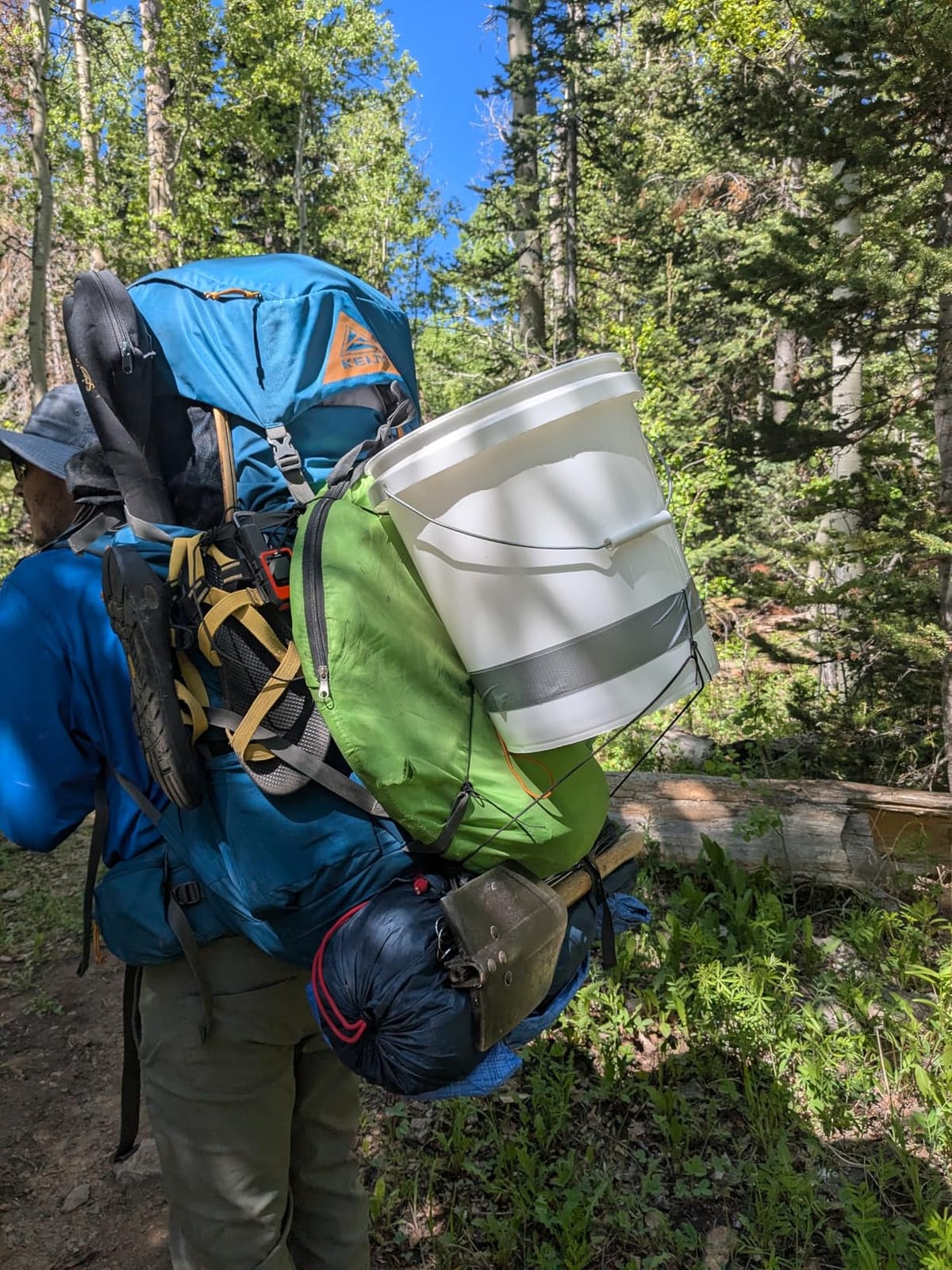
Group leaders carrying shared shelter and kitchen gear, winter trips, bike touring with trailer loads, and anyone moving equipment rather than personal kit. One reviewer in a tall-man context notes that not all packs fit, especially regarding back support.
If your gear fits in 65 liters comfortably, do not buy this. Underfilled, it is the bulkiest and heaviest pack in the roundup and the least pleasant to carry.
Does it handle a tall torso as well as the 65L version?
It shares the same Fit Pro torso adjustment and the same Amp Flow panel as the 65L version, so the fit system is identical. Reviewers specifically credit the Fit Pro adjustment for tall wearers on this model, and the perimeter frame keeps a heavy load from distorting the fit as the trip goes on.
Hydration bladder compatibility is listed, which matters on long desert stages. The 7 pockets and 10 compartments also make this one of the better organized large packs available.
12. Osprey Exos 58L: Best Ultralight Option With Extended Sizing
Osprey Exos 58L Men’s Ultralight Backpacking Backpack, Blue L-XL
Weight: 2.9 lb
Capacity: 61 L
Size: Large-XL
Max load 35 lb
Pros
- Only 2.9 lb empty weight in this group
- ExoForm seamless mesh harness for cushioning
- Large-XL and extended fit options
- Stretch fit moves with the body
Cons
- Only 3 pockets
- Rated 35 lb maximum load
- Water resistant with no rain cover
- 5 percent one-star ratings
The Exos 58 is the lightest framed pack in this roundup at 2.9 pounds, and it still offers Large-XL and extended fit size options for taller and broader wearers. That combination is what makes it the ultralight answer for a tall hiker rather than a compromise pick.
The harness does most of the comfort work. The ExoForm harness uses seamless layered mesh to provide cushioning without the bulk of heavier foam, and the stretch fit type lets the pack move with your body on technical terrain instead of resisting it.
Listed capacity is 61 liters with a 35 pound maximum load recommendation, and dimensions of 13 by 14.6 by 32.3 inches. It is covered by Osprey’s All Mighty Guarantee, which is a real advantage for a tall buyer with limited options.
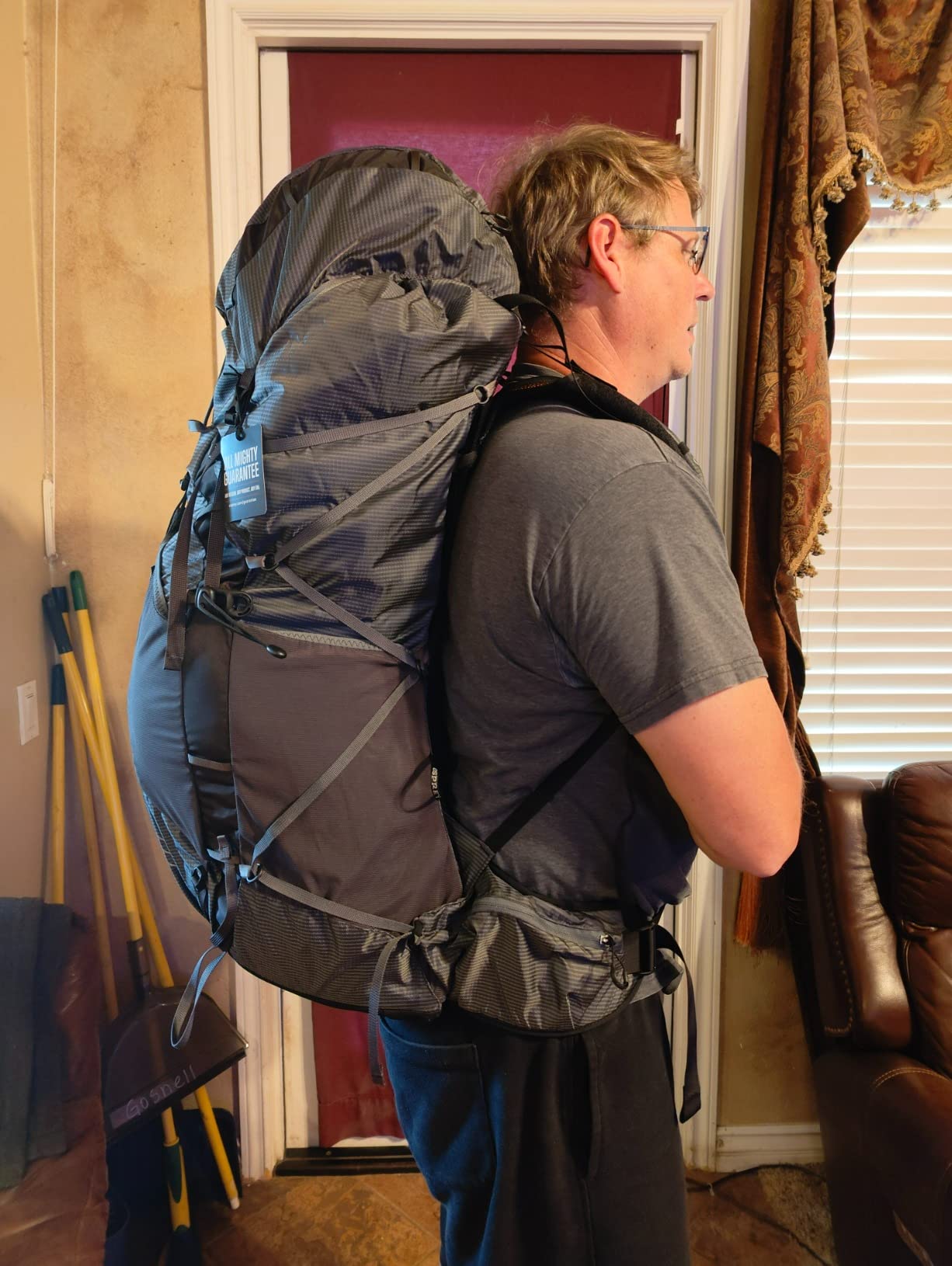
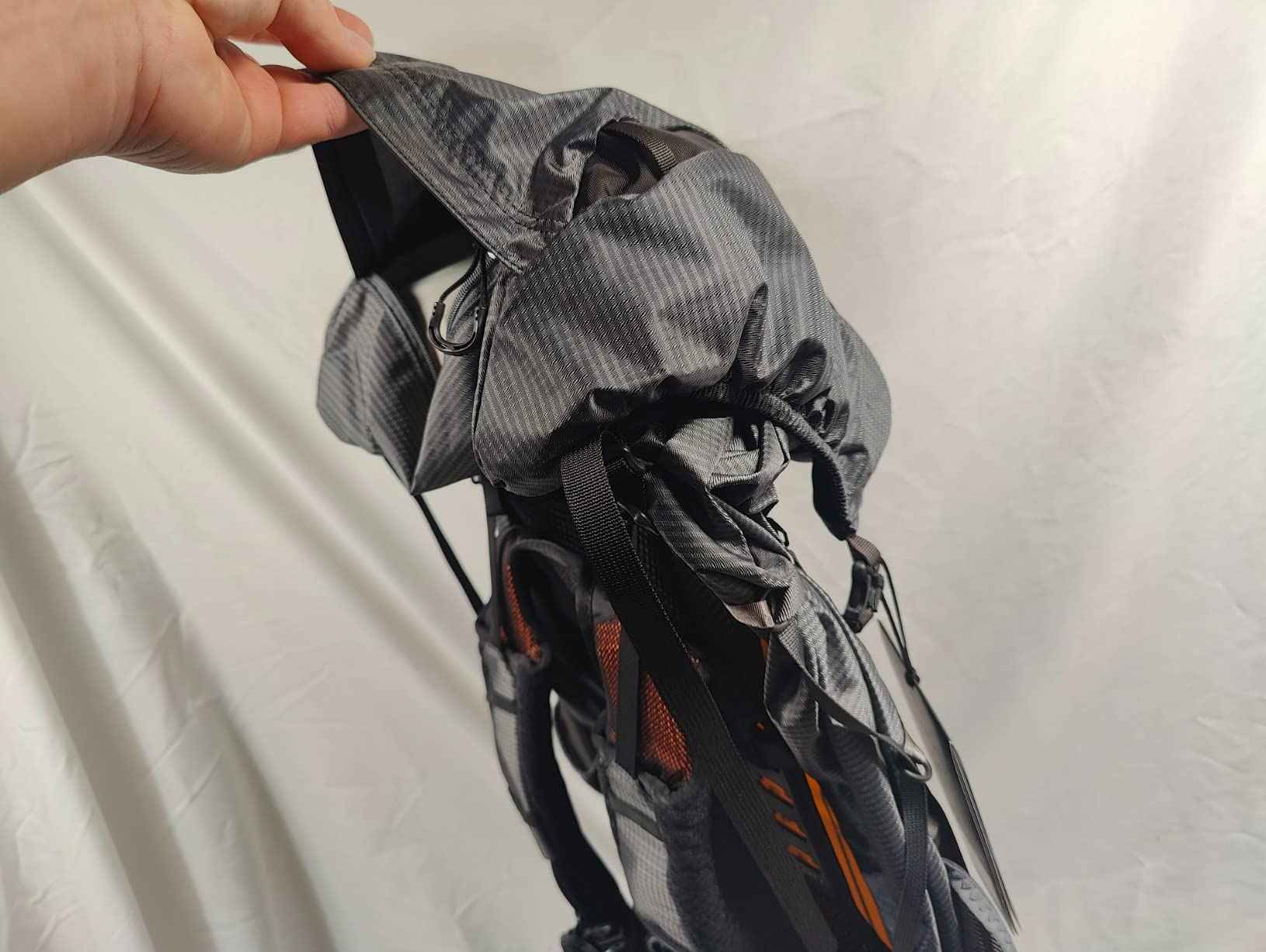
The trade for the low weight is stark. Only 3 pockets are listed, the fewest in this group, so organization depends entirely on packing cubes and a top-down approach. Water resistance is all you get, with no rain cover listed.
The 35 pound maximum load is the number to plan around. That is enough for a three-night trip with a conservative kit, and not enough for winter gear, shared equipment, or anything heavy. Check your own loaded weight before you order.
The rating spread is wider here than elsewhere: 76 percent five star but also 5 percent one star and 6 percent two star, meaning 11 percent of reviews sit at two stars or below. The complaints concentrate around the load limit and the minimal pocket count rather than comfort.
Is a 35 pound load limit workable for a tall hiker?
Yes, if you keep your base weight down, which is the whole point of choosing an ultralight pack. A tall wearer who carries the same gear as everyone else simply needs a frame that reaches, and that is what the extended sizing here provides. Someone hauling extra weight for a partner should choose a pack rated higher.
Weigh your kit at home before committing. If your realistic load sits near 35 pounds, move up to the Coyote 65 or the Atmos AG 65 for the margin.
What should a fast-and-light buyer give up here?
Organization, weather protection, and load capacity. Three pockets means you live out of the lid and the main compartment, and a water-resistant shell with no rain cover means you will be packing a liner or a cover in your budget.
What you keep is the part that matters most for a long frame: a size range that includes extended options, and a light enough pack that a lighter tester will actually carry it on long days.
Buying Guide for Tall Men With Long Torso Frames
What pack volume do you actually need?
Volume is driven by trip length and resupply, not by your height. Roughly 25 to 35 liters covers a day hike or an overnight, 45 to 60 liters covers two to four nights, and 65 to 70 liters covers a week or gear-heavy trips. A 70 liter pack is not too big for backpacking, but it is only useful if you are carrying that volume of gear. A tall hiker does not need more space than anyone else with the same kit.
The exception is shared equipment. If you are carrying a tent for two or hauling a bear canister plus a full resupply, add 10 to 15 liters over the guideline. If a trip needs more capacity than a standard pack can give you, our hiking and hunting backpack picks cover the gear-hauling end of the range.
Why adjustable torso beats a size letter
Adjustable torso means you can change the back length as your load and layers change, and it covers a wider spread of bodies than fixed sizing does. Fixed sizes are cheaper and lighter, but they only work if the number matches your measurement exactly. For a 25 inch torso hunting through size charts, adjustable systems are the difference between a pack that fits and a pack that does not.
Brands that publish their torso range in inches, like the Kelty Asher at 15.5 to 21 inches, are worth cross-referencing. A published range also tells you exactly where a pack stops working for you.
How far should your hipbelt reach?
The hipbelt should sit on your hip bones, not on your waist, and it should be the first thing carrying the load. If the belt rests below the top of your hipbone, the pack will slide down over the course of a day and drag on your lower back. A pack that offers a second-skin or replacement hipbelt option is a genuine advantage for unusual torsos, and it is worth paying for if your shape does not match a standard belt.
Tall hikers with larger waists need both dimensions. Forum users with 26 to 27 inch torsos also report 36 inch waists, so check both numbers before ordering.
Why back panel and ventilation matter more on a tall frame
A taller back panel means a larger surface sitting against your spine, so airflow and spacing between your back and the pack compound. Tensioned mesh designs like the Gregory Zulu’s create a channel for moving air, and the Osprey AirScape and Kelty Amp Flow panels use molded or die-cut foam for the same purpose.
Ventilation is not a comfort luxury in summer. Sweating on a long climb is a real energy cost, and a tall wearer with a full pack on their shoulders feels it more than a smaller wearer with the same kit. Anyone who also spends time on long-distance days in other gear can see how the same sizing logic plays out in our inline skates for tall riders guide.
Men’s, unisex, or women’s frames as a tall man?
Men’s frames are generally built around longer torsos and wider shoulders, so a men’s model is usually the better starting point for a tall man. Unisex frames are a reasonable choice if your torso is long but your shoulders and hips are narrower than the men’s pattern. Women’s frames run on shorter torso ranges and a different cut, so a 6 foot 5 inch man will not find a good fit in one regardless of how well the hipbelt wraps. The torso length is the deciding factor, not the label.
What goes wrong when a pack does not fit your torso
Four symptoms cover almost every case, and they tend to arrive together rather than one at a time. The first is a pack that rides low, with the shoulder straps at maximum extension and the load sliding onto your lower back. The second is a visible gap at the lower back where the frame ends before your hipbones.
The third is load lifters that end up angled downward, pulling your shoulders forward and hunching your back. The fourth is a persistent pressure point in the lower back or stomach area.
All four trace to the same cause. Before buying a different pack, try adjusting the torso, tightening the load lifters so they angle up toward the top of the pack, and moving the hipbelt up onto your hipbones. If the shoulder straps are already at maximum and the hipbelt still sits low, your torso exceeds the pack, and no amount of adjustment will fix it.
How to test a pack before a long trip
Load it with your real kit rather than a lighter approximation, and walk for at least an hour on real terrain. Check the hipbelt position and the shoulder strap tension at the start and again at the end, because packs settle as you walk. Watch the load lifters, which should angle slightly upward toward the pack body.
Look for a gap between the pack and your lower back, which signals a frame that is too short. Finish by checking whether any pressure point persists, especially on your hips and the base of your spine.
Durability, DWR and repair support
Fabric denier is a rough guide: 210D is light and delicate, 400D is a middle ground, and 600D is heavy and durable. PFAS-free DWR is now standard on newer models, and a rain cover included in the pack matters more than the fabric rating for wet-weather reliability. Warranty terms vary widely, and for a tall buyer with fewer options, a brand that repairs packs rather than replaces them is worth a good deal.
Our testing approach
Because we do not field-test every pack, we filtered on documented fit first: torso adjustment, published torso ranges, and owner reports from identified tall wearers. Where those are absent, we flagged the limitation rather than inferring fit. We then weighed capacity against the realistic load for that volume, checked the care and warranty terms, and read the recent reviews for recurring problems. Where owners are divided, we said so instead of picking a side.
Frequently Asked Questions
What backpacks are best for tall men?
The best hiking backpacks for tall men are packs with an adjustable torso that reaches 23 inches or more, or a published torso range that covers your measurement. Look for the Osprey Atmos AG 65L and Aether 55L in Large-XL, the Teton Scout 55L with multi-position adjustment, and the Deuter Aircontact Lite with Vari Quick back length. Measure from your seventh cervical vertebra to your hipbone plus 3 inches before you order, since a standard large size usually stops around 20 to 22 inches.
How do I measure my torso length for a backpack?
Find the bony prominence of your seventh cervical vertebra at the base of your neck, then measure straight down your spine to the top of your hipbone. Add roughly 3 inches for the distance from your hipbone to your shoulder, where the pack body sits. That total is your pack torso length. Compare it in inches against published torso ranges rather than size letters, because M, L, and XL do not mean the same thing across brands.
What size backpack does a 6 foot man need?
A 6 foot man usually has a torso between 21 and 23 inches and needs a 55 to 65 liter pack for two to four nights. Height is only a rough guide, because a 6 foot 2 inch man with a 23 inch torso needs a longer frame than a 6 foot 5 inch man with a 21 inch torso. Measure first, then choose a capacity that matches your trip length: 25 to 35 liters for day hikes and overnights, 45 to 60 liters for multi-day trips, and 65 liters or more for gear-heavy trips.
Can a tall man wear a women’s hiking backpack?
Rarely, and not because of the hipbelt. Women’s frames are built on shorter torso ranges and a different shoulder and hip cut, so a 6 foot 5 inch wearer will have straps running out of webbing and the pack sliding onto the lower back. The rare exceptions are unisex models with a wide adjustment range. Judge by torso measurement first, and only use a women’s-frame pack if its published range actually reaches your number.
Is a 70L pack too big for backpacking?
No. A 70 liter pack is a standard multi-day volume and is not excessive for three to six night trips, winter gear, or shared equipment. It becomes a problem when it is underfilled, because a large empty pack is awkward and heavier to carry than your gear requires. For a one or two night trip, 40 to 50 liters is more comfortable. Use compression straps to pull a larger pack in on short trips.
Why does my backpack ride too low and are the shoulder straps too short?
A pack that rides low and straps that reach maximum extension both point to a torso mismatch rather than an adjustment mistake. Measure your torso in inches, then check the pack’s published range or adjustment limit. If the frame ends above your hipbones, the pack is too short and the shoulder straps will always max out. Workarounds include a pack with a removable hipbelt and a replacement second-skin belt, or a brand’s extended-torso variant.
Final Verdict: The Right Pack for Your Torso
If you carry real weight over multiple days, the Osprey Atmos AG 65L is the best hiking backpack for tall men in this group, because the anti-gravity suspension moves the load to your hips and the Large-XL reaches long torsos. Carry heavier gear or want the most adjustable fit system, and the Osprey Aether 55L is the stronger tool. Traveling light, the Osprey Exos 58L gives you extended sizing at 2.9 pounds.
For day hikes, take the Osprey Talon 33L with its real hipbelt. For the highest volume of owner evidence, the Teton Scout 55L and Explorer 65L both use multi-position torso adjustment that tall reviewers confirm works. And if you want a pack that tells you exactly where it stops, the Kelty Asher publishes a 15.5 to 21 inch torso range, so you can rule it in or out with a number instead of a guess.
Whatever you choose, measure your torso first. It takes two minutes and it is the only step that reliably separates a pack that fits from one that will have you hiking in pain by the afternoon. If you also need a day bag or a travel pack that suits a taller frame, our travel backpack picks and skateboard backpack guide cover similar sizing ground, and office chairs for tall people solves the same seat-to-frame problem at a desk.