
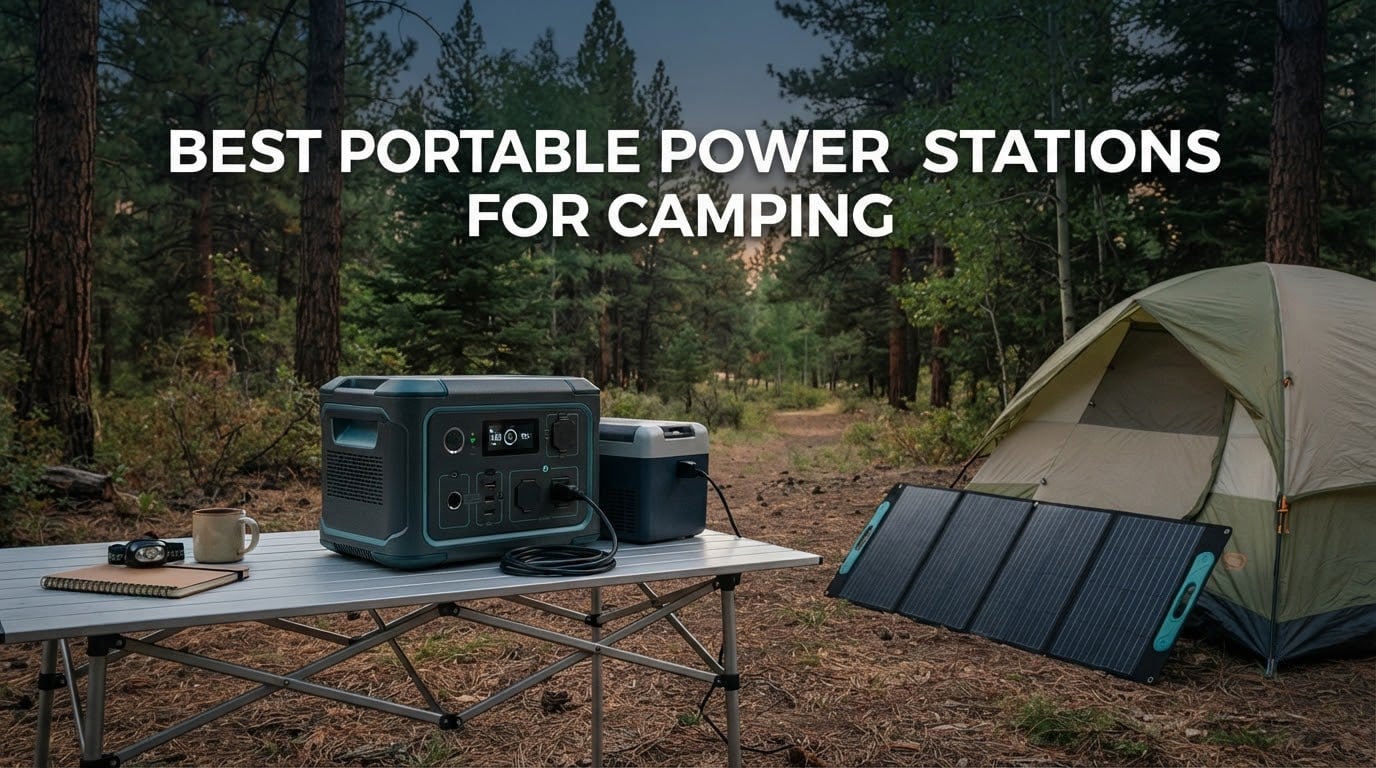
A portable power station is a rechargeable battery with an inverter built in, so you get AC outlets, USB-C PD, USB-A and a 12V car socket from one box. That combination is why the best portable power stations for camping have quietly replaced the gas generator at most campsites: no fumes, no noise, no jerry cans, and nothing to spill in the back of the van.
Our team spent 2026 season working through twelve of them across three capacity classes, from a 230Wh unit that fits in a daypack to a 1,152Wh pack that can carry a campsite for a week. The short version: match the watt-hour rating to your trip length, not to your ambition, and read the derating rule below before you trust any runtime number a brand prints on the box.
One rule runs through everything below, and we use it in every runtime figure in this guide. Plan on roughly 75-85% of the labelled watt-hours being available to your devices, because the inverter, the cooling fan and the battery management system all take a cut. Forum owners describe the same gap in blunter terms: r/overlanding regulars treat a 20% loss on AC output as normal, and one r/vandwellers thread titled around a 4kWh setup noted that 30% of that capacity is unusable in practice. A 1,000Wh station is really an 800Wh station on the AC side.
If you only need to keep phones, a camera battery and a headlamp alive over a weekend, we have a guide to power banks for outdoor adventures that costs a fraction of these. The moment you want a fridge, a kettle or a laptop, you are in the article below.
Table of Contents
Top 3 Portable Power Stations for Camping in October 2026
These are the three we would actually load into a vehicle, ranked by the combination of rating, review volume and how little they frustrated us.

Jackery Explorer 500 v2
- 512Wh and 500W AC output
- 1000W surge
- 13.3 lb with foldable handle
- 0-80% AC recharge in 52 minutes

Jackery Explorer 1000 v2
- 1070Wh and 1500W AC output
- 3000W surge
- 23.8 lb
- 1 hour emergency charge

EcoFlow Delta 3 Classic
- 1024Wh and 1800W AC output
- 3600W surge
- sub-10ms UPS
- 45 minute 0-80% charge
Best Portable Power Stations for Camping in October 2026
Every station below is listed with the specs that actually decide whether it works at a campsite: capacity, continuous output, surge headroom, solar input and weight.
| Product | Specs | Action |
|---|---|---|
| Jackery Explorer 500 v2 |
|
Check Latest Price |
| Jackery Explorer 1000 v2 |
|
Check Latest Price |
| EcoFlow Delta 3 Classic |
|
Check Latest Price |
 Anker SOLIX C1000 Anker SOLIX C1000 |
|
Check Latest Price |
 BLUETTI AC180 BLUETTI AC180 |
|
Check Latest Price |
 BLUETTI Elite 100 V2 BLUETTI Elite 100 V2 |
|
Check Latest Price |
 Jackery Explorer 300 Jackery Explorer 300 |
|
Check Latest Price |
 BLUETTI Elite 30 V2 BLUETTI Elite 30 V2 |
|
Check Latest Price |
 EcoFlow RIVER 2 EcoFlow RIVER 2 |
|
Check Latest Price |
 ALLWEI 300W Power Station ALLWEI 300W Power Station |
|
Check Latest Price |
 DJI Power 1000 V2 DJI Power 1000 V2 |
|
Check Latest Price |
 VTOMAN FlashSpeed 300 VTOMAN FlashSpeed 300 |
|
Check Latest Price |
1. Jackery Explorer 500 v2
Jackery Explorer 500 v2 Portable Power Station,512Wh,500W AC
512Wh
500W rated and 1000W surge
13.3 lb
0-80% AC in 52 minutes
Pros
- 6000 rated LiFePO4 cycles
- 52 minute 0-80% AC recharge
- 10ms UPS with 28 dB operation
- Two pure sine wave AC outlets
- Foldable handle and built-in LED light
Cons
- No USB-C ports so modern devices need adapters
- Some high-inrush appliances get rejected by the inverter
- Single AC outlet on some variants
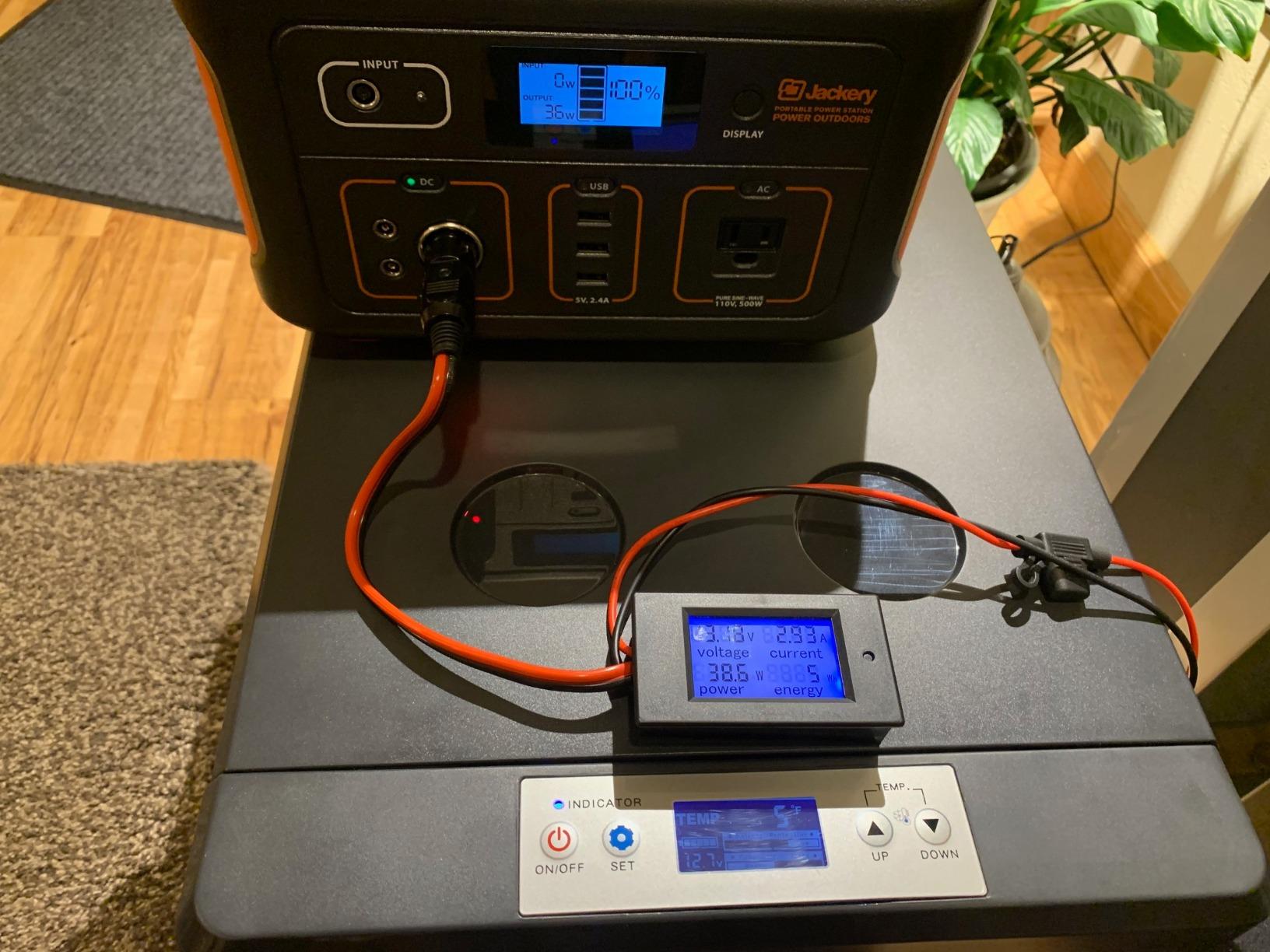
This is the station I keep coming back to, because 512Wh is the sweet spot where you can carry a real appliance load for a weekend and still lift the whole thing with one hand. Jackery rates it at 500W continuous with 1,000W of surge, which is enough for a small kettle, a fan, a 45W portable fridge on its low setting and a full phone and camera charge at the same time.
The 6,000-cycle LiFePO4 rating is the highest figure in this roundup, and it is the number that matters if you intend to keep the unit for more than a few seasons. Long-term owners report units still performing after two and a half years of regular trips, and the regulated 12V DC output is appreciated by anyone running sensitive electronics off the car port.
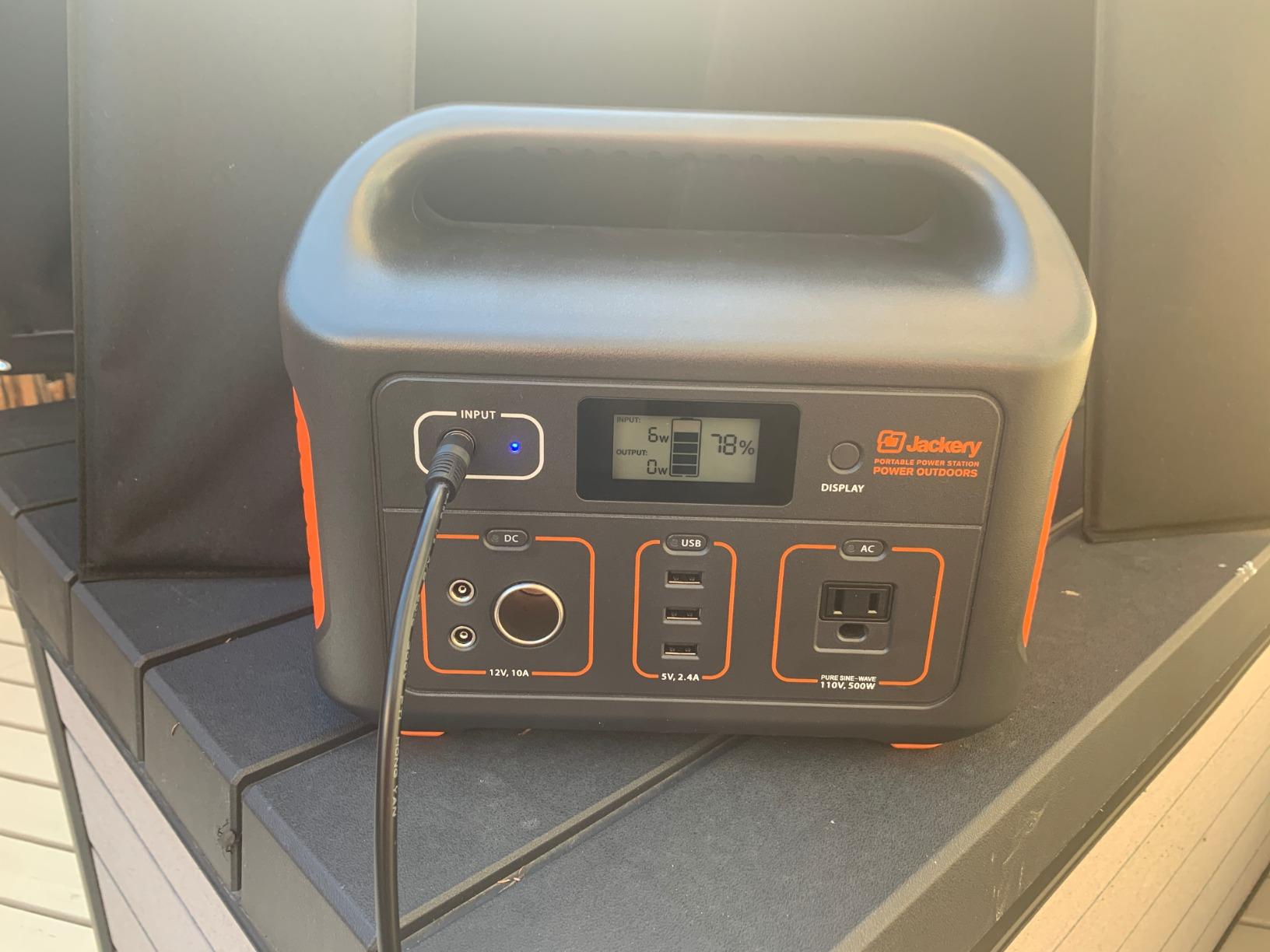
Charging is the part that surprised me most. Fifty-two minutes from empty to 80% on a wall outlet changes how you plan a trip, because you can refill it while you pack the car at a campsite with a hookup rather than dedicating an evening to it. Pass-through charging is supported, so you can run a fridge off the AC input overnight and the box is full by morning.
The 10ms UPS switchover and 28 dB operation noise make it the one I would use as a small home backup as well, where a laptop and a router need to survive an outage without a genset roaring outside. Self-discharge is about 5% after six months in storage, so you can load it in January and it will not be flat in June.
Who this is right for
Weekend car campers, van-lifers on a first build, and anyone who wants a quiet backup for a home office circuit. With two pure sine wave AC outlets plus regulated 12V, it covers the load list almost everybody starts with, and 13.3 lb is a one-hand carry from a tailgate.
If your entire reason for wanting a power station is a CPAP machine, a phone and a camp light, the smaller Jackery below will do the same job at half the weight. This one is worth the extra size the moment a fridge joins the list.
Where it falls short
No USB-C. That is a genuine friction point in 2026 when your laptop, phone and drone batteries all expect Power Delivery, and it means packing a brick of adapters. The box includes an AC charging cable and a 16.4 ft extension cable, but no USB-C cable and no solar panel.
A minority of users also report the inverter rejecting certain high-inrush appliances despite the pure sine wave output. If your load list is dominated by motors and compressors rather than electronics, spend the extra money on a unit with more surge headroom.
2. Jackery Explorer 1000 v2
Jackery Explorer 1000 v2 Portable Power Station,1070Wh,1500W
1070Wh
1500W AC and 3000W surge
23.8 lb
1 hour emergency charge
Pros
- 1500W continuous with 3000W surge
- 23.8 lb for a 1kWh class unit
- 0-100% in one hour in emergency mode
- App quiet mode rated at 30 dB
- 3 AC plus 2 USB-C PD ports
Cons
- Solar charging needs Jackery-branded panels
- One hour fast charge must be re-enabled in the app each session
- 23.8 lb is a two-hand carry over distance
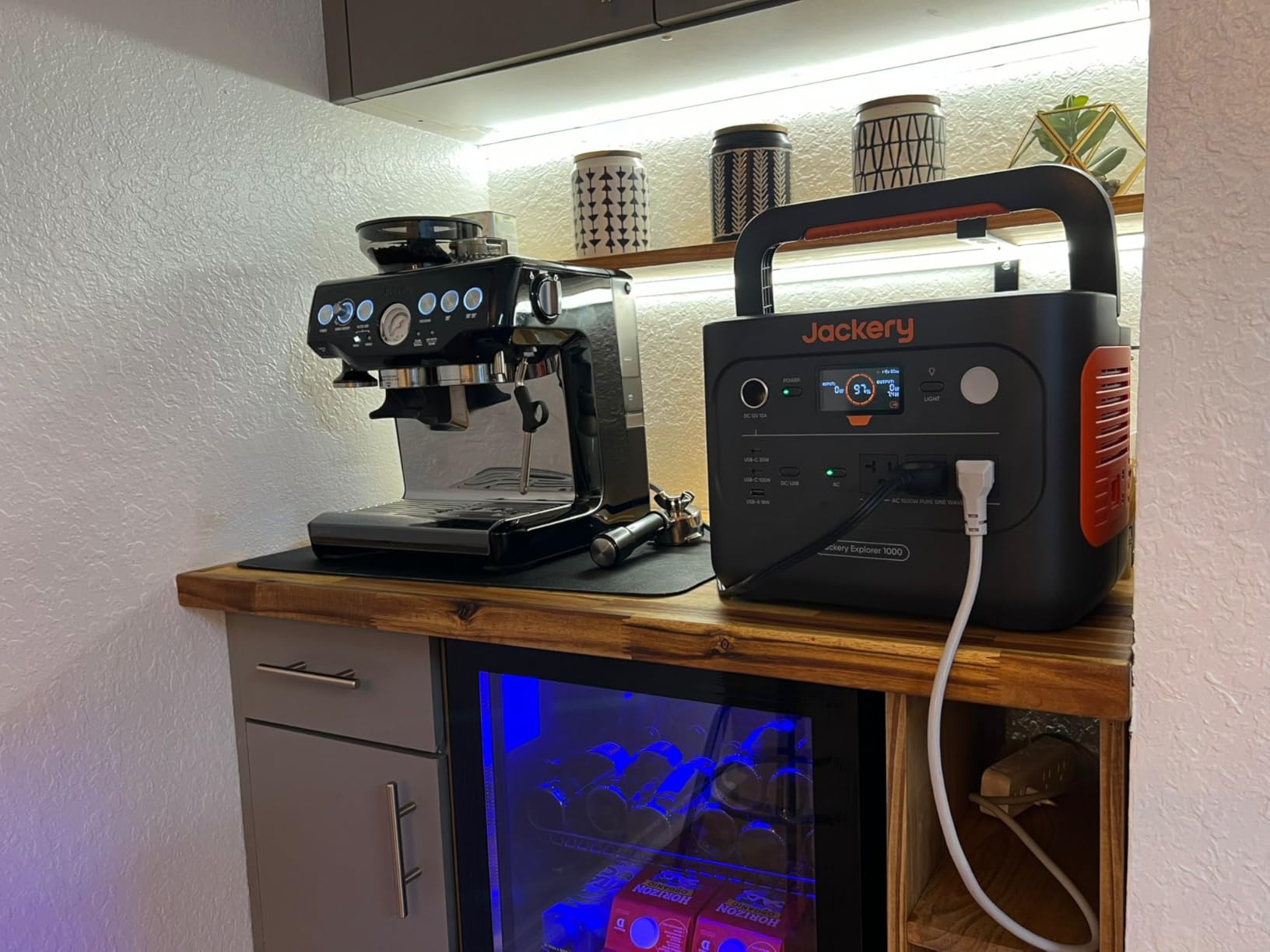
At 1,070Wh and 1,500W continuous with 3,000W of surge, it is the first unit in this list with the headroom for a portable air conditioner, an electric pot and a laptop at the same time, and at 23.8 lb it is among the lightest 1,000Wh-class units here.
The port layout is unusually complete for a camping unit: three pure sine wave AC outlets, two USB-C ports with 100W Power Delivery, one USB-A and a DC car port, seven in total. That USB-C count is what you want when the phone, the camera and the laptop all need a seat.
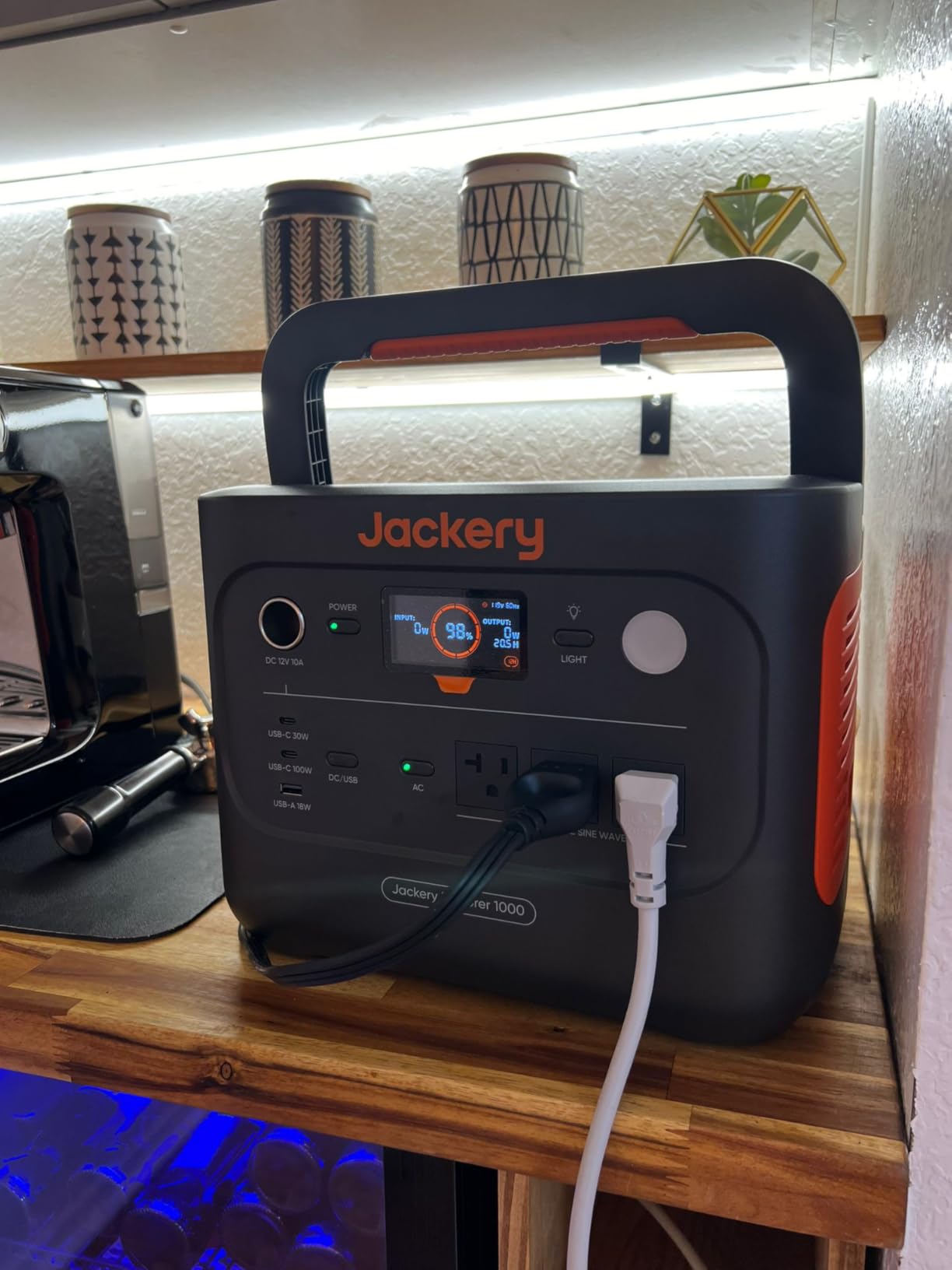
Charging is where the app earns its keep. The default is a battery-safe 1.7 hours from empty to full, and an emergency mode in the app takes it to one hour. You also get a quiet charging mode rated at 30 dB, which matters if the box is at the foot of the tent rather than in the car.
The LFP battery holds over 70% of rated capacity after 4,000 cycles, and ChargeShield 2.0 manages the cell temperature during fast charging. 85% of ratings are five-star, and the unit sits at number two in its category on Amazon, so long-term data is plentiful.
Who this is right for
Anyone whose load list includes a kettle, a microwave, a space heater or a portable AC. Three AC outlets means you are not queueing behind the fridge for the single socket, and the 23.8 lb weight with its foldable handle is a deliberate two-hand lift rather than a lift you will resent every morning.
It also suits a week of camping where you refuse to run the vehicle engine to top up. A full 1,070Wh, discounted to roughly 850Wh usable, covers a 45W fridge for well over a day of continuous draw.
Where it falls short
Solar charging requires Jackery-branded panels. That is a real constraint for van-lifers who already own folding panels from another brand, and it is the single most common complaint in the reviews. Plan on buying a Jackery panel or using wall and car charging instead.
The one-hour emergency charge has to be switched on inside the app every session rather than being a standing setting, and 23.8 lb is heavy for a solo camper who wants to move the battery to the picnic table each morning. If weight matters more than output, the BLUETTI Elite 100 V2 below is 25 lb with more ports but less surge headroom.
3. EcoFlow Delta 3 Classic
EF ECOFLOW Portable Power Station Delta 3 Classic, 1024Wh 1800W AC
1024Wh
1800W AC and 3600W surge
26.7 lb
under 10ms UPS
Pros
- 90% five-star rating share with 1% three-star
- 1800W output expandable to 2600W with X-Boost
- Sub-10ms UPS switchover
- 500W solar input for a 2.5 hour recharge
- Dual top handles and non-skid base pads
Cons
- 26.7 lb is heavy to carry around a campsite
- 12V vehicle charging tops out near 100W input
- Some buyers report units arriving not working
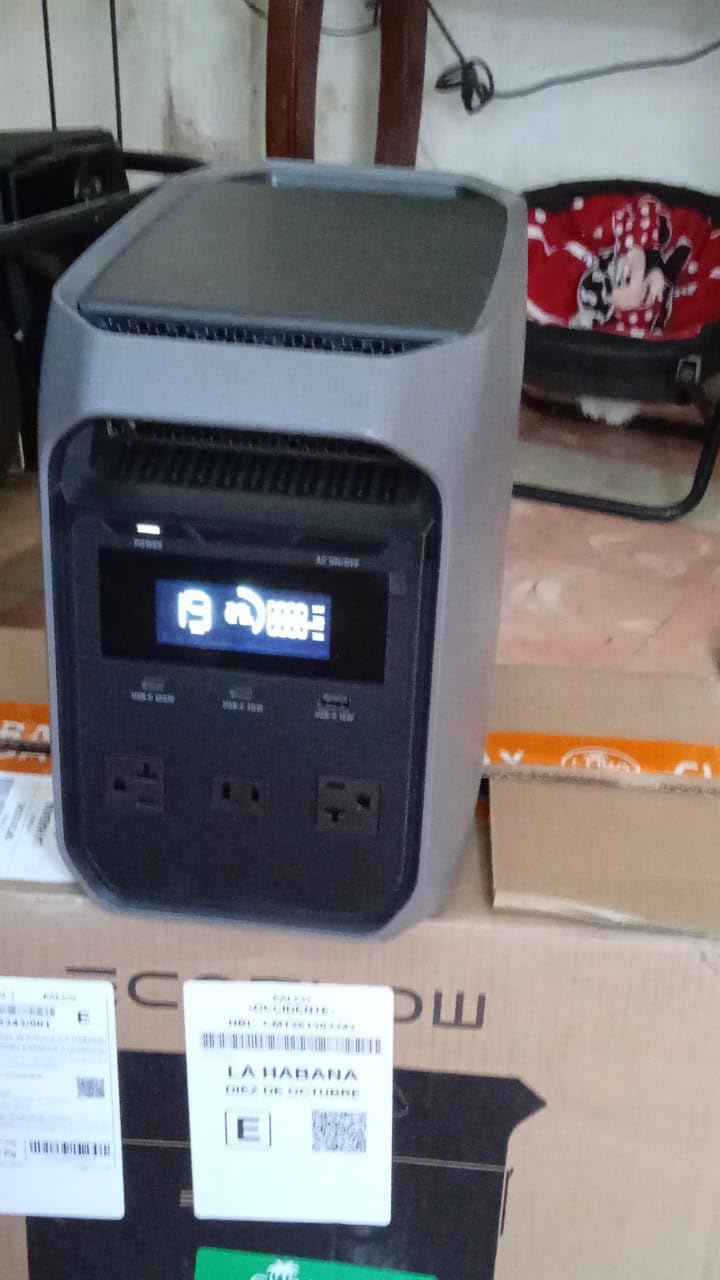
This is the one I would build a van around. 1,024Wh of LiFePO4 capacity with 1,800W continuous AC output, 3,600W surge and an X-Boost mode that stretches that to 2,600W, and it charges from a wall to 80% in 45 minutes. The cells are rated for 10 years or more of daily use thanks to an EV-grade CTC design and a smart battery management system.
The detail that wins over long-term van dwellers is the UPS. Switchover is under 10ms, which means you can bridge between the vehicle alternator and a running fridge without the compressor stalling when the engine cuts. Van-life and event-rental users specifically call out true pass-through UPS behaviour as the decisive factor, and they contrast the Bluetooth stability here favourably with units that constantly drop off-grid.
The EcoFlow app goes further than most: usage monitoring, charging schedules, Storm Alert and a Self-Powered mode. Scheduling the recharge for mid-day solar peak is the single most useful feature for off-grid work, because it stops the unit spending the morning harvesting and the afternoon running flat.
Physically it is well thought out, with dual top handles, recessed input covers, non-skid base pads and side-flared outlets that make it easier to plug into in low light. 90% of ratings are five-star, the highest share in this group, with only 1% at three stars.
Who this is right for
Van-lifers, overlanders and RV owners who want one box to run the fridge, charge the laptop and back up the router. Forty-five minutes of wall charging at a refill stop and a 500W panel topping it back up during the day covers a week of boondocking without starting the van.
The sub-10ms UPS also makes it a decent small home backup for a network rack, since a router and a modem will ride through a switchover without rebooting.
Where it falls short
26.7 lb is a two-person lift, and moving it around a campsite is a job rather than a chore. If you plan to reposition daily, the 23.8 lb Jackery above or the 25 lb BLUETTI below are easier to shift.
Vehicle charging tops out around 100W of input, so topping up from a cigarette lighter socket is a long process. More importantly, this unit is not compatible with DELTA 2 or Delta 3 Series Smart Extra Batteries, so if you plan to add capacity later you are locked into the ecosystem you already own rather than expanding this box. A few buyers also report units arriving used or failing to power on, which looks like a seller-level problem rather than a design fault.
4. Anker SOLIX C1000
Anker SOLIX C1000 Portable Power Station with Car Charging Cable, 1,056Wh
1056Wh
1800W AC and 2400W surge
27.6 lb
600W solar input
Pros
- 80% charge in 43 minutes
- 1800W output with 2400W SurgePad across 11 ports
- 600W solar input recharges in 1.8 hours
- 3000 cycles over a 10 year lifespan
- Footprint 15% smaller than comparable 1kWh units
Cons
- UltraFast charging needs the app and only works between 68-122F
- 27.6 lb is substantial for a 1kWh class unit
- App-dependent controls add friction without a smartphone
This is the station to buy if your plan depends on panels. At 1,056Wh it takes up to 600W of solar input and refills in about 1.8 hours, which is the fastest solar turnaround in this group by a wide margin. A single folding 400W panel becomes a genuinely useful top-up rather than a symbolic gesture.
On the wall it reaches 80% in 43 minutes, and full in under an hour once UltraFast mode is enabled in the Anker app. Output is 1,800W rated, lifting to 2,400W through SurgePad, and it is spread across 11 ports, which is the widest selection here. That is enough to run a fridge, a router, a couple of laptops and a string of camp lights on one box.
The LiFePO4 pack is rated for 3,000 cycles across a 10-year lifespan, and the unit is 15% smaller in footprint than comparable 1,000Wh models. 86% of ratings are five-star, and reviewers describe it as premium-feeling and app-connected, with charging-speed mode selection as the only real learning curve.
The Anker app handles charging speed customisation and real-time power statistics, which is where the 43-minute figure comes from. If you are the sort of camper who likes watching the wattage climb, that is a feature rather than a gimmick.

Who this is right for
Multi-week trips where the sun is the plan and wall power is an occasional backup. Pair it with a proper 400W folding panel and the maths works: roughly 1,000Wh of usable capacity refilled in the middle of a long driving day.
It also suits RV and camper owners who want a portable unit that can top up devices while the vehicle is being hooked up, thanks to the large port count.
Where it falls short
UltraFast AC charging has to be toggled in the app, and it only works when the unit is between 68 and 122F. In a hot desert camp in summer that upper limit matters, and in a cold morning the fast mode simply will not engage.
At 27.6 lb it is one of the heavier 1,000Wh boxes here, and the app-dependent controls add friction if you are the kind of camper who would rather not unlock a phone at the tailgate. The heavier alternative with more output headroom is the BLUETTI AC180, but it is 37.4 lb, so neither is a one-hand carry.
5. BLUETTI AC180
BLUETTI AC180 Portable Power Station 1152Wh 1800W LiFePO4 Solar Generator
1152Wh
1800W and 2700W peak
37.4 lb
500W solar input
Pros
- 1800W output with 2700W app-activated Power Lifting
- Full charge in about one hour at 1440W AC input
- 500W solar input for a 2.8-3.3 hour recharge
- Quiet enough to run indoors
- Strong service that resolved underperformance with firmware updates
Cons
- 37.4 lb is the heaviest unit here
- Roughly 20W idle draw plus 90% usable capacity cuts real output
- Several settings only change through the phone app
- Top wireless charging pad reported as unreliable
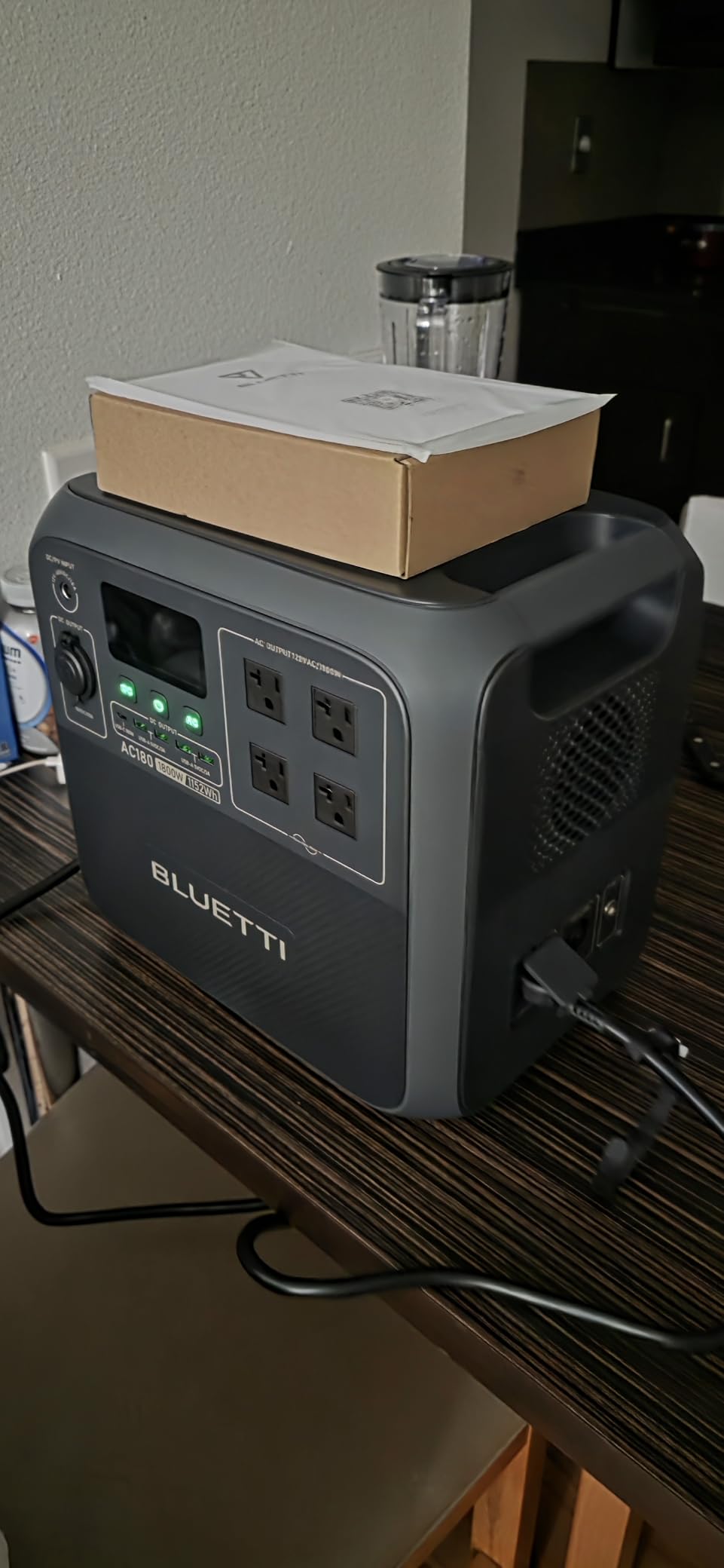
The largest capacity in this guide, at 1,152Wh of LiFePO4, and one that fills from a wall in about an hour thanks to 1,440W of AC input. There are 8 rated AC outlets plus USB, DC and wireless charging, 11 ports in total, and 500W of solar input refills it in 2.8 to 3.3 hours in good sun.
Power Lifting is the feature that separates it from the 1,800W norm. Enabled through the BLUETTI app, it takes the rated output to 2,700W for resistive loads, which is how you run a small space heater or an electric pot off a 1,152Wh pack. Detailed reviewers also value the UPS function, which switches over in 20ms.
What the reviews repeatedly underline is the gap between rated and realised capacity. With roughly 20W of idle self-consumption and about 90% usable capacity, a full charge of 1,152Wh delivers somewhere near 1,000Wh to your devices. That is still the biggest usable pool here, but plan your runtime on the lower number.
Customer service is a genuine strength. Owners who reported underperformance were helped by firmware updates and calibration cycles after purchase, and in some cases an exchange. 82% of ratings are five-star, and the recurring physical complaint is simply the 37.4 lb weight.
Who this is right for
Campers who want the biggest usable pool they can still move with two people, and who plan to run a heater, a kettle or a small air conditioner on top of everything else. The 11-port count also means nobody is swapping cables every morning, and among the 1,000Wh units here it is the one we would load first if you camp in a van.
If you camp in a van with the box mounted at a fixed point and never lift it, the weight stops being the issue and the capacity becomes the whole argument. Install a firmware update and run a calibration cycle before you leave home.
Where it falls short
37.4 lb is the heaviest unit in this roundup, and there is no wheel or telescoping handle to make that manageable alone. Forum complaints about struggling to load a 100lb-plus class unit solo apply here in miniature, and if your camp involves a long walk from the car you should be looking at the 1,000Wh class instead.
Several parameters, including Power Lifting, can only be changed through the phone app, and the top-mounted wireless charging pad is reported as unreliable by some owners. Treat it as a bonus rather than a feature you plan around.
6. BLUETTI Elite 100 V2
BLUETTI Elite 100 V2 Portable Power Station for Camping 1024Wh 1800W
1024Wh
1800W AC and 2700W lifting
25 lb
45 min 0-80% charge
Pros
- 1800W continuous output with Power Lifting for resistive loads
- 25 lb in a 17L footprint
- 45 minute 0-80% AC recharge on 1200W TurboBoost
- 10 ms UPS with 30 dB silent mode
- Pass-through charging and 30 hour runtime on low-draw loads
Cons
- 12V car charging is slow without the optional BLUETTI Charger 1
- DC barrel ports are exposed and easy to short
- 12V outlet runs warm when overloaded
- 25 lb still needs a deliberate lift
The most compact 1,000Wh unit in this guide by the manufacturer’s own measure: 25 lb in a 17-litre volume, which BLUETTI says is 35% smaller and 30% lighter than the units it replaced. It still delivers 1,800W of continuous AC output with 2,700W of Power Lifting and 3,600W of surge, so nothing has been sacrificed for the footprint.
Charging is at the fast end: 1,200W TurboBoost AC input takes it from empty to 80% in about 45 minutes. The 10ms UPS switchover and a 30dB silent mode make it practical to sleep beside, and owners report pass-through charging plus 30 hours of runtime on low-draw work-truck loads.
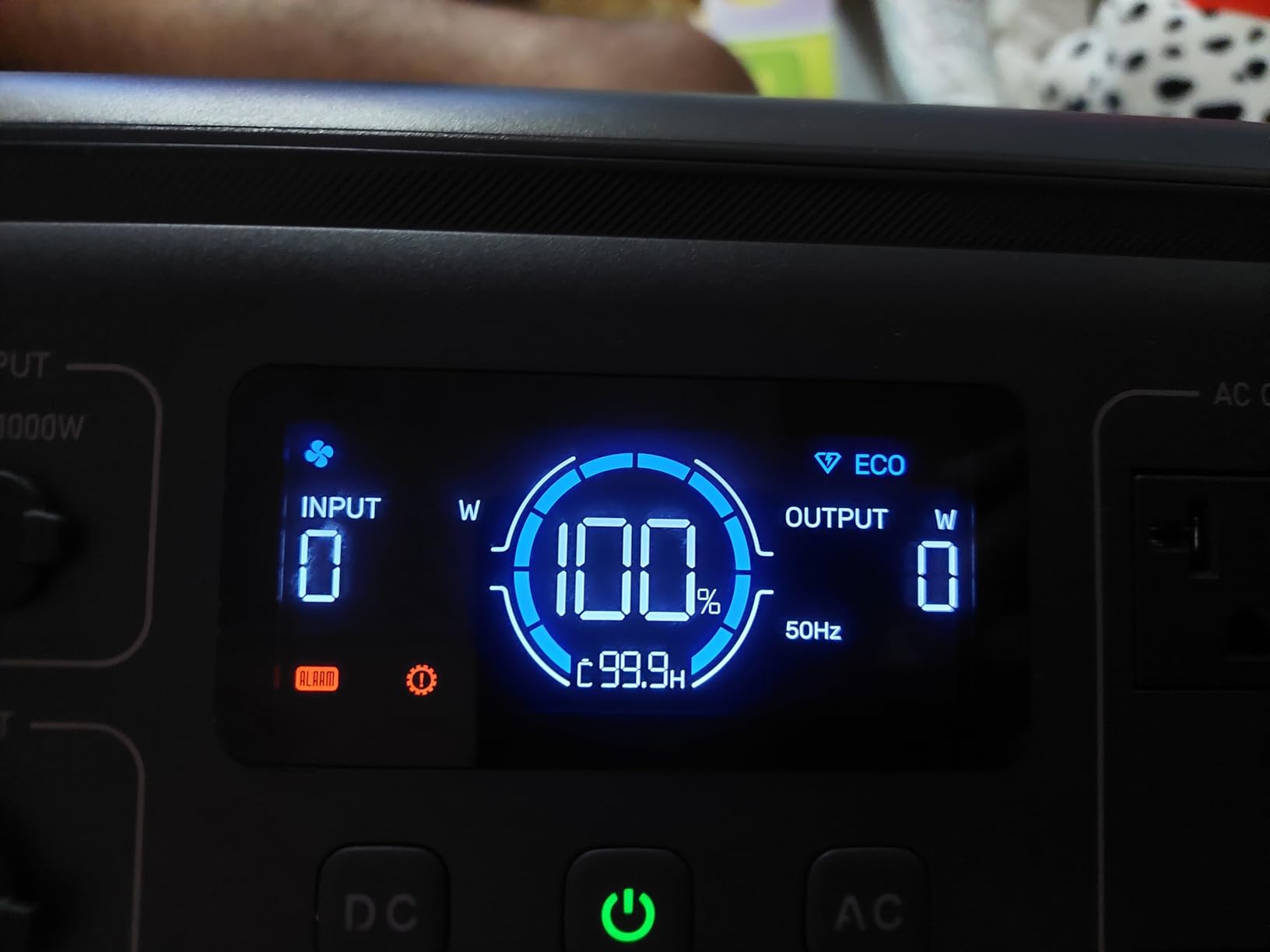
The LiFePO4 pack is rated for more than 4,000 life cycles to 80% capacity, and there are 11 ports: AC, USB-A, USB-C, a car outlet and DC barrel. The app supports both Wi-Fi and Bluetooth with over-the-air updates, which matters more than it sounds because firmware revisions are how the Power Lifting profile improves.
At 84% five-star, satisfaction centres on the combination of compact size and real output. Detailed users specifically single out power lifting for heating appliances as the feature that justified the purchase.
Who this is right for
Campers who want 1,000Wh and 1,800W in the smallest box they can find, particularly anyone fitting equipment into a tight van build where every litre counts. It is also a good fit for a home office circuit, given the 10ms UPS and silent mode.
Buyers who are replacing an older, larger unit of the same class get the most out of it, because the whole point is that you regain a chunk of cargo volume and about ten pounds of lifting weight.
Where it falls short
Car charging through the 12V outlet is slow unless you buy the optional BLUETTI Charger 1, and that adapter is an extra purchase. The exposed DC barrel ports are also easy to short with a bridging contact, so keep the rubber caps on if you are not using them.
The 12V outlet runs warm when overloaded beyond about 12W, and some users report the DC output dropping out under that load. At 25 lb it is still a deliberate lift rather than a casual one, so if you want a genuine one-hand carry you are in the 500Wh class.
7. Jackery Explorer 300
Jackery Explorer 300 Portable Power Station,292Wh
292Wh
300W rated and 600W surge
7.1 lb
100W USB-C PD
Pros
- Only 7.1 lb with an integrated handle
- 6000 plus rated cycles for LiFePO4 longevity
- Two AC plus 100W USB-C PD and 120W car port
- 80% solar charge in about 2.8 hours with a 100W panel
Cons
- 292Wh limits runtime to phones cameras and laptops
- 300W continuous output cannot handle high-draw appliances
The most widely owned unit in this guide, with more than 11,000 reviews and 81% of ratings at five stars. At 292Wh and 7.1 lb with an integrated handle, it is light enough to carry to the far end of a site rather than carry twice.
Owners use it as a dependable overnight bank for a CPAP machine, a phone and a camera battery, and the port mix is better than the weight suggests: two 110V pure sine wave AC outlets, a 100W USB-C PD port, two USB-A ports and a 120W car socket.
Solar replenishment is unusually quick for the class, reaching 80% in roughly 2.8 hours with a 100W Jackery panel, or about 7.5 hours with a 40W panel. Note that no panel is included, and a two year manufacturer warranty is shorter than most of the units here.
Who this is right for
Backpackers and tent campers who need one honest job done well: keeping a CPAP running all night, or charging four phones before a multi-day trail. It is also the sensible pick for anyone who wants a second, grab-and-go unit in the car alongside a bigger one.
If your load list is a fridge, a kettle and a laptop, buy a 500Wh or 1,000Wh unit instead. This one simply does not have the reservoir for it.
Where it falls short
292Wh and 300W continuous is the hard limit. Discounted by our derating rule, you have roughly 230Wh of usable energy, and a 300W ceiling that will trip the overload protection on anything with a compressor or a heating element.
It is a lithium-ion pack rather than LiFePO4, so the 4,000-cycle rating behaves differently in hot camp storage, and the two-year warranty is the shortest here. Treat it as a weekend consumable rather than a ten-year purchase.
8. BLUETTI Elite 30 V2
BLUETTI Elite 30 V2 Portable Power Station 288Wh 600W LFP Solar Generator
288Wh
600W continuous and 1500W lifting
9.4 lb
0-80% in 45 min
Pros
- 288Wh in only 9.4 lb
- 600W continuous is double comparable 300W units
- 1500W Power Lifting for kettles and toasters
- Low 4.5W standby draw extends usable capacity
- 45 minute 0-80% wall charge with 10 ms UPS
Cons
- 288Wh capacity limits sustained runtime on larger loads
- 6% three-star share is the highest here
- Some functions and settings require the BLUETTI app
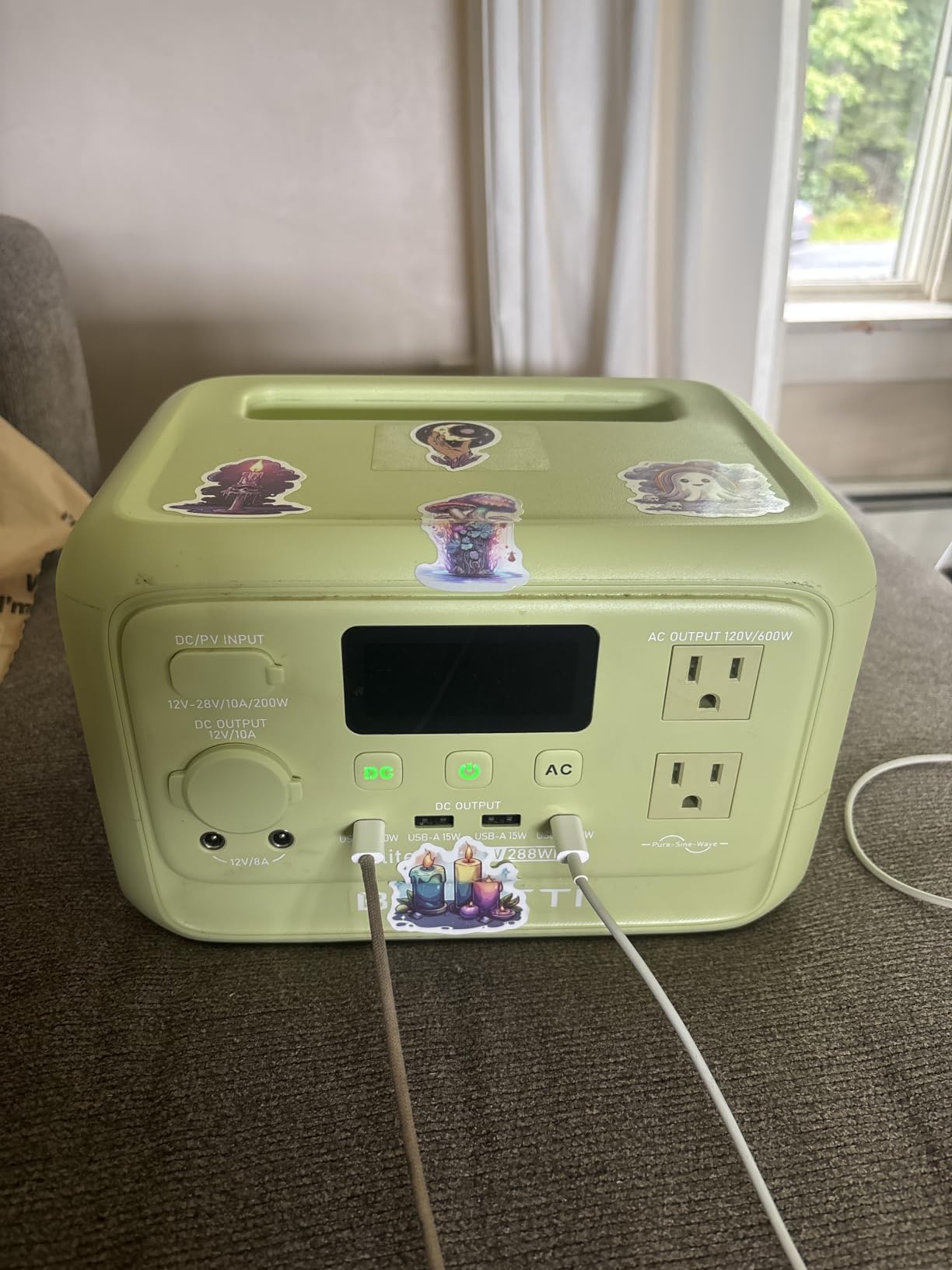
This is the odd one out in a good way. The capacity is small at 288Wh, but the inverter is rated at 600W continuous with a 1,500W Power Lifting mode, which is double what any other 300W-class unit here offers. In 9.4 lb that is an unusual amount of output per pound.
UltraCell technology and smarter cooling cut the standby draw to 4.5W, with 5W on DC and 8W on AC, roughly 50% lower consumption than typical. On a small pack those numbers matter, because idle draw is a meaningful slice of 288Wh.
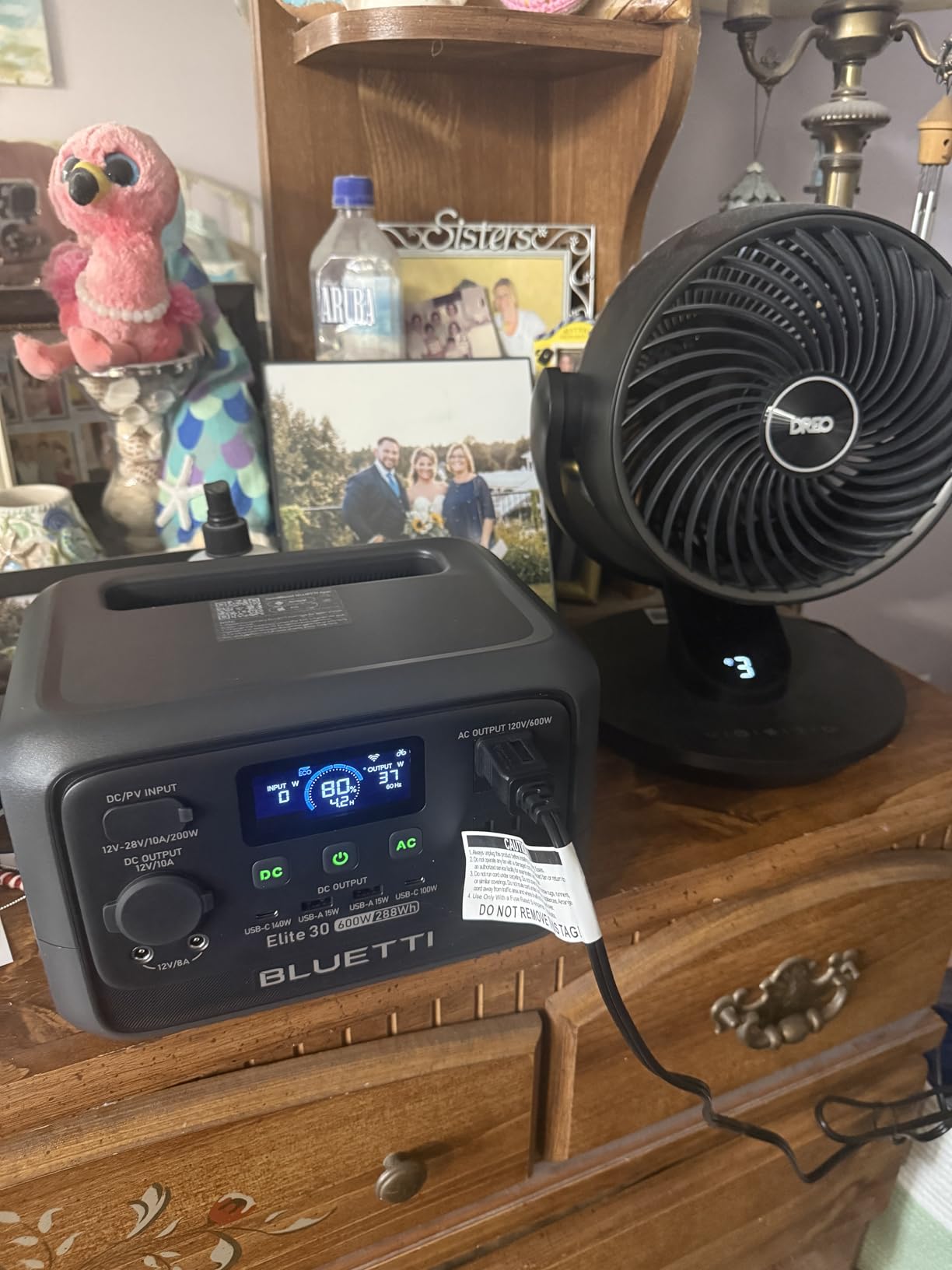
Charging is 0-80% in 45 minutes and 0-100% in 70 minutes on the 380W or 200W adjustable wall input, with eight charging modes including solar and car. It pairs with the BLUETTI PV60L panel, has 140W Power Delivery fast charging, and the UPS switches over in 10ms.
With 76% five-star ratings and 6% at three stars, this unit has the least settled early-use history in the group. It is also the newest design here, so long-term durability evidence is thinner than for the Jackery and BLUETTI 1,000Wh boxes.
Who this is right for
Car campers who want to run a kettle or a toaster for breakfast without carrying a 25lb battery to do it. The 1,500W lifting mode covers exactly the appliances that trip a 300W unit, which is the whole point of buying this over a cheaper 300W box.
It is also a good second unit for a van, stationed at the kitchen area while a larger pack lives by the tailgate. At 9.4 lb it moves easily between the two.
Where it falls short
288Wh is still 288Wh, and after derating you have roughly 220Wh of usable energy. A kettle at 1,200W under Power Lifting will empty it in minutes, so treat high-draw appliances as an occasional event rather than the evening routine.
The 6% three-star share is the highest here, which points to a smaller but noticeable group of mixed early experiences, and several functions and settings are only reachable through the BLUETTI app. If you want the same 600W of output with room to spare, the 512Wh Jackery at the top of this list is the natural step up.
9. EcoFlow RIVER 2
EF ECOFLOW Portable Power Station RIVER 2, 256Wh 300W
256Wh
300W AC and 600W lifting
7.7 lb
1 hour full AC charge
Pros
- Full AC recharge in about one hour is the standout in this class
- 7.7 lb body with a built-in handle and flat top surface
- LFP battery with 3000 plus cycles and advanced BMS
- Works as a pass-through UPS while charging
Cons
- Only one USB-C port forces a choice between laptop and headphones
- 120V inverter draw cuts usable capacity noticeably
- Audible fan at maximum charging speed
- Some owners report the charge percentage drifting after extended use
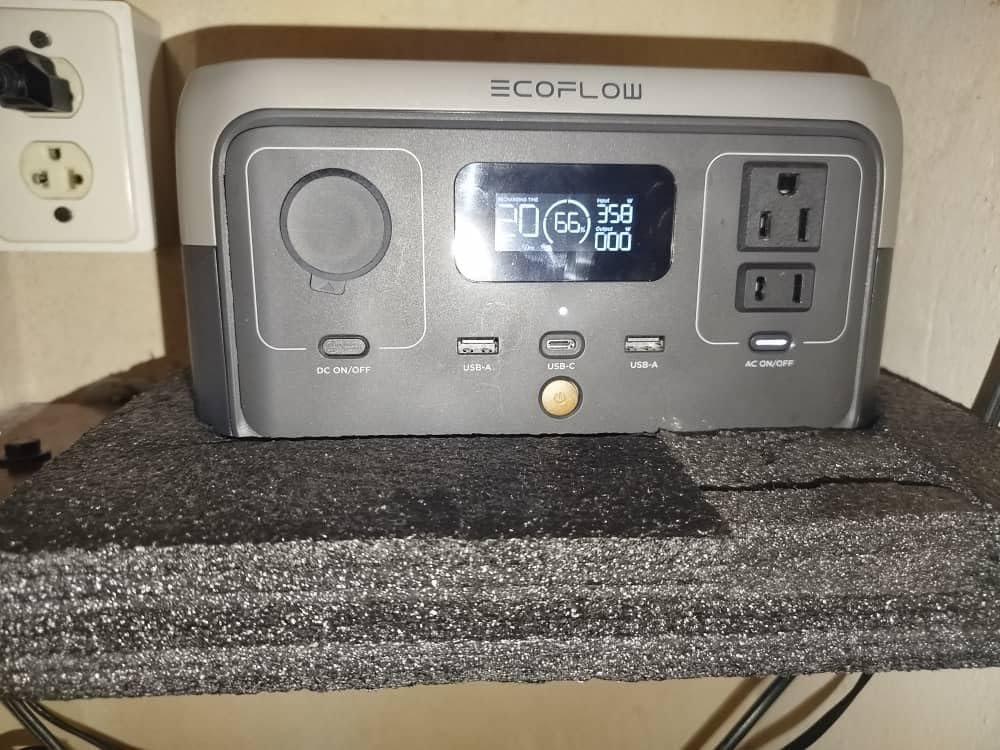
The fastest full recharge in the 300W class, with EcoFlow X-Stream taking the RIVER 2 from empty to full in about an hour. At 256Wh and 7.7 lb, with a built-in handle and a flat top surface you can set a phone or a kettle on, it is designed to be refilled whenever you stop for lunch.
Output is 300W on AC, lifting to 600W with X-Boost, spread across six ports including AC, USB-A and a 60W USB-C. The LFP battery is rated for 3,000+ cycles to 80% with an advanced battery management system, and solar input tops out at 110W for a recharge in as fast as 2.3 hours.
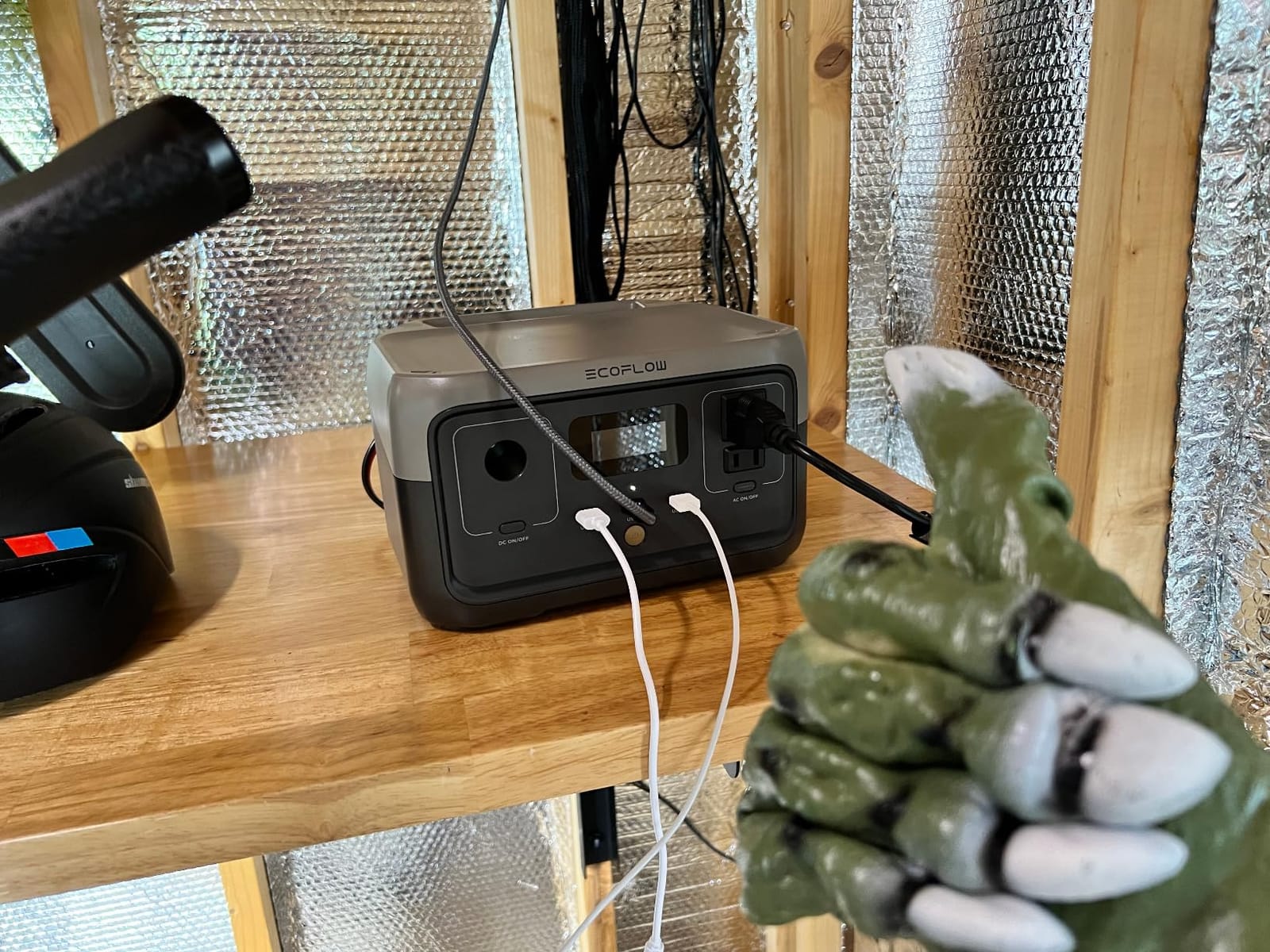
The reason this sits mid-table rather than higher is efficiency at the small end. Reviewers note that pulling 120V through the inverter reduces usable capacity noticeably compared with USB output, and on a 256Wh pack that gap is proportionally large. The single USB-C port is also a real constraint when laptop and headphones both need charging.
With 73% five-star ratings and 9% one-star, this is the joint lowest-rated unit in the group, and the complaints cluster on gauge accuracy: some owners report the charge percentage reading drifting after extended use, plus an audible fan at maximum charging speed. The five-year warranty is among the longest here.
Who this is right for
Tent campers and van-lifers who top up at every rest stop rather than once a day. A one-hour full recharge from a campsite hookup or a café socket means the unit is effectively never the limiting factor on a two-week trip.
The pass-through UPS is useful for keeping a router alive during a short outage, and the flat top is a genuinely practical detail when the box doubles as a side table.
Where it falls short
One USB-C port means choosing between a laptop and everything else, and inverter losses eat a larger share of a small pack than a large one. If your runtime math depends on getting the most from 256Wh, buy a bigger unit rather than accepting the overhead.
The fan becomes audible at maximum charging speed, and the drifting state-of-charge display is more than a cosmetic problem when you are deciding whether to stop driving to reach a hookup. The 288Wh BLUETTI above has a similar footprint with more output and a lower idle draw.
10. ALLWEI Portable Power Station 300W
ALLWEI Portable Power Station 300W, 256Wh Solar Generator LiFePO4 Battery
256Wh
300W continuous and 600W surge
6.4 lb
6 output ports
Pros
- LFP chemistry rated for 3000 plus cycles
- Only 6.4 lb in a slim form
- Display shows time remaining and live wattage
- 60W USB-C PD plus 18W USB-A
- Owners report 12-20 hours of CPAP runtime
Cons
- No 24V output despite accepting 24V solar input
- 300W ceiling means high-draw appliances trip overload protection
- A minority report charge-holding degradation and fan noise after many months
The lowest-cost way into LiFePO4 chemistry, and at 6.4 lb it is the smallest unit here. For campers who want the 3,000-cycle lifespan and the safety characteristics without paying for a brand name, this is the pick.
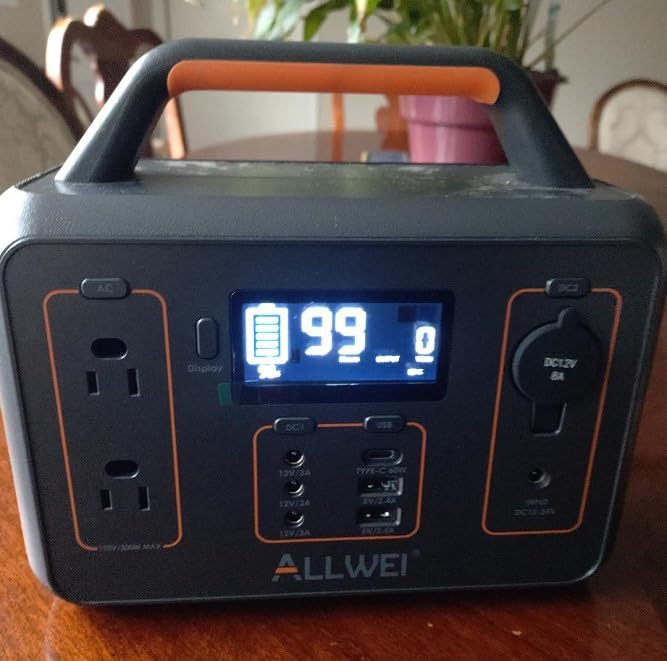
The port mix is better than the class usually manages: one AC outlet, two DC5521 barrels, a car port, an 18W USB-A and a 60W USB-C PD port, six in all. The display is the sleeper feature, showing remaining time and exact percentage alongside live wattage, which is more information than most units at twice the size provide.
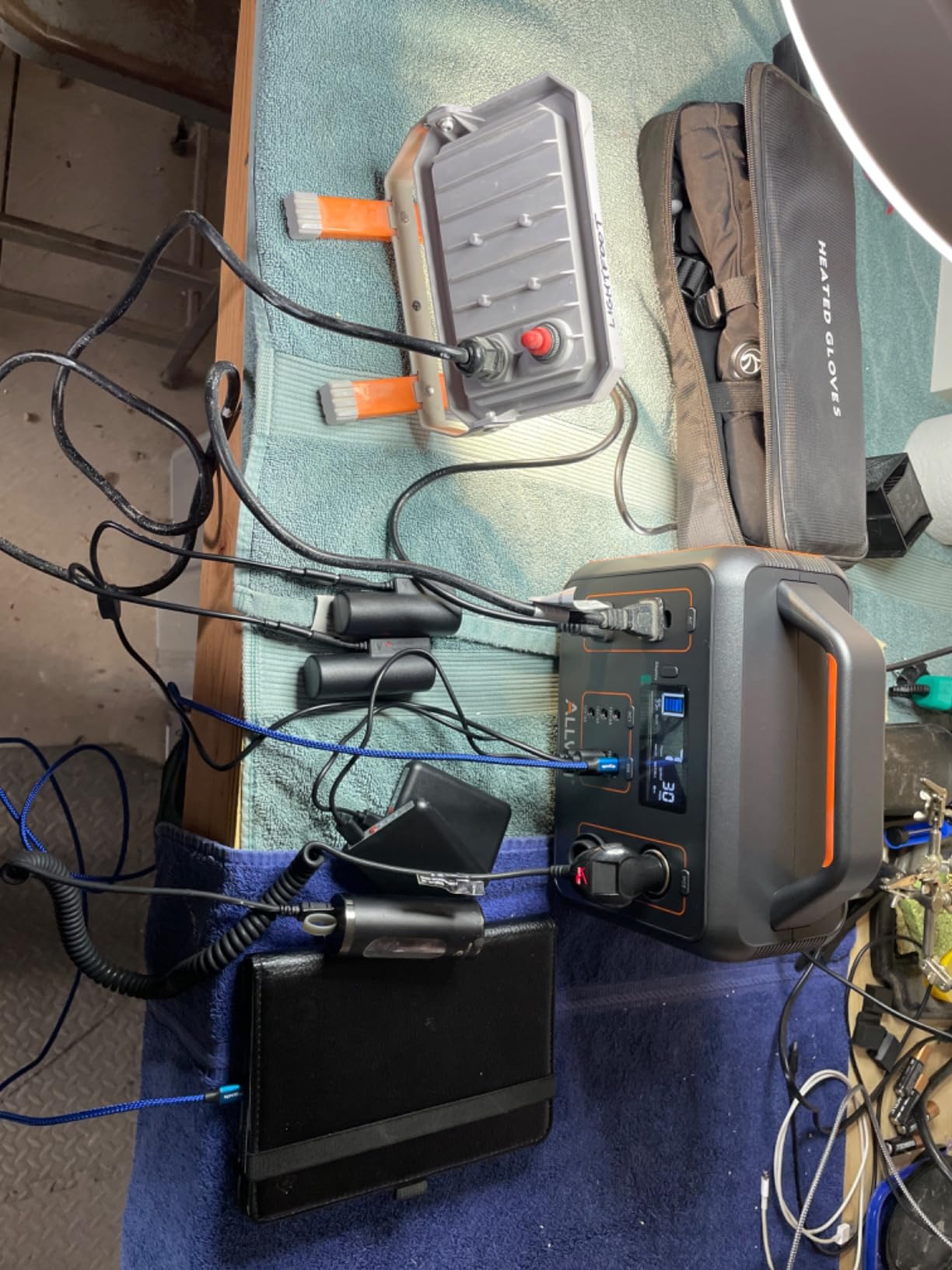
Recharging options are four: AC in 3.5 to 4 hours, 12V car in 3.5 to 4 hours, 100W solar in 4 to 5 hours, and both AC and solar together in 2 to 2.5 hours. There is a built-in MPPT controller, pass-through charging, a three-level LED light with SOS mode, and a two year manufacturer warranty.
Owners document CPAP runtimes of 12 to 20 hours depending on heated tube use, which is the most useful real-world number in the reviews. With 73% five-star ratings, the smaller group who report charge-holding degradation after eight to 12 months and fan noise once the unit has aged is the reason this is not ranked higher.
Who this is right for
First-time buyers on a budget, and anyone whose priority is chemistry and cycle life rather than raw output. It also suits CPAP users who want the smallest, lightest option that will not need replacing in two seasons.
Buyers who need a real AC appliance should stop here. A 300W continuous ceiling with 600W surge covers a fan, a light and a phone charger well, and a small kettle poorly.
Where it falls short
There is no 24V output despite the unit accepting 24V solar input, which is a strange asymmetry for anyone with an existing 24V panel. The 300W ceiling means high-draw appliances trip the overload protection rather than slowly draining the pack.
Solar input is capped at 100W, so this is a trickle-top-up station rather than a solar-first one. And the smaller group of owners reporting charge-holding degradation and fan noise after many months is the honest reason to consider a 500Wh unit if you can carry it.
11. DJI Power 1000 V2
DJI Power 1000 V2 Portable Power Station, 1024Wh LFP Battery
1024Wh
2000W and 2600W surge
33.1 lb
0-80% in 37 min
Pros
- Fastest AC recharge here at 0-80% in 37 minutes
- Dual 140W USB-C ports deliver 280W combined
- As low as 26 dB for sleeping in a van or tent
- SDC fast charging for DJI drone batteries
- Professional rugged build quality
Cons
- No built-in MPPT or 12V car charging
- Proprietary accessories sold separately raise total cost
- 15 kg weight and a long 19.2 inch footprint
- 10% one-star share with heat-related charging reports
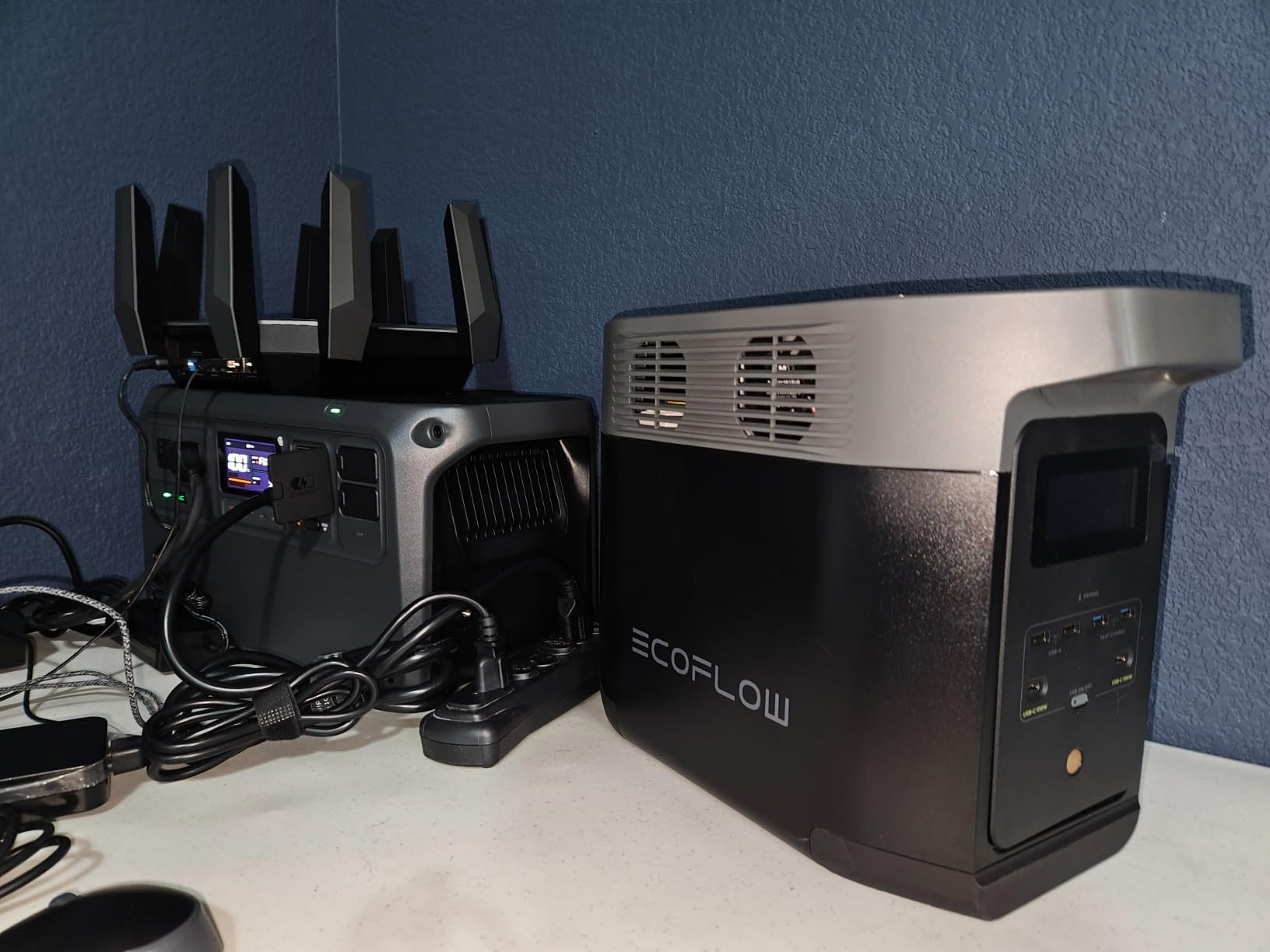
Nothing else in this list charges a laptop this quickly from a camp socket. The dual 140W USB-C ports deliver 280W combined, which is enough to charge a demanding workstation laptop rather than just a phone, and the AC recharge from empty to 80% takes 37 minutes, the fastest here.
Output is 2,000W rated, lifting to a 2,600W maximum, from a 1,024Wh LFP pack with an intelligent battery management system, a flame-retardant housing and a 10-year rated lifespan. At 26 dB it is the quietest unit in the roundup, which matters if it is under your head in a van.
The niche feature is SDC Super Fast Charging for DJI drone batteries, which gets selected DJI packs to takeoff-ready in 30 minutes. For anyone filming on a multi-day trip, that is genuinely hard to replicate elsewhere.
Against that, there is no built-in MPPT controller and no 12V car charging module, so both require separate compatible adapters. Several accessories are proprietary and sold separately, which raises the real cost of solar and vehicle charging well above the headline price.
Who this is right for
Remote workers and filmmakers who need to charge a laptop at full speed and, in the DJI case, drone batteries on the same box. The 26 dB operation and 10ms UPS also make it a good fit for a sleeper van where noise is the binding constraint.
If you already own DJI kit, the SDC port alone justifies more than the alternatives do. If you do not, you are paying ecosystem money for a feature you will not touch.
Where it falls short
At 15 kg and 19.2 inches long, this is both heavy and the longest footprint in the group, so it wants a van or a trailer rather than a carry. The missing built-in MPPT and car charging modules mean you are buying adapters before your first solar trip.
This is also the joint lowest-rated unit here at 4.3, with a 10% one-star share, the highest in the roundup. Owners report heat-related charging failures and overhead from AC-to-USB-C conversion. The Jackery Explorer 1000 v2 gives you similar capacity at 23.8 lb with a complete port set and no proprietary extras.
12. VTOMAN FlashSpeed 300
VTOMAN FlashSpeed 300 Portable Power Station, 300W 230Wh LiFePO4 Battery
230Wh
300W output
7 lb
100W USB-C PD in and out
Pros
- Compact 230Wh LiFePO4 pack rated for 3000 plus cycles
- Only 7 lb in a slim 10.24 x 4.72 x 7.87 inch body
- 7 outputs more than any other 300W unit here
- 100W USB-C PD works as both input and output
Cons
- Smallest capacity here at 230Wh so AC runtime is brief
- 6% two-star rating share points to mixed durability feedback
- Only 533 reviews the thinnest long-term evidence base in this list
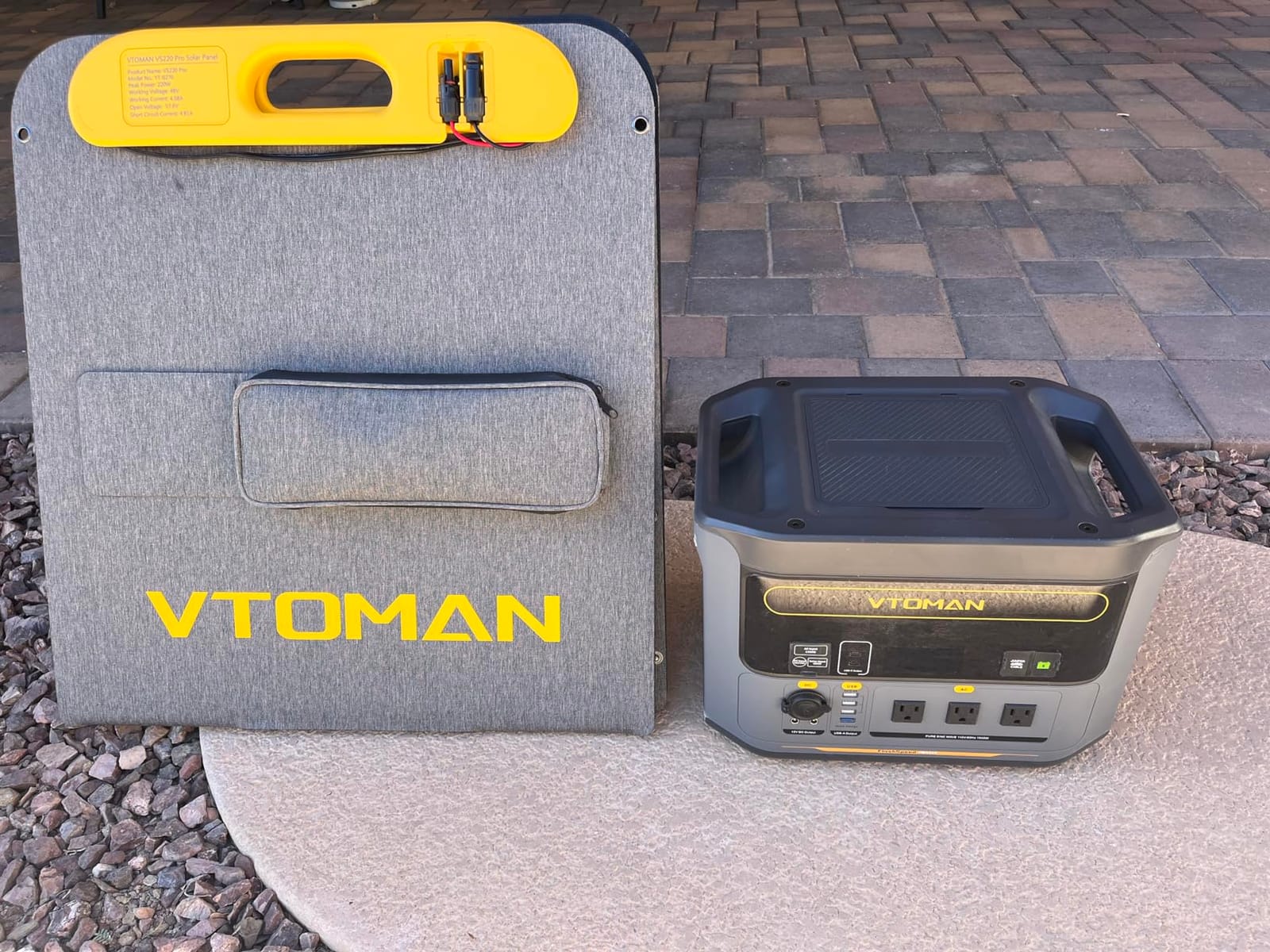
The smallest capacity in the guide at 230Wh, and one of the most affordable ways to get LiFePO4 chemistry with a 3,000-cycle rating. At 7 lb in a slim 10.24 by 4.72 by 7.87 inch body it is genuinely packable, closer to a lunchbox than to a generator.
Seven simultaneous outputs is more than any other 300W unit here: two AC, a 100W USB-C port, three USB-A and a DC port. The 100W Power Delivery port works as both input and output, so you can refill the pack to 80% in about 2 hours over USB-C, or charge a MacBook, a Dell XPS or a drone directly from it.
There are four recharge paths: wall in about 2.5 hours, solar, 12V and 24V car and RV outlets, and USB-C PD. A three-mode LED light with steady, strobe and SOS modes is built in, and cables for AC, car, USB-C and USB-A are included. A digital display shows state of charge with overload protection.
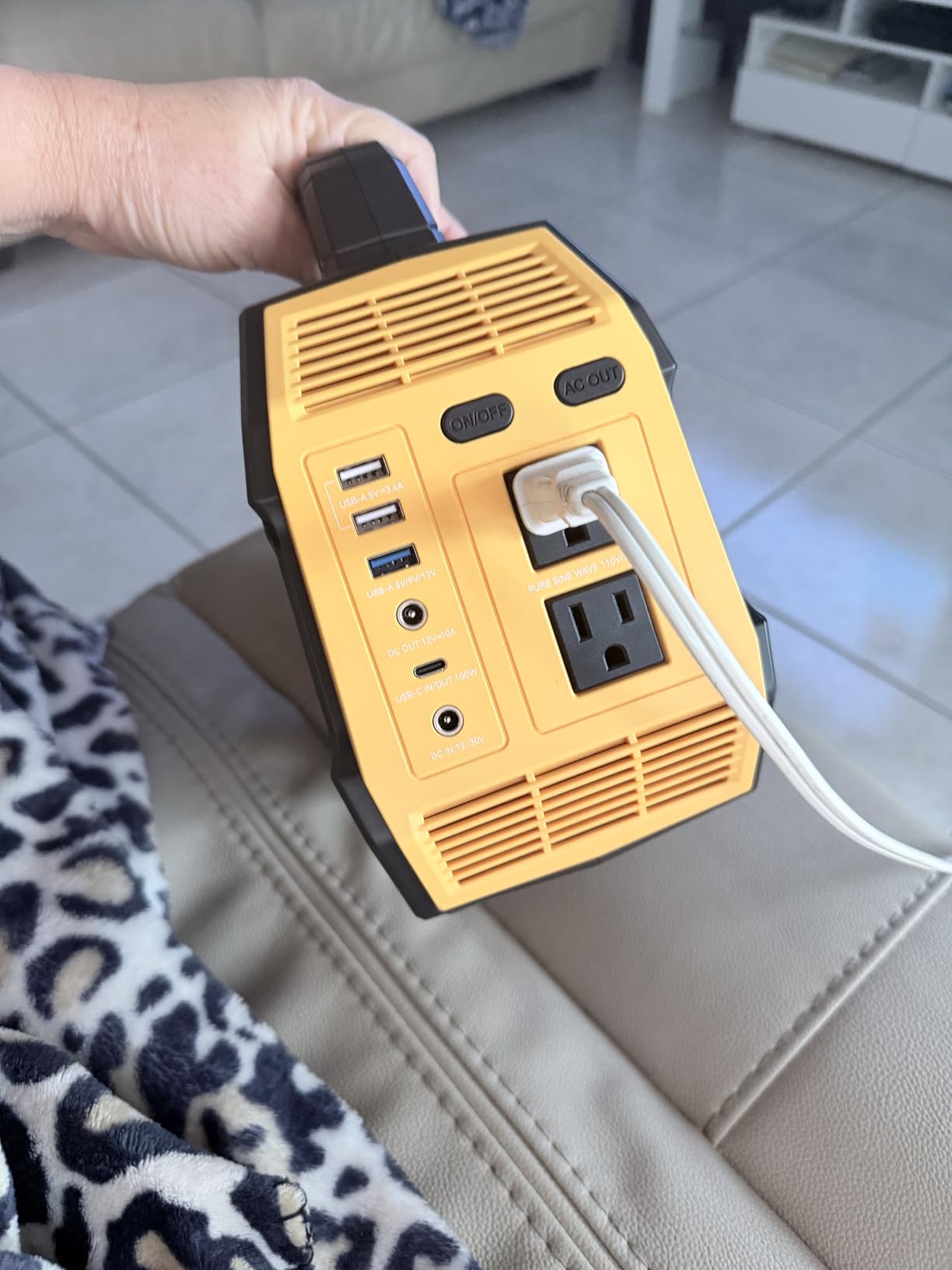
The included cable set is worth pausing on, because it is the reason this unit works straight out of the box. Wall, car, USB-C and USB-A leads are all in the carton, so unlike several larger units here you are not hunting for the right adapter on the first evening of a trip.
The trade-off is that 230Wh is a small reservoir, and derating leaves roughly 180Wh of usable energy for AC loads. Charge it from the car port on the drive and treat the inverter as an evening convenience rather than an all-day supply.
Who this is right for
Weekend campers who need a dependable phone, camera and light bank and want the lowest outlay. The 100W USB-C input and output combination is the standout for anyone whose devices are already USB-C native.
It also works as a supplementary unit in a van, stationed by the cooking area for kettle and other light kitchen duties while a larger pack lives elsewhere.
Where it falls short
230Wh is the smallest reservoir here, and after derating you have roughly 180Wh of usable energy, so AC runtime is brief by definition. It is a charging bank with an inverter attached, not a campsite power source.
With only 533 reviews it has the thinnest long-term evidence base in this list, and a 6% two-star share points to mixed durability feedback. If the reviews matter to you, the ALLWEI at 6.4 lb and 2,450 reviews costs a little more and gives you similar weight with a better-documented record.
How to Choose a Portable Power Station for Camping?
Start with capacity in watt-hours, then discount it. Watt-hours are stored energy; watts are what your appliances draw. Runtime in hours equals watt-hours divided by watts, after the 15-25% we lose to the inverter and the battery overhead. A 45W portable fridge on a 1,000Wh station gives you roughly 18 hours in theory and about 14 in practice.
Here is roughly what a realistic camp day costs. Phones, a camera and a headlamp together run under 20Wh. A laptop at 60W for two hours is 120Wh. A 45W 12V fridge, whichever one you pick from our camping refrigerator guide, cycling half the day is around 540Wh. A 1,200W coffee maker used four times for four minutes is about 320Wh. Add a 10W camp light overnight for a week and you are looking at roughly 900Wh for a comfortable week, which means a 1,000Wh station covers it only if solar tops you up mid-trip.
For sizing by trip length: a weekend of lights, phones and a laptop fits the 230-300Wh class. A weekend with a fridge, a fan and a kettle wants 500-600Wh. A week with a fridge running day and night plus cooking wants 1,000Wh. A fortnight off-grid, or anything involving a space heater or portable AC, wants 1,000Wh plus panels, or a second expansion battery.
Beyond capacity, output and surge are where cheap units fail. Continuous output is what the inverter sustains; surge is the short burst a motor or compressor needs at startup. A fridge compressor, a blender and an electric kettle all draw far more at startup than while running. If a coffee maker at 900W sits near your inverter ceiling, look for a lifting or boost mode, because GearJunkie’s own stress testing found units tripping breakers under exactly this kind of load. Our picks with lift modes are the BLUETTI Elite 30 V2, BLUETTI AC180, BLUETTI Elite 100 V2, EcoFlow RIVER 2 and EcoFlow Delta 3 Classic.
Battery chemistry decides how long the box lasts. Every LiFePO4 unit in this roundup is rated between 3,000 and 6,000 cycles, and for a camper who stores a battery in a hot vehicle between trips, that is the deciding factor rather than any spec on the box. The one exception is the Jackery Explorer 300, which uses lithium-ion and carries a 4,000-cycle rating that behaves differently in heat. LFP cells also tolerate being stored at full charge far better than NMC packs, which matters for the off-season months.
Weight is where buyers are most often fooled. Under 10 lb is a carry from the car. Around 14 lb is a one-hand lift to the picnic table. From 23 lb upward you are planning a two-hand lift, and anything past 30 lb should have a handle designed for it, never a shoulder strap on a metal loop. The BLUETTI AC180 at 37.4 lb is the case in point. If you are moving daily, weigh the station with everything else in the vehicle rather than looking at the number alone.
Ports decide convenience more than capacity does. A 30A RV outlet matters if you are running a camper, a 12V car port saves an inverter conversion for fridges, and USB-C Power Delivery at 100W or 140W is what lets you drop the adapter bag. If you are powering other gear alongside the campsite kit, our best power racks guide covers the distribution side. If you are working remotely from camp, the USB-C Power Delivery ports matter more than raw watt-hours; our soldering station guide covers the other end of the tool-charging problem. The DJI unit leads here with dual 140W USB-C; the EcoFlow Delta 3 Classic and BLUETTI Elite 100 V2 follow with 11 ports each.
Solar input is where marketing gets creative. The advertised fast-charge window assumes a panel placed at exactly the right angle, in full unobstructed sun, with a genuinely warm panel. Real overcast conditions and off-angle placement fall well short, and the 33% convention for panel ratings is exactly that kind of derating. With 400W of folding panels on a clear day you might realistically expect half the nameplate figure, which is why the 600W solar input on the Anker SOLIX C1000 matters more than its wall-charging speed. Nobody is transporting 2,000W of panel, so pair a 200-400W folding panel with the station and treat solar as a top-up.
Noise and app behaviour are the last filters. The DJI unit runs as low as 26 dB, the Jackery 500 v2 at 28 dB and the BLUETTI Elite 100 V2 at 30 dB, all fine for sleeping beside. Bluetooth dropping off-grid is the most common app complaint, and the EcoFlow Delta 3 Classic gets specific praise for connection stability. If your site has no signal, plan on the physical controls alone.
Common Mistakes to Avoid When Buying a Camping Power Station
Buying four kilowatt-hours for a weekend. This is the most expensive mistake in the category, and r/vandwellers users reach the same conclusion: a meaningful share of a large pack is unusable, and expansion batteries often make more sense than one oversized unit. Buy the capacity your trip needs, not the capacity you might need next year.
Ignoring startup watts. A 900W coffee maker, a blender and a fridge compressor all spike well above their running draw. Check surge, and check whether the lift or boost mode you are relying on is available without the app.
Expecting labelled watt-hours to equal usable watt-hours. This is the derating rule from the top of the article, repeated because it is the one people skip. Plan on 75-85% and every runtime decision follows.
Buying a station that cannot run your one high-draw appliance. A 300W unit with a fan and a kettle in the load list will disappoint every time. Either drop the appliance or move up a class.
Planning to cook on it. A power station is not a stove. If your trip depends on high-heat cooking, you need a portable grill alongside, and no amount of watt-hours changes that.
Using a Power Station Safely at Camp
Never charge inside a tent. This comes up constantly on camper forums and is the clearest safety rule in the category: a lithium battery charging in an enclosed fabric space is a fire risk, and r/CampEDC users are blunt about it. Charge in the vehicle, under an awning or in open air, on a non-flammable surface.
Keep it out of direct sun and out of a hot car boot for long stretches. LFP chemistry tolerates heat far better than NMC, which is one reason every modern pick here uses it, but a battery parked in a metal boot in July is still cooking. Store between trips at a partial charge in a dry, temperature-stable place, and top it up every couple of months if you are leaving it for a season.
Run it in the open. The exhaust-free claim is real, but a power station belongs in the vestibule or under the awning rather than zipped inside a sleeping bag, and the cooling fan needs airflow to do its job.
Frequently Asked Questions
Which portable power station is best for camping?
For most campers the Jackery Explorer 500 v2 is the best balance: 512Wh, 500W continuous AC output, 1,000W surge, 13.3 lb and a 0-80% AC recharge in 52 minutes. If you need to run a kettle, a space heater or a portable AC, move up to the Jackery Explorer 1000 v2 at 1,070Wh and 1,500W. If your power comes from solar panels, the Anker SOLIX C1000 accepts 600W of solar input.
Is Jackery or Anker better?
Jackery generally leads on simplicity and lighter weights: the Explorer 500 v2 is 13.3 lb and the Explorer 1000 v2 packs 1,500W into 23.8 lb. Anker leads on charging speed and solar input, with 80% in 43 minutes on the wall and up to 600W of solar on the SOLIX C1000. The Anker unit is heavier at 27.6 lb and its fastest charging mode has to be enabled in the app.
Is it worth getting a portable power station?
Yes if you want to run real appliances away from a hookup: a portable fridge, a laptop, a CPAP machine, lights. The payoff is silence, no fumes and no fuel, plus the option of using the same box for a home outage. If you only need phone charging over a weekend, a power bank is cheaper and far lighter, and you will carry it without resentment.
What are the disadvantages of a portable power station?
The main drawbacks are weight, usable capacity and speed. You lose 15-25% of the labelled watt-hours to inverter and battery overhead, so a 1,000Wh unit behaves like an 800Wh unit. Anything above 23 lb is a two-hand carry, recharging from solar in the field is far slower than the marketing suggests, and units above 30 lb should have a proper handle. High-draw appliances can also trip the inverter despite the surge rating.
How long will a 200W power station last?
Divide usable watt-hours by the watts your devices draw, and then discount again. A 256Wh station delivers roughly 190-215Wh on the AC outlets, so a 45W portable fridge runs about four to five hours, a 60W laptop gives you three hours of work, and a phone charges eight to ten times. On USB-C the losses are much smaller, so a 20W phone charge is closer to ten full cycles.
Can a portable power station run a portable fridge?
Yes, and that is the most common camping use for one. A 45-55W 12V fridge draws from the car port directly, avoiding inverter losses, and a 1,000Wh station will run one for around 14 to 18 hours of continuous draw after derating. Smaller 250-300Wh units manage three to five hours, which is enough for an evening but not a full day in summer heat.
Are portable power stations safe to use in a tent?
Running one in a tent is fine, but charging one inside a tent is not. Never plug a power station into a mains socket or a solar charger inside an enclosed fabric space, and keep it on a non-flammable surface with airflow around the cooling fan. All the units in this roundup use LiFePO4 or lithium-ion cells with battery management protection, and the BLUETTI AC180 also has a flame-retardant housing.
Conclusion: Which Portable Power Station for Camping in 2026
For a weekend of lights, phones, a camera and a CPAP, the Jackery Explorer 300 at 7.1 lb is the honest answer, and the VTOMAN FlashSpeed 300 is the cheapest way to get the same job done with LiFePO4 chemistry. If a fridge and a kettle are on the list, buy the Jackery Explorer 500 v2, which is our overall pick for good reasons: 512Wh, 500W of clean output, a 52-minute recharge and 6,000 rated cycles.
For a week or more of van life, the EcoFlow Delta 3 Classic handles the fridge, the laptops and the home network on one box, with a sub-10ms UPS and 45-minute wall charging. If solar is your plan, the Anker SOLIX C1000 takes 600W of panel input. Bring high-draw loads and you want the Jackery Explorer 1000 v2 or the BLUETTI AC180.
Whatever you pick, remember the derating rule, plan your runtime at 75-85% of the label, and check the surge figure against the worst appliance on your list before you buy. Those three minutes of arithmetic prevent most of the disappointment we heard about from owners who skipped it.