
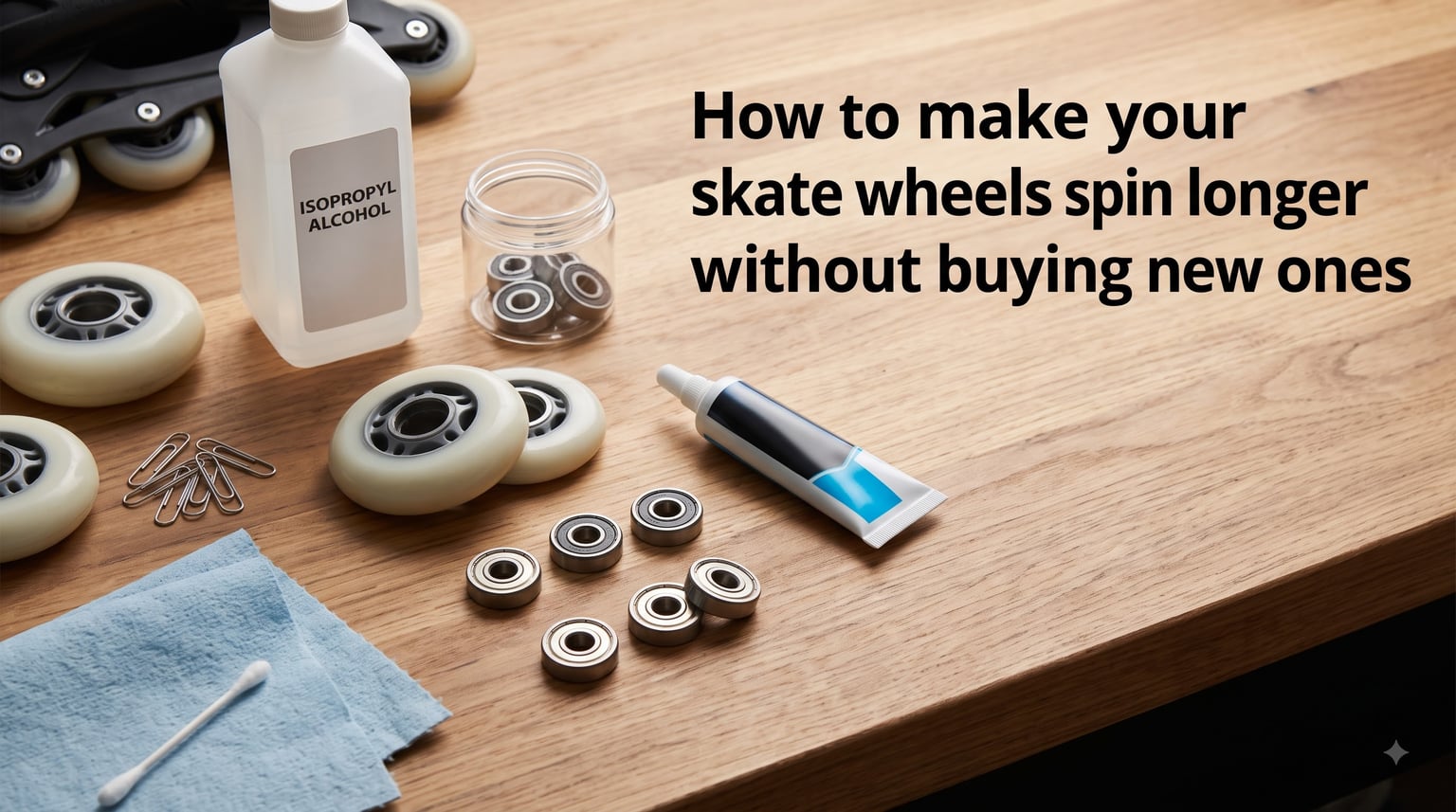
Want to know how to make your skate wheels spin longer without buying new ones? The answer is simple: clean and lubricate your bearings, adjust your axle nuts, and maintain proper wheel spacer alignment. Most slow wheels come from dirty or dry bearings, not worn-out hardware.
Our team has been skating and maintaining gear for over a decade, and we’ve seen the same pattern hundreds of times. Skaters throw away perfectly good wheels and bearings when a 30-minute cleaning session would bring them right back to life.
In this guide, you’ll learn the exact step-by-step process for cleaning bearings with household items, choosing the right lubricant, adjusting axle nuts, and troubleshooting uneven spin. Everything here works for skateboards, roller skates, and inline skates alike.
Table of Contents
Why Your Skate Wheels Stop Spinning
Slow skate wheels almost always come down to one thing: friction. And that friction comes from three main sources that build up over time.
The first culprit is dirt and debris. When you skate outdoors, dust, sand, and tiny particles work their way into your bearings. This grit creates friction between the steel balls and the bearing races, slowing everything down.
The second issue is dried-out lubricant. Bearings need a thin film of oil or grease to spin freely. Over time, that lubricant breaks down, evaporates, or gets washed away. When the metal balls run dry, friction skyrockets.
The third problem is overtightened axle nuts. Many skaters crank their nuts down too hard, which squeezes the bearing against the truck or frame. The wheel literally cannot spin freely because it’s being crushed into place.
Here’s a quick test: give each wheel a firm flick. A healthy wheel should spin for 10 to 15 seconds freely. If yours stop after 2 or 3 seconds, you have a problem worth fixing today.
Signs Your Bearings Need Cleaning (Not Replacing)
Most skaters ask us whether their bearings need cleaning or full replacement. Here are the warning signs that cleaning alone will fix the problem:
1. The wheels stop spinning after just a few seconds when you flick them by hand.
2. You hear a grinding, rattling, or crunching sound when you skate. That noise is dirt grinding between metal surfaces.
3. One wheel spins noticeably slower or shorter than the others on the same setup.
4. Your wheels feel sticky or resistant, like something is dragging when you push off.
5. You skated through water, mud, or heavy rain and never cleaned the bearings afterward.
If you notice any of these signs, cleaning will almost always restore performance. You should only consider replacing bearings if they are visibly rusted, the races are pitted, or cleaning makes zero difference after two attempts.
How to Make Your Skate Wheels Spin Longer Without Buying New Ones
This is the core process. Follow these six steps and your wheels will spin like new again. You’ll need a skate tool or wrench, a paper clip, isopropyl alcohol (90% or higher) or acetone, a small jar with a lid, paper towels, and bearing lubricant.
Step 1: Remove the Wheels and Bearings
Use your skate tool to loosen and remove the axle nuts. Pull each wheel off the truck or frame. To pop the bearings out, press the axle tip into the center hole of the bearing at an angle and pry gently. The bearing will lever out. Repeat for both bearings in each wheel.
Keep track of which bearings came from which wheel. This matters later if you are troubleshooting uneven spin.
Step 2: Remove the Bearing Shields
Most bearings have rubber or metal shields on both sides that protect the internals. You need to remove at least one shield to clean properly. Take a paper clip and straighten one end. Gently hook the edge of the shield and pry it outward.
Rubber shields pop off easily. Metal shields are usually held by a C-clip on the outer edge. Hook the C-clip with your paper clip, lift it out, and the shield will come free. Keep all shields and clips in a safe spot.
Step 3: Soak and Agitate the Bearings
Drop all your bearings into a small jar and fill it with isopropyl alcohol (90% or higher) or acetone. Screw the lid on tight and shake vigorously for 2 to 3 minutes. The solvent breaks down old grease, dirt, and grime inside the bearing.
Let them soak for another 5 to 10 minutes, then shake again. You’ll see the liquid turn dark brown or black. That is all the grit and old lubricant coming out. Pour out the dirty solvent and repeat with fresh alcohol until the liquid stays mostly clear after shaking.
A pro tip from the skating community: use an old yogurt cup or plastic container instead of a jar if you do not have one. The container just needs a tight-fitting lid.
Step 4: Dry the Bearings Completely
This step is critical. Any moisture left inside the bearing will cause rust within days. After the final soak, spin each bearing between your fingers to fling out excess liquid. Then set them on a clean paper towel.
You can speed things up with a hair dryer on a warm setting, or use compressed air if you have it. Make sure every bearing is bone dry before moving on. Spin each one and listen. A clean, dry bearing should spin silently and smoothly with no grinding.
Step 5: Apply Lubricant
Once the bearings are completely dry, add 2 to 3 drops of bearing lubricant to each one. Spin the bearing between your fingers to distribute the oil evenly inside. You should immediately feel the difference. The bearing will spin faster and smoother.
If you removed rubber shields, snap them back on after lubricating. For metal shields, reinsert the shield and secure the C-clip. The shield keeps your fresh lubricant inside and new dirt out.
Step 6: Reassemble and Adjust the Axle Nut
Press the bearings back into your wheels. You should feel them snap securely into place. Put the wheels back on your trucks or frames and thread the axle nuts on by hand first.
Snug the nut down with your skate tool until the wheel no longer wobbles side to side, then back off about a quarter turn. The wheel should spin freely with a tiny amount of lateral play. This is the sweet spot for maximum spin.
Do the flick test again. Properly cleaned and lubed bearings should spin for 15 to 30 seconds on a good flick.
Proper Lubrication: What to Use and What to Avoid
Choosing the right lubricant makes a bigger difference than most skaters realize. The wrong product can attract dirt, gum up your bearings, or wash out within days.
The best options are purpose-made bearing lubricants. Bones Speed Cream is the gold standard that experienced skaters have trusted for decades. One bottle lasts years and costs less than a single set of bearings. Other solid choices include silicone-based lubricants and lightweight machine oil like 3-in-One.
Apply only 2 to 3 drops per bearing. More is not better. Excess oil will fling out, attract dirt, and create a sticky mess inside your bearing.
Here is the big one: never use WD-40 on your skate bearings. WD-40 is a solvent and water displacer, not a long-term lubricant. It evaporates quickly, attracts dust, and leaves your bearings drier than before. Skaters on Reddit and skating forums consistently warn against it after learning this lesson the hard way.
Avoid heavy greases as well. White lithium grease works for some sealed applications but is too thick for skate bearings. It slows the balls down instead of helping them spin.
If you are in a pinch with no bearing oil, a light silicone spray works as a temporary fix. Just plan to properly lubricate with speed cream within a week.
Axle Nut Adjustment for Optimal Spin
Even perfectly clean bearings will spin poorly if your axle nuts are wrong. This is one of the most overlooked adjustments in all of skating.
Overtightening is the most common mistake. When you crank the nut down hard, it forces the inner race of the bearing tight against the truck or frame. The bearing balls get pinched and cannot roll freely. The wheel feels sluggish and resistant.
The correct method: tighten the nut until the wheel has no side-to-side wobble, then back it off slightly. You want the wheel to spin freely with barely perceptible lateral movement. On most skate nuts, this means backing off about a quarter turn from fully snug.
Use a skate tool with a built-in bearing for leverage. Tighten by hand feel, not with maximum force. The nut should be finger-tight plus a small turn with the tool.
Check your axle nuts after every few skate sessions. Vibration loosens them over time, and a loose nut causes wheel wobble that feels just as bad as overtightening.
Troubleshooting Uneven Wheel Spin
One of the most common questions we see on skating forums is why one wheel spins longer than the others. If you have noticed this on your setup, here is how to diagnose and fix it.
Start with the free spin test. Spin each wheel with the same amount of force and count the seconds. Note which wheels stop first. The ones that stop early have a specific problem.
The most likely cause is uneven dirt distribution. Your front wheels and heel wheels collect debris at different rates depending on your skating style. The wheels you put the most weight on tend to push dirt into the bearings faster.
Another cause is inconsistent lubrication. If one bearing got more oil than another, or if one shield was reinstalled incorrectly, that wheel will behave differently. Recheck the shield seating on any problem wheel.
Occasionally, a bearing has actual damage. A single cracked ball or a dented race will slow that bearing permanently. If cleaning and relubricating does not bring a problem wheel up to match the others after two tries, that bearing likely needs replacing. You can replace just that one bearing instead of buying a full new set.
Wheel spacers also play a role. These small metal tubes sit between the two bearings inside the wheel. If a spacer is bent or missing, the bearings sit at a slight angle and create drag. Check that each wheel has a straight, properly seated spacer.
How to Keep Skate Wheels Spinning: Maintenance Schedule
Cleaning your bearings once is great. Keeping them clean is what makes the difference long-term. Here is a simple schedule based on how and where you skate.
If you skate indoors at a rink or park, clean your bearings every 2 to 3 months. Indoor environments are relatively clean, so debris builds up slowly.
If you skate outdoors on streets, sidewalks, or trails, clean every 3 to 6 weeks. Outdoor grit and dust accelerate bearing wear dramatically.
If you skate through wet conditions, clean immediately. Water inside a bearing causes rust within 24 to 48 hours. Do not wait on this one.
Between deep cleans, wipe your wheels and bearing exteriors with a dry cloth after each session. This removes surface dust before it works its way inside. A 30-second wipe-down prevents weeks of buildup.
Store your skates in a dry place. Humidity is the enemy of steel bearings. A cool, dry closet is far better than a damp garage or basement.
Common Mistakes That Ruin Your Bearings
Avoid these errors and your bearings will last years instead of months:
1. Using WD-40 instead of bearing lubricant. It dries out bearings and attracts dirt faster than leaving them alone.
2. Skipping the drying step after cleaning. Leftover solvent or moisture causes rapid rust formation.
3. Overlubricating. Too much oil attracts dust and turns into a gritty paste inside the bearing.
4. Overtightening axle nuts. This crushes the bearing and prevents free spin no matter how clean it is.
5. Not removing shields before cleaning. Solvent cannot reach the internals if the shield blocks it.
6. Skating through puddles without cleaning afterward. Water kills bearings faster than anything else.
7. Mixing old and new lubricants without cleaning first. Different oils can react and gum up the bearing races.
Frequently Asked Questions
How do I make my skateboard wheels spin longer?
Clean your bearings with isopropyl alcohol, dry them completely, apply 2 to 3 drops of bearing lubricant like Bones Speed Cream, and adjust your axle nuts so the wheel spins freely with minimal lateral play. Most slow wheels come from dirty or dry bearings, not worn hardware.
How long should skateboard wheels spin freely?
A properly maintained skateboard wheel should spin for 10 to 15 seconds when flicked firmly by hand. Freshly cleaned and lubricated bearings can spin for 20 to 30 seconds. If your wheels stop after just 2 to 3 seconds, the bearings need cleaning.
How to make a bearing spin faster and longer?
Remove the bearing shields, soak the bearings in isopropyl alcohol or acetone to remove old grease and dirt, dry them completely, then apply 2 to 3 drops of speed cream or silicone-based lubricant. Avoid WD-40, which dries out bearings and attracts dust.
Can I clean skateboard bearings with household items?
Yes. Use isopropyl alcohol (90% or higher) or acetone as a solvent, a small jar or yogurt cup with a tight lid for soaking, and a straightened paper clip to remove the bearing shields. Add bearing lubricant afterward for best results.
Conclusion
Learning how to make your skate wheels spin longer without buying new ones comes down to three things: clean bearings, proper lubrication, and correct axle nut adjustment. With household items like isopropyl alcohol, a paper clip, and a jar, you can restore slow wheels in about 30 minutes.
The first time you clean your bearings, do the flick test before and after. The difference will convince you that this is the single best maintenance habit any skater can build. Clean every 3 to 6 weeks for outdoor skating, and your wheels will keep spinning smooth for years to come.