
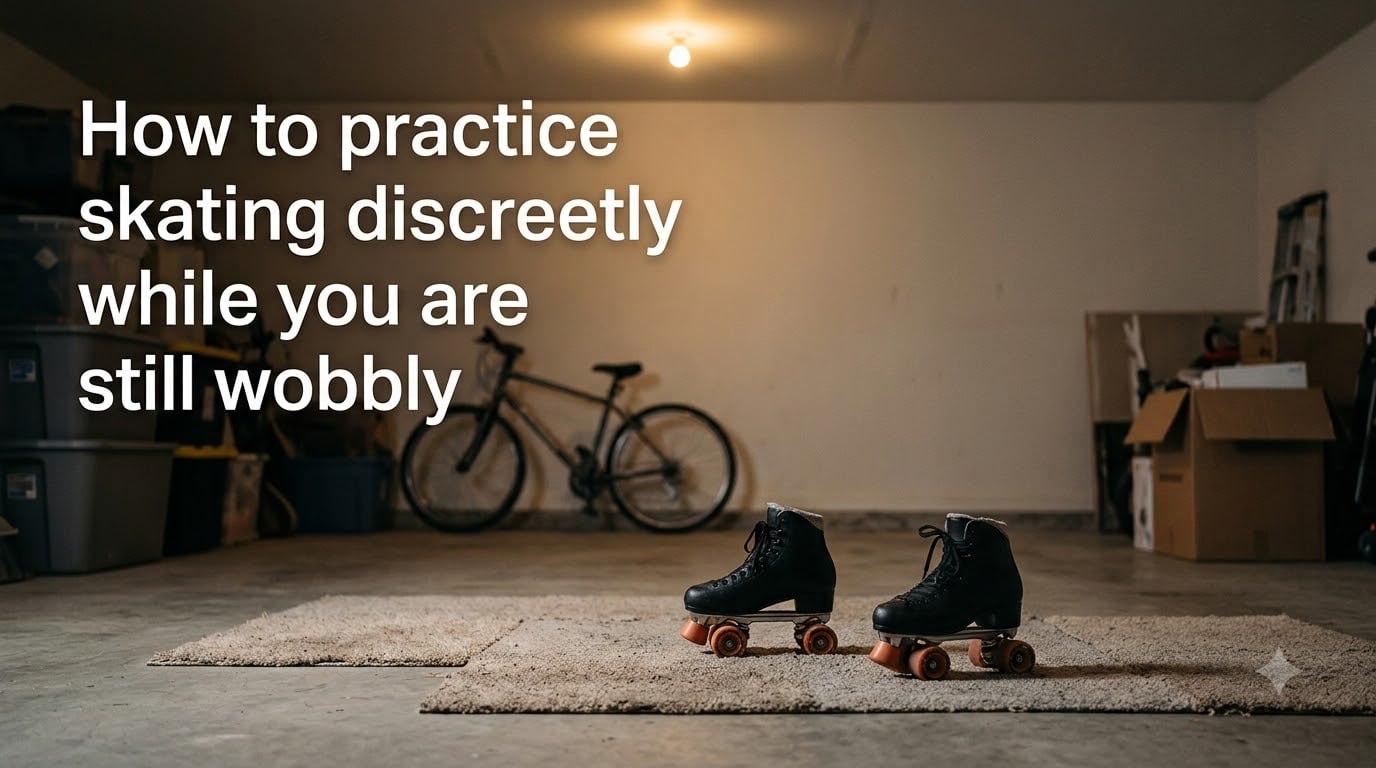
I remember the first time I clipped into my skates and tried to push off in public. My ankles wobbled like wet noodles, and I felt every single person on the path staring at me. That feeling is exactly why so many beginners ask me how to practice skating discreetly while they are still wobbly.
If you are a grown adult learning to skate, you probably do not want an audience while you figure out how to stay upright. The good news is that almost all of the foundational skills that fix wobbly skating can be practiced in private, on your own time, without anyone watching you fall. In this guide, I will walk you through the exact routine our team uses to build balance, posture, and confidence quietly at home.
Table of Contents
Why skating feels wobbly when you are just starting out?
Wobbly skating is not a personal failure. It is your body reacting to a brand new surface and a tiny wheelbase under each foot. The four wheels create a narrow contact patch, so any small shift in your hips or ankles gets amplified into a full-body sway.
Beginners also tend to lock their knees and stand tall, which raises their center of gravity. The higher your center of gravity, the smaller the correction you have before you tip over. Combine that with tense ankles and you get the classic arms-flailing, feet-stomping wobble that fills the beginner skating subreddit.
Once you understand that wobble is mostly a posture problem and not a talent problem, the fix becomes much more approachable. Almost every beginner I have coached improved within two weeks once they focused on stance and knee bend rather than on trying not to fall.
Build a solid skating stance and posture from day one
The single biggest factor in wobble is your stance. Stand with your feet roughly shoulder width apart, knees soft, and weight centered over the balls of your feet. Keep your chest up and your shoulders stacked over your hips.
A simple test I use with new skaters: stand in your skates on a flat floor, look straight ahead at a wall mark, and try to hold still for 30 seconds. If you start swaying, your weight is probably too far forward or back. Aim for a slight forward lean from the ankles, never from the waist.
Posture checklist you can memorize in under a minute:
Feet shoulder width apart, parallel or slightly turned out
Knees soft and tracking over your toes
Hips neutral, no tucking or sticking out
Chest proud, eyes forward, not down at your feet
Arms relaxed and ready at waist height
Practicing this stance off-skates in socks is one of the most underrated discreet skating drills. You can do it in your living room at midnight and nobody will know.
Master the knee bend to lower your center of gravity
The knee bend is the secret weapon of every confident skater. When you bend your knees, your center of gravity drops and your legs act like shock absorbers. The wobble gets absorbed instead of amplified.
Start with static knee bends off-skates. Stand with your back near a wall, feet forward, and slowly slide down a few inches. Hold for five seconds. Stand back up. Repeat ten times. This builds the muscle memory your body will rely on once the wheels are on.
Once that feels easy, do the same exercise in your skates on carpet or a rug, where the wheels will not roll. You get the feel of the boot without any actual movement. Most beginners can do this without making a sound, which makes it perfect for discreet practice sessions.
Real skater experience backs this up. One veteran inline skater on Reddit told a panicked beginner to focus on pushing rather than balancing on a stationary board. The push forces your knees to bend naturally and your body to commit to momentum, which kills the wobble.
Quiet balance drills to practice skating discreetly at home
Balance is a skill, not a gift. You can train it at home in total silence using drills that do not require any movement at all. These are the same drills our team recommends to anyone who wants to practice skating without attracting attention.
One-foot balance holds
Stand in your skates (or socks) near a countertop or wall for safety. Lift one foot a few inches off the ground. Hold for 10 seconds. Switch feet. Build up to 30 seconds per side. Once you can do this with your eyes closed, your ankles have the stability to handle basic gliding.
Toe-to-heel rocking
With both feet on the ground, shift your weight forward onto your toes, then back onto your heels. Feel how your ankles flex. This teaches your joints the small adjustments needed to stay centered on four wheels. Do it slowly, ten rocks per minute, for five minutes a day.
Heel-toe walking in skates
If you have a soft surface like carpet or a yoga mat, walk heel-to-toe in your skates across the room. Focus on keeping your knees bent the entire time. You are not gliding yet, just teaching your body what it feels like to commit to a line in skates.
Wall marching
Stand sideways next to a wall with one hand resting lightly on it. Lift one knee to hip height, set it down, then the other. March for one minute. This isolates the leg muscles you need for pushing without any rolling sound.
I personally cycle through all four drills on weekday evenings while watching TV. Nobody in my house knows I am training for a skating session. After about three weeks, my single-leg balance went from 4 seconds to over 25 seconds, and my outdoor skating wobble dropped dramatically.
Learn a basic stop so you stop feeling wobbly
Most beginners wobble because they have no plan for stopping. Your brain knows that a fall is possible, so it tenses every muscle, which actually makes the wobble worse. Learning even one reliable stop calms that fear response immediately.
The easiest first stop is the plow stop. Skate slowly forward, then gently push your heels outward while keeping your toes closer together. The wheels angle inward and slow you down. You will not slide, but you will decelerate in a controlled way.
Practice the motion in socks on carpet before adding wheels. Once it feels natural, take it to a quiet stretch of smooth sidewalk at low speed. A controlled stop is the difference between feeling wobbly and feeling ready.
Best discreet spots to practice skating when you are still wobbly
Location matters as much as technique. You want somewhere smooth, low-traffic, and forgiving if you fall. Here are the spots our community swears by for discreet practice.
Your garage or basement
Concrete floors, no neighbors watching, and room to make mistakes. Lay down old carpet squares or yoga mats to soften falls and dampen sound. A 10 by 10 foot area is plenty for wobble drills.
Empty parking lots at night
Most retail lots are empty after 9 pm. Smooth asphalt, painted lines for visual targets, and zero foot traffic. Bring a friend or family member as a spotter if you can, and stick to the flat edges first.
Quiet residential cul-de-sacs
A slow street with a curve at the end gives you a long, flat run without having to stop at intersections. Early mornings on weekends are perfect for low visibility.
Inline skating rinks during off-hours
Many rinks have adult or open skate sessions where beginners are welcome. Check the schedule for low-attendance hours. The smooth wooden floor is the most forgiving surface you will find.
One key tip from forum regulars: avoid grass and rough pavement at this stage. They will mask your progress and may even train bad habits like leaning.
Common beginner mistakes that keep your skating wobbly
Even with good drills, a few common errors can hold you back for months. Watch out for these.
Looking down at your feet. Your balance comes from your inner ear and your visual horizon. The moment you stare at the floor, your body loses its reference point and the wobble doubles.
Taking tiny, fast steps. Beginners often shuffle because they are scared. Tiny steps give your ankles no time to stabilize. Take longer, slower pushes instead.
Skating too stiff. Locked knees and rigid hips transfer every tiny floor bump into a big sway. Stay loose. Think of your legs as springs, not pillars.
Skipping the stop. Without a stop, you cannot relax, and without relaxation, you cannot balance. Drill your stop until it is automatic.
Skating without protective gear at first. Wrist guards, knee pads, and a helmet let you commit to falls without injury. Paradoxically, gear makes you skate better because you stop being afraid.
How to track your progress without anyone watching?
Progress feels invisible when you are learning alone. Set three small benchmarks you can test weekly without filming or posting anything.
One-foot balance hold time in skates on carpet
Number of consecutive heel-toe steps in skates without a wobble pause
Comfortable distance of slow forward gliding on a flat surface
Write the numbers down in a notebook or a private note on your phone. When you hit a new personal best, you will feel the same rush as skating in front of a crowd, just privately. That is exactly the discreet motivation loop that keeps you rolling.
Frequently Asked Questions
Can you practice roller skating at home?
Yes, you can practice roller skating at home, especially the foundational skills like stance, knee bends, one-foot balance holds, and heel-toe walking. Use carpet or a rug so the wheels do not roll, and focus on building ankle strength and posture before you ever push off.
What to practice as a beginner roller skater?
Start with stance and posture, then add knee bends, one-foot balance holds, heel-toe rocking, and slow marching in your skates on a soft surface. Once those feel automatic, move to gentle gliding and a basic plow stop on a smooth, low-traffic surface.
How to stop feeling wobbly on skates?
The fastest way to stop feeling wobbly on skates is to lower your center of gravity by bending your knees and committing to longer, slower pushes instead of tiny shuffles. Combine that with one-foot balance drills off-skates and you should feel noticeably steadier within two to three weeks.
Can you teach yourself to roller skate?
Yes, many adult skaters are fully self-taught using online tutorials, beginner drills at home, and short practice sessions in quiet locations. The key is consistency over intensity, five focused minutes a day beats one long session once a week.
Final thoughts on skating practice when you are still wobbly
Learning how to practice skating discreetly while you are still wobbly is really about giving yourself permission to be a beginner in private. Use the home drills, lean on a quiet location for your first real glides, and trust the slow, steady progress that nobody else has to see.
If you commit to even ten minutes a day for the next month, the wobble will fade. By the time you skate in public, you will not feel like a beginner at all, and that quiet confidence is the best reward of all.