
I remember the first time I tried rolling backward at our local rink. My feet froze, my ankles wobbled, and I gripped the wall like it owed me money. After teaching backward skating to dozens of beginners on our team, I can tell you that the skill breaks down into three core steps: get your stance right, learn the C-cut, then add bubbles for momentum.
If you have ever wondered how to skate backwards on quad skates without falling or freezing up, this guide walks you through everything we use in our beginner sessions. By the end, you will know the body position, the three core movements, common mistakes, and a practice plan you can start today.
Table of Contents
How to Skate Backwards on Quad Skates: The Foundational Stance
Every smooth backward glide starts with the stance. Get this wrong and every other technique feels harder than it needs to be.
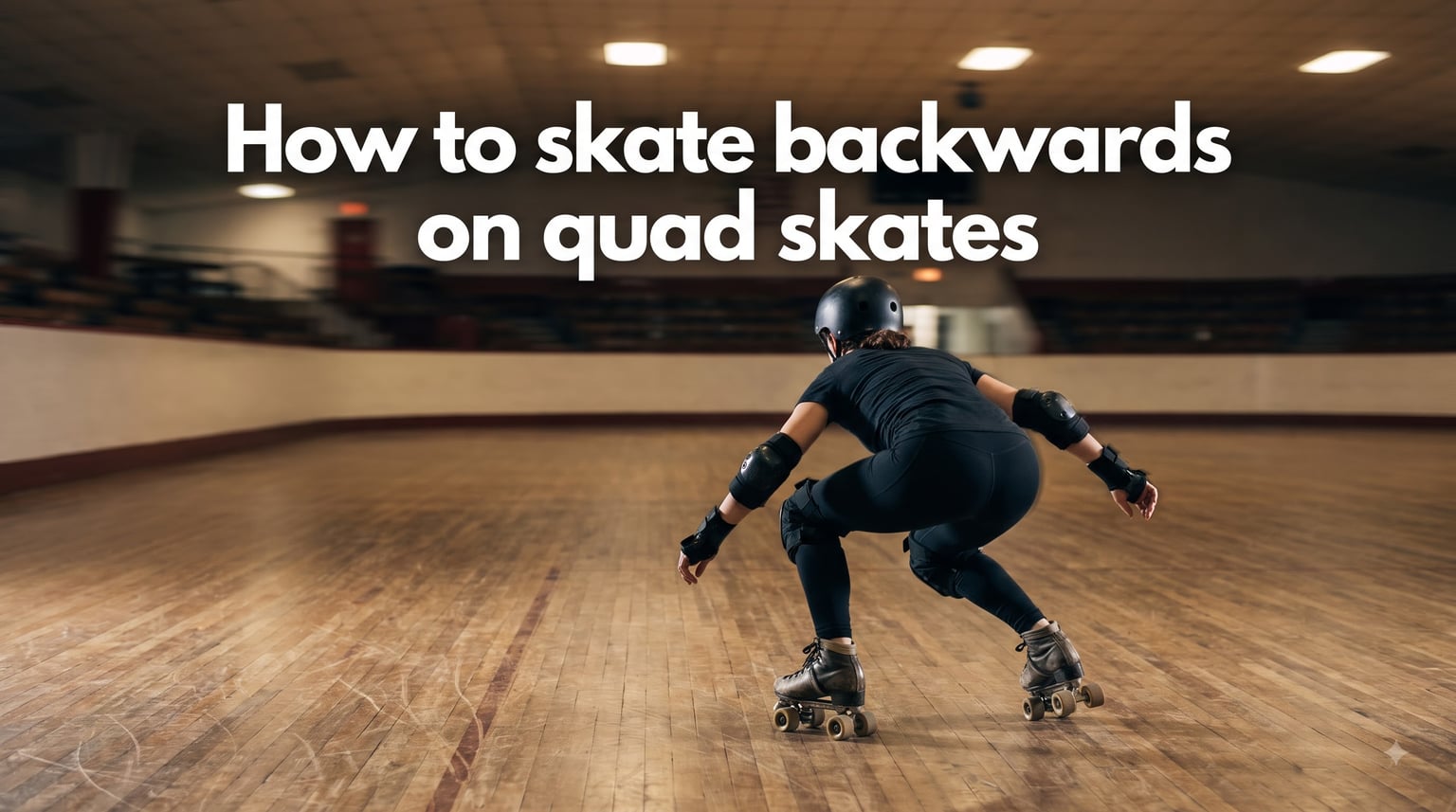
Bend your knees so they sit directly over your toes. Your chest should lean slightly forward, with your shoulders stacked over your hips. Keep your weight on the front half of your feet and keep your heels light. This is the secret most beginners miss: light heels let you steer.
Now look over your shoulder in the direction you are traveling. Do not look down at your feet. Turning your head breaks the fear cycle and gives your body the visual cues it needs to balance.
Before we get into drills, here is a quick stance checklist our team uses with new skaters:
Knees bent and tracking over toes
Chest forward, hips under shoulders
Weight on the balls of the feet
Arms relaxed and slightly out to the sides
Eyes looking over the shoulder, not at the floor
Your First Backward Movement: The C-Cut Technique
The C-cut is the bread and butter of backward skating. It is the first move we teach, and once it clicks, you can glide backward forever.
Start with your feet in a pizza shape, toes pointing slightly inward at roughly a 45-degree angle. Pick one foot and push it straight back behind you, keeping the pressure on the inside edge of the wheel. As you push, your foot traces the shape of the letter C in the floor.
Bring that foot back to the center pizza position, then repeat with the other foot. Alternate sides and you will start rolling backward in a smooth, controlled glide.
Here is the step-by-step we walk beginners through on day one:
Stand in pizza stance with knees bent
Shift weight to your left foot
Push your right foot backward and outward, carving a C shape
Return the right foot to the pizza position
Shift weight to your right foot and repeat with the left
The C-cut feels awkward the first few tries. Stick with it. After about 15 minutes of practice, your legs start to memorize the motion and the strokes come naturally.
Building Momentum With the Bubble Method
Once your C-cuts feel comfortable, it is time to add real momentum. That is where bubbles come in. A bubble is exactly what it sounds like: you open your feet outward, then pull them back together, creating a round shape on the floor.
The trick most beginners miss is the up-and-down rhythm. As you open the bubble, bend your knees and squat down slightly. As you close the bubble, stand back up tall. This vertical motion is where the power comes from, not just your legs pushing sideways.
Open your feet wide to slow down or stop. Pull them in tight to accelerate. Bigger bubbles with more knee bend equal more speed. Small, controlled bubbles give you better precision when you are still learning.
We recommend starting with small bubbles at low speed. Build up the rhythm before you push for distance. Your body will thank you for taking it slow.
Steering While Skating Backwards on Quad Skates
Now that you can glide and accelerate, you need to actually steer. This is where most new skaters panic because the rules are reversed compared to forward skating.
Your heels control one direction and your toes control the other. Pushing your heels outward turns you left. Pointing your toes inward turns you right. It feels backwards at first, which is exactly why practice matters.
To steer smoothly, look in the direction you want to go. Your body follows your eyes. Lead the turn with your upper body, then let your hips and skates follow.
A few quick steering tips from our practice sessions:
Look over the correct shoulder before turning
Use gentle pressure on the inside edges of your wheels
Keep knees bent so you can shift weight quickly
Practice gentle S-curves before attempting sharp turns
Backward Lemons: The Next Skill to Master
Backward lemons are a slightly more advanced drill, but they are the secret to looking polished on the rink. A lemon is a heel-out, toe-in movement that draws a lemon shape on the floor. Going backward, this pattern gives you excellent steering control.
Start in your pizza stance. Push one heel out to the side, then bring the toe back in toward center. Repeat on the other side. The motion looks like you are drawing two lemon shapes meeting in the middle.
Practicing backward lemons helps in three ways. It improves your steering precision. It strengthens the smaller stabilizer muscles in your ankles. And it builds the rhythm you need for more advanced moves like crossovers and transitions.
We tell our students to spend at least 10 minutes per session on lemons, especially on their weaker side. Balanced practice on both sides pays off fast.
Common Mistakes and How to Fix Them
Every beginner makes the same handful of mistakes. Knowing what they are ahead of time saves you weeks of frustration.
The first mistake is skates hitting each other. This happens when your stance is too narrow. Give yourself more space between your feet and the problem usually disappears.
The second mistake is looking at your feet. Your brain wants to know where your wheels are, but looking down throws off your balance. Force yourself to look over your shoulder. The floor will still be there, I promise.
The third mistake is leaning too far back. Some beginners think backward skating means leaning backward. It does not. Keep your chest forward, your weight on the balls of your feet, and your shoulders stacked.
Finally, do not tense your upper body. Tight arms and shoulders actually make you less stable. Relax your arms at your sides and let your core do the work.
Practice Drills for Confident Backward Skating
Knowing the moves is one thing. Building them into muscle memory takes a plan. Here is the practice progression we use with new skaters in our community.
Start with wall-assisted practice. Hold onto the rink wall or a railing and practice your stance, C-cuts, and bubbles while supported. This lets you focus on the movement without worrying about falling.
Next, set up visual markers. Place four cones or water bottles in a square about 10 feet apart. Practice skating backward around the square, using the markers as goals for your turns.
Once you can handle the square, try backward bubbles down a straight path marked with two cones. Focus on rhythm and speed control.
Finally, practice in a mildly crowded space. Backward skating in traffic teaches you to read the environment and adjust. Start with quiet hours at your local rink before working up to busy sessions.
Overcoming the Fear of Skating Backwards
The biggest barrier to backward skating is not physical. It is mental. Your brain does not like moving in a direction it cannot see, and that is completely normal.
Start small. Even five minutes of practice a day adds up faster than you would expect. Use mental visualization before you put your skates on, picturing yourself gliding backward with perfect form.
Wear your protective gear every single time. A helmet, wrist guards, and knee pads will not only keep you safe, they will quiet the fear response that holds you back.
And practice with a buddy when you can. Having someone spot you or skate alongside you makes the learning curve much shorter. Our team sessions exist for exactly this reason.
Frequently Asked Questions
What is the trick to skating backwards?
The trick to skating backwards on quad skates is keeping your knees bent, your weight on the front half of your feet, and your eyes looking over your shoulder. Start with small C-cuts to build balance, then add bubbles to control your speed.
How do you steer while skating backwards?
You steer while skating backwards by using your heels and toes in the opposite direction of forward skating. Push your heels outward to turn left and point your toes inward to turn right. Always look in the direction you want to go before you turn.
Is skating backwards harder than forwards?
Yes, skating backwards is generally harder than forwards because you cannot see where you are going and your brain has to process movement differently. Most skaters need several weeks of consistent practice before backward skating feels natural.
How do you do backward lemons on quad skates?
To do backward lemons on quad skates, start in a pizza stance and push one heel out to the side, then bring the toe back toward center. Repeat on the other foot. The pattern draws two lemon shapes meeting in the middle and helps you build steering control.
How long does it take to learn to skate backwards on quad skates?
Most beginners can learn basic backward skating on quad skates within two to four weeks of regular practice. Building full confidence and the ability to steer smoothly usually takes two to three months of consistent sessions.
Start Skating Backwards With Confidence
Now you have the complete picture of how to skate backwards on quad skates. Let us recap the three core steps that tie everything together. First, master the foundational stance with bent knees and light heels. Second, learn the C-cut to start your glide. Third, use bubbles to build momentum and control your speed.
From there, add steering practice, work on backward lemons, and run through the drills we outlined above. Stay consistent, be patient with yourself, and remember that every skater you see gliding backward at the rink once stood exactly where you are standing now.
Lace up your skates, find a quiet section of the rink, and put these techniques into practice this week. Your backward skating journey starts with a single C-cut.