
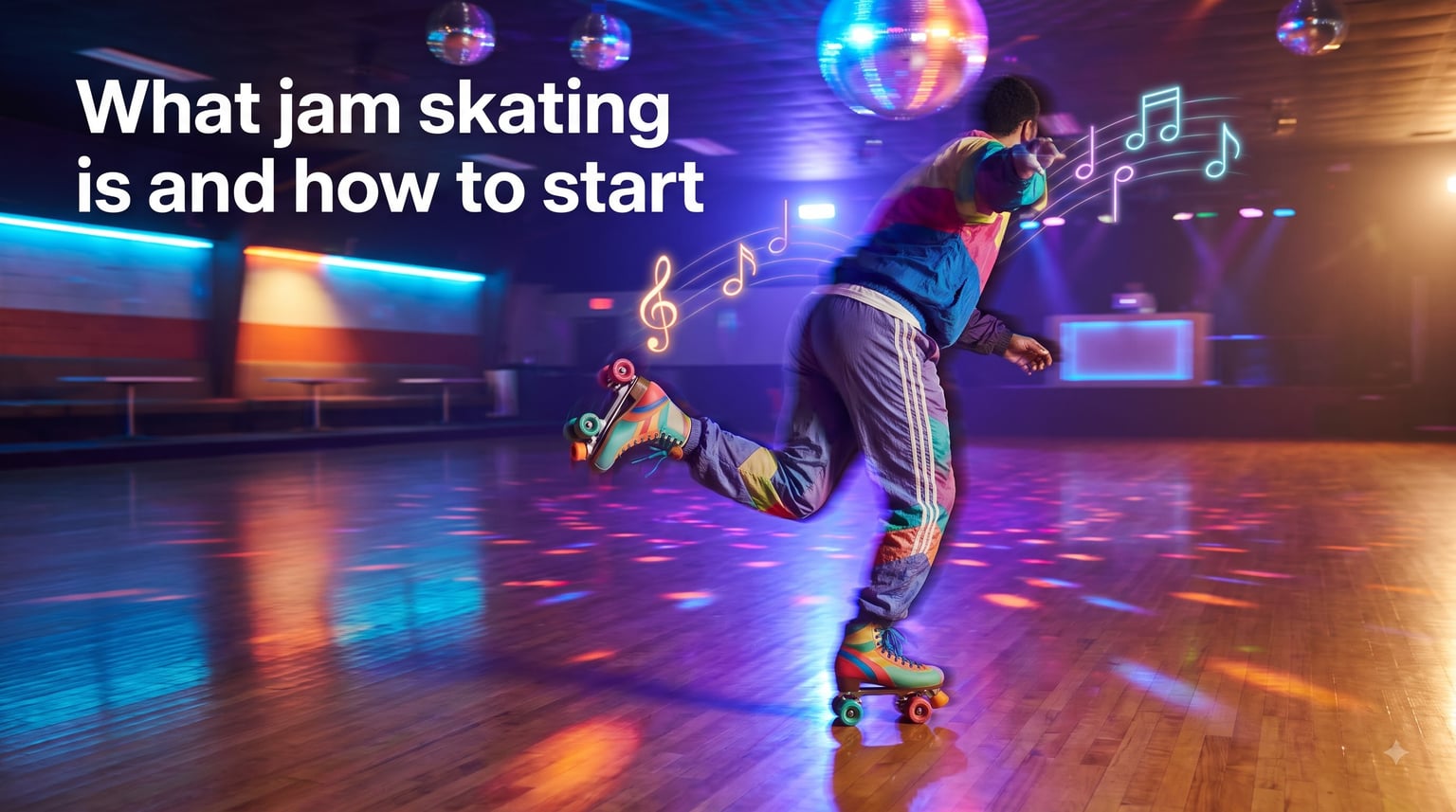
Jam skating is a freestyle roller skating style that blends dance, gymnastics, and athletic footwork into one music-driven performance. It mixes breakdancing-style floorwork, spins, toe stop tricks, and rhythm into a creative form of self-expression on eight wheels. I fell in love with it the first time I watched a skater hit a downtown move into a backspin, and our team has spent the last few months learning the basics to bring you this beginner’s guide.
If you have ever asked yourself “what is jam skating and how do I start?”, you are in the right place. We will cover the history, the defining moves, the gear you need, and a step-by-step plan to get you rolling with confidence.
Table of Contents
What Is Jam Skating?
Jam skating (sometimes called jammin’ or jam skating on roller skates) is a freestyle skating style that combines dance, gymnastics, and creative roller skating into choreographed or improvised routines. Unlike speed skating or artistic figure skating, jam skating is performed to music in social settings, on roller rinks, and at competitions.
The core idea is simple: you use your skates as a tool for self-expression. Skaters string together spins, footwork, toe stop tricks, and floorwork while staying locked into the beat. No two jam skaters look alike, because the style rewards personal creativity over rigid choreography.
Our team describes it as “breakdancing on wheels with rhythm.” That one phrase captures the energy better than any textbook definition, and it is what you will see on a rink floor when a jam skater takes the floor.
The History and Origins of Jam Skating
Jam skating was born in the late 1960s in Detroit, Michigan, at the legendary Empire Roller Disco. A skater named Bill Butler is widely credited as the founder, blending roller disco with the breakdancing and gymnastics moves that were emerging in urban dance culture at the time.
Through the 1970s and 1980s, the style spread through roller rinks across the United States. Skaters like “Mr. Charisma” pushed the limits of what was possible on eight wheels, popularizing power moves, footwork sequences, and showmanship that still influence jam skating today.
The style dipped in popularity during the 1990s but exploded again thanks to social media and YouTube. Platforms like r/Rollerskating and Instagram gave a new generation of skaters a place to share tutorials, battles, and jam sessions, and the scene has been growing steadily ever since.
Key Characteristics That Define Jam Skating
What separates jam skating from other roller skating styles? I think about it through four pillars that show up in every strong jam skater I have seen on the floor.
Freestyle creativity: There is no single right way to do a jam skating move. You build your own combinations and adapt them to the music.
Music-driven rhythm: Every move is tied to the beat. Skaters practice hitting specific counts, just like dancers do.
Athletic movement: Spins, footwork, toe stop tricks, and floorwork require real strength, balance, and coordination.
Community performance: Jam skating is social. You perform for a crowd, dance with a partner, and feed off the energy of the rink.
If your goal is to combine fitness with creativity and connect with a welcoming community, this style checks every box. The freestyle nature means there is room for beginners and pros to share the same floor.
Jam Skating vs Rhythm Skating
People often confuse jam skating with rhythm skating, but they are distinct styles. Both are music-driven and performed on roller rinks, but the focus and movement vocabulary are different.
Rhythm skating emphasizes smooth dance moves, glide, and flowing footwork. Think waltz-style crossovers, dips, and partner work.
Jam skating adds acrobatics, spins, toe stop tricks, and breakdancing-inspired floorwork on top of a rhythmic base.
If you love the dance side of skating, rhythm skating might feel more natural. If you want to throw in a backspin or hit a headspin move on your toe stops, you are looking at jam skating. Many skaters blend the two, and our team has seen amazing crossovers on the rink floor.
Essential Equipment for Jam Skating
You can technically start jam skating with a basic pair of quad skates, but a few pieces of gear make the learning curve much smoother. Here is what our team recommends for beginners.
Hard boot roller skates: A high-cut, supportive boot gives you the ankle stability you need for tricks and toe work. Soft boots are great for cruising but too floppy for jam skating.
Toe stops or jam plugs: Toe stops are the rubber stoppers at the front of each skate. Jam plugs are smaller, harder stoppers designed for tricks. Most beginners start with toe stops and switch to jam plugs later.
Wheels in the right durometer: Wheels around 92A to 99A give a good balance of grip and slide for indoor rink floors.
Safety gear: A helmet, wrist guards, and knee pads protect you during falls, which will happen when you are learning.
Proper socks and insoles: Your feet take a beating. Good socks and supportive insoles reduce fatigue during long jam sessions.
You can jam skate with regular skates if they are quad roller skates with a hard boot. Inline skates do not give you the same toe stop control, so they are not ideal for this style.
Essential Skills Every Jam Skater Needs
Before you start throwing spins and floorwork, you need to build a foundation. These are the skills our team practices every week, and they are the same ones experienced jam skaters recommend to beginners.
Balance on your toes and heels: Jam skating uses weight shifts constantly. Spend time just rocking forward and back on your skates to feel your edges.
Skating backward with confidence: Half of jam skating happens going backward. Master backward crossovers and transitions before you try tricks.
Plow stops and t-stops: These give you control of your speed and are essential for setting up combinations.
Spin fundamentals: Two-foot spins, one-foot spins, and toe stop spins are the building blocks of bigger combos.
Rhythm and musicality: Bounce, sway, and move your upper body to the beat even when you are standing still. This ties everything together.
I noticed huge improvement in my own skating once I started treating rhythm practice as seriously as trick practice. Pick a song, press play, and just move your shoulders for a full track. It sounds silly, but it works.
How to Start Jam Skating: Step-by-Step Beginner Progression
Ready to start? Our team built this progression based on advice from r/Rollerskating, Bont’s beginner guide, and our own first few months on the rink floor. Take it one step at a time and do not rush.
Get comfortable on your skates. Spend your first two sessions just rolling forward, backward, and stopping. Get used to falling safely.
Master basic stops. Plow stops and t-stops are your foundation. Without them, you cannot safely attempt tricks.
Learn to skate on your toes. Spend a full session balancing on your front wheels. This is where jam skating lives.
Practice the downtown move. This classic footwork pattern is where most skaters begin their jam skating journey. Drill it slow, then speed it up.
Add crazy legs. This is a fun, flowing footwork pattern that builds coordination and gets you moving with the music.
Work on your first spin. Start with a two-foot spin, then progress to a one-foot spin as your balance improves.
Put together a short combo. Combine one footwork move, one spin, and a toe stop trick into a 15-second routine on the beat.
Skate in social sessions. Head to a local adult skate night or jam session. Performing for others is the fastest way to improve.
Most beginners can hit the first five steps in about a month of consistent practice. Steps six through eight take longer and depend on how often you skate. I personally hit my first clean spin in week six, and our team’s record is week four for a skater who trained four times a week.
Common Beginner Mistakes to Avoid
Every jam skater I know has made these mistakes. Here is what to watch out for so you can skip some of the frustration.
Skipping toe stop practice: Toe stops are how you control speed, position your body, and stop tricks. Skating without learning them limits everything you can do.
Rushing into floorwork: Floorwork looks amazing on Instagram, but trying it without solid balance leads to injuries. Build your foundation first.
Tight trucks and stiff boots: Beginners often over-tighten everything. Looser trucks and broken-in boots give you the agility jam skating needs.
Practicing without music: Jam skating is rhythm. Practicing in silence trains your body but not your musicality. Always skate with a beat.
Skipping safety gear: Falls happen. Wrist guards and knee pads save you from weeks of recovery time.
Finding Your Jam Skating Community
One of the best parts of jam skating is the community. Our team has met some of the most welcoming people at adult skate nights and battle competitions. Look for adult skate sessions at local rinks, follow skaters on YouTube and Instagram, and join communities like r/Rollerskating to ask questions and find jams near you.
YouTube channels like VXSkate and Deez Skates offer free tutorials for every skill level. Local rinks often host adult nights and beginner-friendly jams where you can practice with experienced skaters who love helping newcomers.
Frequently Asked Questions
How do I start jam skating as a complete beginner?
Start by getting comfortable on quad roller skates with a hard boot. Spend your first sessions learning to balance, skate forward and backward, and stop using plow stops or t-stops. From there, work on toe balance, basic footwork like the downtown move, and your first spin. Skating 2 to 3 times a week builds a strong foundation within a month.
Can you jam skate with regular skates?
Yes, you can jam skate with regular quad roller skates as long as they have a hard boot for ankle support. Inline skates do not work well for jam skating because they lack the toe stop control and side-to-side agility the style requires.
What are the best skates for jam skating?
The best skates for jam skating are high-top quad roller skates with a hard leather or synthetic boot, durable trucks, and quality wheels in the 92A to 99A durometer range. Popular beginner-friendly choices include the Bont Prostar, Riedell Zone, and Sure-Grip Boardwalk. Look for skates that fit snugly around your ankle for maximum control.
What type of roller skate is best for beginners?
For beginners, a mid-range quad roller skate with a hard boot, adjustable toe stops, and a soft wheels-around-95A setup is ideal. Look for skates with good ankle padding, a reinforced plate, and wheels designed for indoor rink floors. Comfort matters more than brand at this stage, so try skates on in person when possible.
Is jam skating harder than other skating styles?
Jam skating can feel harder at first because it combines dance, gymnastics, and skating all at once. However, the freestyle nature of the style means you can progress at your own pace. Most skaters find that once they master basic balance and a few foundational moves, jam skating becomes easier and far more enjoyable than they expected.
How long does it take to learn jam skating?
Most beginners can learn basic jam skating moves like the downtown, crazy legs, and a two-foot spin within 4 to 8 weeks of consistent practice. More advanced combinations and floorwork typically take 6 months to a year of regular skating. The key is consistency, skating with music, and learning from the community around you.
Start Your Jam Skating Journey Today
Jam skating is one of the most rewarding ways to enjoy roller skating. It blends fitness, creativity, music, and community into a single freestyle art form that anyone can start learning today. Whether you are brand new to skating or coming from another style, the freestyle nature of jam skating means there is always room for your own voice.
Our team recommends grabbing a pair of quad skates with a hard boot, finding a local adult skate night, and giving yourself permission to be a beginner for the first month. Watch a few tutorials, drill the downtown move, and let the beat guide you. Updated for 2026, this beginner’s guide gives you everything you need to start jam skating with confidence.