
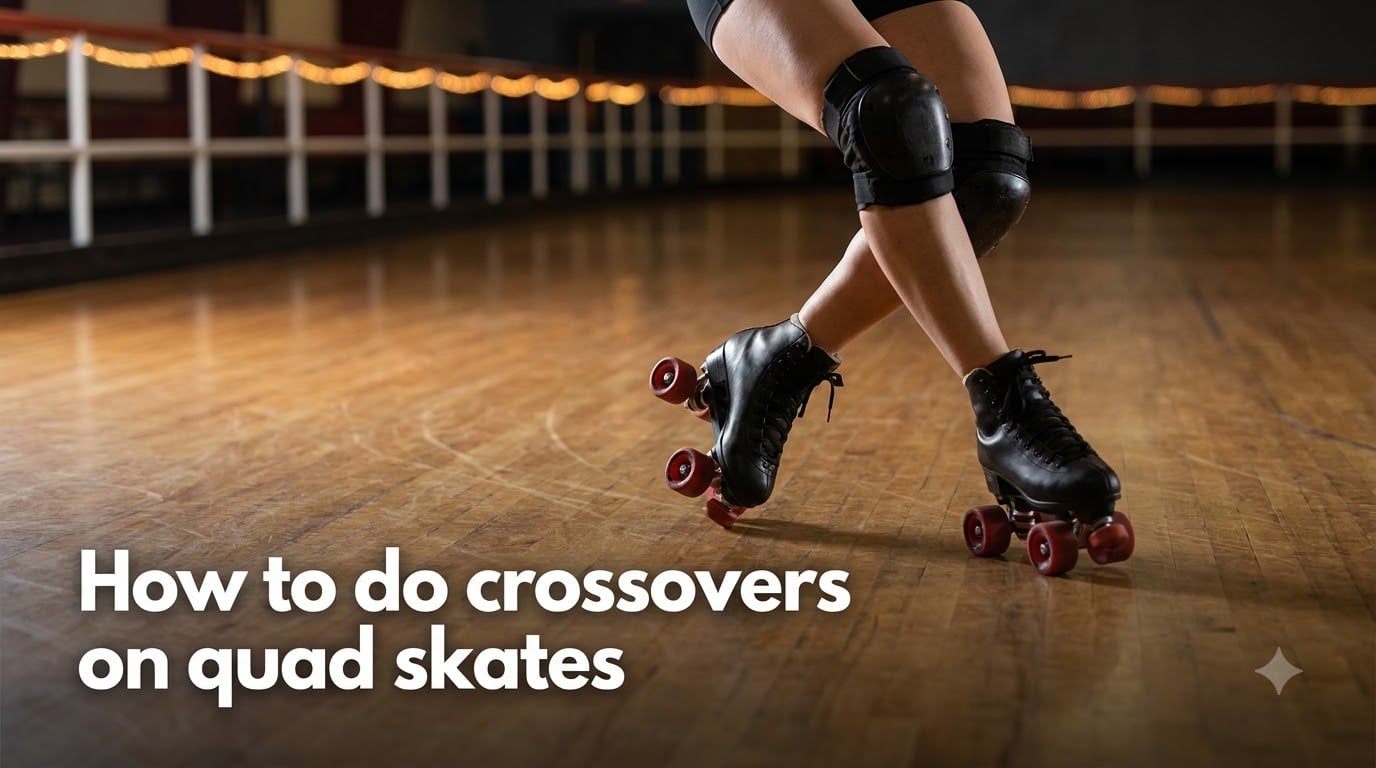
If you have ever watched a skater glide around a rink corner with one foot smoothly crossing over the other, you have seen a crossover in action. Learning how to do crossovers on quad skates is the single biggest skill that separates beginners from intermediate skaters. It lets you turn sharper, build speed through corners, and look effortless doing it.
Most skaters need about 4 to 8 weeks of regular practice to get comfortable with basic forward crossovers, and 3 to 6 months to make them feel completely natural at speed. I remember struggling with the fear of crossing my feet for weeks before something finally clicked. This guide breaks down everything I learned along the way so you can skip the frustration.
We will cover what a crossover actually is, the prerequisite skills you need, a detailed step-by-step breakdown of the forward technique, the most common mistakes beginners make, and a set of drills you can practice at home or at the rink. By the end, you will have a clear roadmap from your first attempt to confident, flowing crossovers.
Table of Contents
What Is a Crossover on Quad Skates?
A crossover is a skating technique where you pick up one foot and step it across the other while turning in a circle. The crossing foot lands on the outside of your stance, and you use the inside edge of your skates to push and generate speed through the curve. It is the most efficient way to maintain or build momentum while turning.
Crossovers are essential for roller derby, artistic skating, speed skating, and recreational rink skating. Without them, you have to slow down every time you go around a corner. With them, you actually gain speed.
Forward vs Backward Crossovers
Forward crossovers are done while skating forward around a curve, typically turning left (counter-clockwise) at the rink. Backward crossovers use the same crossing principle but are performed while skating backward, and they require more ankle strength and balance. This guide focuses on forward crossovers since those come first in your learning progression.
Inside Edge vs Outside Edge
Every quad skate wheel sits at an angle depending on how you distribute your weight. The inside edge is the side of the wheels facing your other foot. When you lean into a turn, you ride on the inside edges of both skates, and that is what gives you grip and push during a crossover. The outside edge faces away from your body and is used more in advanced maneuvers.
Prerequisites: What You Need Before Learning Crossovers
Before attempting crossovers, you need a few foundational skills. Trying to learn crossovers before mastering these basics is the number one reason people fall and get discouraged.
You should be comfortable with the following before you start:
Stable one-foot glides: Balance on each foot for at least 5 to 10 seconds without wobbling.
Proper skating stance: Knees bent, weight low, feet shoulder-width apart.
Confident stopping: You should be able to stop reliably using a toe stop or plow stop.
Weight shifting: Practice shifting all your weight from one foot to the other while rolling.
Basic turning: Be able to make wide turns in both directions without lifting your feet.
If any of these feel shaky, spend a couple of weeks strengthening them first. I tried to rush into crossovers before my one-foot glides were solid, and I ended up bruised and frustrated. The foundation matters more than the trick itself.
How to Do Crossovers on Quad Skates: Step-by-Step Forward Technique
Here is the complete breakdown of how to do crossovers on quad skates. Work through these steps slowly at first. Speed comes later once the motion feels natural.
Step 1: Start in a low skating stance. Bend your knees deeply, keep your back straight but leaned slightly forward, and lower your center of gravity. The lower you are, the more stable you will be.
Step 2: Begin skating forward in a wide circle. Pick a direction (most rink skaters practice left turns first). Start gliding in a gentle curve rather than a straight line.
Step 3: Shift all your weight to your outside foot. If turning left, your outside foot is your right foot. Press down through that skate and let it carry your full body weight on its inside edge.
Step 4: Lift your inside foot and cross it over the outside foot. Pick up your left foot (if turning left) and lift it up and across in front of your right foot. Plant it on the floor on the outside of your right skate.
Step 5: Transfer your weight to the newly placed foot. Shift your weight onto the foot that just crossed over. This is where most beginners hesitate, but committing to the weight transfer is what keeps you balanced.
Step 6: Push with the underneath foot. Once your weight is on the crossed-over foot, use the inside edge of the foot that is now underneath (your right foot) to push outward and generate speed. Then bring it back underneath you.
Step 7: Bring your feet back together and repeat. Return to your starting stance and immediately begin the next crossover. The motion is continuous, like a rhythmic pumping action around the curve.
The key insight is that crossovers are not about picking up your feet high. They are about a smooth, low weight transfer combined with a push from the underneath skate. Think of it as stepping sideways into the circle while your momentum carries you forward.
Body Posture and Positioning Tips
Your body position makes or breaks your crossovers. Get these cues right and the motion becomes dramatically easier.
Knee bend: This is the most important cue. If your knees are nearly straight, crossovers will feel impossible. Aim for a deep squat-like bend where you can almost see your toes past your knees.
Arm swing: Your arms should swing naturally in opposition to your feet, just like walking. When your right foot crosses over, your left arm swings forward. This counterbalance keeps you from rotating too far.
Head and eyes: Look into the center of the circle you are turning around. This naturally angles your body in the right direction. However, do not lean your whole body into the circle. Keep your weight over your skates, not tilted inward.
Hip rotation: Let your hips open slightly toward the direction of travel. Stiff, locked hips are a major reason people cannot get their feet to cross smoothly.
Common Crossover Mistakes and How to Fix Them
Here are the mistakes I see most often, along with specific fixes you can apply right away.
Looking down at your feet. This drops your head forward, shifts your weight wrong, and kills your balance. Fix it by picking a point on the wall at eye level and staring at it as you turn.
Standing too tall. Straight legs make crossovers nearly impossible and dangerous. Fix it by bending your knees deeper than feels necessary before you even start moving.
Not committing to the weight transfer. Many skaters lift their foot to cross but keep their weight on the wrong side, causing them to stumble. Fix it by deliberately pressing your full weight onto the crossed-over foot before pushing off.
Feet hitting each other. If your wheels clack together mid-crossover, you are crossing too low or too close. Fix it by lifting your crossing foot a bit higher and planting it wider on the outside.
Leaning into the circle too far. This causes your skates to slide out from under you. Fix it by keeping your weight centered over your skates while only looking into the circle.
Rushing the motion. Trying to crossover fast before you own the technique leads to choppy, unbalanced movement. Fix it by practicing slow, deliberate crossovers and letting speed build naturally.
How to Practice Crossovers: Drills and Progression
Practice is where the real progress happens. Here is a progression I recommend, starting off-skates and building up to full-speed crossovers.
Drill 1: Off-Skates Wall Practice
Stand next to a wall in your socks or shoes. Shift your weight to your outside leg, then slowly lift your inside foot and cross it over, planting it on the far side. Transfer your weight, then bring the other foot underneath. Repeat this motion 20 times per direction. This builds the muscle memory without any fear of falling, which is exactly how many skaters on the r/Rollerskating community recommend starting.
Drill 2: Stationary On-Skates Crossovers
Put your skates on and stand on carpet or grass (somewhere you will not roll). Practice the same crossing motion while holding a wall or railing. Focus on the weight transfer and getting comfortable lifting one foot fully off the ground while balanced on the other.
Drill 3: Wide Circle Glides
Find an open smooth surface and skate forward in a very wide circle. Do not try to crossover yet. Just practice leaning into the curve and feeling your inside edges grip the floor. Gradually tighten the circle as your confidence grows.
Drill 4: Single Crossover and Reset
Skate in a circle and do one single crossover, then bring your feet back together and glide. Reset, then do another single crossover. The goal is to nail one clean crossover at a time before chaining them together.
Drill 5: Continuous Crossovers
Once single crossovers feel easy, link them together continuously around the circle. Start slow and focus on rhythm. The motion should feel like a steady pump, not a series of separate steps.
Progress Milestones
Track your progress with these milestones. They give you concrete signs that your technique is improving:
Week 1 to 2: Comfortable with off-skates and stationary crossover motion.
Week 3 to 4: First successful single crossover while rolling without falling.
Week 5 to 6: Two to three consecutive crossovers in a row.
Week 7 to 8: Continuous crossovers around a full circle at moderate speed.
Month 3 and beyond: Smooth, fast crossovers that feel automatic and build speed through corners.
Safety Tips and How to Fall Safely
Falling is a normal part of learning crossovers. The right gear and technique will keep you safe and confident.
Always wear a helmet, knee pads, elbow pads, and wrist guards when practicing new skills. Quad skate wheels can slip out fast, and wrist injuries are the most common skating injury because people instinctively reach out with their hands.
If you feel yourself losing balance, try to sit down rather than reaching forward. Let your padded knees and hips take the impact. Practice falling on purpose at low speed so your body learns the motion without panic.
The fear of crossing your feet over each other is completely normal. Every skater on the r/rollerderby and r/Rollerskating forums will tell you the same thing: it feels unnatural until one day it just clicks. Start slow, use the wall, and celebrate small wins.
Frequently Asked Questions
How to do a crossover step by step?
Start in a low stance with knees bent. Skate forward in a wide circle. Shift all your weight to your outside foot. Lift your inside foot and cross it over, planting it on the outside of your stance. Transfer your weight to the crossed foot. Push with the underneath foot using its inside edge. Bring your feet back together and repeat the motion continuously.
What common crossover mistakes should I avoid?
The most common mistakes are looking down at your feet, standing too tall with straight knees, not committing to the weight transfer, letting your feet hit each other, leaning too far into the circle, and rushing the motion before mastering the technique. Fix each one by focusing on a deep knee bend, proper eye placement, and deliberate weight shifts.
How long does it take to learn crossovers?
Most skaters take 4 to 8 weeks of regular practice to get comfortable with basic forward crossovers. Achieving smooth, fast, automatic crossovers typically takes 3 to 6 months. Everyone learns at a different pace, and practicing off-skates drills first can significantly speed up the process.
How to criss cross on skates?
Criss crossing on skates is another term for crossovers. To do it, bend your knees deeply, skate in a circle, shift your weight to the outside foot, lift the inside foot over the outside foot, plant it wide, transfer your weight, and push with the underneath foot. Repeat the motion rhythmically around the curve.
How to cross over while roller skating?
Crossing over while roller skating requires a deep knee bend, full weight transfer between feet, and a push from the underneath skate’s inside edge. Start practicing off-skates against a wall, then move to stationary on-skates practice, then try single crossovers while rolling slowly in a wide circle before building to continuous crossovers.
Conclusion
Learning how to do crossovers on quad skates is a journey that transforms your entire skating experience. The technique comes down to a few core principles: a deep knee bend, full commitment to the weight transfer, a push from the underneath foot’s inside edge, and continuous rhythm around the curve.
Start with the off-skates wall drill, build through the progression exercises, and track your milestones week by week. Expect 4 to 8 weeks for basic crossovers and 3 to 6 months for mastery. The fear and awkwardness you feel at first are universal, and every skilled skater you admire went through the exact same process.
Lace up, bend those knees, and start crossing over. Your future smooth-skating self is waiting at the end of about two months of practice.