
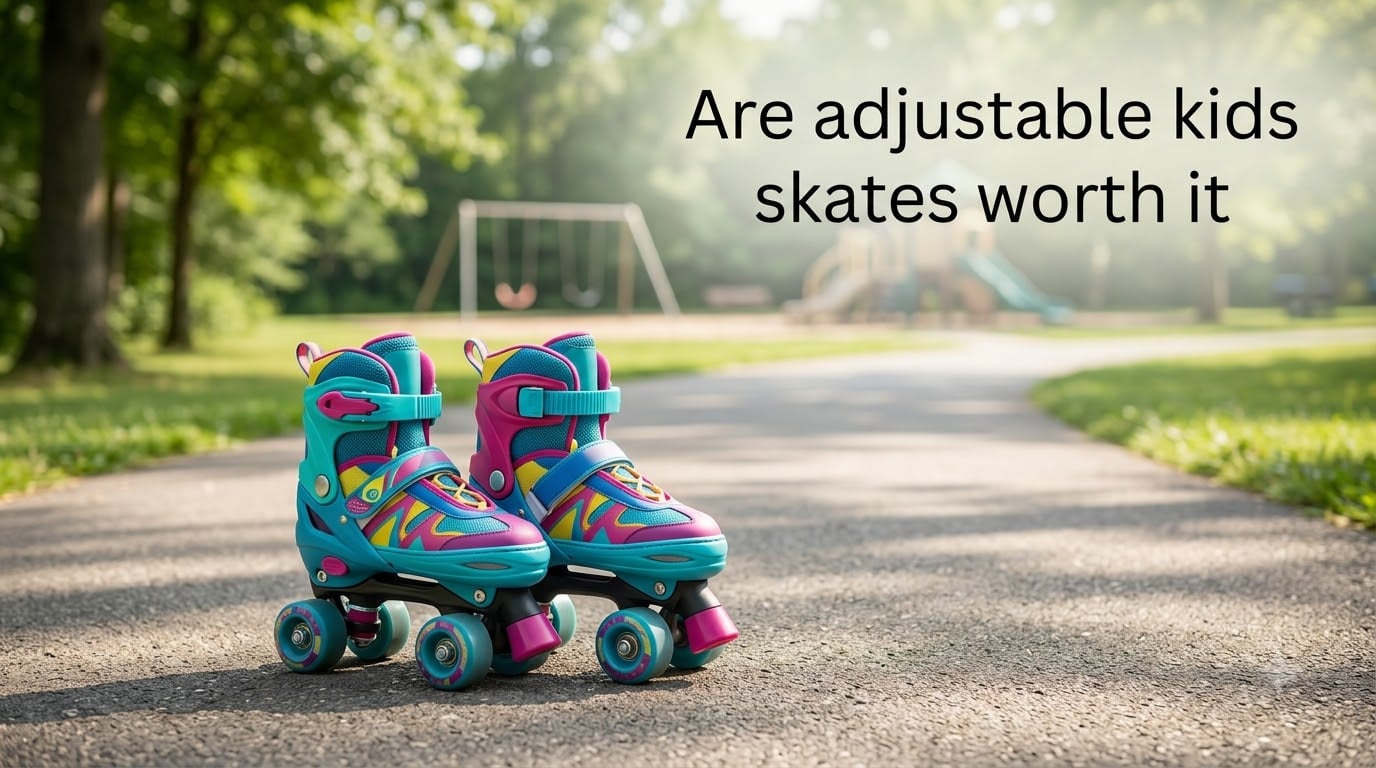
Adjustable kids skates are absolutely worth it for most families with young beginners, casual recreational skaters, and parents juggling tight budgets. In our experience reviewing skating gear and hearing from parents, a quality pair of adjustable skates typically covers 3-4 shoe sizes and lasts 1-3 years, saving you from buying replacement skates every few months as your child’s feet grow.
That said, adjustable skates have real limitations you should know about before buying. They tend to be bulkier, heavier, and rarely fit any single size as precisely as a fixed-size skate. Coaches often recommend switching to non-adjustable skates once a child is serious about developing skills.
In this guide, I’ll walk you through exactly how adjustable kids skates work, the honest pros and cons, when they make sense for your family, and when it’s time to upgrade. You’ll get a clear answer to whether they’re worth it for your specific situation.
Table of Contents
What Are Adjustable Kids Skates
Adjustable kids skates are roller skates, inline skates, or ice skates with a built-in sizing mechanism that lets the boot expand or contract across multiple shoe sizes. Most models cover 3-4 sizes, for example fitting a child who wears a size 11 to a size 2.
The mechanism varies by brand, but it usually involves a button, lever, or sliding track at the toe or heel of the boot. When you press or slide the release, the inner boot extends or retracts, changing the effective length of the skate.
You’ll find adjustable versions of every skate type parents commonly buy: adjustable roller skates for beginners, adjustable inline skates (often called adjustable roller blades), and adjustable ice skates for figure skating or hockey. The core concept is identical across all three.
The main goal is simple: solve the problem of kids’ feet growing fast. Children’s feet can grow 1-2 sizes per year, so a fixed-size skate might only fit for 6-12 months before becoming too small.
How Adjustable Kids Skates Work
Adjustable kids skates use a simple size adjustment system built into the boot. Here’s how it typically works:
- Locate the adjustment lever or button, usually at the front of the toe box or behind the heel.
- Press and hold the release while sliding the toe section forward or backward.
- You’ll hear a click as the mechanism locks into the next size notch.
- Release the lever and check that the toe box feels snug but not tight.
Most systems have 3-4 size positions clearly marked along the side of the boot. Parents adjust them as the child grows, sometimes once or twice per year.
Here’s what most parents miss: the boot adjusts, but the frame, wheels, and blade stay the same size. On roller skates, the wheelbase is fixed. On ice skates, the blade length stays constant even when the boot grows. This is the single biggest hidden limitation of adjustable skates, and it affects both balance and skill development as your child gets bigger.
Key Benefits of Adjustable Kids Skates
The biggest advantage of adjustable kids skates is the value they deliver. Let’s break down the real benefits.
1. Long-term cost savings. A solid pair of adjustable skates runs higher upfront than a basic fixed-size pair, but lasts 1-3 years instead of 6-12 months. Over a child’s early skating years, that often means saving on 2-3 replacement pairs.
2. Growth-friendly sizing. Kids’ feet grow unpredictably, sometimes in sudden growth spurts. Adjustable skates let you adapt quickly without rushing to the store for new gear.
3. Sharing between siblings. If you have two or three kids close in age, the same pair of adjustable skates can pass down through the whole family. Parents love this feature for budget reasons.
4. Beginner-friendly setup. For a child just starting out, the fit doesn’t need to be perfect. Most adjustable skates come with comfortable padding and basic ankle support, which is exactly what new skaters need.
5. Convenience for families. One pair in the closet, one set of gear to track, one purchase decision. Parents juggling multiple activities appreciate this simplicity.
6. Lower commitment. If your child tries skating once and loses interest, you haven’t sunk money into gear they’ll outgrow in three months.
Drawbacks and Limitations to Consider
Now for the honest part. Adjustable kids skates have real drawbacks that competitors often gloss over.
Bulky and heavy construction. The adjustment mechanism adds weight, and the boot has to accommodate the largest size setting at all times. Compared to a fixed-size skate, adjustable models feel heavier on small feet, which can tire out beginners faster.
The blade-to-boot mismatch problem. This is the technical issue coaches complain about most. The boot grows with your child, but the wheels, frame, and blade stay the same. As your child gets taller and heavier, the balance points become incorrect. One coach on Reddit put it bluntly: “They don’t fit feet well, balance points aren’t correct.” For serious skill development, this matters a lot.
Fit is rarely perfect at any size. A skate designed to fit 4 different sizes will fit none of them as precisely as a fixed-size skate. The fit is always a compromise, and on the largest or smallest setting, the gap or pinch becomes noticeable.
Durability concerns. More moving parts means more potential for breakage. The adjustment mechanism can wear out, especially on cheaper models. A locked mechanism mid-skate is a real safety issue.
Limited performance. Adjustable skates are designed for casual and recreational use. They lack the responsiveness, ankle support, and stiffness needed for advanced tricks, hockey, speed skating, or competitive figure skating.
Not recommended by most coaches for serious training. Forum discussions on r/Rollerskating and r/iceskating show a clear pattern: coaches tell parents to skip adjustable skates once a child shows genuine interest and commitment to the sport.
Adjustable vs Non-Adjustable Kids Skates Comparison
This side-by-side breakdown helps you see the trade-offs at a glance.
| Feature | Adjustable Skates | Non-Adjustable Skates |
|---|---|---|
| Size range | Covers 3-4 sizes | One fixed size |
| Lifespan | 1-3 years | 6-18 months typically |
| Fit precision | Compromise fit | Custom, precise fit |
| Weight | Heavier, bulkier | Lighter, slimmer |
| Cost over time | Lower (one pair) | Higher (multiple pairs) |
| Performance | Recreational only | Recreational to competitive |
| Best for | Beginners, casual skaters | Committed skaters, training |
| Coach recommended | For initial stages only | For skill development |
| Sibling sharing | Yes | No |
| Durability of mechanism | Variable | N/A (no moving parts) |
When to Choose Adjustable Skates for Your Child
Adjustable kids skates are the right call in these specific situations.
Your child is 4-8 years old. Feet grow fast at this age. A 6-year-old might go through two shoe sizes in a single year. Adjustable skates handle that growth without constant replacement.
Your child is brand new to skating. If you’re not sure your child will stick with the sport, don’t over-invest. Adjustable skates give you breathing room to see if skating becomes a real interest.
You plan casual or recreational use. Family bike-path rides, weekend park trips, occasional rink visits. Adjustable skates handle this use case perfectly.
You have multiple kids close in age. The cost-per-use math is unbeatable when three kids can share one pair of adjustable skates over five years.
You’re on a tight budget. Even though the upfront cost is similar or higher, the long-term savings are real. One Reddit parent said, “Would recommend adjustable skates so your son gets more use out of them.”
When to Upgrade to Non-Adjustable Skates
Watch for these warning signs that your child has outgrown the adjustable stage.
Sign 1: Your child wants to skate more seriously. Joining a league, taking lessons, or asking for tricks and speed? That’s the moment to upgrade.
Sign 2: They’ve reached the maximum size setting. If the boot is already at the largest position and toes are touching the front, the mechanism can’t help anymore.
Sign 3: Performance plateaus or frustration rises. If your child complains about the skates feeling heavy, awkward, or limiting, that’s usually a sign the boot-to-frame balance is off.
Sign 4: Their instructor recommends it. Coaches see this daily. Once your child shows consistent interest, listen when the coach says it’s time for fixed-size skates.
One experienced skating parent shared their timing approach: “We used adjustable skates for the first year of casual skating. Once my daughter joined a learn-to-skate class and her coach said she’d benefit from real skates, we made the switch. The difference in her balance and confidence was immediate.”
Aim to upgrade sometime between ages 7-10 for most kids, or sooner if signs appear earlier. Don’t wait too long, because practicing in poorly fitting adjustable skates can actually slow down skill development.
Frequently Asked Questions
Are kids’ adjustable skates good?
Adjustable kids skates are good for beginners, casual recreational skaters, and families on a budget. They cover 3-4 sizes and last 1-3 years. However, they fit multiple sizes without fitting any perfectly, so they’re not ideal for serious training or competitive skating.
How do adjustable kids skates work?
Adjustable kids skates have a button, lever, or sliding track at the toe or heel of the boot. Press the release to unlock the sizing mechanism, then slide the toe section forward or backward to expand or contract the boot. The mechanism locks into 3-4 preset size positions.
What kind of skates are best for kids?
For beginners and casual skaters, adjustable skates offer the best value because they grow with your child. For committed skaters taking lessons or joining teams, non-adjustable skates provide better fit, lighter weight, and the performance needed for skill development.
When should my child switch from adjustable to non-adjustable skates?
Most kids switch between ages 7-10, or earlier if they show serious interest in lessons or competitive skating. Warning signs include reaching the maximum size setting, complaints about weight or fit, plateauing skills, or a coach’s recommendation to upgrade.
Final Verdict: Are Adjustable Kids Skates Worth It
Yes, adjustable kids skates are worth it for most families in 2026. They solve the real problem of fast-growing feet, save money over time, and work well for beginners learning the basics.
The only scenario where they’re not worth it is when your child is already committed to serious training. In that case, the fit and performance limitations outweigh the convenience. Invest in proper fixed-size skates instead and skip the adjustable stage.
For everyone else, start with a quality pair of adjustable kids skates. Watch for the signs that your child has outgrown them, and upgrade to non-adjustable skates when the time comes. That simple two-step approach saves money early and supports skill development later.