
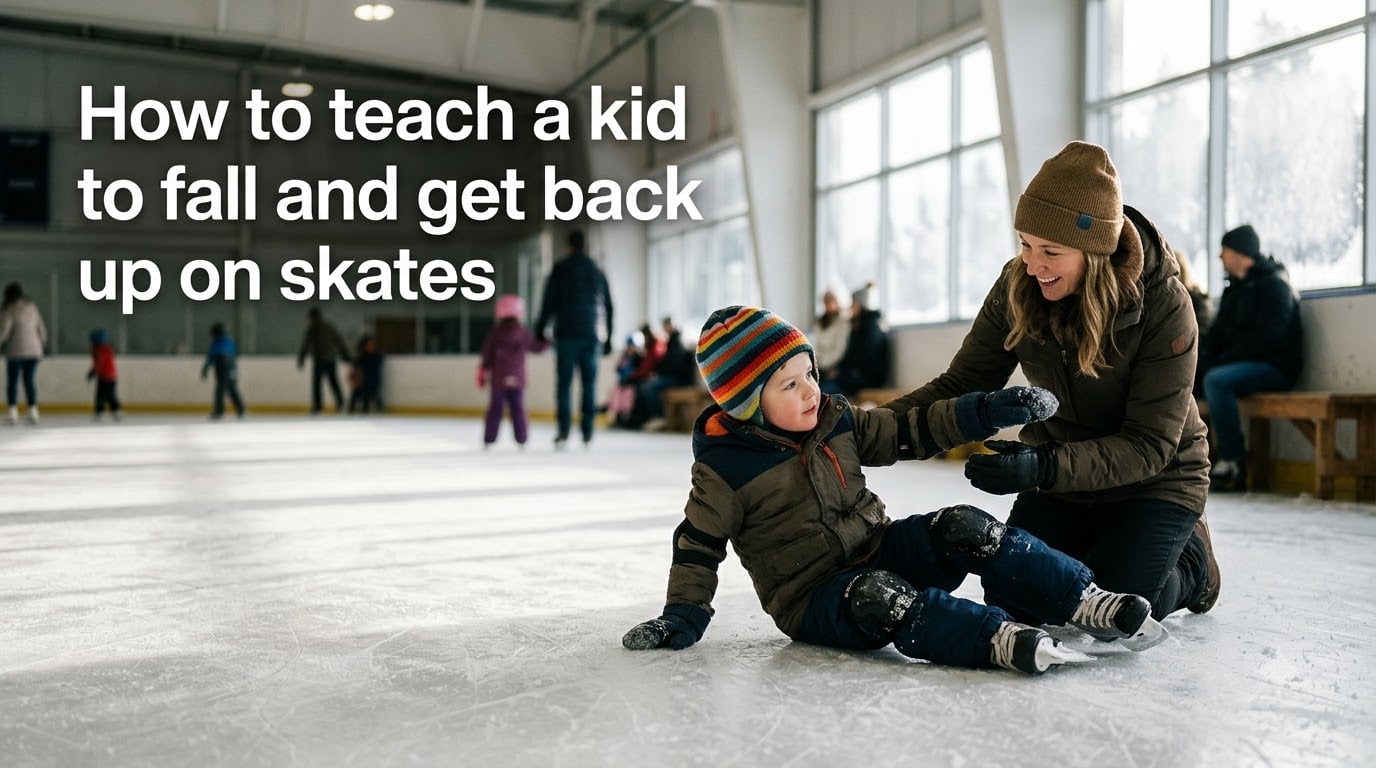
If your child is about to strap on a pair of skates for the first time, you already know the question isn’t if they will fall. The real question is whether they will know how to fall safely, get back up quickly, and try again without fear. I have coached and watched dozens of kids learn to skate, and the children who enjoy it the most are not the ones with the best balance. They are the ones who learned to fall and get back up on skates without losing their confidence.
This guide walks you through exactly how to teach that skill, starting at home on the carpet and finishing at the ice rink. You will find step-by-step falling technique, a featured-snippet-ready method for getting back up, off-ice practice drills, and the mindset shifts that make the biggest difference. We will also cover the common mistakes parents make when teaching kids to skate and the protective gear every child needs before their first lesson.
Table of Contents
Why Falling Is the First Skill to Teach
Falling is the first skill to teach because it is the one your child will use most often. In the first month of learn-to-skate classes, beginners fall more than they glide. A child who knows how to fall safely treats a tumble as part of the game instead of a reason to quit.
There are three practical reasons this mindset matters. First, controlled falling prevents injuries. A child who tucks, rolls to the side, and protects the head avoids the wrist fractures and face plants that send beginners to the ER. Second, kids who fall confidently stay on the ice longer. They get more practice, more reps, and more improvement. Third, muscle memory from repeated falling drills transfers to every other skating skill they will ever learn.
If you want your child to actually enjoy skating, treat falling as a feature, not a failure. The sooner they buy into that idea, the faster they will progress.
What Age Should Kids Start Learning to Fall on Skates?
Age matters less than readiness, but here is a useful starting point. Children under 2 rarely retain structured instruction on skates, so focus on play and exposure. Kids ages 3 to 4 can begin learning falling games off the ice, and ages 5 to 8 are usually ready for on-ice falling drills.
Watch for these readiness signs before your child steps on the ice. They should be able to follow a two-step instruction, balance on one foot for a few seconds, and tolerate a helmet and pads without ripping them off. If your child is on the younger end of the range, you can still build foundational skills at home with the off-ice drills in this guide.
Many parents ask whether a 3-year-old is too young. The honest answer is they can stand on skates at 3, but independent falling practice usually clicks closer to 4. Be patient, and let your child set the pace.
How to Teach a Kid to Fall Safely on Skates?
Teach falling off the ice first, then transfer the same motion to the rink. The goal is to build muscle memory so the body knows what to do before fear kicks in.
Bend the knees and lower the center of gravity. Standing tall is the worst position to fall from. Practice a deep knee bend and have your child hold onto a chair or your hands while doing it.
Tuck the chin to the chest. The most important thing to protect is the head. Kids naturally turn away from impact, but you can drill the chin tuck until it becomes automatic.
Fall to the side, not straight back or forward. Sideways falls onto the hip and thigh spread the impact across the padded areas. Forward falls onto the wrists cause fractures, and backward falls onto the tailbone hurt for weeks.
Keep the fingers tucked, not splayed. Splayed fingers catch the edge of the blade or the ice. A loose fist or curled fingers slide instead of catching.
Land on padded gear. Hip, knee, and elbow pads turn a hard rink surface into something tolerable. We will cover gear in detail below.
Practice the turtle position. Roll onto the back, bring knees to the chest, and rest. This is the safe resting position that lets a child pause, breathe, and prepare to get up.
Run each drill three to five times per session. Keep it short, keep it fun, and stop while your child still wants more. That is how the technique sticks.
How to Get Back Up on Skates?
Getting up is the second half of the equation, and it is the part where featured snippets love to surface answers. Here is the exact sequence to teach your child, broken into five steps that work for both ice and roller skates.
Roll onto hands and knees. From a sitting or turtle position, roll forward onto all fours. Hands should be flat on the ice, shoulder-width apart.
Bring one foot up between the hands. Pick whichever foot feels stronger. Place the blade flat on the ice so it does not slide. Many kids prefer the dominant foot, either is fine.
Plant the blade flat. The blade must be perpendicular to the direction of motion. A sideways blade slips; a flat blade grips.
Push up with both hands. Press through the hands to lift the body while transferring weight onto the planted foot. The other knee stays down for balance.
Stand with knees bent and arms out for balance. Once upright, immediately go back into the ready position. Knees soft, weight centered, eyes forward.
The whole sequence takes about three seconds once it becomes muscle memory. That is the goal. Repeat it on the carpet, then on the rink, until the body does it without thinking.
Off-Ice Practice Drills Before Hitting the Rink
Off-ice practice is the secret weapon most parents skip. A 10-minute session on the carpet before your first rink visit saves an hour of frustration at the ice. These drills are the same ones youth hockey coaches use in their living rooms.
Carpet falls. Have your child stand on a carpet or rug in sneakers, bend the knees, and fall to the side onto a cushion. Repeat on both sides until the motion is smooth.
Turtle drill. From standing, drop to a crouch, roll onto the back, and sit back up without using hands. Builds core control and body awareness.
Get-up race. Time how fast your child can stand from a sitting position. Beat the clock each round. Kids love the competition.
Statue balance. Hold a deep knee bend with arms out for 10 seconds. The wobble they feel is exactly what they will feel on skates.
Backward falls onto cushions. Falling backward is the scariest direction. Stack couch cushions and practice controlled drops. Take the surprise out of it.
Do these drills two or three times per week in the weeks leading up to a rink visit. By the time your child straps on skates, the falling motion will feel familiar.
On-Ice Practice Drills for Falling and Getting Up
Once you are at the rink, keep the first practice short and specific. Most public skate sessions are 60 to 90 minutes, which is too long for a beginner. Plan for 20 to 30 minutes of focused drills, then reward them with hot cocoa.
Stationary fall practice near the boards. Hold the boards, do a deep knee bend, and fall to the side. Repeat until the motion is automatic.
Butterfly fall drill at slow speed. March forward three steps, then drop to both knees and slide. This is the controlled fall hockey players use. It is safe and effective.
Get-up challenge. After each fall, count how many seconds it takes to stand. Beat the count each round. Kids love a stopwatch.
Pair drill with another parent and child. Two beginners practicing together motivate each other. Falling becomes a shared joke instead of a solo disaster.
End every session on a successful fall and a clean get-up. That is the memory your child will carry into the next lesson.
How to Build Confidence After a Fall
The mental side of falling matters as much as the physical side. A child who is afraid to fall will hold the boards the entire session, and that single habit can stall progress for months. Use these strategies to keep the fear in check.
First, celebrate the fall. Say great fall right after they go down. Sounds silly, but it reframes the event as a success. Second, use positive language. Replace be careful with fall strong or show me your best fall. Words shape the experience.
Third, use the 3-second rule. After a fall, give your child three full seconds before you react. Most kids stand up on their own during that window. Helping too quickly teaches them that falling requires an adult, which slows their independence. Fourth, make falling a game. Score points for style, time the get-up, give the fall a silly name. The more fun it becomes, the less scary it is.
If your child refuses to get back up, stay calm and ask simple questions. What does your body need right now? or Should we try a fun fall next? Often a small pivot in language breaks the freeze.
Common Mistakes Parents Make When Teaching Falling
Even with the best intentions, parents accidentally reinforce bad habits. Here are the most common ones to avoid.
Helping too much. Lifting your child up after every fall prevents them from learning the get-up sequence. Let them struggle briefly. It builds resilience.
Catching every fall. Catching teaches your child to expect a save. The rink does not offer saves. Let small falls happen.
Letting kids hold the boards constantly. The boards are training wheels that are hard to remove. Use them only at the start and end of the session.
Allowing baby steps or walking on skates. Walking teaches bad habits and slows progression. Encourage a slight glide from day one.
Over-reacting to falls. A gasp or a rushed approach teaches fear. Stay calm. Smile. Cheer the recovery.
The forbidden move in ice skating, by the way, is the backflip. Rinks ban it for good reason. Beyond that, the biggest mistake is teaching your child that falling is something to avoid. Flip the script and you unlock the joy.
Protective Gear Every Kid Needs Before Falling Practice
No amount of technique replaces proper gear. Before any falling practice, on or off the ice, make sure your child is wearing the essentials. A certified hockey or multisport helmet protects the head and is non-negotiable. Knee and elbow pads cover the joints that take the most impact during sideways falls.
Hip and tailbone padding is especially valuable for beginners. The hip is the intended landing surface in a safe fall, and a little padding makes a big difference in confidence. Gloves protect the fingers during the get-up motion and keep tiny hands warm enough to grip the ice.
Finally, make sure the skates fit properly. A snug fit with the ankle locked in place provides the support kids need to balance and fall correctly. Skates that are too loose cause the ankle to wobble, which leads to falls in the first place.
For more guidance on choosing the right skates for beginners, our team has tested dozens of pairs and put together a detailed breakdown you can use as a reference.
Frequently Asked Questions About Teaching Kids to Fall and Get Up on Skates
How do you get up after falling on skates?
Roll onto your hands and knees, bring one foot up between your hands, plant that blade flat on the ice, push up through both hands, and stand with knees bent for balance. The whole sequence takes about three seconds once it becomes muscle memory.
What age should a child start ice skating?
Children under 2 rarely retain structured instruction. Ages 3 to 4 are good for off-ice falling games, and ages 5 to 8 are typically ready for on-ice technique. Look for readiness signs like the ability to follow two-step directions and balance on one foot briefly.
Should I help my child up when they fall on skates?
Use the 3-second rule. Give your child three full seconds to react on their own before you step in. Helping too quickly teaches them that falling requires an adult and slows the development of independence and confidence.
How do I practice falling before going to the rink?
Use carpet falls onto cushions, the turtle drill (roll onto your back and sit up), the get-up race (time how fast you can stand), and backward falls onto stacked pillows. Ten minutes two or three times a week is enough to build muscle memory before the first rink visit.
What is the forbidden move in ice skating?
The backflip is banned at virtually every rink because of the high injury risk. For beginners, the biggest mistake to avoid is teaching kids that falling itself is forbidden, since safe falling is the foundation of every skating skill they will ever learn.
How do I help my child who is afraid of falling?
Stay calm, use positive language, celebrate each fall as a success, and turn recovery into a game with a stopwatch or scoring system. Avoid saying be careful and instead say show me your best fall. Most fear fades within a few sessions once falling becomes fun.
Final Thoughts on Teaching Your Kid to Fall and Get Back Up on Skates
Teaching a kid to fall and get back up on skates is less about technique and more about mindset. The children who enjoy skating the most are not the ones who never fall. They are the ones who have learned that a fall is just three seconds of practice before the next try.
Start with off-ice drills on the carpet, then transfer the same motion to the rink. Celebrate every fall, time every get-up, and keep the sessions short. With a little repetition and the right protective gear, your child will be standing back up on skates with a smile, ready to glide again.