
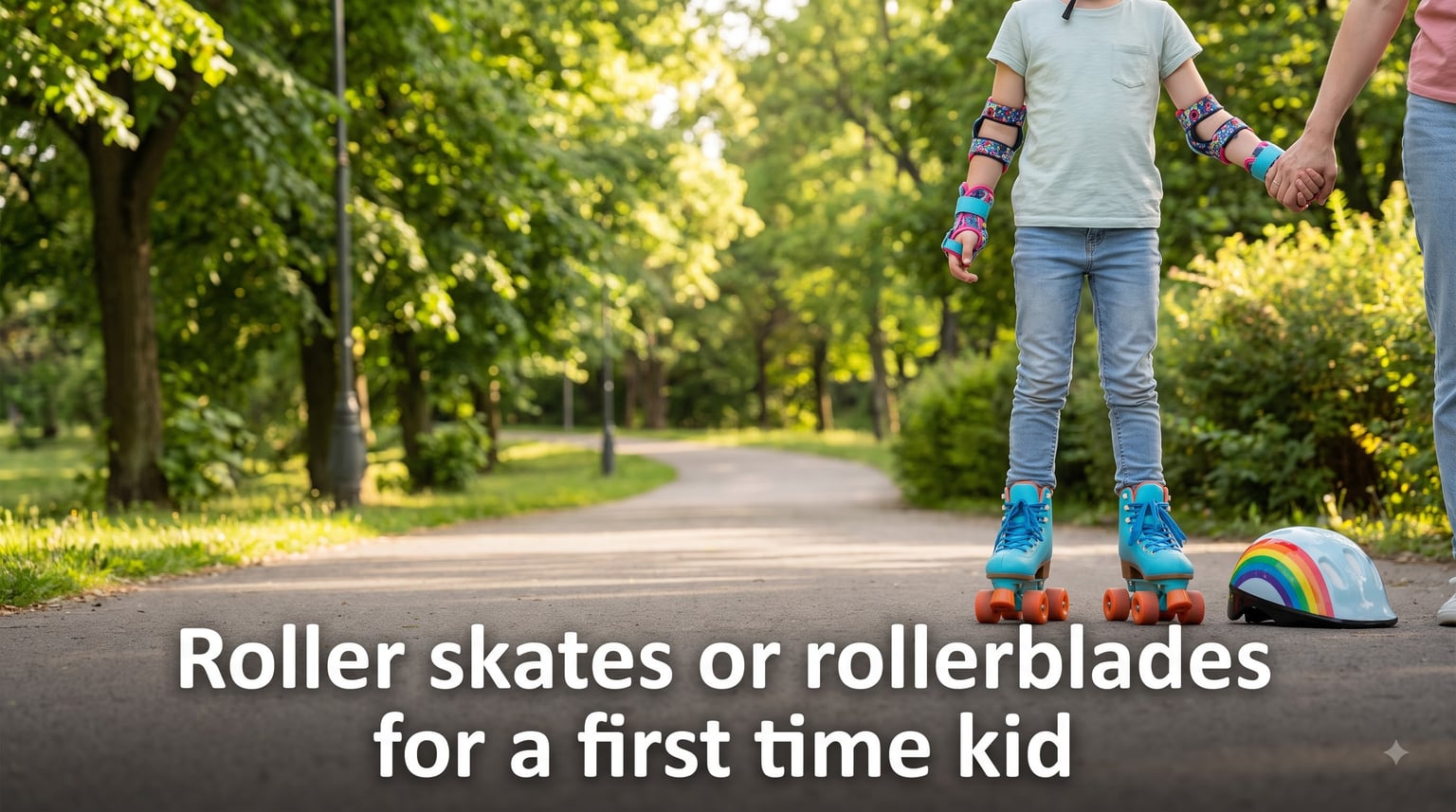
When parents ask us whether to choose roller skates or rollerblades for a first time kid, our team almost always recommends quad roller skates to start. The wider wheelbase and 2×2 wheel layout give young beginners a steadier platform, so kids spend less time wobbling and more time having fun. Inline skates (the kind most people call rollerblades) absolutely have their place, but they demand a bit more balance from a child who has never strapped wheels to their feet before.
I have watched dozens of kids try both styles at our local rink, and the pattern is consistent. Children between 4 and 7 years old get rolling faster on quads, while older kids (8 and up) often adapt to inline skates within a session or two. This guide walks through the differences, the pros and cons of each style, age-based recommendations, and the safety gear you will want before the first outing.
Table of Contents
Roller Skates vs Inline Skates: What’s the Difference?
The difference between roller skates and inline skates comes down to wheel configuration. Quad roller skates have four wheels arranged in a 2×2 pattern, with two wheels in front and two in back, similar to a car. Inline skates (rollerblades) have all four wheels lined up in a single row, front to back, along one frame.
This single design choice changes everything about how each skate feels. Quad skates create a wider contact patch with the ground, which means more surface area supporting your child’s weight. Inline skates have a longer wheelbase but a narrower footprint, so the balance point is more concentrated under the foot.
A quick note on terminology: “Rollerblade” is actually a brand name (the company that popularized inline skates in the 1980s and 1990s), but most people use it to describe any inline skate. We will use “inline skates” and “rollerblades” interchangeably throughout this guide.
Roller Skates Are Easier for Most First-Time Kids
Quad roller skates are easier for beginners than inline skates because of that wider base we mentioned. When a child stands on quads, the four wheels distribute weight across a broader area, so small shifts in balance are absorbed by the platform. On inlines, those same small shifts can quickly turn into a wobble because all the wheels run in one line.
Stopping is another area where quads win for beginners. The heel brake on a quad skate sits at the front of the skate, so kids push it forward with their toes to slow down. It feels intuitive and works on the first try. Inline skates traditionally have a heel brake at the back, which takes more coordination to use, and many beginner kids forget it exists.
One of our team members tested this with her 5-year-old niece last spring. After 20 minutes on quads, the child could shuffle across the kitchen floor and stop on command. The same child tried inlines the next day and needed an adult’s hand for the full hour. That is a typical gap, not a reflection of the child’s athletic ability.
Pros and Cons of Roller Skates for Kids
Roller skates offer real advantages for kids who are strapping on wheels for the first time. The tradeoffs matter too, so here is the honest breakdown.
Pros of Roller Skates for Beginners
- Wider base means easier balance from the first minute
- Toe-stop brake is intuitive and works right away
- Better for dance moves, spins, and tight turns once comfortable
- Lower top speed, which can feel safer for cautious parents
- Classic roller-rink feel that kids often see in movies and shows
Cons of Roller Skates for Kids
- Heavier than inlines, which can tire small legs faster
- Outside wheels can catch on rough pavement or cracks
- Slower on long outdoor paths and bike trails
- Harder to find quality adjustable models for very young kids
Pros and Cons of Inline Skates (Rollerblades) for Kids
Inline skates bring speed, agility, and a sleeker ride once a child gets past the initial learning curve. They are not the best starting point for everyone, but they shine in specific situations.
Pros of Inline Skates for Kids
- Faster top speed, which older kids often love
- Smoother ride over rough pavement, cracks, and small debris
- Lighter weight reduces leg fatigue over long sessions
- Better for outdoor fitness skating, commuting, and hockey
- More adjustable models available for growing feet
Cons of Inline Skates for Kids
- Narrower base makes balance harder for true beginners
- Heel brake takes practice to use correctly
- Tight turns and spins are more difficult to learn
- Higher speeds can lead to harder falls for inexperienced skaters
When to Choose Roller Skates vs Rollerblades by Age
Age is the biggest factor in deciding between roller skates or rollerblades for a first time kid. Here is how our team thinks about each age band based on the kids we have watched learn.
Ages 4 to 5: Quad Skates Only
Children in this age range are still building core balance. Quad skates give them the best chance of standing up and moving on their own within the first session. Inline skates at this age tend to frustrate kids and turn them off skating entirely.
Ages 6 to 8: Quad Skates Recommended
Most 6 to 8 year olds do great on quad skates, and this remains our default recommendation. If your child specifically asks for rollerblades or has older siblings who skate on inlines, a structured lesson can make inlines work, but expect a longer learning curve.
Ages 9 and Up: Either Works Well
By age 9, most kids have the coordination to learn either style. This is the sweet spot for inline skates if your child wants speed, outdoor fitness, or hockey. Quad skates still work, and many older beginners actually prefer the dance and trick potential of quads.
Indoor vs Outdoor Skating: Which Type Works Best?
Where your child will skate most often should influence your choice. Quad roller skates and inline skates each have surfaces they handle better.
Quad skates are the natural pick for indoor rinks. The smooth wooden or concrete surface, the toe-stop, and the tight turning radius all favor quads. If your child takes lessons at a rink, quad skates will match what they learn in class.
Inline skates shine outdoors. The line of wheels glides over small cracks, twigs, and uneven pavement that would catch a quad skate’s outside wheels. For neighborhood paths, bike trails, and beach boardwalks, inlines are the smoother, faster choice.
If you split time between a rink and the sidewalk, either style works. Quads give you a small edge indoors, inlines give you a small edge outdoors.
Safety Gear Every First-Time Skater Needs
No matter which skate type you choose, the safety gear is non-negotiable for a first-time kid. Falls are part of learning, and the right gear turns a tumble into a story instead of a trip to urgent care.
Here is the minimum kit our team recommends for every beginner:
- Helmet: A properly fitted skate or bike helmet rated for the child’s age. Wrist guards (because kids instinctively put their hands out to break a fall).
- Knee pads: Essential for both quad and inline skating, especially during the first few sessions.
- Elbow pads: Often overlooked, but elbows take a beating on the first few falls.
- Closed-toe shoes or proper skate socks: Avoid sandals or open footwear.
One last safety note: always check that the skates fit snugly without pinching. A skate that is too loose will let the foot slide inside, which is the fastest path to a twisted ankle. Adjustable models are great for growing feet, but make sure every setting is locked down before your child rolls.
Frequently Asked Questions
Should kids start with roller skates or blades?
Most kids should start with roller skates (quad skates). The wider 2×2 wheel configuration gives beginners a more stable base, which makes balancing easier and shortens the time it takes to feel confident. Inline skates work better for older kids (usually 9 and up) or children who already have good balance.
Are roller skates or rollerblades easier for beginners?
Roller skates are easier for beginners. Their four-wheel quad design distributes weight across a wider area, so small balance corrections happen naturally. Inline skates line up all four wheels in a single row, which demands more core stability from a first-time skater.
What age should kids start rollerblading?
Most kids are ready for inline skates around age 8 or 9, when they have developed the balance and coordination needed for the single-line wheel setup. Younger children (4 to 7) usually learn faster and have more fun starting on quad roller skates.
Which skates are best for beginner kids?
The best beginner skates for kids are quad roller skates with a sturdy boot, adjustable sizing, and a toe-stop brake. Look for models with a hard outer shell for ankle support, soft padding inside for comfort, and buckles plus laces so the fit can be tightened precisely.
The Bottom Line
Choosing between roller skates or rollerblades for a first time kid comes down to age, balance, and where you plan to skate. For most kids under 8, quad roller skates are the clear winner because they are easier to balance, easier to stop, and friendlier for first lessons. Older kids and outdoor-focused skaters will appreciate the speed and smoothness of inline skates once they have built up the basics.
Whatever you pick, fit the helmet, snap on the wrist guards, and let your child fall a few times. The grin on the way back to the car is worth every wobble.