
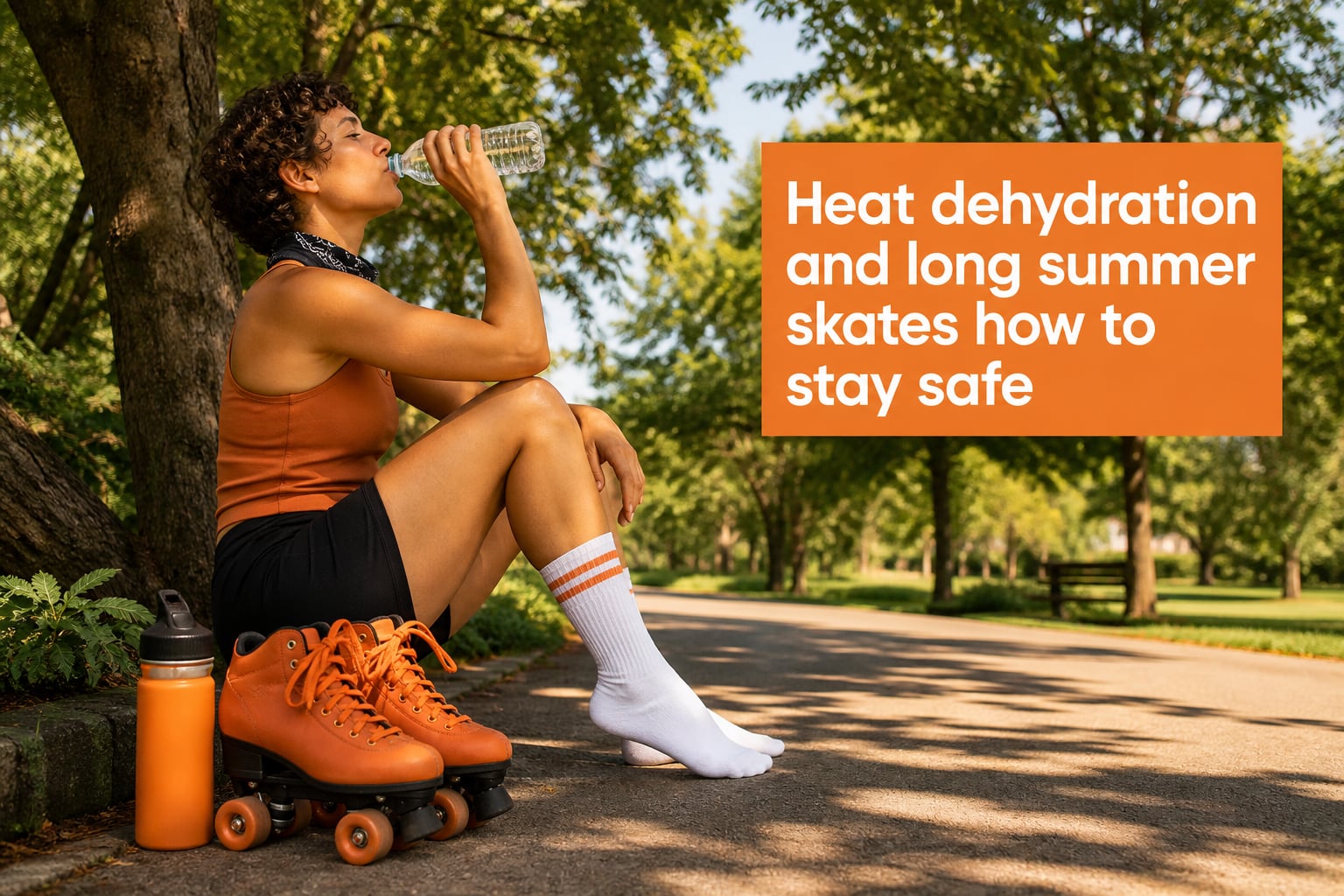
Summer skating is one of the best ways to stay active, but heat dehydration and long summer skates can turn dangerous fast if you are not prepared. I have spent years skating through brutal southern summers, and I learned the hard way that water alone is not always enough. This guide breaks down everything you need to know about summer skating heat safety so you can keep rolling without ending up in the emergency room.
Whether you are doing fitness skating, long outdoor sessions, or casual neighborhood rolls, understanding heat illness prevention is non-negotiable. I will cover hydration strategies, warning signs, timing advice, and recovery tips that are specific to skaters.
Table of Contents
Why Summer Skating Heat Safety Matters?
Skating in hot weather puts extreme strain on your body. Your core temperature rises quickly when you are moving at speed under direct sun, and sweat evaporation, your main cooling mechanism, becomes far less effective in high humidity.
I have talked with skaters on Reddit who skate in Texas heat and struggle to last more than 10 to 15 minutes before needing a cooling break. That is not weakness. That is your body hitting its thermoregulation limit, and ignoring it leads straight to heat exhaustion or worse.
Heat illness is the third leading cause of death among high school and college athletes in the United States. Skaters are not exempt. The combination of physical exertion, protective gear that traps heat, and prolonged sun exposure makes us especially vulnerable during long summer skates.
How Heat Dehydration Affects Skaters?
Heat dehydration happens when fluid loss from sweating exceeds what you drink back in. During summer skating, you can lose 1 to 2 liters of sweat per hour in extreme conditions. That is not a small deficit.
Even mild dehydration, around 2 percent of your body weight, noticeably hurts your skating performance. Your balance gets shaky. Your reaction time slows. Your legs feel heavy and uncoordinated. None of that is what you want when you are rolling on wheels at speed.
As dehydration worsens, your blood thickens and your heart works harder to pump it. Electrolyte imbalance kicks in, which is why so many skaters report muscle cramps and nausea during hot sessions. This is exactly why experienced skaters on community forums stress that water alone is not enough for endurance skating.
Hydration Strategies for Long Skate Sessions
Proper hydration for long skate sessions starts before you lace up. Here is the strategy I follow and recommend based on both personal experience and sports medicine guidance.
Pre-Hydrate Before You Skate
Drink 16 to 20 ounces of water two hours before your session. This gives your body time to absorb it. Then drink another 8 ounces 20 minutes before you start rolling.
Skaters on forums consistently say pre-hydration makes the biggest difference. If you arrive at your skate spot already dehydrated, you will spend the entire session playing catch-up and never get ahead.
Drink During Your Session
Aim for 7 to 10 ounces of fluid every 15 to 20 minutes while skating. Set a timer if you need to. I carry a hydration pack on long routes because stopping to find water is not always an option.
For sessions over an hour, switch to an electrolyte drink. Gatorade, Pedialyte, and powdered hydration packs are all popular among experienced skaters. The sodium and potassium in these drinks replace what you lose through sweat and help your body hold onto the water you drink.
Rehydrate After Skating
Drink 16 to 24 ounces for every pound of body weight lost during your session. Weigh yourself before and after a summer skate if you want to get specific. Otherwise, drink steadily for two to three hours after skating until your urine runs pale yellow.
Watch for Hydration Nausea
One of the most common complaints I see from skaters is nausea after chugging water mid-session. This usually happens when you drink too much plain water too fast without electrolytes. Sip slowly and alternate between water and an electrolyte drink to avoid this.
Recognizing Heat Exhaustion While Skating
Heat exhaustion is your body’s warning system. If you catch it early and act, you can prevent it from escalating to heat stroke. Here are the seven key signs to watch for.
Heavy sweating during skating
Dizziness or lightheadedness, especially when stopping
Nausea or vomiting
Headache that builds gradually
Weak, rapid pulse
Cool, clammy, or pale skin despite the heat
Muscle cramps in legs or abdomen
If you notice any of these, stop skating immediately. Find shade or air conditioning, sip cool fluids slowly, and remove any tight or heavy gear. Do not get back on skates until symptoms fully resolve, which can take 30 minutes to an hour.
Pushing through heat exhaustion is how skaters end up with heat stroke. I have seen it happen, and it is scary. Listen to your body.
Heat Exhaustion vs Heat Stroke: Know the Difference
Heat exhaustion is serious but treatable. Heat stroke is a life-threatening medical emergency. Knowing the difference could save your life or a skating buddy’s life.
Heat exhaustion comes with heavy sweating, cool skin, and a feeling of weakness. Heat stroke is the opposite in several key ways.
Skin: Heat exhaustion causes cool, clammy skin. Heat stroke causes hot, dry skin with no sweating.
Temperature: Heat exhaustion keeps body temperature under 104 degrees F. Heat stroke pushes it to 104 degrees F or higher.
Mental state: Heat exhaustion causes mild confusion. Heat stroke causes severe disorientation, slurred speech, or loss of consciousness.
Sweating: Heat exhaustion produces heavy sweat. Heat stroke often stops sweating entirely, meaning the cooling system has failed.
If you suspect heat stroke in yourself or another skater, call 911 immediately. Move to a cool place, apply ice packs to the neck, armpits, and groin, and do not give fluids if the person is confused or unconscious.
When It Is Too Hot to Skate Outside
Temperature alone does not tell the full story. The heat index, which combines temperature and humidity, is what actually determines how dangerous the conditions are for skating.
When the heat index is between 90 and 103 degrees F, skate with caution. Take frequent breaks, shorten your session, and prioritize shade. When the heat index hits 104 to 124 degrees F, move your skate to early morning or late evening.
At a heat index above 125 degrees F, do not skate outdoors at all. These conditions are dangerous for any sustained physical activity.
My rule of thumb is to check the heat index before every summer skate. If it is above 100 degrees F, I reschedule for before 9 AM or after 7 PM. The sun is lower, the pavement is cooler, and your body can actually regulate its temperature.
Summer Skating Tips for Hot Weather
Beyond hydration, several habits make summer skating safer and more enjoyable. Here is what works based on years of experience and input from the skating community.
Skate at the Right Times
Early morning, before 9 AM, is the best time for summer skating. The pavement has not absorbed a full day of heat yet, and the air is cooler. Late evening after 7 PM is your second-best window.
Avoid skating between 11 AM and 4 PM. This is when UV radiation and heat index peak, and it is when most heat illness emergencies occur.
Dress for the Heat
Wear lightweight, moisture-wicking, light-colored clothing. Dark fabrics absorb heat and make cooling harder. Avoid cotton, which traps sweat against your skin.
You still need protective gear, but consider lighter options. Ventilated helmets and breathable pads help you stay protected without overheating.
Plan Your Route Around Shade and Water
Map your skating route to include shaded sections and water fountains. Trails with tree cover are far better than open pavement in direct sun. I always scout rest spots with air conditioning access along my route.
Acclimate Gradually
If you have not skated in heat before, do not jump into a two-hour session. Acclimate over multiple sessions, starting with 15 to 20 minutes and adding time over a week or two. Your body adapts to heat stress, but it takes repetition.
Use Sunscreen
Apply sweat-resistant sunscreen 30 minutes before skating. Sunburn reduces your skin’s ability to cool itself, which makes heat illness more likely. Reapply every two hours on long sessions.
Watch Your Skate Equipment
Hot pavement affects more than your body. Bearings can heat up and degrade faster in extreme temperatures, and soft outdoor wheels can wear quickly on hot asphalt. Inspect your gear after summer sessions and carry spare bearings on long routes.
Recovery After Skating in Heat
Recovery from a hot summer skate takes longer than you might expect. Mild heat exhaustion typically takes 24 to 48 hours of rest and rehydration to fully resolve. Do not plan back-to-back intense sessions in extreme heat.
Drink electrolyte-rich fluids for several hours after skating. Eat water-rich foods like watermelon, cucumber, and oranges. Avoid alcohol, which dehydrates you further and impairs your body’s temperature regulation.
If you still feel dizzy, fatigued, or nauseous the day after a hot skate, you have not fully recovered. Rest another day before skating again. Pushing through prolongs recovery and increases injury risk.
Frequently Asked Questions
What to drink to avoid heat stroke?
Drink water and electrolyte drinks like Gatorade or Pedialyte. For skating sessions under an hour, water is usually sufficient. For longer sessions, alternate between water and an electrolyte drink to replace sodium and potassium lost through sweat. Avoid caffeinated drinks, soda, and alcohol, as they increase dehydration.
How long does it take to recover from dehydration and heat exhaustion?
Mild heat exhaustion typically takes 24 to 48 hours of rest and fluid replacement to fully recover. Severe cases may take several days. During recovery, continue drinking electrolyte-rich fluids, avoid strenuous activity, and stay in cool environments. If symptoms persist beyond 48 hours, consult a doctor.
What temperature is too hot for humans to survive in summer?
When the heat index reaches 104 to 124 degrees F, outdoor physical activity becomes dangerous. Above a heat index of 125 degrees F, conditions are life-threatening for any sustained exertion, including skating. Always check the heat index, not just the temperature, because humidity dramatically increases the danger.
What are the 7 signs of heat exhaustion?
The seven signs of heat exhaustion are heavy sweating, dizziness, nausea or vomiting, headache, weak rapid pulse, cool clammy skin, and muscle cramps. If you experience any of these while skating, stop immediately, find shade, sip fluids slowly, and rest until symptoms resolve.
Conclusion
Heat dehydration and long summer skates do not have to be a dangerous combination. With the right hydration strategy, timing, and awareness of warning signs, you can enjoy outdoor skating all summer long safely.
The key takeaways: pre-hydrate before every session, use electrolytes for sessions over an hour, skate before 9 AM or after 7 PM, and stop immediately if you notice signs of heat exhaustion. Summer skating heat safety is about working with your body, not against it. Stay smart, stay hydrated, and keep rolling.