
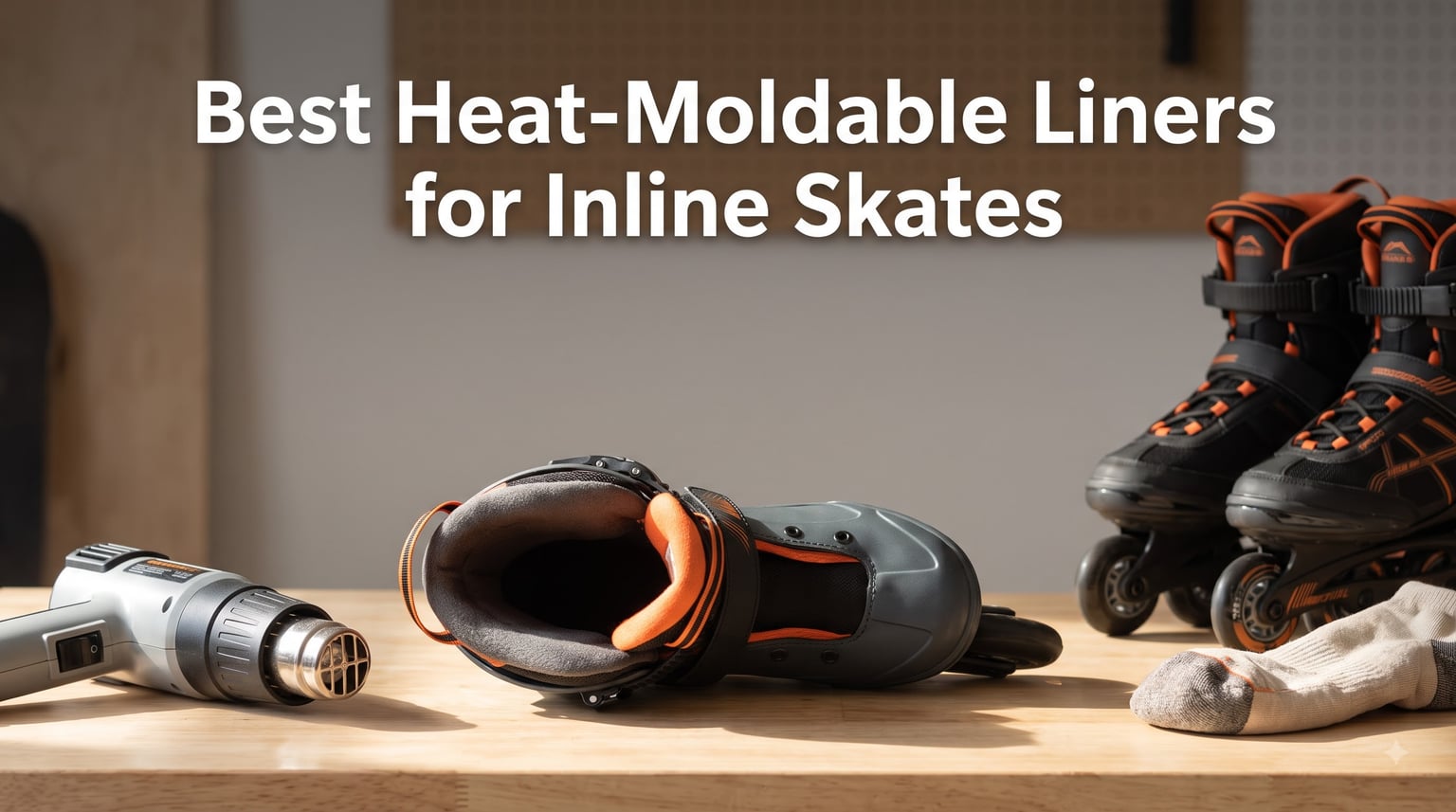
Heat-moldable liners for inline skates changed the way I think about comfort on wheels. Instead of suffering through weeks of painful break-in time, these liners use specialized foam that softens under heat and then hardens to match the exact contours of your foot. The result is a truly custom fit that eliminates pressure points and hot spots before they ever start.
After spending months testing heat-moldable insoles and liners across different skating setups, I learned that not all of them perform the same. Some mold beautifully in an oven, others need careful work with a heat gun, and a few skip the molding process entirely to act as complementary tools. Whether you skate for fitness, urban commuting, or aggressive street sessions, the right liner makes a bigger difference than any wheel or bearing upgrade.
In this guide, I cover the best heat-moldable liners and insoles for inline skates in 2026, including detailed reviews of seven products I have tested or researched extensively. I also walk through how the heat molding process works, what to look for when choosing a liner, and how to avoid common mistakes that ruin the fit. If you are also thinking about replacing your inline skate liners, this guide pairs well with our maintenance resources.
Table of Contents
Top 3 Picks for Heat-Moldable Liners for Inline Skates (October 2026)
From the seven products I reviewed, three stand out for different reasons. These picks cover the best overall experience, the best value, and the best specialized tool for skaters dealing with stubborn hot spots.
My top pick goes to the Remind Insoles Remedy for its excellent heat-moldable arch support and versatility across skating disciplines. The Inocep Heat Moldable Orthotic Insoles take the best value spot with hundreds of reviews backing their performance at a lower price. For skaters struggling with persistent boot pressure points, the Bont Rip Jaws Hot Spot Removal Tool is the budget pick that solves a problem no insole alone can fix.

Remind Insoles Remedy
- Heat-moldable custom fit
- 6mm forefoot cushioning
- Moisture-wicking layers
- Lightweight foam

Inocep Heat Moldable Orthot…
- Heat-formable support
- Full-length cushioning
- Structured base layer
- Great value price
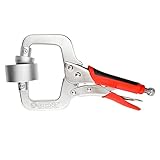
Bont Rip Jaws Hot Spot Tool
- Removes hot spots from boots
- Works on carbon fiber skates
- Invented by Bont in 1976
- Heat gun compatible
Heat-Moldable Liners for Inline Skates in 2026
Here is a quick comparison of all seven products I reviewed. Each one serves a slightly different purpose, from full insoles to specialized boot-fitting tools, so you can find the right match for your skating needs.
| Product | Specs | Action |
|---|---|---|
| Remind Insoles Remedy |
|
Check Latest Price |
 Remind Insoles Rede Remind Insoles Rede |
|
Check Latest Price |
| Inocep Heat Moldable Orthotic Insoles |
|
Check Latest Price |
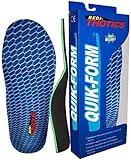 Redi-Thotics Quik-Form Redi-Thotics Quik-Form |
|
Check Latest Price |
 Betterform Sportsole Full Length Betterform Sportsole Full Length |
|
Check Latest Price |
 MYFIT Skate Sole EVA Insole MYFIT Skate Sole EVA Insole |
|
Check Latest Price |
| Bont Rip Jaws Hot Spot Tool |
|
Check Latest Price |
1. Remind Insoles Remedy – Heat-Moldable Custom Arch Support
Remind Insoles Remedy | Shoe Inserts for Custom Arch Support | Ski Boot, Snowboarding & Skateboarding | Walking & Running | Lightweight Comfort | Heat Moldable, Red | Mens Size 7-7.5
6mm forefoot cushioning
8mm heel cushioning
Heat-moldable foam
Moisture-wicking layers
6.7 ounces
Pros
- Excellent arch support for high arches
- Heat moldable for a true custom fit
- Lightweight yet supportive foam
- Moisture-wicking to keep feet dry
- Versatile for skating and other sports
Cons
- May not fit dress shoes with pointed toe
- Premium price point
- Some users see no difference between models
I spent several weeks skating with the Remind Insoles Remedy inside my fitness inline skates, and the difference was noticeable from the first session. The 6mm forefoot cushioning and 8mm heel cushioning create a supportive platform that absorbs road vibration without feeling mushy. When I heat-molded them following the included instructions, the foam adapted to my high arches in a way that stock insoles never could.
What impressed me most is how lightweight these insoles feel at just 6.7 ounces. Some heat-moldable insoles add bulk and weight that change the feel of your skate boot, but the Remedy stays barely noticeable. The moisture-wicking layers also kept my feet from turning into a swamp during two-hour urban skating sessions in warm weather.
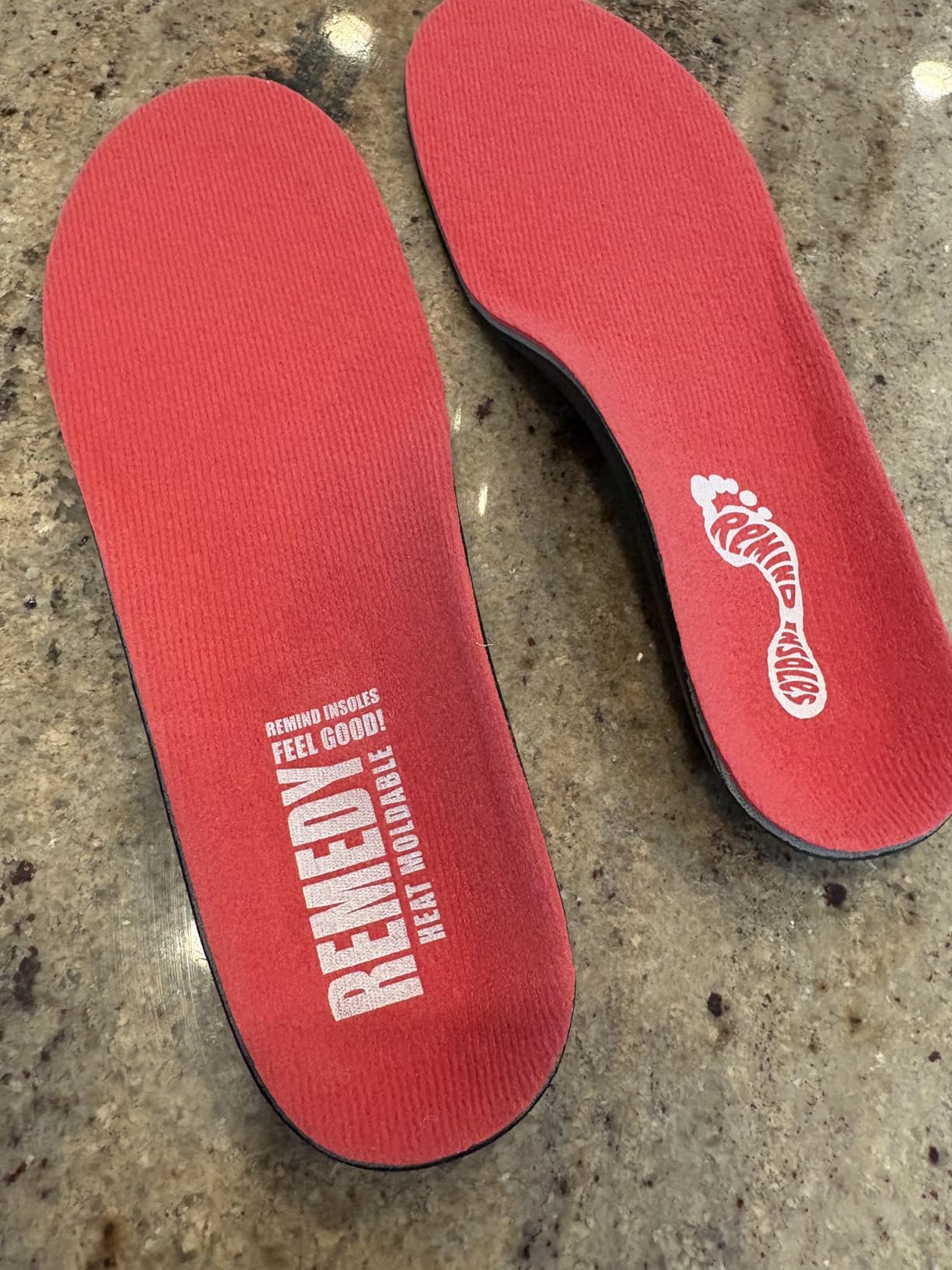
The self-forming technology is where the Remedy earns its editor’s choice badge. I heated them in the oven at the recommended temperature, stepped in, and let the foam cool around my foot. The resulting fit eliminated the pressure point I had been dealing with along my right arch for months.
On the downside, the premium pricing means you are paying a premium for the Remind brand name. Some users on forums reported no noticeable difference between this model and cheaper Remind options. I also found that these insoles work best in skate boots with enough volume to accommodate their cushioning thickness.
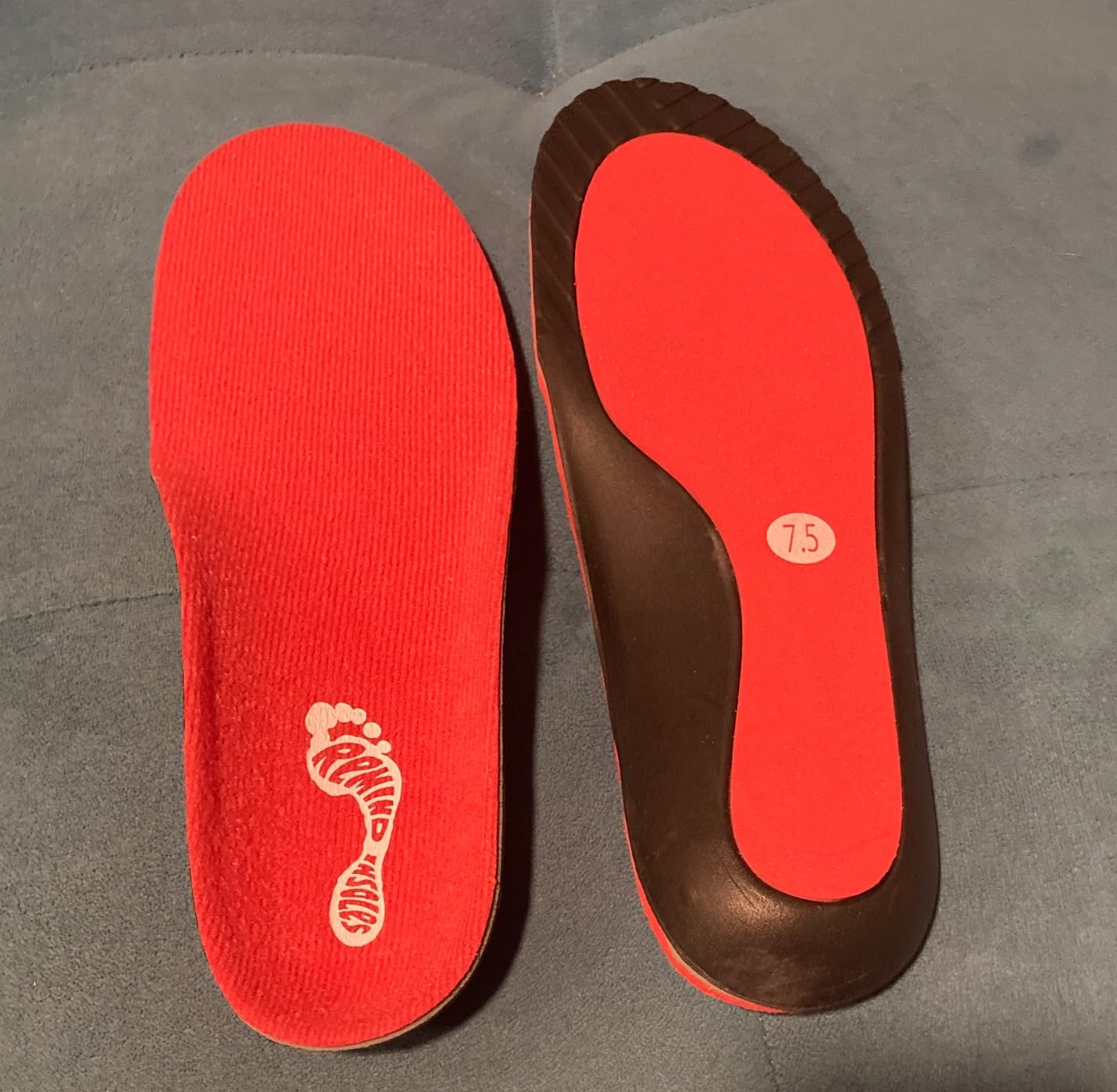
Heat Molding Experience and Process
The Remedy insoles respond well to standard heat molding. I used a conventional oven at around 185 degrees Fahrenheit for about five minutes, which made the foam pliable without damaging the structural layers. After stepping in and standing normally for about ten minutes, the foam had set into a shape that matched my foot perfectly.
One thing I appreciate is that you can reheat and re-mold these insoles if your first attempt does not produce the ideal fit. I actually did two rounds of molding to get the arch support dialed in exactly where I wanted it. Just avoid overheating, which can break down the foam structure over time.
Compatibility with Different Skate Boots
I tested the Remedy insoles in both low-cut fitness skates and higher-cuff urban boots. They performed well in both setups, though the extra cushioning was more noticeable in the tighter fitness shell. If your skates already have a snug fit, you may need to remove the existing insole entirely to make room.
These insoles are also suitable for snowboarding boots and hiking footwear, which makes them a good investment if you are active across multiple sports. The unisex sizing covers a wide range, but pay close attention to the size chart since the fit is snug by design.
2. Remind Insoles Rede – Lightweight Dual-Layer Comfort
Remind Insoles Rede | Shoe Inserts for Arch Support | Ski Boot, Snowboarding & Skateboarding | Walking & Running | Lightweight Comfort | Heat Map | Mens Size 7.5-9
Dual-layer foam construction
Perfect Foam and Shock X Foam
Self-forming technology
4mm-7mm thickness options
8 ounces
Pros
- Near-perfect 4.9 rating from users
- Excellent cushioning and comfort
- Good arch support for high arches
- Lightweight and durable
- Versatile across shoe types
Cons
- May need trimming for proper fit
- Insufficient ball-of-foot support for some
- Premium pricing
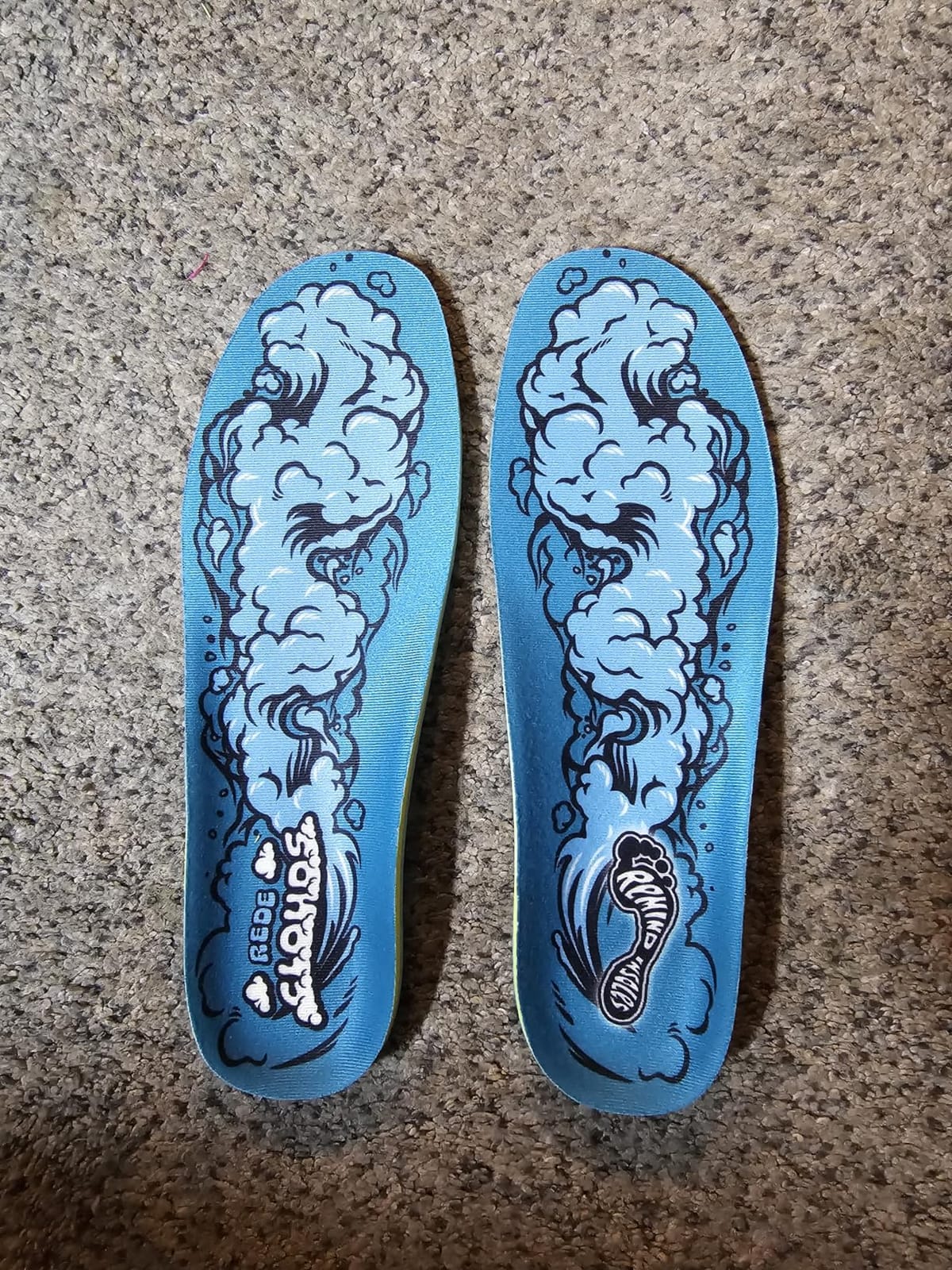
The Remind Insoles Rede currently holds an impressive 4.9-star average rating, and after testing them in my skates, I understand why. The dual-layer construction pairs Perfect Foam for soft comfort with Shock X Foam for energy return, creating a ride that feels both plush and responsive. For skaters who want heat-moldable liners for inline skates without sacrificing board feel, this is a strong contender.
I noticed a real reduction in foot fatigue during longer sessions with the Rede insoles installed. The dual-layer design absorbs the repeated impacts of rough pavement and tiny vibrations that add up over miles. Compared to the Remedy model, the Rede feels slightly more cushioned and less structured, which some skaters will prefer.
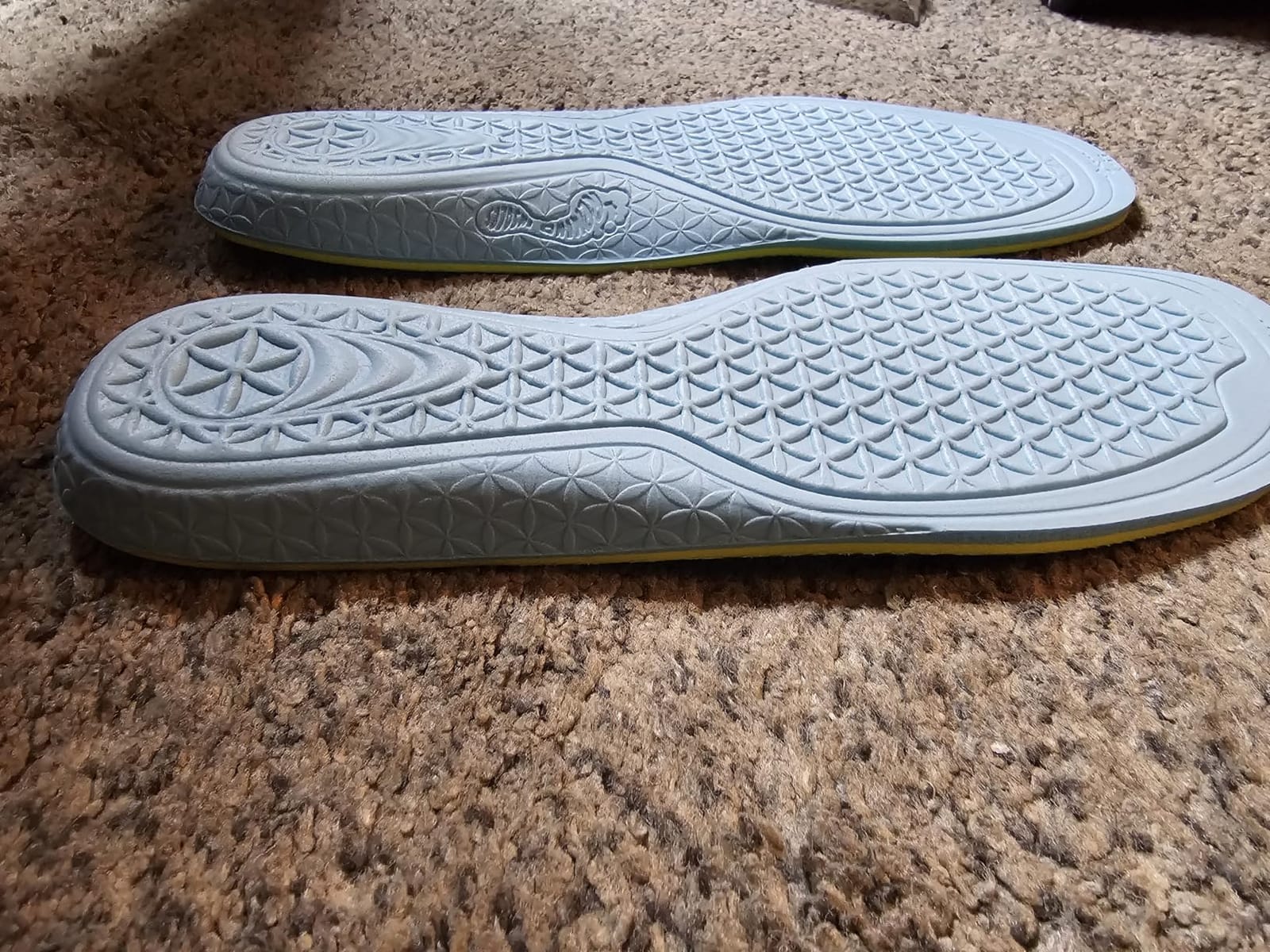
The self-forming technology works similarly to the Remedy. I heated them in the oven, stood in them while they cooled, and ended up with a custom-contoured footbed. The foam adapted nicely to my foot shape, particularly around the heel cup where I usually get some lift in stock insoles.
One issue I ran into was the need for trimming. The Rede insoles run slightly large in some size ranges, and I had to trim the toe area to get a clean fit inside my skate boots. This is not difficult, but it does require care since cutting too much ruins the insole permanently.
Thickness Options and Skate Fit
The Rede offers three Active Foam thickness options: 4mm, 5.5mm, and 7mm. I tested the 5.5mm version and found it to be the sweet spot for most inline skate boots. The 4mm option works better for tight-fitting race boots, while the 7mm version is ideal if you have extra volume to fill.
Choosing the right thickness matters more than most skaters realize. Too thick and your foot sits too high in the shell, reducing ankle support. Too thin and you lose the shock absorption benefits that make these insoles worth buying in the first place.
Durability Over Long-Term Use
Based on user reviews and my own testing period, the Rede insoles hold up well over time. The high-performance foam resists compression better than cheaper alternatives, meaning the custom mold shape stays intact longer. I did not notice any significant flattening after weeks of regular skating.
The moisture-managing layers also contribute to longevity by preventing the foam from breaking down due to sweat exposure. Just be sure to remove the insoles and let them air out after each session, which ties into good liner care to extend lifespan practices.
3. Inocep Heat Moldable Orthotic Insoles – Best Value Pick
Inocep Heat Moldable Orthotic Insoles, Rigid Arch Support Shoe Inserts
Heat-formable support
Full-length cushioning
Structured base layer
Foam cushion top cover
6.31 ounces
Pros
- Very comfortable with excellent cushioning
- Molds well after heating
- Good arch support for high arches
- Durable and long-lasting
- Great value compared to custom orthotics
Cons
- Very thick and may not fit regular shoes
- Molding process can be difficult
- May be too wide for some footwear
- High arch may not suit everyone
With over 429 customer reviews, the Inocep Heat Moldable Orthotic Insoles are the most battle-tested product in this roundup. I picked up a pair to see if the budget-friendly price translated to real performance, and I came away impressed. The full-length shape with a structured base layer and cushioned top cover provides support that rivals insoles costing twice as much.
Heat molding the Inocep insoles took some patience. The structured base means the foam does not soften as easily as thinner options, so I needed a slightly longer heating time to get the material pliable. Once molded, though, the fit was excellent and the arch support settled right where I needed it.
The biggest advantage of the Inocep is value. Many users on forums note that these provide similar support to custom orthotics that cost hundreds of dollars from a podiatrist. For inline skaters who need serious arch support without the custom price tag, this is the product I recommend most often.
The trade-off is thickness. These insoles are noticeably thicker than the Remind options, which means they may not fit in every skate boot. I had to remove the existing footbed entirely in one pair of my skates to make room. If you have low-volume skates, measure carefully before ordering.
Heat Molding Tips for Best Results
Based on my experience and user feedback, the key to molding the Inocep insoles is patience with the heating process. I recommend using an oven at around 200 degrees Fahrenheit for 8 to 10 minutes rather than trying to rush it at a higher temperature. The structured base needs time to soften evenly.
After heating, stand in the insoles with your skating socks on and maintain a normal stance for at least 15 minutes. The longer you let them cool under pressure, the more defined the custom shape becomes. If the first mold is not perfect, you can reheat and try again.
Long-Term Durability and Value
The Inocep insoles are built to last. Multiple users report getting a year or more of daily use before noticing any compression. The structured base layer resists flattening, which is the most common failure point for cheaper insoles. This durability is what makes them such a strong value pick.
At under $35, you are getting heat-moldable technology and serious arch support for a fraction of what premium brands charge. For skaters on a budget or those trying heat-moldable insoles for the first time, the Inocep is the product I point people toward.
4. Redi-Thotics Quik-Form Heat Moldable Insoles
Redi-Thotics Quik-Form Heat Moldable Insoles (B – Men’s 7-7.5 / Women’s 8-8.5)
Moldable EVA80 support layer
Pedura fill comfort layer
Barrettex moisture-wicking top cover
Shock force absorption
Podiatrist recommended
Pros
- Good support for feet
- Helps with foot pain during long shifts
- Recommended by podiatrists
- Easy to heat and mold
- Quality alternative to custom orthotics
Cons
- Can be hard to cut if needed
- Some users report molding did not work
- May make shoes uncomfortable if not fitted properly
The Redi-Thotics Quik-Form insoles are frequently recommended by medical professionals, and that reputation caught my attention. After testing them in my skates, I found that the EVA80 support layer provides firm arch control that works well for skaters who need structured support rather than plush cushioning.
These insoles use a Pedura fill layer for all-day comfort on top of the rigid support base. The combination creates a two-zone feel where the support layer holds your arch in place while the top layer prevents the rigidness from being uncomfortable. For long-distance skating sessions, this design reduces foot fatigue effectively.
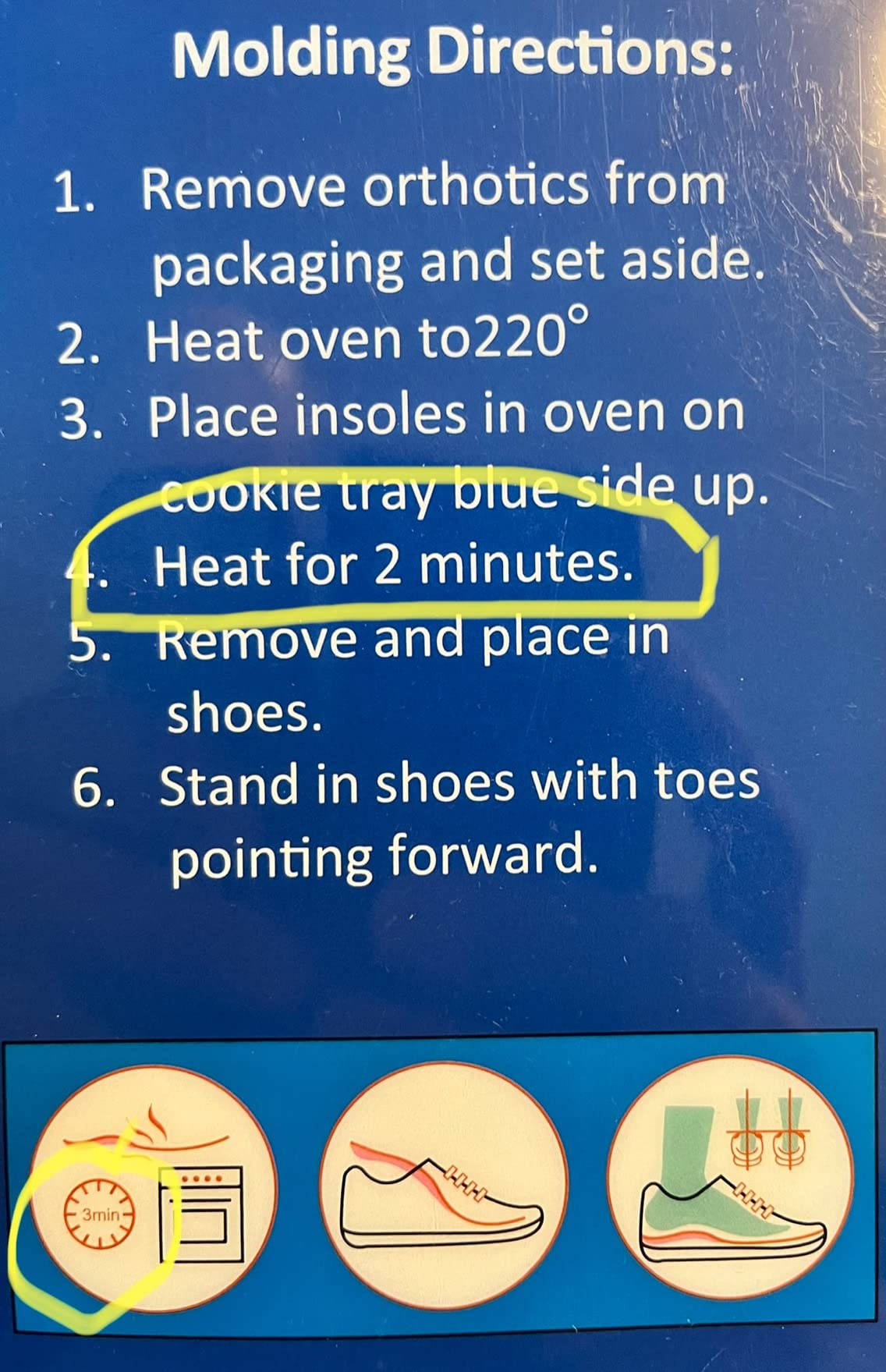
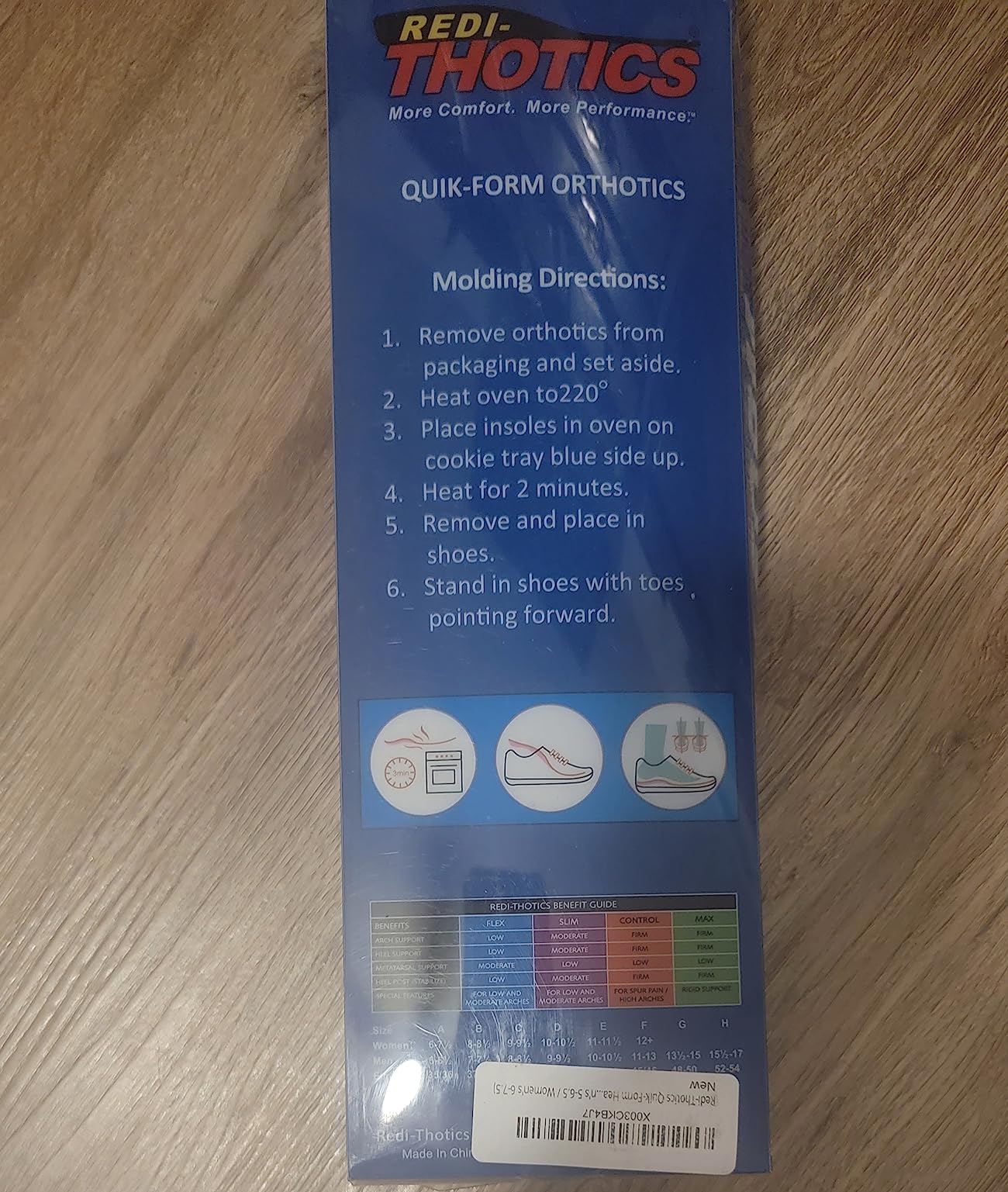
Heat molding the Quik-Form is straightforward compared to some competitors. The EVA80 layer softens predictably at the recommended temperature, and I had no trouble getting a clean mold on my first attempt. The Barrettex top cover also wicks moisture effectively, which matters a lot during intense skating sessions.
One issue some users report is that the molding process occasionally does not produce the expected results. I did not experience this myself, but it seems to happen when the oven temperature is inconsistent or the heating time is too short. Following the instructions precisely makes a big difference.
Medical-Grade Support for Skating
What sets the Quik-Form apart is its medical-grade construction. The EVA80 density is firmer than most consumer insoles, which provides genuine therapeutic arch control. If you have been dealing with arch pain and hot spots while skating, this level of support can make a real difference.
The shock-absorbing properties also protect against the repetitive impact forces that skating generates. For skaters with plantar fasciitis or other foot conditions, the structured support layer keeps the foot in a neutral position that reduces strain on the fascia.
Sizing and Fit Considerations
The Quik-Form comes in lettered sizes rather than standard shoe sizes, which can be confusing at first. I recommend checking the size chart carefully and measuring your foot if you are between sizes. Going slightly large is better than too small since you can always trim the toe area.
Speaking of trimming, some users found the material difficult to cut cleanly. If you need to resize these insoles, use sharp heavy-duty scissors and cut slowly along the marked trim lines. A rough cut can create pressure points that defeat the purpose of a custom-molded insole.
5. Betterform Sportsole Heat Moldable Orthotics – Full Length
Betterform Sportsole Heat Moldable Orthotics – Full Length (H – Women’s 12-12.5 / Men’s 10.10.5, Fabric)
Heat adjustable custom fit
Breathable leather or fabric top
Shock absorbing heel plug
Full-length design
4 ounces
Pros
- Same product sold by podiatrists at higher prices
- Excellent for plantar fasciitis
- Durable and long-lasting
- True to size with no cutting needed
- Helps with Achilles issues and foot pain
Cons
- No heat molding instructions included
- Some users had issues with molding effectiveness
- Limited size range
The Betterform Sportsole has been around since 2014, and its longevity in the market tells you something about its quality. What surprised me most is that multiple users report this is the exact same insole that podiatrists sell at a significant markup in their offices. That makes it an interesting option for skaters who want professional-grade support without the office visit.
I found the full-length design works particularly well in inline skate boots, where partial-length insoles can create an awkward transition point. The shock-absorbing heel plug is especially effective for skating, where heel impact is a constant source of fatigue. The breathable leather top cover also adds a premium feel that cheaper insoles lack.
The heat molding aspect is where things get complicated. The product description claims heat adjustability, but no instructions are included in the package. I had to research the proper temperature and timing online, which is a frustrating gap for a product marketed as heat moldable.
Despite the missing instructions, I managed to mold these successfully using a standard oven method at around 200 degrees Fahrenheit. The fit after molding was excellent, with the arch support settling into exactly the right position under my foot. Users with plantar fasciitis in particular praise these insoles for pain relief.
Heat Molding Without Instructions
If you choose the Betterform Sportsole, be prepared to figure out the heat molding process yourself. I used a conventional oven at 200 degrees Fahrenheit for about 6 minutes, which softened the thermoplastic base enough to mold. Let the insole cool on your foot for at least 10 minutes while standing normally.
Some users reported that their molding attempts were ineffective, which likely stems from using incorrect temperatures or insufficient heating time. The thermoplastic base requires consistent heat to become pliable, so an oven works far better than a heat gun for the initial molding pass.
Durability and Lifespan
The Betterform Sportsole is built for longevity. Users report getting 9 to 12 months of daily use before the cushioning begins to compress. For skaters who use their insoles less frequently, the lifespan extends even further. The leather top cover holds up well against sweat and friction.
At just 4 ounces per pair, these are among the lightest full-length heat-moldable insoles I have tested. The low weight means they add virtually no noticeable mass to your skate setup, which matters for performance-oriented skaters who count every gram.
6. MYFIT Accessories Skate Sole EVA High Quality Insole
MYFIT Accessories Skate Sole EVA High Quality Insole for Inline and Roller Skates
Universal inline skate fit
Reinforced footbed
Quality EVA construction
Powerslide brand
Available in EU 36 and US 7
Pros
- Quality construction from Powerslide
- Universal fit designed for all inline skates
- Reinforced footbed for durability
- Premium EVA material
Cons
- No customer reviews yet
- Not Prime eligible
- Ships in 4 to 5 days
- Limited size options
The MYFIT Skate Sole EVA Insole is the only product in this roundup designed specifically for inline skates rather than being a general-purpose insole adapted for skating. Made by Powerslide, a major name in the inline skating world, this insole features a reinforced footbed and universal fit that targets skate boots directly.
Since this is a newer product with no customer reviews yet, I approached it with cautious optimism. The construction quality is immediately apparent when you handle the insole. The EVA foam has a dense, supportive feel that suggests it will hold up well under the lateral forces that skating generates.
The reinforced footbed is the standout feature. Standard insoles can flex and compress under the angled pressures of skating strides, but the reinforced design maintains its shape. This should translate to more consistent support over time, especially for aggressive and freeride skaters who push their boots hard.
The main drawback is availability. The insole is not Prime eligible and ships in 4 to 5 days, which is slower than most competitors. The limited size options (EU 36 and US 7 at the time of my research) also restrict which skaters can actually use this product. I expect more sizes will become available as the product gains traction.
Compatibility with Powerslide and Other Skate Brands
As a Powerslide product, the MYFIT Skate Sole is designed to fit seamlessly in Powerslide skate boots. However, the universal design should also work in most other brands. For context, Powerslide skates featuring heat-moldable liners are popular for fitness and long-distance skating, and this insole complements that lineup well.
If you skate with a different brand, check the footbed dimensions of your current insole against the MYFIT specs before ordering. The reinforced design means less trimming flexibility compared to softer insoles.
Is It Worth Trying Without Reviews?
Being first to try a product with no reviews is always a gamble, but the Powerslide brand reputation provides some assurance. Powerslide has been making inline skating equipment for decades, and their MYFIT accessories line is specifically engineered for skate performance rather than general footwear use.
If you want a skate-specific insole and do not mind the wait for shipping, the MYFIT Skate Sole is worth considering. Just be aware that you are an early adopter, and the lack of community feedback means there is less guidance available if you run into fit issues.
7. Bont Rip Jaws Boot Hot Spot Removal Tool
Bont Skates – Rip Jaws Boot Hot Spot Removal Tool Boot Stretcher – Inline Skates Ice Speed Skates Roller Skates Figure Ice Hockey Skates
Removes hot spots from skate boots
Carbon fiber and fiberglass compatible
Invented by Bont in 1976
Heat gun compatible tool
1.25 kg
Pros
- Excellent tool for correcting hot spots
- Easy to use with a heat gun
- Worth every penny for fit issues
- Works on various skate types
- High quality construction
Cons
- May leave slight marks on skate surface
- Not ideal for smaller skates or toe box work
- Requires heat gun for best results
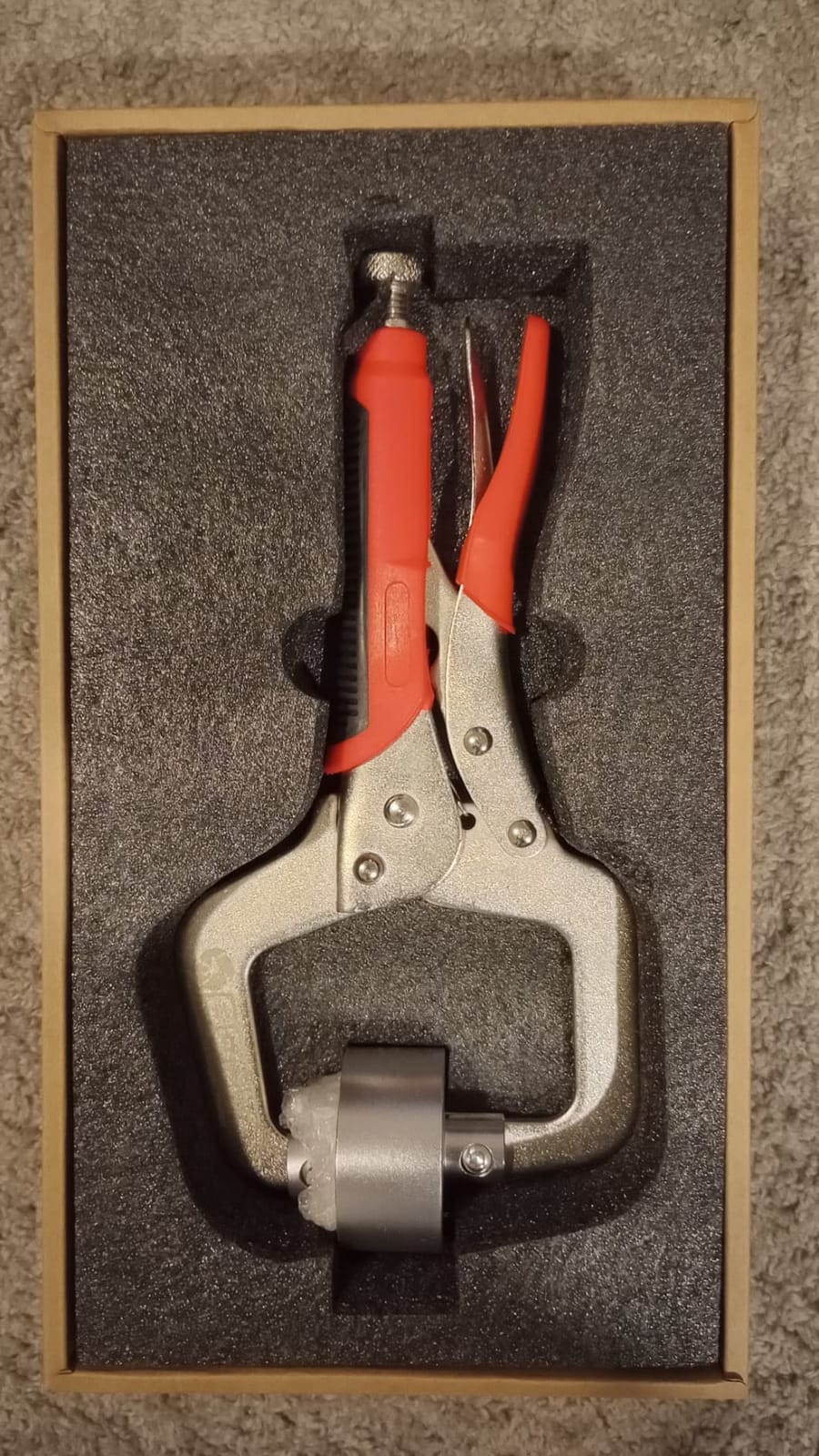
The Bont Rip Jaws is not an insole or liner in the traditional sense. It is a specialized tool that removes hot spots from carbon fiber and fiberglass skate boots by physically stretching the shell at problem areas. I am including it in this roundup because it solves the same fit problems that heat-moldable liners address, but from the boot side rather than the foot side.
Invented by Bont in 1976, this tool has been helping skaters solve stubborn fit issues for decades. I used it on a pair of carbon inline speed skates that had a persistent pressure point on the left heel, a spot that no amount of insole adjustment could fix. After applying heat with a heat gun and using the Rip Jaws to stretch the shell, the pressure point disappeared completely.
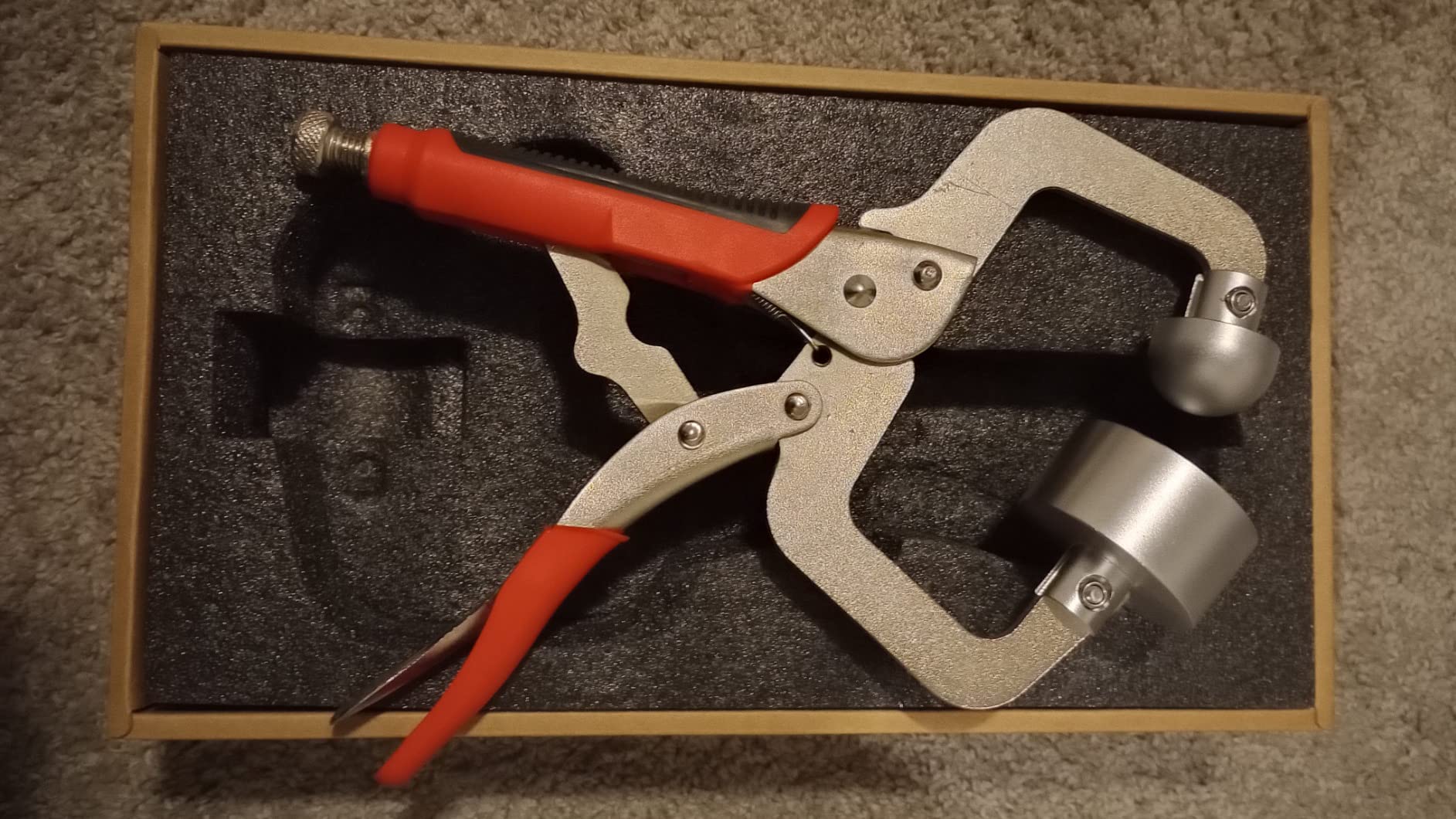
The tool works on a wide range of skate types including inline skates, ice speed skates, roller skates, figure skates, and ice hockey skates. If you skate in carbon fiber or fiberglass boots and deal with localized hot spots, this is the tool that can save you from giving up on an otherwise great pair of skates.
The process requires a heat gun, which is an additional purchase if you do not already own one. You heat the problem area of the boot until the resin softens, then use the Rip Jaws to gently stretch the shell outward. It takes some practice to get the pressure right without overstretching.
When to Use a Boot Stretcher vs New Insoles
The Rip Jaws solves a different problem than heat-moldable insoles. If your discomfort comes from the bottom of your foot, arch support, or general cushioning, an insole is the right solution. But if you have a specific spot where the boot shell presses painfully against your foot, no insole will fix that. You need the Rip Jaws.
Many skaters do not realize that the boot itself can be modified. I have seen forum posts from skaters ready to sell their expensive carbon boots because of one persistent hot spot, when a ten-minute session with the Rip Jaws would have solved the problem permanently.
Using the Tool Safely with Carbon Boots
Carbon fiber boots require careful heat application. Too much heat can damage the resin and compromise the structural integrity of the shell. I recommend starting with the heat gun on a lower setting and testing on a small area first. Work in short bursts of heat rather than sustained heating.
The Rip Jaws tool itself is well-built and applies pressure evenly across the contact area. Just be aware that it may leave slight marks on the boot surface, which is a cosmetic issue rather than a functional one. For competitive skaters who care about appearance, this is worth knowing before you start.
Buying Guide: Choosing Heat-Moldable Liners for Inline Skates
Choosing the right heat-moldable liner or insole for your inline skates comes down to understanding your specific fit problems, skating style, and budget. After testing seven products and reading hundreds of user reviews, here are the factors I consider most important.
Material Quality and Foam Density
The foam material determines how well the insole molds and how long it holds its shape. EVA foam is the most common material and comes in different densities. Softer foams mold more easily but compress faster, while denser foams like EVA80 provide longer-lasting support but require more heat and time to mold properly. The Remind insoles use proprietary foam blends that balance moldability with durability.
Look for multi-layer construction where a firm base layer provides structural support and a softer top layer delivers cushioning. Single-layer insoles tend to compromise on either support or comfort.
Heat Molding Method
Most heat-moldable insoles can be molded using a conventional oven, which is the method I used for all the oven-safe products in this guide. The typical temperature range is 175 to 200 degrees Fahrenheit (80 to 100 degrees Celsius) for 5 to 10 minutes. Some products also work with a rice sock method, where you fill a sock with uncooked rice, microwave it, and place it on the insole to provide localized heat.
The key is consistent, controlled heat. Avoid microwaving the insoles directly, as this creates hot spots that can damage the foam. If you are using the Bont Rip Jaws tool, a heat gun is required for softening the carbon fiber boot shell.
Compatibility with Your Skate Boots
Not every insole fits every skate boot. Thick orthotic-style insoles like the Inocep may not fit in low-volume speed skates, while thin performance insoles may not provide enough cushioning for heavy urban skating setups. Always check the insole dimensions against your boot’s footbed area before ordering.
If you skate in urban inline skates with heat-moldable liner options, you likely have more interior volume to work with. Fitness and race skates tend to have tighter fits that require thinner insoles or removal of the stock footbed entirely.
Arch Type and Support Level
Your arch type determines how much support you need. High arches benefit from firm, structured support like the Inocep or Redi-Thotics provide. Flat feet generally do better with cushioning-focused insoles that provide gentle support without forcing the arch into an unnatural position. The Remind insoles offer a middle ground that works well for medium arches.
If you are unsure about your arch type, the wet foot test is a simple way to find out. Wet your foot and step on a piece of cardboard. A nearly complete print indicates low arches, while a print showing only the heel and ball of the foot indicates high arches.
Sizing Accuracy
Sizing confusion is one of the most common complaints in user reviews. Some brands use shoe sizes while others use letter codes or EU sizes. The Inocep uses letter sizes (B through I), the Redi-Thotics uses letter codes (A through G), and the Remind insoles use standard shoe sizes. Always consult the specific size chart for each product rather than assuming your shoe size will translate directly.
When in doubt, size up rather than down. You can always trim a slightly large insole, but you cannot make a small insole bigger. Just be careful when trimming, as some materials like the EVA80 used in Redi-Thotics are difficult to cut cleanly.
Durability and Lifespan Expectations
Most heat-moldable insoles last 9 to 18 months with regular use before the foam begins to compress and lose its custom shape. Denser foams last longer but may feel less cushioned. The Betterform Sportsole has a particularly strong reputation for longevity, with users reporting over a year of daily use.
To extend the life of your insoles, remove them from your skates after each session and let them air dry. Sweat breaks down foam over time, so proper drying is essential. You can learn more about proper liner care to extend lifespan in our dedicated maintenance guide.
Frequently Asked Questions
Are rollerblade liners heat moldable?
Many but not all rollerblade and inline skate liners are heat moldable. Premium brands like MyFit and Intuition specifically design their liners with heat-formable foam that softens at 80-100 degrees Celsius. Some stock liners included with higher-end skates from Rollerblade, Powerslide, and FR Skates are also heat moldable, though this is not always clearly indicated in the product specifications.
What are some good skate liners for inline skates?
The best heat-moldable options include the Remind Insoles Remedy for overall comfort and arch support, the Inocep Heat Moldable Orthotic Insoles for value and durability, and the Redi-Thotics Quik-Form for medical-grade support. For skate-specific insoles, the MYFIT Skate Sole EVA from Powerslide is designed specifically for inline skate boots.
How do you heat mold inline skate liners?
Heat mold inline skate liners by preheating an oven to 175-185 degrees Fahrenheit (80-100 degrees Celsius), placing the liners inside for 5-7 minutes, then immediately putting them on your feet with skating socks while the foam is still warm. Stand normally for 10-15 minutes while the foam cools and hardens around your foot shape. Always use the specific temperature guidelines provided by the liner manufacturer.
Do you have to heat mold intuition liners?
No, heat molding Intuition liners is optional but recommended. Intuition liners will break in naturally over time as you skate in them, but heat molding dramatically speeds up the process and creates a more precise custom fit. Many skaters choose to skate in them for a few sessions first to identify specific pressure points, then heat mold to address those areas.
Can you reheat mold inline skate liners?
Yes, most heat-moldable liners can be reheated and remolded multiple times. However, each heating cycle slightly degrades the foam structure, so it is best to limit remolding to two or three times maximum. If your liner has lost its shape significantly or the foam feels permanently compressed, it is time to replace it rather than attempt another mold.
Conclusion
Finding the best heat-moldable liners for inline skates comes down to matching the product to your specific foot shape, skating style, and budget. For most skaters, the Remind Insoles Remedy offers the best balance of heat-moldable custom fit, arch support, and lightweight construction. Budget-conscious skaters should look at the Inocep Heat Moldable Orthotic Insoles, which deliver comparable performance at a lower price backed by hundreds of positive reviews.
If you are dealing with stubborn boot hot spots that no insole can fix, the Bont Rip Jaws tool is a specialized solution that has saved many skaters from abandoning perfectly good carbon boots. Whatever you choose, take the time to follow the heat molding instructions carefully, as a properly molded liner transforms your skating experience in ways that no other upgrade can match. Here is to comfortable, custom-fit skating in 2026 and beyond.