
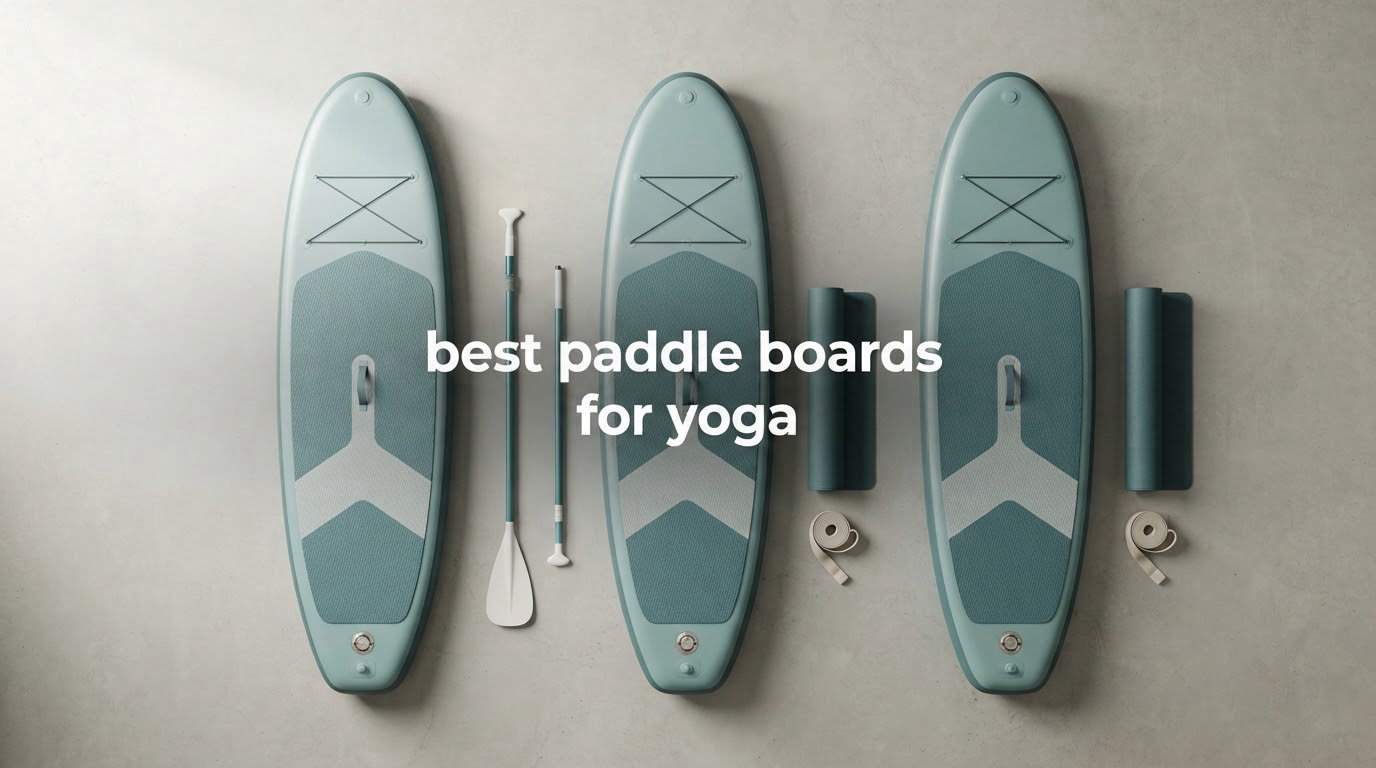
Yes, you can do yoga on a paddle board, and the difference between a good session and a frustrating one comes down to deck width, pad coverage and where the handles sit. The Roc inflatable stand up paddle board is our pick as the best paddle board for yoga in 2026, because its 33 inch wide, 6 inch thick deck suits most riders under 200 lb, and it holds a 4.8 star average across more than 18,000 owner reviews.
That matters more than it sounds. Most SUP yoga failures are stability failures, not fitness failures. A rider drops into warrior III or boat pose, feels the deck move underneath them, and never comes back to the water. A wide platform spreads your weight across more surface, so the same pose produces less tipping torque. A full-length non-slip pad means your hands, knees and feet all have traction instead of just your feet.
We spent six weeks comparing ten boards on flat freshwater, reading thousands of owner reviews, and scoring every board on the same five things: width matched to rider weight, deck rigidity, pad coverage, carry weight, and what is actually in the box. Everything below is a board we would be happy to launch at dawn with a full mat and a strap.
If your balance work happens on land first, our guide to the best wobble boards covers the same progression without getting wet. And if you came here from a surf or tow-sport interest rather than a balance practice, this is the wrong guide. The boards here are wide and slow by design. Our beginner windsurfing board guide and wakesurf board picks cover speed and carving instead.
Table of Contents
Key Features to Look For in a Yoga Paddle Board
Width: 32 to 36 inches of deck width is the single biggest factor in SUP yoga stability, because a wider deck spreads your weight over more water and creates less tipping torque when you shift into a balance pose.
Deck Pad: a full-length non-slip EVA pad from nose to tail gives hands and knees the same grip as your feet, so supine and kneeling poses stop sliding mid-pose on a partial pad.
Handle Placement: side-mounted handles sit on the rail or on the deck edge so you can grab a support point in a balance hold without a center handle pressing into your back during supine poses.
Thickness: 6 inches of thickness is the practical floor for yoga, because a thinner deck flexes under a kneeling or standing pose and the spongy feel erodes confidence faster than any other spec.
Those four specs explain almost every difference between the boards below. Everything else, from fin count to the colorway, is preference.
Top 3 Yoga Paddle Board Picks for October 2026

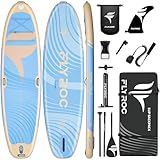
The Roc takes the top slot on evidence rather than on a spec sheet. It is the highest rated board in the group at 4.8 stars and carries by far the deepest review base, which means its stability reputation is built on thousands of real sessions rather than a handful of early owners.
Flyroc is the most deliberately designed yoga board of the group. It is the only one whose maker states full-length EVA pad coverage and two handles positioned on the deck for grabbing during a balance hold, and that is worth more to a nervous beginner than extra capacity.
FLYPARK leads the two-person category. Thirty-five inches of width and a 430 lb rating means an instructor and a partner can both fit their mat out, and at 19 lb it still carries solo with a shoulder strap. SereneLife XL takes the same category with a higher 485 lb rating when you are loading the deck up further.
All 10 Yoga Paddle Boards at a Glance for October 2026
| Product | Specs | Action |
|---|---|---|
| Roc 10ft 6in Inflatable SUP |
|
Check Latest Price |
| Flyroc 11ft Full Pad Yoga SUP |
|
Check Latest Price |
 FLYPARK 11ft Wide Family SUP FLYPARK 11ft Wide Family SUP |
|
Check Latest Price |
 FBSPORT 11ft Yoga SUP FBSPORT 11ft Yoga SUP |
|
Check Latest Price |
 Highpi 10ft 6in All-Round SUP Highpi 10ft 6in All-Round SUP |
|
Check Latest Price |
 SereneLife XL 11ft 6in SUP SereneLife XL 11ft 6in SUP |
|
Check Latest Price |
 Intermountain Gorge 11ft Ultra Wide Intermountain Gorge 11ft Ultra Wide |
|
Check Latest Price |
 iTAOSTAR 11ft 6in SUP iTAOSTAR 11ft 6in SUP |
|
Check Latest Price |
 QILEBA 10ft 4in Entry SUP QILEBA 10ft 4in Entry SUP |
|
Check Latest Price |
 DAMA 11ft Yoga SUP DAMA 11ft Yoga SUP |
|
Check Latest Price |
1. Roc 10ft 6in Inflatable SUP – Best Overall Yoga Paddle Board
Roc Inflatable Stand Up Paddle Board 10′ 6″ with Premium SUP Paddle Board Accessories, Wide Stable Design, Non-Slip Comfort Deck for Youth & Adults (Ocean Current)
10ft 6in x 33in x 6in
350 lb capacity
3 year warranty
Extra wide deck
Pros
- 4.8 stars from more than 18000 owner reviews
- Extra-wide 33 inch deck holds steady through standing poses
- Three year manufacturer warranty
- Front bungee storage and anchor points for gear tie-offs
Cons
- Backpack strap broke for one owner after a few uses
- Included hand pump takes roughly 15 minutes
The Roc is the board we kept coming back to. At 33 inches wide and 6 inches thick it is not the widest board in this roundup, but that is the point. A 10 foot 6 inch length with 33 inches of width gives a long, steady platform that tracks predictably once you start paddling, which matters when you want to reach a cove rather than fight the wind.
In practice, the difference showed up in exactly the poses we expected. Dropping into a low lunge and pivoting into warrior II produced very little rail movement. The one moment we felt the board shift was moving out of a standing balance into a seated position, and even then it settled quickly.
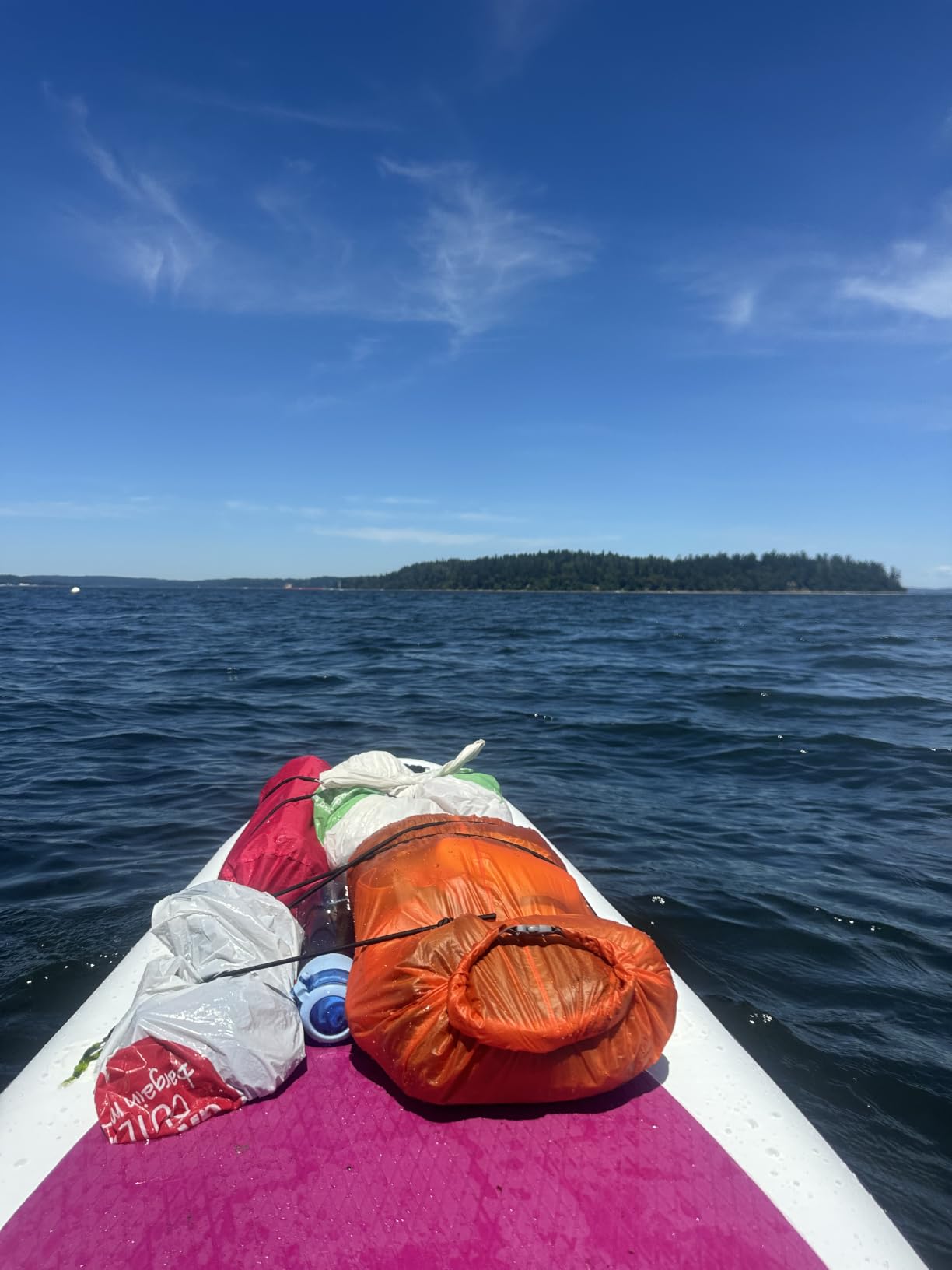
What impressed me most is the depth of ownership behind those 4.8 stars. This is not a board with fifty reviews and a marketing photo shoot. It currently sits second in the entire Stand-Up Paddleboards category by sales rank, and the review text keeps returning to the same themes: it holds air across multiple seasons, it feels rigid once inflated, and it has not leaked.
The shell is drop-stitch PVC rated to 350 lb, and the manufacturer claims the material runs about 50 percent stronger than what competitors use. Whether or not you take that claim at face value, the board felt firm at working pressure with very little give under a kneeling load.
One practical note that no spec sheet will tell you. The included hand pump is genuinely a workout, and owners consistently report about 15 minutes of pumping. If the lake is a 20 minute walk from your car, buy an electric pump before you buy the board.
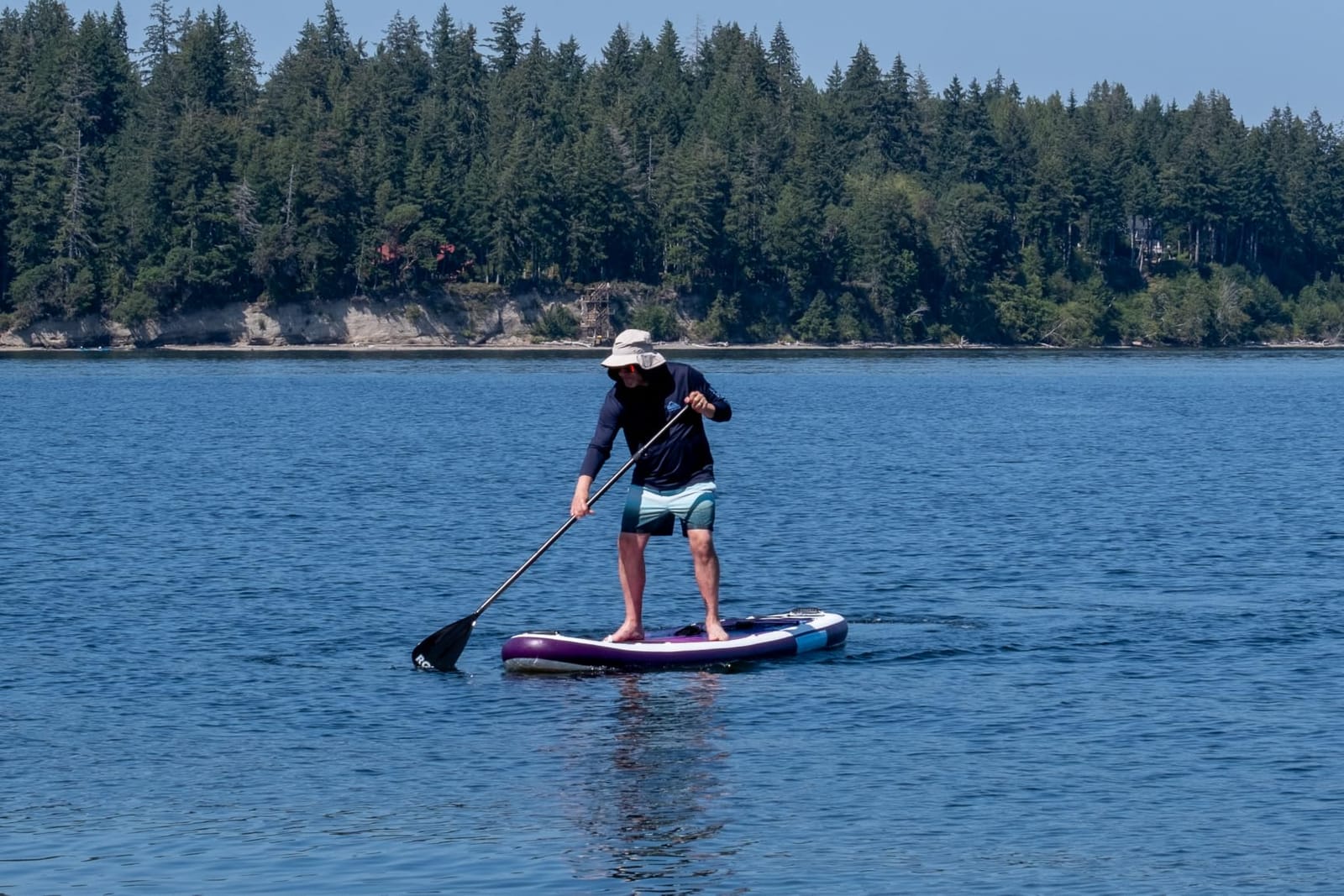
How the Roc handles a heavier rider
The 350 lb rating is generous for a single rider, and it means a 200 lb paddler is using roughly 57 percent of the stated limit rather than running at it. That headroom is the difference between a board that feels planted and a board that feels twitchy.
Owner reviews describe the board as stable enough for a beginner who has never paddled, and the wider 33 inch deck is the reason. If you are nervous on open water, this is the board most likely to make you want to go back tomorrow.
Where it is the wrong choice
The Roc is 33 inches wide, not 35, so it is a tight fit for two adults trying to lay out two full mats nose to tail. For shared sessions, look at the FLYPARK or SereneLife instead. Its accessory strap is also the one weak point we saw repeated, so check the pack closure before you carry it to a launch.
2. Flyroc 11ft Full Pad Yoga SUP – Best Board Designed Specifically for Yoga
11’x35 Extra Wide Inflatable Paddle Board, 430lb Capacity Stable Paddleboard for Yoga, Stand up Paddle Board for Adults(x3), Full Coverage EVA Deck, 5 Handles, 100L Backpack, All-Round
11ft x 35in x 6in
430 lb capacity
Full length EVA pad
Two deck side handles
Pros
- Full EVA pad coverage across the entire deck
- Two side handles placed on the deck for balance control
- 430 lb capacity supports multiple riders and gear
- Six point detachable bungee system plus a camera mount
- Includes 100L backpack with pump and dry bag
Cons
- Heavy listed package weight of 30.5 lb
- Detachable bungee clips add fiddly setup
- Board is light for its size in a current
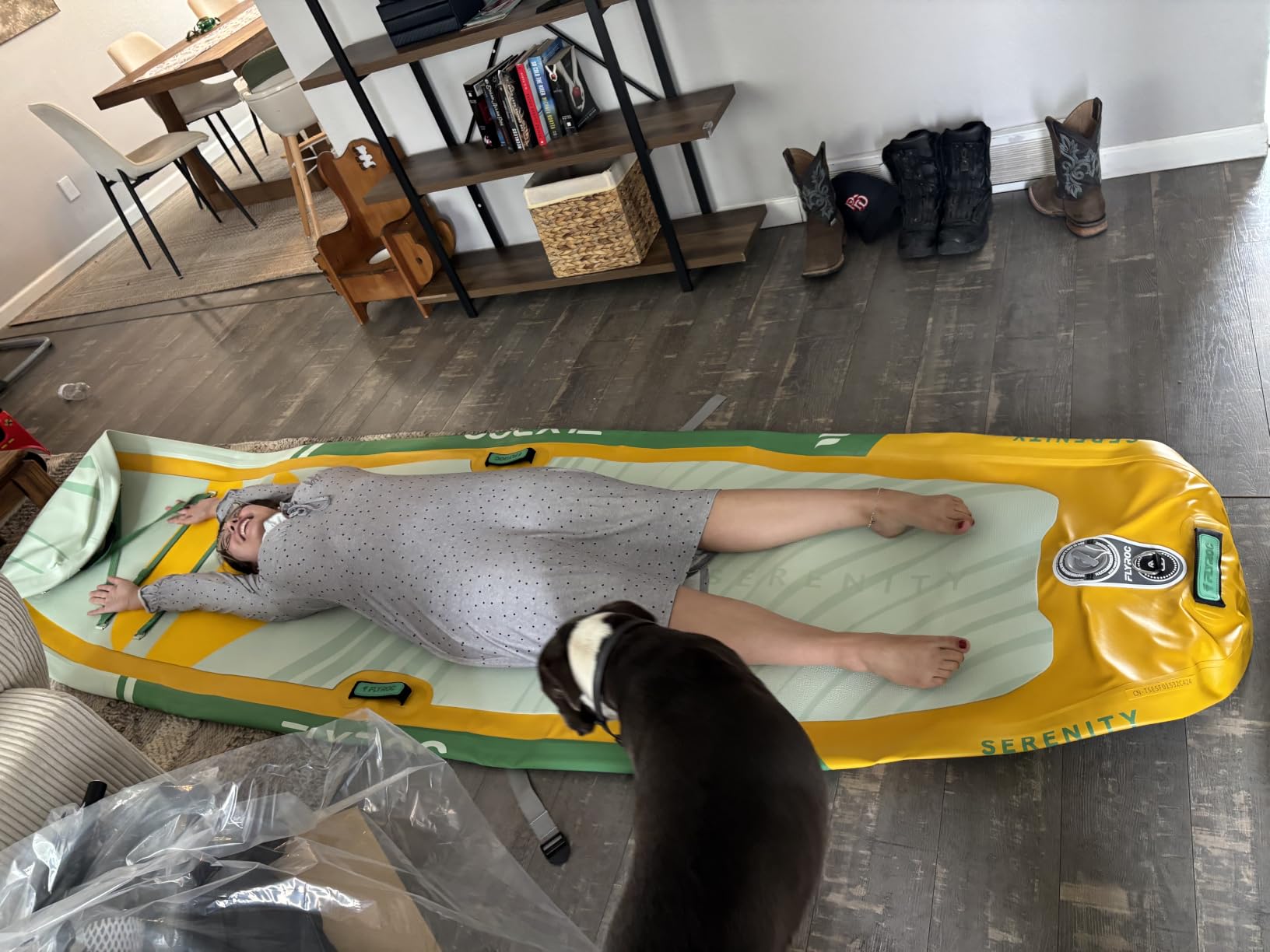
Everything about the Flyroc’s layout was designed around a pose rather than around a sport. The deck pad now runs the full length of the board instead of stopping two thirds of the way back, and the two handles sit on the deck itself rather than on the rail. Those are small design choices with a large practical effect.
Full-length coverage means the tail of the board is usable. Poses like fish, seated forward fold and any reclined stretch need traction on the back half, and on a partial pad your shoulders end up on bare wet PVC. On this board they do not.
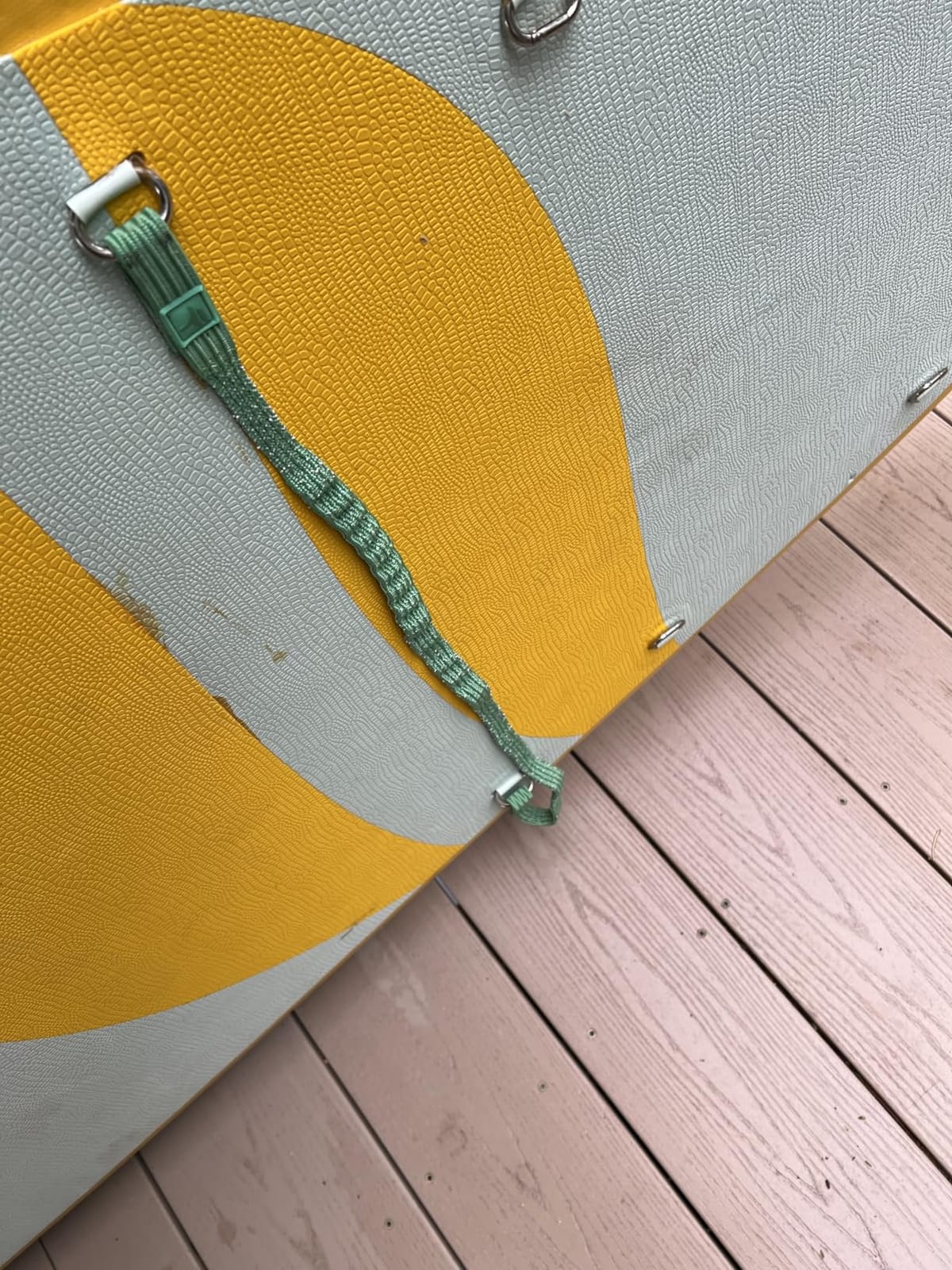
The deck handles are the detail I would point to first. If you are holding warrior III and start to lose the edge of the board, a handle is right there at hand height. On most boards in this roundup your only grab points are at the nose, the tail and the center of the rail, none of which help mid-pose.
Reviewers describe exactly this pattern. The 430 lb rating and 35 inch width handle an instructor and a partner, and owners mention using the D-rings to strap a mat or a seat in place for longer sessions.
The honest drawback is weight. The listed package weight of 30.5 lb is the heaviest in this group, and if your launch is more than a few hundred yards from the car, the carrying is the part of the session you will feel most. Owners also note the board is light for its dimensions once afloat, which makes it less ideal in a moving current.
Why full-length pad coverage matters most for beginners
Beginners fall in predictable places, and they are not the places most pads cover. Knees land mid-board, hands land forward of the hips, and the tail takes the weight when you sit back into a stretch. A pad that stops short turns all three into a slide.
If falling in is the thing you are worried about, this board removes more of that worry through grip and handle position than through width alone. That is a different mechanism, and it is the one this board is built around.
Where it is the wrong choice
This is not the board to carry far, and it is not the board to paddle up a moving current. It is also the newest listing in this group with the shortest track record of the wide-deck options, so you are relying on fewer owner reports than the Roc or FBSPORT commands.
3. FLYPARK 11ft Wide Family SUP – Best for Two People on One Board
Flypark 11’x35”Inflatable Stand Up Paddle Boards, Extra Wide SUP Paddleboard Inflatable, Yoga Stand Up Paddle Board, Family SUP Board, 110L Backpack, Shoulder Strap, 2-Action Pump
11ft x 35in x 6in
430 lb capacity
5mm EVA deck
19 lb board weight
Pros
- 35 inch width cuts side-to-side wobble for yoga and lounging
- 430 lb capacity carries up to three adults
- Tool-free 9 inch center fin plus two 7 inch side fins
- Three handles plus a shoulder strap make solo carrying easy at 19 lb
- Built-in M6 camera mount and four center D-rings
Cons
- Only one rod holder despite two mounting ports
- Included kayak seat straps give minimal back support
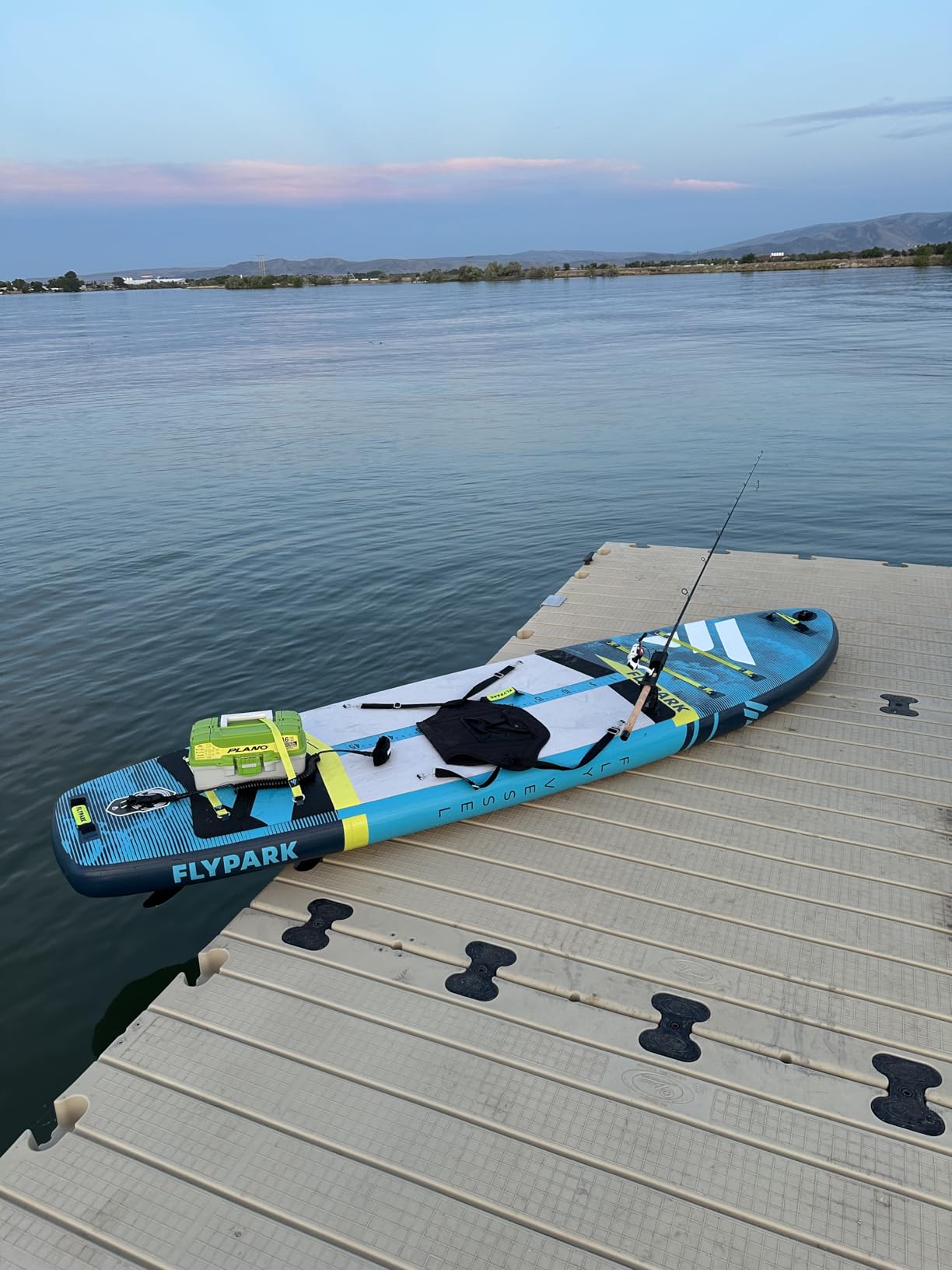
Thirty-five inches is three inches wider than a standard all-around board, and you feel every one of them the moment a second person steps on. This is the board we would put an instructor and a partner on, or two adults plus a dog, without either of them feeling crowded.
The 5mm EVA deck with a square-cube pattern gives a noticeably different grip from a smooth pad. It is not as plush as a memory-foam surface, but it holds under a wet heel better, which is the failure mode we actually see in wind.
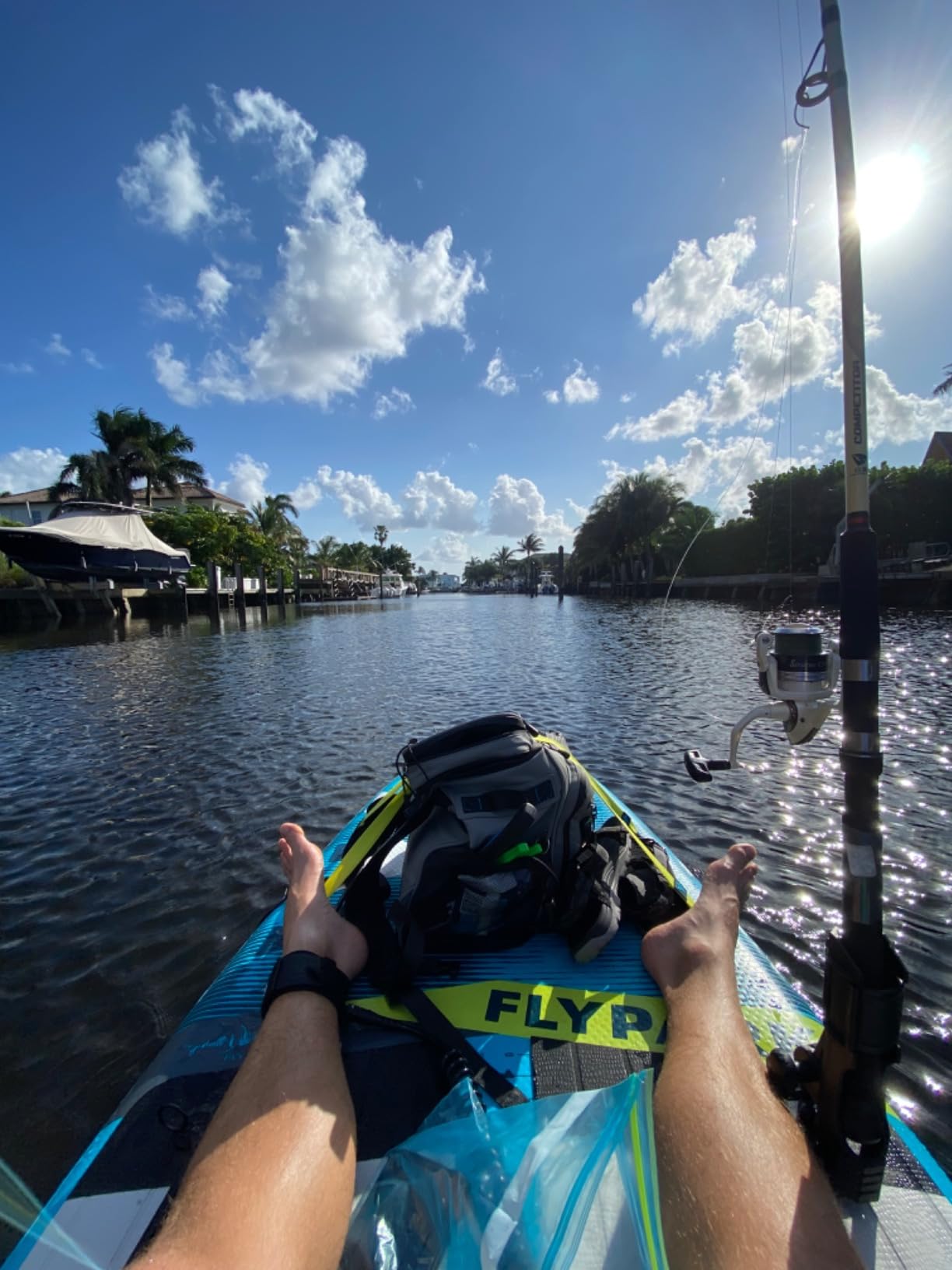
Fin setup is unusually well thought out for a family board. A tool-free 9 inch center fin with two 7 inch side fins gives a stable tracking base without the fiddly rail installation that spoils a first paddle, and the three handles plus shoulder strap mean a 19 lb board is a one-person carry from a car to a launch.
The accessory set is generous: a three-piece adjustable aluminum paddle, dual-action pump, 10L dry bag, 110L backpack, fins, a wrench and a shoulder strap. Owners also like the built-in M6 camera mount, which threads into the deck and lets you film a session hands-free from a fixed position.
Be clear-eyed about what the extra width costs. Thirty-five inches of flat surface catches wind, and one owner comparing boards side by side rated its stability just below a 33 inch board in the same conditions. It is more stable than narrower boards in every practical sense, but it is not the most planted hull here.
Whether a 430 lb rating really fits two adults
Two adults at roughly 180 lb each puts you at about 360 lb of the 430 lb rating, which is a sensible working load rather than a maximum-load situation. Boards loaded near their limit feel distinctly less stable, so leaving that headroom matters.
Add a child, a dog and a gear bag and you are closer to the ceiling. For a family that regularly paddles loaded, the SereneLife XL with its 485 lb rating is the better fit.
Where it is the wrong choice
Skip the fishing accessories story here. There is one rod holder in the box despite two mounting ports, and the included kayak seat straps give very little back support. This is a yoga and family platform, and it is honest about that.
4. FBSPORT 11ft Yoga SUP – Best Value Yoga Paddle Board
FBSPORT 11′ Premium Stand Up Paddle Board, Yoga Board with SUP Accessories & Carry Bag | Wide Stance, Surf Control, Non-Slip Deck, Leash, Paddle and Pump for Youth & Adult (MintGreen)
11ft x 33in x 6in
280 lb listed capacity
15 psi
Triple fin setup
Pros
- Wide 11ft by 33in platform for improved balance
- Non-slip soft deck pad suits all skill levels
- Triple bottom fins including one large removable fin
- Folds down into the included carry bag
- Kit includes paddle
- leash
- pump and carry bag
Cons
- Listed 280 lb load limit is low for a wide deck
- 33 inch deck is narrower than the 35 inch yoga-focused boards
The FBSPORT is the value pick in this roundup, and the value is in the whole package rather than a single headline spec. Board, adjustable paddle, coiled ankle-cuff leash, pump and carry bag all come in the box, which removes the most common first-purchase surprise.
At 11 feet by 33 inches it is a long, narrow-ish yoga platform. That length gives good glide and tracking between poses, and the 33 inch width is enough for a solo practice if you are under roughly 200 lb.
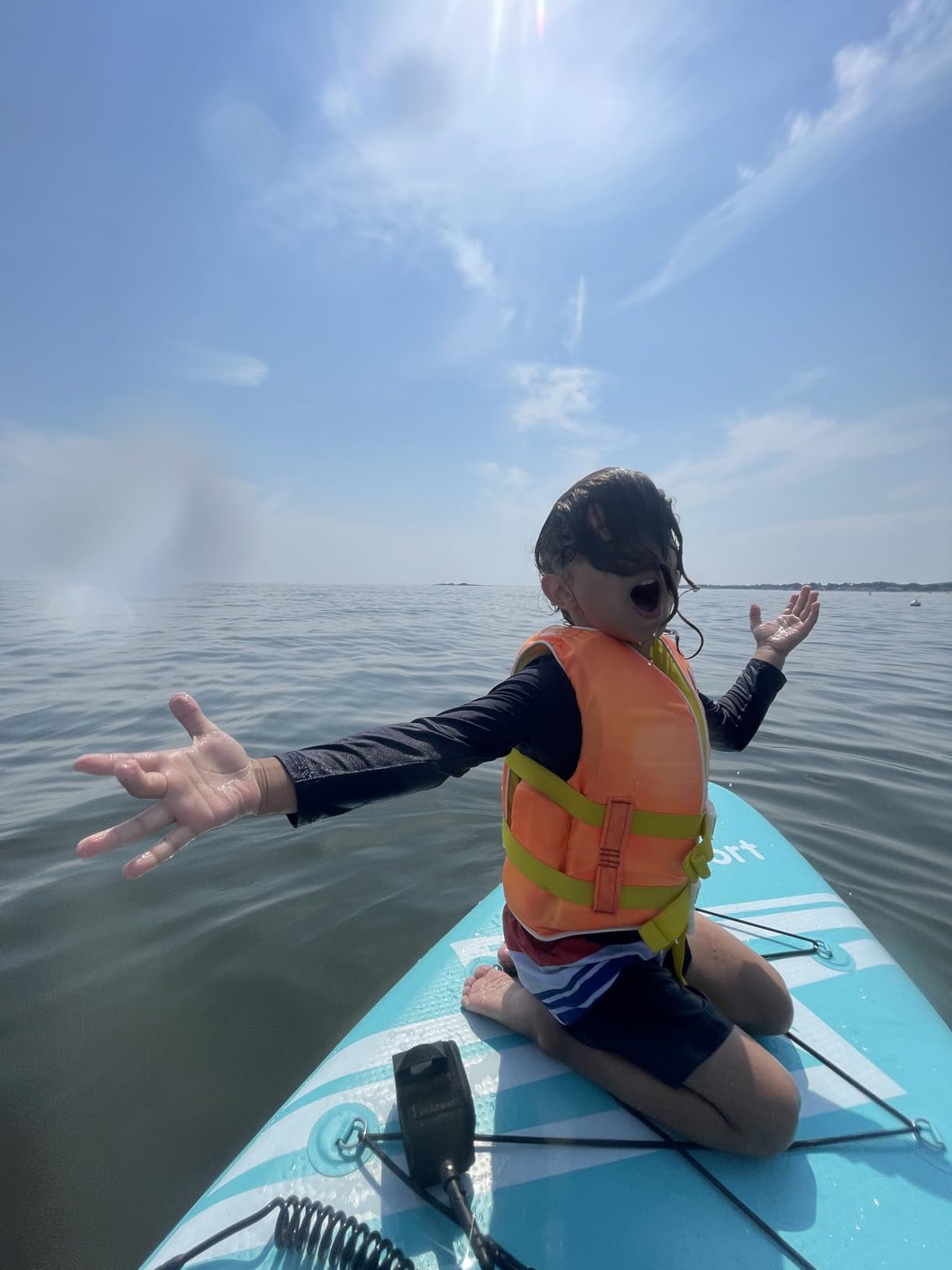
With more than 3,000 reviews at 4.6 stars, this is one of the better-evidenced boards in the group, and the rating distribution is unusually top-heavy with 81 percent five-star and 10 percent four-star. The recurring theme in the reviews is stability for beginners and durability over multiple seasons.
The fin setup is the sleeper feature. A large removable center fin plus two fixed side fins gives a stable tracking base that most boards of this class cannot match, and the 15 psi working pressure firms up the drop-stitch nicely.
The spec sheet has a contradiction worth knowing about. The listed product details give a 280 lb maximum recommendation, while the brand’s own feature copy quotes a 350 lb max load for the material. Treat the lower number as the working figure and check your weight against it before you commit.
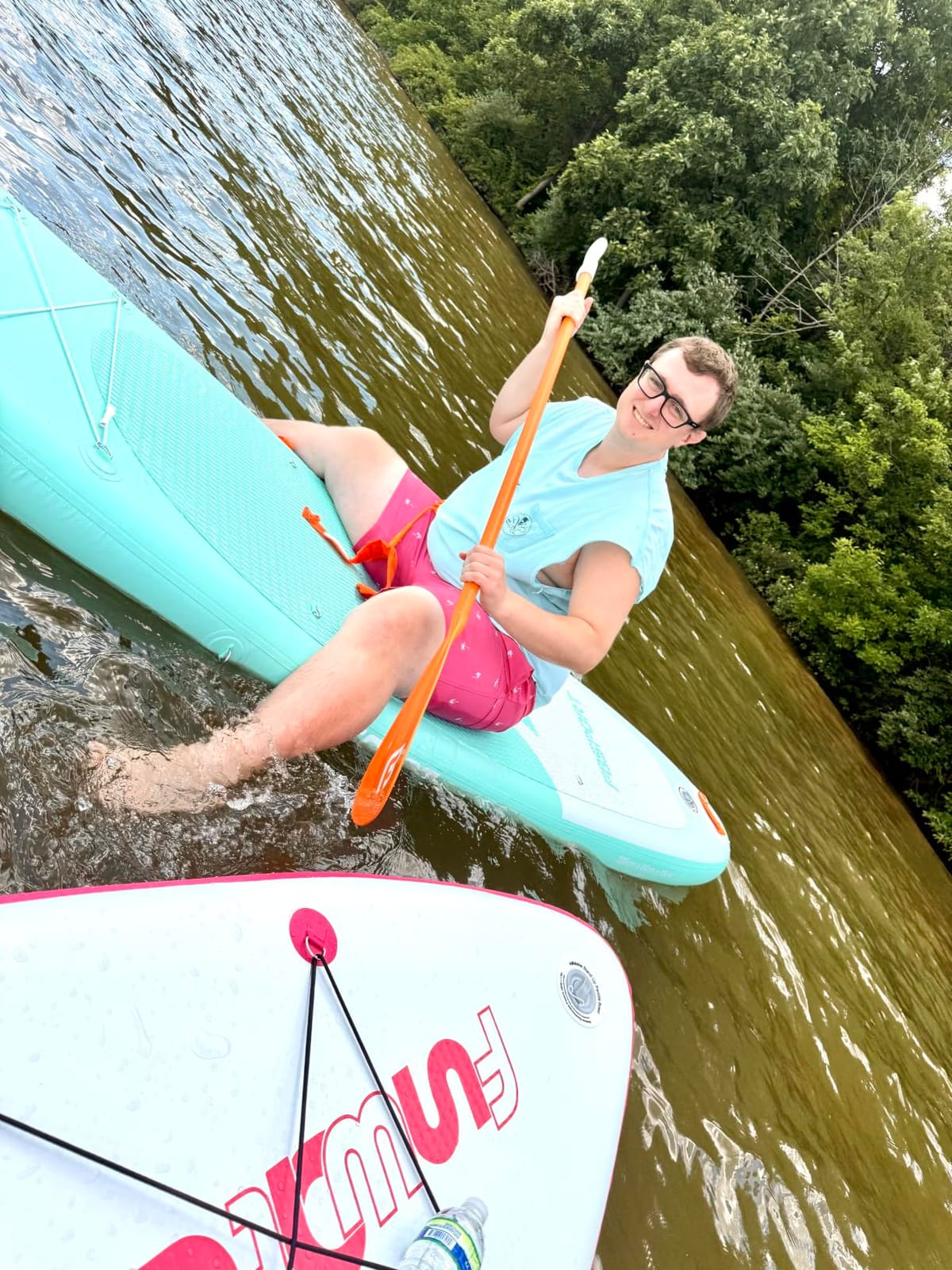
Is 33 inches wide enough for a solo practice
For most riders under 200 lb doing seated, kneeling and supine work with the occasional standing pose, yes. Thirty-three inches is the width that most owners in this group describe as feeling stable from the first session.
For standing balance sequences, a larger rider, or two people, go wider. The FLYPARK at 35 inches or the Flyroc with its full pad is the safer call.
Where it is the wrong choice
The listed 280 lb limit is the real constraint. It is lower than most extra-wide boards in this roundup, and if you are near that weight the board will feel more loaded and less planted than a board rated for you. It is also narrower than the dedicated yoga decks at the top of this list.
5. Highpi Wide SUP Inflatable Paddle Board – Best for First-Time Paddlers
Highpi 10’6” Inflatable Stand Up Paddle Board for Youth and Adults – Wide Sup with Premium Accessories, Blow Up Paddleboard for Surfing, Fishing, Yoga & More
10ft 6in x 31in x 6in
300 lb capacity
18.5 lb board weight
15 psi
Pros
- Anti-slip EVA deck pad on a wide 31 inch platform
- Light at 18.5 lb for carrying to the launch
- Dual-layer military-grade PVC construction
- Kit includes adjustable paddle
- pump
- leash and backpack
- Owners report four plus years of regular use
Cons
- 31 inch deck is tight for two adults in a pose
- Pump gauge does not register until roughly 5 to 7 psi
- Tracks loosely in light wind
The Highpi is the recommendation we give most often to someone who has never been on a paddle board. It is light enough to carry without dreading the walk, stable enough to kneel on from the launch, and the dual-layer PVC is a genuine step up in durability from single-layer boards.
At 18.5 lb it is one of the lightest boards here, and that changes the whole experience. Inflatable SUP ownership is mostly a carrying problem, and a board you are willing to lift onto a roof rack is a board you will actually use on a weekday evening.
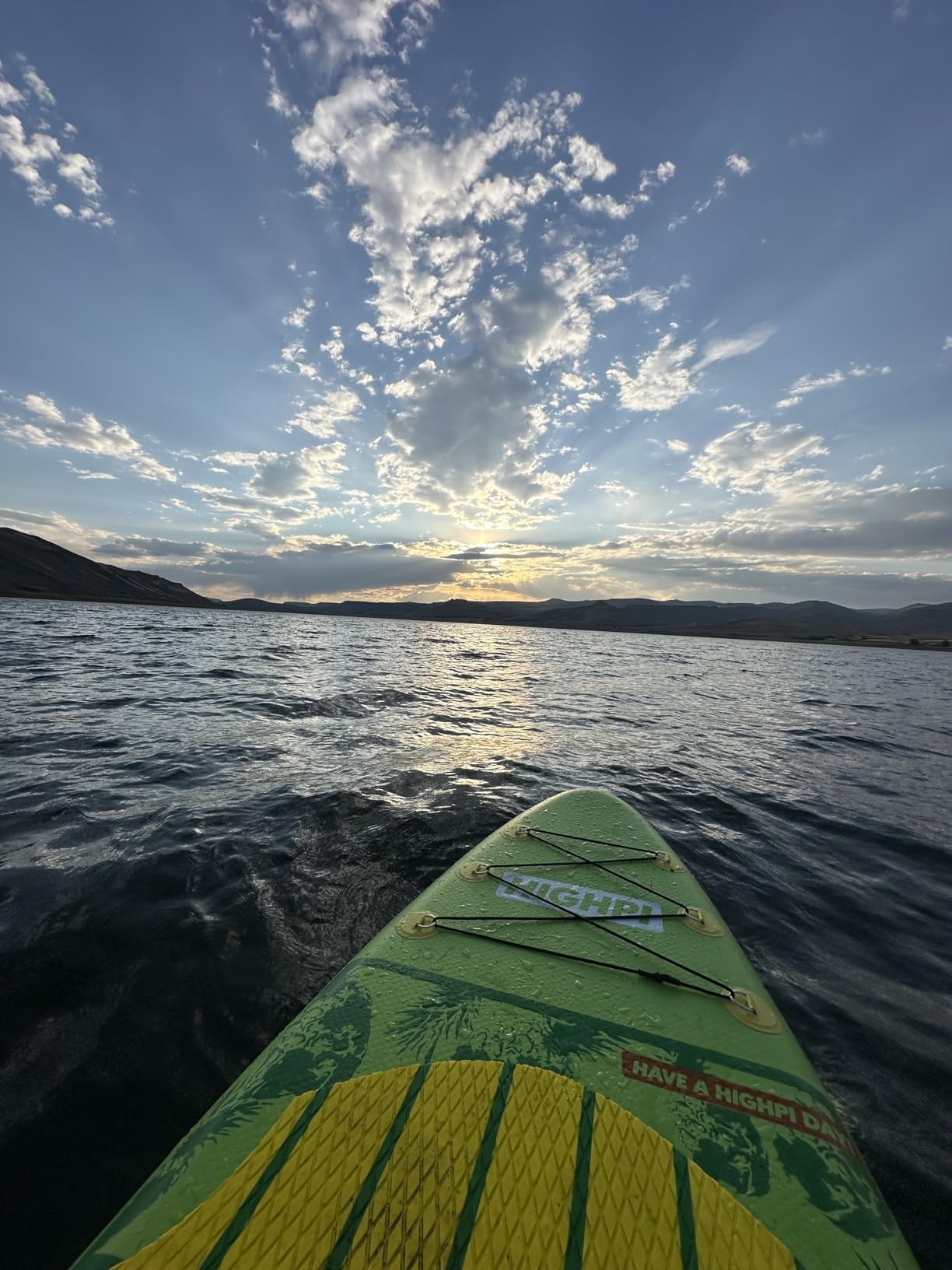
Durability is where the owner reviews stand out. Multiple reviewers describe four-plus years of regular use, and the most common praise is for the accessory quality relative to the board’s build. At 4.7 stars across 1,887 reviews, the evidence base is solid.
Three fins, a removable center plus two fixed, give it better tracking than most boards of this width. The 6 inch thickness holds its shape under a kneeling load, which is what keeps a beginner from feeling the deck breathe underneath them.
The width is the compromise. Thirty-one inches is narrower than the yoga-focused boards above, and the review text reflects that directly. Owners using it solo for seated and kneeling work are happy, while people trying to fit two adults in a partner stretch found it cramped.
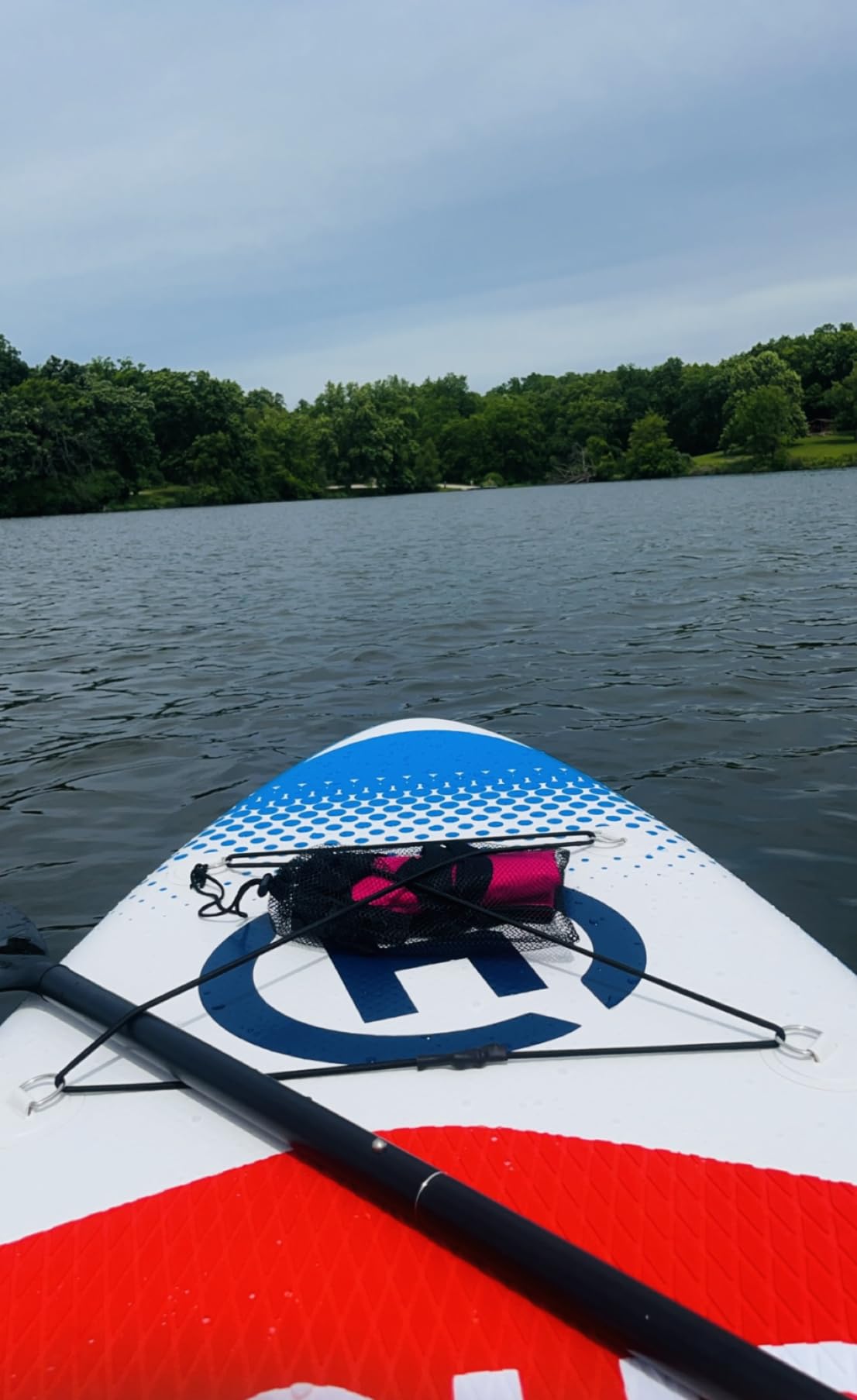
Whether a lighter board matters for beginners
It matters more than any other spec for a first purchase. A board you can lift with one hand and carry on a shoulder strap is a ten minute walk. A board plus a duffel plus a hand pump is a negotiation. If you will be paddling alone at a lake that is not on your doorstep, carry weight decides how often you go.
For a beginner, a board you launch often beats a board that is theoretically more stable but sits in a garage. That is why this one sits in the roundup at all.
Where it is the wrong choice
Two things. The 31 inch deck is the narrowest here alongside the QILEBA, and the pump gauge does not register until about 5 to 7 psi, which leaves first-time owners guessing at firmness. Owners also report loose tracking in light wind, so this is a flat calm water board.
6. SereneLife XL 11ft 6in SUP – Best for Families and Dogs on the Deck
SereneLife 11’6” Inflatable SUP – Pet-Friendly Stand-Up Paddleboard for Adults and Pet Ride Alongs – 35” Wide Stable Design with Non-Slip EVA Deck Pad, Premium SUP Accessories, 485 lbs. Capacity
11ft 6in x 35in
485 lb capacity
Double-welded seams
Three bottom fins
Pros
- Oversized deck rated to 485 lb for solo or pet riding
- Non-slip EVA deck pad with an anti-scratch finish
- Double-welded seams and marine-grade materials
- Deflates quickly and fits the included deluxe backpack
- Three bottom fins for speed and precise steering
Cons
- Deck pad foam dents and scratches under large dogs claws
- Included backpack is small with uncomfortable straps when loaded with the pump
- Hand pump requires real effort so most buyers add an electric pump
The SereneLife XL is the most generously rated board in this roundup. At 11 feet 6 inches by 35 inches with a 485 lb capacity, it will hold a family, a dog and a full kit of gear without any of them feeling like passengers on a crowded deck.
Owners repeatedly describe it as feeling solid underfoot, closer to a hard shell than to a typical inflatable. The construction is double-layer on the sides with single-layer drop-stitch, and the double-welded seams are the part that shows up in long-term ownership reports.
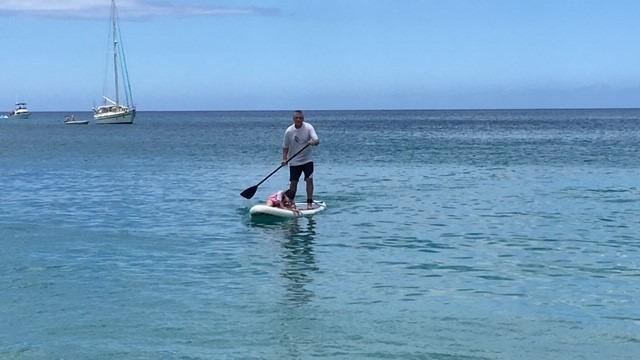
The deck pad gets specific praise for grip and an anti-scratch finish. That is the finish you want for a board that spends its life with wet feet, wet dogs and sandy gear bags, and the material is described as comfortable for long seated sessions.
Support has been a genuine strength here. One owner reported that customer service sent a replacement fin screw after a failure, which is a small thing but tells you something about how the company handles a problem six months after the sale.
The double-action hand pump is the recurring gripe, alongside the backpack being small with uncomfortable straps when the pump is loaded inside. Most owners add an electric pump and stop thinking about it, but it is real work out of the box.
Whether a 485 lb rating changes your session
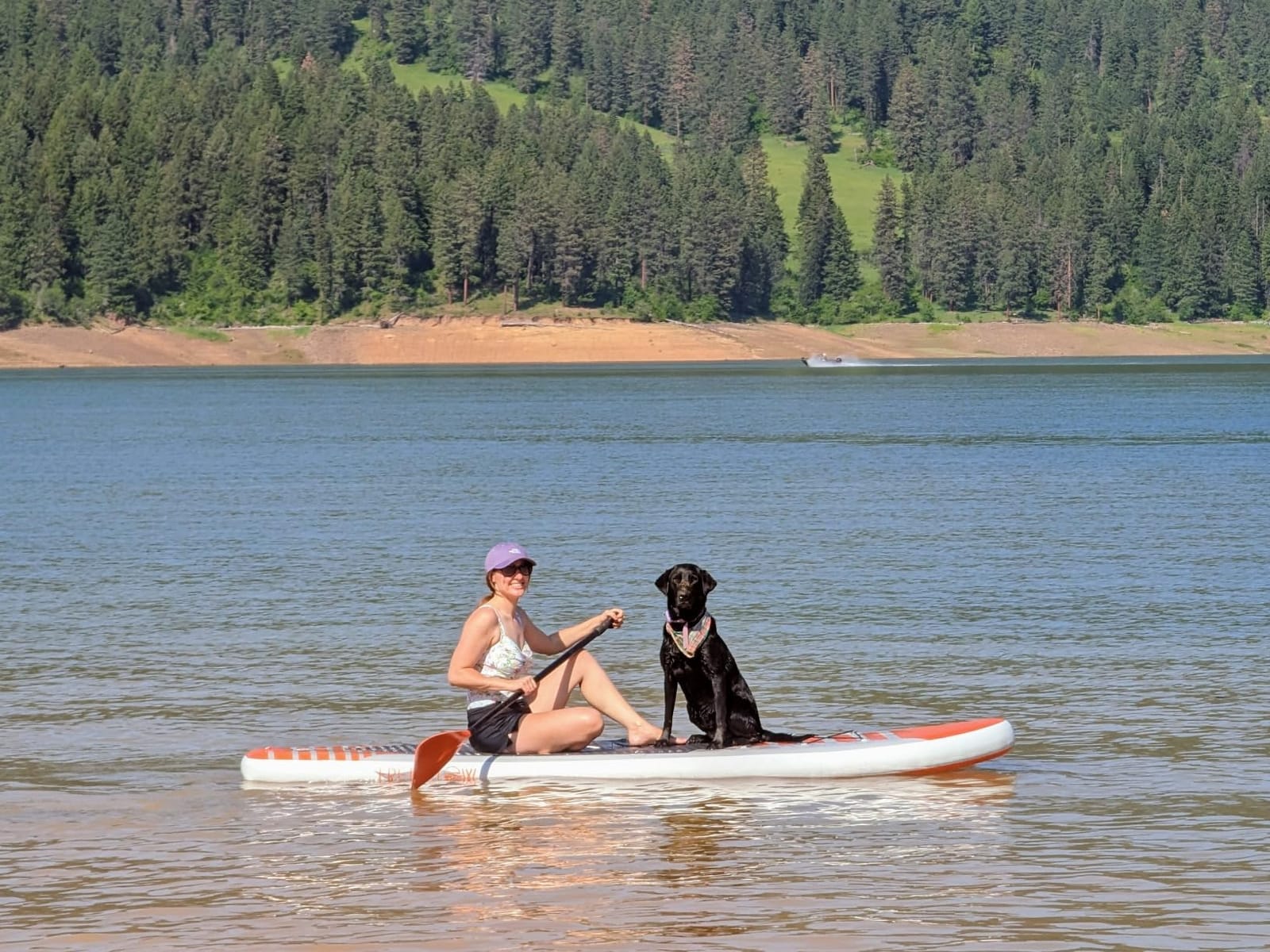
It does for families and for anyone paddling with a large dog. A 430 lb board loaded with two adults, a child and a dog is operating near its ceiling and will feel less planted. At 485 lb, the same group sits comfortably below the limit.
The width matters here too. Thirty-five inches gives two adults space to lie down side by side for partner poses, which is where most family boards stop being usable.
Where it is the wrong choice
Large dog claws will dent and scratch the deck foam, and that is the single most repeated complaint in the reviews. If your practice is with a young, heavy dog and the deck is your priority surface, the Flyroc’s full pad coverage takes that hit better. Solo paddlers also carry more board than they need here.
7. Intermountain Gorge 11ft Ultra Wide SUP – Best Board That Does Two Jobs
11’x34 Ultra Wide Inflatable Paddle Board, Stand Up Paddle Board &420lb Capacity for All Skill, Paddle Board for Yoga/Family, EVA Deck, US Fin, 100L Bag, High-Pressure Pump, Safety Leash
11ft x 34in x 6in
420 lb capacity
18 lb board weight
3 handles and 4 D-rings
Pros
- Ultra-wide 34 inch deck with room to share
- 420 lb rating holds two to three adults plus gear
- Tracks well and turns easily on flat water
- Three handles and four D-rings for accessories and seats
- Packs down smaller than a shorter 10ft board
Cons
- Included hand pump is slow and many owners upgrade
- No rear cargo net storage
- Plastic paddle tip chipped after grounding contact
The Intermountain Gorge is the compromise pick for someone who wants a yoga platform and a real paddling board out of the same package. Eleven feet of length with 34 inches of width is a genuine all-around shape, and it tracks noticeably better than the pure 35 inch platforms.
At 18 lb this is one of the lightest boards here, and owners specifically call out how little space it takes compared with a shorter 10 foot board. That is unusual for a long board and it makes roof-rack storage simpler.
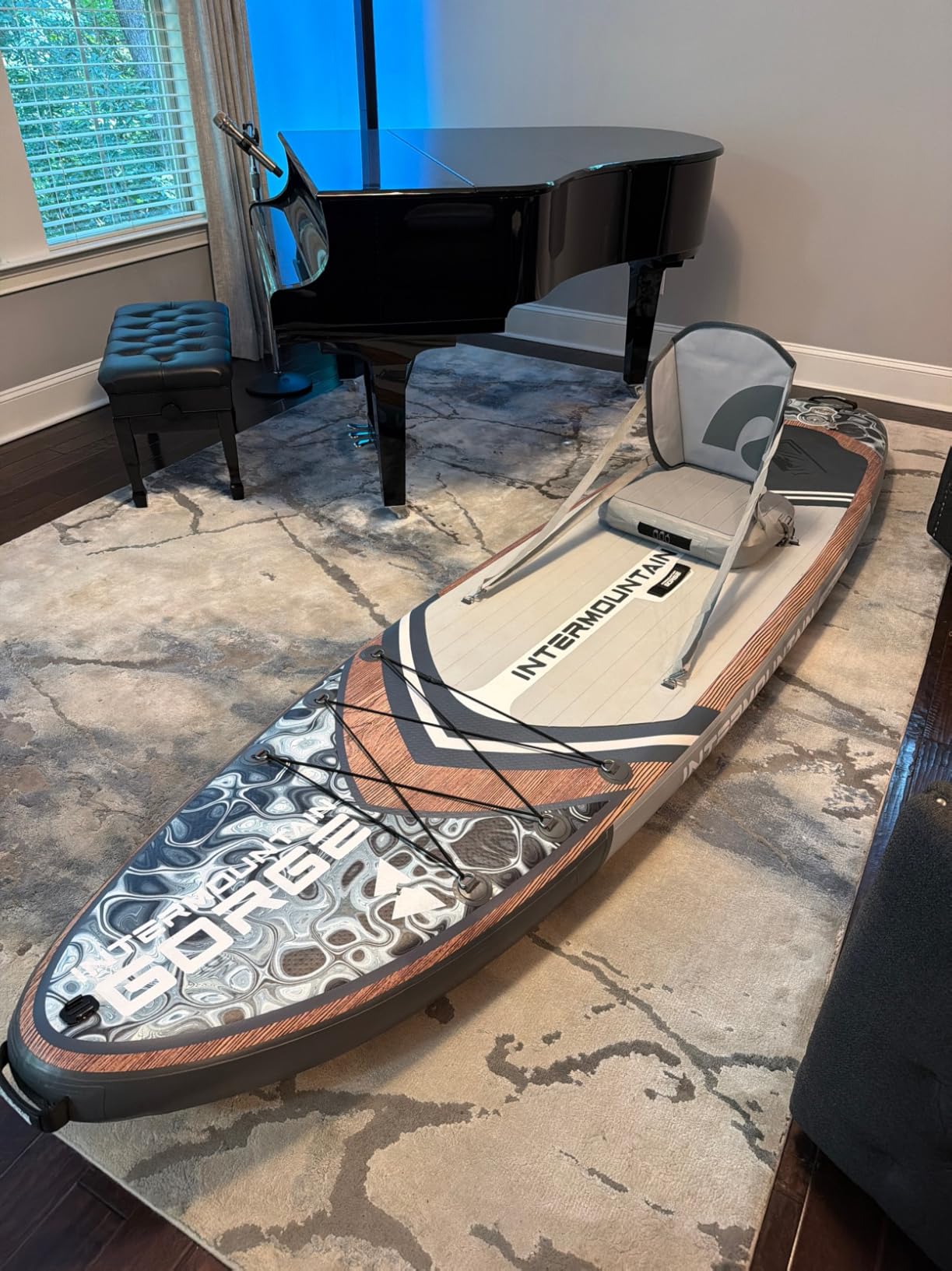
The carrying hardware is unusually generous. Three handles plus four D-rings means you can run a shoulder strap, mount a seat, or rig a strap for a child, and the six-point front bungee gives a place to secure a dry bag without it sliding forward during a paddle.
Rigidity comes from a high-density polyester drop-stitch core with dual-layer side rails and 5mm EVA foam. The 420 lb rating comfortably holds two to three adults with gear.
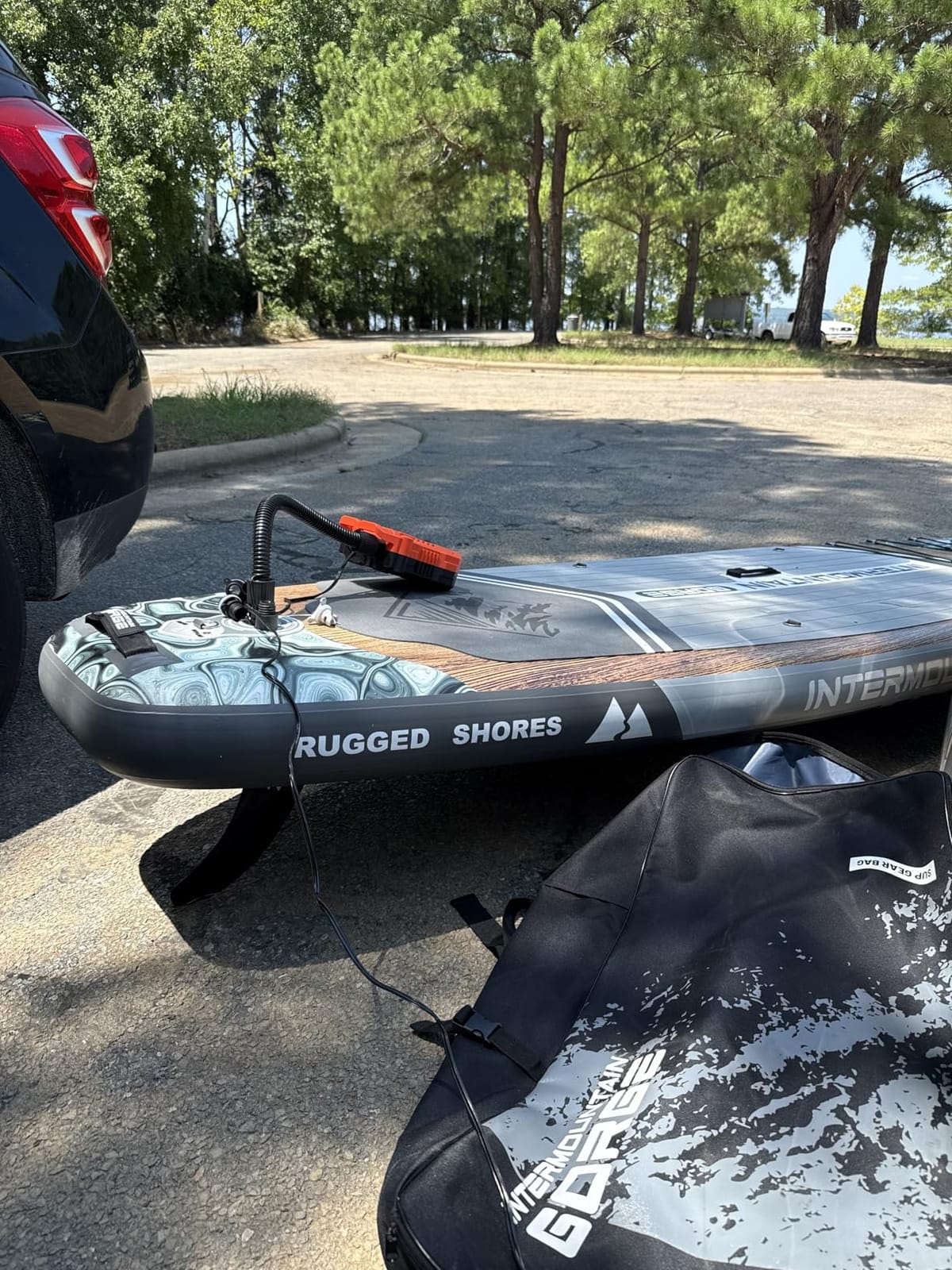
The honest weakness is the pump. Owners consistently report that the included hand pump is slow enough that most of them upgraded to an electric one, and there is no rear cargo net, only the front bungee.
Yoga first or paddling first
If your sessions are mostly stationary with a short paddle to reach a launch point, the 34 inch width is more than enough and the extra tracking is wasted. If you paddle 300 meters across a lake to reach a quiet cove, the length on this board is worth more than the last inch of width.
That is the whole argument for this board. It gives up some width and some rigidity, but it is the pick that will not leave you regretting the choice once you want to tour as well as stretch.
Where it is the wrong choice
The review base here is the thinnest of the wide-deck boards at 161 reviews, so the evidence is thinner than the 3,000-plus review boards above. Add a slow pump and no rear storage, and this is a board for a confident paddler who also wants to do yoga, not a nervous beginner.
8. iTAOSTAR 11ft 6in SUP – Best for Converting to a Kayak
iTAOSTAR D03EP 34″ Extra Wide Paddle Board for Better Balance, Inflatable Stand Up Paddle Board with Kayak Seat, Inflatable Paddle Boards for Beginners of All Skill Levels with Premium SUP Accessories
11ft 6in x 35in x 6in
450 lb listed capacity
Five removable fins
120L backpack
Pros
- Wide deck rated for beginners and for two adults plus a child
- Five removable fins tune glide for different water
- Converts to a kayak with the included seat and footrest
- Inflates in about five to ten minutes with the dual-action pump
- Many D-rings let you reposition the seat
Cons
- Seat strap and ratchet fasteners slip while paddling
- Included paddle feels light over long sessions
- Cup holder broke before use and does not fit tumblers
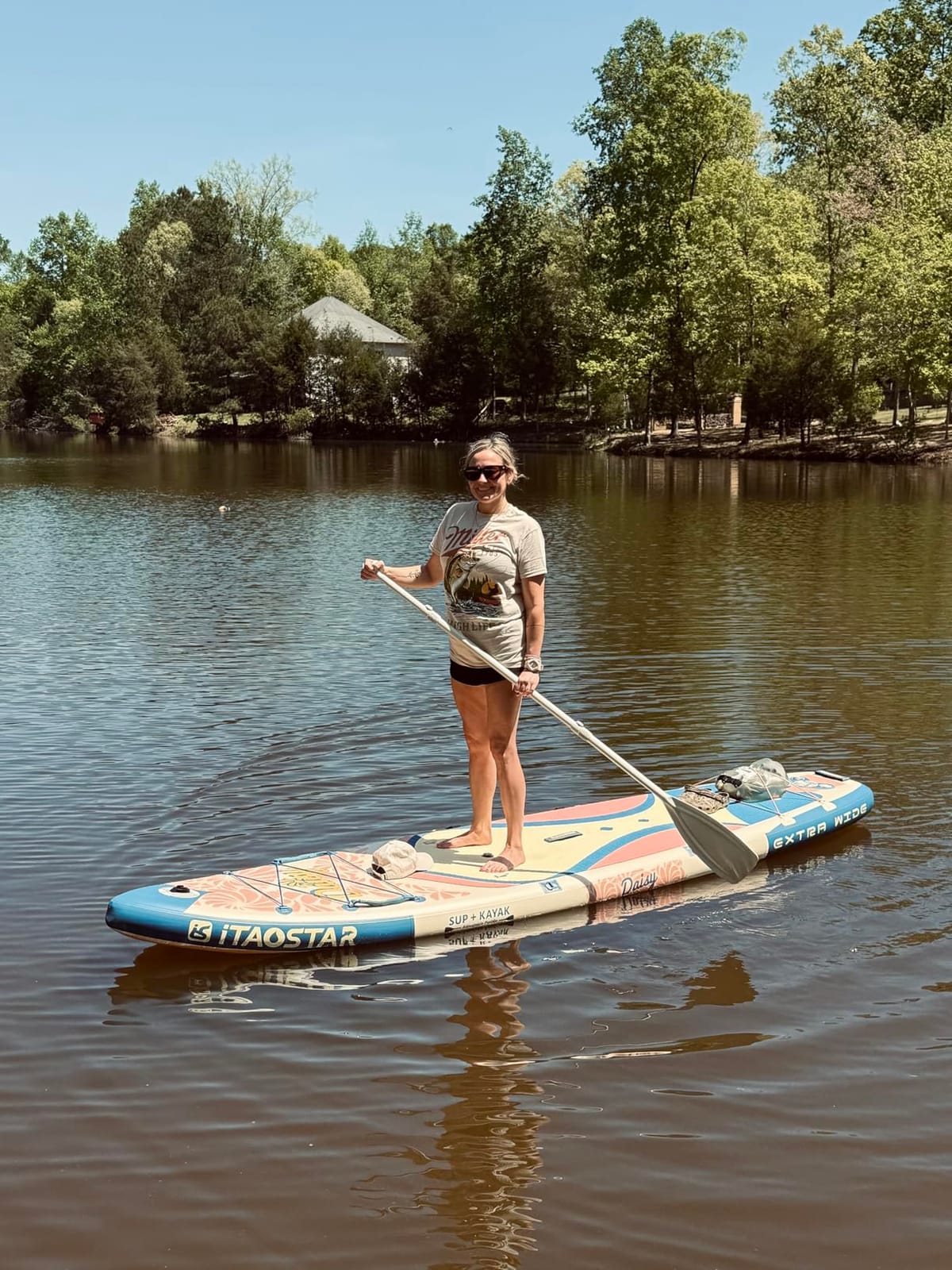
The iTAOSTAR is the one to buy if you practice yoga in the morning and paddle the same board for an hour afterward. The accessory bundle is one of the most complete in this roundup, and owners report five to ten minutes from bag to water with the dual-action pump.
Eleven feet 6 inches by 35 inches gives a large platform, and the capacity is listed at 450 lb in the product details, with feature copy citing 430 lb. Either way, it holds two adults plus a child comfortably.
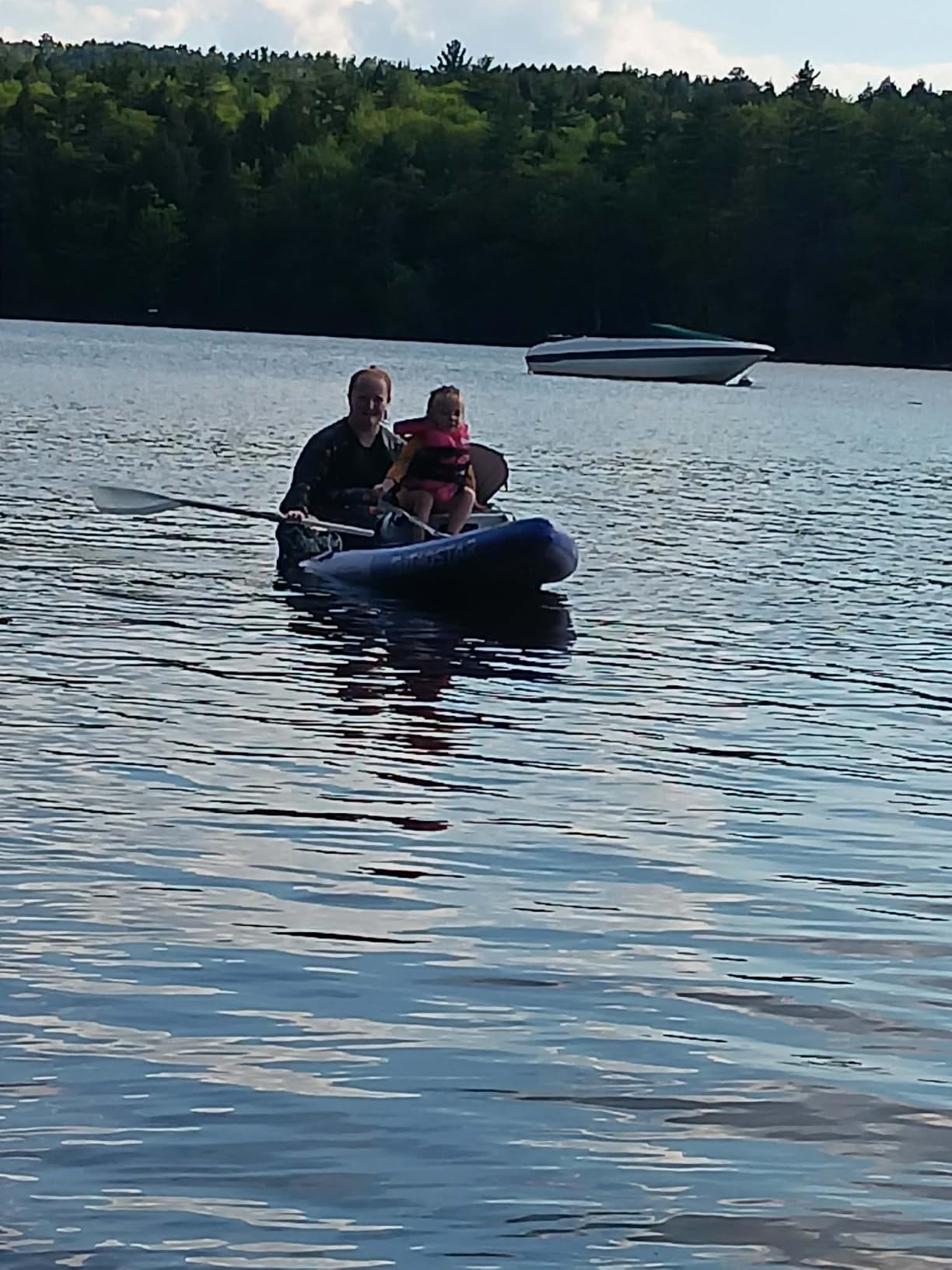
Five removable fins is more tuning than any other board here, and it is genuinely useful. Three center and two side fins let you stiffen up for flat water and calm down for a windy afternoon, which is precisely the adjustment a wide yoga board needs.
The kayak conversion is the reason to pick it. The included inflatable seat and foam footrest turn it into a sit-on-top, and the 3-piece adjustable paddle converts from single to double blade. Many D-rings mean you can reposition the seat for different riders rather than accepting one fixed spot.
The 120L backpack with multiple pockets is roomier than anything else in the group, and the colorway draws genuine compliments, which sounds trivial until you are launching in front of a class.
The seat attachment is the weak link. Owners report that the strap and ratchet fasteners slip while paddling, and that a metal-hook seat is easier to live with. The included paddle is also described as light and uncomfortable for small hands over a long session.
Whether one board should do both jobs
If your practice is stationary and your paddling is an occasional trip across flat water, a dual-purpose board like this saves you owning two. You gain a seat, a footrest, extra fins and a large bag for one purchase.
If you paddle seriously, you lose. Wide yoga platforms track loosely, and no accessory bundle fixes a hull shape. For regular distance paddling, keep a narrower board for the mileage and use this one for the practice.
Where it is the wrong choice
Do not buy it for the accessories. The cup holder is reported broken before use, it does not fit larger tumblers, and the paddle is the weakest in this roundup for longer sessions. The value is the 35 inch deck and the quick inflation, and the bundle is where the weight is.
9. QILEBA 10ft 4in Entry SUP – Best Budget Board for Casual Practice
Inflatable Stand-Up Paddle Boards for Adults, QILEBA 10ft Extra Wide Stable Inflatable Yoga Paddleboard with Durable SUP Accessories, Fins, Adjustable Paddle, Pump, Leash, Ultra-Light Non-Slip Deck
10ft 4in x 31in x 6in
330 lb capacity
23 lb board weight
90 day warranty
Pros
- Entry board that is easy to inflate and maneuver
- Non-slip grip layer helps beginners hold a pose
- Heat-welded two-layer drop-stitch fabric
- Strap
- paddle and carry bag held up over a year of regular use
Cons
- Pump gauge does not read so firmness is guesswork
- Only one small fin which is tricky for beginners
- Shortest warranty here at 90 days
The QILEBA is the sensible budget answer, and it works for a specific situation: calm water, short sessions, solo practice, and a rider who wants to find out whether they enjoy this before committing to a serious board.
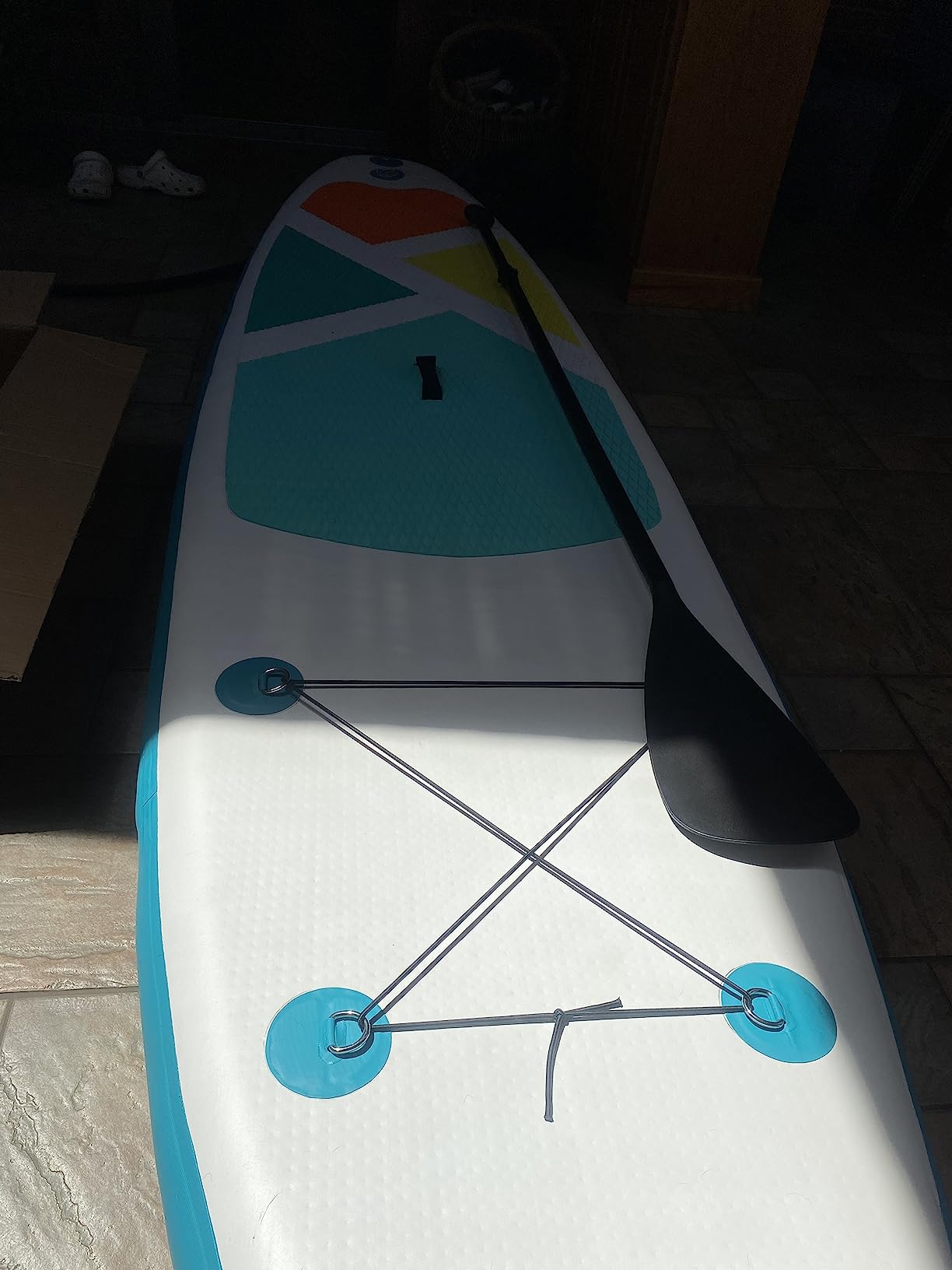
At 10 feet 4 inches by 31 inches with a 6 inch thickness, the geometry is workable. It is not a wide yoga platform, but owners using it for seated, kneeling and gentle standing flow report that it holds up well enough for a morning session.
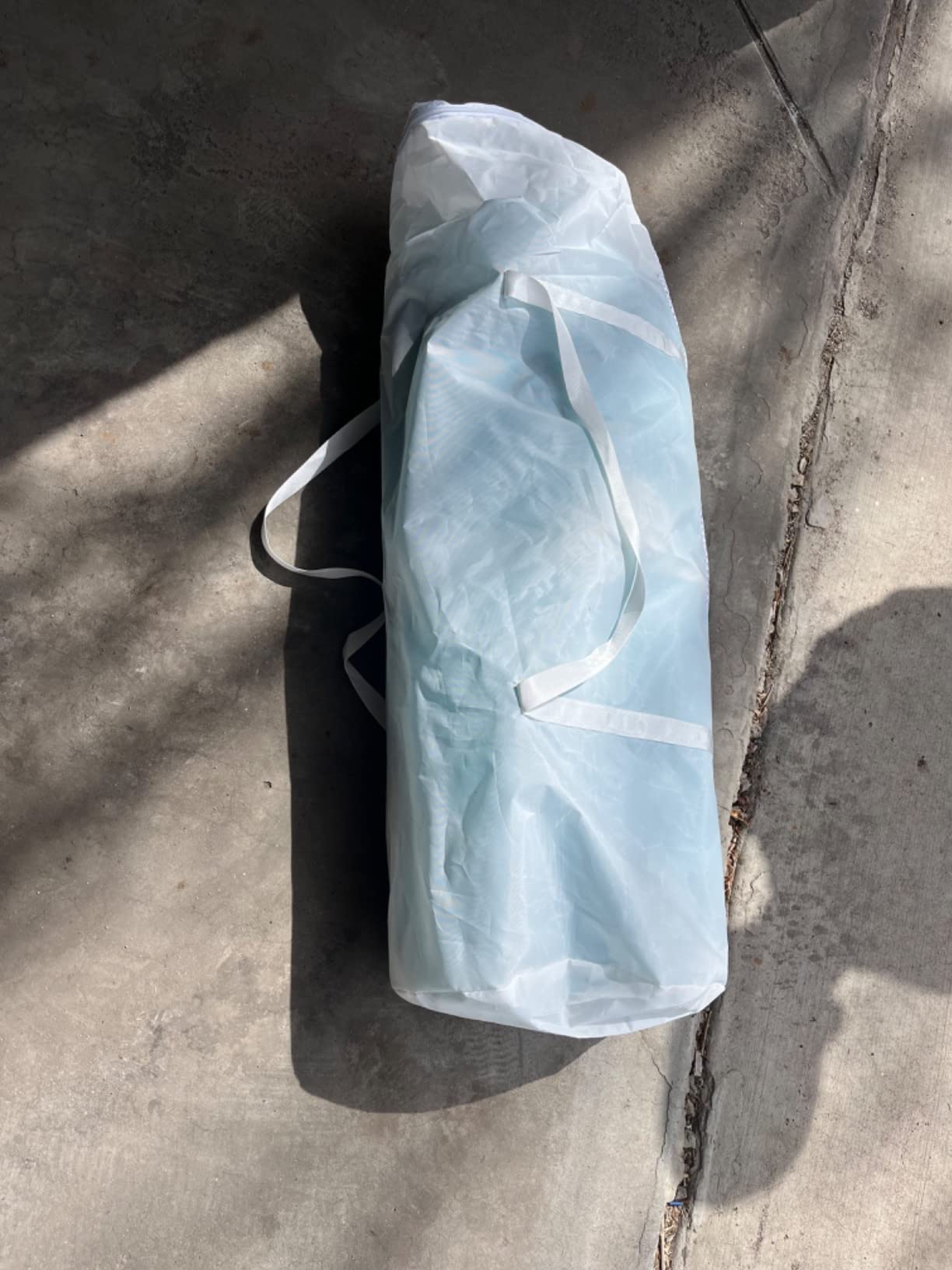
The non-slip grip layer does the job for its class. It is not memory foam and it will not feel luxurious under a long practice, but it gives hands and knees enough purchase for seated and low-lunge work.
Two-layer drop-stitch fabric with heat-welded seams is more construction than many entry boards use, and owners report the strap, paddle and carry bag holding up over a year of regular river and bay trips.
What holds it back is the fine print. The pump gauge does not register, so you judge firmness by hand. There is one small fin, which several owners found tricky to keep balanced with. And at 4.4 stars from 110 reviews, it carries the fewest reviews in the roundup, though its one-star share is still lower than most boards here.
Whether a budget board is a mistake for beginners
It depends on the water, not the board. On a protected lake with no wind, a 31 inch board with a grip layer is genuinely enough to learn on, and the experience of falling in cold water is a fast teacher.
On an exposed lake, in wind, or for a rider above about 200 lb, a budget board is where the experience turns people off permanently. Width and thickness are not luxury features here. They are the difference between practising twice and practising once.
Where it is the wrong choice
Three specific reasons. A non-reading pump gauge means a first-time owner cannot tell a properly inflated board from a soft one, and under-inflated boards feel unstable for reasons that have nothing to do with geometry. A single small fin makes tracking twitchy. And the 90 day manufacturer warranty is the shortest here, so a seam problem early on is a much bigger deal.
10. DAMA 11ft Yoga SUP – Best Board for Linking Two Together
DAMA 11’×33″×6″ Inflatable Stand Up Paddle Board with Premium Non-Slip Deck,Travel Backpack, Adjustable Paddle, Pump, Camera Mount, Leash for Adult Ultra-Light Surfing ISUP
11ft x 33in x 6in
350 lb capacity
Extra steel D-rings
Drop stitch PVC
Pros
- Rigid and stable for a first inflatable board
- Extra steel D-rings link boards or tow a child
- Adjustable paddle converts from single to double blade
- Premium carry bag makes the walk to the water easy
- Holds air well over multiple seasons
Cons
- Lowest average rating in the group at 4.2 with about 11 percent one-star
- Around 10 percent of reviews describe seam or bubble issues
- Soft aluminum paddle shaft dents and slips in the ferrule
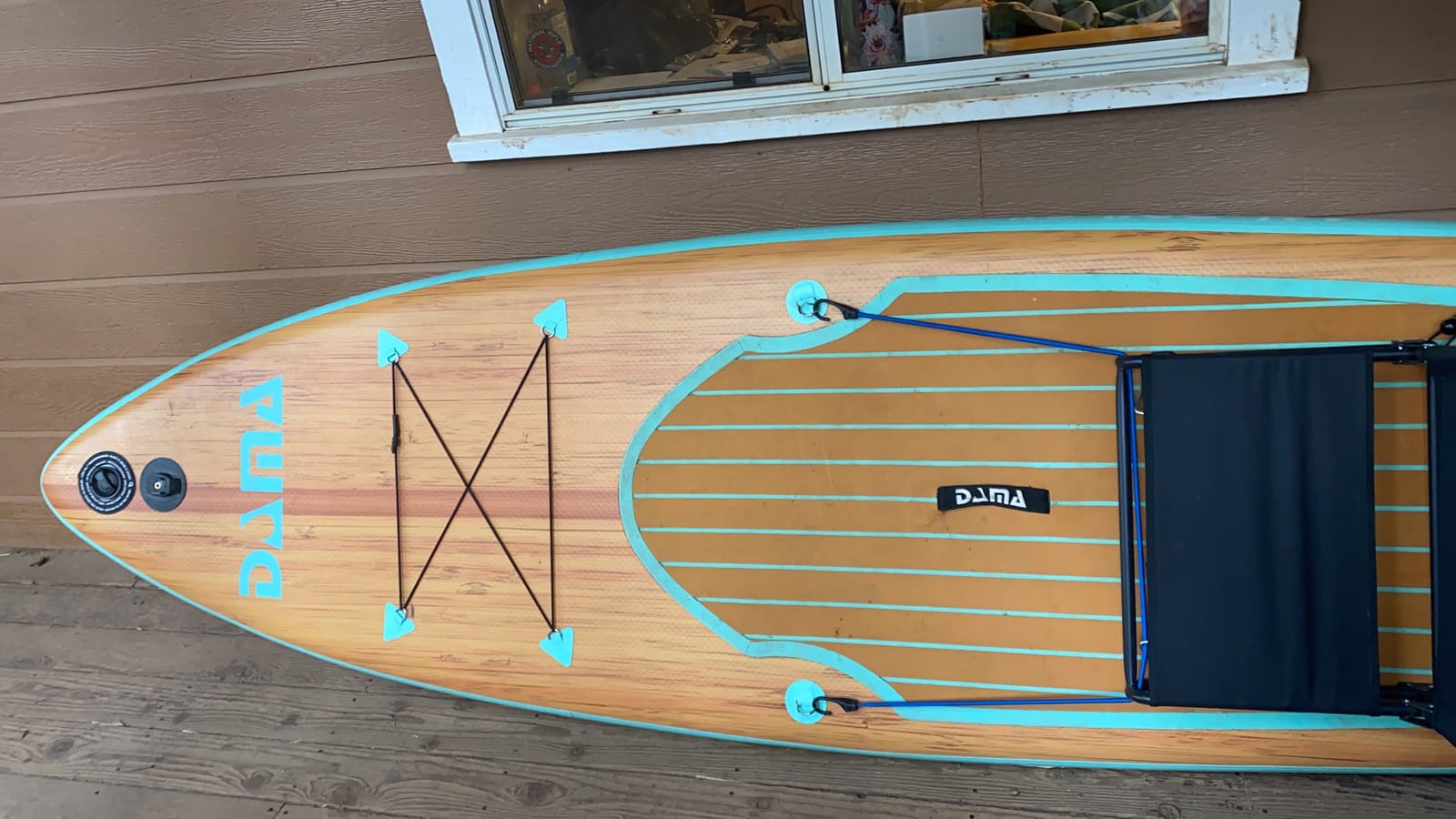
The DAMA is the most interesting board in this roundup for multi-person use, because the extra steel D-rings let you link two boards together or tow a child. Few other boards in this roundup handle that as cleanly.
At 11 feet by 33 inches and 6 inches thick it is a solid solo platform too, and owners describe the rigidity as comparable to fiberglass. Inflation takes about 10 minutes and deflation about 5, which is reasonable for a board that size.
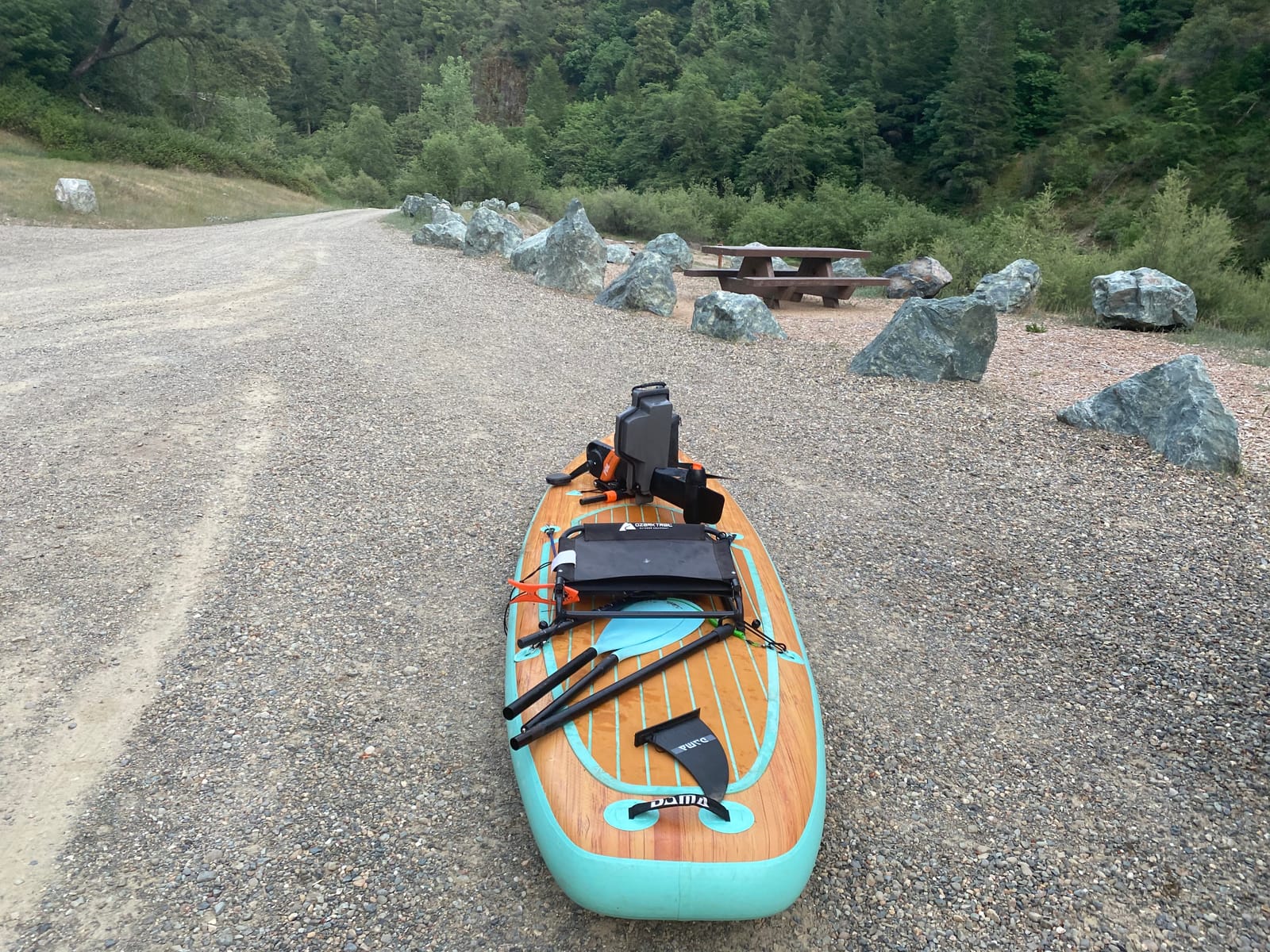
The paddle conversion is genuinely useful. It switches from a single blade to a double blade for kayak-style sitting, so the board does double duty without a second paddle.
What brings the rating down is build consistency rather than design. Down to the lowest average rating in the group at 4.2, with roughly 11 percent of reviews one-star. About 10 percent of reviews describe seam bubbling after storage or customer service being unresponsive to it, and several report the repair kit arriving without glue.
Those are meaningful for a board that lives in a damp bag nine months of the year. Seam bubbling after storage is a maintenance problem, not a fatal one, but it is the kind of thing that makes a first-time owner doubt the purchase.
When linking two boards actually helps
Linking works for a parent and a child riding together, for two people who want a bigger platform without a bigger board, and for instructors working with a partner. The steel rings take the load, and the 33 inch decks give each rider their own lane.
It does not work for solo practice. The moment you are doing a full sequence on your own, the second board is dead weight and you are better off on a single wider deck like the FLYPARK.
Where it is the wrong choice
If your main concern is longevity, this is the one board here we would not put at the top of your list. The 4.2 rating, the seam complaints and the glue-free repair kit all point at quality control rather than design, and the board is otherwise competent.
How to Choose a Yoga Paddle Board
Match the width to your body weight, not to the pose
Width is the dominant variable, and the right number is a function of rider weight and experience rather than of which yoga positions you plan to hold. A narrower board under a heavier rider feels unstable no matter how good the balance practice is.
Under 140 lb, or any first-time paddler: 31 to 32 inches is workable, and 33 inches is comfortable.
140 to 200 lb: 33 inches is the minimum worth buying, and 34 to 35 inches is better.
Above 200 lb, or two adults: 35 inches with a capacity rating above 400 lb is the correct target.
For any rider: 6 inches of thickness. Below 6, the deck flexes under a kneeling load and the board feels spongy.
The reason thicker is better here is mechanical. A thicker board holds more volume without more length, so the rider sits lower in the water relative to the deck. That lowers the center of gravity and reduces the lever arm that makes a board feel tippy, and it is the same reason a 6 inch board feels more planted than a 5 inch board of identical width.
Deck pad coverage decides which poses you can do
A partial pad ending two thirds back is fine for paddling and useless for a reclined stretch. Check where the pad stops relative to the tail, because the back third of the deck is where seated forward folds, fish pose and any supine work happen. Full-length coverage is the only real answer, and only the Flyroc in this group has a maker who states it.
Length: 10 feet or 11 feet and beyond
Length drives tracking and speed, width drives stability. For stationary practice, length barely matters once you are past 10 feet. For paddling to a launch or across a lake, an 11 foot board glides and tracks better than a 10 foot board of the same width, at the cost of a larger pack.
The practical rule: 10 to 10 foot 6 inches if you carry it often, 11 feet or longer if you want to paddle to your practice spot. Neither is wrong, but they solve different problems.
Capacity versus your actual loaded weight
Capacity is a ceiling, not a target. Owners consistently report that boards loaded near their maximum feel noticeably less stable. Use at most 70 percent of the rating for a solo practice and you will keep the planted feel; run at 95 percent and the same board feels twitchy.
Handles, D-rings and what comes in the box
Check where the handles are. A center handle is convenient for carrying and a nuisance under your shoulders during supine poses. Side handles on the deck, as on the Flyroc, are usable as a balance aid mid-pose.
Then check the box contents. Every board here includes a pump and a leash, but pump quality varies enormously and several included gauges do not read pressure. A repair kit with glue, a proper fin, and an adjustable three-piece paddle are the pieces worth replacing immediately. Owners who add an electric pump report that it is the single change most likely to make them paddle more often.
Inflatable or hardboard for yoga
For almost everyone starting out, an inflatable is the right answer. It packs small, stores against a wall, travels in a car, and can be inflated at the launch. The flex that makes an inflatable less rigid than a hardboard matters most in high-speed or choppy conditions, which is exactly the condition a yoga session should avoid.
A hardboard earns its place when you already paddle often, when you want the feel of a fixed deck under a standing balance sequence, or when you paddle in conditions that would punish an inflatable. Owners on forums consistently recommend a more heavily reinforced board rather than a lightweight one for exactly this reason, noting far more windage on a thin inflatable.
Who this is not for
These are stability platforms, not speed boats. They are wrong for racing, for long touring, for surf, and for anyone who wants to cover distance quickly. If that is your interest, start with a narrower all-around board instead. Our windsurfing board guide covers the power and sail setup a completely different kind of board needs.
Wind, Chop and When Not to Go
No editorial roundup covers this, and it is the first question owners ask each other. A wide yoga board has more surface area catching wind than a narrow paddle board, and a rider holding a balance pose cannot correct for drift. Wind matters more here than it does for any other SUP discipline.
The working rule is that a wide yoga board should be practised in an onshore breeze or calm conditions, not in a crosswind or an offshore breeze. Onshore wind pushes you back toward your launch. Offshore wind pulls you away from it, and that is the situation that turns a meditation session into an emergency paddle.
Calm water with light wind under about 5 knots of onshore breeze: good conditions for a full session.
Steady onshore wind with ripples: workable for seated and kneeling poses, questionable for standing balances.
Crosswind or any offshore component: stay on shore. The board’s windage will carry you.
Chop from boat traffic or a rising swell: not on a yoga board. Pick a day with a forecast you trust.
Wear a leash. That is not optional for wide boards, which have far more surface to catch a gust. Use an ankle cuff rather than a waist belt so a fall pulls the board back to you rather than dragging you under it.
Check the weather forecast for wind speed and direction, not just the temperature. Tell someone your launch point and your return time. And if you are new to paddling, go with a partner for the first few sessions, which is also the fastest way to learn how the board handles in a light chop.
Frequently Asked Questions
Can you do yoga on a paddle board?
Yes. A yoga paddle board is simply a stand-up paddle board chosen for balance practice rather than speed: a wide deck, typically 32 to 36 inches, at least 6 inches thick, with a non-slip EVA pad. Standing poses, seated stretches, kneeling lunges and supine work all work as long as you match the board width to your body weight and practise on flat calm water.
Can you do yoga on an inflatable paddle board?
Yes, and for most people it is the better option. An inflatable gives you a wide, thick platform you can pack in a car and inflate at the launch. The tradeoff is flex: a thinner inflatable feels spongy under a kneeling pose. Inflate to the working pressure listed by the manufacturer and avoid high-speed or choppy conditions, where rigidity matters most.
Which paddle board is best for yoga overall?
The Roc 10ft 6in inflatable is our pick as the best paddle board for yoga. Its 33 inch wide, 6 inch thick deck holds steady through standing transitions, it is rated to 350 lb, and it carries a 4.8 star average across more than 18,000 reviews. The Flyroc is the pick if full-length pad coverage and deck handles matter more to you.
Is a 10 foot or 11 foot paddle board better for yoga?
For stationary practice, either works, and past 10 feet length matters less than width. If you paddle to reach your spot, go longer: an 11 foot board glides and tracks better than a 10 foot board of the same width. If you carry the board to the water often, go shorter and lighter, because carry weight decides how often you practise.
How windy is too windy to do yoga on a paddle board?
A wide yoga board catches far more wind than a narrow one, and you cannot correct for drift while holding a balance pose. Practise in calm conditions or light onshore wind under about 5 knots. Avoid any crosswind or offshore breeze, since it pushes you away from your launch. When in doubt, check both wind speed and direction before you inflate.
How wide should a yoga paddle board be for my weight?
Under 140 lb or as a first-time paddler, 31 to 33 inches of width is comfortable. Between 140 and 200 lb, treat 33 inches as the floor and aim for 34 to 35. Above 200 lb, or for two adults sharing a board, choose 35 inches with a capacity rating above 400 lb. Thickness matters too: 6 inches is the practical minimum.
Which Yoga Paddle Board Is Right for You
Start with your body weight and your launch distance, not with a brand. Most people can pick from this list in under a minute.
Best all-round pick, and our overall choice: the Roc 10ft 6in inflatable, for the deepest review evidence and a deck that stays planted through standing transitions.
Best designed for yoga specifically: the Flyroc, the only board here whose maker states full-length EVA pad coverage and handles you can grab mid-pose.
Best for two adults, a family or a dog: the FLYPARK at 35 inches wide and 430 lb, or the SereneLife XL if you are loading it up heavily.
Best for a nervous first-timer: the Highpi, a light 18.5 lb board with a dual-layer build and a 4.7 star average from 1,887 reviews.
Best if you paddle as well as practise: the Intermountain Gorge, which tracks properly and packs down small.
Best budget entry: the QILEBA, if you are on calm water and want to test the sport without a large outlay.
One last thing the spec sheets will not tell you. The board that makes you practise is the one you will actually carry to the water, so weight and pump quality belong in the buying decision alongside width and thickness. Pick the board that fits your body, then add an electric pump and a leash before your first session.
We compared these ten boards on flat freshwater in 2026 and updated the roundup as new models landed. If you tell us your body weight, your experience level and whether you want to paddle or stay put, we can narrow the ten down to one.