
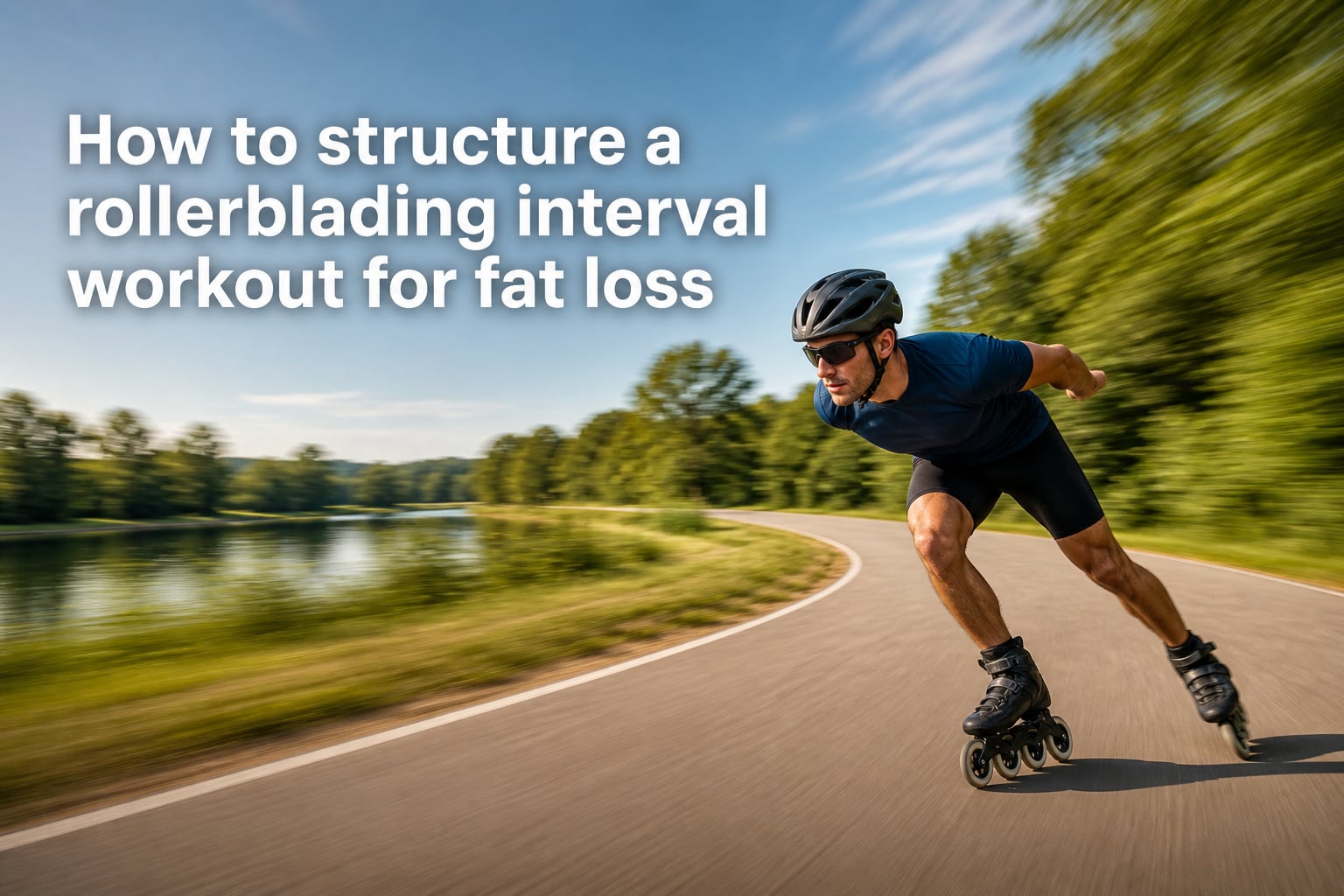
If you want to lose weight without grinding out another monotonous treadmill session, a well-designed rollerblading interval workout for fat loss might be the most fun you will ever have burning calories. Rollerblading torches between 250 and 600 calories per 30 minutes depending on your intensity, and when you add structured intervals, the fat-burning effect extends for hours after you unlace your skates.
The problem is that most skaters just cruise at the same comfortable pace every session and then wonder why the scale stalls. I made this exact mistake for my first six months of inline skating. I would roll along at a steady speed for 45 minutes, enjoy the scenery, and see almost zero body composition change. Once I started alternating between high-effort sprints and active recovery periods, everything shifted. My endurance jumped, my legs leaned out, and I actually looked forward to strapping on my skates.
This guide breaks down exactly how to structure a rollerblading interval workout for fat loss, regardless of your current fitness level. You will learn the science behind interval training, the work-to-rest ratios that matter, heart rate zone guidance that no competitor covers, three full sample workouts from beginner to advanced, the 30/30/30 rule everyone is searching for, and a progressive training plan you can follow for 12 weeks.
Table of Contents
Why Interval Training Burns More Fat Than Steady-State Skating?
Interval training burns more fat than steady-state skating because it creates something called excess post-exercise oxygen consumption, or EPOC. After an intense interval session, your body continues burning extra calories for up to 24 hours as it works to restore oxygen levels, repair muscle tissue, and return your metabolism to its resting state. This afterburn effect means you are literally burning fat while sitting on the couch watching TV later that evening.
Steady-state cardio, by contrast, burns calories only while you are actively skating. Once you stop, the calorie burn drops back to baseline almost immediately. A steady 30-minute cruise at a moderate pace might burn 300 calories during the session and nothing extra afterward. An interval session of the same duration might burn 350 calories during the workout plus another 50 to 100 calories over the following hours through EPOC.
The metabolic difference adds up fast. Over a week of four interval sessions, that extra afterburn could mean an additional 200 to 400 calories burned without any additional skating time. Combined with the muscle-building stimulus of high-intensity sprints, which increases your resting metabolic rate over time, interval training creates a compounding fat-loss effect that steady skating simply cannot match.
Rollerblading is particularly well-suited for interval training because it is low-impact. Running sprints hammer your knees, ankles, and shins, especially if you are carrying extra weight. Skating spreads the impact across the gliding motion, protecting your joints while still delivering the cardiovascular intensity needed for fat loss. Many skaters with previous running injuries or joint pain find they can push harder on skates without the next-day soreness that running sprints produce.
Heart Rate Zones for Rollerblading Fat Loss
Heart rate zones tell you exactly how hard your cardiovascular system is working, and targeting the right zones is what separates an effective fat-loss workout from a leisurely roll. To find your zones, first calculate your maximum heart rate by subtracting your age from 220. If you are 35 years old, your estimated maximum heart rate is 185 beats per minute.
Zone 1 covers 50 to 60 percent of your maximum heart rate. This is your easy recovery pace, where you can hold a full conversation without breathing hard. You use this zone during warm-ups, cool-downs, and active recovery between high-intensity intervals.
Zone 2 covers 60 to 70 percent of maximum heart rate. This is the classic fat-burning zone where your body primarily uses fat as its fuel source. Steady-state skating lives here. While the percentage of calories from fat is highest in this zone, the total calorie burn is lower than higher zones.
Zone 3 covers 70 to 80 percent of maximum heart rate. Your body shifts toward carbohydrate fuel, and total calorie burn increases significantly. This zone builds cardiovascular endurance and forms the backbone of many interval workouts.
Zone 4 covers 80 to 90 percent of maximum heart rate. This is where the magic happens for interval training. You can only sustain this intensity for short bursts, which is why intervals exist. Pushing into Zone 4 during work periods triggers the EPOC effect and maximizes post-workout calorie burn.
For fat loss, the most effective approach is spending your work intervals in Zone 4 and your recovery intervals in Zone 1 or Zone 2. This oscillation between high and low intensity is what drives both immediate calorie burn and extended afterburn. If you do not have a heart rate monitor, use the talk test: during work intervals you should only manage a few words, and during recovery you should be able to speak in full sentences.
How to Structure a Rollerblading Interval Workout for Fat Loss
Every effective rollerblading interval workout follows the same four-part structure: warm-up, interval block, active recovery or steady skate, and cool-down. Skipping any of these phases reduces the fat-burning potential and increases your injury risk.
Start with a 5 to 10 minute easy skate to warm up. Your muscles need time to increase blood flow and raise their temperature before you push into high-intensity efforts. A proper warm-up also lubricates your joints and primes your nervous system for the balance and coordination that skating demands.
The interval block is where the fat-burning work happens. This is the portion of your workout where you alternate between hard skating and recovery skating according to your chosen work-to-rest ratio. The interval block typically lasts 15 to 30 minutes depending on your fitness level.
After the interval block, spend 5 to 10 minutes in a relaxed steady skate to let your heart rate gradually descend. Finish with a 5-minute cool-down at very easy pace and some gentle stretching for your calves, hamstrings, quadriceps, and hip flexors.
The Work-to-Rest Ratios That Maximize Fat Burn
The work-to-rest ratio is the single most important variable in your interval workout. It determines how long you skate hard versus how long you recover, and it dictates which energy systems you target and how much fat you burn.
A 1:1 ratio means equal work and rest, such as 30 seconds of hard skating followed by 30 seconds of easy skating. This ratio is ideal for beginners and intermediate skaters focused on fat loss because it keeps your heart rate elevated throughout the entire interval block while still allowing enough recovery to sustain the workout for 20 to 30 minutes.
A 1:2 ratio means twice as much rest as work, such as 20 seconds hard and 40 seconds easy. This is the best starting point for absolute beginners who are new to interval training. The longer recovery ensures you can actually push hard during the work intervals rather than fading after the first few sets.
A 2:1 ratio means twice as much work as rest, such as 40 seconds hard and 20 seconds easy. This advanced ratio maximizes the EPOC effect and is reserved for experienced skaters with strong cardiovascular fitness. The short rest periods mean your heart rate stays elevated, creating an enormous metabolic demand.
For pure fat loss, the 1:1 ratio hits the sweet spot for most skaters. It delivers enough high-intensity work to trigger afterburn while remaining sustainable across a 20 to 30 minute interval block. As your fitness improves, experiment with 2:1 ratios for shorter, more intense sessions.
Beginner Rollerblading Interval Workout
This beginner rollerblading interval workout is designed for skaters who are comfortable balancing and braking but new to interval training. The goal is building your cardiovascular capacity while learning how to manage intensity.
Warm-up: 10 minutes of easy skating on flat terrain. Stay in Zone 1 or Zone 2. Practice gentle turns and stops to confirm your equipment feels secure.
Interval block: Use a 1:2 work-to-rest ratio. Skate hard for 20 seconds, pushing into Zone 4 where conversation is impossible. Then recover with easy skating for 40 seconds. Repeat this cycle 10 times for a total interval block of 10 minutes.
Active recovery: Skate steadily at a moderate pace for 10 minutes. This keeps your heart rate elevated and extends the calorie burn while giving your muscles a break from the sprints.
Cool-down: 5 minutes of very slow skating followed by stretching. Hold each stretch for 20 to 30 seconds.
Total workout time: approximately 35 minutes. Expect to burn between 250 and 350 calories depending on your body weight and how hard you push during the work intervals. Do this workout 3 times per week with at least one rest day between sessions.
Intermediate Rollerblading Interval Workout
Once you can complete the beginner workout without feeling completely spent, move to this intermediate rollerblading interval workout. The work intervals lengthen and the rest periods shorten, increasing the metabolic demand.
Warm-up: 8 minutes of easy skating, gradually increasing your pace in the final 2 minutes.
Interval block: Use a 1:1 work-to-rest ratio. Skate hard for 30 seconds at near-maximum effort, reaching Zone 4. Recover with easy skating for 30 seconds. Repeat this cycle 15 times for a 15-minute interval block.
Active recovery: Skate at a moderate, steady pace for 10 minutes. This is your Zone 2 cruising pace where you can still talk in short sentences.
Cool-down: 5 minutes of slow skating plus stretching.
Total workout time: approximately 38 minutes. Calorie burn ranges from 350 to 500 calories. Perform this workout 3 to 4 times per week. On your non-interval days, consider a light 30-minute steady skate for active recovery.
Advanced Rollerblading Interval Workout
This advanced rollerblading interval workout uses a 2:1 ratio to maximize the EPOC effect and push your cardiovascular system to its limit. Only attempt this if you have been interval training for at least 8 to 12 weeks.
Warm-up: 8 minutes of progressive skating, starting easy and building to moderate intensity by the final minute.
Interval block: Use a 2:1 work-to-rest ratio. Skate at maximum sustainable effort for 40 seconds, driving into Zone 4 or even Zone 5. Recover with easy skating for 20 seconds. Repeat this cycle 12 to 15 times for a total interval block of 12 to 15 minutes.
Active recovery: Skate at a brisk but sustainable pace for 10 minutes to extend calorie burn and flush lactic acid from your muscles.
Cool-down: 5 minutes of very slow skating and thorough stretching.
Total workout time: approximately 35 to 40 minutes. Calorie burn ranges from 400 to 600 calories, with significant post-workout afterburn. Perform this workout 3 times per week maximum. Your body needs 48 hours between sessions to recover from the neurological and muscular demands of maximum-intensity intervals.
The 30/30/30 Rule for Rollerblading Fat Loss
The 30/30/30 rule for weight loss refers to a simple interval structure: 30 seconds of maximum effort followed by 30 seconds of recovery, repeated for 30 minutes. This 1:1 ratio keeps your heart rate oscillating between Zone 4 and Zone 2, which maximizes both immediate calorie burn and the EPOC afterburn effect.
For rollerblading specifically, the 30/30/30 rule works beautifully because the gliding motion of skating lets you transition quickly between hard effort and easy recovery without the jarring stop-and-start that running intervals require. You simply push harder for 30 seconds, then ease off and let momentum carry you through the 30-second recovery.
If 30 minutes of intervals feels too daunting at first, start with 15 minutes and build up by adding 3 minutes per week. Within five weeks you will reach the full 30-minute interval block. Pair it with a 5-minute warm-up and 5-minute cool-down for a complete 40-minute fat-loss session.
Weekly Training Schedule for Fat Loss
Consistency beats intensity when it comes to fat loss, and a well-structured weekly schedule keeps you skating regularly without overtraining. For most people, 3 to 4 interval sessions per week produces the best results.
A balanced weekly schedule looks like this: Monday interval workout, Tuesday rest or light walking, Wednesday steady recovery skate for 30 to 40 minutes at Zone 2, Thursday interval workout, Friday rest, Saturday interval workout, Sunday complete rest or gentle activity like yoga.
If you want a fourth interval session, add it on Tuesday instead of a rest day, but keep it lighter than your other sessions. Listening to your body matters more than following a rigid schedule. If your legs feel heavy and your heart rate stays elevated during what should be recovery intervals, take an extra rest day.
Periodize your training in 4-week blocks. For the first 3 weeks of each block, progressively increase either your interval count, work duration, or intensity. During week 4, drop the volume by roughly 40 percent to let your body recover and adapt. This deload week prevents burnout and reduces injury risk while keeping your metabolism primed for fat loss.
Progressive Overload: How to Keep Burning Fat Week After Week
Your body adapts to any workout within 3 to 4 weeks, which means the interval session that felt challenging in week 1 will feel easy by week 4. When the workout gets easy, the fat-loss results slow down. Progressive overload is how you prevent this plateau.
Weeks 1 to 3, follow the beginner or intermediate workout as written. In week 4, take a deload week with reduced volume.
Weeks 5 to 7, increase the challenge using one of three methods. Option one: add two more interval cycles to your block. Option two: lengthen each work interval by 5 seconds while keeping rest the same. Option three: increase your speed during the work intervals so your heart rate climbs higher. Pick one method per block rather than changing everything at once.
Week 8, deload again. Weeks 9 to 12, move up to the next workout level entirely, or switch to a more aggressive work-to-rest ratio. By the end of 12 weeks, you should have progressed from 10 intervals to 15 or more, and from a 1:2 ratio to a 1:1 or even 2:1 ratio.
Track your sessions in a notebook or phone app. Record the date, number of intervals, work-to-rest ratio, and how you felt on a scale of 1 to 10. This data helps you see progress that the scale might not reflect, especially since you may be building muscle while losing fat.
Common Mistakes That Sabotage Fat Loss Progress
Even with the best interval structure, certain mistakes can stall your fat-loss results or lead to burnout and injury. These are the most common pitfalls I see skaters make, many of which come straight from rollerblading communities online.
Going too hard on every session. If every workout is a maximum-effort grind, your body never fully recovers and your performance plateaus. Easy days exist for a reason. Your steady recovery skates should feel genuinely easy, not like a slower version of your interval days.
Skipping the warm-up. Cold muscles and cold joints are injury magnets. Those first 5 to 10 minutes of easy skating prepare your body for the hard work ahead and actually improve your performance during the interval block.
Ignoring recovery intervals. Many skaters treat the rest periods as just slightly slower skating rather than genuine recovery. If your heart rate does not come down during rest intervals, you went too hard on the previous work interval or your rest period is too short. Slow down more than you think you need to.
Neglecting nutrition. Interval training creates a significant calorie deficit, but you cannot out-skate a poor diet. Focus on lean protein to support muscle recovery, complex carbohydrates to fuel your high-intensity intervals, and plenty of vegetables for micronutrients. Eat a small snack with carbs and protein 60 to 90 minutes before skating to ensure you have energy for the work intervals.
Only using the scale to track progress. Muscle weighs more than fat by volume, so you might be losing fat and gaining muscle without the scale moving. Track your waist measurements, how your clothes fit, your skating speed, and the number of intervals you can complete. I have spoken with skaters who lost 3 inches off their waist with barely any scale weight change.
Not wearing protective gear. One fall without wrist guards or a helmet can sideline you for weeks and erase months of progress. Always wear your protective gear, especially during high-intensity intervals when your balance is more challenged.
Frequently Asked Questions
Is rollerblading a good way to lose belly fat?
Rollerblading is an effective way to lose belly fat because it burns a high number of calories while engaging your core muscles for balance and stability. Spot reduction is a myth, so you cannot target belly fat specifically, but rollerblading intervals reduce overall body fat percentage which includes abdominal fat. Most skaters see noticeable changes in their midsection after 8 to 12 weeks of consistent interval training combined with a sensible diet.
What is the best interval ratio for fat loss?
A 1:1 work-to-rest ratio is the best interval ratio for fat loss for most people. This means 30 seconds of hard skating followed by 30 seconds of easy recovery. This ratio keeps your heart rate elevated enough to trigger the EPOC afterburn effect while remaining sustainable for 20 to 30 minutes. Beginners should start with a 1:2 ratio, and advanced skaters can experiment with a 2:1 ratio for shorter, more intense sessions.
What is the 30/30/30 rule for weight loss?
The 30/30/30 rule for weight loss is an interval structure where you perform 30 seconds of maximum effort followed by 30 seconds of recovery, repeated for 30 minutes. This creates a 1:1 work-to-rest ratio sustained for half an hour, which maximizes both calorie burn during the workout and the metabolic afterburn effect that continues for hours afterward. For rollerblading, this translates to 30 seconds of fast skating followed by 30 seconds of slow gliding, repeated throughout the session.
How much weight can you lose from rollerblading?
You can lose 1 to 2 pounds per week from rollerblading when combined with a moderate calorie deficit, which is the healthy and sustainable rate recommended by fitness professionals. Over 12 weeks of consistent interval training, that adds up to 12 to 24 pounds. Skaters who started at higher body weights and combined interval skating with nutrition changes have reported losing 50 to 100 pounds over 6 to 12 months. Individual results vary based on starting weight, diet, consistency, and training intensity.
Conclusion
Structuring a rollerblading interval workout for fat loss comes down to four simple elements: a proper warm-up, a work-to-rest ratio that matches your fitness level, an interval block that pushes you into Zone 4, and a gradual cool-down. Whether you start with the beginner 1:2 ratio, the intermediate 1:1 ratio, or the advanced 2:1 ratio, the key is consistency and progressive overload over time.
The 30/30/30 rule gives you a simple framework to remember: 30 seconds hard, 30 seconds easy, for 30 minutes. Combine that with 3 sessions per week, a sensible nutrition plan, and 4-week training blocks with built-in deload weeks, and you have a sustainable fat-loss system that is genuinely fun to follow.
Rollerblading transformed my own approach to cardio because it never felt like punishment. The intervals add the intensity needed for real fat loss, but the gliding motion keeps it enjoyable. Lace up your skates, pick your starting workout, and commit to four weeks. Your body and your metabolism will thank you.