
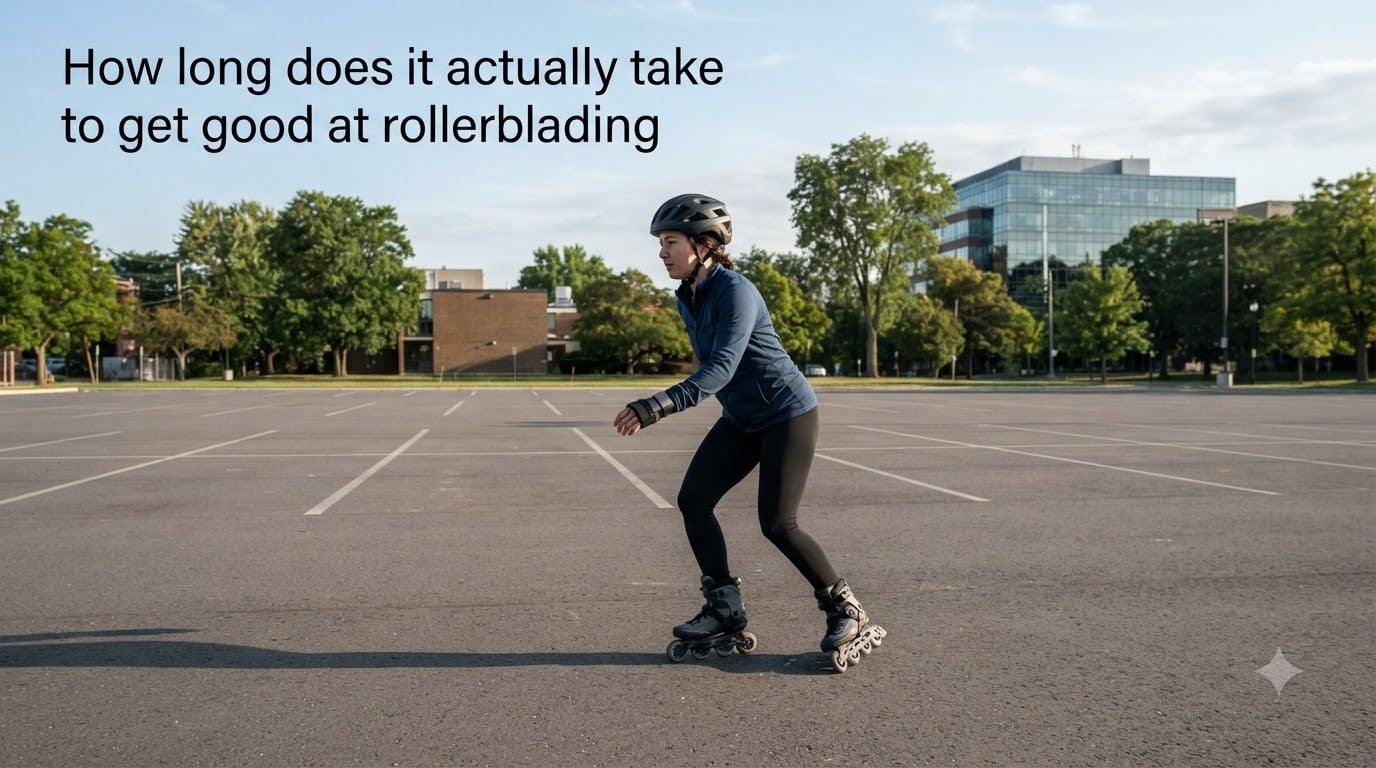
If you’ve been wondering how long does it actually take to get good at rollerblading, the honest answer is this: most beginners pick up the basic movements within 1 to 3 practice sessions, feel truly comfortable within 2 to 8 weeks of consistent practice, and develop real outdoor confidence somewhere between 3 and 6 months. The exact timeline depends on your age, fitness, prior sports background, and how often you practice, but the curve is shorter than most people expect.
I have coached first-time skaters for years, and I have seen the same pattern repeat itself again and again. The first session feels awkward and humbling. By week three, something clicks. By month three, you stop thinking about your feet. That progression is what this guide breaks down step by step.
This article is for adults and parents who want a realistic timeline, not a motivational speech. I will walk you through what actually happens session by session, week by week, and month by month, including the factors that speed things up and the mistakes that quietly slow you down.
Table of Contents
How Long Does It Actually Take to Get Good at Rollerblading?
It takes most beginners between 3 and 6 months of regular practice to feel genuinely good at rollerblading. “Good” looks different at every stage, so the real answer depends on what you mean.
Here is the breakdown I use with the people I work with:
- Basics (standing, marching, short glides): 1 to 3 sessions
- Comfort (stopping, turning, riding short distances): 2 to 8 weeks
- Confidence (handling outdoor paths, light traffic, small hills): 2 to 4 months
- Fluency (crossovers, T-stops, varied terrain, longer rides): 4 to 8 months
- Mastery (aggressive skating, slalom, speed, or freestyle tricks): 1 to 3+ years
Those ranges come from a mix of personal coaching experience and patterns I have seen across skating forums. One Reddit user in r/rollerblading put it well: “a couple weeks, up to a few months until you feel comfortable enough to take off your pads.” That window lines up with what the broader community reports.
The single biggest variable is practice frequency. Someone who skates three times a week for 30 minutes will move through these stages roughly twice as fast as someone who skates once a week for two hours. This is one sport where consistency beats intensity, every single time.
The Realistic Rollerblading Learning Timeline (Week by Week)
Here is the week-by-week progression most adult learners actually go through. I have grouped it by stage rather than exact week, because everyone moves at slightly different speeds.
Your First Session: Standing and Balance
The goal of session one is not to skate. The goal is to stand, find your balance, and take a few tentative steps. Most beginners spend the first 20 to 40 minutes simply getting comfortable with the feeling of wheels on their feet.
You will likely cover these skills:
- Standing still with knees slightly bent and feet shoulder-width apart
- Weight shifts from one foot to the other while holding onto a wall or rail
- Small “marching” steps in place to feel the wheels respond
- Short forward pushes of just a few feet
- A controlled fall onto your knees or wrists so you stop fearing it
By the end of session one, expect to feel uncoordinated and slightly sweaty. That is normal. You have just rewired your balance system for an unfamiliar piece of equipment.
Weeks 1 to 2: Gliding and Pushing
Sessions two through four are where the magic starts. Your brain stops fighting the wheels and starts using them. You will feel a noticeable shift between session three and session four where movement becomes smoother.
Skills typically unlocked in this window:
- Sustained gliding on one foot for 3 to 5 seconds
- Alternating pushes from inside edges (the V-shape push)
- Slow, controlled turning by shifting weight to one heel or toe
- The heel brake or plow stop, introduced but not yet reliable
- Turning your head to look around without losing balance
By the end of week two, you should be able to skate 50 to 100 meters without falling. Stopping is still your weak link, and that is completely normal.
Weeks 3 to 6: Stopping and Turning
This is when most beginners stop looking like beginners. Your pushing becomes smoother, your strides longer, and you can finally choose where you go instead of just falling in a straight line.
Skills that usually click between week three and week six:
- Reliable heel brake stop or plow stop at low speeds
- T-stop (dragging one skate perpendicular behind the other)
- Confident turning in both directions at moderate speed
- Stopping on a slight downhill without panic
- Basic crossovers (the footwork used to turn tightly)
By the end of week six, most people can ride around a smooth parking lot or empty path without holding onto anything. Falls still happen, but they are rare and predictable.
Months 2 to 3: Outdoor Confidence
Around the two-month mark, the environment shifts from “safe practice space” to “real world.” Cracks, debris, gentle slopes, and the occasional pedestrian stop being abstract concerns and start being things you actually navigate.
What changes during months two and three:
- You can skate on rough asphalt without feeling every pebble
- Small hills under 5% grade become manageable
- You start using your arms naturally for balance
- Stopping distance becomes shorter and more controlled
- You can hold a conversation while skating
For most learners, this is the stage where rollerblading shifts from “exercise I am doing” to “skill I have.”
Months 4 to 6: Real Fluency
By month four, your body has built the muscle memory. You stop thinking about pushing, gliding, and braking. They just happen. This frees up brain space for the next layer of skills.
Typical skills unlocked in this window:
- Backward skating and backward stopping
- Tight crossovers and figure-eights
- Skating in a small group without collisions
- Handling longer rides of 5 to 10 kilometers
- Reading terrain ahead and adjusting your line
At this stage, you are what most people would call “good at rollerblading.” You can join a group ride, handle your local bike path, and skate without thinking about it most of the time.
Months 6 to 12: Specialization
After six months, your progress depends entirely on what you want to do with the skill. Some learners chase speed, others focus on slalom, aggressive tricks, or long-distance fitness skating. This is where rollerblading stops being one activity and starts being five.
What Affects How Quickly You Learn Rollerblading
Some learners get the basics in two weeks. Others take two months. The difference comes down to a handful of factors that quietly shape your learning curve.
Prior Skating or Board Sport Experience
This is the single biggest accelerator. If you have any background in ice skating, skiing, snowboarding, skateboarding, or surfing, your balance system already understands how to manage sideways forces. Most skaters with a board sport background pick up rollerblading roughly twice as fast as complete beginners.
Age and Fitness Level
Children under 10 often learn fastest because their balance centers recover quickly and they have less fear. Adults from 20 to 40 typically learn at a steady, predictable pace. Adults over 50 can absolutely learn, but ankle strength and recovery time matter more, and falls hurt more.
Core strength and ankle stability are the two physical attributes that matter most. You do not need to be fit to start, but you will get better faster if your ankles can hold you in a slight squat for 20 minutes at a time.
Quality of Skates and Protective Gear
Good skates make a real difference. Stiff boots give you lateral support while you are still wobbling. Cheap soft boots let your ankles collapse, which slows learning and increases injury risk. Wrist guards, knee pads, and a helmet are not optional, especially in the first three months.
Practice Environment
Where you practice matters more than people expect. A smooth, flat, empty parking lot is the best beginner environment. Grass is great for the very first balance work. Carpet indoors can work too. Avoid cracked sidewalks, hills, or anywhere with traffic until you have a reliable stop.
Fear Tolerance
This is the underrated factor. Beginners who can stay calm during a small fall learn faster because they actually attempt new things. Beginners who tense up at the first sign of losing balance will spend weeks avoiding the movements that would actually teach their bodies what to do.
How Often Should You Practice Rollerblading as a Beginner?
For most beginners, three to four sessions per week of 20 to 45 minutes each is the sweet spot. That frequency is frequent enough to build muscle memory and spaced enough for your ankles and brain to recover.
Daily practice is possible and often effective, but watch for two warning signs: shin soreness that does not fade between sessions, and fatigue that makes your form sloppy. Both are signals that you need a rest day.
Here is a realistic beginner schedule:
- Monday: 30 minute session, balance and pushing drills
- Wednesday: 30 minute session, turning and stopping practice
- Friday: 45 minute session, longer glides and gentle outdoor ride
- Sunday: Optional 20 minute easy session if you feel good
The single biggest mistake beginners make is over-practicing in a single long session. A two-hour first outing often ends in frustration, fatigue, and a few days of sore ankles that keep you off skates. Three short sessions in one week will move you further than one long session.
Tips to Learn Rollerblading Faster (Without Skipping Safety)
You can shave weeks off your learning curve by training smarter, not harder. These are the strategies that consistently work for the fastest learners I have seen.
Always Wear Full Protective Gear
Wrist guards, knee pads, elbow pads, and a helmet are not negotiable in the first six months. Beginners fall. The question is not whether but when, and protective gear turns most falls from injuries into non-events. Confidence built on safety is faster confidence.
Start on Carpet or Grass for Balance
Before you ever push off on pavement, spend 10 to 15 minutes on grass or carpet learning to stand and shift your weight. The reduced rolling lets you focus purely on balance without the fear of sliding out from under you.
Learn to Stop Before You Learn to Go Fast
Speed feels exciting, but stopping is the skill that actually keeps you safe and lets you try new things. Master the heel brake or plow stop first, even if it means skating slowly for a couple of weeks. The skaters who skip this step are the ones who spend months avoiding hills.
Bend Your Knees and Lean Slightly Forward
Standing straight up is the most common beginner posture and the most unstable. Bend your knees to about 130 degrees, push your hips forward slightly, and keep your weight over the balls of your feet. This position gives you much better control and absorbs bumps naturally.
Practice Falling Safely
Yes, actually practice falling. On grass, with gear on, try a controlled fall onto your knee pads. Learn to roll rather than catch yourself with straight arms. Once falling stops being scary, you stop tensing up, and your skating improves overnight.
Skate With People Better Than You
Progress is faster with company. A friend who can confidently skate ahead of you pulls your skill level up. Local rollerblade groups, community sessions, and skate meetups are some of the fastest ways to level up.
Common Mistakes That Slow Down Your Rollerblading Progress
Every beginner makes some of these mistakes. The ones who improve fastest are the ones who notice and fix them quickly.
Standing Too Upright
Locking your legs straight is a fear response. It feels stable for about five seconds, then any small push tips you over. Bent knees are your friend, even when they feel awkward.
Looking Down at Your Feet
Your feet are not where you are going. Looking down throws off your balance and makes you more likely to clip a crack. Train yourself to look forward at where you want to be, not down at where you are.
Skipping Protective Gear Out of Embarrassment
Most experienced skaters still wear wrist guards and pads. The embarrassment is imaginary and the injuries from falls without gear are very real. Wear the gear.
Practicing Only on Rare Long Sessions
One three-hour session every two weeks is worse than four short sessions a week. Muscle memory needs repetition, not duration.
Trying Hills Before You Can Stop Reliably
If your stop is shaky on flat ground, it will fail on a slope. Earn your hills by being able to stop from a moderate speed on flat ground first.
Tensing Your Whole Body
Tension kills balance. Relaxed ankles, relaxed hips, and relaxed shoulders let your body absorb small wobbles instead of amplifying them. Take a deep breath before you push off.
How to Know When You’re Ready for Hills, Trails, or Longer Outdoor Rides
Progression signs are more reliable than time-based milestones. You are ready to advance when your body tells you it is ready. Here is what to look for.
You Can Stop Reliably in Both Directions
If your heel brake or plow stop works at moderate speed whether you are leaning left or right, you have the foundational safety skill. Without this, hills and trails are genuinely risky.
You Handle Small Obstacles Without Panicking
A crack in the pavement, a twig on the path, a pebble under your wheel. If your body reacts calmly and adjusts, you are ready for terrain that includes more of these.
You Can Skate and Hold a Conversation
This sounds silly but it is a real marker. If skating has moved from your entire focus to something you can do while thinking about something else, your skill level is solid.
You Stop Counting Your Falls
When you realize you have not fallen in a week, that is a sign. Falling used to be an event. Now it is rare enough to be surprising.
You Want to Try, Rather Than Avoid, New Terrain
The mental shift from “I hope I do not have to deal with that hill” to “I want to try that hill” is the real graduation moment. Most learners hit it somewhere between months three and five.
Frequently Asked Questions About Learning Rollerblading
How long does it take to get decent at rollerblading?
Most beginners reach a decent level of rollerblading in 2 to 8 weeks of consistent practice. u0022Decentu0022 usually means you can skate short distances, turn in both directions, and stop reliably on flat ground. Real outdoor confidence typically takes 3 to 6 months.
Can I learn to rollerblade as an adult with no skating experience?
Yes, adults with no skating experience learn rollerblading all the time. The main differences from learning as a child are that adults are more cautious, falls hurt more, and ankle strength takes longer to build. With three to four short sessions per week, most adults reach basic comfort within 4 to 8 weeks.
How long until I can rollerblade outside safely?
Most learners can rollerblade outside safely on smooth bike paths or quiet streets after 2 to 4 months of practice. You should be able to stop reliably, turn confidently in both directions, and handle small cracks or debris before moving from a parking lot to outdoor paths.
How often should I practice rollerblading as a beginner?
Beginners benefit most from three to four practice sessions per week, each lasting 20 to 45 minutes. Short, frequent sessions build muscle memory faster than long occasional sessions. Daily practice is fine if you allow rest days when your ankles feel sore or fatigued.
What should I practice first when learning to rollerblade?
Start with standing balance and weight shifts on grass or carpet. Once comfortable, move to short pushes and glides on flat pavement. Turning and stopping should be introduced in the second week, with stopping prioritized before speed.
How do I know I’m ready for hills, trails, or longer outdoor rides?
You are ready for hills and trails when you can stop reliably in both directions at moderate speed, handle small obstacles without panic, and have not fallen in over a week of regular practice. Mental readiness matters as much as skill: if you want to try a hill rather than avoid it, you are probably ready.
Is rollerblading harder than roller skating?
Rollerblading and roller skating are different but similarly accessible to beginners. Rollerblading (inline skating) uses four or five wheels in a line, which makes balancing slightly easier on flat ground but stopping trickier. Roller skates (quads) are more stable side to side but require more ankle control. Most learners reach basic comfort in the same time frame on either.
Bottom Line: Your Rollerblading Timeline in 2026
If you take away one thing from this guide on how long does it actually take to get good at rollerblading, let it be this: most people are surprised by how quickly the basics click, and most people overestimate how long real confidence takes. The realistic timeline is one to three sessions for basics, two to eight weeks for comfort, and three to six months for true outdoor fluency.
The fastest learners I have worked with all share three habits. They practice often in short sessions, they wear protective gear every time, and they learn to stop before they learn to go fast. If you can commit to three or four sessions a week, you will be skating with confidence before October is over.
Your timeline will not look exactly like anyone else’s, and that is fine. Pick up your skates, find a smooth empty surface, and start with twenty minutes of balance work. The rest is just repetition.
1 thought on “How Long Does It Actually Take to Get Good at Rollerblading (October 2026)”