
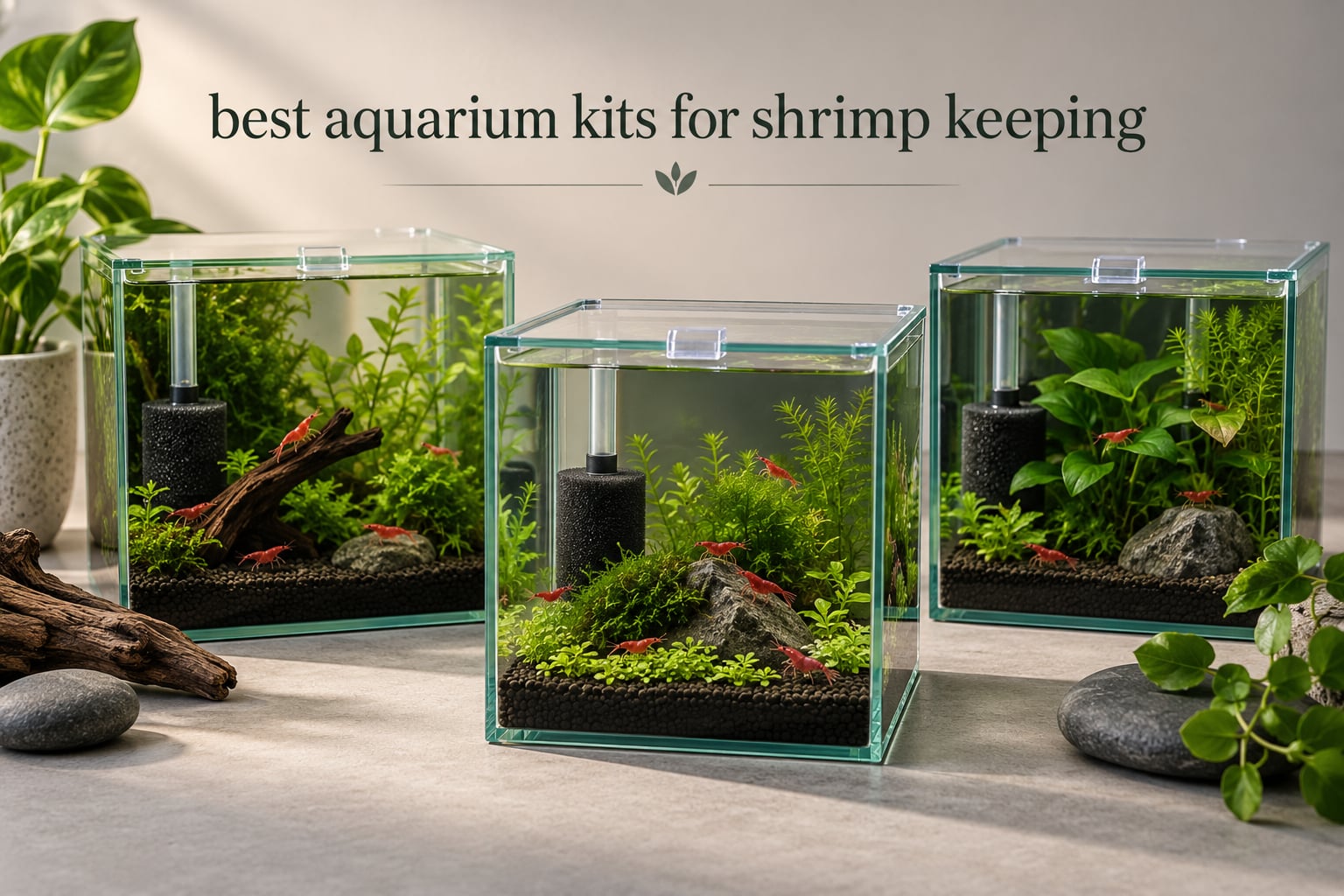
The best aquarium kits for shrimp keeping are the ones whose filter intake cannot swallow a 2 mm shrimplet and whose media you can keep alive between water changes. That single rule, plus a lid and a footprint wider than it is tall, separates a shrimp tank kit from a fish tank that happens to fit on a desk. We put eight nano aquarium kits through that filter, checked the flow rate against volume, and flagged every kit whose intake needs a mesh sleeve before you add livestock.
Most shrimp losses in a new kit tank are not husbandry mistakes. They are a week-old juvenile drawn into the intake of a filter that was sold as shrimp-safe, dying inside the media chamber, and never being seen again. Keepers on the FishLore Cherry Shrimp Forum have described exactly that outcome, and the same forum thread records a keeper who abandoned a kit tank and watched a colony of 15 shrimp become more than 50 in a few months. The lesson is not that kit tanks are bad. It is that intake mesh and media type decide whether a kit is usable, and those two specs are almost never printed on the box.
We compared the eight nano aquarium kits below on intake design, media type, rated flow against tank volume, lid design, footprint shape, and what the package leaves out. Two of them arrived with the intake problem already documented by owners. Three ship with a lid. One is not really a shrimp-keeping kit at all, and we say so plainly rather than padding the list.
Updated for 2026. If you would rather skip the roundup and start filtering from parts, our guide to aquarium filters tested and reviewed is the background reading for the media and flow decisions below.
Table of Contents
Top 3 Shrimp Tank Kits in October 2026
The Marineland Portrait Glass takes the top slot on the strength of its hidden three-stage filtration and a review base far larger than anything else in this group. The Aqueon MiniBow is the easiest single box to set up, and the NICREW Nano Nature is the only kit here that pairs real glass with a lid included at no extra cost.
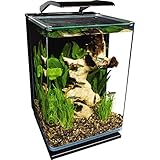
Marineland Portrait Glass…
- 5 gallon glass tank
- 3-stage hidden filtration
- Sliding glass canopy
- Daylight and moonlight LEDs
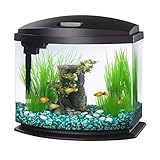
Aqueon MiniBow 5 Gallon
- SmartClean power filter
- Low profile LED hood
- Acrylic tank
- Water conditioner included

NICREW Nano Nature 2.5 Gallon
- Glass with 91.2% transmittance
- Lid included
- Pre-glued leveling mat
- Step-by-step setup guide
All 8 Shrimp Tank Kits Compared in October 2026
Read the table below as a safety screen rather than a ranking. Kits with a cartridge-only media path need a sponge filter added, and kits without a lid need a top cover before the first shrimp goes in.
| Product | Specs | Action |
|---|---|---|
| Marineland Portrait Glass 5 Gallon |
|
Check Latest Price |
| Aqueon MiniBow 5 Gallon |
|
Check Latest Price |
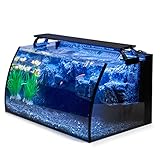 hygger Horizon 8 Gallon hygger Horizon 8 Gallon |
|
Check Latest Price |
| NICREW Nano Nature 2.5 Gallon |
|
Check Latest Price |
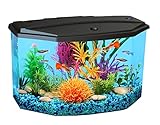 Koller Products 3 Gallon Koller Products 3 Gallon |
|
Check Latest Price |
 Vimvins 3 Gallon Glass Vimvins 3 Gallon Glass |
|
Check Latest Price |
 Shrimp Bubble Closed Ecosystem Shrimp Bubble Closed Ecosystem |
|
Check Latest Price |
 Vehipa 2.4 Gallon Starter Kit Vehipa 2.4 Gallon Starter Kit |
|
Check Latest Price |
1. Marineland Portrait Glass 5 Gallon – Hidden Filtration and the Biggest Review Base
Marineland Portrait Glass LED Aquarium Kit, 5 Gallons, Hidden Filtration,Black
5 gallon glass
Sliding glass canopy
3-stage hidden filtration
Rite-Size Z cartridges
Pros
- Largest review base in this group at about 10100 reviews
- Hidden filtration keeps equipment out of the viewing pane
- Sliding canopy and hinged lighting make feeding and cleaning easy
- Daylight and moonlight LED modes
Cons
- Filter intake has been reported drawing in shrimplets
- Portrait shape gives a smaller footprint than a rectangle
- Heater and substrate are not included
The Portrait is the kit we keep coming back to, for a boring reason: nobody is guessing about it. It has been sold for years, it has accumulated a review base of roughly 10100 ratings, and it holds a 4.4 average with about 7 percent one-star. When a product has that much history, the failure modes are known rather than suspected, and that is worth more to a shrimp keeper than a longer feature list.
The design puts the pump, the cartridge and the intake behind a full-width rear compartment, which keeps the front pane completely clear. It is a tall portrait box at 9.99 x 9.67 x 17.2 inches and 16 pounds, and the rounded corners plus clear canopy let you view from the side as well as the front. The canopy slides and the LED fixture hinges, so feeding and water changes do not mean dismantling anything.
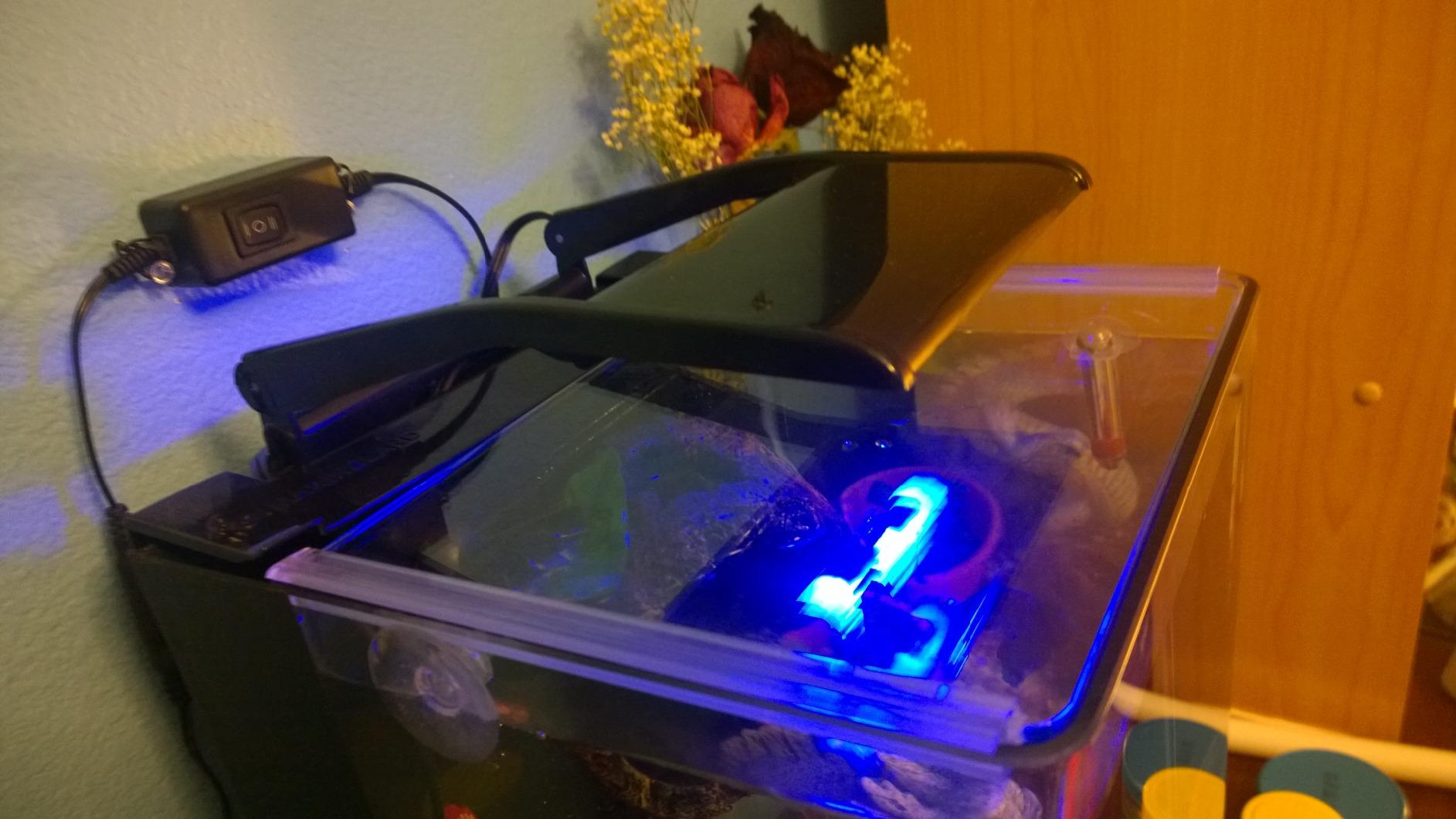
What you need to know before the tank is filled is that the filtration is a cartridge system taking Marineland Rite-Size Z cartridges. That is fine for a betta and wrong for a breeding shrimp colony, because swapping a cartridge discards the bacteria you spent weeks culturing. A sponge filter alongside it costs very little and gives you media you can squeeze, rinse, and reseed forever. We rate flow and cartridge media in more detail in our aquarium filter guide.
There is also a documented intake problem here. In a long-running FishLore Cherry Shrimp Forum thread, a keeper reported that the Portrait 5g filter drew shrimplets in, that shrimp hid in the cramped rear section and had to be fished out with a turkey baster, and that a craft mesh sleeve held with alligator clips still left gaps. The same keeper moved to a plain rectangular tank and reports the colony going from 15 shrimp to more than 50. If you buy this kit for shrimp, sleeve the intake before the first animal goes in.
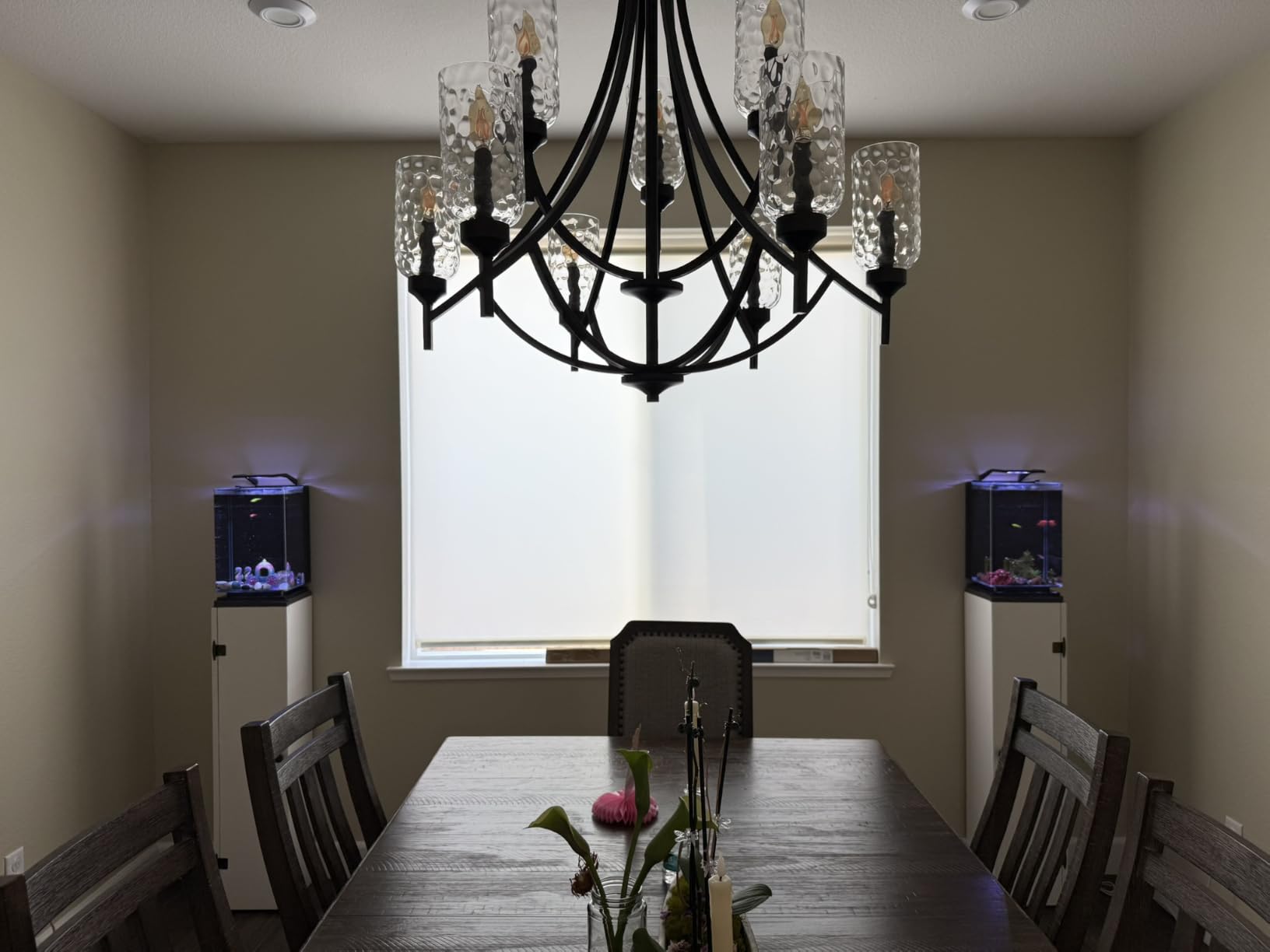
Is the hidden compartment a problem for a shrimp colony?
It is a problem for two reasons that are easy to miss in photos. Shrimp that climb inside the rear chamber are hard to see and hard to retrieve, and a cartridge that has to be pulled through a narrow slot is the reason many keepers swap the filter anyway. Treating the rear compartment as equipment storage rather than filtration solves both: run a sponge filter in the tank, hide the heater and the dosing equipment behind the panel, and leave the cartridge bay empty.
Kit media is also the thing that quietly fails. The 3-stage cartridge does a fine job on clarity and a poor job on preserving a bacterial colony through a cartridge change. Sponge media that you never throw away is what makes a nitrogen cycle survive a water change, a power cut, or a move.
Who should skip this kit?
Skip it if the tall portrait footprint is a problem. Five gallons in a portrait box gives you less surface area than a low rectangle of the same volume, and shrimp graze on surfaces, not in the middle of the water column. The wide, shallow ratio is where colonies actually grow.
Also skip it if escapes would be catastrophic, which means a house with an open cat. The sliding canopy is a partial cover with a slot at the front, and cherry shrimp jump. Buy a rimmed lid that seats on the top rim, and you have closed the problem for good.
2. Aqueon MiniBow 5 Gallon – The Easiest All-in-One Box
Aqueon MiniBow Small Aquarium Starter Kit, All-in-One Desktop Fish Tank for Betta, Shrimp or Small Fish, Includes SmartClean Filter Technology, LED Light and Conditioner, Black, 5 Gallon
5 gallon acrylic
SmartClean power filter
Low profile LED hood
14.5 x 10 x 13.5 inches
Pros
- Everything needed for a first tank in one box
- SmartClean design makes water changes quick
- Multiple size and color variants
- About 5620 reviews show a proven design
Cons
- Acrylic scratches and clouds over time
- 5 gallons is small for a mature colony
- No heater included
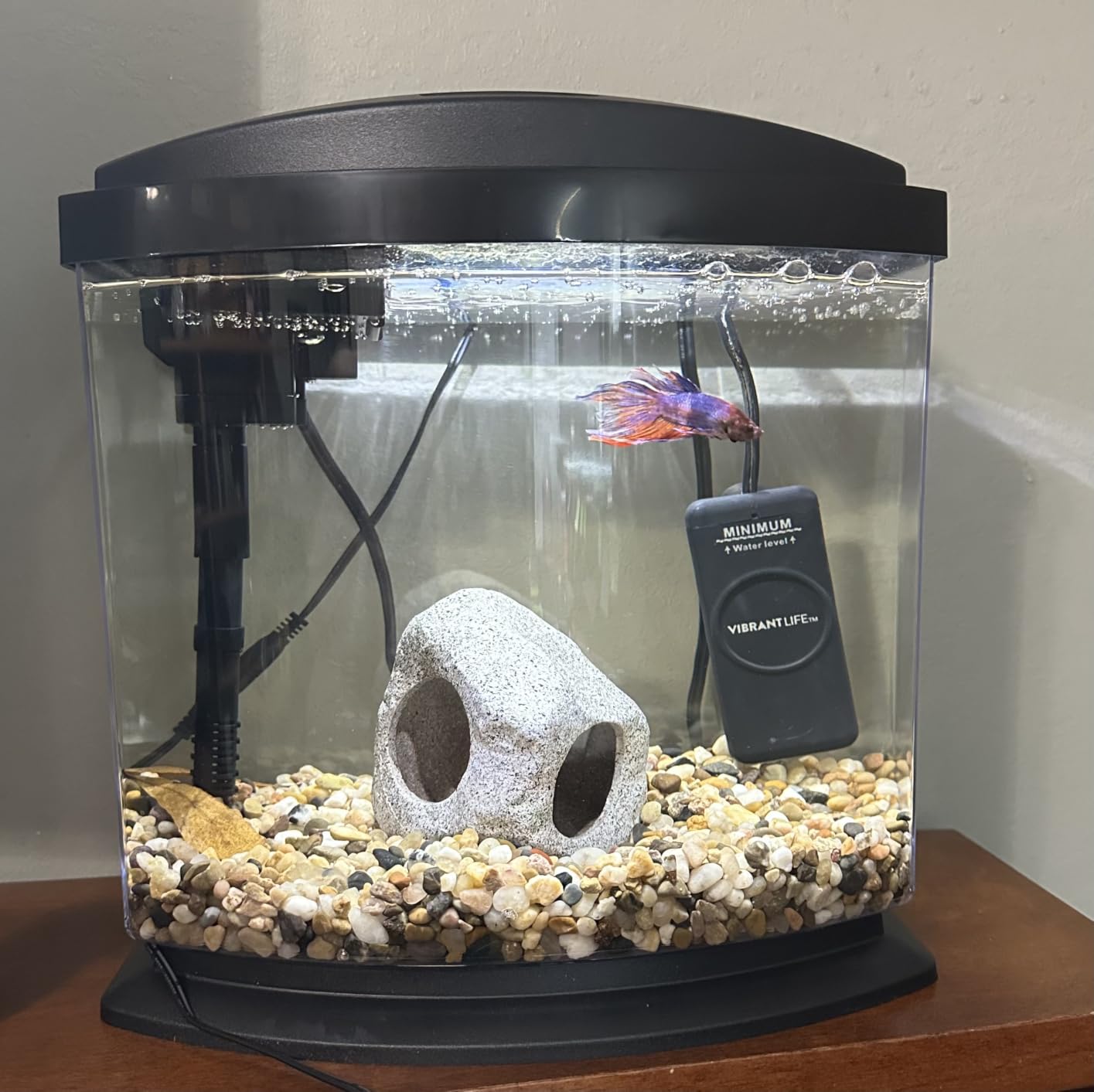
If the deciding factor is how many things are in the box, the MiniBow wins and it wins easily. You get the aquarium, a low profile LED hood, an elevated base, a power filter, water conditioner and food samples. With more than 5620 reviews at a 4.1 average, the design is not a risk. It is simply the most complete starter box on this list, and it is listed in the shrimp and betta category for a reason.
The feature that genuinely helps a shrimp keeper is SmartClean. The filter is designed so that a water change takes under two minutes without hauling the tank to a sink, which matters enormously at 5 gallons where a 30 percent change is a bucket and a jug rather than a hose. Anything that shortens the weekly maintenance loop gets you to the next water change, and the next one after that.
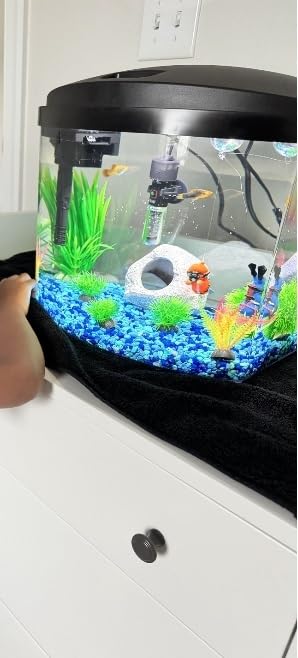
The trade-off is material and volume. The tank is acrylic rather than glass, and acrylic scratches into a haze over years of algae scraping, which is where a nano tank spends most of its life. At 14.5 x 10 x 13.5 inches and 5.25 pounds empty, it is also one of the smallest footprints here, and 5 gallons is a modest ceiling for a colony that starts breeding in month two.
One correction to the common advice about this kit: shrimp generally do not need a heater, and forum keepers running them at stable room temperature report no problem. What you do need is a thermometer, because nano tanks swing fast near a window or a radiator. Buy the heater only if your room sits outside a stable range, and skip it otherwise.
Is acrylic a real problem for a planted shrimp tank?
It is cosmetic, not structural. Acrylic holds temperature slightly better than glass and will not shatter, which matters if the tank lives in a child’s room or a busy hallway. The haze that develops after a year of algae on the inside walls is the real cost, and it is permanent, because the scratch is in the plastic.
For a first tank that will be resold or handed on, glass ages better. For a tank that will live on a desk and be admired daily for a year, the MiniBow is a fair trade, especially since the elevated base keeps the tank stable and level without a separate stand.
What should I add before stocking shrimp?
Three things, in this order. A sponge filter, because the included power filter is cartridge based and a colony needs permanent media. A plant substrate, because bare acrylic with a couple of plastic plants will not hold a biofilm for juveniles to graze. And a lid or a tight rim cover, because the hood is a light fixture, not a lid.
Skipping substrate is the most common regret reported by nano keepers, usually in the form of plain white sand that limits what will grow and stalls crypt growth. It also leaves nowhere for shrimp to hide when they molt, which is when they are most vulnerable.
3. hygger Horizon 8 Gallon – The Planted Colony Display Tank
hygger Horizon 8 Gallon LED Glass Aquarium Kit for Starters with 7W Power Filter Pump, 18W Colored led Light, Wide View Curved Shape Fish Tank with Undetachable 3D Rockery Background Decor
8 gallon curved glass
7W 110 GPH internal filter
18W LED with controller
Undetachable rockery
Pros
- Owners report colonies of 10 to 30+ shrimp
- Curved glass widens the viewing angle
- Timer and five brightness levels on the LED
- Adjustable waterfall spout redirects flow
Cons
- No glass lid so water evaporates fast
- Rockery cuts usable volume from 8 gallons to about 5
- Filter media is not sold separately
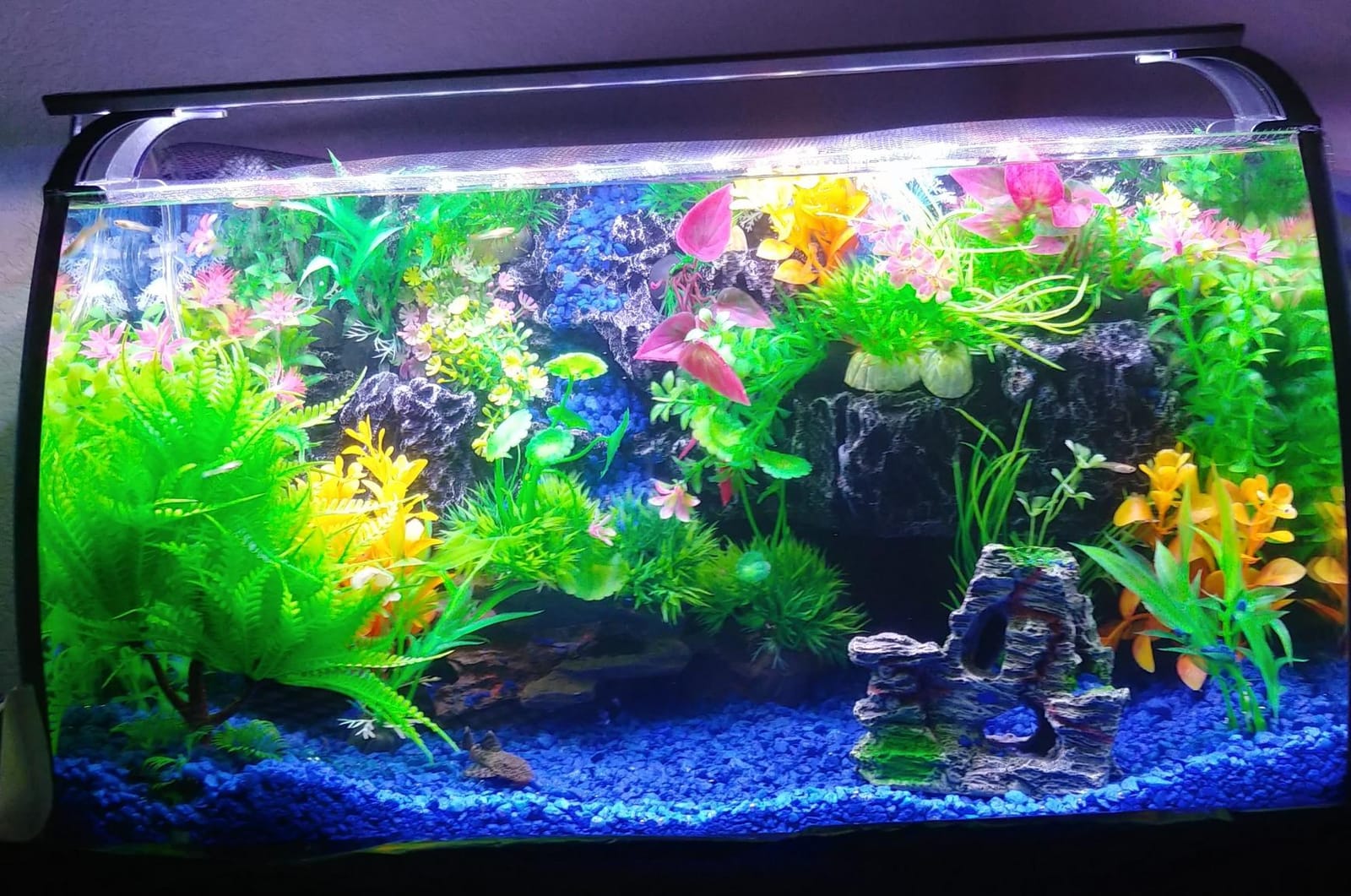
Of everything we tested, this is the one that looks like a display piece and behaves like a planted tank. Owners on the review base of about 1534 ratings at a 4.0 average repeatedly report keeping 30 or more cherry shrimp alongside a betta, which is a stocking level most 5 gallon kits cannot reach. The convex curved front glass widens the viewing angle in a way flat glass does not, and the 18W LED on extendable brackets is strong enough to grow real plants rather than just look bright.
The lighting controls are unusually good for a kit. An external digital controller gives you 3, 6, or 12 hour timer settings and five brightness levels from full down to 10 percent, with several color combinations including a blue and red mode. A dimmable light on a timer is the difference between a planted nano tank and an algae farm, and it matters for shrimp because constant bright light stresses them.
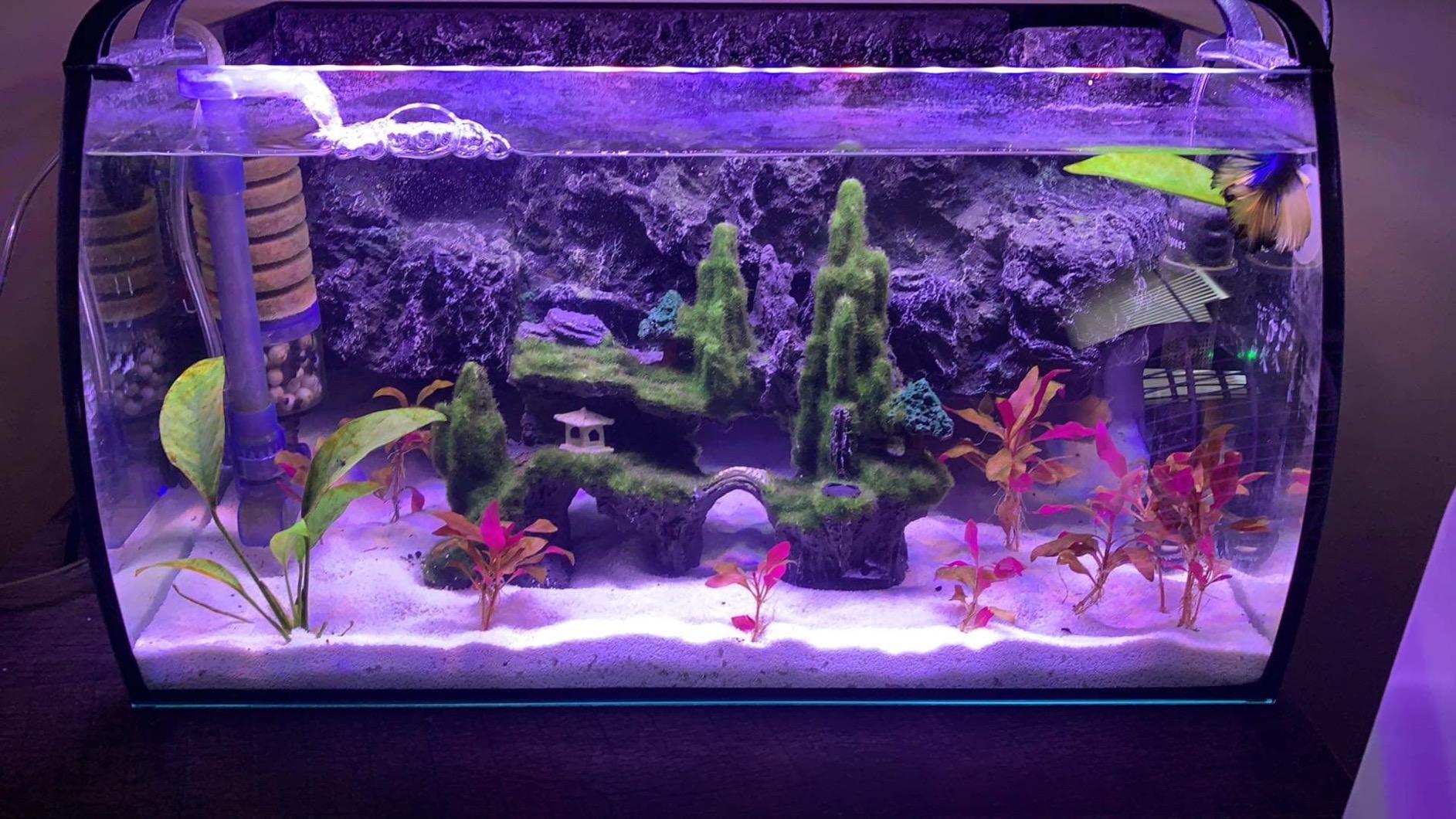
Now the part that makes this a committed-hobbyist tank rather than a hands-off first aquarium. The 3D rockery background is permanent, it is hard to clean, and it collects algae in every crevice. It also eats volume: the manufacturer states the tank is 8 gallons nominally and about 5 to 6 usable, and the filter sits in a cubby enclosed by the rockery where circulation is limited.
There is a specific intake warning here that deserves attention from anyone keeping shrimp. The filter is rated at 110 GPH on a nominal 8 gallon tank, and the manufacturer warns that this may be too strong for fish under 2 inches and can suction them in. Shrimplets are smaller than 2 inches. The cubby around the intake also leaves a gap that can trap very small animals. This is the one kit in the roundup where we consider intake guarding mandatory rather than advisable.
Can this kit hold a breeding colony without a lid?
It can, but plan for evaporation. With no glass lid, expect to top up weekly, and top-ups without water conditioner slowly shift your hardness, which is exactly the parameter caridina keepers lock carefully. A rimmed glass lid or a custom-fit cover is the first accessory to buy with this kit, not an optional extra.
Set the flow dial or the waterfall spout so the surface is moving without being hammered. Juvenile shrimp get carried into the current and against the filter, and a gentler surface turnover makes a measurable difference in survival. Reduce the LED to a lower brightness level for the same reason.
What does the rockery cost me in stocking?
Plan for roughly 5 to 6 usable gallons, not 8. That puts a mixed colony in the range of 20 to 30 shrimp with a betta, and that is a real, defensible number for a planted tank with a sponge filter and weekly water changes. Filling the tank to its stated volume because of the number on the listing is the most common way this kit goes wrong.
The rockery does have one genuine upside for shrimp. It adds surface area where biofilm and moss can establish, and it gives juveniles somewhere to hide that a flat background does not. If you intend to grow moss and crypts on it, the trade makes sense. If you want a clean scape you can reconfigure every six months, it does not.
4. NICREW Nano Nature 2.5 Gallon – Real Glass With a Lid Included
NICREW 2.5 Gallon Nano Nature Aquarium Kit Betta Fish Tank, Complete, Black
2.5 gallon volume
Glass with 91.2% transmittance
Lid and leveling mat included
11.81 x 6.3 x 8.66 inches
Pros
- Highest average rating in this roundup at 4.6
- About 80 percent of ratings are five star
- Glass clarity is a genuine step above plastic kits
- Lid included which most nano kits omit
Cons
- 2.5 gallons suits only a handful of shrimp
- No heater included
- Newer listing with a smaller review base
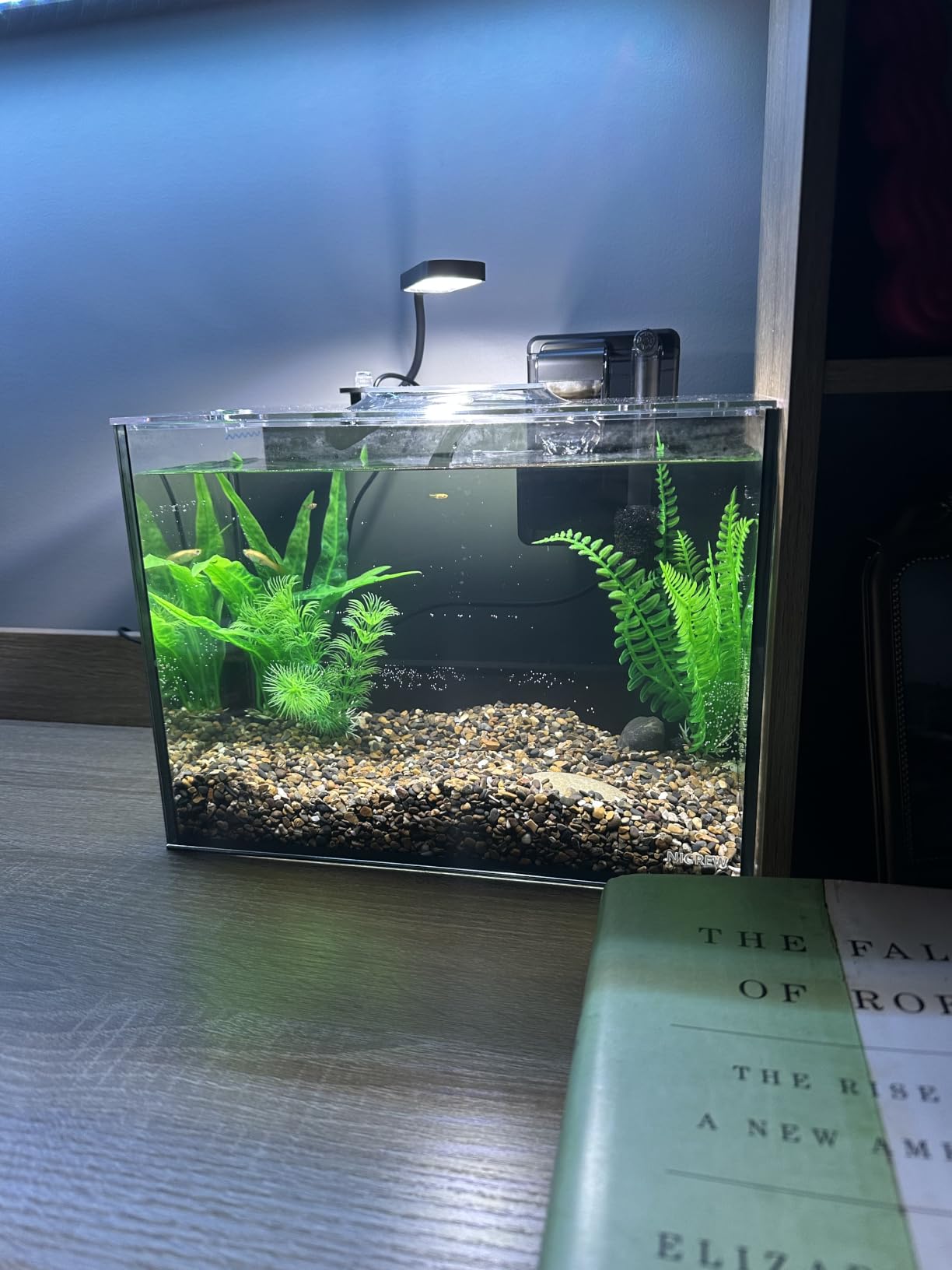
The strongest satisfaction signal in this group belongs to the smallest proper tank. It holds a 4.6 average across about 890 ratings, with 80 percent five star and only 5 percent one star, which is the best distribution any of these kits posts. The reason is easy to see once it arrives: it is glass, not plastic, and the glass is specified at 91.2 percent light transmittance.
That number is not marketing filler. A nano tank exists to be looked through, and high transmittance glass with a narrow bezel means the tank reads as a window into a living system rather than a plastic box. At 11.81 x 6.3 x 8.66 inches and 14.28 pounds, it is also a genuinely small footprint that will not crowd a desk or a shelf.
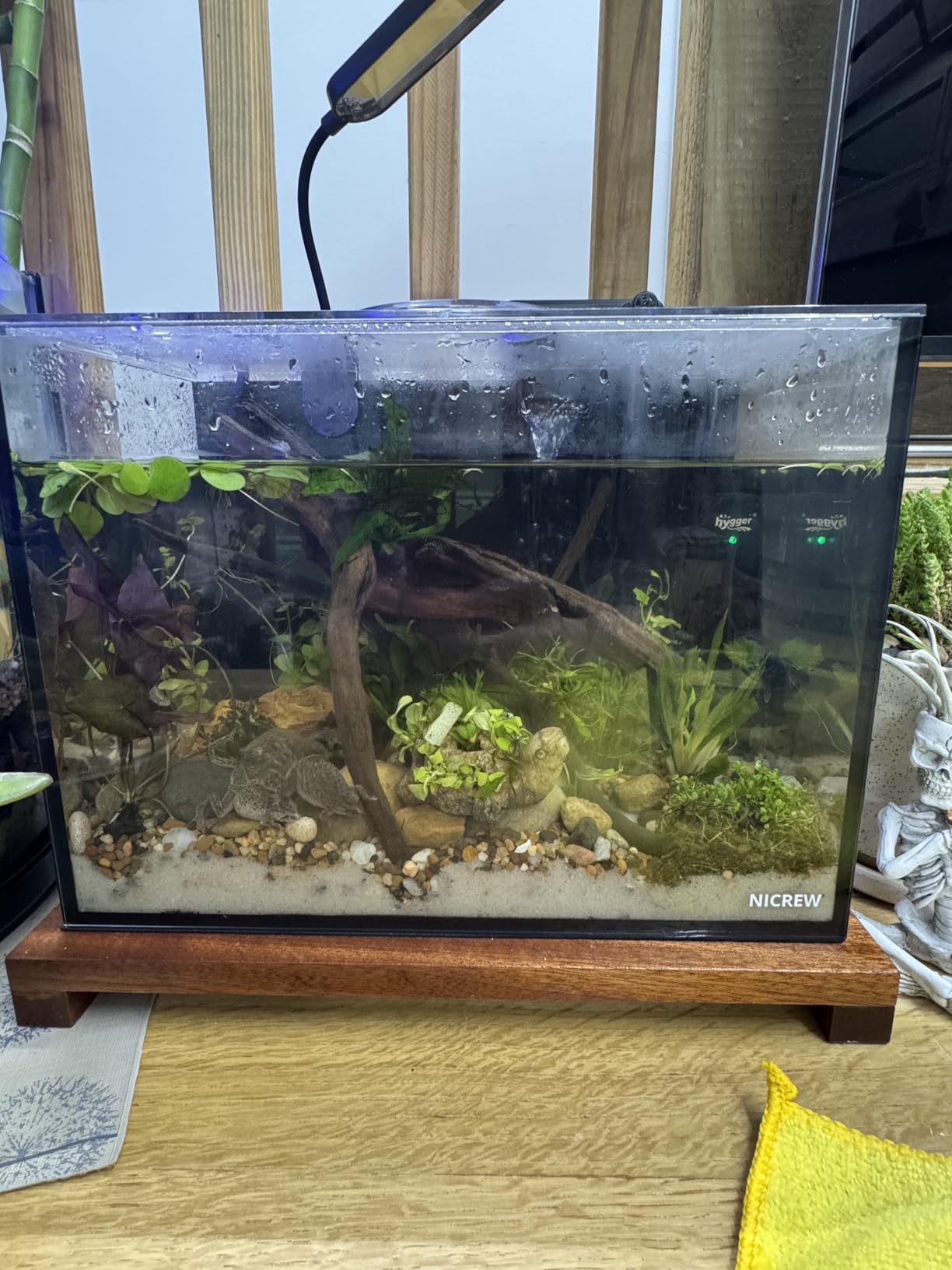
The two details that separate this kit from the other nano boxes are the lid and the base. The lid is included, which closes the escape problem that kills the first generation of most new shrimp tanks, and the pre-glued leveling mat means you are not assembling a stand before you can fill the tank. A step-by-step setup guide aimed at first-time keepers is included too, which does not sound like a feature until you are standing in front of it at 11pm.
What you are trading away is volume. At 2.5 gallons, this is a display and grow-out tank rather than a colony tank. A handful of adult shrimp is a comfortable population, and anything beyond that crowds the biofilter. For a child learning to keep a living thing, a quarantine tank for incoming plants, or a desktop tank, that is the right size. For breeding, it is not.
Is 2.5 gallons enough to keep shrimp in?
Enough for a small group, yes. Not enough for a colony that should grow, and the practical difference shows up in the first ammonia spike. Small water volumes concentrate waste fast, so a missed water change in a 2.5 gallon tank shows up in days rather than weeks. Keep the population small, keep the change schedule short, and it is a very manageable tank.
Because the lid is included, you can also run this as the grow-out tank that feeds a larger display. Move juveniles from here at 1 to 2 inches, and you avoid the phase where they are small enough to be drawn into a high-flow intake. That is exactly where the risk lives in every kit with a stronger pump.
What about the filter intake on this one?
The manufacturer describes complete filtration designed for low-effort maintenance, without publishing an intake mesh specification. That absence matters. Our default is to sleeve any kit intake with fine nylon mesh or pantyhose material before livestock goes in, and this is a tank where you can do it in a minute because of how few shrimp it holds.
If you plan to add a sponge filter instead, the small footprint makes placement easy. A nano sponge filter takes up almost no volume, and a 2.5 gallon tank gives you room to hide it behind a piece of hardscape. Keep the flow low, keep the surface slightly moving, and this kit becomes genuinely easy to keep.
5. Koller Products 3 Gallon – The Quiet Budget Entry Point
Koller Products Plastic 3-Gallon Aquarium Starter Kit with 4 Colors LED Lighting and Complete Filtration, Ideal for a Variety of Tropical Fish, Betta Fish, Tropical Fish, Cichlids, Ornamental Shrimp
3 gallon plastic
Built-in 25 GPH filter
Four LED modes with timer
Operates below 35 dB
Pros
- Complete filtration and lighting in one affordable box
- Four LED colors plus a 2/4/8 hour timer
- Runs below 35 dB which suits a bedroom
- Marketed for ornamental shrimp
Cons
- Plastic construction scratches easily
- 3 gallons is very limited for colonies
- Filter media is disposable cartridges
The Koller is the kit we would hand to someone who wants a shrimp tank this week and does not want to research nine components. The box contains the tank, a built-in filter rated at 25 GPH, and an LED array with four selectable color modes, plus a timer you can set to 2, 4, or 8 hours on automatic daily repeat. It has been sold for a long time, which shows in the review base of about 2349 ratings at 4.1.
Two specs matter more than the rest here. Twenty-five GPH on a 3 gallon tank is roughly eight turnovers per hour, which is a sensible ratio for a small planted tank and plenty to keep detritus moving. And the filter uses standard XS cartridges, which are easy to find, so you are never hunting for a proprietary part at 10pm.
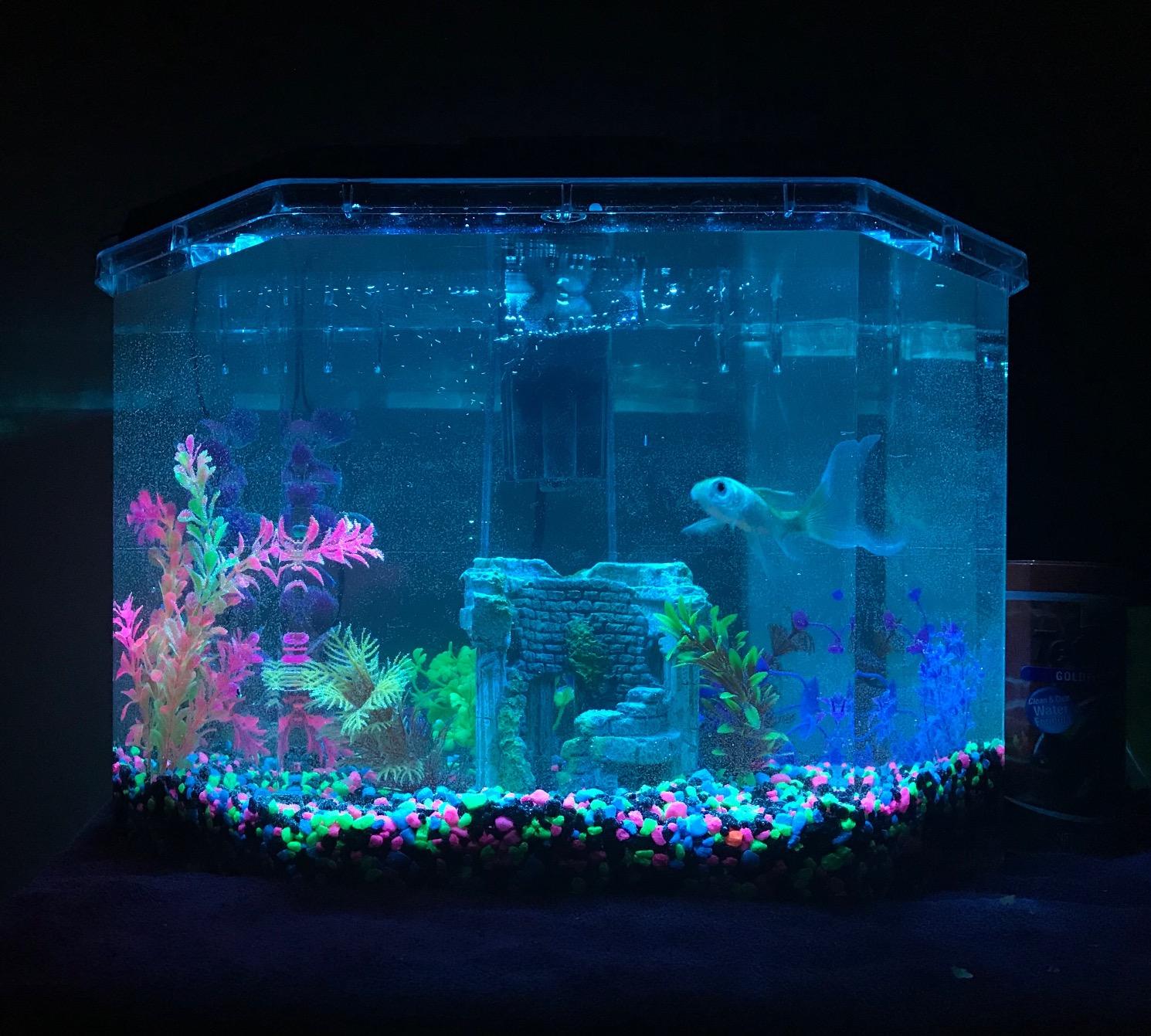
The light is the sleeper feature. Four modes covering daylight white, warm white, blue, and blue-white, on a timer, means you can run a low-intensity blue night mode that lets you observe nocturnal shrimp behavior without keeping the tank bright all night. For a tank with a colony, that is a real quality-of-life improvement over a single fixed LED.
It also runs below 35 dB, which is quiet enough for a bedroom or a home office. Silence matters more than most buyers expect, because a humming pump in a small tank is genuinely tiring after a few weeks, and a humming pump in a bedroom is a tank you stop looking at.
Is a 25 GPH filter too strong for shrimplets?
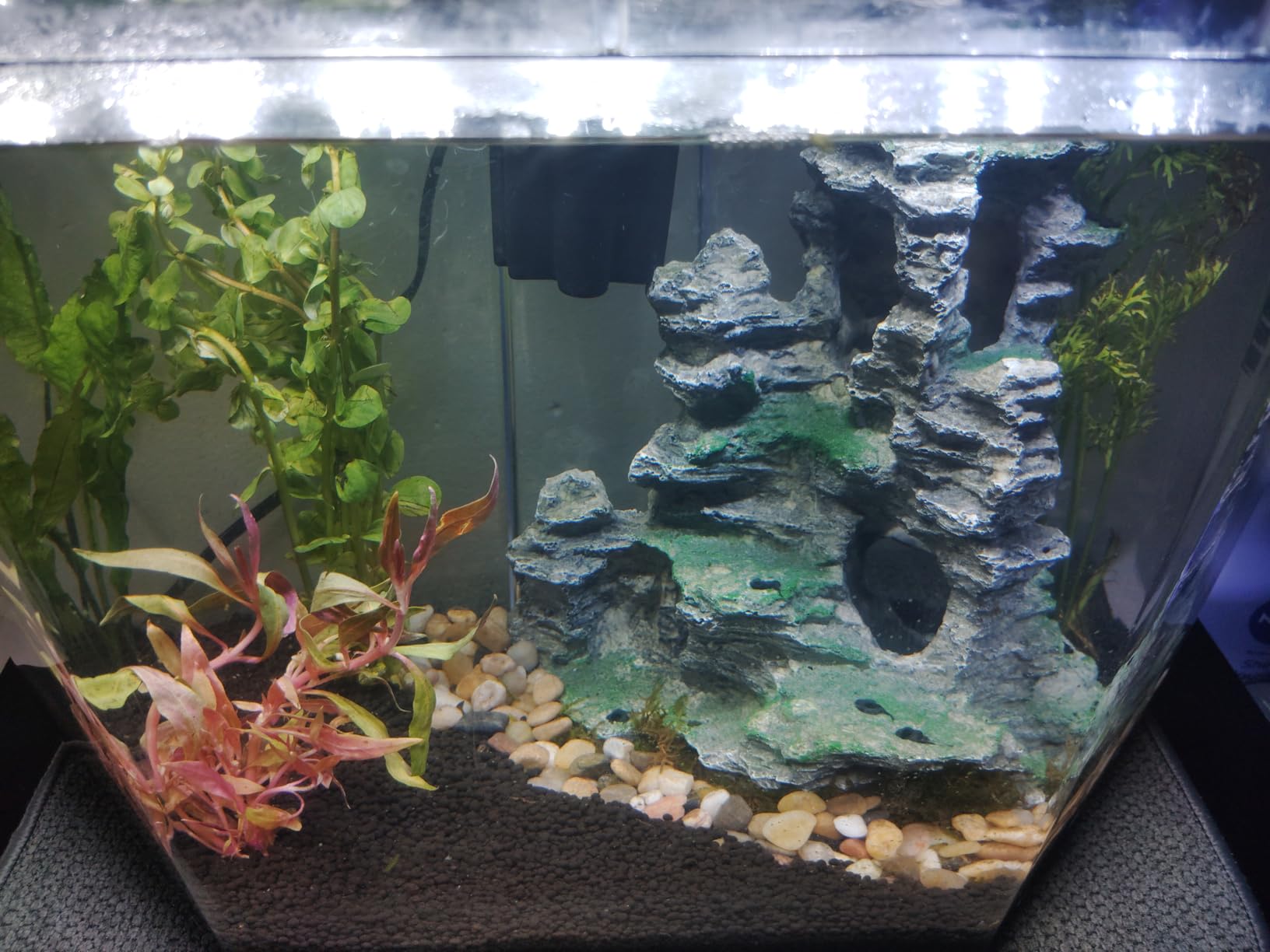
It is a moderate flow, and at 3 gallons the direction of the current matters more than the number. Aim the outflow along the glass rather than across the open middle of the tank, and the surface stays gently rippled while the water column stays calm. Shrimp pick the quiet zones, and a tank with two zones has more usable real estate than a tank with uniform flow.
Add a nylon sleeve over the intake regardless. XS cartridge intakes are slotted, not mesh, and a slotted intake large enough to pass water will also pass a two-week-old juvenile. Five minutes with a piece of stocking material and a rubber band removes the single most common preventable loss in a nano tank.
What are the limits of a plastic 3 gallon tank?
Scratches and haze, mainly, and they appear sooner on plastic than on glass because the surface is softer. It also means the tank is a short-term home rather than a long-term one, and the footprint at 14.75 by 10.25 by 9.5 inches limits how much substrate and hardscape you can fit before you lose swimming room.
The 3 gallon volume is the harder limit. Plan for a dozen or so adult shrimp and treat it as a display-and-grow-out tank rather than a colony tank. If your goal is a colony that visibly grows over a year, step up to 8 gallons or plan a move early.
6. Vimvins 3 Gallon Glass – Rimless Style With a Custom Lid
Vimvins 3 Gallon Glass Small Fish Tank, Betta Fish Tank Starter Kit with Filter, Lights,Lid.
3 gallon glass
Custom lid included
Dual-stage circulating filter
Three dimmable LED modes
Pros
- Rimless all-glass design with wide viewing angles
- Custom lid is included in the box
- Quiet dual-stage circulation
- Works well as a quarantine tank
Cons
- Supplied cartridges are thin on carbon
- Filter instructions are unclear
- A few reports of slow leaks
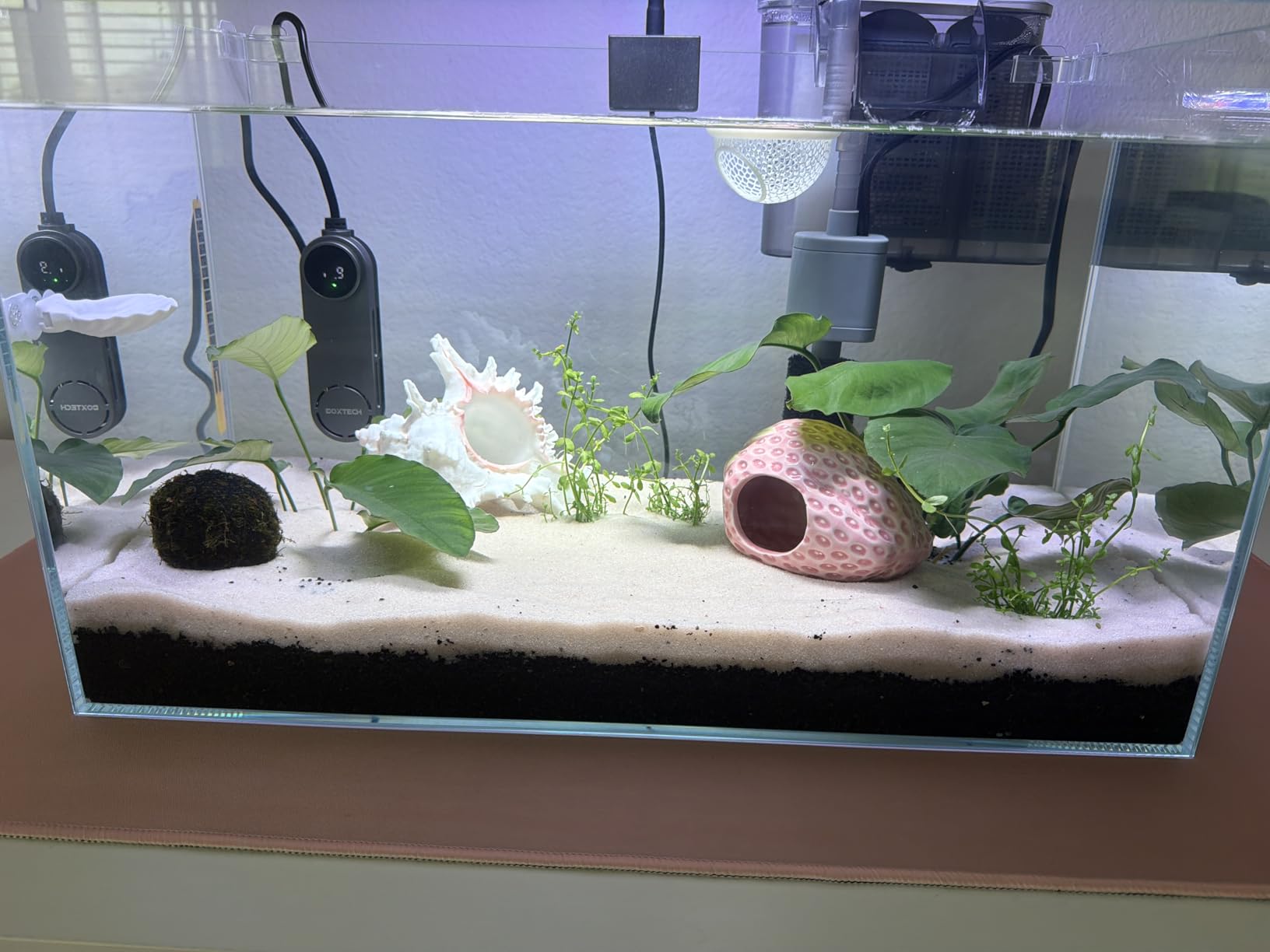
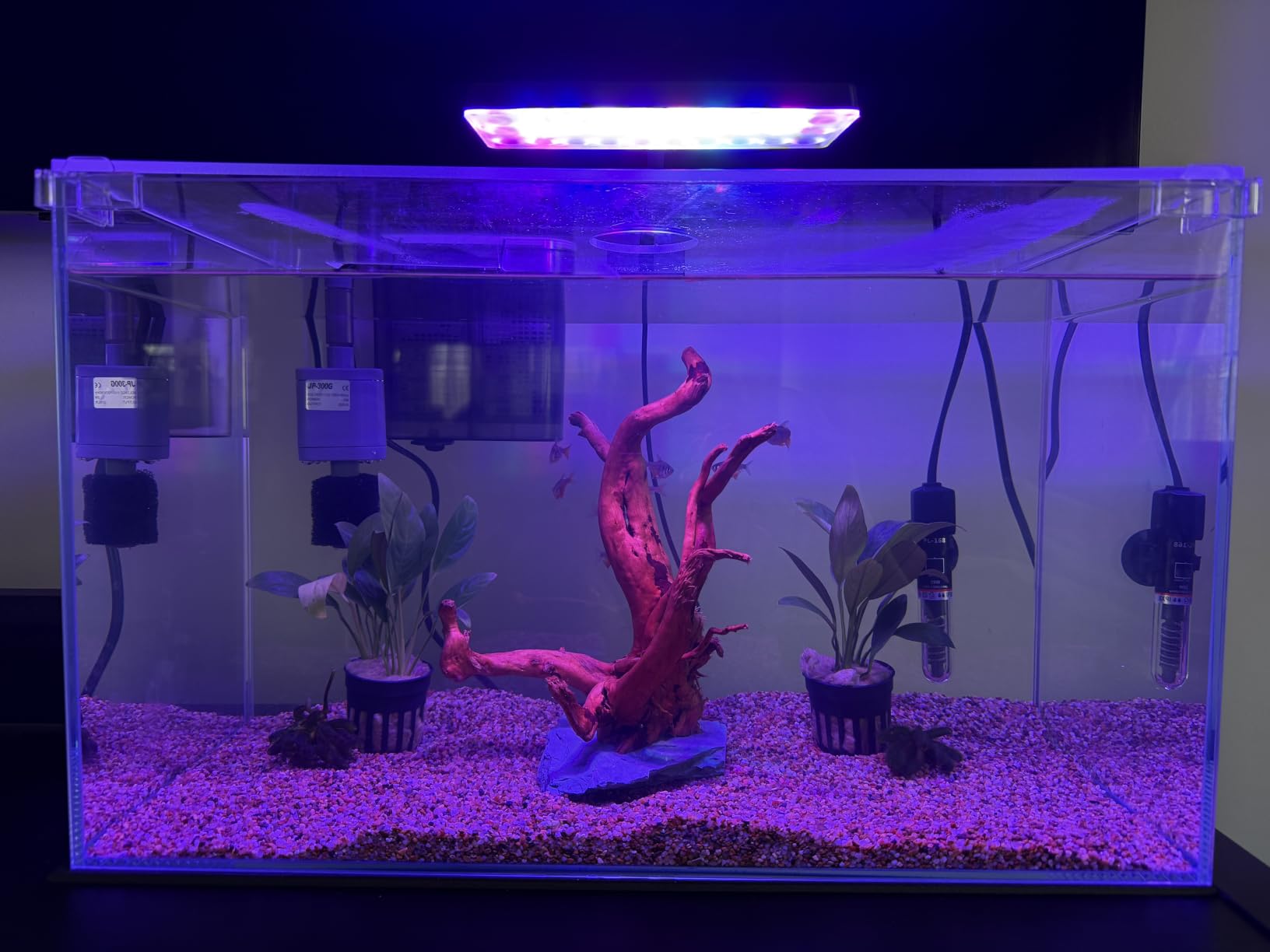
The Vimvins is the kit that looks like a rimless aquascape tank at a fraction of the cost, and it comes with something most rimless-style nano kits do not: a lid. The box holds a 3 gallon all-glass tank, a high-efficiency filter, an LED light on an adjustable arm, and a custom lid sized for the frame. Several owners use it as a dedicated quarantine tank for incoming plants and new livestock, which is a genuinely smart second use.
The build is glass rather than acrylic, at 12.2 x 5.9 x 9.84 inches and 8.55 pounds, and the narrow profile gives you a clean front view from close up. Reviews mention packaging quality specifically, which sounds trivial until you have had a nano tank arrive cracked. The 4.3 average sits on about 385 ratings.
The lighting is USB powered and dimmable, with a one-touch three-mode switch that simulates a natural light cycle. Dimming is the feature to use. Constant full-brightness light is the main driver of algae in nano tanks, and diurnal shrimp do better with a lower output and a defined dark period.
The filter is where the criticism sits, and it is consistent enough to plan around. Owners report the supplied cartridges run thin and low on carbon, so some swap in higher-quality aftermarket media, and the setup instructions for the filter are not clear enough to follow without working it out yourself. Replacement cartridges are sold separately under the Vimvins Filter name.
Is this kit better used as a quarantine tank?
Yes, and that is not a downgrade. A rimmed, well-lit, glass tank with a lid is close to ideal for isolating a new batch of plants or a handful of new shrimp before they go near an established colony. Lid included is the deciding factor, because quarantining without a cover is pointless.
Use the same filter rule here as everywhere else. A quarantine tank is the one place where you can start a small sponge filter, dose ammonia to cycle it, and carry a proven biofilter into the main tank later. That practice is the single biggest shortcut in shrimp keeping.
Should I worry about the leak reports?
They are not a pattern, but they are not nothing. A small number of owners report slow leaks developing over time, more often in the larger sizes of the same family. For a nano tank the answer is simple: keep it on a hard surface rather than a desk with a wood veneer, run a weekly water change you are already doing, and you will see any dampness immediately.
The cartridge quality issue is the one to solve with money rather than vigilance. Swap in a proper sponge plus a small bag of activated carbon, and you convert a disposable media path into a permanent one, which is the whole point for shrimp.
7. Shrimp Bubble – A Sealed Ecosystem, Not a Shrimp-Keeping Kit
Shrimp Bubble Self-Sustaining Ecosystem – Natural. Contains Live Opae Ula Shrimp
3.5 x 3.5 x 4.5 inch sealed unit
Includes 3 to 4 live shrimp
Removable cork top
Ready to use on arrival
Pros
- Truly self-sustaining with no daily feeding or water changes
- Arrives with live shrimp
- algae and microorganisms
- Very small desktop footprint
- Removable cork top for occasional access
Cons
- Closed design cannot be reconfigured or re-filtered
- Live livestock depends on the balance already established
- Marine shrimp rather than freshwater neocaridina
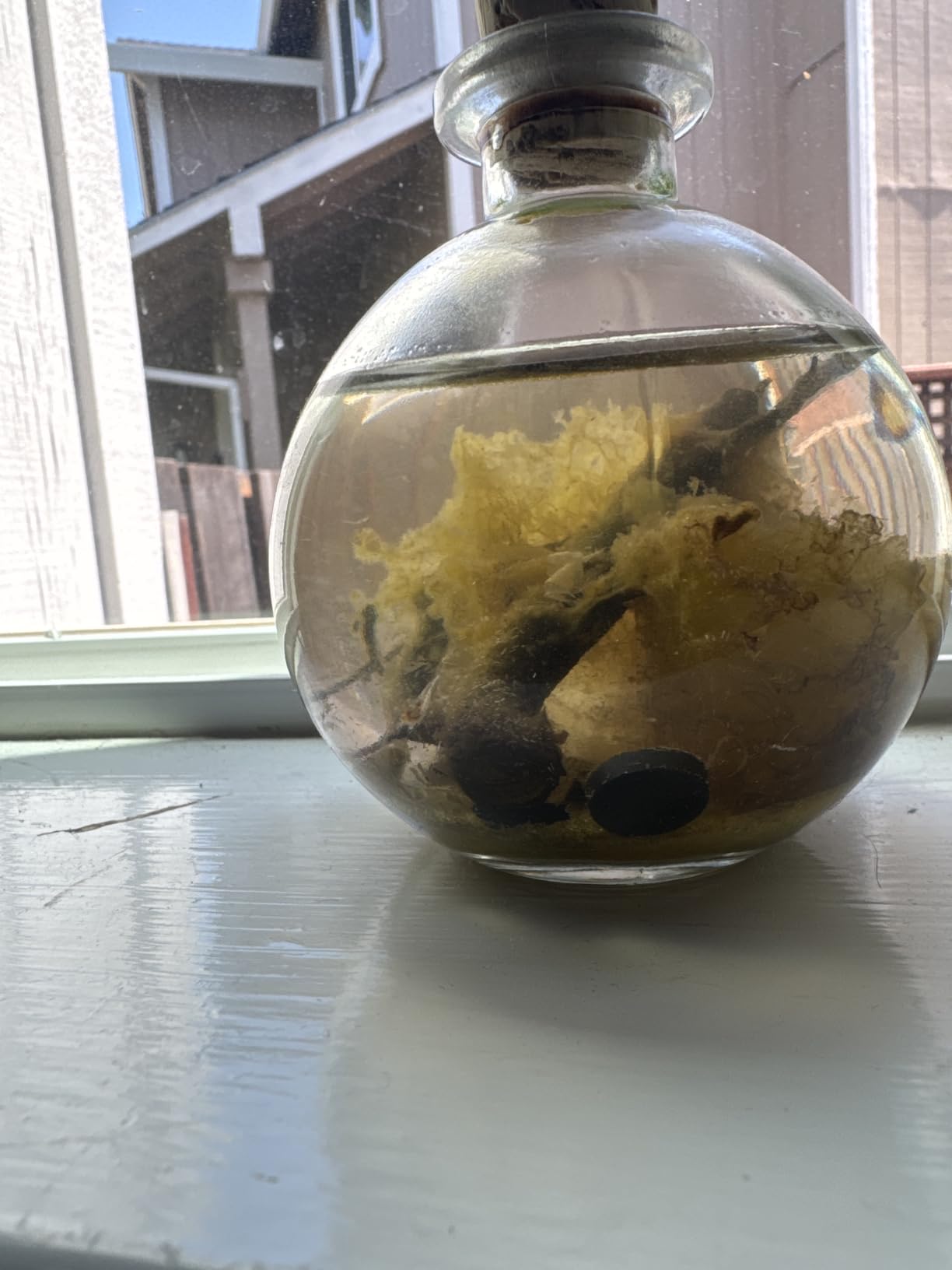
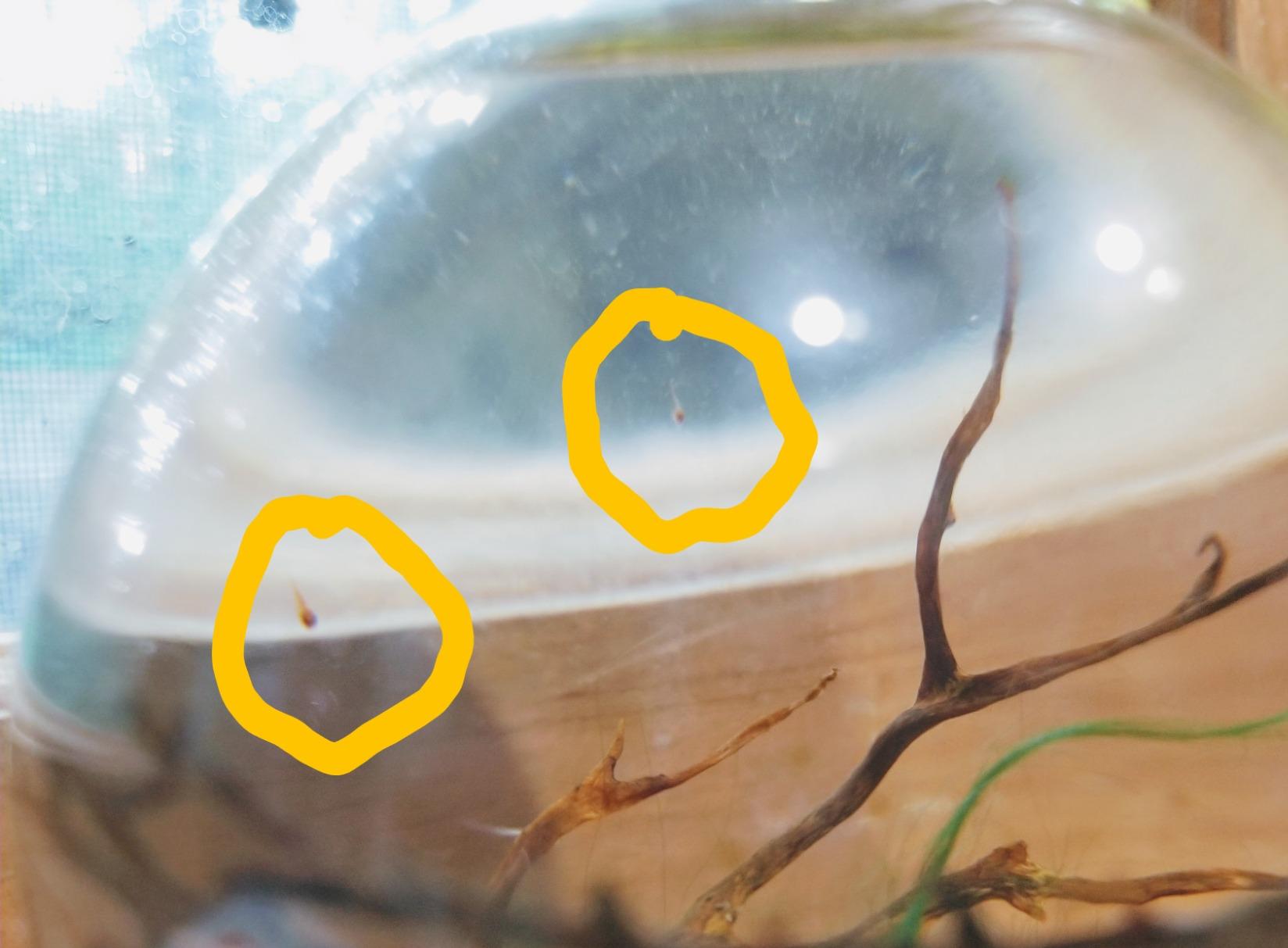
We are including this one because it shows up constantly in shrimp searches and because it is honestly the wrong category. The Shrimp Bubble is a sealed, semi-closed aquatic ecosystem measuring 3.5 by 3.5 by 4.5 inches at 2 pounds. It arrives preassembled with live algae, microorganisms, natural decorations, and 3 to 4 live opae ula shrimp, and it runs on its own with no feeding, filtration, or water changes.
That is a lovely object and a bad aquarium. The opae ula are marine shrimp, so this is not a neocaridina or caridina colony tank, and there is no nitrogen cycle to run, no substrate to plant, and no filter you can swap. The 4.3 average on about 836 ratings comes with 72 percent five star, which tells you the concept lands well, and a 9 percent one-star share, which tells you some buyers expected a configurable tank.
Where it does perform is as a gift. A child, a colleague, or a dorm room gets something alive and self-sustaining on a desk, with no risk of a nitrogen cycle, no water change schedule, and no dead shrimp to explain. The removable cork top lets you look in occasionally without dismantling anything.
The limitation that matters is that livestock health depends on the balance the ecosystem arrived with. You cannot dose it, feed it, plant it, or rescue it. If the algae culture collapses, there is no intervention available to you, and that is a fundamentally different relationship with a living system than keeping shrimp.
Can I convert this into a freshwater shrimp tank?
No, and the reason is structural rather than biological. A marine ecosystem depends on a salt balance maintained by the water volume and the organisms inside it, and the tank has no way to be drained, refilled, or re-filtered without breaking the system the product exists to maintain. It is also far too small to convert. A nano shrimp kit needs a real tank you can cycle and a filter you control.
Think of it as a pet that maintains itself rather than a habitat you build. Both are valid things to own, but they answer different questions, and the marketing around it does blur that line.
Is it worth buying for an adult who wants real shrimp keeping?
No. Anyone asking about shrimp keeping wants to cycle, plant, feed, and breed, and every one of those is impossible here. If you want the aesthetic and the low commitment, this is a good product. If you want a colony that grows, start with a glass nano tank and a sponge filter instead.
The one genuine risk to flag is expectations. Presented as a shrimp aquarium, it disappoints. Presented as a self-sustaining desktop ecosystem with marine shrimp, it delivers, and the 4.3 average with a heavy five-star skew suggests most buyers made that second interpretation.
8. Vehipa 2.4 Gallon – Feature Dense but the Smallest Real Volume
Vehipa Fish Tank, 2.4-Gallon Aquarium Starter Kit with 3-in-1 Quiet Pump
2.4 gallon stated
4mm glass
3-in-1 pump under 30 dB
Lid with feeding ports
Pros
- Integrated pump
- lighting
- temperature display and humidifier
- Quiet operation below 30 dB
- Closed lid with feeding ports
- Glass resists the scratching that ruins plastic
Cons
- Real water volume is nearer 1.5 gallons
- Pump and filter are fixed and cannot be removed
- Narrow tank leaves little room for substrate
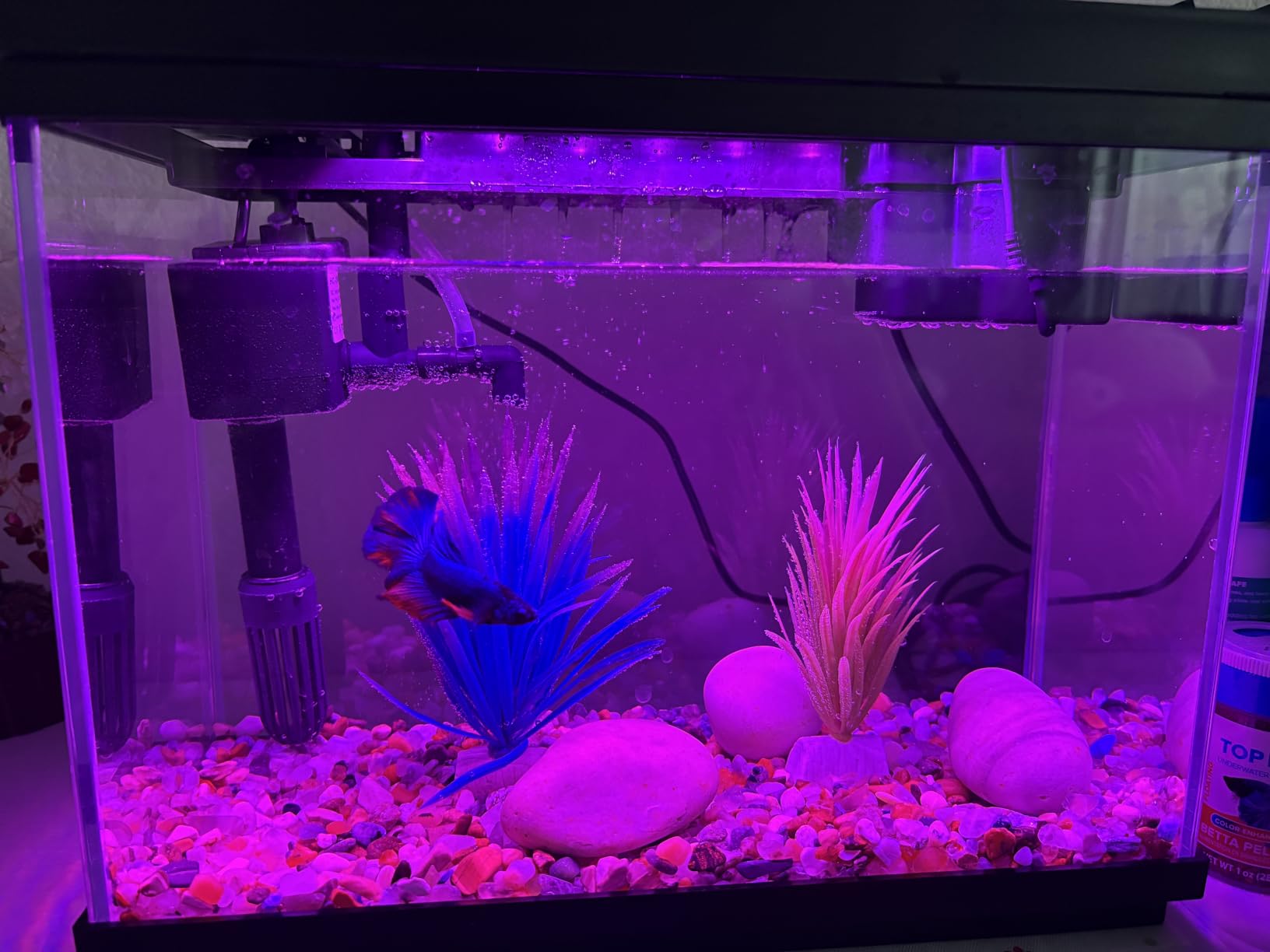
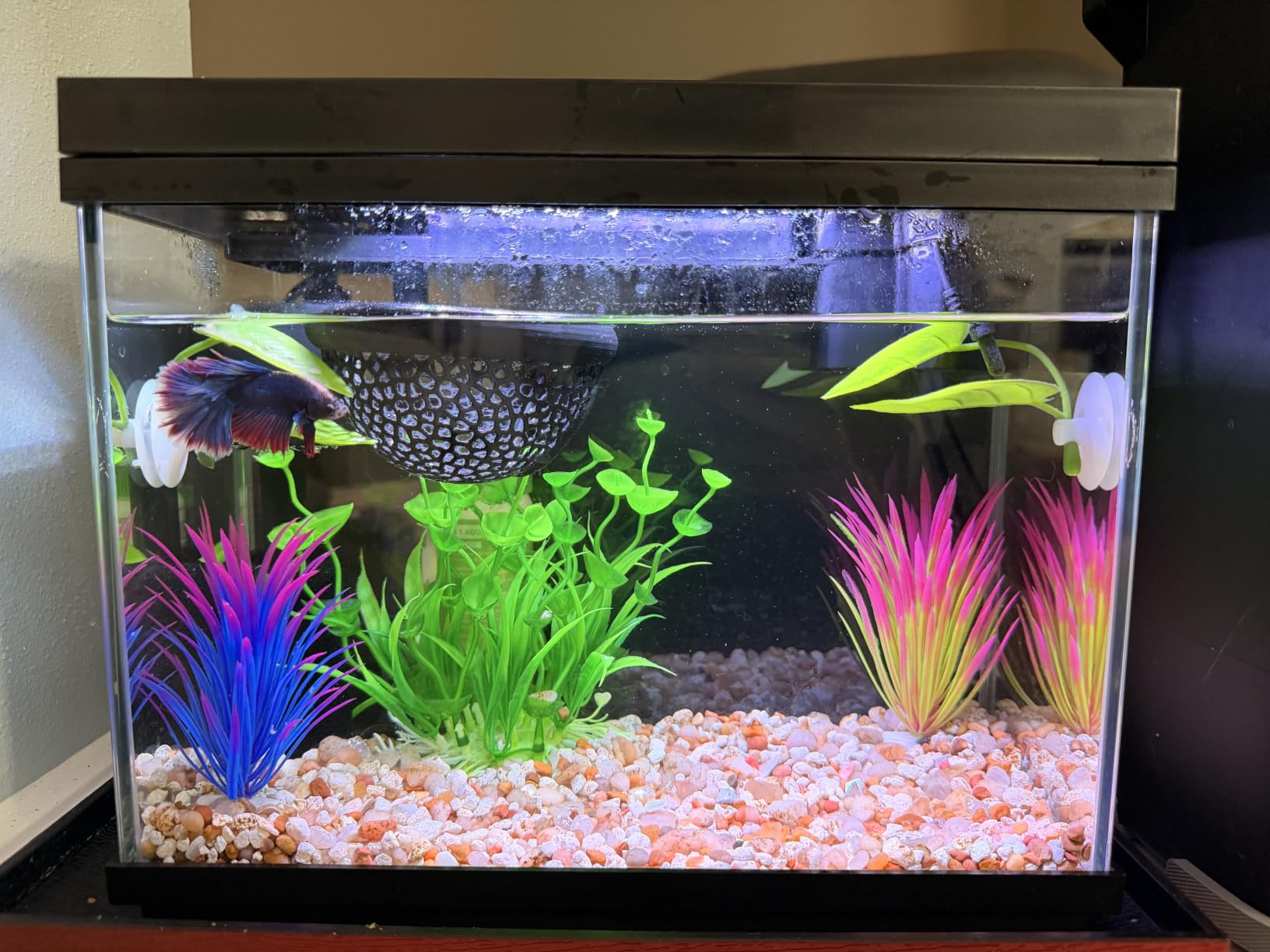
On paper this is the most feature-dense tank in the roundup. A self-circulating 3-in-1 pump, adjustable 7-color lighting, a built-in aromatherapy humidifier with three modes, real-time temperature detection with a digital display, and a lid with feeding ports, all in a 4mm ultra-high-definition glass tank on a thickened non-slip base. Owners consistently praise the quietness, measured under 30 dB, and the fact that the tank can be set up in about ten minutes.
Then there is the volume, and it is the whole story. Owners report that the actual water volume is closer to 1.5 gallons rather than the stated 2.4, and the tank is narrow front to back, so the interior is consumed by the fixed pump and filter assembly. That assembly cannot be removed or repositioned, which is unusual and limits everything you want to do with a shrimp tank.
At 3.9 across about 730 ratings, this kit has the lowest average and the highest one-star share at 15 percent in the group. Most of the negative reviews point at the same three things: the volume is smaller than advertised, the depth is too shallow for substrate and decor, and the fixed hardware is hard to work around. The humidifier is a bonus for a display tank and largely irrelevant for shrimp.
One detail worth noting is the airflow. The oxygenation outlet cannot be adjusted or shut off, and some owners report livestock struggling against it. In a tank where you would want to dial the flow down for juveniles, having no control is the wrong kind of fixed.
Is 1.5 gallons enough for shrimp?
It is enough for two or three adults as a display, and not enough to keep for any length of time. In a volume that small, temperature and ammonia both move quickly, so the maintenance commitment is high and the margin for a missed water change is close to zero. Forum keepers are consistent on the point that sub-2.5-gallon tanks fail for shrimp specifically.
The practical effect on a 1.5 gallon tank is that almost nothing works well. A sponge filter sized for a 5 gallon tank displaces too much water, a heater is a large fraction of the interior, and any plant mass you add reduces the volume further. You end up maintaining a very small system with very large equipment.
Who is this kit actually for?
A single animal as a desk display, a betta in a bedroom, or a tank for someone who wants a light feature with a temperature readout and does not intend to keep a colony. The closed lid with feeding ports is genuinely nice, and the integrated digital thermometer removes one thing you would otherwise buy.
If your goal is the best aquarium kits for shrimp keeping, this is not one of them. The hardware quality is acceptable and the feature count is high, but the fixed assembly removes the flexibility that shrimp keeping depends on. Choose a kit where the filter can be removed and replaced with sponge.
How to Pick a Shrimp-Safe Aquarium Kit
Shrimp live on surfaces, filter constantly, and are small enough to fit through openings that pass plenty of water. That is why kit selection for them looks different from fish selection. Volume still matters, but the filter intake and the media type decide whether the animals survive their first two months.
Check the intake before anything else
A shrimplet-proof intake blocks a 2 mm juvenile. Kit filters that meet that standard are rare out of the box, because slotted intakes pass water and pass juveniles at the same time. The fix is standard practice in the hobby and takes five minutes: sleeve the intake with fine nylon mesh, the leg of a discarded stocking, or fine aquarium mesh, and secure it with a rubber band or a small cable tie.
Sleeving is cheap and reversible, and it is the highest-value five minutes in this entire guide. The 110 GPH pump in the hygger Horizon needs it most, because the manufacturer itself warns that the flow can suction in fish under 2 inches. The Aqueon internal filters sold as shrimp filters have a documented history of week-old juveniles entering the media chamber and dying there.
If a kit’s intake cannot be reached and wrapped without dismantling half the tank, that is a design problem you will keep meeting at every water change. Weigh it accordingly.
Prefer sponge media you never throw away
Disposable cartridge media is the second failure point. Swapping a cartridge discards most of the beneficial bacteria you spent four or more weeks culturing, and a cartridge that is largely carbon gives you clarity rather than a stable biofilter. Keepers replace kit filters regardless of what livestock the kit was sold for, which is why a sponge filter beside the included filter is such a common recommendation.
A sponge filter solves three problems at once. It is shrimp-safe by design because a sponge has no open gap a juvenile can pass, it holds permanent media, and on a nano tank it takes up almost no space. Our broader thinking on flow and media is covered in our aquarium filter reviews.
One keeper on the Cherry Shrimp Forum reported baby shrimp feeding directly on sponge media, never drawn into the intake, and a population explosion as a result. That is the whole argument in a single observation.
Favor a wide, shallow footprint over a tall box
Shrimp graze surfaces, and surfaces are where volume and light intersect. A low rectangle exposes more glass and substrate area per gallon than a tall portrait cube of the same capacity, which means more biofilm, more plant area, more oxygen exchange, and more room for a colony. The Marineland Portrait is a beautiful tank, and its shape works against the biology.
The second rule is total volume, not tank size on the label. A 2.4 gallon kit that holds 1.5 gallons of water is a 1.5 gallon tank with a nice box. Below 2.5 gallons of actual water, ammonia and temperature swing fast enough that shrimp keeping becomes a daily chore, and forum advice is consistent that very small tanks fail for shrimp specifically.
Aim for 5 gallons as a workable floor for a display and 8 gallons or more if you want a colony that grows. Watch the weekly water-change load as you go up in size, since a 10 percent change in a 20 gallon tank is a much heavier job than 30 percent in a 5 gallon one.
Treat the lid as mandatory, not optional
Cherry shrimp jump. A lid is the cheapest insurance in the hobby, and three of the kits here include one, while several of the most attractive designs do not. If a tank has no lid, either buy a rimmed glass lid sized to the top rim or accept that you are doing weekly water changes partly to replace what climbed out.
This matters more than it sounds in specific homes. A house with a cat needs a secured top, full stop, because cats do not negotiate with lids. The same applies to any tank on a high shelf where a fall would be fatal to both the shrimp and the tank.
Shrimp usually do not need a heater
This is where shrimp advice diverges from general fish-tank advice, and it surprises beginners. Neocaridina tolerate a wide range of ambient temperatures, and keepers running them at stable room temperature report no losses attributable to temperature. What matters is stability, not a set point, and a nano tank is far more exposed to swings than a larger one.
What to do instead: put a thermometer in the tank, watch it for a week before adding livestock, and only add a heater if your room sits outside a stable band. Small heaters sized for nano tanks are disproportionately bulky in a 2.5 gallon kit, so avoid the heater unless you have measured a reason. Where a heater does matter is caridina, whose keepers usually hold a tighter, more deliberate target.
Decide between caridina and neocaridina first
Neocaridina, which includes cherry, blue dream, and blue bolt shrimp, are hardy and tolerate ordinary tap water. Caridina, which includes bee and panda shrimp, are more demanding: they are GH-locked, softer water can kill them during a molt, and they usually need an active substrate rather than inert gravel.
That distinction changes kit choice. Any of the kits here will run a neocaridina colony with a sponge filter and a plant substrate. For caridina, the tank itself matters less than the water you put in it, so prioritize a tank that is easy to water-change, easy to measure GH and KH in, and large enough that a 50 percent change is not a bucket of pain. The wide, shallow rule helps here too, because more water surface means more stable parameters.
Count what the kit does not include
Every kit on this list leaves out most of what a shrimp tank actually needs. Plan for these six gaps, because this is where the total cost of a shrimp-ready setup actually lives:
First, a sponge filter, if the included filter is cartridge based. Second, a plant substrate suitable for the species, since bare gravel and plain white sand are the two most common regrets reported by nano keepers. Third, a lid, if the kit does not include one. Fourth, a liquid test kit, because pet shops rarely stock GH and KH tests and you need both for caridina. Fifth, a thermometer. Sixth, real plants, since a shrimp tank without plant mass has no cover for molting juveniles and no place for biofilm to grow.
That list is the reason the kit-versus-bare-tank question gets asked so often. A kit gives you a tank, a lid or hood, a light, and a filter you may replace within weeks. Everything on the list above still has to be bought. The honest comparison is not the sticker price of the kit, it is the kit plus a sponge filter plus substrate plus a test kit plus a lid, against a bare tank plus the same five things. Keepers on forums frequently end up replacing the kit filter regardless, which is the strongest argument for buying the tank on appearance and assembling the rest deliberately.
Frequently Asked Questions
What is the best aquarium kit for shrimp?
The best aquarium kit for shrimp is one with a filter intake that cannot admit a 2 mm shrimplet, media you can keep permanently such as a sponge, and a lid included. The Marineland Portrait Glass 5 Gallon is our top pick for its hidden three-stage filtration and large review base, though you should sleeve its intake and add a sponge filter. For a small desk tank, the NICREW Nano Nature pairs glass with an included lid.
What is the best tank setup for shrimp?
A wide, shallow tank of 5 gallons or more, a sponge filter with the outflow aimed along the glass, a plant substrate, a lid, and a thermometer. Cover the tank so there is no open jump, and add livestock only after a completed nitrogen cycle. Shrimp generally do not need a heater if your room temperature is stable.
What is the best size tank for keeping shrimp?
Five gallons is a workable floor for a display tank, and 8 gallons or more is right if you want a colony that grows. Below about 2.5 gallons of actual water, ammonia and temperature swing too quickly for shrimp. Check the real water volume rather than the number on the listing, because some kits understate it significantly.
Do shrimp like heavily planted tanks?
Yes. Shrimp graze surfaces for biofilm, and dense planting gives juveniles cover while they are molting, plus surface area for nitrifying bacteria. A plant substrate matters as much as the plants themselves, and plain white sand is the substrate choice nano keepers most often regret. Moss and low-growing crypts suit small footprints best.
What kills shrimp in a fish tank?
The most common preventable cause is a filter intake drawing in shrimplets, which then die inside the media chamber. Other frequent causes are an unfinished nitrogen cycle causing an ammonia spike, copper from algae treatments or medications, sudden temperature swings in nano tanks, and poor water hardness for caridina. A fine mesh sleeve over every intake removes the single largest risk.
What type of shrimp is best for keeping in an aquarium?
Neocaridina such as cherry, blue dream, and blue bolt shrimp are the easiest starting point because they tolerate ordinary tap water and breed readily. Amano shrimp are hardy algae eaters that will not reproduce in a home tank. Caridina such as bee and panda shrimp are more demanding, requiring GH-locked water and usually an active substrate.
Conclusion
The best aquarium kits for shrimp keeping in 2026 come down to one test: can you wrap the filter intake, and can you keep the media? If the answer is yes, the kit is a good starting platform, and everything else is a matter of volume, footprint, and budget.
The Marineland Portrait Glass 5 Gallon is our pick overall, with hidden three-stage filtration, a sliding canopy, and roughly 10100 reviews behind it, and it needs an intake sleeve plus a sponge filter before you stock it. The Aqueon MiniBow is the easiest complete box and the best value for a first tank. The hygger Horizon 8 Gallon runs the largest planted colony in this group, at the cost of a missing lid, a permanent rockery, and a powerful intake. The NICREW Nano Nature is the best small desk tank, since it is the rare kit that includes glass and a lid together.
Whatever you choose, buy the sponge filter, the substrate, the lid if it is missing, and a test kit on the same day. That is the difference between a kit tank and a shrimp tank. We re-check intake designs and model revisions as manufacturers change them, and this guide was last reviewed in 2026.