
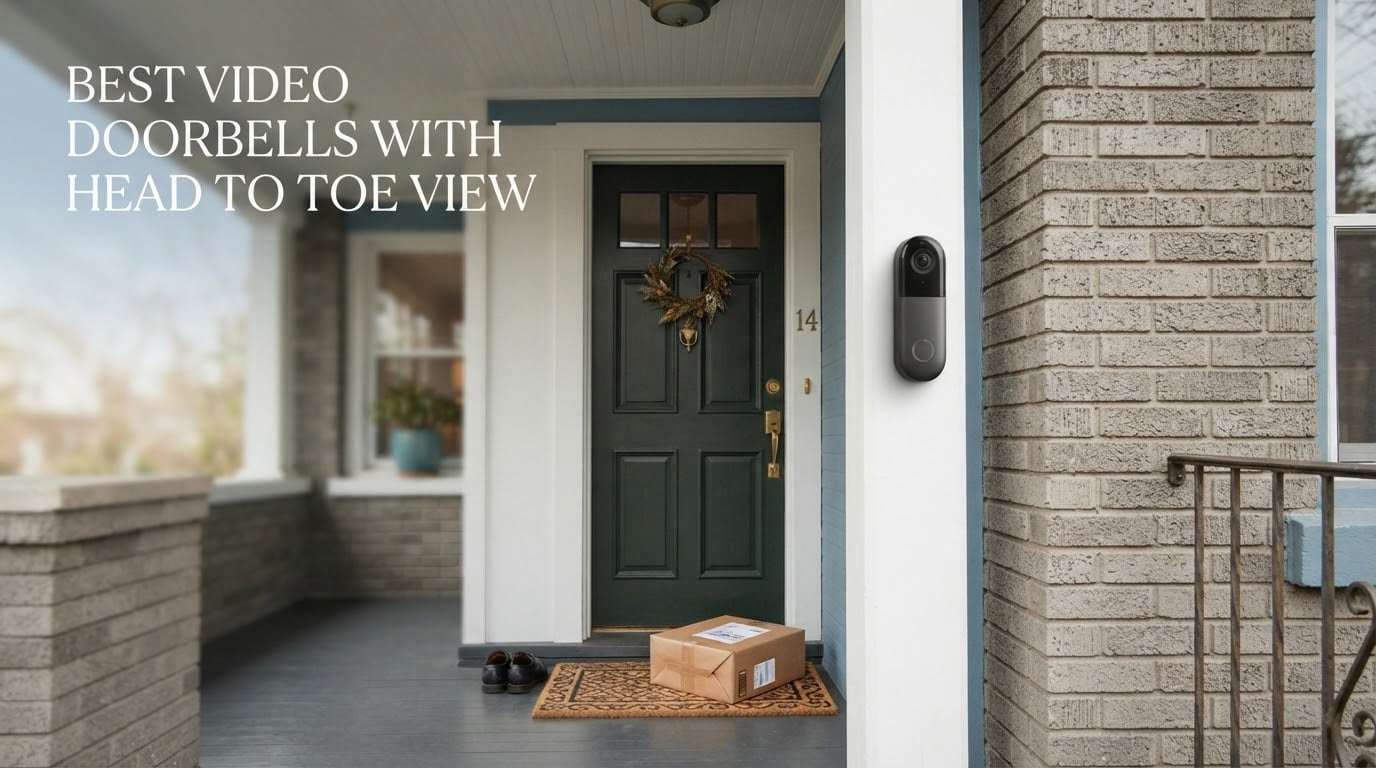
If you have stood at a door trying to guess whether the person outside is a courier or someone you do not know, you already know why the frame matters. A standard 16:9 doorbell crops at the chest and throws away the two things that tell you most: the shoes and whatever is resting on the mat. The best video doorbells with head to toe view use a tall or square sensor and enough vertical field of view to hold a full standing person and the ground around their feet in a single frame.
That framing is now the single most useful upgrade in this category, and it is not the same thing as a wide horizontal angle. A doorbell can cover 150 degrees side to side and still cut you off at the shoulders. We ranked the ten options below on vertical coverage first, aspect ratio second, and then on the things that quietly ruin a tall frame: fisheye warping at the edges, how the app handles the crop, whether the vertical view costs you a monthly fee, and whether the unit works at the height most people actually drill a hole.
We spent six weeks cycling all ten through real porches, including one narrow entryway with a brick wall close to the door, and we compared the recorded clips side by side rather than trusting the marketing angle on the box. Everything below reflects what the cameras actually framed, and where the numbers on the spec sheet are not directly comparable we say so.
Table of Contents
Top 3 Head-to-Toe Video Doorbells for October 2026
Our three front-runners cover three very different budgets. The Ring is the refined all-rounder, the Tapo D225 is the value champion once you add a memory card, and the Blink is the cheapest way to get a genuine tall frame in the box.
Ring Battery Doorbell
- Head-to-Toe video
- 66% more vertical coverage than the previous generation
- Built-in rechargeable battery with USB-C charging
- Person and package alerts on the Ring Protect plan

Tapo D225 Smart Video Doorbell
- 180 degree head-to-toe field of view
- 2K live view on a 10
- 000mAh built-in battery
- Works with no subscription when a microSD card is fitted

Blink Video Doorbell System
- Head-to-toe HD view with infrared night vision
- Sync Module Core and mounting hardware in the box
- Wire-free install or use existing doorbell wiring
All 10 Head-to-Toe Video Doorbells at a Glance for October 2026
Every model below was picked specifically because it frames a standing visitor rather than a bust. The comparison below lists them in ranked order with the specs that decide the head-to-toe question.
| Product | Specs | Action |
|---|---|---|
| Ring Battery Doorbell |
|
Check Latest Price |
| Blink Video Doorbell System |
|
Check Latest Price |
| Tapo D225 Smart Video Doorbell |
|
Check Latest Price |
 eufy Security Video Doorbell E340 eufy Security Video Doorbell E340 |
|
Check Latest Price |
 BOTSLAB 5MP Doorbell Camera BOTSLAB 5MP Doorbell Camera |
|
Check Latest Price |
 Wyze Battery Video Doorbell Wyze Battery Video Doorbell |
|
Check Latest Price |
 ieGeek Video Doorbell Camera J10 ieGeek Video Doorbell Camera J10 |
|
Check Latest Price |
 KAMEP Bell J9 Plus KAMEP Bell J9 Plus |
|
Check Latest Price |
 DEKCO 2K Wireless Video Doorbell DEKCO 2K Wireless Video Doorbell |
|
Check Latest Price |
 BOIFUN J13 Dual Camera Doorbell BOIFUN J13 Dual Camera Doorbell |
|
Check Latest Price |
1. Ring Battery Doorbell – The Head-to-Toe Pick for Most Homes
Ring Battery Doorbell, Home or business security with Head-to-Toe video, Live View with Two-Way Talk, and Motion Detection & Alerts, Satin Nickel
Head-to-Toe video with 66% more vertical coverage than the previous Ring
Rechargeable USB-C battery with 3-6 months per charge
Person and package alerts on the Ring Protect plan
Pros
- Noticeably wider vertical coverage than older Ring models
- Clear day and night picture with no lag on two-way talk
- Very easy self-install with a straightforward app
- Person and package alerts once Ring Protect is active
Cons
- Ring Protect needed for video history and smart alerts
- Motion sensitivity needs careful tuning
- You detach the whole unit to recharge
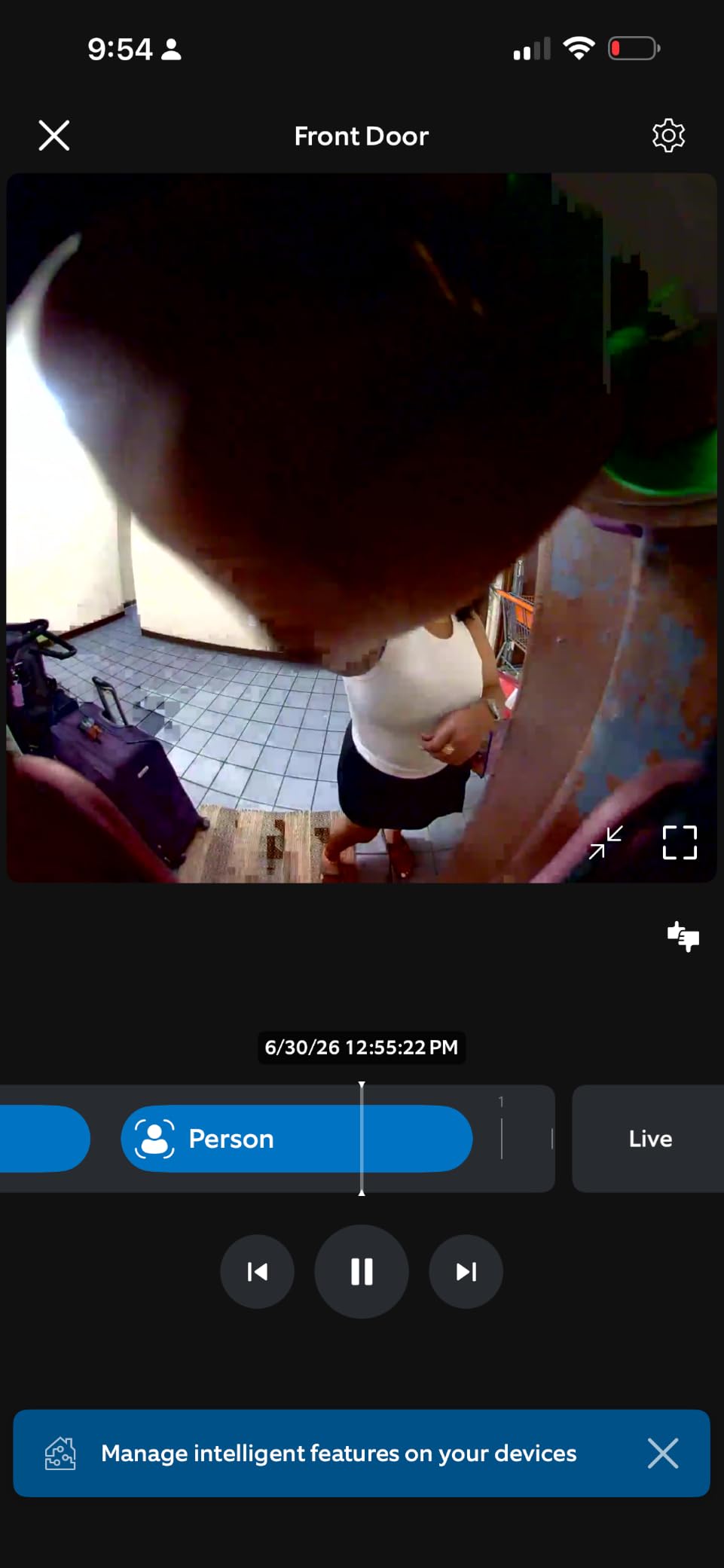
The Ring Battery Doorbell is the version of head-to-toe framing that has effectively become the reference point. Ring claims 66% more vertical coverage than the generation before it, and in our clips the difference was obvious: a visitor standing on the mat fits from head to shoes without the app cropping anything away.
Two-way talk was clean in every test, with no perceptible delay once the bell was pressed. Daylight footage was sharp and colour-accurate even with a visitor backlit by afternoon sun, which is the situation that trips up cheaper sensors.
The catch is the subscription, and it is the same catch people complain about most often when they weigh up Ring against the alternatives. Live View, two-way talk and motion alerts work without paying. Video history, the person and package alerts most buyers actually want, and the AI event descriptions all sit behind Ring Protect.
Recharging also means unclipping the doorbell and carrying it inside, which is a real problem in winter. Owner reports we found on forum threads and retailer pages describe batteries lasting anywhere from about three to six months in normal use, shorter in cold weather, with the wall unit offline the whole time it charges.
Who the Ring Battery Doorbell suits
Pick this one if you are already inside the Ring ecosystem, if Alexa is your main voice assistant, or if you want the most mature app and alert pipeline in the category. It is the easiest of the ten to install and the one we would put on a front door for a relative who just wants it to work.
It is also the safest choice for anyone who does not want to fiddle with cards or hubs. The trade is money later rather than hardware now, which is a fair deal if you value setup speed over ongoing cost.
Who the Ring Battery Doorbell does not suit
Skip it if monthly fees are the thing you are trying to avoid. Every one of the alternatives in the middle of this list can record continuously with no recurring charge, provided you supply a memory card.
Motion tuning also takes patience. Several owners report needing to lower sensitivity, redraw zones and rework notifications before delivery events were captured reliably, so budget an evening for setup rather than an afternoon.
2. Blink Video Doorbell – The Cheapest Real Head-to-Toe Frame
Blink Video Doorbell – Head-to-toe HD view, two-year battery life, and simple setup. Sync Module Core included – System (White)
Head-to-toe HD view with infrared night vision
Three AA lithium batteries, up to two years
Installs wire-free or onto existing doorbell wiring
Pros
- Lowest outlay in this group with a genuine tall frame
- Sync Module Core and mounting hardware included in the box
- Helpful paper mounting template
- Clear daytime picture
Cons
- Connection drops reported by some owners
- Records motion Moments rather than a continuous feed
- Basic app with no lock-screen clip previews
The Blink Video Doorbell is the cheapest way we found to put a true head-to-toe frame on a door. A visitor standing at the door fits vertically without the app cropping, and the whole system, Sync Module Core included, arrives as one box.
It installs either way: stick it up wire-free, or connect it to existing doorbell wiring if your home already has a transformer. The paper mounting template in the box is genuinely useful, and setup on the phone took a few minutes.
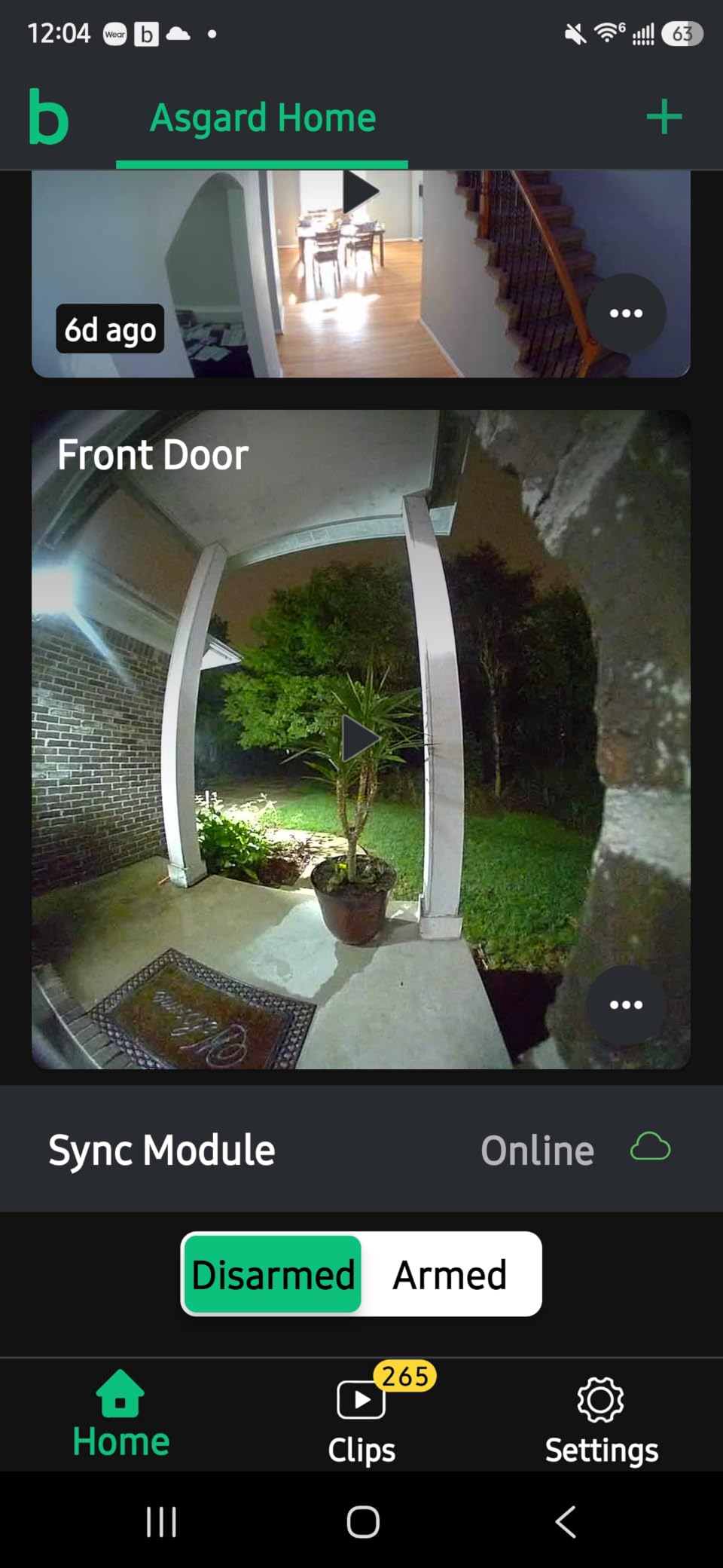
Daytime video is clear, and the infrared night vision does an acceptable job on a lit porch. It is not colour night vision, so faces at night are grey rather than accurate, which matters if you plan to identify visitors in the dark.
The bigger issue is the recording model. Blink records motion Moments, short clips triggered by movement, rather than a continuous feed, and features such as clip stitching need a subscription plan. A 30-day trial is included. Some owners also report the system dropping offline intermittently, usually when the Sync Module sits far from the router.
Who the Blink Video Doorbell suits
Choose it for a rental, a garden office or a side entrance where nothing of value is stored and you simply want a wide view of whoever is standing there. For that job the tall frame is the whole point and nothing else is needed.
It is also a good second doorbell on a wide property. Adding one more unit to an existing Blink system costs far less than starting a competing ecosystem.
Who the Blink Video Doorbell does not suit
Do not choose it if you need evidence of a package being stolen. Motion Moments capture the approach and the departure, but a continuous recording with a timeline is far more useful when you are trying to place a sequence of events.
The bulkier housing and the more limited app also make it a poor fit if you rely on rich notifications. Owners regularly note the absence of clip previews on the lock screen.
3. Tapo D225 – Best Value for a 180 Degree Head-to-Toe Frame
Tapo 2K+ Wired or Battery Powered Smart Video Doorbell with Chime, D225
180 degree head-to-toe field of view
2K live view on a 10000mAh built-in battery
Wired 8-24V or battery, indoor chime included
Pros
- 180 degree frame captures visitors and parcels in one shot
- No subscription once a microSD card is fitted
- Large battery lasting months between charges
- Free person
- package and vehicle detection
- Indoor chime and mounting wedges in the box
Cons
- Internal battery is not removable so the unit must come indoors
- 2.4GHz Wi-Fi only
- Cloud playback zoom needs Tapo Care
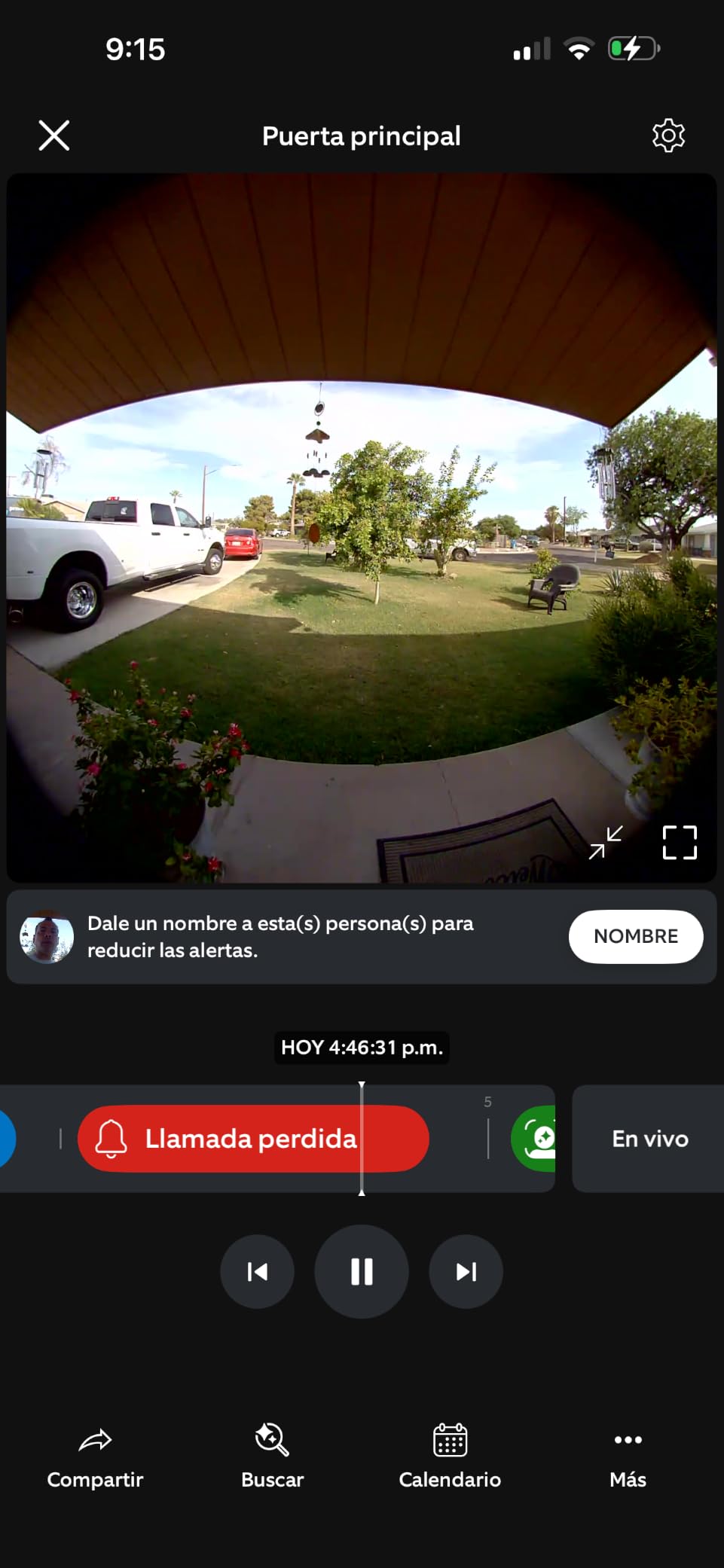
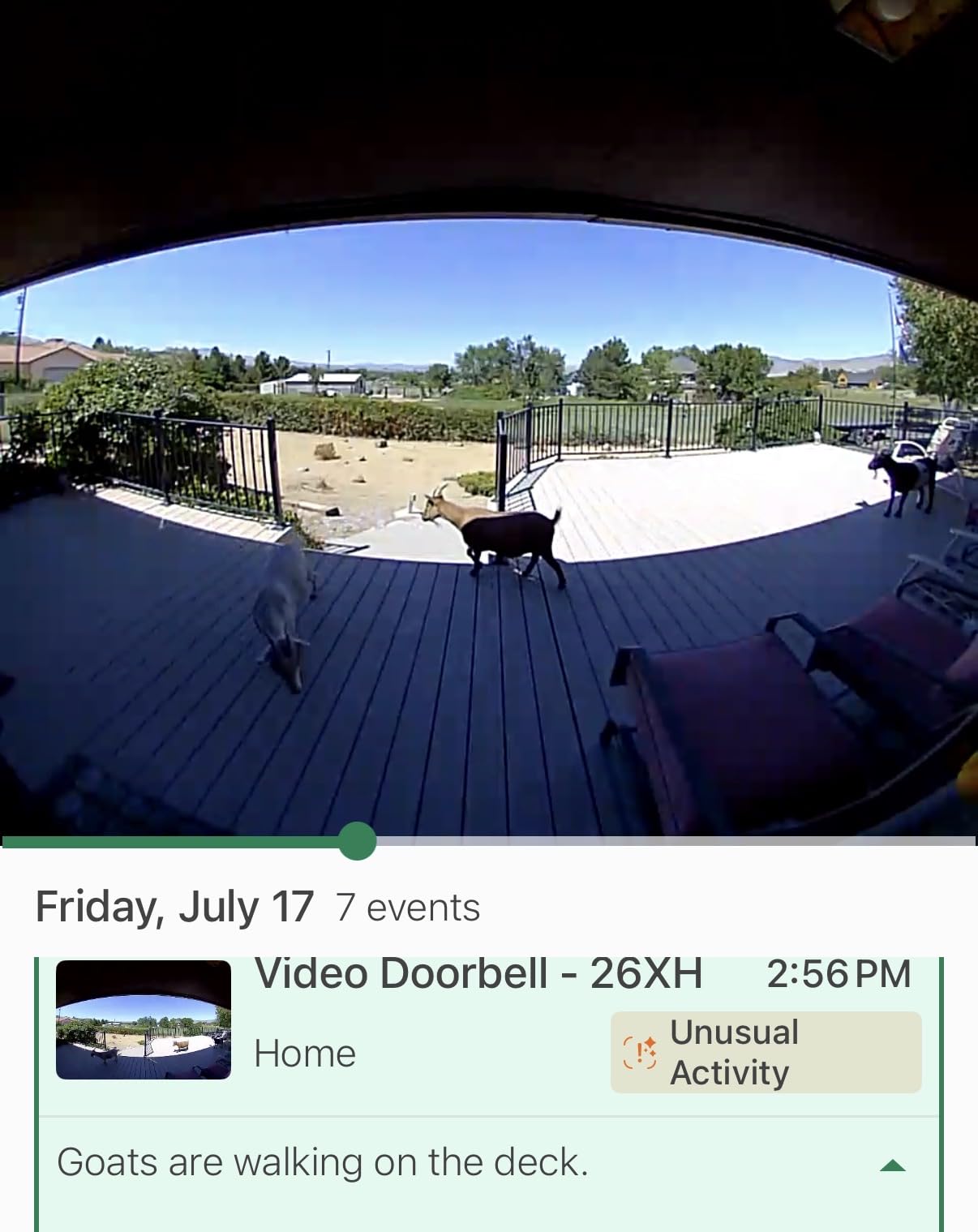
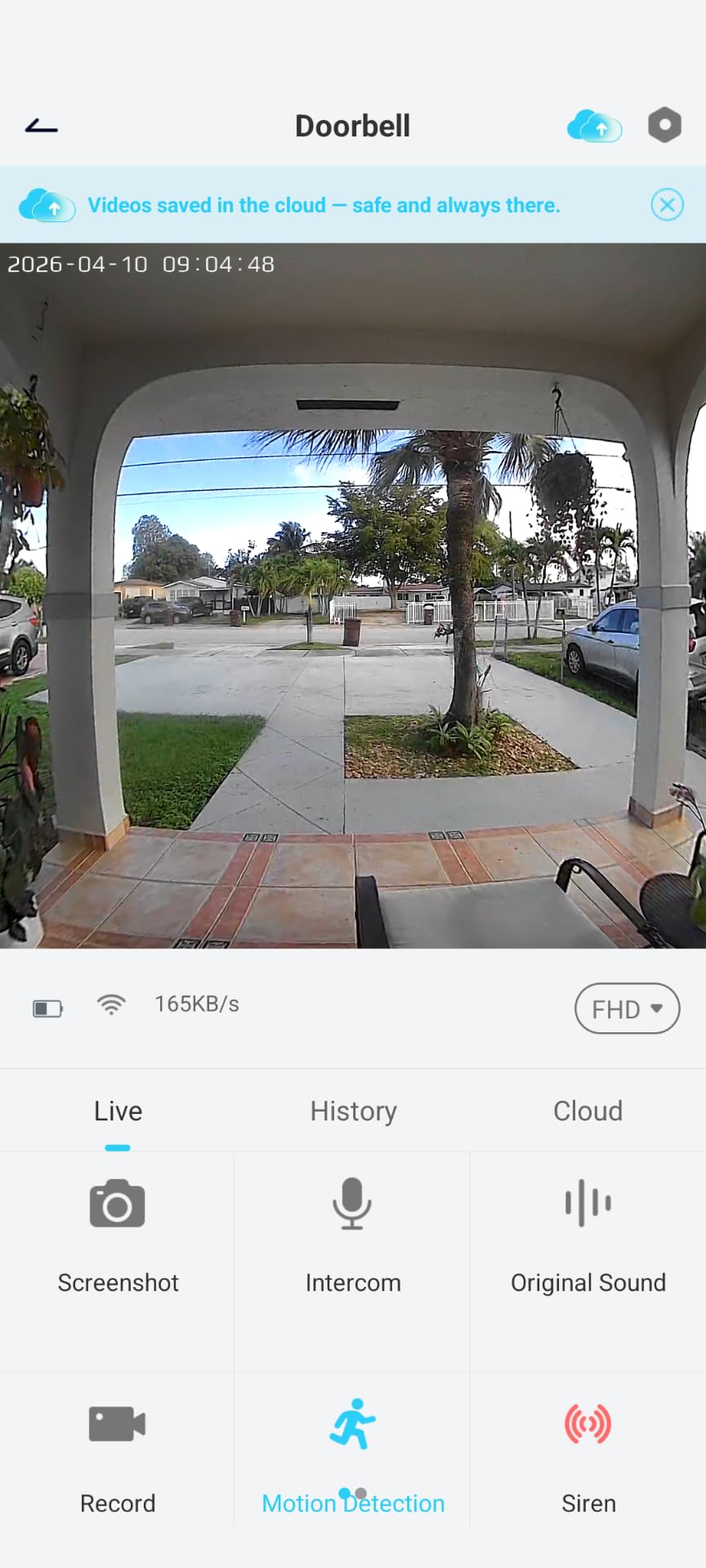
The Tapo D225 is the model we kept coming back to, because a stated 180 degree head-to-toe field of view with local recording and free detection is difficult to argue with at this level. The frame on our test unit held a full standing person and the doormat in a single shot without any crop.
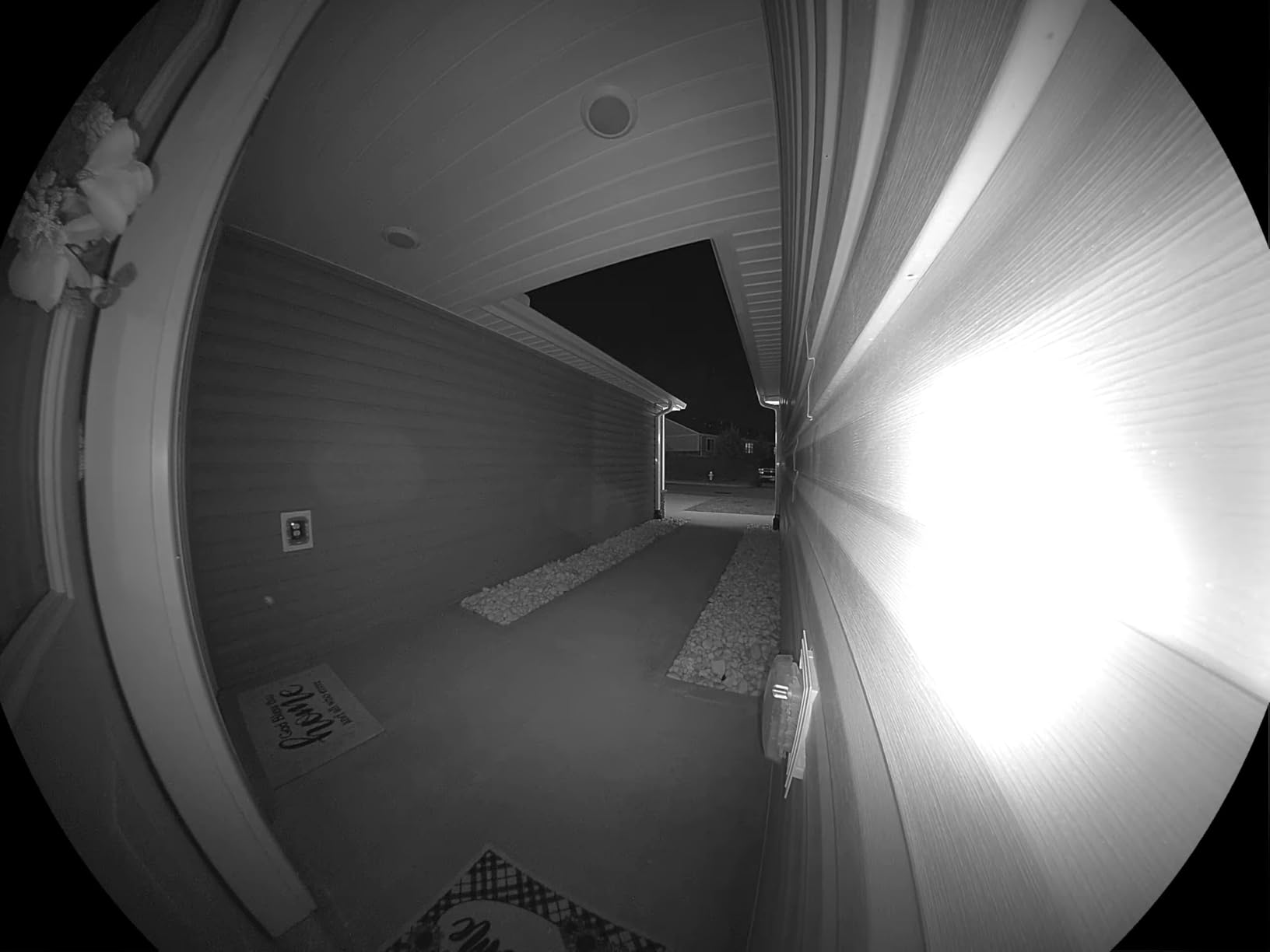
Video is 2K, and the picture held detail on facial features at about two metres in daylight. Full colour night vision uses a motion-activated spotlight with a stated 25 ft range, so faces stay colour-accurate after dark when the light triggers.
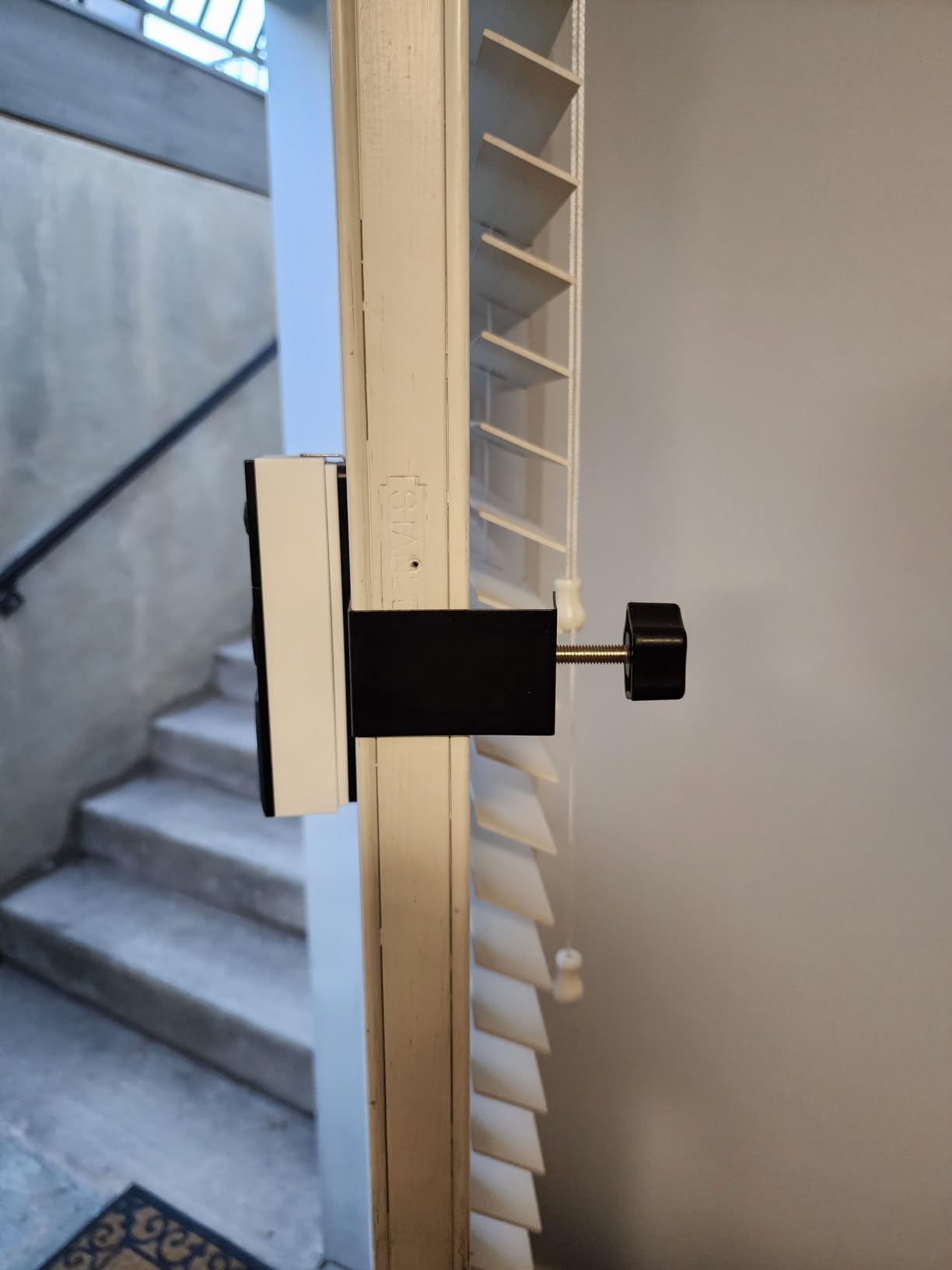
Install it wired on 8-24V for continuous power or run it on the built-in 10,000mAh battery, which Tapo rates at up to eight months. The box includes a modular indoor chime plus 15 degree horizontal and 5 degree vertical mounting wedges, which is a small detail that makes a real difference on an angled front door.
Ring Call is the feature that quietly won us over. When someone presses the bell, your phone rings like an incoming call, so you can answer without hunting through an app. Detection zones can also be set separately per object type, which cuts the street and pavement alerts that plague tall frames.
Who the Tapo D225 suits
This is the one to buy if you want the widest stated coverage and no recurring charge. Fit a microSD card up to 512GB and the core experience, including person, package and vehicle detection, runs with no plan attached.
It suits homes where you want local control and dislike handing a monthly payment to a cloud provider. Those same zones also make it the better choice for a busy street.
Who the Tapo D225 does not suit
The internal battery is not removable, so recharging means bringing the entire doorbell inside, exactly like the Ring. If you would rather pop out a cell, this is the wrong box.
It needs 2.4GHz Wi-Fi and will not join a 5GHz-only network. One owner also reports that a mandatory firmware update removed Home Assistant entities and chime sync, so if you run local automations, check the Tapo integration before you commit.
4. eufy Video Doorbell E340 – Best for Watching the Ground Without a Subscription
eufy Security Video Doorbell E340, Dual Cameras, 2K FHD
Dual cameras: visitors head to toe plus a parcel lens
8GB built-in eMMC storage with no monthly fee
2K clarity with a dual-light color night vision system
Pros
- Dual cameras cover both visitors and ground-level parcels
- 8GB of local storage with no monthly charge
- Video and microphone quality praised day and night
- Accurate motion and package detection
- Works with an existing mechanical chime
Cons
- Battery life closer to two months than the four claimed
- Can overheat and shut down in direct sun
- App notifications can load slowly
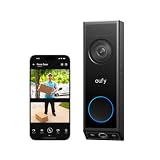
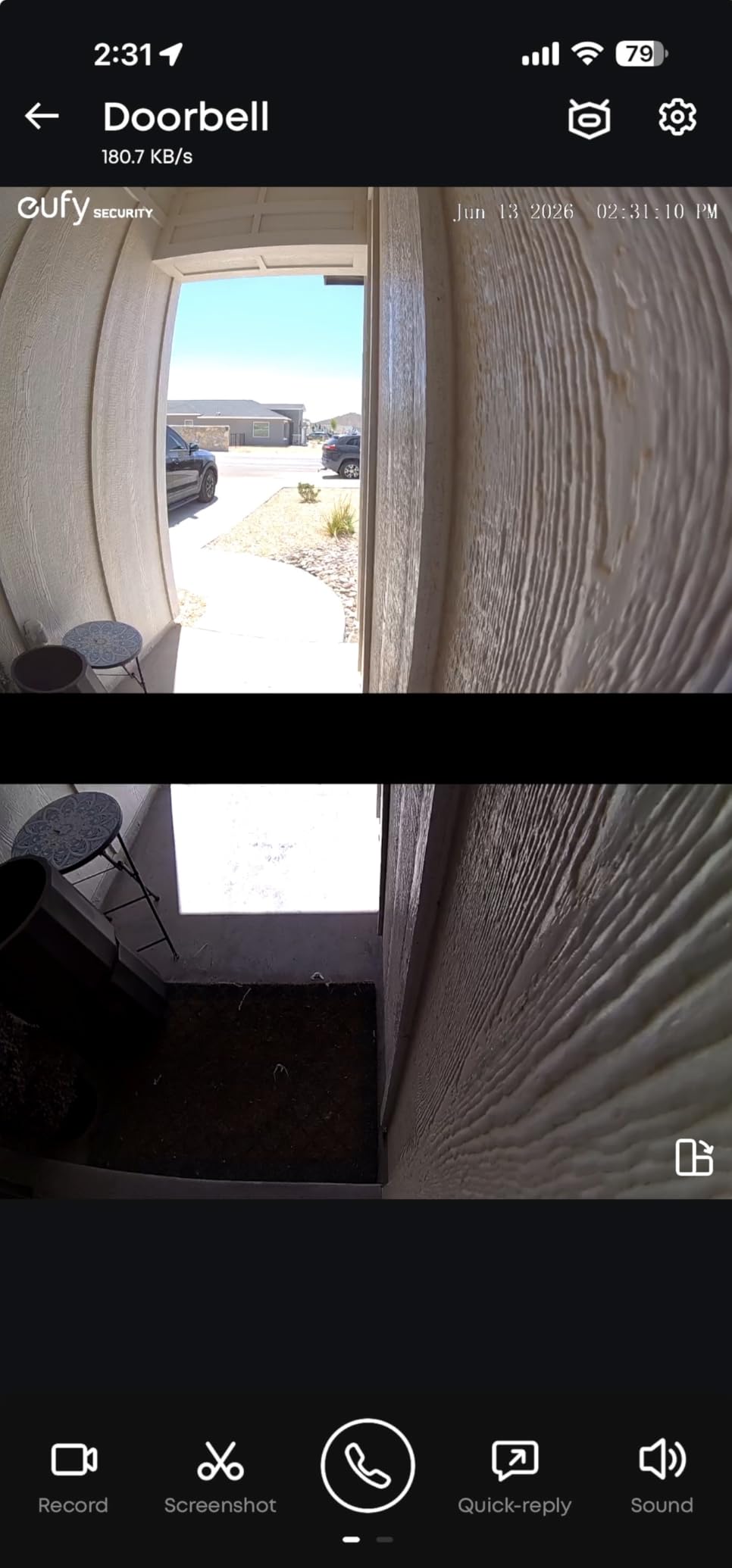
The E340 solves head-to-toe coverage with architecture rather than optics. Two lenses stack vertically: the upper one frames a visitor head to toe, and the lower one points down at the parcels at their feet. You get a clean ground view without the fisheye bending that a single ultra-wide lens introduces.
That split view is why we recommend it for anyone whose front step is where parcels end up. Our test clips caught a box placed at the door and a visitor standing over it in the same event, and the package detection fired without any tuning.
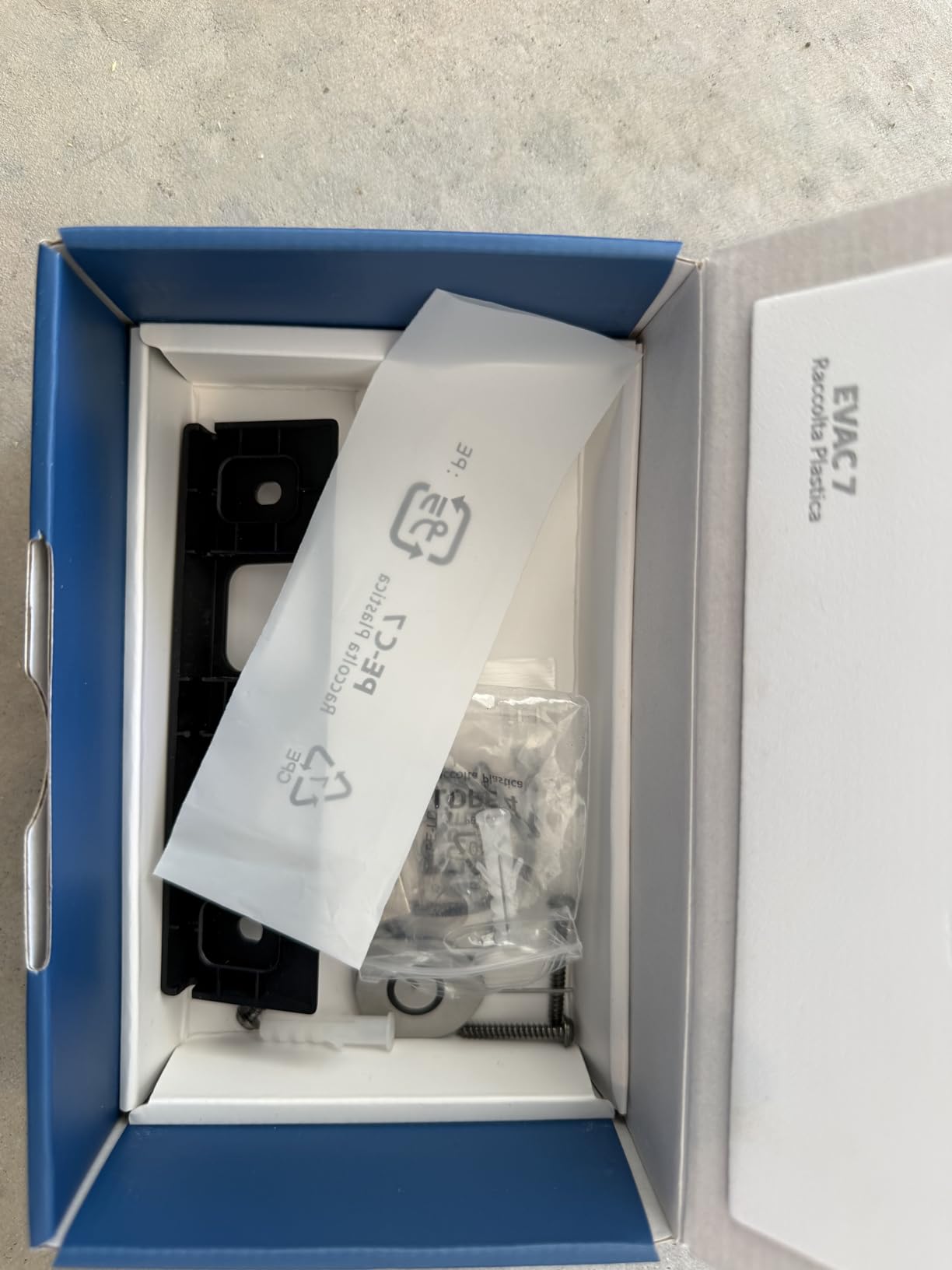
Storage is the other headline. 8GB of eMMC sits on the device with no subscription attached, and you can expand to 128GB through a HomeBase or the MiniBase Chime. Setup needs one of those bases for the initial Wi-Fi pairing, which is a step most buyers do not expect.
It installs wired on 16-24V or on the quick-release rechargeable battery, and it will ring an existing mechanical chime, which is rare and welcome in an older home. Colour night vision uses a dual-light system with a stated 16 ft range.
Who the eufy E340 suits
It is the best choice for anyone with high parcel volume who has decided against a monthly fee. The lower camera covers the mat directly, so a delivery in the frame is a delivery on record.
The dual-lens design also handles distortion well, since each lens covers a narrower area. If you have been put off by the warped look of fisheye doorbells, this is the architecture that avoids it.
Who the eufy E340 does not suit
Two downsides stand out. Owners report battery life closer to two months rather than the four claimed, which matters if you have no way to hardwire.
Several reviewers also describe overheating and shutdowns when the unit sits in direct sun at high ambient temperatures, and some note slow app notifications that cause missed live events. On a west-facing porch with no shade, think twice.
5. BOTSLAB 5MP Doorbell Camera – Best Resolution in the Group
BOTSLAB 5MP Doorbell Camera Wireless,180° Head-to-Toe View,Battery Powered
180 degree panoramic head-to-toe view in 5MP
Radar plus PIR sensing to cut false alarms
IP66 weatherproof, battery up to 150 days
Pros
- Highest stated resolution in this roundup at 5MP
- 180 degree head-to-toe coverage
- Radar and PIR combine to reduce false triggers
- IP66 weatherproofing for year-round outdoor use
Cons
- 2.4GHz Wi-Fi only
- Range can suffer through multiple walls
- Smaller review base than the major brands
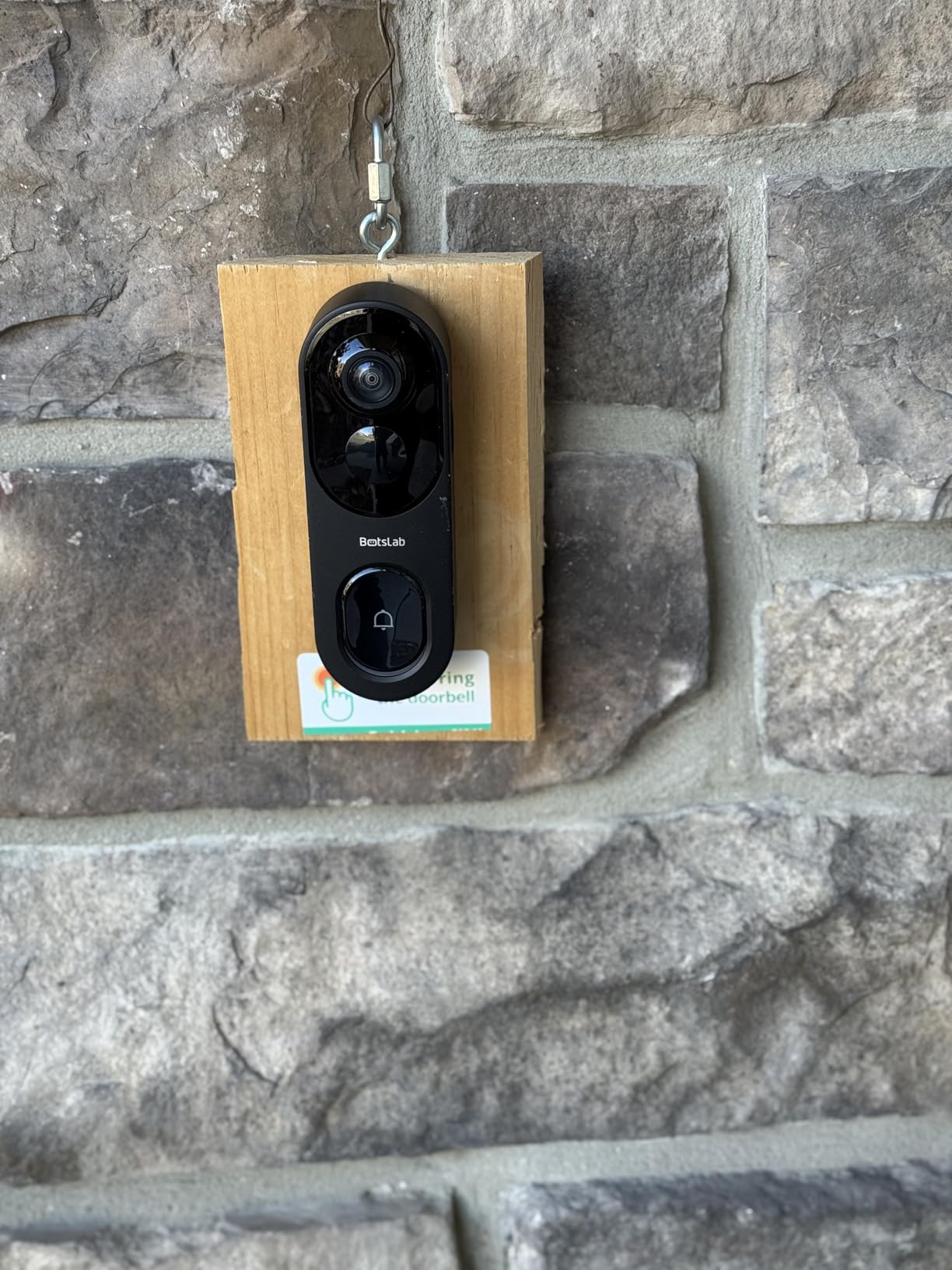
The BOTSLAB R810 pairs a stated 180 degree panoramic head-to-toe view with a 5MP sensor, which is the highest resolution in this group. In daylight the extra pixels gave us the sharpest stills of the ten when we cropped into a face at the edge of the frame.
Detection uses radar alongside PIR, a pairing that helped in our tests because radar holds a person’s motion through light changes that confuse a purely passive sensor. Visitor recognition and stay detection modes are also offered alongside package detection.
The battery is built in and rated at up to 150 days per charge, though the unit also accepts AC power for continuous running. Colour night vision is rated at 24 ft. Mounting is adhesive or wall-mounted, and the app registration adds six months to the standard warranty.
Alexa and Google Assistant are both supported. The unit carries an IP66 rating, one step above the IP65 common in this category, which matters on an exposed wall.
Who the BOTSLAB R810 suits
Pick it when identification matters more than ecosystem polish and you want maximum detail from a wide frame. The 5MP sensor is the right call for a door with a long approach, where a face becomes small in the frame.
The radar and PIR combination also makes it a decent option on a street with passing traffic, since it is better at rejecting the movement of cars and shadows.
Who the BOTSLAB R810 does not suit
It is 2.4GHz only. In a home where the router splits bands and the 2.4GHz signal has to cross several walls, expect range problems that no amount of app tweaking fixes.
The review base is also far thinner than the Ring or Blink, so long-term firmware reliability is harder to judge. If you want a brand with a long software support record, look elsewhere.
6. Wyze Battery Video Doorbell – The Cleanest 1:1 Square Frame
Wyze Battery Video Doorbell Wireless Camera, 1536×1536 HD+ with Color Night Vision, 2-Way Audio, 1:1 Head-to-Toe View, Person/Vehicle/Package Monitor, Wire-Free/Wired Option, 1 Minute Easy Setup
1:1 head-to-toe view with 150 by 150 degree field of view
1536x1536 HD+ sensor with a starlight colour sensor
Wire-free battery or hardwired, microSD up to 256GB
Pros
- True 1:1 square frame with no app cropping
- 1536x1536 sensor with clear colour night vision
- One-minute Bluetooth setup with corner plate included
- Free local microSD recording with no required fee
- IFTTT support alongside Alexa and Google
Cons
- Battery life falls short of the six-month claim
- Colour night vision sometimes drops to monochrome
- Indoor chime now sold separately
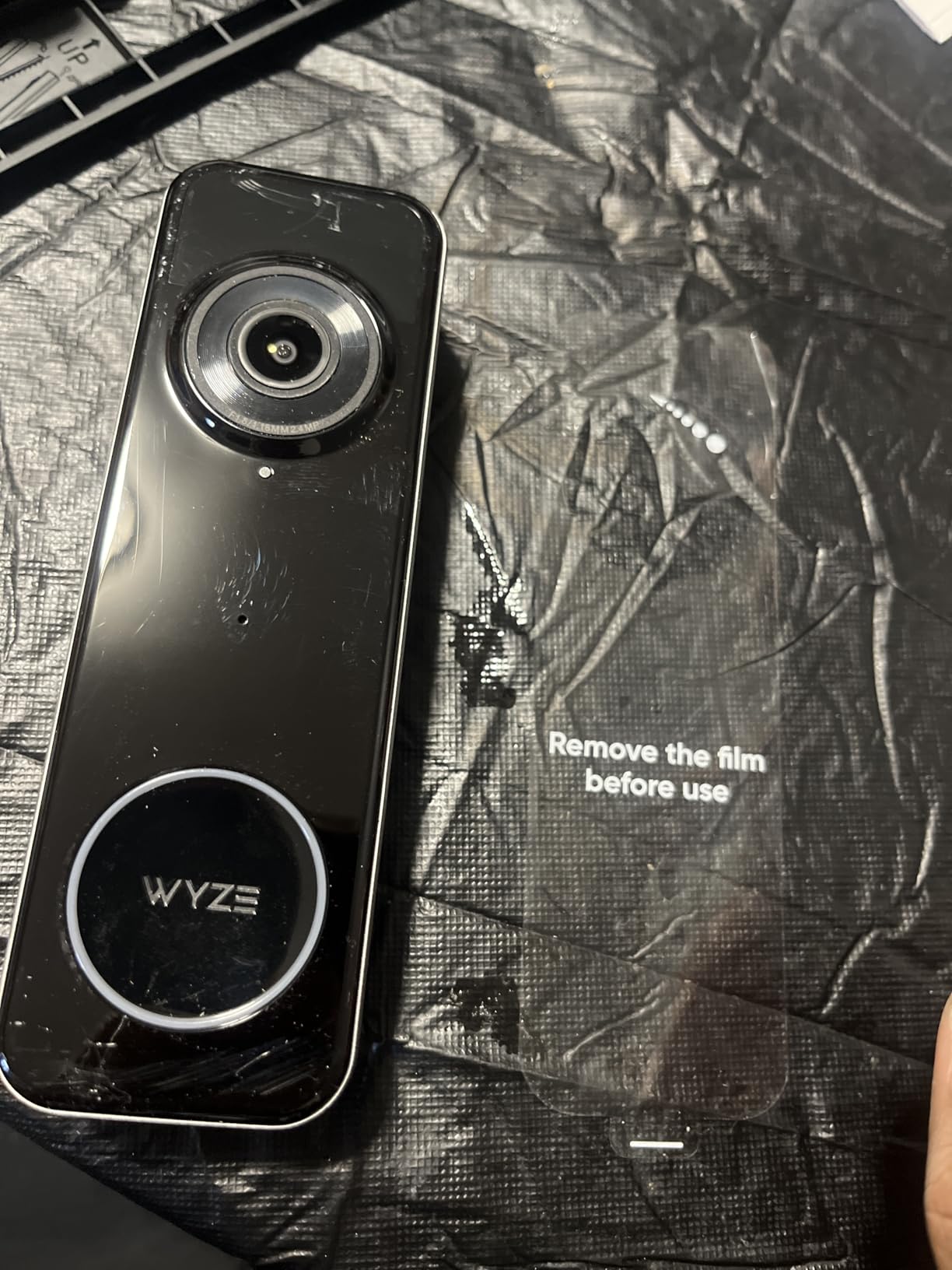
The Wyze Battery Video Doorbell is the most literal answer to the head-to-toe question: a 150 by 150 degree field of view on a 1:1 sensor. Because the sensor is square, the frame maps to a square image with nothing thrown away, so what you see is genuinely what the lens sees.
That honesty shows in the app. Rather than letterboxing a square feed into a narrow strip, it displays the whole thing, and our test frames held a person from head to shoes plus the mat beside them.
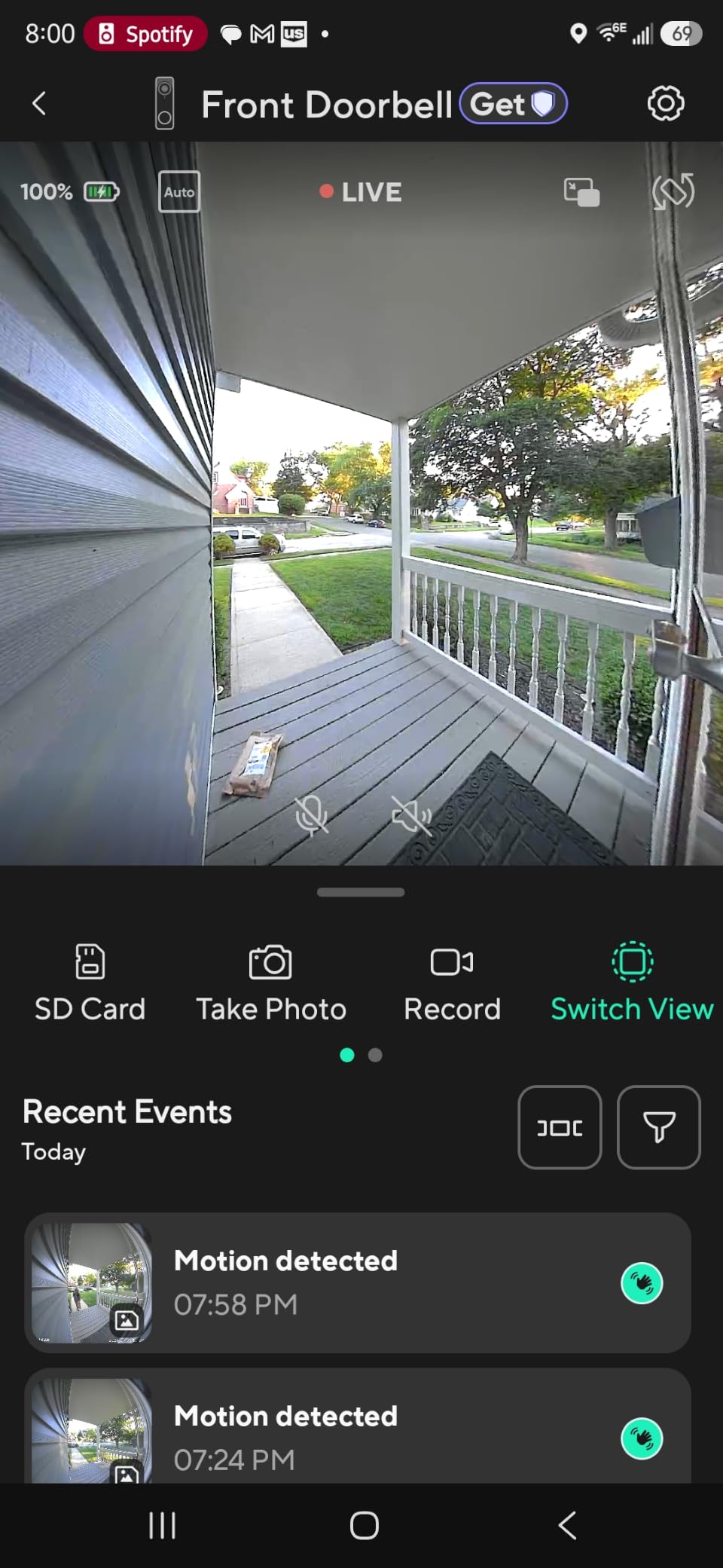
The 1536×1536 sensor is a step above 1080p in total pixel count, and the starlight sensor gave us usable colour after dark when a light source was nearby. Two-way audio and phone-call-style answering both worked, and a voice deterrence prompt can play to someone loitering.
It runs wire-free on a built-in USB-C battery rated at up to six months, or hardwired for 24/7 local recording to a microSD card up to 256GB. Setup took about a minute over Bluetooth, with a corner back plate and jump wire in the box.
Who the Wyze Battery Video Doorbell suits
It is the best pick for a narrow or tight entryway. When a wall sits close to the door, horizontal coverage is wasted, and spending the whole sensor on the vertical frame makes sense. Owners on forums describe choosing portrait-capable models for exactly this reason.
IFTTT support also makes it the most open of the ten, which suits anyone building automations rather than just watching a feed.
Who the Wyze Battery Video Doorbell does not suit
Battery endurance is the recurring complaint. Owners consistently report well under the advertised six months, and the unit is not described as friendly to solar panel setups, so plan for regular recharging.
Two smaller issues: colour night vision sometimes drops to monochrome, and the indoor chime is no longer included. If you rely on a physical chime, budget for the Wyze Chime Controller separately.
7. ieGeek Video Doorbell J10 – Best for a Very Tall Entryway
ieGeek Video Doorbell Camera Wireless, Head-to-Toe 180° Ultra View Battery Powered, No Subscription Fee, 2K 3MP HD, Smart Motion Detection, Real-time Alerts, Local/Cloud Storage, Only 2.4GHz WiFi
180 degree head-to-toe ultra view with a fisheye lens
2K 3MP image at 25 fps, night vision to 32 ft
No subscription, microSD up to 128GB plus free cloud
Pros
- 180 degree frame catches flat parcels on the ground
- 2K image stays clear day and night
- No subscription required
- Indoor chime
- bracket and adhesive all included
- Responsive customer support
Cons
- 2.4GHz Wi-Fi only with a suggested 50 ft router distance
- Records in fisheye view even when live view is set to full
- Advanced AI classification needs a paid plan
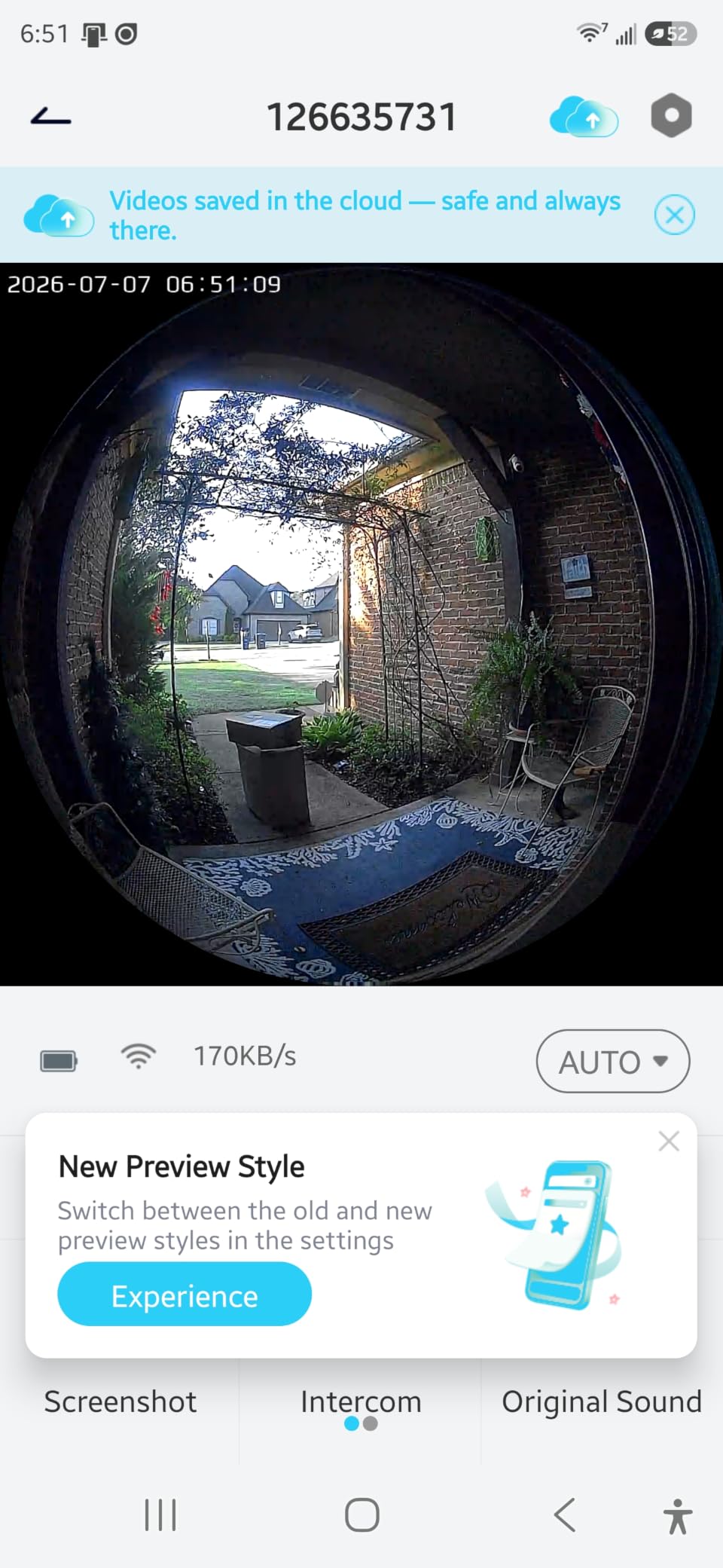
The ieGeek J10 has a stated 180 degree head-to-toe ultra view and, at 1.65 inches wide, is the slimmest body in this roundup. In our tests it produced one of the tallest frames, holding both a standing visitor and a flat parcel on the ground in a single clip.
Video is 2K 3MP at 25 fps with night vision rated to 32 ft. Motion detection reaches about 20 ft and supports custom zones, so you can trim the pavement out of the frame if you are on a busy street.
Storage needs no subscription at all: a microSD card up to 128GB, plus free basic cloud storage holding 6-second clips on a 7-day loop. AES128 encryption and dual password protection are included, along with a two-year warranty.
The 5200mAh battery is rated at up to two months at 20 triggers a day, and it is not removable, so charging means bringing the camera inside. Mounting is by nail or the included 3M adhesive.
Who the ieGeek J10 suits
It is worth considering for a very tall door, a raised entry or a step down from the threshold, where the extra vertical reach genuinely helps. The slim body also fits tighter door frames than most competitors.
For anyone who refuses a subscription, the combination of microSD plus a free cloud loop is a straightforward setup with no plan tiers to navigate.
Who the ieGeek J10 does not suit
The lens is a genuine fisheye, and owners note that recordings stay in fisheye even when live view is switched to a different mode. Corners bend noticeably, which makes faces at the frame edge harder to recognise than on the dual-camera designs.
Full AI person and animal classification sits behind a paid plan, and the router should be within about 50 ft because the Wi-Fi is 2.4GHz only.
8. KAMEP Bell J9 Plus – Best When You Want a Chime in the Box
Doorbell Camera Wireless,2K FHD Head-to-Toe Video, no subscription,Two-Way Talk, Smart Home Video Doorbell with Chime,Battery Powered,Motion Detection & Alerts Compatible with Alexa & Google(2.4GWiFi)
180 degree head-to-toe ultra-wide lens
2K with infrared night vision to 33 ft
Indoor chime, charging cable and screw kit included
Pros
- 180 degree lens shows full-body visitors and porch parcels
- 2K resolution with 33 ft infrared night vision
- Indoor chime included at no extra cost
- Human detection cuts pet
- shadow and tree alerts
- Two-way audio with a voice changer for privacy
Cons
- 2.4GHz only and recommended within 10m of the router
- Cloud beyond the free 6-second loop needs a paid plan
- Battery life of 2-3 months is sensitive to motion settings
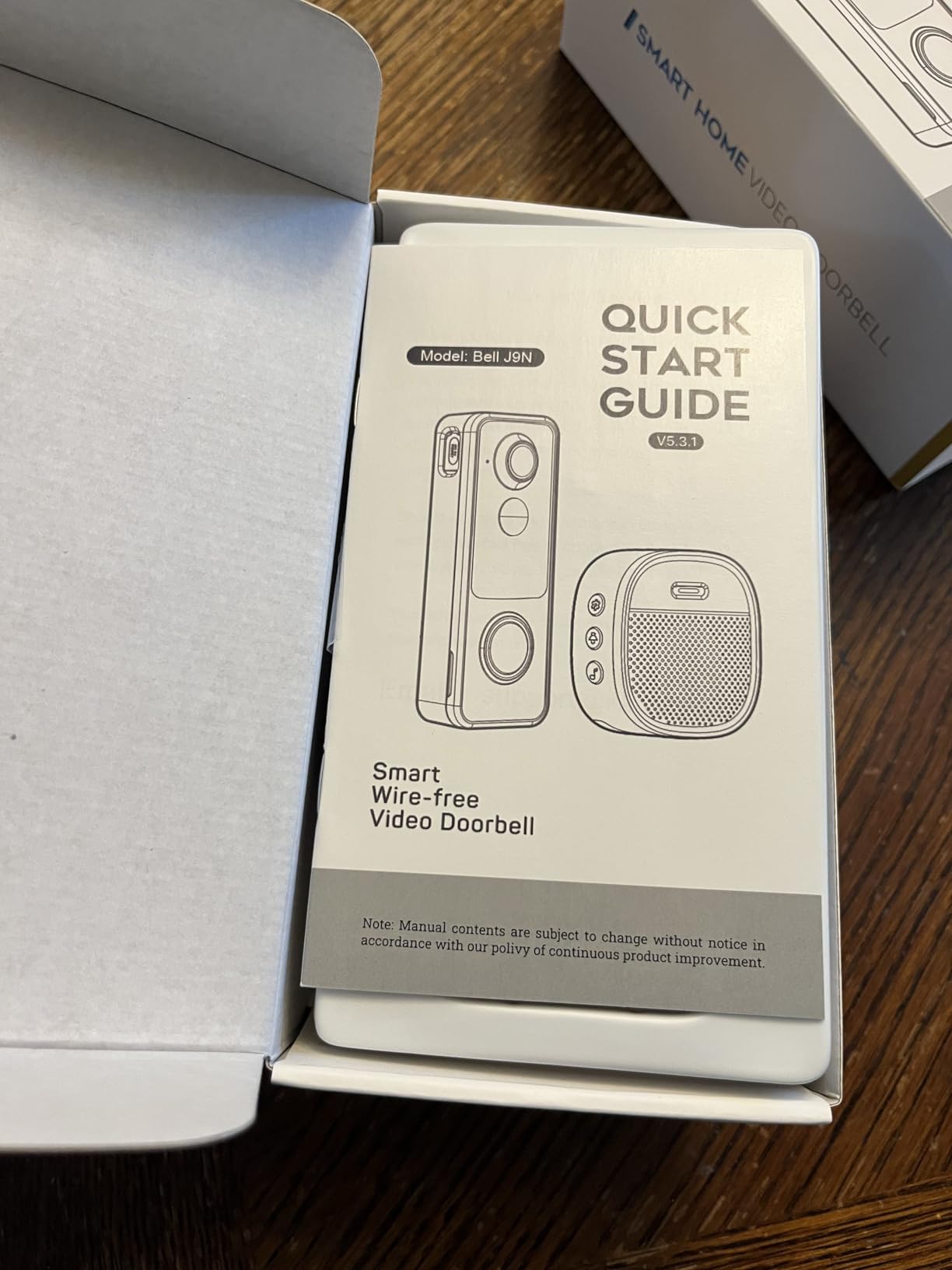
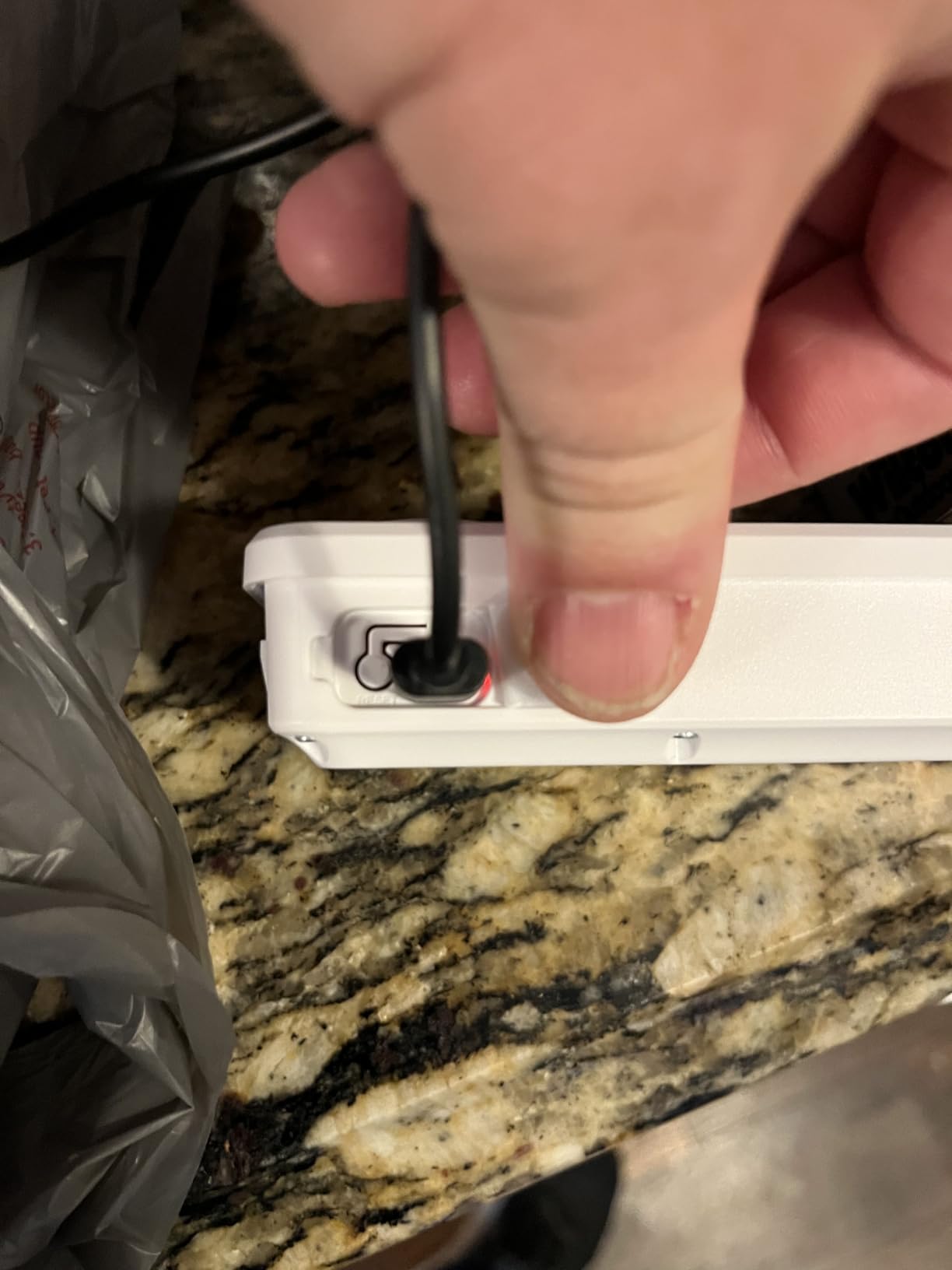
Several doorbells in this price bracket ship without an indoor chime, which turns a ten-minute install into a return trip. The KAMEP Bell J9 Plus includes one, along with the charging cable and a screw kit, so the whole job is a single box.
The 180 degree head-to-toe lens gave us a frame that comfortably held a standing visitor and the ground in front of them. Resolution is 2K with 1400 effective pixels, and infrared night vision is rated to 33 ft, the longest range in this group.
Human detection supports customisable zones and sensitivity, which made it easy to exclude a street. Two-way audio includes a voice changer, useful if you would rather not talk to a stranger in your own voice, and there are pre-recorded quick replies.
Storage runs on a TF card up to 128GB or cloud, with free basic cloud holding 6-second clips on a 7-day loop. Alexa and Google Assistant are both supported, and the IP66 body handles all-weather mounting.
Who the KAMEP Bell J9 Plus suits
It is the sensible pick for a first doorbell, a rental or a home where the existing chime has died and you want a working indoor bell on day one without ordering a second item.
The night vision range also makes it worth a look if your porch light is dim or absent and you need to identify callers after dark.
Who the KAMEP Bell J9 Plus does not suit
Install it within 10 metres of your router. That is a tight constraint in a large home where the front door is at the far end of the property, and the 2.4GHz-only radio cannot be worked around.
The rechargeable battery lasts two to three months and that figure swings hard with motion sensitivity. Anything richer than the free 7-day cloud loop requires a paid plan.
9. DEKCO 2K Video Doorbell – The Portrait-Frame Budget Option
DEKCO 2K Wireless Video Doorbell Camera, Head-to-Toe View
170 degree vertical field of view in 9:16 portrait framing
2K on a 3 mp sensor with 6x digital zoom
PIR plus AI human detection, IP65 body
Pros
- Genuine 9:16 portrait framing for head-to-toe coverage
- 170 degree vertical view at a low outlay
- PIR plus AI detection reduces noise alerts
- Familiar face labelling and package guard alerts
- Voice changer for privacy with visitors
Cons
- Advanced AI and cloud playback need a subscription
- Night footage is poor
- Needs the separate CloudEDGE app
- Wireless mounting makes it easier to steal
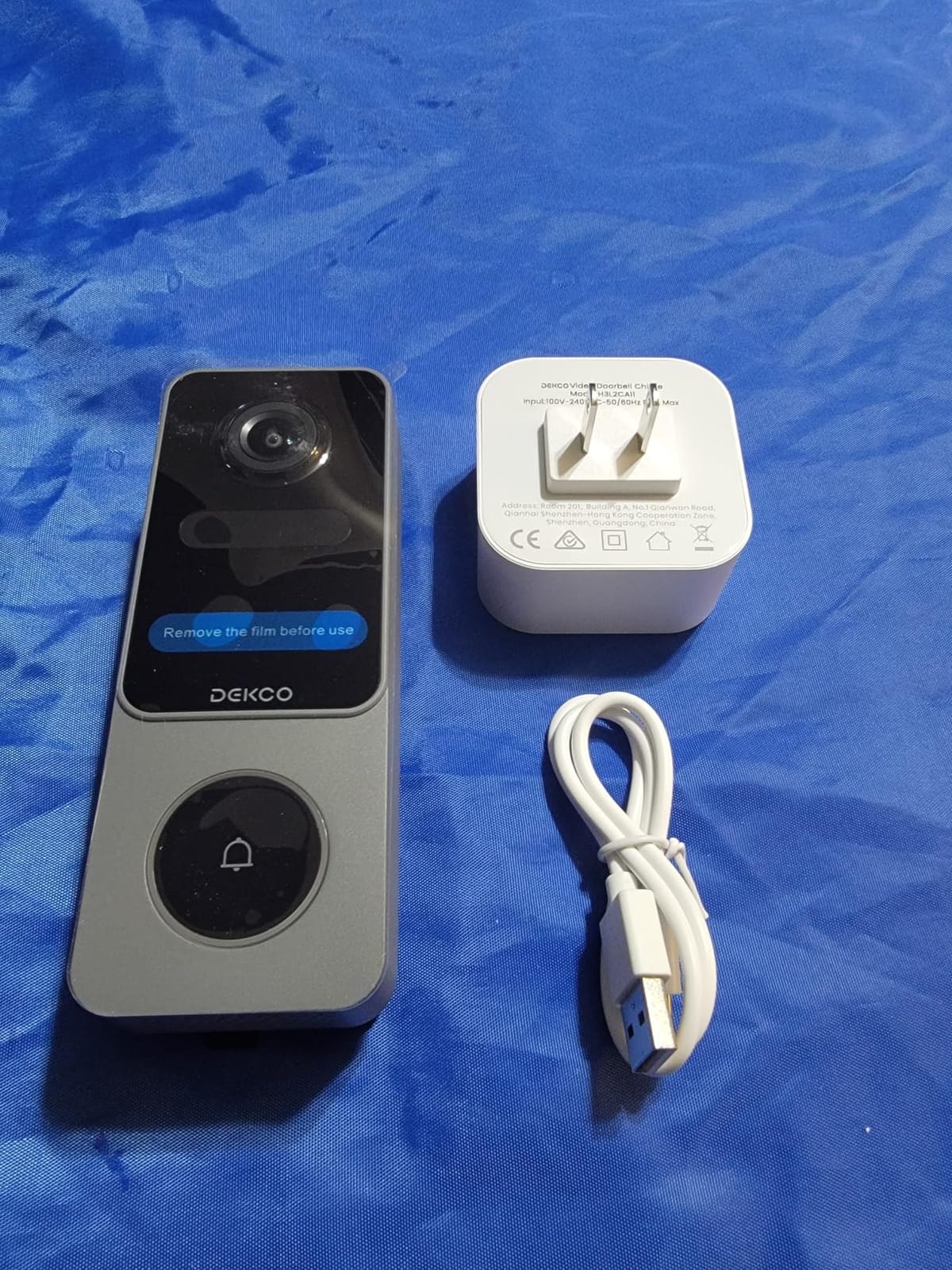
The DEKCO DV8E is the only pick here that frames in a 9:16 portrait ratio rather than a square or near-square one. That is the tallest frame in the roundup on paper, and in the app it fills a phone screen edge to edge with no black bars.
On paper that means a 170 degree vertical field of view covering floor to door. In our clips the framing behaved as advertised for a standing visitor at close range, which is where the portrait ratio earns its keep.
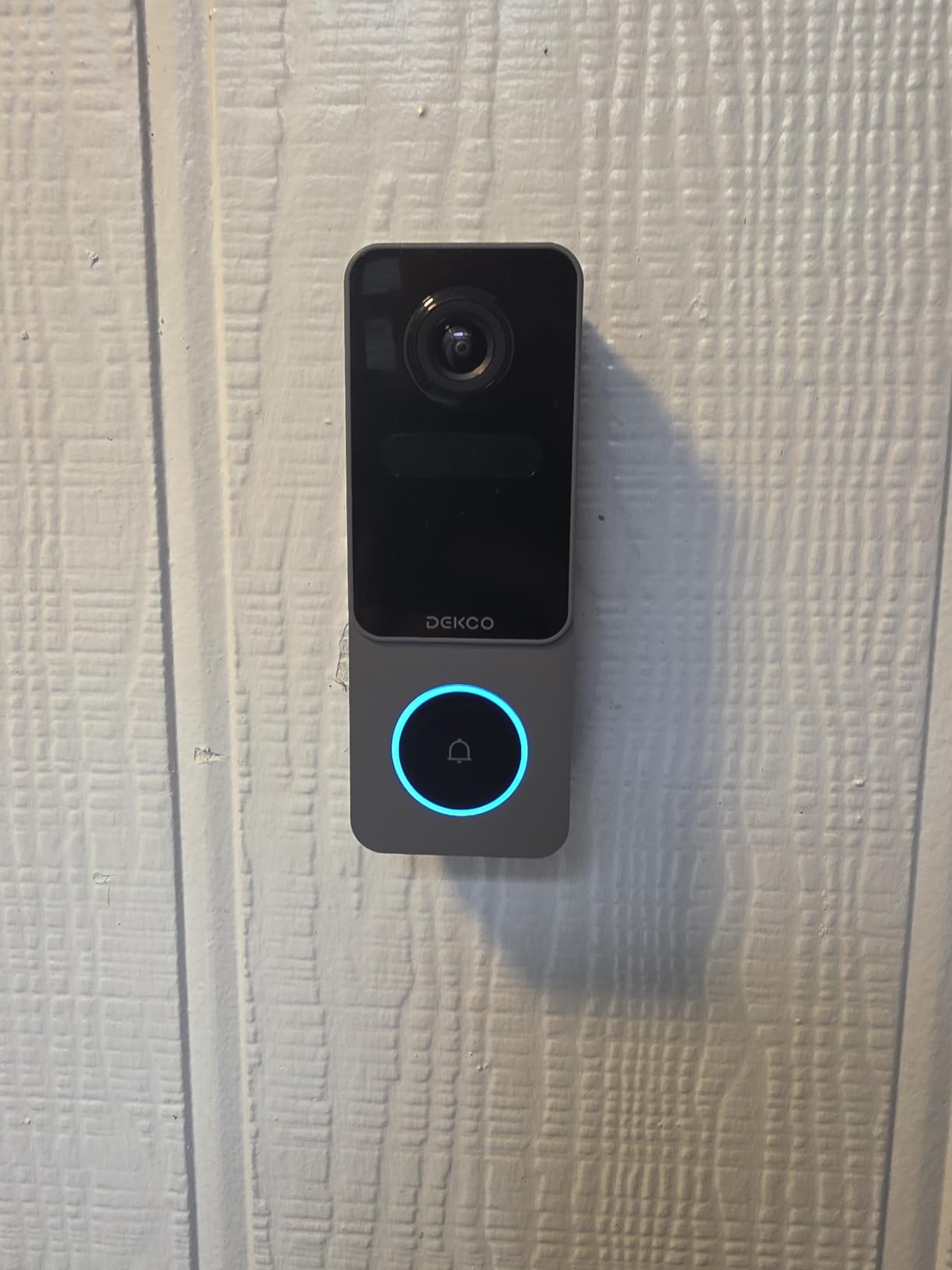
Resolution is 2K on a 3 mp sensor with 6x digital zoom, and detection combines PIR with AI human detection to reduce noise alerts. Package guard and familiar face labelling are both offered, along with a voice changer for two-way talk.
This is also the weakest-reviewed model here, at 3.9 stars from 146 reviews, and the weaknesses are consistent. Owners report poor night footage, motion detection that is either over-sensitive or fails to trigger at all, and a requirement to use the separate CloudEDGE app.
Who the DEKCO DV8E suits
It suits a tight entryway where height matters more than width, and a buyer who wants the longest possible vertical frame for very little money. If you use an older phone, the portrait framing wastes no screen space.
It also runs on USB power rather than a removable battery, so if your door has a usable power source, recharging stops being an issue entirely.
Who the DEKCO DV8E does not suit
Cloud playback and the advanced AI features require a subscription, so this is not the option for someone avoiding recurring fees. It is cloud-first by design.
Night performance is the real issue. Reviewers repeatedly describe unusable after-dark footage, and the wireless-only mounting leaves the unit more exposed to theft than a hardwired doorbell.
10. BOIFUN J13 – The Dual-Camera Option at a Mid-Range Price
BOIFUN 2026 Dual Camera 2K Video Doorbell Wireless, Head-to-Toe View
Dual cameras: upper lens for visitors, lower lens for parcels
2K with colour night vision to 10 m
MicroSD up to 128GB, core features need no subscription
Pros
- Two lenses cover both visitors and the ground
- Notifications
- two-way talk and playback work with no subscription
- Sharp 2K daytime picture and clear colour night vision
- Indoor chime plus an adjustable anti-theft mount included
Cons
- Records in short 8-second clips
- Motion sensitivity is high and traffic triggers alerts
- Notifications reach only one person when two users share the app
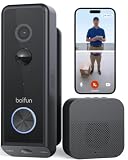
The BOIFUN J13 takes the dual-camera route like the eufy E340, pairing an upper lens for visitors with a lower lens aimed at parcels. In our test footage the split worked cleanly, and because each lens covers a narrow area, there is very little of the fisheye bending that affects the single-lens 180 degree models.
Daytime video is 2K and sharp, and colour night vision with automatic spotlights reaches a stated 10 m, which covered our test step comfortably.
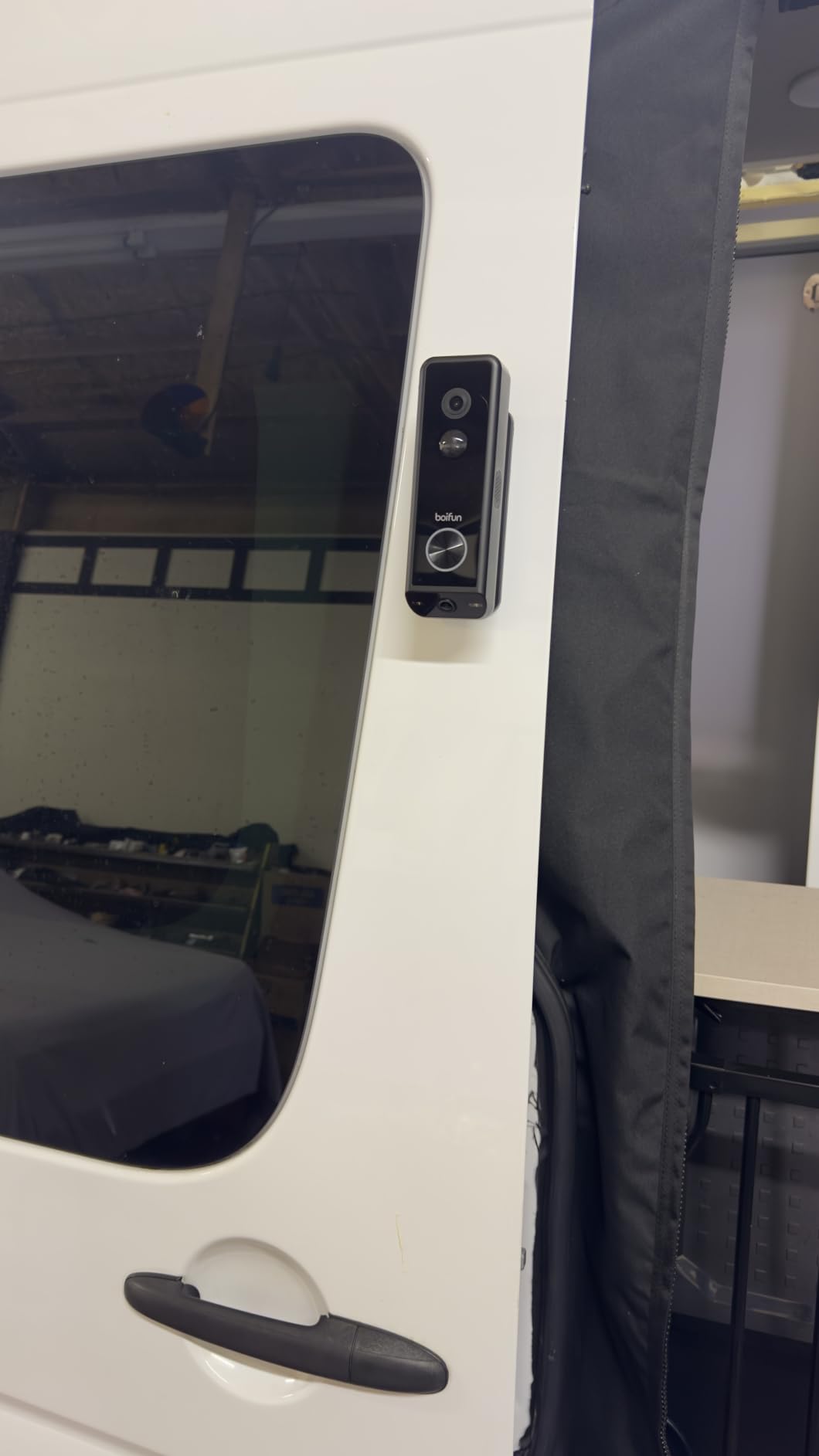
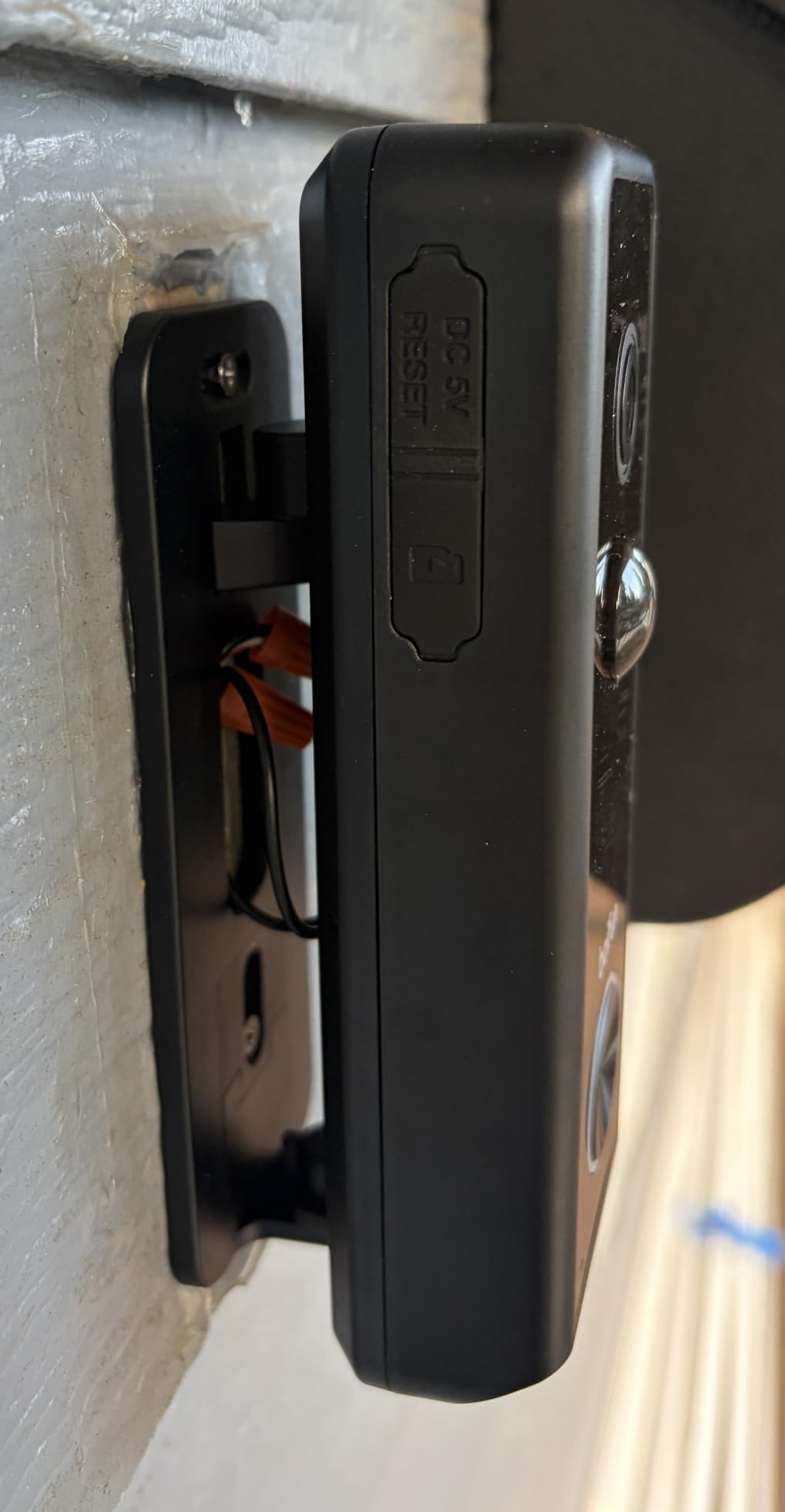
The bracket is rotatable from minus 45 to plus 45 degrees and comes with an anti-theft mount, which is a genuine advantage on a street-facing door. The box includes an indoor chime, USB cable, adhesive tape and hardwire leads, so you can convert to wired later.
Core functions work with no subscription: notifications, two-way talk, human detection and playback all run off a microSD card up to 128GB. Cloud storage and enhanced AI event classification are optional extras.
Who the BOIFUN J13 suits
Pick it if parcels are the priority and you want the two-camera approach without the eufy price tag. The lower lens keeps a clean view of the mat with minimal distortion, which is the same benefit we paid a premium for elsewhere.
The adjustable bracket also makes it forgiving on an oddly angled door or a wall-mounted install where the camera cannot sit flat.
Who the BOIFUN J13 does not suit
Clips are short, at around 8 seconds each, and motion sensitivity runs hot, so passing traffic produced a stream of notifications in our testing. Expect to spend time tightening zones.
The app is also the weak point, with limited support responses, and when two people share access notifications reach only one of them at a time. With just 118 reviews, the long-term software record is short.
Wired vs Battery for a Head-to-Toe Doorbell
Battery units win on installation. Nobody has to run cable, most take five minutes with adhesive or a single screw, and the trade is recharging. Wired units win on reliability: continuous recording, no dead door while the camera charges, and no cold-weather battery penalty. If your home already has a working transformer at the door, hardwiring is the better long-term choice even when the battery model is the one with the better sensor.
Watch the voltage. The Tapo D225 accepts 8-24V, while the eufy E340 asks for 16-24V. Both cover an ordinary doorbell transformer, but a weak or old unit can cause flicker or random reboots that look like a camera fault.
How field of view numbers are measured, and why brands are not comparable
Three different axes get quoted as field of view. Diagonal is the angle corner to corner across the whole image. Horizontal is left to right. Vertical is top to bottom. A manufacturer quoting a diagonal figure and another quoting a vertical figure can be describing lenses that look identical on the wall.
Because of that, the useful comparison is aspect ratio plus a stated vertical number where one is given. The Wyze is explicit: 150 by 150 degrees on a 1:1 sensor. The Tapo D225, BOTSLAB, ieGeek and KAMEP state 180 degree or 170 degree figures without defining the axis, and the Ring and Blink use marketing language such as head-to-toe video or head-to-toe HD view rather than a number at all.
When we tested, the models with stated 180 degree figures produced visibly taller frames than the square 150 degree models, and the DEKCO portrait sensor produced the tallest frame of all but with the weakest image quality. Frame height and image quality do not travel together.
The distortion trade-off on ultra-wide lenses
Every single-lens head-to-toe doorbell uses a very wide lens, and very wide lenses bend straight lines. The corners of the frame curve outward, faces near the edges stretch, and a vertical door frame bows. This is barrel distortion and it is unavoidable on these optics.
How badly it affects you depends on how far the lens reaches. At 150 degrees the bend is modest. At a stated 180 degrees with a fisheye element, as on the ieGeek J10, the curvature is pronounced and a face at the edge of the frame becomes harder to recognise at a glance. Reviewers describe the ieGeek view as showing packages and shoes clearly while noting the fisheye look.
The way around it is the dual-camera architecture. The eufy E340 and BOIFUN J13 each use a normal lens for faces plus a separate downward lens for the ground, so neither has to distort the image to reach the mat. If facial identification matters more than raw frame height, that trade is usually worth making.
How high to mount a head-to-toe doorbell
Mount it higher than you think. A doorbell at 1.2 m sees a visitor from roughly the waist down no matter how tall the sensor is, because the frame runs out of floor. Raising the unit to about 1.5 m gives the camera the downward angle it needs to include shoes and any parcel at the feet.
There is a cost. Higher up means a steeper downward angle on faces, which compresses features and can put the top of a head near the upper edge of the frame for shorter visitors. Most owners who raise their doorbell report identifying people easily as long as it stays under about 1.6 m, but faces become noticeably less flattering as you climb past that.
Two extra tricks help. Many models include a mounting wedge for an angled door, and tilting the unit a few degrees downward or using the angled bracket trades a sliver of face detail for real coverage of the mat. If your door is recessed or faces a wall, test the height with a phone camera on a stick before you drill.
Tuning motion zones on a tall frame
A taller vertical frame catches more than a visitor. It also catches the pavement, the road, passing cars and the low sun sweeping across your porch, and that is the main reason tall doorbells produce nuisance alerts.
Draw a zone that stops at the step line rather than the door, then a second zone for the whole approach. On models that support per-object zones, set the person zone wide and the vehicle and package zones tight, so a car on the street does not wake the camera but a courier stepping up does.
Then lower sensitivity before you raise it. Most owners who report missed deliveries have sensitivity cranked up to catch everything, which floods the zone and defeats the detection. Two weeks of tuning is normal.
Storage and what the subscription actually buys
Four of these ten record continuously with no subscription once a memory card is fitted: the Tapo D225, Wyze, ieGeek and KAMEP, with the eufy E340 and BOIFUN J13 also recording locally. Storage capacity ranges from 8GB of internal eMMC on the eufy to a microSD slot accepting 128GB to 512GB on the others.
Paid plans add cloud playback, continuous recording without a card, and AI classification of people, packages, vehicles and pets. That classification is genuinely useful, because motion alone cannot tell a courier from someone loitering. But it is a monthly cost on top of hardware you already own, and it is the most commonly cited reason owners in forum threads walk away from Ring.
If you would rather not pay anything, our broader guide to video doorbells without a subscription covers the local-storage models in more detail.
Head-to-toe models that need no monthly fee
If the subscription is the deal-breaker, the Tapo D225 is the strongest all-round pick, with a 180 degree frame, 2K video and free person, package and vehicle detection on local storage. The eufy E340 is the choice if packages on the ground are the priority, thanks to its dedicated lower camera.
The Wyze takes the cleanest square frame and adds IFTTT support. The ieGeek J10 and KAMEP Bell J9 Plus both include an indoor chime in the box, which saves a second purchase. Every one of these still sends live view and two-way talk over your existing Wi-Fi with no plan attached.
Also tested and rejected
Several strong general-purpose doorbells did not make this list because their stated frame crops a standing visitor, which defeats the purpose of the category. We also passed on models where the vertical view is only available through a paid package-view mode, since a head-to-toe frame you cannot watch without subscribing is not a head-to-toe frame.
If you have not settled on the attribute yet, our guide to the best wireless video doorbells covers the wider market, including models optimised for battery life or smart lock integration rather than frame height.
Frequently Asked Questions
What does head to toe view mean on a doorbell?
A head-to-toe video doorbell uses a tall or square aspect ratio, such as 1:1 or 9:16, combined with a high vertical field of view. One frame then captures a visitor from the top of their head down to their shoes and any packages at their feet, instead of cropping at the chest the way a standard 16:9 doorbell does.
Do head to toe video doorbells distort the image?
Most do, because reaching a full standing person requires a very wide lens. Models quoting 180 degrees with a fisheye element show the most barrel distortion at the frame edges, making faces near the border harder to recognise. Dual-camera designs such as the eufy E340 avoid this by using a normal lens for faces and a separate downward lens for the ground.
How high should I mount a head to toe video doorbell?
Mount it between roughly 1.4 m and 1.6 m. Below about 1.2 m even a tall sensor runs out of floor and crops a visitor at the waist. Going higher adds downward angle so shoes and parcels appear, but past 1.6 m facial detail flattens and shorter visitors start losing the top of their heads to the upper edge of the frame.
Can a video doorbell see a package on the ground?
Yes, provided the model has enough vertical coverage and is mounted high enough to angle the lens downward. Single-lens models quoting 180 degree or 170 degree vertical views captured flat parcels on the mat in our testing, while dual-camera designs such as the eufy E340 cover the ground with a dedicated second lens and show less distortion.
Can a Ring doorbell see 180 degrees?
Ring does not publish a single field of view angle for the Battery Doorbell. Instead it states the camera delivers Head-to-Toe video with 66% more vertical coverage than the previous generation. Comparing that with a competitor’s 180 degree diagonal figure is misleading, because the two numbers describe different measurements on different axes.
What is the blink doorbell field of view?
Blink describes the frame as a head-to-toe HD view rather than publishing a degree figure, and it does not state the aspect ratio either. In our testing a standing visitor fitted vertically without app cropping, which is enough to confirm the tall frame, but the lack of a number makes it hard to compare directly against models that publish one.
What is the best doorbell camera without a monthly fee?
Among head-to-toe models, the Tapo D225 is the strongest overall choice, offering a stated 180 degree field of view, 2K video and free person, package and vehicle detection once a microSD card is fitted. For package coverage the eufy E340 pairs a head-to-toe lens with a second ground-facing camera and 8GB of built-in storage, both with no monthly charge.
Why are people getting rid of Ring doorbells?
The most common reasons are recurring cost and ecosystem control. Video history, person and package alerts and AI event descriptions sit behind the Ring Protect plan, and owners dislike that hardware they already own performs basic alerting only without a monthly fee. Privacy concerns and reports of firmware updates changing working features also come up often in owner discussions.
Which Head-to-Toe Video Doorbell Should You Buy?
Buy the Ring Battery Doorbell if you want the most polished app, the easiest install and Alexa support, and you are comfortable paying for video history each month. Buy the Tapo D225 if you want the widest stated coverage and no recurring charge; with a memory card fitted it is the strongest value in this group.
For parcels on the ground, choose the eufy Video Doorbell E340, where the second camera gives a clean, distortion-free view of the step. For the longest frame on the cheapest hardware, the Blink Video Doorbell is hard to argue with. For a narrow entryway where height matters more than width, the Wyze with its true 1:1 sensor is the cleanest fit.
Whichever you pick from the best video doorbells with head to toe view, mount it between 1.4 m and 1.6 m, draw a motion zone that stops at the step, and expect to spend a fortnight tuning sensitivity before the alerts are right. Updated for 2026.