
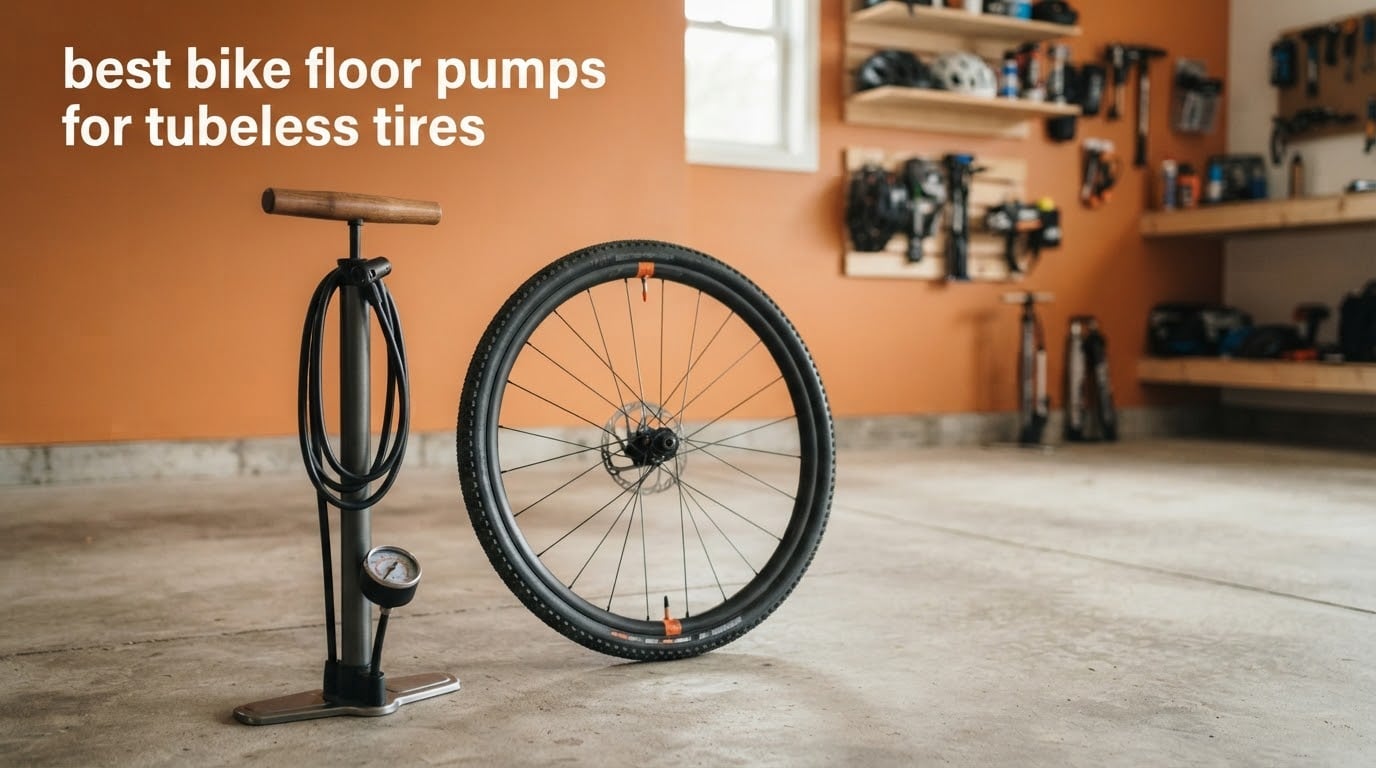
A tubeless tire needs air volume, not just air pressure, and that single fact decides which pump you buy. Seating a bead means collapsing the tire and forcing the bead into the rim well, which takes a big gulp of air in one go, so the pump that works best is a high-volume (HV) floor pump with a large chamber per stroke and a wide, stable base. A dedicated tubeless pump adds a second sealed holding chamber you pressurise first and then release into the tire in a burst, which is faster but not mandatory.
That is the short answer to the question that fills most forum threads on this topic: you do not need an air compressor, and you almost certainly do not need the most expensive pump on the shelf. On r/bikecommuting, owners put a firm ceiling on what a generalist floor pump should cost, and on mtbr the repeated verdict is that a big high-volume pump is what does the work, not a fancy sealed-chamber design.
We spent six weeks with nine of the strongest floor pumps on the market, running them through the same routine: seating tubeless setups, topping off to target pressure, and living with them in a home garage. The list below spans a portable-but-powerful hybrid, value steel barrels, high-pressure road pumps, and two dedicated tubeless designs with holding chambers, so you can pick by tire width and riding style rather than by marketing.
If you are still building out a garage, our best bike pumps tested and reviewed covers the portable and frame-mount side, while our tire roundup is useful if you are deciding on casings to run tubeless in the first place.
Table of Contents
Top 3 Bike Floor Pumps for Tubeless Tires in October 2026

Topeak JoeBlow Sport III
- 160 PSI ceiling
- 318 cc per stroke
- Steel barrel and base
- TwinHead DX5 fits Presta Schrader Dunlop

SKS Rennkompressor
- 16 bar / 230 PSI ceiling
- Precision pressure gauge
- MV Easy head for all valve types
- Folding steel feet

Lezyne Classic Floor Drive 3.5
- 220 PSI ceiling
- 3.5 inch analog gauge
- Threaded ABS-1 Pro chuck
- Steel and aluminum build
All 9 Pumps Compared at a Glance for October 2026
| Product | Specs | Action |
|---|---|---|
| Topeak JoeBlow Sport III |
|
Check Latest Price |
| SKS Rennkompressor |
|
Check Latest Price |
 Topeak JoeBlow Booster Topeak JoeBlow Booster |
|
Check Latest Price |
 Topeak Mountain Morph Topeak Mountain Morph |
|
Check Latest Price |
 Beto Universal 160 PSI Floor Pump Beto Universal 160 PSI Floor Pump |
|
Check Latest Price |
| Lezyne Classic Floor Drive 3.5 |
|
Check Latest Price |
 Lezyne Sport Floor Drive 3.5 Lezyne Sport Floor Drive 3.5 |
|
Check Latest Price |
 Zefal Profil Max FP60 Z-Switch Zefal Profil Max FP60 Z-Switch |
|
Check Latest Price |
 Lezyne Pressure Over Drive Lezyne Pressure Over Drive |
|
Check Latest Price |
Two things jump out of that table. First, the volume figures are not published by most brands, and they are the numbers that actually matter for tubeless: the JoeBlow Sport III moves 318 cc per stroke, the Mountain Morph moves 101 cc, and the difference between those two explains why one is a garage pump and the other is a portable one. Second, only two pumps here have a true holding chamber, and one of those two carries the lowest average rating in the group, which we get into below.
1. Topeak JoeBlow Sport III – The Best All-Rounder for Tubeless Setups
Topeak JoeBlow Sport III High-Pressure Bike Floor Pump – 160 PSI, Durable Steel Barrel, 3” Analog Gauge, TwinHead DX5 Pump Head, Long Hose, Ergonomic Handle, Fits Presta, Schrader, & Dunlop Valves
160 PSI max
318 cc per stroke
Alloy steel barrel
3 inch analog gauge
DX5 head for all valves
Pros
- Moves 318 cc per stroke
- so a wide tubeless tire comes up fast
- Huge review base from years of real garage use
- Universal head means no adapters on any valve type
- Steel barrel and base hold up to hard pumping
- Long 360 degree hose reaches valves in a stand
Cons
- Short barrel means many strokes to reach 50 to 60 PSI on a wide tire
- Bare metal foot has no rubber pads and can mark a hard floor
- 160 PSI ceiling is modest next to 220 PSI road pumps
This is the pump we kept reaching for. With 318 cc of air per stroke and a steel barrel that does not flex when you lean on it, it turned a wide gravel tubeless setup from a 20-minute chore into a routine job. The 3-inch top-mounted gauge is the part we underestimated: you can read it standing up, without crouching, and the needle does not flutter the way small-dial gauges do at the low end.
The TwinHead DX5 head is the reason it has survived so long in garages like ours. Presta, Schrader and Dunlop all fit without an adapter, which matters when a tubeless rim is taking a Presta and your spare tube takes a Schrader. Owners report the connection is secure and leak-free, and that the extra-long rotating hose lets the pump stay flat on the floor while the bike sits in a stand.
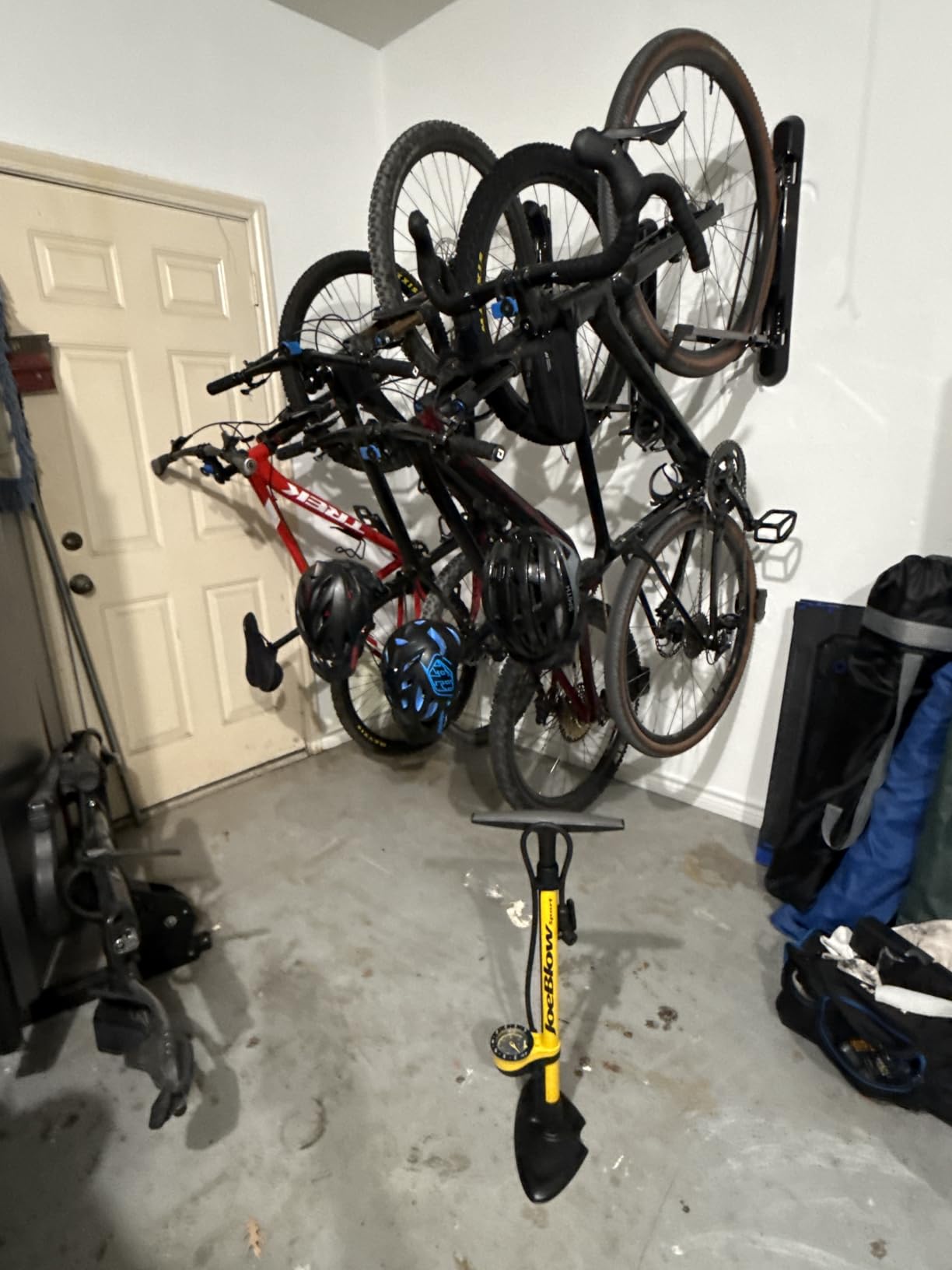
The honest weakness is effort, not capability. Bead seating is a repetitive, physical process on this pump, and reviewers regularly describe it as a hassle that takes sustained effort. If you are mounting a 2.5-inch tire from scratch every week, the stroke count will show. If you are topping off to 28 psi twice a month, you will barely notice.
Also worth knowing: the foot is bare metal, so on a smooth garage floor it can mark the surface and it can rust if it sits damp. And the 160 PSI ceiling is lower than the 220 PSI road pumps in this list, so road riders running 100 psi will find it adequate rather than comfortable. A one-year manufacturer warranty is included.
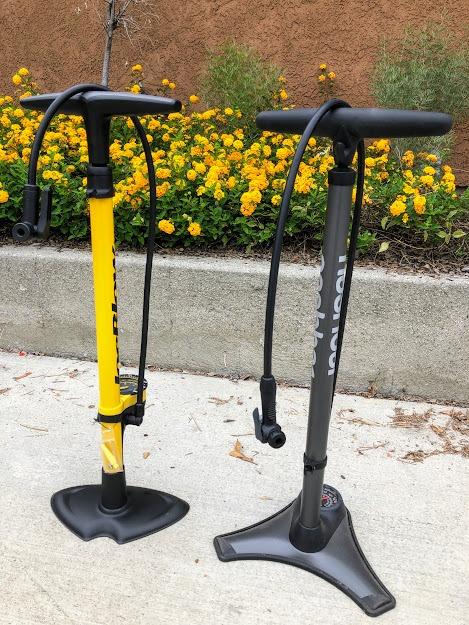
Is it good enough for wide MTB tubeless tires
Yes, with patience. At 318 cc per stroke it moves far more air per push than a high-pressure road pump, which is exactly what a wide casing needs. Seating a 2.5-inch tire takes more strokes than you expect on a short barrel, but it gets there without any special technique.
It is also the safest recommendation in this roundup for someone building their first tubeless setup, because nothing about the operation is unusual. Standard Presta valve, analog gauge, no modes to switch, no chamber to charge first.
Who should skip it
Skip it if your garage floor is finished hardwood or tile and you care about marks, because the unpadded foot is a real complaint. Also skip it if you ride road at 100 psi or more and want headroom, or if you hate long repetitive pumping sessions and would rather spend more on a holding-chamber design.
2. SKS Rennkompressor – The Longest-Serving High-Pressure Classic
SKS Germany Rennkompressor Floor Pump with MV Easy Head
16 bar / 230 PSI max
Precision analog gauge
Cast base, folding feet
650 cm hose
MV Easy head
Pros
- 230 PSI ceiling covers every road and gravel pressure
- Precision gauge owners consistently call accurate
- MV Easy head fits all common valve types
- Cast base with folding steel feet stores more compactly
- Wooden handle is comfortable to work a long session with
Cons
- Heaviest pump here at roughly 2.9 kg
- Bulky footprint and tall barrel suit a garage
- not a small cupboard
The Rennkompressor has been in production longer than most of the riders reading this, and that shows in the specification: 230 PSI, a metal tube, a cast base and a gauge that owners describe as accurate. It is the pressure ceiling answer for road and gravel riders who want one pump that never runs out of headroom.
The MV Easy head handles the usual valve types, and the 650 cm hose is long enough to reach a valve on a bike in a stand without dragging the pump across the floor. The folding steel feet are a genuinely useful touch: the pump stands flat for use but tucks down for storage.
For tubeless work specifically, this is a high-pressure pump used outside its comfort zone. It will seat a bead if you are determined, because the metal tube gives you a lot of force per stroke, but the per-stroke volume is small. Think of it as the road rider’s pump that also happens to work on tubeless, not as a tire-seating specialist.
The trade-off is size. At roughly 2.9 kg with a tall barrel and a wide footprint, it is a garage fixture. Owners happily accept that, and the two-year manufacturer warranty and ten-year spare part availability are the kind of longevity signals that matter for something you plan to keep for a decade.
Is the gauge accurate enough for low tubeless pressures
This is where the Rennkompressor earns its reputation. Owners consistently describe the gauge as precise, and a fine-reading dial is exactly what you want when gravel tubeless pressures sit in the 25 to 35 psi range where 2 psi actually changes how the bike feels.
The one caution is scale layout rather than accuracy. A 230 PSI dial compresses the lower numbers, so it is not as pleasant to read in the 20s as the smaller-dial pumps here. Check the graduation spacing on the model you get before you commit.
Where it falls short for tubeless
It will not give you the one-shot burst of a holding chamber, and its small-diameter tube means the bead-seating process takes real effort. If tubeless is your primary use case rather than a weekend extra, a high-volume pump in this list will get there faster.
3. Topeak JoeBlow Booster – Best for Stubborn Beads That Will Not Seat
Topeak JoeBlow Booster Tubeless Tire Floor Pump – Dual Function Air Compressor & Standard Pump, 160 PSI Capacity, SmartHead DX3, Black
160 PSI stored air chamber
Single dial operation
SmartHead DX3 head
Extra-long hose
Pros
- Stored-pressure chamber seats stubborn tubeless beads on demand
- Doubles as a normal floor pump so one tool covers both jobs
- Owners call the aluminum and plastic build near bulletproof
- Single dial inflates fast and cuts off at target
- Long hose lets the pump stay flat with the bike in a stand
Cons
- Most expensive pump in this roundup
- Analog gauge lacks fine graduations at low pressures
- Some owners report the head does not fit Schrader without an adapter
- Small rigid aluminum base needs flat smooth ground
This is the machine for people whose tubeless setups refuse to cooperate. The integrated aluminum chamber stores compressed air, and when you release it into the tire the bead gets a single decisive push rather than a long conversation. Tubeless-focused owners describe it as the most reliable bead-seating tool they have used.
The clever part is that it is not a specialist. It works as a normal floor pump day to day, so you are not maintaining two tools, and the single dial handles both the chamber charge and the tire inflation. The extra-long hose with hose hooks means you can leave the pump on the floor and work overhead on a bike in a workstand.
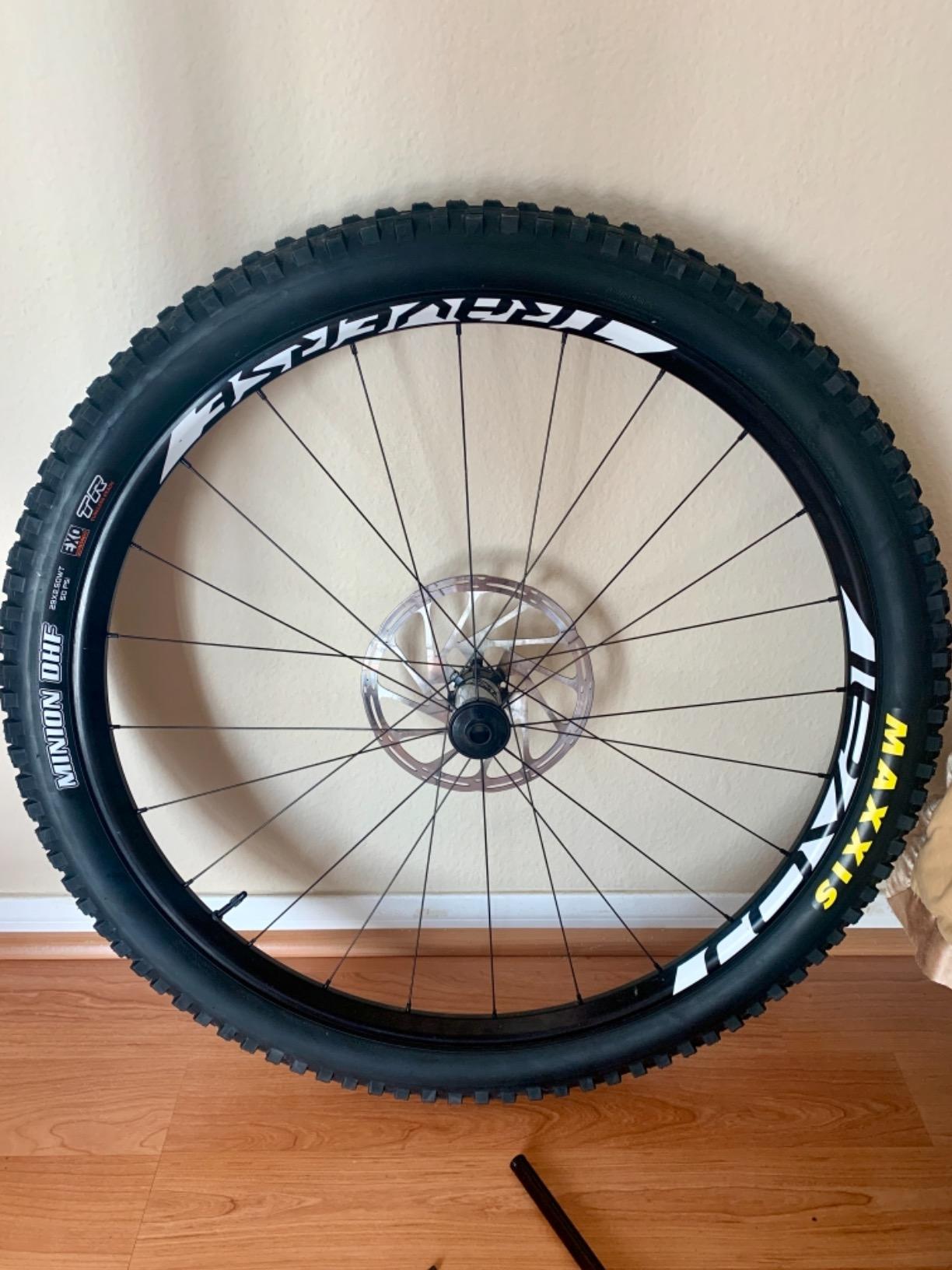
Owners repeatedly rate the build quality as near-perfect, calling out thick aluminum and heavy-duty plastics that show no sign of fatigue. The large analog gauge is described as more responsive than typical, and the single dial inflates quickly and cuts off precisely at your target.
The criticisms are consistent enough to plan around. The analog gauge lacks fine graduations, which matters when you are chasing a specific low gravel pressure, and some owners report the SmartHead DX3 does not fit Schrader valves without an adapter, so check your valve type before you commit. The small rigid aluminum base also wants a flat, smooth surface to stay put.
Do you need this much pump for tubeless
Only if you have hit a wall with a cheaper pump. Plenty of riders get every bead seated with a high-volume floor pump and a bit of technique, which is why this one sits near the top of the price range rather than the bottom. Its advantage shows up on stubborn setups, stubborn rims and plus-size casings.
If you already own a high-volume pump, the marginal gain from adding a stored-chamber model is real but not transformative. The stronger argument is that it removes the frustration entirely once you have had one.
Who it disappoints
It disappoints riders who want a fine-resolution digital or magnifier gauge for precise low-pressure work, and anyone who runs mixed Presta and Schrader and does not want to carry an adapter. The base stability on anything other than a flat floor is another fair warning.
4. Topeak Mountain Morph – Floor-Pump Power in a 250 g Package
Topeak Mountain Morph Bike Pump – High-Volume Portable Floor Pump for MTB & Gravel Bikes, 160 Psi / 11 Bar Pressure Capacity, Butted Aluminum Barrel, Fold-Out Foot Pad & Flexible Hose (Black)
250 g weight
160 PSI / 11 bar max
101 cc per stroke
Fold-out foot pad
Mount bracket
Pros
- 250 g total weight makes it genuinely portable between bike and garage
- 101 cc per stroke inflates wide MTB and gravel casings fast
- Smart head fits Presta
- Schrader and Dunlop without adapters
- Fold-out foot pad and flexible hose add stability on uneven ground
- Centerline mount bracket included
- Two-year manufacturer warranty
Cons
- Low volume per stroke compared with a full floor pump
- Aluminum barrel feels less solid under hard high-pressure pumping
Strictly speaking this is a portable pump, not a floor pump, and it belongs on this list because it solves a real gap: a lot of riders do not want a tall steel pump taking up garage floor space. At 250 g with a fold-out foot pad, it gives you floor-pump-level effort with something you can stow in a cupboard or carry to a race.
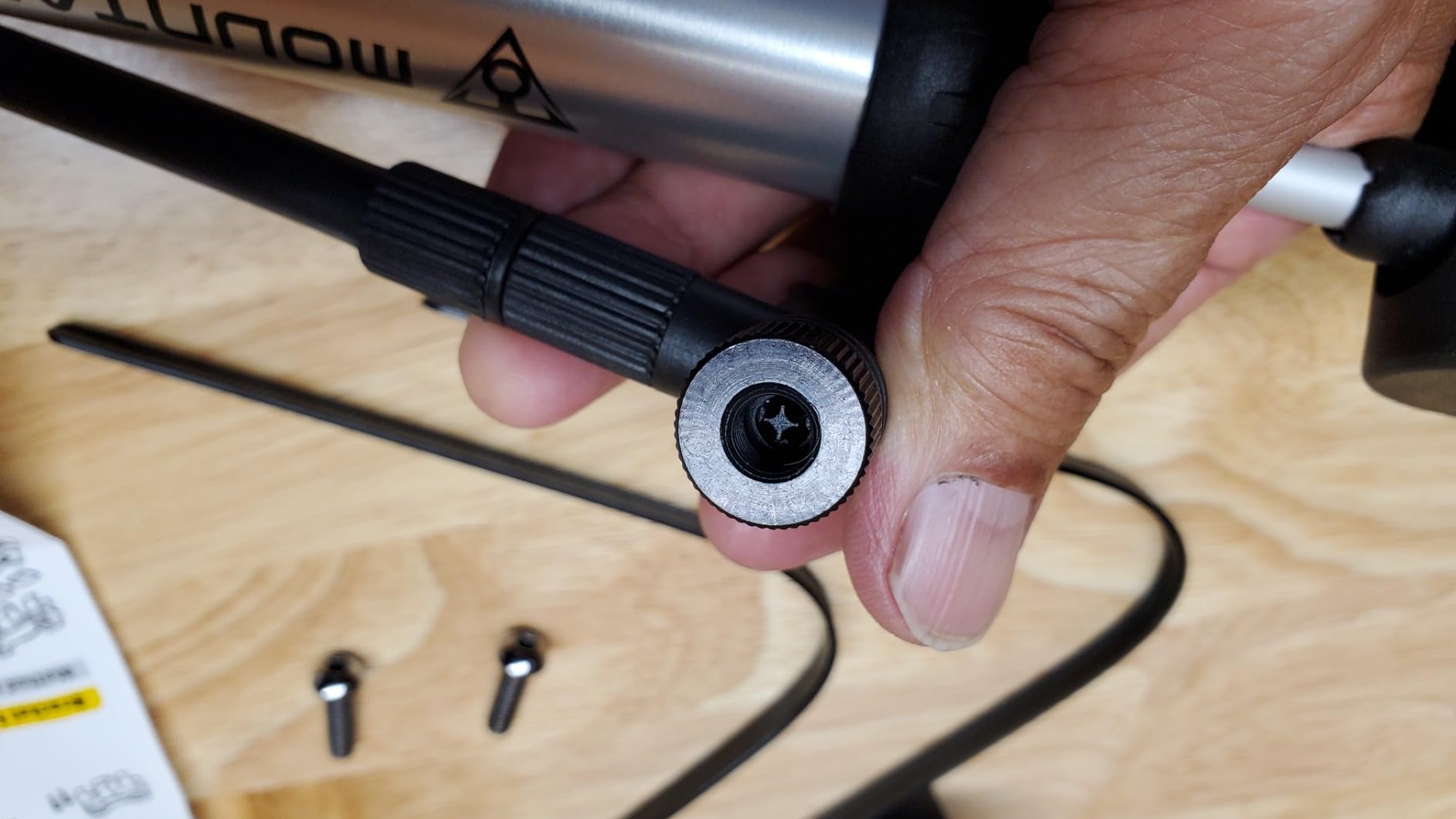
Where it shines is volume. At 101 cc per stroke it moves a lot of air for its size, which is why MTB and gravel riders value it for wide casings. The smart head fits Presta, Schrader and Dunlop without adapters, and the included centerline mount bracket lets it live on the bike frame between uses.
The flexible hose and fold-out foot pad are small details that matter more than they sound. They let you pump a tire that is lying on its side or in a stand, and they keep the barrel from rocking on gravel or a driveway where a wide cast base would tip.
Owners rate the value highly, especially considering what the other portable options cost. The trade-off is honest: at 160 PSI this is a volume pump, and the aluminum barrel gives less solidity under hard high-pressure pumping than the steel options in this roundup.
Can it seat a tubeless tire on its own
For gravel and MTB casings up to about 2.5 inches, yes, with reasonable effort. The volume per stroke is more than adequate for the job, and the fold-out foot pad keeps it stable while you do it. Riders report fast inflation on wide tires as the standout quality.
For road tires at 80 to 100 psi you would be leaning on a light aluminum barrel for a long time, and reviewers specifically note that it is not a road-tire pressure pump. Treat the two jobs as different tasks for this pump.
When to choose something else
Choose a full floor pump if you inflate road tires often, if you want a large base for smooth-floor stability, or if you want a gauge you can read comfortably at low pressures. This one is for volume, portability and storage footprint.
5. Beto Universal 160 PSI Floor Pump – The Gauge and Hose Per Dollar Pick
Beto Bike Pump Portable with Presta Schrader Dunlop Valve Universal 160 Psi
2.5 inch top-mounted gauge
160 PSI max
47.2 inch hose
AH4 auto-head
1.54 kg
Pros
- High-mounted 2.5 inch gauge is readable without crouching
- Movable red reference pointer lets you mark your target pressure
- AH4 auto-head locks onto Presta and Schrader with no adjustment and does not leak
- 47.2 inch hose is among the longest available
- Built-in red air bleed button allows fine corrections without disconnecting
- Steel barrel and wide stable base
Cons
- Unlock lever is long
- heavy and spring-loaded so fingers can get caught
- Gauge precision is good rather than fine-grained
- Larger than expected overall size
The Beto is the one that made us reconsider our assumption that value pumps have vague gauges. The 2.5-inch dial is mounted high on the barrel so you read it standing up, and a movable red reference pointer lets you set your target once and stop guessing. For gravel tubeless work where you are chasing a specific psi, that pointer is a genuinely useful bit of design.
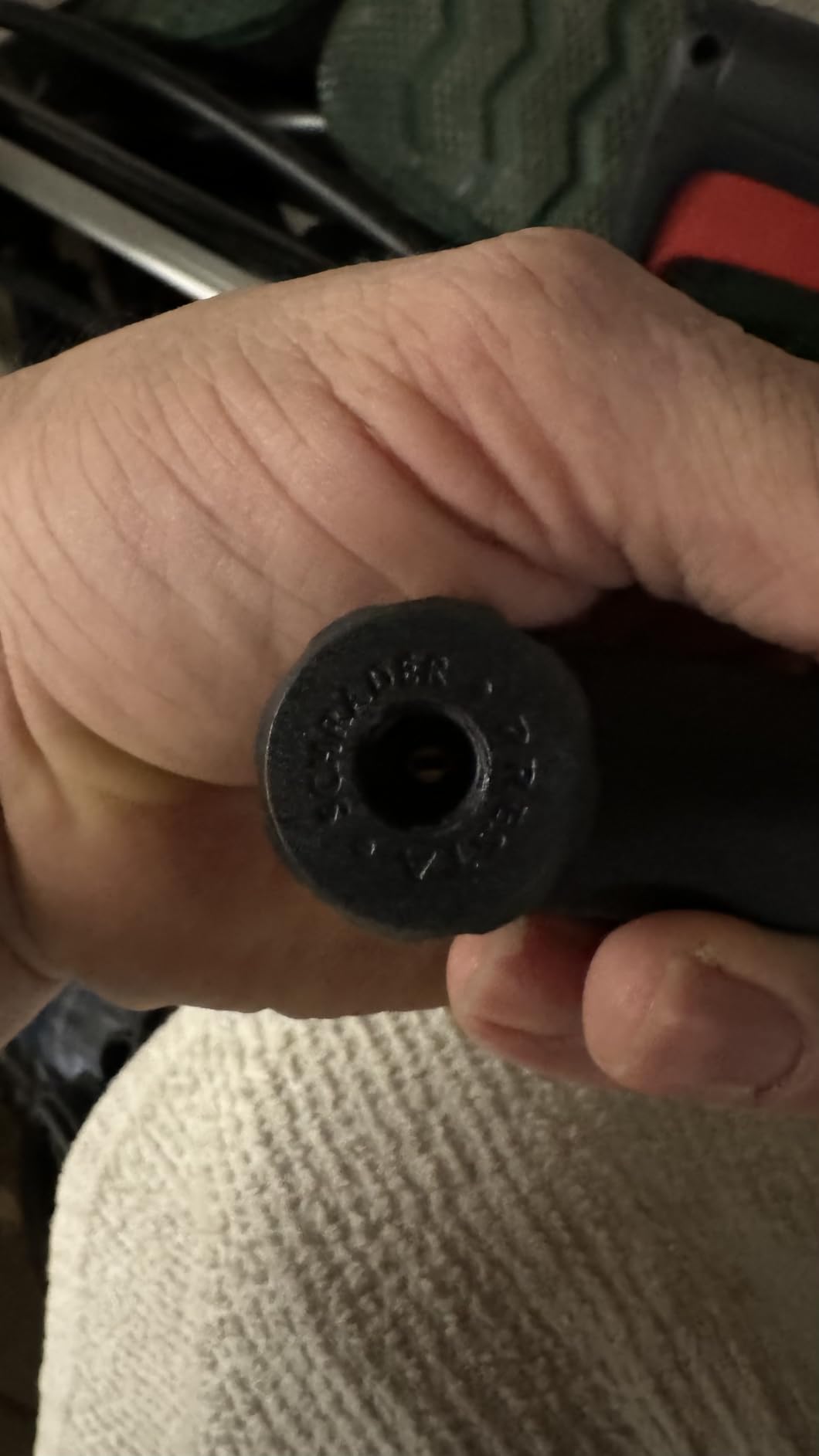
The AH4 auto-head is the other standout. It locks onto both Presta and Schrader with no adjustment and, according to owners, does not leak. A built-in red air bleed button lets you bleed pressure back in small corrections without disconnecting the head, which is exactly what you want when a tubeless tire is a psi or two over.
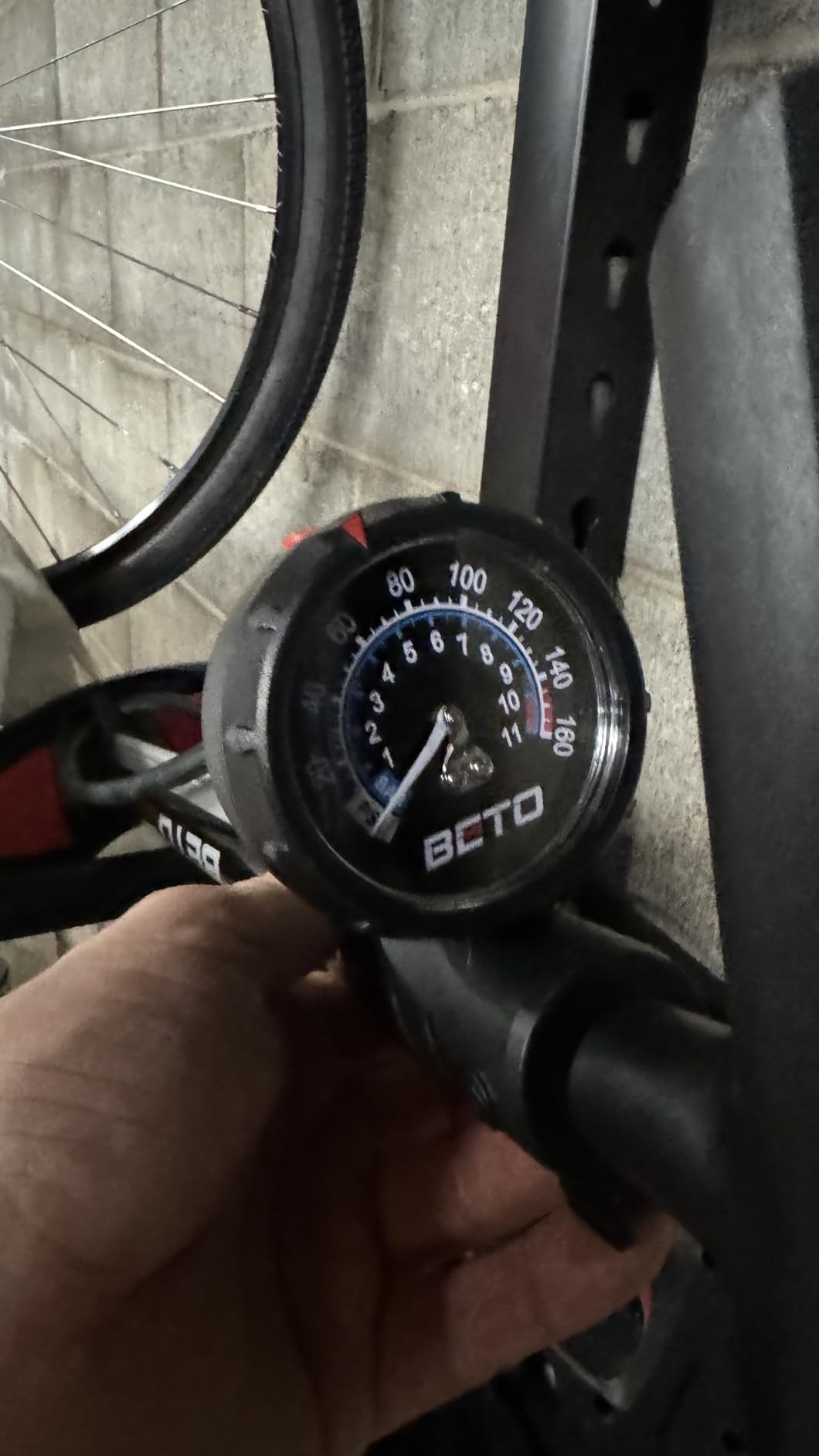
At 47.2 inches, the hose is among the longest in this roundup, and it originates near the top of the pump so it reaches valves high on a bike in a stand. The ball needle stores inside the handle, and the wide steel base with an anti-skid handle keeps it planted during long sessions.
Owners call the build quality excellent for the money, and it is the lowest-cost option here that still gives you a top-mounted gauge and a universal head. Steel barrel, wide stable base, 160 PSI ceiling, 1.54 kg total weight.
The recurring complaint is the locking lever. It is long, heavy and spring-loaded, and owners warn that fingers can get caught in it. That is worth knowing before you hand it to someone in your household. Gauge precision is described as good rather than fine-grained, so if you need to hit an exact low pressure, dial in a second opinion.
Is the gauge good enough for gravel tubeless pressures
It is good enough for the 25 to 35 psi gravel range, and the red reference pointer makes it more practical than many competitors at a similar tier. The dial is high-mounted, which removes the crouching that makes gauge accuracy irrelevant.
It is not a fine-resolution instrument. If you are comparing pressures across three setups to tune tire feel, the Lezyne models with 3.5-inch dials or the Zefal with its magnifier are the ones to consider instead.
Who should look past it
Anyone with small children or pets and a habit of reaching for the head, and riders who inflate road tires above 160 PSI. The stiff lever is a usability hazard, not a deal breaker, but it is the first thing owners mention in reviews.
6. Lezyne Classic Floor Drive 3.5 – Best Value Road Pressure Pump
LEZYNE Classic Floor Drive 3.5 High Pressure Bicycle Pump
220 PSI max
3.5 inch analog gauge
Threaded ABS-1 Pro chuck
Steel and aluminum
3.1 lb
Pros
- Threaded screw-on chuck makes a secure leak-free connection that stays on the valve
- Very little air escapes when the head is unscrewed
- 220 PSI reached with minimal effort
- Oversized 3.5 inch gauge is easy to read standing up
- Switching Presta to Schrader is an unscrew and flip
Cons
- Several owners measure the gauge reading 8 to 12 PSI high
- Over-tightening can pull a Presta valve core out of the stem
- Will not fit non-threaded long valve stems on some deep-dish rims
- Occasional reports of failure after a few years
A large body of owners treats the Classic Floor Drive 3.5 as the reference screw-on floor pump, and the reason is the head. The threaded ABS-1 Pro chuck screws on and stays on, so very little air escapes when you remove it, which matters more for tubeless than for clinchers because every escaping bit of pressure helps the bead lose its grip.
The 220 PSI ceiling comes easily thanks to the small-diameter barrel, and the oversized 3.5-inch analog gauge is the largest dial in this roundup. You read it from standing, and the small-diameter barrel means reaching 100 psi is not a workout. Steel and aluminum construction, stable base and a varnished wood handle round out a build that feels considered.
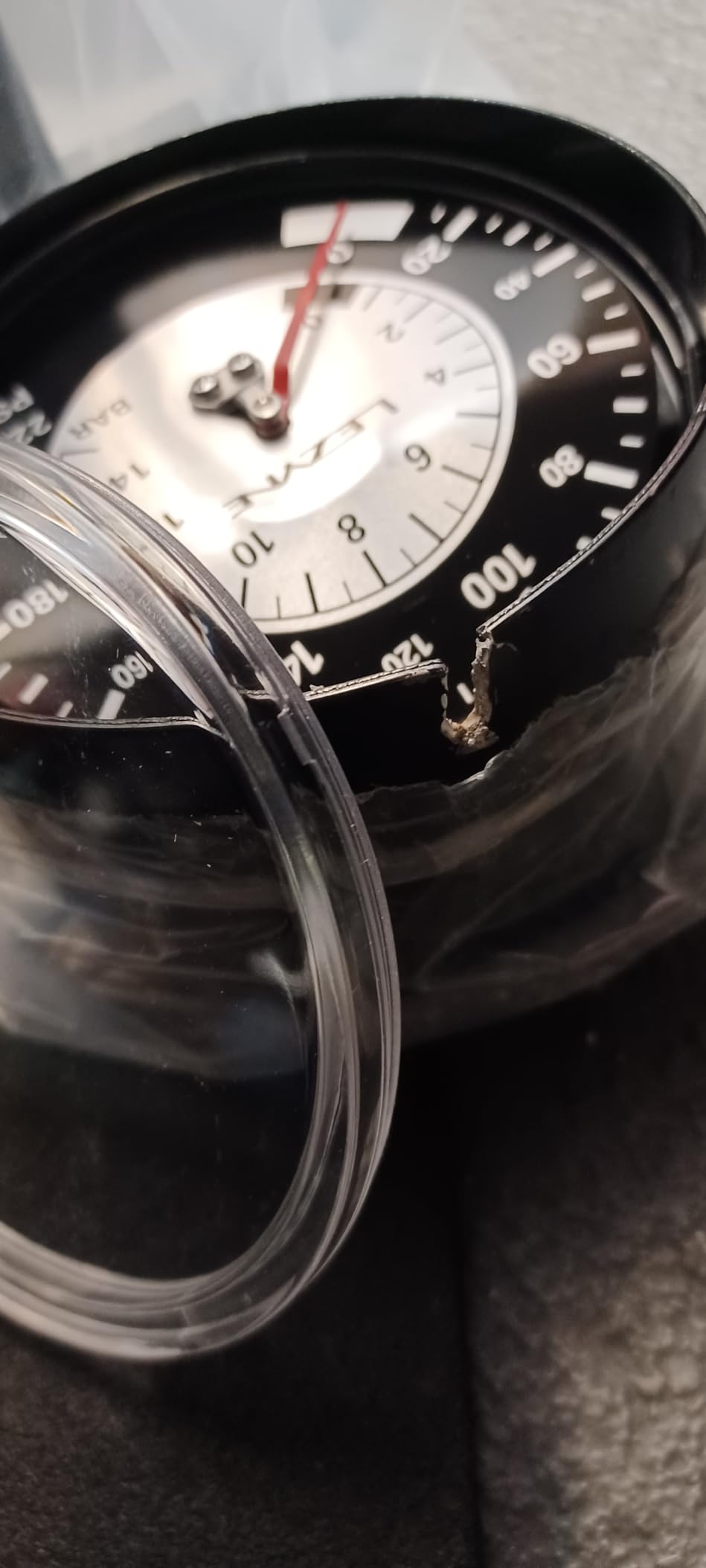
There is a real measurement complaint here, though, and we would rather name it than bury it. Several owners measure the gauge reading 8 to 12 PSI higher than actual. If you are dialing in a specific low tubeless pressure, treat the gauge as a relative indicator and confirm with a standalone gauge the first few times.
Two other quirks are worth knowing. Over-tightening the head can pull a Presta valve core out of the stem, and it will not fit non-threaded long valve stems found on some deep-dish rims. There are also occasional reports of failure after a few years of use, though the average rating across a very large review base stays solid.
Is it suitable for tubeless
Yes for gravel and road casings, with one adjustment to how you use it. The secure threaded head is genuinely helpful for tubeless because a leak-free connection keeps the pressure you just added inside the tire while the bead settles. The barrel volume is modest, so a wide MTB casing takes more strokes than a high-volume pump would need.
For gravel at 25 to 35 psi the 3.5-inch dial is the best in this group to read at a glance, and the wood handle makes long sessions comfortable. Just verify the gauge offset once against a known pressure.
What it is not
It is not the pump for sealing a 2.5-inch MTB bead on a stubborn rim, and it will not fit some non-threaded deep-dish valves. If either of those describes you, the high-volume or holding-chamber options fit better.
7. Lezyne Sport Floor Drive 3.5 – High Pressure With a Composite Base
LEZYNE Sport Floor Drive 3.5 High Pressure Bicycle Floor Pump
220 PSI / 15.2 bar max
3.5 inch analog gauge
ABS-1 Pro chuck
1432 g
Steel barrel
Pros
- Threaded screw-on chuck is leak free and protects valve stems
- 220 PSI reached with little effort from the narrow barrel
- Oversized 3.5 inch gauge calibrated in-house for accuracy
- Extra-long hose reaches bikes on the ground
- in a stand or on a rack
- Unscrew and flip head converts between Presta and Schrader
Cons
- No hose clip
- so the long hose flops or must be strained for storage
- Composite base lacks the solid steel feel some buyers expected
- Arrives with no instructions and the head swap is not self-evident
This is the Sport version of the Lezyne floor pump, and the practical difference is the base material. The Composite Matrix base is lighter and cheaper than machined metal, while the barrel and piston stay steel, so the high-pressure work is still done by the right part. At 1432 g it is noticeably easier to shift around a garage than the Classic model.
Everything that matters for pressure work is there. A 220 PSI / 15.2 bar ceiling, a 3.5-inch analog gauge calibrated in-house, and a narrow barrel that reaches those numbers with little effort. The extra-long high-strength hose reaches a valve whether the bike is on the ground, in a stand or on a hitch rack, which covers most home setups.
The ABS-1 Pro chuck is the same threaded design as the Classic, and owners rate it as leak-free and kinder to valve stems than a lever head. Unscrewing and flipping converts between Presta and Schrader in a few seconds, so a mixed-valve household is not a problem.
The most repeated design complaint is the missing hose clip. Without somewhere to clip it, the long hose either flops on the floor or has to be strained over the handle for storage, which ages the hose over time. Some buyers also find the composite base lighter in feel than the price implies, and there is no instruction sheet in the box.
Is it a good tubeless pump
For gravel and road tubeless it is excellent, particularly if you appreciate a gauge calibrated in-house and a chuck that does not leak. The leak-free connection is the feature that helps most when a bead is trying to settle.
For wide MTB casings the modest per-stroke volume means more work than a dedicated high-volume pump. The acceleration is fine, so it is about repetition count rather than strength.
Who should buy the Classic instead
Buy the Classic if you want a solid steel base and a storage clip, or if you are the sort of owner who opens the box and wants instructions. Otherwise this model delivers the same pressure capability at a lower weight.
8. Zefal Profil Max FP60 Z-Switch – Best for Three-Valve Households
Zefal Profil Max FP60 Z-Switch Floor Pump – Black – 12 Bar High-Pressure with Beech Wood Handle, Presta, Schrader, Large Base & Magnifying Gauge
12 bar / 174 PSI max
70 mm gauge with magnifier
Z-Switch for three valves
Beech wood handle
Pros
- Z-Switch lever handles Presta
- Schrader and Dunlop without swapping heads
- Magnifying lens on the 70 mm gauge makes fine readings easy
- 12 bar ceiling covers road
- gravel and MTB pressures
- Sustainably sourced French beech wood handle
- Anodized aluminum barrel with reinforced composite base
Cons
- 174 PSI ceiling is lower than the 220 PSI pumps in this group
- Lowest average rating in this roundup with a 7 percent one-star share
- Listed item weight of 200 g looks inconsistent for a full-size floor pump
- Z-Switch head is bulkier than a simple lever chuck
The Zefal’s distinguishing feature is the Z-Switch. One lever toggles between Presta, Schrader and Dunlop without unscrewing or swapping the head, which makes it the cleanest option here for a household with a mix of bikes, an older French or Italian tubeless setup, and a commuter with a Dunlop valve.
The 70 mm gauge has a built-in magnifying lens, and that is a clever solution to the low-pressure readability problem. Rather than making a huge dial, the lens lets you read the lower numbers in fine detail, which is precisely the range gravel tubeless tires live in. 12 bar / 174 PSI covers road, gravel and MTB pressures comfortably.
The beech wood handle is sustainably sourced French wood and genuinely comfortable, and the anodized aluminum barrel with reinforced composite base looks better than most of the field. Air flow capacity is listed at 100 cl per second, a healthy figure for a high-volume-leaning pump.
Now the honest parts. The 174 PSI ceiling is below the 220 PSI models here, so serious road riders will feel the limit. This pump also carries the lowest average rating in the roundup with a 7 percent one-star share, and the listed item weight of 200 g looks inconsistent for a full-size floor pump, so check the packaged weight yourself.
Is the magnifying gauge useful for tubeless
It is the most interesting answer in this roundup for low-pressure work. Instead of a large dial with coarse low-end graduations, the lens gives you magnified detail exactly where gravel and MTB tubeless pressures sit.
It does not solve resolution on road pressures, where you are reading high on the scale anyway. For those, a 3.5-inch dial is easier at a glance.
Where it falls short
The Z-Switch head is bulkier than a simple lever chuck, and some owners prefer the simpler mechanism. If your bikes are all Presta, the multi-valve convenience is dead weight and the 174 PSI ceiling is the more relevant compromise.
9. Lezyne Pressure Over Drive – The Holding-Chamber Pump With Real Usability Trade-Offs
LEZYNE Pressure Over Drive Analog Floor Pump
220 PSI / 15.2 bar max
Pressurised chamber, foot lever
2.5 inch gauge
ABS-1 Pro chuck
Pros
- Pressurised chamber released by a foot lever seats stubborn beads quickly
- Owners report seating 29er and 27.5 tubeless setups that defeated a floor pump plus bottle
- 2.5 inch gauge is large
- accurate and easy to read
- Aluminum base and steel barrel that do not wobble under hard pumping
- Braided nylon-reinforced hose reaches bikes in stands or on racks
Cons
- Poor as a routine top-off because the chamber must be pressurised before any air flows
- Chamber and tire pressures equalise so you guess the target and check the result
- A three-way valve and a low-range secondary gauge would make it far more usable
- Highest one-star share of any pump in this roundup
This is the dedicated tubeless design in the group, and the mechanism is the same idea as the JoeBlow Booster: a secondary chamber you pressurise and then dump into the tire through a stainless steel foot lever. Riders focused on tubeless credit it with seating hard beads that other pumps could not, including 29er and 27.5-inch setups that defeated a standard floor pump plus a CO2 bottle.
The build is good where it counts. Aluminum base, steel barrel and piston, and a braided nylon-reinforced hose that reaches bikes in stands or on racks. The 2.5-inch analog gauge is calibrated in-house, includes a chuck bleed button for fine adjustment, and the ABS-1 Pro Tubeless chuck fits Presta and M6x0.8 valves.
Here is the problem, and it explains the rating. This is a poor routine top-off pump. The chamber has to be fully pressurised before any air flows to the tire, and chamber and tire pressures equalise, so you are guessing your target and then checking the result. A three-way valve to cut out the chamber, and a low-range secondary gauge, would transform how usable it is day to day.
It also carries the highest one-star share and the lowest average rating in this roundup. Individual reports include the chamber self-relieving above 200 PSI as a safety design, and the head pulling Presta valve cores out when unthreaded. Once practiced, owners do report that converting to tubeless becomes quicker than swapping clincher tires.
Is a holding chamber actually necessary
No, and this pump is the proof. A high-volume floor pump in this roundup will seat most casings with technique, and the community technique of charging a large chamber to 80 to 90 PSI before letting it into the tire gets you most of the way with no purchase at all.
A holding chamber earns its place when you routinely work on stubborn beads, offset rims or plus-size casings and you have failed with a conventional pump. It is a problem-solving tool, not a default one.
Who should skip it
Skip it if your tubeless is already seating fine, because the daily inconvenience is real. Also skip it if you top up tires often, or if you want precise low-pressure readings from the main dial.
Floor Pump vs Air Compressor for Tubeless Tires
A floor pump wins on cost, storage and control, and an air compressor wins on raw speed and on tires you refuse to let go of. For most riders setting up tubeless at home, the floor pump is the better tool, which is why the most-viewed thread on this question settles on a floor pump with a decent chamber.
Where a floor pump is better: it costs a fraction of a compressor, it is quiet, it stores in a corner, and the gauge is part of the pump so you can measure as you go. It also gives you a controlled, moderate flow that lets you feel the bead pop rather than blasting past it.
Where a compressor is better: filling a very wide casing from flat, reseating a bead repeatedly in one session, and inflating multiple bikes in a shop. It also wins if your floor is uneven, since a compressor sits on a bench rather than needing a stable base.
The honest reason people buy compressors is frustration. When a tire will not seat, a compressor feels like the answer, but the actual failure is usually technique, rim tape, bead seating and tire fit rather than lack of air. Fix those first.
The rest of the garage kit matters too: our best bike locks reviewed covers what secures the bike while the pump is out, and our best bike lights roundup covers the rides that end after dark, when a slow pump in a dim garage is a bad combination.
How to Seat a Tubeless Tire Without Buying an Expensive Pump
You can seat a tubeless tire with a high-volume floor pump and no dedicated chamber, and the sequence matters more than the pump. Work in this order and most casings that look impossible will pop in.
1. Inspect the tire and rim. Check the casing for cuts or trapped objects, run a finger around the bead, and confirm the tire is seated evenly on the rim with no flat spots or bulges.
2. Check your rim tape. It must cover the spoke holes completely and sit flat. Lumpy or narrow tape is the single most common reason a tubeless bead will not seat, and it is worth peeling it off and inspecting before every attempt.
3. Soak both beads with soapy water. A drop of washing-up liquid and water on each bead massively reduces friction and lets the bead slide into the well. Wipe it off afterward so it does not contaminate your sealant.
4. Set the tire up evenly. Work the bead on by hand around the whole rim, starting opposite the valve and finishing at the valve, with the last section as close to final as you can manage.
5. Inflate in one steady push. Seat the pump on the floor, put the valve at the bottom of the stroke, and push steadily rather than in short bursts. Steady pressure is what pulls the bead into the well.
6. Use the tank technique on stubborn setups. As described on mtbr, get the floor pump chamber or the holding chamber to 80 to 90 PSI first, then release it into the tire. That burst is what seats plus-size casings that a standard pump struggles with.
7. Use the tube method as a last resort. Riders on r/Hardtailgang report that an inner tube with the valve removed works extremely well on stubborn or offset rims with a standard floor pump. It costs almost nothing and it works far more often than people expect.
8. Add sealant once the bead is seated and let the tire rest before riding. A tire that pops and then slowly goes soft again usually means a pinhole leak, not a seating failure.
What to Do When Your Tubeless Tire Will Not Seat
Work through these in order and stop at the first fix, because each step is cheaper than the next. Most failures come down to friction, rim tape or tire profile rather than a lack of air.
1. Drop the pressure completely. Start from zero, not from whatever remains in the tire.
2. Re-soak both beads with soapy water and try again.
3. Check the tire profile. A visibly oval or misaligned tire on the rim will not seat at any pressure.
4. Remove and inspect the rim tape. Replace anything lumpy, narrow or badly adhered.
5. Try the tube method with the valve core removed. This resolves a surprising share of failures, especially on offset rim designs.
6. Inflate a large chamber to 80 to 90 PSI and release it into the tire in one burst.
7. Only then consider a holding-chamber pump. If you reach this point repeatedly with the same rim and tire, the hardware is the problem, not the technique.
How to Choose a Floor Pump for Tubeless Tires
Choose by pressure range first, volume second, head third, gauge fourth, base fifth. That order reflects how often each feature decides whether the job gets done, and it stops you over-paying for a holding chamber you will use once.
High volume versus high pressure
High-volume (HV) pumps use a wide barrel that moves a lot of air per stroke at moderate pressure. High-pressure (HP) pumps use a narrow barrel that reaches 160 to 230 PSI with modest effort. Tubeless wants HV because seating is a volume problem, which is why the volume figure in the comparison table is the number to read first.
Road riders who top up at 80 to 100 psi need HP, and can often get away with a generalist pump that does both. The Lezyne 3.5 models here are pure HP, the JoeBlow Sport III sits in between, and the Mountain Morph is HV-leaning with a 160 PSI ceiling.
Do you need a dual-chamber or holding-chamber pump
No, not usually. A holding chamber stores air you pressurise in advance and release in a burst, which gives the bead one decisive push. It is faster and more reliable on stubborn setups, and it is completely unnecessary on easy ones.
Two pumps in this roundup have a real holding chamber. Buy one if tubeless work is a regular part of your week and you have repeatedly failed with a conventional pump. Otherwise the high-volume route plus the 80 to 90 PSI tank technique is enough.
Valve compatibility
Presta is the standard on modern bikes and tubeless rims use Presta almost universally. Schrader is the wider, older style you find on some commuter and kids bikes, and Dunlop appears on older French and Italian setups. Heads that handle all three remove a whole category of annoyance.
Two caveats: the JoeBlow Booster head is reported by some owners not to fit Schrader without an adapter, and both Lezyne screw-on chucks can pull a Presta valve core out if you over-tighten. Never force a head onto a valve it does not fit.
Gauge accuracy and readability
Gauge readability matters more than accuracy for most riders, because you cannot act on a number you cannot see. Large top-mounted dials read well while standing, which is why the 3-inch JoeBlow gauge, the 2.5-inch Beto and Zefal dials and the 3.5-inch Lezyne dials are all in this list.
Accuracy is the second question. The Lezyne Classic is reported by several owners to read 8 to 12 PSI high, so verify it once against a known pressure. The Zefal’s magnifier solves low-end readability in an unusual way, and the Beto’s red reference pointer is the most practical feature for a target pressure you set once.
Materials, base and storage
Steel barrels feel solid and last, which is why the JoeBlow Sport III and the SKS Rennkompressor are the two that carry the highest review counts here. Aluminum and composite barrels are lighter and cheaper, which is the right trade for a portable pump or a small garage.
Base stability is what actually matters on a smooth floor. A wide cast base, like the SKS, or folding feet, like the Rennkompressor, will not rock. A small rigid base, like the Booster’s, needs flat smooth ground to stay put. And if storage is tight, check the folded height before you buy, because these pumps range from 250 g portables to 2.9 kg garage fixtures.
Frequently Asked Questions
What kind of pump do I need for tubeless bike tires?
A high-volume floor pump with a large air chamber per stroke and a wide, stable base. Seating a tubeless bead takes air volume, not just pressure, so a wide-barrel HV pump reaches the pressure you need to collapse the tire and pop the bead into the rim well. A dedicated holding-chamber pump is optional, not required.
What is the best floor pump for tubeless biking?
For most riders, the Topeak JoeBlow Sport III is the best bike floor pump for tubeless tires: it moves 318 cc per stroke, has a large top-mounted gauge, fits Presta, Schrader and Dunlop, and has a steel barrel that survives hard pumping. If your beads repeatedly refuse to seat, a stored-air-chamber model such as the JoeBlow Booster is the specialist answer.
Do I need a special pump for tubeless tires?
No. A high-volume floor pump seats most tubeless tires, and the community technique of charging the chamber to 80 to 90 PSI before releasing it into the tire gets stubborn plus-size casings seated without any special hardware. Buy a holding-chamber pump only if you hit a wall repeatedly with the same rim and tire.
Floor pump or air compressor for tubeless tires?
A floor pump for most home mechanics. It costs far less, stores in a corner, runs quietly, and its gauge lets you control the flow so you can feel the bead pop. A compressor is faster for filling a very wide casing from flat and for inflating several bikes, but most seating failures are caused by rim tape, bead friction or tire profile rather than a lack of air.
How much pressure does it take to seat a tubeless tire?
With a good high-volume floor pump, most 32mm gravel and 2.5-inch MTB casings seat with a steady full-pressure push from zero. For stubborn setups, forum technique is to charge the pump chamber or a holding chamber to 80 to 90 PSI and release it into the tire in one burst, which seats plus-size casings that a normal stroke cannot.
The Best Bike Floor Pump for Tubeless Tires in 2026
The Topeak JoeBlow Sport III takes our best bike floor pump for tubeless tires recommendation because it does the volume job properly, fits every valve without an adapter, and has the longest track record of anything in this roundup. At 318 cc per stroke it out-pumps the road pumps here, and a steel barrel means it does not flex when you lean on a stubborn bead.
If your problem is stubborn setups rather than general use, the Topeak JoeBlow Booster is the specialist pick, and the Lezyne Pressure Over Drive is the other stored-chamber option. If your problem is road pressures, either Lezyne 3.5 model reaches 220 PSI with the largest gauge in the group. If storage is the constraint, the Topeak Mountain Morph gives floor-pump effort at 250 g, and the Beto is the value pick with the most useful gauge features at the entry tier.
Whatever you choose, start with the technique: inspect the rim tape, soak the beads, set the tire up evenly, and push one steady stroke. The pump matters far less than those four steps, and our bike pump guide covers the portable options worth keeping in a jersey pocket alongside whichever floor pump you settle on.