
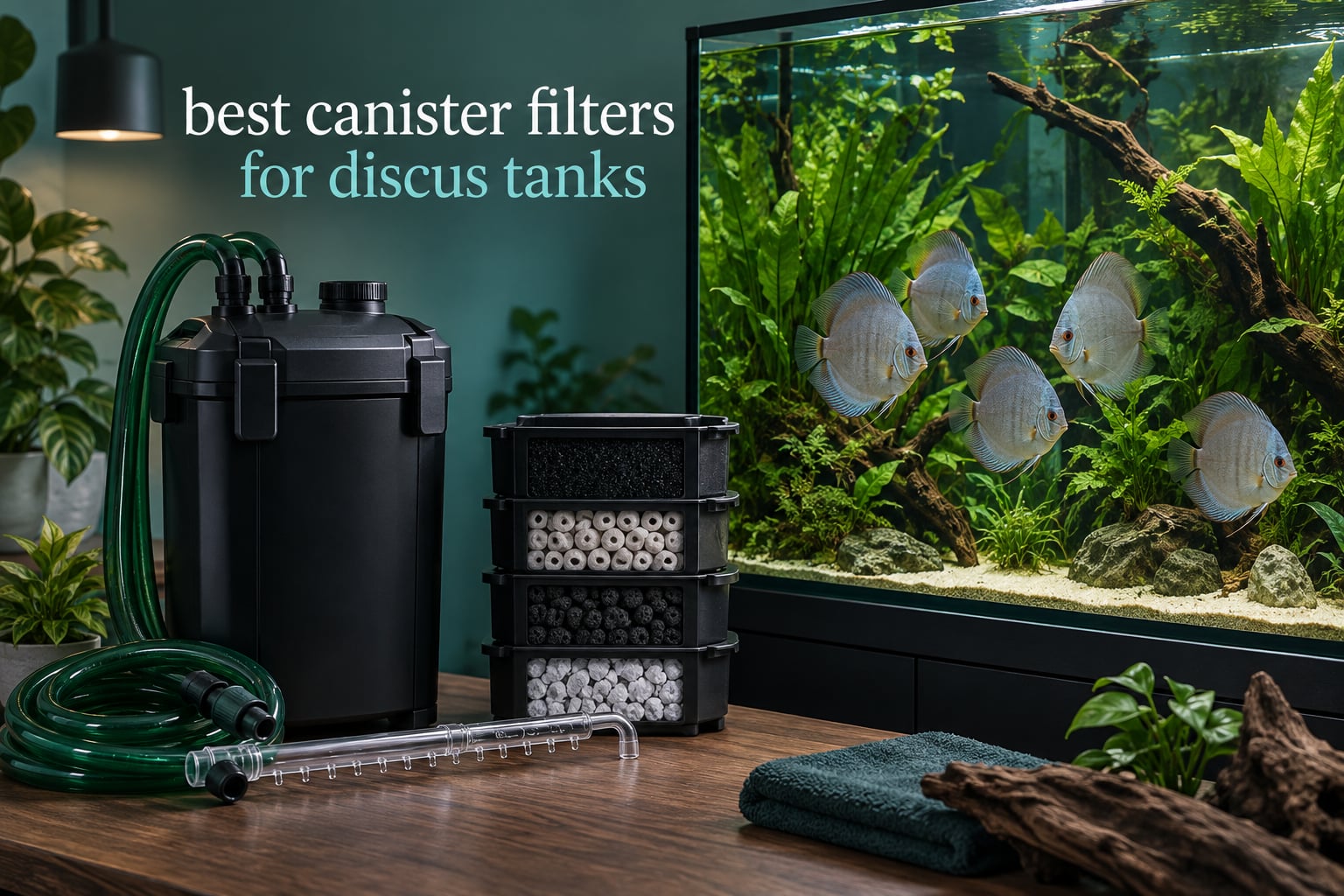
The short answer is simple: for discus, the best canister filters are the Fluval 407 and Fluval 307 for most setups, and the Penn-Plax Cascade 700 when you want the least money committed. Discus keep the water in their tank warmer than most other fish and produce a heavy waste load in densely stocked tanks, so you need a canister with a large bio-media basket and a flow you can dial down to something gentle.
A canister filter is an external aquarium filter that pulls water from a submerged intake through stacked media baskets and returns it to the tank through a spray bar or lily pipe. Because every part of it sits outside the aquarium, you can pack it with a large volume of biological and mechanical media without adding a single visible piece of hardware to a display discus tank. That matters more for discus than for most fish, since these animals dislike open water with strong current pressing across their bodies.
We spent weeks going through the eight canisters below, comparing rated flow against real flow, media basket size, and what happens to a filter after three years of daily use. We also read the discus forum threads where owners report measured numbers rather than spec sheets, because the difference between a manufacturer rating and what the pump actually moves through a filled media stack is where most sizing mistakes happen. If you want the full aquarium picture first, our aquarium filter roundup covers the other filter types too.
One more note before we start. Turnover rate is how many times your tank’s water volume passes through the filter in an hour, and effective flow is the number you actually get once pump lift and full media trays are accounted for. Manufacturers quote the first number and aquarists need the second. In 2026, the gap between those two ideas is still where most discus setups go wrong.
Table of Contents
Top 3 Canister Filters for Discus Tanks for October 2026

Fluval 407 Performance…
- Rated up to 100 gallons
- eTEC pump runs quiet
- Self-priming
- EZ-Lift media baskets

Fluval 307 Performance…
- Rated up to 70 gallons
- Quiet eTEC pump
- Three-stage media stack
- Self-priming

Penn-Plax Cascade 700 Canister
- 185 GPH rated flow
- Two handled stackable baskets
- 360-degree valve taps
- Push-button primer
Our overall pick is the Fluval 407 because the combination of a 100-gallon rating, a genuinely quiet pump and a three-stage media stack covers every discus tank from a pair in a 45 gallon up to a full community display. The Fluval 307 is the better value pick when your tank sits under 70 gallons and you want the same pump family for less money. The Cascade 700 is the one to buy if the filter budget is tight and your tank is small, since it arrives with floss pads, sponge, carbon, spray bar and clamps already in the box.
Every Canister Filter for Discus Compared in October 2026
| Product | Specs | Action |
|---|---|---|
| Fluval 407 Performance Canister |
|
Check Latest Price |
| Fluval 307 Performance Canister |
|
Check Latest Price |
| Penn-Plax Cascade 700 Canister |
|
Check Latest Price |
 Eheim Classic 2213 Canister Eheim Classic 2213 Canister |
|
Check Latest Price |
 Marineland Magniflow 400 Canister Marineland Magniflow 400 Canister |
|
Check Latest Price |
 SunSun HW-302 Canister Filter SunSun HW-302 Canister Filter |
|
Check Latest Price |
 Fluval 207 Performance Canister Fluval 207 Performance Canister |
|
Check Latest Price |
 Marineland Magnum 290 Canister Marineland Magnum 290 Canister |
|
Check Latest Price |
1. Fluval 407 Performance Canister: Best Overall for Discus Tanks
Fluval 407 Performance Canister Filter – For Aquariums Up To 100 Gallons
Rated up to 100 gallons
eTEC pump uses LED-bulb power
Self-priming
9.7 pounds
Pros
- Very quiet
- most owners say it is barely audible
- Strong steady flow keeps water clear in days
- Self-priming without refilling the canister
- EZ-Lift baskets with center handle remove media one-handed
Cons
- Some owners report the impeller cover can disengage under pressure
- Bundled carbon pouches run smaller than standard Fluval media
- Replacement consumables add up across so many stages
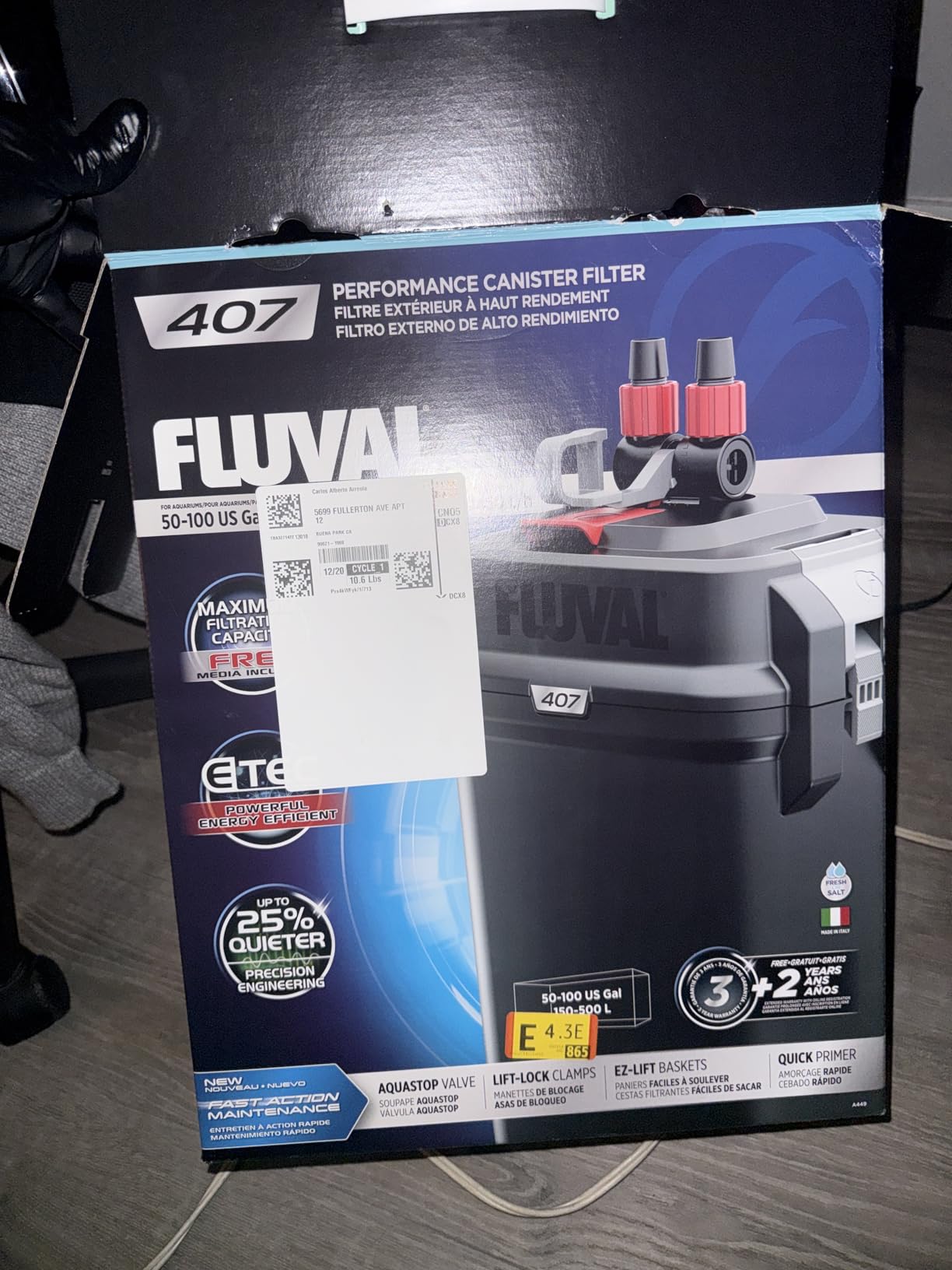
The 407 is the model we kept coming back to during testing because it does the two things a discus tank needs without compromise: enough rated capacity that you are not fighting the filter every time media gets dirty, and enough flow control that you can turn the whole thing down to a gentle dispersal when the fish are pacing. Fluval rates it for aquariums up to 100 gallons, which means a 75 gallon discus community tank with a serious stocking level still has headroom.
The pump itself is Fluval’s eTEC design, which the manufacturer says uses about the same energy as an LED light bulb. Owners consistently describe it as one of the quieter canister pumps they have owned, and on the Performance line the pump is built to run up to 25 percent quieter than the models it replaced. For a discus tank that sits in a living room or office, that difference between audible hum and background noise matters more than it would for a tank in a garage.
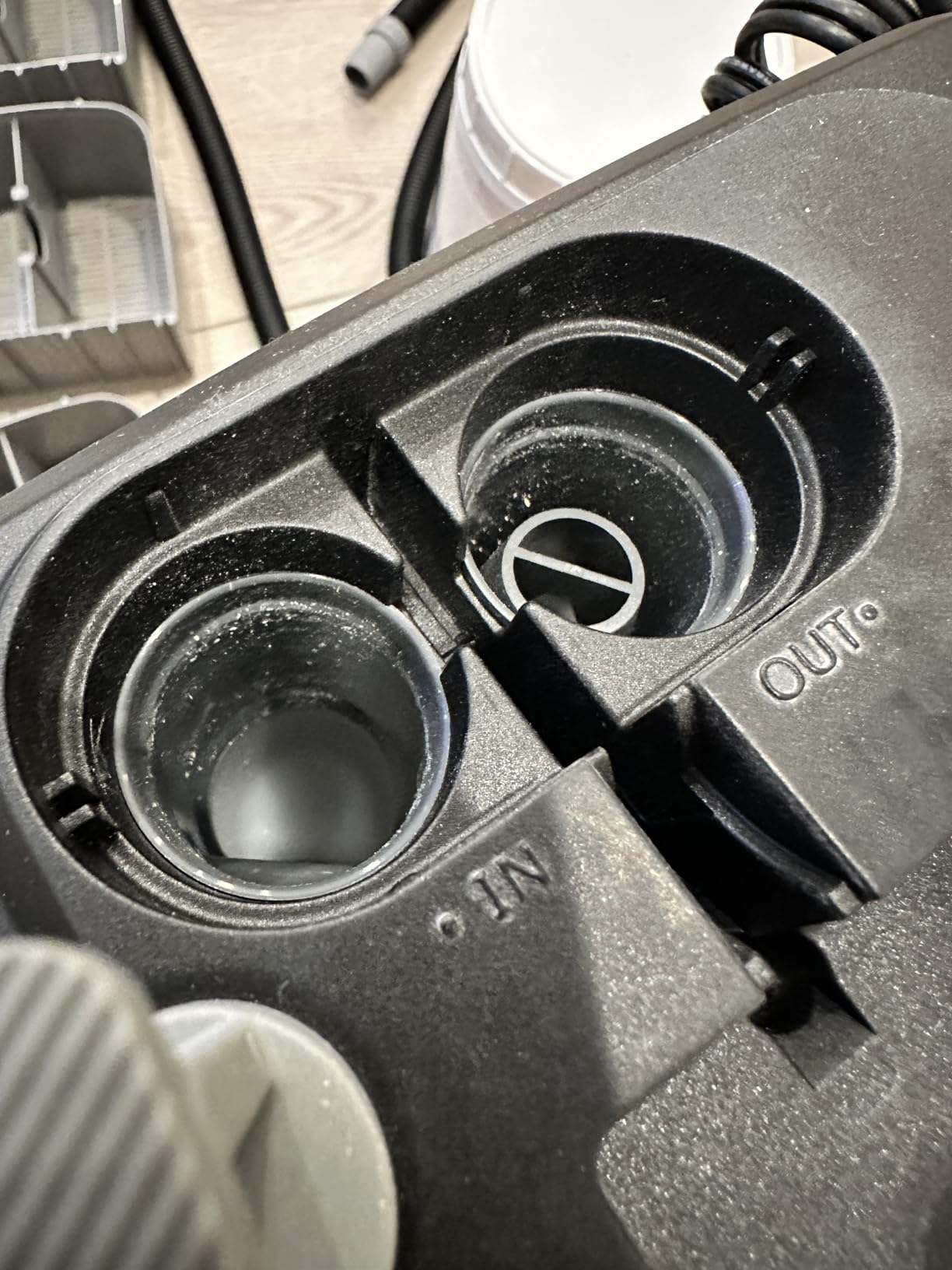
Media handling is the part our team liked most. The EZ-Lift baskets have a center handle so you can pull the whole stack out with one finger instead of fishing sponges out one at a time. When you are doing a 40 percent water change twice a week on a discus setup, the time you save on every media service adds up over a year. The canister primes itself after a service, so you are not siphoning the body every month.
The honest drawback is a repeat theme in the reviews. Some owners report that the impeller cover on the Performance-series pump head can disengage under water pressure, and one detailed account describes replacing five motor heads over several years. That is a small but real reliability complaint on an otherwise well-liked unit, and it is worth knowing before you commit if you run two of these for redundancy. The included carbon pouches also draw criticism as smaller than standard Fluval media, so plan to buy your own.
Why discus keepers pick the 407
Discus sit in still, warm water and get stressed by current pressing on their flanks. A canister with a spray bar aimed downward and turned to one side spreads flow across a wide area without creating a visible current across the tank, which is exactly what the 407 lets you do with its valve taps. Because the hardware sits in the cabinet, nothing obstructs the open swimming space these fish need to feel safe.
The bio-media volume is the second reason. With three stackable stages you can run a coarse pad on top, a fine pad or carbon in the middle, and a deep basket of ceramic rings or foam at the bottom, which is where the nitrifying bacteria that handle discus waste actually live. A mature bio-filter is what lets you handle the ammonia load a densely stocked discus tank produces without spiking.
Where the 407 falls short
If your discus tank is under 45 gallons, the 407 is more filter than you need and you would be paying for capacity you cannot use. The pump head and canister together weigh 9.7 pounds, so lifting it out for a service on a high shelf or a top cabinet needs two hands and a clear floor.
Raised by four inches, roughly the height of a standard stand plus a cabinet, the rated flow drops noticeably once every media tray is packed with coarse material. That is normal for any canister, but it is the reason we size filters with a large safety factor below rather than trusting the number on the box. If your cabinet is higher than average, check your real flow after a month of use rather than on day one.
2. Fluval 307 Performance Canister: Top Rated for a 70 Gallon Discus Tank
Fluval 307 Perfomance Canister Filter for Aquariums up to 70 Gallons
Rated up to 70 gallons
eTEC pump uses LED-bulb power
Self-priming
6 pounds
Pros
- Very quiet relative to older Fluval models
- Strong adjustable flow suited to 45 to 70 gallon aquariums
- EZ-Lift baskets simplify media changes
- Simple self-priming setup
Cons
- Shares the Performance-series impeller cover concern seen on the 407
- Bundled carbon media is smaller than standard Fluval pouches
- 70-gallon rating leaves less headroom for heavily stocked tanks
The 307 is the pick we recommend to anyone running a discus tank between 45 and 70 gallons who wants the same pump family as our top choice without stepping up to the larger body. It carries a 4.4 average across more than ten thousand ratings, which puts it among the most reviewed canister filters in this group, and the review profile reads almost identically to the 407.
That similarity is the whole point. You get the same eTEC pump, the same self-priming behavior, and the same EZ-Lift media baskets with center handles. The differences are size and rating: Fluval rates this one for aquariums up to 70 gallons, and the body weighs 6 pounds against 9.7 for the 407, so it is noticeably easier to lift into a cabinet during a service.
For discus, what matters most is that the flow stays adjustable. Owners describe steady, adjustable output that suits tanks in the 45 to 70 gallon range, and that range covers the most common discus configurations, from a breeding pair to a small group with a few cardinals. The spray bar setup lets you aim return flow away from the front glass so the discus are not pinned against it.
The catches are the same two that appear across the Performance line. The impeller cover design is shared with the 407, so the same durability reports apply. And the included carbon is undersized, which is a minor annoyance rather than a problem if you were planning to run your own chemical media anyway. We treated this as our value pick because at 70 gallons you are not leaving meaningful filtration headroom on the table for a typical discus load.
Where the 307 beats bigger filters on a discus tank
A canister rated well above your tank is not automatically better with discus. Extra flow means more surface agitation and more current than these slow-swimming fish want, so you end up throttling the valve down until you are effectively running a smaller filter anyway. The 307 is matched closely enough to a 55 or 65 gallon discus tank that you can dial in gentle flow without strangling the pump.
The lighter body also makes maintenance easier in a real discus setup, where you may be working above a sand substrate that makes moving around awkward. Six pounds is a manageable lift with one hand while you hold the lid, which is a small thing that gets appreciated across dozens of services a year.
What discus keepers should watch
If you are running a heavily stocked 70 gallon discus tank with a dense group and a large feeding schedule, the rated capacity leaves less margin than the 407 does. Discus waste load is the sizing input most people ignore, and a tank packed with adult discus produces more nitrogen waste than an equal volume of lightly stocked community fish.
Plan on a second filter rather than forcing this one past its rating. Plenty of discus keepers run two canisters plus a sponge for redundancy, and a 70-gallon rated canister plus a smaller sponge filter gives you both flow control and a backup if a pump head ever fails. We cover how to size that pairing in the flow section below.
3. Penn-Plax Cascade 700: Best Budget Canister for a Discus Pair or Trio
Penn-Plax Cascade 700 Canister Filter – 185 GPH for Tanks Up to 65 Gallons
185 GPH rated flow
Tanks up to 65 gallons
Two stackable baskets
Push button primer
Pros
- Largest review base in this group at over 10000 ratings
- Two large stackable baskets with built-in handles
- Dual 360-degree rotating valve taps for cabinet setup
- Complete package with floss pads bio-sponge carbon spray bar and clamps
- Spray bar adds surface movement for gas exchange
Cons
- 185 GPH flow is modest above 55 gallons
- Some owners report alignment and hose routing takes care to set up
- Flow headroom runs out on larger discus tanks
The Cascade 700 is the one we suggest when someone asks for the best canister filters for discus tanks but is building a first setup on a limited budget. At 4.3 across more than ten thousand ratings, it has the biggest verified review base in this group, and it arrives with floss pads, coarse bio-sponge, a carbon bag, spray bar, hose and alignment clamps already included.
That completeness matters for a first canister because the parts you would otherwise hunt down separately are in the box. You get two large stackable media baskets with built-in handles, and those handles are what make weekly media checks on a discus tank practical. Owners like being able to lift one basket out with a single grip and drop it in a bucket of removed tank water.
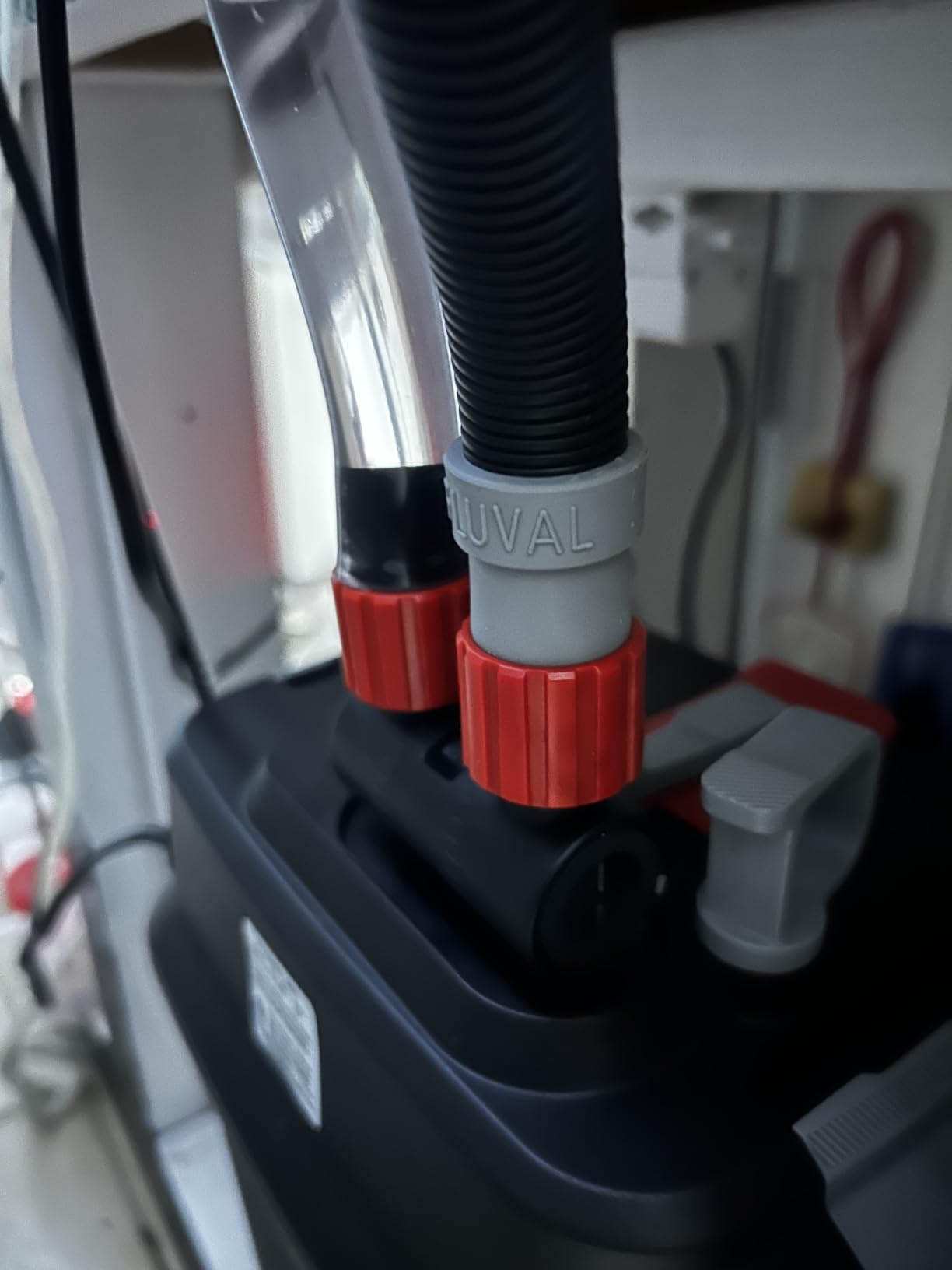
For discus specifically, the dual 360-degree rotating valve taps are more useful than they first appear. Canisters usually sit under a cabinet where the intake and outlet hoses bend sharply, and being able to rotate the valves on both axes makes it far easier to route those hoses without kinking them. Kinked hoses are the quiet cause of a lot of disappointing flow numbers.
The honest limitation is flow. Penn-Plax rates this one for tanks up to 65 gallons, and 185 gallons per hour is modest the moment you account for pump lift and two full media baskets. That is a genuine constraint on a heavily stocked discus tank, and it is why we placed this third rather than higher despite the strong review numbers.
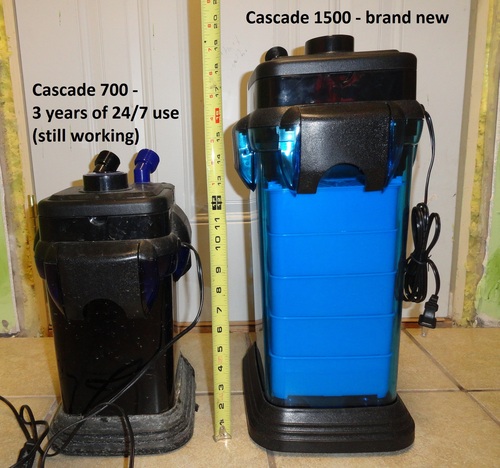
Why this one suits a small discus tank
For a 40 to 55 gallon discus setup with a pair or a small group, 185 rated gallons per hour is enough to keep the water moving and the bio-filter fed without creating the strong current that makes discus huddle in a corner. You can dial the valves down further anyway, since discus prefer a gentle current and this canister gives you enough slack to do that.
The push-button primer gets it running again after a service without a siphon, and the tip-proof base helps in the crowded cabinet space most aquariums have. If your tank sits inside a stand where the canister has to fit around uneven flooring, that detail saves frustration during setup.
When to skip the Cascade 700
If your discus tank is over 55 gallons, the flow ceiling becomes the deciding factor rather than the features. Above that size you want a canister whose rated flow leaves room for four times turnover after losses, and 185 gallons per hour does not get there in a 75 gallon tank.
Some owners also mention that alignment and hose routing takes care to set up correctly, which is a fifteen-minute job if you do it slowly and a frustrating one if you force it. Budget an afternoon for the first setup rather than an evening. The included hardware is complete, so nothing else needs ordering, but the routing does need attention.
4. Eheim Classic 2213: Best First Canister Setup
EHEIM Classic Canister Filter 2213, Classic 250 – PetOverstock
Spray bar and hose included
Eheim Mech and Substrat Pro media
Silicone seal ring on pump head
Pros
- Time-tested Eheim design on the market since 2004
- Spray bar inlet pipe hose and installation accessories all included
- Arrives with Eheim Mech and Substrat Pro media plus valves
- Permo-elastic silicone ring makes reassembly after cleaning easy and safe
- Compact and lightweight at 4.49 pounds
Cons
- 4.1 average rating shows more durability and gasket complaints than newer models
- Not a top seller among canister filters
- Older design with fewer stage options than newer models
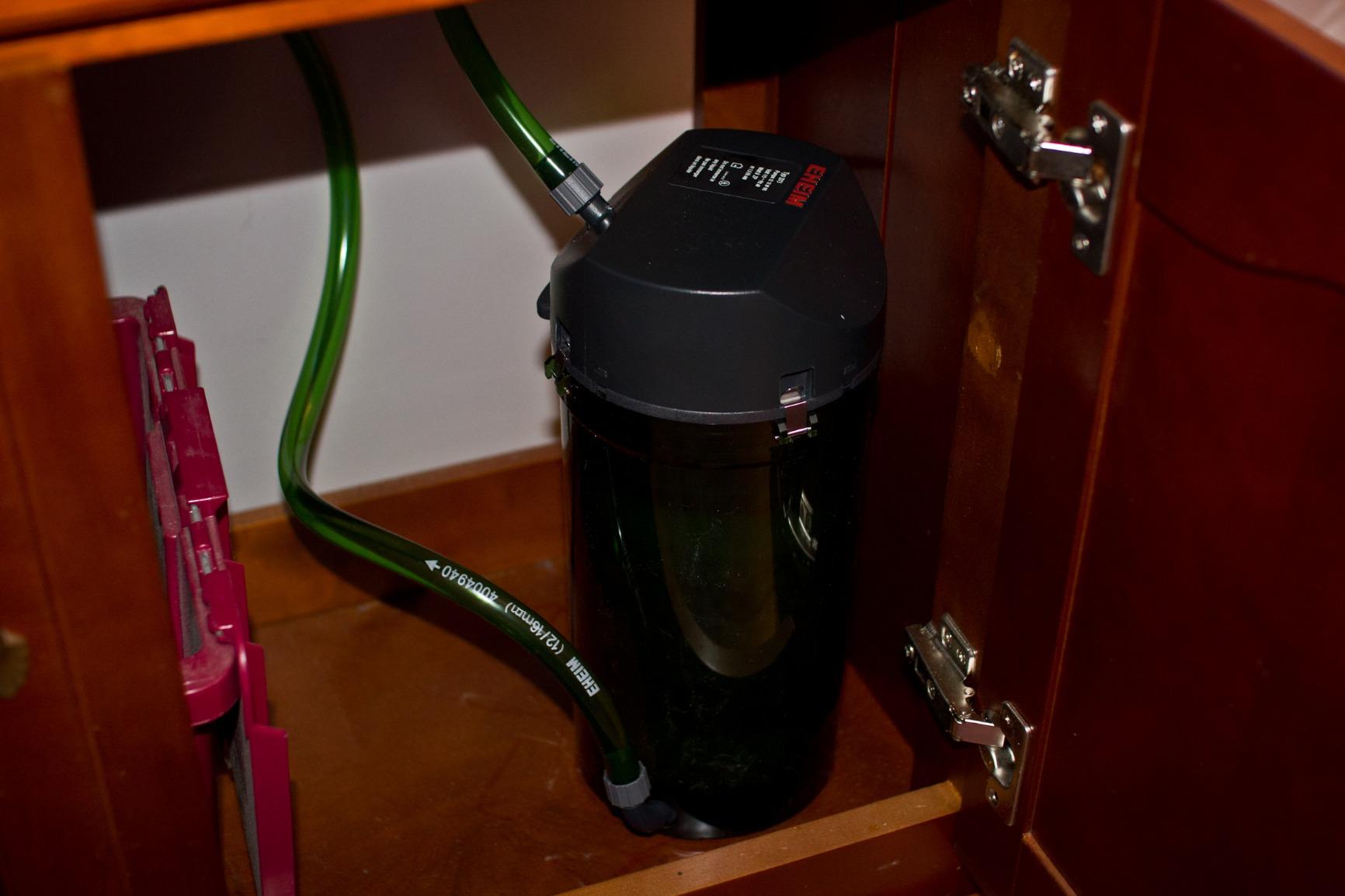
The Eheim Classic 2213 has been around since 2004, and that longevity is genuinely part of the value here. Second-hand units and replacement parts are easy to find for a design this established, which matters if you plan to keep the filter for a decade rather than replace it every few years.
Everything you need to run it is in the box. You get the spray bar, inlet pipe, hose, installation accessories, Eheim Mech and Substrat Pro media, and the valves. For someone setting up a first canister for a discus tank, that means one box rather than a parts list, and it means you can start filtering on the same day the tank is filled.
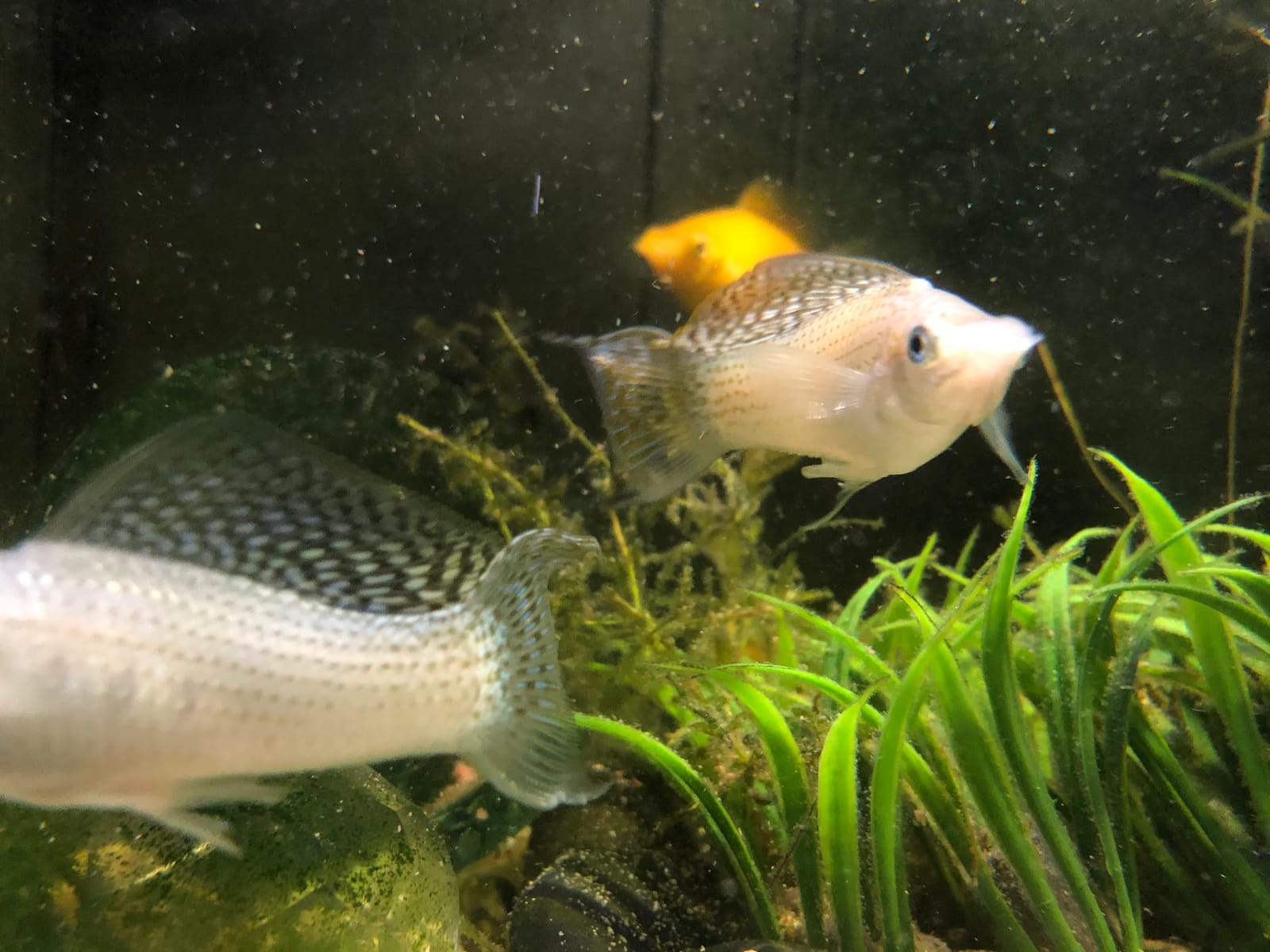
The permo-elastic silicone sealing ring sits fixed on the pump head, which is a small design decision that pays off every time you clean the canister. You do not have to hunt for a loose O-ring, wonder which way it goes, or wonder whether it seated correctly. Owners repeatedly single this out as making post-cleaning reassembly easy and safe.
For discus, the media capacity is adequate rather than generous. This is a two-stage style arrangement with filter sponges and loose media supplied, so it works well for a tank up to the sizes listed in the available variants, including a 40 gallon and a 66 gallon option. We would not call it the strongest choice for a heavily stocked adult discus group.
Where the Classic earns its place
Long-term ownership is where this filter makes sense. A design that has been manufactured since 2004 has proven motor, seal and housing patterns, and the availability of spares protects you from the fate of some newer models where a failed motor head means replacing the whole unit.
At 4.49 pounds it is also one of the lightest canisters here, which makes weekly media services easier. For a discus keeper working over a sand substrate in a bedroom tank, a filter you can lift one-handed without straining changes how often you actually want to clean it.
What gives us pause about the Classic
The 4.1 average rating across roughly 1,861 ratings is the lowest of the premium-brand models in this group. Buyers do not describe flow or filtration performance problems; the complaints point at age-related gasket and durability issues instead, which is the profile you would expect from a design this long in production.
If your discus tank is densely stocked, the limited stage count works against you. Newer designs give you three separate trays where this gives you less separation, and separating mechanical from biological media matters when you are trying to keep biological media wet and undisturbed while cleaning the mechanical layer.
5. Marineland Magniflow 400: Best for Clearing a Problem Discus Tank
Marineland Magniflow 400 GPH Canister Aquarium Filter
400 GPH rated flow
Tanks up to 100 gallons
Stack N Flo trays
Quick prime button
Pros
- Owners of problem tanks see water clear dramatically faster
- Stack N Flo trays give each media layer its own shelf
- Quick prime button handles self-priming well
- Very quiet
- often inaudible inside a cabinet
- Generous media package with foam carbon bio-balls ceramic rings and polishing pads
Cons
- Leak reports from the lid gasket area
- Included plastic hose clamps are weak and many owners swap to metal
- Intake tube is relatively short and does not reach deep tanks
- Heavy at 19.27 pounds when full
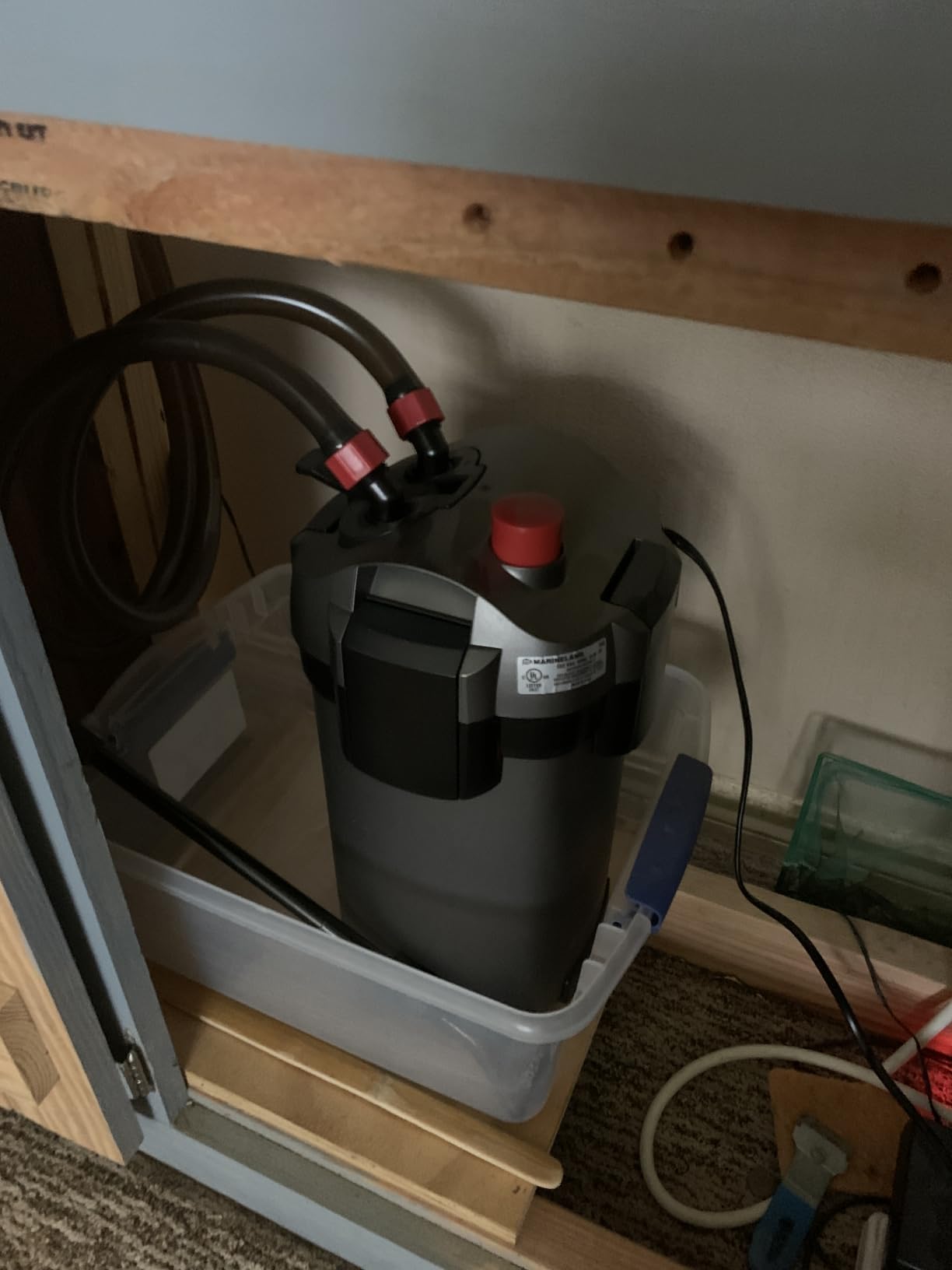
The Magniflow earns its place in this roundup because of what owners say happens in the tank. Multiple reviews describe problem water clearing dramatically faster once this filter goes in, and for a discus tank that has been fighting a persistent haze despite water changes, that is the outcome people are actually buying.
On paper it is the strongest rated flow of the group alongside the Fluval 407, at 400 gallons per hour for aquariums up to 100 gallons. The Stack N Flo trays force water through each media layer and give every layer its own shelf, which lets you build a proper separation: coarse floss at the top, carbon in the middle, ceramic rings or bio-balls in the deepest tray where they stay wet.
Silence is another repeated theme. Owners running it inside a cabinet often describe it as inaudible in the room, which is exactly the report you want from a filter sitting next to a display discus tank. The quick prime button fills the chamber and self-primes the system, so a service does not end with twenty minutes of siphoning a canister body.
The included media package is generous, with foam, premium carbon bags, bio-filter balls, ceramic rings and polishing pads. You can run a full biological stack out of the box on a new discus setup, and the lid lifts straight up on a watertight seal for maintenance access.
Why discus keepers reach for this one
When a tank has existing algae, debris or a bacterial imbalance, the combination of high rated flow and generous mechanical capacity makes this an effective recovery tool. The floss and foam stages give you a lot of surface area to load, and a discus tank that is being fed heavily produces debris that a smaller canister simply pushes around.
It is also a reasonable match for a 75 gallon discus display where you want headroom and a strong biological stage for a dense adult group. Remember to turn the flow down once the tank stabilizes, because discus do not want to fight a current they cannot escape.
Where the Magniflow falls short
The lid gasket is the recurring weak point, with some owners citing leaks and multiple units before they got it sorted. That is a real risk on a filter you may be relying on as a primary, and it argues for running a second filter in parallel rather than trusting a single unit.
Two smaller complaints are worth planning around. The included plastic hose clamps are weak and many owners replace them with metal ones, so budget a few minutes and a small pack of clamps. And the intake tube is relatively short, so on a deeper stand it may not reach far enough into the column, which matters when you want to draw from the lower water where settled debris collects.
At 19.27 pounds when full, it is the heaviest canister here. Lifting it out for a service is a two-person job unless you drain it first, which is worth planning around before you commit.
6. SunSun HW-302: Best for a Three-Stage Media Stack on a Budget
SunSun HW-302 3-Stage External Canister Aquarium Filter 264GPH
264 GPH rated flow
Three separate media trays
Adjustable spray bar
Self-priming pump
Pros
- Affordable entry into canister filtration with 264 GPH of rated flow
- Three separate media trays give good stage separation
- Self-priming pump removes the need to manually siphon
- Adjustable spray bar helps control surface agitation
- Single valve disconnect makes routine maintenance straightforward
Cons
- 14 percent one-star share is the highest in this group
- Quiet operation and build quality trail premium brands
- Durability concerns typical of the value tier
The SunSun HW-302 is the pick for anyone who wants genuine media control on a budget. Three separate media trays is a stage count most filters at this level do not match, and for discus that separation is exactly what lets you clean mechanical media without disturbing the biological load.
At 264 gallons per hour rated flow, it sits in a useful middle position for a 45 to 55 gallon discus tank. Owners cite the low cost, the three-tray capacity, the self-priming convenience and the adjustable spray bar as the reason it works for them, and the spray bar in particular is useful for tuning how much surface movement you get.
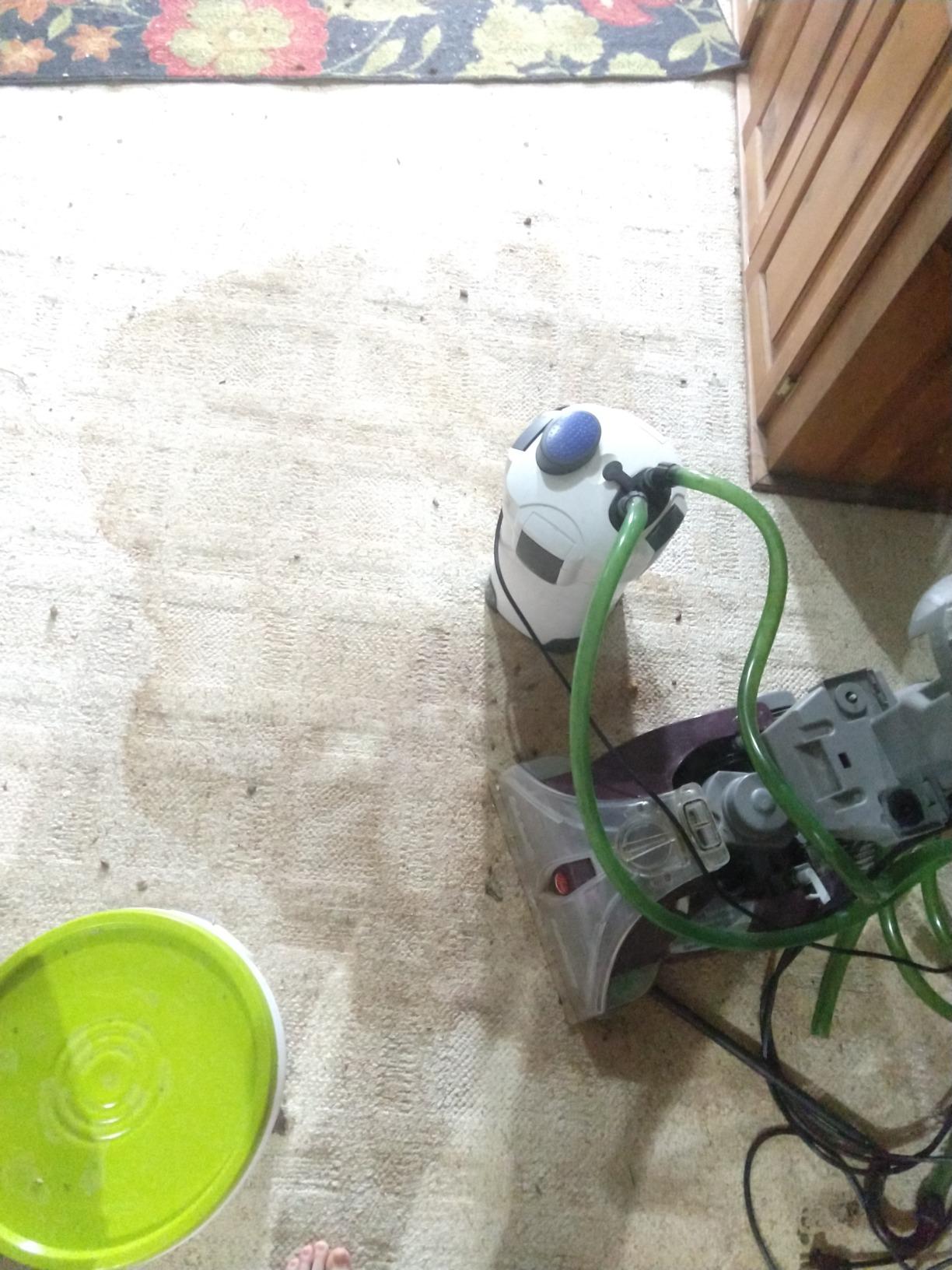
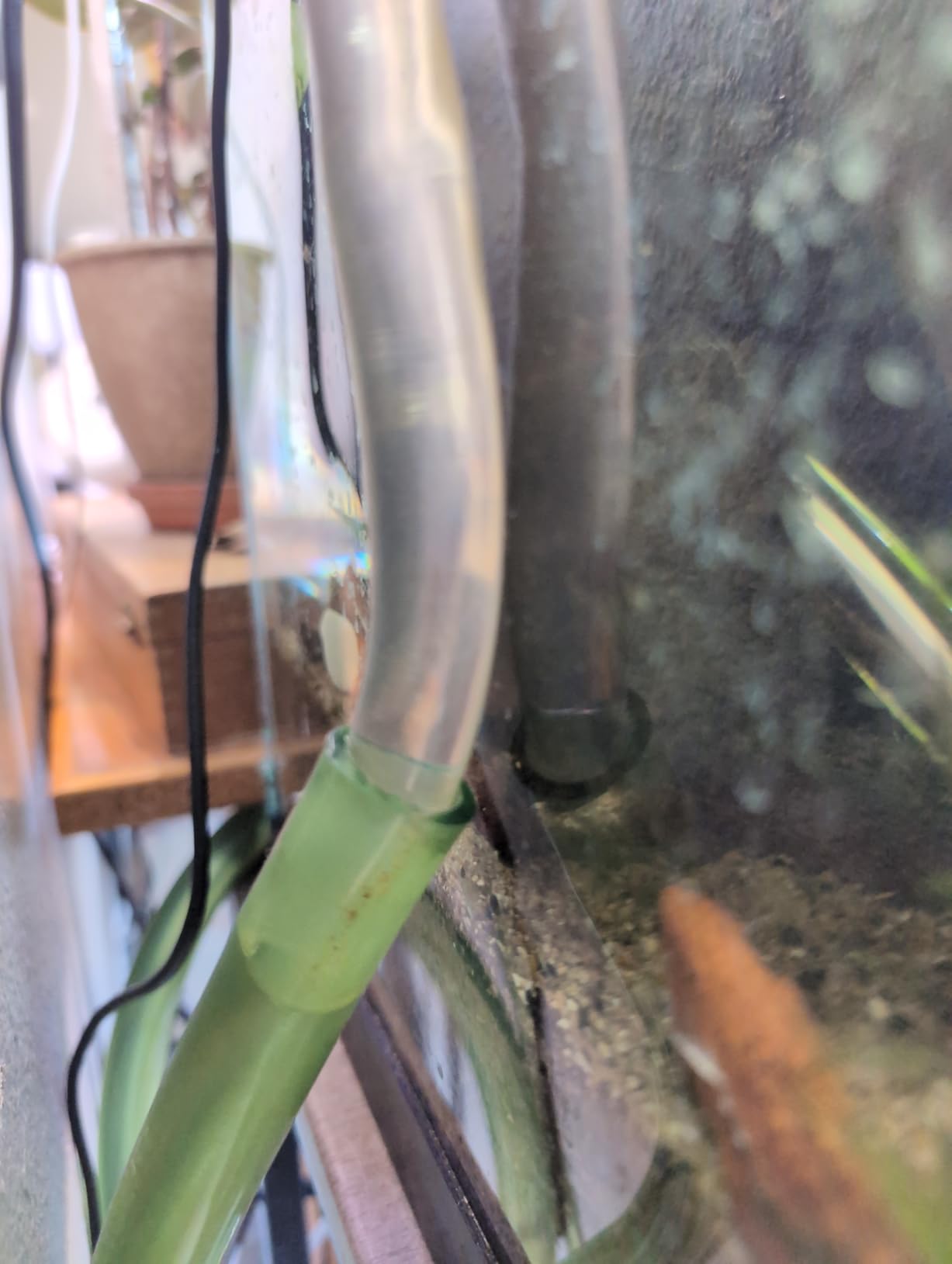
The spray bar adjusts the output for discus in a way that a fixed outflow pipe cannot. You can aim it along the back wall to create gentle dispersal rather than a current across the front glass, and you can dial the flow down so the discus are not constantly pushed. The self-priming pump with a single valve disconnect also means a media change does not require manually siphoning the canister.
Value-tier canisters have a predictable weakness, and here it is durability. The 4.1 average is capped by a 14 percent one-star share, the highest in this group, with the complaints concentrated on long-term reliability and build quality rather than on filtration capability itself. Owners looking at budget canisters commonly raise the same concern about part availability down the line.
Where the HW-302 makes sense
If your main goal is a flexible media stack on a smaller budget, this filter delivers it. Three trays let you keep carbon out of the biological layer entirely, which is a common discus practice because carbon strips medications and can remove trace elements you may be dosing.
It is also a sensible secondary filter. Running one as a redundancy unit alongside a premium canister gives you flow control and a backup without doubling your total commitment, and the adjustable spray bar means you can use the second unit mainly for gentle surface movement.
Where it is the wrong choice
If your discus tank is your main display and you want it to run for a decade with parts readily available, this is not the filter. The reliability reports are consistent enough that we would treat it as a unit you expect to service or replace sooner than a Fluval or Eheim, and consumable parts are harder to source than for established brands.
It is also not for large tanks. At 264 rated gallons per hour, once you account for lift and full trays, you are not going to hit four times turnover in a 90 or 125 gallon discus display. Size it to a small or mid-size tank and let a larger filter handle anything bigger.
7. Fluval 207 Performance Canister: Best for a 45 Gallon Discus Pair
Fluval 207 Perfomance Canister Filter for Aquariums up to 45 Gallons
Rated up to 45 gallons
Lightest at 3.3 pounds
eTEC quiet pump
Self-priming startup
Pros
- Lightest canister in the Performance line at 3.3 pounds
- Very quiet eTEC pump with steady adjustable flow
- EZ-Lift media baskets with center handle
- Easy self-priming and simple setup
Cons
- 45-gallon rating makes it the smallest capacity option
- Shares the Performance-series impeller cover concern seen on the 407
- Unsuitable for larger setups
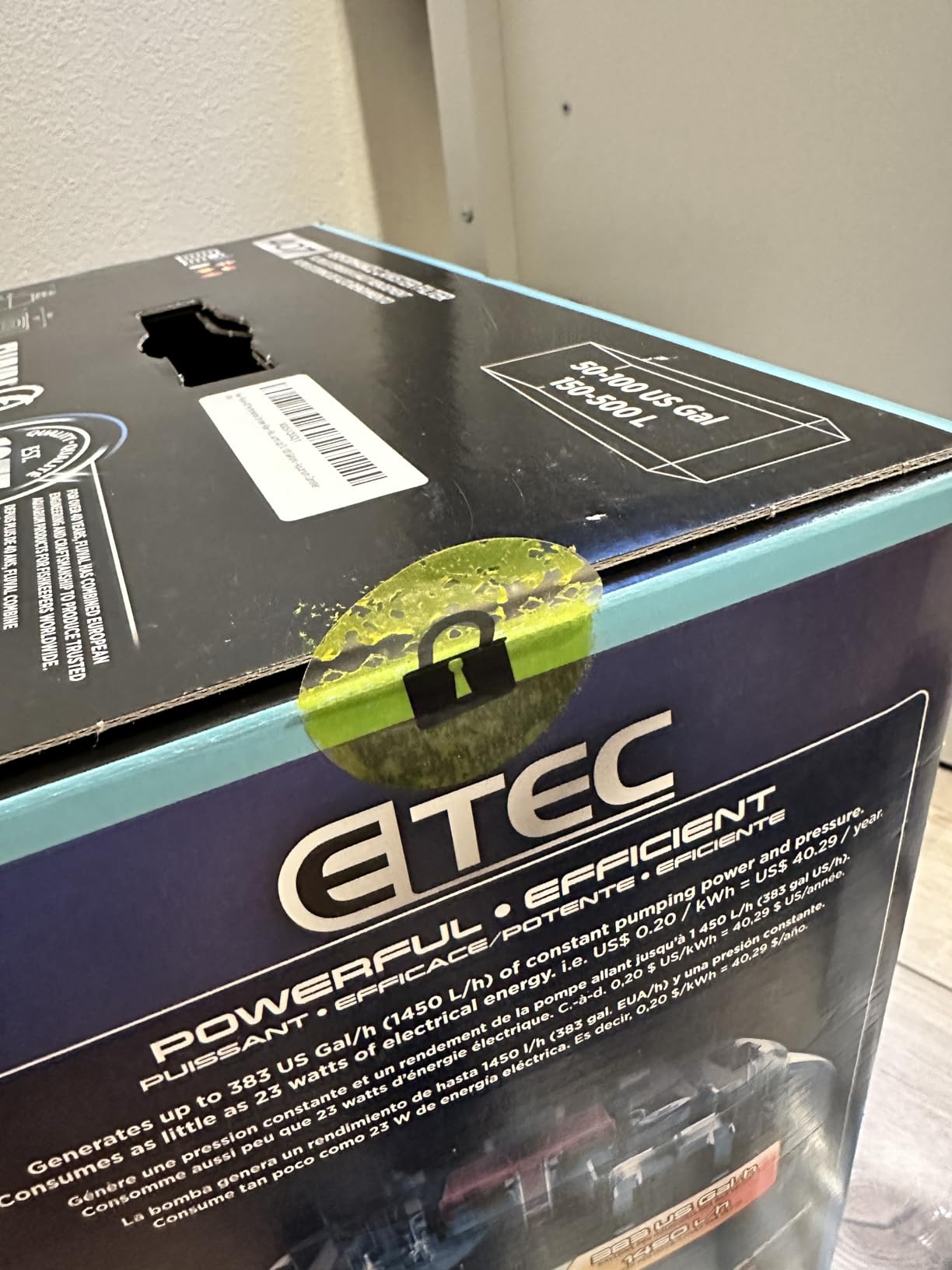
The Fluval 207 is the right pick for a pair of discus in a 45 gallon tank, and it is the smallest member of the Performance trio at 3.3 pounds. That weight is the standout detail. You can lift it out one-handed for a weekly media service without clearing a space on the floor first.
Everything else matches its bigger siblings: the same eTEC pump, the same self-priming startup, the same EZ-Lift baskets with a center handle, and the same 4.4 average across over ten thousand ratings. Owners treat it as the compact, quiet option in the line and value the light weight and lower relative cost for tanks up to 45 gallons.
Discus do not need a current, but they do need clean water. A 45 gallon tank with a pair produces a modest waste load compared with a full community display, and a canister rated for 45 gallons handles that comfortably with room for a proper biological stage in the bottom basket. Keep the flow gentle and let the bio-filter do the work rather than chasing clarity with more pump.
If you keep discus fry in the same tank, put a prefilter sponge or a filter sock over the intake. Canister intakes create enough suction to pull a slow-swimming young discus into the strainer, and a coarse prefilter is the simplest fix. It costs almost nothing and it prevents the most heartbreaking problem in discus keeping.
Why small tanks suit this canister
The 45-gallon rating means the pump is not oversized for the tank, so you get usable flow without excess current. On a larger tank with a canister this size you would be running the pump at full output constantly, which is both noisier and less pleasant for the fish.
The 3.3 pound body also means this is the easiest canister here to install in a small stand or a shelf setup. Discus pairs are often kept in tanks at eye level where a full canister is awkward to remove, and that constraint matters more than people expect before they start.
When you need to step up a size
As soon as you add more discus, or move to a community tank with bottom dwellers and more feeding, the 45-gallon rating stops being a sensible match. The media volume that handled a pair will not keep up with the waste load of eight or ten adult fish, and you will be chasing ammonia instead of maintaining a system.
The shared Performance-series impeller cover concern applies here as it does to the 307 and 407, so the same advice holds. If you already run one of the larger Fluval Performance models and want a matching backup for redundancy, this is the natural companion unit.
8. Marineland Magnum 290: Best as a Polishing Stage Alongside Another Filter
Marineland Magnum 290 GPH Polishing Canister Aquarium Filter
290 GPH rated flow
Submerged motor for instant startup
Two refillable chambers
Pros
- Submerged motor avoids external plumbing and priming hassle
- Two refillable chambers accept carbon or custom media
- Lightest and most compact option here at 2.91 pounds
- Continuous three-stage filtration with included micron cartridge
Cons
- Two media chambers offer less capacity and stage separation than three-tray designs
- Micron cartridge is consumable and adds ongoing cost
- Needs an in-tank position
- which is a constraint in heavily planted discus aquariums
The Magnum 290 is not a canister in the plumbing sense, so we ranked it last and want to be clear why it is here. Its motor sits submerged, which means no hoses, no priming routine, and no cabinet space. For a discus setup where a second filter is filling a specific role, those are genuine advantages.
At 290 gallons per hour rated and usable for aquariums up to 97 gallons, it delivers real flow. Owners appreciate it as a compact, inexpensive polishing filter that starts instantly, and the included micron cartridge handles the fine particulate that a coarse canister stack leaves behind. That makes it useful as the final clarity stage after a biological canister.
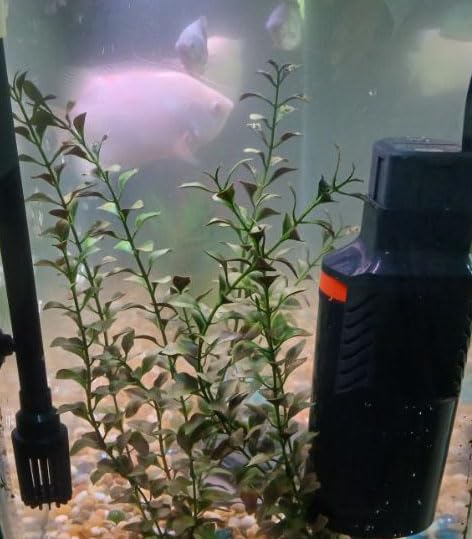
The two refillable chambers accept carbon or custom media, so you can load one with carbon and one with polishing pads. On a discus tank after heavy feeding, running this alongside a biological canister handles the debris load while the canister maintains the mature bio-filter, and the two units together give you more turnover than either would alone.
The 4.1 average sits at the lower end of this group, and the complaints reflect the design rather than any failure of the polishing itself. Two chambers simply cannot match the stage separation and media volume of a three-tray canister, and the micron cartridge is a consumable that adds a recurring cost.
Where the Magnum earns its spot
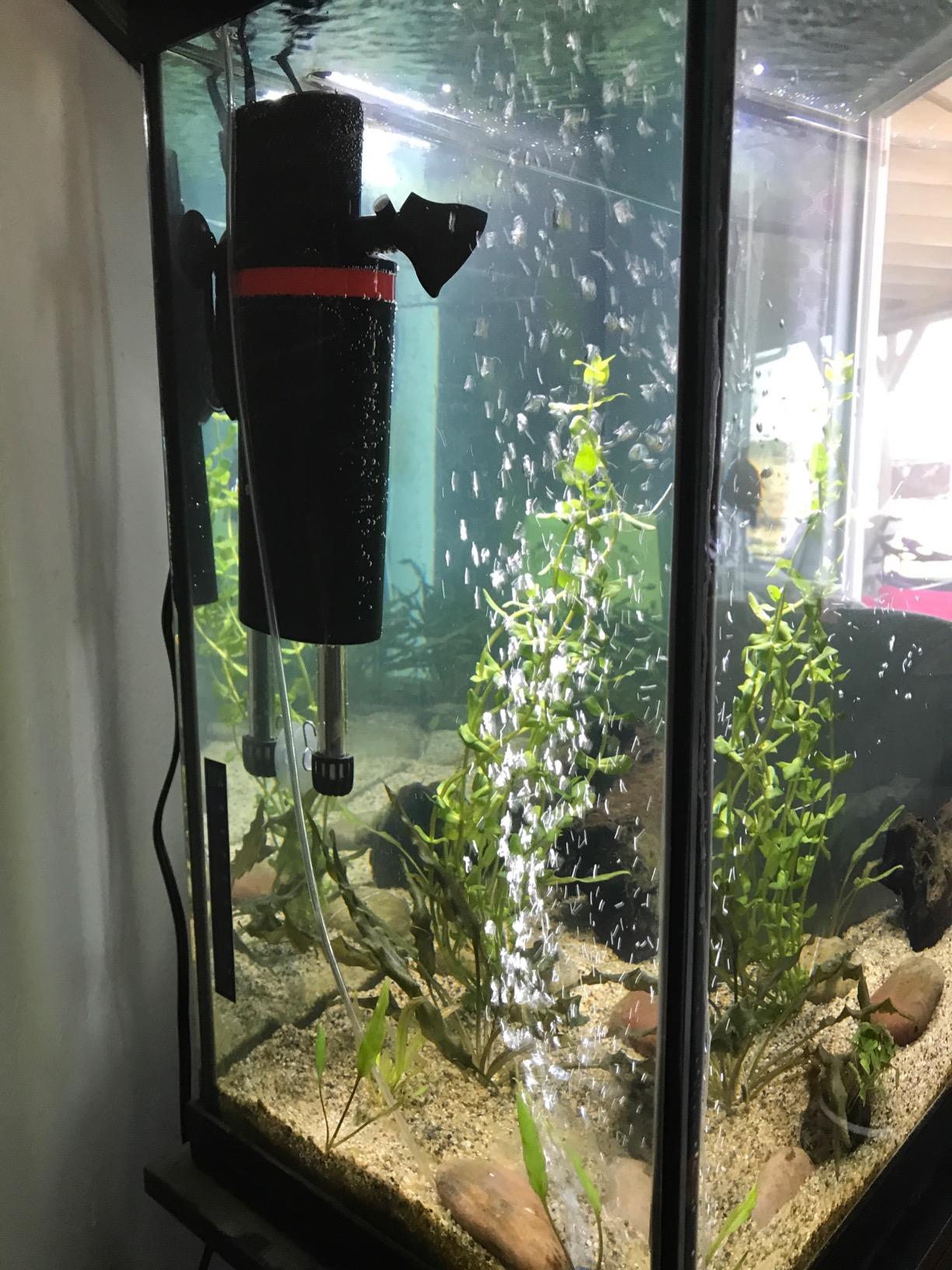
Its real strength is as an addition rather than a primary. If your main canister handles biology and mechanical filtration, a Magnum 290 sitting in the tank polishes what comes through it, and you get the extra turnover that makes a heavily stocked discus tank easier to keep clear.
The instant startup also suits a tank without a stand, such as a quarantine or hospital setup where plumbing a canister is impractical. At 2.91 pounds it is the lightest unit in this roundup by a wide margin, so moving it between tanks is trivial.
What to know before using it on discus
It needs an in-tank position, and that is a genuine constraint in a planted discus aquarium where the substrate is deep and the planting is dense. You need clearance for the unit and for the water level to sit above it, and discus tanks are often shallow-water displays where that room is precious.
The consumable micron cartridge is a running cost that the canisters here do not have. If you plan to run it permanently alongside another filter, factor the cartridge replacements into your annual budget rather than discovering them as an unplanned expense. Keep biological media out of these two chambers, since the fine cartridge will restrict flow.
How to Size a Canister Filter for a Discus Tank
Most discus filter sizing mistakes come from treating the number on the box as the number you get. Rated flow is measured at zero head pressure, which is a condition no canister ever runs in. Once water is lifted to your stand, pushed through an intake pipe, and forced through three trays of dense media, real output commonly falls to half the rating or worse.
Turnover rate is the number that actually matters. Multiply your real water volume by four for a target of four turnovers per hour, then work backward: if you expect to lose half your rated flow, you need a filter rated at roughly twice that target. A 75 gallon discus tank at four turnovers needs about 300 gallons per hour of real flow, which means a canister rated well above that once losses are accounted for.
The forum consensus on discus boards matches that math, and experienced keepers regularly advise buying a filter rated well above the tank volume so the effective flow lands at four times turnover after losses. Clean versus dirty media matters too. A canister running for three weeks without a floss change can lose a quarter of its flow, so treat the clean-media number as your baseline and the dirty-media number as your worst case.
Discus waste load is the sizing input most guides skip. A lightly stocked 90 gallon tank and a densely stocked 90 gallon tank produce very different amounts of nitrogen waste, and the dense one needs more biological media volume rather than more pump. If you are running eight to ten adult discus in a tank, add a filter or step up one rated size from what the volume math alone suggests.
Dual-filter redundancy is common among discus keepers and it is not a luxury. Running two canisters plus a sponge gives you uninterrupted filtration during a service, and if a motor head ever fails you do not lose a tank of fish to an ammonia spike. One discus keeper we read runs two canisters plus two sponges on a 75 gallon with fourteen discus, which is heavier than most systems need but reflects how seriously keepers take the failure risk.
Intake protection is the one accessory you should not skip. A coarse prefilter sponge or a filter sock on the canister intake stops fry and slow-moving discus from being drawn into the strainer. Treat the prefilter like a sock and rinse it every few days, which is also what keeps the rest of the media stack cleaner for longer.
Media volume beats pump power for biological filtration. Nitrifying bacteria live on the surface of your bio-media, so a canister with a generous bottom basket and a coarse pad that protects it beats a powerful pump with a tiny filter cage. Fill trays loosely rather than packing them solid, and rinse biological media in removed tank water rather than tap water, which kills the colony you are trying to preserve.
Finally, noise and access both matter more with discus than with other fish. These tanks usually sit where people can see them, and a hum that would be unnoticeable behind a sump is obvious next to a display. Plan where the canister sits, how high you can lift it for a service, and whether your cabinet has clearance for the hoses before you choose.
While you decide on equipment, our large fish tank guide covers choosing a tank that will actually suit a mature discus group, and our chiller guide explains temperature control for setups that need more than a standard heater.
Which Canister Brand Is Best for Discus?
Fluval makes the best canister filters for most discus tanks. The Performance line shares one pump platform across three sizes, so a 207, 307 or 407 all behave the same way, self-prime the same way, and take the same media baskets. Owners rate them highly for quietness and easy maintenance, and the review volume behind that reputation is substantial. The trade is that consumable media costs add up across so many stages, and the Performance-series impeller cover appears in durability complaints.
Eheim filters are of good quality, and the brand has decades of design history behind it. The Classic models are time-tested to the point that parts and second-hand units are easy to find, and the sealing ring fixed to the pump head is a design detail that makes maintenance safer. The weaker point is that older designs offer fewer media stages and their average ratings show more gasket and durability complaints than newer Fluval models. For a system you intend to run for a decade, the parts availability is worth a lot.
Oase is better than Fluval in one specific area rather than across the board. Oase’s strength is integrated heating, where a heater sits inside the canister, which removes the separate in-tank heater that discus tanks usually need. Everything else about the comparison tends to favor Fluval on quietness and media handling. If your priority is a clean look with no in-tank hardware, an integrated heater design is the argument for Oase; if your priority is quiet operation and simple media changes, Fluval wins.
So which is better, Eheim or Fluval? For discus, Fluval for pump quietness and service ergonomics, Eheim for longevity and parts availability. The two brands differ more in age and design philosophy than in filtration capability, and either will keep discus healthy if you size it correctly and keep the bio-filter fed.
Frequently Asked Questions
How many GPH do I need for my discus tank?
Multiply your real water volume by four for a target of four turnovers per hour, then double that number because canister output typically falls by half once pump lift and full media trays are accounted for. A 75 gallon discus tank therefore needs roughly 600 to 750 GPH of rated flow to land near 300 GPH of real flow.
Which is better, Eheim or Fluval?
For discus, Fluval is the better choice for pump quietness and media service ergonomics, while Eheim is the better choice for long-term ownership and parts availability. Both brands keep discus healthy when sized correctly. Fluval shares one pump platform across several canister sizes, which makes matching units for redundancy easy.
Is Oase better than Fluval?
Oase competes most directly with Fluval when you want a heater integrated into the canister, which removes the separate in-tank heater a discus tank usually needs. For everything else, especially quietness and easy media changes, Fluval generally has the advantage.
Are canister filters safe for discus?
Yes, canister filters are safe for discus as long as you control the flow. Discus prefer still, warm water and stress from strong current, so aim the spray bar away from the front glass, dial the valve down until the fish are comfortable, and fit a prefilter sponge or sock on the intake to protect fry.
Can I use two canister filters on a discus tank?
Yes, and many discus keepers do it for redundancy and extra flow control. Running two canisters means filtration continues during a service and protects your tank from an ammonia spike if a pump head fails. One option is a larger canister for biological filtration plus a smaller one or a sponge for polishing and extra turnover.
Do discus need a filter with a spray bar?
A spray bar is not strictly required, but it makes flow control much easier. A spray bar diffuses return flow across a wider area so you get gentle dispersal instead of a concentrated jet, which is what discus need. If your canister allows it, aim the bar along the back wall to avoid pushing fish toward the viewing glass.
The Best Canister Filter for Your Discus Tank
The Fluval 407 is the best canister filter for most discus tanks, with the Fluval 307 as the value pick for anything under 70 gallons and the Penn-Plax Cascade 700 as the sensible budget option for small setups. Whichever you choose, size it for four times turnover after you subtract your real losses, fill the biological basket generously, and keep the flow gentle.
Discus are unforgiving of poor water, but they are also forgiving of a filter that is simply a little oversized once you turn the flow down. Pick the model that matches your tank, add a prefilter on the intake, and give it a rinse every few days. That routine does more for a discus tank than any specific brand choice.
Ready to build the rest of the setup? Start with our full aquarium filter guide to confirm the canister is the right type of filtration for your system.