
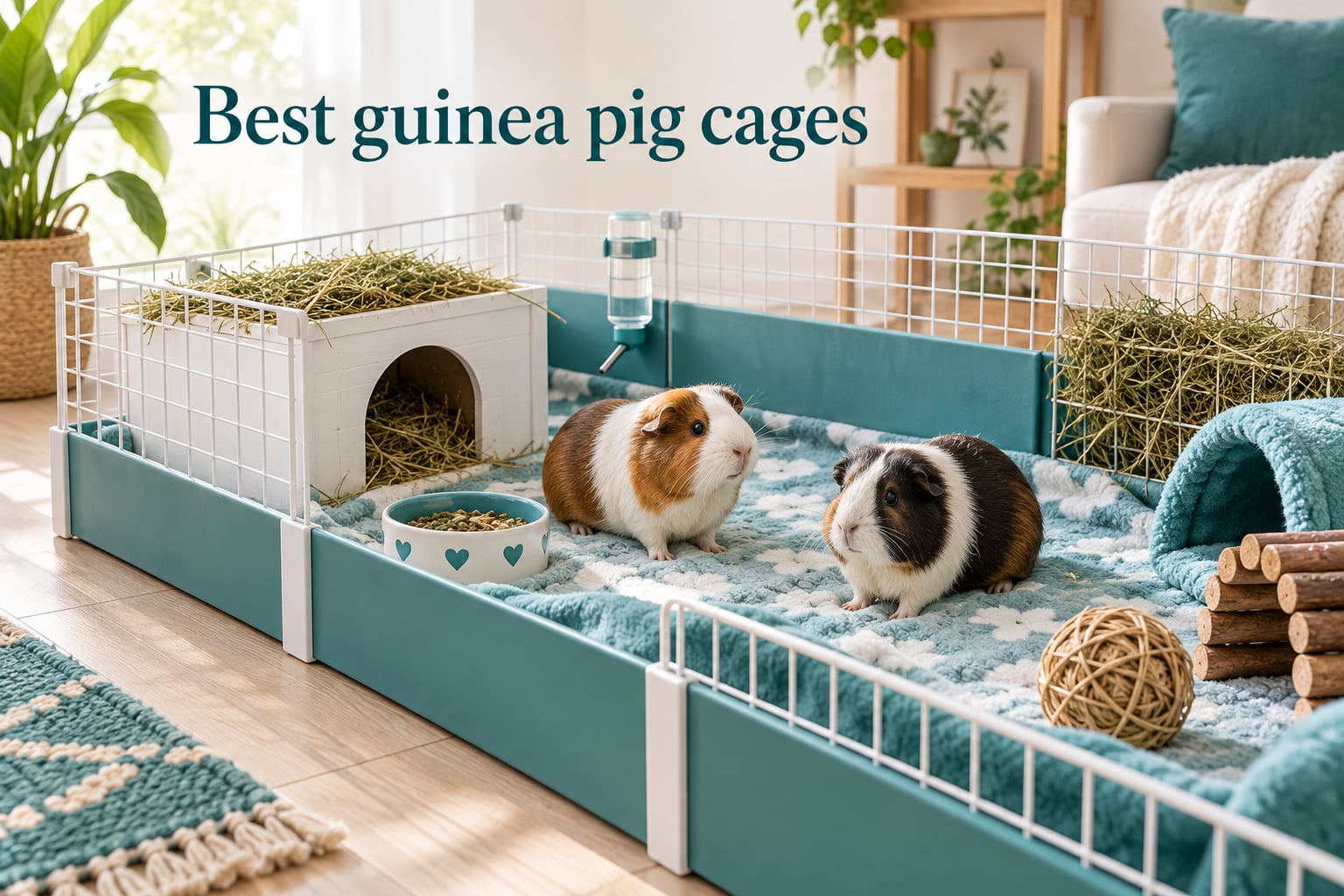
The MidWest Homes for Pets Guinea Habitat Plus is the best guinea pig cage of the ten we compared, because it delivers 8 square feet of continuous, flat floor space with a washable PVC canvas base, a hinged top and a divider panel, and it holds a 4.6 star rating across more than 15,000 reviews. Almost nothing else in the small animal cage aisle combines that much usable ground floor with hardware that still feels solid after a couple of years.
Cage choice is the single highest-impact welfare decision a new guinea pig owner makes. Guinea pigs are ground-dwelling prey animals that need room to run, stretch out, popcorn and get away from a companion when they want space. Undersized housing shows up quickly as obesity, stress, fighting between paired pigs and sore feet.
We measured the internal floor area of every cage on this list from the published dimensions rather than trusting the size names, because marketing terms like jumbo, extra large and XL are not standardised and routinely overstate what fits inside. We also weighted solid flooring, cleaning access, how a cage expands when a second guinea pig arrives, and whether the parts that break are cheap plastic or metal.
Table of Contents
Top 3 Guinea Pig Cages in September 2026
These three cover the most common situations: a first cage that will last, a well-built habitat with the extras already fitted, and the largest single-level floor area in the group.
MidWest Guinea Habitat Plus
- 8 square feet of flat floor
- Washable PVC canvas base
- Hinged top with divider panel
Living World Deluxe Habitat
- Balcony with hideaway
- Removable top for cleaning
- Accessories mounted outside
Amazon Basics Jumbo
- 9 square feet of floor area
- Top and front access
- Water bottle and hay guard included
All 10 Best Guinea Pig Cages at a Glance in September 2026
Floor area is calculated from the listed dimensions and rounded to the nearest tenth of a square foot. Read the square footage column before anything else, because a cage can look generous on a shelf and still fall under the 7.5 square feet minimum for a single guinea pig.
| Product | Specs | Action |
|---|---|---|
| MidWest Guinea Habitat Plus |
|
Check Latest Price |
| Living World Deluxe Habitat |
|
Check Latest Price |
 SONGMICS 2-Tier Cage SONGMICS 2-Tier Cage |
|
Check Latest Price |
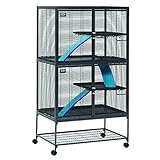 Critter Nation Double Unit Critter Nation Double Unit |
|
Check Latest Price |
| Amazon Basics Jumbo Habitat |
|
Check Latest Price |
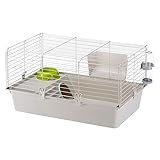 Ferplast Cavie Cage Ferplast Cavie Cage |
|
Check Latest Price |
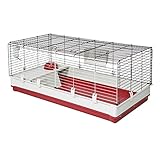 MidWest Deluxe XL Cage MidWest Deluxe XL Cage |
|
Check Latest Price |
 Aivituvin Two Story Hutch Aivituvin Two Story Hutch |
|
Check Latest Price |
 SONGMICS Pet Playpen SONGMICS Pet Playpen |
|
Check Latest Price |
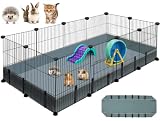 VISCOO 12 Panel Playpen VISCOO 12 Panel Playpen |
|
Check Latest Price |
1. MidWest Homes for Pets Guinea Habitat Plus – Best Overall
MidWest Homes for Pets Guinea Habitat Plus Cage, Includes Divider Panel and Hinged Top, Washable PVC Canvas Bottom, Expandable Small Animal Cage for Guinea Pigs, 171GHP
47 x 24 x 14 inch floor
7.8 square feet
PVC canvas base
12.5 pounds
Pros
- 8 square feet of flat floor space
- Tool-free assembly in minutes
- Divider panel splits feeding from play
- Removable wire top for security
- Modular design joins to other units
Cons
- PVC canvas base is softer than a coroplast floor
- Some flex and wobble at the fold points
- Top panel is fiddly to attach and remove
We used this cage as the reference point for the whole roundup. At 47 by 24 inches the internal floor comes to about 7.8 square feet, which clears the 7.5 square feet floor that Humane World for Animals sets for one adult guinea pig and sits close to the 8 square feet experienced owners treat as the workable minimum for a pair.
It arrives as a folded flat pack and assembles in minutes with no tools. The 14-inch sides are low enough that a cavy can see out and be handled, and the whole cage is light enough at 12.5 pounds to move for cleaning.
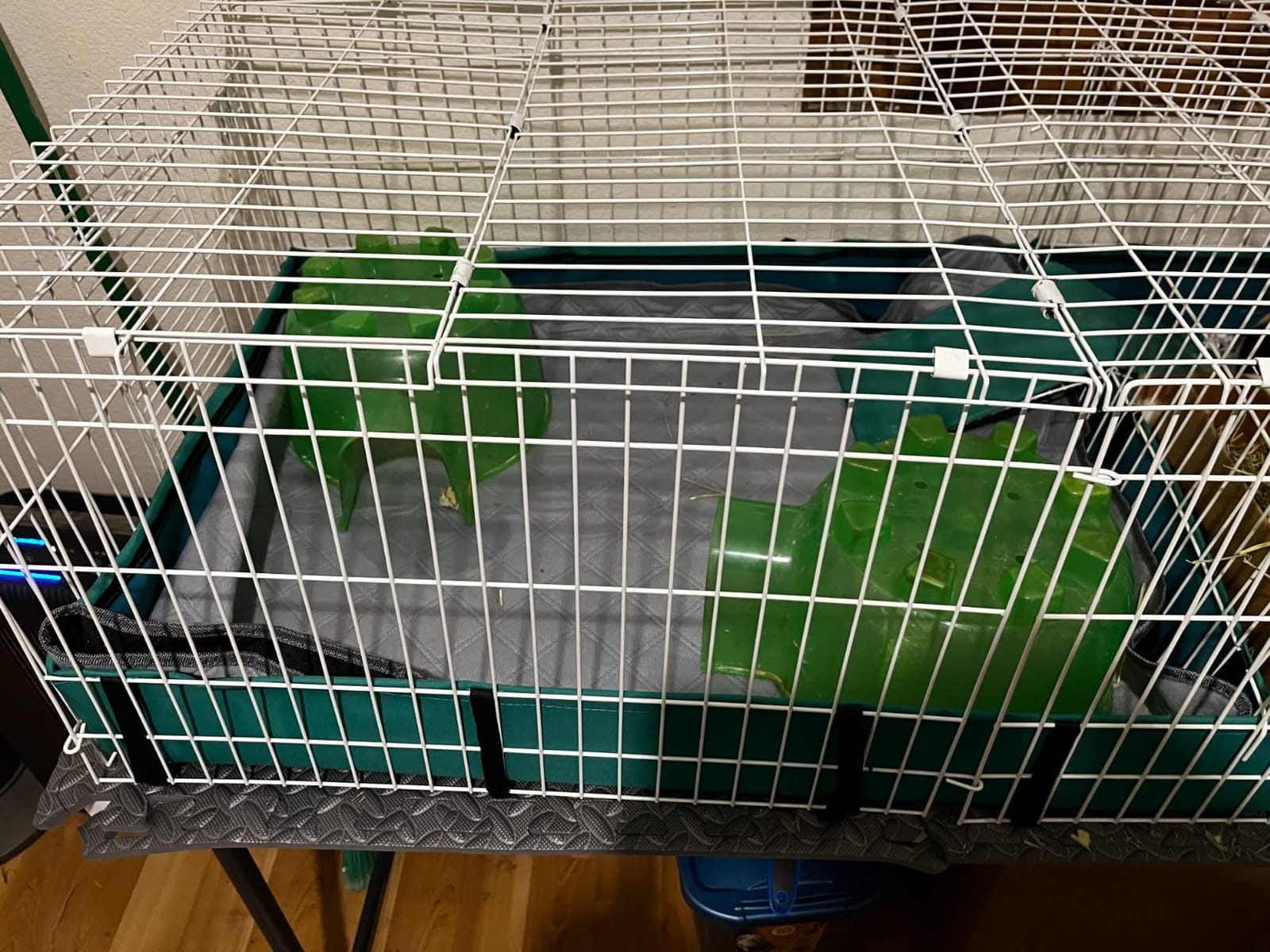
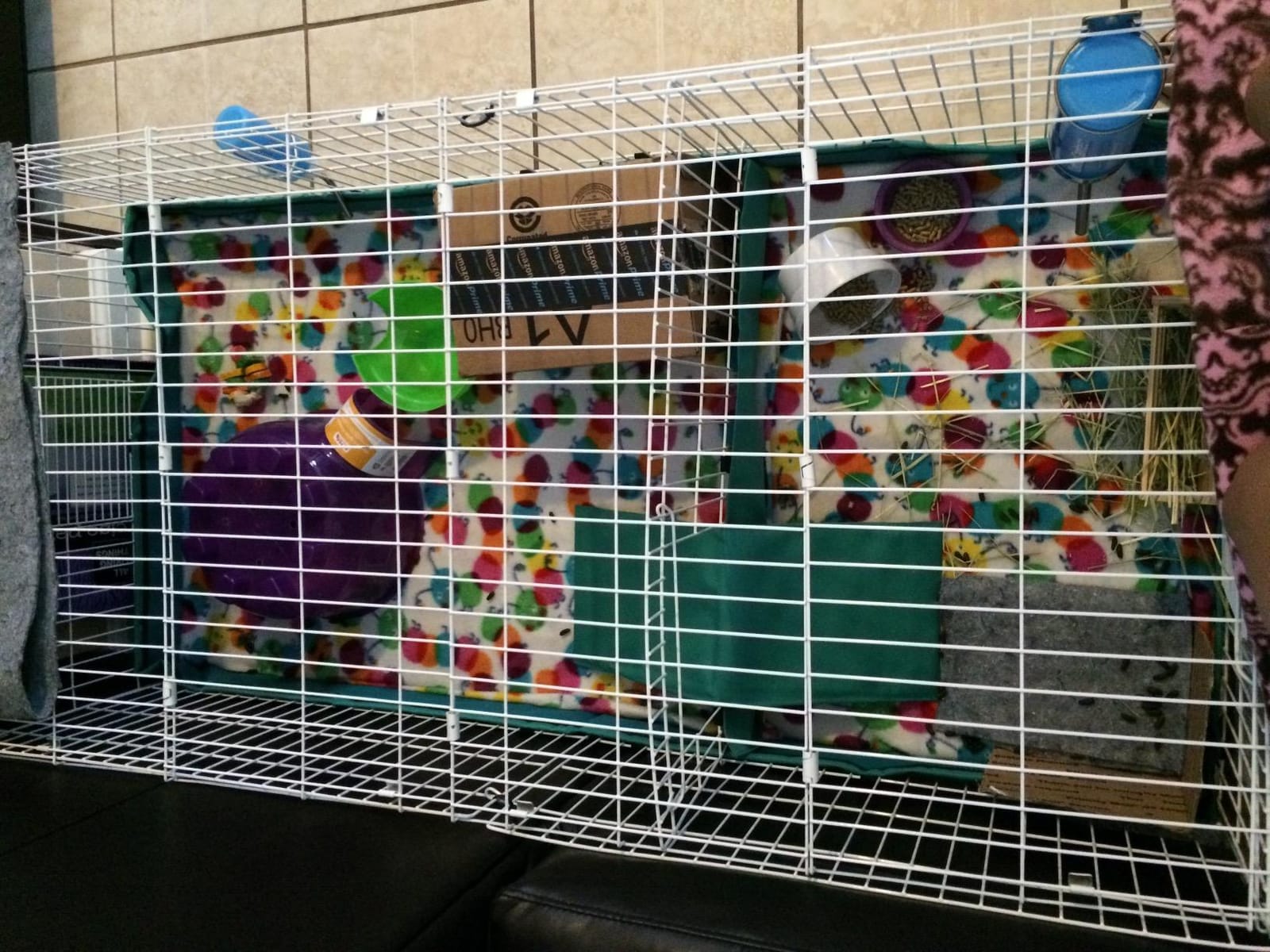
The hinged divider panel is the feature owners mention most. It splits the footprint into a feeding zone and a play zone, so hay scatter stays in one corner and a pair can use the larger section for laps and popcorning without eating in the same space.
The locking doors double as ramps, so there is no separate ramp to lose or that a pig can slip on. Owners consistently report years of use with two or three guinea pigs, and the modular frame means a second unit can be joined on to form an L shape when the herd grows.
Owners on the Guinea Pig Cages forum community have described the canvas base as staining badly and being hard to clean, and one noted the cage got smellier and dirtier faster with two pigs than a custom panel setup would. That is a real and fair criticism of this floor type.
What to check before you buy it
Measure the space where it will live before ordering. The cage is 47 inches long and 14 inches tall, and it will not fit under most shelving. A common owner fix is to add a simple wooden stand to lift the base to floor level, which also makes daily cleaning easier on your back.
Expect mild flex at the fold points once the panels are up. Zip ties at the corners stiffen it noticeably, and most reviewers add them within the first month rather than reporting a structural problem.
Who should skip it
Skip this cage if you plan to house three or more adult guinea pigs long term. It works, but 7.8 square feet for three animals sits under the size most rescues recommend, and the smarter move is to build a 2 by 4 panel cage or join two units together from the start.
Also skip it if you have a cat. The wire top is good protection, but check the latches every week, because a determined cavy can work a loose clip over time.
2. Living World Deluxe Hybrid Habitat X-Large – Best Built
Living World – Deluxe Hybrid Habitat, X-Large
46.9 x 22.8 inch floor
7.4 square feet
Plastic base with wire frame
19 pounds
Pros
- Sturdy build that does not feel flimsy
- Top lifts off for fast cleaning
- Balcony and hideaway included
- Water bottle and hay feeder mounted outside
- Accessories do not eat floor space
Cons
- Instructions are diagram-heavy and confusing
- Included water bottle tends to drip
- Balcony ramp is steep
- Front door does not open fully
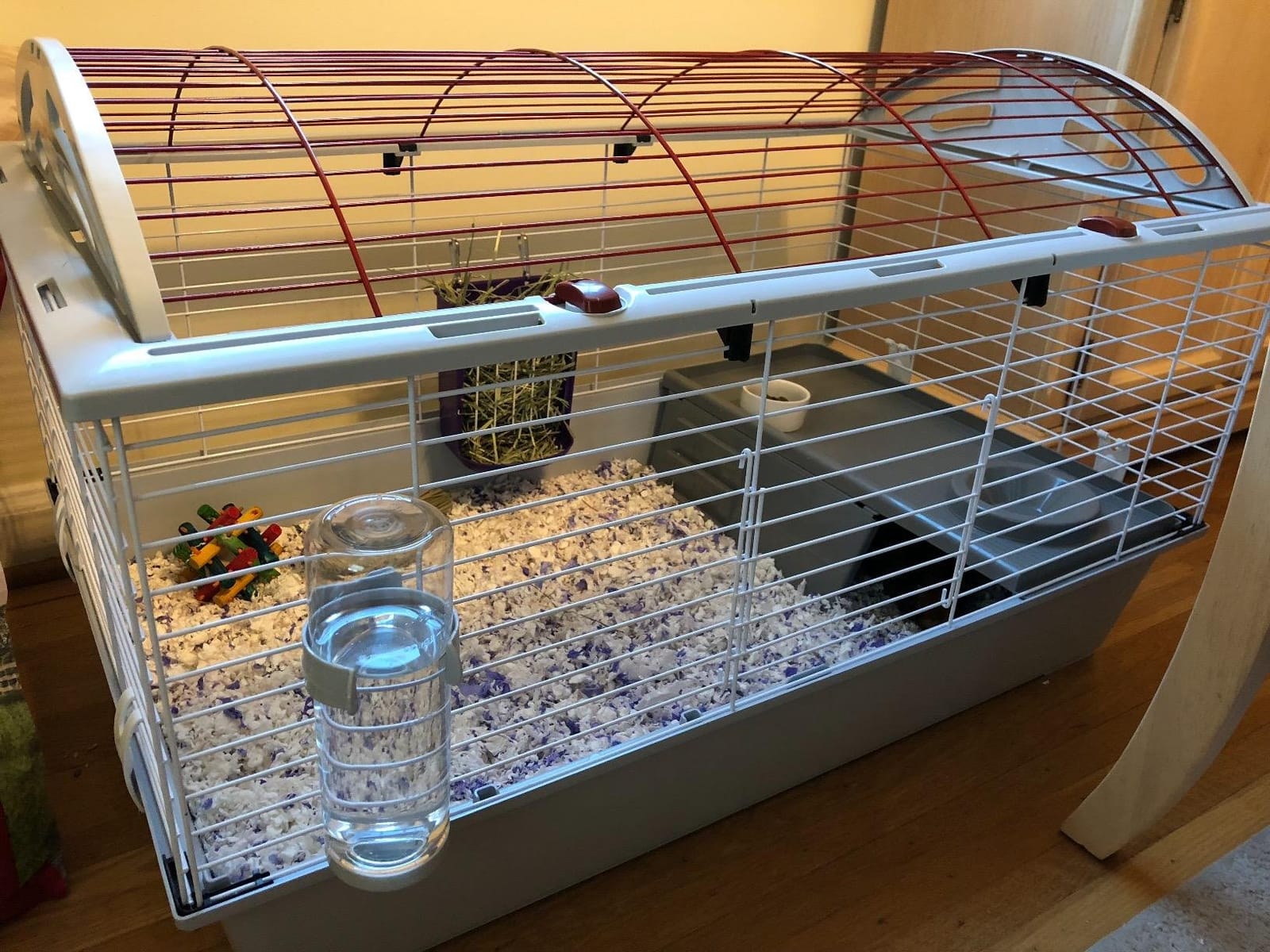
This is the one to pick when build quality matters more than modularity. The hybrid construction puts a wire frame over a solid plastic base, and at 19 pounds it has the kind of weight and rigidity that stops wobbling when a pig runs into a corner.
At 46.9 by 22.8 inches the base gives about 7.4 square feet of floor. The arcing top gives a little more headroom than a flat lid, which matters more for rabbits and chinchillas than for cavies.
The balcony and the hideaway underneath are the pieces that separate this from a basic cage. They add enrichment without taking away walkable floor, and the hideout gives a nervous or newly bonded pair somewhere to retreat that is not a corner.
Everything mounts to the outside of the cage. The water bottle, hay guard and tip-proof dish all attach externally, which keeps the interior free for hay, fleece and floor time.
The whole top lifts away in two parts, so cleaning the deep base is genuinely fast. Owners describe daily care on this cage as quick in a way that open-top pens never are.
What to check before you buy it
Budget for replacing the water bottle. Reviewers report the bundled one drips more often than not, and a constant drip under a water bottle is a fast route to ammonia smell and damp fleece.
Look closely at the ramp angle. It is steep, and while most adult guinea pigs manage it, a young or weak animal may not. A low shim under the ramp end or a flat hideout placed on the floor is an easy adjustment.
Who should skip it
Skip it if your priority is expanding later. This is a fixed footprint with no way to add panels, so a second guinea pig means buying a second cage, and by then the shape of your room will dictate the configuration for you.
Skip it if a cat is in the house. The wire construction is not designed to take on claws, so you would need a secure lid over the top before the animal goes anywhere near it.
3. SONGMICS 2-Tier Guinea Pig Cage – Best for Multi-Level Setups
SONGMICS Guinea Pig Cages, 2-Tier Small Animal Cage
36.6 x 24.8 inch footprint
6.3 square feet per deck
Steel frame with mat
14.11 pounds
Pros
- Two decks give real vertical enrichment
- Transparent roof panels double as doors
- Tight mesh spacing resists escapes
- Waterproof mat with raised edges
- Pans slot into connectors then tie off
Cons
- Less shelter and privacy than an enclosed habitat
- Mesh panels need soft flooring added
- Panel joints loosen and need zip ties
- 4.2 rating reflects mixed durability reports
This pen is built for people who want vertical space without the weight of a wood hutch. The 36.6 by 24.8 inch footprint gives roughly 6.3 square feet on the ground deck, with a second deck and a ramp above it.
The transparent roof panels are the clever part. Three of the six top panels hinge open, so you can reach in from almost any angle without lifting and resettling the whole structure.
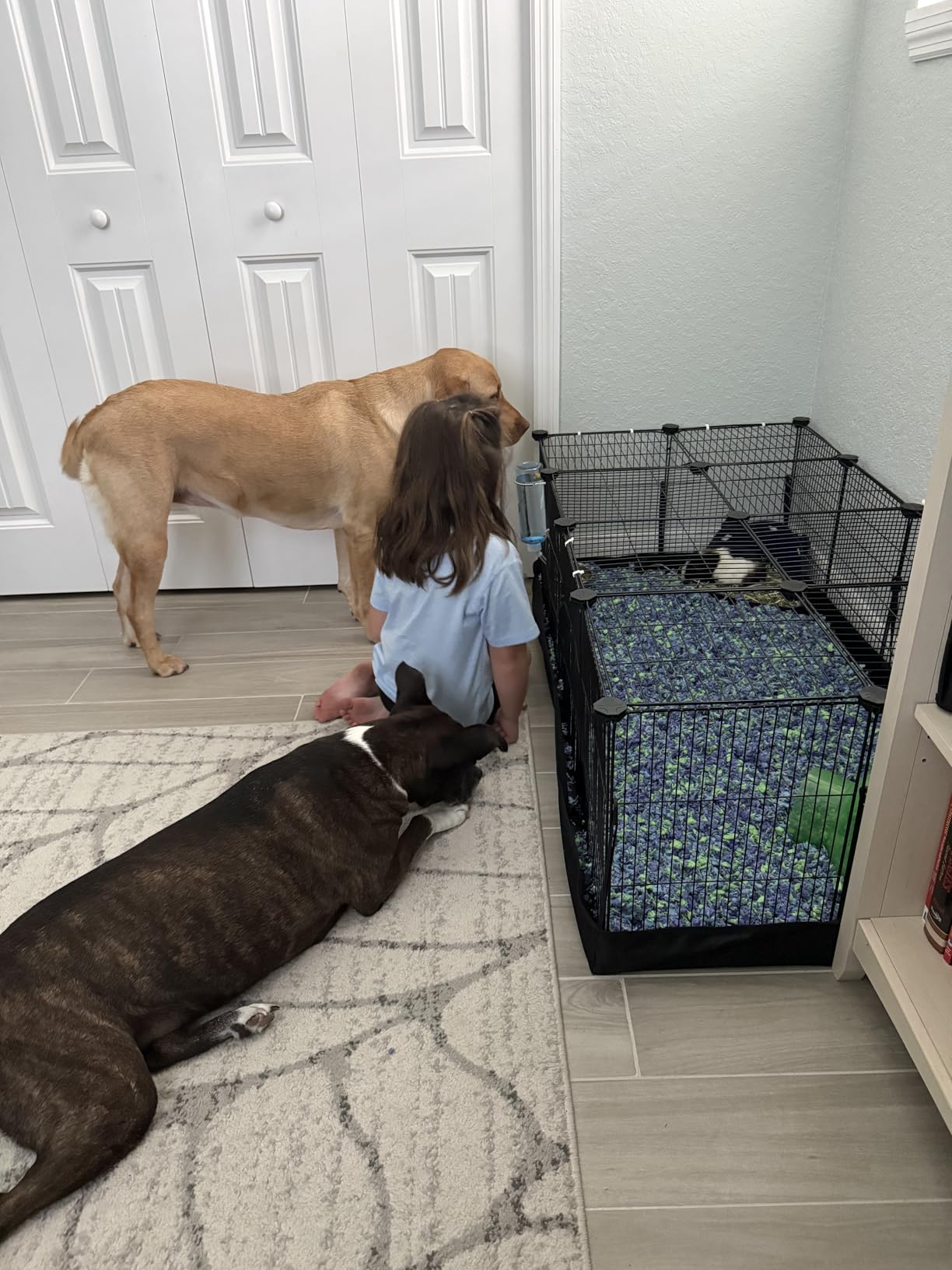
Steel construction and tight mesh spacing make it sturdier than the price suggests, and the supplied mallet speeds up assembly. The waterproof floor mat has raised edges, which helps contain bedding and hay scatter in a way that open wire floors never do.
Our honest caveat is that the lower deck of a two-tier pen still needs a solid, soft surface for feet. We would run fleece liners with an absorbent layer underneath rather than leaving any pig on bare mesh, and that is the same reason we steer away from wire flooring in the buying guide.
Guinea pigs are ground-dwelling, so treat the upper deck as a bonus rather than a substitute for floor space. On this cage, the ground deck is what keeps a pair of cavies comfortable.
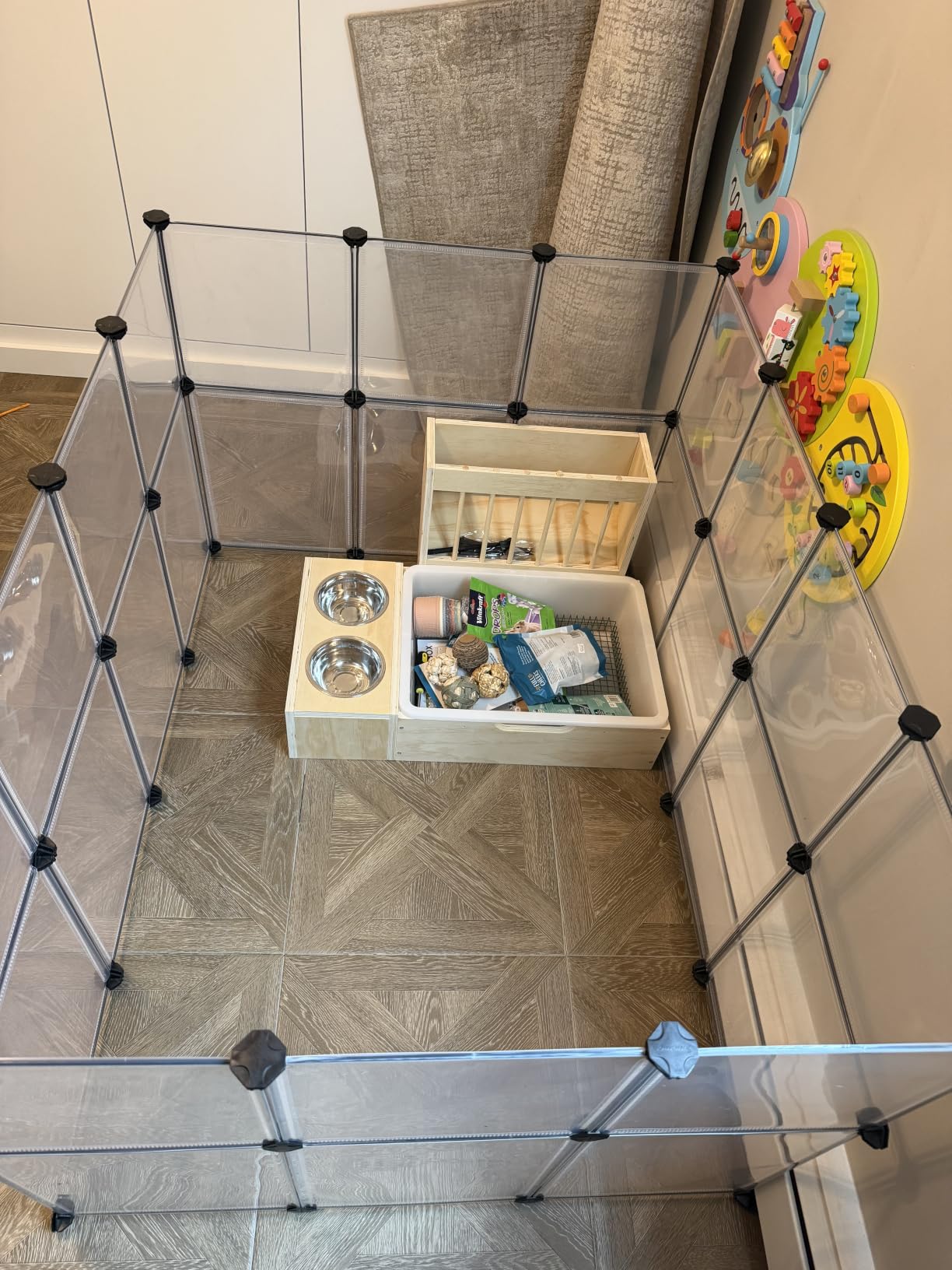
What to check before you buy it
Add your own zip ties. Joints work loose during normal use, and almost every durability complaint in the reviews traces back to a connector that was never reinforced. Tying every joint takes five minutes and removes the most common problem.
Plan the flooring before the animals arrive. A stack of fleece liners with a washable wicking pad underneath handles the mesh and the raised mat edge at the same time.
Who should skip it
Skip it if your guinea pigs are skittish and need a dark, enclosed den. A pen of wire and clear panels gives a cavy nowhere to hide, which is a real welfare cost for a shy animal or a newly bonded pair.
Skip it if you already know you will want a third pig. At 6.3 square feet on the main deck it is a two-pig cage at best, and the ramp and upper deck do not add usable continuous floor.
4. Critter Nation by MidWest Double Unit – Best Heavy-Duty Habitat
Critter Nation by MidWest Double Unit Small Animal Cage
36 x 24 inch per level
6 square feet per deck
Half-inch wire
44 pounds
Pros
- Metal build that survives years of daily use
- Half-inch wire spacing
- Two full levels plus three ramps
- Full-width doors open wide
- Levels can be separated for quarantine
Cons
- Assembly needs two people and a rubber mallet
- 44 pounds is hard to move once loaded
- Bulky footprint demands a real corner of the room
- Occasional bent bars or cracked trays arrive
This is the tank of small animal housing. At 44 pounds with full metal wire on every face, it is the most rigid structure here and the only one that feels genuinely indestructible once assembled.
Each level measures 36 by 24 inches, which is about 6 square feet of floor per deck, with 12 inches of clearance in each level. Half-inch horizontal wire spacing makes it a genuine multi-species cage for chinchillas, degus, ferrets and small rabbits.
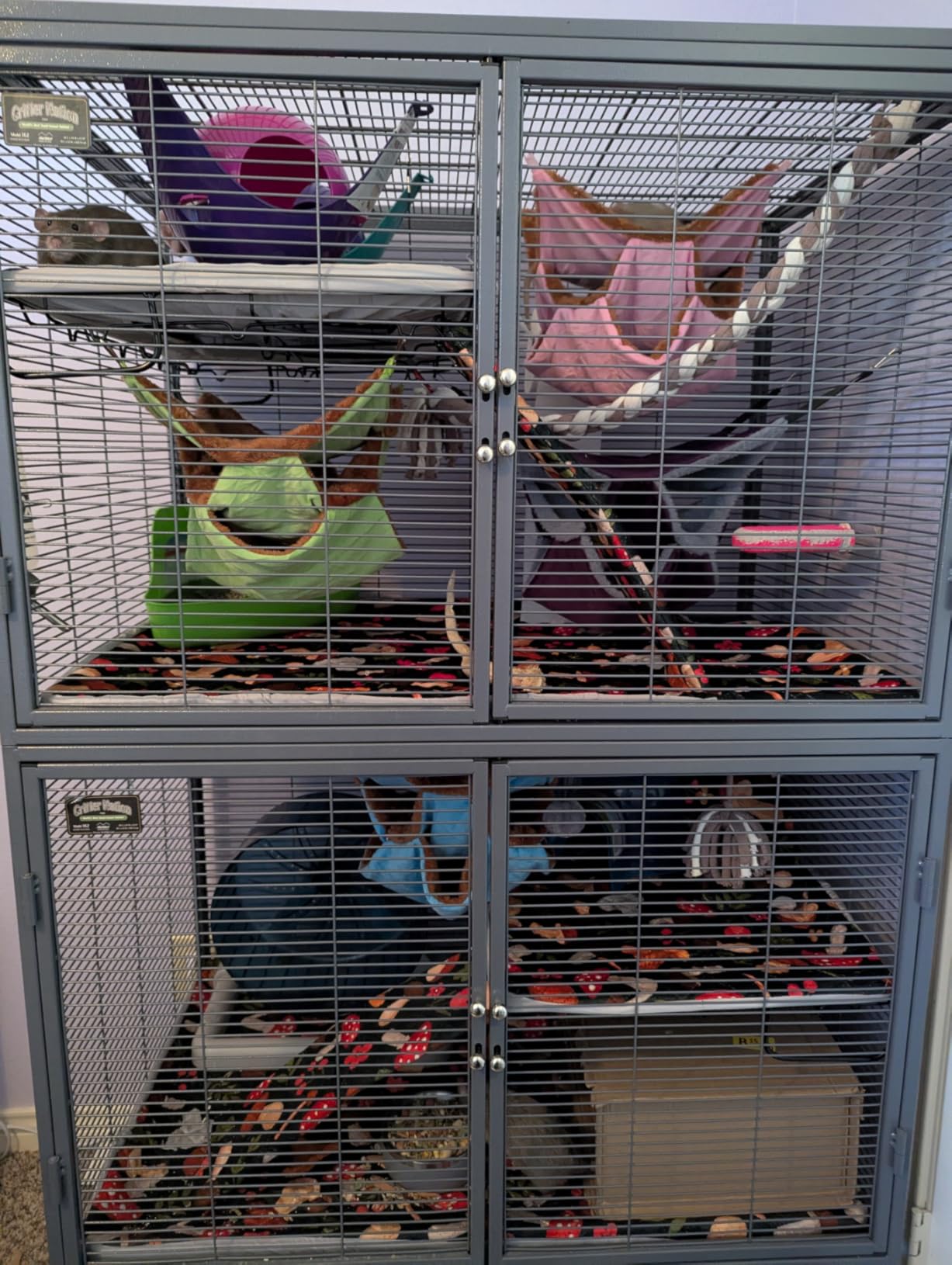
The full-width double doors open the entire front of a level, and the swing-up locking ramp lets you separate animals during cleaning or quarantine. That separation ability is the feature experienced multi-pet households mention most often.
Two removable base pans wipe clean easily, the shelves and ramps adjust to different heights, and the lower level doubles as a storage shelf for bedding and hay.
It is worth being blunt about the trade-off. This cage gives you two half-sized decks rather than one wide one, and a guinea pig uses horizontal space far more than vertical space. It is a superb rabbit or chinchilla habitat and a capable but not ideal cavy home.
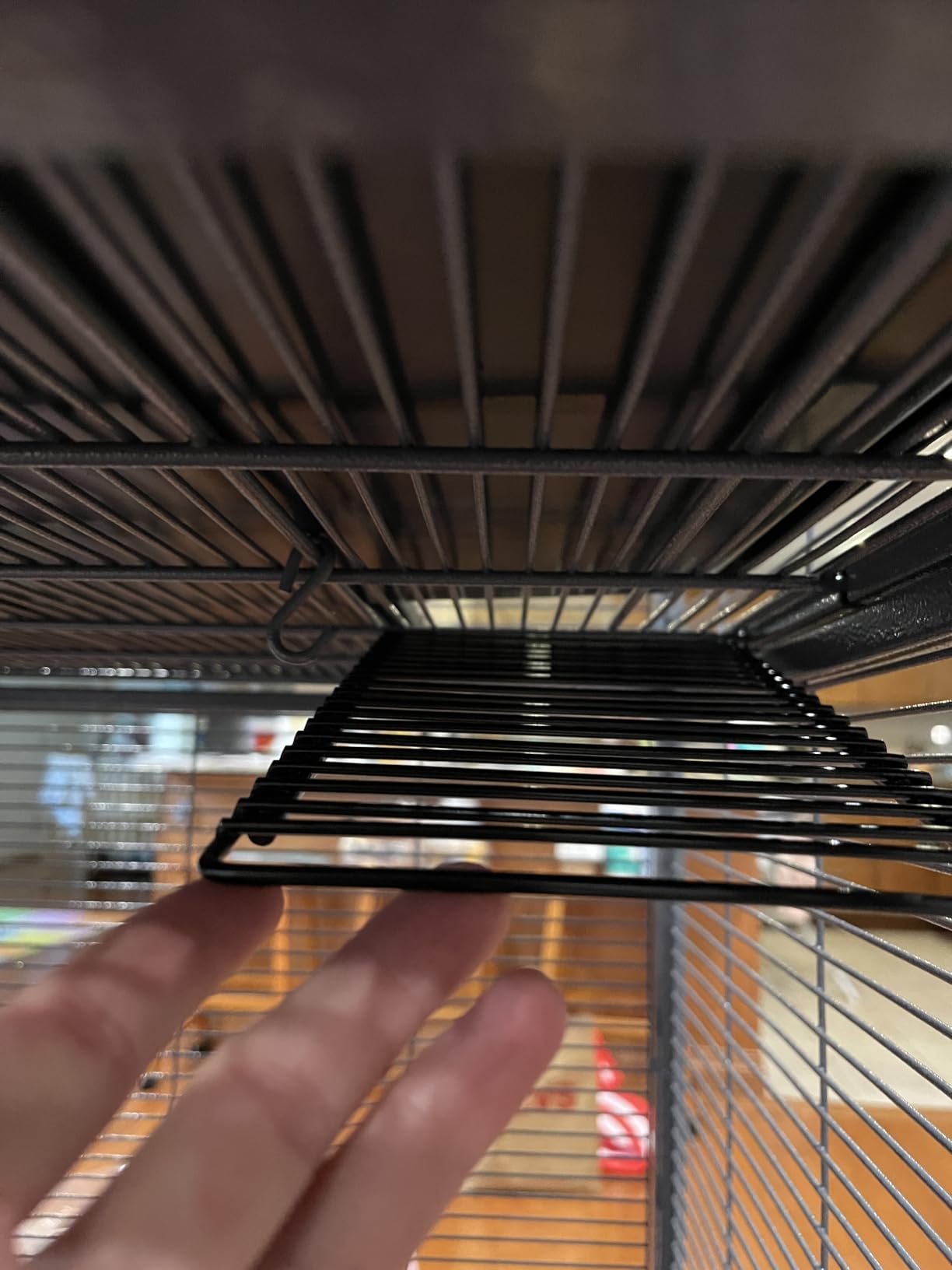
What to check before you buy it
Allow a proper build session with two people and a rubber mallet. Snap-fit small animal cages of this weight do not go together one-handed, and rushing the frame is how bent bars happen.
Inspect the base pans and bar spacing on arrival. Reviewers do report occasional bent bars, misaligned doors or cracked trays from the factory, and catching a damaged part on day one is much easier than finding out in month three.
Who should skip it
Skip it if your primary animal is a guinea pig. At 6 square feet split across two decks, it delivers less continuous ground floor than cheaper single-level options, and the ramps add fall risk for a heavier adult cavy.
Skip it if your home is small or you will ever need to move it. At 36 by 24 by 63 inches it needs a genuine corner of a room, and it comes apart and goes back together to move at all.
5. Amazon Basics Jumbo Top Access Habitat – Best Value
Amazon Basics Top Access Small Animal Habitat for Rabbit, Guinea Pig, Ferret & Chinchilla with Accessories, Jumbo, 48.6″L x 26.6″W x 20.6″H, Multicolor
48.6 x 26.6 inch floor
9 square feet
PP plastic base with wire top
18.7 pounds
Pros
- Largest single-level floor area in this list
- Top and front openings for access
- Water bottle and hay guard included
- Balcony hideaway underneath
- Tool-free assembly with 1-year warranty
Cons
- Wire is lighter duty than premium metal cages
- Textured base is harder to scrub
- Balcony ramp is steep
- Not suited to cold outdoor use
This is the cage to beat on square footage per unit of money. At 48.6 by 26.6 inches the base works out to about 9 square feet of floor, the largest single-level footprint in this roundup and enough for two pigs with room to spare.
The plastic base is solid and deep, and the iron wire upper frame keeps the build light at 18.7 pounds. For an indoor habitat in a living space, that weight is a real advantage over the 44-pound cages above.
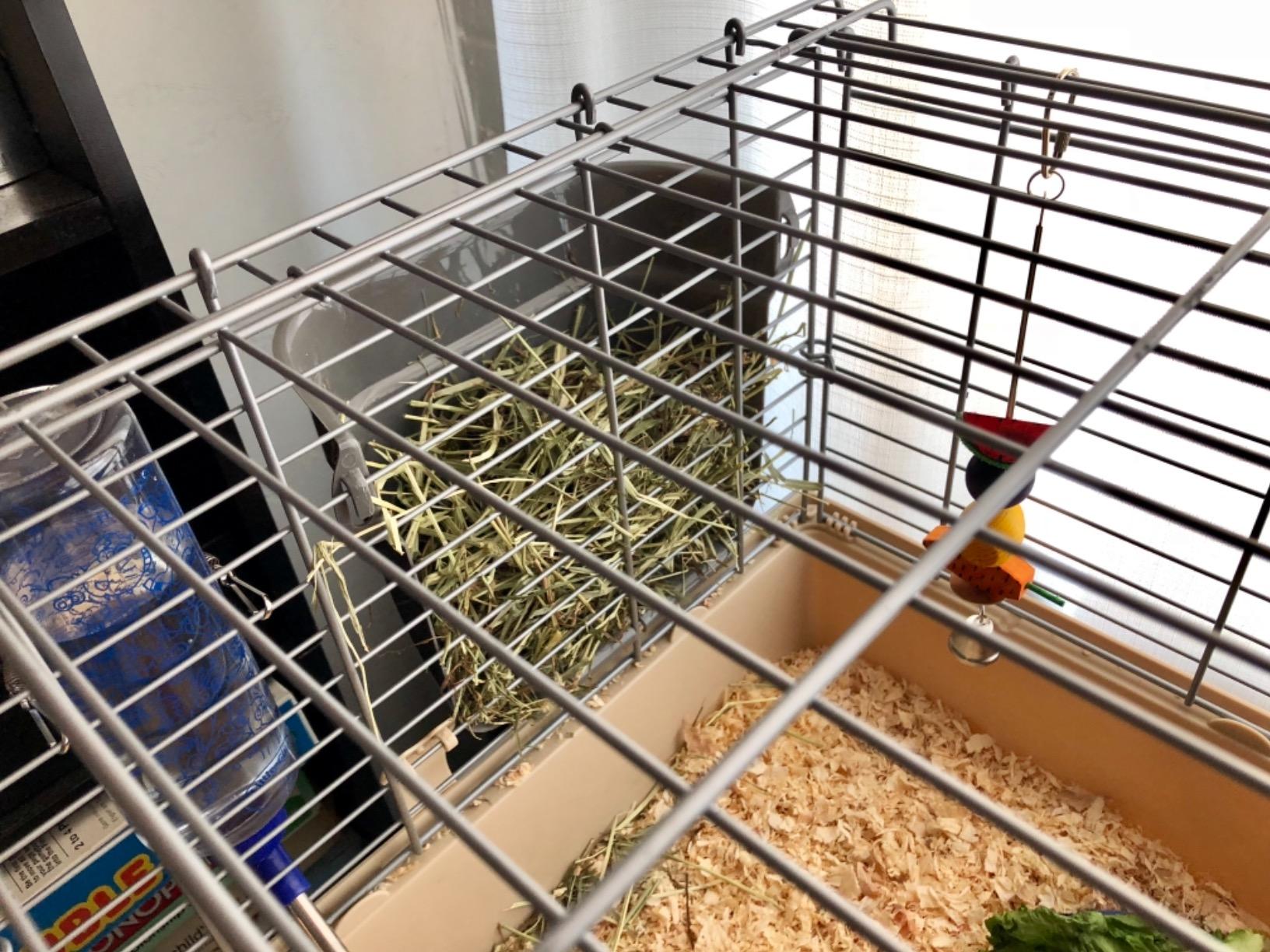
Large top and front openings make handling, feeding and spot cleaning straightforward. You can reach a hideout in the back corner without crouching at the front and trying to coax a pig out into the open.
The bundled accessories are a genuine saving. A non-drip water bottle, a hay guard, an elevated balcony with a ramp and a tip-proof food dish mean you are not buying a bottle and a feeder in the same order.
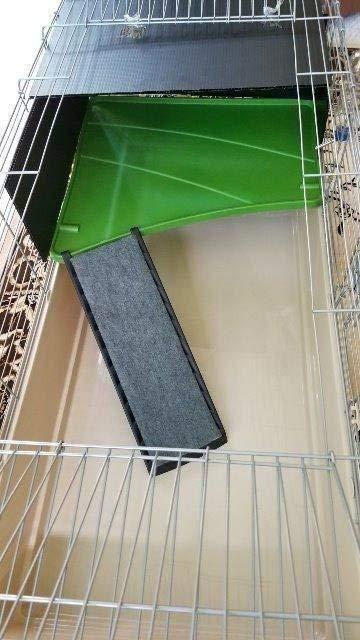
The hideaway space under the balcony gives a pair somewhere to settle separately, which reduces the bickering that usually shows up when two unfamiliar pigs meet their new home.
What to check before you buy it
Check the base before the pigs go in. The textured plastic floor is the one part reviewers complain about, because raised texture traps debris and shreds paper towels during a full clean.
Watch the balcony ramp if you have a young or older pig. It is steep, so a low platform or a fleece-covered brick at the base makes the difference between a pig that uses the balcony and one that never does.
Who should skip it
Skip it for outdoor use in cold weather. Reviewers explicitly warn it is not intended for long-term outdoor housing at low temperatures, and neither is any indoor plastic-and-wire habitat in this roundup.
Skip it if you have a determined cat. The wire top is not designed to resist clawing, so budget for a proper lid before the guinea pigs explore the room unsupervised.
6. Ferplast Cavie Guinea Pig Cage – Best Budget Starter
Ferplast Cavie Guinea Pig Cage & Rabbit Cage | Pet Cage Includes All Accessories to Get You Started & a 1-Year Warranty
30.3 x 18.5 inch floor
3.9 square feet
Deep 6-inch plastic base
8.71 pounds
Pros
- Arrives complete with hideout
- dish and bottle
- Front and side doors open wide
- Deep 6-inch base holds bedding
- Light at 8.71 pounds
- Plastic base wipes clean easily
Cons
- Smallest floor area in the roundup at 3.9 square feet
- No top opening to reach the hideout
- Plastic clip latches are fiddly
- Assembly takes longer than the guide suggests
This is a complete starter habitat rather than a long-term home. At 30.3 by 18.5 inches the floor comes to roughly 3.9 square feet, which is well under the 7.5 square feet minimum for a single adult guinea pig.
What you get for that trade-off is a cage that needs nothing else purchased. A large hideout, a food dish and a water bottle are all in the box, which makes it the one pick here that genuinely gets a first-time owner set up on day one.
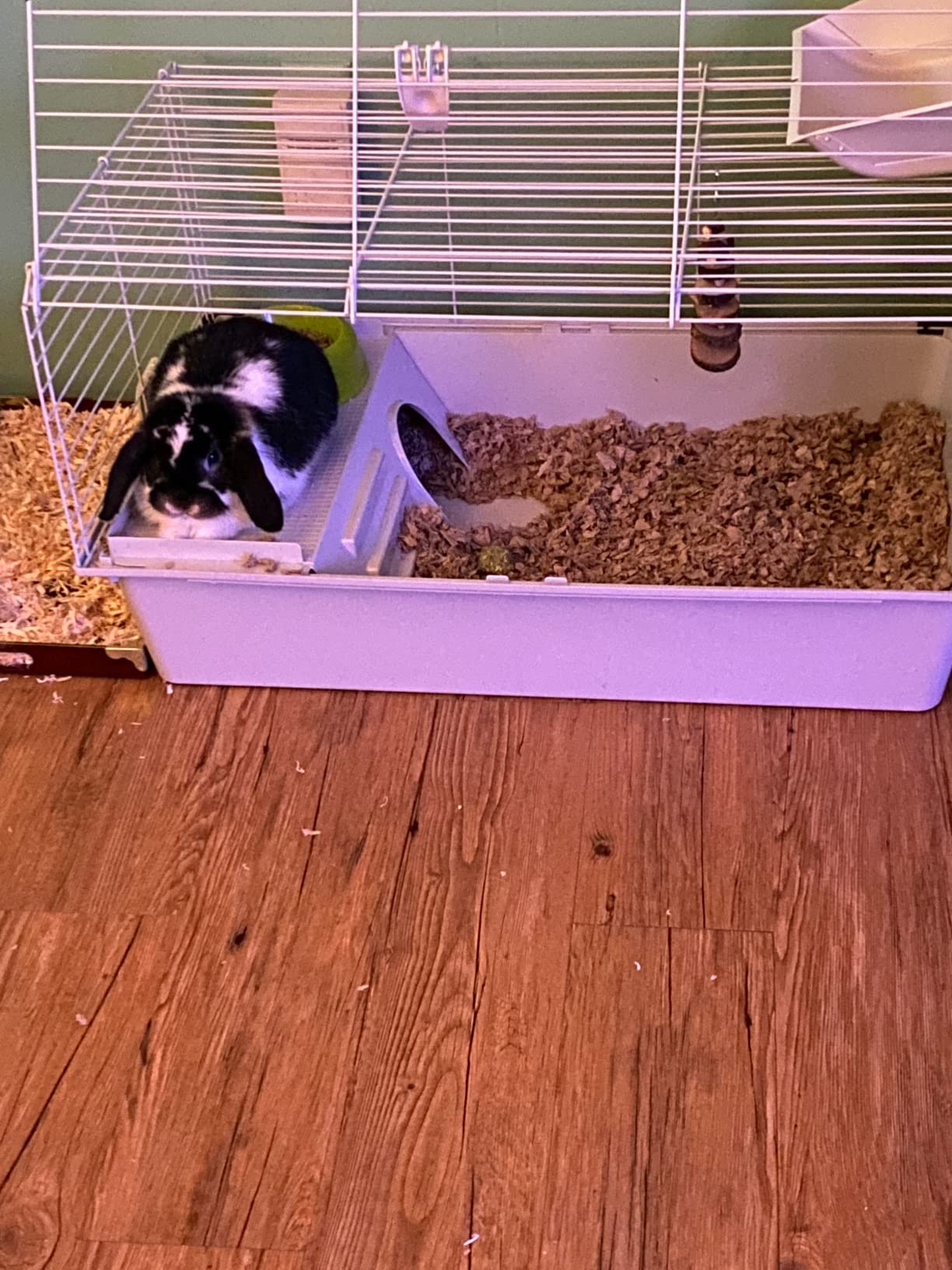
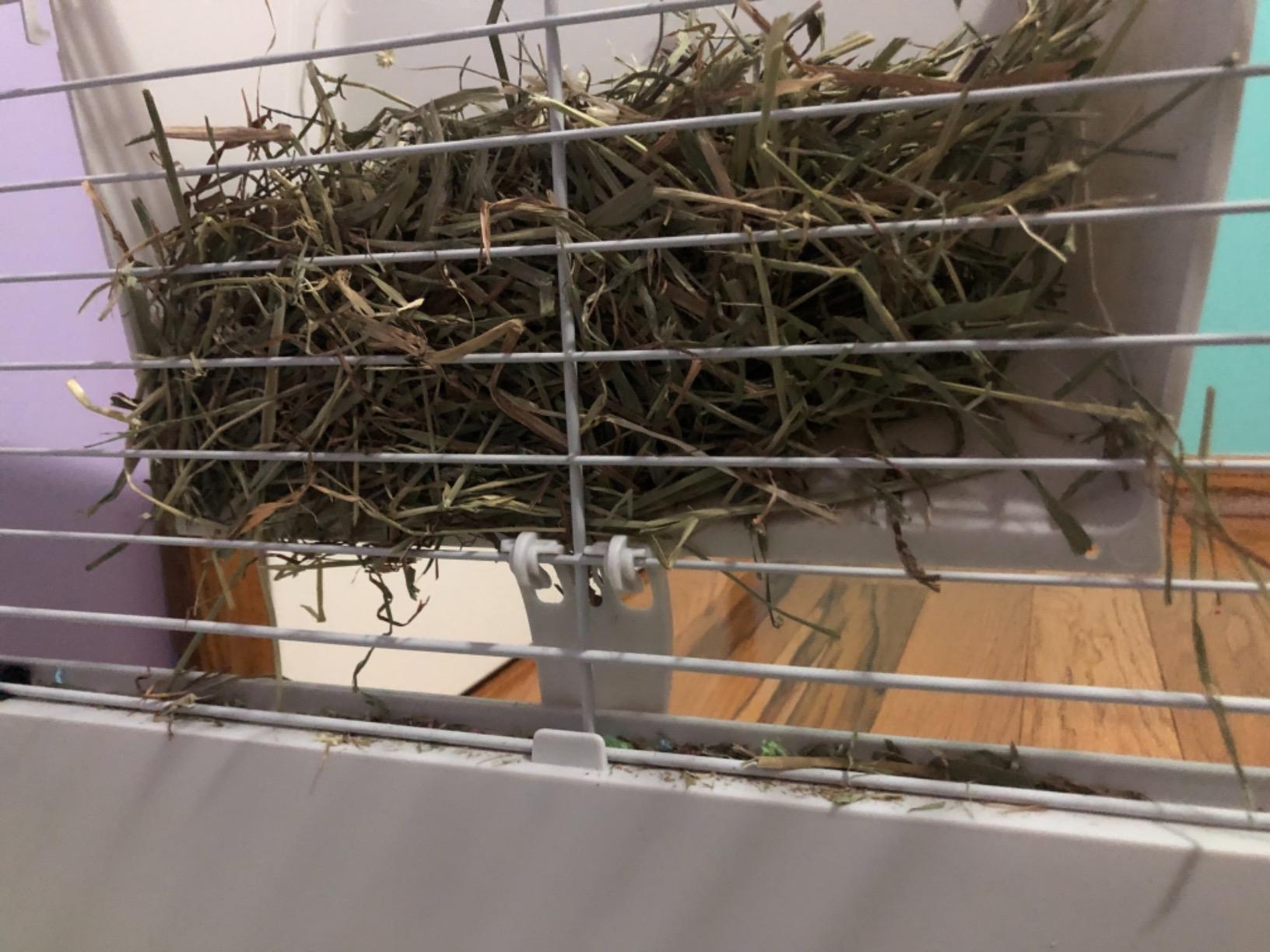
The deep 6-inch base is the feature that earns its place. Litter and hay scatter stay inside rather than across the floor, and the smooth plastic surfaces wipe down without scrubbing.
Front and side doors open fully, so cleaning access is good despite the small footprint. At 8.71 pounds it is the easiest cage here to lift, which matters for someone cleaning twice a week.
Think of this as a temporary habitat, a quarantine space, a carrier-style set-up for short stays, or a first home for a very young guinea pig that will move up quickly. For any of those jobs it is genuinely good value.
What to check before you buy it
Do the square footage maths before you commit, because 3.9 square feet will not grow. If you already have two pigs or plan to, this is not a purchase to make twice.
Note the absence of a top opening. Reaching the hideout means going through a side door, which is workable with a confident pig and much less pleasant with a nervous one.
Who should skip it
Skip it as a permanent adult home, full stop. Underfloor space drives everything from exercise to foot health, and no amount of loft or loft-style decoration makes up for a 3.9 square feet floor.
Skip it if your pet store habit is to keep buying bigger cages later. Buying this and then replacing it in a year is a more expensive path than buying the right size once.
7. MidWest Homes for Pets Deluxe Rabbit and Guinea Pig Cage XL – Best for Extension Builds
Midwest Homes for Pets Deluxe Rabbit & Guinea Pig Cage, X-Large, White & Red
47.16 x 19.68 inch floor
6.4 square feet
5.5-inch deep base
16.7 pounds
Pros
- Extension panels chain on for a bigger enclosure
- Comes with hay feeder and water bottle
- Feeding platform included
- 5.5-inch base contains litter
- Top and side door access
- 1-year manufacturer warranty
Cons
- Unsupported top can sag and pull hinges out of alignment
- Water bottle holder lets the bottle slide out
- Wire hay feeder drops hay when lifted
- Grid-textured floor is hard to scrub
This hutch is built around a chassis, which is why it is here. It accepts both wire and wood hutch extensions, so a single unit can become a long run or an L-shaped enclosure by adding panels rather than buying a new cage.
The base floor measures 47.16 by 19.68 inches for about 6.4 square feet. It is narrower than the Guinea Habitat Plus, so the same wall space gives you less floor, but the extension path is the reason to choose it.
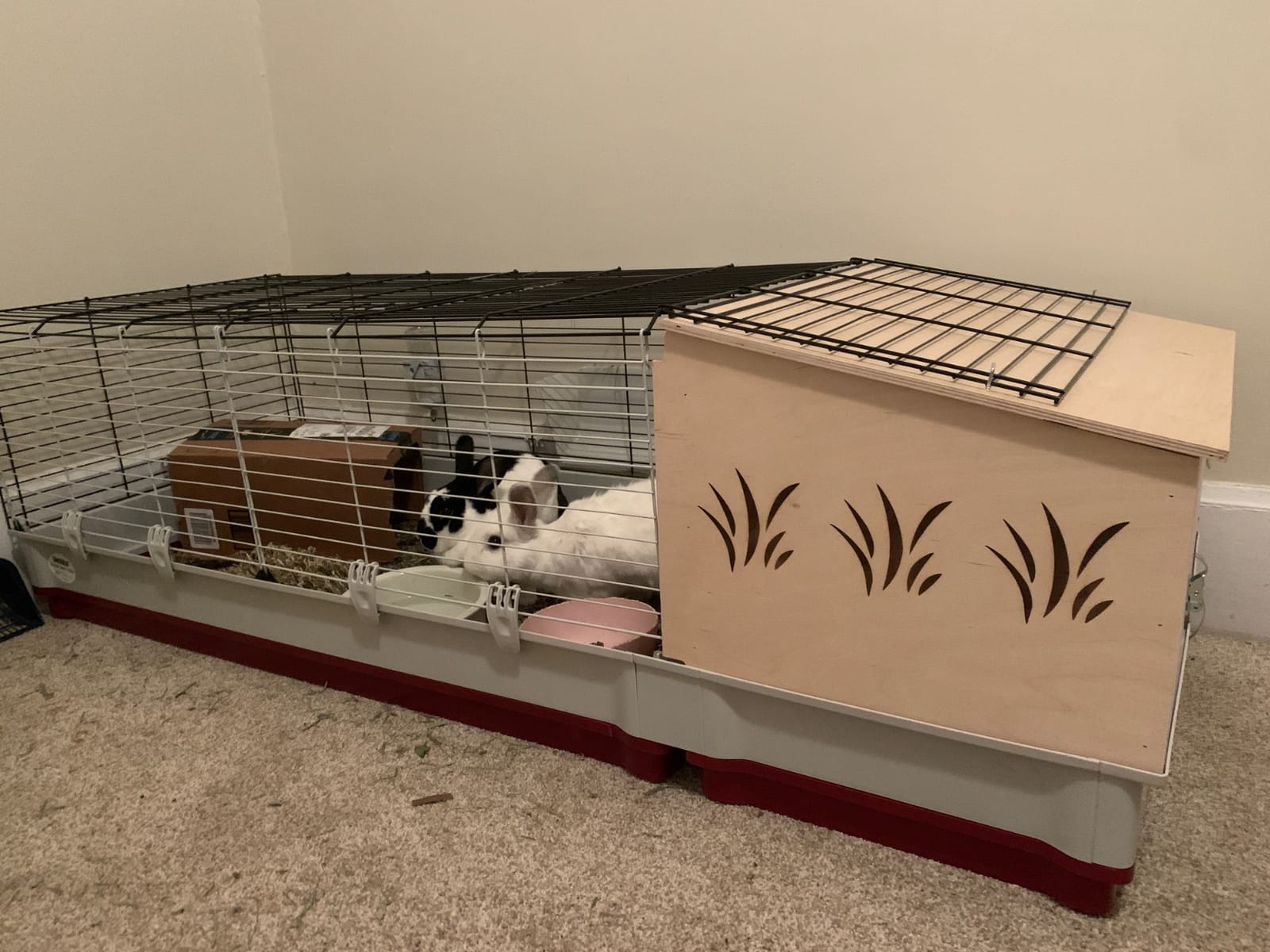
The 5.5-inch deep base is the most generous litter retention in this roundup, and that matters more than people expect in a room with hardwood or laminate flooring.
It also arrives equipped. A hay feeder, water bottle, feeding bowl and elevated feeding area are included, and the top and side doors plus a fold-up front entrance make access straightforward.
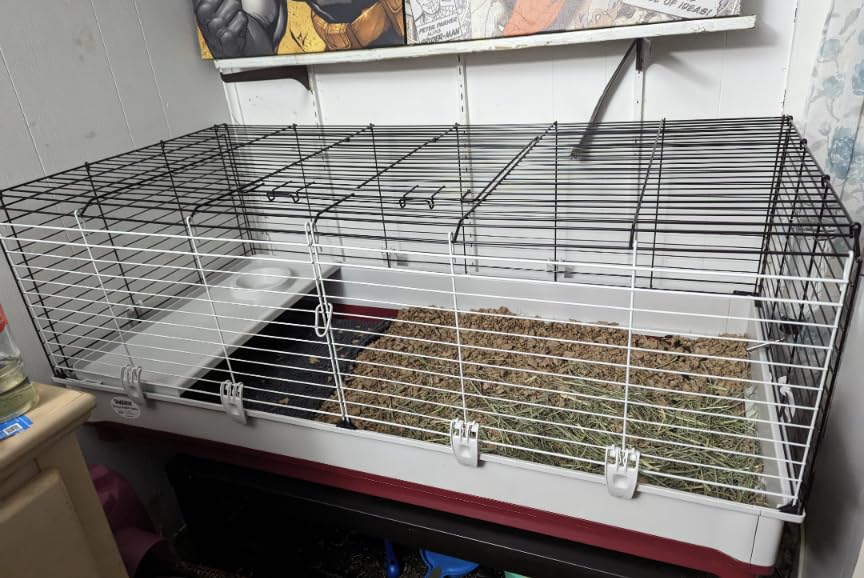
The single most reported problem is the top. With no support beams across it, the wire roof can sag over time and pull the door hinges out of alignment, so a light hand on the doors every few months is worth doing.
What to check before you buy it
Decide early whether you will be extending. If yes, this cage is one of the few on the list where the second purchase is designed to slot straight on, and owners report the join works without modification.
Plan to replace the hay feeder. A wire feeder that attaches only at the top tips and spills whenever it is lifted, which turns feeding into a daily small mess on the floor.
Who should skip it
Skip it as a two-pig home on its own. At 6.4 square feet it is under the 10.5 square feet most rescues set for a pair, and owners using it for two pigs generally do so with generous floor time outside the cage.
Skip it if you need something to move often. At 16.7 pounds and roughly four feet long, it is awkward to carry once loaded and needs two people to shift.
8. Aivituvin Two Story Rabbit Hutch with Wheels – Best for Indoor Hutch Style
Aivituvin Two Story Rabbit Hutch Bunny Cage with Wheels, Indoor Outdoor Guinea Pig Cage with 2 Deep No Leak Tray
44 x 19.7 inch footprint
6 square feet per level
Two no-leak trays
64 pounds
Pros
- Furniture-style wood that suits a living space
- Four casters with two locking brakes
- Two deep no-leak pull-out trays
- Lift-up roof and four lockable doors
- Central window for viewing
Cons
- Thin wood and weak joins flex when assembled
- Assembly diagram places ramps incorrectly
- Wood is not sealed for long-term outdoor use
- Sliding door latches break easily
This is the only product here that looks like furniture, which is why it wins a place despite the lowest tier of build quality among the cages. For some homes a hutch that a cavy can climb into is simply more acceptable than a wire pen in the middle of the living room.
At 44 by 19.7 inches each level gives about 6 square feet of floor. Stairs and a platform link the upper and lower decks, and the central viewing window lets you check on the animals without opening anything.
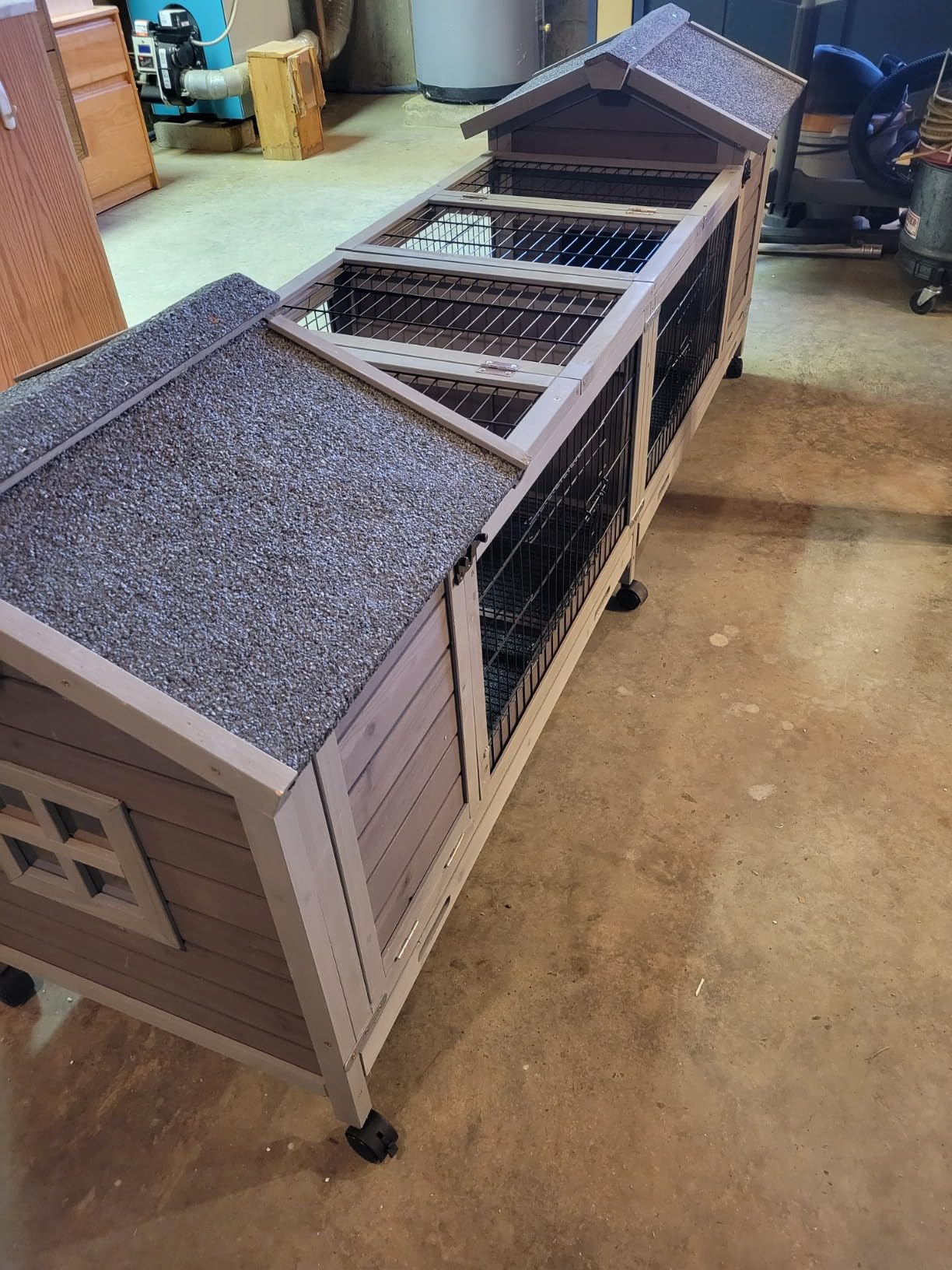
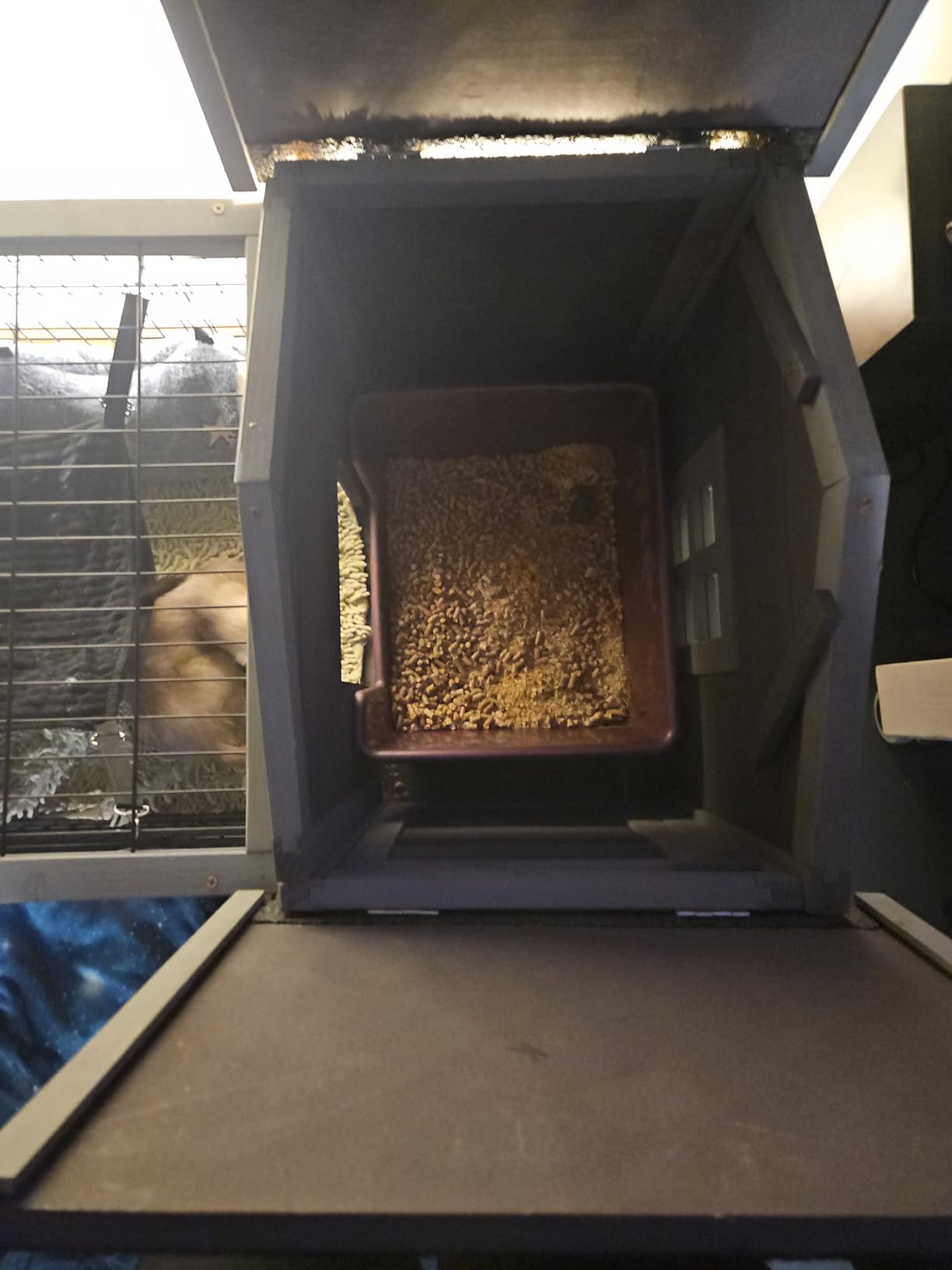
The trays are the reason it is here. Two deep no-leak plastic drawers pull straight out from the front, so cleaning takes minutes rather than a full disassembly, and the plastic cannot rust the way a metal pan will outdoors.
Four lockable front doors plus the safeguard lock and a rain-resistant roof on a metal hinge make it the most enclosed option in the roundup, and a real consideration in a house with children or other animals.
Be realistic about the wood, though. At 64 pounds this is by far the heaviest item on the list, and the panels are thin enough that determined chewing will eventually work through them unless there is always a chew toy available.
What to check before you buy it
Budget an hour for assembly and expect to improvise. Reviewers repeatedly report the diagram placing the ramps in the wrong positions, and several units arriving bowed with a gap in the back panel.
Check the casters before it is loaded. Two have locking brakes, which matter on carpet, and a hutch that rolls while a pig is inside is a genuine hazard.
Who should skip it
Skip it for outdoor housing. The wood is not sealed well enough for weather, and a cavy outdoors is a predator-stress decision that needs a much more robust shelter than a furniture hutch.
Skip it if your guinea pigs chew. Rabbits and rabbits-adjacent species chew wood readily, and once chewing starts the thin panels and the door latches become the first things to fail.
9. SONGMICS Pet Playpen – Best for Custom Shapes
SONGMICS Pet Playpen, Small Animal Playpen
56.3 x 28.7 inch footprint
11.2 square feet
36 panels, 40 connectors
20.28 pounds
Pros
- Panels reshape into almost any footprint
- 36 panels and 40 connectors included
- 100 zip ties allow a rigid frame
- Non-slip felt pads for stability
- Rubber mallet and illustrated instructions
Cons
- Bare wire mesh with no roof
- Supplied zip ties are thin and can snap
- Some panels bow without reinforcement
- No integrated door in the standard layout
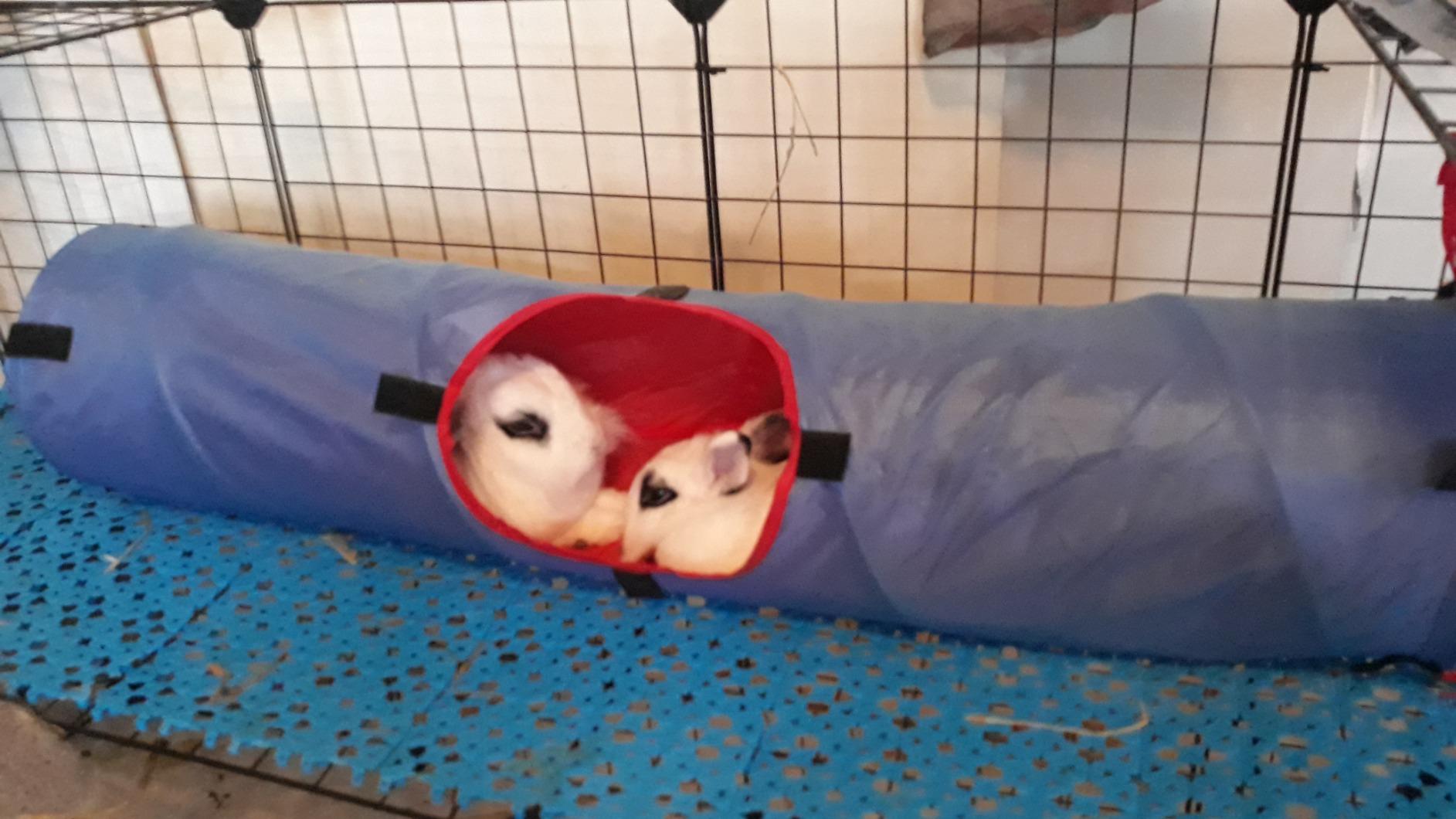
This is the pick if your room has an awkward corner, a chimney breast or a bay window. Thirty-six panels and 40 connectors let you build an L, a U or a stepped shape that follows the space rather than fighting it, and at 56.3 by 28.7 inches the full rectangle gives about 11.2 square feet.
It also reconfigures later. Owners start with one shape and rebuild as pigs, space or needs change, which is the flexibility a fixed commercial cage cannot offer.
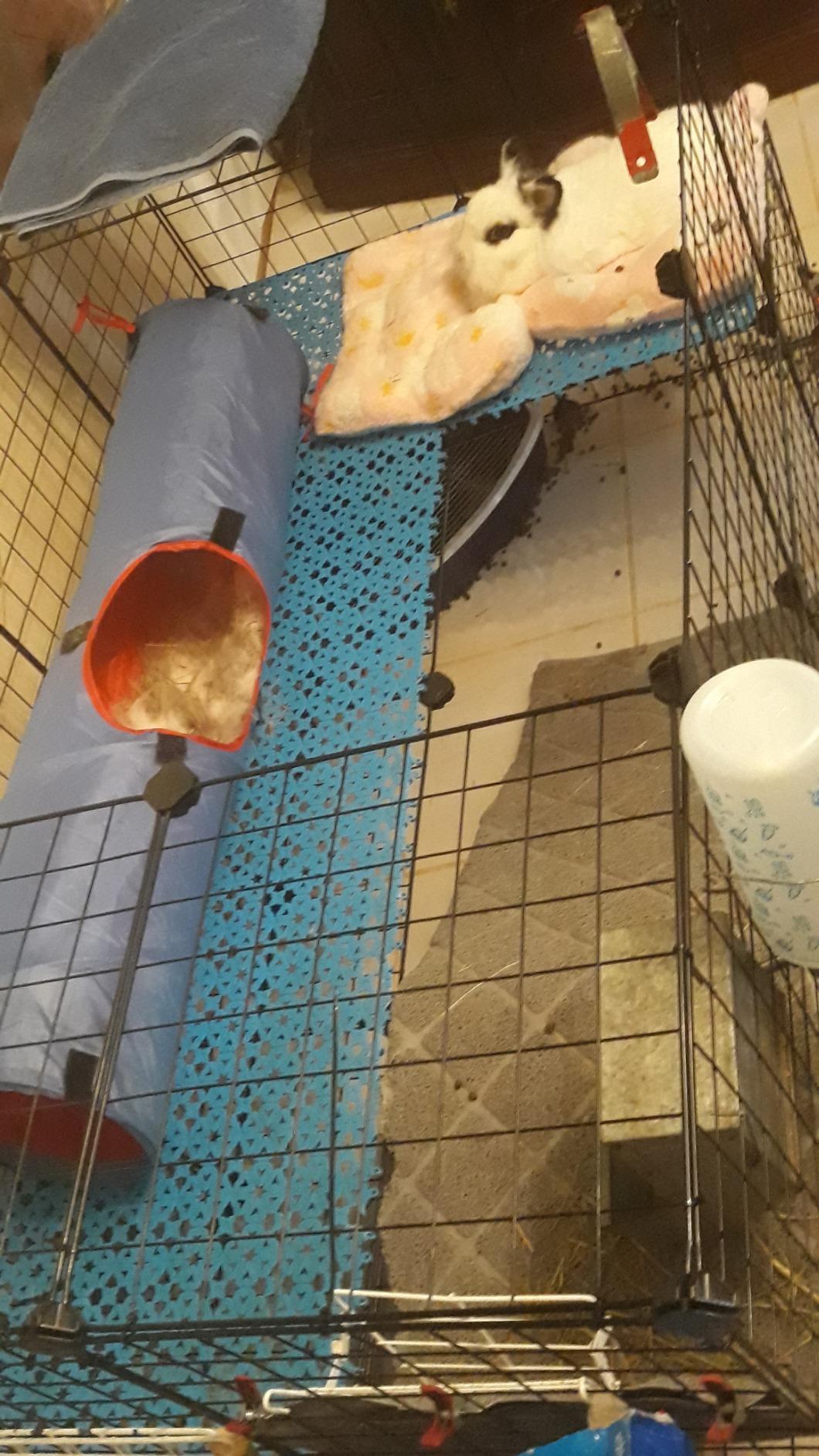
One hundred zip ties ship in the box, and using them at every joint is the difference between a frame that stays square and one that bows. Panels slot into the plastic connectors first, then get tied off, and the build takes an afternoon.
Non-slip felt pads on the connectors protect hardwood and tile, and the rounded panel edges reduce injury risk, which matters for animals that rush around corners at speed.
Two things are missing by design. There is no roof, and there is no integrated door in the standard layout, so you will need an access opening of your own making and a secure top if a cat shares the house.
What to check before you buy it
Add your own zip ties rather than trusting the supplied ones. Reviewers note the included ties are thin and can snap under tension, so a second pack of quality zip ties is a five-minute fix that prevents a lot of future wobble.
Measure the room and sketch the layout first. The value of this product is entirely in the planning, and a shape you have to force into a corner is worse than a plain rectangle.
Who should skip it
Skip it if you need a fully enclosed habitat on day one. No roof and no ready-made door means the pig-proofing work is on you, and a determined guinea pig will find a gap you did not think of.
Skip it if you need the pen to move rooms regularly. Panels must be assembled where they will live, and a 36-panel build is a two-person job with the rubber mallet.
10. VISCOO 12 Panels Small Animal Playpen – Best Low-Cost Start
VISCOO 12 Panels Small Animal Playpen, 48″ x 24″ x 16″ Guinea Pigs Cages
48 x 24 inch assembled
8 square feet
Half-inch mesh
Waterproof Oxford mat
Pros
- 12 panels reconfigure into different shapes
- Coated steel mesh at half-inch spacing
- Waterproof 600D Oxford mat included
- One internal door panel for access
- Suits indoor or outdoor use
Cons
- Connectors need firm tapping and zip ties
- No roof
- so the top is open
- Panels bow and hardware feels flimsier at 4.1 rating
- Instruction note about which edge faces down confuses buyers
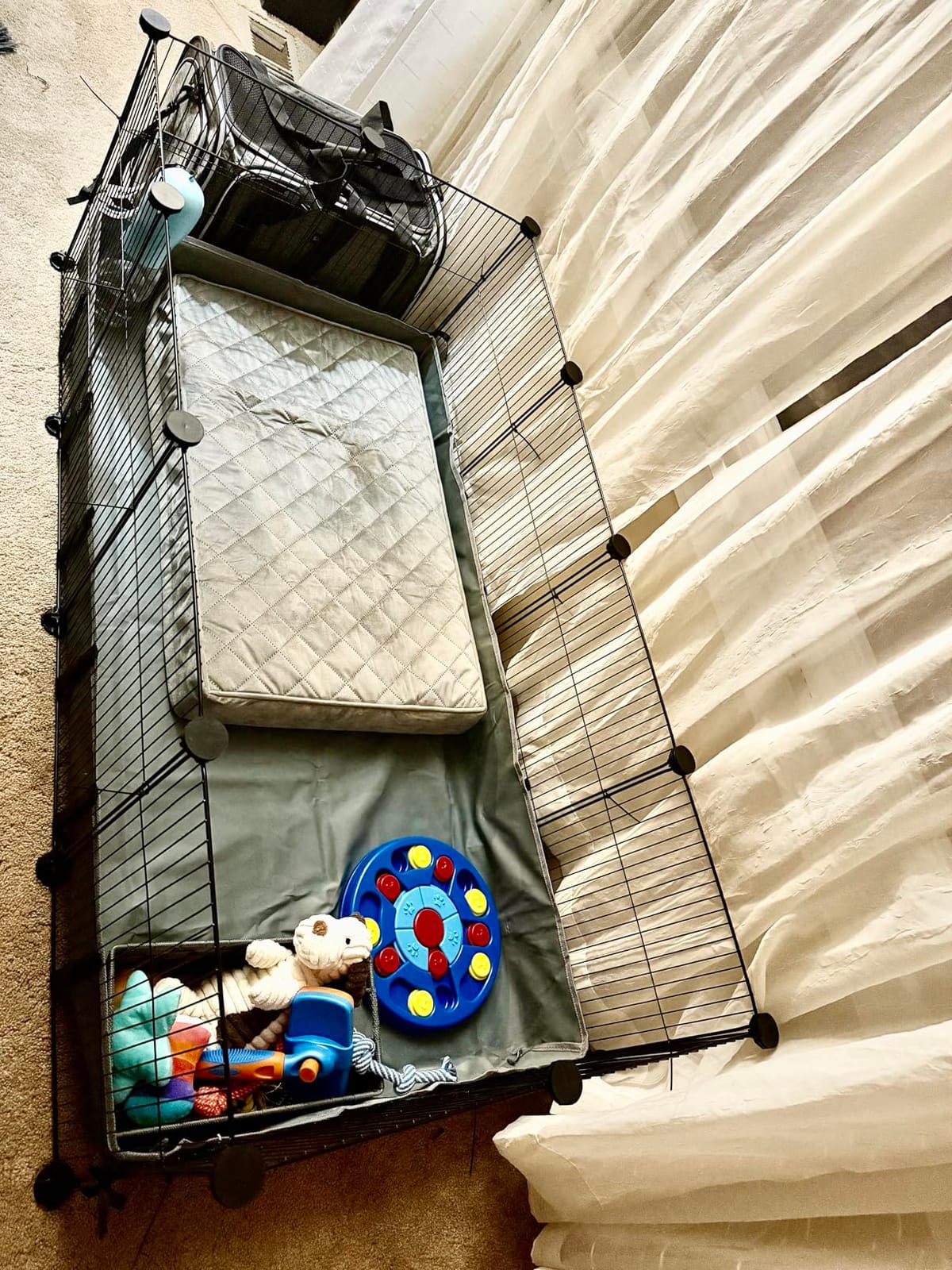
This is the cheapest way into the pen approach, and at 48 by 24 inches the assembled rectangle gives about 8 square feet, which is enough floor for a pair with sensible supplementation. The 12 panels can also be split into a narrower or L-shaped layout.
The included 24 by 48 inch waterproof mat is made from 600D Oxford cloth with a PVC coating, and it is the most useful thing in the box. It is wipeable, it protects your flooring, and it gives pigs something soft underfoot.
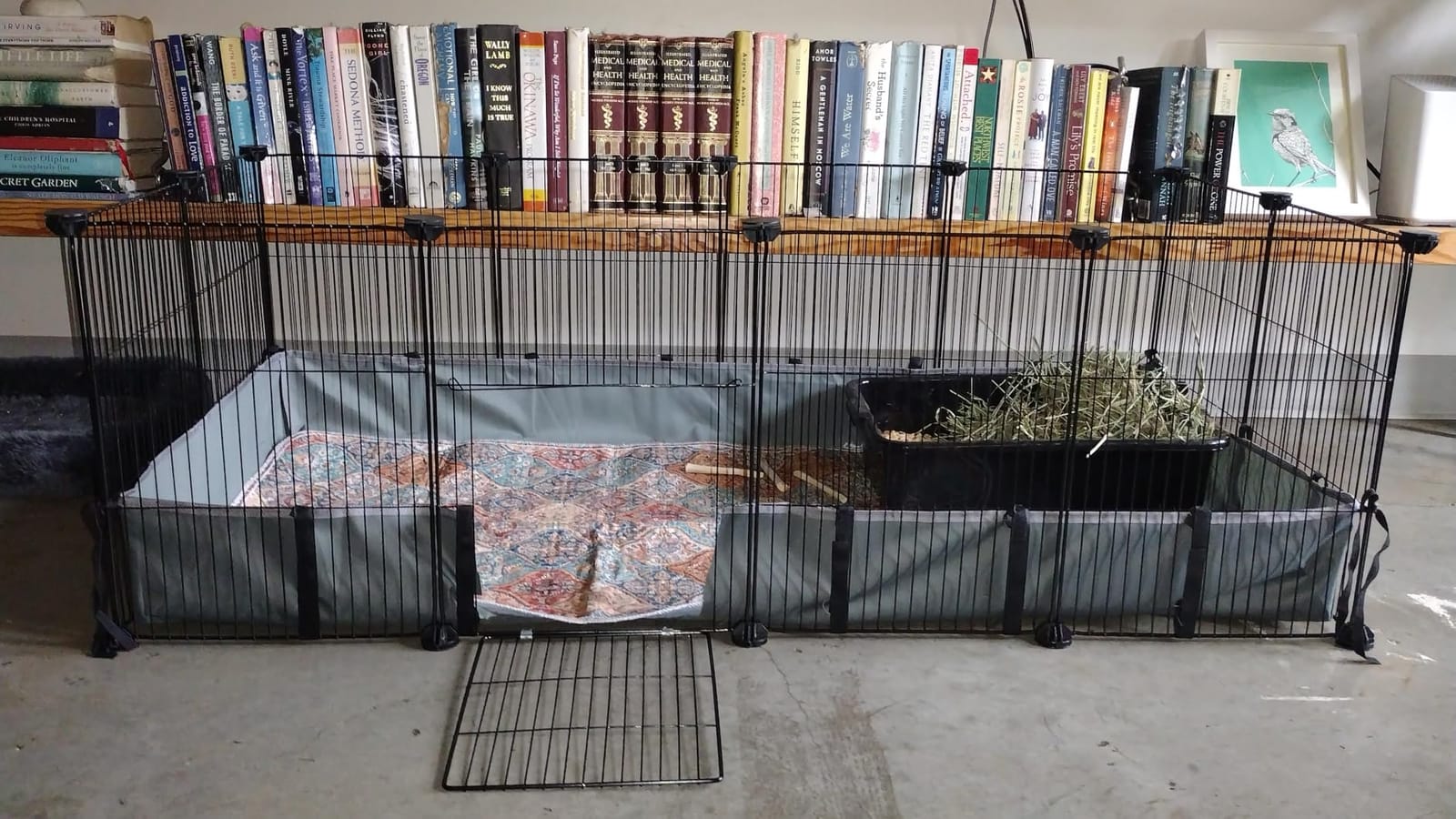
Mesh spacing of roughly half an inch is narrow enough that a pig will not get a head or a limb through it, which is a real consideration with smaller animals and curious babies.
One panel in the set is an internal door, so you have a genuine access point rather than lifting a pig out over the top edge. That matters more for daily spot cleaning than it sounds.
The weakness is build rigidity. The ABS connectors need to be tapped firmly with the supplied wooden mallet and then reinforced, and reviews split on how solid the finished frame feels. Add zip ties at every joint before the animals go in.
What to check before you buy it
Note which edge goes down. The instructions specifically say the 12-inch edge rather than the 16-inch edge should contact the ground, and getting this wrong changes the usable height immediately.
Add a roof or a secure top if a cat is in the house. There is no roof in the box, and an open pen is not safe in a multi-pet home.
Who should skip it
Skip it if you want a polished look or a product that simply works out of the box. This is a utilitarian pen, and the assembly is a genuine task rather than a ten-minute snap-together job.
Skip it as a first cage if you are not comfortable reinforcing joints. The 4.1 rating reflects exactly this, with reports of bowed panels and hardware that feels flimsy once a pig pushes against it.
How to Choose a Guinea Pig Cage: Floor Space, Solid Floors and Safe Bars
Start with floor area, because every other feature is secondary to it. Humane World for Animals sets a minimum of 7.5 square feet of continuous space for one adult guinea pig. Most rescue organisations, including Southern California Guinea Pig Rescue, work to higher figures once pairs are involved, and owners consistently say that 8 square feet is the smallest cage they would accept for two pigs.
The pattern is simple. One pig needs 7.5 square feet, two need at least 10.5, three need 13 and four need 15.5. Add about 20 percent on top of any of those if you can, because a cage that comfortably fits two pigs often stops working well the day a third arrives and you are back at square one.
The second thing to understand is that floor area is not the same as product volume. A tall four-level cage can have more cubic feet than a low wide one and still give a guinea pig less usable space, because cavies run horizontally. Height above about 14 inches adds security and headroom, not exercise.
The 3-3-3 rule, and why the welfare minimum is higher
The 3-3-3 rule is a popular sizing shorthand: three guinea pigs, at least three square feet each, each at least three months old before you count it as an adult. It is a decent starting framework, but three square feet per pig falls well below the 7.5 square feet per-pig guidance above.
Treat 3-3-3 as a floor for how many animals you might eventually keep, not as a target for one animal’s enclosure. The welfare minimum is the number to design your cage around.
C&C cages, and the C&C versus commercial cage question
A cubes and coroplast cage, usually shortened to C&C, is built by the owner. Corrugated plastic sheets called coroplast form the base and sides, and metal or plastic cube storage grids form the walls and roof. It is the most common setup in owner communities, and owners describe it as the gold standard for a reason.
Against a commercial cage, C&C wins on four counts. You can build to any floor area instead of accepting a fixed size, you can add or remove a row of grids as the herd changes, you get a rigid wipe-clean plastic floor that does not sag or stain like canvas, and the cost per square foot stays low as you build bigger.
Commercial cages win on two counts, and they are real. A packaged cage arrives in a box and needs ten minutes rather than an afternoon, and it looks finished in a living room. If you are not comfortable measuring and cutting coroplast, a commercial habitat or a pre-built panel cage is the right call.
Expansion is where the two approaches separate most clearly. A panel cage grows with a new sheet of plastic and a few extra grids. A commercial cage grows by buying a second unit, which is a larger second purchase and a shape the room decides for you rather than you deciding.
Solid floors versus wire floors
Never buy a cage with a wire floor, and treat a playpen of bare wire mesh as unfinished until you add solid flooring. Wire floors cause pododermatitis, commonly called bumblefoot, which is painful inflammation of the foot pads and one of the most common and most preventable conditions in guinea pigs.
Look for a solid plastic base or a washable canvas floor with fleece liners on top. Fleece is the most popular bedding among experienced owners, and it needs an absorbent wicking layer underneath so urine passes through rather than pooling against the cage floor.
Skip cedar and pine shavings entirely, and avoid cotton wool bedding and corn cob bedding, which are widely sold and all unsuitable. Paper bedding, fleece with a wicking layer, or kiln dried paper-based bedding are the safe shortlist.
What to avoid, in order of how often we see it
First, pet store starter kits sold as large or extra large. The single most common owner complaint in this category is that the internal space is far smaller than the marketing implies, which is exactly why we publish measured floor area for every pick above.
Second, glass aquariums, which offer no ventilation and no floor space. Third, multi-level cages with steep ramps sold for guinea pigs, because cavies are ground-dwelling and fall risk rises sharply with incline. Fourth, cages on casters without brakes.
Two more worth knowing: guinea pigs cannot use exercise wheels, so treat any listing that includes one as a red flag for research quality, and they should not be housed in a rabbit cage sized for a juvenile rabbit, since rabbits need far more floor space than a guinea pig does.
The accessories you actually need
One hideout per guinea pig, minimum, so each animal has somewhere to disappear. A hay rack positioned to keep hay off the floor, a sipper bottle checked daily for drips, a heavy ceramic bowl that will not tip, and a safe floor covering are the five things no cage should be without.
Spot clean daily, do a full bedding change every five to seven days, and wash fleece weekly. Ammonia builds up fast in a small space, and a well-ventilated, regularly cleaned cage is the single best defence against respiratory disease.
Finally, cat-proof anything that is not a fully enclosed habitat. Panel cages can take a lid of closet shelving, which owners on the Guinea Pig Cages forum community recommend as a simple and cheap solution, and every latch should be checked weekly.
Frequently Asked Questions
What is the 3-3-3 rule for guinea pigs?
The 3-3-3 rule is a popular sizing shorthand meaning three guinea pigs, at least three square feet of floor space each, and each pig at least three months old before it counts as an adult. It is a useful way to think about how many animals you may eventually keep, but three square feet per animal falls well below the welfare minimum of 7.5 square feet for one adult guinea pig. Size your cage to the welfare minimum, not the rule.
Why are Cu0026amp;C cages better for guinea pigs?
Cu0026amp;C, meaning cubes and coroplast, wins on four practical points. You build to whatever floor area you need instead of accepting a fixed size, you can add or remove grids as the herd changes, the coroplast base wipes clean and does not sag or stain like canvas, and cost per square foot stays low as the build grows. The trade-off is honest: it needs a measuring tape, a cutting tool and an afternoon, and it will not look finished in a living room.
What size cage do I need for 2 guinea pigs?
For two guinea pigs you want at least 10.5 square feet of continuous floor space, and more if you can manage it. In panel cage terms a 2 by 4 configuration, giving 10.5 square feet, is the standard entry-level build for a pair. A single MidWest Guinea Habitat Plus at about 7.8 square feet is commonly used for two babies with generous floor time, but most owners move up as the pigs grow.
What are the best indoor guinea pig cages?
For indoor use our top three are the MidWest Guinea Habitat Plus for the best balance of flat floor space and build quality, the Living World Deluxe Hybrid Habitat for the sturdiest construction and the lift-off top, and the Amazon Basics Jumbo Habitat for the largest single-level footprint at about 9 square feet. All three need a solid floor, and any of them needs a secure lid if a cat shares the house.
Can guinea pigs live in a rabbit cage?
Only if the rabbit cage is genuinely large and the flooring suits a guinea pig. A cage sized for a juvenile rabbit is almost always too small, because a rabbit needs far more floor space than a guinea pig of similar size. More important, many rabbit cages use wire flooring with a resting shelf, and wire floors cause pododermatitis or bumblefoot. A solid floor and a hideout are essential, not optional.
Do guinea pigs need a cage with levels?
No, and levels should not be counted toward the space a guinea pig needs. Guinea pigs are ground-dwelling animals that run, stretch and popcorn horizontally, so continuous floor space matters far more than height. A loft or balcony is a useful addition for enrichment, but a steep ramp introduces fall risk and the upper deck is not a substitute for more ground floor.
Final Verdict on the Best Guinea Pig Cages in 2026
The best guinea pig cages in 2026 come down to floor space, a solid floor and hardware that holds up. Buy the MidWest Guinea Habitat Plus for the strongest all-round balance, the Living World Deluxe Habitat if build quality is your priority, or the Amazon Basics Jumbo Habitat if you want the most ground floor for the least outlay.
Whatever you choose, measure the internal dimensions, confirm a solid base, and start at 10.5 square feet if you are housing a pair. Check in again when the third pig arrives.