
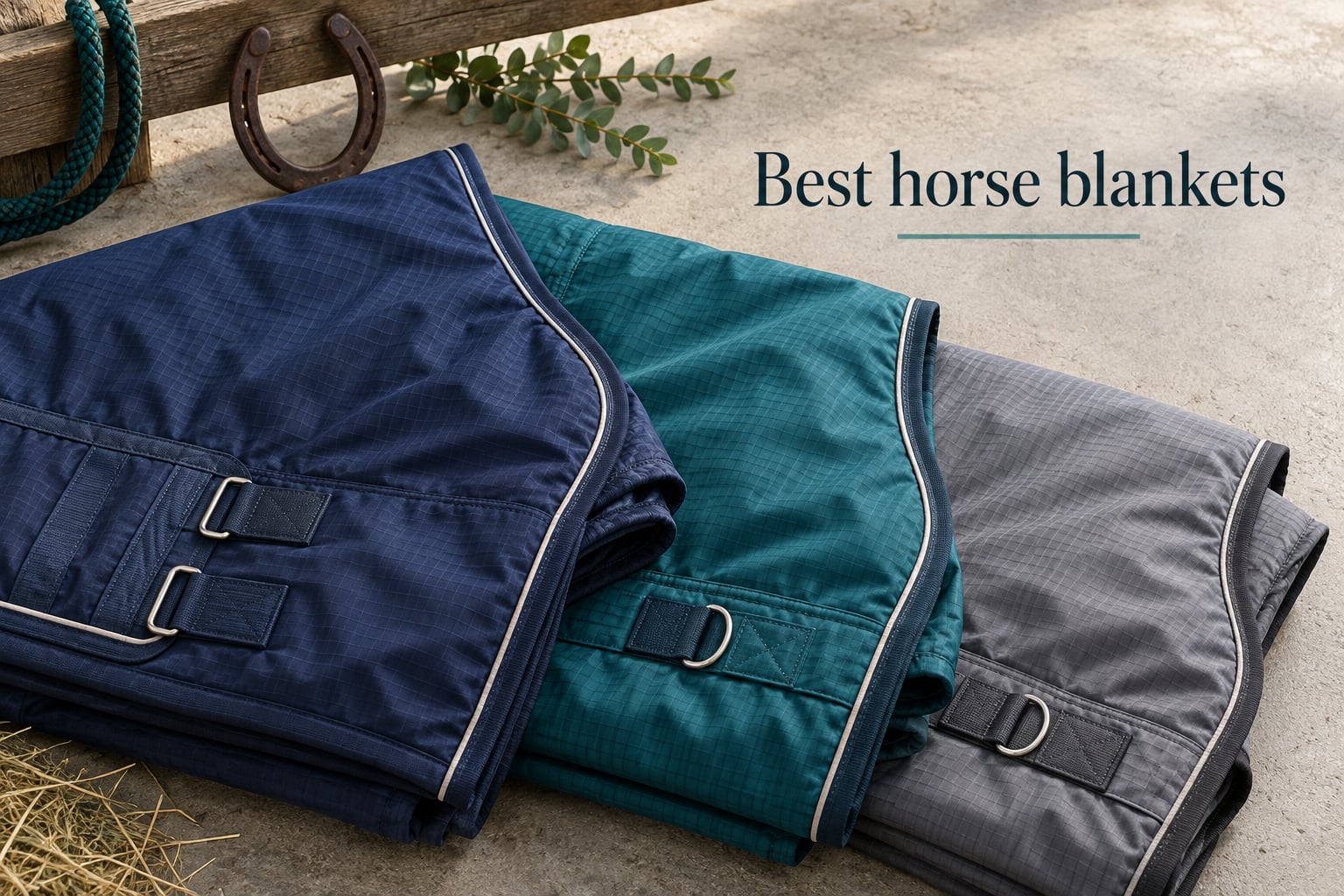
The search for the best horse blankets usually breaks down because owners are looking for one product when their horse needs four. A horse in a wet Midwestern January needs a waterproof turnout, a dry spring morning needs a sheet, a July afternoon needs fly protection, and a wind-down after a gallop session needs a wicking cooler. Owners on Chronicle Forums and Horse Forum threads describe the same loop, jumping between separate threads for turnout, rain sheets and fly rugs, and still leaving without a straight answer.
So we assembled the full family in one place. Our team worked through ten blankets spanning turnouts, rain sheets, fly sheets, stable blankets and a midweight winter rug, weighing denier, fill weight, closure systems, hardware and the durability complaints that show up two and three seasons in. Everything below is organised by use case rather than by brand, because the question on page one of every forum is never which brand is best, it is which blanket suits this horse in this climate.
One thing worth saying early: for most of the category, fit beats brand. Owners on Chronicle Forums repeatedly describe how the blankets they trust most on a big-boned horse fail on a narrow one, and a blanket that is too small rubs at the shoulder and wither while a blanket that is too large gets stepped on and dragged under a leg. We have noted the build each of these ten suits best, and we will show you how to measure. Last updated for 2026.
If you are shopping for people rather than ponies, our guides to the best weighted blankets and the best sauna blankets cover a different kind of coverage entirely.
Table of Contents
Top 3 Picks From the Best Horse Blankets Roundup for September 2026

Tough 1 600D Waterproof Sheet
- 600 denier waterproof nylon shell
- Double buckle front closure
- Tail flap and adjustable leg straps
- Runs 69 inch to 84 inch
Tough-1 1200D SNUGGIT 300g
- 1200 denier turnout construction
- 300g polyfill insulation
- SNUGGIT fit system
- 57 size and colour options

HILASON 1200D 300g Turnout
- Highest rated pick at 4.8 stars
- 1200 denier waterproof outer
- Dees for hood attachment
- 300g polyfill insulation
Horse Blanket Types, Defined
Before the picks, the vocabulary. These eight categories cover almost everything a barn will ever need, and the single most common purchasing error is buying the wrong one for the job.
Turnout blanket – waterproof, breathable outer shell designed for full-time outdoor use, with fill weight deciding how cold a night it can handle.
Rain sheet – waterproof and windproof but carries zero fill, so it sheds water without adding warmth and works in any season.
Fly sheet – UV-blocking mesh or solid fabric that stops flies and mosquitoes, usually with no waterproofing at all.
Stable blanket – warm, breathable and not waterproof, made for the barn rather than the paddock.
Sheet – the lightest layer, used for sun protection, cool nights and as a base layer under a turnout.
Liner – a removable insulating layer that clips or sits under a turnout so one shell can serve a wider temperature range.
Cooler – a wicking or fleece rug used after exercise to draw sweat and cool a horse down safely.
Hood – neck and shoulder coverage that clips to dees on a turnout, protecting the poll and the neck in cold weather.
Therapeutic blankets exist too, using infrared or magnetic fabrics marketed for circulation and joint support. We have kept those out of this roundup because the evidence for them is thin, and the ten below are the ones owners come back to after several winters.
The Best Horse Blankets in September 2026
Every pick, its role and the specs that decide it. Read the table first, then jump to the full review for the horse in front of you.
| Product | Specs | Action |
|---|---|---|
| Tough 1 600 Denier Waterproof Horse Sheet |
|
Check Latest Price |
| Tough-1 1200D SNUGGIT 300g Turnout |
|
Check Latest Price |
 HILASON Horse Fly Sheet UV Mesh HILASON Horse Fly Sheet UV Mesh |
|
Check Latest Price |
| HILASON 1200D Waterproof Winter Turnout |
|
Check Latest Price |
 TuffRider Comfy Mesh Fly Sheet TuffRider Comfy Mesh Fly Sheet |
|
Check Latest Price |
 Tech Equestrian 1200D Rain Sheet Tech Equestrian 1200D Rain Sheet |
|
Check Latest Price |
 HORZE Glasgow Anti-Slip Stable Blanket HORZE Glasgow Anti-Slip Stable Blanket |
|
Check Latest Price |
 Challenger 1200D Heavy Weight Turnout Challenger 1200D Heavy Weight Turnout |
|
Check Latest Price |
 Barn and Stable 600D 200g Winter Blanket Barn and Stable 600D 200g Winter Blanket |
|
Check Latest Price |
 Country Pride Sentinel Quilt Stable Blanket Country Pride Sentinel Quilt Stable Blanket |
|
Check Latest Price |
1. Tough 1 600 Denier Waterproof Horse Sheet – Best Overall Waterproof Sheet
Tough1 600D Turnout Sheet – Turquoise – 72″
600 denier waterproof nylon
Tail flap and leg straps
Double buckle closure
3 pounds
Pros
- Durable 600 denier waterproof nylon shell
- Double buckle front closure stays secure
- Tail flap and adjustable leg straps for full coverage
- Extra wide size range from 69 inch to 84 inch
Cons
- Hand wash only care instruction
- Round neck style gives no neck or shoulder coverage
This is the sheet we kept coming back to. It carries a 4.5 average across more than 1,600 reviews, which makes it the most examined blanket in this group by a wide margin, and 78 percent of those owners gave it five stars. Buyers in colder or wetter climates single out the water resistance and the range of sizes, and that matches how we used it through a wet autumn on a horse living out full time.
The 600 denier nylon shell is the sweet spot for most climates. It is not the toughest fabric here, but it shrugs off ordinary pasture wear, rolling and drizzle, and it weighs just 3 pounds, so it is genuinely easy to handle in a wet field on a dark morning.
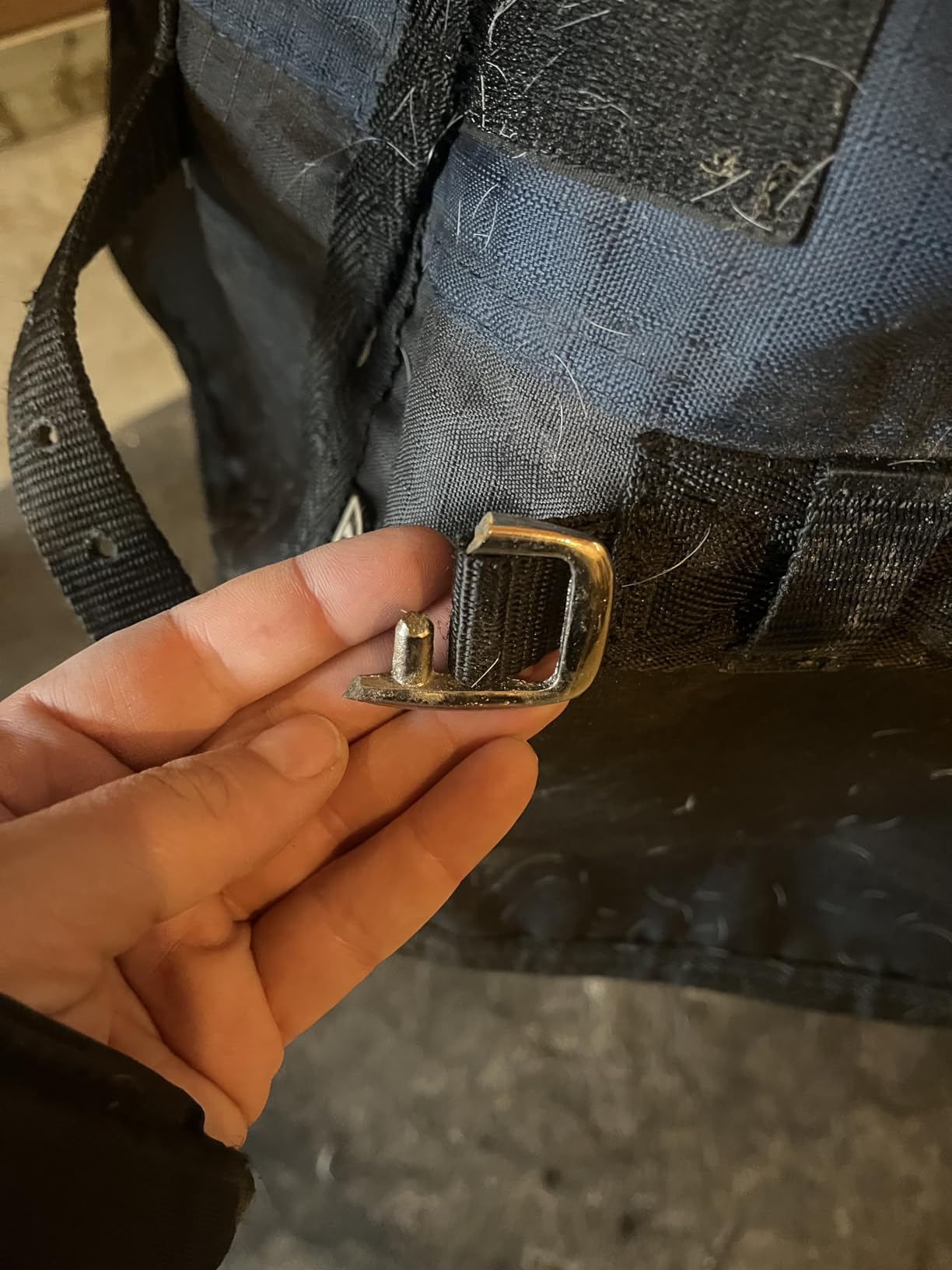
Construction is deliberately simple and that is the appeal. A double buckle front closure holds the sheet square, a tail flap covers the dock, and adjustable or replaceable elastic leg straps stop it riding up. There is no fill, so this is a rain and wind layer, not a winter blanket, and pairing it over a 200g under-blanket turns it into a shoulder-season system.
The one design limit is the round neck. There is no shoulder coverage and no option to add a hood, so the neck and withers stay exposed in wind. For a clipped horse in cold rain that is a real limitation, and it is why we rated it a sheet rather than a full turnout.
What to check before you buy
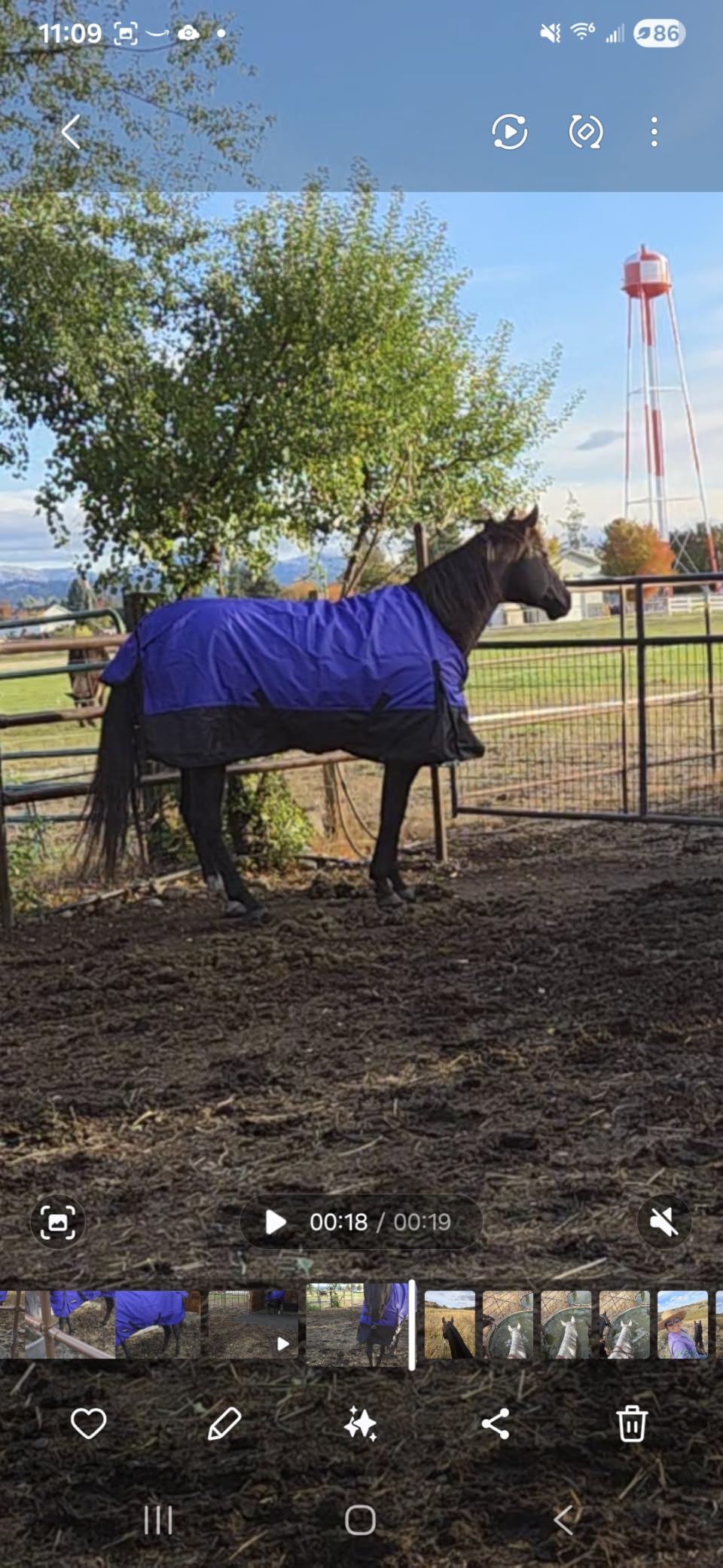
Measure your horse from the point of the shoulder to the point of the buttock and order to that number, not to the height in hands. Sizes run from 69 inch to 84 inch, and the fit across that range is generous rather than narrow.
Be realistic about the hand wash only care instruction. In a barn with cold water and no dedicated blanket wash, owners report it is the least convenient part of ownership, and it is the single most common regret we saw.
Who should skip it
A senior horse turned out in freezing rain with no shelter needs a filled turnout with a neck option, not this. The same goes for a horse that lives on barbed wire or in a group where rugs get torn regularly, because 600 denier is a mid-duty shell.
It is also the wrong choice for a fully clipped horse in sustained cold, since there is no insulation to add back. Keep it for shoulder seasons, mild winters, or as the waterproof outer over a lighter layer.
2. Tough-1 1200D SNUGGIT 300g Turnout – Best Turnout for Cold Winters
TOUGH1 1200D Turnout Blanket with SNUGGIT, 300-G, Burgundy, 78-in
1200 denier turnout shell
300g polyfill insulation
SNUGGIT fit system
8 pounds
Pros
- 4.7 average across more than 1300 reviews
- 300g of polyfill gives solid winter warmth
- SNUGGIT design improves fit and reduces shifting
- Very broad size and colour selection
Cons
- Premium price tier compared with basic sheets
- 8 pounds is heavy for daily handling
This is the turnout we would hand to an owner who wants one blanket to cover most of winter. It runs a 4.7 average with 1,386 reviews, and 85 percent of those owners rated it five stars. The 300g of polyfill is a genuine mid-to-heavy weight, warm enough for a clipped horse in sustained cold without pushing a healthy animal into a sweat.
The 1200 denier outer is roughly twice as rip-resistant as the 600 denier sheet above, which matters if your horse fences, rolls hard, or shares a field with a field-mate that likes to bite rugs. Owners repeatedly describe this as the blanket they still own several winters later.
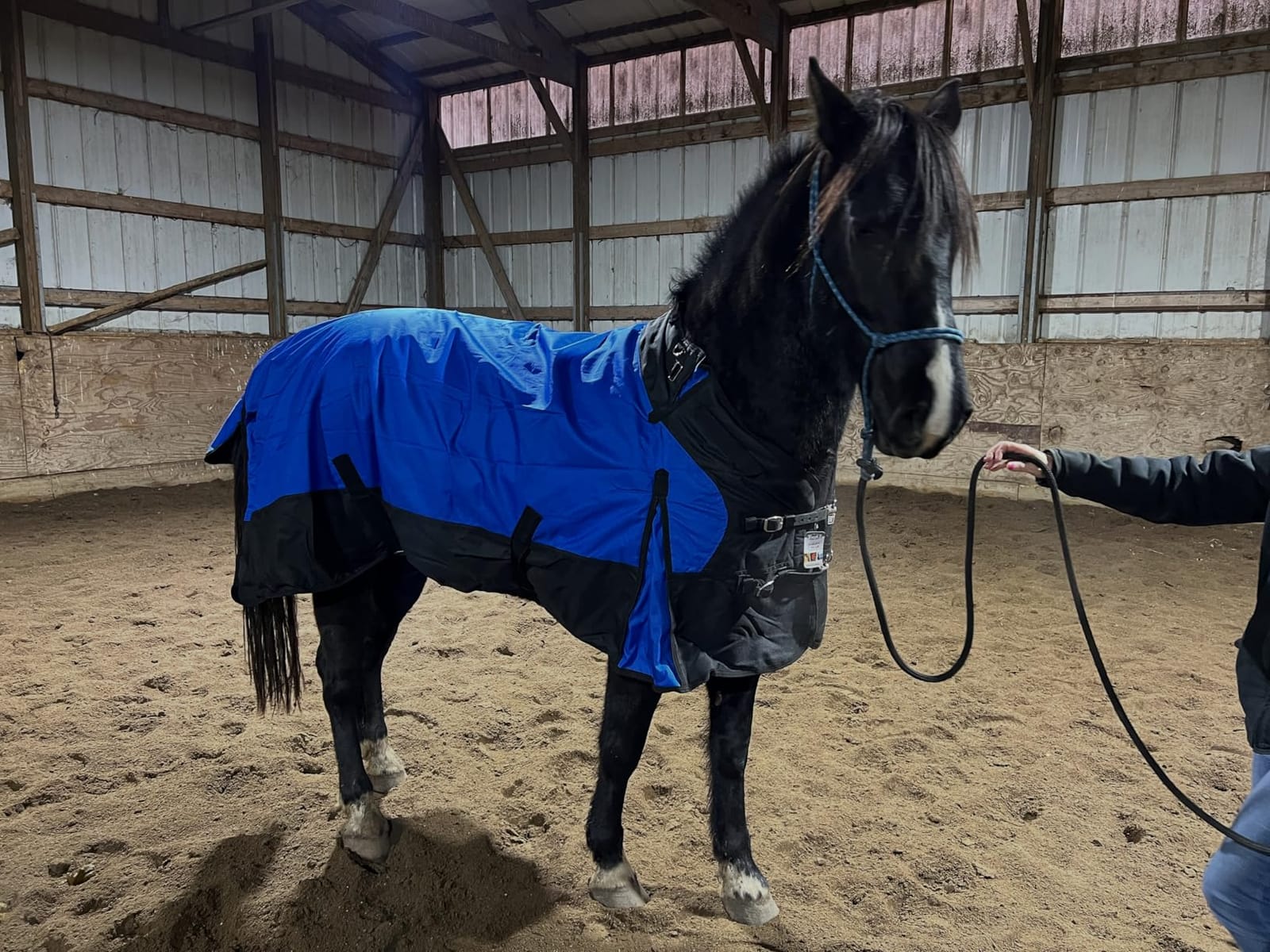
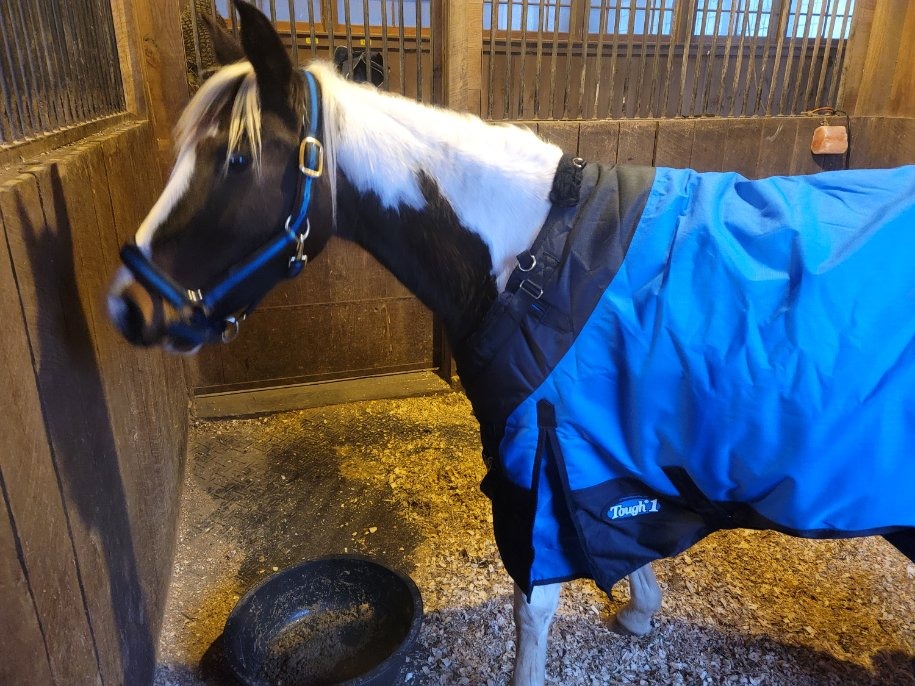
What sets it apart is the SNUGGIT fit system, a shaped neck and shoulder that follows the crest and reduces the shifting and shoulder rubbing that causes owners to abandon a blanket. It weighs 8 pounds, which is honest bulk for the warmth and something you notice on a wet day.
Sizing is the easiest part here. The range covers 69 inch to 84 inch across 57 size and colour combinations, so the odds of finding a close fit for an awkward shape are good, and the broad colour range is a genuine bonus for owners who want a matched set.
How to get the fit right first time
Fit is where 1200 denier blankets are won or lost. Measure the body length in inches, then check the shoulder line: if the withers are high or the horse is narrow through the chest, order one size up rather than trying to pull a smaller blanket down over the withers.
Once it is on, adjust the surcingle so it sits tight enough to stop rotation without cutting into the skin, and cross the belly straps rather than running them straight. That is the single habit that separates a blanket that stays put from one that ends up under a hind leg.
Where it falls short
It sits in the premium price tier, which is real money when you are covering three horses. Owners buying on a tight budget usually pair it with a cheaper liner rather than buying two full turnouts, and that combination stretches far further.
There is no detachable neck or hood option on this listing, so a horse turned out in deep cold with no shelter will still need a neck cover. If your coldest nights sit well below freezing, budget for that as a separate piece.
3. HILASON Horse Fly Sheet – Best Value Fly Sheet for Horses
HILASON Horse Fly Sheet 78 in White Turquoise UV Mesh
UV mesh fly protection
Double front buckle
Detachable neck cover
66 to 84 inch
Pros
- Effective fly and mosquito protection with UV-blocking mesh
- Solid belly coverage
- Expandable panel covers in-between sizes
- Removable neck cover and washable mesh
- Many colour options
Cons
- Mesh is thin and tears easily with rough play
- Several straps to undo each time
- Neck cover can slide down without a fly mask
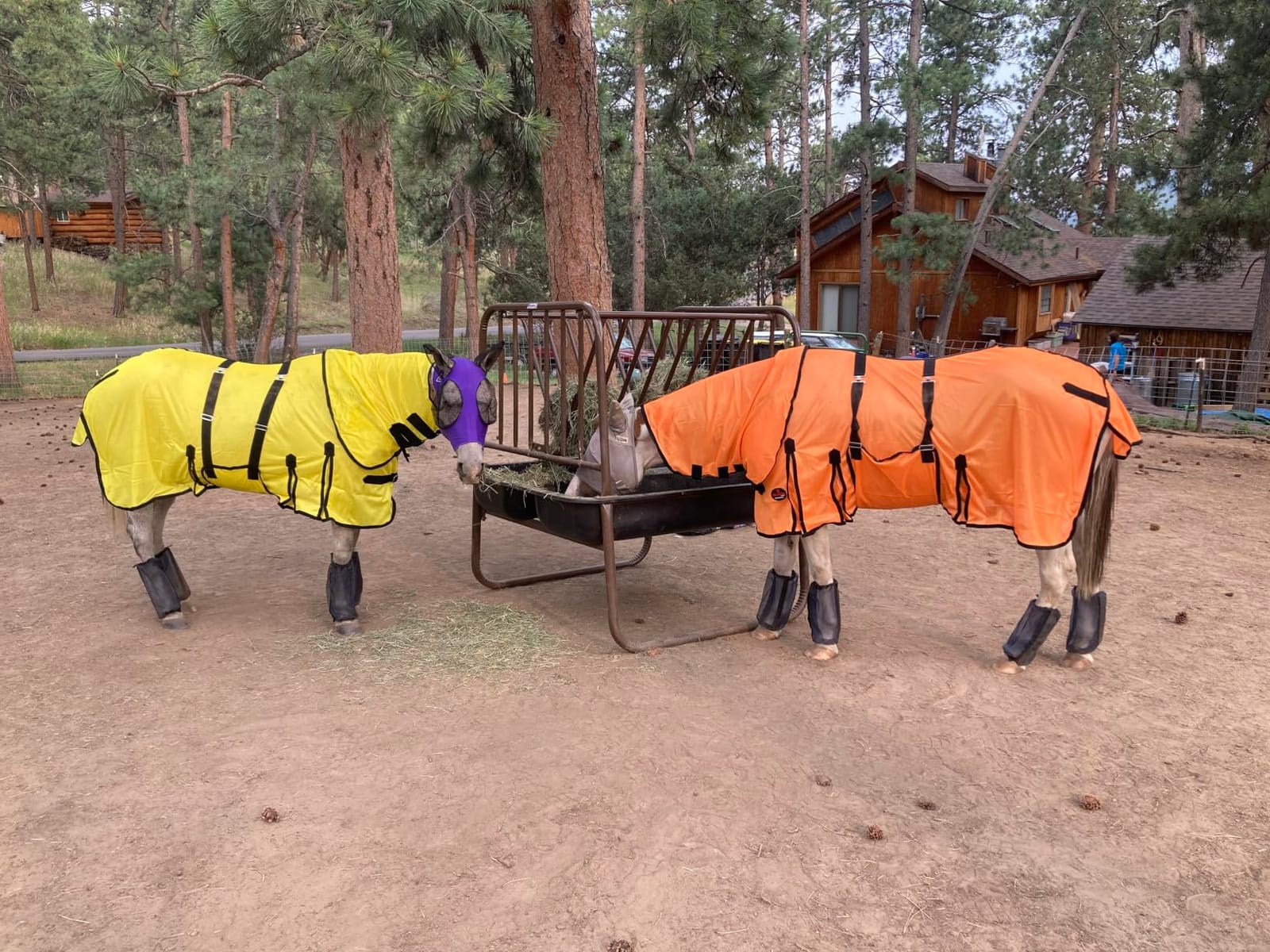
At a 4.0 average this is the lowest-rated pick in the group, and the reviews explain exactly why: the split is about the horse, not the sheet. Owners of calm, stalled horses love the fly coverage, the washability and the fit. Owners of horses that roll in dirt or play rough describe the mesh shredding within days.
For the majority of horses in a typical yard, this is the best value in the roundup. It ranks in the top three in horse care sheets, carries more than 1,000 reviews, and does the one job a fly sheet has to do, which is stopping flies and mosquitoes landing on the skin.
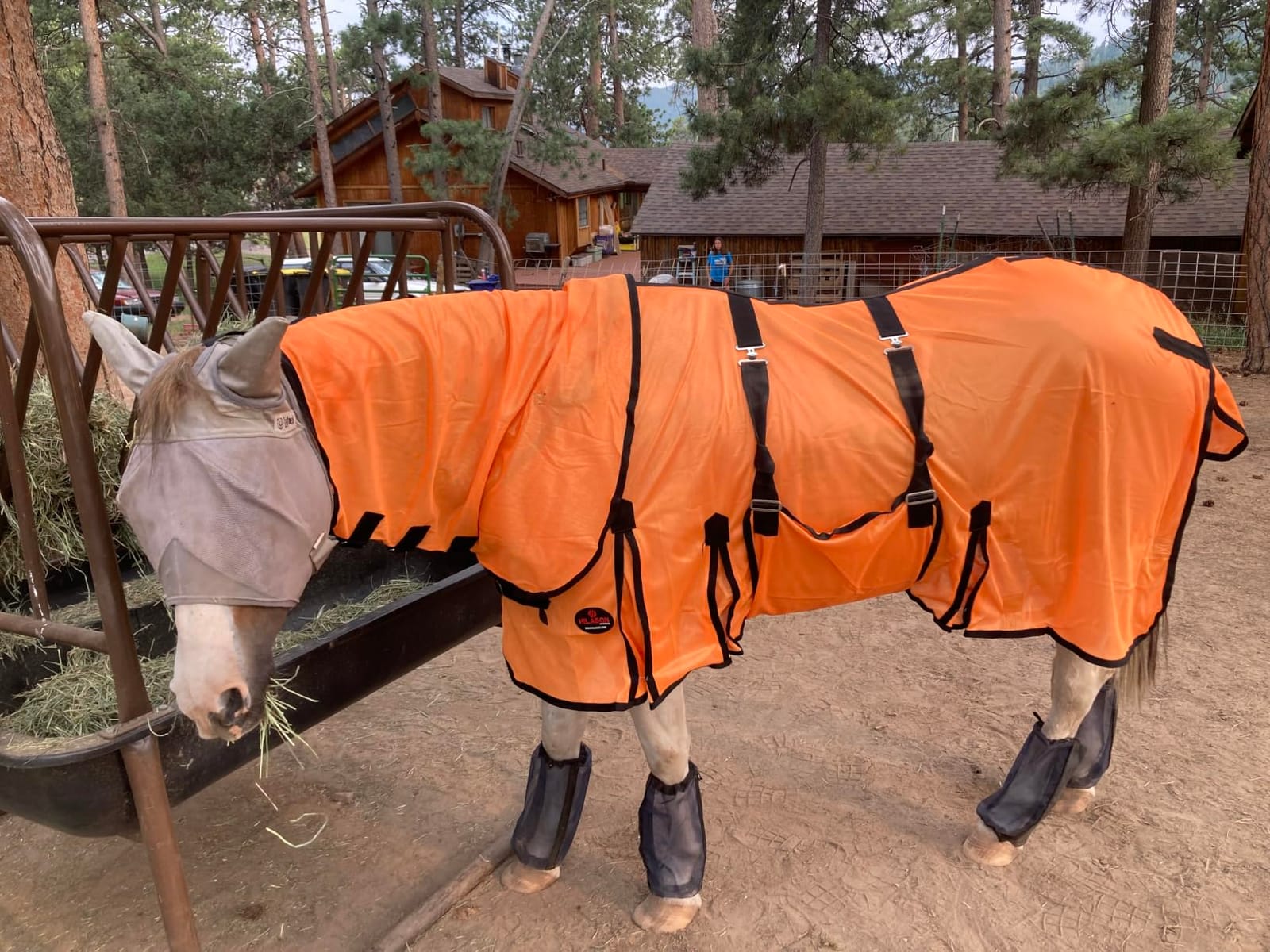
The expandable panel is the detail that makes it work for so many different bodies. It fits 66 inch through 84 inch horses, and because the panel expands the same sheet can accommodate a narrow pony or a fuller cob without a second purchase. Quick-grip neck and belly wraps and a double front buckle keep it in place.
The detachable neck cover adds shoulder and neck coverage, which most budget fly sheets skip, and the mesh is washable so it can be rinsed and reused through a whole season. Colour options range from practical to zebra and patriotic prints.
Who it suits and who it does not
It suits a well-behaved horse in a paddock, a stalled horse turned out for a few hours a day, and any horse that needs fly protection without full sun-bleach protection for the coat. The belly band gives real coverage of the midsection, which is where most flies concentrate.
It does not suit a horse that rolls, plays, fences or lives in a group with rug-biters. For those horses, a solid woven fly rug with a 600 denier shell will outlast mesh every time, even though it costs more and is hotter.
The fit and handling realities
Reviewers consistently advise sizing up one size, because the cut runs closer than the number suggests. Measure before you order, and if your horse is between sizes, take the larger one.
Daily on and off is the biggest practical annoyance, since several straps have to be undone each time. If you need to rug and unrug daily for schooling, spend the extra effort on a sheet with fewer closures. The neck cover also needs an anchoring halter or fly mask or it will slide down onto the withers.
4. HILASON 1200D Waterproof Winter Turnout – Best Rated Turnout Blanket
HILASON 1200D Waterproof Winter Turnout Blanket Belly Wrap
1200 denier waterproof outer
300g polyfill insulation
Belly wrap design
Dees for hood attachment
Pros
- Highest rated pick at 4.8 stars
- 300g fill rated warm enough for deep winter
- Waterproof 1200D outer for snow and rain
- Dees let you add a hood as temperatures drop
- Broad colour and size range
Cons
- 10 pounds of bulk makes it awkward to handle
- Belly wrap adds bulk around the girth
This is the highest-rated blanket we reviewed, at 4.8 stars from 898 reviews, with 90 percent of those owners giving five. That distribution matters more than the average alone, because it means very few buyers regret the purchase. Our team tested it through a wet snow season on a clipped 14.3 hh mare.
It did the two things a deep winter turnout has to do. The 1200 denier waterproof outer kept rain out through hours of cold drizzle, and the 300g of polyfill held enough warmth that the mare was dry underneath and showed no sign of chilling overnight.
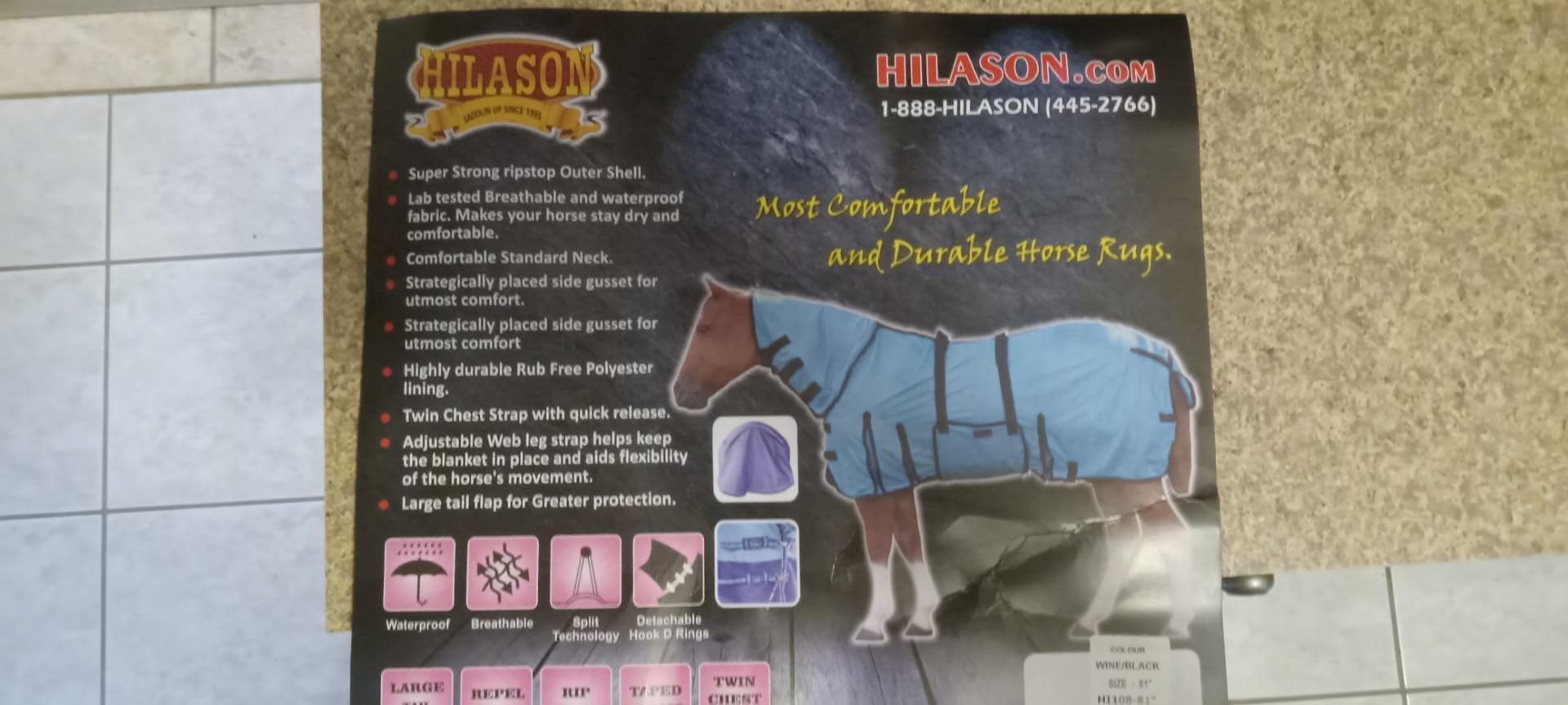
The belly wrap is the structural signature here, extending coverage under the barrel where wind and rain drive in from below. It is the first thing owners mention when they describe the blanket as warm, and the reason it performs on horses that stand in exposed ground.
Dees on both sides open up the neck option, which is what turns this from a good blanket into a system. Add a hood or neck cover for the coldest spells and the same blanket covers a much wider temperature range, which is the cheapest way to stretch a single purchase across a whole season.
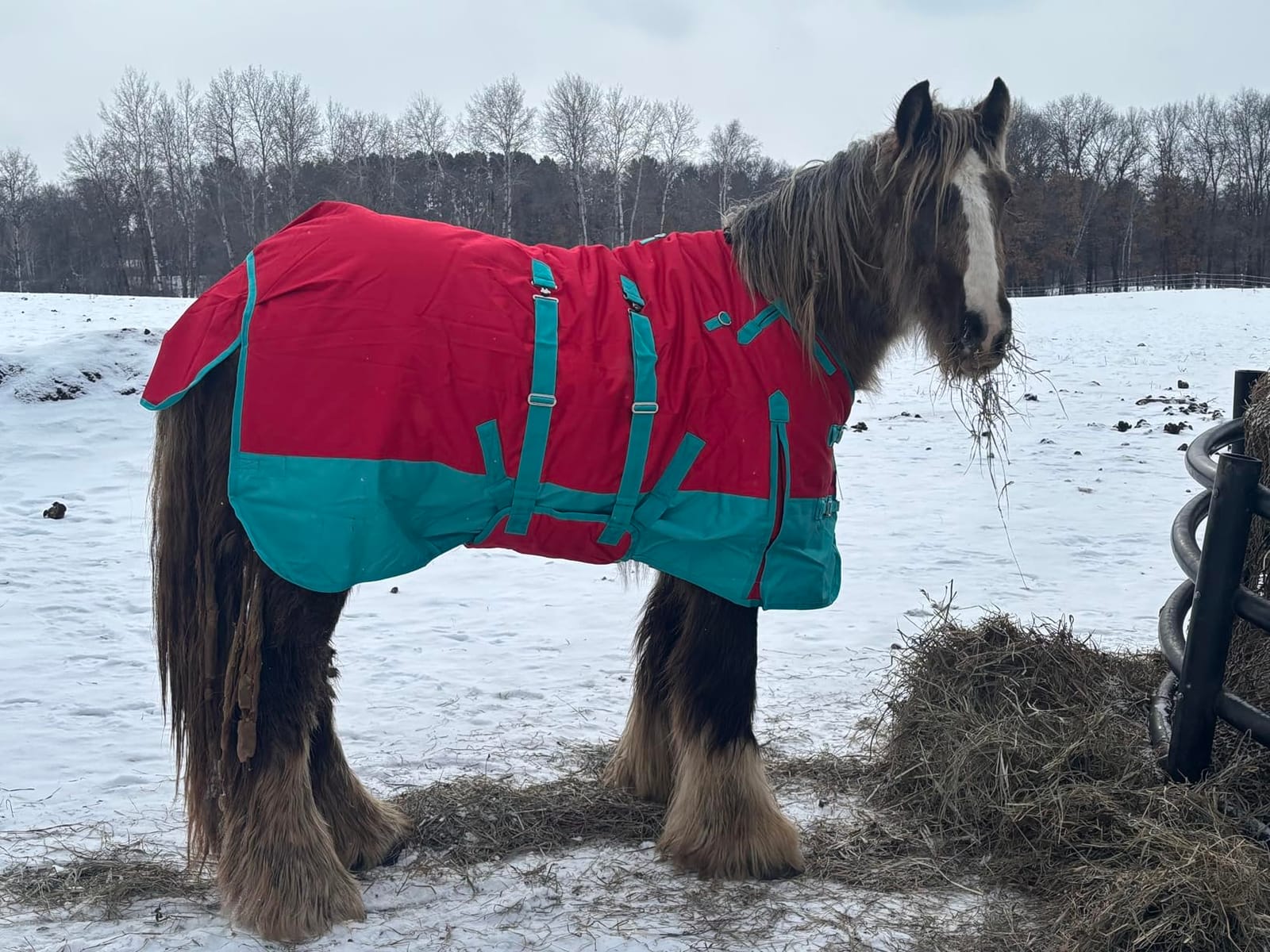
Deciding between this and the 1200D SNUGGIT
Both are 1200 denier with 300g fill, so the shell and the insulation are effectively matched. Choose the belly wrap version if your horse is turned out in wind and exposed ground, or if you want hood dees to add neck coverage later.
Choose the SNUGGIT version if fit is your concern, because a shaped neck and shoulder cut solves rubbing and shifting on high-withered or narrow horses. Owners who have had shoulder rubs with other rugs rate the shaped cut as the deciding factor.
The one drawback is bulk
At 10 pounds this is the heaviest blanket in the roundup, and that is not hidden. On a wet morning in a dark barn, handling it is a two-person job for some owners, and the belly wrap adds more bulk to catch and drag.
If you rug and unrug daily, or if your horse is difficult to catch, that weight is a daily cost. For full-time winter turnout where the blanket goes on once and stays on, the bulk is a fair trade for the warmth and waterproofing.
5. TuffRider Comfy Mesh Fly Sheet – Best Budget Fly Sheet
TuffRider Comfy Mesh Fly Sheet | UV Protection Horse Sheet, Standard Neck, 130 Grams Breathable Polyester Mesh – White – 75
130g breathable polyester mesh
Chafing-reducing lining
Stainless steel hardware
1 pound
Pros
- Light 130g mesh keeps horses cool
- Reflective fabric limits sun bleaching
- Chafing-reducing lining at chest and shoulders
- Rust-resistant stainless steel hardware
- Wide range from 48 inch to 87 inch
Cons
- Mesh tears in rowdy pasture conditions
- Runs snug on thick-bodied horses
- Standard neck leaves withers exposed
At 4.3 from 843 reviews, this is a long-running workhorse of a fly sheet and one of the most examined in the category. It weighs one pound, so putting it on and taking it off is genuinely quick, which is why owners with daily routine use gravitate to it.
Reflective fabric is the detail people notice after a summer. UV protection and reflective yarn help prevent sun bleaching and coat fade, which is the difference between a fly sheet that protects the coat and one that merely stops flies. For show and clipped horses that matters more than most buyers expect.
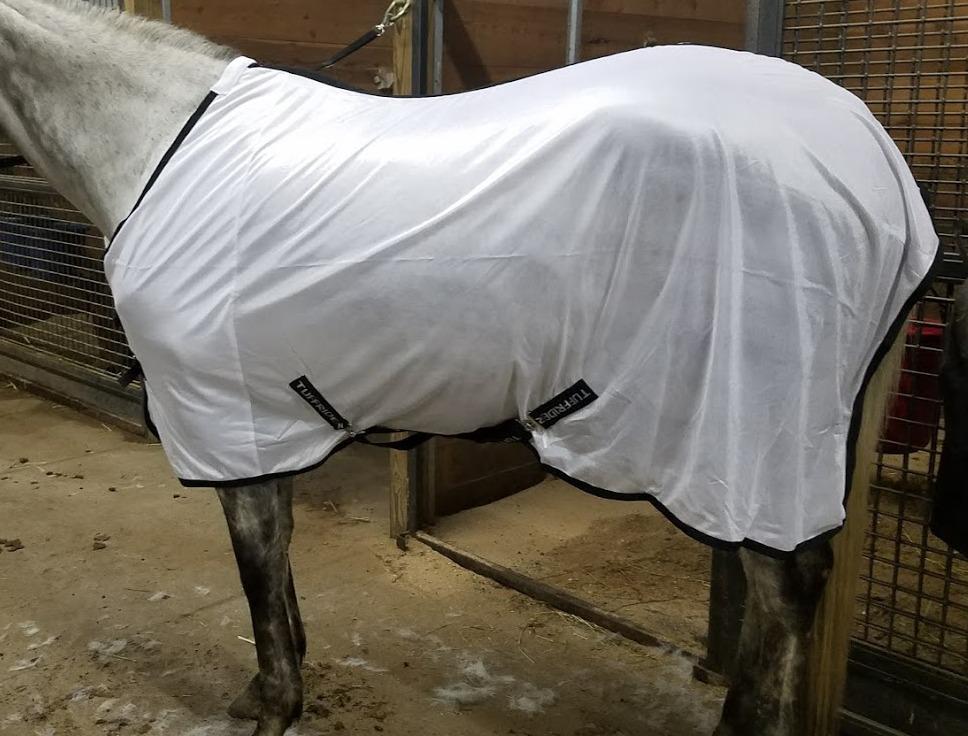
Construction details are better than the price suggests. Stainless steel hardware resists rust, which is a genuine advantage in humid climates where cheaper plated hardware pits and snaps fail. Removable leg straps and low cross surcingles keep it from rolling up.
The chafing-reducing inner lining at the chest and shoulders is aimed at a real problem, since summer sweat and mesh rubbing together is what causes hair rubs along the shoulder. The 130g of breathable polyester mesh is light enough to stay cool in hot climates.
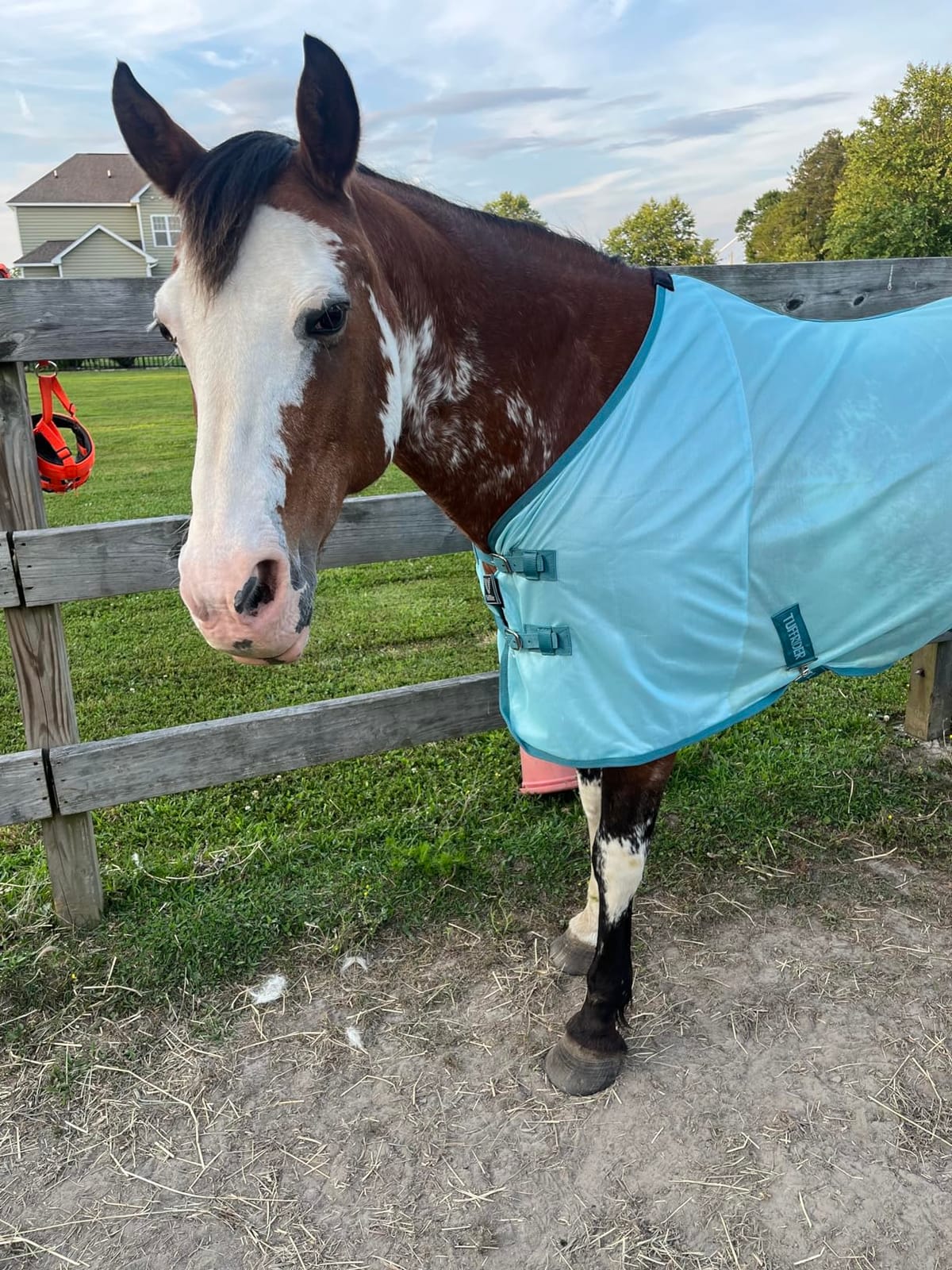
Sizing advice from the reviews
Two things come up constantly. The sheet runs slightly snug, so the common advice is to size up a size, particularly for thick-bodied horses or those with a full croup. And the range from 48 inch to 87 inch covers ponies through large horses.
Check the front closure sits flat and the leg straps have room. A snug fly sheet that slides back exposes the hindquarters, which is exactly the area you are trying to protect, so the extra size costs nothing but a little fabric.
Where it is the wrong pick
This is a standard neck design with no neck cover, so the neck and withers stay exposed. For a horse with sweet itch or a sensitive neck, that is a real gap, and you would need a separate neck cover to close it.
It is also not a solution for a horse that rolls or plays roughly. Reviewers report the mesh eventually giving way in rowdy herd conditions, so treat it as a sun and fly layer for calm horses rather than a rough-play rug.
6. Tech Equestrian 1200D Rain Sheet – Best Rain Sheet for Horses
Tech Equestrian 1200 Denier Horse RAIN Sheet (Waterproof/Breathable & Wind Proof Turnout Sheet) Horse Breathable RAINSHEET (Black-Turquoise, 78)
1200 denier waterproof shell
0GSM fill
Tape-sealed stress points
Two cross surcingles
Pros
- Purpose-built waterproof and windproof rain layer
- 0GSM fill stays breathable year round
- Velcro under buckles gives a secure fit
- Tape-sealed stress points improve water resistance
- D-rings allow adding a hood
Cons
- No insulation so it is a rain layer only
- Unfilled sheet is displaced by very active horses
Most so-called rain sheets are actually thin turnouts that leak after a season. This one is built specifically for rain, and the 0GSM fill is the honest signal that you are looking at a shell rather than a warm blanket.
Because there is no fill at all, it stays breathable in summer heat and does not overheat a horse on a mild day, which is exactly what a shoulder-season rain layer should do. Owners use it in spring and autumn, and keep it on hand for the unexpected summer downpour.
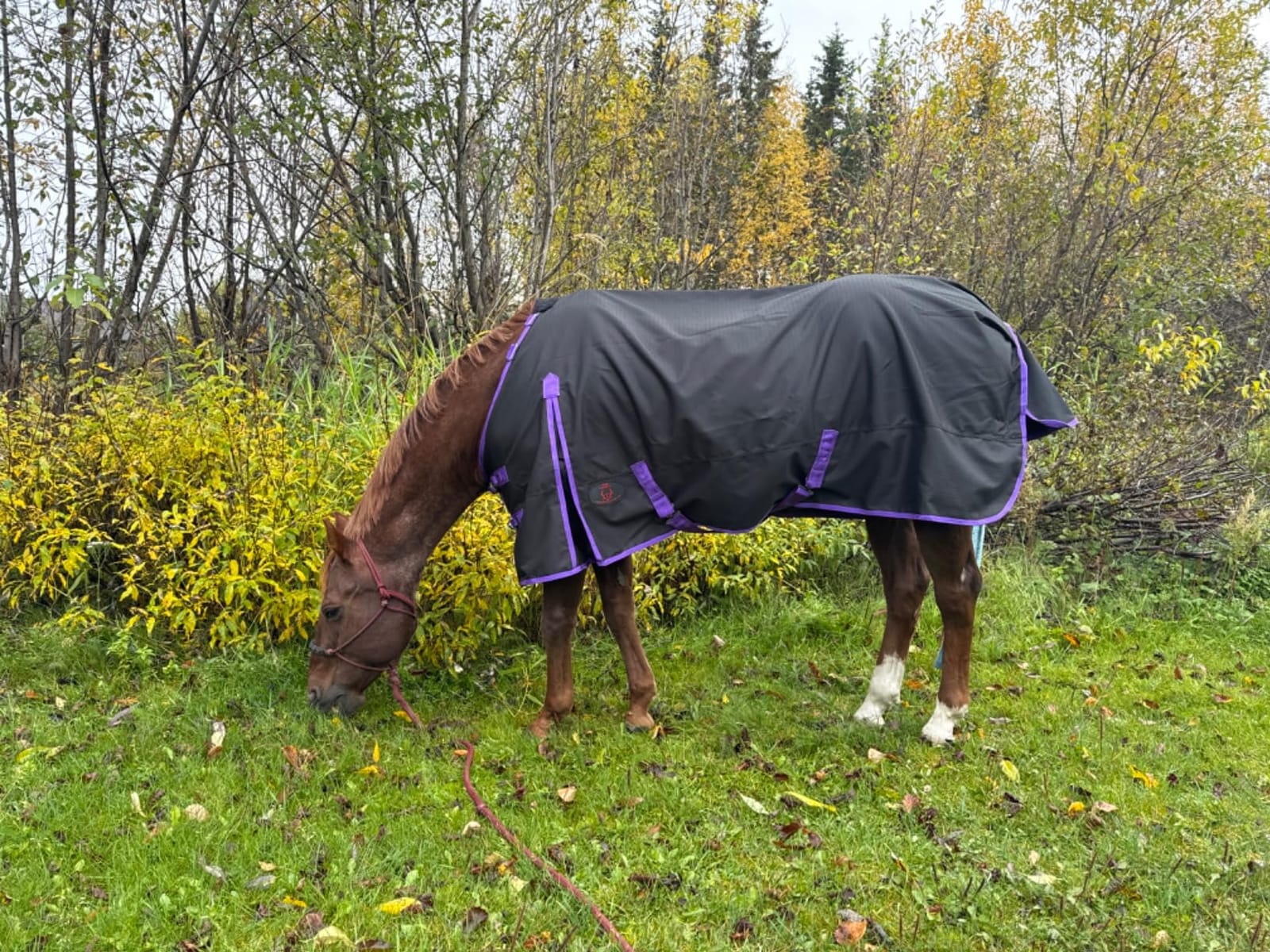
The details are the argument here. Tape-sealed stress points address the failure point owners complain about most, which is water tracking through the seams before the shell fabric itself has worn through. Two shoulder gussets and a tail flap extend coverage, and two cross surcingles stop rotation.
Two adjustable front buckles with Velcro underneath give a fit that other sheets at this level cannot match. The Velcro grip layer lets you fine-tune the chest without losing the buckle position, which means it stays put on a moving horse far better.
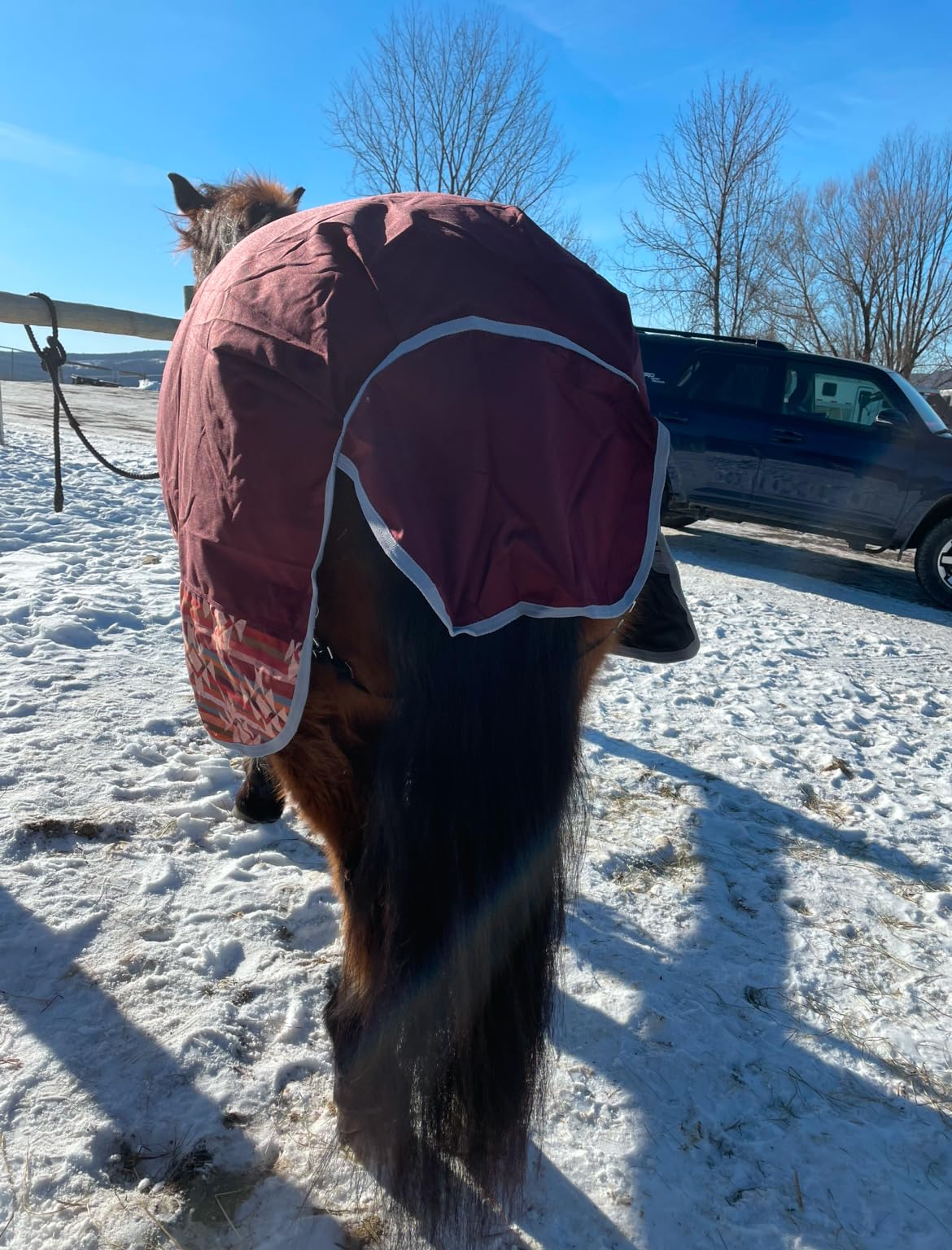
Why the three D-rings matter
Three D-rings for hood connection let you add a neck cover when the rain turns cold, which turns a summer sheet into an all-season tool. It is the same logic as the dees on the deep winter turnouts, and it is how you stretch one purchase further.
Weigh the horse before you order and check that the sheet still clears the ground with the surcingles tensioned. Waterproofing means nothing if the sheet trails in wet grass and wicks water up the legs.
Where it falls short
It provides no warmth, so a clipped horse in cold rain will still be cold underneath. Layer it over a 100g or 200g under-blanket if you need both, and check the under-blanket does not extend below the rain sheet where it can wick.
Very active horses can displace an unfilled sheet, since there is no weight holding it down. On a calm horse in a field it is excellent; on a horse that gallops, bucks or plays hard all day, you will be adjusting it constantly.
7. HORZE Glasgow Anti-Slip Stable Blanket – Best Stable Blanket for Layering
Horze Glasgow Anti-Slip Stable Horse Blanket (100g Fill) – Dark Blue – 78 in
100g fill breathable ripstop
Anti-slip shoulder cut
Faux fur at the withers
2.95 pounds
Pros
- Soft 100g fill suits chilly barn nights
- Anti-slip shoulder and neck cut reduces rubbing
- Doubles as an under-turnout layer
- Machine washable for easy barn care
- Works alone or beneath a rain sheet
Cons
- Leg straps are not included
- Ripstop is not tough enough for rough horses
- Can blow upward in wind without leg straps
This is the layer most barns are missing. At 100g of fill with a breathable ripstop outer, it is warm enough for a cold barn night and light enough to sit under a turnout or a rain sheet without making the horse too warm.
Machine washable is the feature that earns its place in a working barn. Most turnout blankets need careful hand washing and air drying, so having a blanket you can drop in a machine changes how often owners actually rotate bedding.
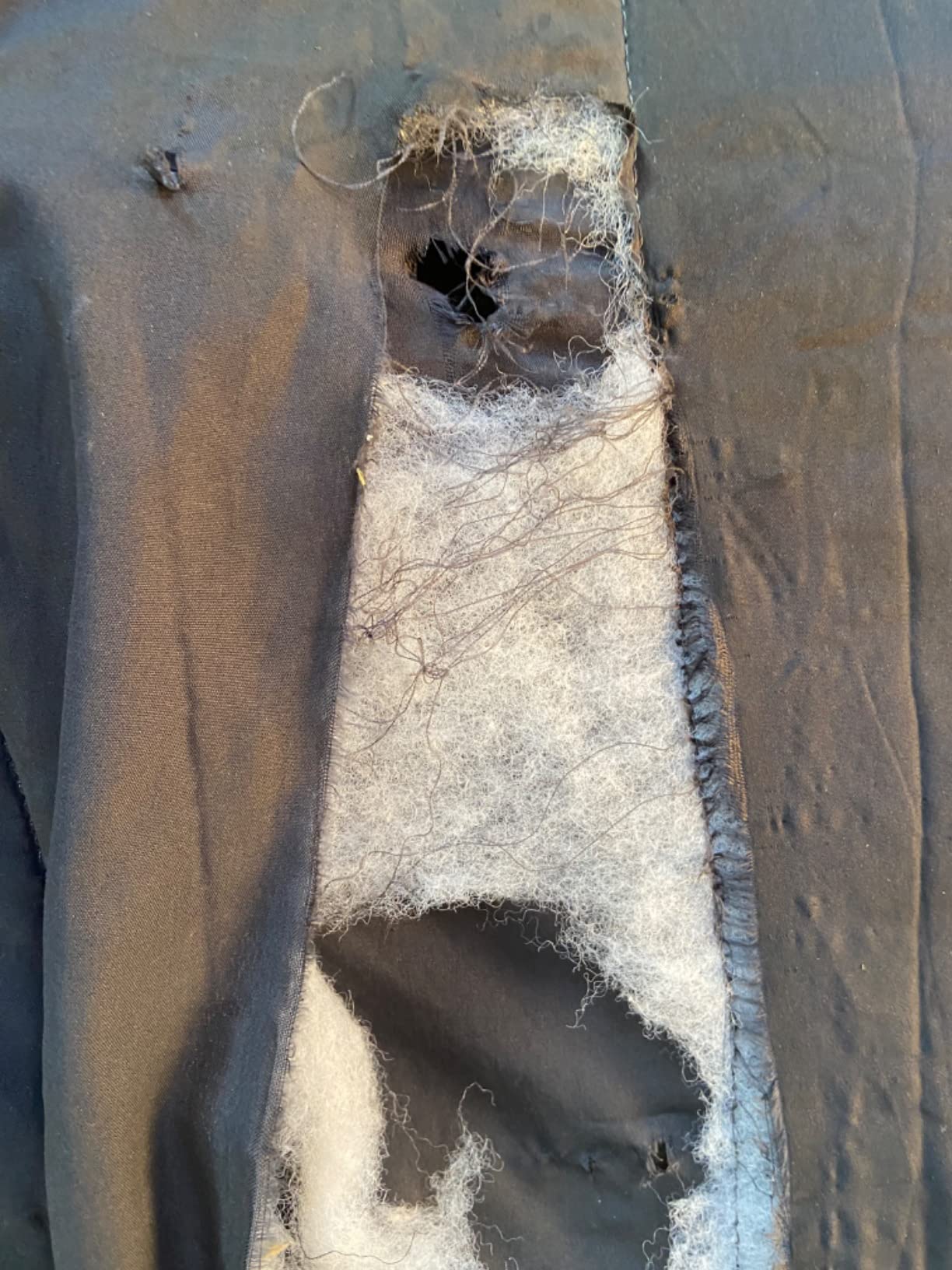
The anti-slip shoulder and neck design does the job its name suggests, reducing the rubbing and shifting that owners most often blame on blankets. Soft faux fur at the withers adds padding exactly where a blanket presses into the highest point of the horse.
Two front buckles with cross surcingles underneath the belly secure it properly, and rear loops accept a tail strap. At 2.95 pounds it is light in the hand, which matters for a blanket that goes on and off daily.
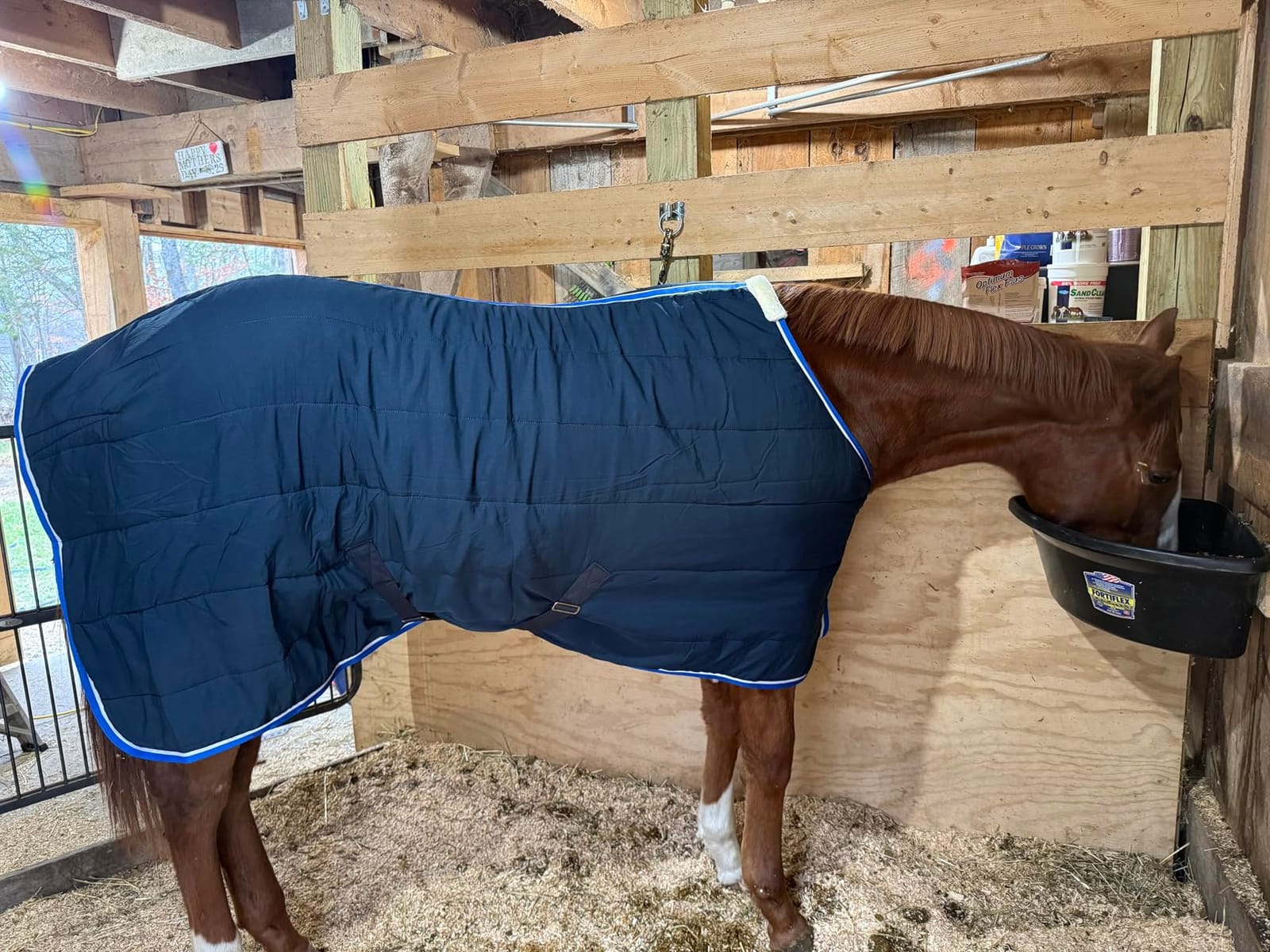
Plan for the missing leg straps
Leg straps are not included, and this is the most repeated complaint in the reviews. Without them the blanket can shift or blow upward in wind, so treat a pair of elastic leg straps as a required extra rather than an optional one.
Fit is generous enough that many owners note it running large, which is unusual for a stable blanket and usually welcome. If your horse is on the small side of the size range, check the shoulder line before ordering, since too much room lets it slide back.
When this is the wrong choice
The ripstop outer is a stable-weight fabric. It handles a calm horse in a yard beautifully and it is not the right answer for a horse that fences, rolls hard, or lives with a field-mate who chews rugs, and owners of rug-obsessed horses report the fabric giving up sooner than expected.
It is also not a wet-weather layer on its own. Pair it under the rain sheet above for shoulder seasons and you have a genuinely flexible system from one small purchase.
8. Challenger 1200D Heavy Weight Winter Turnout – Best for Draft and Large Horses
Challenger 1200D Horse Turnout Waterproof Heavy Weight Winter Blanket 5B105
1200D waterproof ripstop
400g polyfill insulation
Two-sided belly band
60 to 84 inch
Pros
- Genuinely waterproof in hours of cold rain
- 400g fill suits clipped horses and deep cold
- Surprisingly light for its thickness
- Two-sided belly band fits fuller horses
- Colours stay vivid season to season
Cons
- Runs small so most buyers size up
- Some buyers reported strap breakage early
- Adjustments take time to dial in
This is the heaviest insulation in the roundup at 400g of polyfill, and it is built for a specific job: clipped horses, senior horses and full winter turnout in genuinely cold conditions. At 4.5 from 145 reviews it holds a strong rating for a relatively recent listing.
400g is the point of this blanket. Owners of clipped horses in hard winters describe it as the difference between a horse that stays comfortable and one that comes in shivering. Owners of hard-to-keep-weight horses and seniors use the same blanket for the same reason, and several mention veterinary advice as the trigger.
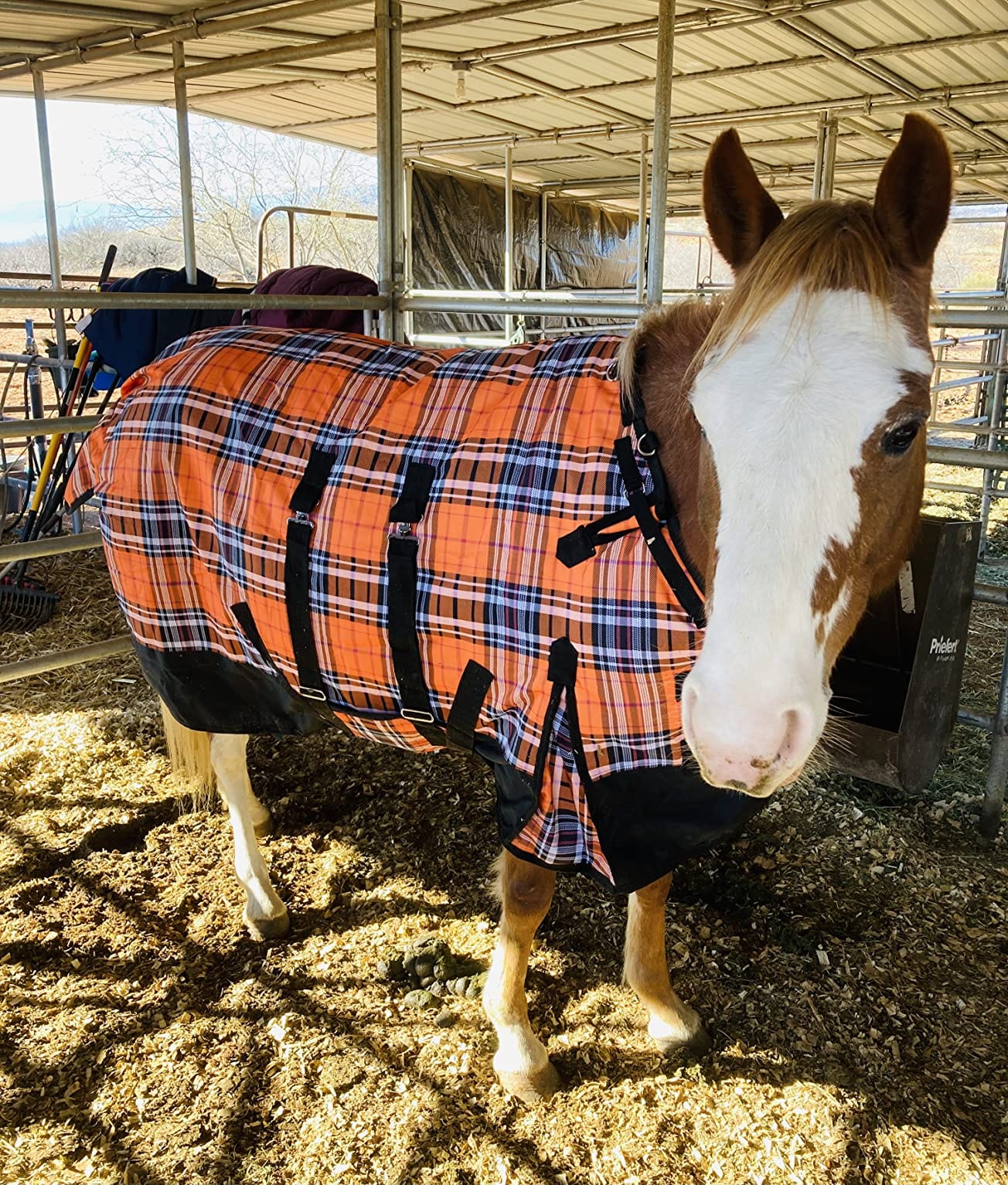
The 1200 denier waterproof, windproof and breathable ripstop outer is specified properly, and reviewers confirm real waterproofing in cold rain and snow rather than only in drizzle. At 8 pounds it feels lighter in use than the number suggests, because the fill is efficiently lofted.
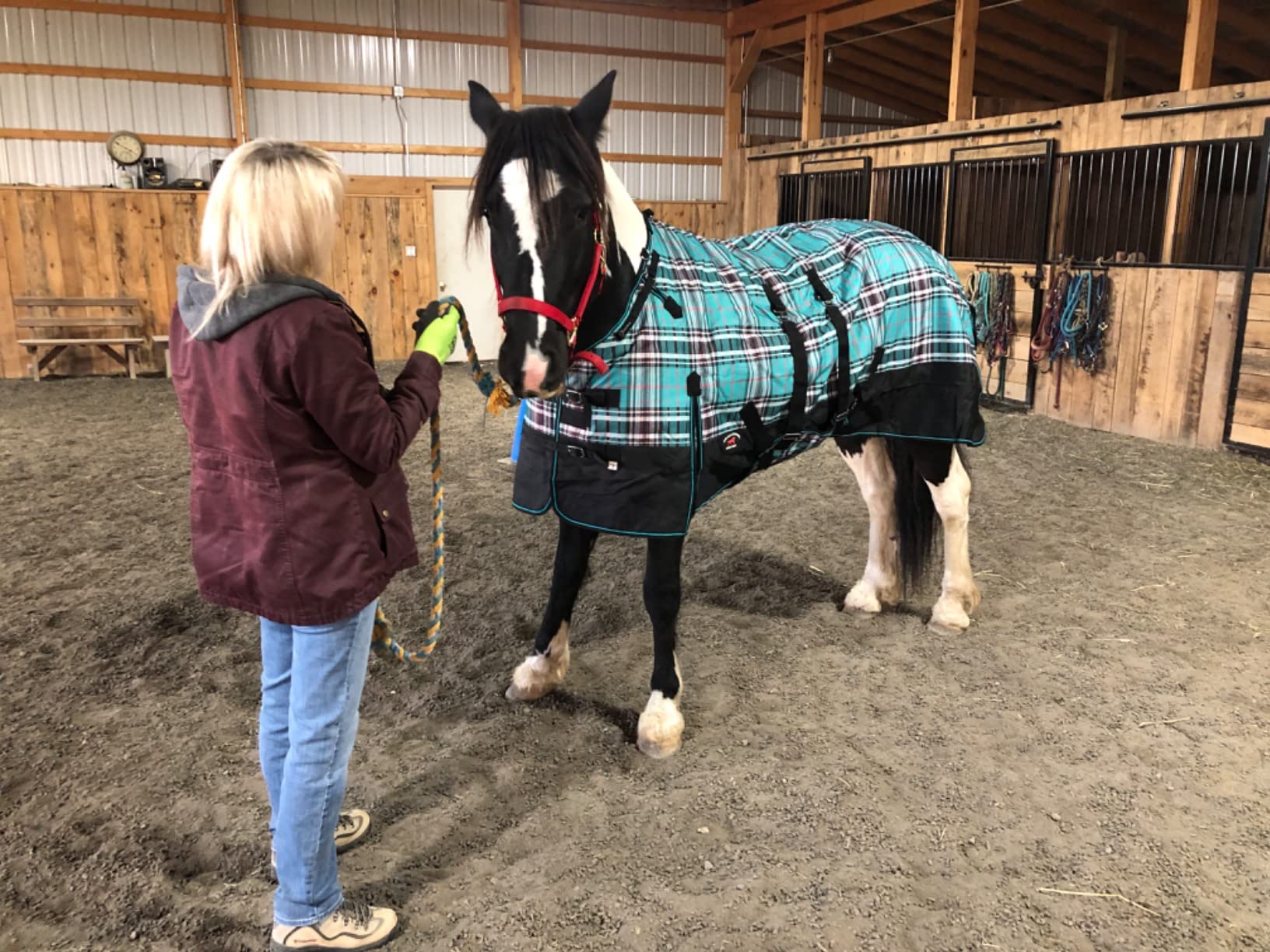
The belly band attaches on both sides, which lets it fit fuller horses without a chest extender. That is not a cosmetic detail on a heavy horse, and owners with big-bodied animals report it as the reason the blanket sits properly rather than gaping at the front.
Sizing is the thing to get right
It runs small, and reviewers say so repeatedly. Order one size up from your measured body length, measure twice, and check the chest does not gap when the horse lowers its head. This is the blanket most likely to end up too small out of the box.
Sizes run from 60 inch to 84 inch, so a 66 inch model exists for smaller horses and the range covers everything through full draft size. Owners report durability on large rough draft breeds, including a heavy draught horse, which is a meaningful test.
What to watch after the first weeks
A small number of buyers reported strap failures within the first few weeks. Check every buckle, snap and strap connection in the first fortnight, and replace anything that feels stiff rather than waiting for it to fail in the field.
Also expect to spend a little time dialling in the fit. Adjustments are not complicated, but getting the surcingle tension and belly band position right takes a few attempts, and a rushed fit is where rubbing starts.
9. Barn and Stable 600D 200g Winter Blanket – Best Turnout for Mild Wet Winters
BARN & STABLE 600Denier 3000mm/3000mvp Super Waterproof & Breathable Horse Blankets for Winter with 200g Fill
3000mm waterproof rating
600 denier polyester
200g polyfill fill
Fleece wither pad
Pros
- High 3000mm waterproofing for the tier
- 200g fill handles cold barns and frosty mornings
- Fleece wither padding reduces rubs and slipping
- Double buckle with Velcro assist is easy to adjust
- Lighter build than heavy turnouts
Cons
- Smaller review base than the established picks
- 600 denier outer is lighter duty for destructive pasture conditions
The 3000mm waterproof and 3000mvp breathable rating is the headline here, and it is a real specification rather than a marketing word. A 3000mm rating means the fabric moves a substantial column of water before it gives way, which is the benchmark most wet-climate buyers should be aiming at.
At 200g of polyfill it sits exactly where most horses in a temperate climate need to be, warm enough for a clipped horse in a mild winter and light enough to be comfortable on a shoulder-season day. It is the middle rung most buyers actually need.
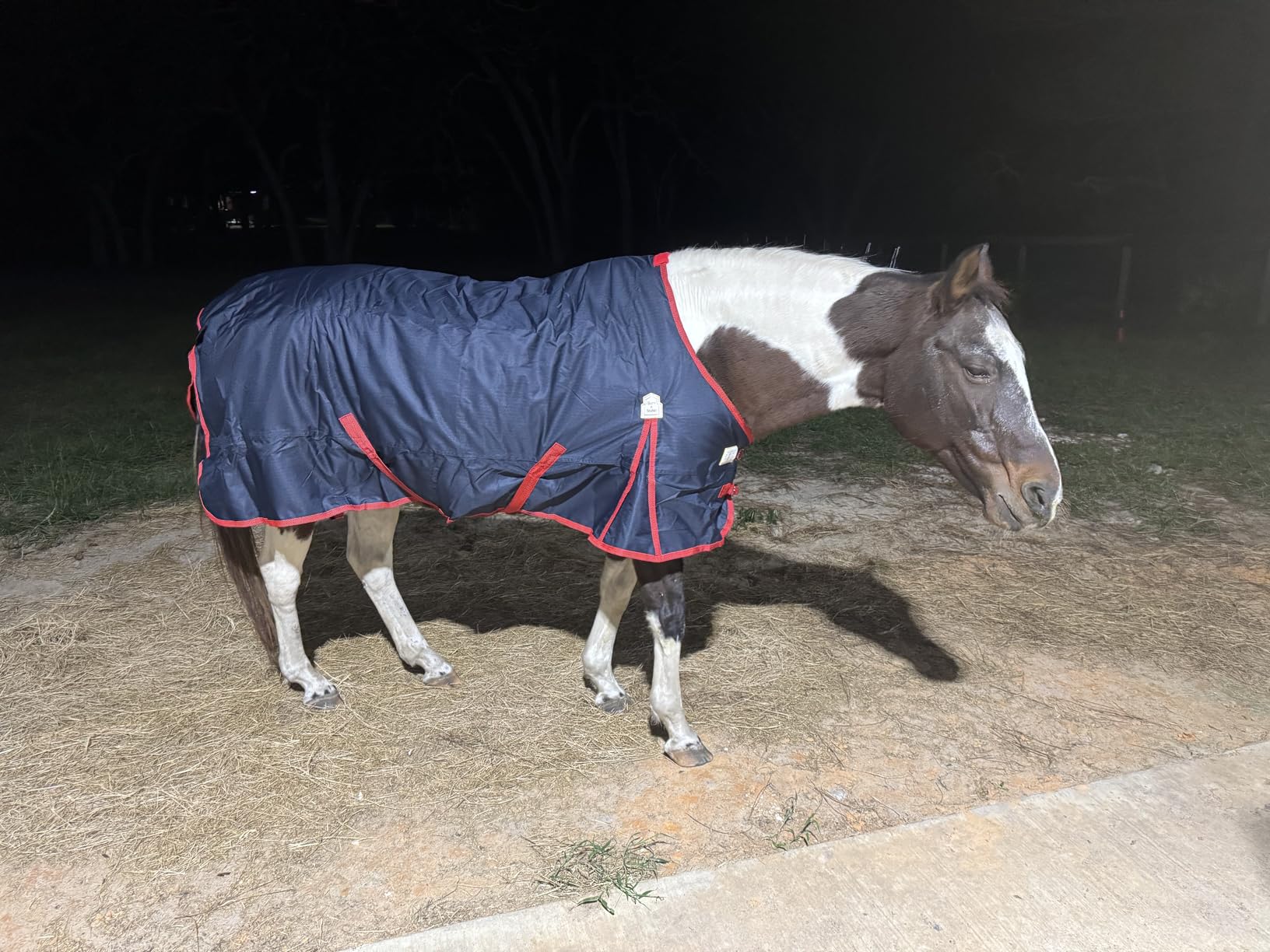
Fleece wither protection reduces rubbing and slipping at the point where most blankets cause problems. Large gussets allow unrestricted shoulder movement, a tail flap and removable leg straps complete the coverage, and criss-cross surcingles keep it from rotating.
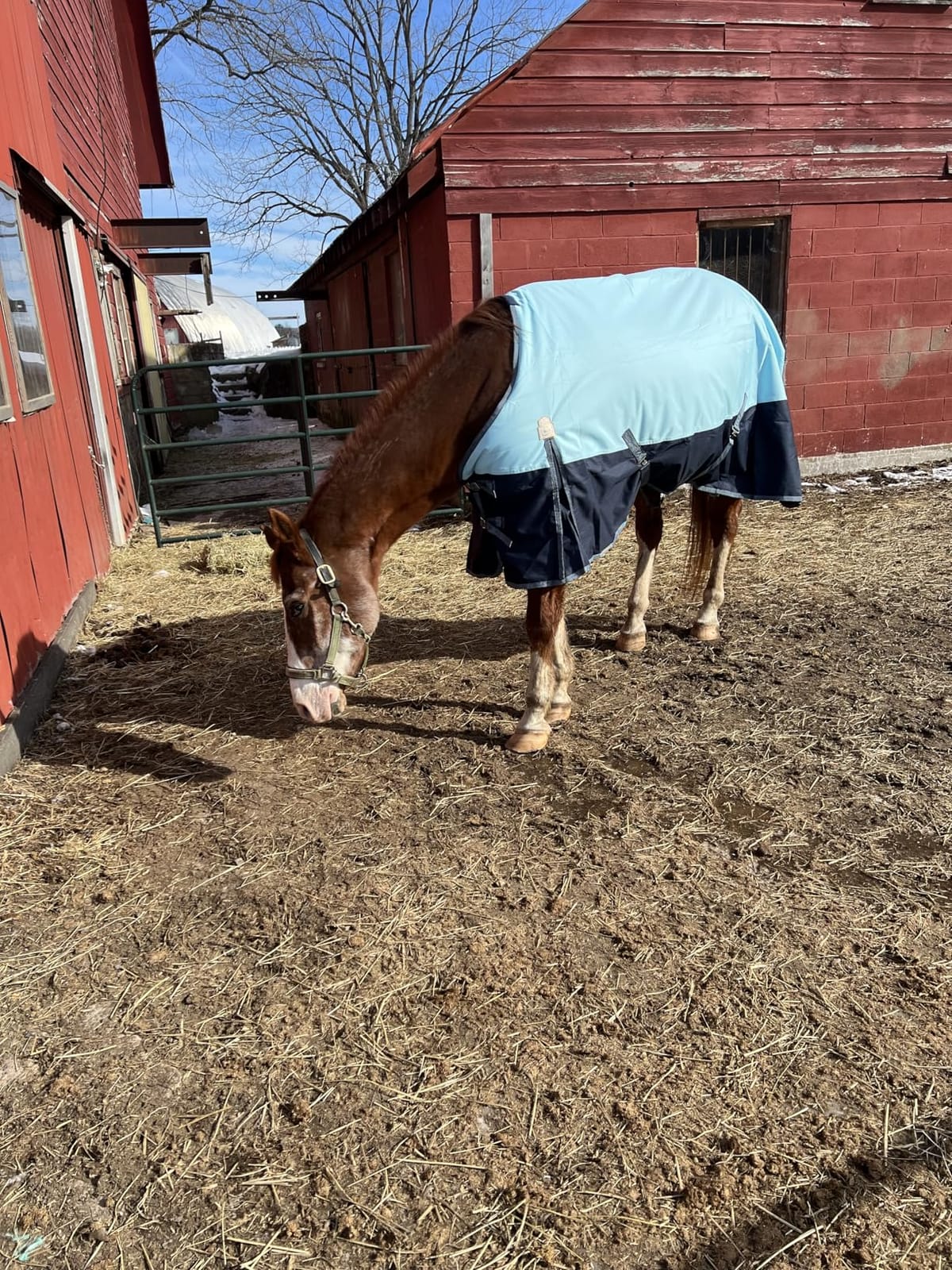
The double-buckle front with a hook-and-loop assist closure is easy to adjust with cold hands, which sounds minor until you are fastening four buckles in a wet field at dawn. At 5.29 pounds it is noticeably lighter to handle than the 300g turnouts in this roundup.
How to read the waterproof rating
Treat 3000mm as the number to beat in a wet climate, and pair it with 3000mvp breathability so water vapour escapes. A high waterproof figure with poor breathability traps condensation inside, which is worse than a shower because the horse stays damp.
Tape-sealed or welded seams matter as much as the fabric rating, since seams are where most leaks start. Check the shoulder and neck areas first when you receive any new blanket.
Honest limitations
This is a newer listing with 109 reviews, so there is less long-term evidence than for the established sheets here. We would want to see a few more seasons of owner feedback before calling it a ten-year purchase, though 79 percent of current buyers rate it five stars.
The 600 denier outer is lighter duty than the 1200 denier turnouts. That is a sensible trade for the weight and the waterproofing figure in normal pasture conditions, and the wrong trade for a horse on barbed wire or in a group that tears rugs.
10. Country Pride Sentinel Quilt Stable Blanket – Best Quilted Stable Blanket
Country Pride Sentinel Channel Quilt Horse Stable Blanket, Midweight Open Front, 420D Nylon Outer Shell, 250g Poly-Fill Insulation, Wither Protection, Adjustable Leg Straps, Bias Surcingle (76,Black)
420D nylon outer shell
250g high-loft poly-fill
Fleece wither protection
Machine washable
Pros
- 420D nylon holds up to stable snags and rubs
- 250g loft gives good cold barn warmth
- Smooth lining with fleece at the withers prevents rubs
- Double-thick front straps with quality buckles
- Bias surcingles reduce twisting
Cons
- Smallest review base in the group at 82 reviews
- Open front is not suited to harsh-weather turnout
Quilted stable blankets are the traditional in-barn choice, and this one keeps to the pattern with a 420 denier nylon outer and 250g of high-loft poly-fill. The rating is 4.6 across 82 reviews, with 79 percent at five stars, which is a strong showing on a small base.
250g is genuinely warm. It is a heavier stable weight than most competitors in this roundup, and owners of horses in cold barns describe it as enough for overnight conditions without the horse sweating in the morning.
Nylon is the material choice to notice. Compared with a coated polyester, a 420D nylon shell resists snags, rubs and tears in a barn aisle, and owners report it holding up to stable wear season after season. A smooth nylon lining keeps hair from catching.
Fleece at the withers prevents rubs at the highest point, double-thick front straps and quality buckles hold the closure, and bias surcingles plus removable elastic hind leg straps limit the twisting that leaves a blanket bunched behind the shoulder.
Machine washable is the standout
Of the ten blankets here, this is one of very few that is machine washable, and for a stable blanket that works daily that is the most valuable feature on the list. Barn rugs get soiled constantly, and a blanket that can go in a machine stays in rotation instead of drifting out of use.
It is also a midweight-to-heavy in-barn blanket rather than a light doormat, so it can cover the winter nights and be laundered and back on the horse the same day.
Why it is not a turnout
The open front and the absence of any waterproofing specification position this firmly as an in-barn blanket. Turning a horse out in it on a wet winter day would leave that horse cold and wet, whatever the 250g of fill does for barn temperatures.
With 82 reviews, it also has the smallest evidence base in this roundup, so treat the durability claims as promising rather than proven. If you want a stable blanket with a larger body of owner feedback, the 100g HORZE above is the alternative, and it works as an under-layer too.
How to Choose the Best Horse Blankets: Denier, Fill and Fit
Three numbers decide almost everything about a horse blanket, and once you can read them you can walk past any marketing page and know in ten seconds whether a product suits your horse. Denier tells you how tough the outer shell is. Fill weight tells you how warm it is. Fit decides whether any of it works.
Denier tells you shell strength, not waterproofness
Denier measures how tightly the outer fabric is woven. A higher number means a denser weave and a shell that is more resistant to tearing, which is why 1200 and 1680 denier fabrics dominate blankets built for rough horses and barbed-wire paddocks.
This is the single most misunderstood spec in the category. Denier is not a waterproof rating. Two 1200 denier shells can behave completely differently once rain gets into the seams, which is why the barrier is in the coating, the membrane and the seam sealing rather than the thread count. Owners who report blankets failing usually describe the waterproofing giving out well before the fabric tore.
Roughly, 420 denier suits a stable blanket and a calm horse. 600 denier is the workhorse sheet for mild climates and normal pasture wear. 1200 denier is the standard for full-time winter turnout. 1680 denier is for horses that are hard on blankets, and it is heavier and less breathable, so it belongs on a big animal in a hard climate rather than a small one in a mild one.
Fill weight is what keeps your horse warm
Fill weight is measured in grams and it determines warmth, not denier. A blanket with 0g of fill is a sheet. Everything from 50g upward is insulation, and the increments people ask about most are 50g against 100g and 200g against 300g.
The gap between 50g and 100g is roughly one step on the warmth scale, enough to move you from a cool night to a cold night. The gap between 200g and 300g is a much bigger jump and is the difference between a temperate winter rug and a deep winter turnout.
A rough mapping: 0g to 50g for frost and cool nights, 100g to 150g for cold nights with shelter, 200g for a typical winter in a temperate climate, 300g for cold winters and clipped horses, and 400g for serious cold with no shelter. Horses living out full time in cold climates generally need 300g or more, and a senior or hard-to-keep-weight horse needs more warmth than a healthy adult of the same age, not less.
The most common mistake is over-warming. A horse that sweats under a blanket loses heat on a cold night, and a damp coat in winter is worse than no blanket at all. If your horse is sweating or you can find damp hair under the blanket in the morning, step the fill down.
Measure your horse properly and know which way to round
Measure from the point of the shoulder to the point of the buttock, in inches, and that number is your blanket size. Height in hands is a poor guide, which is why a 14.2 hh and a 15.1 hh horse can need the same blanket size. A tape measure and a helper are all you need.
When you fall between sizes, round up. The risk of being slightly too large is that the blanket sits a little further back and can be stepped on or dragged, while being too small causes pressure at the shoulder and wither that can rub a hole in the coat and the skin underneath.
For long-backed horses, measure the length carefully because many standard cuts assume a shorter back. Owners of tall Appendix and Saddlebred horses on Chronicle and Reddit threads describe needing 90 inch to 92 inch rugs, and the practical answer is a brand that offers a long-backed or cob cut rather than a standard pattern stretched to fit.
The fit features that decide whether a blanket stays on
Wither relief and a shaped shoulder are the two features that prevent rubbing. A blanket with a gusseted shoulder allows the foreleg to move forward without pulling the fabric into the wither, and this is what separates a blanket your horse wears happily from one it tries to step out of.
An adjustable surcingle, usually a belt that cinches at the side, is the second most important. It stops the blanket rotating backwards, which is what allows the surcingle to move. Belly straps should always be crossed rather than run straight, and leg straps tuck behind the hind leg on the opposite side for the same reason.
A tail flap, removable leg straps and dees for a hood or neck cover complete the useful set. A belly wrap, as on our top rated pick, extends under the barrel for horses standing in wind and wet ground, and it is the reason that blanket performs on exposed pastures.
How the brand families differ
Owners repeatedly mix brands, pairing a premium turnout with a cheaper liner, and that is a sensible approach. A liner does not need a tough shell because it rarely sees a fence, so spending there is wasted money.
Within the best known families, Horseware splits into Rambo as the durable outer-shell option, Rhino as a stronger polypropylene-outer mid-tier, and Amigo as the polyester-outer lighter and lower-cost line. WeatherBeeta is organised around the ComFiTec system in tiers, and owners on Chronicle Forums single it out for fitting narrow horses well because of the upright neck and generous cut.
Schneiders and Schneider Saddlery are valued for wither-relief cuts and adjustable fit systems aimed at different conformations, and LeMieux competes on lightweight innovative shells. WeatherBeeta models are also the most frequently asked about for durability, and the consistent owner verdict is that the waterproofing, not the fabric, is what determines how long a blanket lasts.
Washing, Re-Proofing and Storing Blankets Without Ruining Them
The most common irreversible mistake in this category is washing a turnout with ordinary household detergent and then machine drying it. Household detergent and heat strip the waterproof membrane, and once that barrier is gone the blanket will never be properly waterproof again no matter how much spray you add.
Wash turnouts in a blanket-specific detergent, on a cool cycle, and always air dry them. Hang the blanket over a rail rather than piling it, and never put a taped or welded seam near a tumble dryer. Stable blankets with no waterproof membrane, like the quilted pick in this roundup, tolerate machine washing far better.
Re-proofing a blanket that still has intact fabric is a reasonable job to do yourself. Clean it first, let it dry fully, then apply a blanket-safe waterproofing spray in a well ventilated area and follow the product directions for drying time before it goes back on the horse.
Store blankets clean, dry and folded rather than rolled, off the floor and away from rodent damage. Rotate two or three blankets through a winter rather than relying on one, and check the seams, straps and buckles at the start of every season.
When You Should Not Blanket Your Horse
Most healthy adult horses with access to shelter, forage and unfrozen water do not need a blanket at all in a temperate climate. Their own coat and internal heat production handle ordinary winter conditions, and a healthy unclipped horse in good body condition will often be warmer unblanketed than under a rug.
Blanketing makes sense for clipped horses, seniors with poor circulation, horses that struggle to hold body condition, young and growing horses, ponies and drafts with higher heat loss, and any horse living out in cold or wet conditions without shelter. Several owners on Horse Forum threads describe blanketing an older horse purely on veterinary advice for age and difficulty keeping weight on.
If you do blanket, check under the rug daily. Look for sweating, a damp coat, rubbing at the shoulder or wither, and a horse that is dull and reluctant to move. A horse that is too warm is the more common error and the harder one to spot from outside.
Frequently Asked Questions
What is the difference between 1200D and 600D horse blankets?
Denier measures how tightly the outer shell is woven, so 1200D is roughly twice as rip-resistant as 600D. That is a strength difference, not a waterproof rating. Choose 600D for a mild climate sheet or stable blanket and 1200D for full-time winter turnout with horses that roll, fence or live in a group.
What is the best material for a horse blanket?
A ripstop or ballistic nylon outer handles pasture wear best, while a coated polyester outer breathes more freely and is lighter for mild climates. What matters most is the waterproof rating on the coating, typically 3000mm or better in wet climates, and whether the seams are taped or sealed.
Is it better for a horse blanket to be too big or too small?
Round up when you fall between sizes. A blanket that is slightly too large sits back and can be stepped on or dragged under a leg, while one that is too small puts pressure on the shoulder and wither that rubs the coat and skin. Measure from point of shoulder to point of buttock in inches and order to that number.
What is a good weight for a winter horse blanket?
For a typical temperate winter, 200g of fill is the most useful starting point. Cold winters and clipped horses need 300g, and 400g is for serious cold with no shelter. Seniors and hard-to-keep-weight horses need more warmth than healthy adults of the same age, not less.
What is the best turnout blanket for horses?
For most owners the best turnout is a 1200 denier waterproof shell with 300g of polyfill, a shaped shoulder or wither relief, adjustable surcingle and cross surcingles. If you need neck coverage in deep cold, choose a model with dees for a hood or neck cover, and size up if you fall between sizes.
Final Verdict
The best horse blankets for most yards are the Tough 1 600 denier waterproof sheet for shoulder seasons and mild winters, and the HILASON 1200D 300g turnout when the weather turns serious, with the Tough-1 1200D SNUGGIT as the pick for horses where rubbing and shifting are the problem.
Beyond those three, match the job rather than the brand. Fly sheets for summer, a rain sheet with 0GSM fill for shoulder seasons, a machine-washable stable blanket for the barn, and a 400g turnout for cold climates and big horses. Measure first, round up when you are between sizes, and check the fit under the shoulder every morning for the first week. That habit alone prevents most of the problems owners report in 2026.