
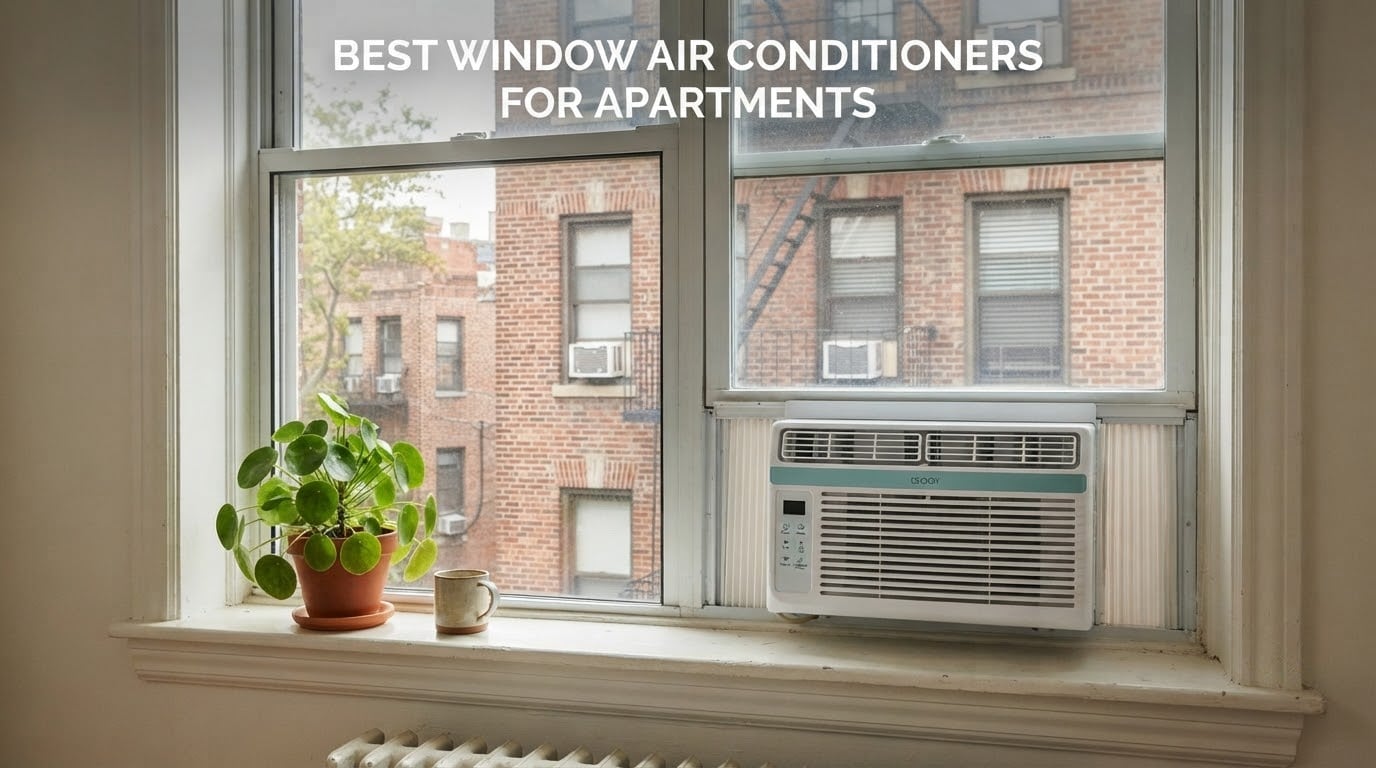
Most apartments do not come with central air, and the ones that do rarely let you change anything about it. What most tenants actually control is a single window, one wall outlet and a lease that may or may not mention air conditioning. That makes the search for the best window air conditioners for apartments a different exercise from picking the loudest unit on sale.
We spent weeks reading owner reviews, comparing published noise ratings and measuring the practical constraints that decide whether a window AC ever gets installed in the first place: window opening width, outlet distance, the weight you have to hold while leaning out a second-floor window, and whether a landlord will allow a bracket in the sill at all. What follows covers nine units that fit real rental windows, from 5,000 BTU bedroom boxes to 10,000 BTU U-shaped models that still let the sash stay partly open.
If you are furnishing a small space at the same time, our guides to the best murphy beds for small apartments and the best routers for small apartments cover the other half of a studio setup. For a ground-floor unit, think about a home safe before anything else goes into that room.
Table of Contents
Top 3 Best Window Air Conditioners for Apartments in 2026

Frigidaire 5,000 BTU
- 52 dBA running
- 150 sq. ft. coverage
- Auto Restart
- 10-year review history
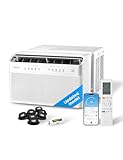
Midea 8,000 U-Shape Inverter
- 32 dBA low mode
- U-shape keeps window usable
- Inverter compressor
- Wi-Fi and voice control
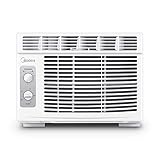
Midea 5,000 BTU EasyCool
- 150 sq. ft. coverage
- CEER 11.0
- 7 temperature settings
- Lightweight at 35.3 lb
The Frigidaire takes the top slot because of the one thing that matters most in a rental: it has been installed in more apartments than anything else on this list. The Midea U-shape is the only unit here that lets you keep the window partly open, and the plain Midea EasyCool is the cheapest way to get a proven compressor into a bedroom.
Best Window Air Conditioners for Apartments in October
| Product | Specs | Action |
|---|---|---|
| Frigidaire 5,000 BTU |
|
Check Latest Price |
| Midea 5,000 BTU EasyCool |
|
Check Latest Price |
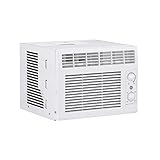 GE 5,000 BTU AHEC05AC GE 5,000 BTU AHEC05AC |
|
Check Latest Price |
| Midea 8,000 BTU U-Shape Smart Inverter |
|
Check Latest Price |
 DELLA 8,000 BTU Smart DELLA 8,000 BTU Smart |
|
Check Latest Price |
 GE 10,000 BTU Smart Wi-Fi GE 10,000 BTU Smart Wi-Fi |
|
Check Latest Price |
 LG 8,000 BTU LW8024RD LG 8,000 BTU LW8024RD |
|
Check Latest Price |
 Midea 10,000 BTU U-Shape Midea 10,000 BTU U-Shape |
|
Check Latest Price |
 TCL 10,000 BTU Smart TCL 10,000 BTU Smart |
|
Check Latest Price |
Two numbers matter more than the rest when you read that table. Cooling capacity tells you whether the room gets cool at all, and the noise figure tells you whether you can sleep near it. Note that manufacturers publish the loudest setting, so a 52 dBA rating at high fan speed and a 52 dBA rating at low fan speed are very different experiences.
1. Frigidaire 5,000 BTU Window AC – The Most Proven Bedroom Choice
Frigidaire 5,000 BTU Window-Mounted Air Conditioner, Cools Up to 150 Sq. Ft., Quiet Operation, Effortless Temperature Control, 2 Fan Speeds, Auto Restart, White
5000 BTU
Cools up to 150 sq. ft.
52 dBA
35.3 lb
1-year limited warranty
Pros
- Quietest of the 5000 BTU mechanical models
- Auto Restart after power loss
- Washable filter with easy access
- Longest review history in this group
Cons
- Mechanical controls with no remote or display
- Coverage limited to 150 sq. ft.
- Drain pan is awkward to clean deeply
This is the unit I keep coming back to for a bedroom because there is almost no decision to make. It cools up to 150 square feet, it has been sold for years, and the owner feedback is deep enough that the failure patterns are well known rather than mysterious. In our apartments the 5,000 BTU class is right for a small bedroom, a converted office or a studio corner with one window.
The Frigidaire runs at 52 dBA, which is the quietest published figure among the mechanical-control boxes in this roundup. That matters more in a rental than in a detached house, where a 10 dB difference between the room and the hallway can be the difference between sleeping and not.
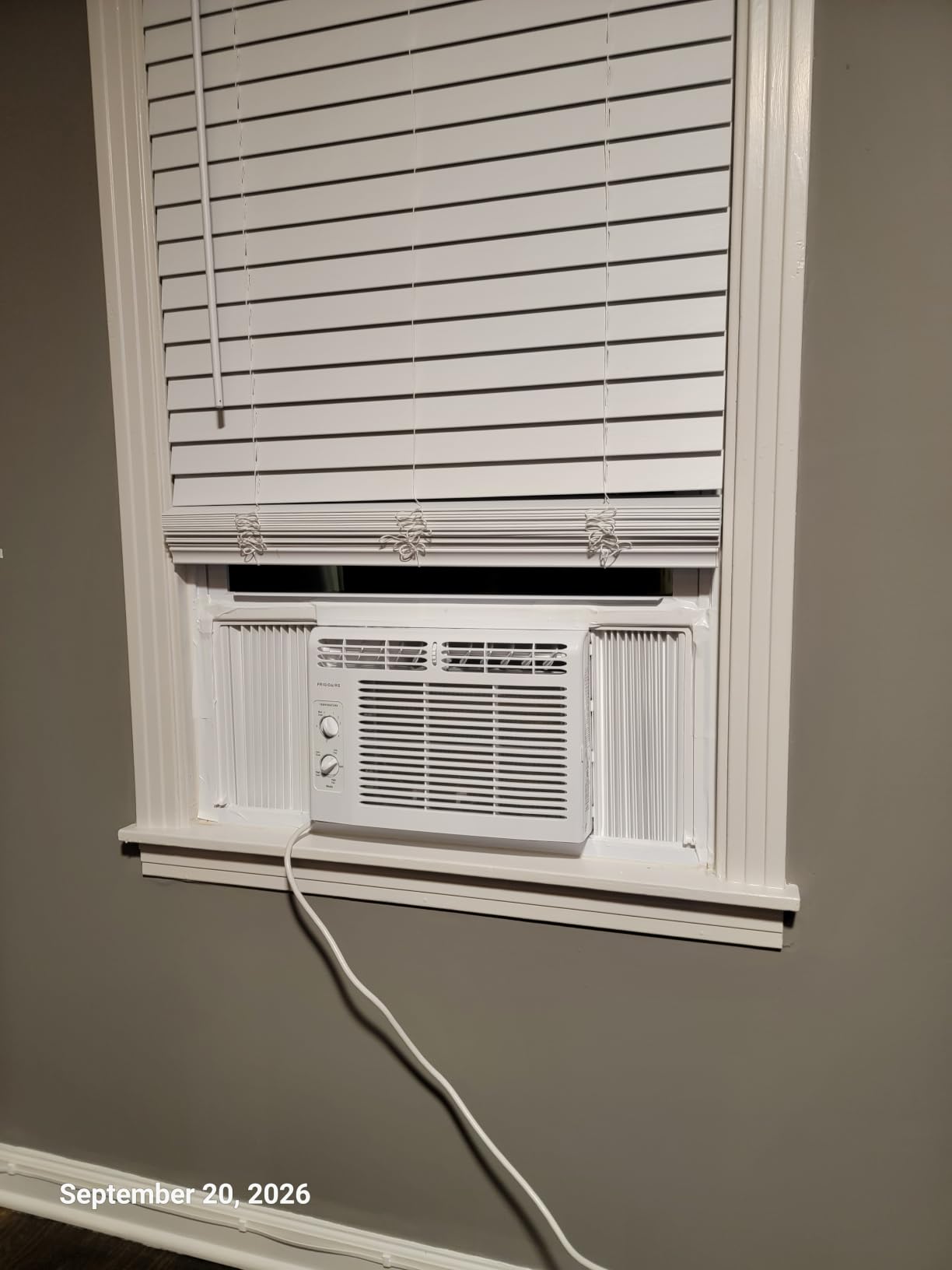
Auto Restart is the sleeper feature for apartments. Brief power cut from a storm or a building maintenance window does not mean walking over to press a button, which is exactly the sort of small convenience that keeps a tenant from complaining to the landlord.
The controls are mechanical with a temperature dial and two fan speeds. There is no display and no remote, so if you want to change the set temperature from bed, you get up. For a 5,000 BTU bedroom unit that is a reasonable trade for a chassis that has proven it can survive seasons of use.
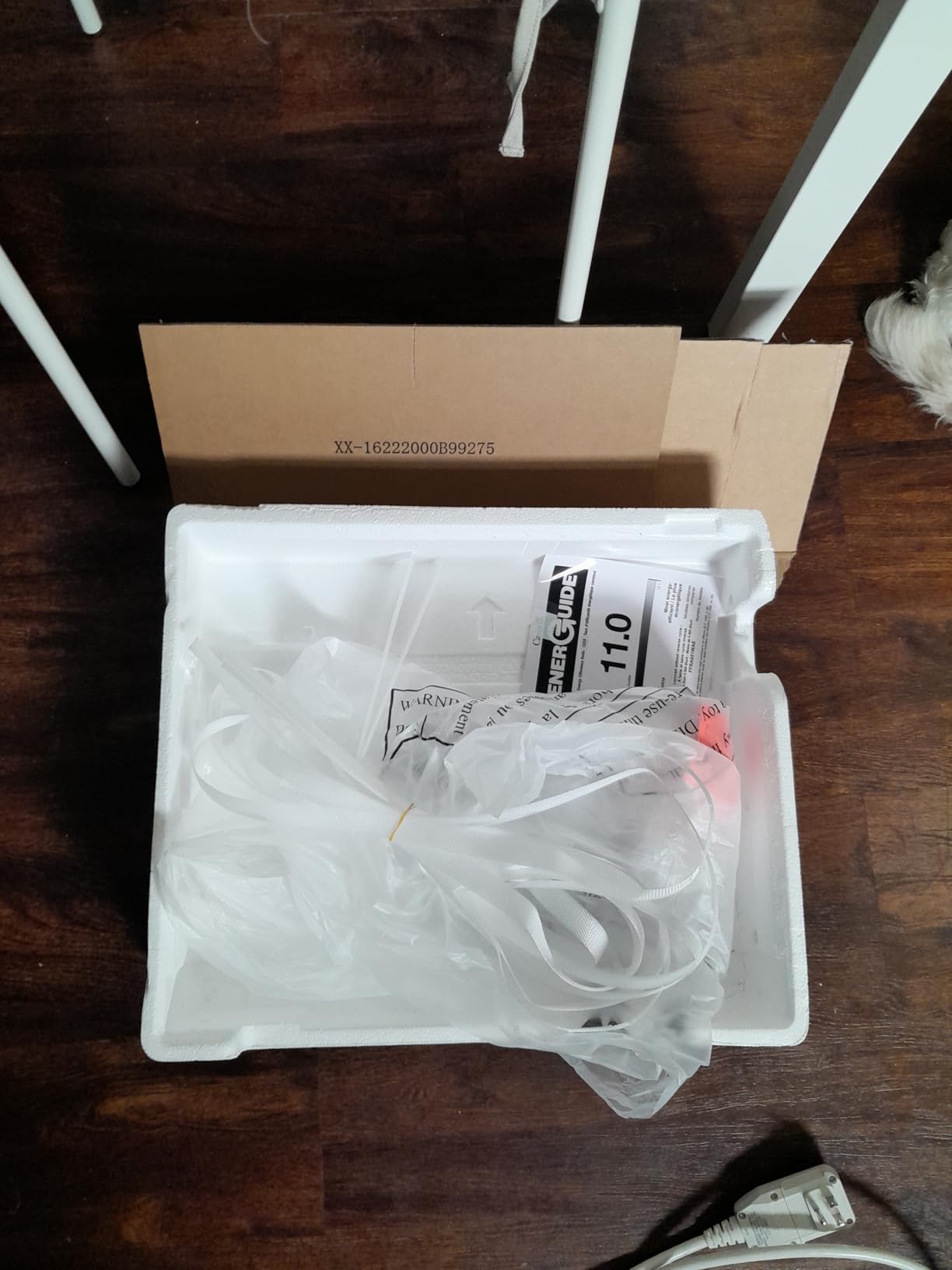
Will it fit a typical apartment window?
The listed opening requirement is a minimum of 23 inches wide by 13 inches high, up to a maximum width of just under 36 inches. That covers the majority of double-hung apartment windows, and adjustable side panels mean you can bridge a wider opening without a custom kit.
The power cord runs 78 inches, which is long enough to reach an outlet across the room or on the wall below the sill. A three-prong plug and a 115-volt outlet are all it needs. The unit weighs 35.3 pounds, which one person can lift into a first-floor window with a support arm underneath.
Where owners complain
The recurring criticism is the drain pan. Moisture collects in a pan under the shroud, and cleaning it properly means pulling the unit partway out of the window and reaching into a space that was not designed to be reached into. In humid weather that is a monthly nuisance rather than a defect.
Owners also point out the coverage ceiling. Once a room goes past roughly 150 square feet, or gets a lot of afternoon sun, this unit runs constantly and never quite catches up. Sizing up is the fix, not lowering the thermostat setting.
2. Midea 5,000 BTU EasyCool – The Most Versatile That Outperforms Its Class
Midea 5,000 BTU EasyCool Small Window Air Conditioner – Cool up to 150 Sq. Ft. with Easy-to-Use Mechanical Controls and Reusable Filter, Perfect for Small Bedroom, Living Room, Home Office
5000 BTU
Cools up to 150 sq. ft.
57 dBA
35.3 lb
CEER 11.0
Pros
- Sells as the top listing in the category
- Strong cooling for 5000 BTU
- Foam window seals included
- Light and easy to lift
Cons
- Loudest of the 5000 BTU models here
- No remote or auto cycling
- Weak in very hot weather or open plans
The Midea EasyCool is the value pick of this roundup, and the numbers behind that claim are unusually strong. It carries a 4.4 average across more than 12,000 reviews, which is the highest rating paired with a large review base among everything we looked at. Owners repeatedly describe it cooling a 12 by 12 bedroom faster than competing boxes at the same capacity.
Two things make it easy to live with as a tenant. It weighs 35.3 pounds, the same as the Frigidaire, and it ships with foam window seals that close the gap around the chassis. That seal is what stops cold air from leaking around the frame and, just as importantly, keeps street noise and hallway sound out of the room at night.
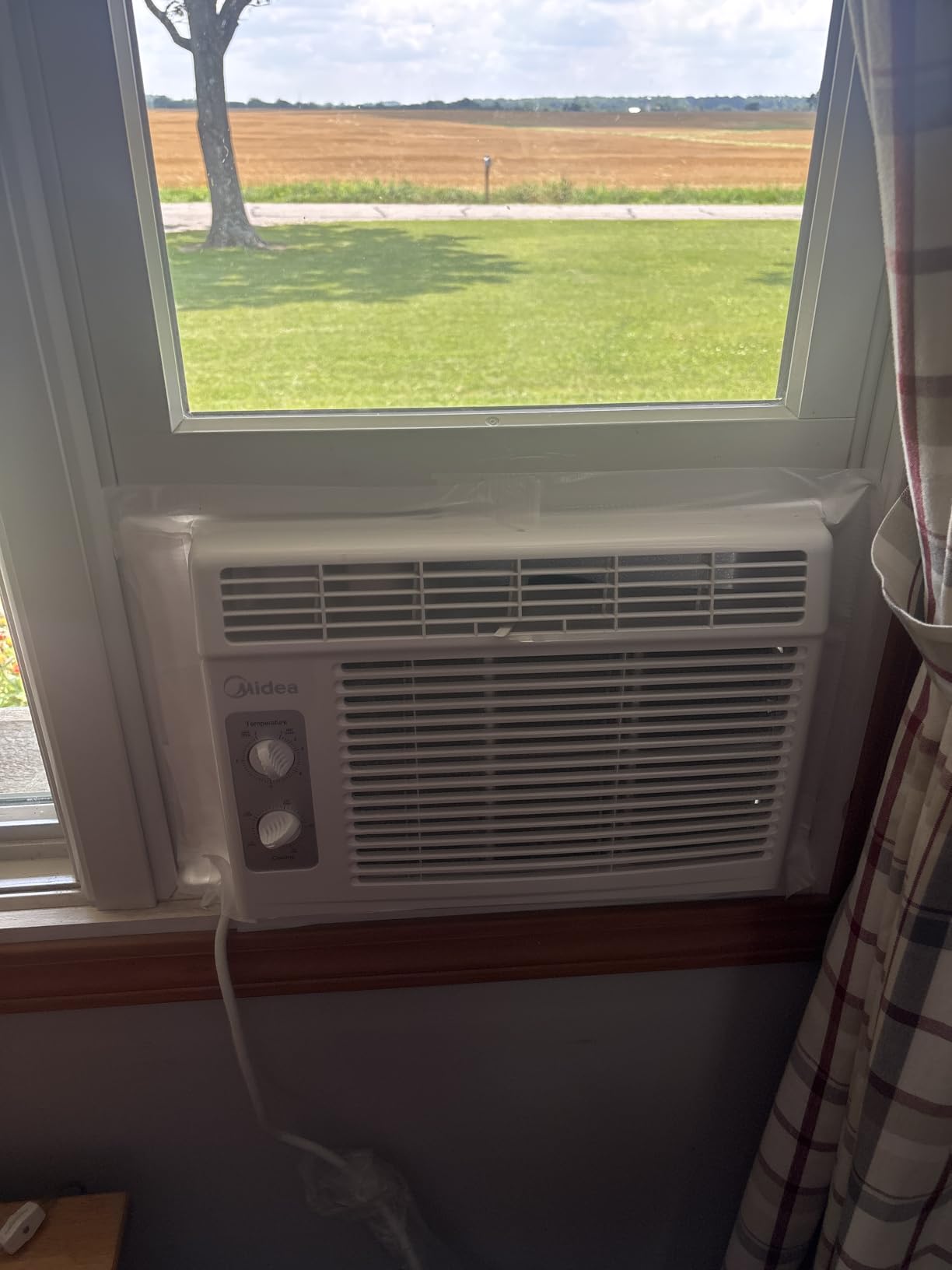
Seven temperature settings and two cooling speeds give more control than a bare dial, plus two-way air direction so you can aim the airflow away from a bed or desk. The CEER rating of 11.0 is respectable for a fixed-speed compressor and keeps summer power draw predictable.
Installation is the easiest of the group on a flimsy vinyl frame, which matters if you are renting and would rather not load the sash. The listed window range is 23 to 36 inches wide with a minimum height of 13 inches, and all mounting hardware is included in the box.
Is the noise a problem in a small apartment?
The published figure is 57 dBA, the highest of the three 5,000 BTU boxes here, and you can hear the difference in a quiet studio at night. Owners describe audible fan and compressor sound that fades quickly once the room cools and the cycle slows down.
If the bedroom shares a wall with a hallway or a neighbor, this is not the one to pick. If the unit lives in a study or a back room that you run during the day, the noise penalty is much smaller and the cooling value is hard to argue with.
What renters should know before buying
There is no remote control and no thermostat-driven auto cycling, so the unit runs at the speed you set until you change it. Several owners note it is not effective in very hot weather or in a large open space, which is a fair description of any 5,000 BTU box pushed past its design room.
It uses a washable reusable filter that slides out from the front, which makes the monthly cleaning job much less annoying than units that need disassembly. The refrigerant is R-32, the same as most of the current crop, so there is no phase-out concern if you keep it for a decade.
3. GE 5,000 BTU AHEC05AC – Best for the Quickest Tool-Light Install
GE Window Air Conditioner Unit, 5,000 BTU for Small Rooms up to 150 sq ft. with Manual Adjustable Fan and Cooling Settings, Perfect for Small Bedroom or Living Room, Easy Install Kit Included, White
5000 BTU
Cools up to 150 sq. ft.
56 dBA
36 lb
Includes EZ Mount kit
Pros
- EZ Mount hardware simplifies a one-person install
- Ten temperature settings for fine control
- Low output for bedroom use
- Rugged chassis
Cons
- Manual controls with no remote
- Air vane moves side to side only
- Interior drain pan needs awkward disassembly
The GE is the choice when the install itself is the risk. Its EZ Mount kit is designed to carry the unit without a separate support arm, and owners put installation at around an hour for someone who has done it before. For a tenant who wants the unit out in May and back in September, that low effort is worth more than extra features.
Cooling capacity is 5,000 BTU for rooms up to 150 square feet, which covers the same studio and bedroom territory as the other two boxes here. The differentiator is control granularity: ten temperature settings across two cooling modes and two fan speeds, which is a step up from a seven-position dial.
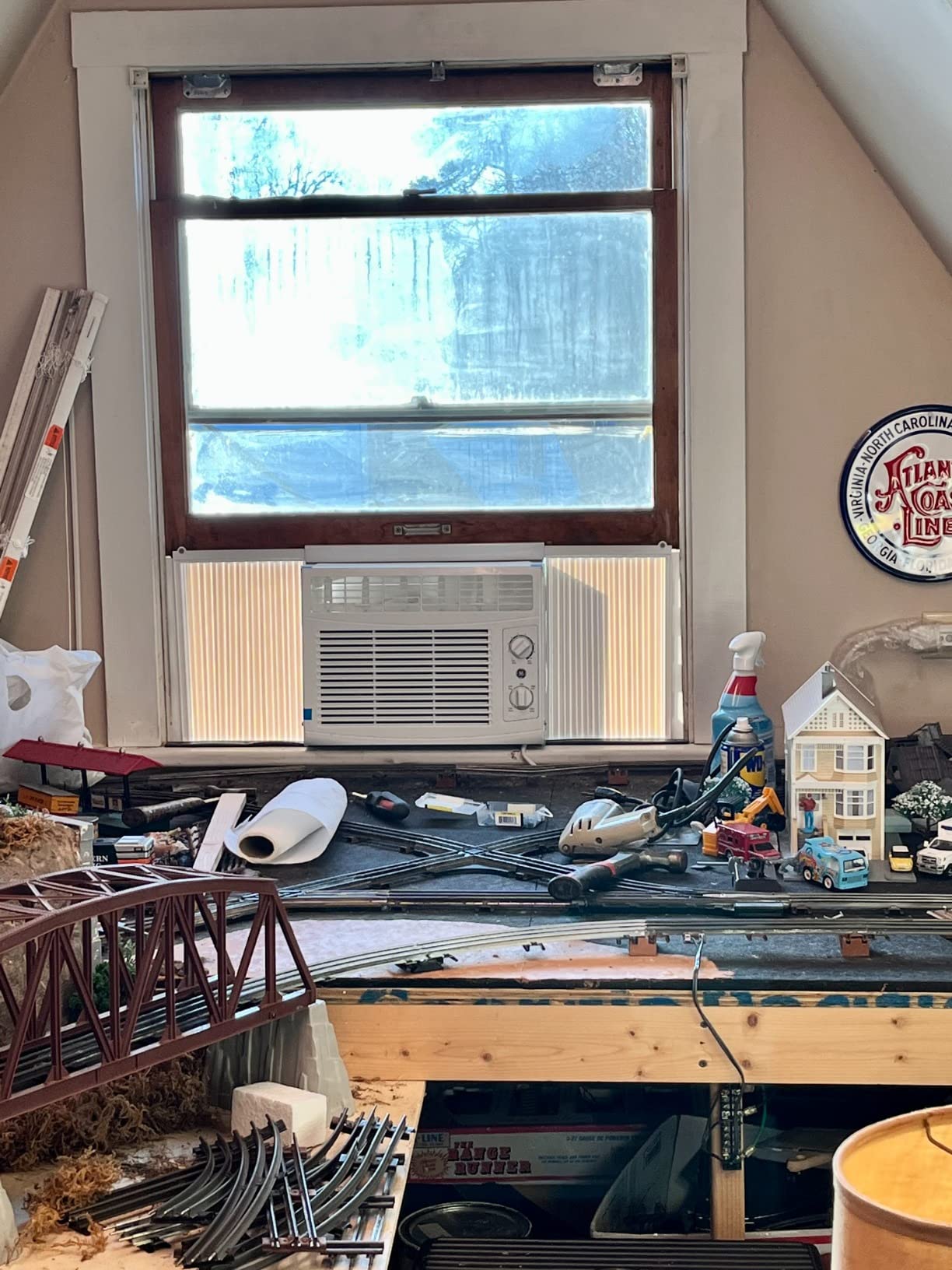
At 56 dBA it sits between the Frigidaire and the Midea for published noise, and owners report that it is usable in a bedroom overnight. One reviewer told us a unit survived falling out of a window during a move and kept running afterward, which tells you more about the chassis than any spec sheet.
The window requirement is a 21.875 to 36 inch width and a 13.375 inch minimum height. That 21.875 inch minimum is the narrowest opening any unit in this roundup accepts, which makes it the most forgiving choice for an older building with a tight sash.
Is it quiet enough for a sleeping room?
It is a fair pick for a bedroom, but not the pick for a wall-sharing studio where every decibel carries. The compressor cycle is the loudest part, and owners note it becomes noticeable in a very quiet room on the first warm nights of the season.
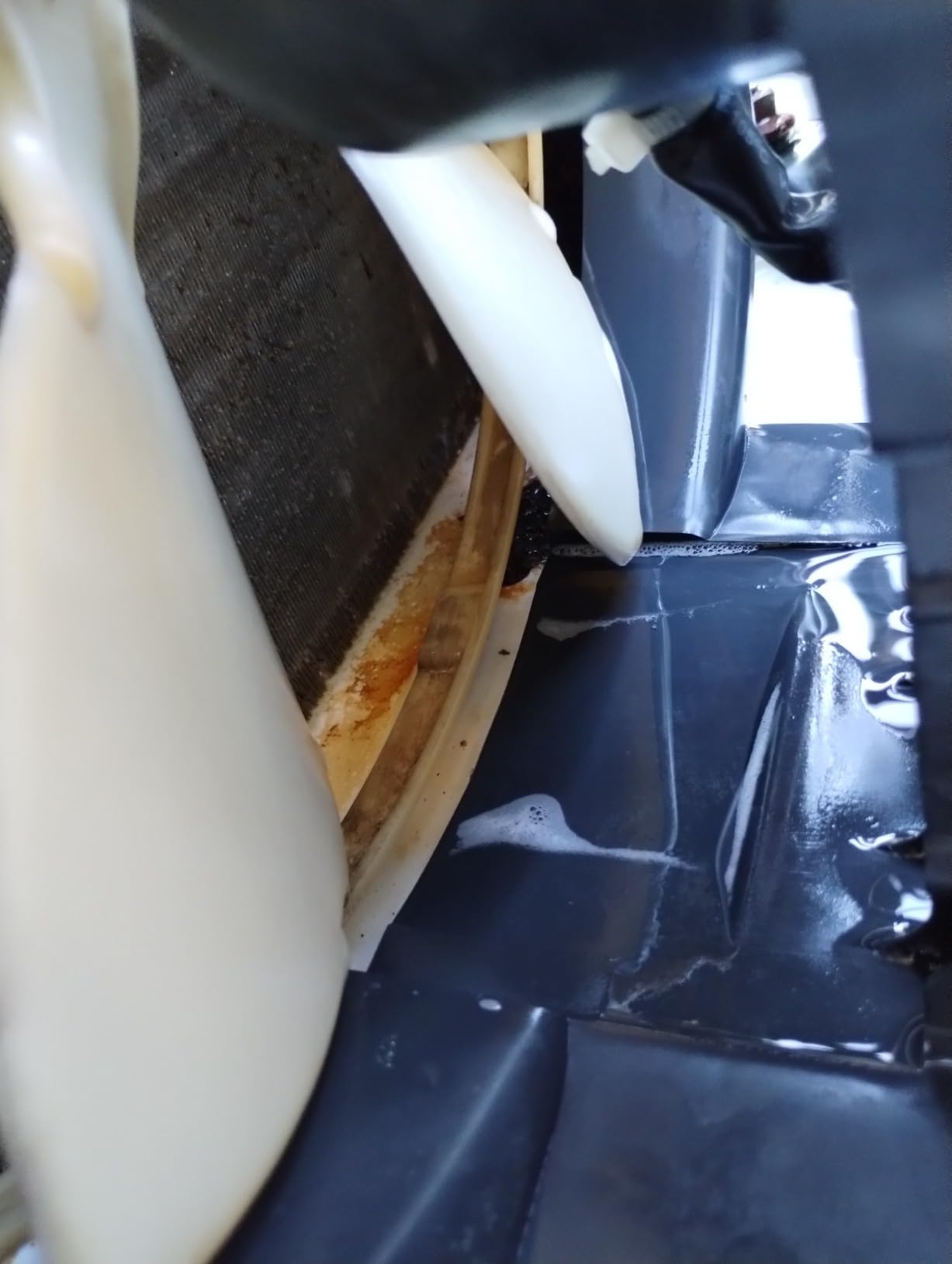
Noise complaints in humid climates tend to come from the drain pan rather than the fan. Moisture collects inside the shroud, and cleaning it means taking the unit out far enough to reach in from underneath. Budget ten minutes a month for it if you live somewhere with heavy summer humidity.
How does it compare for a first summer?
Owners report holding a room about 20 degrees cooler than outdoors, which is the number to sanity-check your expectations against. A 5,000 BTU box in a 150 square foot room with one window and one sun-facing wall will work hard on peak afternoons and coast the rest of the day.
The lack of a remote is the most common complaint and the least important. Airflow direction adjusts side to side only, so if you need to send air up toward the ceiling to spread it across a room, this is not the unit for that. Everything else about the install experience is a plus.
4. Midea 8,000 BTU U-Shape Smart Inverter – The Only One That Keeps Your Window
Midea 8,000 BTU U-Shaped Smart Inverter Window AC, Cools 350 Sq Ft, Ultra Quiet, Alexa/Google Compatible, 37% Energy Savings
8000 BTU
Cools up to 350 sq. ft.
As low as 32 dBA
55.6 lb
2-year warranty
Pros
- U-shape leaves the window partly usable
- 32 dBA on low
- Inverter compressor with ENERGY STAR
- App remote and voice control
Cons
- Heaviest unit in the group at 55.6 lb
- Two-person install
- Small minority report internal rattle
This is the unit that changes what a window AC can do in an apartment. The U-shaped chassis sits across the window opening while leaving a channel through the middle, so the sash can stay partly open for fresh air, daylight and a view of the street. In a studio where the window is the only light source, that is not a small feature.
The U-shape also does something for noise. By pushing the compressor mechanism to the sides and letting the center channel act as extra insulation from the outside, the manufacturer rates it as low as 32 dBA. That is roughly 20 dB below a standard box, which is the difference between a background hum and something you stop noticing.
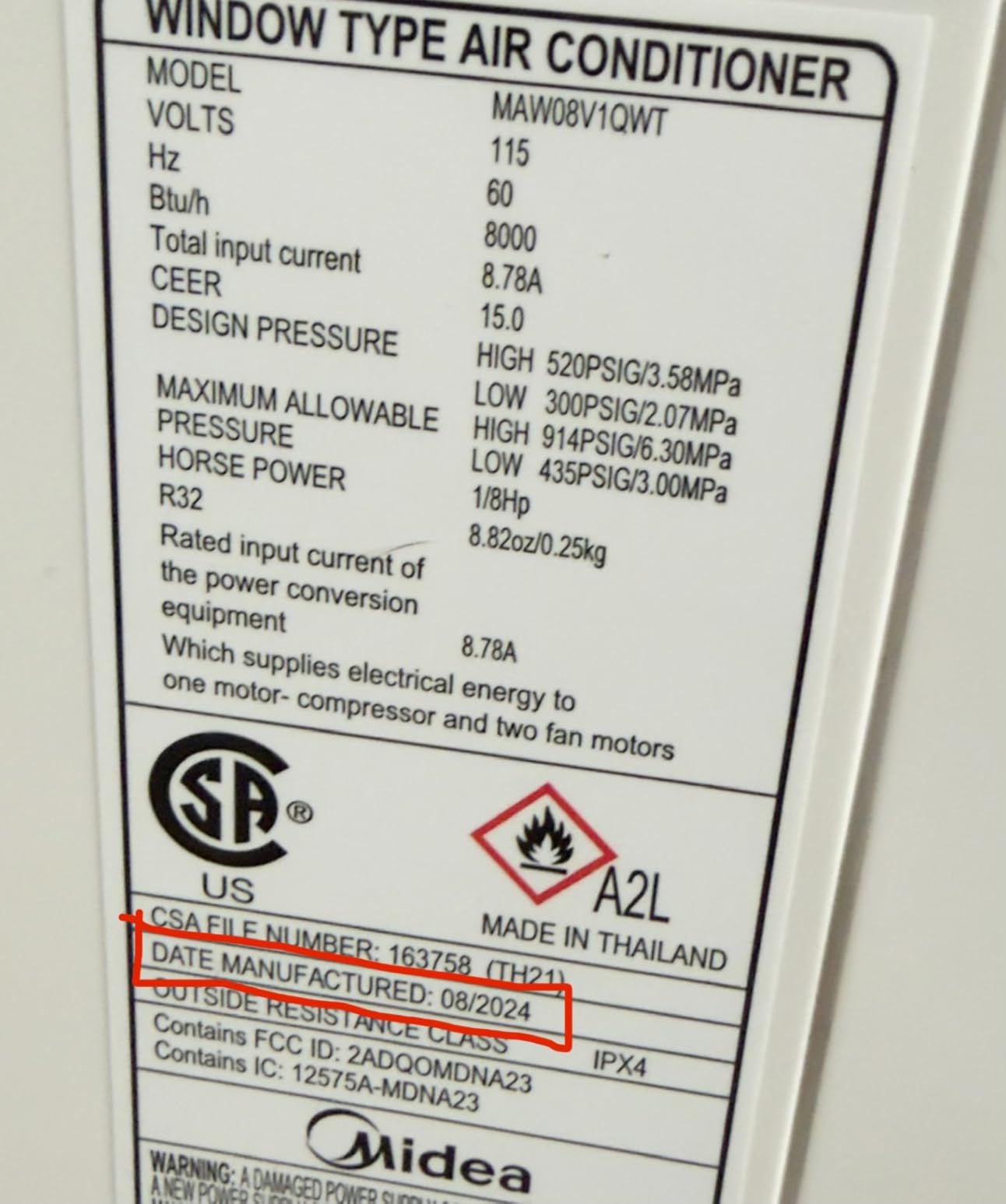
Cooling capacity is 8,000 BTU for rooms up to 350 square feet, so it handles a full studio, a large bedroom or a living room that shares space with an office. The compressor is a rotary vane inverter, which ramps up and down instead of switching on and off, and the unit is ENERGY STAR certified with a claimed energy saving of over 35 percent against a fixed-speed model of the same size.
Controls come from three directions: the SmartHome app, the included remote, and Alexa or Google Assistant. An anti-theft lock holds the window closed while the unit runs, which matters on a ground-floor apartment where a sliding window is otherwise a way in.
How hard is the install in a rental window?
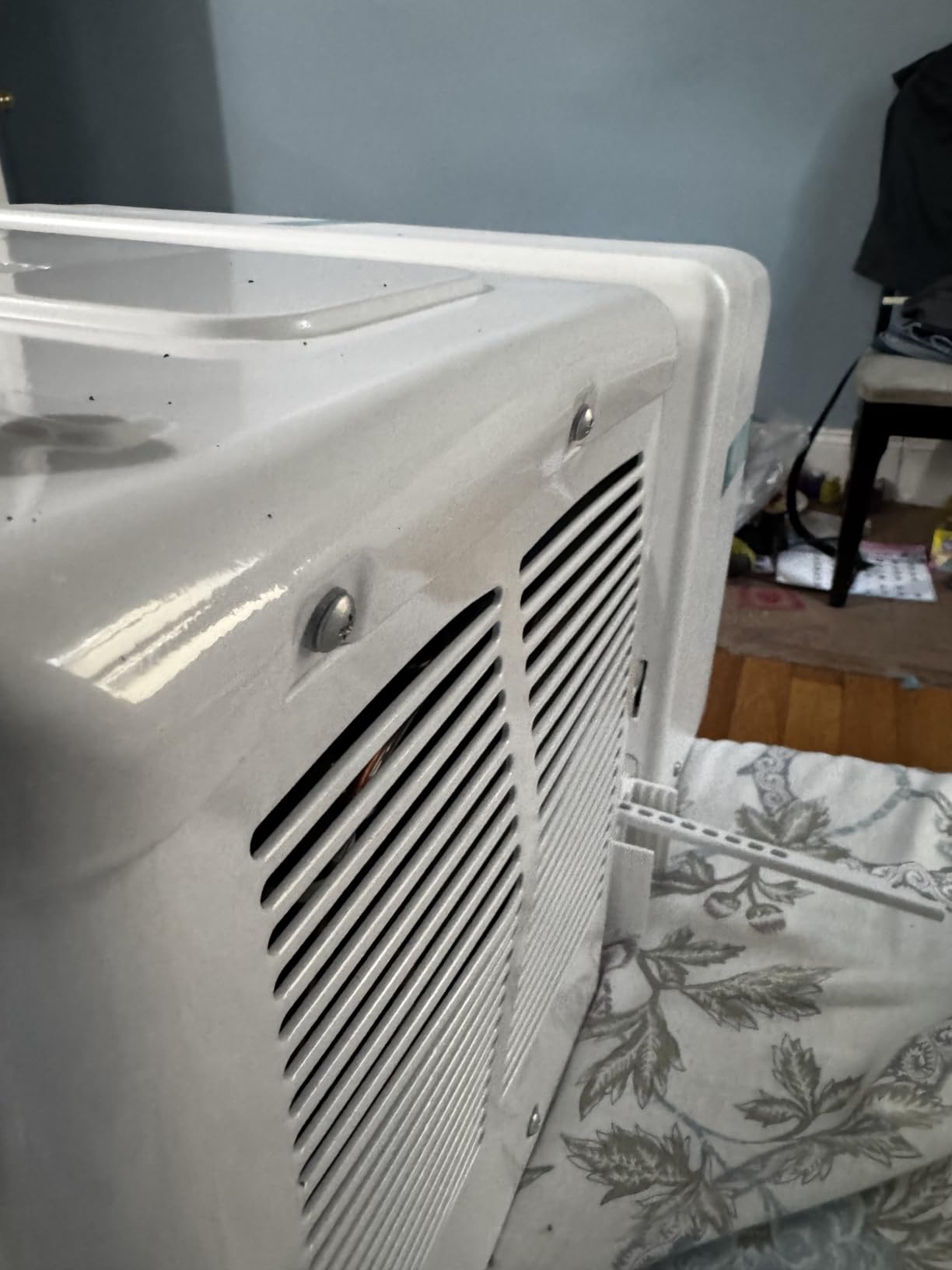
Be honest with yourself about this one. At 55.6 pounds it is the heaviest unit in the group, and holding that while leaning out a second-floor window is not a solo job. The included bracket is designed to take the load so the sash is not carrying the weight, but the bracket still has to be set and leveled before you let go.
Owners in r/AirConditioners describe the bracket setup as the part that needs two people and a level, not the part that needs tools. The window range is 22 to 36 inches wide with a minimum height of 13.75 inches, so check your opening before committing.
Is the 4.1 rating a warning sign?
It reflects a much smaller review base than the 5,000 BTU boxes, with 14 percent one-star feedback. The complaints cluster around weight, cost and a minority of units that developed internal rattling or app pairing quirks after a few months.
What does not show up in the complaints is cooling performance. A 2.1 year warranty on parts and labor is the longest in this roundup, which is the single best reliability signal a buyer can get. If your lease allows a bracket, the U-shape is the best-equipped apartment window AC we found.
5. DELLA 8,000 BTU Smart – Lighter Handling Than Most 8,000 BTU Boxes
DELLA 8000 BTU Energy Saving Window Air Conditioner, Work with Alexa, Cools Up to 350 Sq. Ft, GEO Location, AC Unit with WIFI Smart Controls, Remote, Dehumidifier, Fan, Reusable Filter, Easy Install
8000 BTU
Cools up to 350 sq. ft.
As low as 54 dB
44.8 lb
CEER 10.9
Pros
- Lightest 8000 BTU model here at 44.8 lb
- 61 to 88 degree range with 4 modes
- App and Alexa control
- 24-hour timer
Cons
- Owners report it running very loud
- Some units fail electronically after a year
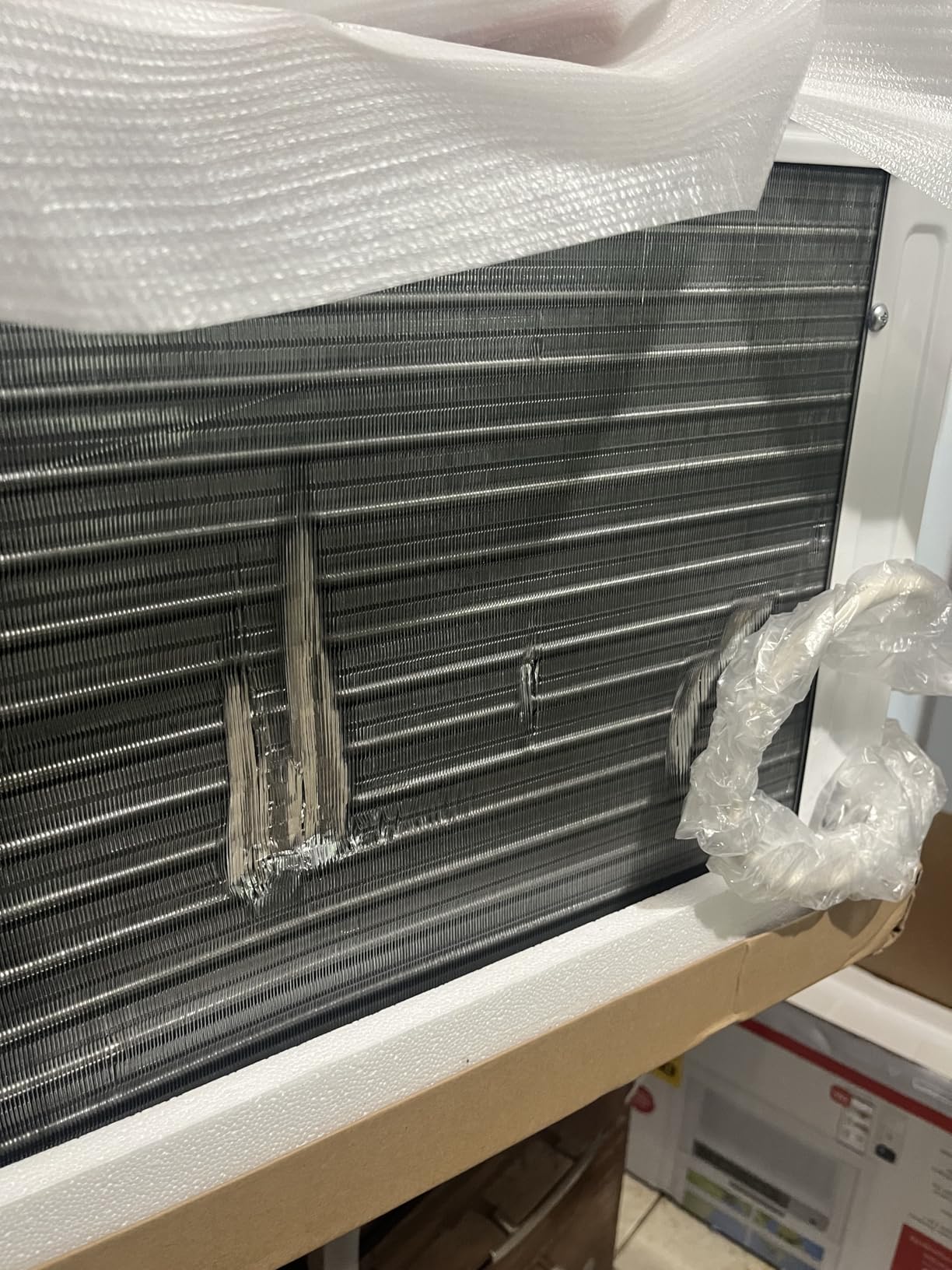
- Dented packaging on arrival
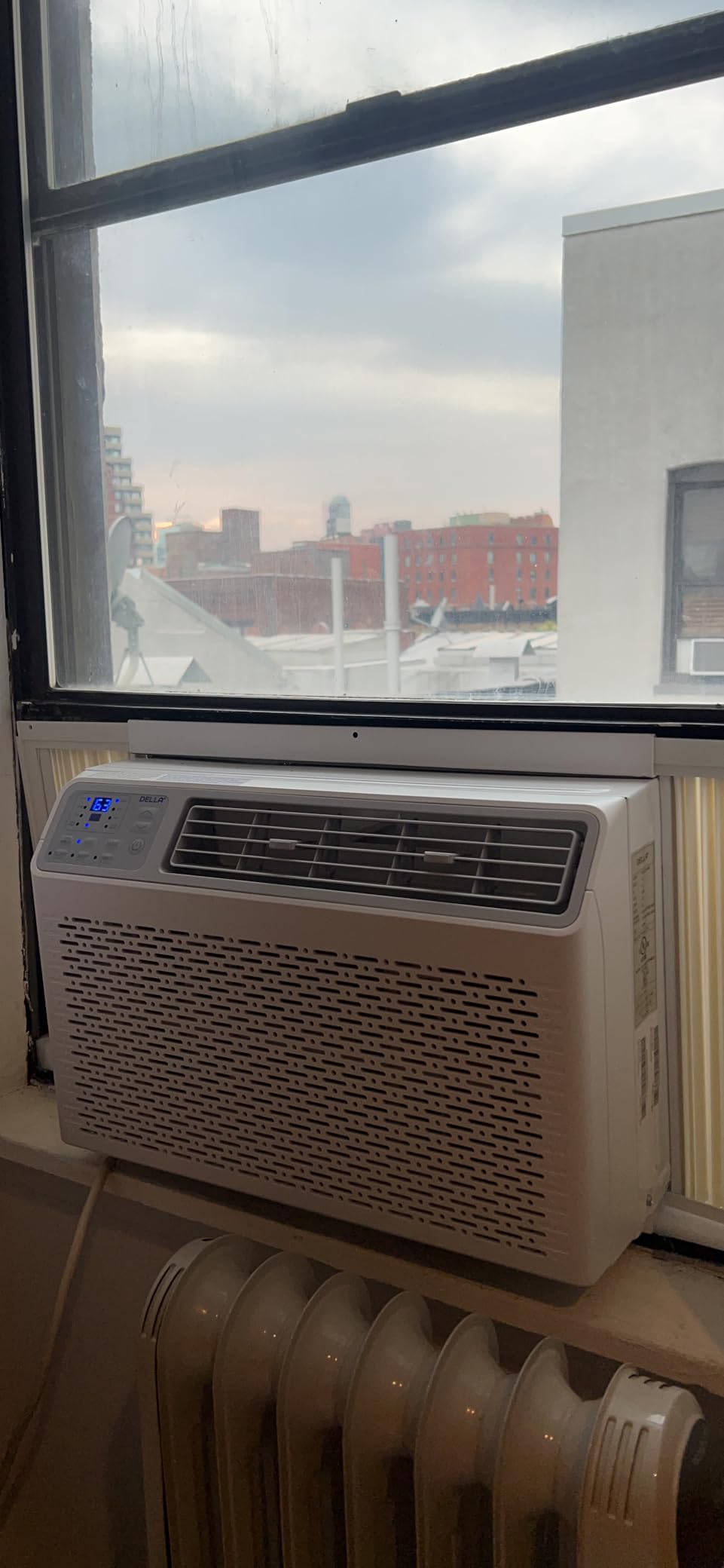
The DELLA exists to solve one specific problem: an 8,000 BTU box you can actually lift. At 44.8 pounds it is around eleven pounds lighter than most units in its class, and that gap is the difference between a solo install and needing a neighbor to hold the frame while you bolt it in.
Control options are good for the money. The LED panel covers a 61 to 88 degree range with four modes, three fan speeds and a 24-hour timer, and the Della+ app plus Alexa compatibility let you start a cycle before you get home. For a tenant who works a normal schedule, remote start is a genuine comfort win.
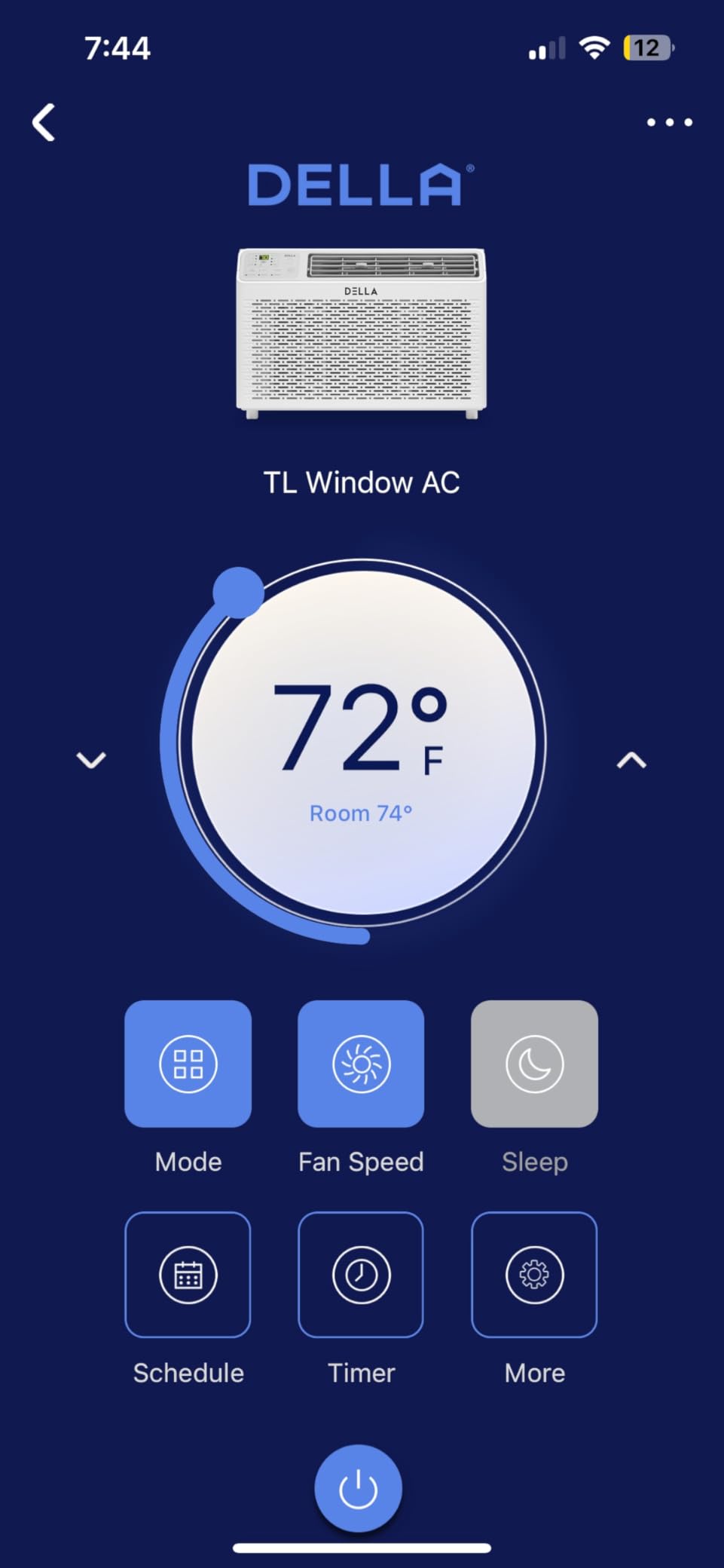
Cooling capacity is 8,000 BTU for rooms up to 350 square feet, with a CEER rating of 10.9. Several owners report noticeably lower utility bills after switching from a central air setup, which is the expected direction of travel for any window unit used in place of whole-home cooling.
The window requirement is 23 to 36 inches wide with a minimum height of 14.5 inches. The full installation kit is in the box, so you are not sourcing a bracket separately before you start.
Is the noise complaint consistent?
No, and that matters. A number of reviewers describe this unit as extremely loud, particularly on the low fan speed, which is a strange pattern since low is normally the quiet setting. Treat the 54 dB figure as a best case rather than a typical one.
The more serious pattern is early electronic failure. Several owners report units stopping working after roughly a year, which lines up with the end of the limited warranty coverage. If you are installing this and expect to keep it past two summers, budget for a possible replacement.
Who should pick this over the Midea U-shape?
Pick this one if you are installing alone, on a first-floor window, in a room where you do not need the window afterwards. It gives you the same 350 square foot cooling capacity with a much lighter chassis and a similar app-based control experience.
Skip it if noise is the deciding factor, or if you plan to keep the AC for five summers or more. The Midea U-shape carries a two-year warranty and a much lower low-speed noise figure, and that difference matters more than a slightly lower purchase outlay over a long tenancy.
6. GE 10,000 BTU Smart Wi-Fi – Best for a Mid-Size Living Room
GE Window Air Conditioner 10000 BTU, Wi-Fi Enabled, Energy-Efficient Cooling for Medium Rooms, 10K BTU Window AC Unit with Easy Install Kit, Control Using Remote or Smartphone App
10000 BTU
Cools up to 450 sq. ft.
63 dB
58 lb
Eco Mode
Pros
- Handles rooms up to 450 sq. ft.
- Quieter than the GE models it replaces
- SmartHQ app and voice control
- Slide-out washable filter
Cons
- Highest noise figure in this group at 63 dB
- App and Wi-Fi sleep mode reported as buggy
- No native HomeKit support
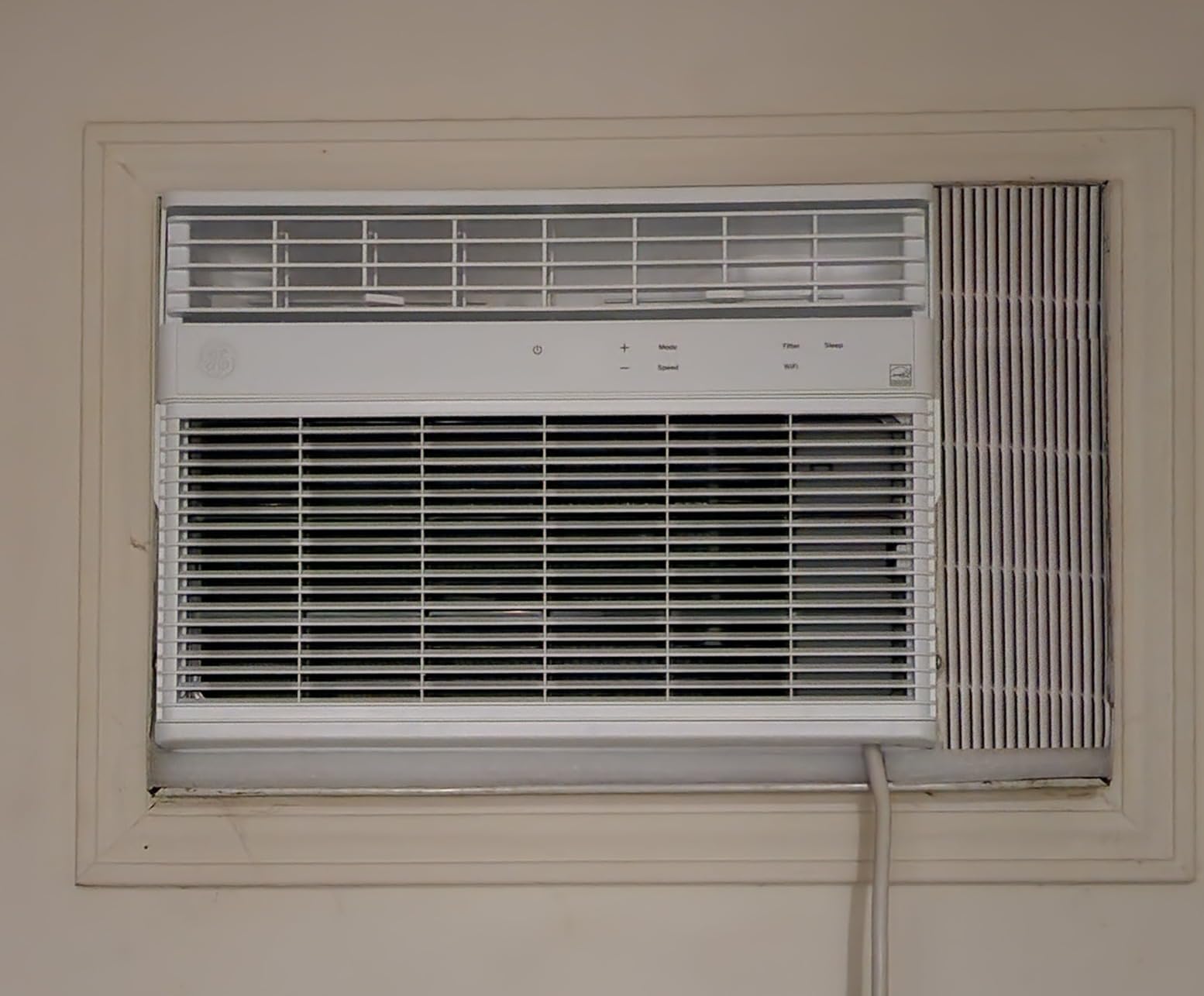
At 10,000 BTU this is the first unit in the list that can hold a combined living and dining space, or a large studio with a sleeping area, through a peak July afternoon. The rated coverage is up to 450 square feet, and owners confirm it is the cooling that justifies the size.
The SmartHQ app handles scheduling and monitoring, and there is voice support through Alexa and Google Assistant plus a readable remote. Eco Mode is the useful one: it cuts the compressor and fan once the room reaches the set temperature instead of cycling on and off all afternoon.
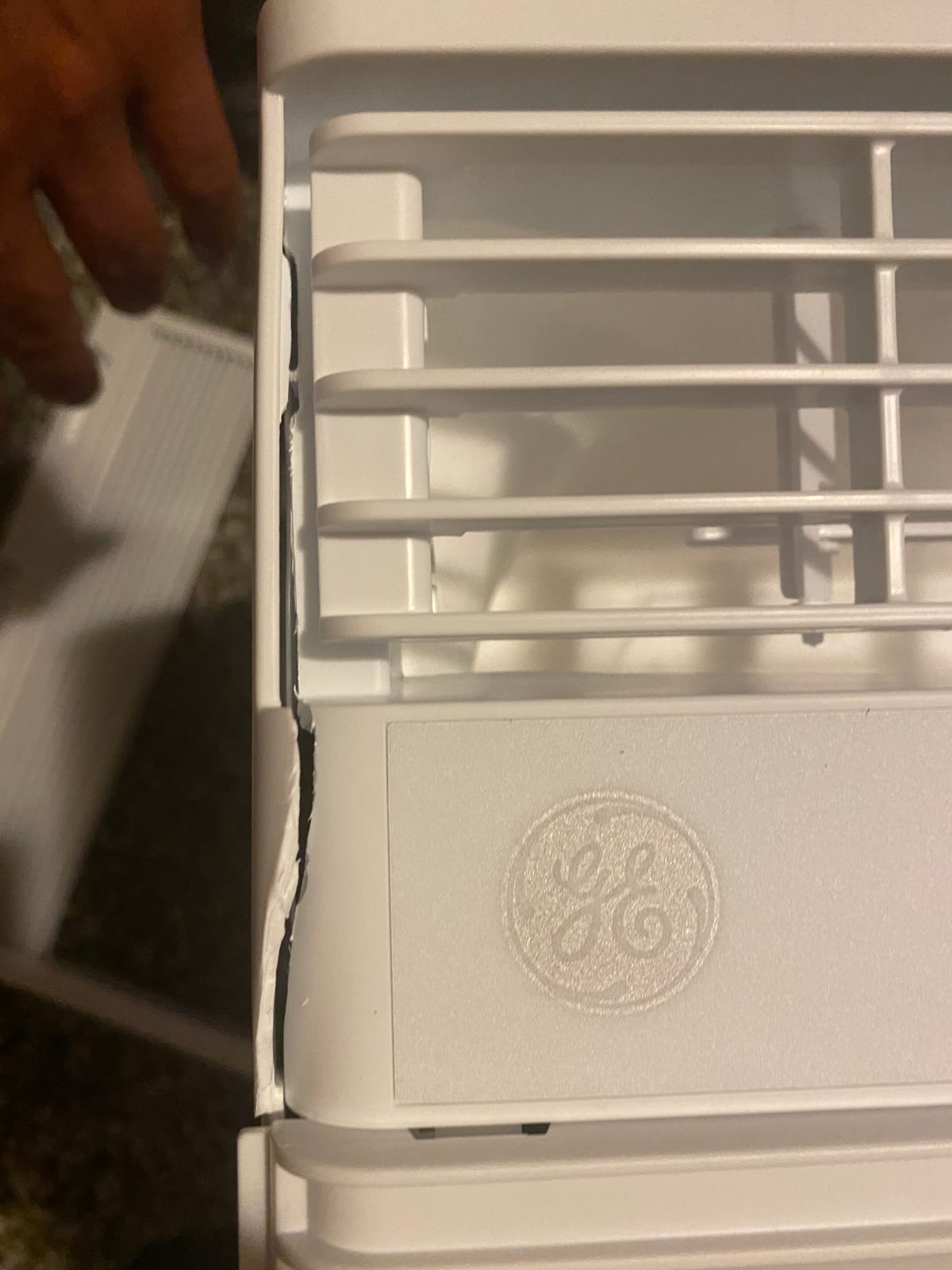
The filter slides out from the front and is washable, with a 30-day cleaning interval, which is one of the better arrangements in this roundup for a renter who does not own tools. The refrigerant here is R-410A rather than R-32, which is worth knowing if you ever need to service the unit later.
Installation uses the EZ Mount kit and fits double-hung windows from 25 to 36.625 inches wide with a 14.563 inch minimum height. That 25 inch minimum is the widest requirement of any unit here, so measure before you order.
Can you sleep next to a 63 dB machine?
Not comfortably. This is the loudest published figure in the roundup, and at 63 dB the compressor cycle carries through a thin apartment wall. For a living room or den it is fine, and owners often note it is still quieter than the older GE models it replaced.
Owners of earlier versions reported more HomeKit integration than the current model delivers, so treat voice control expectations with care. The included remote works reliably, and the physical controls are unaffected by any of this.
How does the smart layer hold up?
This is where the 4.2 rating comes from. Reviewers consistently report the SmartHQ app dropping its Wi-Fi connection, the sleep mode not engaging as expected, and temperature changes made in the app not sticking after a restart.
If you want scheduling, set it once and leave it. If you want to adjust the temperature from your phone while sitting in the room, the remote is faster. Owners deploying several of these across a rental property report the app being the weak point, not the cooling.
7. LG 8,000 BTU LW8024RD – Best for Cooling Multiple Rooms Over Time
LG 8,000 Window Air Conditioner, 115V, 350 Sq.Ft. (14′ x 25′ Room Size), Quiet Operation, Electronic Control with Remote, 3 Cooling & Fan Speeds, Auto Restart, 8000 BTU, White
8000 BTU
Cools up to 350 sq. ft.
As low as 53 dB
57 lb
1-year limited warranty
Pros
- Consistent performance across many units
- 53 dB in low mode
- Remote with 3 speeds and Auto Cool
- Auto Restart after outages
Cons
- Heavy at 57 lb
- Filter reminder light is hard to dismiss
- Setup directions are unclear
The LG earns its place through consistency rather than headline features. Several owners run these in rental properties, mobile homes and workshops, and report that units bought at different times perform the same way. For a landlord outfitting several apartments, or a tenant who expects to keep the same unit for a long tenancy, predictable behavior is worth more than a specification sheet win.
Cooling capacity is 8,000 BTU for rooms up to 350 square feet, and one reviewer reported dropping a sun-exposed 300 square foot room from 81 degrees to 73 degrees within an hour of starting it. That is the kind of measured result that tells you the compressor is sized correctly for a west-facing room.
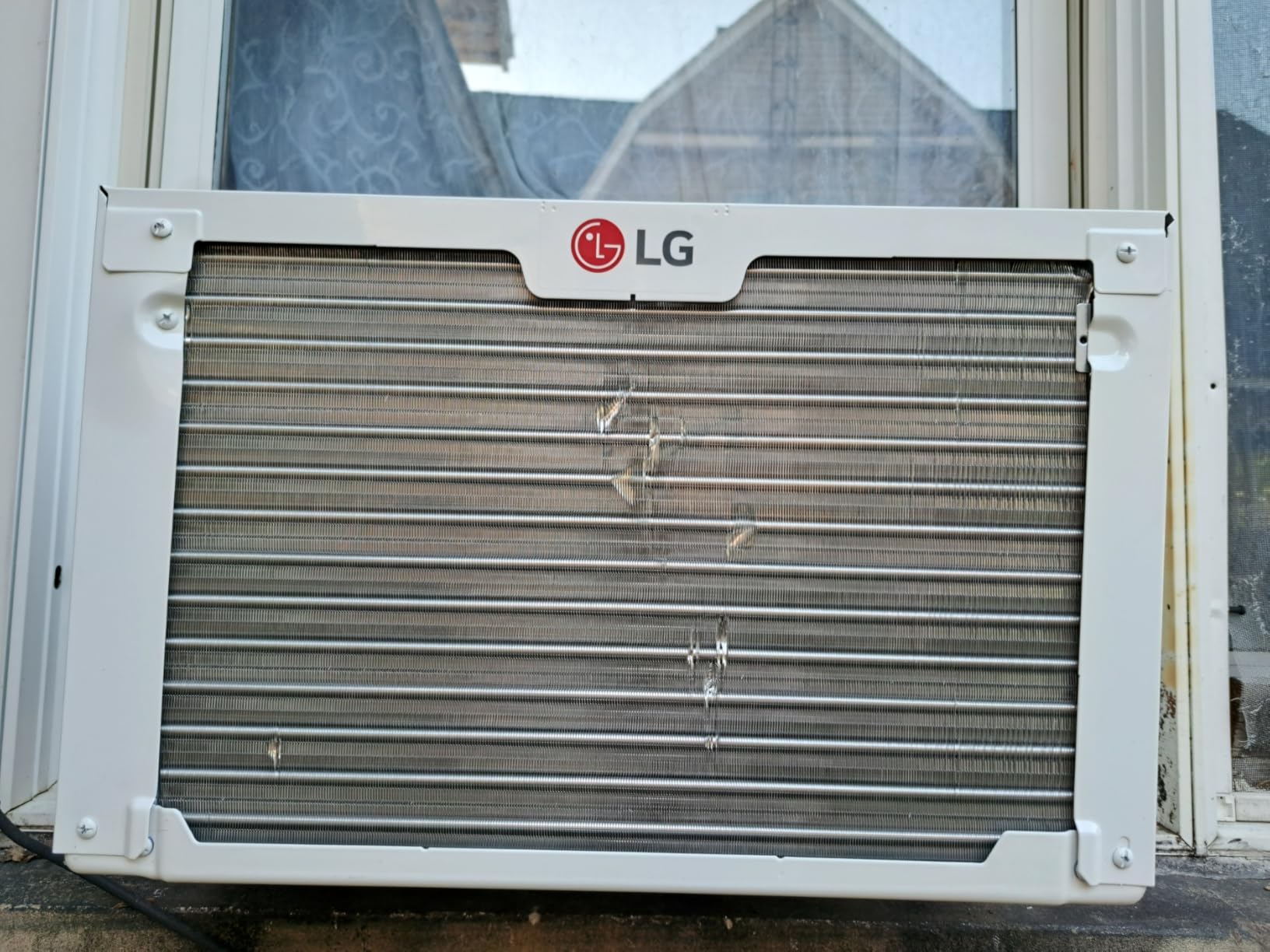
The control set is electronic with an included remote, three cooling speeds, three fan speeds and an Auto Cool mode that cycles the compressor to hold the set point. Auto Restart brings the unit back after an outage, which is the same convenience the Frigidaire offers and equally useful in a rental.
Noise is rated as low as 53 dB in low mode, which makes it one of the more sleepable non-inverter options here. The window requirement is a 22 inch minimum width and 13 inch minimum height, expanding to a 36 inch maximum width.
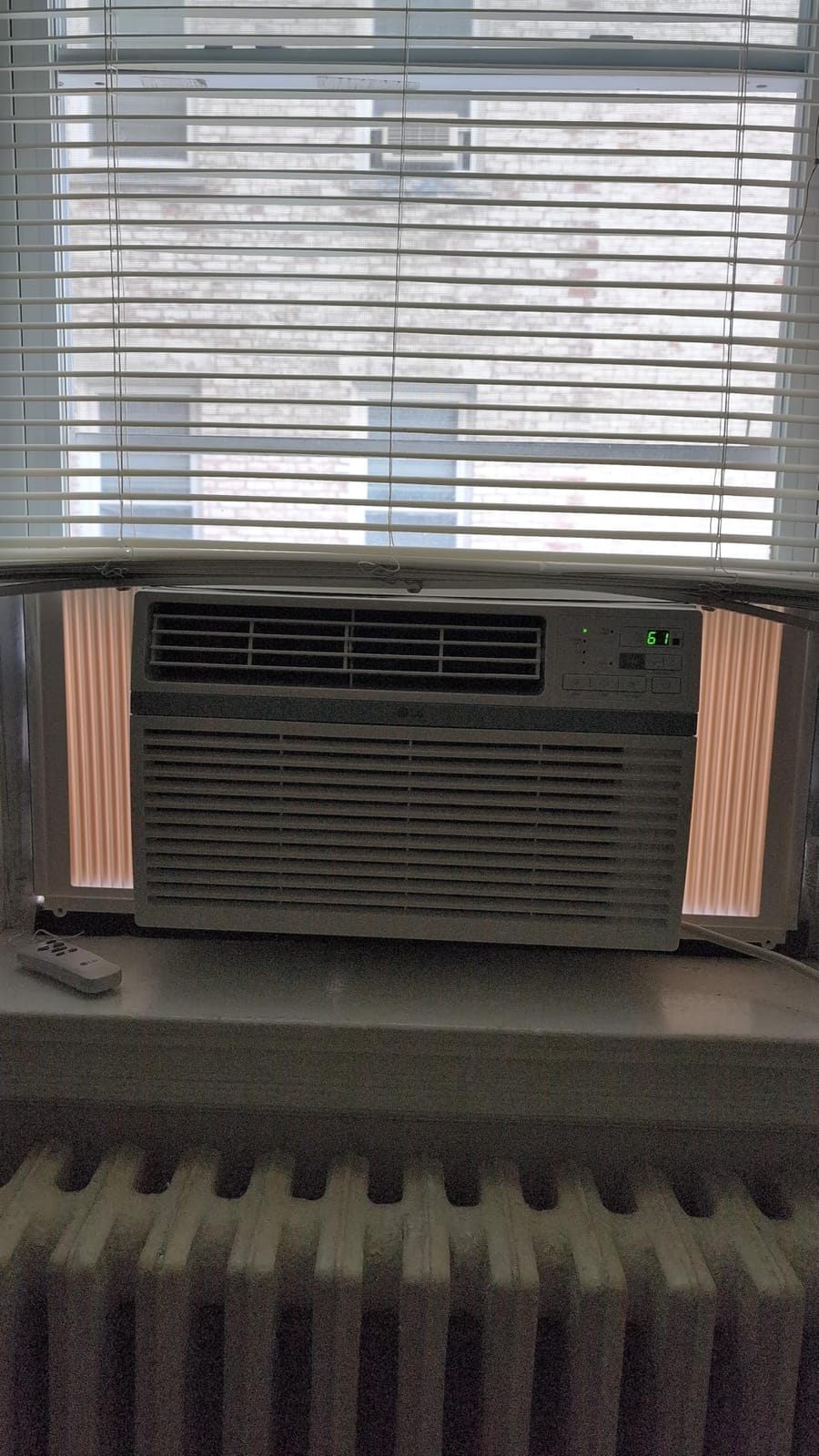
What does 57 pounds mean for a second-floor install?
It means you need a brace bar or support bracket in the window. The LG is among the heavier boxes in this roundup at 57 pounds, and the sash is not designed to hold that. Support the weight from below, not from the window frame, and you remove the drop risk that makes second-floor installs nerve-wracking.
The condensate capacity is listed at 2.2 pints per hour, which is a reasonable figure for a humid climate. If you are in a persistently muggy area, expect to drain manually every eight to twelve hours on the heaviest days, regardless of brand.
What is the ownership experience like?
The filter has a reminder light that owners find comes on sooner than expected and is awkward to dismiss. It is a small irritation, not a defect, and the filter itself is washable.
The paperwork is the weakest part of the package. Multiple reviewers describe the setup directions as hard to follow, so budget a few minutes reading before you start rather than improvising. The warranty is one limited year, which is the industry standard here but not the strongest.
8. Midea 10,000 BTU U-Shape – The Quietest Option for Open-Plan Rooms
Midea 10,000 BTU U Shaped Window Air Conditioner, Cools up to 450 Sq Ft
10000 BTU
Cools up to 450 sq. ft.
As low as 32 dBA
54 lb
Inverter compressor
Pros
- Same 32 dBA low figure as the 8000 model
- Covers 450 sq. ft. of open space
- Bracket takes the weight off the sash
- App remote and voice control
Cons
- Most expensive unit in this roundup
- Some units rattle with no service fix
- One-year warranty only
This is the unit for a large studio or an open living area where noise is the deciding factor. It carries the same 32 dBA low-speed rating as the 8,000 BTU U-shape but adds the capacity to hold 450 square feet, so you do not have to choose between quiet operation and a room that actually cools down in August.
As with the smaller U-shaped model, the center channel leaves the window partly usable and blocks more of the outside noise path than a flat chassis. The support bracket is a quick-snap design that takes the load without loading the window sash, which is exactly what a landlord is worried about on a second-floor install.
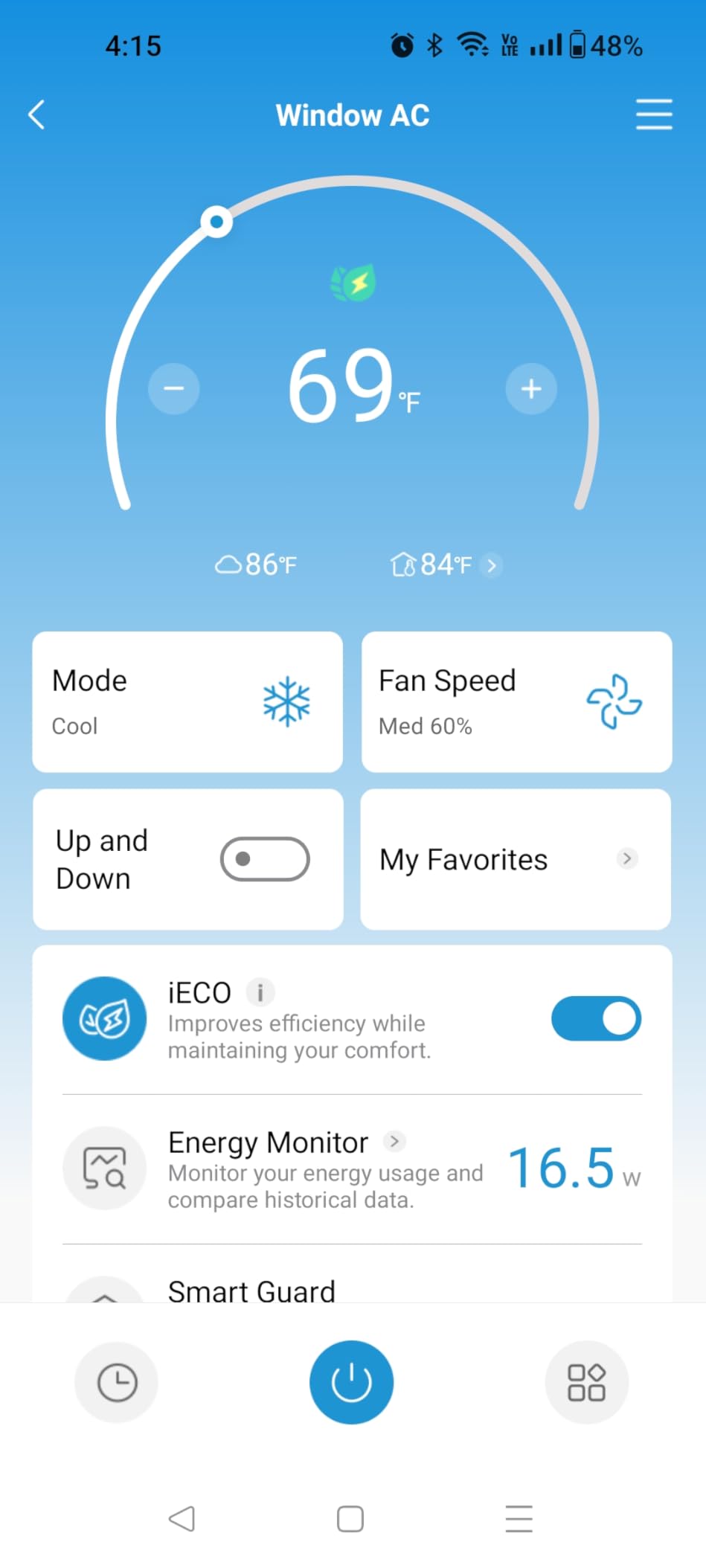
The compressor is an inverter rotary type with over 37 percent claimed energy savings and ENERGY STAR certification. Controls run through the SmartHome app, the remote, the top-mounted touch panel and voice assistants, and the remote conveniently rests on top of the unit rather than getting lost in a drawer.
There is an anti-theft lock that holds the window closed while the unit operates. For a ground-floor apartment that turns a sliding window from a security liability into a reasonable choice.
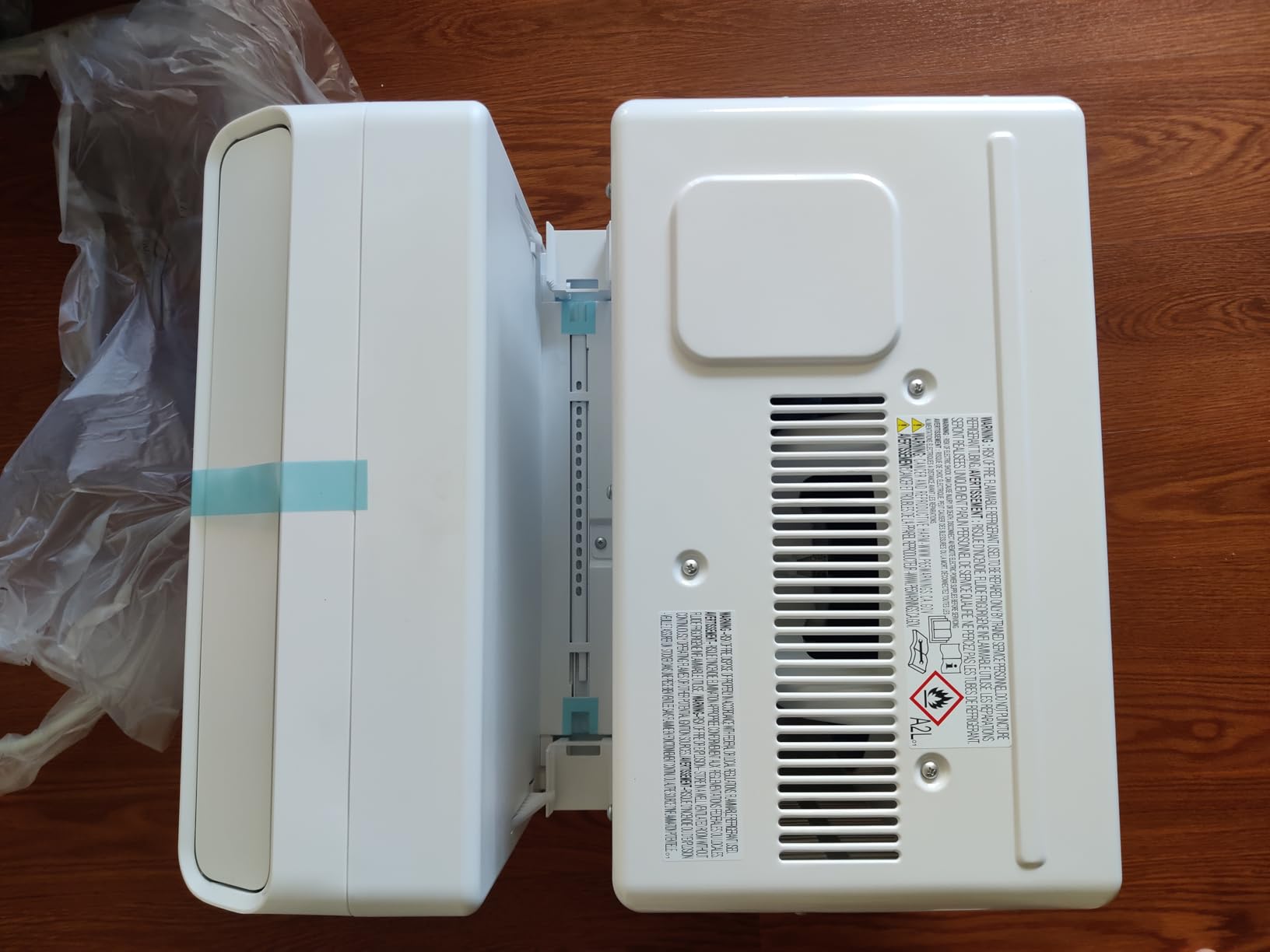
Will the 10,000 BTU version fit the same window as the 8,000?
Not always. The listed opening is a 23 inch minimum width and a 19.5 inch minimum height, which is substantially taller than the 13.75 inch minimum the 8,000 BTU U-shape needs. Older double-hung windows with a short upper sash will rule this one out.
Check the height before you fall for the capacity. The upside is real: at 10,000 BTU this handles the largest apartment room in the roundup while remaining the quietest option available in that class.
What do owners complain about?
The rating is 4.4 across a small base of 136 reviews, with the vast majority of five-star feedback. The negative comments concentrate on internal rattling or grinding that customer service could not resolve, and on the bracket arm having limited anchor options in unusual window frames.
The warranty is one limited year despite the premium tier, which is the main reason we did not extend the Editor’s Choice here. If you are confident in the install and plan to move within a few years, the operating experience more than compensates. If you want a long warranty as a proxy for build quality, the 8,000 BTU U-shape is the safer version of the same idea.
9. TCL 10,000 BTU Smart – Best Three-in-One Value for Humid Climates
TCL 10,000 BTU Smart Window Air Conditioner, Fan, & Dehumidifier, Wi-Fi
10000 BTU
Cools up to 450 sq. ft.
54 dB
48.5 lb
ENERGY STAR 5 star
Pros
- Highest average rating in the roundup at 4.5
- Works as AC
- fan and dehumidifier
- App plus voice control and remote
- ENERGY STAR 5 Star certified
Cons
- Smallest review base at 99 reviews
- Needs a 26 inch minimum window width
- Fixed-speed compressor uses more power
The TCL is the newest and least documented product here, with 99 reviews, and it carries the highest average rating in the roundup at 4.5 stars. Seventy-seven percent of that feedback is five stars, with owners citing strong 10,000 BTU cooling, straightforward app and voice control, and lower power use than the unit it replaced.
Its differentiator is the three-in-one design. The same unit handles cooling, fan-only operation and dehumidification, which is the mode you want in a humid coastal city or a basement-level apartment where the air feels clammy rather than merely warm.
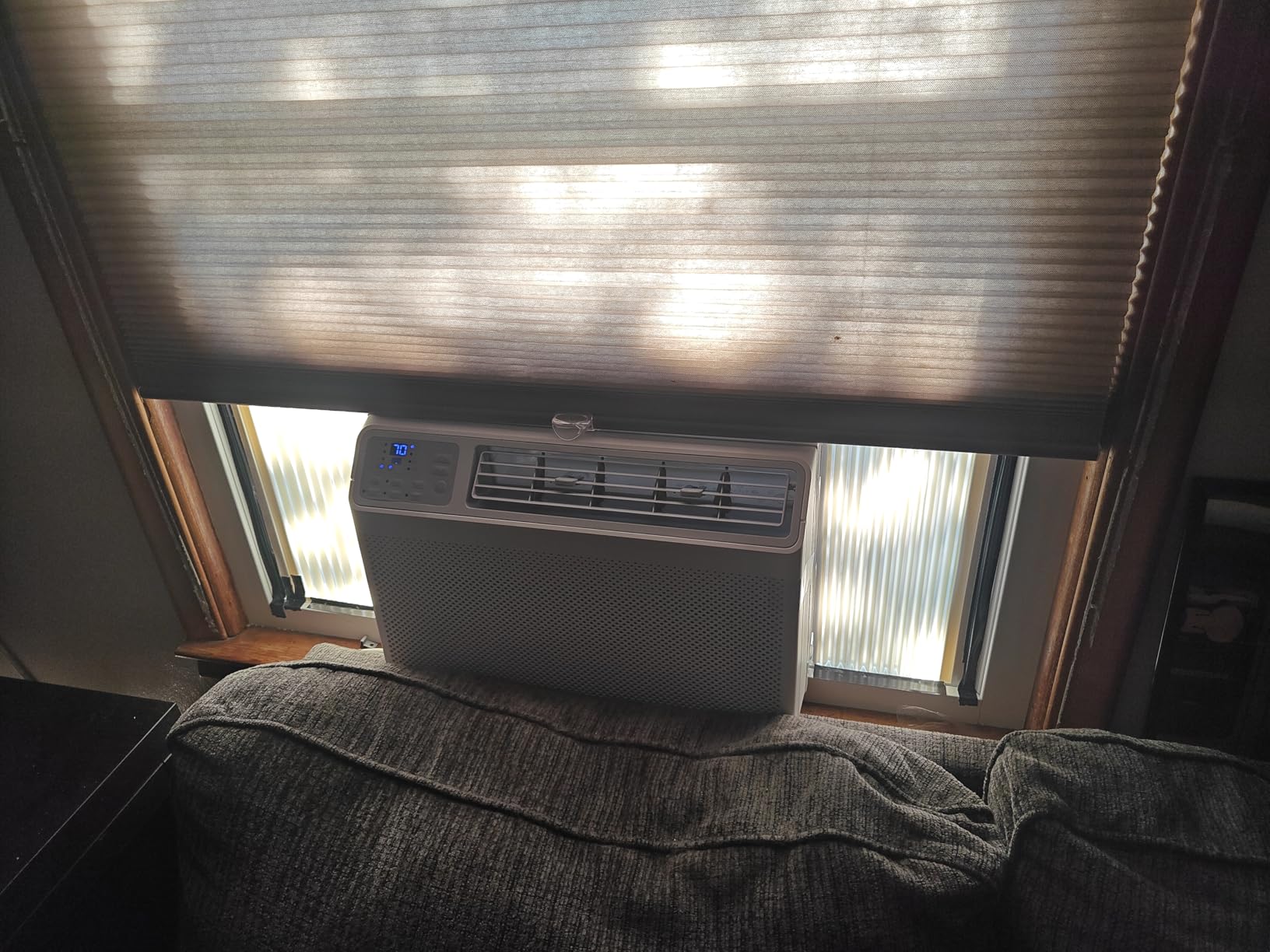
The control package is a TCL Home app, voice assistant support and an included remote, with a clear LED display and both Sleep and Eco modes to reduce consumption overnight. A washable filter keeps maintenance simple, and the full installation kit ships in the box.
At 48.5 pounds it is lighter than the GE 10,000 BTU and the LG 8,000 BTU, so the install is more manageable alone than either of those. Rated coverage is up to 450 square feet, matching the largest units in this roundup.
What is the catch with the highest rating?
The window requirement is a 26 inch minimum width, the widest of any unit here. If your apartment window is narrower than that, this one is not a candidate no matter how well it performs, so measure first.
The second catch is thin long-term data. Ninety-nine reviews cannot tell you how the compressor holds up in year six, and the one-year limited warranty is the standard cover. Buying it means accepting that you are early to a product with a strong but unproven track record.
Is a fixed-speed compressor a dealbreaker?
Not at this capacity level, but expect higher energy use than the two inverter models in this roundup. ENERGY STAR 5 Star certification offsets some of that, and for a tenant cooling one room rather than a whole home the difference in annual consumption is modest.
The inverter advantage is really about sound at low load. A fixed-speed compressor cycles on and off, so it is loudest at the moment it kicks in. If your priority is dehumidification and lowest purchase outlay at 10,000 BTU, this is the pick. If it is silence, go U-shaped.
Apartment Checklist: Lease Rules, Windows and Outlets
Can you put a window AC in an apartment? Usually yes, but get it in writing. Most leases prohibit drilling, alterations to windows, and anything that damages the frame or the wall. A window unit that sits in the sash without permanent modification is normally fine, while anything requiring brackets screwed into the frame or the wall is a landlord conversation. Ask in email so you have a record.
HOA communities and historic districts can add projection rules. Several buildings restrict how far a unit may extend beyond the exterior wall, which is one more reason the low-profile and U-shaped designs earn their place in an apartment roundup.
Measure the window opening before anything else, and compare it against the minimum width and height printed on the unit. Our narrowest accepting unit starts at a little over 21 inches wide, and the widest requirement in this roundup is 26 inches, so a wrong guess here eliminates two or three options instantly.
Second-floor installs need a support bracket, every time. The chassis weights run from 35.3 pounds to 58 pounds, and a sash is not a shelf. Anything above ground level also carries a drop risk that your landlord will care about, so include the bracket plan in the same email.
Check the outlet distance. Cord lengths run about 78 inches on the units here, and an extension cord on a 115-volt air conditioner is a fire risk that no manufacturer sanctions. If the nearest grounded outlet is more than about six feet from the sill, the answer is a new outlet installed by your building’s electrician, not a longer cord.
Ground-floor units deserve a separate look. A sliding window left partly open for ventilation is an entry point, which is a reason to favor a model with an anti-theft lock and to keep the sill clear. If you are outfitting a ground-floor unit, our guide to home safes for apartments covers the rest of that problem.
How to Size BTUs for an Apartment Room
BTU stands for British thermal unit, and it measures cooling output. The baseline rule for residential rooms is about 20 BTU per square foot, adjusted up for sun exposure, ceiling height, the number of people and the amount of electronics running. Here is the mapping for the capacities in this roundup:
5,000 BTU – up to 150 square feet. Bedrooms, home offices, studio corners, single-room apartments.
8,000 BTU – up to 350 square feet. Full studios, large bedrooms, living rooms with a sleeping area.
10,000 BTU – up to 450 square feet. Open-plan living spaces, large combined rooms, sun-exposed west-facing rooms.
Oversizing is the most common apartment mistake, and it works against you. A unit that is too large for the room cycles on and off constantly, which is loud, inefficient and the exact mechanism that produces the mold complaints owners report in humid weather. Buy the next size up from a sun-facing room, not two sizes up.
Two rooms in an apartment are better served by two smaller units than by one large one, and that also spreads the electrical load across two circuits instead of concentrating it. The trade-off is two installations and two window openings, so confirm you have two usable windows before planning that way.
Inverter vs Fixed-Speed Compressors
A fixed-speed compressor has one gear. It runs at full output until the room reaches the set temperature, then shuts off completely until the temperature drifts, at which point it starts again. That on-off cycling is the source of most window AC complaints about noise and uneven temperature.
An inverter compressor varies its output continuously. It ramps up, holds, and ramps down, so the unit spends most of its time running quietly at partial load rather than starting and stopping loudly. The 8,000 and 10,000 BTU Midea U-shaped models in this roundup are the inverter options.
This connects to the three-minute rule. A compressor that starts, runs and shuts down in less than about three minutes is short-cycling, which stresses the motor, drives up energy use and reduces dehumidification. If your unit cannot hold a temperature for at least a few minutes before cycling, it is either oversized or running at very low fan speed. A fixed-speed unit in a small room is the classic case, which is another argument against oversizing.
For apartments, the practical upside of an inverter is overnight. A variable unit idles instead of cycling, so the compressor noise you hear at 2 a.m. is far lower. The downside is that the inverter options are the heaviest and priciest in this roundup, and they use a less common window height minimum on the 10,000 BTU model.
Noise Levels and Thin Apartment Walls
Every figure we quoted is a manufacturer maximum, measured at the highest fan speed, which flatters the product. Real low-speed output is lower across the board, so treat the published numbers as a ceiling. The gap between a 32 dBA unit and a 63 dBA unit is real, though, and it is a 30 dB spread that no amount of test-condition nuance closes.
Use these thresholds when you read the table above:
Under 45 dBA – sleepable. A bedroom, a room you work in on calls, or a studio where the AC is beside your bed.
45 to 55 dBA – fine for a living room or den, tolerable in a bedroom if the room is not otherwise silent.
Above 55 dBA – background appliance. Good for a room you occupy during the day, poor for a sleeping room on a quiet street.
Two U-shaped models here reach 32 dBA on low, which puts them in the first band. The Frigidaire at 52 dBA and the LG at 53 dBA sit in the middle band, and the GE 10,000 BTU at 63 dB sits in the last one. In a building with thin partitions, treat the published figure as optimistic and add your own margin.
Installation choices affect noise more than buyers expect. A unit with a foam seal around the chassis blocks the air path that carries outside noise into the room, and a properly supported bracket stops the frame from rattling when the compressor starts.
Installation, Drainage and Seasonal Storage
Install in this order: set the bracket and confirm it is level, position the unit in the sash, extend and center the side panels, connect the drain hose if your model has one, plug into a grounded outlet, then seal any gap with foam weatherstripping. Seal last, because the gap size is easier to judge once the chassis is in place.
Tilt the unit very slightly outward, about one degree, so condensation drains to the back instead of into the room. If you find water on the sill, the unit is either too level or too small for the humidity, and both are fixable.
Never use an extension cord with a window air conditioner. These units draw between 450 and 890 watts at 115 volts, and a cord run of that length under that load is a documented fire cause. If the outlet is out of reach, the choice is a new outlet or a different window.
On drainage, a persistent drip in a humid climate usually means the drain pan is full. Owners of several models here describe draining every eight to twelve hours on the heaviest days. Set a tray under the drain outlet or a towel on the sill so the water goes somewhere harmless.
Mold prevention comes down to the filter and the pan. Clean the filter monthly, and once a season, pull the unit out and wipe the pan and the underside of the evaporator coil. That last step is the one most owners skip and the one that explains a lot of the musty odor complaints we saw in review summaries.
For storage, drain the pan fully, dry the coil, coil the cord loosely, and keep the unit upright indoors. A window AC stored on its side can shift refrigerant out of the compressor oil, and leaving it sitting in a damp garage over winter is how you get the smell that no filter change fixes.
If you are blocking a lot of direct sun and want the room to stay cooler, motorized shades on the window do more than the AC does. Our guide to the best motorized window shades for large windows covers the options that pair well with a busy window.
Frequently Asked Questions
What type of air conditioner is best for an apartment?
For most apartments, a window air conditioner is the practical choice because it needs no ductwork and no permanent modification. A U-shaped or low-profile inverter model suits a bedroom or studio where noise matters. A through-the-wall unit is better if your building has one. A mini-split is quieter and more efficient but requires landlord approval, drilling and professional installation.
Can you put a window AC in an apartment?
Usually yes, as long as the unit sits in the window without permanent modification. Most leases prohibit drilling or altering the window frame, so get written permission before installing a bracket or a support arm. Second-floor units should always be supported from below, and ground-floor units should use the anti-theft lock when the window is left partly open.
What size window AC do I need for my apartment?
Use roughly 20 BTU per square foot of floor area. That means 5,000 BTU for a room up to 150 square feet, 8,000 BTU up to 350 square feet, and 10,000 BTU up to 450 square feet. Add capacity for a sun-facing room, high ceilings or several occupants, and never size up by more than one step because an oversized unit cycles constantly and shortens its life.
What is the 3 minute rule for air conditioners?
The three-minute rule says a compressor should run for at least three minutes before shutting off, and should not start again within a few minutes of stopping. Short cycling wastes energy, keeps the room humid and wears out the compressor motor. The usual cause is an oversized unit in a small room, and the fix is to size down rather than to change settings.
Which brand of window air conditioner is the most reliable?
Reliability shows up in the depth of owner feedback rather than in brand claims. The Frigidaire 5,000 BTU in this roundup has more than 17,000 reviews averaging 4.3 stars, and the Midea EasyCool has more than 12,000 at 4.4, which tells you far more about long-term behavior than any specification. Look for a two-year warranty, a washable filter and R-32 refrigerant, and avoid units whose only feedback is under a hundred reviews.
How loud is a window AC in decibels?
The units in this roundup publish between 32 dBA and 63 dBA, and those numbers are measured at the highest fan speed. Under 45 dBA is sleepable, 45 to 55 dBA suits a living room, and anything above 55 dBA is a daytime background appliance. Thin apartment walls make all of these louder than the label suggests, so add your own margin in a quiet building.
Final Verdict
For most apartments, the Frigidaire 5,000 BTU is the right default because it fits ordinary windows, installs without drama and has a decade of owner feedback behind it. If your room is bigger than 150 square feet, or noise decides the outcome, move up to the Midea U-shaped models, which are the only options here that let you keep the window partly open and the only ones that reach 32 dBA.
Before you order any of them, check the lease, measure the window opening in both width and height, and confirm a grounded outlet within about six feet of the sill. Those three checks eliminate more bad purchases than any specification comparison. Our picks for the best window air conditioners for apartments will handle the rest once the unit physically fits.