
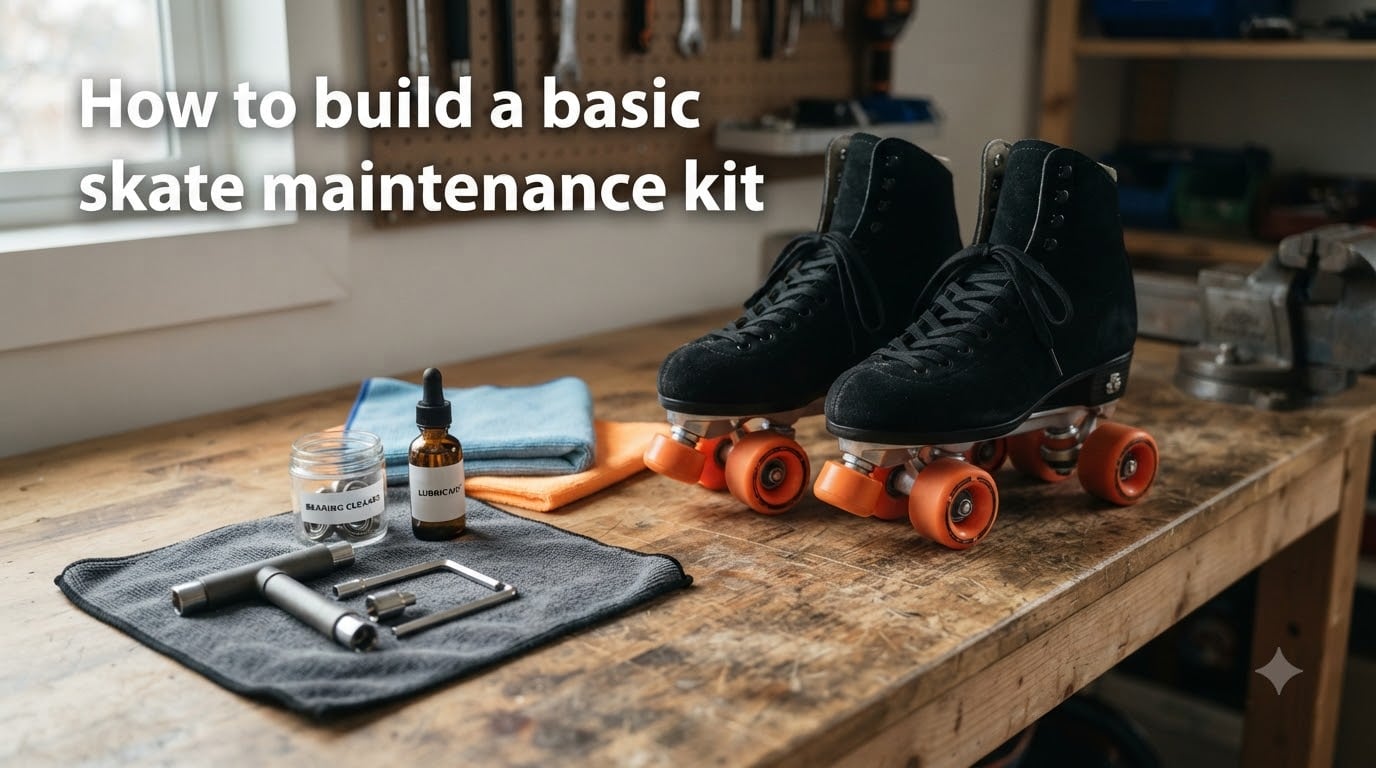
When I got my first pair of quad skates, I made the mistake of tossing them in the closet after every session. Six months later, the wheels were cone-shaped, the bearings screamed like a teakettle, and one truck was so loose I nearly ate pavement at the rink. That was the day I learned that learning how to build a basic skate maintenance kit is just as important as learning how to skate itself.
Regular roller skate care tips can double the life of your setup, keep your rides smooth, and prevent the kind of wobble that ends in bruises. In this guide, I’ll walk you through every tool you need, how to use each one, and the schedule I now follow to keep my skates in top shape. Whether you skate park, trail, derby, or disco, this kit covers you.
Table of Contents
How to Build a Basic Skate Maintenance Kit: Essential Tools
A well-stocked maintenance kit doesn’t need to be expensive. I built mine piece by piece over a few months, and the total came in well under what I would have paid for a single replacement bearing set. Here are the roller skate tools every skater needs.
Skate multi-tool (3-in-1 or 5-in-1) – This is the single most important tool in your kit. A skate tool multi-function device combines the socket wrench for axle nuts, an Allen key for kingpin nuts and plate bolts, and a Phillips head for toe stops. The VNLA 5-in-1 and Qube Juice are popular picks because they fit both 8mm and 3/8 inch hardware.
Bearing cleaner (or cleaning bottle) – A small jar with a built-in bearing cage, like the Bones Bearing Cleaning Bottle, lets you submerge and shake multiple bearings at once. It is faster than removing each shield by hand, and it gets the grime out of the inner race.
Bearing lubricant (speed cream) – Use a lubricant made for skate bearings, such as Bones Speed Cream. These oils are thin enough to coat the ball bearings without gumming up the shields.
Rubbing alcohol (90% or higher) – The community favorite for DIY cleaning. Many skaters on Reddit swear by 90% rubbing alcohol because it cuts grease, evaporates fast, and leaves no residue behind.
Microfiber cloths – For wiping down the boot, plates, and the outside of bearings. Lint-free cloths prevent fibers from getting stuck inside the bearing race.
Toe stop wrench – A simple open-end wrench in the right size (usually 9/16 inch) for adjusting toe stop height. Not every multi-tool covers this.
Bearing press and puller – A small press tool helps you push bearings out of wheels without damaging the wheel hub or the bearing shield. Worth it if you swap wheels often.
Small brush or old toothbrush – Perfect for scrubbing out dirt from the kingpin, cushion seats, and plate crevices.
Disinfectant wipes (Lysol or similar) – Great for cleaning the boot lining and removing grime from the toe stop. Also handy at the rink for quick freshening between sessions.
Digital caliper (optional but useful) – Helpful if you want to measure axle diameter, bearing spacer length, or wheel wear over time.
You can build this kit for less than the cost of a single new wheel set. Start with the multi-tool, lubricant, and alcohol. Add the rest as your routine grows.
How to Clean Skate Bearings (Step-by-Step Guide)
Bearings are the heart of your roll. When they get gritty, every push feels like dragging a brake. Here is the cleaning process I use every month to keep mine spinning fast.
Remove the wheels. Use your skate tool to loosen the axle nuts and slide the wheels off. Keep track of any washers or spacers so you can reassemble in the same order.
Pop out the bearings. Press the axle through the wheel center, or use a bearing puller if the fit is tight. Never pry with a screwdriver; you will damage the bearing shield.
Remove the rubber shields. Most 8mm bearings have a small C-clip or a rubber shield on one side. Use a pin or the tip of a small screwdriver to gently lift it off. Set the shields in a safe spot.
Soak in cleaning solution. Drop the bearings into a jar of 90% rubbing alcohol or bearing cleaner. Let them soak for 5 to 10 minutes so the old grease loosens.
Agitate and dry. Swirl the jar, then pull the bearings out and let them air dry completely on a microfiber cloth. Any remaining alcohol will evaporate quickly.
Lubricate. Place each bearing shield-side down and drop 2 to 3 drops of bearing lubricant onto the open side. Spin the bearing with your finger to work the oil through the ball bearings.
Reinstall shields and bearings. Press the shields back into place, then push each bearing back into the wheel hub. Use your axle or bearing press to seat them flush.
Reattach the wheels. Slide the wheel onto the axle with any washers or spacers, then snug the axle nut. Leave just enough play for the wheel to spin freely without wobbling.
Our team cleaned a set of trail skates that had been used for six months in September 2026. After one cleaning pass, spin time jumped from 8 seconds to over 30 seconds. That difference is what proper bearing maintenance does.
Wheel Maintenance and Rotation Pattern
Your wheels do not wear evenly. The front-left and front-right wheels tend to cone inward because you push off them most. If you ignore rotation, one edge of each wheel becomes a ramp, and your skates will pull to one side.
Most skaters rotate every 3 to 5 weeks, depending on how often they skate. The criss-cross method is the simplest pattern: move the front-left wheel to the back-right position, the front-right to the back-left, and swap the back pair to the front.
While you are at it, check each wheel for flat spots, cracks, or chunking. If a wheel has a visible flat from skidding, it is time to rotate it to a less aggressive position or replace it. Also pay attention to grip. Outdoor wheels and indoor wheels are made of different urethane compounds. Mixing them up will give you an unpredictable ride.
If you notice one wheel wearing down twice as fast as the others, your trucks may be unevenly adjusted. A quick kingpin tune usually fixes it.
Truck Adjustment and Cushion Inspection
Trucks are the metal axle assemblies that hold your wheels. They connect to your boot through the plate and use cushions (also called bushings) to allow turning. When cushions wear out, your steering feels sloppy and your skates may wobble at speed.
To check your cushions, remove the kingpin nut and slide the truck off. Squeeze the cushion in your hand. If it feels hard, cracked, or flattened, replace it. Most cushions last 6 to 12 months for regular skaters.
For truck adjustment, tighten or loosen the kingpin nut until the skates turn smoothly but do not wobble when you stand still. A good rule: tighten until the washer stops spinning freely, then back off a quarter turn. Adjust each truck evenly so both skates handle the same way.
If you skate park or aggressive, you may prefer a looser truck for tighter turns. Trail and speed skaters usually tighten down for stability. Match the setup to your style.
Toe Stop and Boot Care
Toe stops take a beating. They absorb every braking motion and every stumble. Wipe them down with disinfectant wipes after each session to remove grit, and check the bolt for tightness every few weeks.
Most adjustable toe stops have a threaded post that lets you raise or lower the stop. Use a 9/16 inch wrench to loosen the lock nut, adjust the height so your foot sits flat at rest, then retighten. When the rubber wears down to within a centimeter of the metal core, swap in a new stop.
For the boot itself, wipe leather boots with a damp cloth and a touch of leather conditioner every month. Vinyl and mesh boots respond well to disinfectant wipes and a soft brush for the lining. Always let boots air dry completely before storing. Trapped moisture breeds bacteria and breaks down glue over time.
A small piece of advice from the rink: keep a backup pair of laces and a lace tightener in your kit. Nothing ends a session faster than a lace that snaps mid-stride.
Your Regular Skate Maintenance Schedule
Skating every week without a routine is the fastest way to destroy good bearings. Here is the schedule I follow, broken down by frequency.
Before every skate (5 minutes):
Wipe down boots and toe stops
Check axle nuts for tightness
Spin each wheel; listen for grinding
Confirm toe stop is secure
Weekly (10 minutes):
Wipe plates and trucks with a dry cloth
Inspect wheels for chips or flat spots
Tighten any loose plate bolts
Monthly (30 minutes):
Remove wheels and clean bearings
Rotate wheels using the criss-cross pattern
Lubricate bearings with 2 to 3 drops each
Check cushions for cracks
Seasonal (every 3 to 4 months):
Replace worn wheels and bearings
Inspect plate for hairline cracks
Clean and condition leather boots
Replace cushions if compressed
Print this section or screenshot it. Having a checklist turns skate maintenance from a chore into a habit.
Common Skate Maintenance Mistakes to Avoid
Even experienced skaters make these errors. I learned the hard way so you do not have to.
Using WD-40 as a bearing lubricant. This is the most common mistake on every skating forum. WD-40 is a solvent, not a lubricant. It will clean your bearings and then strip away any remaining grease, leaving them dry and prone to rust within days. If you want a one-step solution, use a proper bearing lubricant like Bones Speed Cream. If you want to clean first, use 90% rubbing alcohol, dry the bearings fully, then apply the lube.
Over-tightening axle nuts. If your wheels do not spin freely after tightening, you have gone too far. Over-tightening burns out bearings fast and can warp the bearing race.
Skipping wheel rotation. Uneven wheels create an unpredictable lean. If your skates pull to one side, the answer is almost always rotation, not new wheels.
Ignoring wet conditions. If you skate through puddles or get caught in the rain, dry your bearings immediately. Water displaces lubricant and starts rust the same day.
Storing skates in a hot car. Heat warps plates, degrades cushions, and weakens glue. Always bring your skates inside with you.
Budget DIY Alternatives vs Premium Tools
You do not need to spend a fortune to maintain your skates. Here is how I balanced cost and quality when building my kit.
Budget option ($25 to $40 total): A basic 3-in-1 skate tool, a bottle of 90% rubbing alcohol, a small jar with a wire basket (DIY bearing cleaner), a tube of generic bearing lubricant, and a pack of microfiber cloths from the dollar store. This is the setup most beginners start with, and it works.
Mid-range option ($50 to $80): A 5-in-1 skate tool, a Bones Bearing Cleaning Bottle, Bones Speed Cream, branded disinfectant wipes, a quality bearing press, and a toe stop wrench. This is what I use today. It covers every maintenance task without buying duplicates.
Premium option ($100 and up): Add a Bones Turbo Wax Kit for bearings, a leather conditioning kit, a digital caliper for measuring wheel wear, and spare hardware packs. Premium tools save time on big sessions, but they are not required for casual skating.
My honest advice: start with the budget kit. If you find yourself skating three or more times a week, upgrade to the mid-range. The premium tier only makes sense for derby skaters, speed skaters, or anyone who treats their skates like a daily driver.
Frequently Asked Questions
What is the basic maintenance of a skateboard?
Basic skateboard maintenance includes checking hardware for tightness before every ride, wiping down the deck and trucks weekly, rotating wheels every few weeks, cleaning bearings monthly, and inspecting the griptape and bushings for wear. A quick 5-minute check before each session prevents most major issues.
How to maintain a skate tool?
Wipe your skate tool with a dry cloth after each use to remove grease and metal dust. Once a month, apply a drop of light oil to the moving sockets to keep them from seizing. Store it in a small pouch or your skate bag so it does not get lost or damaged in transit.
What tools do you need to build a skateboard?
You need a skate multi-tool with socket wrench and Allen key sizes, a screwdriver for trucks and hardware, grip tape, and a razor for trimming it. For maintenance beyond assembly, add a bearing cleaner, lubricant, microfiber cloths, rubbing alcohol, and a small brush for cleaning the trucks.
How to maintenance roller skates?
Maintain roller skates by wiping boots and toe stops after every session, checking axle nut tightness, rotating wheels monthly with a criss-cross pattern, cleaning and lubricating bearings every 4 to 6 weeks, inspecting cushions for cracks, and replacing wheels when they cone or develop flat spots.
Can you put WD-40 on roller skate bearings?
No, WD-40 is a solvent and not a true lubricant. It will strip existing grease from your bearings and leave them dry, which causes rust and faster wear. Use 90% rubbing alcohol for cleaning and a dedicated bearing lubricant like Bones Speed Cream for lubrication.
What do beginner skaters need?
Beginner skaters need a properly fitted pair of skates, a helmet, wrist guards, knee pads, and elbow pads. For maintenance, a basic skate multi-tool, rubbing alcohol, bearing lubricant, microfiber cloths, and disinfectant wipes cover every routine task you will face in your first year.
Start Your Skate Maintenance Kit Today
Knowing how to build a basic skate maintenance kit is the difference between skates that last one season and skates that last five years. Start with the essentials: a multi-tool, rubbing alcohol, lubricant, and a few cloths. Add the rest as your routine grows.
Set a reminder on your phone for monthly bearing cleaning. Take ten minutes after each session to wipe down your plates. Rotate your wheels every few weeks. Small habits add up to skates that roll like new, no matter how often you skate.
Your skates give you freedom on four wheels. Give them back the few minutes of care they need to keep rolling. Build your kit this week, and your future self at the rink will thank you.