
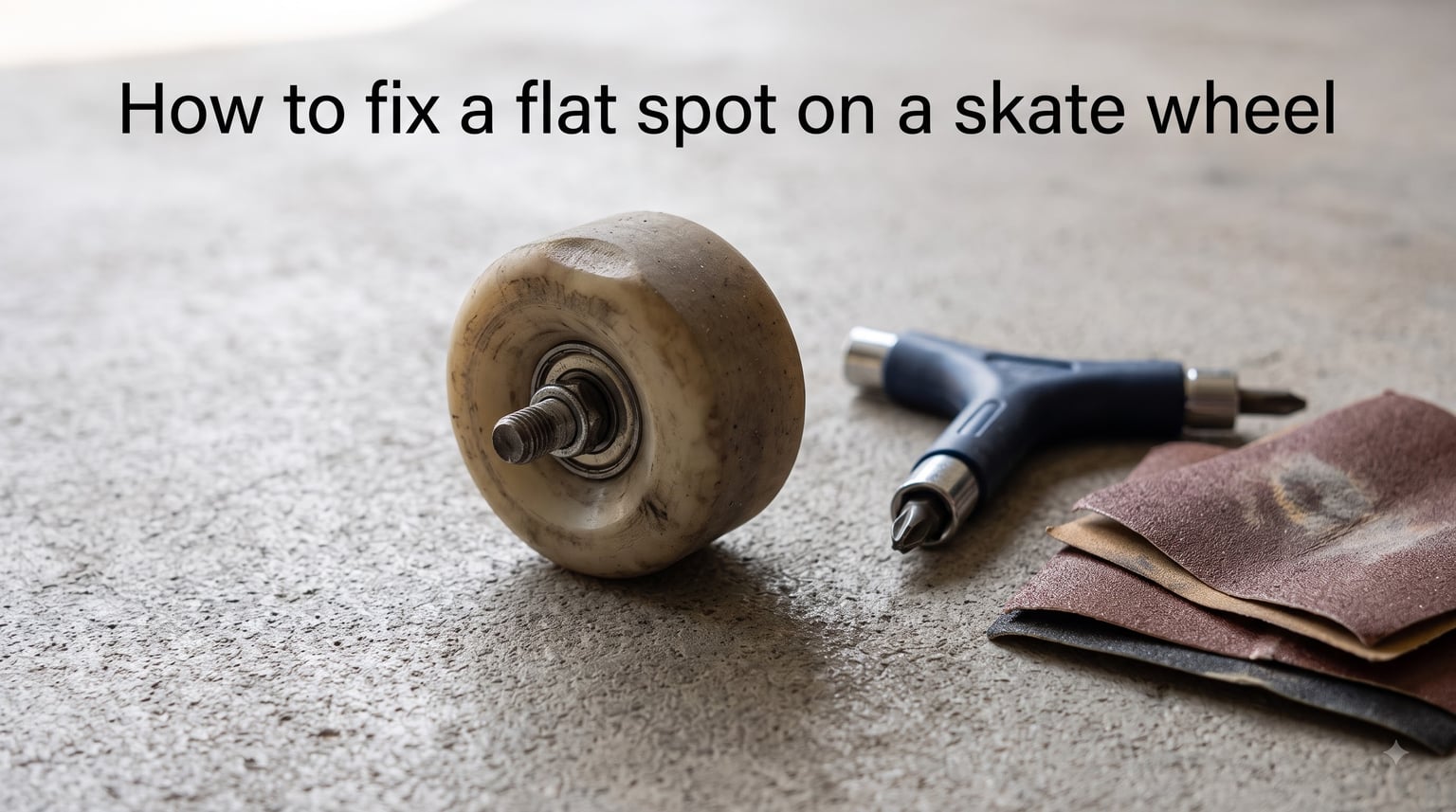
That thumping sound every time you roll is the worst feeling for a skater. Learning how to fix a flat spot on a skate wheel can save your favorite set of wheels and save you money on replacements. I have dealt with this exact problem on my own skates after a season of aggressive T-stops, and I want to share what actually works.
In this guide, I will walk you through what causes flat spots, the tools you need, a step-by-step sanding method, alternative fixes, and clear advice on when to just replace the wheel instead.
Whether you skate roller skates, inline skates, or a skateboard, the principles are the same. The urethane on your wheel gets worn down unevenly, and that flat patch makes every stride feel like you are rolling over a speed bump.
Table of Contents
What Causes Flat Spots on Skate Wheels?
Flat spots happen when a wheel stops spinning while still sliding across the ground. The friction generates heat, and that heat plus pressure compresses or grinds away the urethane in one spot.
The most common culprit is the T-stop. If you drag your foot at the wrong angle or lock the wheel instead of letting it slide smoothly, you shave material off a single point on the wheel. Power slides and hockey stops cause the same issue on skateboards.
Harder wheels are more prone to this problem. A 101A durometer wheel has less give than an 78A wheel, so it cannot deform and recover the same way. That is why LED wheels like the Bon1 101A are notorious for flat spotting — they use a hard, glow urethane formula that does not resist heat as well as softer pours.
Cheap urethane also plays a role. Lower-quality wheels use weaker pours that chunk and flatten faster under stress. A quality wheel from a reputable brand will hold up better over time, even if your stopping technique is not perfect.
Skaters on Reddit frequently report that metal hub wheels flat spot more readily when stopping technique is off. The rigid hub transfers stress directly to the urethane instead of absorbing any of it.
Tools You Need to Fix a Flat Spot
You do not need much to attempt a repair. Here is what I keep in my skate maintenance kit:
Medium grit sandpaper (80 to 120 grit) for initial shaping
Fine grit sandpaper (220 to 400 grit) for smoothing
A drill or skate tool to spin the wheel on its axle
A flat surface like a table edge or a bench
Protective gloves and a dust mask
A marker to mark the flat spot before you start
That is it. The total cost is under ten dollars if you already own a drill or skate tool.
How to Fix a Flat Spot on a Skate Wheel: Step by Step
This is the method I have used and seen confirmed by other skaters in community discussions. The goal is to sand the wheel back into a round shape without taking off more material than necessary.
Step 1: Remove the Wheel and Mount It
Take the wheel off your skate using your skate tool. If you have a drill, chuck the axle or a bolt through the bearing so you can spin the wheel at low speed. This makes the process much faster and more even than doing it by hand.
If you do not have a drill, you can still do this. You will just spin the wheel by hand against the sandpaper, which takes longer but works fine for minor flat spots.
Step 2: Mark the Flat Spot
Use a marker to color the flat area. This gives you a visual reference so you know when you have sanded it down flush with the rest of the wheel. Once the marker disappears, the flat spot is gone.
Step 3: Start With Medium Grit Sandpaper
Hold the 80 to 120 grit sandpaper flat against a table edge or a solid surface. Spin the wheel against the sandpaper. If you are using a drill, spin it slowly and press the flat spot into the paper, then rotate the wheel continuously so you do not create a new flat spot.
The key is to keep the wheel moving. If you sand only one area, you will make the problem worse. Let the wheel spin freely and apply light, even pressure.
Step 4: Check Your Progress Frequently
Stop every 30 seconds and roll the wheel on a flat surface. Listen and feel for that thump. Keep sanding until the wheel rolls smoothly without any bump. The marker you applied earlier should be completely gone.
Step 5: Smooth With Fine Grit Sandpaper
Once the flat spot is gone, switch to 220 or 400 grit paper. Spin the wheel against it for a minute or two to smooth out the surface. This removes the rough texture left by the coarse sandpaper and helps the wheel roll cleanly.
Step 6: Clean and Reinstall
Wipe the wheel down with a damp cloth to remove urethane dust. Pop it back on your skate, tighten the axle, and take a test roll. The vibration should be gone.
One warning from experience: take your time. If you rush and sand too aggressively, you can create an uneven wheel that is worse than the original flat spot. Light, consistent pressure wins every time.
Alternative Methods to Even Out Flat Spots
Sanding is not the only option. Depending on how bad the flat spot is, one of these methods might work better for you.
Skate It Out
For very minor flat spots, some skaters just keep skating. The idea is that normal rolling wear will gradually even out the wheel. This works best on softer wheels and small flat spots. It is the lowest-effort option, but it can take weeks of regular skating to notice a difference.
Rotate Your Wheels
Wheel rotation is standard roller skate wheel maintenance. Move each wheel to a different position on your skate so the wear pattern changes. This will not fix a flat spot, but it can prevent the spot from getting worse and help other wheels wear evenly. Rotate your wheels every few weeks if you skate regularly.
The Drill and Sandpaper Wall Method
This is a variation of the sanding method above. Instead of holding sandpaper in your hand, tape it to a flat wall. Mount the wheel on a drill, turn the drill on low, and press the wheel against the sandpaper on the wall. The flat wall keeps the sanding surface perfectly even, which helps maintain a round shape.
Community skaters report mixed results with this method. Some say it is the most consistent way to get a round wheel. Others warn that the drill can spin too fast and overheat the urethane, causing more damage.
How to Fix vs When to Replace: Making the Call
Not every flat spot is worth fixing. Here is how I decide.
Fix the wheel if the flat spot is shallow, the wheel still has plenty of urethane left, and the flat spot is recent. Sanding works well in these cases and you can get months more use out of the wheel.
Replace the wheel if the flat spot is deep enough that you can see the core or hub, if the wheel has chunked (pieces missing from the urethane), or if you have already sanded it down multiple times. At that point, the wheel is too small and too thin to roll safely.
Also consider the cost. A single quality roller skate wheel runs about 12 to 25 dollars. If you have flat spots on three or four wheels, it may make more sense to buy a full set rather than spend hours sanding each one. Replacing all four wheels at once also ensures even wear and a consistent ride.
If your wheels are cheap or low quality and they flat spot constantly, replacement with a better brand is the smart long-term move. Quality urethane resists flat spotting in the first place.
How to Prevent Flat Spots on Skate Wheels
Prevention is always easier than repair. Here are the habits that have kept my wheels round.
Fix Your Stopping Technique
The number one cause of flat spots is bad T-stop form. When you T-stop, keep the dragging foot light and let the wheels slide. Do not press down hard or lock the wheel in place. The wheel should be moving sideways across the ground, not grinding into it.
Practice your stops at lower speeds until the technique is smooth. A clean T-stop barely makes any noise and leaves no marks on the wheel.
Choose the Right Wheel Hardness
Softer wheels flat spot less because they deform and recover. If you skate outdoors or do a lot of stops, consider wheels in the 78A to 88A range. Harder wheels like 101A are great for slide performance and tricks, but they wear down faster under stopping pressure.
Match your wheel to your skating style. Park and trick skaters who want slides accept the trade-off. Recreational and dance skaters benefit from softer wheels that last longer.
Rotate Regularly
Rotate your wheels every two to three weeks if you skate often. Swap the inside and outside edges, and move wheels from front to back. This spreads the wear across all wheels and catches uneven spots before they become real problems.
Avoid Low-Qurethane Wheels
Cheap wheels use weak urethane pours that chunk and flatten under stress. Spending a bit more on a reputable brand saves money over time because the wheels last longer and resist flat spotting. Look for brands with a track record in your skating discipline.
Frequently Asked Questions
Can you fix flat spots on wheels?
Yes, minor flat spots can often be fixed by sanding the wheel back into a round shape using medium and fine grit sandpaper. Deep flat spots or chunked wheels usually need to be replaced.
What causes flat spots on wheels?
Flat spots are caused by a wheel stopping its rotation while still sliding across the ground. The friction and heat compress or grind away the urethane in one area. T-stops, power slides, and hockey stops are the most common causes.
Can you sand down a skate wheel to fix a flat spot?
Yes. Mount the wheel on a drill or spin it by hand against 80 to 120 grit sandpaper until the flat spot disappears, then smooth with 220 to 400 grit paper. Keep the wheel moving so you do not create a new flat spot.
When should I replace a flat spotted wheel instead of fixing it?
Replace the wheel if the flat spot is deep enough to expose the core, if the urethane has chunked, or if you have already sanded the wheel down multiple times and it is getting too thin to roll safely.
Conclusion
Knowing how to fix a flat spot on a skate wheel gives your gear a second life and keeps money in your pocket. Sand carefully, match your technique to the severity of the spot, and do not be afraid to replace wheels that are past saving.
The best fix is always prevention. Clean up your stops, rotate your wheels, and choose quality urethane. Your wheels will stay rounder for longer, and that thumping sound will become a thing of the past.