
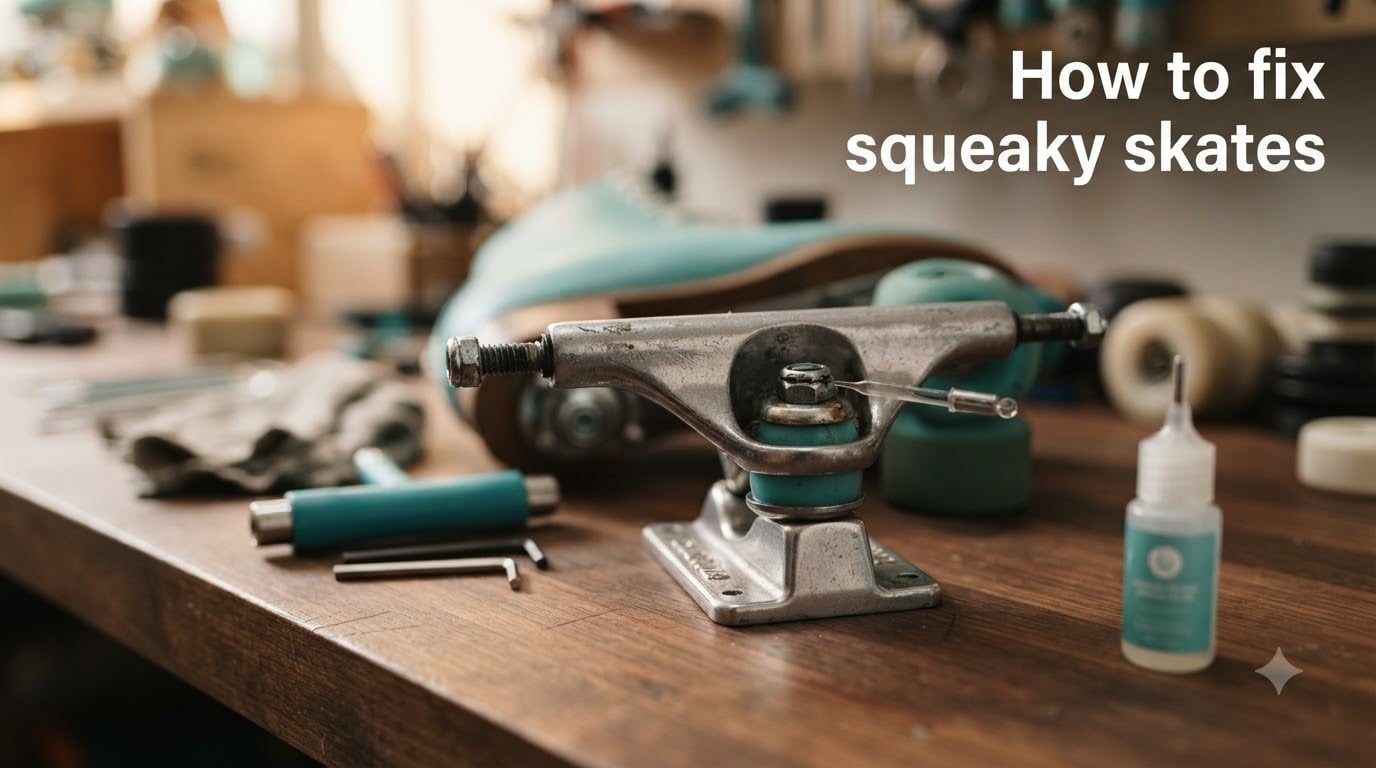
Squeaky skates are one of the most frustrating issues for roller skaters, inline skaters, and ice skaters alike. I have dealt with this exact problem on everything from vintage quad skates to aggressive inline setups, and the noise almost always points to a handful of fixable causes. If you want to know how to fix squeaky skates without heading to a shop, the answer is usually a 30-minute tune-up at home.
Most skate noise comes from dry or loose parts rubbing together. A little lubrication, some tightening, and a quick bearing clean will silence about 90% of squeaks. In this guide, I will walk you through the exact steps I use on my own skates, plus preventive tips to keep the noise from coming back.
Table of Contents
What Causes Squeaky Skates?
Squeaky skates are caused by friction between dry, worn, or loose components. When metal rubs against metal, plastic, or urethane without proper lubrication, vibrations travel through the frame and turn into that tell-tale squeak or grind.
Here are the five most common culprits I see on the bench:
Dry pivot cups: The pivot pin sits in a plastic cup inside the truck. Without lubrication, it squeaks every time you shift weight.
Worn or dirty bearings: Grit inside the bearing race creates a high-pitched whine that many skaters mistake for wheel noise.
Loose hardware: Kingpin nuts, axle nuts, and mounting bolts all loosen over time and start to rattle.
Bushing friction: Cushions (bushings) compressed against the kingpin or hangar can squeak under load.
Plate or boot flex: On hardboots, the cuff or shell can creak against the liner. Plates can also flex and pop when you push.
A Reddit user on r/rollerblading famously noted that “wax on the inside of the cuff quiets them down” for hardboot skates like Razors. That same logic applies to any contact surface inside your boot.
Tools and Lubricants You Will Need
You do not need a full workshop to silence noisy skates. Here is the basic kit I keep in my skate bag:
3/16 inch and 1/4 inch Allen keys (most skate hardware)
Skate bearing tool or small wrench for axle nuts
Cleaning solution: isopropyl alcohol or mineral spirits
Bearing oil or speed cream (Bones Speed Cream is my go-to)
Silicone-based lubricant for pivot cups and bushings
White lithium grease for threads and kingpins
Clean rags or paper towels
Toothpick or small brush for clearing debris
Avoid using WD-40 as a long-term fix. It is a water-displacing solvent that strips grease and can damage bearings and bushings. Use it only as a last resort, and follow up with proper lubricant.
How to Fix Squeaky Skates: Step-by-Step
Work through these steps in order. Most skaters solve their squeak by step three, but I recommend checking everything for the best results.
Step 1: Tighten All Loose Hardware
Loose hardware is the easiest squeak to fix. Grab your Allen key and start with the kingpin nut. Tighten it just enough to remove play, then back off a quarter turn so the trucks still turn smoothly.
Next, check the axle nuts on each wheel. They should be snug, but not so tight that the wheels cannot spin freely. Finally, inspect the mounting bolts that hold the trucks to the boot or plate. If any feel loose, tighten them in a star pattern so the plate sits flat.
A GoldenSkate forum user put it simply: “When my skates squeak, it means screws are coming loose.” That one check solves the problem more often than people expect.
Step 2: Lubricate the Pivot Cups
The pivot cup is the small plastic socket where the pivot pin sits inside the truck. When it dries out, every weight shift creates a squeak. This is the single most common cause of squeaky skates I see.
Remove the truck from the plate by unscrewing the kingpin nut. Apply one or two drops of silicone lubricant inside the pivot cup. Reassemble and test. If the squeak persists, try a small amount of white lithium grease instead.
For an emergency fix at the rink, dry soap rubbed into the pivot area can quiet a squeak temporarily. I have done this on travel days when I forgot my lube at home.
Step 3: Clean and Oil the Bearings
Dirty bearings are the second most common noise source. Pop each wheel off the axle and remove the bearings using your skate tool.
Soak the bearings in mineral spirits or isopropyl alcohol for about 10 minutes. Spin them dry with a clean rag, then let them air-dry completely. Add one or two drops of bearing oil to each bearing and spin to distribute.
You should hear a smooth, quiet spin. If a bearing still grinds after cleaning, it is time to replace it. A standard set of eight bearings runs through quickly, and replacements are cheap insurance against bigger repairs.
Step 4: Inspect and Replace the Bushings
Bushings are the urethane cushions that sit between the hangar and the kingpin. When they wear down or dry out, they can squeak under pressure. Squeeze each bushing and look for cracking, flat spots, or permanent compression.
If the bushings look worn, swap them for a fresh set matched to your weight and skating style. Softer bushings give a smoother turn, harder bushings give more stability. After replacement, apply a thin layer of silicone lubricant to the bushing surfaces where they contact the kingpin and hangar.
Step 5: Address Plate and Boot Flex
If the squeak persists after lubrication and tightening, check the boot and plate. Hardboot shells can creak where the cuff meets the lower shell. A small piece of cloth tape or a thin coat of wax on the contact surfaces usually solves it.
On plates, check that all mounting bolts are snug and that the plate does not flex when you push. Plate flex is normal on aluminum mounts, but excessive flex can indicate worn mounting hardware. Replace any stripped bolts to keep the plate from moving under load.
Quick Fix Checklist for Beginners
If you are new to skate maintenance and just want silence fast, run through this 5-minute checklist before anything else:
Wiggle each wheel. A loose wheel means a loose axle nut.
Shift your weight side to side. A squeak under the truck means a dry pivot cup.
Spin each wheel by hand. A gritty feel means dirty bearings.
Push the boot cuff. A creak here means the shell is flexing.
Check the kingpin. If it moves when you push, tighten it.
If your skates still squeak after this checklist, move on to the deeper steps above. Most beginners solve the problem by step two or three.
When to Repair vs Replace Parts
Not every part needs replacing, and knowing when to repair saves money. Here is a quick decision guide:
Repair: Dry pivot cups, loose hardware, dirty bearings, dry bushings. A clean and lube pass handles all of these.
Replace: Cracked bushings, grinding bearings even after cleaning, stripped kingpin nuts, cracked plates, worn-out wheels.
A good rule of thumb: if the part still has shape and structure, clean and lubricate first. If it is visibly cracked, permanently compressed, or grinding, replace it. Bearings under $20 are not worth rebuilding when a fresh set costs less than the time it takes to service them.
Preventive Maintenance Schedule
The best way to keep skates quiet is to stop squeaks before they start. Our team follows a simple maintenance routine on every setup:
After every session: Wipe down the frame, check axle nuts by hand, look for loose hardware.
Monthly: Rotate wheels for even wear, deep clean bearings if you skate outdoors often.
Every 3 months: Lubricate pivot cups, inspect bushings for compression.
Every 6 months: Full bearing service, replace worn wheels, check mounting bolts.
Yearly: Inspect kingpins, replace worn bushings, check plate for cracks.
Skating regularly adds up to about 3 to 5 hours of session time per week, so this routine is calibrated for active recreational skaters. Adjust the cadence if you skate more or less often.
Frequently Asked Questions
Why are my skates squeaking?
Squeaky skates are usually caused by friction between dry or loose parts. The most common culprits are dry pivot cups, dirty or worn bearings, loose hardware, and bushings rubbing against the kingpin. A simple clean and lube pass fixes most squeaks within 30 minutes.
Can you use WD-40 on ice skates or roller skates?
WD-40 is a water-displacing solvent, not a true lubricant. It can be used in an emergency to free up a seized pivot pin or bushing, but it will strip existing grease and cause squeaks to return quickly. Use silicone-based lubricant or bearing oil for long-term results.
Why are my bushings so squeaky?
Bushings squeak when the urethane dries out or when they rub against the kingpin under load. Apply a thin layer of silicone lubricant to the bushing surfaces and the kingpin. If the bushings are cracked, flat-spotted, or permanently compressed, replace them with a fresh set matched to your weight.
Do I need to oil my roller skates?
Yes. Bearings, pivot cups, and bushings all benefit from periodic lubrication. Skates used weekly should have bearings cleaned and oiled every 1 to 3 months, and pivot cups relubricated every 3 months or whenever a squeak returns. Regular oiling extends part life and keeps your ride quiet.
How do I get my wheels to stop squeaking?
Wheel squeaks usually come from dirty bearings, not the wheels themselves. Remove the bearings, soak them in mineral spirits, dry them, and add fresh bearing oil. If the squeak continues after cleaning, replace the bearings. Also confirm the axle nuts are snug but not over-tight, which can cause binding noise.
How often should I lubricate my skates?
For active skaters, lubricate pivot cups every 3 months and bearings every 1 to 3 months. If you skate outdoors in wet or dusty conditions, clean and oil bearings monthly. A quick listen test during your warm-up will tell you when something needs attention.
Final Thoughts on Quieting Your Skates
Learning how to fix squeaky skates is one of the most useful skills a skater can pick up. The fix is almost always simple: clean the bearings, lube the pivot cups, tighten the hardware, and inspect the bushings. Most squeaks disappear within half an hour, and a regular maintenance schedule keeps them from coming back.
If you work through the steps above and the noise still persists, take your skates to a local skate shop for a hands-on inspection. There is no substitute for an experienced tech putting hands on a stubborn setup. For most skaters, though, a basic tune-up is all it takes to enjoy a quiet ride in 2026 and beyond.