
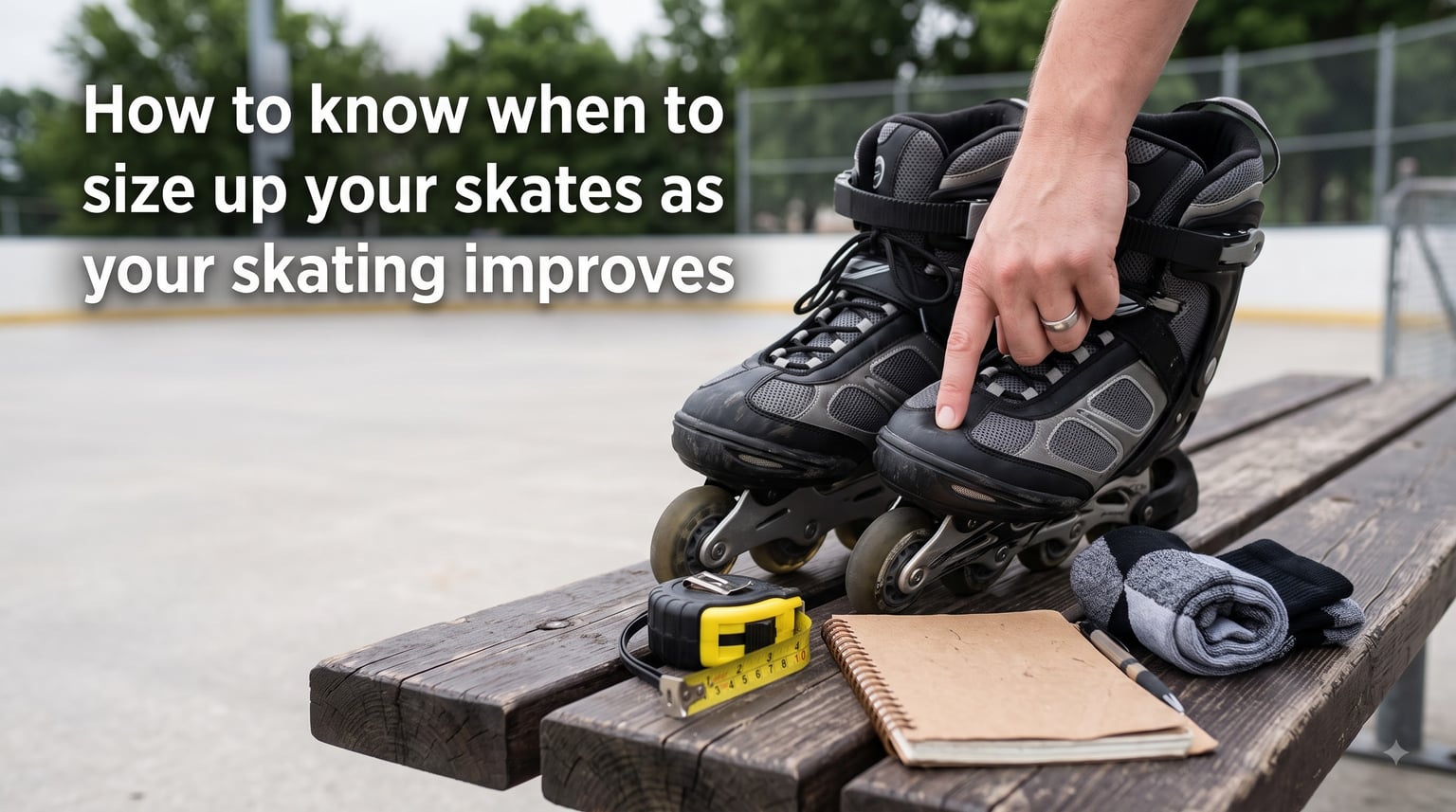
If your skating has started to feel easier but your feet keep hurting, your boots might be telling you something. Knowing when to size up skates is one of those quiet skills every progressing skater eventually needs, because a boot that fit you six months ago often cannot keep up with your technique today.
I have been skating long enough to learn this the hard way. After months of practice, my turns got sharper and my stops got cleaner, yet my heels started slipping and my arches burned. My boots had not changed. My skill level had. That is the moment I realized fit and progression are linked, and this guide is built to help you spot the same signs before they slow you down.
Table of Contents
How to Know When to Size Up Your Skates as Your Skating Improves?
You should size up your skates when pain, control loss, or technique breakthroughs all point in the same direction. The community-tested rule of thumb is 1.5 to 2 fingers of space between your longest toe and the front of the boot, but improvement adds an extra layer that pure measurement cannot catch.
Here is the short version: if you have been skating consistently for 3 to 6 months and your technique is getting cleaner, your old boots start showing their limits. Strides get longer, edges get sharper, and ankles demand more support. A boot that “fit fine” last season may now be too small in length, too narrow in width, or too soft in stiffness. Watch for the symptoms below, and trust how your feet feel after a session, not just how they feel in the store.
The 1.5 to 2 Fingers Rule Explained
Most experienced skaters land on the same fit window. You want about 1.5 to 2 finger-widths of space at the toe when standing, with your heel locked firmly in the cup. Less space, and you crush your toes during pushes. More space, and your foot slides around inside the boot, costing you control.
Remember that this is a starting point. Brand lasts vary, skate styles vary, and your foot can change shape with training. Use the rule as a baseline, then read your body for the real answer.
Signs Your Skates Are Too Small
Most skaters do not realize their boots have become too small until the pain is undeniable. These are the signs I watch for in my own gear and in newer skaters at the rink.
Cramped or curling toes at the end of a session, especially on the longest toe.
Toenails that darken, lift, or develop Ingrown edges from repeated pressure.
Numbness or tingling in your toes, especially after long pushes.
Hot spots, blisters, or calluses forming on the sides and tops of your feet.
Pain at the ball of the foot that does not ease up when you loosen the laces.
Ankle pressure or pinching when you flex forward into a deeper knee bend.
When you start checking two or three of these boxes, your boots are almost certainly too small. Better technique actually makes this worse, because deeper edges and longer strides load the foot more aggressively than beginner movements do.
Signs Your Skates Are Too Big
Going up a size sounds safe, but oversized skates create their own set of problems. A loose boot steals the precision you have worked hard to build, and most skaters blame themselves before they blame the fit.
Heel lift or slipping when you push off or push in.
Buckles or laces that you have to over-tighten just to feel secure.
Toes that bang into the front of the boot during downhill stretches or hard stops.
Loss of edge control on crossovers and tight turns.
Shin bang or general foot movement inside the boot during sharp stops.
If these symptoms show up, a smaller boot with a thicker sock is usually a better fix than another full size up. The goal is a snug, locked-in fit, not a roomy one.
How Skill Progression Changes Your Fit Needs
Improving skaters change how they load their feet, which quietly changes what kind of boot they need. Three things tend to shift as you level up: stride length, edge angle, and ankle demand.
Stride length stretches out as you build strength. A beginner takes short, choppy pushes. An advanced skater takes long, full-extension pushes that slide the foot deeper into the toe box. That extra reach is exactly what starts touching the front wall of an old boot.
Edge angle deepens as your balance improves. You start leaning harder into turns, which loads the outside of the foot and the arch. A boot that was once “wide enough” suddenly compresses the midfoot during hard edges.
Ankle demand jumps with skill. Beginner skaters barely flex the ankle. Intermediates start driving the knee over the toe for power, which means the boot needs more stiffness and better heel lock to keep up. A soft recreational boot that was perfect at month one can feel floppy by month six.
Putting it together, when you know when to size up skates is really about noticing when your boot’s category no longer matches your technique. Many skaters find they move up half a size, a width, or a stiffness level rather than a full size.
Boot Stiffness Should Match Your Skill Level
Fit is not only about length and width. As you progress, your boot should get stiffer, not just bigger. A stiffer boot transfers energy from your leg into the skate more efficiently, which is exactly why better skaters need it. Beginners benefit from softer, forgiving boots. Intermediates usually want medium stiffness. Advanced skaters generally want firm, responsive boots that resist twisting.
If your current boot feels comfortable but lazy, the stiffness may be the real issue, not the size.
Skate Sizing Tips for Progressing Skaters
Practical habits save you from buying the wrong pair twice. Here is the checklist our team uses with progressing skaters at the rink.
Measure your foot at the end of the day when it is slightly swollen, which is closer to how it feels during a hard session.
Always try skates with the same sock thickness you plan to skate in.
Stand in the unlaced boot and press your toes forward. You should feel a finger-width of space at the heel.
Walk, march, and simulate a push before committing. Your heel should not lift.
Buy from brands that offer multiple widths, since width is more often the issue than length.
Plan a 10 to 15 hour break-in window before judging a snug fit. Most community skaters agree that starting slightly tight is better than starting loose.
One tip I share with new skaters: write down how your foot feels after every session in a quick note on your phone. Patterns show up within a month, and patterns are what tell you when to size up skates versus when to just adjust your lacing or padding.
When to Consider Sizing Up for Youth Skaters
For kids and teens, sizing up is a moving target because growth spurts can change a foot in weeks. Most youth skaters outgrow skates every 4 to 6 months during growth spurts, sometimes sooner. The tell is rarely pain and usually visible toe overhang or heel lift that was not there the previous month.
A practical tip from skating parents is to leave a small amount of growing room, but not so much that control is lost. About a finger of extra space at the toe is reasonable for a kid in a growth phase. Anything more, and they will start slipping and braking with shins instead of edges.
Frequently Asked Questions
Is it better to size up or down for skates?
It is usually better to start with the snug size and let the boot break in. A boot that fits tight in the store will usually feel right after 10 to 15 hours of skating, while a boot that feels loose out of the box will only get looser over time.
How to tell if skates are too small?
Your toes will feel cramped, numb, or curled at the end of a session, you may see darkened toenails or blisters on top of the foot, and loosening the laces will not relieve the pressure. Cramping that gets worse as your skating improves is the clearest sign.
Is it better for skates to be tight or loose?
Skates should feel snug, not loose. A tight boot that locks your heel and toes in place is correct, especially after break-in. A loose boot causes heel slip, lost edge control, and shin bang during stops. If you have to over-tighten the laces just to feel stable, the boot is too big.
How to tell if skates are too big?
Your heel lifts or slips when you push, your toes bang into the front of the boot, you have to crank the buckles to feel secure, and your edges feel sloppy during crossovers. Slipping that does not go away with thicker socks or different lacing usually means the boot is a half size too large.
Is your skate size the same as your shoe size?
Not usually. Skate sizing runs smaller than standard street shoe sizing for most brands, and the right skate size depends on width, foot shape, and brand last. Always measure your foot and use the brand’s size chart rather than guessing from your shoe size.
Final Thoughts on Sizing Up as You Improve
If you remember one thing about when to size up skates, make it this: your technique grows faster than your feet. The boot that cradled your beginner pushes will eventually fight your advanced strides, and your body will show you the way through pain, slipping, or fading control.
Measure your feet, check them against the 1.5 to 2 fingers rule, and pay attention to how each session feels. Once the symptoms line up, move up in size, width, or stiffness, and give the new pair a fair break-in window. Your next level of skating lives in the fit as much as in the practice.