
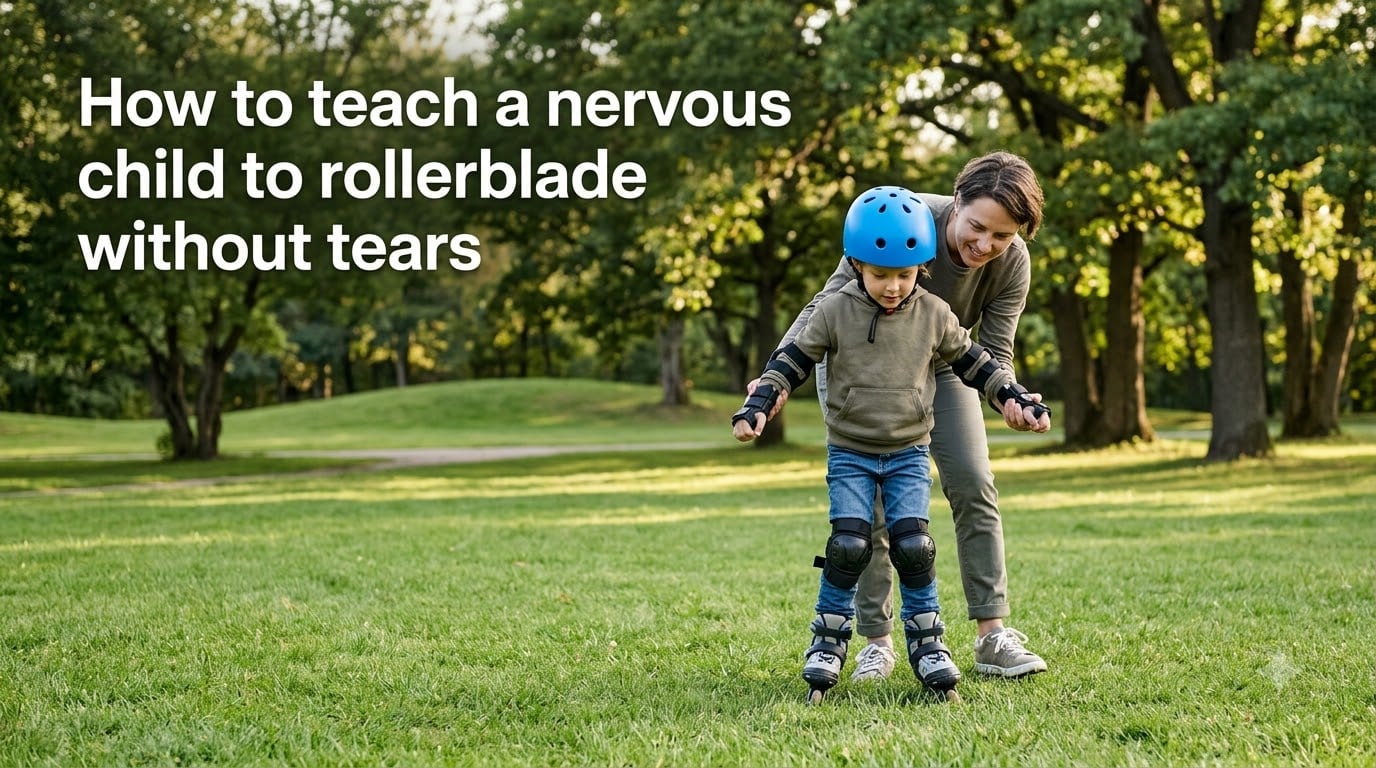
Teaching a nervous child to rollerblade without tears sounds like wishful thinking when your kid won’t even put the skates on. I’ve been there, watching a kid cling to a park bench white-knuckled while other children zip past. The good news is that fear of rollerblading is the most common barrier kids face, and it responds to a specific approach that puts emotions first and physical skills second.
When I started researching how to teach a nervous child to rollerblade, most guides jumped straight to posture and stopping techniques. Those things matter, but they completely skip the part where your child is crying on the front lawn. What I learned from skating forums, parenting communities, and coaching resources is that the emotional side needs attention before you ever lace up a single skate.
This guide walks through every step, from picking the right gear to handling mid-lesson meltdowns, so you can turn rollerblading into something your child actually wants to do instead of something they dread. Patience and positive reinforcement are the backbone of everything below, but you’ll also find practical drills, age-specific expectations, and strategies no other guide covers.
Table of Contents
Why Most Kids Get Scared of Rollerblading (and Why It’s Normal)
Fear of rollerblading is not a personality flaw or a sign your child will never be athletic. It is a perfectly rational response to strapping wheels to your feet and being told to balance on them. Kids are smart enough to understand that falling hurts, and their brains are doing exactly what they should: sounding an alarm.
The problem is that well-meaning parents often treat this fear as something to push through rather than something to work with. When you say “don’t worry, you won’t fall,” your child knows that is not true. They can see the concrete. They have scraped knees from the playground. What they need instead is proof that falling does not have to hurt and that you will not let them get hurt.
Forum discussions on Reddit’s rollerblading communities reveal that even adult learners experience the same intrusive thoughts about falling. If grown adults with fully developed reasoning skills struggle with skating anxiety, imagine how a six-year-old feels. Acknowledging this normalizes the fear for both of you.
Your child’s nervousness also has a hidden upside: cautious kids tend to learn proper technique more carefully. The kids who blast off without fear often pick up bad habits that are hard to correct later. A nervous child who learns slowly and correctly becomes a better skater in the long run.
Before You Start: Gear That Makes Falling Feel Safe
Safety gear is not just about preventing injuries. For a nervous child, it is the difference between a scary fall and a funny one. When kids know their knees, wrists, and elbows are padded, the fear drops dramatically. Gear turns falling from a threat into an inconvenience.
Here is what your child needs before the first lesson:
Helmet: Non-negotiable. Make sure it fits snugly and sits level on the forehead, not tilted back.
Knee pads: These take the brunt of most falls. Soft-shell pads are easier for kids to put on themselves.
Wrist guards: Kids instinctively reach out with their hands when they fall. Wrist guards prevent sprains and fractures.
Elbow pads: Often overlooked but essential for sideways falls.
Proper fitting skates: Skates that are too loose or too tight make balancing harder, which increases fear.
One tip from experienced skating parents: let your child pick the color of their pads or helmet. Giving them ownership over the gear makes it feel like armor they chose, not equipment being forced on them. My own kid went from refusing pads to showing them off at school once we found a set in her favorite color.
Another trick that works well is putting all the gear on yourself too. When your child sees Mom or Dad suiting up, it reinforces that even experienced skaters wear protection. It also sends the message that falling is something everyone deals with, not just beginners.
Step 1: Build Confidence on Solid Ground First
The biggest mistake parents make is strapping skates on a nervous child and immediately expecting them to move. Before any rolling happens, your child needs to feel comfortable just standing in skates. This is the psychological preparation phase that almost no guide talks about, and it is where you win or lose the battle against tears.
Start by having your child sit down and just hold the skates. Talk about what they are, how the wheels work, and why the gear will protect them. Let them ask questions. Some kids need to process the idea of wheeled footwear before they are willing to try it.
Once they are willing to put the skates on, do it indoors on carpet or a soft rug. Carpet stops the wheels from rolling freely, so your child can stand up without feeling like the ground is moving under them. This single trick removes about 80% of the initial terror.
Have them practice standing, shifting weight from foot to foot, and doing tiny hops in place. These micro-movements build the muscle memory and confidence needed before any actual skating begins. Think of it as the skating equivalent of treading water before you swim.
Skating forum users who overcame their own fear consistently recommend short practice sessions at this stage. Ten minutes a day builds familiarity without overwhelming a nervous child. The goal is ending every session while they are still having fun, not pushing until they melt down.
Step 2: Teach Falling Before Teaching Skating
This step sounds counterintuitive, but it is the single most effective technique for nervous children. If you teach your child how to fall safely before they ever try to skate, you remove the thing they are most afraid of. Reddit skating communities repeat this advice constantly: practice falling until it becomes boring.
One forum user put it perfectly: practice falling a hundred times so that when it happens for real, your body already knows what to do. Here is how to teach safe falling to a child:
Pick a soft surface: Carpet or grass only at this stage. No concrete, no asphalt.
Start on knees: Have your child kneel in full gear and simply tip forward onto their padded knees and hands.
Practice from standing: On carpet with skates on, have them deliberately fall forward onto knee pads and catch themselves with wrist guards.
Teach the tuck and roll: Show them how to tuck their chin and roll sideways rather than stiff-arming the ground.
Make it a game: Count falls together, celebrate each one, and show them that falling in gear genuinely does not hurt.
The first time my child fell on purpose and realized nothing bad happened, her entire demeanor changed. She went from “I can’t do this” to “can I fall again?” That is the transformation you are looking for. Once falling is no longer scary, learning to skate becomes a matter of time and practice rather than an emotional battle.
Keep these falling practice sessions short and playful. If your child starts treating it like a chore, they are losing the sense of fun that makes learning possible. Five to ten deliberate falls per session is plenty.
Step 3: How to Teach a Nervous Child to Rollerblade on Soft Surfaces
Once your child can stand confidently on carpet and fall without fear, it is time to introduce actual movement. The keyword here is introduce, not force. Every skater I spoke with on forums emphasized the same principle: walk before you roll.
On the carpet, have your child take steps in their skates as if they are walking in heavy boots. The wheels will barely move on carpet, so they get used to the sensation of weight distribution without the speed that causes panic. Have them walk forward, backward, and in small circles.
When carpet walking feels easy, move to a flat patch of grass. Grass provides slightly more roll than carpet but still grips the wheels enough to prevent runaway speed. This is the perfect intermediate step between indoor practice and real skating.
A technique that works especially well on grass is the “march and glide.” Have your child march in place a few times, then let their feet roll forward just a few inches. The marching gives them control, and the tiny glide gives them the thrill of movement without the fear of losing control.
Some parents find success tightening the wheels slightly on their child’s skates during this phase. Tighter wheels spin less freely, which means the skates move slower and feel more stable. As confidence grows, you can loosen them back to normal. This is a technique recommended by multiple experienced skaters on Reddit for beginners of all ages.
Step 4: Proper Posture and Balance Without the Pressure
Posture is where a lot of nervous children struggle because their instinct is exactly wrong. When kids feel unstable, they stand up straight and stiffen their legs. This makes them more likely to fall backward, which is the scariest kind of fall. Every forum and coaching resource agrees on one fundamental correction: bend the knees.
Bent knees lower the center of gravity, making balance dramatically easier. Think of it as the difference between balancing a pencil on its eraser versus on its side. A lower, wider stance is simply more stable.
Here is how to teach the correct skating stance to a child without overwhelming them:
Stomp like a sumo wrestler: Tell your child to imagine they are a sumo wrestler. Feet shoulder-width apart, knees deeply bent, weight centered.
Keep hands in front: Hands should be at waist height or slightly forward, not tucked at the sides. This helps with balance and prepares them to catch a fall.
Look forward, not down: Kids instinctively stare at their feet, which throws off balance. Tell them to look at where they want to go.
Keep the back straight: Hunching forward over the knees is common but unstable. A straight back with bent knees is the goal.
Practice this stance on carpet first. Have your child hold it for 10 seconds, then 20, then try small weight shifts from foot to foot while maintaining the position. Balance drills like standing on one skate at a time build the stability needed for real skating.
A fun drill recommended by skating parents is the “penguin waddle.” In the bent-knee stance, have your child waddle side to side like a penguin, shifting weight between feet. It is silly enough to make them laugh and effective enough to build real balance skills.
Step 5: Introducing Movement (Tiny Steps, Big Wins)
The transition from standing to moving is where the excitement and the nerves both peak. This is the moment you have been building toward, and how you handle it determines whether your child leaves the session smiling or in tears.
Start on a smooth, flat surface like a driveway or empty basketball court. Hold your child’s hands and have them push off with one foot while you walk backward in front of them. You are acting as their anchor and brake simultaneously, which gives them the confidence to try pushing off without fear of rolling out of control.
Gradually transition from holding both hands to one hand, then to walking alongside them with your hand on their shoulder. Eventually, let them skate a few feet to you while you stand a short distance away and catch them. Each successful short roll builds the confidence to try a longer one.
Celebrate every single win. I mean every one. The first push, the first three-foot roll, the first time they stay up without your hand. These small victories compound. Forum users who learned as adults all mention that progress came in tiny increments, and acknowledging each one kept them motivated.
Never increase the distance or difficulty until your child asks for it. If they are happy rolling two feet to your arms, let them do that twenty times. Boredom is actually a sign they are ready for more. Frustration and tears are signs you have pushed too far.
How to Handle Tears and Meltdowns Mid-Lesson?
No matter how carefully you prepare, tears will happen. A fall, a close call, or simply sensory overload can trigger a meltdown. What you do in that moment matters more than anything else in this guide. This is the section no competitor writes because most guides assume everything goes smoothly. It will not.
When tears start, stop everything immediately. Do not say “you’re fine” or “that didn’t hurt.” Your child’s feelings are real, and dismissing them teaches them that their emotions are wrong. Instead, sit down next to them, validate what they are feeling, and remove all pressure.
Here is a step-by-step approach to mid-lesson meltdowns:
Stop and sit: Get off the skates or at least sit down together. Physical grounding helps emotional grounding.
Name the feeling: “That fall scared you, didn’t it?” helps your child process what happened.
Take a break: Snacks, water, a change of scenery. Sometimes five minutes resets everything.
Give an out: Tell them they can stop for the day if they want to. Paradoxically, removing pressure often makes kids want to try again.
Never force a return: If they are done, they are done. End on a positive note about something they did well.
Parenting communities and child psychologists consistently find that forcing a scared child to continue an activity creates a lasting negative association. One bad session that ends in tears can undo weeks of confidence-building. It is always better to stop early and try again another day.
Pay attention to your own emotions too. Skating forums note that parent anxiety transfers directly to the child. If you are tense, gripping their hand too tight, or wincing every time they wobble, your child will pick up on it. Stay relaxed, smile, and project calm even when you are nervous internally.
Age-Appropriate Expectations: What to Expect at Every Age
One of the biggest sources of tears is mismatched expectations. A four-year-old does not have the same physical coordination or emotional regulation as an eight-year-old. Understanding what is developmentally normal helps you set realistic goals and avoid frustration.
Ages 3-4: At this age, focus entirely on gear comfort, standing, and falling practice. Most three- and four-year-olds lack the balance and leg strength for actual skating. If they can march in place on carpet and fall safely, that is a huge win. Keep sessions to 10-15 minutes.
Ages 5-7: This is the sweet spot for starting rollerblading. Most kids this age have enough coordination to push off, balance briefly, and stop with guidance. They can handle 20-30 minute sessions and will progress from carpet to smooth surfaces within a few weeks of regular practice.
Ages 8-10: Older kids pick up skating quickly because they understand instructions better and have more body control. A nervous eight-year-old may still need the full emotional preparation process, but once they commit, physical progress tends to be fast. They can also articulate their fears, which makes them easier to address.
Ages 11+ Pre-teens and teenagers can learn in a single session if they are willing. The challenge here is usually self-consciousness about being seen learning something new. Privacy and peer support matter more than technique at this age.
Signs Your Child Is Ready to Progress (and When to Wait)
Knowing when to move forward and when to stay at the current level is a skill most parents develop through trial and error. You can shortcut that process by watching for specific readiness signs rather than pushing based on a schedule.
Your child is ready to progress when they can do the following at their current level without assistance: maintain balance for 15-20 seconds, fall safely without panicking, and most importantly, ask to try something harder. Curiosity is the most reliable indicator of readiness.
Signs they need more time at the current level include reluctance to put skates on, tension in their body during practice, frequent loss of balance on skills they previously mastered, or simply not asking to skate between sessions. None of these mean your child will never learn. They just mean the foundation needs more reinforcement.
A helpful rule from experienced skating instructors is the 80% rule. If your child can successfully complete a skill 80% of the time, they are ready to add the next challenge. Below that, they need more repetition. This takes the guesswork out of progression and gives you an objective measure rather than relying on gut feelings.
Also watch for emotional readiness, not just physical. A child who has the physical skills but is still anxious about falling is not ready for a new surface or faster speed. Always address the fear before adding challenge. Physical readiness without emotional readiness leads to regression and tears.
Teaching Kids to Stop on Rollerblades
Stopping is the skill that gives nervous children the most confidence, because knowing how to stop means knowing how to avoid the crashes they fear most. Teach stopping early, even before your child is skating independently, so they always have a way to control their speed.
The simplest stop for young beginners is the grass stop. Teach your child to aim for a patch of grass and simply roll onto it. The grass stops the wheels immediately. This is not a technique you will use forever, but it gives a nervous child an emergency brake from day one.
The heel brake is the next step. Most beginner inline skates have a brake pad on the right heel. Teach your child to lift the toe of their right foot while pressing the brake down. Practice this on carpet first, then on smooth surfaces at very low speeds.
For the T-stop, have your child turn one skate perpendicular to the other and drag it behind. This is an intermediate skill that comes after the heel brake is mastered. Do not rush to this technique with nervous beginners because it requires balance on one foot.
The most important thing about stopping practice is repetition. A child who has stopped successfully 50 times will not panic when they need to stop in a real situation. Panic is what causes falls, and practiced stops eliminate panic.
Frequently Asked Questions
How to not be scared of rollerblading?
Wear full safety gear including helmet, knee pads, wrist guards, and elbow pads. Practice falling deliberately on soft surfaces until it feels boring. Start on carpet where wheels cannot roll freely. Keep sessions to 10 minutes daily to build muscle memory without overwhelming yourself. The fear drops significantly once you prove to your brain that falling in gear does not hurt.
How to calm a scared child?
Stop the activity immediately and sit down together. Validate their feelings by naming the emotion, such as ‘that fall scared you.’ Offer water, a snack, and a break. Give them permission to stop for the day without guilt. Removing pressure often makes children willing to try again. Never force a scared child to continue because it creates a lasting negative association.
What age should kids start rollerblading?
Most children are ready to start rollerblading around age 5 when they have enough balance and leg coordination. Ages 3-4 can practice standing in skates on carpet and safe falling, but actual skating is difficult at that age. Ages 5-7 are the ideal window because kids have the physical ability and still find play-based learning engaging. Older children and pre-teens can learn quickly once they commit emotionally.
How to teach kids to stop on rollerblades?
Start with the grass stop, where the child rolls onto a patch of grass to stop the wheels. Next, teach the heel brake by having them lift the toe of their brake skate and press the heel pad down. Practice on carpet first, then on smooth surfaces at low speeds. The T-stop, dragging one skate perpendicular behind the other, is an intermediate skill that comes later. Repetition is key.
Conclusion
Learning how to teach a nervous child to rollerblade without tears comes down to one principle: emotions before motion. When you address the fear first with proper gear, safe falling practice, and patient progression, the skating skills follow naturally. Every child learns at their own pace, and the goal is not speed but a lifelong love of skating.
Keep sessions short, celebrate every small victory, and never push past the point of fun. The day your child asks to put their skates on without prompting is the day you know you did it right.